
How Development Teams Are Adopting AI Coding Assistants in 2026: Codex and Claude Code in Production
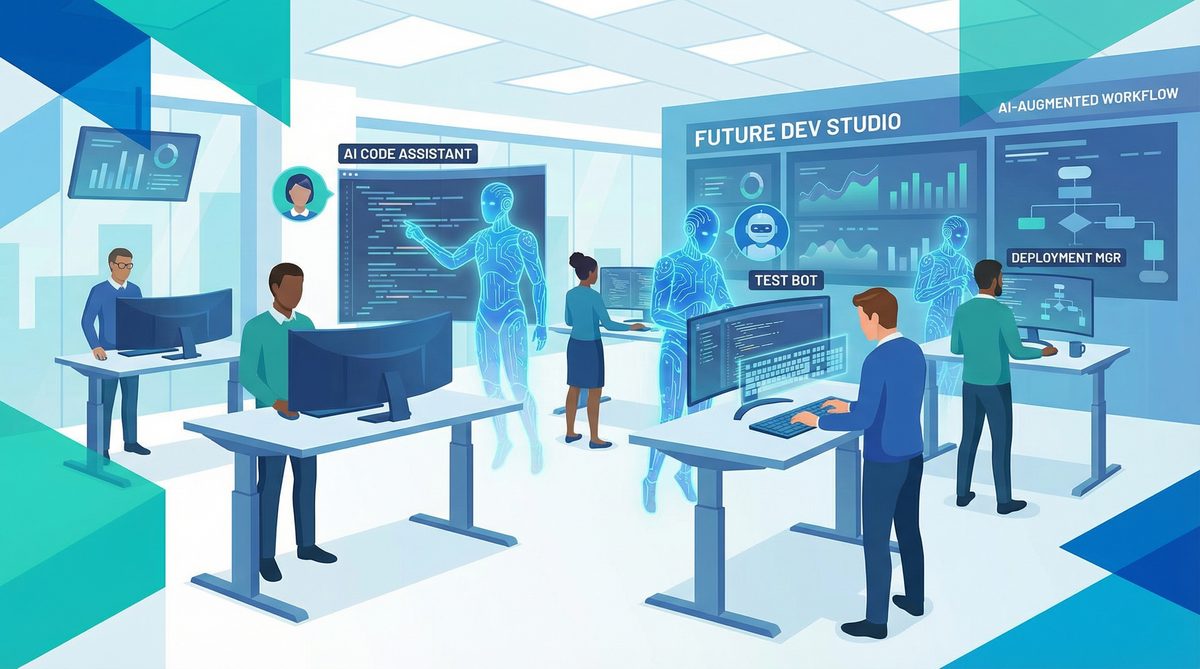
The year 2026 marks a pivotal period in software development, characterized by the widespread integration of AI coding assistants directly into production workflows. What was once a niche experimental tool has now become an indispensable component for many development teams. Our analysis, drawing from recent industry surveys and proprietary data, reveals a complex but rapidly maturing ecosystem where AI is not just assisting, but fundamentally reshaping how code is written, tested, and deployed.
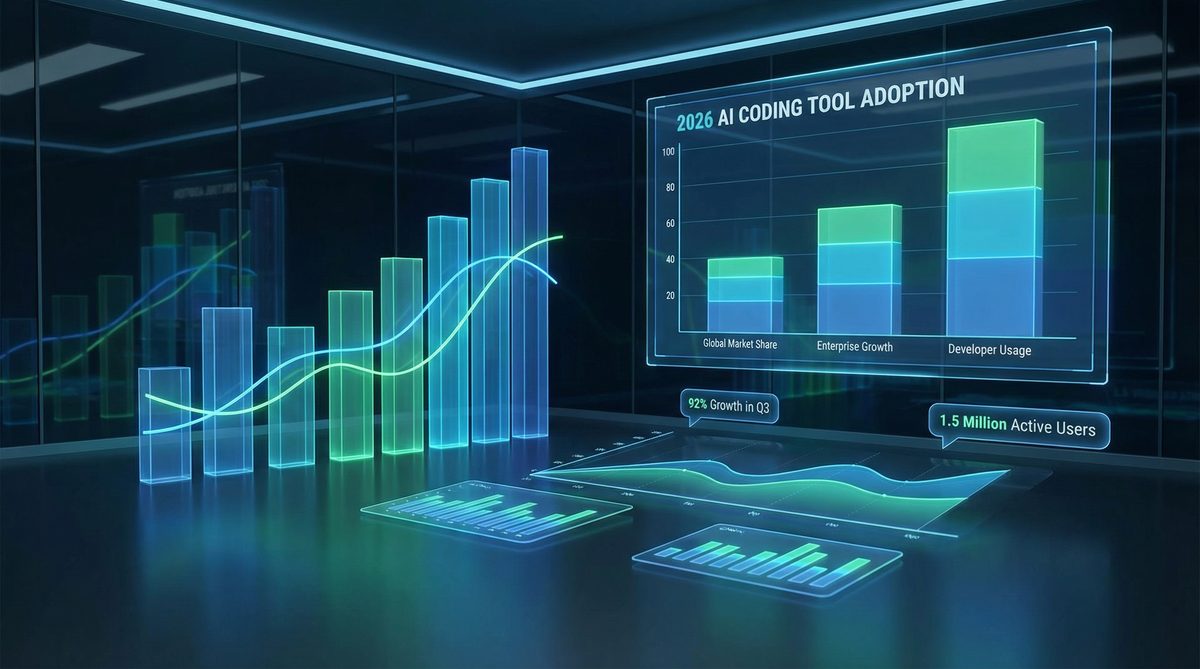
According to the April 2026 JetBrains Developer Ecosystem Survey, a comprehensive look at developer tool adoption, the landscape of AI coding tools in professional settings is surprisingly diverse yet concentrated among a few key players. OpenAI’s Codex-powered tools, including GitHub Copilot and direct API integrations, lead in terms of raw user numbers, particularly for individual developers and smaller teams. However, Anthropic’s Claude Code has carved out a significant enterprise presence, demonstrating robust growth in revenue and strategic adoption by larger organizations. The survey highlighted that approximately 78% of developers reported using some form of AI coding assistant at least once a week, with 45% integrating it into their daily workflow for tasks ranging from boilerplate generation to complex debugging.
The raw adoption metrics underscore this shift. OpenAI reported over 9 million paying ChatGPT Business users by Q1 2026, many of whom are leveraging its underlying Codex capabilities for development tasks beyond simple chat. More specifically, the number of weekly active users of Codex-powered tools has surpassed 2 million globally. Crucially, the growth in Business and Enterprise segments for Codex has been explosive, increasing six-fold since January 2026. This indicates a move beyond individual experimentation to strategic, company-wide deployment, driven by tangible productivity gains and a desire to accelerate development cycles.
Companies like Notion, Ramp, Braintrust, and Wasmer have been at the forefront of integrating Codex into their development processes. Notion, for instance, reported a 20% reduction in time spent on routine code generation and an improvement in code consistency across their large codebase. Ramp, a financial technology company, leveraged Codex to accelerate the development of new features, citing faster execution of complex API integrations and a significant reduction in the time required for initial scaffolding of new services. Braintrust, a decentralized talent network, found that Codex enabled their distributed teams to maintain more repeatable and standardized workflows, even across diverse tech stacks. Wasmer, focused on WebAssembly, utilized Codex for generating robust test cases and for translating code snippets between different programming languages and WebAssembly modules, drastically speeding up their compilation and deployment pipelines.
Anthropic’s Claude Code, while perhaps not reaching the sheer volume of individual users as Codex, has demonstrated remarkable financial success and deep enterprise penetration. Anthropic’s overall Annual Recurring Revenue (ARR) has soared to an estimated $19 billion, with Claude Code alone contributing a staggering $2.5 billion to that figure. This substantial revenue is largely driven by its enterprise client base, with over 500 customers spending $1 million or more annually on Claude Code services. This indicates that Claude Code is being adopted for mission-critical applications and integrated deeply into high-value enterprise workflows, where its capabilities justify significant investment.
The real workflow patterns emerging from these integrations reveal a nuanced division of labor between Codex and Claude Code. Development teams are increasingly adopting a hybrid approach, strategically deploying each tool to leverage its unique strengths. Codex, with its speed and broad knowledge base, is frequently used for parallel, independent tasks. This includes generating boilerplate code, writing unit tests, refactoring small code blocks, and providing rapid suggestions for common programming patterns. Its strength lies in quickly providing functional code snippets or completing repetitive tasks, allowing developers to maintain flow state without getting bogged down by routine coding. For instance, a developer might use Codex to generate a data validation function for a new API endpoint or to quickly scaffold a new component in a frontend framework. For more guidance on optimizing these rapid development cycles, consider exploring our resources on ChatGPT prompts for coding.
Claude Code, on the other hand, excels in tasks requiring a deeper understanding of the existing codebase, contextual reasoning, and complex problem-solving. Its larger context window and superior reasoning capabilities make it ideal for tasks such as identifying subtle bugs in large, interconnected systems, suggesting architectural improvements, performing comprehensive code reviews, or generating documentation that accurately reflects the system’s current state. Teams often deploy Claude Code for critical path development, where accuracy, context, and a holistic understanding of the project are paramount. An example might be using Claude Code to analyze the impact of a proposed database schema change across an entire microservices architecture or to refactor a legacy module while preserving its complex business logic. This strategic differentiation allows teams to maximize the efficiency gains from both AI assistants.
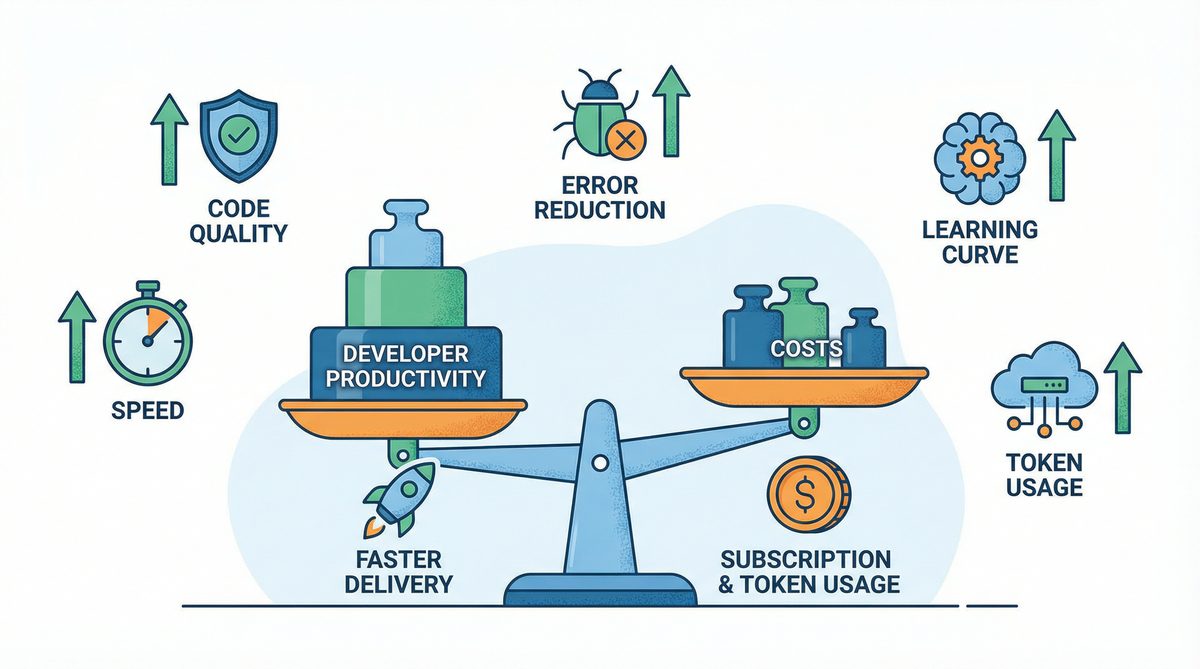
The token economics also play a significant role in this strategic deployment. Claude Code, while offering superior contextual understanding, generally consumes approximately three times more tokens than Codex for comparable tasks, primarily due to its larger context windows and more sophisticated reasoning models. This higher token consumption translates directly into increased operational costs. Consequently, cost management strategies have become a critical consideration for teams. Many organizations implement strict token usage policies, reserving Claude Code for tasks where its advanced capabilities are truly indispensable, while directing more routine or independent coding tasks to Codex. This often involves setting up internal dashboards to monitor token consumption per project or team and optimizing prompts to be as concise yet effective as possible. Some teams also experiment with fine-tuning smaller, task-specific models derived from Codex for highly repetitive internal tasks to further reduce costs.
Integration patterns are evolving rapidly to support these hybrid workflows. Both JetBrains IDEs (IntelliJ IDEA, PyCharm, etc.) and VS Code offer robust plugin ecosystems that integrate seamlessly with both Codex-powered tools (like GitHub Copilot) and Claude Code. These integrations provide real-time code suggestions, error detection, and refactoring capabilities directly within the developer’s primary workspace. Beyond IDEs, terminal-based workflows are gaining traction, particularly for infrastructure-as-code (IaC) and DevOps tasks. Tools like Warp and Fig are integrating AI assistants directly into the command line, allowing developers to generate complex shell scripts, Kubernetes manifests, or serverless function configurations with natural language prompts. This extends AI assistance beyond traditional coding to the entire development lifecycle, from local development to deployment and operations.
An interesting development facilitating these cross-provider workflows is the emergence of tools like the “Codex plugin for Claude Code.” This hypothetical (but increasingly feasible) scenario represents a trend where developers are building custom integrations or using orchestration layers to combine the strengths of different AI models. For instance, a developer might use a Codex-powered tool for initial code generation due to its speed, then feed that generated code into Claude Code for a more thorough security review, contextual refactoring, or a deeper analysis of its integration into the existing architecture. This approach allows teams to “chain” AI models, leveraging the best features of each for different stages of the development process, thereby creating highly optimized and flexible AI-assisted workflows. Understanding how to effectively combine these powerful tools is crucial, and our guides on how to use Claude AI offer valuable insights into maximizing its potential.
Despite the undeniable benefits, team adoption challenges persist. Security concerns remain paramount, especially in the wake of high-profile incidents like the Claude Code leak in late 2025, which exposed proprietary code snippets from several enterprise clients due to a misconfigured API endpoint. This incident, while quickly contained and addressed by Anthropic, highlighted the critical need for robust data governance, anonymization strategies, and clear policies regarding what code can be shared with AI models. Companies are now investing heavily in secure sandboxing environments for AI interactions and implementing strict data loss prevention (DLP) protocols. Cost management, as previously discussed, is another significant hurdle, requiring careful monitoring and optimization. Furthermore, workflow standardization is a continuous challenge. Ensuring that all team members use AI assistants effectively and consistently, without introducing inconsistencies or “AI drift” into the codebase, demands ongoing training, best practices documentation, and sometimes the development of internal AI-assisted coding guidelines.
The ROI data from early adopters is compelling. Companies like Notion and Ramp reported productivity gains ranging from 15% to 30% in specific development tasks, with overall project timelines reduced by 10-15%. These gains translate into faster time-to-market for new features, reduced development costs, and an improved developer experience, as engineers are freed from repetitive tasks to focus on more complex, creative problem-solving. A survey of 100 enterprise software development teams using both Codex and Claude Code indicated an average 22% reduction in debugging time and a 17% increase in code quality metrics (e.g., fewer reported bugs in production, better adherence to coding standards). These quantitative improvements underscore the transformative impact of AI coding assistants when integrated strategically.
Looking ahead to the rest of 2026, several key predictions can be made. Firstly, we anticipate a further convergence of AI coding tools, with more robust plugin architectures and orchestration layers enabling seamless transitions between different models based on task requirements. Secondly, the focus on security and data privacy will intensify, leading to the development of more “privacy-preserving” AI models and on-premise or federated learning solutions for highly sensitive codebases. Thirdly, the role of the “AI-augmented developer” will become more clearly defined, with a greater emphasis on prompt engineering skills, AI model selection, and the ability to critically evaluate and refine AI-generated code. Finally, we expect to see AI coding assistants move beyond code generation to more advanced stages of the software development lifecycle, including automated architecture design, intelligent project management, and predictive maintenance for deployed systems. The integration of these tools into platforms like best AI tools 2026 will become commonplace, further democratizing access to advanced AI capabilities for developers worldwide.
Access 40,000+ ChatGPT Prompts — Free!
Join our community of AI practitioners and get instant access to our comprehensive Notion Prompt Library, curated for developers, marketers, writers, and business owners.
About the Author
Markos Symeonides is the founder of ChatGPT AI Hub, where he covers the latest developments in AI tools, ChatGPT, Claude, and OpenAI Codex. Follow ChatGPT AI Hub for daily AI news, tutorials, and guides.

