
OpenAI Raises $122 Billion in Record-Breaking Funding Round: What It Means for ChatGPT, Codex, and the Future of AI

⚡ The Brief
- What it is: OpenAI has secured a record-breaking $122 billion funding round, the largest in Silicon Valley history, to advance AI technologies like ChatGPT and Codex.
- Who it’s for: This development is crucial for developers, AI researchers, and tech investors interested in the future of AI and its applications.
- Key takeaways: The funding will support global AI expansion, enhance computational infrastructure, and meet the growing demand for OpenAI’s products.
- Pricing/Cost: While the funding itself doesn’t directly affect product pricing, it enables OpenAI to scale and potentially offer more cost-effective solutions.
- Bottom line: OpenAI’s unprecedented funding round positions it to lead AI innovation, impacting industries and global AI accessibility significantly.
✓ Instant access✓ No spam✓ Unsubscribe anytime
In a seismic announcement that reverberated across the global technology landscape, OpenAI confirmed on April 1, 2026, the successful closure of a staggering $122 billion funding round. This monumental capital injection shatters all previous records, marking it as the largest funding round in Silicon Valley history and firmly cementing OpenAI’s position at the vanguard of artificial intelligence innovation. The investment, sourced from a consortium of sovereign wealth funds, institutional investors, and strategic partners, underscores an unprecedented level of confidence in OpenAI’s vision and its trajectory for reshaping industries worldwide.
The sheer scale of this funding round is difficult to overstate. To put it into perspective, the previous record for a Silicon Valley funding round was approximately $25 billion, achieved by a major social media platform in its pre-IPO stages. OpenAI’s $122 billion dwarfs this figure by nearly fivefold, signaling a profound shift in investor priorities towards foundational AI technologies. This capital is not merely an investment; it is a strategic bet on the future of humanity’s interaction with intelligence, productivity, and discovery. The implications for technological development, economic growth, and societal advancement are profound, with OpenAI now possessing unparalleled resources to accelerate its ambitious roadmap.
OpenAI’s Strategic Vision: Global Expansion, Compute Power, and Meeting Demand
OpenAI’s leadership, including CEO Sam Altman, has articulated a clear strategy for deploying this historic capital. The primary objectives revolve around three core pillars: expanding frontier AI capabilities globally, investing heavily in next-generation computational infrastructure, and meeting the surging demand for its flagship products, ChatGPT and Codex.
The commitment to global expansion of frontier AI is particularly noteworthy. OpenAI aims to establish AI research and development hubs in key international markets, fostering localized innovation and ensuring that the benefits of advanced AI are accessible and tailored to diverse cultural and economic contexts. This includes significant investments in talent acquisition across continents, building partnerships with local academic institutions, and collaborating with governments to navigate regulatory frameworks for responsible AI deployment. The goal is not just to export technology, but to cultivate a global ecosystem of AI development that reflects a multitude of perspectives and addresses a broad spectrum of challenges.
A substantial portion of the $122 billion will be allocated to dramatically scaling OpenAI’s computational infrastructure. Developing and deploying cutting-edge AI models like GPT-5.4 requires immense processing power, specialized hardware, and advanced data centers. This investment will enable OpenAI to design and procure custom AI chips, expand its cloud computing partnerships, and build proprietary supercomputing clusters capable of handling the exponential growth in model complexity and data volume. Such infrastructure is critical for training larger, more sophisticated models, reducing latency, and ensuring the reliability and scalability of its services for a rapidly expanding user base.
Furthermore, the funding will directly address the escalating demand for ChatGPT and Codex. ChatGPT, with its conversational prowess, has become a ubiquitous tool for ideation, content generation, and information retrieval. Codex, powering automated code generation and assistance, has transformed software development workflows. The influx of capital will facilitate further improvements in model performance, robustness, and safety, while also enabling the expansion of server capacity and the development of new features to better serve both individual users and enterprise clients. The company reports that the demand for these tools continues to outstrip even their most optimistic projections, necessitating this massive investment in infrastructure and talent.
Acquisition of TBPN: Shaping the AI Narrative
In an intriguing move that highlights OpenAI’s strategic thinking beyond purely technological advancements, the company also announced the acquisition of TBPN (Technology Business Programming Network), a popular talk show known for its in-depth discussions on emerging technologies and business trends. This acquisition, while seemingly tangential to core AI development, is a calculated maneuver to actively shape the public narrative around artificial intelligence.
TBPN has a dedicated viewership among business leaders, tech professionals, and policy makers, making it an ideal platform for OpenAI to communicate its vision, address concerns, and educate the public about the ethical implications and societal benefits of AI. By owning a significant media channel, OpenAI gains a direct conduit to influence perceptions, foster informed dialogue, and counter potential misinformation about advanced AI. This strategy acknowledges that the development of powerful AI is not solely a technical challenge but also a societal one, requiring careful communication and public engagement. OpenAI intends to leverage TBPN to host expert panels, conduct interviews with leading researchers, and produce educational content that demystifies AI and promotes responsible innovation. This proactive approach to public discourse is unprecedented for a technology company of this magnitude and signals a new era of corporate responsibility in the AI space.
For those interested in understanding how AI is shaping public opinion and media, our comprehensive analysis of AI’s influence on media trends provides deeper insights into this evolving landscape. This acquisition by OpenAI is a prime example of a tech giant taking direct control of its public messaging. The discussions on TBPN will likely focus heavily on the ethical considerations of AI, its economic impact, and the future of human-AI collaboration.
Codex and ChatGPT Business: Evolving Product Offerings and Pricing
OpenAI also unveiled significant updates to its product offerings and pricing structures, reflecting its rapid growth and commitment to accessibility for businesses and developers. Codex, the AI model adept at generating and understanding code, is now available with new pay-as-you-go pricing for teams. This flexible model allows businesses to scale their usage according to their development needs, paying only for the tokens consumed, rather than a fixed subscription. This move is expected to significantly lower the barrier to entry for smaller development teams and startups, enabling broader adoption of AI-powered coding assistance.
The impact of this pricing model for Codex cannot be understated. It democratizes access to advanced coding AI, allowing a wider range of developers and organizations to leverage its capabilities for tasks such as code generation, debugging, and refactoring. This flexibility is particularly appealing to agile development environments where resource allocation needs to be dynamic. The company anticipates that this will further accelerate the growth of Codex users, which already stands at an impressive 2 million+ weekly active users, representing a sixfold increase since January alone.
In parallel, OpenAI announced a reduction in the price of ChatGPT Business, lowering it from $25 to $20 per seat. This strategic price adjustment aims to make advanced conversational AI more affordable for enterprises, encouraging wider deployment across various departments, from customer service to internal knowledge management. The company reports that ChatGPT Business already boasts over 9 million paying business users, a testament to its value proposition in enhancing productivity and streamlining operations. This price reduction is likely to attract even more corporate clients, solidifying ChatGPT’s position as an indispensable business tool. The combined effect of these pricing adjustments is to make OpenAI’s powerful AI tools more accessible and cost-effective for a broader spectrum of users, from individual developers to large multinational corporations.
Our detailed guide on optimizing ChatGPT prompts for business applications can help businesses maximize the value of their ChatGPT Business subscriptions. Understanding how to craft effective prompts is crucial for achieving the best results with this powerful AI tool, especially with the new pricing making it more accessible.
Introducing GPT-5.4 Mini and Nano Models
Further solidifying its rapid innovation cycle, OpenAI quietly launched its GPT-5.4 mini and nano models on March 17, 2026. These smaller, more efficient versions of the flagship GPT-5.4 architecture are designed for specific use cases where computational resources are constrained, or low latency is paramount. The ‘mini’ and ‘nano’ designations indicate models with fewer parameters, optimized for deployment on edge devices, mobile applications, or for tasks requiring quick, localized inference without the full power of a massive model.
The introduction of these specialized models marks a significant step towards democratizing advanced AI. GPT-5.4 mini could power more sophisticated AI features directly on smartphones, smart home devices, or embedded systems, enabling a new generation of intelligent applications that are less reliant on cloud connectivity. GPT-5.4 nano, even smaller, might find applications in highly specialized contexts, such as real-time language processing in wearable tech or efficient data summarization on resource-limited servers.
These smaller models are not merely scaled-down versions; they incorporate advanced distillation techniques and architectural optimizations to retain a high degree of performance relative to their size. This allows developers to integrate powerful GPT-5.4 capabilities into a wider array of products and services, fostering innovation in areas previously inaccessible to large language models. The release of these models underscores OpenAI’s commitment to providing a versatile AI toolkit, catering to diverse needs across the technological spectrum.
Implications for Developers, Businesses, and the AI Industry
The $122 billion funding round and OpenAI’s subsequent strategic moves carry profound implications for developers, businesses, and the broader AI industry.
For Developers:
- Enhanced Tools and APIs: Developers can anticipate even more robust, reliable, and feature-rich APIs for integrating OpenAI’s models into their applications. The investment in compute will lead to faster inference times and greater model capacity.
- New Opportunities with Smaller Models: The GPT-5.4 mini and nano models open up entirely new avenues for innovation, particularly in edge computing, mobile development, and specialized AI applications where efficiency is key.
- Increased Accessibility: The pay-as-you-go pricing for Codex and the reduced cost of ChatGPT Business will make advanced AI tools more accessible to individual developers and smaller teams, fostering a more vibrant ecosystem of AI-powered solutions.
- Community Growth: OpenAI’s global expansion efforts will likely lead to more localized developer communities, support, and resources, facilitating collaboration and knowledge sharing.
For Businesses:
- Accelerated AI Adoption: Lower prices and more flexible payment models for enterprise solutions will accelerate the adoption of AI across various business functions, driving efficiency, innovation, and competitive advantage.
- Tailored Solutions: The development of specialized models like GPT-5.4 mini and nano means businesses can expect more tailored and efficient AI solutions for specific industry needs, from manufacturing to healthcare.
- Strategic Advantage: Companies that proactively integrate OpenAI’s advanced AI into their operations will gain a significant strategic advantage, optimizing workflows, enhancing customer experiences, and uncovering new business opportunities.
- Ethical AI Guidance: OpenAI’s focus on shaping the AI narrative through platforms like TBPN suggests a commitment to responsible AI, which can help businesses navigate the ethical and regulatory landscape more effectively.
For the AI Industry:
- Increased Competition and Innovation: This massive investment in OpenAI will undoubtedly intensify competition within the AI industry, pushing competitors like Anthropic and Google to innovate even faster. This competitive pressure ultimately benefits the entire ecosystem through accelerated technological advancement.
- Standardization and Best Practices: As OpenAI expands its global footprint and engages in public discourse, it is likely to play a significant role in establishing industry standards and best practices for AI development and deployment.
- Talent War Intensification: The funding will fuel an even more aggressive talent acquisition race, as companies vie for top AI researchers and engineers. This could lead to increased salaries and more innovative research environments.
- Ethical AI Prioritization: OpenAI’s proactive approach to public narrative and responsible AI development may set a precedent for other AI companies to prioritize ethical considerations alongside technological progress.
Access 40,000+ ChatGPT Prompts — Free!
Join our community of AI practitioners and get instant access to our comprehensive Notion Prompt Library, curated for developers, marketers, writers, and business owners.
Get Free Access NowCompetition with Anthropic (Claude) and Google (Gemini)
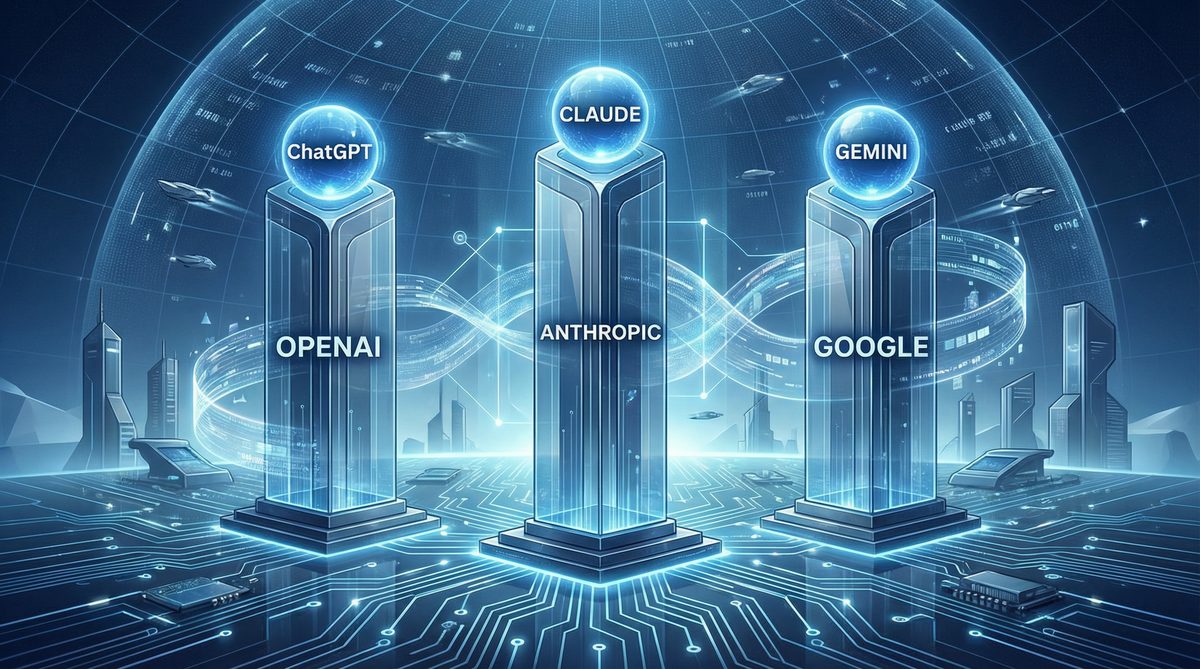
The $122 billion funding round places OpenAI in an unparalleled financial position, but the competitive landscape remains robust, with formidable rivals like Anthropic (developer of Claude) and Google (with its Gemini models) continuing to innovate at a rapid pace.
Anthropic, founded by former OpenAI researchers, has carved out a niche emphasizing responsible AI and safety. Their Claude models are highly regarded for their conversational abilities, ethical safeguards, and robust performance in enterprise settings. While Anthropic has secured significant funding rounds of its own, including investments from Amazon and Google, OpenAI’s new capital injection provides a considerable advantage in terms of raw compute power and global expansion potential. The competition will likely center on model safety, contextual understanding, and specialized domain expertise, where Anthropic’s focused approach could still yield unique advantages.
Google, with its vast resources and decades of AI research through Google Brain and DeepMind, remains a titan in the field. Its Gemini models represent a multimodal AI powerhouse, designed to seamlessly understand and operate across text, code, audio, image, and video. Google’s integrated ecosystem, spanning search, cloud, and consumer devices, offers a unique distribution advantage. The battle between OpenAI and Google will be characterized by a race for multimodal supremacy, integration into existing platforms, and the ability to attract and retain top AI talent. Google’s deep expertise in large-scale infrastructure and its long-standing commitment to open-source AI initiatives also position it as a formidable long-term competitor.
This unprecedented funding for OpenAI will undoubtedly accelerate the AI arms race, driving all major players to push the boundaries of what’s possible. The beneficiaries will ultimately be developers, businesses, and society at large, as these technological giants compete to deliver increasingly powerful, accessible, and beneficial artificial intelligence. The next few years promise to be the most transformative in the history of AI, with OpenAI leading the charge, backed by an historic war chest.
For a deeper dive into the competitive landscape, including a comparison of different large language models, explore our analysis on top AI models for enterprise. This article provides a detailed breakdown of the strengths and weaknesses of various AI offerings, helping businesses make informed decisions.
About the Author
Markos Symeonides is the founder of ChatGPT AI Hub, where he covers the latest developments in AI tools, ChatGPT, Claude, and OpenAI Codex. Follow ChatGPT AI Hub for daily AI news, tutorials, and guides.
🕐 Instant∞ Unlimited🎁 Free
Frequently Asked Questions
What is the significance of OpenAI's $122 billion funding?
This funding round is the largest in Silicon Valley history, highlighting a major shift in investor focus towards AI technologies. It provides OpenAI with unparalleled resources to accelerate its roadmap, enhancing AI capabilities globally and impacting various industries.
How will OpenAI utilize this new funding?
OpenAI plans to use the funding to expand AI capabilities globally, invest in next-generation computational infrastructure, and meet the increasing demand for its products like ChatGPT and Codex. This includes establishing AI research hubs and fostering local innovation.
Who are the primary investors in this funding round?
The funding was secured from a consortium of sovereign wealth funds, institutional investors, and strategic partners, reflecting a high level of confidence in OpenAI's vision and its potential to reshape industries through advanced AI technologies.
What impact will this have on AI product development?
With this funding, OpenAI can accelerate the development of its AI products, enhancing features and capabilities. This will likely lead to more advanced versions of ChatGPT, Codex, and other AI tools, benefiting developers and end-users alike.
How does this funding affect global AI expansion?
The funding supports OpenAI's goal to establish AI R&D hubs worldwide, promoting localized innovation and ensuring AI benefits are accessible globally. This includes partnerships with academic institutions and governments to foster responsible AI deployment.
What are the long-term implications of this funding for AI?
Long-term, this funding positions OpenAI to lead in AI innovation, potentially transforming industries and economic landscapes. It underscores AI's growing importance in global tech strategies and could accelerate advancements in AI-driven solutions.
