
⚡ The Brief
- What it is: Anthropic’s Conway is an autonomous AI agent designed to operate continuously within digital ecosystems, enhancing productivity and security.
- Who it’s for: Conway is ideal for enterprises seeking to automate complex workflows and reduce reliance on human intervention in digital tasks.
- Key takeaways: Conway offers persistent contextual memory, autonomous task scheduling, and operates 24/7, simulating a digital lifeform for seamless task execution.
- Pricing/Cost: Pricing details for Conway are not specified, but it is likely tailored to enterprise budgets, reflecting its advanced capabilities.
- Bottom line: Conway represents a significant leap in AI autonomy, potentially transforming digital workflows and enterprise operations with its always-on capabilities.
✓ Instant access✓ No spam✓ Unsubscribe anytime
Anthropic’s ‘Conway’ AI Agent: Pioneering the Future of Autonomous Digital Workflows

In April 2026, Anthropic unveiled its groundbreaking AI agent, known as Conway, marking a pivotal advancement in the evolution of autonomous artificial intelligence systems. Designed to operate continuously and independently within complex digital ecosystems, Conway exemplifies the next generation of AI agents that transcend traditional interaction paradigms. This extensive analysis explores the intricate technical underpinnings of Conway, its unique operational capabilities—including 24/7 autonomous browsing—and the profound implications it carries for productivity, enterprise security, employment, and the architecture of future digital workflows.
1. The Origins and Conceptual Foundation of Conway
Anthropic, a leader in responsible AI research and development, has consistently emphasized AI safety and alignment, primarily focusing on building systems that are both powerful and controllable. Conway represents the culmination of this philosophy, embodying an autonomous agent capable of persistent, context-aware operation without requiring constant human intervention.
The name “Conway” pays homage to John Horton Conway, famed for the “Game of Life,” a cellular automaton demonstrating how simple rules can lead to complex, emergent behavior. Similarly, Anthropic’s Conway AI leverages foundational principles of autonomy and emergent intelligence to perform diverse tasks across the internet and enterprise environments, effectively simulating a digital lifeform capable of self-directed learning and adaptation.
2. Technical Architecture: How Conway Operates 24/7 as an Autonomous Agent
At the core of Conway’s functionality lies a multi-layered architecture combining advanced language models, reinforcement learning, and autonomous decision-making modules designed for continuous operation. The architecture can be broken down into several key components:
- Persistent Contextual Memory: Unlike traditional session-based AI models, Conway maintains a dynamic, evolving memory structure that stores long-term and short-term contextual information. This memory allows it to retain state information over days, weeks, or longer, enabling it to pick up tasks seamlessly without redundant retraining or reinitialization.
- Autonomous Task Scheduler: A dedicated scheduler intelligently prioritizes tasks based on urgency, dependencies, and user-defined objectives. This scheduler leverages probabilistic models to predict optimal task execution order, minimizing idle time and maximizing throughput.
- Reinforcement Learning and Self-Optimization: Conway continuously refines its strategies through reinforcement learning algorithms that reward successful task completion, efficiency, and alignment with ethical guidelines. This self-optimization ensures performance improves over time without explicit external updates.
- Robust Error Detection and Recovery Systems: To ensure reliable 24/7 operation, Conway integrates sophisticated error detection mechanisms that monitor system health and gracefully recover from unexpected failures or erroneous states without human intervention.
This architecture enables Conway to function as a persistent digital worker, capable of executing complex workflows, interacting with diverse software environments, and adapting dynamically to changing conditions.
3. Independent Browsing: Conway’s Autonomous Internet Navigation
One of Conway’s most innovative features is its ability to use web browsers independently, a capability that distinguishes it from other AI agents restricted to input-output interactions. This autonomy in browsing is powered by several technical innovations:
- Integrated Browser Control Module: Conway incorporates a custom browser automation layer that interfaces directly with browser engines such as Chromium and Firefox. This module interprets high-level instructions into granular browser actions like clicking, scrolling, form filling, and navigation.
- Natural Language Understanding (NLU) for Web Content: To interpret web content, Conway leverages advanced NLU models that extract semantic meaning from HTML, CSS, JavaScript-rendered pages, and multimedia elements. This allows it to understand context, identify relevant information, and make decisions akin to human browsing behavior.
- Autonomous Decision-Making on the Web: Equipped with a goal-oriented reasoning engine, Conway can plan multi-step browsing strategies to achieve objectives such as data extraction, content validation, or user support. It can autonomously determine when to click links, submit queries, or even interact with dynamic web applications.
- Security and Privacy Protocols: To operate safely, Conway enforces strict sandboxing and privacy controls, preventing unauthorized data access or actions that could compromise user security. It also adheres to compliance standards for data handling and interaction with sensitive information.
Through these capabilities, Conway acts as an autonomous digital agent capable of browsing the internet continuously, gathering information, and executing web-based tasks without human oversight.
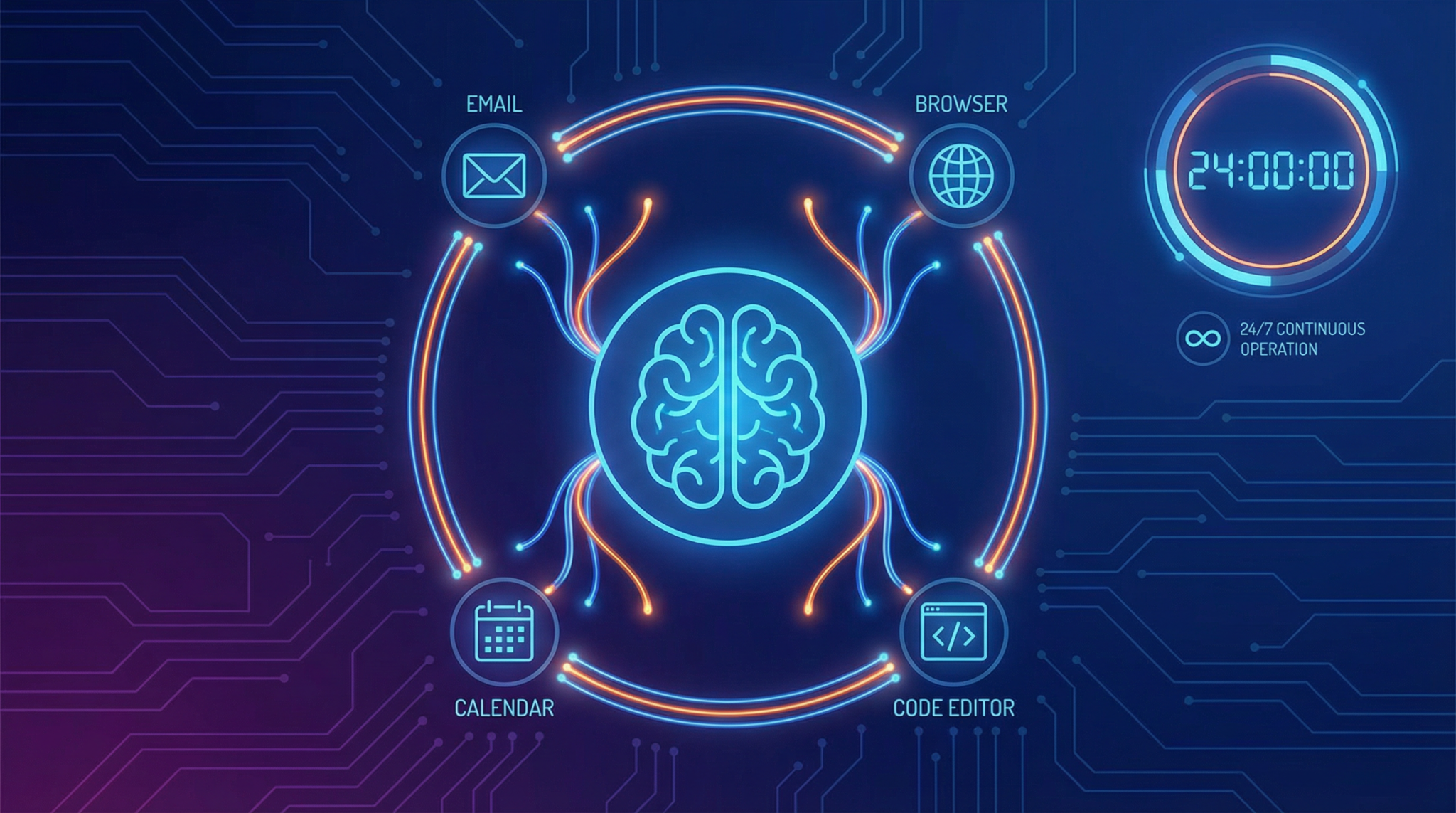
4. A Paradigm Shift: From Assisted AI to Fully Autonomous Operational Agents
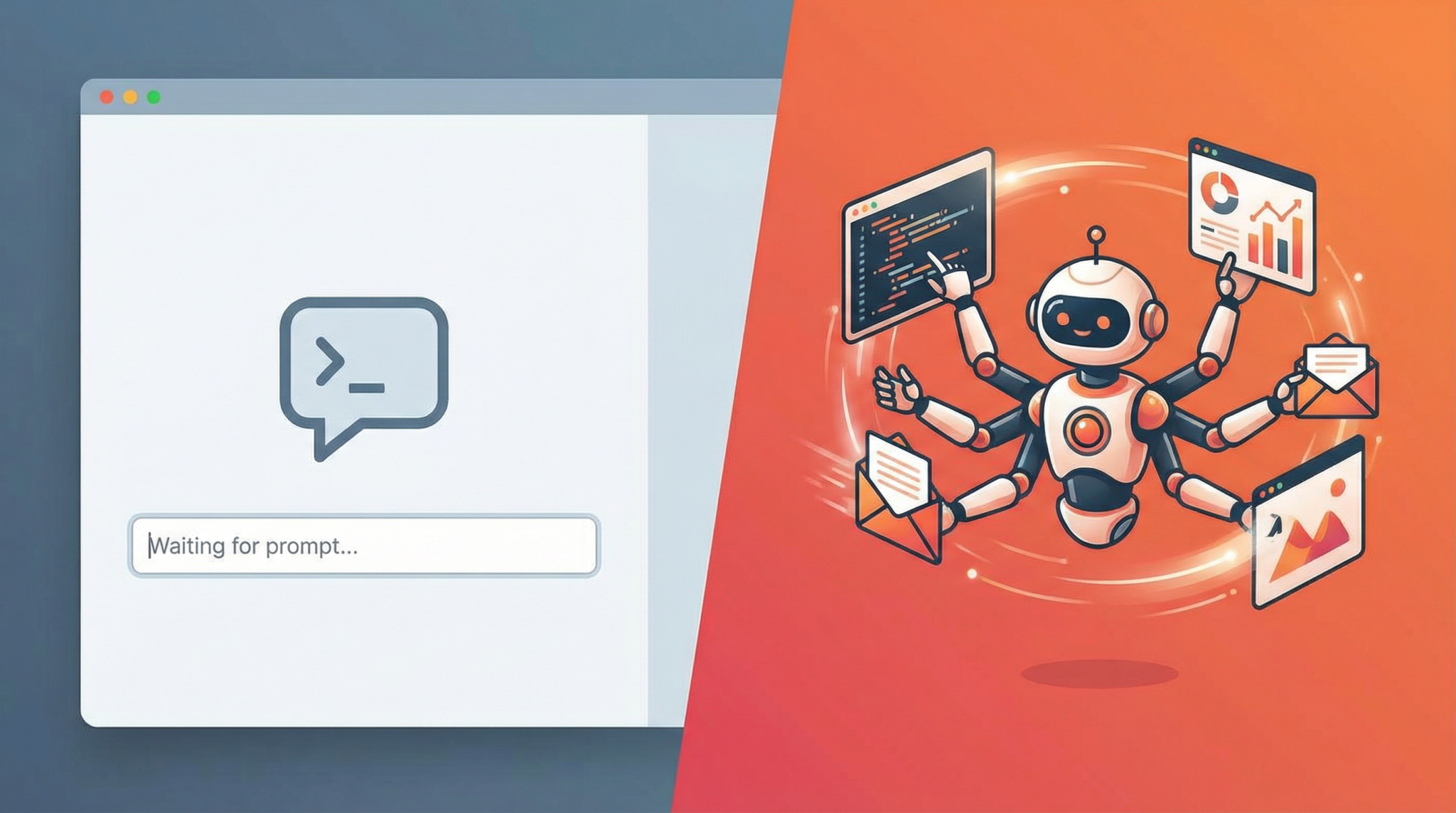
Conway epitomizes a fundamental shift in AI deployment models. Traditionally, AI systems functioned as tools requiring active human input for each operation. Conway transitions this paradigm by embodying autonomy at its core, operating with minimal human supervision and making nuanced decisions independently.
This shift is characterized by key conceptual advances:
- Self-Directed Agency: Conway possesses the capability to initiate, modify, and terminate tasks based on evolving priorities and contextual insights, mirroring human-like initiative.
- Continuous, Non-Fragmented Operation: Unlike episodic AI models, Conway’s persistent memory and scheduler allow for uninterrupted workflow execution, enabling complex projects to progress seamlessly over extended periods.
- Multi-Modal Interaction: Beyond text-based interfaces, Conway interacts natively with graphical user interfaces, APIs, and web environments, bridging the gap between AI cognition and real-world software operations.
- Ethical and Safety-First Design: Anthropic’s rigorous alignment protocols ensure Conway adheres to ethical principles, preventing misuse or unintended harmful behavior despite its autonomous capabilities.
This evolution in AI design heralds a new era where agents like Conway become integrated digital colleagues, capable of shouldering significant operational responsibilities.
5. Implications for Productivity: Revolutionizing Digital Workflows
Conway’s continuous and autonomous operation offers transformative potential for productivity in both individual and organizational contexts:
- 24/7 Task Execution: Conway does not require breaks, sleep, or downtime, enabling round-the-clock execution of repetitive or time-sensitive tasks such as data monitoring, customer support, and content generation.
- Complex Workflow Orchestration: By managing dependencies and scheduling intelligently, Conway can coordinate multi-step processes that typically involve multiple human operators, reducing latency and errors.
- Dynamic Adaptation to Priorities: Conway’s ability to reassess and reprioritize tasks in real time ensures alignment with business objectives as conditions evolve, enhancing operational agility.
- Integration with Enterprise Systems: Conway’s interface compatibility allows seamless interaction with CRM platforms, ERP systems, communication channels, and cloud services, creating unified digital workflows.
For example, in a multinational corporation, Conway can autonomously monitor regulatory updates on government websites, update internal compliance databases, notify relevant departments, and generate reports without human involvement. This drastically reduces manual overhead and the risk of oversight.
6. Enterprise Security: Navigating Risks and Reinforcing Defenses
Deploying an autonomous agent with browsing and operational capabilities introduces novel security challenges and opportunities:
- Risk of Unauthorized Actions: Without proper controls, autonomous agents might inadvertently execute harmful commands or access sensitive information. Conway mitigates this through multi-tiered access controls, role-based permissions, and real-time auditing.
- Data Privacy and Compliance: Conway is engineered to comply with global privacy standards such as GDPR, CCPA, and HIPAA by implementing data minimization, encryption, and consent management frameworks.
- Attack Surface Management: Autonomous web browsing exposes Conway to potential cyber threats like phishing, malware, or social engineering. Anthropic’s security team has embedded advanced anomaly detection and threat intelligence modules to protect Conway and the networks it operates within.
- Transparency and Explainability: Conway maintains detailed logs and rationale explanations for its decisions, enabling security teams to audit behavior and verify compliance with organizational policies.
Consequently, Conway serves as both a potential vector of risk and a powerful tool for strengthening cybersecurity posture through continuous monitoring and rapid response capabilities.
7. Employment Landscape: Augmentation, Displacement, and New Roles
The introduction of autonomous AI agents like Conway inevitably raises questions about the future of work. The impact on employment can be understood through several dimensions:
- Task Automation and Job Displacement: Conway’s ability to autonomously perform routine, repetitive, and rule-based tasks may reduce demand for certain roles, particularly in administrative, data entry, and customer service sectors.
- Worker Augmentation and Productivity Gains: For knowledge workers, Conway serves as an intelligent assistant that handles auxiliary tasks, enabling humans to focus on higher-order decision-making, creativity, and interpersonal functions.
- Creation of AI Oversight and Management Roles: Organizations will need professionals skilled in supervising, fine-tuning, and ethically managing autonomous agents, generating new employment categories centered around AI governance.
- Reskilling and Workforce Transition: As Conway and similar agents reshape workflows, there will be an increased emphasis on reskilling programs to adapt human talent for synergistic collaboration with AI.
Ultimately, Conway exemplifies the dual nature of AI’s impact on employment—disruptive yet generative—underscoring the need for proactive societal and policy responses.
8. The Future of Digital Workflows: Toward an Autonomous Ecosystem
Conway’s deployment is a harbinger of a future where digital workflows are predominantly orchestrated by autonomous agents. This future is characterized by several transformative trends:
- Decentralized Decision-Making: Autonomous agents will distribute decision-making processes closer to data sources and operational nodes, reducing bottlenecks and latency inherent in centralized systems.
- Inter-Agent Collaboration: Multiple autonomous agents like Conway will coordinate with each other using standardized communication protocols, forming ecosystems of specialized AI collaborators optimized for diverse tasks.
- Human-in-the-Loop Evolution: While autonomy increases, humans will remain integral in setting objectives, governance frameworks, and ethical boundaries, fostering a hybrid intelligence paradigm.
- Continuous Learning and Adaptation: Autonomous agents will perpetually learn from new data streams and interactions, refining workflows and innovating processes with minimal human input.
This vision aligns with ongoing advancements in edge computing, AI interoperability standards, and secure AI infrastructure, positioning Conway and its successors as foundational components of the next-generation digital economy.
9. Conclusion: Conway as a Milestone in Autonomous AI Innovation
Anthropic’s Conway AI agent stands at the forefront of autonomous AI technology, demonstrating how continuous operation, independent browsing, and self-directed agency can revolutionize the way digital workflows are executed. By blending advanced technical architectures with ethical design principles, Conway sets a new benchmark for AI agents that operate as persistent, versatile digital collaborators.
The implications of Conway’s deployment ripple across productivity enhancement, enterprise security, employment paradigms, and the structural evolution of digital ecosystems. As organizations adopt agents like Conway, they will redefine operational efficiency and unlock new possibilities for innovation and human-machine synergy.
To understand the broader landscape of advanced AI agents and their integration into enterprise environments, consider exploring Mastering ChatGPT Atlas Agent Mode: 12 Advanced Prompting Strategies for AI-Powered Browsing and the latest developments in The AI Platform Wars of April 2026: Inside the OpenAI-Anthropic Battle for Developer Dominance.
Access 40,000+ AI Prompts for ChatGPT, Claude & Codex — Free!
Subscribe to get instant access to our complete Notion Prompt Library — the largest curated collection of prompts for ChatGPT, Claude, OpenAI Codex, and other leading AI models. Optimized for real-world workflows across coding, research, content creation, and business.
Access Free Prompt Library🕐 Instant∞ Unlimited🎁 Free
Frequently Asked Questions
What makes Conway different from other AI agents?
Conway stands out due to its persistent contextual memory and autonomous task scheduling, allowing it to operate continuously without human intervention. This enables it to manage complex workflows efficiently, making it a robust tool for enterprises looking to streamline digital operations and enhance productivity.
How does Conway ensure data security in operations?
Conway incorporates advanced security protocols and alignment strategies to ensure data integrity and confidentiality. Its architecture is designed with a focus on AI safety, aligning with Anthropic's commitment to responsible AI development, making it a secure choice for handling sensitive enterprise data.
Can Conway integrate with existing enterprise systems?
Yes, Conway is designed to integrate seamlessly with existing digital ecosystems. Its flexible architecture supports interoperability with various enterprise tools and platforms, enabling organizations to enhance their current workflows without extensive system overhauls or compatibility issues.
What are the potential cost savings with Conway?
By automating complex workflows and reducing the need for human intervention, Conway can significantly lower operational costs. Enterprises can expect savings in labor costs, increased efficiency, and reduced downtime, making it a cost-effective solution for digital workforce management.
How does Conway handle task prioritization?
Conway features an autonomous task scheduler that intelligently prioritizes tasks based on urgency, dependencies, and user-defined objectives. This ensures that critical tasks are addressed promptly while maintaining overall workflow efficiency, adapting dynamically to changing enterprise needs.
What industries can benefit most from Conway?
Industries with complex digital workflows, such as finance, healthcare, and logistics, can benefit significantly from Conway. Its ability to operate autonomously and continuously makes it ideal for sectors requiring high levels of accuracy, efficiency, and security in their digital operations.
