
GPT-5.6 Sol, Terra, and Luna: OpenAI’s Three-Model Architecture Explained — Capabilities, Pricing Tiers, and What Government-Gated Access Means for Enterprise Adoption
“`html
GPT-5.6 Sol, Terra, and Luna: OpenAI’s Revolutionary Three-Model Architecture Explained – Capabilities, Pricing Tiers & Government-Gated Enterprise Adoption
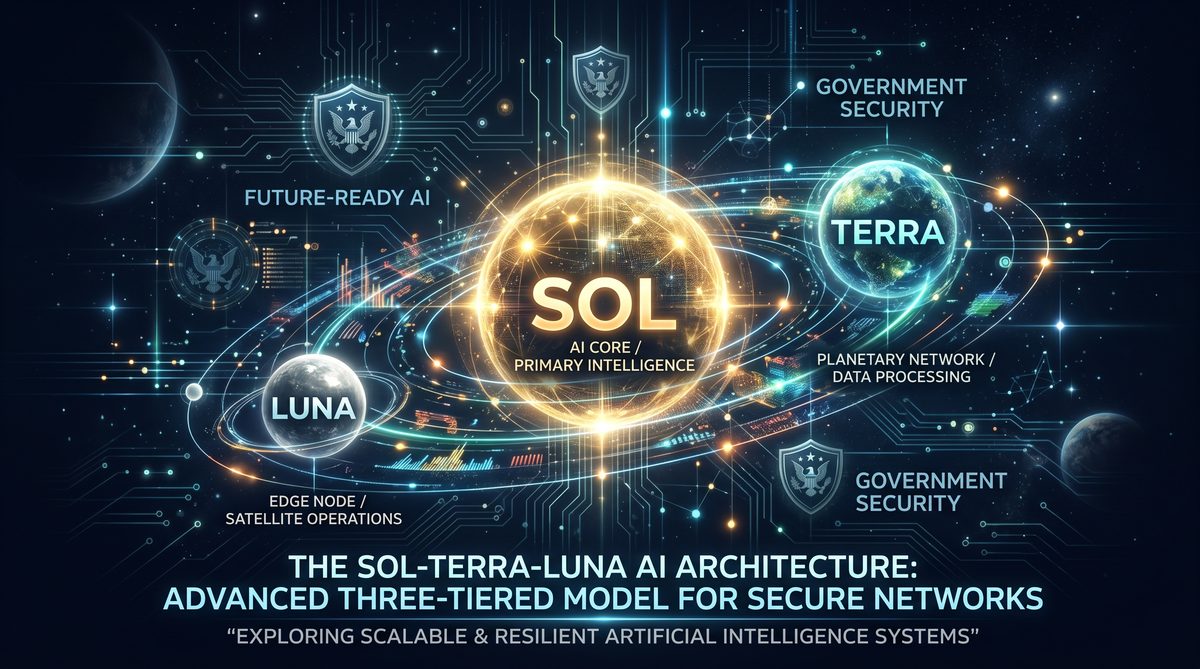
In June 2026, OpenAI delivered a groundbreaking advancement in large language models by launching GPT-5.6 as a coordinated family of three specialized models: Sol, Terra, and Luna. This strategic architecture directly addresses the diverse enterprise needs spanning high-precision reasoning, balanced productivity, and ultra-high throughput at reduced costs.
Beyond technical innovation, OpenAI introduced a novel government-gated rollout mechanism, mandating explicit federal executive branch approval for sensitive deployment categories. This unprecedented regulatory overlay is set to redefine enterprise integration, compliance, and operational governance of AI systems.
This article delivers an expert deep-dive into GPT-5.6’s architectural innovation, detailed pricing frameworks, and the practical implications of government-gated access—empowering enterprise architects, security officers, and policy teams to confidently integrate GPT-5.6 at scale within a complex regulatory landscape.
Introduction: OpenAI’s GPT-5.6 Launch & The Strategic Government-Gated Rollout Framework
OpenAI’s June 2026 announcement outlined three distinct design goals for the GPT-5.6 family:
- Sol: A premier tier targeting advanced scientific reasoning, mathematics fidelity, and safety-critical technical workflows.
- Terra: The balanced generalist optimized for robust business productivity, content generation, and multimodal comprehension.
- Luna: A cost-effective, high-speed solution tuned for latency-sensitive workloads and massive batch processing.
This segmentation enables enterprises to precisely calibrate performance, cost, and throughput trade-offs per workload demands. Simultaneously, OpenAI’s rollout policy introduces a government-gated approval layer for high-risk, export-sensitive, or nationally critical deployments, signaling a new era where AI systems are not only technological artifacts but also strategic national assets.
Architectural shifts include specialized training, inference pipeline orchestration, and differentiated pricing models. Governance impacts translate into rigorous compliance regimes and operational constraints that demand proactive planning.
Section 1: Sol – The High-Fidelity Advanced Reasoning Powerhouse for Enterprises
Sol is designed for complex, mission-critical applications requiring precision, reproducibility, and transparency. Its architecture integrates extended context capabilities and novel reasoning modules that enable multi-step inference across scientific research, formal verification, and advanced coding tasks.
Key Architectural Innovations of Sol:
- Massive Extended Context: Standard 4 million tokens with enterprise options to 8 million tokens using hybrid sparse and sliding window attention for sustained numerical stability.
- Dynamic Specialized Reasoning Heads: Embedded sub-networks for symbolic math, code verification, and algebra activated through real-time task classification.
- Deterministic Execution Mode: Guarantees reproducibility by minimizing stochasticity and providing rich provenance metadata tracing internal computation paths – essential for audit and regulatory verification.
- Advanced Numeric Computation: Hybrid float and differentiable symbolic layers reduce numerical drift in prolonged calculations, making Sol uniquely capable for critical scientific inquiry and regulatory-grade code synthesis.
Enterprise Use Cases Optimal for Sol:
- Multi-step scientific experiment design and hypothesis formulation workflows.
- Formal, safety-assured code generation with automatic proof verification for avionics, medical devices, and aerospace.
- Mathematical theorem proving and symbolic calculus integrated with external engines.
- Complex scenario planning for logistics and infrastructure optimization where auditability is mandated.
Operational Best Practices for Sol Deployment:
- Provision GPU clusters tailored for heavy compute, supporting sparse attention operations with optimized memory footprint.
- Enforce strict data governance with cryptographic versioning of fine-tuning datasets to ensure compliance and audit readiness.
- Instrument chain-of-thought provenance capture integrated into output, enabling transparent traceability for regulated environments.
- Utilize layered safety systems including adversarial input detection and human-in-the-loop verifications for critical outputs.
Pricing Model Overview for Sol:
Sol commands a premium tier pricing reflecting its compute intensity and extended context support. Pricing includes base per-token fees, surcharges for usage beyond 4M tokens, and additional costs for deterministic mode. Enterprise private deployments incorporate fixed capacity fees plus burstable usage charges. Strategic model routing to minimize Sol usage can substantially reduce operational expenses.
Section 2: Terra – The Versatile Balanced Model for Scalable Enterprise Productivity
Terra is engineered to deliver an optimal equilibrium between cost, latency, and quality, addressing mainstream enterprise scenarios including conversational AI, document processing, and knowledge management in hybrid multi-modal contexts.
Technical Characteristics of Terra:
- Context Window: 1 million tokens enabling long-form dialogue and comprehensive document understanding without the overhead of Sol’s massive context.
- Mixture of Experts (MoE) Architecture: Dynamic routing to lightweight specialized sub-models optimizes parameter utilization and inference cost efficiency.
- Instruction-Tuning Layers: Overlays crafted for business, legal, and technical writing scenarios enhance response relevance without retraining entire weights.
- Multi-modal Capabilities: Native support for text, images, and structured inputs facilitates advanced retrieval-augmented generation (RAG) and semantic search workflows.
Ideal Enterprise Scenarios for Terra:
- Customer support chatbots and intelligent assistants needing responsiveness and safety.
- Automated content creation and editorial augmentation workflows where human-in-the-loop post-editing prevails.
- Enterprise document summarization, extraction, and classification across diverse corpora.
- Internal copilots for code help, regulatory compliance summarization, and policy-aware agent tooling.
Operational Recommendations for Terra:
- Deploy as the primary model in tiered pipelines, with escalation routes to Sol for complex queries.
- Leverage vector stores and RAG integrations robustly to mitigate hallucinations and reinforce factual accuracy.
- Adapt to potential latency variability introduced by MoE routing through intelligent batching and smoothing mechanisms.
- Integrate real-time output monitoring with hallucination scoring and semantic drift metrics to safeguard content quality.
Terra Pricing Insights:
Terra’s accessible pricing model includes volume-based discounts and subscription options optimized for typical business workloads. It provides the lowest total cost of ownership for many enterprises by balancing moderate per-token fees with reduced human verification burdens.
Section 3: Luna – The Ultra-Fast, Low-Cost Model Tailored for High-Volume and Latency-Sensitive Workloads
Luna focuses on delivering exceptional throughput and low per-request costs at the expense of some reasoning depth. It is ideal for telemetry processing, real-time anonymization, and edge deployments where speed and scale dominate cost considerations.
Technical Foundations of Luna:
- 256k Token Context Window: Sufficient for many short-to-medium text tasks with a micro-optimized attention kernel maximizing speed and memory efficiency.
- Aggressive Quantization & Pruning: Usage of 8-bit and sub-8-bit mixed quantization drastically reduces model size, enabling CPU-efficient inference suited for cloud and edge.
- Cached Statistical Templates: Template caching reduces repeated computation on frequent prompts, delivering significant cost savings on high-volume requests.
- Deterministic Fast-Path: Constrained generation modes guarantee rapid, reliable classification and canonical text transformation outputs.
Preferred Use Cases for Luna:
- High-throughput log and telemetry tagging for enterprise-wide monitoring platforms.
- Latency-critical user interfaces demanding response times under 50 milliseconds.
- Large-scale batch ETL operations, including text normalization and anonymization.
- Edge inference solutions and mobile SDKs constrained by bandwidth and compute budgets.
Best Practices for Luna Implementation:
- Scale horizontally with sharded inference nodes and intelligent request dispatchers to optimize throughput.
- Include fallback and validation mechanisms to higher-tier models to compensate for Luna’s lower reasoning fidelity when confidence thresholds are unmet.
- Accurately model operational costs including storage, networking, and caching to forecast total expenditure.
- Deploy Luna at data ingress points to perform anonymization or PII redaction supporting privacy-first data pipelines.
Cost Structure for Luna:
Luna’s highly competitive per-token rates encourage mass adoption for voluminous applications. Tiered discounts and edge caching strategies maximize cost-efficiency while controlling network egress charges.
Section 4: Enterprise Adoption & Compliance: Navigating the Government-Gated GPT-5.6 Deployment Ecosystem
Understanding the Government-Gated Access Model
OpenAI’s government-gated rollout introduces a mandatory approval layer for deployments deemed high-risk—such as national security applications, mass surveillance use, and deployments in export-restricted jurisdictions. Enterprises must submit detailed compliance packages comprising architecture diagrams, data flow documentation, and risk assessments for external review by federal authorities.
Enterprise Operational Impacts
- Potential delays in deployment schedules due to requisite clearance timelines.
- Revised contractual frameworks addressing conditional access and revocation clauses.
- Heightened documentation, transparency, and technical disclosure obligations during approvals.
Strategies for Managing Approvals
- Tiered Model Routing: Default workflows to Terra or Luna; escalate only approved queries to Sol to reduce approval scope.
- Defense-in-Depth Audit Mechanisms: Automate provenance logging, explainability artifacts, and security controls generation within CI/CD to expedite submissions.
- Leverage Sovereign or On-Prem Deployments: To address data residency and export controls, employ isolated deployments with separate vetting paths.
- Proactive Legal Frameworks: Collaborate early with legal teams to establish indemnification, data deletion, and revocation remediation pathways.
Operationalizing Approval Readiness
- Create reusable, vetted architectural blueprints (IaC templates) for rapid regulatory submission.
- Implement “approval-as-code” automation pipelines to streamline artifact collection and versioning.
- Establish cross-disciplinary security, policy, legal, and engineering boards to oversee submissions proactively.
Geopolitical and Sovereign AI Implications
This approval model reflects increasing global recognition of AI as dual-use technology with national security implications. Governments employ export controls akin to those for cryptography and defense hardware, often introducing political discretion risks and jurisdictional fragmentation that enterprises must tactically navigate.
- Export Controls: Regulate cross-border data flows and restrict certain technology exports.
- Political Risk: Executive branch discretion may introduce unpredictable approval outcomes influenced by geopolitical factors.
- Market Fragmentation: Divergent international gating regimes complicate global AI product deployment strategies.
Security, Privacy & Governance Implications
- Threat Modeling: Incorporate approval workflows and government visibility into enterprise risk assessments.
- Insider Risk Controls: Restrict and rigorously audit access to sensitive approval artifacts, employing hardware-secured key management.
- Supply Chain Scrutiny: Ensure transparency and assurances regarding vendor interactions with government authorities.
- Data Sovereignty: Demonstrate precise data location, handling, and retention policies to meet compliance mandates.
Actionable Compliance Playbook for Security & Policy Teams
- Conduct rapid inventory and risk classification of all GPT-5.6 applications.
- Prepare standardized technical evidence packages including architecture diagrams and encryption matrices.
- Implement isolation patterns such as VPC segmentation and dedicated hardware security modules codified via infrastructure-as-code.
- Execute automated red-teaming and adversarial testing targeting jailbreak risk and data leakage vulnerabilities.
- Negotiate governance agreements covering SLAs, incident reporting, and regulatory interaction.
- Deploy continuous monitoring frameworks to maintain compliance and ease renewal processes.
Comprehensive Comparison Table: GPT-5.6 Sol, Terra, and Luna at a Glance
For quick decision-making, the following table juxtaposes core technical, operational, pricing, and security aspects.
| Attribute | Sol (Advanced Reasoning) | Terra (Balanced Workhorse) | Luna (High-Speed, Low-Cost) |
|---|---|---|---|
| Primary Focus | High-fidelity reasoning, symbolic math, scientific workflows, regulatory code generation | General business productivity, conversational AI, document intelligence, multi-modal tasks | High-volume telemetry, latency-sensitive chat, batch ETL, edge inference |
| Canonical Context Window | 4M tokens (expandable to 8M in enterprise setups) | 1M tokens | 256k tokens |
| Architectural Highlights | Conditional reasoning heads, hybrid symbolic layers, deterministic execution mode | Mixture of Experts (MoE), instruction tuning layers, integrated multi-modal processing | Aggressive quantization, cached statistical templates, micro-optimized attention kernels |
| Latency (Median, Cloud-hosted) | 200–600 ms (context and determinism dependent) | 50–250 ms (variable with routing complexity) | 10–60 ms (optimized for colocated inference) |
| Throughput (Tokens/sec per Node) | 1K–10K (high memory footprint) | 5K–50K (dynamic MoE scaling) | 50K–500K (maximum throughput optimized) |
| Input Pricing (Cloud) | $0.150 / 1K tokens (with incremental pricing for extended context) | $0.020 / 1K tokens (volume discounts available) | $0.003 / 1K tokens (high-volume pricing) |
| Output Pricing (Cloud) | $0.450 / 1K tokens (with determinism surcharge) | $0.060 / 1K tokens (discounted at scale) | $0.010 / 1K tokens (tiered discounts) |
| Best-Fit Use Cases | Scientific research, formal code generation, compliance-grade reports | Customer-facing chatbots, content creation, document understanding | Telemetry processing, anonymization pipelines, edge-based inference |
| Security Recommendations | Hardened enclaves, immutable audit logs, provenance metadata | Encrypted vector stores, moderation pipelines, policy enforcement gateways | Edge encryption, aggressive rate limiting, anomaly
 GPT-5.5 to GPT-5.6 and Codex Migration Playbook: Inventory, Representative Evals, Tool Permissions, Cost, Rollback, and Sign-OffWhat OpenAI’s GPT-5.5 notice changes—and what it does not OpenAI’s official ChatGPT notice says that GPT-5.5 retires from ChatGPT, ChatGPT Work, and Codex across all plans on October 14. The same notice directs Codex users to use GPT-5.6 Sol or… Inside Perplexity’s GPT-6 Astra End-to-End Systems: Synthetic Services, Workflow Testing, Code Changes, Production Monitoring, and Human Check-InsWhy the Perplexity Astra story matters—and where its evidence stops OpenAI’s September 14, 2026 customer story about Perplexity presents GPT-6 Astra in a notably operational setting: not as a general productivity anecdote, but as a model used around communications, software… 25 Codex 0.158 Prompts for Platform Engineering: Sandbox Diagnostics, MCP OAuth, WebSocket Auth, Approval Review, and Release EvidenceA safe prompt library for authorized Codex 0.158 platform work This masterclass is a practical prompt library for platform teams that are planning, testing, or documenting a controlled rollout of Codex CLI 0.158 across developer workstations, trusted repositories, and approved… Govern OpenAI API Key Creation and Expiration: Service Accounts, User Keys, Maximum Lifetimes, Rotation, and ValidationWhy API key governance is now an administrator-level control, not just a developer habit OpenAI’s production best-practices guidance now gives administrators a clearer policy surface for governing how new API keys are created and how long newly created keys may… ChatGPT AI Hub Tools © 2026 ChatGPT AI Hub |