

As the landscape of artificial intelligence continues to evolve rapidly, 2026 marks a pivotal year for enterprises leveraging AI-driven solutions to augment operations. The advent of ChatGPT Enterprise combined with the powerful capabilities of OpenAI Codex presents unprecedented opportunities to build intelligent, company-wide AI agents. These agents can streamline workflows, improve decision-making, and automate complex tasks across departments.
This exhaustive guide delves into the technical and strategic details of deploying AI agents at scale. From the foundational architecture of a Stateful Runtime Environment developed with AWS, to preserving agent context for meaningful interactions, and practical applications such as sales prospecting and CRM automation — we cover every aspect you need to build, deploy, and govern your AI agents effectively. Furthermore, we analyze security imperatives, ROI considerations, deployment phases, and change management strategies critical for enterprise success.
Understanding the Foundation: ChatGPT Enterprise and OpenAI Codex in 2026
Before diving into the architecture and deployment details, it is vital to understand the core AI technologies enabling company-wide agents in 2026. ChatGPT Enterprise offers enhanced security, scalability, and customization tailored for organizational needs. It leverages GPT-4.5 and GPT-5 architectures with improved contextual understanding, multi-turn dialogue retention, and fine-tuning options to align with corporate vocabularies and compliance requirements.
Complementing ChatGPT Enterprise, OpenAI Codex provides a powerful code generation and automation engine. Codex can interpret natural language instructions and translate them into executable code snippets, API integrations, and automation scripts. This synergy enables AI agents to not only converse intelligently but also perform complex operational tasks seamlessly.
Why Combine ChatGPT Enterprise with Codex for AI Agents?
- Natural Language Understanding & Execution: ChatGPT interprets user intents, while Codex executes logic and automates workflows.
- Contextual Intelligence: Enhanced multi-turn context handling results in more coherent, relevant agent responses.
- Customization & Extensibility: Enterprises can tailor AI behaviors and integrate proprietary systems via Codex-generated connectors.
- Scalability & Security: Enterprise-grade compliance ensures data privacy, access control, and auditability.
These features create a robust foundation for building AI agents that act as intelligent collaborators across business functions, from sales and marketing to IT support and HR operations.
Architecting a Stateful Runtime Environment with AWS for AI Agents

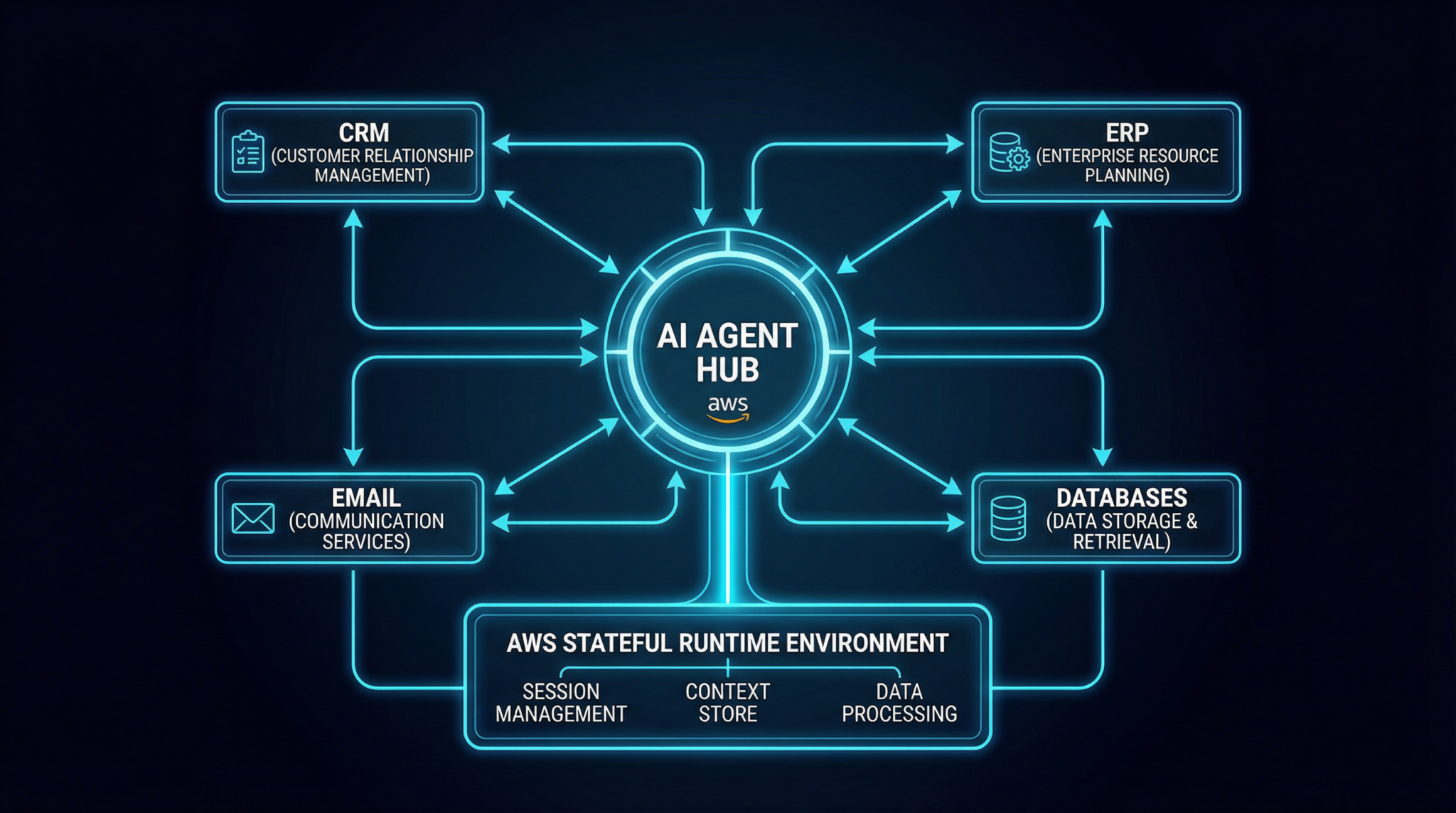
One of the most critical challenges in deploying AI agents across an enterprise is maintaining stateful interactions. AI conversations and workflows often span multiple turns and sessions, requiring persistent context to provide meaningful and personalized responses. To address this, organizations leverage a Stateful Runtime Environment architected on AWS cloud infrastructure.
Key Components of the Stateful Runtime Architecture
The architecture integrates several AWS services to support scalable, secure, and persistent AI agent operation:
- Amazon ECS/EKS (Elastic Container Service/Kubernetes Service): Hosts containerized AI agent runtime environments running ChatGPT and Codex microservices, enabling horizontal scaling.
- Amazon DynamoDB: A NoSQL database for storing user session states, conversation histories, and agent context data with low latency access.
- Amazon S3: Object storage for long-term archival of logs, conversation transcripts, and audit trails.
- AWS Lambda: Serverless compute for event-driven tasks, such as triggering context updates or code execution via Codex APIs.
- Amazon API Gateway: Secure API endpoints for frontend applications and internal systems to interact with AI agents.
- AWS Identity and Access Management (IAM): Fine-grained access control to secure AI agent resources and data.
- Amazon CloudWatch: Monitoring, logging, and alerting to ensure operational health and compliance.
Architectural Diagram Description
Imagine a layered architecture: at the bottom, AWS ECS/EKS clusters host the AI agent containers running ChatGPT Enterprise and Codex inference engines. These containers connect to a DynamoDB instance that manages session states and agent context. API Gateway exposes secure RESTful endpoints. AWS Lambda functions orchestrate event-driven updates and invoke Codex-generated automation scripts. CloudWatch monitors all infrastructure components. IAM policies enforce strict security boundaries.
Design Principles for Stateful AI Agent Runtime
- Low Latency Context Retrieval: DynamoDB tables designed with efficient partition keys for fast access to user context.
- Fault Tolerance & High Availability: Multi-AZ deployments with auto-scaling ECS/EKS clusters.
- Data Privacy & Compliance: Encryption-at-rest and in-transit for sensitive conversation data.
- Extensibility: Modular microservices architecture allowing seamless integration of new AI capabilities or third-party APIs.
Combined, these elements enable AI agents to maintain context across sessions, recall historical interactions, and execute Codex-powered automation securely and efficiently.
Maintaining Agent Context: Strategies for Persistent and Dynamic Interaction
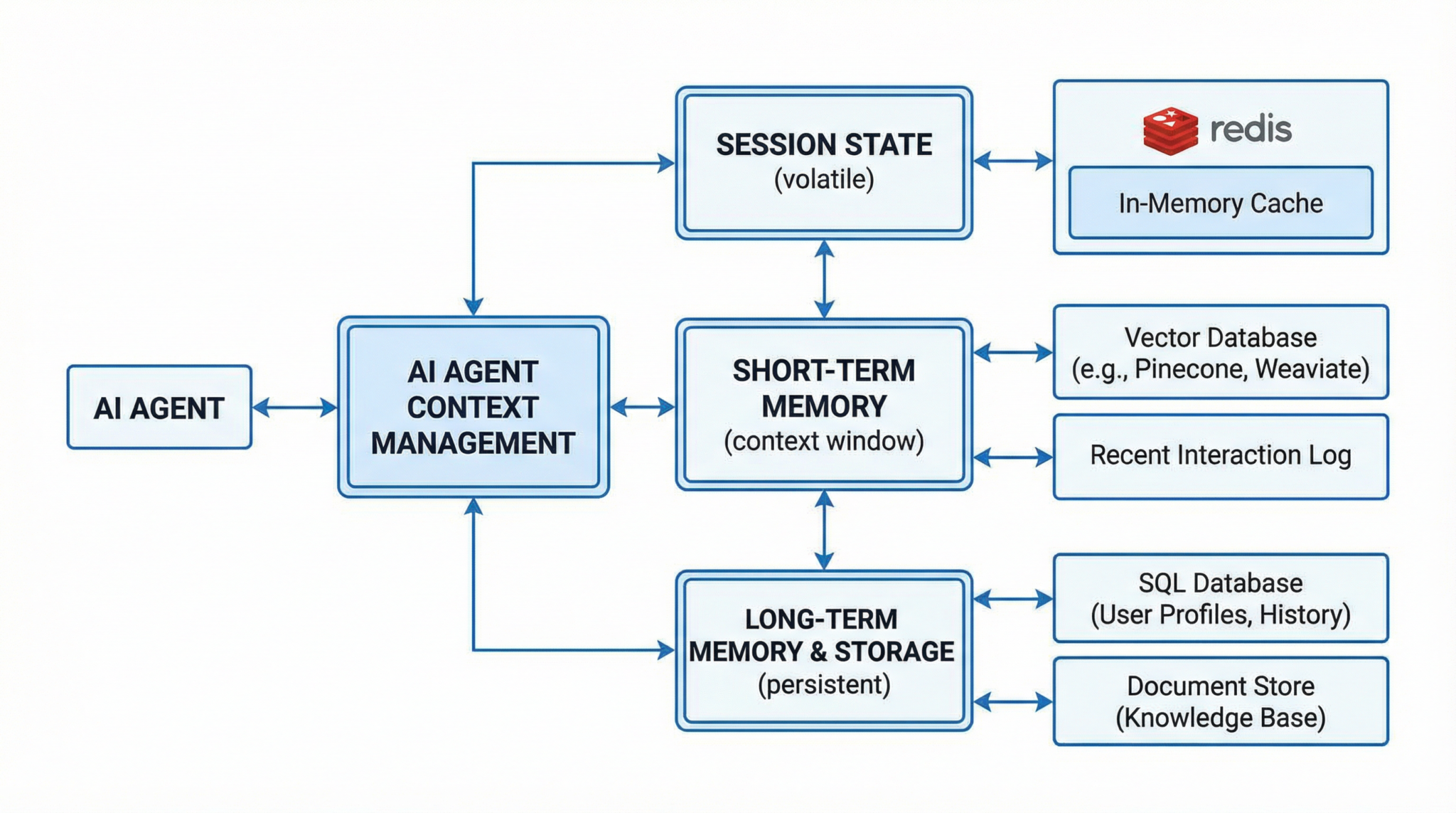
In enterprise AI agent deployments, context is king. Effective context management ensures AI agents understand ongoing conversations, user preferences, and organizational data constraints, delivering relevant, personalized assistance. Here we explore advanced techniques for maintaining agent context with ChatGPT Enterprise and Codex.
Multi-Turn Dialogue Memory
ChatGPT Enterprise supports advanced multi-turn memory, but to scale across thousands of users, the system must externalize context storage beyond ephemeral session buffers. Typical approaches include:
- Session Tokens & Metadata: Unique session identifiers link user interactions to stored state in DynamoDB.
- Context Window Management: Intelligent pruning and summarization of conversation history to fit within GPT’s token limits while preserving essential information.
- Dynamic Context Injection: Codex scripts dynamically fetch relevant CRM or ERP data to supplement agent responses in real-time.
Contextual Embeddings and Semantic Search
To enhance context recall, many enterprises leverage embedding models combined with vector databases. This approach allows AI agents to semantically search through past conversations, documents, and knowledge bases to retrieve contextually relevant information.
Hybrid Context Storage Architecture
Combining real-time session data (DynamoDB) with historical archives (Amazon S3) and semantic indices enables continuous learning and adaptability. This hybrid storage approach supports use cases like longitudinal customer support where an AI agent can recall interactions from months or years ago.
Security and Privacy in Context Management
Maintaining sensitive context data requires strict governance:
- Role-based access controls limiting who or what services can read/write context.
- Data masking and anonymization techniques applied to sensitive fields.
- Audit logs capturing all context access/modification events for compliance reporting.
As AI agents become integral to company operations, ensuring robust cybersecurity measures is essential. Our comprehensive guide on ChatGPT Enterprise Security Best Practices offers over 1000 tailored prompts designed to help safeguard digital environments and strengthen defenses against evolving cyber threats.
Practical Use Cases: Empowering Sales Teams with AI Agents for Prospecting and CRM Updates

One of the most impactful applications of AI agents in enterprises is augmenting sales teams. AI agents powered by ChatGPT Enterprise and Codex can transform prospecting, lead qualification, and CRM maintenance into highly efficient, automated workflows.
Sales Prospecting Automation
AI agents can parse large volumes of publicly available business data, news feeds, and social media to identify promising leads matching ideal customer profiles. Using Codex-generated code, agents can integrate with sales intelligence platforms, enrich prospect data, and prepare personalized outreach drafts.
Example Workflow:
- Lead Identification: AI agent scans LinkedIn company pages, news articles, and industry reports.
- Data Enrichment: Codex scripts pull additional details from CRM and third-party APIs.
- Outreach Drafting: ChatGPT generates customized email templates tailored to prospect needs and pain points.
- Follow-Up Scheduling: Agent creates calendar reminders and sequences aligned with sales cadence.
CRM Data Updates and Cleanup
Maintaining accurate CRM data is often a time-consuming task for sales teams. AI agents help by automating data entry, deduplication, and record updates. They can interpret natural language inputs from sales reps and transform them into structured CRM entries.
Benefits Include:
- Reduced manual workload allowing sales reps to focus on relationship-building.
- Improved data accuracy and timeliness enhancing pipeline visibility.
- Seamless integration with popular CRM platforms like Salesforce, HubSpot, and Dynamics via Codex-powered API connectors.
These AI-driven enhancements can significantly boost sales productivity, shorten deal cycles, and increase revenue conversion rates. Stanford’s 2026 Enterprise AI Playbook highlights how 41 organizations across seven countries navigated the activation gap and realized measurable AI ROI through practical frameworks. For a detailed look at these outcomes and strategies, explore the AI ROI Analysis for Sales Automation.
Security Considerations: Safeguarding Enterprise AI Agents and Data
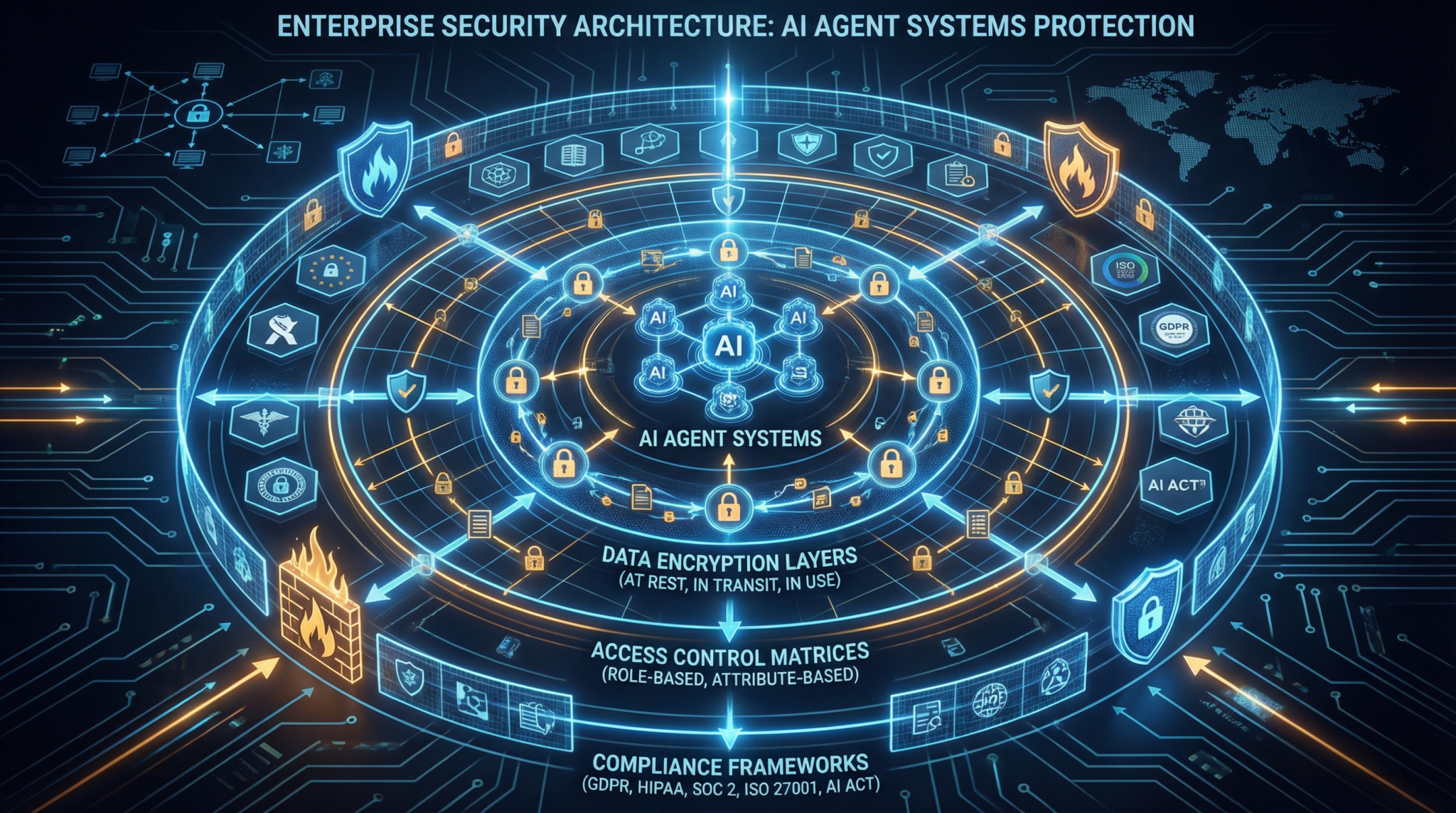
Deploying AI agents at scale requires a rigorous security framework to protect sensitive corporate data and maintain compliance with regulations such as GDPR, HIPAA, and SOC 2. Below are critical security considerations for enterprise AI agent deployments.
Data Security and Privacy
- Encryption: All conversational data and context stored in DynamoDB and S3 must be encrypted at rest using AWS KMS keys. In-transit encryption via TLS is mandatory for all API communications.
- Data Minimization: Only necessary data should be collected and retained. Context pruning and anonymization techniques reduce risk exposure.
- Access Controls: Strict IAM policies restrict AI agent access to databases and APIs based on least privilege principles.
Identity and Authentication
- Multi-Factor Authentication (MFA): Enforced for all users accessing AI agent management consoles and backend systems.
- Service Identity Federation: Use AWS IAM roles with temporary credentials for AI agent microservices to interact securely with other cloud resources.
Auditability and Monitoring
- Continuous logging of all AI agent interactions, API calls, and data accesses.
- Integration with SIEM (Security Information and Event Management) tools for anomaly detection and incident response.
- Regular penetration testing and vulnerability assessments of AI endpoints.
Governance and Compliance
Establish clear data governance policies outlining permissible AI agent data usage, retention periods, and user consent management. Compliance teams should be involved early to validate AI agent workflows against regulatory requirements.
To see a detailed example of enterprise AI applied to cybersecurity, explore the Enterprise AI Security Framework where Accenture’s Cyber.AI project demonstrates the architecture, implementation, and outcomes of using Claude for robust enterprise security. This case study offers valuable insights into integrating AI agents within complex organizational environments.
ROI Analysis: Measuring the Business Impact of AI Agents
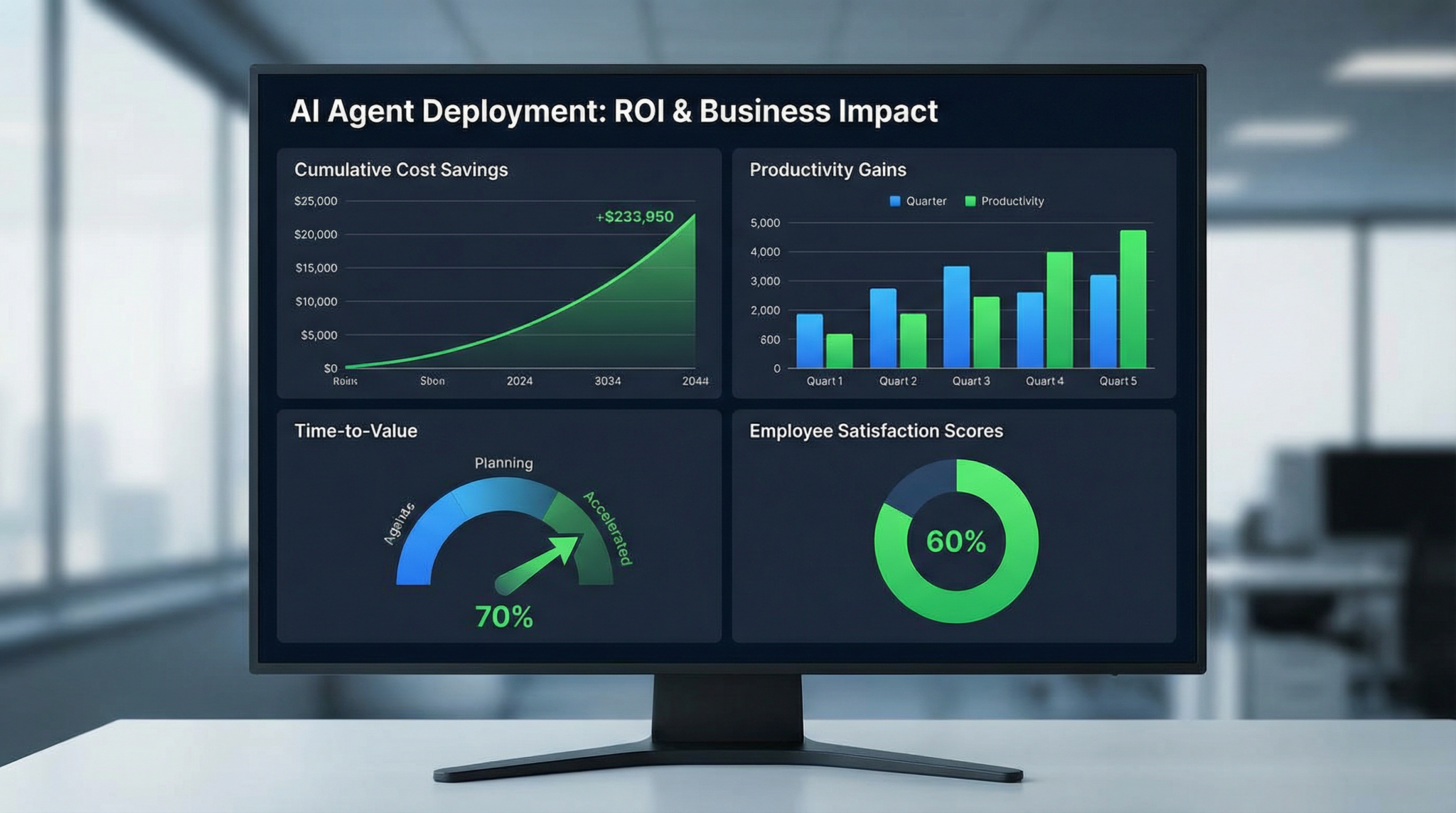
Quantifying the return on investment (ROI) for company-wide AI agents is essential to secure executive sponsorship and guide future scaling. ROI analysis involves assessing cost savings, revenue increases, and intangible benefits derived from AI agent deployment.
Key ROI Metrics and KPIs
- Operational Efficiency Gains: Reduction in manual hours spent on tasks like prospecting, data entry, and support ticket triage.
- Revenue Uplift: Increase in qualified leads, faster deal closures, and improved cross-sell/up-sell rates attributed to AI agent assistance.
- Customer Satisfaction: Higher NPS scores and faster response times resulting from AI-augmented service.
- Employee Productivity: Time freed for high-value activities, reducing burnout and turnover.
- Cost Avoidance: Minimizing errors, compliance violations, and redundant processes.
ROI Calculation Methodology
1. Baseline Assessment: Document current manual efforts, error rates, and business outcomes before AI deployment.
2. AI Impact Measurement: Track improvements post-deployment via KPIs over defined periods.
3. Cost Analysis: Include AI platform licensing, development, cloud infrastructure, and change management expenses.
4. Net Benefit Calculation: Subtract costs from quantified benefits to determine ROI percentage.
Using this rigorous approach helps organizations justify AI investments and prioritize high-impact use cases for expansion.
Deployment Phases: From Pilot to Company-Wide AI Agent Rollout
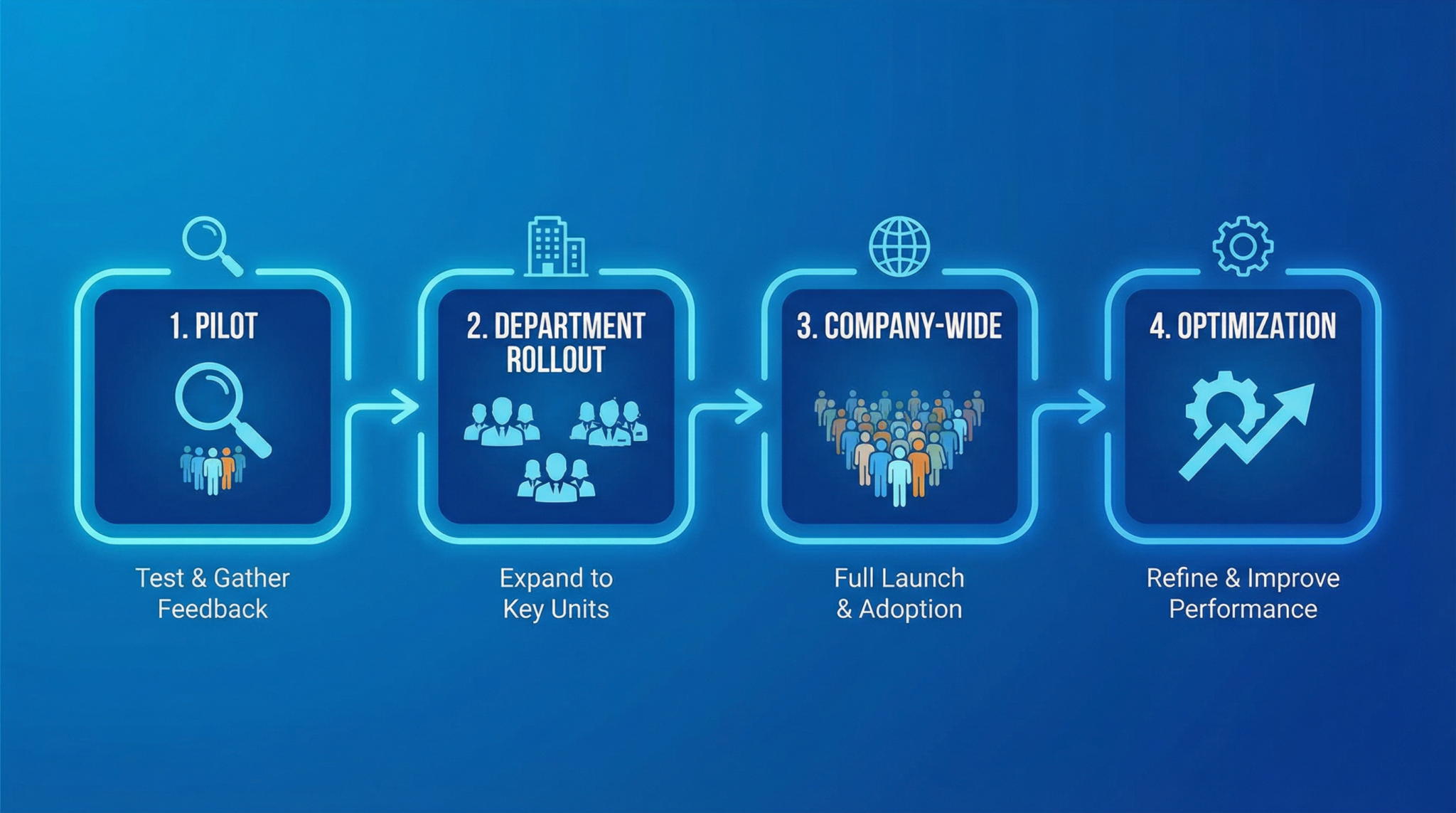
Deploying AI agents at an enterprise scale is a complex initiative requiring phased execution to mitigate risks and maximize adoption. Below is a recommended phased approach.
Phase 1: Discovery and Use Case Prioritization
- Identify business processes with highest AI impact potential.
- Engage stakeholders from sales, marketing, IT, and compliance.
- Define success criteria and KPIs.
Phase 2: Proof of Concept (PoC) Development
- Build minimal viable AI agents using ChatGPT Enterprise and Codex for selected use cases.
- Test Stateful Runtime Environment on AWS with limited user groups.
- Collect feedback and refine agent behaviors and integrations.
Phase 3: Pilot Deployment and Evaluation
- Roll out AI agents to broader teams (e.g., entire sales division).
- Monitor performance, user satisfaction, and security compliance.
- Adjust context management, workflows, and training data based on pilot outcomes.
Phase 4: Enterprise-Wide Rollout
- Scale infrastructure to support organization-wide concurrency.
- Implement governance frameworks and automated monitoring.
- Train end-users and provide ongoing support.
Phase 5: Continuous Improvement and Expansion
- Integrate additional AI capabilities and new departmental agents.
- Analyze usage data to optimize agent interactions and ROI.
- Stay updated with evolving ChatGPT and Codex features for enhancements.
Successful deployments rely on cross-functional collaboration and iterative feedback loops throughout these phases.
Change Management Strategies for Company-Wide AI Agent Adoption

Introducing AI agents at scale inevitably transforms workflows and team dynamics, necessitating deliberate change management to drive adoption and minimize resistance.
Stakeholder Engagement and Communication
- Identify and empower AI champions within departments to evangelize benefits.
- Communicate transparently about AI agent capabilities, limitations, and data privacy safeguards.
- Provide clear messaging on how AI augments rather than replaces human roles.
User Training and Support
- Develop role-specific training materials, including video tutorials, FAQs, and hands-on workshops.
- Establish helpdesk resources for troubleshooting AI agent interactions.
- Encourage feedback channels to capture user experiences and pain points.
Policy and Governance Alignment
- Update organizational policies to include AI usage guidelines and ethical considerations.
- Ensure compliance with industry regulations related to AI and data handling.
- Implement regular audits to monitor AI agent effectiveness and adherence to policies.
Measuring Adoption and Success
- Use analytics dashboards to track AI agent usage frequency, task completion rates, and user satisfaction scores.
- Recognize and reward teams effectively leveraging AI agents to reinforce positive behavior.
- Adjust change management tactics based on adoption metrics.
Integrating change management with technical deployment ensures AI agents become trusted tools, driving sustained organizational transformation.
Conclusion: Preparing Your Enterprise for AI-Driven Transformation in 2026 and Beyond
Building company-wide AI agents with ChatGPT Enterprise and OpenAI Codex in 2026 represents a transformative opportunity to reimagine how organizations operate. By architecting a stateful runtime environment on AWS, maintaining rich contextual understanding, and applying AI agents to practical use cases like sales prospecting and CRM automation, enterprises can unlock significant productivity and revenue gains.
However, realizing these benefits requires a comprehensive approach encompassing robust security frameworks, detailed ROI analysis, phased deployment planning, and proactive change management. Organizations that invest strategically in these areas will position themselves at the forefront of AI-driven innovation, empowering teams with intelligent agents that augment human expertise and accelerate business outcomes.
To deepen your understanding of deploying AI agents effectively, particularly with ChatGPT Atlas Agent Mode, explore our detailed guide featuring 12 advanced prompting strategies. This resource covers practical applications such as research, shopping, form automation, data extraction, competitive analysis, and managing multi-step workflows, providing essential techniques for enhancing AI-driven enterprise operations through AI Deployment Strategies for Enterprises.
Access 40,000+ AI Prompts for ChatGPT, Claude & Codex — Free!
Subscribe to get instant access to our complete Notion Prompt Library — the largest curated collection of prompts for ChatGPT, Claude, OpenAI Codex, and other leading AI models. Optimized for real-world workflows across coding, research, content creation, and business.

