
The ChatGPT Work Mode Playbook — 12 Prompts for Autonomous Research, Report Generation, Email Drafting, and Project Coordination

ChatGPT Work Mode Prompts Library — Autonomous Productivity Playbook (July 2026)
Work Mode (launched July 9, 2026) transforms how teams and businesses use generative AI by enabling autonomous, multi-step workflows: browsing, executing tasks, integrating with tools (Gmail, Slack, GitHub, calendars, cloud storage), running code, and delivering artifacts with minimal supervision. This article is a practical, developer-and-business-focused catalog of 12 production-ready prompts organized into four sections: Autonomous Research, Report Generation, Email Drafting, and Project Coordination. Each prompt is explicitly optimized for Work Mode’s capabilities and includes the full prompt text, how Work Mode executes it differently from regular ChatGPT, expected deliverable formats, concrete tips for tool integrations, and estimated completion time.
Use these prompts as templates you can paste into Work Mode, customize for your organization, wire to the right connectors, and run. Where helpful, code snippets and integration guidance are included so engineering teams can provision access for secure autonomous execution. Internal references:
For a deeper exploration of ChatGPT prompting techniques, our comprehensive guide on The Codex Computer Use Playbook — 10 Automation Prompts for Windows Desktop Tasks provides detailed walkthroughs, practical examples, and expert recommendations that complement the strategies discussed in this section.
,
Teams implementing these workflows will benefit from understanding the foundational concepts covered in our detailed analysis of The Complete Guide to ChatGPT Work Mode vs Codex Mode — When to Use Each, Feature Differences, and Productivity Workflows, which examines the technical architecture and best practices for production deployments.
,
The techniques described above build upon the principles outlined in our in-depth tutorial on How OpenAI’s $30 Billion Revenue Target Is Reshaping the AI Industry: From Research Lab to Enterprise Platform, where we examine real-world implementation patterns and performance optimization strategies.
,
Organizations evaluating these capabilities should also review our thorough examination of How to Build a Multi-Agent Workflow with ChatGPT Work and GPT-5.6 Terra — Connecting Gmail, Slack, and GitHub for Automated Project Management, which covers the enterprise considerations, security implications, and integration pathways relevant to this discussion.
.
How to use this library
- Pick a prompt and paste into Work Mode’s prompt input.
- Before running, review and configure tool access (web browsing, Gmail, Slack, GitHub, cloud storage) given in the “Tips for setting up the right tool integrations”.
- Adjust timebox and permission scopes — Work Mode can act autonomously but must have explicit, least-privilege authorization to third-party services.
- Expect granular logs and intermediate artifacts; request iterative checkpoints if you want periodic human review.
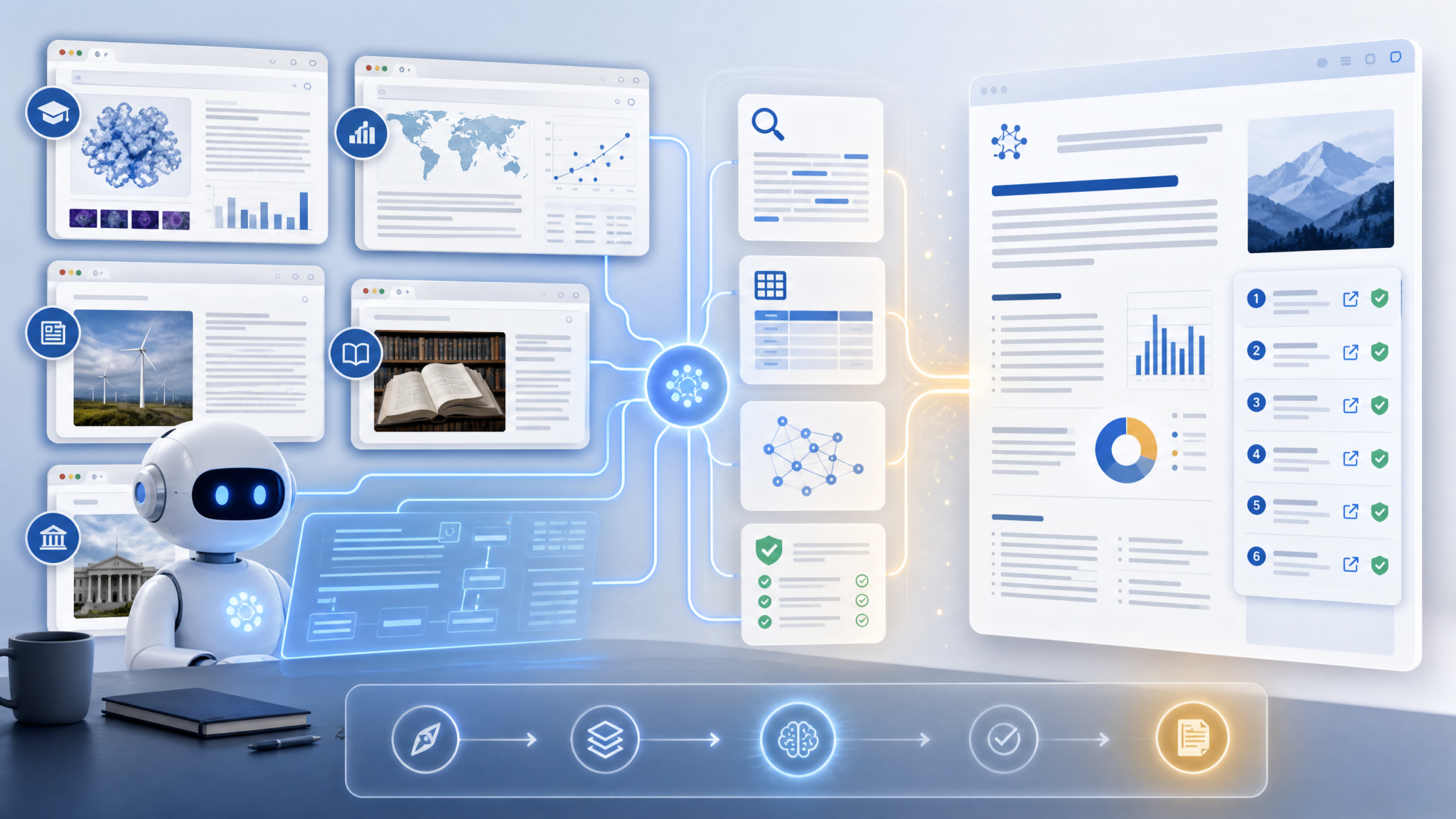
Section 1 — Autonomous Research (3 prompts)
Prompt 1: Market Research with Source Compilation
Full prompt (optimized for Work Mode):
You are an autonomous research agent. Objective: produce an evidence-backed market research dossier for "AI-enhanced customer support platforms" targeted at mid-market SaaS vendors in North America. Tasks:
1) Browse recent public sources (news, industry reports, vendor pages, developer docs) from the last 18 months and collect a prioritized list of market trends (minimum 8 trends) with source citations.
2) Compile a list of top 12 vendors (global + North America) with one-paragraph summaries and primary differentiators using their public feature lists and pricing pages.
3) Produce a structured appendix of all sources (URL, author/publisher, date, one-sentence rationale of relevance).
4) Deliver an executive two-page summary + a 12-slide slide deck (title, 1 slide per vendor, 1 trends slide, 1 recommendations slide) in PDF and editable PPTX.
5) Save raw scraped data and notes (CSV and JSON) to the connected cloud storage location /work-mode-output/market-research-ai-support/.
Constraints:
- Only use sources that are public and legally accessible. Do not use private or paid content behind paywalls unless explicit credential access is supplied.
- Prioritize vendor claims verified by third-party reviews, developer docs, and GitHub repos where available.
Return: produce the two-page summary first, then upload the deck and raw data to the cloud location. Provide a short changelog of steps taken and time spent per step.
How Work Mode handles it differently than regular ChatGPT
- Work Mode can autonomously browse the web, fetch the cited pages, and capture direct URLs and metadata; ChatGPT alone cannot access live web pages.
- Work Mode can produce binary artifacts (PPTX, PDF) and write files to cloud storage; ChatGPT can only output plain text or simulated slides.
- Work Mode can run a multi-step workflow: search → fetch → extract → summarize → generate slides → upload. ChatGPT requires the user to orchestrate each step manually.
Expected deliverable format
- Two-page executive summary (PDF and editable DOCX)
- 12-slide deck + title/recommendations slide (PPTX + PDF export)
- Raw data: CSV (vendor list with URLs and attributes) and JSON (scraped source records)
- Changelog log.txt with timestamps and time spent per subtask
Tips for setting up the right tool integrations
- Browser access: enable Work Mode’s web browser integration and add a whitelist of domains (industry analyst sites, vendor domains). Configure rate limits and scraping rules if available.
- Cloud storage: provide a writeable workspace (Google Drive, Microsoft OneDrive, AWS S3) with a dedicated service account and folder /work-mode-output/market-research-ai-support/.
- Third-party APIs: if you want to include Crunchbase/CB Insights/SimilarWeb data, supply API keys and confirm usage terms. Otherwise, rely on public sources and GitHub.
- Document generation: authorize Work Mode to generate PPTX and PDF via a connected Office 365 or Google Workspace scope.
Estimated completion time
2.5–5 hours depending on browsing depth, rate limits, and number of sources; most runs complete in ~3 hours when using high-quality public sources.
Prompt 2: Competitor Feature Audit (productized)
Full prompt (optimized for Work Mode):
You are an autonomous engineering & product research assistant. Objective: produce a feature audit matrix comparing our product "AcmeAssist v2.1" to 8 specific competitors (list provided: vendor-a.com, vendor-b.com, vendor-c.com, vendor-d.com, vendor-e.com, vendor-f.com, vendor-g.com, vendor-h.com).
Tasks:
1) For each competitor, fetch product pages, developer docs, changelogs, and public API docs. Extract feature bullets into granular feature items (e.g., "multilingual NLU", "live chat escalation", "knowledge base versioning").
2) Normalize feature taxonomy into categories: Core AI, Integrations, Security & Compliance, Developer Experience, Pricing & SLAs, Observability.
3) Generate a CSV feature matrix where rows are normalized features and columns are competitors + AcmeAssist. Populate cells with: "Yes (level)", "No", or "Partial" and include a 1-sentence evidence citation (URL + quote).
4) Highlight 10 feature gaps, 6 quick wins (engineering or product changes <2 sprints), and 4 strategic differentiators to pursue.
5) Store the CSV and a Markdown technical brief in /work-mode-output/feature-audit/.
Constraints:
- Use only publicly accessible documentation and vendor-provided content unless additional credentials are given.
- Where vendor claims are ambiguous, mark the cell as "Partial" and attach the specific supporting snippet or API response.
Return: upload CSV, markdown brief, and a prioritized backlog JSON with suggested JIRA labels and effort estimates (T-shirt sizes).
How Work Mode handles it differently than regular ChatGPT
- Autonomous browsing and structured extraction: Work Mode visits each vendor page and extracts feature bullets and API examples; ChatGPT cannot fetch live web docs.
- Data normalization and file generation: Work Mode writes CSV/JSON files and uploads to cloud storage; ChatGPT only outputs text that a human must convert.
- Evidence-backed cells: Work Mode can attach direct URL snippets and quote vendor pages to substantiate "Yes/Partial/No" cells.
Expected deliverable format
- CSV: feature-matrix.csv (rows = features; columns = vendors + AcmeAssist)
- Markdown technical brief: feature-audit.md
- Backlog JSON: feature-gaps-backlog.json (with title, description, priority, t-shirt size, suggested epic)
Tips for setting up the right tool integrations
- Provide a repository or folder where Work Mode can push the CSV and JSON (GitHub repo or cloud storage). If pushing to GitHub, grant a bot/service account commit access to a specific branch.
- Rate limits: configure domain-specific crawling limits. For large vendor sites, permit up to N concurrent requests with politeness delays to avoid blocking.
- Sensitive data: ensure Work Mode has no access to private product roadmap docs unless you intentionally connect internal knowledge stores (Confluence, Notion) with read-only scopes.
Estimated completion time
1.5–4 hours depending on number of pages per vendor and depth of evidence extraction; typical full audit completes in around 2–3 hours.
Prompt 3: Technology Landscape Mapping (emerging tech + GitHub signals)
Full prompt (optimized for Work Mode):
You are an autonomous technical analyst. Objective: create a technology landscape map for "vector database + retrieval-augmented generation (RAG) systems" including open-source projects, major commercial providers, and package ecosystems.
Tasks:
1) Search GitHub for related projects (keywords: vector-database, vdb, similarity-search, FAISS, Annoy, Milvus, Pinecone, Weaviate) and rank projects by stars, recent commits (last 12 months), and contributors.
2) For each major open-source project, extract the latest release notes, core features, license, and sample integration code.
3) Compile a list of commercial providers with short notes on pricing model, latency SLAs (if public), and obvious deployment patterns (managed vs self-hosted).
4) Produce a network diagram mapping components (ingestion -> embedding -> storage -> retrieval -> LLM) and annotate typical tech choices at each stage.
5) Deliverables: CSV of GitHub projects with metrics, a Markdown landscape report with diagrams (SVG), and a one-page recommendation for a proof-of-concept architecture for evaluation in Q3 2026.
Security: do not clone private repos. Only use public GitHub APIs and respect rate limits.
How Work Mode handles it differently than regular ChatGPT
- Work Mode calls GitHub APIs to fetch real-time metrics (stars, recent activity), release notes, and contributor lists; ChatGPT cannot query GitHub live.
- Work Mode can generate diagrams (SVG) and store the CSV/diagram files in your workspace; ChatGPT can only describe diagrams in text.
- Work Mode can correlate commercial site data with GitHub signals and produce a ranked recommendation based on quantitative metrics.
Expected deliverable format
- CSV: github-projects.csv with columns (name, repo_url, stars, forks, last_commit_date, license)
- SVG diagram: tech-landscape.svg
- Markdown report: vdb-landscape.md
- One-page POC recommendation (PDF)
Tips for setting up the right tool integrations
- GitHub: create a read-only token with access to public repo metadata via the REST or GraphQL API. Configure rate limits and caching for repeated runs.
- Diagramming: authorize Work Mode to use a drawing library or an internal diagramming service that outputs SVG or PNG.
- Cloud: provide a destination path and retention policy for generated artifacts and ensure compliance logging for all API calls.
Estimated completion time
1–2.5 hours for a comprehensive mapping when GitHub API access is available and diagram generation is supported.
Section 2 — Report Generation (3 prompts)
Prompt 4: Weekly Status Report from Multiple Data Sources
Full prompt (optimized for Work Mode):
You are an autonomous reporting assistant. Objective: generate this week's "Engineering & Product" status report for the leadership team.
Data sources (connect): Jira (project boards: CORE, RAG-POC), GitHub (PRs merged this week), CI system (last 7 days build success/failure summary), PagerDuty (incidents this week), Slack (#eng-status channel).
Tasks:
1) Aggregate: pull items that transitioned status in Jira this week, PRs merged and number of lines changed per repo, CI flakiness stats, incidents with MTTR, and relevant highlights from Slack (threads with #status pinned or flagged).
2) Produce sections: Highlights, Risks & Blockers, Metrics (sprint burndown, PR lead time, CI pass rate, MTTR), Action Items, Decisions Needed.
3) Draft a concise email-ready status summary (250–400 words) and an attached 2-page PDF for exec distribution with charts (burndown, PR lead time histogram, CI trend).
4) Tag actions that require management sign-off and generate suggested assignees and due dates based on workload heuristics.
Permissions & security: do not disclose any sensitive incident details beyond ticket summaries. Redact any personal phone numbers or sensitive tokens in raw logs.
Return: upload PDF and CSV metrics to the /work-mode-output/status-reports/YYYY-MM-DD/ folder and post the email draft to Drafts in Gmail for the project lead to review.
How Work Mode handles it differently than regular ChatGPT
- Work Mode integrates with Jira, GitHub, CI and Slack to fetch live data and compute metrics; ChatGPT lacks native connectors and cannot pull such data.
- Work Mode generates charts and PDFs and can put the draft directly into Gmail Drafts, enabling a near-end-to-end workflow; ChatGPT only produces text for manual copy/paste.
- Work Mode can apply redaction rules and permission-aware summarization when dealing with incident or credential-sensitive content.
Expected deliverable format
- Email draft in Gmail Drafts (subject, recipients, body)
- Two-page PDF with charts + attached CSV metrics
- CSV: jira-transitions.csv, prs-summary.csv, incidents.csv
Tips for setting up the right tool integrations
- Jira and GitHub: grant Work Mode read access to the necessary projects and repos. For Jira, use API tokens tied to a service account scoped to project read permissions.
- CI and PagerDuty: connect APIs that provide metrics. If your CI has webhooks, allow Work Mode to fetch historical logs for the timeframe specified.
- Slack: enable a bot with permissions to read channels specified (e.g., #eng-status) and access pinned messages and thread content.
Estimated completion time
10–40 minutes for typical weekly summary if all connectors are authorized and rate limits are moderate; up to 90 minutes if heavy metrics computation and chart rendering is required.
Prompt 5: Executive Briefing Document (Board-ready)
Full prompt (optimized for Work Mode):
You are an autonomous executive communications agent. Objective: produce a board-ready briefing document (6–8 pages) covering product progress, key metrics, customer wins/losses, financial highlights, and strategic risks for the last quarter.
Inputs: Connect to CRM (Salesforce), analytics (Amplitude), finance (QuickBooks or accounting exports), and customer success notes (Gainsight/Intercom). If any connector is missing, clearly state data gaps and use available public data.
Tasks:
1) Extract top-line metrics: ARR movement, churn, new logos, NPS changes, top 5 product usage metrics (MAU, stickiness), and top 3 customer quotes (redacted).
2) Identify one page dedicated to "Strategic Risks & Mitigations" with quantified exposures and proposed action plans.
3) Draft speaker notes for the CEO covering 8 talking points and a two-slide financial appendix in PPTX.
4) Produce the full briefing in DOCX and a board-pack PDF optimized for print (A4) with a cover page and table of contents.
Compliancy: redact sensitive customer PII and adhere to finance access policies. Provide a data provenance appendix showing exact queries run and API calls (with timestamps).
Return: upload DOCX, PDF, PPTX, and provenance log to /work-mode-output/board-briefs/q2-2026/.
How Work Mode handles it differently than regular ChatGPT
- Work Mode can fetch authoritative metrics from CRM, analytics, and finance systems and compute financial aggregates; ChatGPT cannot access these systems directly.
- Work Mode produces board-ready artifacts (DOCX, PPTX, PDF) and a provenance appendix that traces exact queries — essential for auditability in executive contexts.
- Work Mode can apply organization-specific redaction rules and output compliance logs; ChatGPT cannot enforce or record connector-level provenance.
Expected deliverable format
- DOCX: full briefing
- PPTX: two-slide financial appendix + speaker notes (slide notes)
- PDF: print-optimized board pack
- Provenance log: provenance.json or provenance.txt with API calls and timestamps
Tips for setting up the right tool integrations
- Finance and CRM: create service accounts with read-only access and allow Work Mode to run specific SQL queries or API endpoints. Validate that data access policies permit automated extraction.
- Analytics: connect Amplitude/GA/Heap with a query API token. If raw event access is expensive, provide pre-aggregated endpoints.
- Compliance: configure the redaction list and PII detection rules in Work Mode settings to ensure automatic removal of names, emails, or phone numbers as required.
Estimated completion time
1–3 hours depending on data complexity, number of connectors, and chart rendering. If finance reconciliation is required, expect up to 6 hours for thorough validation.
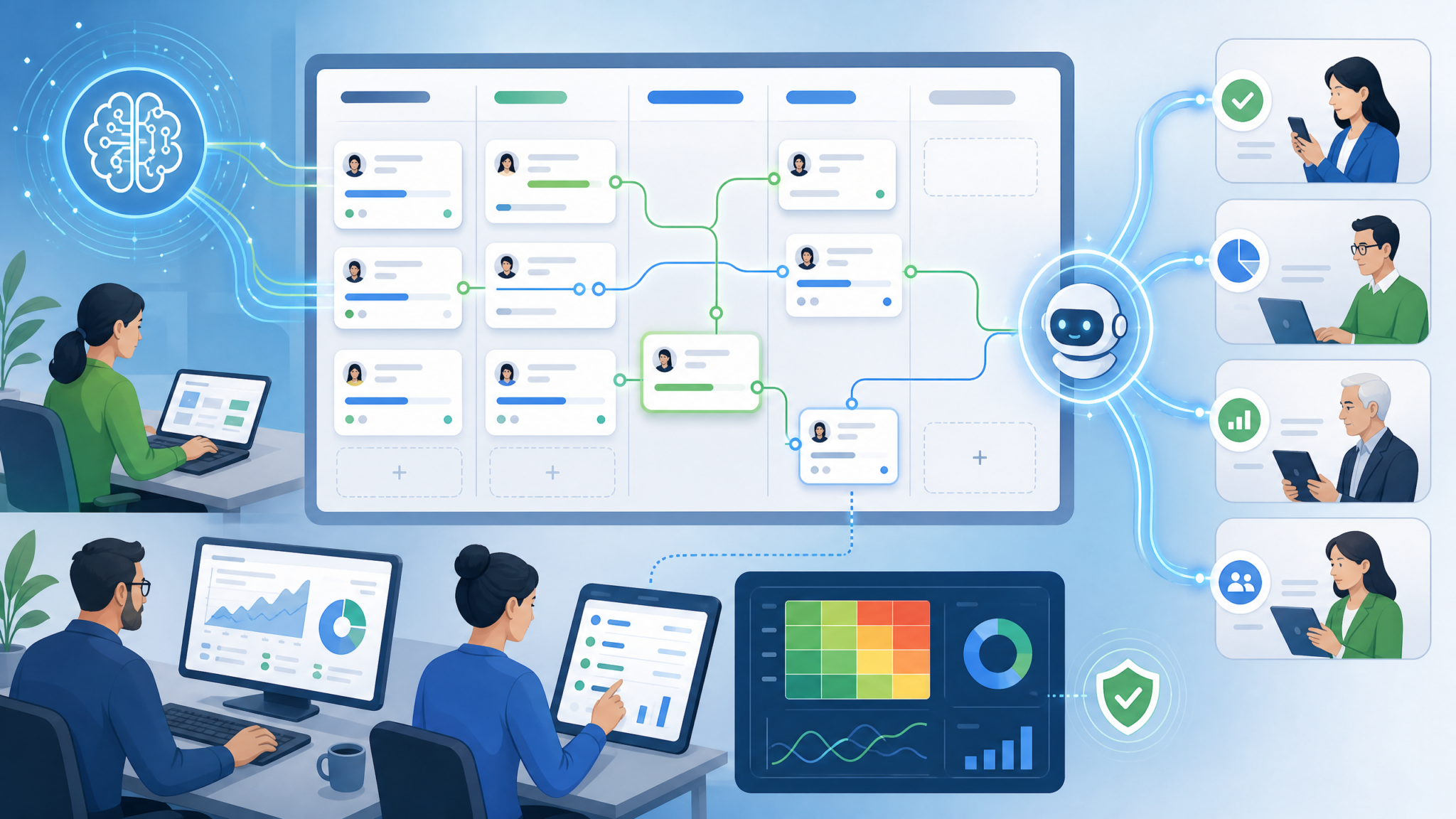
Prompt 6: Quarterly Business Review Draft (Customer-facing)
Full prompt (optimized for Work Mode):
You are an autonomous customer success writer. Objective: generate a Quarterly Business Review (QBR) draft for the customer "AcmeCorp" covering Q2 2026 performance.
Inputs: Connect to the customer account in CRM, Intercom support history, usage metrics (API calls, feature usage), invoices (billing), and the shared S3 folder containing account artifacts (work orders).
Tasks:
1) Aggregate customer-specific metrics: uptime, usage spikes, feature utilization trends, open support tickets and their status.
2) Identify top 3 value achievements, top 2 concerns from support tickets, and 3 recommended next steps with owner assignments.
3) Draft a 12–14 slide QBR in PPTX with speaker notes and a one-page executive summary PDF for the customer.
4) Generate an email draft to the customer's primary sponsor with suggested meeting times based on their calendar availability (if calendar access is provided) and include the QBR as an attachment.
Privacy: redact any internal PII and follow the customer's privacy policy as provided in the account profile.
Return: upload QBR assets to the shared S3 folder and create the email draft in Gmail.
How Work Mode handles it differently than regular ChatGPT
- Work Mode can access account-specific systems to pull exact metrics and support data; ChatGPT cannot access these accounts.
- Work Mode compiles slides, attaches files, and drafts an outbound email, producing an end-to-end deliverable ready for review and send.
- Work Mode can reference calendar availability and propose meeting times; ChatGPT cannot query calendars without integrated access.
Expected deliverable format
- PPTX: 12–14 slide QBR with speaker notes
- PDF: one-page executive summary
- Gmail Draft: pre-populated email subject, body, and attachment
Tips for setting up the right tool integrations
- Ensure the shared S3 bucket has fine-grained ACLs and Work Mode's service account has a specific prefix write/read permission.
- Calendar access: use an OAuth token with read-only calendar scope for the customer sponsor if you want Work Mode to propose times. Otherwise, have Work Mode propose generic slots to the account manager for manual checking.
- Intercom/Support: allow read-only access to ticket metadata and transcript snippets; set redaction preferences to avoid poor disclosure of PII.
Estimated completion time
20–90 minutes depending on connector latency, volume of tickets, and whether calendar integration is included; typical run ~30 minutes.
Section 3 — Email Drafting (3 prompts)
Prompt 7: Cold Outreach Sequences with Personalization
Full prompt (optimized for Work Mode):
You are an autonomous outreach composer. Objective: create a 5-email cold outreach sequence for enterprise leads in the "Retail & Ecommerce" vertical to introduce "AcmeAssist RAG Studio". For each target account in an input CSV (columns: company_name, domain, C-level contact, LinkedIn URL), Work Mode should:
1) Enrich contacts with public data (company size, recent funding, relevant news this quarter, tech stack hints via BuiltWith), and generate a personalized subject and email body for each of the 5 sequence emails. Include dynamic placeholders and fallback values.
2) Provide A/B variants for email 1 (two subject lines, two opening hooks).
3) Deliver follow-up cadence recommendations (days between sends) and suggested touchpoints (LinkedIn DM, Twitter, phone).
4) Create an optional sequence of follow-up Slack messages for your internal SDR team summarizing which accounts to prioritize and recommended talking points.
Constraints: Do not send emails automatically. Output: a CSV with enriched contacts and the full email bodies (plain text and HTML variants) plus a sequence metadata JSON.
How Work Mode handles it differently than regular ChatGPT
- Work Mode enriches contacts via public web sources (news, BuiltWith, LinkedIn public pages) and can attach evidence snippets per contact; ChatGPT cannot augment contact data live.
- Work Mode produces ready-to-send HTML email variants and can populate dynamic template placeholders for ESPs (e.g., Outreach.io, Salesloft) and export the sequence metadata JSON for direct import; ChatGPT outputs text only.
- Work Mode can generate internal Slack messages for SDRs and tag high-priority accounts based on signals like funding or tech stack fit.
Expected deliverable format
- CSV: enriched-contacts.csv (original columns + company_size, recent_news, builtwith_stack)
- JSON: sequences.json (templated emails with placeholders and cadence)
- HTML: email templates (email1_a.html, email1_b.html, ...)
- Slack summary message as JSON for posting by the SDR bot (if allowed)
Tips for setting up the right tool integrations
- BuiltWith/tech stack APIs: provide API keys for enrichment. If not available, allow Work Mode to scrape public tech stack indicators but be mindful of scraping terms.
- ESP integration: to automate later, authorize read/write for template import to your ESP (optional). For now, export as JSON that your SDR ops can import.
- LinkedIn: Work Mode can fetch public profile snippets but cannot use private session scraping; use LinkedIn Sales Navigator API keys where permitted.
Estimated completion time
15–60 minutes per input CSV (up to 200 rows). Enrichment API speed and rate limits determine variance; small batches complete in ~20 minutes.
Prompt 8: Meeting Follow-up with Action Items
Full prompt (optimized for Work Mode):
You are an autonomous meeting summarizer and follow-up engine. Objective: convert a meeting transcript (uploaded text, audio, or Zoom recording if integration authorized) into a structured follow-up email with action items, owners, deadlines, and supporting links.
Tasks:
1) Transcribe audio (if audio provided) and generate a time-stamped summary with three levels: one-line TL;DR, 5–7 bullet summary, and a full transcript.
2) Extract action items: identify owner (by name), proposed due date (if discussed), and priority. If owner is ambiguous, note "owner suggested" with rationale.
3) Create an email draft with subject "Follow-up: [Meeting Topic] — Action Items & Next Steps" and include an inline table of action items and a calendar invite draft (ICS) with proposed next meeting times based on participants' calendars (if calendars are accessible).
4) Save a meeting minutes doc to the account's workspace and post a short summary to a designated Slack channel.
Security: audio processing should not leave your secure environment; respect retention and deletion policies.
Return: upload the minutes doc, ICS file, the email draft (Gmail Drafts), and a Slack message payload.
How Work Mode handles it differently than regular ChatGPT
- Work Mode can transcribe audio and process meeting recordings, extract actionable items with owner inference, and integrate with calendars to propose meeting times. ChatGPT cannot process audio or query calendars without integrations.
- Work Mode creates calendar invite files (ICS) and can place emails in Drafts or post to Slack; ChatGPT can only output text that requires manual follow-through.
- Work Mode can store meeting minutes and attach the transcript and redaction logs automatedly.
Expected deliverable format
- DOCX/Google Doc: meeting-minutes.docx
- Gmail Draft: follow-up email
- ICS: calendar-invite.ics
- Slack message payload JSON for posting to channel
Tips for setting up the right tool integrations
- Zoom/recordings: enable Zoom OAuth scope for recording access or provide the MP3/MP4 file to Work Mode.
- Calendar: grant read-only access to participants' calendars if you want Work Mode to propose times; otherwise have Work Mode propose generic options based on time-zone heuristics.
- Transcription costs: confirm whether transcription will use internal engines (on-premises) or cloud speech APIs; account for token and compute costs.
Estimated completion time
5–30 minutes depending on recording length and whether calendar lookups are performed; 60–120 minutes for very long meetings (>90 minutes) with detailed action extraction.
Prompt 9: Stakeholder Update Communications
Full prompt (optimized for Work Mode):
You are an autonomous communications specialist. Objective: prepare a stakeholder update memo tailored to three stakeholder groups: Engineering, Sales, and Legal.
Inputs: project docs in a shared repo, the latest project plan, a risk register, and a product demo recording.
Tasks:
1) For each stakeholder group, produce a one-page memo that includes: progress summary, items that require the stakeholder's attention, risks relevant to the stakeholder, and suggested actions.
2) Create 3-email drafts (one per stakeholder group) and 3 corresponding Slack messages (one per stakeholder channel) emphasizing the same points but tailored tone and level of technical detail.
3) Attach a short 3-slide appendix for each memo (PPTX) summarizing milestones, timeline, and asks.
4) Generate a consolidated summary for the CEO (150 words) that can be posted to the internal company update feed.
Return: upload all assets to /work-mode-output/stakeholder-updates/<project-name> and place the three emails in Gmail Drafts.
How Work Mode handles it differently than regular ChatGPT
Access 40,000+ AI Prompts for ChatGPT, Claude & Codex — Free!
Subscribe to get instant access to our complete Notion Prompt Library — the largest curated collection of prompts for ChatGPT, Claude, OpenAI Codex, and other leading AI models. Optimized for real-world workflows across coding, research, content creation, and business.
- Work Mode fetches the project docs and risk register from the repo to produce accurate, up-to-date memos; ChatGPT cannot access stored project artifacts.
- Work Mode can generate PPTX appendices and place emails into Drafts as well as post Slack messages to designated channels; ChatGPT can create text but not artifacts or posts.
- Work Mode can automatically tailor tone and content granularity based on stakeholder definitions stored in your org profile.
Expected deliverable format
- DOCX: three one-page memos
- PPTX: 3×3-slide appendices
- Gmail Drafts: 3 emails
- Slack payloads for posting
Tips for setting up the right tool integrations
- Repo access: provide a read-only token to the project's repository and specify which folders are allowed to be read.
- Stakeholder lists: set up an organizational profile in Work Mode that maps stakeholder channels and email lists to the names (Engineering → #eng-updates and [email protected]; Sales → #sales-updates, etc.)
- Access Control: ensure memo drafts are stored in a workspace with the appropriate access controls for confidential content.
Estimated completion time
10–45 minutes depending on repo size and number of artifacts to summarize; under 20 minutes for typical mid-sized projects.
Section 4 — Project Coordination (3 prompts)
Prompt 10: Sprint Planning from Backlog
Full prompt (optimized for Work Mode):
You are an autonomous scrum planning assistant. Objective: produce a sprint plan for the next 2-week sprint for the team "Platform Services".
Inputs: Jira backlog (unsized issues), team capacity (member list + velocity history), definition-of-done, recent sprint retrospectives.
Tasks:
1) Fetch backlog items, propose sizing estimates (story points) using historical similarity detection, and assign a priority score that balances business value and technical risk.
2) Propose sprint scope that fits within the calculated team capacity and outputs a sprint board (Jira-compatible JSON) with assignments and estimates.
3) Identify dependencies external to the team and create a cross-team notification plan (Slack messages + suggested approvers).
4) Draft sprint goals and acceptance criteria for each committed backlog item and produce a sprint kickoff email.
Constraints: do not reassign tickets to people not present in the team list. If any high-risk items exceed the sprint capacity, flag them for triage.
Return: upload sprint-plan.json (Jira import format), sprint-board CSV, kickoff email in Gmail Drafts, and a dependency tracker CSV.
How Work Mode handles it differently than regular ChatGPT
- Work Mode reads live backlog data, computes capacity, and generates a Jira import file; ChatGPT cannot perform these integrations or export Jira JSON.
- Work Mode analyzes historical velocity and uses pattern-matching of previous tickets to suggest story points; ChatGPT can only provide heuristic advice.
- Work Mode posts cross-team notifications and can create suggested approver mentions in Slack; ChatGPT cannot send messages or create tickets.
Expected deliverable format
- Jira import JSON: sprint-plan.json
- CSV: sprint-board.csv with fields (issue_key, summary, estimate, assignee)
- Gmail Draft: sprint kickoff email
- CSV: dependencies.csv listing external owners and suggested communication actions
Tips for setting up the right tool integrations
- Jira: service account with permission to read backlog and create/import issues on a staging/sandbox project. Validate field mappings between your Jira instance and Work Mode's export.
- Velocity history: allow read access to past sprint reports or provide a CSV of historical velocity if API access is restricted.
- Slack: provide a channel to post the kickoff and a bot token for mentions.
Estimated completion time
5–30 minutes for a standard sprint planning run with available data; larger backlogs or partial data require 45–90 minutes for human-in-the-loop triage.
Prompt 11: Cross-Team Dependency Tracking
Full prompt (optimized for Work Mode):
You are an autonomous program manager assistant. Objective: create and maintain a cross-team dependency tracker for "Project Apollo".
Inputs: Jira epics, Confluence design docs, Slack channels (cross-team #apollo-integrations), and the org team directory.
Tasks:
1) Scan specified repositories and docs to extract explicit dependency statements ("blocked by", "depends on", "requires X team") and infer implicit dependencies from linked tickets and PRs.
2) Produce a live dependency register with fields: dependency_id, source_ticket, dependent_team, owner, impact (High/Medium/Low), mitigation, last_updated, confidence_score.
3) For each High-impact dependency, propose a mitigation plan with an owner, timeline, and required approvals.
4) Schedule weekly automated checks (cron-like) that update statuses and deliver an executive summary if any High/Medium dependencies change state.
Return: dependency-register.csv, a Confluence-friendly Markdown table insertion snippet, and a Slack alert configuration (JSON) for notifying owners.
How Work Mode handles it differently than regular ChatGPT
- Work Mode reads project artifacts and PR metadata to surface both explicit and inferred dependencies; ChatGPT cannot query repositories or cross-reference tickets automatically.
- Work Mode can schedule repeat checks and post alerts when dependency status changes; ChatGPT can only suggest monitoring strategies.
- Work Mode includes a confidence score by correlating evidence (linkage density, last activity) to help PMs triage noise versus real blockers.
Expected deliverable format
- CSV: dependency-register.csv
- Markdown snippet: confluence-table.md
- Slack alert JSON: slack-alert-config.json
- Optional: weekly digest email template
Tips for setting up the right tool integrations
- Confluence: provide read access to the project spaces and a space key where the snippet can be posted.
- Repo and PR access: connect GitHub/GitLab tokens to allow scanning of PR links and issue references.
- Scheduling: configure Work Mode's scheduler permissions and set notification thresholds to avoid alert fatigue.
Estimated completion time
Initial register creation: 20–60 minutes. Ongoing weekly checks typically take <5 minutes per run and execute autonomously.
Prompt 12: Project Risk Assessment with Mitigation Plans
Full prompt (optimized for Work Mode):
You are an autonomous risk analyst. Objective: produce a comprehensive risk assessment for "Project Helios" before Phase 2.
Inputs: project plan, budget spreadsheets, resource allocations, vendor contracts, and recent test reports.
Tasks:
1) Identify and classify risks into categories: Schedule, Technical, Financial, Compliance, Vendor, and People. For each risk, quantify likelihood (Low/Medium/High), impact (L/M/H), and expected exposure (estimated cost/time).
2) For the top 10 risks by exposure, draft mitigation plans with owners, specific actions, contingency triggers, and estimated cost to implement mitigations.
3) Create a risk heatmap (SVG) and a one-page executive risk summary with recommended go/no-go decision triggers.
4) Produce a mitigation backlog JSON that can be imported into Jira as epics/stories with suggested labels and priority.
Constraints: do not surface contract clauses that are legally privileged unless legal explicitly permits review.
Return: risk-assessment.pdf, risk-heatmap.svg, mitigation-backlog.json, and a compliance-checklist CSV.
How Work Mode handles it differently than regular ChatGPT
- Work Mode can ingest spreadsheets, parse budgets, and compute exposures quantitatively; ChatGPT cannot parse files without data pasted into the prompt.
- Work Mode generates artifacts (SVG heatmap, risk PDF) and can create Jira-importable backlog JSON; ChatGPT can only recommend structures and examples.
- Work Mode can cross-check vendor contracts and flag clauses if provided (subject to legal permissions), providing higher confidence in compliance assessments.
Expected deliverable format
- PDF: risk-assessment.pdf
- SVG: risk-heatmap.svg
- JSON: mitigation-backlog.json (Jira import format)
- CSV: compliance-checklist.csv
Tips for setting up the right tool integrations
- Budget spreadsheets: enable Work Mode to read Excel/Google Sheets and ensure formulas are evaluated (provide raw values if needed).
- Contracts: supply contract text files or a secure repository where Work Mode may read but not persist sensitive documents beyond the run.
- Jira: to import mitigations automatically, provide test import permission to a dev/test project and validate field mappings in advance.
Estimated completion time
1–4 hours depending on number and complexity of financial artifacts and contract review depth; generating a high-confidence assessment typically completes in ~2 hours.
Comparison Tables
Below are comparison tables that succinctly illustrate the differences between Work Mode (autonomous agent workspace) and traditional Chat (interactive, non-autonomous model).
| Capability | Work Mode (Autonomous) | Chat Mode (Interactive) |
|---|---|---|
| Live Web Access | Yes — autonomous browsing & scraping with provenance | No — static knowledge cutoff (unless connected via plugins) |
| Tool Integrations (Gmail, Slack, GitHub, Jira) | Native connectors; can read/write with permissions | None by default; manual copy/paste or limited plugin access |
| File Generation (PPTX, PDF, CSV) | Generates and uploads artifacts to storage | Outputs text only; requires human conversion |
| Multi-step workflows | Orchestrates multi-step tasks autonomously | Requires iterative human instructions for each step |
| Scheduling & Monitoring | Supports scheduled checks and alerts | No persistent scheduling |
| Provenance & Auditability | Records exact API calls, timestamps, and data sources | Only textual explanation; no automatic provenance logs |
| Security Controls | Per-connector least-privilege scopes and redaction rules | Depends on user; no connector scopes |
| Use Case | Work Mode | Chat Mode |
|---|---|---|
| Automated weekly reporting | Autonomously aggregates & publishes reports | Manual aggregation guidance |
| Interactive brainstorming | Can assist but specializes in execution | Best suited for ideation and conversational workflows |
| Data-sensitive operations | Enforces access control & redaction; auditable | Not suitable without additional tooling |
| Quick code generation | Generates, tests, and can push to repo (with permission) | Generates snippets; requires human testing & commits |
Code Examples & Integration Snippets
Below are practical code examples that teams can use to configure Work Mode connectors and define prompt-run manifests. These examples are illustrative and should be adapted to your organization's security policies.
1) Example OAuth service account manifest (JSON) for cloud storage
{
  "connector": "google_drive",
  "service_account_email": "[email protected]",
  "scopes": [
    "https://www.googleapis.com/auth/drive.file",
    "https://www.googleapis.com/auth/drive.metadata.readonly"
  ],
  "allowed_folders": [
    "work-mode-output/market-research-ai-support",
    "work-mode-output/status-reports"
  ],
  "retention_policy_days": 90
}
2) Sample GitHub read-only token usage (GraphQL)
# Example GraphQL query to fetch repository activity (pseudocode)
query RepoActivity($owner: String!, $name: String!) {
  repository(owner: $owner, name: $name) {
    stargazers {
      totalCount
    }
    defaultBranchRef {
      target {
        ... on Commit {
          history(first: 1) {
            nodes { committedDate }
          }
        }
      }
    }
    licenseInfo { spdxId }
  }
}
3) Jira import JSON snippet for sprint plan
{
  "sprint": {
    "name": "Platform Services Sprint 42",
    "startDate": "2026-07-20T09:00:00.000Z",
    "endDate": "2026-08-03T17:00:00.000Z"
  },
  "issues": [
    {
      "summary": "Improve embedding pipeline throughput",
      "description": "Increase parallel workers and add batching",
      "assignee": "[email protected]",
      "storyPoints": 8,
      "labels": ["platform", "performance"]
    },
    {
      "summary": "Add observability dashboard for RAG latency",
      "assignee": "[email protected]",
      "storyPoints": 5,
      "labels": ["observability"]
    }
  ]
}
Best Practices for Running Autonomous Prompts in Work Mode
- Start with the least-privilege connector scopes and elevate only as needed.
- Test prompts on a small sandbox dataset before running in production.
- Use explicit stop conditions and timeboxing in prompts to avoid runaway behavior.
- Maintain a clear provenance and audit trail for each run; require logs for board-level deliverables.
- Include human-in-the-loop checkpoints for decisions that require legal, financial, or strategic sign-off.
FAQ
Q: What is the primary difference between Work Mode and traditional ChatGPT?
Work Mode is an autonomous agent workspace that can execute multi-step tasks by interacting with external systems (web browsing, APIs, productivity tools) and generate artifacts (PPTX, PDF, CSV) while maintaining provenance and access controls. Traditional ChatGPT is an interactive conversational model primarily limited to text generation with no built-in connectors or autonomous execution.
Q: How do I safely grant Work Mode access to private systems like Jira, GitHub, or Google Drive?
Best practice is to create dedicated service accounts with read-only or narrowly scoped permissions, restrict access to required projects/folders, and enable audit logging. Use token rotation and short-lived credentials where possible. Test prompt runs in a sandbox environment before enabling access to production data.
Q: Can Work Mode send emails or post messages automatically?
Yes, if you grant the necessary permissions. However, it's recommended to place communications in Drafts or require explicit human approval for outbound messages in production environments. For internal notifications, configure channel-specific thresholds to avoid alert fatigue.
Q: How does Work Mode handle sensitive data and compliance requirements?
Work Mode supports redaction rules, provenance logs, and per-connector least-privilege scopes. You should define organizational policies for retention, deletion, and allowed data types. For legal or contract review, involve legal teams and limit access to specific runs. Work Mode will record the API calls and accessed resources for auditing.
Q: What if Work Mode makes a mistake — for example, misassigns an owner or posts incorrect data?
Implement human-in-the-loop checkpoints for actions with material impact (e.g., creating production tickets, sending public emails). Enable dry-run modes where Work Mode creates artifacts but does not publish. Review logs and configure automatic rollback or notification rules to quickly correct errors.
Q: How are large file artifacts (PPTX, PDF, big CSVs) handled and stored?
Work Mode writes artifacts to the configured storage connector (Google Drive, S3, OneDrive). Ensure storage quotas and retention policies are preconfigured. For very large datasets, use cloud-native storage (S3) and provide Work Mode with a presigned upload policy or service account with scoped access.
Q: Can Work Mode interact with internal knowledge bases like Confluence or Notion?
Yes. Provide read-only API tokens or OAuth consent for the specific spaces you want Work Mode to access. Define the allowed namespaces and retention policies and set up redaction rules for sensitive content. Always test in a sandbox first.
Q: How do I measure Work Mode's performance and cost?
Track run durations, API call counts, and artifact sizes. Work Mode provides per-run logs with timestamps and resource usage. Combine these logs with your cloud provider billing and API usage metrics to estimate cost. Optimize by caching common enrichment queries and batching runs.
Q: Are these prompts safe to use out-of-the-box?
The prompts are templates optimized for Work Mode’s autonomous capabilities, but they require adapting to your environment. Before running, configure connector scopes, test on sandbox data, and insert organizational redaction rules. Avoid connecting Work Mode to high-sensitivity systems before a formal security review.
Closing notes
These 12 prompts are production-oriented templates designed to exploit the autonomous capabilities of ChatGPT Work Mode (July 9, 2026 launch). They reflect real-world workflows used by product teams, PMOs, growth and SDR functions, and executive staff. Treat them as a starting point: adjust timeboxing, authorizations, and output templates to fit your organization's compliance, privacy, and operational controls.
For engineering teams, the code snippets and connector examples above will accelerate Work Mode adoption. For business teams, the deliverable formats and estimated completion times will help you incorporate autonomous runs into planning cycles. Combine these prompts with human review gates for the fastest ROI while minimizing risk.
Need a customized prompt set for your organization (e.g., specialized connectors, compliance workflows, or multi-account orchestration)? Contact your internal AI Ops or platform engineering team to define service accounts, retention rules, and a rollout plan for Work Mode deployments.
