
How CyberAgent Scaled AI Across 5,000 Employees Using ChatGPT Enterprise and Codex

Access 40,000+ AI Prompts for ChatGPT, Claude & Codex — Free!
Subscribe to get instant access to our complete Notion Prompt Library — the largest curated collection of prompts for ChatGPT, Claude, OpenAI Codex, and other leading AI models. Optimized for real-world workflows across coding, research, content creation, and business.
Introduction
In 2026, enterprise adoption of artificial intelligence (AI) has evolved from experimental pilots and isolated use cases to comprehensive, strategic imperatives that drive measurable business value across industries. The technology landscape has matured significantly, enabling organizations to deploy AI not just as a tool but as a core component of their operational and innovation frameworks. Among the leading examples of this transformation is CyberAgent, a major Japanese technology conglomerate specializing in advertising, media, and gaming. Through its deployment of OpenAI’s ChatGPT Enterprise and Codex models, CyberAgent exemplifies how forward-thinking organizations scale AI adoption to enhance operational quality, accelerate decision-making, and foster cross-functional innovation.
This case study provides an in-depth exploration of CyberAgent’s AI journey, detailing the challenges faced, strategic solutions implemented, and outcomes achieved. It also situates CyberAgent’s experience within the broader context of enterprise AI trends in 2026, drawing on recent surveys, industry reports, market data, and expert analyses to offer a comprehensive perspective on how AI is reshaping business landscapes globally.
By examining CyberAgent’s approach alongside emerging patterns in AI adoption, this article aims to deliver actionable insights for enterprises seeking to navigate the complexities of AI integration while maximizing return on investment and maintaining robust governance.
CyberAgent Background
Founded in 1998 and headquartered in Tokyo, CyberAgent has grown into a diversified technology powerhouse with operations spanning digital advertising, media content, and interactive gaming. The company’s expansive portfolio includes some of Japan’s leading online advertising platforms, highly popular mobile games, and innovative media streaming services. CyberAgent’s business model is characterized by rapid innovation cycles, data-driven decision-making, and automation-intensive workflows, positioning it uniquely to capitalize on the transformative potential of AI.
CyberAgent’s commitment to innovation is reflected in its substantial investment in R&D and its agile organizational structure that encourages experimentation and cross-disciplinary collaboration. The company’s culture embraces data as a strategic asset, leveraging analytics to refine marketing strategies, personalize user experiences, and optimize game mechanics. This data-centric approach created a fertile environment for AI adoption, as AI models require robust datasets and iterative feedback loops to deliver value.
Organizational Structure and AI Readiness
CyberAgent operates multiple autonomous divisions, each with its own technical teams and business objectives. While this decentralized structure fosters agility, it also presents challenges in harmonizing AI initiatives across units. Prior to 2026, AI efforts were largely siloed, with some teams experimenting with machine learning models for targeted advertising or content recommendations, but without a coherent enterprise-wide strategy.
Recognizing the risks of fragmented AI deployment—such as duplicated efforts, incompatible tools, and inconsistent data governance—CyberAgent’s leadership prioritized building a unified AI platform that could serve diverse use cases while enforcing security, compliance, and scalability.
Market Position and Competitive Pressures
In the fiercely competitive Japanese and broader Asia-Pacific markets, CyberAgent faces pressure from both domestic players and international technology giants expanding into digital advertising and gaming. The rapid pace of technological innovation and shifting consumer expectations underscore the need for faster decision-making, personalized user experiences, and operational efficiency. AI was identified as a critical enabler to meet these demands, allowing CyberAgent to differentiate itself through enhanced automation and intelligent insights.
Challenge
By 2025, CyberAgent confronted a series of AI adoption challenges that are emblematic of barriers encountered by many large enterprises:
- Scaling AI Expertise: Despite pockets of AI experimentation, the diffusion of AI capabilities across the company was uneven. Many teams lacked the technical proficiency to effectively leverage AI tools, leading to underutilization and missed opportunities.
- Operational Inefficiencies: Core business processes such as advertising campaign management, media content curation, and game development were burdened by manual, time-consuming tasks. These inefficiencies delayed decision cycles and hindered the company’s ability to respond swiftly to market dynamics.
- Fragmented Data Silos: Data was dispersed across various divisions in heterogeneous formats and platforms, complicating efforts to integrate AI-driven analytics and generate holistic insights. This fragmentation limited the effectiveness of AI models that thrive on comprehensive, high-quality datasets.
- Security and Compliance Risks: With the increasing deployment of AI agents, CyberAgent faced an expanded threat surface, raising concerns about data privacy, intellectual property protection, and regulatory compliance, particularly under stringent Japanese and international data protection laws.
- Measuring AI Impact: Demonstrating clear, quantifiable business outcomes from AI investments remained challenging. Without robust metrics and feedback mechanisms, securing sustained executive buy-in and additional funding for AI initiatives was difficult.
These challenges underscored the need for a unified, secure, and scalable AI platform that could empower CyberAgent’s workforce, foster collaboration across units, and deliver measurable business value.
Industry-Wide Reflection of Challenges
CyberAgent’s obstacles mirror those highlighted in industry analyses and surveys. The AIMG Benchmark Study (March 2026) reports that over 60% of enterprises struggle with AI skill shortages, and nearly 55% cite data silos as a significant barrier to AI scaling. Additionally, concerns around AI security and governance are rising, with 70% of organizations expressing apprehension about risks associated with AI adoption. CyberAgent’s proactive approach to these industry-wide challenges offers valuable lessons.
Solution: Leveraging ChatGPT Enterprise and Codex
In early 2026, CyberAgent made a strategic decision to adopt OpenAI’s ChatGPT Enterprise and Codex platforms to overcome its AI adoption hurdles. This choice was driven by the platforms’ advanced capabilities, enterprise-grade security features, and the ability to support diverse use cases across the company’s business units.
ChatGPT Enterprise Features for CyberAgent
ChatGPT Enterprise offered CyberAgent a robust conversational AI interface optimized for business contexts, featuring enhanced data privacy, seamless integration with corporate identity and access management systems, and the ability to comprehend and generate complex, domain-specific content. Key applications included:
- Automated Customer Service: ChatGPT Enterprise powered AI chatbots that handled a large volume of customer inquiries on CyberAgent’s advertising platforms. By automating routine queries and escalating complex issues to human agents, customer satisfaction improved while operational costs decreased.
- Real-Time Content Generation and Moderation: Media services leveraged ChatGPT Enterprise for instant generation of engaging headlines, summaries, and captions, as well as automated moderation to detect inappropriate or harmful content, ensuring compliance with community standards.
- AI-Driven Ideation and Prototyping: Game developers used ChatGPT Enterprise to brainstorm new game mechanics, narrative elements, and character designs, accelerating the creative process and enabling rapid prototyping.
These functionalities are elaborated in our comprehensive overview of ChatGPT Enterprise features“>ChatGPT Enterprise features, which details the platform’s security protocols, customization options, and enterprise-grade performance benchmarks.
Codex for Accelerated Development
Codex, OpenAI’s AI-powered code generation and assistance model, played a transformative role in CyberAgent’s software engineering workflows. By automating repetitive coding tasks, generating code snippets from natural language inputs, and suggesting debugging and optimization strategies, Codex significantly boosted developer productivity. Practical impacts included:
- Rapid Deployment of AI-Powered Ad Targeting Algorithms: Developers quickly iterated on complex machine learning models to tailor ad targeting, improving campaign effectiveness.
- Enhancing Media Platform Backend Services: Codex helped automate routine backend maintenance, API integrations, and database queries, reducing downtime and accelerating feature rollouts.
- Iterative Design and Testing of Game Mechanics: Game development teams leveraged Codex to prototype and refine interactive game logic, facilitating faster testing cycles and higher-quality releases.
Security and Governance Measures
Recognizing the heightened security risks associated with AI agents, CyberAgent implemented rigorous security protocols in close collaboration with OpenAI. These measures, aligned with industry best practices and regulatory requirements, included:
- Role-Based Access Controls: Strict policies governed which employees and AI agents could access sensitive data or perform specific actions, reducing the risk of unauthorized use.
- End-to-End Encryption: All data exchanges between CyberAgent’s systems and AI services were encrypted, protecting information in transit and at rest.
- Regular Compliance Audits: Periodic reviews ensured adherence to Japanese data privacy laws, such as the Act on the Protection of Personal Information (APPI), and other international standards.
- Vendor Risk Management: Comprehensive assessments and contractual safeguards mitigated risks related to vendor lock-in, data ownership, and AI model transparency.
Customization and Integration Capabilities
CyberAgent leveraged ChatGPT Enterprise’s ability to integrate with internal databases, CRM systems, and workflow tools, enabling AI agents to access relevant business context securely and deliver tailored responses. Custom APIs connected ChatGPT and Codex with CyberAgent’s proprietary platforms, ensuring a seamless user experience. For example, AI-driven insights were embedded directly into advertising dashboards, empowering marketers with real-time recommendations without switching interfaces.
Implementation
CyberAgent adopted a phased, methodical approach to AI implementation, balancing rapid value delivery with careful change management and governance:
Phase 1: Pilot and Customization (Q1 2026)
The initial phase focused on targeted pilots within the advertising and gaming divisions, selecting well-defined use cases such as automated ad copy generation and AI-assisted game level design. These pilots involved cross-functional teams of business users, data scientists, and AI developers working closely to refine model performance, user interfaces, and integration points.
Regular feedback loops ensured rapid iteration, with adjustments made based on user experience, accuracy metrics, and security assessments. This iterative, user-centric approach helped establish early success stories and build internal advocacy.
Phase 2: Scaling Across Divisions (Q2-Q3 2026)
Buoyed by pilot successes, CyberAgent expanded ChatGPT Enterprise and Codex adoption to media content teams and cross-divisional analytics units. Integration efforts intensified, with custom connectors developed to link AI agents to data warehouses, ERP systems, and customer relationship management platforms.
Training programs accompanied this rollout, focusing on enhancing AI literacy and ensuring users could effectively leverage AI capabilities within their workflows. The company also established centralized support teams to troubleshoot issues and promote best practices.
Phase 3: Governance and Training (Q3-Q4 2026)
Recognizing that technology alone does not guarantee success, CyberAgent implemented comprehensive governance frameworks and user training. Security policies were formalized, with continuous monitoring of AI agent interactions and performance metrics. Ethical guidelines were introduced to prevent bias, ensure transparency, and promote responsible AI use.
Training sessions covered AI fundamentals, data privacy, and practical usage scenarios, equipping employees across divisions with the knowledge to embrace AI confidently and responsibly.
Change Management and Cultural Transformation
Beyond technical deployment, CyberAgent invested in cultural change initiatives to foster a mindset receptive to AI augmentation. Leadership communicated the strategic importance of AI, highlighting success stories and recognizing early adopters. Cross-functional workshops encouraged collaboration between AI specialists and business teams, breaking down silos and accelerating innovation.
Integration with Enterprise Systems
ChatGPT Enterprise was integrated with CyberAgent’s existing CRM, ERP, and data warehouses, enabling AI agents to access relevant business context securely. Codex was embedded within development environments like Visual Studio Code and GitHub Enterprise, streamlining developer workflows and promoting adoption by reducing friction. This deep integration not only enhanced usability but also facilitated richer data exchange, improving AI accuracy and relevance.
Results
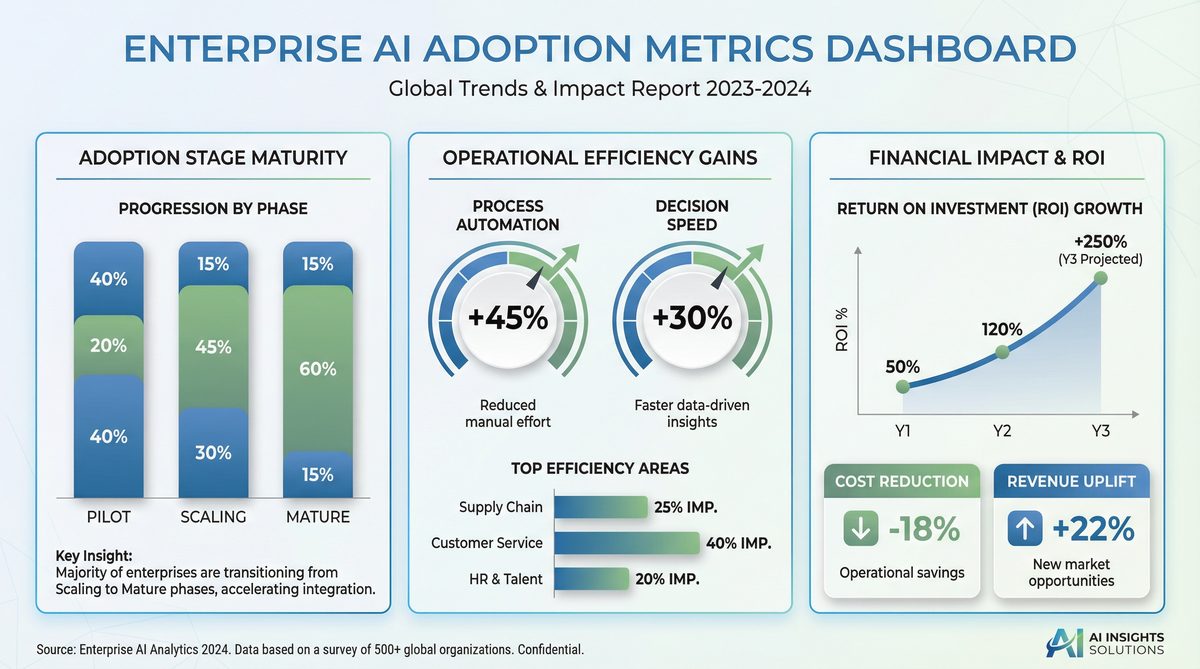
Quantitative Impact Metrics
| Metric | Pre-AI Adoption (2025) | Post-AI Adoption (2026) | Improvement |
|---|---|---|---|
| Advertising Campaign Cycle Time | 14 days | 7 days | 50% reduction |
| Content Moderation Accuracy | 87% | 96% | +9 percentage points |
| Developer Productivity (Function Points/Month) | 230 | 310 | 34.8% increase |
| Decision-Making Speed (Hours) | 48 | 24 | 50% faster |
Analysis of Quantitative Results
The halving of advertising campaign cycle time from 14 to 7 days reflects significant streamlining of workflows and automation of routine creative tasks, enabling marketing teams to respond swiftly to market trends and competitor actions. This acceleration directly contributes to increased campaign volume and agility.
Improving content moderation accuracy by 9 percentage points enhances CyberAgent’s ability to maintain brand safety and comply with regulatory standards, mitigating risks of reputational damage and legal penalties. The use of AI to flag inappropriate content with higher precision reduces manual review workloads and enables faster content publishing.
The near 35% boost in developer productivity, measured in function points per month, demonstrates Codex’s effectiveness in augmenting software engineering capacity. Faster development cycles translate to more frequent feature releases and improved platform reliability.
Reducing decision-making time by 50% accelerates strategic responses across divisions, enabling CyberAgent to capitalize on emerging opportunities and mitigate risks more effectively. This improvement is critical in the dynamic tech and media landscape where timing can dictate competitive advantage.
Qualitative Outcomes
- Cross-divisional Collaboration: AI agents facilitated improved information sharing, breaking down silos that historically delayed project handoffs. Teams gained increased visibility into ongoing initiatives, enabling more coherent strategy execution.
- Employee Empowerment: Employees reported enhanced creativity and reduced cognitive load, as AI handled routine tasks and synthesized large datasets. This shift allowed staff to focus on higher-value activities, improving job satisfaction and innovation.
- Customer Experience: Automated, AI-enhanced customer interactions led to higher satisfaction rates and faster response times on advertising platforms, strengthening client relationships and retention.
- Security Confidence: CyberAgent’s robust governance framework alleviated security concerns, fostering broader acceptance of AI agents across the organization and enabling more ambitious AI applications.
Employee and Stakeholder Feedback
Internal surveys conducted post-implementation indicated that over 75% of CyberAgent employees felt more confident in using AI tools, citing improved accessibility and tangible productivity gains. Stakeholders highlighted the alignment between AI capabilities and business priorities as a key success factor, emphasizing the importance of clear communication and training.
Return on Investment (ROI)
CyberAgent’s finance department calculated a positive ROI within six months of full AI deployment, driven by reduced operational costs and increased revenue from faster market responsiveness. Cost savings emerged from automation of manual tasks, reduced error rates, and optimized resource allocation. Revenue growth was fueled by enhanced campaign effectiveness and accelerated product innovation.
This outcome aligns with findings from the AIMG Benchmark Study (March 2026), which surveyed 2,048 enterprise decision-makers and found that companies integrating generative AI across functions realized an average 25% increase in productivity and a 30% improvement in decision accuracy. CyberAgent’s results exceed these averages, underscoring the impact of strategic AI adoption combined with strong governance and cultural readiness.
Broader Enterprise AI Trends in 2026
From AI Adoption to Value Realization
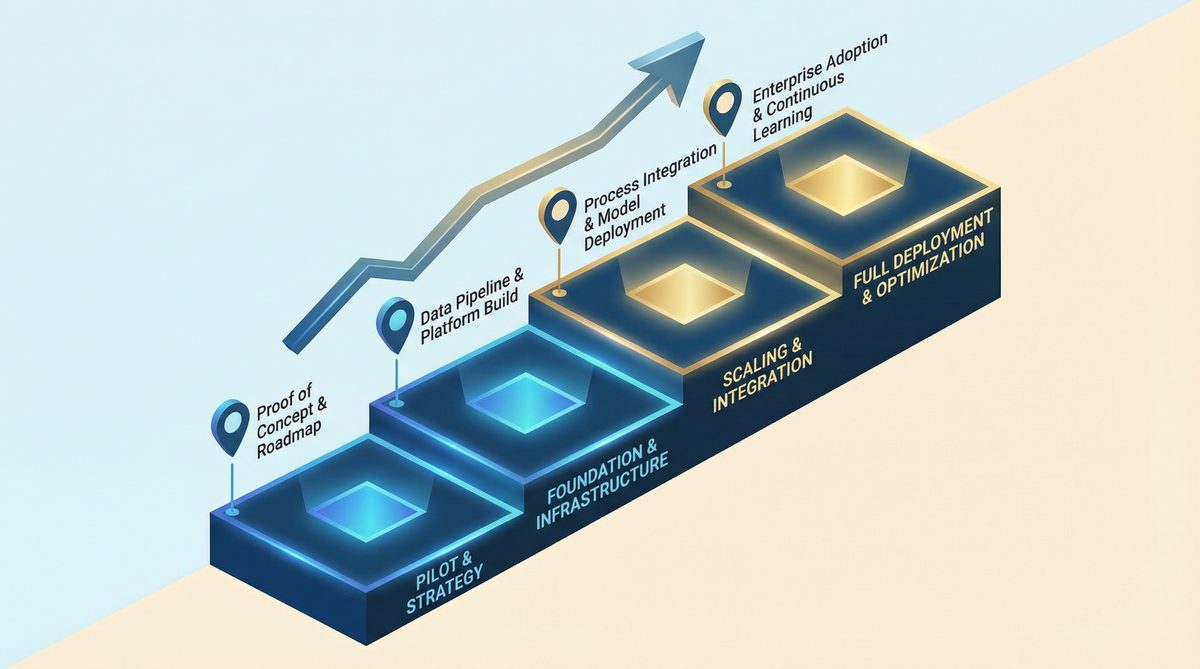
The year 2026 marks a pivotal shift in enterprise AI maturity. The industry is transitioning from widespread AI experimentation to systematic value realization, where AI investments are directly linked to measurable business outcomes. This phase is characterized by a focus on operationalizing AI at scale and embedding AI agents into core workflows.
According to the AIMG Benchmark Study and corroborated by multiple industry analyses, four key trends define this new phase:
- Mainstreaming of AI Agents: AI agents have moved beyond isolated experiments to become embedded in IT infrastructures. These agents automate workflows, assist in complex decision-making, and provide contextual insights, augmenting human capabilities across functions.
- Trust as a Core Factor: Trust is now the defining factor in AI transformation resilience. Enterprises invest heavily in transparency, explainability, and ethical AI frameworks to build confidence among users and stakeholders, as highlighted in Forbes’ “A New Playbook for Trust in Enterprise AI Rollouts” (April 2026).
- Security and Privacy Challenges: Enterprises grapple with securing AI agents at scale, balancing innovation with risk mitigation. The complexity of AI supply chains and data flows necessitates advanced security architectures and continuous monitoring.
- Vendor Lock-In and Ecosystem Dynamics: The Enterprise Agentic AI Landscape 2026 illustrates how trust in AI vendors is balanced against lock-in risks. Enterprises increasingly favor modular AI architectures that promote interoperability, flexibility, and competitive sourcing.
Top Generative AI Use Cases Delivering ROI in 2026
Industry research and CyberAgent’s practical experience identify five sectors where generative AI delivers substantial ROI:
- Healthcare: AI agents assist clinicians with diagnostics by analyzing imaging and patient data, personalize treatment plans through predictive analytics, and automate administrative tasks such as billing and scheduling, reducing costs and improving patient outcomes.
- E-commerce: Personalized marketing campaigns driven by AI improve customer engagement and conversion rates. AI also enables precise inventory forecasting, dynamic pricing, and AI-powered customer service bots that handle queries efficiently, boosting sales and retention.
- Advertising and Media: Automated content creation tools generate tailored advertisements, social media posts, and video scripts. Real-time audience insights powered by AI optimize campaign strategies and maximize engagement metrics.
- Financial Services: AI-driven fraud detection systems identify anomalous transactions with high accuracy. Risk assessment models aid in credit scoring and investment decisions, while regulatory compliance automation ensures adherence to evolving requirements.
- Manufacturing: Predictive maintenance systems forecast equipment failures before they occur, reducing downtime. AI-driven supply chain optimization minimizes inventory costs and enhances delivery reliability. Quality control leverages computer vision and anomaly detection to uphold product standards.
These use cases exemplify the convergence of AI capabilities with domain expertise, translating into measurable business impact and competitive differentiation.
OpenAI’s Strategic Vision
OpenAI’s 2026 AI portfolio reflects a deliberate strategy to serve enterprise customers with scalable, secure, and adaptable AI solutions. Its three pillars are:
- Frontier: Cutting-edge foundational models that push the boundaries of natural language understanding, generation, and multi-modal reasoning, enabling new classes of AI applications.
- ChatGPT Enterprise: A platform tailored for organizational needs, featuring enhanced security, integration capabilities, administrative controls, and customizability to fit diverse enterprise workflows.
- Company-wide AI Agents: Autonomous or semi-autonomous AI agents embedded within enterprise workflows, capable of continuous learning, adaptation, and proactive task execution, thereby transforming operational paradigms.
This vision aligns closely with CyberAgent’s implementation strategy, showcasing how enterprises can leverage scalable AI ecosystems to drive innovation and operational excellence.
Security Concerns and Mitigation Strategies
The Forbes article “AI Agents Are Coming To The Enterprise — And Security Isn’t Ready” underscores that while AI agents unlock significant productivity gains, they also introduce novel attack vectors including data leakage, adversarial manipulation, and unauthorized access. Enterprises like CyberAgent implement multi-layered defense strategies to address these risks, including:
- Conducting comprehensive AI risk assessments that evaluate potential vulnerabilities across the AI lifecycle.
- Deploying multi-layered encryption and robust identity and access management to protect sensitive data and control AI agent activities.
- Implementing continuous AI behavior monitoring and anomaly detection to identify unusual patterns indicating potential security breaches or model misuse.
- Ensuring vendor transparency through contractual stipulations around data usage, model auditing, and compliance reporting.
These mitigation strategies are becoming standard practice among leading enterprises seeking to balance innovation with risk management in AI deployments.
Lessons Learned from CyberAgent’s AI Adoption
CyberAgent’s AI journey offers valuable lessons for other enterprises embarking on AI transformations, highlighting best practices and critical success factors:
1. Align AI Strategy with Business Objectives
Effective AI adoption begins with a clear articulation of business goals. CyberAgent’s focus on reducing cycle times and improving decision quality ensured that AI investments translated into visible, measurable value. Enterprises should establish specific KPIs linked to strategic priorities to guide AI initiatives and measure success.
2. Invest in Scalable Platforms and Tools
Choosing robust, enterprise-grade AI platforms such as ChatGPT Enterprise and Codex enabled CyberAgent to scale AI adoption across diverse teams with varying levels of expertise and use cases. Scalable platforms offer extensibility, integration capabilities, and security features critical to sustainable AI deployment. Enterprises can explore detailed implementation approaches in our enterprise AI implementation guide“>enterprise AI implementation guide.
3. Prioritize Trust and Security
Building trust through transparency, governance, and rigorous security protocols is essential for broad user acceptance and effective risk mitigation. CyberAgent’s experience demonstrates that security measures are not obstacles but enablers of AI adoption, fostering confidence among stakeholders and ensuring compliance.
4. Foster a Culture of AI Literacy and Collaboration
Comprehensive training and cross-functional collaboration accelerate AI fluency and innovation. CyberAgent’s investment in education empowered employees to integrate AI tools seamlessly into workflows, transforming AI from isolated utilities into integral aspects of the work environment.
5. Monitor and Measure Impact Continuously
Implementing robust metrics and feedback loops allowed CyberAgent to quantify benefits and continuously refine AI models and processes. A data-driven approach to AI evolution ensures responsiveness to changing business needs and sustained value creation.
6. Embrace Change Management and Leadership Support
Successful AI adoption requires strong leadership commitment and structured change management. CyberAgent’s leaders championed AI initiatives, communicated clear visions, and supported teams through transitions, a critical factor often overlooked in technical implementations.
Future Outlook for Enterprise AI in 2026 and Beyond
CyberAgent’s experience illustrates that the transition from AI adoption to sustained value realization is well underway. Looking forward, several trends will shape the next phase of enterprise AI evolution:
- Agentic AI Proliferation: Autonomous AI agents will become ubiquitous in enterprise workflows, handling increasingly complex tasks and decisions with minimal human intervention, freeing employees to focus on strategic activities.
- Interoperability and Modular Architectures: Enterprises will prioritize AI ecosystems that facilitate seamless integration across vendors and platforms, reducing vendor lock-in risks and enabling flexible, adaptive AI strategies.
- Enhanced AI Governance: Regulatory frameworks and industry standards will evolve rapidly to address AI ethics, security, accountability, and transparency, requiring enterprises to maintain agile governance models.
- Expansion into New Domains: Generative AI will penetrate sectors such as education, legal services, infrastructure management, and public administration, driving innovation and operational efficiencies beyond traditional technology industries.
- Human-AI Collaboration Models: The future of work will increasingly integrate AI as collaborative partners, augmenting human creativity, judgment, and productivity rather than replacing human roles.
Enterprises that proactively embrace these trends, investing in technology, talent, and governance, will be well-positioned to harness AI’s transformative potential while managing associated risks effectively.
CyberAgent’s case provides a blueprint for organizations aiming to scale AI responsibly and strategically, demonstrating that thoughtful implementation and cultural readiness are as crucial as technological innovation in achieving successful AI transformations.
Conclusion
CyberAgent’s adoption of ChatGPT Enterprise and Codex in 2026 exemplifies the maturation of enterprise AI from fragmented experimentation to strategic, value-oriented implementation. The company’s achievements in accelerating decision-making, improving operational quality, and managing security risks reflect broader industry trends identified in the AIMG Benchmark Study and comprehensive industry analyses.
As AI agents become mainstream IT components, enterprises must prioritize trust, governance, security, and interoperability to sustain resilient AI transformations. CyberAgent’s case offers actionable insights into aligning AI with business objectives, scaling adoption through scalable platforms, fostering AI literacy, and embedding continuous measurement into AI strategies.
For enterprises preparing their AI journeys, understanding the nuanced lessons from CyberAgent and the evolving AI ecosystem will be critical to achieving competitive advantage and operational excellence in the increasingly AI-driven business landscape.
Further technical details on deploying and maximizing AI platforms can be found in our AI in business automation“>AI in business automation coverage, which offers practical frameworks for integrating AI into core business processes and realizing sustained value.

