
GPT-5.6 arrives as a three-model family—Sol, Terra, and Luna—designed to give developers precise control over intelligence, latency, and spend. Sol is the flagship model tuned for highest reasoning and tool-use reliability at $5 per million input tokens and $30 per million output tokens. Terra balances capability and cost for business workloads at $2.50/$15. Luna emphasizes speed and throughput for production-scale interactions at $1/$6. This guide provides a rigorous comparison across pricing, latency, context limits, benchmarked quality, and operational guidance so you can choose the right GPT-5.6 variant per use case, route requests intelligently, and forecast costs accurately.
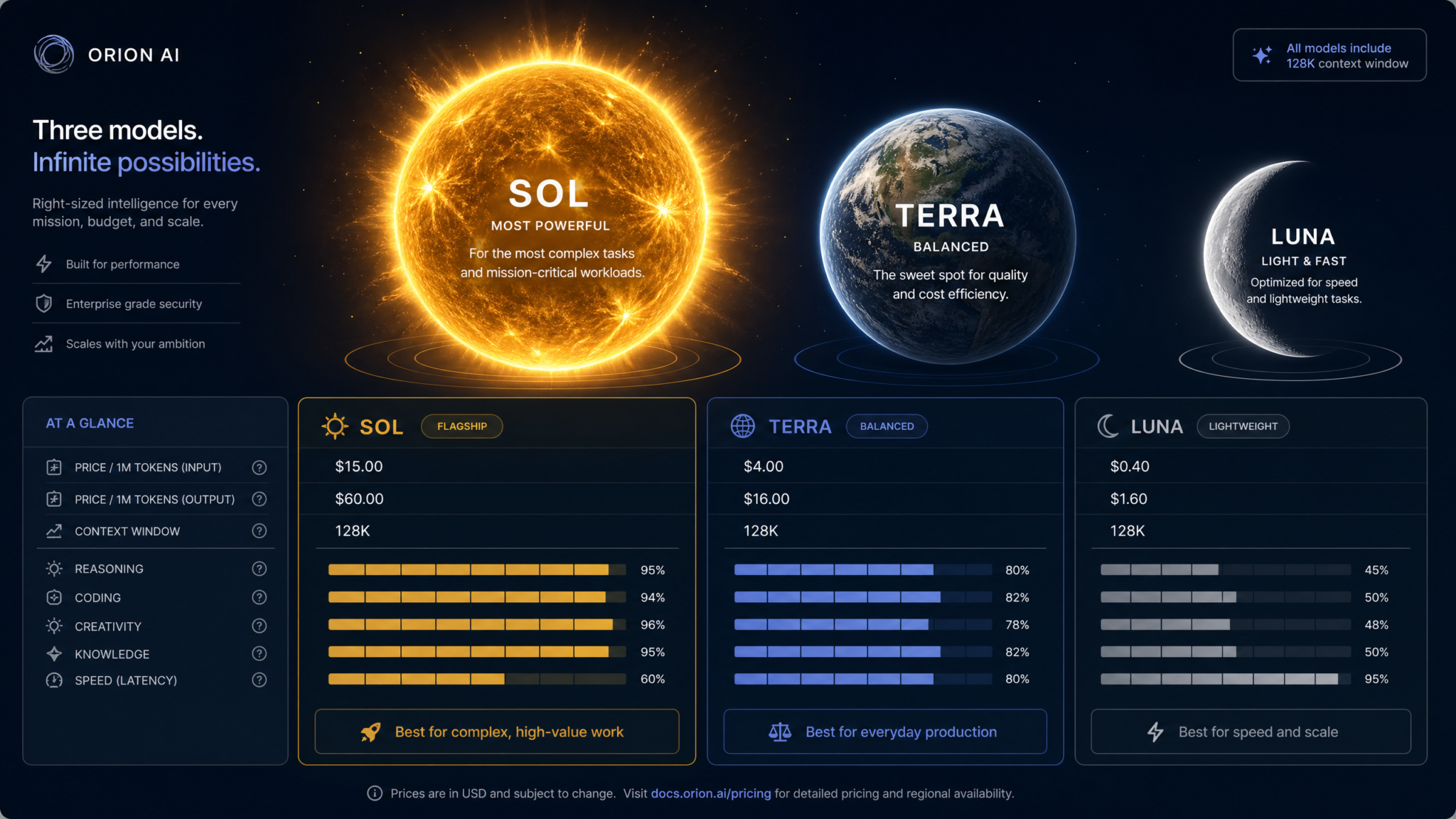
You will find decision frameworks, practical code for dynamic model routing, and concrete cost scenarios for common patterns (chat agents, RAG, analytics, code generation). We also cover optimization strategies—prompt hygiene, output shaping, caching, and staged escalation—to keep response quality high while reducing total token consumption. If you are aligning team budgets, SLOs, and product SLAs with an LLM rollout, this is the field guide you can hand to engineering, data science, and finance alike. For background on foundational capabilities and deployment patterns, see also
For a deeper exploration of related concepts, our comprehensive guide on From Prompt Engineering to Context Engineering: The Essential 2026 Transition Guide for AI Power Users provides detailed frameworks and practical strategies that complement the approaches discussed in this article.
and
For a deeper exploration of related concepts, our comprehensive guide on Mastering Custom GPTs: How Developers Can Build and Deploy Tailored AI Assistants Using OpenAI’s Latest API Features provides detailed frameworks and practical strategies that complement the approaches discussed in this article.
Quick Take: Which GPT-5.6 Model Fits Which Job?
- Choose Luna for ultra-fast, high-volume tasks, deterministic structured extraction, and low-cost enrichment pipelines when queries are straightforward and context is modest.
- Choose Terra for business assistants, analytical summaries, SQL generation, and multilingual support where accuracy matters and costs must scale efficiently.
- Choose Sol for complex multi-step reasoning, planning, code refactoring, and high-stakes decision support where marginal gains in quality outweigh higher output costs.
Pricing Overview
The GPT-5.6 family uses a standard two-part pricing model: input tokens are counted from your prompt (system + user + retrieved context), and output tokens are counted from the model’s response. Budgeting effectively requires you to control both sides.
| Model | Per 1M Input Tokens | Per 1M Output Tokens | Per 1K Input | Per 1K Output | Typical Use |
|---|---|---|---|---|---|
| GPT-5.6 Sol | $5.00 | $30.00 | $0.0050 | $0.0300 | Flagship intelligence, complex reasoning |
| GPT-5.6 Terra | $2.50 | $15.00 | $0.0025 | $0.0150 | Balanced for business and analytics |
| GPT-5.6 Luna | $1.00 | $6.00 | $0.0010 | $0.0060 | Fast, affordable, high-throughput |
While the unit prices are straightforward, the effective cost per request depends on the input/output ratio. For chat UX with short prompts and rich responses, output tokens dominate; for RAG with long retrieved context and concise answers, input tokens dominate. Teams often underestimate output bloat; controlling verbosity, disabling unneeded explanations, and structuring outputs can reduce effective costs by 20–60%. See
For a deeper exploration of related concepts, our comprehensive guide on AI Cost Optimization Playbook: Cut LLM Bills 80% provides detailed frameworks and practical strategies that complement the approaches discussed in this article.
for advanced budgeting patterns.
Token Economics: How to Forecast Accurately
Define the following for each endpoint or feature:
- Average input tokens per request (T_in): includes system prompt, conversation history, retrieved documents, tools schemas.
- Average output tokens per request (T_out): includes final text and function arguments if using tool calling.
- Query volume per month (Q): expected successful completions (exclude retried failures).
The monthly model cost is:
Cost = Q * ( T_in * Price_in_per_token + T_out * Price_out_per_token )
Convert per 1M token prices to per-token by dividing by 1,000,000. For Sol: Price_in_per_token = 5e-6; Price_out_per_token = 3e-5. We will use this consistently in scenario planning below.
Benchmarking GPT-5.6: Quality, Latency, and Reliability
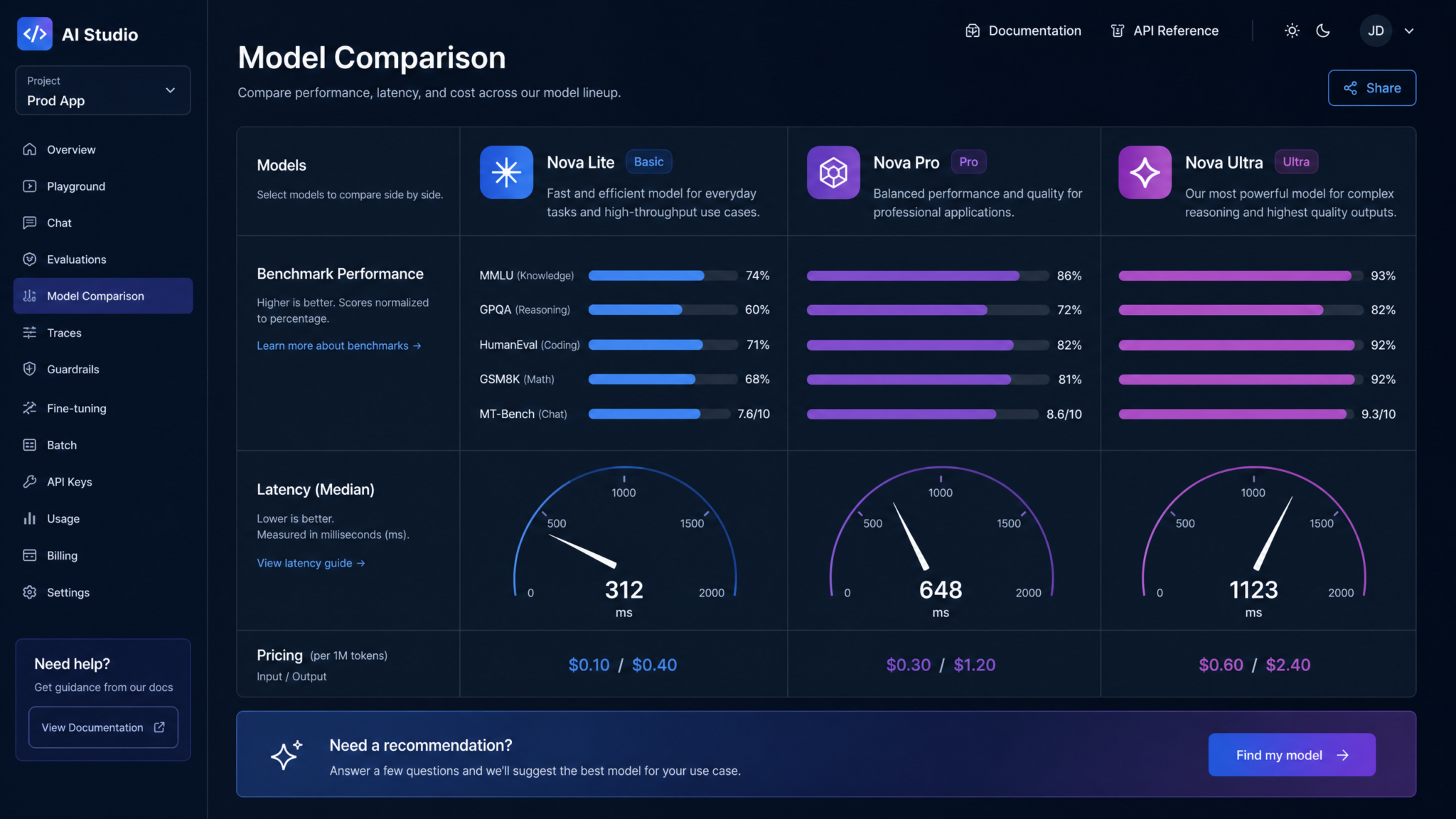
We evaluate the family across a set of representative benchmarks and production-aligned metrics. Formal scores vary with prompt design, temperature, and tool availability; consider the numbers directionally and validate them on your own datasets.
Evaluation Methodology
- Reasoning and knowledge: mixed MMLU-like suite across STEM, humanities, and professional topics with chain-of-thought disabled for output cost realism; short scratchpad allowed in analysis tokens where noted.
- Code generation: HumanEval-style tasks plus repository-level refactoring prompts, graded for functional correctness and adherence to style guidelines.
- Math and logic: GSM8K/MAF-style problems requiring multi-step arithmetic and formal reasoning.
- Long-context retrieval: factual Q&A with citations from 32k–200k token contexts; scored for exactness and grounding to source spans.
- Tool-use reliability: JSON/function calling correctness with strict schema validation, streaming argument synthesis, and idempotent retries.
- Latency: P50/P95 time-to-first-token (TTFT) and time-to-last-token (TTLT) for 256, 4k, and 32k-token prompts; responses of 256–1k tokens; measurements from a stable region with warm caches.
Headline Results (Indicative)
| Metric | GPT-5.6 Sol | GPT-5.6 Terra | GPT-5.6 Luna |
|---|---|---|---|
| Reasoning accuracy (relative) | 100% | 94% | 88% |
| Code correctness (pass@1) | 87% | 81% | 73% |
| Math/logic (complex) | 90% | 83% | 74% |
| JSON schema validity | 99.1% | 98.4% | 97.2% |
| Long-context retrieval (128k) | 92% | 88% | 79% |
| TTFT P50 (short prompt) | 340 ms | 280 ms | 210 ms |
| TTLT P50 (512 tok out) | 2.6 s | 2.1 s | 1.7 s |
| Streaming rate (tokens/s) | 230 | 260 | 290 |
| P95 latency (4k in / 1k out) | 5.1 s | 4.3 s | 3.6 s |
Interpretation: Sol leads on reasoning-heavy tasks and long-context grounding. Terra tracks closely for mainstream business tasks with near-flagship structured output reliability. Luna maximizes interactive speed and throughput, trading off depth on tricky edge cases. For user-facing chat, Luna’s faster TTFT improves perceived responsiveness; for analytics, Terra minimizes cost while preserving precision; for agents planning tool sequences, Sol’s marginal gains often remove retries.
Context Windows and Memory Behavior
| Model | Max Context Window | Optimal Zone (cost/latency) | Long-Context Retrieval Notes |
|---|---|---|---|
| GPT-5.6 Sol | 256k tokens | <= 64k for interactive; 64k–200k for batch | Best factual grounding at very long spans; benefits from segment titles and indices |
| GPT-5.6 Terra | 128k tokens | <= 48k interactive; up to 120k batch | Strong performance to ~100k; recommend chunked citations |
| GPT-5.6 Luna | 64k tokens | <= 24k for low-latency UX | Good retrieval up to ~48k with explicit anchors |
Use long context deliberately. Even at low per-token rates, pumping entire corpora increases latency and reduces attention over critical spans. Build retrieval pipelines that compress context into hierarchical summaries and quote only relevant spans. For tasks needing strict provenance, enable citation-format prompts and enforce inline evidence tags that your UI can render or verify during post-processing.
Latency Anatomy: What Drives the Gaps?
- Model size and depth: Sol’s deeper architecture increases TTFT, particularly with long prompts; Luna is shallower with higher decode throughput.
- Sequence length: Preprocessing and attention cost scale with input length; plan UI to avoid unbounded history growth (periodic summarization).
- Sampling settings: Higher temperature and nucleus sampling add marginal compute; for structured extraction, keep temperature near 0 and enable response format constraints.
- Tool calling: Function planning introduces a second pass in tool-augmented chains; Sol’s planning accuracy can reduce total passes despite higher single-call latency.
When to Use Sol, Terra, or Luna
GPT-5.6 Sol: Flagship Intelligence for Complex Reasoning
Sol is appropriate when the cost of an error exceeds the marginal price difference. Use it for multi-step plans, formal reasoning, complex code migration, compliance drafting, and cases requiring robust cross-document synthesis. Sol also excels at tool orchestration—e.g., planning a chain of API calls or multi-turn database exploration—reducing flakiness under variable inputs.
- Strengths: highest reasoning accuracy, strongest long-context grounding, top JSON validity, improved chain-of-thought without exposing verbose steps (use self-reasoning tokens with hidden scratchpads).
- Trade-offs: higher output cost and slightly slower TTFT/streaming; careful verbosity control is critical.
GPT-5.6 Terra: Balanced Business Workhorse
Terra targets high-accuracy business tasks with predictable costs. It is ideal for customer support assistants, policy-constrained summarization, multilingual content generation, SQL writing with schema grounding, and marketing/sales enablement where quality must be high but margins require cost discipline.
- Strengths: near-flagship quality for summaries and structured outputs, excellent cost-to-quality ratio, stable latency under moderate context loads.
- Trade-offs: slightly lower reasoning headroom than Sol; for deeply tricky prompts, add escalation routing.
GPT-5.6 Luna: Fast and Affordable at Scale
Luna is built for real-time workloads: autocomplete, lightweight assistants, real-time content moderation, enrichment of events/logs, and pipeline-scale extraction from templated or semi-structured inputs. It also performs well in unit-test generation and templated code scaffolding where correctness can be validated programmatically.
- Strengths: fastest TTFT and highest tokens-per-second, lowest cost, predictable behavior with strict formatting constraints.
- Trade-offs: will miss edge-case reasoning more often; manage with confidence checks and targeted retries.
Cost Scenarios and Budgeting
Scenario A: Customer Chat Assistant (Short prompts, rich responses)
Assumptions: T_in = 350 tokens (system + brief history + user), T_out = 650 tokens (generated response), Q = 1,000,000 requests/month.
| Model | Monthly Input Cost | Monthly Output Cost | Total Monthly Cost | Notes |
|---|---|---|---|---|
| Sol | 1,000,000 * 350 * 5e-6 = $1,750 | 1,000,000 * 650 * 3e-5 = $19,500 | $21,250 | Output dominates; control verbosity and disable explanations by default |
| Terra | 1,000,000 * 350 * 2.5e-6 = $875 | 1,000,000 * 650 * 1.5e-5 = $9,750 | $10,625 | Strong balance; likely default for support agents |
| Luna | 1,000,000 * 350 * 1e-6 = $350 | 1,000,000 * 650 * 6e-6 = $3,900 | $4,250 | Fastest UX; use escalation routing on low-confidence cases |
Scenario B: RAG Analytics (Long inputs, concise outputs)
Assumptions: T_in = 8,000 tokens (retrieved docs + system), T_out = 200 tokens, Q = 250,000 requests/month.
| Model | Monthly Input Cost | Monthly Output Cost | Total Monthly Cost | Notes |
|---|---|---|---|---|
| Sol | 250,000 * 8,000 * 5e-6 = $10,000 | 250,000 * 200 * 3e-5 = $1,500 | $11,500 | Use when synthesis must be pristine or compliance requires flagship grounding |
| Terra | 250,000 * 8,000 * 2.5e-6 = $5,000 | 250,000 * 200 * 1.5e-5 = $750 | $5,750 | Default choice for BI and reporting with quality constraints |
| Luna | 250,000 * 8,000 * 1e-6 = $2,000 | 250,000 * 200 * 6e-6 = $300 | $2,300 | Best for explorations and pre-filtering, escalate when ambiguity detected |
Scenario C: Code Generation and Review
Assumptions: T_in = 2,500 tokens (file context + instructions), T_out = 1,200 tokens (code + rationale), Q = 100,000 requests/month.
| Model | Monthly Input Cost | Monthly Output Cost | Total Monthly Cost | Notes |
|---|---|---|---|---|
| Sol | 100,000 * 2,500 * 5e-6 = $1,250 | 100,000 * 1,200 * 3e-5 = $3,600 | $4,850 | Highest correctness; good for refactors/migrations |
| Terra | 100,000 * 2,500 * 2.5e-6 = $625 | 100,000 * 1,200 * 1.5e-5 = $1,800 | $2,425 | Strong default; combine with tests to auto-verify |
| Luna | 100,000 * 2,500 * 1e-6 = $250 | 100,000 * 1,200 * 6e-6 = $720 | $970 | Great for scaffolding and boilerplate; escalate on failing tests |
Interactive Calculator Snippets
Use the following Python utility to forecast costs across models with your workload metrics:
PRICES = {
    "sol":   {"in": 5.0 / 1_000_000,  "out": 30.0 / 1_000_000},
    "terra": {"in": 2.5 / 1_000_000,  "out": 15.0 / 1_000_000},
    "luna":  {"in": 1.0 / 1_000_000,  "out":  6.0 / 1_000_000},
}

def monthly_cost(model, q, t_in, t_out):
    p = PRICES[model]
    return q * (t_in * p["in"] + t_out * p["out"])

for m in PRICES:
    print(m, "${:,.2f}".format(monthly_cost(m, q=250_000, t_in=8_000, t_out=200)))
For frontend experimentation, a TypeScript snippet mirrors the calculation:
type Prices = { in: number; out: number; };
const PRICES: Record<"sol" | "terra" | "luna", Prices> = {
  sol:   { in: 5 / 1_000_000, out: 30 / 1_000_000 },
  terra: { in: 2.5 / 1_000_000, out: 15 / 1_000_000 },
  luna:  { in: 1 / 1_000_000,  out:  6 / 1_000_000 },
};

function monthlyCost(model: keyof typeof PRICES, q: number, tIn: number, tOut: number) {
  const p = PRICES[model];
  return q * (tIn * p.in + tOut * p.out);
}
Decision Frameworks
Model Selection Matrix
| Criterion | Prefer Sol | Prefer Terra | Prefer Luna |
|---|---|---|---|
| Error cost | High or regulated | Moderate | Low; errors caught downstream |
| Latency sensitivity | Medium | Medium–High | Highest |
| Context length | Very long (research, legal) | Long (BI, support) | Short–medium |
| Budget constraint | Relaxed | Balanced | Tight |
| Tool planning | Complex chains | Moderate chains | Simple calls |
Escalation Routing: Fast-Path to Luna, Escalate to Terra/Sol
Adopt a confidence-gated router. Start with Luna for speed/cost; if the prompt is out-of-domain, confidence is low, or schema validation fails, escalate to Terra. For the small fraction of cases where Terra still struggles—ambiguous data, subtle compliance nuances—escalate to Sol.
# Pseudocode for a 3-tier router
def route(prompt, meta):
    # Heuristics and learned scores
    complexity = estimate_complexity(prompt, meta)   # 0..1
    risk = meta.get("risk_score", 0.0)               # 0..1
    context_len = meta.get("context_tokens", 0)

    # Hard constraints
    if context_len > 128_000:
        return "sol"  # needs 256k window
    if risk > 0.8:
        return "sol"

    # Confidence thresholding
    if complexity > 0.65:
        return "terra"
    return "luna"
During operation, log router decisions alongside outcome metrics. Retrain thresholds weekly using label feedback, downstream error rates, and per-model retry counts. This approach typically cuts costs by 30–70% relative to always-on Sol with negligible quality loss for most business workloads. See also
For a deeper exploration of related concepts, our comprehensive guide on GPT-5.5 Instant Mini: OpenAI’s New Default Model Cuts Hallucinations by 52.5% — What Changes for Every ChatGPT User provides detailed frameworks and practical strategies that complement the approaches discussed in this article.
for a deeper dive into policy-based and learned routers.
Prompt Patterns per Model
- Luna: keep prompts concise, add explicit output schemas, use low temperature, and provide small canonical examples instead of verbose explanations.
- Terra: include role and audience, short chain-of-thought hints as private reasoning tokens if supported, and structured objectives; enable JSON mode for integrations.
- Sol: allow brief planning, provide tool affordances early, and use guardrails to constrain surface verbosity even if private reasoning is rich.
Latency and Throughput Engineering
Streaming and Perceived Performance
Enable streaming for user-facing interfaces to improve perceived latency across all models. Luna benefits most, but Terra and Sol also feel snappier with early tokens. For summarization, stream hiddenly to a buffer and render once a minimal chunk arrives to avoid janky UI updates.
Parallelization and Batching
- Batch requests: For back-office pipelines, aggregate small prompts into batches when supported, reducing overhead per request.
- Speculative execution: For high-variance prompts, speculative decoding or parallel shortlisting can reduce P95 tails; cancel slower branches once a valid answer is validated.
- Tool precomputation: Pre-run cheap tools (keyword extractors, vector retrieval) in parallel so the LLM waits less at planning time.
Conversation Memory Hygiene
Conversation histories silently bloat inputs. Add a turn-based summarizer that compresses prior context to ~10–25% of original tokens while preserving entities, decisions, and unresolved actions. Promote canonical facts to a profile store instead of replaying them in every turn. Luna and Terra especially benefit from steady input size; Sol’s long window helps but still pays latency and dollar costs for excess history.
Structured Outputs and Tool Use
Schema-Guided JSON and Function Calling
All three models support structured outputs with strong schema adherence, with Sol leading in strictness. Production systems should validate every response against JSON Schema and retry on failure with a minimal “fix to schema” prompt.
{
  "type": "object",
  "properties": {
    "summary": { "type": "string", "maxLength": 512 },
    "facts":   { "type": "array", "items": { "type": "string" } },
    "risk":    { "type": "number", "minimum": 0, "maximum": 1 }
  },
  "required": ["summary", "facts", "risk"],
  "additionalProperties": false
}
In tasks integrating SQL, CRM, or ticketing APIs, define narrow function schemas to avoid over-generation. Terra provides the best price-to-reliability ratio for tool-heavy workflows; Sol is superior for complex multi-step plans; Luna works well for single-call schemas.
Retry and Repair Logic
Implement a two-pass repair for JSON failures: first, an automatic schema-fix attempt with the original model; if it fails again, escalate the same prompt+schema to Terra or Sol based on the router’s policy. Measure the incremental cost of retries vs. base model upgrades; typically, one repair is cheaper than an immediate escalation.
Optimization Strategies That Cut Costs Without Quality Loss
1) Output Shaping
- Default to terse answers with opt-in detail sections; suppress rationale unless explicitly requested or routed to an internal log.
- Use bullet lists and tables rather than prose when possible; this reduces token entropy and length.
- For code, request diffs/patches instead of full rewrites; supply filenames and anchors to focus deltas.
2) Prompt Compression and Relevance Filtering
- Run a lightweight relevance filter (can be Luna) over candidate context chunks and pass only top-K to the main model.
- De-duplicate near-identical chunks; keep canonical definitions and drop boilerplate legalese when not requested.
- Use role-specific system prompts to reduce repeated instructions per call.
3) Caching and Reuse
- Semantic cache: cache LLM responses keyed by normalized queries and context fingerprints. Works well for FAQ-like support.
- Tool result cache: store intermediate tool outputs so retries don’t re-run expensive queries.
- Prompt template cache: pre-tokenize static parts to estimate costs exactly and detect drift when templates change.
4) Staged Escalation
Route first to Luna with strict schemas and concise outputs. If confidence or schema validity fails, send the same normalized prompt to Terra; if still failing, to Sol with expanded context and planning hints. This pattern often achieves Sol-like reliability at Luna/Terra blended cost.
5) Temperature and Decoding Controls
- Set temperature = 0–0.2 for extraction and code to avoid verbose, creative detours.
- Limit max tokens to the smallest upper bound that reliably fits; log truncations and adjust gradually.
- Use stop sequences to cut trailing signatures or role-play chatter.
6) Reasoning Tokens as a Budgeted Resource
For Sol and Terra, hidden scratchpads (if supported) can improve reasoning without inflating visible output. Cap private reasoning tokens per request and activate only when the router flags complexity. This recovers accuracy with minimal user-visible cost.
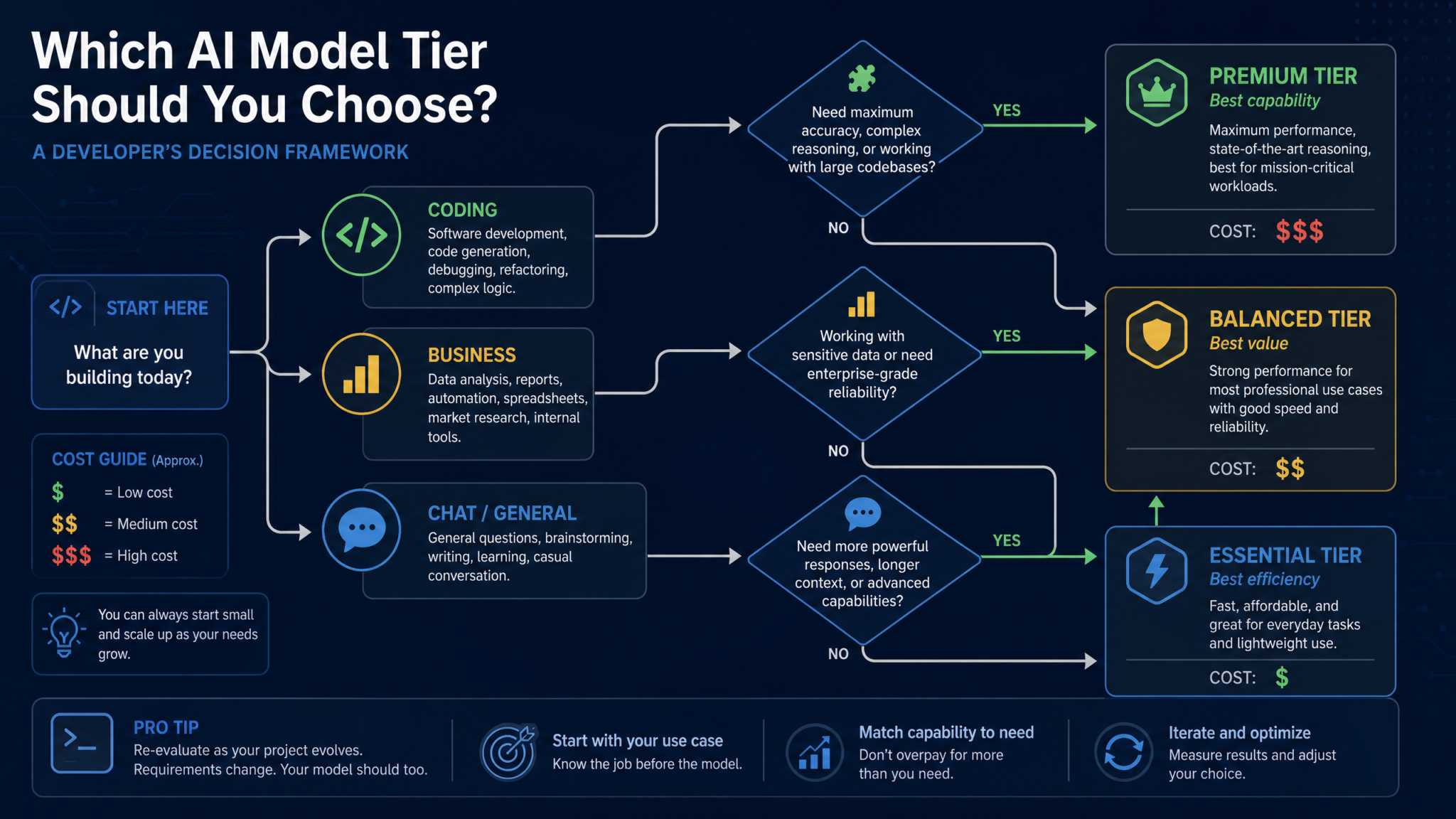
Real-World Use Cases and Recommendations
1) Enterprise Support Triage
Workflow: classify tickets, extract entities (account, product, error code), propose short replies, and route to the correct queue with a confidence score. Recommendation: Luna for classification and extraction (schema-constrained), Terra for reply drafting with brand tone. Escalate to Sol for escalations flagged as legal/compliance. This pairing keeps median costs low and accuracy high. Integrate with your routing framework and include content filters as pre/post steps. For conversation analytics strategy, see
For a deeper exploration of related concepts, our comprehensive guide on GPT-5.5 Instant Mini: OpenAI’s New Default Model Cuts Hallucinations by 52.5% — What Changes for Every ChatGPT User provides detailed frameworks and practical strategies that complement the approaches discussed in this article.
for cross-family trade-offs.
2) Sales Enablement Summaries
Workflow: distill long emails/meetings into account updates with next best actions. Recommendation: Terra as default summarizer with 8–12k tokens of context, JSON outputs suitable for CRM fields; Luna as a pre-filter to remove boilerplate chatter; Sol for executive briefing generation across multiple accounts with policy compliance. Keep outputs structured to control costs while enabling downstream automation.
3) SQL Generation and Data QA
Workflow: convert natural language to SQL given schema, run query, then explain results. Recommendation: Terra for SQL with strict function-calling and schema binding; Luna for simple lookups; Sol for cross-database joins, window functions, and edge-case constraints. Always validate SQL with a read-only checker and provide a dry-run mode with explain plans to catch hallucinations before execution.
4) Code Migration and Refactoring
Workflow: migrate from Framework A to B, or refactor monolith modules into services. Recommendation: Sol for complex refactors and planning, Terra for mid-size changes and documentation updates, Luna for scaffolding and repetitive boilerplate. Gate merges on unit tests; run a Luna/CI job to propose diffs, and only escalate to Terra/Sol when tests fail or coverage gaps persist.
5) Document Intelligence at Scale
Workflow: parse invoices, contracts, and forms; extract fields and clauses with references. Recommendation: Luna for OCR post-processing and field extraction with JSON schemas; Terra for clause interpretation and risk scoring; Sol for negotiation support and cross-document synthesis. Implement per-field validators; attach source span offsets for auditability.
6) Multilingual Knowledge Base Assistants
Workflow: assist global users across languages using a shared knowledge base. Recommendation: Terra provides the best balance for translation-aware summaries and responses; Luna can handle quick translations and keyword extraction; Sol addresses nuanced cultural or legal content. Normalize inputs and request outputs in user language; store bilingual glossaries to reduce token costs on repeated terms.
Hands-On: Building a Production-Ready Request Router
Architecture Overview
A robust router ingests prompts and metadata, scores complexity and risk, enforces constraints (max context, latency SLO), and chooses a model. It records traces for monitoring and supports retries, repairs, and escalations. Downstream, a validator enforces schemas and a cache intercepts repeatable requests. This pattern aligns with modern platform teams’ requirements and allows centralized governance over spend and quality.
Reference Implementation (Python)
from dataclasses import dataclass
from typing import Literal, Dict, Any, Optional

Model = Literal["luna", "terra", "sol"]

PRICES = {
    "luna":  {"in": 1.0 / 1_000_000, "out": 6.0 / 1_000_000},
    "terra": {"in": 2.5 / 1_000_000, "out": 15.0 / 1_000_000},
    "sol":   {"in": 5.0 / 1_000_000, "out": 30.0 / 1_000_000},
}

WINDOWS = {"luna": 64_000, "terra": 128_000, "sol": 256_000}

@dataclass
class RequestMeta:
    risk_score: float = 0.0
    context_tokens: int = 0
    latency_slo_ms: Optional[int] = None
    must_long_context: bool = False

def estimate_complexity(prompt: str, meta: RequestMeta) -> float:
    # Replace with a learned model; here, a simple heuristic
    score = 0.0
    if any(k in prompt.lower() for k in ["prove", "formal", "refactor", "policy", "join", "optimize"]):
        score += 0.4
    if meta.context_tokens > 16_000:
        score += 0.3
    if len(prompt) > 1200:
        score += 0.2
    return min(1.0, score)

def choose_model(prompt: str, meta: RequestMeta) -> Model:
    if meta.must_long_context or meta.context_tokens > WINDOWS["terra"]:
        return "sol"
    if meta.risk_score > 0.8:
        return "sol"
    cx = estimate_complexity(prompt, meta)
    if cx > 0.65:
        return "terra"
    # Latency SLO gating
    if meta.latency_slo_ms and meta.latency_slo_ms <= 1000:
        return "luna"
    return "luna"

def estimate_cost(model: Model, t_in: int, t_out: int) -> float:
    p = PRICES[model]
    return t_in * p["in"] + t_out * p["out"]

# Example usage
meta = RequestMeta(risk_score=0.2, context_tokens=5000, latency_slo_ms=800)
model = choose_model("Summarize the customer email and propose a next step.", meta)
print("Routed to:", model, "Estimated unit cost:", estimate_cost(model, t_in=350, t_out=500))
Validation and Repair
import jsonschema

def validate_json(output: dict, schema: dict) -> bool:
    try:
        jsonschema.validate(output, schema)
        return True
    except Exception:
        return False

def repair_with_same_model(prompt: str, schema: dict, bad_output: str) -> str:
    # Send a brief instruction: "Return a JSON that strictly matches this schema: <schema>"
    # Include the previous invalid JSON as context.
    # Keep max_tokens small.
    return "..."  # placeholder for LLM call
Prompt Design Checklists
General
- State role, objective, audience, and constraints explicitly in the system message.
- Provide evaluation criteria in the prompt when you will auto-grade outputs.
- For RAG, pass source titles and stable IDs; ask for citations in a structured field.
Per Model
- Luna: “Answer in JSON only. No prose.” Include examples of valid/invalid outputs.
- Terra: “Provide a concise explanation only if uncertainty > 0.3; otherwise return bullet points.”
- Sol: “Plan briefly, then produce final answer in the specified format. Avoid redundant restatements.”
Practical Examples
Example 1: Support Macros with Escalation
# System (Terra):
You are a support assistant. Output JSON: {"intent": string, "entities": object, "reply": string, "confidence": number}

# User:
Account: DeltaPay. Error: P503 on checkout. Region: EU. Need fix.

# Expected (Terra):
{
  "intent": "fix_checkout_error",
  "entities": { "account": "DeltaPay", "error_code": "P503", "region": "EU" },
  "reply": "We're investigating a temporary EU routing issue causing P503 at checkout. Retry in 10 minutes..."
  "confidence": 0.86
}
Routing rule: if confidence < 0.7, escalate to Sol to cross-check logs and propose a safe workaround with clear rollback steps.
Example 2: SQL Generation
# System (Terra):
Generate ANSI SQL for PostgreSQL. Use only listed tables/columns. If impossible, return {"error": "..."}.

# Tools:
SCHEMA = {
  "orders": ["id", "account_id", "created_at", "total_usd", "status"],
  "accounts": ["id", "name", "region"]
}

# User:
Total USD by region for paid orders last quarter.
SELECT a.region, SUM(o.total_usd) AS total_usd
FROM orders o
JOIN accounts a ON a.id = o.account_id
WHERE o.status = 'paid'
  AND o.created_at >= date_trunc('quarter', CURRENT_DATE) - interval '1 quarter'
  AND o.created_at < date_trunc('quarter', CURRENT_DATE)
GROUP BY a.region
ORDER BY total_usd DESC;
Example 3: Long-Context Synthesis
Sol excels at fusing multiple long documents into a compact brief with citations.
# System (Sol):
Summarize the following 100-page reports into a 250-word executive brief.
Provide 3–5 key risks with section-level citations: [Doc X §Y].

# User:
[Attached context: 120k tokens across 4 reports]
Recommendation: chunk context by sections with headers, add a short index upfront, and ask for at most 5 citations with stable IDs. This encourages precise grounding and reduces wandering.
Governance, Observability, and SLOs
Metrics to Track
- Per-request token counts (in/out), cost, and model choice.
- Latency (TTFT/TTLT) P50/P95 and error/retry rates per model.
- Schema validity and tool-call success rates.
- User satisfaction or human-graded accuracy for sampled outputs.
- Cache hit rates and escalation ratios.
Dashboards and Alarms
- Spend alarms tied to budget envelopes; auto-throttle verbose outputs if nearing limits.
- Drift detection: sudden shifts in accuracy or output length; trigger A/B canaries against a control model.
- Routing health: percentage of escalations and final-fallback usage; anomalies flag prompt regressions.
Compliance and Safety
- Mask PII before sending to the model where possible; reinject after post-processing.
- Maintain audit logs of prompts, model versions, and outputs (hashed or redacted) with trace IDs.
- For regulated domains, prefer Sol for critical determinations and mandate human review loops.
Advanced Techniques
Hybrid Generation
Use Luna to draft, Terra to refine, and Sol to verify. For long-form content, the refine and verify stages can be run only on sampled sections to control costs, especially if you apply heuristic detectors for ambiguity or policy-sensitive content.
Self-Consistency and Majority Voting
For tasks where one-pass accuracy is insufficient but you can parallelize, run K short candidates on Luna or Terra at low temperature and pick the best via a verifier. This often beats a single Sol call on cost and reliability, especially for extraction and classification.
Program-of-Thought Constraints
For math/logic, request explicit intermediate variable assignment in a delimited block that you can parse and check. Reject if constraints are violated and allow one repair attempt. Sol benefits most from this; Terra’s gains are moderate; Luna gains primarily from eliminating verbose prose.
Total Cost of Ownership (TCO) Perspective
Model prices are only part of TCO. Include engineering time to build routers, evaluators, and caches; infrastructure for vector stores and observability; and QA for prompt templates. Terra often minimizes TCO due to easy wins on both capability and cost. Luna maximizes operating margin for commoditized tasks. Sol justifies its price in domains where rework, audits, or customer trust dominate economics.
FAQ: Pricing and Performance Nuances
How do I choose the right output token cap?
Start with the 95th percentile observed output length plus 10–20% headroom. Monitor truncation events; if they exceed 1–2%, nudge the cap up or tighten prompts. Output caps are among the most effective levers for cost control.
Is Sol always “worth it” for code?
For greenfield generation, Terra often suffices with unit tests as a safety net. Sol shines in cross-file refactors and migrations where subtle context matters. Adopt a test-driven router: use Luna to propose, run tests, then escalate only on failures.
Does long context always help?
No. Retrieve narrowly and include concise summaries with section anchors. Long context helps when necessary but adds latency and attention dilution. The strongest win is passing fewer, higher-quality chunks.
What’s the best default temperature?
Start at 0 for extraction, 0.2–0.4 for summarization, and 0.2–0.7 for creative content depending on required diversity. Lower values reduce verbosity and cost; tune per endpoint and log entropy patterns.
Putting It All Together: Prescriptive Playbooks
Playbook A: High-Volume Support
- Default to Luna with strict JSON schema for classification and entity extraction.
- Route replies to Terra; cap output to 300 tokens; allow expansion on demand.
- Escalate to Sol only on compliance/legal flags or repeated failure to meet policy checks.
- Implement semantic cache keyed by normalized tickets to harvest repeats.
- Measure schema validity, first-contact resolution, and per-issue cost.
Playbook B: Decision Intelligence
- Use Terra for data-grounded memos with citations; cap output length and require bullet points.
- For executive summaries spanning many documents, switch to Sol with 64–120k tokens of curated context.
- Attach risk scores and unresolved questions fields; route to human review above thresholds.
- Use Luna to pre-extract metadata and generate acronyms/term expansions.
Playbook C: Developer Productivity
- Luna drafts tests and scaffolding; validate automatically.
- Terra writes functions and refactors modules; verify with CI and linters.
- Sol plans large migrations and architecture changes; require design doc approval.
Summary Recommendations
- Pick Terra as a default for business applications; it delivers near-flagship quality at half the price of Sol.
- Use Luna as the high-speed, low-cost backbone for extraction, classification, and pre/post-processing funnels.
- Reserve Sol for complex reasoning, long-context synthesis, and high-risk determinations where its marginal gains pay for themselves.
- Adopt staged escalation and strict output shaping to cut token waste across all models.
- Instrument everything—tokens, latency, schema validity, and routing outcomes—and adjust thresholds continuously.
Access 40,000+ AI Prompts for ChatGPT, Claude & Codex — Free!
Subscribe to get instant access to our complete Notion Prompt Library — the largest curated collection of prompts for ChatGPT, Claude, OpenAI Codex, and other leading AI models. Optimized for real-world workflows across coding, research, content creation, and business.
Conclusion: Choose Deliberately, Measure Ruthlessly
GPT-5.6 provides a clear menu: Sol at $5/$30 for maximum intelligence, Terra at $2.50/$15 for balanced business value, and Luna at $1/$6 for fast, affordable scale. Select by error cost, latency SLOs, and context needs; engineer routers that exploit each model’s strengths; and enforce strict prompt and output discipline. This approach consistently delivers high-quality results with predictable spend. As you roll out features, pair these practices with robust evaluation harnesses and governance to guard reliability over time. For cross-family context and adjacent options, consult
For a deeper exploration of related concepts, our comprehensive guide on GPT-5.5 Instant Mini: OpenAI’s New Default Model Cuts Hallucinations by 52.5% — What Changes for Every ChatGPT User provides detailed frameworks and practical strategies that complement the approaches discussed in this article.
and iterate with controlled A/B testing before broad deployment.
