
OpenAI Codex Launches Pay-As-You-Go Pricing: What Every Development Team Needs to Know
On April 2, 2026, OpenAI announced a significant update to the pricing model for its flagship AI coding assistant, OpenAI Codex. The new pay-as-you-go pricing plan is designed to offer greater flexibility and cost efficiency for development teams of all sizes, marking a shift away from the previously dominant subscription-based plans. This change is poised to impact how software development teams integrate AI coding tools into their workflows, enabling more scalable and usage-driven AI adoption.
In this article, we’ll break down the details of OpenAI Codex’s pay-as-you-go pricing, compare it with the traditional subscription model, explore what it means for teams, and analyze the practical implications for software development in 2026.
Understanding OpenAI Codex’s New Pay-As-You-Go Pricing Model
OpenAI Codex, the AI-powered code generation and completion tool, has long been a favorite among developers for accelerating programming tasks and reducing boilerplate coding. The new pay-as-you-go pricing structure allows users to pay solely for the compute resources and API calls they consume, rather than committing to a fixed monthly fee.
Key features of the pay-as-you-go model include:
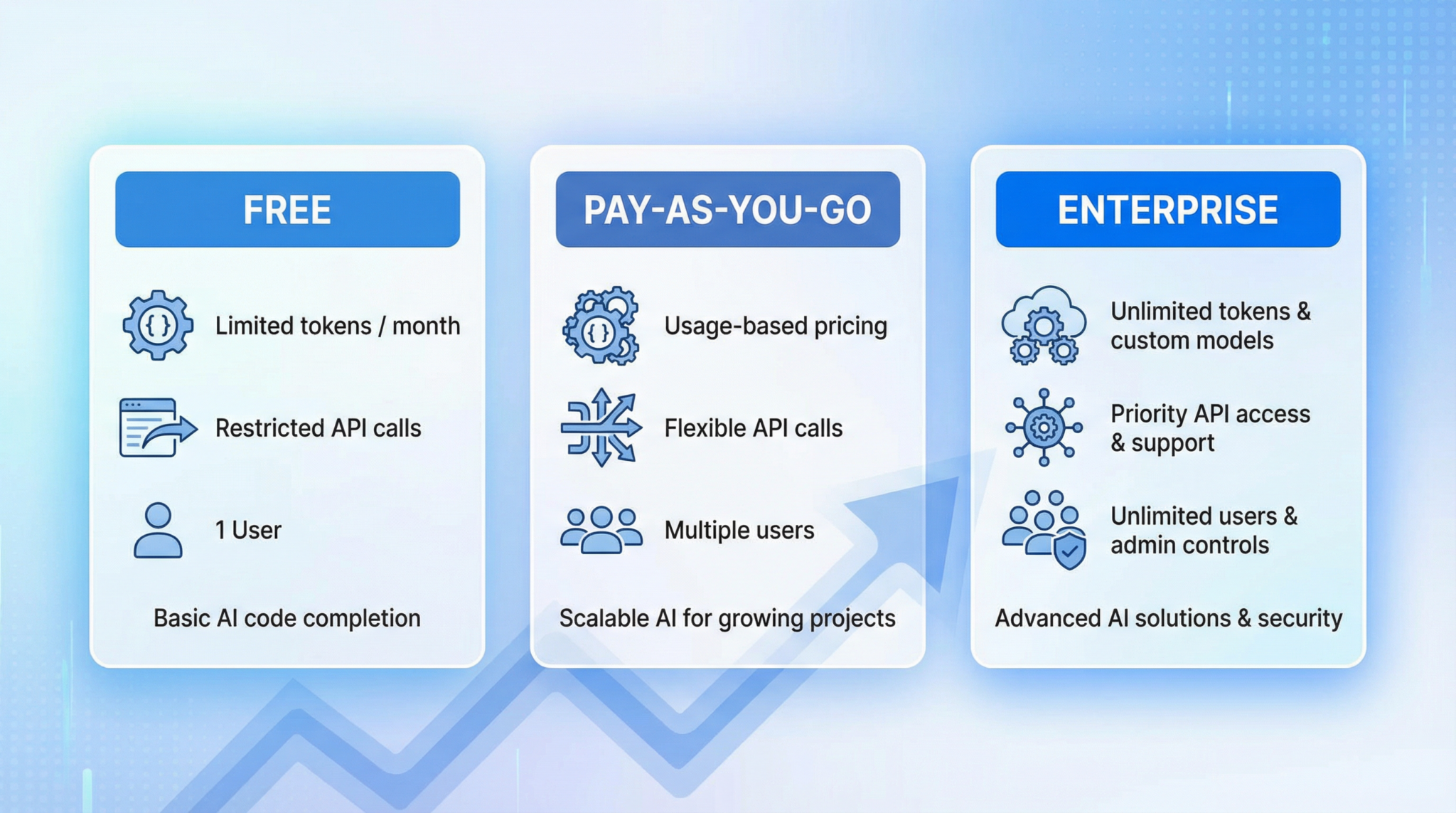
- Usage-based billing: Charges are calculated based on the number of tokens processed by the Codex API, both for input prompts and output responses.
- No upfront commitments: Teams can start using Codex without a long-term subscription, reducing financial risk and enabling experimentation.
- Scalable cost control: Organizations can set usage caps and alerts to manage budgets effectively.
- Flexible integration: Ideal for projects with variable or unpredictable coding assistance needs.
For development teams, this model provides a granular level of control over expenses tied directly to actual usage. It is particularly beneficial for startups, freelance developers, and teams working on diverse projects where AI coding demands fluctuate.
OpenAI also continues to support subscription plans for those who prefer predictable monthly pricing, but the pay-as-you-go option offers a compelling alternative that aligns costs with real-world usage.
Comparing Pay-As-You-Go with Subscription Plans: What Teams Should Consider
Before deciding which pricing model to adopt, it’s important for teams to understand the practical differences between pay-as-you-go and subscription options for OpenAI Codex. These differences impact budgeting, project planning, and overall AI integration strategy.
| Feature | Pay-As-You-Go | Subscription Plans |
|---|---|---|
| Billing Model | Charges based on actual token usage (input + output) | Fixed monthly fee regardless of usage within limits |
| Cost Predictability | Variable; depends on API calls | High; fixed monthly cost simplifies budgeting |
| Ideal For | Teams with fluctuating or unpredictable workloads | Teams with consistent and predictable AI usage |
| Usage Limits | No fixed limits; can set soft caps to control spending | Defined limits on API calls and token usage |
| Onboarding & Setup | Quick start; no contract needed | May require commitment and upfront payment |
| Discounts & Enterprise Features | Volume discounts available for high usage | Often bundled with premium support and SLAs |
For many engineering teams, especially those exploring AI coding tools for the first time or managing projects with variable scope, pay-as-you-go pricing lowers barriers to entry. However, teams with steady, predictable usage may find subscription plans more cost-effective and simpler to manage.
It’s also worth noting that OpenAI has enhanced its developer dashboard to provide detailed usage analytics, helping teams monitor costs in real time under either pricing model. This feature supports better financial oversight and resource allocation.
Development teams looking to maximize the benefits of OpenAI Codex in their workflows should also explore best practices for team onboarding and environment setup. Detailed instructions and strategies can be found in the OpenAI Codex team setup guide.
Teams looking to get started immediately can follow our detailed guide to setting up OpenAI Codex pay-as-you-go pricing for your team, which covers workspace configuration, billing controls, and per-user token limits.
, which covers collaborative coding environments and API key management.
Practical Implications for Software Development Teams in 2026
The shift to pay-as-you-go pricing for OpenAI Codex reflects broader trends in AI adoption within software development. As AI coding tools become integral to daily workflows, teams must adapt their budgeting, development cycles, and toolchain integration strategies accordingly.
Budgeting and Cost Management
With pay-as-you-go pricing, finance and development leads must collaborate closely to forecast AI-related expenses based on projected usage. This model encourages teams to optimize prompt design and code generation requests to minimize unnecessary token consumption.
Scaling AI Coding Assistance
Teams that scale rapidly or work on multiple projects simultaneously benefit from the flexibility of pay-as-you-go. They can allocate AI resources dynamically without renegotiating subscription tiers or worrying about unused capacity.
Integration and Workflow Optimization
OpenAI Codex’s API-first approach allows seamless integration into CI/CD pipelines, IDE plugins, and code review tools. The pay-as-you-go model supports burst usage scenarios, such as large refactoring sprints or intensive debugging sessions, without incurring excessive fixed costs.
Teams engaged in complex full-stack development projects should consider how AI coding assistants can be integrated at multiple stages—from frontend component generation to backend API logic. Insightful strategies for this are available in the OpenAI Codex full-stack development.
Once your team account is active, the next step is understanding how to use OpenAI Codex for full-stack development projects in ChatGPT, including generating backend APIs, writing frontend components, and debugging production code.
guide.
Security and Compliance Considerations
As teams increase their reliance on AI coding tools, maintaining code security and compliance becomes paramount. OpenAI continues to provide enterprise-grade security features, including data encryption and on-premises deployment options for sensitive environments, which are compatible with the pay-as-you-go pricing.
User Adoption and Training
Successful adoption in 2026 requires educating development teams on effective prompt engineering and AI-assisted coding best practices. Organizations are increasingly investing in training programs to maximize ROI on AI tools.
For further insights on how organizations are adopting AI coding assistants and the latest trends in developer adoption, refer to our comprehensive analysis in AI coding assistants adoption 2026.
The broader industry context matters here: research into how development teams are adopting AI coding assistants in production environments shows that teams with structured rollout plans see 3x faster adoption rates than those with ad-hoc implementations.
.
Access 40,000+ AI Prompts for ChatGPT, Claude & Codex — Free!
Subscribe to get instant access to our complete Notion Prompt Library — the largest curated collection of prompts for ChatGPT, Claude, OpenAI Codex, and other leading AI models. Optimized for real-world workflows across coding, research, content creation, and business.

Conclusion: Is Pay-As-You-Go Right for Your Team?
The introduction of pay-as-you-go pricing for OpenAI Codex marks a pivotal moment for AI-assisted software development. This model offers unprecedented flexibility, cost control, and scalability for teams navigating the evolving landscape of AI coding tools in 2026.
Teams with fluctuating workloads, those experimenting with AI integration, or startups looking to minimize upfront costs will find pay-as-you-go particularly advantageous. Conversely, organizations with steady, predictable usage patterns might prefer subscription plans for their budgeting simplicity.
Ultimately, the choice depends on your team’s project scope, resource availability, and development priorities. By leveraging detailed usage analytics, optimizing AI prompt strategies, and following expert onboarding guides such as the OpenAI Codex team setup guide.
Teams looking to get started immediately can follow our detailed guide to setting up OpenAI Codex pay-as-you-go pricing for your team, which covers workspace configuration, billing controls, and per-user token limits.
, software teams can harness the full power of Codex while managing costs effectively.
As AI coding tools continue to evolve rapidly, staying informed about pricing changes, integration best practices, and adoption trends will be crucial for maintaining a competitive edge in software development workflows.

