
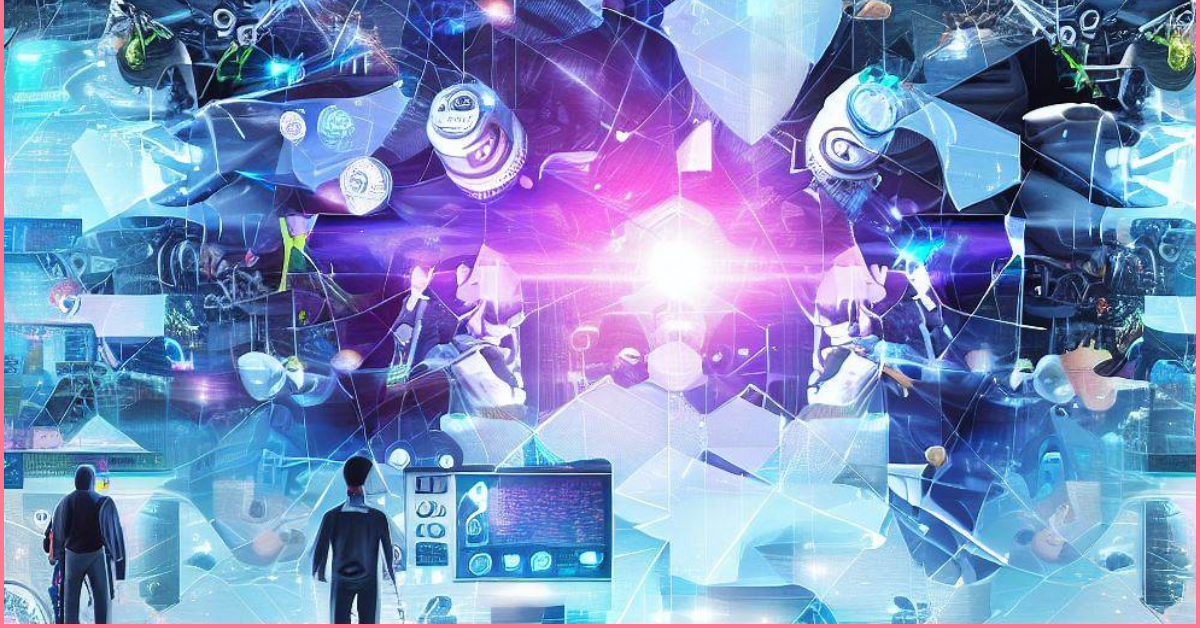
The convergence of digital twins, generative AI, and the metaverse is generating a lot of buzz in industries such as manufacturing, healthcare, and gaming. According to Bernard Marr, a Forbes contributor, the impact of these cutting-edge technologies on the gaming and 3D design industries can democratize access to real-time 3D models and interactive simulations.
Utilizing Gaming Industry’s Technology and Expertise
Unity and Epic Games are leading the charge in using these technologies to develop 3D interactive designs, virtual reality environments, and simulations, aimed at transforming flat data into 3D live data. The gaming industry’s expertise is being utilized by businesses to create real-time 3D models and simulations, a massive upgrade from previously relying on static, flat data.
Maturation Process: Predictive Twins and Real-time Decision Making
Going beyond real-time 3D models and simulations, the utilization of Enterprise Resource Planning allows for the development of a “predictive twin.” The technology produces simulations and data modeling that are advanced enough that operators can peek into the future and inform real-time decision-making. As data moves from a representative to a connected live twin, to the predictive twin of the future, industries will make better and more informed data-driven decisions.
Contributions of Generative AI
The President of Create at Unity, Mr. Marc Whitten, argues that generative AI apps like ChatGPT and Stable Diffusion are going to make it simpler for anyone to create digital twin simulations and 3D interactive experiences soon. This feature will likely affect healthcare, automotive, manufacturing, and gaming drastically.
Democratizing Creativity with AI-Infused Real-Time 3D Models
Unity aims to democratize creativity by infusing AI into real-time 3D models, allowing everyone to make richer decisions faster. As a result, companies and industries will eventually create predictive digital twins to enhance real-time decision-making further. This change will revolutionize industries such as healthcare, manufacturing, automotive, and gaming.
Conclusion
The convergence of digital twins, generative AI, and the metaverse is transforming how industries approach data, making it go beyond static and flat data to live data. Incorporating gaming industry’s technology and expertise, businesses are now able to create real-time 3D simulations and models which provide a peek into the future—most notably, predictive twins. This move could revolutionize various industries such as healthcare, manufacturing, automotive, and gaming.
🚀 Ready to Supercharge Your ChatGPT Skills?
Join 25,000+ professionals and get FREE access to our complete library of 40,000+ ChatGPT prompts across 41+ categories.

