
25 ChatGPT Images 2.5 Prompts for Restoring a Family Photo Archive: Damage Repair, Colorization, Cropping, Print Preparation, and Consent
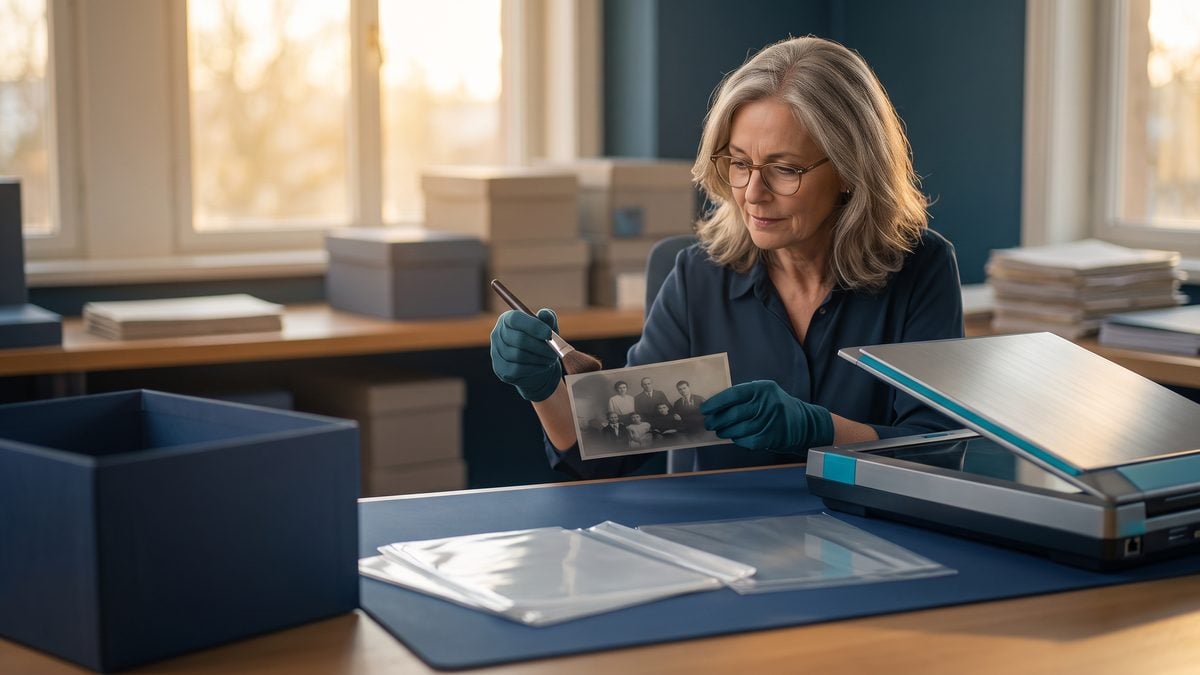
Start with a non-destructive archive rule: restore copies, never masters
Family-photo restoration with ChatGPT Images 2.5 should begin like a small archive project, not like a casual image filter session. The safest rule is simple: keep one untouched master file for every scan or camera capture, then use ChatGPT only on named, versioned derivatives. That rule protects the original evidence of the photograph’s actual condition, preserves future options if tools improve, and prevents a well-intended edit from becoming the only surviving record of a person, place, inscription, crop edge, paper texture, or date stamp.
OpenAI announced ChatGPT Images 2.5 on September 8, 2026, and says it improves detail, reference-photo subject preservation, natural lighting and texture, instruction following for precise edits, and consistency across multiple editing turns. Those capabilities make it useful for family archives because restoration often requires careful, localized work: reducing dust, repairing a torn corner, improving faded contrast, extending a print border for framing, or preparing a clean copy for a memorial program. The same realism also raises responsibility. A restored image can look more authoritative than the damaged print, so every workflow needs clear provenance notes explaining what was scanned, what was changed, what remains uncertain, and who approved the derivative.
This prompt collection treats image editing as a rights-aware, reversible process. Each prompt asks the model to preserve identity, preserve non-target details, avoid invented family history, and flag uncertainty. That matters because photo restoration can easily drift from repair into reconstruction. Removing a stain from the sky is one kind of edit; adding an imagined military badge, changing a face, assigning a location, guessing a uniform color, or “improving” a child’s expression is a different and higher-risk act. Unless the family has a documented reference, the correct instruction is to leave the detail ambiguous or label the derivative as interpretive.
Before using any prompt below, create a brief archive intake record for the image. At minimum, record who owns the physical print or negative, who scanned it, the date of digitization, the source format, visible writing on the back, known subjects, known restrictions, intended use, and whether living people or close relatives have consented to the proposed publication or sharing. If the photo contains a living person, a minor, a private setting, a sensitive ceremony, a medical context, a school record, a government ID, an intimate scene, or a confidential document in the background, pause and review whether editing or uploading is appropriate at all. OpenAI’s documentation describes safeguards for ChatGPT Images 2.5, but those safeguards do not replace the user’s responsibility to verify ownership, permission, privacy, and lawful purpose.
The target article explains 25 advanced prompting patterns for ChatGPT Images 2.0, including structured specs, negative constraints, reference-image conditioning, and production-quality image outputs. The ChatGPT Images 2.0 Advanced Prompting: 25 Patterns That Get Production-Quality Outputs article is a focused companion for Production Image Workflows because it is the strongest non-duplicate fit for a marker about production image workflows because it focuses directly on image prompting patterns for reliable production-quality outputs.
What ChatGPT Images 2.5 can help with—and what it should not decide
OpenAI’s Images in ChatGPT help page describes two editing paths: selecting a region and describing a change, or describing an edit without a selection. For a damaged family photo, selection-based editing is useful when the change should be narrow, such as repairing a scratch across a coat sleeve or reducing dust in a blank wall. Direct conversational editing is useful for global adjustments, such as asking for a conservative contrast correction or preparing a print-friendly derivative. In both cases, the human operator must define the permitted change and compare the output against the original before saving, sharing, printing, or publishing.
The same OpenAI help page warns that highlights are not always precise and edits may extend outside the selected area. In restoration work, that warning is operationally important. If you select a crease on the left edge of a portrait, the model may still alter nearby fabric texture, hairline detail, jewelry, wallpaper, or handwriting. The practical response is not to overtrust the selection tool; it is to work in small edits, zoom in before and after each edit, keep versioned derivatives, and reject any output that changes identity, expression, clothing, inscriptions, or historically meaningful context outside the approved region.
OpenAI also documents that aspect ratio can be selected in the editor or specified in a prompt. For an archive, aspect ratio choices should be separated into two categories. The archival derivative should retain the full visible scan area, including borders, deckled edges, handwritten captions, studio marks, and damage that may help future identification. A presentation derivative can be cropped or adapted for a frame, slideshow, website, obituary, class reunion booklet, or social post, but that version should be labeled as cropped or reformatted. Never let a convenience crop become the only copy a family later mistakes for the whole photograph.
Images 2.5 is described by OpenAI as supporting multi-turn editing and improved consistency across multiple editing turns. Multi-turn restoration can be valuable because a single heavy prompt often creates overprocessed results. A safer method is to request one limited repair, review it, then move to the next. However, multi-turn editing is not a guarantee that the model will preserve every prior detail across a long session. If identity preservation matters, restart from the untouched master or a recently verified derivative when you notice drift, and keep a short change log after every accepted turn.
OpenAI’s announcement and help materials also describe features such as Sketch, templates, comments, and prompt sharing, subject to plan, account, platform, rollout, mode, and workspace availability. Sketch is documented for the ChatGPT mobile app; templates are documented for categories such as posters and logos, while the help page states templates are not yet available in Work mode. For family archives, treat templates as presentation aids, not archival authorities. A memorial poster, reunion card, or printed collage may be useful, but it should be generated from approved derivatives and should not introduce fabricated dates, relationships, locations, or events.
The required archive workflow before using the 25 prompts
A reliable family-photo workflow begins with verified rights. The person running the restoration should confirm that they own the photograph, have permission from the owner, or have a license covering the proposed edit and intended publication. That permission should match the use. Private restoration for a family folder is different from public posting, commercial use, a museum exhibit, a book cover, or a fundraising campaign. If the image includes a recognizable living person, a separate consent review may be appropriate even when the physical print is owned by the family.
The second step is sensitive-image exclusion. Do not upload private IDs, passports, financial records, medical records, school records, confidential legal papers, intimate imagery, minors’ sensitive content, or photographs you do not have permission to use. Also review the background of ordinary photos: a hospital bracelet, a license plate, a school roster, a document on a desk, or a sealed adoption record can transform an apparently simple restoration into a privacy issue. Cropping or blurring after upload is not the same as deciding that sensitive material should not be uploaded in the first place.
The third step is scanning quality assurance. Use the best scan or capture reasonably available, inspect it at full size, and correct basic capture problems before asking for restoration. Confirm that the print is flat, the scanner glass is clean, the photo is not clipped at the edges, and the file includes relevant borders or handwriting. If scanning both front and back, keep those files together with stable names. If a photo is fragile, rare, or historically important, consider qualified preservation advice before handling, cleaning, flattening, or scanning it.
The fourth step is master-file protection. Store the untouched scan in a read-only or protected folder if your system supports that practice, and create a working copy with a version label. A simple naming pattern can prevent confusion: family_surname_person_place_year_source_master.tif for the untouched scan and family_surname_person_place_year_restore_v01.jpg for an edited derivative. If exact dates, places, or names are unknown, use terms such as unknown or circa in the file name or metadata rather than inventing certainty.
The fifth step is a human comparison checkpoint. After every model-generated edit, compare the derivative with the untouched master and, when available, with other family reference images. Look specifically at eyes, mouth shape, scars, moles, hairstyles, jewelry, insignia, hands, background objects, handwritten captions, and border details. If a model “repairs” a tear by changing a person’s jawline or “enhances” contrast by removing a lapel pin, the output should be rejected or reworked with a narrower prompt.
The sixth step is provenance documentation. For each accepted derivative, record the source file, tool used, prompt purpose, edit regions, date, operator, reviewer, unresolved uncertainties, and publication scope. OpenAI states that Images 2.5 uses C2PA metadata and invisible watermarking as provenance measures, and its system card says no single provenance solution is sufficient. Metadata can be stripped or separated from context, and watermark detection or C2PA presence does not prove ownership, consent, accuracy, or authorization. Your family archive still needs its own rights and edit notes.
The target article presents ChatGPT-5.5 prompts for production image workflows covering creative briefs, owned photos, precision edits, QA, and provenance documentation. The 25 ChatGPT-5.5 Prompts for Production Image Workflows: Creative Briefs, Owned Photos, Precision Edits, QA, and Provenance article is a focused companion for Image Provenance and Rights because it directly matches provenance and rights concerns because the title and excerpt emphasize owned photos, governance, evaluation, documentation, and image provenance.
Decision rules for conservative restoration
| Archive question | Conservative decision rule | Reason for the rule |
|---|---|---|
| Do we own or have permission for this photo? | Do not upload or edit until ownership, license, or family permission is documented for the intended use. | Possessing a scan is not the same as having publication rights or consent from recognizable people. |
| Is there sensitive content? | Exclude private IDs, medical records, intimate imagery, minors’ sensitive content, confidential documents, and unpermitted third-party photos or brand assets. | Restoration is not a valid reason to process unnecessary confidential or sensitive material. |
| Should a missing detail be reconstructed? | Only reconstruct from visible surrounding evidence or documented references; otherwise leave uncertain areas neutral and label uncertainty. | Invented details can become false family history when a realistic derivative circulates. |
| Should a face be beautified? | Do not alter identity, age, expression, facial structure, skin tone, disability markers, or distinctive features except to remove scanning artifacts or damage. | Identity preservation is the central ethical constraint in family-photo restoration. |
| Should color be added? | Treat colorization as interpretive unless supported by references; keep a black-and-white or sepia derivative as the primary restoration. | Color choices can imply historical certainty that the archive may not have. |
| Can we crop for printing? | Make print crops from a verified derivative and retain a full-frame archival version with borders and inscriptions. | Edges and backs of prints often contain identification evidence that should not be discarded. |
These rules are intentionally stricter than many casual editing workflows because family archives have long memory. A derivative made for a reunion slideshow can be copied into genealogy software, social platforms, school projects, obituaries, or public databases. If the derivative contains invented details, later viewers may not know that the image was interpretive. A short note such as “restored derivative from 2026 scan; dust reduced; torn lower-right border repaired; face and clothing not intentionally altered; color not added” prevents confusion and preserves trust.
When a restoration request is consequential, get a second human reviewer. Consequential uses include public exhibits, news use, legal or estate disputes, publications, fundraising, advertising, identity claims, memorial displays, and images involving living people who may object to alteration or publication. The reviewer should compare the derivative against the master and approve the final export, not merely approve the idea of restoration. If family members disagree about publication or sensitivity, retain the private archival derivative and delay public release.
How to read and reuse the prompts in this article
The 25 prompts in the following sections are designed as reusable building blocks. Each prompt contains the required ownership and permission statement, instructs the model to preserve identity and non-target details, prohibits invented history, requires an untouched master and a reversible versioned derivative, defines the exact region and permitted changes, asks the model to flag uncertainty, requires human comparison, and excludes sensitive or unpermitted material. Those repeated constraints are deliberate. They reduce the chance that a useful restoration prompt becomes a deceptive reconstruction prompt when reused months later by another family member.
For best results, replace bracketed fields with concrete facts from your archive intake record. For example, write “repair only the vertical crease crossing the left background curtain” rather than “fix the picture,” and write “prepare a 5-by-7 print crop that keeps both people’s full heads and the handwritten studio mark” rather than “make it printable.” If you do not know the date, uniform type, location, or relationship between people, say so. The model should not be asked to infer family history from visual appearance.
Use small batches. A good restoration session might include one scan-QA prompt, one dust-reduction prompt, one tear-repair prompt, and one print-preparation prompt. A risky session asks for dust removal, colorization, face enhancement, background extension, caption writing, and poster design all at once. Combining many goals makes it harder to identify which instruction caused an identity change or invented detail. Versioned derivatives let you roll back to the last acceptable stage.
Keep final export notes beside the final image, not only inside the chat. Chat conversations can be deleted, moved, or separated from files; OpenAI’s help page notes that deleting an image from My Images requires deleting the conversation where it was created. A family archive should therefore keep its own local or managed record of prompts, review decisions, and provenance notes according to the family’s retention and privacy needs.
Editorial recommendation: Treat ChatGPT Images 2.5 as a restoration assistant for copies, not as an authority on the past. The tool can help repair visible damage and prepare useful derivatives, but the family remains responsible for rights, consent, privacy, identity preservation, historical accuracy, and final publication decisions.
Access 40,000+ AI Prompts for ChatGPT, Claude & Codex — Free!
Subscribe to get instant access to our complete Notion Prompt Library — the largest curated collection of prompts for ChatGPT, Claude, OpenAI Codex, and other leading AI models. Optimized for real-world workflows across coding, research, content creation, and business.
Useful Links
- OpenAI: Introducing ChatGPT Images 2.5
- OpenAI Help Center: Images in ChatGPT
- OpenAI Deployment Safety: ChatGPT Images 2.5 System Card
- C2PA: Conformance
Prompts 1–9: intake, quality control, and conservative visual repair
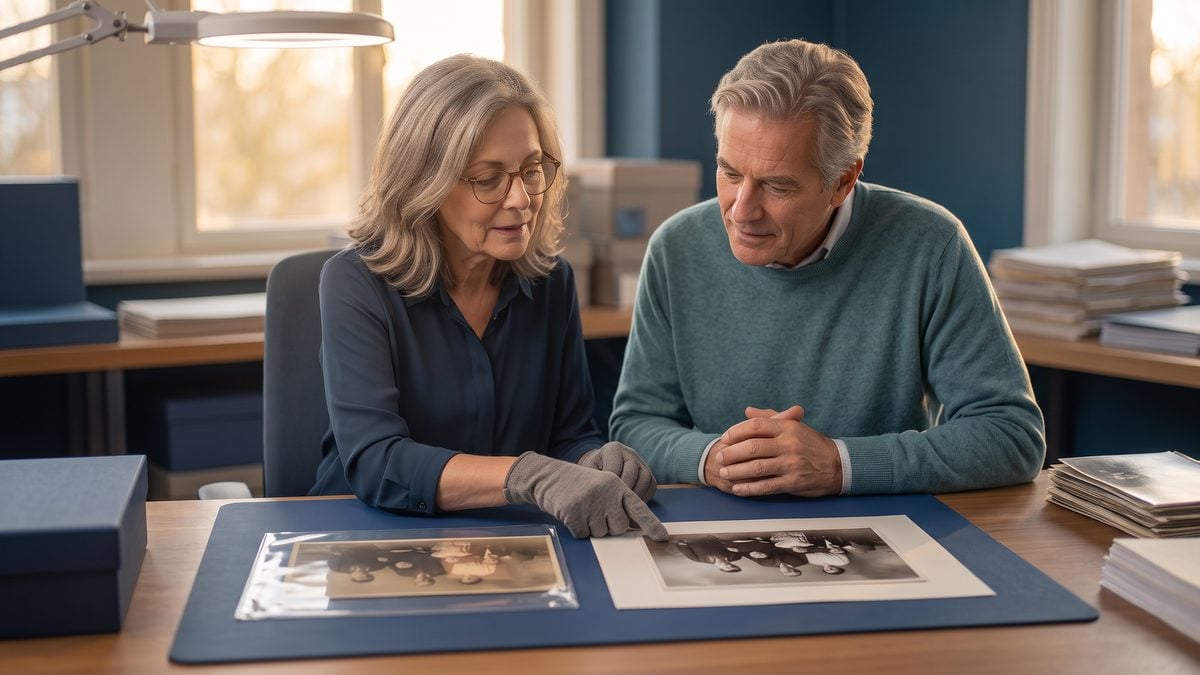
The first nine prompts establish the archive record before any restoration work begins, then move through scan-quality review, duplicate grouping, physical damage repair, tonal recovery, cautious sharpening, identity-preserving cleanup, and background repair. Use them in order for a family collection because the early metadata and consent decisions determine what later edits are permitted, who must review them, and whether a derivative image may be printed, shared privately, or published.
OpenAI says ChatGPT Images 2.5 improves reference-photo subject preservation, detail, natural lighting, texture, instruction following for precise edits, and consistency across multiple editing turns. Treat those as useful product claims, not a substitute for archive discipline: restored family photographs should be labeled as edited derivatives, not authentic originals, forensic evidence, or professional conservation work. OpenAI’s help documentation also notes that image edits can be made by selecting a region or by describing the edit conversationally, but selected highlights may be imprecise and edits may extend beyond the selection; every prompt below therefore asks for region boundaries and a human comparison step.
This privacy-review prompt collection shows how to examine data exposure, accessibility, stakeholder approval, and stop conditions before publishing a website, offering a reusable review pattern for family-photo prompts that may contain sensitive visual information. The 25 ChatGPT-5.5 Prompts for Website QA, Privacy Reviews, Accessibility Checks, and Stakeholder Approval article is a focused companion for Privacy Safe Prompting because it provides a concrete privacy-review workflow rather than the draft article about outsourcing AI evaluations.
Prompt 1: Create an archive intake and rights record before restoration
Purpose
Use this prompt before uploading a photo for editing so the family archive has a rights, consent, and preservation record. The goal is not to make the image look better yet; it is to document whether the user owns the image or has permission, what edits are allowed, who appears in the image if known, what should remain untouched, and what the intended use will be. This is especially important because C2PA metadata and invisible watermarking can support provenance, but they do not prove ownership, consent, historical truth, or publication rights.
Copy-paste prompt
Mandatory rights-and-preservation contract: I own the photo or have permission for this edit and intended use. Preserve every person's identity and preserve all non-target details. Keep an untouched master and create only a reversible, versioned derivative. Define the exact area and permitted changes. Do not invent history, date, location, color, or event; flag uncertainty instead of guessing. Require human comparison against the original. Do not include private IDs, medical records, minors' sensitive content, intimate imagery, confidential documents, or photographs lacking permission.

I am preparing a family-photo archive restoration record before making any image edit.

Rights-and-preservation contract:
I own the photo or have a documented license/permission covering the proposed edit and any intended publication or sharing. Preserve the identity of every person and preserve non-target details unless I explicitly authorize a narrow change. Do not invent historical facts, uniforms, locations, relationships, dates, colors, events, awards, inscriptions, brands, or social context. I will keep an untouched master file and request only a reversible, versioned derivative. Define the exact area and permitted changes before editing. Flag uncertainty instead of guessing. Require human comparison against the original before accepting the result. Do not use private IDs, medical records, intimate imagery, minors’ sensitive content, confidential documents, third-party brand assets, or photographs lacking permission.

Task:
Create an intake record for this photograph. Do not restore the image yet. Ask me for any missing information needed to record:
1. Source of the photo and whether I own it or have permission.
2. Known creator, approximate date, location, event, and people, clearly marked as known, uncertain, or unknown.
3. Intended use: private family viewing, print for relatives, educational display, public post, memorial project, or other.
4. Permitted edits: dust removal, scratch repair, tear repair, contrast, crop, colorization, background repair, print preparation, or captioning.
5. Prohibited edits: face changes, body changes, removal of meaningful objects, invented details, deceptive reconstruction, or anything I list.
6. Sensitivity review: minors, deceased persons, adoption or family conflict, cultural or religious context, uniforms, legal context, medical context, or privacy risks.
7. Output naming plan with master filename, derivative filename, date, editor, and review status.

Return a concise archive intake worksheet and a recommended next step. If the image contains uncertainty or sensitive material, tell me what human approval is needed before any edit.
Required inputs
- The scanned or photographed image, or a description if the image should not be uploaded yet.
- Known ownership, license, inheritance, or family permission information.
- The planned use of the restored derivative, such as private viewing, printing, or public posting.
- Any family rules about deceased relatives, children, uniforms, ceremonies, documents, or sensitive events.
Expected output
The expected output is an intake worksheet that separates known facts from uncertain family memory, records permission boundaries, identifies prohibited edits, and recommends whether restoration may begin. A good result should explicitly say “do not edit yet” when ownership, subject permission, intended use, or sensitive context is unresolved.
Verification checkpoint
Before continuing, compare the worksheet with the physical photo envelope, album notes, filenames, family correspondence, or donor records. If the image includes living people, minors, sensitive ceremonies, legal documents, medical context, or private family conflict, obtain appropriate family review before editing or sharing. Do not rely on the model’s interpretation as a rights clearance.
Prompt 2: Review scan quality before requesting restoration
Purpose
This prompt checks whether the uploaded file is a suitable restoration source. Many poor “AI restoration” outcomes come from editing a low-resolution phone snapshot of a print when a better scan could preserve texture, faces, handwriting, borders, and tonal range. Use this step to decide whether to rescan, crop less aggressively, correct glare, or capture the back of the print before making any derivative edit.
Copy-paste prompt
Mandatory rights-and-preservation contract: I own the photo or have permission for this edit and intended use. Preserve every person's identity and preserve all non-target details. Keep an untouched master and create only a reversible, versioned derivative. Define the exact area and permitted changes. Do not invent history, date, location, color, or event; flag uncertainty instead of guessing. Require human comparison against the original. Do not include private IDs, medical records, minors' sensitive content, intimate imagery, confidential documents, or photographs lacking permission.

I want a scan-quality review for this family photograph before restoration.

Rights-and-preservation contract:
I own the photo or have a documented license/permission covering the proposed edit and any intended publication or sharing. Preserve the identity of every person and preserve non-target details unless I explicitly authorize a narrow change. Do not invent historical facts, uniforms, locations, relationships, dates, colors, events, awards, inscriptions, brands, or social context. I will keep an untouched master file and request only a reversible, versioned derivative. Define the exact area and permitted changes before editing. Flag uncertainty instead of guessing. Require human comparison against the original before accepting the result. Do not use private IDs, medical records, intimate imagery, minors’ sensitive content, confidential documents, third-party brand assets, or photographs lacking permission.

Task:
Inspect the uploaded image as a restoration source. Do not perform restoration yet. Evaluate:
1. Resolution and whether important faces, text, fabric, hair, jewelry, background edges, and borders have enough detail.
2. Glare, reflections, shadows, lens distortion, skew, blur, moiré, compression artifacts, cropped edges, and color cast.
3. Whether the photo back, album caption, envelope note, or border marks should be scanned separately for provenance.
4. Whether the visible damage is physical damage on the photo or introduced by the scan/camera capture.
5. Whether a new scan or photo capture is recommended before editing.

Return:
- A scan-quality rating: use as-is, acceptable with caution, or rescan strongly recommended.
- A defect list separated into capture problems and original-photo damage.
- Specific rescan instructions that preserve the full border and avoid losing information.
- A safe next prompt recommendation.
Required inputs
- The best available scan or camera capture of the photo.
- Optional image of the reverse side if there are stamps, dates, names, studio marks, or handwriting.
- The target use, because a small private screen copy has different quality needs than a large print.
Expected output
The output should be a pre-edit quality report that separates scanning defects from genuine photo damage. The model may recommend rescanning rather than editing. That is a successful result when glare, blur, compression, missing borders, or skew would otherwise cause the restoration to invent detail.
Verification checkpoint
Open the original file at full size and compare the report against what you can see manually. If the prompt recommends a rescan, do that before damage repair. A higher-quality master is safer than asking the model to reconstruct eyes, handwriting, medals, license plates, signage, or heirloom objects from a poor capture.
Prompt 3: Group duplicates and choose the safest master
Purpose
Family archives often contain duplicate prints, contact sheets, scanned album pages, cropped social-media copies, and edited files with unknown history. This prompt helps group versions of the same photo and select a master for restoration without overwriting anything. It also prevents accidental publication of a low-quality derivative when a more complete original exists.
Copy-paste prompt
Mandatory rights-and-preservation contract: I own the photo or have permission for this edit and intended use. Preserve every person's identity and preserve all non-target details. Keep an untouched master and create only a reversible, versioned derivative. Define the exact area and permitted changes. Do not invent history, date, location, color, or event; flag uncertainty instead of guessing. Require human comparison against the original. Do not include private IDs, medical records, minors' sensitive content, intimate imagery, confidential documents, or photographs lacking permission.

I am comparing multiple versions of what may be the same family photograph. Help me group duplicates and choose the safest restoration master.

Rights-and-preservation contract:
I own the photo or have a documented license/permission covering the proposed edit and any intended publication or sharing. Preserve the identity of every person and preserve non-target details unless I explicitly authorize a narrow change. Do not invent historical facts, uniforms, locations, relationships, dates, colors, events, awards, inscriptions, brands, or social context. I will keep an untouched master file and request only a reversible, versioned derivative. Define the exact area and permitted changes before editing. Flag uncertainty instead of guessing. Require human comparison against the original before accepting the result. Do not use private IDs, medical records, intimate imagery, minors’ sensitive content, confidential documents, third-party brand assets, or photographs lacking permission.

Task:
Compare the uploaded versions without altering them. Group likely duplicates or near-duplicates. For each group, evaluate:
1. Completeness of borders and uncropped content.
2. Face and detail clarity.
3. Physical damage versus scan defects.
4. Color or tonal preservation.
5. Presence of captions, date stamps, lab marks, handwritten notes, album context, or crop marks.
6. Signs that a version is already edited or artificially enhanced.

Return:
- A duplicate-group table using the filenames or labels I provide.
- The recommended restoration master for each group and why.
- Any versions that should be preserved as evidence even if not used for restoration.
- A version-naming plan for master, working copy, edited derivative, and print file.
Do not merge people, faces, backgrounds, or details from different images unless I later give explicit permission and the result is labeled as a composite derivative.
Required inputs
- Two or more images or labeled descriptions of suspected duplicates.
- Filenames, scan dates, album locations, or any available notes.
- The intended restoration target, such as archival preservation, family print, or memorial display.
Expected output
The expected output is a duplicate grouping table and a recommended master file for each group. The model should prefer the most complete, least distorted, least compressed, and best-documented source, not necessarily the most visually pleasing copy. It should also flag uncertain matches rather than forcing every image into a duplicate group.
Verification checkpoint
Review each grouping manually at high zoom. Pay special attention to people at the edge of the frame, handwritten notes, background landmarks, and clothing details that may distinguish two similar events. Do not delete duplicates merely because the model groups them; archive management decisions are separate from visual restoration.
Prompt 4: Repair scratches, dust, and small spots without changing content
Purpose
This prompt handles common surface defects: dust, pinpricks, small scratches, scanner lint, and minor spotting. The permitted edit is narrow: remove damage that lies on top of the image while preserving faces, clothing, objects, inscriptions, grain, paper texture, and original composition. This is a safer early repair because it avoids large invented reconstructions.
Copy-paste prompt
Mandatory rights-and-preservation contract: I own the photo or have permission for this edit and intended use. Preserve every person's identity and preserve all non-target details. Keep an untouched master and create only a reversible, versioned derivative. Define the exact area and permitted changes. Do not invent history, date, location, color, or event; flag uncertainty instead of guessing. Require human comparison against the original. Do not include private IDs, medical records, minors' sensitive content, intimate imagery, confidential documents, or photographs lacking permission.

I want a conservative scratch, dust, and small-spot repair on this family photograph.

Rights-and-preservation contract:
I own the photo or have a documented license/permission covering the proposed edit and any intended publication or sharing. Preserve the identity of every person and preserve non-target details unless I explicitly authorize a narrow change. Do not invent historical facts, uniforms, locations, relationships, dates, colors, events, awards, inscriptions, brands, or social context. I will keep an untouched master file and request only a reversible, versioned derivative. Define the exact area and permitted changes before editing. Flag uncertainty instead of guessing. Require human comparison against the original before accepting the result. Do not use private IDs, medical records, intimate imagery, minors’ sensitive content, confidential documents, third-party brand assets, or photographs lacking permission.

Task:
Create a reversible edited derivative that removes only dust, lint, tiny white or black specks, and fine surface scratches. Use the original surrounding pixels as the guide. Preserve film grain, paper texture, borders, handwritten marks, studio stamps, date marks, clothing texture, jewelry, hairlines, wrinkles, and background objects.

Permitted regions:
- Small isolated dust and specks across the image.
- Fine scratches that do not cross critical facial features, text, or historically meaningful objects unless you can repair them conservatively.

Not permitted:
- Do not smooth skin globally.
- Do not change face shape, eyes, mouth, teeth, age, hairstyle, body shape, clothing design, medals, insignia, documents, signs, or background objects.
- Do not remove objects or people.
- Do not invent missing detail.

Return an edited derivative plus a short edit log listing the types of defects removed and any areas left unchanged because repair would require guessing.
Required inputs
- The selected master or working copy from the intake workflow.
- Optional notes identifying meaningful marks that must not be removed, such as handwriting or studio imprints.
- A decision on whether borders should remain visible or be cleaned only within the photo area.
Expected output
The expected output is a subtle repaired derivative that looks like a cleaner version of the same scan, not a modernized portrait. A good edit log should identify categories of removed defects and name any ambiguous marks that were preserved because they might be original content.
Verification checkpoint
Compare the derivative and master side by side at normal size and at high zoom. Reject the result if skin appears plasticky, wrinkles vanish, jewelry changes, handwriting is altered, clothing patterns are simplified, or small background objects disappear. OpenAI notes that selected edit regions may not be precise, so inspect areas just outside the intended repair zones.
The target article provides ChatGPT prompts for parents managing teens’ AI usage, including screen time, digital literacy, homework boundaries, and online safety conversations. The 25 ChatGPT Prompts for Parents Managing Their Teen’s AI Usage: Screen Time, Digital Literacy, Homework Help Boundaries, and Online Safety Conversations article is a focused companion for Family Digital Literacy because it fits the family digital literacy marker because it addresses household AI guidance, consent-oriented conversations, and online safety in a family context.
Prompt 5: Repair a tear, crease, or missing corner with a visible uncertainty rule
Purpose
Tears and missing corners require more caution than dust removal because the model may need to infer what was behind the damage. This prompt allows repair only where the missing material can be reconstructed from adjacent, repetitive, or non-identifying detail. It requires uncertainty flags where a face, text, uniform, document, heirloom, or historically meaningful feature is affected.
Copy-paste prompt
Mandatory rights-and-preservation contract: I own the photo or have permission for this edit and intended use. Preserve every person's identity and preserve all non-target details. Keep an untouched master and create only a reversible, versioned derivative. Define the exact area and permitted changes. Do not invent history, date, location, color, or event; flag uncertainty instead of guessing. Require human comparison against the original. Do not include private IDs, medical records, minors' sensitive content, intimate imagery, confidential documents, or photographs lacking permission.

I want a conservative tear, crease, or missing-corner repair on this family photograph.

Rights-and-preservation contract:
I own the photo or have a documented license/permission covering the proposed edit and any intended publication or sharing. Preserve the identity of every person and preserve non-target details unless I explicitly authorize a narrow change. Do not invent historical facts, uniforms, locations, relationships, dates, colors, events, awards, inscriptions, brands, or social context. I will keep an untouched master file and request only a reversible, versioned derivative. Define the exact area and permitted changes before editing. Flag uncertainty instead of guessing. Require human comparison against the original before accepting the result. Do not use private IDs, medical records, intimate imagery, minors’ sensitive content, confidential documents, third-party brand assets, or photographs lacking permission.

Task:
Create a reversible edited derivative repairing only the visible tear, crease, fold line, or missing corner I identify. First state the region to be repaired in plain language, then perform the edit only if the repair can be based on adjacent visual evidence.

Permitted changes:
- Reconnect obvious continuous lines, plain backgrounds, wallpaper, sky, floor, fabric folds, or borders when the surrounding pattern supports the repair.
- Reduce the visibility of crease discoloration while preserving original texture.
- Fill a missing corner only when it contains non-critical repeated background or border material.

Required uncertainty behavior:
- If damage crosses a face, hand, eye, mouth, text, uniform insignia, document, brand mark, landmark, or meaningful object, leave that area minimally repaired or marked in the edit log as uncertain.
- Do not create a new eye, smile, badge, date, signature, award, object, person, or scene element.

Return the edited derivative and an edit log with: repaired region, evidence used, areas of uncertainty, and areas intentionally left imperfect.
Required inputs
- The image to repair.
- A plain-language description of the tear, crease, fold, or missing corner, such as “vertical crease through the left background wall.”
- Any instruction to leave borders, writing, or damage visible for historical context.
Expected output
The output should be a derivative that reduces distracting physical damage without rewriting the photograph. Some flaws may remain, and that is appropriate when the missing content affects identity, text, uniforms, or meaningful objects. The edit log should explain what was repaired from visual evidence and what remains uncertain.
Verification checkpoint
Ask a family reviewer who knows the people or context to inspect the repaired area. Reject any result that creates a new facial expression, changes a person’s apparent age, alters clothing or insignia, invents a background object, or removes evidence relevant to the photo’s history. If the photo may have legal, genealogical, journalistic, or institutional value, preserve a clearly labeled unrestored view alongside the edited derivative.
Prompt 6: Correct fading, yellowing, and contrast without modernizing the scene
Purpose
This prompt improves legibility when a photograph has faded, yellowed, lost shadow separation, or become flat from age or scanning. The instruction is tonal correction, not reinterpretation. It should not turn an old family photograph into a hyper-real contemporary image, erase paper age, or imply that color and contrast choices are historically exact.
Copy-paste prompt
Mandatory rights-and-preservation contract: I own the photo or have permission for this edit and intended use. Preserve every person's identity and preserve all non-target details. Keep an untouched master and create only a reversible, versioned derivative. Define the exact area and permitted changes. Do not invent history, date, location, color, or event; flag uncertainty instead of guessing. Require human comparison against the original. Do not include private IDs, medical records, minors' sensitive content, intimate imagery, confidential documents, or photographs lacking permission.

I want a conservative fading, yellowing, and contrast correction for this family photograph.

Rights-and-preservation contract:
I own the photo or have a documented license/permission covering the proposed edit and any intended publication or sharing. Preserve the identity of every person and preserve non-target details unless I explicitly authorize a narrow change. Do not invent historical facts, uniforms, locations, relationships, dates, colors, events, awards, inscriptions, brands, or social context. I will keep an untouched master file and request only a reversible, versioned derivative. Define the exact area and permitted changes before editing. Flag uncertainty instead of guessing. Require human comparison against the original before accepting the result. Do not use private IDs, medical records, intimate imagery, minors’ sensitive content, confidential documents, third-party brand assets, or photographs lacking permission.

Task:
Create a reversible edited derivative that improves tonal legibility while preserving the period character of the photograph.

Permitted changes:
- Reduce excessive yellowing or color cast caused by aging or scanning.
- Improve contrast gently so faces, clothing, and background remain readable.
- Recover shadow and highlight separation where visible information already exists.
- Preserve natural grain, paper texture, border tone, and original lighting direction.

Not permitted:
- Do not add dramatic lighting, modern studio contrast, artificial depth of field, new colors, new background detail, or glamour-style retouching.
- Do not whiten eyes or teeth unnaturally.
- Do not remove age-related texture unless it is clearly a scanning defect or surface stain.
- Do not claim the corrected tone is historically exact.

Return the edited derivative and a note explaining the tonal adjustments and any uncertainty about original color or exposure.
Required inputs
- The image after intake and scan review, preferably before major artistic edits.
- Any reference information about the original print, such as sepia, black-and-white, faded color print, slide, or instant photo.
- The intended viewing context, such as screen sharing, small print, or large framed print.
Expected output
The expected result is a more readable version of the same photograph. Faces should become easier to see, but the image should still retain plausible period texture, original light direction, and visible aging where relevant. The output should not state that corrected tones are the original colors unless you provided reliable reference evidence.
Verification checkpoint
Compare skin, clothing, wall color, sky, paper borders, and shadows against the master. If the derivative looks newly photographed, over-contrasted, or selectively beautified, request a gentler version. For archival captions, describe the result as “tonally corrected derivative,” not “true restoration of original colors.”
Prompt 7: Apply cautious sharpening only where blur obscures existing detail
Purpose
Sharpening can make a family portrait more legible, but excessive sharpening creates false edges, artificial eyes, altered wrinkles, and a misleading sense of detail. This prompt asks ChatGPT Images to enhance visible detail conservatively while refusing to invent facial features or text. Use it after scan-quality review; if the source is too blurry, the safe answer may be to keep the image soft.
Copy-paste prompt
Mandatory rights-and-preservation contract: I own the photo or have permission for this edit and intended use. Preserve every person's identity and preserve all non-target details. Keep an untouched master and create only a reversible, versioned derivative. Define the exact area and permitted changes. Do not invent history, date, location, color, or event; flag uncertainty instead of guessing. Require human comparison against the original. Do not include private IDs, medical records, minors' sensitive content, intimate imagery, confidential documents, or photographs lacking permission.

I want cautious sharpening for this family photograph without inventing detail.

Rights-and-preservation contract:
I own the photo or have a documented license/permission covering the proposed edit and any intended publication or sharing. Preserve the identity of every person and preserve non-target details unless I explicitly authorize a narrow change. Do not invent historical facts, uniforms, locations, relationships, dates, colors, events, awards, inscriptions, brands, or social context. I will keep an untouched master file and request only a reversible, versioned derivative. Define the exact area and permitted changes before editing. Flag uncertainty instead of guessing. Require human comparison against the original before accepting the result. Do not use private IDs, medical records, intimate imagery, minors’ sensitive content, confidential documents, third-party brand assets, or photographs lacking permission.

Task:
Create a reversible edited derivative with only conservative sharpening and clarity improvement where existing detail is already visible.

Permitted changes:
- Slightly improve edge clarity on faces, clothing, hair, printed borders, and background features.
- Reduce mild scan softness if the underlying detail is present.
- Preserve natural grain and avoid artificial outlines.

Not permitted:
- Do not reconstruct eyes, teeth, hands, text, badges, medals, signatures, license plates, documents, or faces that are not clearly visible.
- Do not make the image look like a modern high-resolution photo.
- Do not change identity, expression, age, hairstyle, body shape, or clothing.
- Do not add catchlights, eyelashes, skin texture, fabric weave, or background detail that is not supported by the image.

Return the edited derivative and a sharpening log identifying which areas were enhanced and which areas were left soft because detail was uncertain.
Required inputs
- The image needing clarity improvement.
- A statement of the intended output size, because a small family-screening image may need less sharpening than a print derivative.
- Any regions that must remain unaltered, such as handwriting, stamps, or faces of people whose identity is uncertain.
Expected output
The output should look slightly clearer, not newly invented. A responsible sharpening log should identify areas where the model declined to enhance because the source did not contain enough evidence. Softness is preferable to fabricated facial or documentary detail.
Verification checkpoint
Zoom in on eyes, mouths, hands, jewelry, handwriting, uniform details, and background signs. Reject the derivative if it creates legible text that was not legible in the master, changes facial expression, adds sharp outlines around people, or makes blurred objects appear falsely identifiable.
Prompt 8: Clean up faces while preserving identity, age, expression, and lived texture
Purpose
This prompt addresses the most sensitive common restoration request: improving a portrait without changing the person. It allows removal of surface damage, scan artifacts, and temporary blemish-like print defects, but prohibits beautification, age reduction, face replacement, symmetry changes, expression edits, or reconstruction of features. Use it when family members want a respectful print, not a transformed image.
Copy-paste prompt
Mandatory rights-and-preservation contract: I own the photo or have permission for this edit and intended use. Preserve every person's identity and preserve all non-target details. Keep an untouched master and create only a reversible, versioned derivative. Define the exact area and permitted changes. Do not invent history, date, location, color, or event; flag uncertainty instead of guessing. Require human comparison against the original. Do not include private IDs, medical records, minors' sensitive content, intimate imagery, confidential documents, or photographs lacking permission.

I want identity-preserving cleanup for the faces in this family photograph.

Rights-and-preservation contract:
I own the photo or have a documented license/permission covering the proposed edit and any intended publication or sharing. Preserve the identity of every person and preserve non-target details unless I explicitly authorize a narrow change. Do not invent historical facts, uniforms, locations, relationships, dates, colors, events, awards, inscriptions, brands, or social context. I will keep an untouched master file and request only a reversible, versioned derivative. Define the exact area and permitted changes before editing. Flag uncertainty instead of guessing. Require human comparison against the original before accepting the result. Do not use private IDs, medical records, intimate imagery, minors’ sensitive content, confidential documents, third-party brand assets, or photographs lacking permission.

Task:
Create a reversible edited derivative that cleans only surface damage and scan artifacts affecting faces. Preserve identity, age, expression, gaze direction, facial proportions, hairstyle, wrinkles, scars, freckles, glasses, facial hair, skin texture, and lighting.

Permitted changes:
- Remove dust, scratches, stains, or crease marks that sit on top of a face when the underlying feature is clear.
- Reduce scanner noise or small specks without smoothing real skin.
- Balance tone gently if fading makes the face hard to see.

Not permitted:
- Do not beautify, de-age, slim, reshape, replace, swap, relight, whiten, enlarge eyes, alter smiles, change gaze, add makeup, remove meaningful scars, or change hair.
- Do not infer hidden facial features under severe damage.
- Do not make different people look more similar or more attractive.
- Do not remove culturally, medically, or personally meaningful visible traits.

Return the edited derivative and a face-specific edit log describing each permitted cleanup and any areas left unchanged because identity preservation required caution.
Required inputs
- The photo and, if helpful, a note identifying which faces may be cleaned.
- Any family instruction about preserving scars, glasses, hairstyles, religious attire, cultural dress, mourning dress, or visible aging.
- Confirmation that the photo is not private ID material, medical imagery, intimate imagery, minors’ sensitive content, or a photograph lacking permission.
Expected output
The expected result is a respectful cleaned derivative where the people remain recognizably themselves. The model should keep wrinkles, skin texture, expression, and period lighting. If damage crosses a key facial feature, the output should leave imperfection or flag uncertainty rather than inventing a replacement.
Verification checkpoint
Ask someone who knows the person, or knew them during that life period, to review the derivative against the master. Reject changes that make the subject look younger, more symmetrical, more modern, differently expressive, or less like the original person. Human approval is mandatory before printing, publishing, memorializing, or distributing face-edited images.
Prompt 9: Repair background damage without erasing historical context
Purpose
Background repair is useful when stains, tears, or scan defects distract from the main subject, but backgrounds often contain historically meaningful information: homes, workplaces, religious spaces, military settings, signage, vehicles, furniture, studio props, immigration context, or neighborhood features. This prompt permits repair of plain or repetitive areas while preserving contextual evidence.
Copy-paste prompt
Mandatory rights-and-preservation contract: I own the photo or have permission for this edit and intended use. Preserve every person's identity and preserve all non-target details. Keep an untouched master and create only a reversible, versioned derivative. Define the exact area and permitted changes. Do not invent history, date, location, color, or event; flag uncertainty instead of guessing. Require human comparison against the original. Do not include private IDs, medical records, minors' sensitive content, intimate imagery, confidential documents, or photographs lacking permission.

I want conservative background repair for this family photograph without erasing historical context.

Rights-and-preservation contract:
I own the photo or have a documented license/permission covering the proposed edit and any intended publication or sharing. Preserve the identity of every person and preserve non-target details unless I explicitly authorize a narrow change. Do not invent historical facts, uniforms, locations, relationships, dates, colors, events, awards, inscriptions, brands, or social context. I will keep an untouched master file and request only a reversible, versioned derivative. Define the exact area and permitted changes before editing. Flag uncertainty instead of guessing. Require human comparison against the original before accepting the result. Do not use private IDs, medical records, intimate imagery, minors’ sensitive content, confidential documents, third-party brand assets, or photographs lacking permission.

Task:
Create a reversible edited derivative repairing only background damage that is visually distracting and not historically meaningful. Before editing, identify the exact background regions you plan to repair.

Permitted changes:
- Repair stains, dust, scratches, cracks, or missing patches in plain walls, skies, studio backdrops, floors, curtains, or other repeated background textures.
- Blend repaired regions with surrounding tone and texture.
- Keep the image period-appropriate and visibly derived from the original.

Not permitted:
- Do not remove or alter people, pets, homes, vehicles, furniture, signs, documents, artwork, religious objects, uniforms, tools, workplace items, landmarks, brand assets, or objects that may help identify place, date, occupation, migration history, ceremony, or family context.
- Do not replace the background with a new setting.
- Do not blur the background to hide uncertainty.
- Do not modernize rooms, streets, clothing, lighting, or decor.

Return the edited derivative and a background edit log listing repaired regions, preserved contextual objects, and any areas left unchanged because they may carry historical meaning.
Required inputs
- The image requiring background repair.
- A description of the specific stain, tear, scratch, or damaged background zone.
- Any known historically meaningful background elements that must remain untouched.
- The intended derivative use, because public posting may require additional rights and privacy review.
Expected output
The expected output is a cleaner background that still contains the original setting and contextual clues. The edit log should list preserved objects as well as repaired regions. A background should not become generic, modern, blurred, or aesthetically simplified if that removes historical information.
Verification checkpoint
Compare the derivative against the master with special attention to the edges around people, furniture, signs, framed pictures, religious items, tools, vehicles, and documents. Reject any result that removes evidence needed for family identification or historical interpretation. If the photo will be used in an exhibit, legal matter, genealogy project, obituary, or public family history page, label the file as a repaired derivative and retain the unedited master with the intake record.
Prompts 10–18: color, crop repair, print preparation, captions, and uncertainty controls
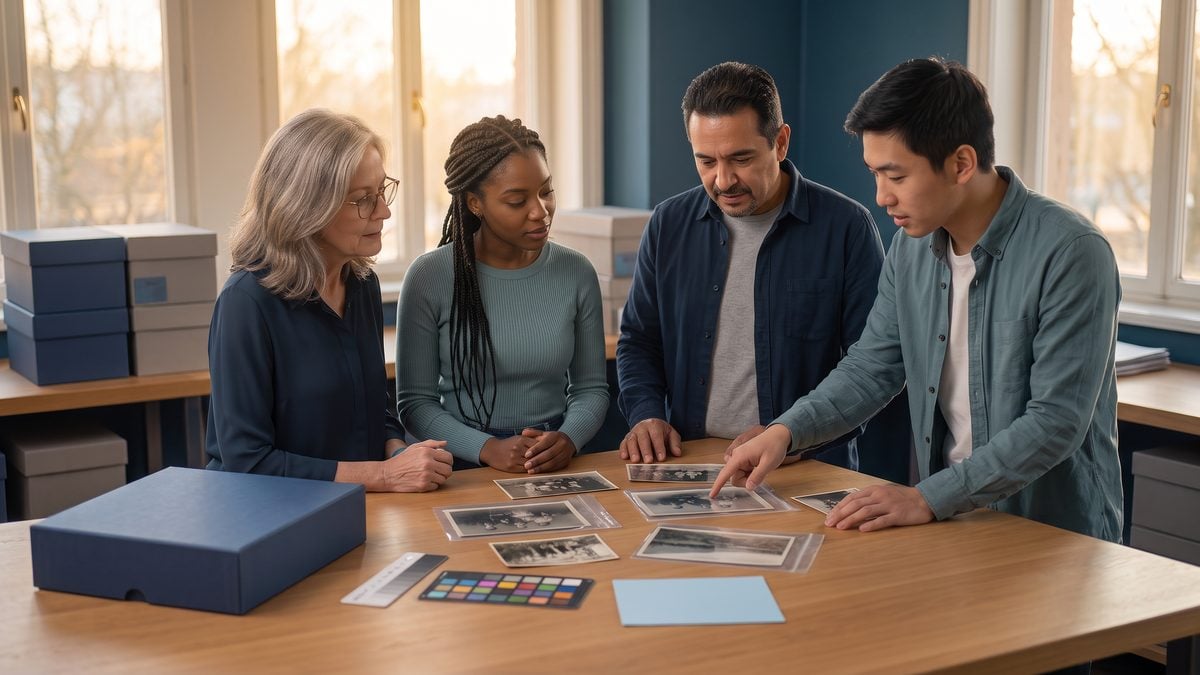
The next nine prompts move from basic restoration into interpretive decisions: colorization, crop expansion, aspect-ratio adaptation, print sizing, glare reduction, selective object repair, preservation of multiple people, caption drafting, and uncertainty labeling. OpenAI says ChatGPT Images 2.5 improves reference-photo subject preservation, natural lighting and texture, precise edits, and consistency across multiple editing turns, but those capabilities do not make the model an archive authority. Treat every generated image as a derivative reconstruction that requires family review, documented consent, and comparison against the untouched master.
OpenAI’s help documentation describes two image-editing paths in ChatGPT: selecting a region and describing a change, or describing an edit without a selection. The same help page warns that selection highlights are not always precise and that edits can extend outside the selected area, which is especially important when restoring faces, clothing, handwritten notes, uniforms, medals, religious items, documents, or background clues. For this reason, each prompt below explicitly defines the permitted region, prohibits invention, and requires a verification checkpoint before any derivative is printed, shared, or archived as a family-facing version.
The target article explains how to measure AI output quality using KPIs, guardrails, and stop conditions across generated text, images, code, and other content. The Measuring AI Output Quality: KPIs, Guardrails, And ‘Stop’ Conditions article is a focused companion for Visual Quality Assurance because it supports a visual QA section by giving a general framework for evaluating AI-generated outputs, including images, with quality metrics and stopping rules.
Prompt 10: Conservative colorization with uncertainty labels
Purpose
Use this prompt when a black-and-white or faded photograph may benefit from a restrained colorized derivative for family viewing, while preserving an untouched master and clearly labeling color choices as interpretive. This is not a prompt for claiming historical certainty, altering ethnicity, changing eye color based on guesses, inventing uniforms, or modernizing clothing. Colorization should be conservative unless the family has reliable reference material such as another photo from the same event, a written description, a surviving garment, or documented local context.
Copy-paste prompt
Mandatory rights-and-preservation contract: I own the photo or have permission for this edit and intended use. Preserve every person's identity and preserve all non-target details. Keep an untouched master and create only a reversible, versioned derivative. Define the exact area and permitted changes. Do not invent history, date, location, color, or event; flag uncertainty instead of guessing. Require human comparison against the original. Do not include private IDs, medical records, minors' sensitive content, intimate imagery, confidential documents, or photographs lacking permission.

I own the photo or have a license/permission covering the proposed edit and any intended publication or family sharing. Create a reversible, versioned derivative only; keep the untouched master unchanged. Rights-and-preservation contract: I own or have permission to use this photograph; do not use private IDs, medical records, intimate imagery, minors’ sensitive content, confidential documents, third-party brand assets, or photographs lacking permission; preserve each person’s identity, age, expression, skin texture, body shape, clothing structure, and all non-target details; do not invent historical facts, uniforms, locations, relationships, dates, colors, events, inscriptions, awards, logos, documents, or background objects; define and limit changes to the exact permitted region; flag uncertainty visibly in the output notes; require human comparison against the original before sharing, printing, publishing, or deleting anything.

Task: Apply conservative colorization to the entire photo while preserving the original composition and all details. Use muted, historically plausible colors only where the grayscale values and visible materials support them. Do not change faces, hairlines, hands, clothing cuts, background objects, signs, or scene context. If eye color, fabric color, wall color, vehicle color, flowers, military/police/fire uniforms, medals, flags, religious garments, school insignia, or brand markings are uncertain, keep them neutral and list them as uncertain rather than guessing. Output a versioned derivative named conceptually as “colorized-review-copy,” not as an authentic original.
Required inputs
- The uploaded original scan or photograph, preferably at the highest available resolution.
- Any known date range, location, or event context, clearly marked as family memory rather than confirmed fact if uncertain.
- A list of colors that are known from reliable references, and a separate list of colors that are unknown.
- The intended use, such as private family viewing, memorial display, classroom discussion, or print album.
Expected output
The result should be a restrained colorized derivative that preserves the original subjects and scene. It should avoid saturated novelty effects, modern fashion assumptions, artificial skin smoothing, and fabricated environmental detail. The accompanying notes should identify which colors were reference-backed, which were inferred cautiously, and which remain unknown.
Verification checkpoint
Compare the derivative against the untouched master at face, hand, clothing, background, and edge-detail level. Ask at least one knowledgeable family member to review identity, color assumptions, and sensitive context before use. If the result changes a person’s apparent age, ethnicity, expression, social role, uniform, relationship, or setting, reject it and regenerate with narrower instructions or keep the black-and-white version.
Prompt 11: Reference-backed colorization from a related photo or artifact
Purpose
Use this prompt when you have a credible reference image or artifact that supports specific color choices, such as a second family photograph from the same day, a surviving dress, a military record that describes uniform color, or a household object still owned by the family. The goal is to constrain interpretation, not to let the model infer historical details from stereotypes or generic period imagery.
Copy-paste prompt
Mandatory rights-and-preservation contract: I own the photo or have permission for this edit and intended use. Preserve every person's identity and preserve all non-target details. Keep an untouched master and create only a reversible, versioned derivative. Define the exact area and permitted changes. Do not invent history, date, location, color, or event; flag uncertainty instead of guessing. Require human comparison against the original. Do not include private IDs, medical records, minors' sensitive content, intimate imagery, confidential documents, or photographs lacking permission.

I own the photo and the reference material, or I have a license/permission covering the proposed edit and any intended publication or family sharing. Create a reversible, versioned derivative only; keep the untouched master unchanged. Rights-and-preservation contract: I own or have permission to use this photograph; do not use private IDs, medical records, intimate imagery, minors’ sensitive content, confidential documents, third-party brand assets, or photographs lacking permission; preserve each person’s identity, age, expression, skin texture, body shape, clothing structure, and all non-target details; do not invent historical facts, uniforms, locations, relationships, dates, colors, events, inscriptions, awards, logos, documents, or background objects; define and limit changes to the exact permitted region; flag uncertainty visibly in the output notes; require human comparison against the original before sharing, printing, publishing, or deleting anything.

Task: Colorize the target family photo using only the supplied reference-backed color information. Permitted region: the full target image may receive color, but only where the reference clearly supports it. Apply these confirmed colors: [list item, person/object, source of color]. Treat these as uncertain and keep neutral or muted: [list uncertain areas]. Do not transfer faces, clothing shapes, background objects, or composition from the reference; use the reference only for color guidance. Preserve all original target-photo details, including scratches or marks that I have not asked you to repair.
Required inputs
- The target photo to be colorized.
- The reference photo, artifact image, or written color source, with a short explanation of why it is relevant.
- A table or bullet list mapping each reference-backed color to a person, garment, object, wall, vehicle, or background area.
- A list of items that must remain uncertain or neutral.
Expected output
The derivative should visibly follow the provided references without copying unrelated content from the reference image. A good result will retain the target photo’s original pose, facial identity, background arrangement, and lighting, while applying color only within the documented scope.
Verification checkpoint
Check whether any reference content migrated into the target photo, such as a different collar, object, hairstyle, badge, pattern, or background element. If the derivative introduces an unsupported object or changes a person’s appearance to match the reference too closely, reject the result and ask for color-only changes with stricter preservation language.
Prompt 12: Repair a cropped edge without inventing important history
Purpose
Use this prompt when a scan or old print cuts off a border, corner, background wall, floor, sky, chair, table, or other low-risk edge area. It is not appropriate for inventing missing faces, adding absent family members, reconstructing written records, or extending a scene in a way that could alter historical meaning. If the missing area contains people, text, legal documents, brand marks, official insignia, or event evidence, the safer choice is to preserve the crop and add an uncertainty note.
Copy-paste prompt
Mandatory rights-and-preservation contract: I own the photo or have permission for this edit and intended use. Preserve every person's identity and preserve all non-target details. Keep an untouched master and create only a reversible, versioned derivative. Define the exact area and permitted changes. Do not invent history, date, location, color, or event; flag uncertainty instead of guessing. Require human comparison against the original. Do not include private IDs, medical records, minors' sensitive content, intimate imagery, confidential documents, or photographs lacking permission.

I own the photo or have a license/permission covering the proposed edit and any intended publication or family sharing. Create a reversible, versioned derivative only; keep the untouched master unchanged. Rights-and-preservation contract: I own or have permission to use this photograph; do not use private IDs, medical records, intimate imagery, minors’ sensitive content, confidential documents, third-party brand assets, or photographs lacking permission; preserve each person’s identity, age, expression, skin texture, body shape, clothing structure, and all non-target details; do not invent historical facts, uniforms, locations, relationships, dates, colors, events, inscriptions, awards, logos, documents, or background objects; define and limit changes to the exact permitted region; flag uncertainty visibly in the output notes; require human comparison against the original before sharing, printing, publishing, or deleting anything.

Task: Repair only the cropped or missing edge area: [describe edge, such as “left 3 percent border,” “top-right corner background wall,” or “bottom strip of floor”]. Extend only simple background texture, border, wall, sky, floor, or paper edge that is already visible adjacent to the missing area. Do not invent missing people, limbs, faces, documents, text, signs, badges, furniture, buildings, vehicles, or event details. Preserve the visible crop boundary logic, and include a note that the repaired edge is a reconstruction for presentation, not an authentic recovered part of the original.
Required inputs
- The original scan showing the cropped or damaged edge.
- A precise description of the edge or corner to repair.
- A decision on whether the repaired area should be clean, lightly textured, or visibly marked as reconstructed.
- The intended output size if the repair is being done to support framing or print layout.
Expected output
The derivative should add only plausible continuation of adjacent low-risk texture. The repaired edge should not become a new historical claim. When printed, the photo should look less visually interrupted while still remaining traceable to a derivative file with reconstruction notes.
Verification checkpoint
Zoom into the repaired edge and confirm that no new person, symbol, date, sign, handwriting, logo, official marking, or identity-relevant object has appeared. If the repair affects hair, hands, faces, documents, or uniforms, stop and use a narrower prompt or leave the area unrepaired with a captioned uncertainty label.
Prompt 13: Adapt a family photo to a new aspect ratio for a frame or slideshow
Purpose
Use this prompt to prepare a derivative for a specific frame, slideshow, memorial screen, or album layout while preserving the original composition. OpenAI’s help page says aspect ratio can be selected in the editor or specified in a prompt, but output behavior may vary by app, plan, rollout, and workspace policy. Aspect-ratio adaptation should never crop out a person, alter relationships, or fabricate a wider scene that implies new historical context.
Copy-paste prompt
Mandatory rights-and-preservation contract: I own the photo or have permission for this edit and intended use. Preserve every person's identity and preserve all non-target details. Keep an untouched master and create only a reversible, versioned derivative. Define the exact area and permitted changes. Do not invent history, date, location, color, or event; flag uncertainty instead of guessing. Require human comparison against the original. Do not include private IDs, medical records, minors' sensitive content, intimate imagery, confidential documents, or photographs lacking permission.

I own the photo or have a license/permission covering the proposed edit and any intended publication or family sharing. Create a reversible, versioned derivative only; keep the untouched master unchanged. Rights-and-preservation contract: I own or have permission to use this photograph; do not use private IDs, medical records, intimate imagery, minors’ sensitive content, confidential documents, third-party brand assets, or photographs lacking permission; preserve each person’s identity, age, expression, skin texture, body shape, clothing structure, and all non-target details; do not invent historical facts, uniforms, locations, relationships, dates, colors, events, inscriptions, awards, logos, documents, or background objects; define and limit changes to the exact permitted region; flag uncertainty visibly in the output notes; require human comparison against the original before sharing, printing, publishing, or deleting anything.

Task: Create a presentation derivative in this aspect ratio: [insert ratio, such as 4:5, 5:7, 8:10, 16:9, or square]. Preserve all people fully unless I explicitly approve a crop. Permitted changes: add neutral border, extend only simple background texture, or adjust crop margins. Do not reposition people, change their scale relative to each other, alter facial identity, remove meaningful objects, or add new event details. If the requested ratio cannot be achieved without harming historical context, return the safest option with borders and explain the limitation.
Required inputs
- The target aspect ratio or frame size.
- The priority: preserve full image, preserve all people, fill frame, or add border.
- A list of objects or people that must not be cropped.
- Any display use, such as digital slideshow, printed portrait, social post, or memorial board.
Expected output
The derivative should fit the requested layout without changing the factual reading of the image. In many cases, a border or mat-style background is safer than aggressive generative expansion, especially where the original photo contains multiple people, inscriptions, architectural clues, or objects with family significance.
Verification checkpoint
Place the derivative side by side with the original and confirm that every person, relationship cue, and meaningful object remains intact. If the adapted ratio suggests a different location, adds architectural detail, changes distance between people, or removes context that affects interpretation, revert to a bordered layout.
Prompt 14: Prepare a restored derivative for print without overstating resolution
Purpose
Use this prompt when you need a print-ready derivative for a frame, album, memorial table, school project, or family exhibit. The prompt focuses on practical print preparation: crop, border, tonal balance, and preservation notes. It avoids unsupported claims about forensic enhancement, true resolution recovery, or guaranteed print quality, because output quality depends on the scan, print process, paper, device, and human review.
Copy-paste prompt
Mandatory rights-and-preservation contract: I own the photo or have permission for this edit and intended use. Preserve every person's identity and preserve all non-target details. Keep an untouched master and create only a reversible, versioned derivative. Define the exact area and permitted changes. Do not invent history, date, location, color, or event; flag uncertainty instead of guessing. Require human comparison against the original. Do not include private IDs, medical records, minors' sensitive content, intimate imagery, confidential documents, or photographs lacking permission.

I own the photo or have a license/permission covering the proposed edit and any intended publication or family sharing. Create a reversible, versioned derivative only; keep the untouched master unchanged. Rights-and-preservation contract: I own or have permission to use this photograph; do not use private IDs, medical records, intimate imagery, minors’ sensitive content, confidential documents, third-party brand assets, or photographs lacking permission; preserve each person’s identity, age, expression, skin texture, body shape, clothing structure, and all non-target details; do not invent historical facts, uniforms, locations, relationships, dates, colors, events, inscriptions, awards, logos, documents, or background objects; define and limit changes to the exact permitted region; flag uncertainty visibly in the output notes; require human comparison against the original before sharing, printing, publishing, or deleting anything.

Task: Prepare a print-review derivative for [insert target print size and orientation]. Preserve the original image content. Adjust only global tone, exposure, contrast, dust cleanup already approved, and safe margins for printing. Do not invent missing resolution, sharpen faces into new features, change identity, alter clothing, or remove meaningful damage unless specifically permitted. Add a clean border if needed to avoid cropping people or important objects. Include output notes stating that this is a print derivative for review and not an untouched original.
Required inputs
- Target print size and orientation, such as 5-by-7 portrait or 8-by-10 landscape.
- Whether borders are acceptable or the image must fill the frame.
- Any previously approved restoration steps, such as dust cleanup or contrast correction.
- The printer, lab, or album requirement if known, without including account details or order information.
Expected output
The result should be a print-review derivative with safe margins, balanced tone, and no unnecessary cropping. It should not pretend to recover detail that was never visible in the source. If the source scan is too low-quality for the requested print size, the response should flag the limitation and recommend a better scan rather than inventing detail.
Verification checkpoint
Print a small proof or review the derivative at intended size before ordering or distributing copies. Confirm that faces, hands, inscriptions, and edges do not show artificial artifacts. Human approval is required before purchases, orders, publication, memorial display, or distribution outside the agreed family group.
Prompt 15: Reduce glare, reflections, or scanner shine while preserving the surface record
Purpose
Use this prompt when glare from glass, glossy paper, album sleeves, or scanner reflections obscures part of an image. The safest workflow is often to rescan the photo outside a reflective frame or sleeve, but that may not be possible for fragile prints. This prompt asks for glare reduction only where glare is visible and prohibits reconstruction of hidden faces, text, or evidence unless supported by visible surrounding detail.
Copy-paste prompt
Mandatory rights-and-preservation contract: I own the photo or have permission for this edit and intended use. Preserve every person's identity and preserve all non-target details. Keep an untouched master and create only a reversible, versioned derivative. Define the exact area and permitted changes. Do not invent history, date, location, color, or event; flag uncertainty instead of guessing. Require human comparison against the original. Do not include private IDs, medical records, minors' sensitive content, intimate imagery, confidential documents, or photographs lacking permission.

I own the photo or have a license/permission covering the proposed edit and any intended publication or family sharing. Create a reversible, versioned derivative only; keep the untouched master unchanged. Rights-and-preservation contract: I own or have permission to use this photograph; do not use private IDs, medical records, intimate imagery, minors’ sensitive content, confidential documents, third-party brand assets, or photographs lacking permission; preserve each person’s identity, age, expression, skin texture, body shape, clothing structure, and all non-target details; do not invent historical facts, uniforms, locations, relationships, dates, colors, events, inscriptions, awards, logos, documents, or background objects; define and limit changes to the exact permitted region; flag uncertainty visibly in the output notes; require human comparison against the original before sharing, printing, publishing, or deleting anything.

Task: Reduce visible glare or reflection only in this region: [describe precise region]. Preserve all underlying visible detail and all non-target areas. If the glare hides important information such as a face, handwriting, official text, medal, uniform mark, sign, or document, do not invent the hidden content; instead, soften the glare where possible and label the obscured content as uncertain. Do not smooth away paper texture, age marks, border wear, or other preservation-relevant surface evidence unless I explicitly approve it.
Required inputs
- The image containing glare or reflection.
- A precise description of the glare region.
- Whether surface texture and age marks should remain visible.
- Any alternate scan or angled photo that shows the obscured area more clearly.
Expected output
The derivative should reduce distracting shine without fabricating obscured content. The best result is often modest: improved viewability while preserving enough texture to show that the image remains a restored derivative from a physical print.
Verification checkpoint
Compare the glare region with the master and any alternate captures. Reject the output if the model appears to have guessed an eye, mouth, signature, badge, date, license plate, document text, or other important detail hidden by glare. If the image is needed for legal, genealogical, institutional, or evidentiary purposes, preserve the unedited scan and consult an appropriate specialist before relying on any derivative.
Prompt 16: Selectively repair one object without changing the rest of the scene
Purpose
Use this prompt when a single object has dust, a scratch, a fold mark, or local discoloration, and repairing it would improve the photo without changing the broader scene. Examples include a damaged chair leg, a blotch on a tablecloth, a scratch across a wall, or a tear through a plain background object. This prompt is not for removing inconvenient objects, erasing people, changing documents, hiding context, or modifying legally or emotionally significant items.
Copy-paste prompt
Mandatory rights-and-preservation contract: I own the photo or have permission for this edit and intended use. Preserve every person's identity and preserve all non-target details. Keep an untouched master and create only a reversible, versioned derivative. Define the exact area and permitted changes. Do not invent history, date, location, color, or event; flag uncertainty instead of guessing. Require human comparison against the original. Do not include private IDs, medical records, minors' sensitive content, intimate imagery, confidential documents, or photographs lacking permission.

I own the photo or have a license/permission covering the proposed edit and any intended publication or family sharing. Create a reversible, versioned derivative only; keep the untouched master unchanged. Rights-and-preservation contract: I own or have permission to use this photograph; do not use private IDs, medical records, intimate imagery, minors’ sensitive content, confidential documents, third-party brand assets, or photographs lacking permission; preserve each person’s identity, age, expression, skin texture, body shape, clothing structure, and all non-target details; do not invent historical facts, uniforms, locations, relationships, dates, colors, events, inscriptions, awards, logos, documents, or background objects; define and limit changes to the exact permitted region; flag uncertainty visibly in the output notes; require human comparison against the original before sharing, printing, publishing, or deleting anything.

Task: Repair only this selected object or damage mark: [describe object and exact damage]. Permitted changes: remove dust, scratch, stain, or crease that crosses the object, using only visible adjacent texture and shape as guidance. Do not remove the object, replace it with a different object, alter surrounding people, change background layout, erase meaningful marks, or modify text, logos, documents, insignia, awards, or identifiable brand assets. Leave all non-target areas unchanged, even if they contain imperfections.
Required inputs
- The image with the target object clearly identified.
- A precise description of the repair boundary.
- A list of nearby details that must not change.
- A decision on whether remaining imperfections should be retained for authenticity.
Expected output
The derivative should show a local repair only. The surrounding people, objects, lighting, paper grain, and background should remain unchanged. A strong output will be visually quieter without appearing newly staged or materially different from the original scene.
Verification checkpoint
Overlay or visually compare the derivative with the original to confirm that only the selected object changed. Reject any output that removes family artifacts, alters a symbol, modifies a document, changes a person’s appearance, or cleans the scene so broadly that it loses historical context.
Prompt 17: Preserve multiple people in a group photo while making a limited restoration
Purpose
Use this prompt for group portraits, reunion photos, school pictures, wedding tables, work crews, sports teams, religious gatherings, or informal family scenes where multiple people must remain recognizable and unchanged. Group photos are high-risk for accidental identity drift because small edits can alter faces, posture, relative height, proximity, or relationships. This prompt restricts the edit to a defined restoration task and requires person-by-person review.
Copy-paste prompt
Mandatory rights-and-preservation contract: I own the photo or have permission for this edit and intended use. Preserve every person's identity and preserve all non-target details. Keep an untouched master and create only a reversible, versioned derivative. Define the exact area and permitted changes. Do not invent history, date, location, color, or event; flag uncertainty instead of guessing. Require human comparison against the original. Do not include private IDs, medical records, minors' sensitive content, intimate imagery, confidential documents, or photographs lacking permission.

I own the photo or have a license/permission covering the proposed edit and any intended publication or family sharing. Create a reversible, versioned derivative only; keep the untouched master unchanged. Rights-and-preservation contract: I own or have permission to use this photograph; do not use private IDs, medical records, intimate imagery, minors’ sensitive content, confidential documents, third-party brand assets, or photographs lacking permission; preserve each person’s identity, age, expression, skin texture, body shape, clothing structure, and all non-target details; do not invent historical facts, uniforms, locations, relationships, dates, colors, events, inscriptions, awards, logos, documents, or background objects; define and limit changes to the exact permitted region; flag uncertainty visibly in the output notes; require human comparison against the original before sharing, printing, publishing, or deleting anything.

Task: Perform only this limited restoration on the group photo: [describe approved edit, such as “remove dust spots across the sky,” “repair a crease in the tablecloth,” or “balance faded contrast globally”]. Preserve every person exactly as depicted: face shape, eye direction, expression, hairline, age, skin texture, clothing, posture, hands, distance from others, and visibility level. Do not beautify, swap, merge, de-age, sharpen into new features, open closed eyes, add missing people, remove people, or change relationship cues. If any person is partly obscured or damaged, preserve the uncertainty rather than inventing identity detail.
Required inputs
- The group photo.
- A numbered or positional description of people who must be preserved, such as “back row, third from left.”
- The exact restoration task and the region where it is allowed.
- Known sensitivity concerns, such as estranged relatives, adoption context, ceremonial clothing, or memorial use, without disclosing unnecessary private details.
Expected output
The derivative should improve the specific visual issue while leaving all people intact. It should not create a composite, improve one face at the expense of another, or equalize people’s visibility in a way that changes the original social or photographic record.
Verification checkpoint
Conduct a person-by-person review against the original. For any family-facing or public use, ask relevant relatives or rights holders to review sensitive depictions. Reject the derivative if any person’s identity, expression, apparent age, relationship cue, body shape, clothing, or position changed.
Prompt 18: Draft captions and uncertainty labels without inventing family history
Purpose
Use this prompt after visual restoration to create careful captions, file notes, album labels, or provenance summaries. Captions are often where accidental invention becomes permanent: a guessed date, location, relationship, or event can be repeated for years. This prompt separates confirmed facts, family recollections, visual observations, and unknowns so that future readers can understand what is known and what remains uncertain.
Copy-paste prompt
Mandatory rights-and-preservation contract: I own the photo or have permission for this edit and intended use. Preserve every person's identity and preserve all non-target details. Keep an untouched master and create only a reversible, versioned derivative. Define the exact area and permitted changes. Do not invent history, date, location, color, or event; flag uncertainty instead of guessing. Require human comparison against the original. Do not include private IDs, medical records, minors' sensitive content, intimate imagery, confidential documents, or photographs lacking permission.

I own the photo or have a license/permission covering the proposed edit and any intended publication or family sharing. Create text notes for a reversible, versioned derivative only; keep the untouched master unchanged. Rights-and-preservation contract: I own or have permission to use this photograph; do not use private IDs, medical records, intimate imagery, minors’ sensitive content, confidential documents, third-party brand assets, or photographs lacking permission; preserve each person’s identity, age, expression, skin texture, body shape, clothing structure, and all non-target details; do not invent historical facts, uniforms, locations, relationships, dates, colors, events, inscriptions, awards, logos, documents, or background objects; define and limit changes to the exact permitted region; flag uncertainty visibly in the output notes; require human comparison against the original before sharing, printing, publishing, or deleting anything.

Task: Draft a conservative caption and uncertainty label for this restored family-photo derivative. Use only the facts I provide and visual observations that are clearly visible. Separate the output into: Confirmed facts, Family recollections not yet verified, Visible details, Restoration actions performed, Uncertainties, Rights/consent note, and Suggested filename. Do not infer relationships, dates, locations, occupations, military rank, ethnicity, religion, immigration status, health status, income level, or events from appearance. If a detail is unknown, write “unknown” or “uncertain,” not a guess.
Required inputs
- The restored derivative and, ideally, the untouched master for comparison.
- Confirmed names, date ranges, locations, and event descriptions, if any.
- Family recollections that should be labeled as unverified.
- A short record of restoration actions already performed, such as “dust cleanup,” “contrast correction,” or “conservative colorization.”
Expected output
The output should be a caption package that is useful for albums, family databases, classroom projects, or archive folders. It should distinguish confirmed information from interpretation and should include a rights and consent note that does not overstate ownership, publication rights, or historical certainty. If C2PA metadata or an invisible watermark is present in an exported image, treat it as provenance support only; official OpenAI deployment-safety materials state that no single provenance solution is sufficient, and provenance signals do not prove ownership, consent, truth, or authorization.
Verification checkpoint
Have a human reviewer compare the caption against the original, the derivative, and any family records before sharing. Remove claims that are unsupported, sensitive, disputed, or unnecessary. If the image includes minors, vulnerable people, private documents, medical context, legal context, or painful family history, use a private note instead of a public caption unless the appropriate family members or rights holders have explicitly approved the wording.
Prompts 19–25: review, consent, retention, exports, and audit evidence
The last stage of a family-photo restoration project is not more aggressive editing; it is review, permission, provenance, retention control, and export discipline. OpenAI says ChatGPT Images 2.5 can support uploaded-image editing, selection-based edits, direct conversational edits, multi-turn refinement, templates, comments, Sketch on mobile, and prompt sharing, with availability depending on plan, mode, platform, account, region, and rollout. Those capabilities are useful for organizing family review and making reversible derivatives, but they do not decide who may publish a photo, whether a child’s image is appropriate to share, or whether a restored version is historically accurate.
OpenAI’s help documentation warns that selected regions are not always precise and that edits may extend outside the highlighted area. Treat every final edit as a new derivative requiring comparison against the untouched master. OpenAI’s deployment-safety documentation also states that C2PA metadata and invisible watermarking support provenance but do not prove ownership, consent, truthfulness, or authorization. For family archives, that means provenance notes should document what was done, who approved it, what remains uncertain, and where the original can be found, rather than claiming the AI-edited version is an authentic historical original.
This safe-publishing guide explains access control, secret handling, privacy, and publication boundaries for ChatGPT Sites, giving family archivists a practical companion for separating private review from public distribution while they resolve rights and permission questions. The ChatGPT Sites Security and Privacy Guide: Access Controls, Secrets, Data Residency, and Safe Publishing article is a focused companion for Content Rights and Permission because it supports controlled publication and privacy boundaries more accurately than using watermark detection as a proxy for legal permission.
Prompt 19: Build a family review packet before final approval
Purpose
Use this prompt to assemble a review packet that family members can understand before approving restoration, colorization, printing, or publication. The review packet should include the untouched master, the restored derivative, a change summary, uncertainty labels, and a consent status field for each person or decision-maker. This is especially important when a photo shows living people, deceased relatives with surviving family interests, private homes, ceremonies, documents in the background, or sensitive family circumstances.
Copy-paste prompt
Mandatory rights-and-preservation contract: I own the photo or have permission for this edit and intended use. Preserve every person's identity and preserve all non-target details. Keep an untouched master and create only a reversible, versioned derivative. Define the exact area and permitted changes. Do not invent history, date, location, color, or event; flag uncertainty instead of guessing. Require human comparison against the original. Do not include private IDs, medical records, minors' sensitive content, intimate imagery, confidential documents, or photographs lacking permission.

I own the photo or have a license/permission covering the proposed edit and any intended publication. Create a family review packet for this uploaded photo using a non-destructive workflow. Keep an untouched master and prepare only a reversible, versioned derivative. Preserve people’s identity and non-target details. Do not invent historical facts, uniforms, locations, relationships, dates, colors, events, names, occupations, or family stories. Define the exact area and permitted changes: [describe region and allowed restoration only]. If any requested region is uncertain, flag uncertainty instead of guessing. Do not include or request private IDs, medical records, intimate imagery, minors’ sensitive content, confidential documents, third-party brand assets, or photographs lacking permission. Require human comparison against the original and list every visible change for human review before any export, posting, printing, sharing, or publication.
Required inputs
- The uploaded untouched scan or camera capture, kept as the master file.
- The current restored derivative, if one already exists.
- The intended review audience, such as siblings, cousins, estate representatives, or an archive committee.
- The intended use, such as private album, memorial slideshow, classroom presentation, genealogy record, or public website.
- Known uncertainties, including approximate date, unknown location, disputed identity, or color guesses.
Expected output
The output should be a concise packet structure: file names, before/after thumbnails if available in the interface, a restoration log, colorization status, consent status, publication status, unresolved questions, and a final approval line. The packet should avoid emotional pressure language; reviewers should be able to approve, reject, request a less-edited version, or restrict publication.
Verification checkpoint
Before sending the packet, verify that no private document, address, school identifier, medical note, financial record, or sensitive image detail is visible. Confirm that every person invited to review has a legitimate reason to see the photo. Human approval is mandatory before sending external messages, posting the image, printing it for distribution, uploading it to a public archive, or using it in any commercial, fundraising, educational, legal, or memorial context.
Prompt 20: Handle minors, school images, and sensitive family photos conservatively
Purpose
Use this prompt when a photo includes children, school events, youth sports, foster or adoption contexts, medical settings, religious ceremonies, grief scenes, disability-related details, custody-sensitive situations, or other private circumstances. OpenAI’s help documentation notes that teen-account image controls and reminders may apply in some contexts, but those controls do not transfer consent obligations to the system or guarantee that parents can view a teen’s images or conversations. For family archives, adults should apply a stricter standard than “can the tool edit it?” and ask whether the edited or shared image could embarrass, expose, misrepresent, or endanger someone.
Copy-paste prompt
Mandatory rights-and-preservation contract: I own the photo or have permission for this edit and intended use. Preserve every person's identity and preserve all non-target details. Keep an untouched master and create only a reversible, versioned derivative. Define the exact area and permitted changes. Do not invent history, date, location, color, or event; flag uncertainty instead of guessing. Require human comparison against the original. Do not include private IDs, medical records, minors' sensitive content, intimate imagery, confidential documents, or photographs lacking permission.

I own the photo or have a license/permission covering the proposed edit and any intended publication. This photo may include minors or sensitive family circumstances, so use the most conservative restoration approach. Keep an untouched master and create only a reversible, versioned derivative for private review unless explicit publication permission is later documented. Preserve people’s identity and non-target details. Do not invent historical facts, uniforms, locations, relationships, dates, colors, events, school names, health information, legal status, or family circumstances. Define the exact area and permitted changes: [describe limited repair, such as dust removal or exposure balancing]. Flag uncertainty instead of guessing. Do not include or request private IDs, medical records, intimate imagery, minors’ sensitive content, confidential documents, third-party brand assets, or photographs lacking permission. Require human comparison against the original and stop if the edit changes a child’s appearance, context, clothing coverage, expression, or surrounding meaning.
Required inputs
- A statement of whether any visible person is a minor in the photo or was a minor at the time.
- A classification of intended use: private family preservation, restricted family review, school archive, publication, or no sharing.
- A list of sensitive contexts to avoid amplifying, including locations, uniforms, documents, or vulnerable circumstances.
- The exact restoration allowed, such as dust removal, mild exposure correction, or crop for private print.
Expected output
The result should be a minimally altered derivative and a sensitivity note that recommends private handling unless permission is documented. If the image contains sensitive youth content, intimate content, medical context, or confidential documents, the correct output may be a refusal to proceed with editing plus a recommendation to store the untouched master securely and consult appropriate guardians, family decision-makers, or qualified professionals.
Verification checkpoint
Review the original and derivative side by side to confirm the edit did not beautify, age-shift, sexualize, dramatize, stigmatize, or otherwise alter a minor or vulnerable person. Do not publish a child’s image, school group, sensitive family scene, or identifiable private setting without documented permission and a legitimate purpose. If a photo raises urgent safety, abuse, exploitation, self-harm, or medical concerns, do not try to solve the situation through image editing; seek qualified real-world support, emergency services, or appropriate safeguarding channels.
Prompt 21: Create a publication-permission checklist for a restored photo
Purpose
Use this prompt before posting, printing broadly, including a photo in a book, submitting it to a historical society, using it in a school resource, or placing it in a public family tree. C2PA metadata or an invisible watermark can help communicate provenance, but OpenAI’s system card is clear that no single provenance solution proves ownership, consent, accuracy, or authorization. A permission checklist is the operational control that prevents a technically successful restoration from becoming a rights, privacy, or family-trust failure.
Copy-paste prompt
Mandatory rights-and-preservation contract: I own the photo or have permission for this edit and intended use. Preserve every person's identity and preserve all non-target details. Keep an untouched master and create only a reversible, versioned derivative. Define the exact area and permitted changes. Do not invent history, date, location, color, or event; flag uncertainty instead of guessing. Require human comparison against the original. Do not include private IDs, medical records, minors' sensitive content, intimate imagery, confidential documents, or photographs lacking permission.

I own the photo or have a license/permission covering the proposed edit and publication. Build a publication-permission checklist for this restored family-photo derivative. Keep an untouched master and refer to this output only as a reversible, versioned derivative, not an authentic original or forensic record. Preserve people’s identity and non-target details. Do not invent historical facts, uniforms, locations, relationships, dates, colors, events, ownership claims, or permission status. Define the exact area and permitted changes already made: [describe edits]. Flag uncertainty and missing permission instead of assuming approval. Do not include or request private IDs, medical records, intimate imagery, minors’ sensitive content, confidential documents, third-party brand assets, or photographs lacking permission. Require human comparison against the original and require explicit human approval before any external message, upload, print distribution, public archive submission, website post, social post, classroom use, or commercial use.
Required inputs
- Who owns the physical print, negative, scan, or digital file, if known.
- Who appears in the photo and whether any living subjects can be contacted.
- The proposed channel, such as private email, family website, school display, public archive, social network, or commercial publication.
- The restoration actions already performed, including repair, colorization, cropping, background cleanup, or caption drafting.
- Any known restrictions from donors, estates, relatives, institutions, or previous licenses.
Expected output
The checklist should separate ownership or license, subject consent, sensitive-content review, third-party rights, caption accuracy, provenance note, retention plan, and final human approval. It should mark each item as approved, blocked, unknown, or not applicable. The output should recommend private-only handling when permission is incomplete or family disagreement remains unresolved.
Verification checkpoint
Do not treat silence from relatives as consent for public posting. Do not treat possession of a print as proof of publication rights. Do not publish images containing visible third-party brand assets, private documents, identifiable addresses, license plates, school information, or institutional records unless permission and lawful purpose are documented. For legal disputes, estate issues, donor restrictions, copyright questions, or commercial releases, consult a qualified professional rather than relying on a generated checklist.
Prompt 22: Add metadata and a provenance note without overstating authenticity
Purpose
Use this prompt to draft human-readable metadata and a provenance note for a restored derivative. OpenAI states that Images 2.5 uses C2PA metadata and invisible watermarking to support provenance, and the C2PA conformance program provides a framework for claims about conforming implementations. Those mechanisms help signal content history, but archive notes must still state what humans know, what was edited, and what remains uncertain.
Copy-paste prompt
Mandatory rights-and-preservation contract: I own the photo or have permission for this edit and intended use. Preserve every person's identity and preserve all non-target details. Keep an untouched master and create only a reversible, versioned derivative. Define the exact area and permitted changes. Do not invent history, date, location, color, or event; flag uncertainty instead of guessing. Require human comparison against the original. Do not include private IDs, medical records, minors' sensitive content, intimate imagery, confidential documents, or photographs lacking permission.

I own the photo or have a license/permission covering the proposed edit and publication. Draft a metadata and provenance note for this restored derivative. Keep an untouched master and describe this file as a reversible, versioned derivative. Preserve people’s identity and non-target details. Do not invent historical facts, uniforms, locations, relationships, dates, colors, events, camera details, creator names, locations, or ownership claims. Define the exact area and permitted changes: [describe edits and affected areas]. Flag uncertainty instead of guessing. Do not include or request private IDs, medical records, intimate imagery, minors’ sensitive content, confidential documents, third-party brand assets, or photographs lacking permission. Require human comparison against the original and include a warning that C2PA metadata, watermarking, file names, and captions do not prove copyright, consent, historical truth, or publication rights.
Required inputs
- Master file name and derivative file name.
- Known source information, such as family collection, album page, donor, box label, or scan date.
- Confirmed facts only: known people, approximate date range, location, event, and photographer if documented.
- Restoration log, including edits, colorization status, crop status, and unresolved uncertainties.
- Usage restrictions, consent status, and retention schedule.
Expected output
The output should provide a provenance note that distinguishes “known,” “believed,” “uncertain,” and “edited.” It should include language such as “restored derivative prepared from an untouched master scan” and “color interpretation is uncertain unless supported by references.” It should avoid claims such as “authentic original,” “forensic reconstruction,” or “historically verified” unless independently documented by qualified evidence.
Verification checkpoint
Compare the note against the original file and restoration log. Remove any invented dates, locations, relationships, ethnic assumptions, military or school affiliations, or event descriptions. Confirm that embedded metadata, visible captions, and separate catalog records tell the same story. If a file will leave the family archive, include a plain-language provenance statement with it because metadata may be stripped, transformed, or separated from the image during distribution.
Prompt 23: Define retention, deletion, and access rules for restored derivatives
Purpose
Use this prompt to decide what to keep, who may access it, and when to delete duplicates or rejected derivatives. OpenAI’s help page states that images are saved under the Images area and that deleting an image from My Images requires deleting the conversation where it was created. Because app behavior can vary and policy settings may differ, archive managers should avoid uploading unnecessary sensitive material and should maintain their own controlled storage, naming, and deletion records outside the chat interface.
Copy-paste prompt
Mandatory rights-and-preservation contract: I own the photo or have permission for this edit and intended use. Preserve every person's identity and preserve all non-target details. Keep an untouched master and create only a reversible, versioned derivative. Define the exact area and permitted changes. Do not invent history, date, location, color, or event; flag uncertainty instead of guessing. Require human comparison against the original. Do not include private IDs, medical records, minors' sensitive content, intimate imagery, confidential documents, or photographs lacking permission.

I own the photo or have a license/permission covering the proposed edit and any intended publication. Create a retention, deletion, and access plan for this restoration project. Keep an untouched master and identify all reversible, versioned derivatives. Preserve people’s identity and non-target details. Do not invent historical facts, uniforms, locations, relationships, dates, colors, events, consent status, ownership status, or retention obligations. Define the exact area and permitted changes for each derivative: [list files and edits]. Flag uncertainty instead of guessing. Do not include or request private IDs, medical records, intimate imagery, minors’ sensitive content, confidential documents, third-party brand assets, or photographs lacking permission. Require human comparison against the original and require explicit approval before deletion, external sharing, permission changes, public posting, or archive transfer.
Required inputs
- A file inventory: untouched masters, working files, approved derivatives, rejected derivatives, and exported copies.
- Access groups, such as editor, family reviewer, archive steward, educator, publisher, or public audience.
- Retention categories, such as permanent master, temporary working copy, approved print derivative, review-only file, or delete-after-review item.
- Known platform storage locations, including local folders, cloud drives, shared albums, chat conversations, and export folders.
- Any family, institutional, school, or legal restrictions that affect retention or deletion.
Expected output
The output should be a retention table with file class, storage location, access owner, permitted use, deletion trigger, and approval requirement. It should recommend keeping untouched masters and audit records while deleting unnecessary rejected derivatives when retention is no longer justified and when deletion does not violate legal, family, institutional, or archival duties.
Verification checkpoint
Do not delete masters, sole copies, donor records, consent records, or audit logs without qualified human approval. Do not assume deleting a local derivative removes copies from shared drives, message threads, backups, exports, or recipient devices. Before deletion, check whether the file is cited by a catalog record, printed in a family book, submitted to an archive, or used in a permission review. For disputed or legally relevant photos, pause deletion and consult the responsible decision-maker or qualified counsel.
Prompt 24: Create a final export matrix for print, private sharing, and archive storage
Purpose
Use this prompt to define final output versions without claiming that AI restoration creates new source detail or guarantees print quality. OpenAI describes Images 2.5 as improving detail, reference-photo subject preservation, natural lighting and texture, instruction following, and consistency across multiple editing turns, but those product claims are not a guarantee that every archive photo will become printable at any size or historically accurate after restoration. Export choices should match the intended use and preserve the distinction between master, derivative, and display copy.
Copy-paste prompt
Mandatory rights-and-preservation contract: I own the photo or have permission for this edit and intended use. Preserve every person's identity and preserve all non-target details. Keep an untouched master and create only a reversible, versioned derivative. Define the exact area and permitted changes. Do not invent history, date, location, color, or event; flag uncertainty instead of guessing. Require human comparison against the original. Do not include private IDs, medical records, minors' sensitive content, intimate imagery, confidential documents, or photographs lacking permission.

I own the photo or have a license/permission covering the proposed edit and publication. Build a final export matrix for this restored family-photo project. Keep an untouched master and list only reversible, versioned derivatives for output. Preserve people’s identity and non-target details. Do not invent historical facts, uniforms, locations, relationships, dates, colors, events, missing image areas, or technical quality claims. Define the exact area and permitted changes: [describe edits already approved]. Flag uncertainty instead of guessing. Do not include or request private IDs, medical records, intimate imagery, minors’ sensitive content, confidential documents, third-party brand assets, or photographs lacking permission. Require human comparison against the original before each export and require explicit approval before printing, public posting, classroom distribution, archive submission, commercial use, or external delivery.
Required inputs
- Approved derivative file name and version number.
- Intended outputs, such as archival storage, family email, memorial slideshow, print enlargement, small frame print, or private genealogy packet.
- Aspect ratio and crop constraints, including whether any border, album edge, handwriting, or studio mark must remain visible.
- Caption and provenance text approved for each channel.
- Permission status for each output channel.
Expected output
The export matrix should list master preservation copy, working derivative, review copy, print-ready derivative, web-sharing derivative, and restricted-access archive copy where appropriate. Each row should include purpose, permitted audience, crop rule, color status, provenance note, permission status, and human approval status. It should also identify outputs that should not be created because consent is missing, sensitivity is high, or the source quality does not support the intended use.
Verification checkpoint
Open every exported file before distribution and compare it with the approved derivative and untouched master. Check faces, hands, text, uniforms, background objects, borders, and captions. Confirm that the crop did not remove materially important context, such as a date inscription, mourning symbol, disability aid, protest sign, religious object, institutional label, or visible document. Do not launch print orders, public uploads, archive transfers, educational distribution, or commercial publication without explicit human approval.
Prompt 25: Assemble an archive audit bundle for future reviewers
Purpose
Use this final prompt to create a durable audit bundle so future family members, educators, archivists, or legal-technology reviewers can understand what happened. The audit bundle should make the restoration reproducible at the documentation level even if the image-generation interface, model version, watermark detector, metadata viewer, or account policy changes later. It should not include credentials, private IDs, medical details, confidential documents, or unnecessary personal data.
Copy-paste prompt
Mandatory rights-and-preservation contract: I own the photo or have permission for this edit and intended use. Preserve every person's identity and preserve all non-target details. Keep an untouched master and create only a reversible, versioned derivative. Define the exact area and permitted changes. Do not invent history, date, location, color, or event; flag uncertainty instead of guessing. Require human comparison against the original. Do not include private IDs, medical records, minors' sensitive content, intimate imagery, confidential documents, or photographs lacking permission.

I own the photo or have a license/permission covering the proposed edit and any intended publication. Assemble an archive audit bundle for this completed family-photo restoration. Keep an untouched master and document all reversible, versioned derivatives. Preserve people’s identity and non-target details. Do not invent historical facts, uniforms, locations, relationships, dates, colors, events, consent status, ownership status, or technical provenance. Define the exact area and permitted changes for each version: [list edits and file names]. Flag uncertainty instead of guessing. Do not include or request private IDs, medical records, intimate imagery, minors’ sensitive content, confidential documents, third-party brand assets, or photographs lacking permission. Require human comparison against the original and record final human approval before external sharing, printing, publication, archive submission, permission changes, deletion, or any other consequential operation.
Required inputs
- Untouched master file name, storage location, checksum or other local integrity record if your archive uses one, and scan/capture date.
- Derivative file names, version numbers, prompts used, edits performed, and reviewer decisions.
- Consent, permission, and restriction records, with sensitive details minimized.
- Captions, provenance notes, uncertainty labels, and export matrix.
- Retention and deletion plan, including who may approve future changes.
Expected output
The output should be an audit-bundle index containing a file inventory, restoration summary, prompt log, review log, permission status, provenance note, export matrix, retention plan, and unresolved questions. It should include a clear warning that the restored derivative is not an untouched original, not forensic evidence, and not independent proof of historical truth.
Verification checkpoint
Have at least one reviewer who did not perform the edits inspect the bundle. Confirm that the audit file does not expose passwords, account information, school records, medical records, private IDs, confidential documents, or sensitive content that is not necessary for preservation. Store the bundle with the master and approved derivatives using access controls appropriate to the family, school, institution, or archive. Do not hand off the bundle to a publisher, platform, archive, attorney, or educator until the permission checklist and retention rules have been approved by the responsible human decision-maker.
Risk table for family-photo restoration with ChatGPT Images 2.5
| Risk | Where it appears | Practical control | Stop condition |
|---|---|---|---|
| Invented history | Colorization, captions, crop repair, background repair, and metadata notes | Label unknowns, use reference-backed edits only when documented, and separate known facts from interpretations. | Stop if the derivative implies a date, relationship, place, uniform, event, or identity that the family cannot verify. |
| Identity alteration | Face cleanup, sharpening, tear repair, glare removal, and multi-turn edits | Compare faces against the untouched master after every edit and keep lived texture, age, expression, and distinctive features. | Stop if the person looks younger, older, more attractive, less disabled, differently expressive, or like another person. |
| Consent failure | Family review packets, public posting, memorial use, classroom use, and archive submission | Record ownership or license, subject consent where appropriate, intended channel, and approval decision. | Stop if a living subject, guardian, estate representative, donor, or archive owner objects or cannot be resolved. |
| Minor or sensitive-content exposure | School photos, youth events, medical settings, grief scenes, custody-sensitive images, and private homes | Use private review only, minimize distribution, avoid unnecessary upload, and require guardian or responsible adult review. | Stop if the image includes intimate content, exploitative context, private documents, safety concerns, or unresolved guardian permission. |
| False provenance confidence | C2PA metadata, invisible watermarking, file names, captions, and archive notes | Use provenance signals as support, not proof; include a human-readable edit and permission note with distributed files. | Stop if a recipient would likely believe the derivative is an untouched original, forensic record, or verified historical source. |
| Overbroad deletion | Conversation cleanup, local folder cleanup, cloud-drive pruning, and rejected-derivative removal | Confirm master preservation, file inventory, retention duties, shared-copy locations, and approval before deletion. | Stop if the file may be the only copy, part of a consent record, subject to a dispute, or cited in an archive record. |
| Imprecise edit region | Selection-based repair, comments, and localized touch-ups | Use narrow instructions, inspect surrounding areas, and assume highlighted selections may not constrain all changes. | Stop if non-target faces, documents, clothing, background objects, or inscriptions changed. |
Reviewer workflow for final family approval
- Confirm rights and purpose. The project steward records who owns or controls the image, what permission exists, what use is proposed, and whether the image includes living people, minors, sensitive settings, brands, or private documents.
- Lock the untouched master. The master scan or capture is stored separately from derivatives. No restoration prompt should overwrite it, rename it as final output, or replace it in the archive index.
- Review the derivative against the master. A human reviewer compares faces, hands, clothing, background, inscriptions, borders, damage areas, color choices, and crop boundaries. OpenAI’s warning that selected highlights may be imprecise makes this comparison mandatory for every localized edit.
- Check the restoration log. The reviewer confirms that every edit is listed, every uncertainty is labeled, and no caption or metadata field invents a fact. Colorization should be marked interpretive unless a documented reference supports the color choice.
- Run the sensitivity review. The reviewer checks for minors, intimate imagery, medical records, private IDs, school identifiers, confidential documents, addresses, license plates, and family circumstances that should not be shared.
- Apply the publication-permission checklist. Private review, family sharing, classroom use, public posting, archive submission, commercial use, and print distribution each require their own approval decision. Permission for one channel is not permission for every channel.
- Attach provenance and restrictions. The final derivative should travel with a plain-language note identifying it as a restored derivative, stating known edits and uncertainties, and warning that provenance metadata or watermarking does not prove ownership, consent, or historical truth.
- Approve exports one by one. A print file, slideshow file, private-sharing file, and archive-storage file may need different crops, captions, and access limits. Human approval is mandatory before external messages, submissions, purchases, print orders, public uploads, permission changes, or deletion.
- Store the audit bundle. Keep the master, derivatives, prompts, review decisions, permission records, provenance notes, export matrix, and retention plan together under appropriate access controls. Do not include credentials, tokens, unnecessary private identifiers, or confidential material in the audit bundle.
Final operating guidance for a rights-aware family archive
Use ChatGPT Images 2.5 as an editing assistant, not as an archivist, lawyer, historian, conservator, parent, or publisher. OpenAI says Images 2.5 improves image detail, reference-photo subject preservation, natural lighting and texture, instruction following, and consistency across editing turns, but a technically pleasing restoration can still be inaccurate, non-consensual, over-edited, or inappropriate for publication. The safest family-archive rule is simple: preserve the untouched master, create reversible derivatives, record what changed, and require human review for every consequential use.
Do not use family-photo restoration to change identity, rewrite family history, remove materially important context, create deceptive reconstructions, replace faces, fabricate uniforms, invent relationships, or make uncertain events look documented. Conservative repair is appropriate when it removes dust, scratches, scan artifacts, glare, fading, and minor damage while preserving the original scene. Interpretive edits, including colorization and missing-edge repair, should be labeled so future viewers understand that the image contains restoration judgment rather than original source evidence.
Do not upload or edit images containing private IDs, medical records, intimate imagery, minors’ sensitive content, confidential documents, third-party brand assets, or photographs lacking permission. If such material appears incidentally in a family scan, crop or mask only when you have a lawful purpose and when doing so does not misrepresent the historical record. If the image involves legal disputes, child safety, abuse, exploitation, self-harm, medical emergencies, custody issues, or other high-stakes circumstances, stop the image workflow and involve qualified real-world support or appropriate authorities.
For enterprise administrators, schools, archives, and legal-technology teams, the operational standard should be stronger than casual family use. Require documented intake, permission scope, reviewer identity, file lineage, retention schedule, and export approval. Do not assume that availability in ChatGPT, ChatGPT Work, Codex, desktop, mobile, or web is uniform across all accounts. Do not assume templates, Sketch, comments, prompt sharing, or editor controls are available in every mode; OpenAI’s help materials specify current boundaries, including that templates are not yet available in Work mode and Sketch is documented for the mobile app.
The final deliverable should always identify itself accurately. A recommended wording is: “Restored derivative prepared from an untouched family-archive scan. Edits include [list]. Color and missing-area reconstruction are interpretive where noted. This file is not an untouched original, forensic record, or independent proof of ownership, consent, date, place, identity, or event.” That note is more valuable than a polished caption because it preserves trust for the next person who inherits the archive.
Useful Links
- OpenAI: Introducing ChatGPT Images 2.5
- OpenAI Help: Images in ChatGPT
- OpenAI Deployment Safety: ChatGPT Images 2.5
- C2PA: Conformance
