
40 ChatGPT-5.5 Prompts for Academic Researchers: Literature Reviews, Hypothesis Generation, Data Interpretation, and Paper Writing

Use this masterclass to plug high-quality prompts directly into your ChatGPT-5.5 workflow. Each prompt is production-ready, specific, and includes customizable context variables in [brackets] so you can adapt them to your domain, data, and target journals. The prompts are designed to minimize ambiguity, reduce hallucination risk, and produce structured outputs that are easy to integrate into manuscripts, protocols, and research memos.
Researchers who also manage content publication workflows can benefit from AI-assisted editorial planning. The same prompting techniques that work for academic writing can be adapted for content strategy and audience research.ub.com/30-chatgpt-5-5-prompts-for-content-strategists-editorial-calendars-seo-briefs-audience-research-and-content-repurposing/”>30 ChatGPT-5.5 prompts for content strategists covering editorial calendars, SEO briefs, and audience research demonstrates these transferable techniques.
Literature Review Prompts
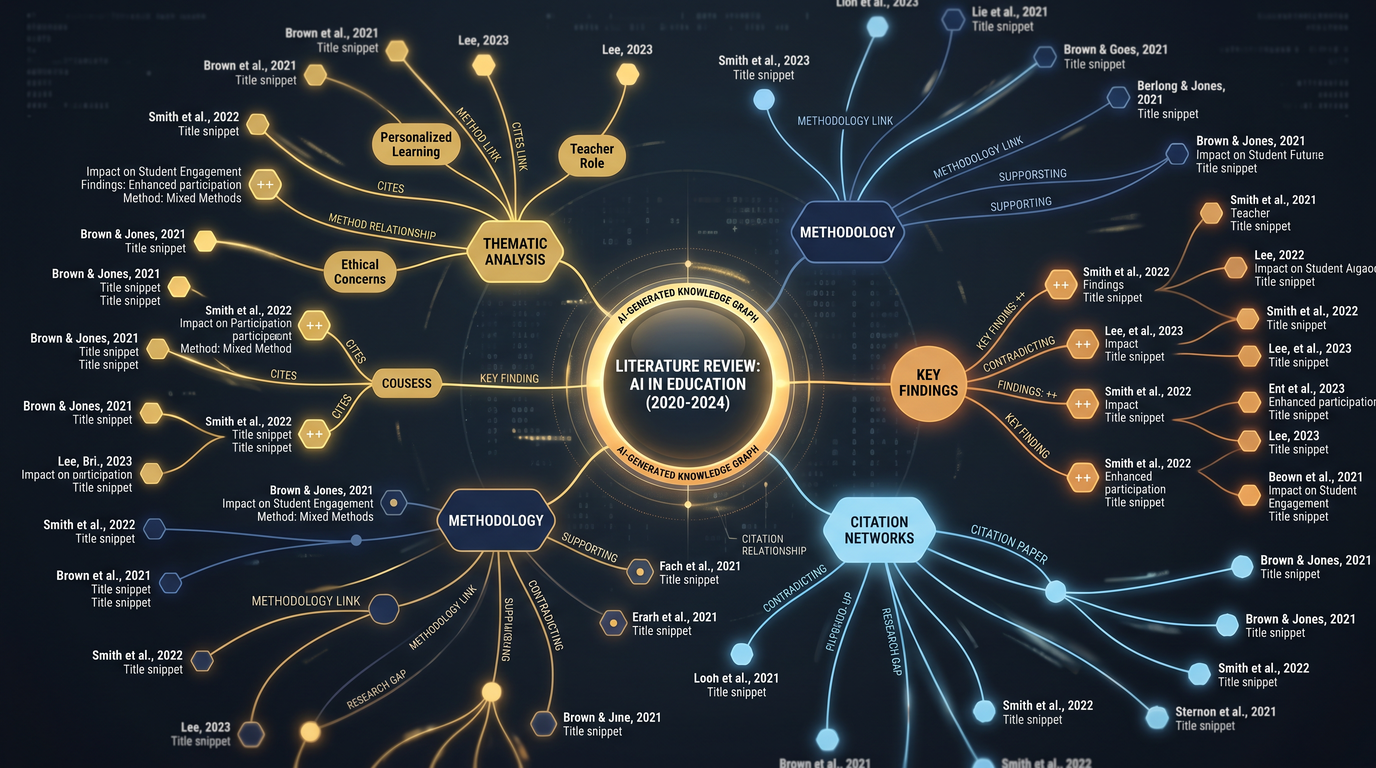
These prompts help you scope, evaluate, and synthesize literature with rigor, transparency, and repeatability suitable for academic publication.
1) Systematic Review Protocol Builder (PRISMA-Aligned)
Use this to rapidly draft a structured, PRISMA-aligned protocol before screening begins.
You are a research assistant drafting a PRISMA-aligned systematic review protocol.
Goal: Produce a concise, journal-ready protocol.
Context:
- Topic: [topic]
- Research domain: [research_domain]
- Population/Context: [population_or_context]
- Interventions/Exposures: [interventions_or_exposures]
- Comparators: [comparators]
- Outcomes: [primary_outcomes]; [secondary_outcomes]
- Study designs to include: [study_designs]
- Timeframe: [date_range]
- Databases: [databases_list]
- Languages: [languages]
- Registration: [registry_name_or_NA]
- Team roles: [team_members_and_roles]

Tasks:
1) Draft research question(s) using [framework: PICO/PECO/PS].
2) Write explicit inclusion/exclusion criteria.
3) Define search strategy (keywords, Boolean, MeSH) per database.
4) Describe screening, deduplication, data extraction fields, risk-of-bias tools.
5) Specify synthesis plan (qualitative/quantitative/meta-analysis), heterogeneity, sensitivity analyses.
6) Note dissemination plan and limitations.

Output:
- Clear headings and bullet clarity.
- No fabricated citations; request missing details under “Assumptions/Requests”.
2) Gap Analysis Map Across Themes and Methods
Use this to identify underexplored intersections of theory, method, population, and outcome.
You are mapping research gaps in [research_domain] about [topic].
Inputs:
- Core subtopics/themes: [themes_list]
- Key theories/frameworks: [theories_list]
- Typical methods: [methods_list]
- Populations/contexts: [populations_list]
- Outcomes/metrics: [outcomes_list]
- Time horizon: [timeframe]
- Databases already searched: [databases]
- Known seminal works: [key_authors_or_papers]

Tasks:
1) Build a 2D “Gap Matrix” (rows=themes; columns=method/population/outcome intersections).
2) Flag high-potential gaps (low evidence density + high relevance).
3) For each gap, propose a researchable question and minimal viable study design.
4) Note feasibility, ethical issues, and data availability.

Output:
- Table-ready bullets for each cell.
- “Top-5 Gaps” ranked by [criteria: novelty, impact, feasibility].
- “Assumptions/Requests” if info is missing.
3) Citation Network and Influence Map
Use this to plan a citation-mapping pass and identify influential clusters and bridge papers.
You are outlining a citation network analysis plan for [topic] in [research_domain].
Inputs:
- Seed set (DOIs/titles): [seed_papers]
- Timeframe: [timeframe]
- Scope (e.g., empirical/theoretical/reviews): [scope]
- Tools available (e.g., Publish or Perish, VOSviewer): [tools]

Tasks:
1) Define forward/backward citation strategy and inclusion thresholds.
2) Propose steps to compute network metrics (degree, betweenness, community detection).
3) Identify expected clusters (theoretical schools, methods) and probable “bridge” works.
4) Specify how to validate influence (citation velocity, field-normalized metrics).
5) Outline a narrative integrating structure with substantive insights.

Output:
- Stepwise plan, with decision points and quality checks.
- “Deliverables” list (network map, cluster briefs, top influencers).
- “Assumptions/Requests” for any missing data.
4) Methodology Comparison and Suitability Grid
Use this to compare methods head-to-head for your question and constraints.
You are building a methodology suitability grid for [topic] in [research_domain].
Inputs:
- Candidate methods: [methods_list]
- Research question: [research_question]
- Constraints: [budget], [timeline], [sample_access], [ethics_requirements], [data_sensitivity]
- Desired inference strength: [causal/associational/descriptive]
- Target journal norms: [target_journal]

Tasks:
1) Define evaluation criteria (validity, reliability, causal identification, generalizability, cost, time).
2) Score each method (1–5) with justification.
3) Recommend primary and backup method(s) with rationale.
4) List threats to validity and mitigation tactics per method.

Output:
- A compact grid with scores and short justifications.
- Narrative recommendation and “Risks/Mitigations” section.
5) Theoretical Framework Synthesis Builder
Use this to integrate multiple theories into a coherent explanatory model.
You are synthesizing a theoretical framework for [topic] in [research_domain].
Inputs:
- Theories to integrate: [theories_list]
- Focal phenomenon: [phenomenon]
- Level of analysis: [individual/group/organization/system]
- Key constructs: [constructs]
- Known mechanisms: [mechanisms]
- Boundary conditions: [boundaries]
- Target audience: [audience]

Tasks:
1) Define each theory’s core constructs and predicted relationships.
2) Reconcile overlaps/contradictions; propose integrative propositions.
3) Map constructs to mechanisms and boundary conditions.
4) Provide a conceptual diagram description suitable for a figure.
5) State testable propositions/hypotheses derived from the framework.

Output:
- Structured prose with numbered propositions.
- “Assumptions/Requests” for missing constructs or citations (no fabrication).
6) Research Question Refinement and Operationalization
Use this to turn a broad topic into sharp, measurable questions.
You are refining research questions for [topic] in [research_domain].
Inputs:
- Initial broad question: [initial_question]
- Population/context: [population_context]
- Variables of interest: [variables_list]
- Data availability: [data_sources]
- Constraints: [constraints]
- Desired contribution: [theoretical/practical/methodological]

Tasks:
1) Generate 5–7 candidate questions following criteria (specific, feasible, novel, ethical).
2) For top 3, propose operational definitions and measurement strategies.
3) Align each with potential analysis approach and expected contribution.
4) Suggest minimal data needed and likely obstacles.

Output:
- Ranked questions with operationalization notes and “Next Steps.”
7) Source Quality and Bias Evaluation Rubric
Use this to standardize how you judge studies during screening and synthesis.
You are creating a source evaluation rubric for studies on [topic] in [research_domain].
Inputs:
- Study types expected: [study_types]
- Common biases to watch: [biases_list]
- Risk-of-bias tools preferred: [tools]
- Use case (systematic review, narrative review, thesis): [use_case]

Tasks:
1) Define criteria (design rigor, sampling, measurement validity, analysis transparency, reproducibility, funding conflicts).
2) Create a 3-level rating scale (High/Moderate/Low) with anchors.
3) Provide example signals for each criterion and rating.
4) Output a ready-to-use checklist.

Output:
- Rubric table text and a one-paragraph guidance note.
8) Annotated Bibliography with Decision Rationale
Use this to build annotations that also record inclusion decisions and utility.
You are drafting an annotated bibliography for [topic] in [research_domain].
Inputs:
- Citation list: [citations_in_preferred_format]
- Review scope: [scope_statement]
- Inclusion criteria: [inclusion_criteria]
- Exclusion criteria: [exclusion_criteria]
- Intended use (theory build, method exemplars, background): [intended_use]

Tasks:
For each citation:
1) 2–3 sentence summary (question, method, main finding).
2) Evaluation against criteria; note strengths/limitations.
3) Relevance tags (theory, method, population, measure).
4) Decision: Include/Exclude/Background-only with rationale.

Output:
- Structured entries per citation; no fabricated details.
- “Assumptions/Requests” if bibliographic info is incomplete.
9) Literature Synthesis Matrix (Claims–Evidence–Counterevidence)
Use this to collate claims, supporting studies, and contradictions across sources.
You are constructing a synthesis matrix for [topic] in [research_domain].
Inputs:
- Core claims or themes: [claims_list]
- Corpus (citations): [citations]
- Quality ratings if available: [quality_ratings_or_NA]
- Outcome measures: [outcomes]

Tasks:
1) For each claim, list supporting studies (design, sample, key result) and counterevidence.
2) Note methodological heterogeneity and effect direction/size where available.
3) Highlight consensus, contested areas, and reasons (measurement, context, bias).
4) Identify “what we don’t know” and propose bridging studies.

Output:
- Matrix-ready bullets under each claim.
- Short synthesis paragraph per claim.
10) Trend and Trajectory Identification Over Time
Use this to narrate how the field evolved and what’s next.
You are analyzing temporal trends in [research_domain] literature on [topic].
Inputs:
- Time window: [start_year]–[end_year]
- Corpus characteristics: [n_papers], [major_journals]
- Key methods/constructs tracked: [methods_constructs]
- Milestone events (policy, tech, crises): [events]

Tasks:
1) Identify phases (emergence, consolidation, diversification) with drivers.
2) Track shifts in methods, samples, and geographies.
3) Surface rising constructs and declining ones.
4) Predict near-term directions and research opportunities.

Output:
- Chronological narrative + a bullet list of “Next 5 Questions.”
- Cite only provided works; add “Assumptions/Requests” for missing evidence.
Hypothesis Generation Prompts

These prompts help you formulate precise, testable, and theory-grounded hypotheses with clear boundaries and measurement plans.
11) Variable Identification and Construct Clarification
Use this to map candidate variables and refine ambiguous constructs.
You are identifying variables for hypotheses on [topic] in [research_domain].
Inputs:
- Phenomenon: [phenomenon]
- Initial constructs: [constructs]
- Level(s) of analysis: [levels]
- Available data or measures: [available_measures]
- Constraints (ethics, access): [constraints]

Tasks:
1) Propose IVs, DVs, mediators, moderators; define each operationally.
2) Suggest 2–3 measurement options per construct (with pros/cons).
3) Note potential confounders and control variables.
4) Flag ambiguous constructs and propose sharper definitions.

Output:
- Variable map with operational definitions and candidate measures.
12) Causal Reasoning Sketch (DAG/Dynamic Pathways)
Use this to articulate plausible causal structures before model selection.
You are drafting a causal reasoning sketch for [topic] in [research_domain].
Inputs:
- Focal outcome: [outcome]
- Candidate causes: [candidate_IVs]
- Mediators/moderators: [mediators_moderators]
- Confounders: [confounders]
- Temporal ordering: [temporal_order]
- Data structure: [cross_sectional/longitudinal/experimental]

Tasks:
1) Describe a DAG in text: nodes, directed edges, colliders.
2) Identify minimal sufficient adjustment sets.
3) Note testable implications and threats (unmeasured confounding, selection).
4) Propose designs/analyses compatible with the DAG.

Output:
- Clear textual DAG description and adjustment strategy.
13) Null and Alternative Hypotheses (Statistical Form)
Use this to formalize hypotheses with precise statistical statements.
You are formulating H0 and H1 for [topic] in [research_domain].
Inputs:
- Primary relationship: [IV] → [DV]
- Expected direction: [positive/negative/none]
- Effect size metric: [metric: Cohen_d, OR, beta, r]
- Alpha and power targets: [alpha], [power]
- Sample constraints: [n], [design]

Tasks:
1) Write H0 and H1 in words and symbolically with [metric].
2) Propose a minimal statistical test and assumptions to check.
3) Provide an expected effect size range based on prior info [prior_info_or_NA].
4) Note implications for sample size planning.

Output:
- Hypothesis pair, test choice, and assumption checklist.
14) Competing Hypotheses Set (Rival Explanations)
Use this to avoid confirmation bias by articulating rivals.
You are drafting competing hypotheses for [topic] in [research_domain].
Inputs:
- Focal DV: [DV]
- Primary IV and rationale: [IV_and_theory]
- Potential rivals (mechanisms, confounds): [rivals_list]
- Contextual factors: [context]

Tasks:
1) Generate 3–5 rival hypotheses with distinct mechanisms.
2) For each, specify predictions that differ from the primary hypothesis.
3) List discriminating tests or data patterns.
4) Note what evidence would favor each rival.

Output:
- Numbered set of competing hypotheses with discriminators.
15) Testability and Measurability Assessment
Use this to check if hypotheses are practically testable with your resources.
You are assessing testability for hypotheses on [topic].
Inputs:
- Hypotheses list: [hypotheses_text]
- Available data/measures: [data_sources]
- Constraints: [budget], [timeline], [ethics], [access]
- Required precision: [precision_targets]

Tasks:
1) Rate each hypothesis on measurability, feasibility, and ethical viability (1–5).
2) Identify critical missing measures and substitutes.
3) Provide minimal viable design and sample considerations.
4) Flag risks and mitigation strategies.

Output:
- A prioritization note per hypothesis with feasibility rationale.
16) Scope and Boundary Conditions Definition
Use this to define where your hypothesis applies—and where it doesn’t.
You are defining boundary conditions for hypotheses about [topic] in [research_domain].
Inputs:
- Hypothesis: [hypothesis_text]
- Population: [population]
- Setting/context: [context]
- Timeframe: [time_window]
- Mechanisms assumed: [mechanisms]
- Exclusions: [exclusions]

Tasks:
1) Specify inclusion/exclusion boundaries (who/what/where/when).
2) Describe assumed enabling conditions and moderators.
3) State contexts where effect likely attenuates or reverses.
4) Provide a concise “Applicability Statement” for manuscripts.

Output:
- Bullet list + a 2–3 sentence applicability summary.
17) Theoretical Grounding and Citation Anchors
Use this to anchor hypotheses explicitly in theory without inventing sources.
You are grounding hypotheses for [topic] in [research_domain] in theory.
Inputs:
- Hypothesis statements: [hypotheses_text]
- Theories/models to draw from: [theories_list]
- Provided citations (only these may be cited): [citations_list]
- Target journal style: [style: APA/AMA/Vancouver/Other]

Tasks:
1) Link each hypothesis to 1–2 theoretical mechanisms.
2) Explain how the mechanism implies the prediction.
3) Cite only provided sources; if missing, add “Citation Needed.”
4) Draft short theory paragraphs (3–5 sentences) per hypothesis.

Output:
- Theory-anchored paragraphs with inline citation placeholders as [Author, Year] per [style].
18) Interdisciplinary Connections (Importing Constructs)
Use this to borrow useful constructs and methods from adjacent fields.
You are exploring interdisciplinary extensions for [topic].
Inputs:
- Home domain: [home_domain]
- Adjacent domains: [adjacent_domains]
- Focal constructs: [constructs]
- Desired methodological innovations: [methods_goals]
- Application constraints: [constraints]

Tasks:
1) Propose 3–5 constructs/methods to import and why they fit.
2) Sketch how to adapt measurement to [home_domain].
3) Note potential pitfalls (construct drift, validity threats).
4) Suggest a pilot test design.

Output:
- Actionable import list with adaptation notes.
19) Falsifiability Check and Risky Predictions
Use this to ensure your hypothesis is falsifiable with observable implications.
You are conducting a falsifiability audit for [hypothesis_text].
Inputs:
- Hypothesis: [hypothesis_text]
- Observable outcomes: [observables]
- Measurement approach: [measures]
- Alternatives to differentiate: [alternatives]

Tasks:
1) State at least 2 risky predictions that would contradict the hypothesis if observed.
2) Describe minimally sufficient tests and data patterns for falsification.
3) Note any unfalsifiable components and how to revise them.

Output:
- “Risky Predictions” list and test plan.
20) Hypothesis Prioritization and Scoring
Use this to pick what to test first based on value and feasibility.
You are prioritizing hypotheses for [topic] in [research_domain].
Inputs:
- Hypothesis set: [hypotheses]
- Criteria weights (sum to 1): [novelty_w], [impact_w], [feasibility_w], [theoretical_value_w], [data_availability_w]
- Constraints: [constraints]
- Strategic goal (publication, grant, pilot): [goal]

Tasks:
1) Score each hypothesis 1–5 on each criterion; multiply by weights.
2) Provide rank order with brief justification.
3) Suggest quick-win vs long-horizon pathways.

Output:
- Ranked list with scores and rationale.
Data Interpretation Prompts
These prompts support rigorous, transparent interpretation of statistical analyses, including effects, uncertainty, and limitations.
21) Statistical Significance and Practical Relevance Review
Use this to separate p-values from real-world importance.
You are interpreting significance and relevance for [analysis_name].
Inputs:
- Results summary (estimates, SEs, p-values): [results_block]
- Alpha: [alpha]
- Contextual importance thresholds: [practical_thresholds]
- Study design: [design]
- Sample size: [n]

Tasks:
1) State statistical significance relative to [alpha]; avoid dichotomous language.
2) Discuss practical significance vs [practical_thresholds].
3) Note assumption checks and model fit caveats.
4) Flag multiplicity issues and suggest corrections if applicable.

Output:
- Plain-language interpretation + bullet “Caveats.”
22) Pattern Recognition and Structure Discovery
Use this to articulate patterns worth exploring further.
You are summarizing patterns from [data_description].
Inputs:
- Data type/shape: [data_type]
- Variables/features of interest: [variables]
- Observed patterns (clusters/trends): [observed_patterns]
- Preprocessing steps: [preprocessing]

Tasks:
1) Describe salient patterns and plausible explanations.
2) Distinguish signal from noise; mention overfitting risks.
3) Propose 2–3 confirmatory analyses or out-of-sample checks.
4) Suggest next-step data collection if needed.

Output:
- Narrative of patterns + “Next Analyses” checklist.
23) Outlier Investigation and Sensitivity Plan
Use this to plan principled handling of outliers and leverage points.
You are planning an outlier and sensitivity analysis for [analysis_name].
Inputs:
- Dataset description: [dataset]
- Suspected outliers/leverage cases: [cases_or_rules]
- Model(s): [models]
- Outcome(s): [outcomes]

Tasks:
1) Propose detection methods (robust residuals, influence measures, IQR rules).
2) Plan sensitivity checks (with/without, winsorization, robust estimators).
3) Report how conclusions change across checks.
4) Pre-specify transparent decision rules.

Output:
- Stepwise plan + reporting template text.
24) Correlation vs. Causation Interpretation Guardrails
Use this to keep causal claims disciplined given your design.
You are writing guardrails for interpreting [results_type] in [study_design].
Inputs:
- Key associations: [associations]
- Potential confounders: [confounders]
- Temporal information: [temporal_data]
- Instrument/experiment info if any: [causal_design_elements]

Tasks:
1) State what can and cannot be inferred causally.
2) List identification assumptions and their plausibility.
3) Suggest robustness checks or alternative designs to strengthen claims.
4) Provide a cautious, accurate summary paragraph.

Output:
- Guardrail statements + cautious summary.
25) Confidence Interval Interpretation (Uncertainty Focus)
Use this to communicate intervals and uncertainty clearly.
You are interpreting confidence intervals for [parameter_names].
Inputs:
- Estimates and 95% CIs: [estimates_and_CIs]
- Scale/units: [units]
- Practical thresholds: [thresholds]
- Sample size: [n]
- Model: [model]

Tasks:
1) Explain intervals in plain language without misinterpretation.
2) Relate intervals to practical thresholds and decision-making.
3) Note width drivers (sample size, variance) and implications.
4) Provide “what we can say” vs “what we cannot say.”

Output:
- Short interpretation + bullets on implications.
26) Effect Size Evaluation and Benchmarks
Use this to contextualize magnitude using appropriate benchmarks.
You are evaluating effect sizes for [effects_description].
Inputs:
- Effects and metrics (e.g., d, OR, RR, r, beta): [effects_list]
- Domain benchmarks or anchors: [benchmarks]
- Units and context: [units_context]
- Measurement reliability info: [reliability_or_NA]

Tasks:
1) Interpret magnitude relative to [benchmarks] and context.
2) Discuss reliability attenuation if applicable.
3) Note heterogeneity across subgroups.
4) Provide a one-paragraph “Takeaway on Magnitude.”

Output:
- Magnitude interpretation + subgroup notes.
27) Visualization Recommendations by Data and Message
Use this to choose the right visual for the story and audience.
You are recommending visualizations for [audience] to communicate [message].
Inputs:
- Data types and variables: [data_types_variables]
- Key comparisons/relationships: [key_relationships]
- Constraints (journal style, B/W, accessibility): [constraints]
- Tools available: [tools]

Tasks:
1) Propose 2–3 plot types per relationship with rationale.
2) Specify encodings, ordering, annotations, and uncertainty depiction.
3) Add accessibility tips (colorblind-safe palettes, labels).
4) Provide a figure caption template.

Output:
- Visualization plan with implementation notes.
28) Limitations Identification and Mitigation
Use this to articulate limitations honestly and constructively.
You are drafting study limitations for [study_title].
Inputs:
- Design and sample: [design], [sample]
- Measures and instruments: [measures]
- Analysis approach: [analysis]
- Potential biases: [biases]
- Generalizability constraints: [generalizability]

Tasks:
1) List key limitations with brief impact statements.
2) Suggest mitigation steps taken and residual risks.
3) Note what future work should address.
4) Keep tone constructive and proportional.

Output:
- Bulleted limitations + mitigation notes.
29) Replication and Robustness Considerations
Use this to plan credible replication pathways.
You are outlining replication considerations for [study_title].
Inputs:
- Primary findings: [findings]
- Data/code availability: [availability]
- Sample/context features: [context]
- Power considerations: [power_info]

Tasks:
1) Propose direct vs conceptual replication designs.
2) Suggest minimum sample sizes and power checks.
3) Identify context variables to vary.
4) Provide a replication reporting checklist.

Output:
- Replication plan + checklist.
30) Cross-Study Comparison and Mini Meta-Analytic Lens
Use this to compare your results with prior studies transparently.
You are conducting a cross-study comparison for [topic] results.
Inputs:
- Your effect(s) with CI: [your_effects]
- Prior comparable effects (citations provided only): [prior_effects]
- Outcome/measure harmonization notes: [harmonization]
- Heterogeneity suspects: [heterogeneity_factors]

Tasks:
1) Summarize comparable effects with scales and contexts.
2) If sensible, compute a rough, transparent mini-aggregation (fixed/random) with caveats.
3) Discuss heterogeneity and compatibility.
4) Provide a balanced conclusion on alignment/divergence.

Output:
- Comparison table text + synthesis paragraph. No fabricated numbers or sources.
Paper Writing Prompts
These prompts help you draft publication-grade sections with structure, clarity, and alignment to journal expectations.
31) Abstract Drafting (Structured and Unstructured)
Use this to produce a crisp abstract that fits journal formats.
You are drafting an abstract for [target_journal] on [topic] in [research_domain].
Inputs:
- Study type/design: [design]
- Sample/context: [sample_context]
- Objective: [objective]
- Methods (brief): [methods]
- Key results (estimates, CIs): [results]
- Conclusion/implications: [implications]
- Word limit: [word_limit]
- Preferred format (structured/unstructured): [format]

Tasks:
1) Produce an abstract adhering to [format] with headings if structured.
2) Use plain language for findings; avoid overclaiming causality.
3) Fit within [word_limit]; include 2–4 keywords at the end.

Output:
- Camera-ready abstract text. No fabricated statistics.
32) Introduction Structuring (Funnel Logic)
Use this to construct an engaging, logically narrowing introduction.
You are structuring the Introduction for a paper on [topic].
Inputs:
- Broad problem: [broad_problem]
- Specific gap: [specific_gap]
- Theoretical lens: [theory]
- Research questions/hypotheses: [RQs_Hs]
- Contribution claims: [contributions]
- Target audience/journal: [target_journal]

Tasks:
1) Outline 4–6 paragraphs: context → gap → theory → approach → contribution.
2) Craft topic sentences and transitions for each paragraph.
3) Add cautious claims with citation placeholders [Author, Year] (provided only).
4) End with a clear statement of aims.

Output:
- Paragraph-by-paragraph plan + sample sentences.
33) Methodology Description (Transparent and Reproducible)
Use this to ensure methods are reproducible and aligned with reporting standards.
You are writing the Methods section for [study_title].
Inputs:
- Design and preregistration: [design], [registration_or_NA]
- Setting and participants: [setting_participants]
- Measures/instruments (reliability/validity if known): [measures]
- Procedures and ethics: [procedures_ethics]
- Analysis plan (models, software, versions): [analysis_plan]
- Deviations from protocol: [deviations_or_NA]
- Reporting standard (e.g., CONSORT, STROBE, PRISMA): [standard]

Tasks:
1) Structure subsections per [standard].
2) Provide enough detail for replication (versions, parameters).
3) Clearly label exploratory vs confirmatory analyses.
4) Include data/code availability statement.

Output:
- Methods text with clear subheadings and transparency notes.
34) Results Presentation (Clarity Without Overreach)
Use this to present findings cleanly with effective tables and figures.
You are drafting the Results for [study_title].
Inputs:
- Primary and secondary outcomes: [outcomes]
- Key estimates and uncertainty: [estimates]
- Figures/tables you have/plan: [figures_tables]
- Multiplicity corrections (if any): [corrections]
- Sensitivity/robustness results: [robustness]

Tasks:
1) Present results in logical order tied to hypotheses/RQs.
2) Summarize numbers in text; place details in tables/figures.
3) Avoid causal language unless design supports it.
4) Include sensitivity results and note any shifts.

Output:
- Results narrative + table/figure callouts and captions.
35) Discussion Framing (Contributions, Mechanisms, Limits)
Use this to balance contributions with limitations and future work.
You are writing the Discussion for [study_title] in [research_domain].
Inputs:
- Key findings: [findings]
- Theoretical mechanisms: [mechanisms]
- Practical implications: [implications]
- Limitations: [limitations]
- Future research ideas: [future_work]
- Target journal tone: [journal_tone]

Tasks:
1) Interpret findings through [mechanisms]; relate to prior work (citations you provide).
2) State contributions (theory, method, practice) precisely.
3) Discuss limitations candidly with proportional impact.
4) Propose 3–5 actionable future studies.

Output:
- Discussion outline + 2–3 model paragraphs.
36) Conclusion Writing (Tight and Memorable)
Use this to craft a succinct, high-signal conclusion.
You are drafting the Conclusion for [study_title].
Inputs:
- One-sentence takeaway: [takeaway]
- Who should care: [stakeholders]
- Actionable implication: [actionable_point]
- Cautionary note: [caution]
- Desired tone: [tone]

Tasks:
1) Write 2–3 short paragraphs: restate contribution, implications, closing thought.
2) Avoid new results or citations.
3) Maintain coherence with Discussion and claims.

Output:
- Polished conclusion text.
37) Title Optimization (Clarity, Specificity, Searchability)
Use this to generate high-performing titles for journals and indexing.
You are optimizing a paper title for [target_journal] on [topic].
Inputs:
- Core contribution: [contribution]
- Population/context: [context]
- Method/design: [method]
- Key term(s) for indexing: [keywords]
- Style preference (concise/descriptive/colon): [style]

Tasks:
1) Generate 8–12 title options across styles.
2) Ensure specificity (who/what/where/method when relevant).
3) Indicate 3–5 strongest options with rationale (clarity, novelty, SEO).
4) Keep within typical character limits: [char_limit].

Output:
- Title list with brief justifications.
38) Keyword Selection (Indexing and Discoverability)
Use this to select keywords aligned with indexing vocabularies and audiences.
You are selecting keywords for [study_title] in [research_domain].
Inputs:
- Candidate keyword pool: [candidate_keywords]
- Target indexing systems (e.g., MeSH): [indexing_systems]
- Audience search behaviors: [audience_behaviors]
- Journal limits: [keyword_limit]

Tasks:
1) Propose a final keyword set (primary/secondary) respecting [keyword_limit].
2) Map each to indexing terms when applicable.
3) Provide rationale (coverage, specificity, search intent).
4) Suggest synonyms/variants to include in the manuscript text.

Output:
- Keyword list + mapping/rationale.
39) Peer Review Preparation (Likely Critiques and Responses)
Use this to anticipate reviewer concerns and draft responses.
You are preparing for peer review for [study_title] targeting [target_journal].
Inputs:
- Methods summary: [methods]
- Results summary: [results]
- Limitations: [limitations]
- Novelty/claims: [claims]

Tasks:
1) List 8–12 likely reviewer critiques by domain (methods, theory, clarity, ethics).
2) Draft concise, evidence-based response strategies.
3) Identify items to fix pre-submission (figures, clarity, robustness).
4) Provide a “Pre-Submission Checklist.”

Output:
- Critique-response matrix + checklist.
40) Revision Response Letter (Point-by-Point)
Use this to draft a professional, thorough response to reviewers.
You are drafting a revision response letter for [journal_name].
Inputs:
- Manuscript ID: [manuscript_ID]
- Reviewer comments (verbatim): [comments_text_or_list]
- Changes made (section/page/line): [changes_summary]
- Items not changed (with rationale): [no_change_rationale]
- Tone preference: [tone]

Tasks:
1) Start with a courteous cover paragraph and summary of changes.
2) For each comment: quote → response → location of change.
3) Where evidence is needed, cite only provided sources; no fabrication.
4) Close with appreciation and contact info.

Output:
- Polished response letter ready for submission.
