
50 GPT-5.5 Prompts for UX Designers: Wireframes, User Flows, Accessibility Audits, and Design Systems
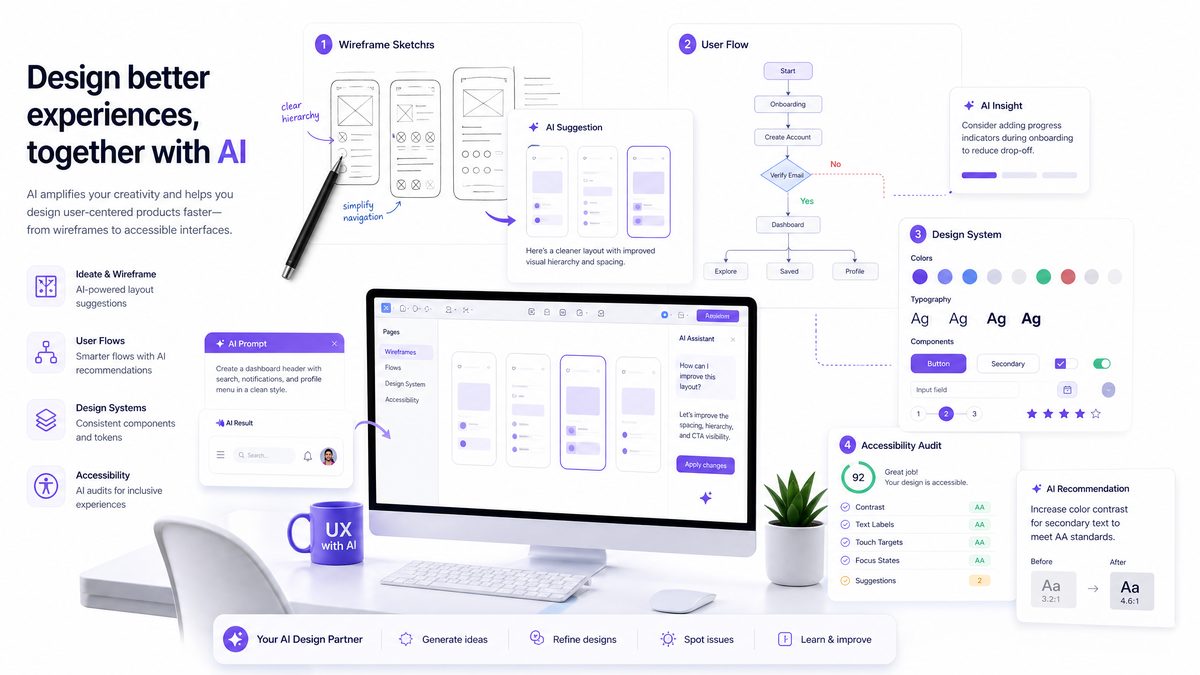
In the evolving landscape of UX/UI design, leveraging AI tools such as GPT-5.5 has become an essential strategy for enhancing creativity, efficiency, and precision. This comprehensive guide offers 50 highly specific and actionable prompts tailored for UX designers, aimed at optimizing key design processes including wireframe generation, user flow mapping, accessibility audits, design system documentation, and usability testing scripts. Each prompt is carefully crafted to harness GPT-5.5’s advanced natural language understanding capabilities, enabling designers to generate meaningful outputs that can be directly applied or iteratively refined.
Whether you are a seasoned UX professional or an AI-savvy designer integrating
For a deeper exploration of this topic, see our comprehensive guide on 50 GPT-5.5 Prompts for Data Scientists: Machine Learning, Data Cleaning, and Statistical Analysis, which provides additional context and practical examples for enterprise teams.
into your workflow, this collection serves as a practical toolkit. It highlights the contextual nuances that make each prompt effective, helping you unlock maximum value from AI-assisted design. From initial concept sketches to detailed accessibility reviews, these prompts will streamline your projects and inspire new perspectives.Wireframe Generation: 10 Actionable GPT-5.5 Prompts
Wireframes form the backbone of any UX design project, providing a visual skeleton that outlines structure, functionality, and content hierarchy. GPT-5.5 can assist in generating detailed wireframe descriptions, layout suggestions, and component arrangements based on project goals and user needs. Effective prompts here include specific contextual details such as target user personas, platform constraints, and interaction priorities to ensure relevance and usability.
| Prompt | Contextual Details | Why It Works |
|---|---|---|
| “Generate a mobile app wireframe outline for a fitness tracking app aimed at beginners focusing on daily goals and social sharing features.” | Mobile platform, fitness app, target users beginners, focus on goals and social features | Defines platform and user needs, ensuring wireframe addresses core functionality and engagement |
| “Create a dashboard wireframe for an e-commerce admin panel with order tracking, inventory management, and sales analytics widgets.” | Admin panel, e-commerce, key functional areas | Targets specific user role and tasks, enabling GPT-5.5 to prioritize relevant components |
| “Outline a responsive web wireframe for a news portal with personalized content sections and easy navigation for desktop and tablet.” | Responsive design, news portal, personalization, multi-device support | Incorporates device adaptability and user content preferences for a flexible layout |
| “Sketch a wireframe for a SaaS onboarding flow that highlights key features and includes progress indicators and tooltips.” | SaaS product, onboarding process, feature emphasis, user guidance elements | Focuses on user education and engagement through visual progress and tips |
| “Design a wireframe for a restaurant booking app emphasizing quick table reservations, menu browsing, and user reviews.” | Mobile app, restaurant booking, fast reservation, content browsing | Clarifies primary user tasks to optimize navigation and interaction points |
| “Generate a wireframe concept for a healthcare portal targeting elderly users with large fonts, simplified navigation, and quick access to emergency contacts.” | Healthcare portal, elderly users, accessibility needs, emergency features | Adapts design for accessibility, improving usability for a specific user group |
| “Create a wireframe for an educational platform offering video lessons, quizzes, and progress tracking with gamification elements.” | Educational platform, multi-feature, gamification, progress visualization | Integrates diverse content types and motivational features in layout design |
| “Draft a wireframe for a financial app home screen featuring account summaries, recent transactions, and quick transfer options.” | Financial app, home screen, key user actions, data visibility | Prioritizes clarity and accessibility of critical financial information |
| “Outline a wireframe for a travel booking website homepage with destination highlights, search filters, and user testimonials.” | Travel website, homepage, content marketing, filtering functionality | Enhances user discovery and trust-building through structured content |
| “Design a wireframe for a productivity app’s task management screen with drag-and-drop prioritization and calendar integration.” | Productivity app, task focus, interactive elements, calendar sync | Encourages user interaction and seamless workflow management |
Using such prompts, designers can obtain detailed wireframe blueprints from GPT-5.5, which can then be refined by hand or imported into design tools. For example, requesting a “mobile app wireframe with a bottom navigation bar and user onboarding screens” will result in a structured textual layout describing screen components and their arrangement, which can serve as a rapid ideation starting point.
User Flow Mapping: 10 GPT-5.5 Prompts to Streamline Interaction Design

To maximize the utility of GPT-5.5 in user flow mapping, prompts should not only describe the primary tasks but also explicitly request the inclusion of alternative paths, exception handling, and user emotions. For instance, specifying moments where users might hesitate or abandon the process can guide the AI to propose supportive interventions such as tooltips, confirmation dialogs, or retry options. This level of detail ensures the generated flows are not linear but adaptive to real-world user behaviors, enhancing design resilience.
Moreover, integrating contextual variables into prompts—such as device type, user expertise level, or accessibility requirements—enables GPT-5.5 to tailor flows more precisely. For example, a prompt that asks for a streamlined checkout flow optimized for mobile users with screen readers will generate sequences that accommodate screen reader navigation and minimize input fields. This specificity empowers designers to preempt usability issues and comply with inclusive design standards.
Examples of Advanced Prompting Techniques
Consider a prompt like: “Design a user flow for managing subscription preferences in a fitness app that includes onboarding, modifying notification settings, and canceling subscriptions with confirmation steps and feedback loops.” This prompt encourages GPT-5.5 to generate comprehensive flows covering multiple interaction points, including feedback mechanisms that reassure users their changes are saved or cancellations confirmed, improving trust and transparency.
Another effective prompt could be: “Generate a user flow for an e-commerce return process that considers eligibility verification, scheduling pickup, issuing refunds, and handling disputes.” Here, GPT-5.5 will map complex decision trees involving eligibility checks and conflict resolution, which are critical for customer satisfaction but often overlooked in simple flow diagrams.
Leveraging GPT-5.5 for Collaborative Design
GPT-5.5’s capacity to produce detailed user flows also facilitates collaboration among multidisciplinary teams. By generating clear, step-by-step visualizations and descriptions from prompts, it creates a shared artifact that UX designers, developers, and product managers can iterate on. Prompting GPT-5.5 to include technical constraints or backend process triggers can bridge communication gaps, ensuring the user experience aligns with system capabilities.
In practice, designers can use GPT-5.5-generated flows as a baseline, then refine them through workshop sessions with stakeholders. This iterative approach helps uncover edge cases or business rules not initially captured in prompts, making the final user flow more robust and aligned to organizational goals.
Measuring and Validating Generated User Flows
Finally, incorporating evaluation criteria within prompts can guide GPT-5.5 to produce flows optimized for key metrics such as task completion time, error rate reduction, or user satisfaction. For example, a prompt might request: “Map a user flow for onboarding a new user to a financial app that minimizes steps to reduce drop-off and includes checkpoints to verify comprehension.” This encourages the AI to focus on efficiency and cognitive load, aligning flows with measurable UX objectives.
Once generated, these flows can be validated through usability testing or simulation tools, feeding back insights that inform prompt refinement. This cyclical process leverages GPT-5.5 not just as a creative assistant but as a strategic partner in iterative design.
Accessibility Audits: 10 GPT-5.5 Prompts for Inclusive Design
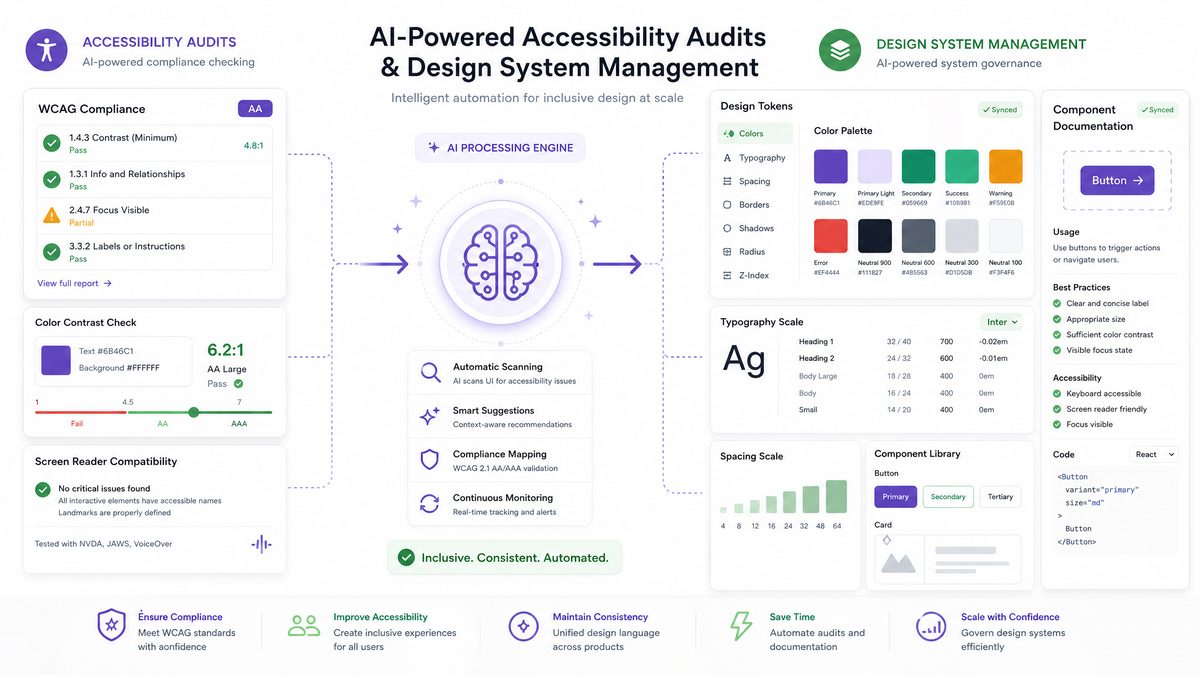
Accessibility is a non-negotiable aspect of modern UX design, ensuring products are usable by people with diverse abilities. GPT-5.5 can support accessibility audits by analyzing UI descriptions, suggesting compliance checks, and identifying potential barriers. Effective prompts
Building on these prompts, it is crucial to integrate real-world user scenarios that reflect diverse impairment types, such as low vision, motor disabilities, and cognitive challenges. For example, when auditing a login form, including scenarios where users rely solely on keyboard inputs or screen magnification tools can reveal issues that automated tools might miss. Similarly, evaluating color contrast should not only consider static color pairs but also dynamic states like hover or focus, which affect users with varying degrees of color perception deficiencies.
In addition to WCAG 2.1 AA standards, incorporating the emerging WCAG 3.0 guidelines and platform-specific accessibility requirements (e.g., iOS VoiceOver or Android TalkBack) can provide a more comprehensive audit scope. GPT-5.5 prompts can be tailored to specify these standards explicitly, ensuring audits remain current with evolving accessibility frameworks. For instance, prompting the model to analyze ARIA roles and states in the context of progressive enhancement or to verify semantic HTML usage can highlight deeper accessibility compliance layers.
Enhancing Prompt Effectiveness with Contextual Detail
Providing GPT-5.5 with detailed UI context improves the precision of audit outcomes. For example, specifying the technology stack—such as React components, SVG charts, or custom web components—enables the model to assess potential accessibility pitfalls unique to those implementations. A prompt like “Audit a React-based interactive calendar widget for keyboard operability, ARIA live region updates, and screen reader compatibility” directs the model to focus on complex interaction patterns often overlooked in generic audits.
Moreover, including user impairment profiles within the prompt, such as “consider users with tremors who may struggle with small touch targets,” allows for the identification of motor accessibility issues like insufficient target size or spacing. This approach shifts the audit from a checklist mentality to a user-centered evaluation, uncovering barriers that impact real users’ experiences.
Examples of Advanced GPT-5.5 Prompts for Accessibility Audits
| Prompt | Audit Focus | Why It Is Effective |
|---|---|---|
| “Assess an e-commerce product page’s image gallery for alt text accuracy, keyboard focus traps, and ARIA live region announcements during dynamic content updates, referencing WCAG 2.1 AAA.” | Alternative text, focus management, live regions | Ensures descriptive content and prevents navigation dead-ends for assistive technologies |
| “Evaluate a news website’s article pages for readability, including plain language usage, heading structure for screen readers, and adjustable font size controls, focusing on cognitive accessibility.” | Cognitive accessibility, text structure, user controls | Facilitates comprehension and content customization for users with cognitive impairments |
| “Perform a mobile banking app audit focusing on voice command responsiveness, haptic feedback integration, and error recovery mechanisms for users with motor impairments.” | Voice interaction, tactile feedback, error handling | Improves accessibility for users with limited dexterity or speech impairments |
By leveraging GPT-5.5’s advanced natural language understanding and context retention, these tailored prompts enable accessibility professionals to conduct nuanced audits that go beyond surface-level compliance. This strategic use of AI accelerates the identification of both common and edge-case accessibility issues, ultimately fostering more inclusive digital environments.
Design System Documentation: 10 GPT-5.5 Prompts for Consistency and Scalability
Design systems require meticulous documentation to ensure consistent application of UI components, patterns, and branding across teams and products. GPT-5.5 can generate comprehensive documentation snippets
Continuing from the existing prompts, it is essential to tailor GPT-5.5 prompts to capture nuances that ensure both consistency and scalability in design system documentation. For instance, prompts that request detailed interaction states, accessibility compliance, and responsive behavior help create documentation that is actionable and developer-friendly. This reduces ambiguity during implementation and fosters a shared understanding across cross-functional teams.
Another effective approach is to incorporate context about the target platform or environment within prompts. For example, specifying if a component is intended for mobile, desktop, or embedded systems prompts GPT to generate documentation that reflects platform-specific constraints and conventions. This can include adaptive sizing, touch target requirements, or keyboard navigation patterns, which are critical for maintaining usability across devices.
Advanced Prompt Examples for Enhanced Documentation
| Prompt | Documentation Focus | Why It Works |
|---|---|---|
| “Explain the accessibility considerations for dropdown menus, including keyboard navigation, ARIA roles, and screen reader announcements.” | Accessibility, keyboard interaction | Ensures inclusivity and compliance with WCAG standards |
| “Describe the responsive behavior of the card component across breakpoints, including layout adjustments and content prioritization.” | Responsive design, content hierarchy | Guides adaptive layouts that maintain usability and aesthetics |
| “Generate detailed usage scenarios for notification toasts, including timing, stacking behavior, and user dismissal options.” | User feedback, interaction patterns | Supports effective communication and avoids interface clutter |
| “Document the color palette usage with light and dark mode variants, contrast ratios, and purpose-driven color assignments.” | Visual design, accessibility | Promotes visual consistency and readability under varying conditions |
| “Write guidelines for avatar components, covering image fallback strategies, size variants, and accessibility labels.” | Component robustness, accessibility | Ensures reliable display and semantic meaning for assistive technologies |
By integrating prompts that explicitly request accessibility and responsive behavior details, design system documentation becomes a comprehensive resource that empowers designers and developers alike. For example, a prompt focusing on ARIA roles and keyboard navigation for dropdowns helps generate documentation that directly supports inclusive design principles, reducing the risk of overlooked accessibility gaps.
Moreover, prompts that emphasize interaction timing, such as those for notification toasts, help define user experience boundaries and prevent interface overload. This level of detail supports scalability by anticipating user needs and interface limitations as the product evolves.
In practice, these refined prompts aid in creating living documentation that aligns with continuous integration and deployment workflows. By automating detailed and standardized documentation generation, teams can maintain alignment between design intentions and implementation realities, even as components and guidelines evolve rapidly.
Ultimately, leveraging GPT-5.5 with well-structured, context-rich prompts transforms design system documentation from static manuals into dynamic, actionable guides that drive consistent, scalable product development.
Usability Testing Scripts: 10 GPT-5.5 Prompts to Facilitate User Feedback
Usability testing is critical to validate design assumptions and uncover friction points. GPT-5.5 can generate detailed user testing scripts tailored to specific features, user groups, and test objectives. Well-crafted prompts specify tasks, success criteria, and potential user challenges to produce scripts that guide moderators and participants effectively.
| Prompt | Testing Focus | Why It’s Effective |
|---|---|---|
| “Create a usability testing script for onboarding new users to a budgeting app, including tasks for setting income goals and linking bank accounts.” | Onboarding, financial setup | Targets key initial tasks to evaluate ease of entry |
| “Write a script for testing an e-commerce checkout flow with focus on coupon code application, shipping options, and payment confirmation.” | Checkout usability, discount application | Validates critical purchase steps and user comprehension |
| “Develop a usability script for evaluating accessibility features in a news app for users with visual impairments.” | Accessibility, user assistive tech | Focuses on real-world accessibility challenges and feedback |
| “Generate a testing script for a social media app’s content creation tools, including posting images, adding tags, and privacy settings.” | Content creation, privacy controls | Examines intuitiveness and privacy awareness |
| “Create a usability test script for a SaaS analytics dashboard focusing on data filtering, report export, and notification settings.” | Data interaction, export functions | Assesses feature discoverability and workflow efficiency |
| “Write a script for testing multi-device synchronization in a note-taking app including offline edits and conflict resolution.” | Synchronization, offline functionality | Evaluates robustness and user experience across devices |
| “Develop a usability test script for a healthcare appointment booking app focusing on symptom input, doctor selection, and calendar integration.” | Healthcare booking, scheduling | Tests clarity and ease of complex user tasks |
| “Generate a script for testing a productivity app’s task prioritization and reminder features with various notification settings.” | Task management, notifications | Checks feature usefulness and user control |
| “Create a usability testing script for a travel planning website focusing on itinerary creation, budget estimation, and sharing options.” | Planning, budgeting, sharing | Validates multi-step planning tasks and collaboration |
| “Write a usability test script for a language learning app targeting new users with tasks on lesson navigation and progress tracking.” | Lesson navigation, learning progress | Measures onboarding effectiveness and motivation features |
These prompts produce detailed scripts including moderator instructions, task descriptions, and probe questions to elicit qualitative insights. For example, a prompt for onboarding might return:
Moderator Script: “Please open the app and set your monthly income goal. Tell me what you expect to happen as you do this. Next, link your primary bank account and describe any difficulties you encounter.”
Follow-up: “How confident do you feel about the setup process? Is anything unclear or confusing?”
Success Criteria: User completes income goal setup and bank linking without assistance.
Such structured scripts improve test efficiency and data quality, vital for iterative design improvements. Usability testing outputs also integrate well with wireframe and flow generation tasks, enabling a holistic UX approach.
Practical Tips for Crafting Effective GPT-5.5 Prompts in UX Design
To maximize GPT-5.5’s output relevance and quality in UX design, consider these expert recommendations:
- Be Specific: Include detailed context such as user personas, platform constraints, and key functionalities. Vague prompts yield generic outputs.
- Define Goals: Clarify what the prompt aims to produce—whether a wireframe outline, flow sequence, or audit checklist—so GPT focuses responses accordingly.
- Incorporate Standards: Reference design guidelines or accessibility standards like WCAG to ensure compliance-focused outputs.
- Segment Complex Tasks: Break down multifaceted design challenges into smaller, focused prompts for better granularity and control.
- Iterate and Refine: Use GPT outputs as drafts to refine through follow-up prompts, gradually improving specificity and utility.
For example, instead of asking “Generate a wireframe for a fitness app,” enhance the prompt to “Generate a wireframe for a fitness app targeting busy professionals needing quick access to workout summaries and social challenge features on iOS.” This precision leads to richer, more actionable results.
Moreover, integrating GPT-generated content with tools like Figma or Sketch through plugins or manual translation accelerates the design-to-prototype workflow. Combining these
For a deeper exploration of this topic, see our comprehensive guide on 50 GPT-5.5 Prompts for Startup Founders: Pitch Decks, Business Plans, Fundraising, and Growth Strategy, which provides additional context and practical examples for enterprise teams.
with human creativity and technical expertise offers a powerful synergy in modern UX practice.Conclusion
This guide has detailed 50 tailored GPT-5.5 prompts across five critical UX design domains: wireframe generation, user flow mapping, accessibility audits, design system documentation, and usability testing scripts. By incorporating specific context, defining clear objectives, and aligning with industry standards, these prompts unlock GPT-5.5’s potential as a collaborative design partner rather than just a tool. The examples and tables provided illustrate how AI can accelerate ideation, improve design quality, and enhance inclusivity.
As AI models continue to evolve, their integration into UX workflows promises to elevate user-centered design to new heights of precision and efficiency. Applying the strategies and prompts shared here will empower UX designers to harness GPT-5.5’s advanced capabilities and drive innovation in their projects. For further exploration on optimizing AI in design workflows, consult additional resources and experiment with iterative prompt refinement to discover unique applications tailored to your team’s needs.
Get Our Free AI Prompt Library
Access our curated collection of production-ready prompts for ChatGPT, GPT-5.5, and Codex. Updated weekly with new templates for developers, marketers, and business professionals.
