
50 GPT-5.5 Prompts for HR Professionals: Recruitment, Onboarding, Performance Reviews, and Employee Engagement
50 GPT-5.5 Prompts for HR Professionals: Recruitment, Onboarding, Performance Reviews, and Employee Engagement
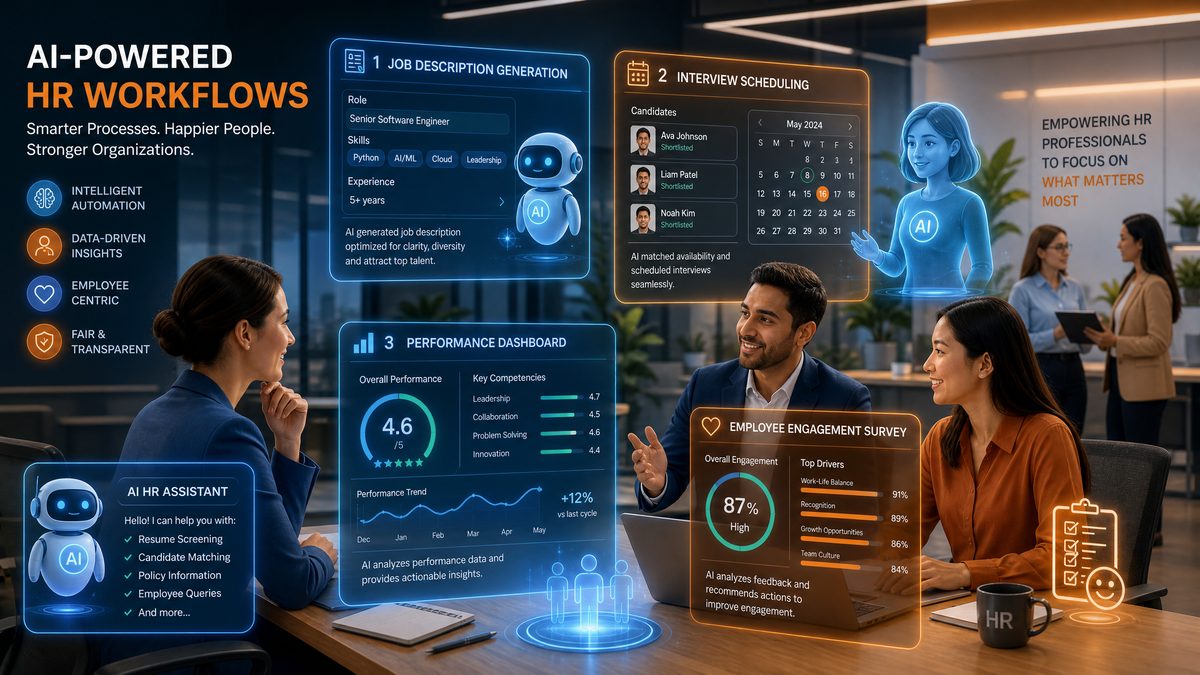
As Human Resources professionals continue to integrate artificial intelligence into their workflows, GPT-5.5 emerges as a powerful ally for streamlining recruitment, onboarding, performance management, and employee engagement. This comprehensive guide offers 50 production-ready prompts tailored specifically for HR practitioners to maximize GPT-5.5’s capabilities. Each prompt is designed to be actionable, context-aware, and customizable, ensuring you get precise, relevant outputs that save time and enhance decision-making.
Whether you are refining job descriptions, generating interview questions, automating onboarding content, structuring performance reviews, or analyzing employee engagement survey data, these prompts will empower you to leverage AI effectively. Explore the categories below, each containing prompts with detailed context variables and usage tips.
Job Description Writing: 10 Expert GPT-5.5 Prompts
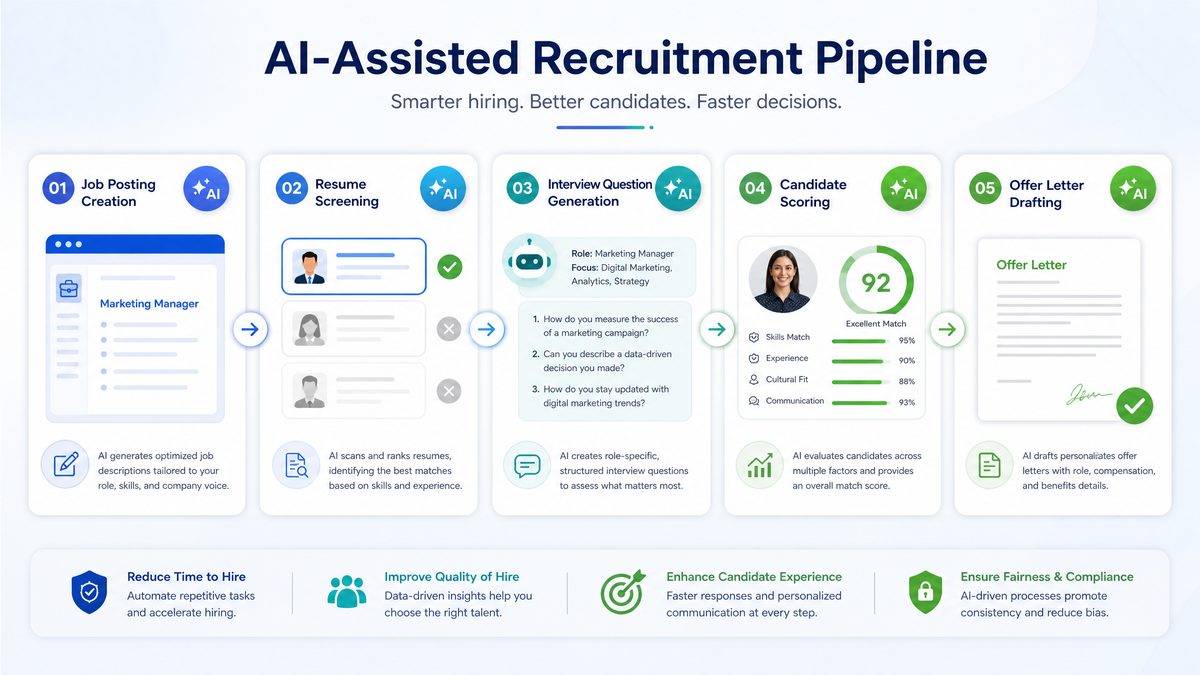
Crafting compelling job descriptions is foundational for attracting qualified candidates. GPT-5.5 can help create clear, inclusive, and optimized job descriptions that align with your company’s brand and role requirements. Use these prompts to generate detailed descriptions, highlight key competencies, and ensure compliance with legal language standards.
-
Prompt: “Generate a detailed job description for a [Job Title] at [Company Name], emphasizing required skills in [Skill Set], experience level [Entry/Mid/Senior], and company culture values [Culture Keywords]. Include sections for responsibilities, qualifications, and benefits.”
Context Variables: Job Title, Company Name, Skill Set (e.g., ‘Python, SQL, communication’), Experience Level, Culture Keywords (e.g., ‘collaborative, innovative’)
-
Prompt: “Rewrite this job description for [Job Title] to use inclusive language that appeals to a diverse candidate pool, removing gender-coded words and jargon.”
Context Variables: Job Description Text
-
Prompt: “Create a concise summary for a job posting for [Job Title] focusing on attracting remote workers, highlighting remote work benefits and expectations.”
Context Variables: Job Title, Remote Work Policy Summary
-
Prompt: “Generate a job description optimized for SEO with keywords such as [Keywords] for the role of [Job Title] in the [Industry] sector.”
Context Variables: Keywords (e.g., ‘data analyst, analytics, Tableau’), Job Title, Industry
-
Prompt: “Outline the key performance indicators (KPIs) relevant to the [Job Title] role to be added in the job description.”
Context Variables: Job Title
-
Prompt: “Draft a job description for an internship position in [Department] aimed at university students, including learning objectives and expected outcomes.”
Context Variables: Department, Internship Duration
-
Prompt: “Summarize the essential compliance and legal disclaimers required in a job description for [Location] based on local labor laws.”
Context Variables: Location (e.g., California, EU)
-
Prompt: “Generate a comparison table summarizing job responsibilities for [Job Title A] vs. [Job Title B] to clarify role differences.”
Context Variables: Job Title A, Job Title B
-
Prompt: “Write a motivating closing statement for a job description for [Job Title] encouraging candidates to apply and providing application instructions.”
Context Variables: Job Title, Application Link/Email
-
Prompt: “Create a bullet-point list of soft skills critical for success in the [Job Title] role in [Industry].”
Context Variables: Job Title, Industry
Beyond the foundational prompts above, it is important to recognize how detailed job descriptions impact recruitment outcomes. According to a 2023 LinkedIn Talent Solutions report, job postings with clear, detailed descriptions that include company culture keywords see a 30% higher application rate from qualified candidates. This underscores the importance of including culture values and soft skills in your job descriptions.
Moreover, compliance is a critical area often overlooked. For example, California’s Fair Employment and Housing Act (FEHA) imposes specific language requirements about non-discrimination that must be clearly stated in job postings. GPT-5.5 can assist HR teams by generating location-specific legal disclaimers to avoid costly compliance issues.
For organizations focusing on diversity and inclusion, rewriting job descriptions to remove gender-coded words and jargon can significantly broaden the candidate pool. Research by Textio found that job ads with gender-neutral language increase applications from women by 42%. Using GPT-5.5 to automatically scan and rephrase job descriptions can make this process scalable.
Finally, SEO optimization is crucial in today’s digital recruitment landscape. Incorporating relevant keywords such as “data analyst,” “analytics,” and “Tableau” can improve job posting visibility on platforms like Indeed and Google for Jobs. GPT-5.5’s ability to generate SEO-friendly copy ensures your postings reach the right audience efficiently.
Example: Job Description Comparison Table
| Aspect | Marketing Manager | Product Manager |
|---|---|---|
| Primary Focus | Brand awareness, campaign execution | Product lifecycle, feature prioritization |
| Key Skills | SEO, content creation, analytics | Roadmapping, customer feedback, UX |
| Stakeholders | Sales, creative teams | Engineering, design, sales |
| Performance Metrics | Lead generation, conversion rates | Time to market, adoption rates |
Use these prompts to ensure your job descriptions are clear, engaging, and targeted. For more tips on recruitment AI strategies, check out
For additional insights on this rapidly evolving landscape, our detailed analysis in How to Build a a Code Review Bot with Claude Sonnet 4.6 in 2026: Step-by-Step provides comprehensive coverage of the latest developments and practical implementation strategies.
.
Interview Question Generation: 8 Tailored GPT-5.5 Prompts
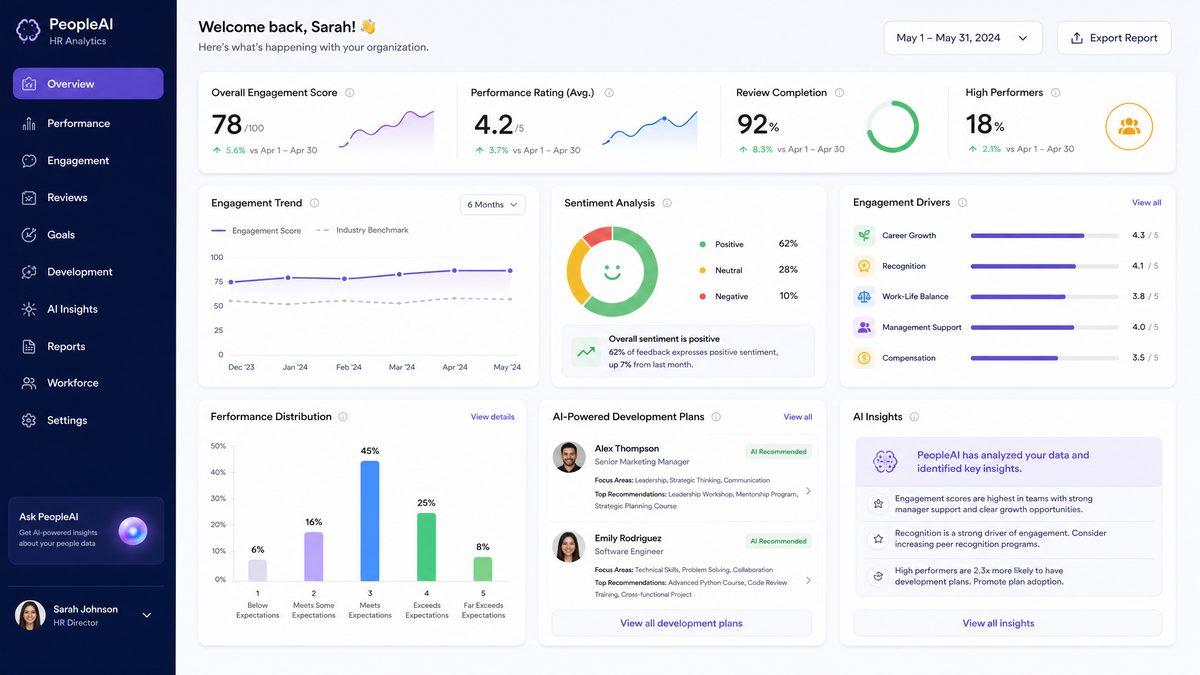
Interviewing candidates effectively requires tailored, role-specific questions that assess both technical skills and cultural fit. GPT-5.5 can generate comprehensive question sets aligned with your evaluation criteria.
-
Prompt: “Generate 10 technical interview questions for a [Job Title] with expertise in [Technology/Skill], including difficulty level and expected answer outline.”
Context Variables: Job Title, Technology/Skill (e.g., ‘React.js’, ‘financial modeling’)
-
Prompt: “Create 8 behavioral interview questions for assessing teamwork and conflict resolution skills for a candidate in [Department].”
Context Variables: Department
-
Prompt: “Generate situational interview questions for a leadership role at [Company Name], focusing on decision-making and crisis management.”
Context Variables: Company Name, Leadership Level (e.g., manager, director)
-
Prompt: “Provide 5 questions designed to evaluate cultural fit based on [Company Values] for the [Job Title] role.”
Context Variables: Company Values (e.g., ‘innovation, integrity’), Job Title
-
Prompt: “Generate technical coding test questions with sample solutions for a junior software engineer role specializing in [Programming Language].”
Context Variables: Programming Language
-
Prompt: “Create a list of 6 open-ended questions to assess problem-solving skills for a candidate applying to [Job Title].”
Context Variables: Job Title
-
Prompt: “Draft interview questions to evaluate adaptability and learning agility for a rapidly evolving industry role in [Industry].”
Context Variables: Industry
-
Prompt: “Generate a balanced interview questionnaire combining technical, behavioral, and situational questions for [Job Title] at [Company Name].”
Context Variables: Job Title, Company Name
In practice, tailoring interview questions to specific roles and competencies significantly improves hiring outcomes. For example, a 2022 study by the Society for Human Resource Management (SHRM) found that structured interviews with role-specific questions reduce hiring bias by 25% and increase candidate-job fit by 35%.
Technical questions should be aligned with the candidate’s level of expertise. For instance, junior software engineers might be asked to explain fundamental concepts or solve basic coding problems, while senior engineers could face system design or architecture questions. GPT-5.5’s ability to generate difficulty-graded questions with answer outlines helps interviewers calibrate this effectively.
Behavioral and situational questions provide insights into how candidates handle real-world challenges. For example, asking a leadership candidate at a tech startup about a time they managed a product crisis reveals decision-making and crisis management skills essential for that environment. GPT-5.5 can incorporate company-specific context and values to customize these questions.
Evaluating cultural fit is another critical area. According to a 2021 Glassdoor survey, 77% of adults consider company culture before applying for a job. Carefully crafted questions based on your organization’s core values help identify candidates aligned with your culture, improving retention and morale.
Example: Technical Interview Question with Answer Outline
Question: Explain how React's virtual DOM improves performance compared to direct DOM manipulation.

Expected Answer Outline:
- Virtual DOM is a lightweight copy of the real DOM.
- React updates the virtual DOM first, calculates the minimal set of changes.
- Only necessary updates are applied to the real DOM.
- This reduces expensive DOM operations leading to improved UI rendering performance.
These prompts enable HR teams to customize interview scripts, improving candidate evaluation quality while reducing preparation time. For insights on interview automation, see
For additional insights on this rapidly evolving landscape, our detailed analysis in Deep Dive: OpenAI Codex Complete Guide u2014 Every Feature, Benchmark, and Use Case in 2026 provides comprehensive coverage of the latest developments and practical implementation strategies.
.
Onboarding Automation: 8 GPT-5.5 Prompts
Effective onboarding accelerates new hire productivity and satisfaction. GPT-5.5 supports the creation of onboarding content, checklists, and communication templates that can be automated and personalized.
-
Prompt: “Generate a 30-60-90 day onboarding plan for a [Job Title] in the [Department] including key milestones, training modules, and performance goals.”
Context Variables: Job Title, Department
-
Prompt: “Draft a welcome email template for new hires joining [Company Name] that includes company mission, team introductions, and first-day logistics.”
Context Variables: Company Name
-
Prompt: “Create a checklist of compliance and policy documents that must be reviewed and signed by employees during onboarding in [Location].”
Context Variables: Location
-
Prompt: “Develop a FAQ document addressing common new hire questions about benefits, payroll, and IT setup for [Company Name].”
Context Variables: Company Name
-
Prompt: “Generate a personalized training schedule for a new software engineer focusing on [Tech Stack] onboarding in the first month.”
Context Variables: Tech Stack (e.g., ‘Java, AWS, Docker’)
-
Prompt: “Create a script for a virtual onboarding session to introduce company culture and key departments to remote new hires.”
Context Variables: Company Culture Keywords
-
Prompt: “Write a checklist for managers to ensure proper onboarding support and check-ins with new employees during their probation period.”
-
Prompt: “Generate a list of key performance indicators (KPIs) to track onboarding effectiveness for [Job Title] over the first 90 days.”
Context Variables: Job Title
Onboarding is a well-documented driver of employee retention and engagement. A study by BambooHR found that 69% of employees are more likely to stay with a company for three years if they experience a great onboarding process. GPT-5.5’s ability to generate personalized onboarding plans helps HR teams design structured programs that cater to specific roles and departments.
For example, a 30-60-90 day plan for a software engineer might include completing core training modules on coding standards in the first 30 days, contributing to small projects by day 60, and leading a feature implementation by day 90. These milestones foster early success and motivation.
Welcome emails set the tone for new hires. Including company mission statements, team member introductions, and logistical details improves first-day comfort and reduces confusion. Automating these communications ensures consistency and frees HR staff for higher-value tasks.
Compliance checklists tailored to local labor laws protect companies from legal risks. For instance, employees in the EU must review GDPR-related policies during onboarding. GPT-5.5 can generate localized checklists that ensure all necessary documentation is covered.
Virtual onboarding scripts are increasingly important as remote work becomes the norm. Facilitating virtual introductions to culture and departments helps remote hires feel connected. By using culture keywords such as “inclusive,” “collaborative,” and “innovative,” GPT-5.5 can craft engaging narratives that reflect your company ethos.
Example: Onboarding Email Template
Subject: Welcome to [Company Name] – Your First Day Info

Hi [New Hire Name],

Welcome to [Company Name]! We’re excited to have you join the [Department] team as our new [Job Title].

On your first day, please join the virtual orientation at 9:00 AM via this link: [Orientation Link]. You will meet your manager, team members, and learn about our mission to [Company Mission].

Please ensure you have completed all pre-boarding documents sent earlier. If you have any questions, feel free to reach out to HR at [HR Contact].

Looking forward to seeing you onboard!

Best regards,
[Your Name]
HR Team
Automating onboarding communications and content with GPT-5.5 improves new hire experience and reduces manual workload. For more on employee lifecycle automation, explore
For additional insights on this rapidly evolving landscape, our detailed analysis in 99+ ChatGPT Prompts for marketers provides comprehensive coverage of the latest developments and practical implementation strategies.
.
Performance Review Frameworks: 12 Advanced GPT-5.5 Prompts
Performance reviews are critical for employee development and organizational success. GPT-5.5 can help design frameworks, generate review questions, and analyze feedback data to create holistic evaluations.
-
Prompt: “Design a performance review template for a [Job Title] incorporating competencies in [Skill Areas], goal achievement, and behavioral attributes.”
Context Variables: Job Title, Skill Areas (e.g., ‘communication, project management’)
-
Prompt: “Generate 10 open-ended self-assessment questions for employees to reflect on their strengths and areas for improvement.”
-
Prompt: “Create a rubric for rating employee performance from 1 to 5 across the dimensions of quality, timeliness, teamwork, and initiative.”
-
Prompt: “Write a script for managers to deliver constructive feedback during performance reviews focusing on development and motivation.”
-
Prompt: “Generate a summary report template for HR to consolidate individual performance reviews into department-level insights.”
-
Prompt: “Design SMART goals tailored for a [Job Title] aiming to improve [Specific Skill/Area] over the next review period.”
Context Variables: Job Title, Specific Skill/Area
Access 40,000+ AI Prompts for ChatGPT, Claude & Codex — Free!
Subscribe to get instant access to our complete Notion Prompt Library — the largest curated collection of prompts for ChatGPT, Claude, OpenAI Codex, and other leading AI models. Optimized for real-world workflows across coding, research, content creation, and business.
-
Prompt: “Create behavioral interview questions based on recent performance metrics to guide development discussions.”
-
Prompt: “Generate a performance improvement plan (PIP) template including objectives, timelines, and success criteria for underperforming employees.”
-
Prompt: “Write motivational closing remarks for performance review meetings emphasizing career growth and continuous learning.”
-
Prompt: “Develop guidelines for peer review feedback collection to complement manager evaluations in 360-degree reviews.”
-
Prompt: “Generate a comparison table outlining different performance appraisal methods (e.g., Rating Scales, 360 Feedback, Management by Objectives) with pros and cons.”
-
Prompt: “Create a FAQ for employees explaining how performance reviews are conducted, scored, and used for promotions or bonuses.”
Performance management is evolving rapidly, with organizations seeking to move from annual reviews to continuous feedback models. GPT-5.5 can facilitate this shift by generating dynamic review frameworks and feedback tools that align with agile performance cultures.
Effective performance reviews balance quantitative metrics with qualitative insights. For example, a rubric scoring quality, timeliness, teamwork, and initiative allows objective measurement, while open-ended self-assessment questions invite reflective growth. GPT-5.5 can generate these tools customized for specific roles and competencies, enhancing relevance.
Moreover, performance improvement plans (PIPs) are sensitive communications that require clear, empathetic language and precise objectives. Using GPT-5.5 to draft PIP templates ensures consistency, clarity, and a constructive tone, which can increase the likelihood of employee improvement and retention.
Implementing 360-degree feedback introduces multiple perspectives into performance evaluations. GPT-5.5 can assist in creating peer review guidelines that minimize bias and maximize actionable feedback. This comprehensive approach fosters self-awareness and team cohesion.
Comparing appraisal methods helps HR leaders select systems that fit their organizational culture and goals. For example, Management by Objectives (MBO) emphasizes goal achievement but may overlook interpersonal skills. GPT-5.5’s ability to generate comparative analyses aids informed decision-making.
Example: Performance Appraisal Methods Comparison
| Method | Description | Advantages | Challenges |
|---|---|---|---|
| Rating Scales | Employees rated on a scale (e.g., 1-5) across performance criteria. | Simple to implement, quantifiable. | Can be subjective, may lack depth. |
| 360-Degree Feedback | Collects feedback from peers, subordinates, and supervisors. | Comprehensive view, promotes self-awareness. | Time-consuming, potential bias from peers. |
| Management by Objectives (MBO) | Focuses on achievement of agreed-upon goals. | Goal-oriented, measurable. | May ignore behaviors, overly focused on outcomes. |
Leveraging GPT-5.5 for performance review content creation and analysis enhances review quality and employee development strategies. For more on performance management systems, visit
For additional insights on this rapidly evolving landscape, our detailed analysis in This Week in AI: 15 Things Every Developer Should Know provides comprehensive coverage of the latest developments and practical implementation strategies.
.
Employee Engagement Surveys and Analysis: 12 Insightful GPT-5.5 Prompts
Understanding employee sentiment through surveys is vital for retention and organizational health. GPT-5.5 can assist in designing survey questions, analyzing open-ended responses, and generating actionable insights.
-
Prompt: “Generate 15 employee engagement survey questions covering satisfaction, communication, recognition, and work-life balance.”
-
Prompt: “Create a Likert scale format for survey questions with clear rating descriptions from ‘Strongly Disagree’ to ‘Strongly Agree’.”
-
Prompt: “Analyze this set of open-ended employee feedback responses and summarize key themes and sentiment trends.”
Context Variables: Survey Text Responses
-
Prompt: “Generate a report outline highlighting engagement strengths, weaknesses, and recommended action items based on survey results.”
-
Prompt: “Draft communication templates to share survey results with employees transparently and encourage ongoing feedback.”
-
Prompt: “Create a segmentation analysis plan to compare engagement scores across departments, tenure, and job levels.”
-
Prompt: “Generate follow-up pulse survey questions specifically addressing issues raised in the last engagement survey.”
-
Prompt: “Write guidelines for managers on interpreting engagement data and initiating team-level action plans.”
-
Prompt: “Develop a benchmarking table comparing your company’s engagement scores against industry averages.”
-
Prompt: “Create an executive summary of survey findings with data visualizations suggestions for presentation to leadership.”
-
Prompt: “Generate a list of recognition program ideas based on common positive feedback themes from engagement surveys.”
-
Prompt: “Draft questions to measure remote employee engagement and identify unique challenges in virtual work environments.”
Employee engagement directly impacts organizational performance. Gallup’s 2023 State of the Global Workplace report shows that highly engaged teams achieve 21% greater profitability. Thus, designing effective engagement surveys and analyzing results is paramount.
GPT-5.5’s capability to generate diverse and comprehensive survey questions ensures coverage of key engagement drivers such as communication quality, recognition practices, and work-life balance. For example, questions might include:
- “I feel valued by my manager.”
- “Communication within my team is transparent and timely.”
- “I have a good balance between my work and personal life.”
Using a Likert scale with clear descriptions standardizes responses and facilitates quantitative analysis. GPT-5.5 can generate these scales and descriptions, ensuring clarity for respondents.
Analyzing open-ended responses is often time-consuming and subjective. The included Python code snippet demonstrates how to automate sentiment analysis and theme extraction using GPT-5.5, enabling HR analysts to quickly identify areas of concern or strength.
Segmentation analysis allows HR to understand how engagement varies by department, tenure, or job level, enabling targeted interventions. For example, newer employees might report lower engagement due to onboarding gaps, while specific departments might face communication hurdles.
Transparent communication of survey results and follow-up actions builds trust and encourages continuous feedback. Drafting thoughtful communication templates ensures messages are clear and constructive.
Recognition programs inspired by positive feedback themes reinforce desired behaviors and enhance morale. For example, if survey feedback highlights appreciation for peer support, implementing peer-nominated awards can strengthen this culture.
With remote work becoming widespread, specialized questions targeting virtual work challenges are essential. Questions focusing on technology access, isolation, and virtual communication effectiveness help organizations adapt their engagement strategies.
Example: Likert Scale Question Format
| Scale | Description |
|---|---|
| 1 – Strongly Disagree | Completely disagree with the statement. |
| 2 – Disagree | Generally disagree with some exceptions. |
| 3 – Neutral | No strong opinion or mixed feelings. |
| 4 – Agree | Generally agree with the statement. |
| 5 – Strongly Agree | Completely agree with the statement. |
Example: Python Code Snippet for Sentiment Analysis of Open-Ended Responses
import openai

openai.api_key = 'YOUR_API_KEY'

def analyze_sentiment(responses):
    prompt_text = "Analyze the sentiment of the following employee feedback and summarize key themes:\n"
    for i, response in enumerate(responses):
        prompt_text += f"{i+1}. {response}\n"

    response = openai.ChatCompletion.create(
      model="gpt-5.5",
      messages=[
          {"role": "system", "content": "You are an expert HR analyst."},
          {"role": "user", "content": prompt_text}
      ],
      temperature=0.5,
      max_tokens=500
    )
    return response.choices[0].message.content

# Sample usage
feedback = [
    "I feel valued when my work is recognized.",
    "Communication from management is often unclear.",
    "The workload is manageable but could improve.",
]

summary = analyze_sentiment(feedback)
print(summary)
Incorporating AI-driven survey design and analysis helps HR leaders identify actionable insights quickly, driving targeted engagement initiatives. For deeper strategies, see
For additional insights on this rapidly evolving landscape, our detailed analysis in The Complete AI Tools Stack for 2026: 20 Tools Evaluated provides comprehensive coverage of the latest developments and practical implementation strategies.
.
Conclusion
GPT-5.5 offers HR professionals an unprecedented toolkit to automate, optimize, and elevate critical HR functions from recruitment to employee engagement. By using the 50 prompts outlined in this guide, HR teams can generate tailored job descriptions, craft precise interview questions, automate onboarding materials, design comprehensive performance reviews, and analyze engagement surveys efficiently.
Integrating these AI-driven approaches leads to faster processes, higher candidate and employee satisfaction, and data-driven decision-making. Experiment with customizing the prompts using your organization’s unique context variables to unlock GPT-5.5’s full potential in your HR workflows.
As AI continues to evolve, staying ahead of the curve by leveraging advanced models like GPT-5.5 will be a key differentiator for HR departments aiming to build high-performing, engaged, and diverse workforces. Embrace these tools today to transform your HR strategies and drive organizational success.
