
30 ChatGPT-5.5 Prompts for Marketing Professionals — Campaign Strategy, Content Optimization, Audience Analysis, and Performance Reporting
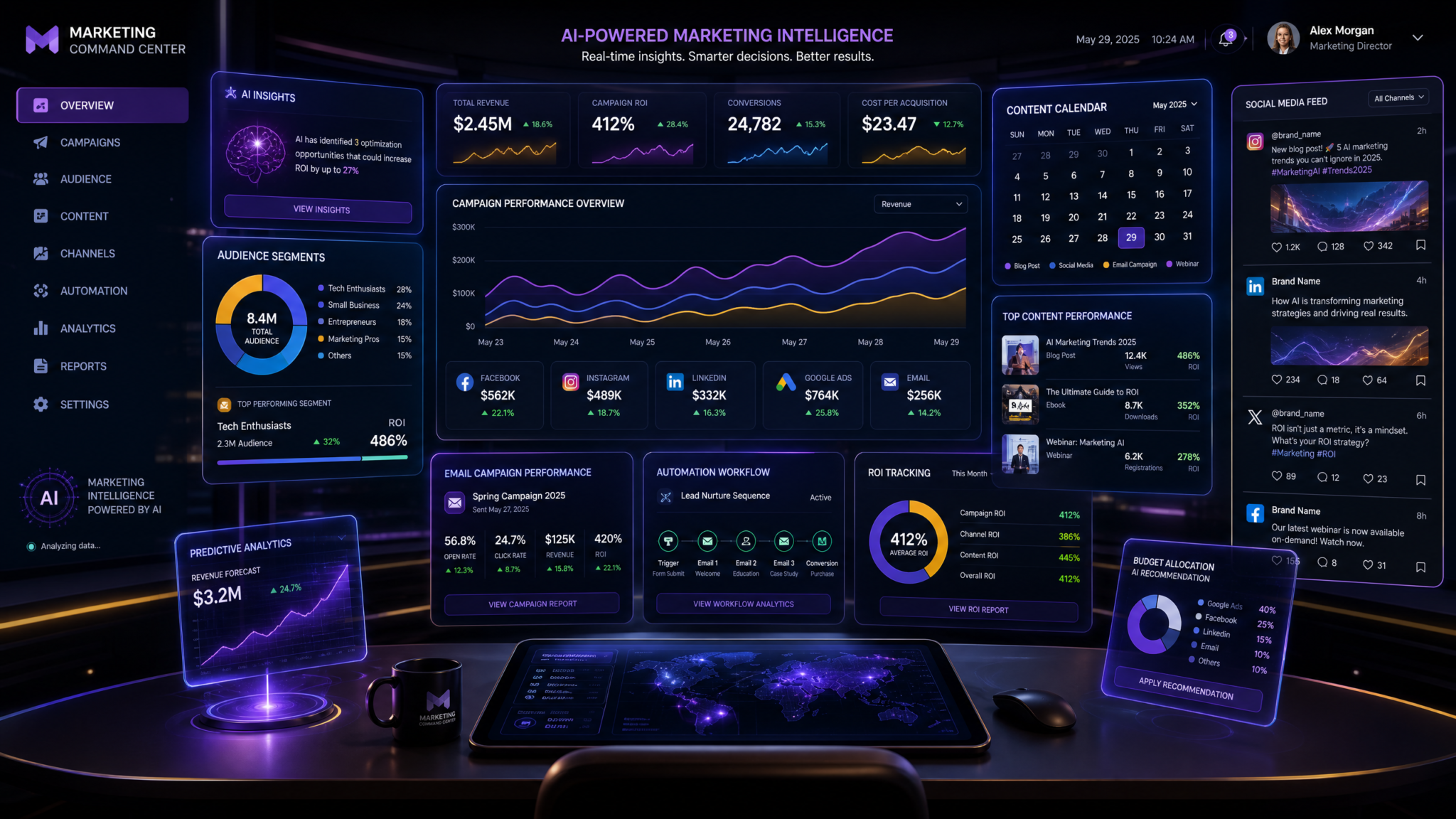
30 Ready-to-Use ChatGPT-5.5 Prompts for Marketing Professionals: Strategy, Content, Audience, and Reporting
Marketing teams are increasingly treating AI as a core collaborator rather than a novelty. ChatGPT-5.5 can rapidly synthesize research, pressure-test ideas, structure briefs, and turn messy inputs into production-ready artifacts. This article delivers 30 professional-grade prompts you can paste into ChatGPT-5.5 today—organized across Campaign Strategy & Planning, Content Optimization, Audience Analysis, and Performance Reporting. Each prompt includes a clear “When to Use” scenario and a practical “Pro Tip” to improve results. You’ll also find guidance for tailoring prompts to your brand, industry, and KPIs so you get repeatable, on-brief outputs at speed.
Unlike generic prompts, the ones below are engineered for predictable structure, tight scoping, and decision-enabling outputs. They explicitly define inputs, constraints, and formatting so you can move from ambiguity to action. Where appropriate, they ask for tables, timelines, matrices, and hypotheses, ensuring stakeholders can review, prioritize, and approve without rework. Use them as-is or customize them with your data sources, CRM exports, analytics metrics, and competitive references.
What you’ll gain by using these prompts with ChatGPT-5.5:
- Faster strategy cycles: one-click campaign briefs, positioning statements, and channel plans with budget logic.
- Higher-quality content: SEO briefs, social calendars, A/B test matrices, and email sequences aligned to brand voice.
- Deeper audience clarity: personas, segmentation, JTBD synthesis, cohort insights, and friction mapping.
- Reliable reporting: KPI narratives, attribution takeaways, ROI deconstructions, and forecast scenarios.
- Operational rigor: prompts enforce guardrails (assumptions, risks, dependencies) and prioritize next steps.
Below, each category features 7–8 prompts. Paste the full prompt into ChatGPT-5.5, update variables inside brackets, and attach files or paste data where indicated. For best results, keep your inputs specific: target market, product tiers, funnel stages, in-market dates, cost constraints, and any ground-truth datasets (CRM, analytics, ad platforms).
For a deeper exploration of this topic, our comprehensive article on 15 Battle‑Tested Prompts for Developers in 2026 [Copy/Paste Templates, Benchmarks, and Deployment Tips] provides detailed analysis, practical examples, and implementation strategies that complement the concepts discussed in this section.
Campaign Strategy & Planning
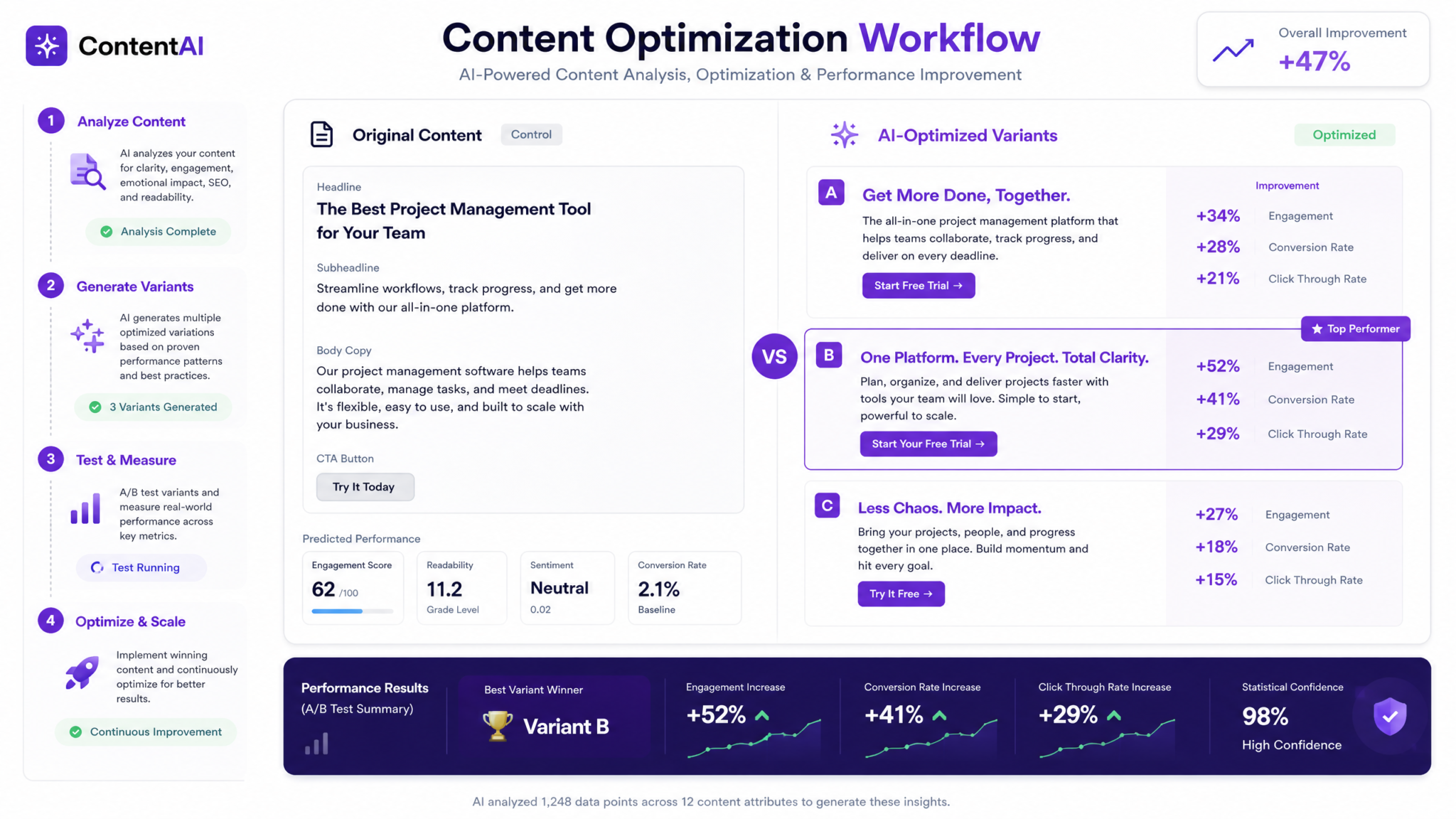
These seven prompts help you crystallize positioning, write campaign briefs, choose channels and budgets, and pressure-test competitive angles. They produce audit-ready outputs your cross-functional partners can act on immediately.
Prompt 1: Market Positioning Blueprint with Proof Points
Role: Senior Brand Strategist
Objective: Produce a crisp, testable positioning blueprint for [Brand/Product] in the [Category/Industry] targeting [Primary Audience] in [Markets/Regions].

Inputs you have:
- Core value proposition: [Paste]
- Differentiators (3–5): [Paste]
- Evidence/claims support (case studies, benchmarks, ratings): [Paste or attach]
- Competitive set (3–5 brands): [List]
- Customer pains/jobs: [List]
- Desired brand attributes/voice: [List]
- Regulatory/compliance boundaries: [List]

Deliverables required:
1) Positioning statement (Who, Problem, Unique Promise, Proof).
2) RTBs (reasons-to-believe): 4–6, mapped to pains/jobs.
3) Value pillars (3–4) with messaging angles and example claims.
4) Competitive alternative map: how we win vs. [Competitors], including table of strengths/weaknesses.
5) Risk/assumption log: what must be true, evidence gaps, test plan.
6) 3x on-brief taglines (10 words max) and 6x subheads (20–30 words).

Constraints:
- Use concise language; avoid jargon.
- Flag any claims that require legal review.
- Output includes a comparison table and a prioritized test plan.

Output format:
- Headings, bullets, one comparison table, one prioritized test plan with success metrics.
When to Use: Use this at the start of a new product launch or repositioning effort when you need a single source of truth for messaging, proof points, and differentiation. It aligns brand, demand gen, sales, and leadership on where you win and what to test first.
Pro Tip: Attach competitive one-sheets, G2/Capterra reviews, and recent win/loss notes. Replace broad differentiators with customer-quoted language to make proof points credible and testable.
Prompt 2: Campaign Creative Brief Generator (Audience, Offer, Proof)
Role: Integrated Marketing Lead
Objective: Create a comprehensive creative brief for the [Campaign Name] targeting [Audience Segment] to drive [Primary Outcome, e.g., demo requests, trials, MQLs] during [Dates/Quarter].

Inputs provided:
- Business goal/KPI targets: [e.g., 2,000 MQLs, CAC < $X]
- Offer(s)/incentives: [e.g., free trial, 20% off annual, content asset]
- Key insights (VOC, research highlights): [Paste]
- Mandatory claims/disclosures: [List]
- Geos/languages: [List]
- Constraints (budget, formats, approval gates): [List]
- Creative references/brand guidelines: [Links or attach]

Deliverables required:
1) Single-minded proposition and rationale (100 words).
2) Priority audience segments with pains, triggers, and objections.
3) Messaging ladder: core claim → reasons-to-believe → proof.
4) Concept territories (3–4) with example headlines, CTAs, and visual cues.
5) Content formats by funnel stage with success metrics.
6) Asset list with spec sheet (sizes, durations, copy lengths).
7) Timeline with milestones/owners, including legal/compliance steps.
8) Risks, dependencies, and pre-flight checklist.

Formatting:
- Use bullet lists and a final asset/spec table.
- Keep each section crisp and actionable.
When to Use: When moving from strategy to execution and you need to brief creative, media, and web teams quickly. This ensures unified messaging across assets and a transparent approval path.
Pro Tip: Pre-fill KPI targets and funnel definitions. Ask for two brief variants: one conservative (brand-safe) and one challenger (bolder tone), then test early creative with a small panel.
Prompt 3: Channel Mix and Flighting Plan with Budget Ranges
Role: Performance Marketing Strategist
Objective: Recommend an omnichannel plan to reach [Audience] and achieve [Primary KPI] within a budget of [Total Budget] over [Timeline].

Inputs:
- Historical performance by channel (CPC/CPL/CPA/ROAS): [Paste table or summary]
- Audience media habits: [Paste or describe]
- Creative asset availability: [List formats: video, static, UGC, long-form]
- Seasonal/contextual constraints: [List]
- Geographic/language coverage: [List]
- Measurement stack and attribution window: [Describe]

Deliverables:
1) Channel selection rationale (Paid Social, Search, Programmatic, Partnerships, Email, Influencer, Events, etc.).
2) Flighting plan by week with spend ranges and experiment slots.
3) Expected reach, frequency, and cost metrics; assumptions stated.
4) Creative format pairings per channel (with first assets to build).
5) Measurement plan (primary/secondary KPIs, lift tests, incrementality).
6) Contingency playbook (what to cut/add when signals shift).

Output:
- A week-by-week table (rows) vs. channels (columns) with spend, KPIs, experiments.
- A 10-point risk/mitigation list.
When to Use: When you need a defensible media plan that balances proven channels with test-and-learn experiments. It is especially useful for new market entries or quarter transitions with seasonal factors.
Pro Tip: Include platform-specific constraints (learning phase requirements, minimum spend) and specify guardrails: max CPA, min ROAS, creative fatigue thresholds for rotation.
Prompt 4: Budget Allocation Optimizer (Base vs. Test)
Role: Growth Finance Partner
Objective: Allocate [Total Budget] across [Channels/Programs] to maximize [Objective: e.g., pipeline $, new subscribers] under constraints.

Inputs:
- Performance priors per channel (CPA/ROAS/CPL): [Table or ranges]
- Diminishing returns assumptions (e.g., +20% spend → +12% volume): [Describe]
- Required programs (non-negotiable): [List with min spend]
- Test initiatives (new channels/offers): [List with min viable spend]
- Timeline (weeks): [Number]
- Risk appetite (conservative/balanced/aggressive): [Choose]

Deliverables:
1) Base vs. Test budget split and rationale.
2) Channel-by-week allocation table with projected outcomes and 80/20 confidence ranges.
3) Sensitivity analysis: +/- 15% budget scenarios.
4) Reallocation triggers (performance thresholds, leading indicators).
5) Governance cadence (checkpoints, owners, data sources).

Output format:
- One main table with weekly allocations and projected KPIs.
- One sensitivity table with scenario deltas.
- Bullet summary with 5 action points.
When to Use: When you need to defend budget decisions with finance and leadership, showing both expected value and contingencies. Ideal before each quarter or after a material shift in performance.
Pro Tip: Feed real platform data exports and define diminishing returns explicitly per channel. Ask ChatGPT-5.5 to flag unrealistic assumptions and propose small “toe-in-the-water” tests for emerging channels.
Prompt 5: Competitive Campaign Tear-Down and White Space Map
Role: Competitive Intelligence Analyst
Objective: Deconstruct [Competitor(s)]’s recent campaign(s) and identify white space for [Your Brand/Product] targeting [Audience].

Inputs:
- Competitor ads/landing pages: [Links or screenshots]
- Messaging themes/claims observed: [List]
- Media channels and formats: [List]
- Your current positioning and proof: [Paste]
- Compliance/claim boundaries: [List]

Deliverables:
1) Message deconstruction: value props, CTAs, proof types, social proof usage.
2) Creative pattern analysis: hooks, visuals, structures, length.
3) Funnel architecture: ad → LP → lead form → nurture; friction points.
4) White space opportunities (10–12): angles, proof, and formats competitors don’t use or underuse.
5) Risk analysis: what they do well and how to neutralize it.
6) 3 fast-follow tests + 3 leapfrog bets (with measurement plans).

Output:
- A comparison table of claims/proofs/CTAs across competitors.
- A prioritized white space list with estimated impact/effort.
When to Use: When competitor activity surges or before your own launch into a crowded category. It helps you avoid “me too” messaging and quickly isolate unique angles worth testing.
Pro Tip: Include social proof data (review counts, star ratings), page speed, and accessibility scores. Ask for variants that work in highly regulated contexts where direct claims are restricted.
Prompt 6: GTM Launch Plan with Cross-Functional Timeline
Role: Go-to-Market Program Manager
Objective: Produce an end-to-end GTM plan for launching [Product/Feature] on [Date] to [Audience] in [Markets].

Inputs:
- Launch tier (e.g., Tier 1 global, Tier 2 regional): [Define]
- Success metrics (KPI targets): [List]
- Required assets/channels: [List]
- Sales enablement needs: [Decks, battlecards, talk tracks]
- PR/Comms/legal milestones: [List]
- Localization needs: [Languages/local markets]
- Dependencies and risks: [List]

Deliverables:
1) Phased timeline: pre-launch, launch week, post-launch (30-60-90 day plan).
2) Workstream owners and RACI.
3) Asset inventory with due dates and acceptance criteria.
4) Enablement plan: training sessions, content, certification.
5) Launch-day run-of-show and monitoring dashboard.
6) Post-launch optimization plan with learning agenda.

Output:
- A Gantt-style table (rows: tasks; columns: weeks) with owners/status.
- Bullet summary of top 10 critical path items.
When to Use: For product or feature launches that touch multiple teams and markets. It aligns timelines, owners, and success criteria and makes risk management explicit.
Pro Tip: Provide calendar constraints (holidays, events) and vendor SLAs. Ask for a lean variant that fits within limited headcount and a maximal variant if support is expanded.
Prompt 7: Messaging Matrix by Persona and Funnel Stage
Role: Messaging Architect
Objective: Build a messaging matrix for [Product/Brand] mapped to [Personas] across the funnel (Awareness → Consideration → Decision → Expansion).

Inputs:
- Persona definitions (pains, triggers, objections): [Paste]
- Value pillars (3–4): [List]
- Proof assets (case studies, stats, certifications): [List]
- Compliance restrictions: [List]
- Tone/voice preferences: [List]

Deliverables:
1) Matrix with rows = personas; columns = funnel stages.
2) For each cell: core message, proof, CTA, primary format(s).
3) Objection handling snippets by persona/stage.
4) Content gaps and recommended assets to build next.
5) Localization notes where relevant.

Output:
- A table (persona × funnel stage) with concise entries.
- Bullet list of the top 8 content gaps to prioritize.
When to Use: When multiple teams produce content without a shared map. This clarifies what to say to whom at each stage, reduces duplication, and reveals gaps blocking conversions.
Pro Tip: Add real objections from call transcripts and support tickets. Request alternate versions for highly technical buyers versus business buyers.
Content Optimization
These eight prompts help you turn ideas into high-performing content, from SEO briefs and headlines to social calendars and email sequences. They bundle structure, voice, and measurement so teams can publish and iterate faster.
Prompt 8: Headline and Hook Testing Matrix (Paid + Organic)
Role: Creative Strategist
Objective: Generate a testing matrix of headlines/hooks for [Offer/Asset] aimed at [Audience] on [Platforms: e.g., LinkedIn, Meta, Search].

Inputs:
- Core promise/value prop: [Paste]
- Tone/voice: [e.g., authoritative, playful, challenger]
- Constraints (character counts, compliance): [List]
- Proof elements (numbers, quotes, badges): [List]

Deliverables:
1) 24 headlines (6 per platform), grouped by hook type (data-led, outcome-led, fear-of-missing-out, contrarian).
2) Matching subheads (max 20–30 words) and primary CTA for each.
3) Platform-specific notes (headline length, truncation risks).
4) Prioritized top 6 variants with testing rationale and KPIs.

Output:
- A table with columns: Platform | Hook Type | Headline | Subhead | CTA | Notes.
- Bullet list of test pairings (A vs. B) with hypotheses.
When to Use: When you need volume and variety for paid/organic testing but want to keep structure and learning goals tight. Useful for new offers and seasonal pushes.
Pro Tip: Attach examples of past top performers and specify banned phrases. Ask for one “break-the-rules” set to probe the boundaries safely.
Prompt 9: SEO Content Brief with SERP and Entity Coverage
Role: SEO Strategist
Objective: Create an SEO content brief for the target keyword: [Primary Keyword], supporting [Business Goal].

Inputs:
- Primary keyword and 3–5 secondary entities: [List]
- Search intent: [Informational/Transactional/Navigational]
- Target reader persona(s): [Describe]
- Competitor URLs to analyze: [List URLs]
- Brand POV/non-negotiables: [List]
- Word count range and content type: [e.g., 1,800–2,200 words, guide]

Deliverables:
1) SERP analysis: intent, content types, gaps, People Also Ask themes.
2) Outline (H2/H3s) ensuring entity coverage and topical depth.
3) On-page requirements: title tag, meta, URL, headers, schema suggestions.
4) Internal link targets and anchor text recommendations.
5) Visuals/diagrams to include, with captions.
6) E-E-A-T considerations and required citations.

Output:
- A structured brief with an outline table (Section | Purpose | Notes).
- A checklist of on-page optimizations.
When to Use: Before drafting high-stakes content that must rank and convert. It consolidates SERP realities, competitive benchmarks, and brand guardrails into one production-ready brief.
Pro Tip: Include your internal topics map and any existing pages to protect from cannibalization. Request a variant that prioritizes featured snippet eligibility.
Prompt 10: Social Content Calendar (Pillars, Cadence, and Assets)
Role: Social Media Lead
Objective: Build a 4-week social calendar for [Channels: e.g., LinkedIn, X, Instagram, TikTok] aligned to [Content Pillars] and [Campaign Goals].

Inputs:
- Content pillars (3–5): [List]
- Posting cadence by channel: [e.g., 3×/wk LinkedIn, daily Stories]
- Brand voice and visual style: [Describe]
- Available assets (video durations, UGC, stat graphics): [List]
- Key dates/events: [List]
- Compliance rules and moderation policies: [List]

Deliverables:
1) Week-by-week calendar (dates, channel, post theme, copy draft, asset type, CTA).
2) Community prompts/questions for engagement.
3) UGC/employee advocacy slots and guidance.
4) Measurement plan (post-level KPIs, weekly review rhythm).
5) Content re-use plan across channels.

Output:
- A table: Date | Channel | Pillar | Post Copy | Asset | CTA | Notes | KPI.
- A short governance playbook (approvals, crisis triggers).
When to Use: For synchronized, cross-channel social output tied to campaign goals. It helps teams plan ahead, coordinate assets, and avoid off-brand improvisation.
Pro Tip: Add examples of on-brand comments and DMs. Ask for alt-text suggestions and accessibility checks for every visual asset.
Prompt 11: Email Nurture Sequence (Behavioral Branching)
Role: Lifecycle Marketer
Objective: Design a [# of emails]-touch nurture for [Audience/Segment] to drive [Conversion Goal], with behavioral branching.

Inputs:
- Entry trigger and segment definition: [Describe]
- Offer(s) and proof assets: [List]
- Objections and common questions: [List]
- Compliance (unsubscribe, regional rules): [List]
- ESP limitations (design, dynamic content availability): [Describe]
- Personalization fields available: [List fields]

Deliverables:
1) Email map with triggers, delays, and conditional branches (opened/clicked/replied/no action).
2) Copy drafts (subject lines, preview text, body, CTA) for each node.
3) Personalization tokens and dynamic blocks recommendations.
4) Deliverability and spam-risk checklist.
5) A/B test ideas per email (subject, hook, CTA, layout).
6) KPIs and stop/extend logic.

Output:
- A flow diagram description and a table: Email # | Trigger | Segment | Goal | Subject | CTA | Variant Ideas | KPI Target.
When to Use: When you need more than linear drips—behavior-aware nurtures that respond to opens and clicks. It balances persuasion with compliant practices and measurement.
Pro Tip: Paste historical open/click/conv benchmarks. Ask for plain-text variants and a “short-form” mobile-first copy option per email.
Prompt 12: Landing Page Copy A/B Test Pack (Hero to FAQ)
Role: Conversion Copywriter
Objective: Produce A/B test-ready copy for the landing page of [Offer/Product] targeting [Audience] with [Primary Conversion].

Inputs:
- Current page URL or copy: [Link/Paste]
- Objections and desired outcomes: [List]
- Social proof (logos, stats, quotes): [List]
- Compliance/claims rules: [List]
- Brand voice: [Describe]

Deliverables:
1) Two hero variants (headline, subhead, CTA) with hypotheses.
2) Body copy sections (Problem, Solution, Proof, Pricing/Plan, FAQ) with microcopy.
3) CTA language tests (5 variants) and form field rationale.
4) Risk/reliability disclosures for regulated contexts.
5) Mobile-first copy considerations.

Output:
- A section-by-section table with Variant A/B and test hypotheses.
- Bulleted CRO checklist (above-the-fold clarity, scannability, friction reducers).
When to Use: Before a landing page launch or refresh when you want structured copy alternatives tied to hypotheses and compliant claims.
Pro Tip: Include session replay or scroll-depth findings to target friction points. Ask for versions tuned to paid search versus paid social traffic.
Prompt 13: Multi-Format Content Repurposing Plan
Role: Content Operations Manager
Objective: Repurpose [Source Asset: webinar, report, podcast] into a 4-week multi-channel plan to drive [Goal].

Inputs:
- Source asset link/transcript: [Paste]
- Key insights and quotable stats: [List]
- Channels (blog, social, email, partners, communities): [List]
- Design/production constraints: [List]
- Priority personas and stages: [List]

Deliverables:
1) Content derivatives (e.g., 3 blog posts, 8 social posts, 2 emails, 1 infographic).
2) Post-by-post copy drafts or outlines with CTAs.
3) Visual asset list with spec notes.
4) Cross-linking and UTM plan.
5) Publishing calendar with owners and review steps.
6) Metrics to watch and week-2 optimizations.

Output:
- A calendar table and a derivative inventory table.
- A 10-bullet “what good looks like” QA checklist.
When to Use: After creating a flagship asset to extend reach and lifespan across channels while maintaining message integrity.
Pro Tip: Provide the transcript and highlight moments with strong audience reactions. Request alt copies for partner channels where voice differs.
Prompt 14: Ad Creative Brief for Image/Video Scripts
Role: Paid Media Creative Lead
Objective: Prepare brief and scripts for [Platform(s)] ads promoting [Offer] to [Audience].

Inputs:
- Campaign strategy and hooks: [Paste]
- Platform specs (durations, safe zones): [List]
- Required claims/legal: [List]
- Brand voice and visual style: [Describe]
- CTA and landing page: [URL]

Deliverables:
1) 3 image ad concepts with headline/body/caption variants.
2) 3 video scripts (15s/30s) with shot-by-shot outlines, on-screen text, VO, and captions.
3) Hook-first options (first 3 seconds) and retention tactics.
4) Safe messaging variant for regulated placements.
5) Measurement plan: metrics per creative, iteration cadence.

Output:
- A table for each concept/script with fields: Hook | Message | Proof | CTA | Notes.
- Bullet list of iteration paths based on performance signals.
When to Use: Before building creatives, to unify messaging and storyboards with platform constraints and legal requirements, reducing rework.
Pro Tip: Include a brand kit link and content that consistently wins (angles, visuals). Ask for an “evergreen” set and a “trend-jack” set with time-bound hooks.
Prompt 15: Editorial QA and Compliance Checklist Generator
Role: Content QA Lead
Objective: Produce a final editorial and compliance checklist for [Content Type] on [Channel] for [Audience].

Inputs:
- Brand style guide highlights: [Paste]
- Legal/compliance rules and banned terms: [List]
- Accessibility standards: [List]
- SEO and metadata requirements: [List]
- Localization notes: [List]
- Measurement tags/UTMs: [List]

Deliverables:
1) Pre-publish checklist grouped by Brand, Legal, Accessibility, SEO, Analytics.
2) Copy/paste templates for metadata, alt text, and UTMs.
3) “Blockers vs. Nice-to-Haves” table.
4) Post-publish validation steps and timeline.

Output:
- A checklist and a 2-column table: Item | Pass/Fail/Notes.
When to Use: Right before publishing or launching any asset. It standardizes quality and compliance and prevents costly rollbacks.
Pro Tip: Include examples of compliant vs. non-compliant claims. Ask for channel-specific variants (e.g., email vs. blog vs. paid social).
For a deeper exploration of this topic, our comprehensive article on 15 Battle‑Tested Prompts for Developers in 2026 [Copy/Paste Templates, Benchmarks, and Deployment Tips] provides detailed analysis, practical examples, and implementation strategies that complement the concepts discussed in this section.
Audience Analysis
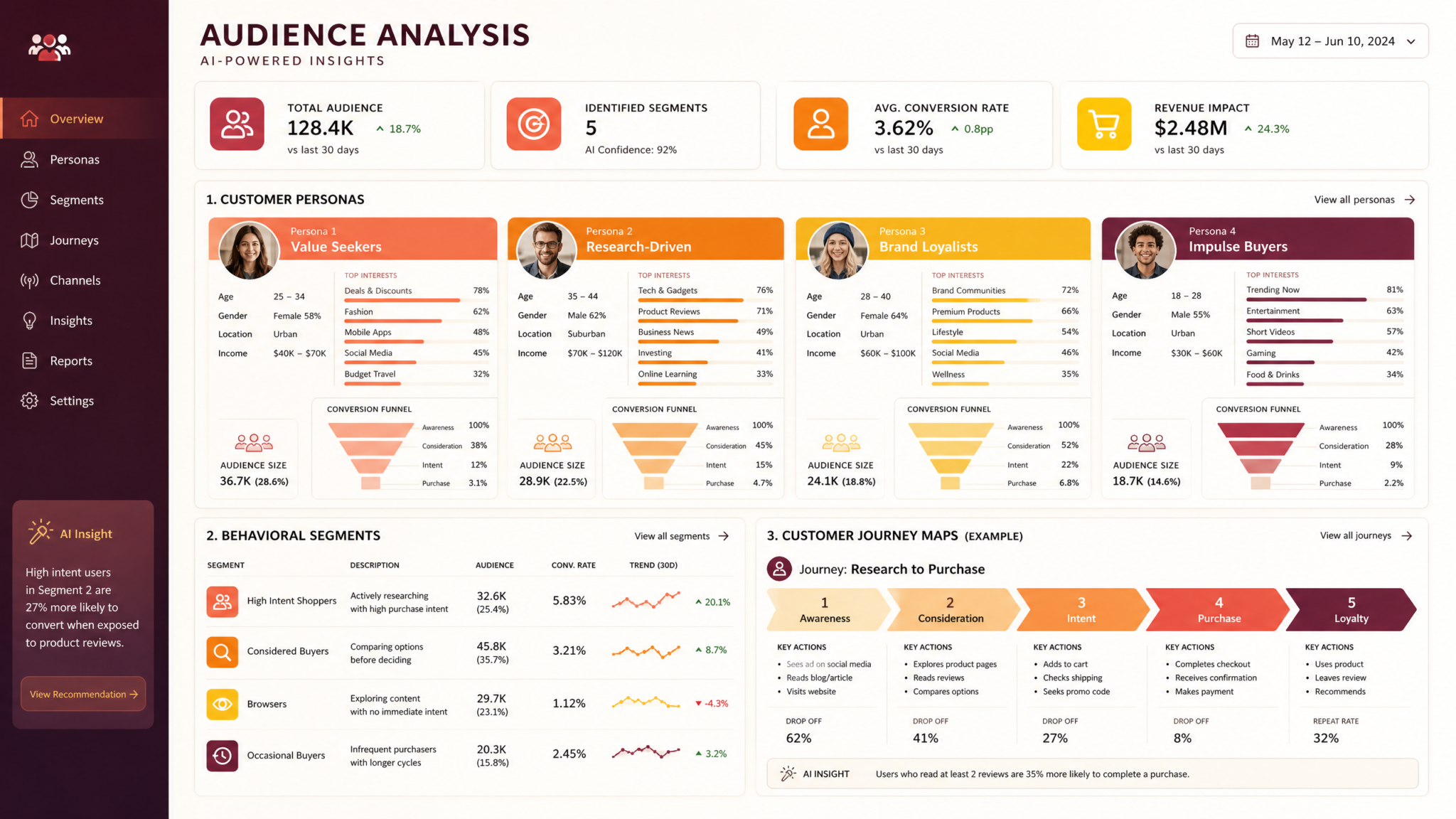
These eight prompts deepen understanding of who your customers are, what they need, how they behave, and where friction blocks progress. They’re designed to work with both qualitative inputs and quantitative exports.
Prompt 16: Persona Development from Mixed Data Sources
Role: Customer Insights Lead
Objective: Build evidence-backed personas for [Product/Market] using mixed inputs.

Inputs:
- CRM/analytics exports (segments, conversion rates): [Attach or paste summary]
- VOC sources (surveys, interviews, reviews): [List/attach]
- Support/sales call transcripts: [Attach/Paste]
- Competitive alternatives customers consider: [List]
- Demographic/firmographic constraints: [Describe]

Deliverables:
1) 3–5 personas with goals, pains, JTBD, triggers, objections, success metrics.
2) Buying committee mapping (for B2B): roles, influence, objections.
3) Evidence citations for each attribute (quote/stat/source).
4) Persona-specific content/message do’s and don’ts.
5) Early warning signals (when a persona is misidentified).

Output:
- A persona table (Name | Role | Goals | Pains | JTBD | Triggers | Objections | Proof | Channels).
When to Use: When previous personas are guesswork or outdated. This prompt compels citations and mixed-method synthesis so teams can trust and operationalize personas.
Pro Tip: Tag transcript snippets by theme first. Ask for “lite” and “full” persona versions to share with execs vs. content creators.
Prompt 17: Segmentation Scheme with RFM/Behavioral Signals
Role: Growth Analyst
Objective: Define a practical segmentation scheme for [Customer Base] to enable targeted campaigns.

Inputs:
- Transactional data (RFM or proxy): [Attach/paste]
- Product usage/activity logs: [Describe]
- Acquisition source and cohort info: [List]
- LTV and churn benchmarks: [Paste]
- Compliance/consent constraints: [List]

Deliverables:
1) Segmentation framework (behavioral + value-based).
2) Segment definitions and thresholds with rationale.
3) Activation playbook: offers, channels, frequency per segment.
4) Risk: privacy/compliance considerations.
5) Measurement: segment-level KPIs and cross-segment uplift tests.

Output:
- A table: Segment | Definition | Size | Value | Key Behaviors | Channels | Offer | KPI.
When to Use: When “one-size-fits-all” messaging is underperforming or you’re planning lifecycle programs that require precise targeting.
Pro Tip: Provide segment sizes and quartiles. Ask for “starter” (3–4 segments) and “advanced” (7–9 segments) options to fit your tooling maturity.
Prompt 18: Voice-of-Customer Sentiment and Theme Analysis
Role: VOC Analyst
Objective: Analyze sentiment and extract actionable themes from [VOC Sources: reviews, CSAT, NPS verbatims, social comments].

Inputs:
- Corpus of text data: [Paste or attach]
- Metadata fields (date, product, segment): [Describe]
- Key hypotheses or questions: [List]
- Regulatory sensitivity (what to mask): [List]

Deliverables:
1) Sentiment distribution over time and by segment/product.
2) Top 10 themes with representative quotes (positive/negative).
3) Root-cause hypotheses and quick-win fixes.
4) Risk/brand safety alerts with recommended responses.
5) Content themes and proof ideas for marketing.

Output:
- A table: Theme | Sentiment | Volume | Representative Quote | Action.
- A short response playbook for high-risk themes.
When to Use: When feedback volume overwhelms manual analysis or you need to surface themes for messaging, product fixes, and brand protection.
Pro Tip: Split data by lifecycle stage and acquisition source; ask for bias checks and whether sample sizes per segment are sufficient for conclusions.
Prompt 19: Customer Journey Mapping with Friction Diagnostics
Role: CX Strategist
Objective: Map the end-to-end journey for [Persona/Segment] buying [Product], highlighting moments that matter and friction points.

Inputs:
- Funnel metrics by stage: [Paste]
- Qualitative insights (interviews, tickets): [List]
- Touchpoint inventory (ads, site, chat, sales, onboarding): [List]
- Constraints (compliance, SLAs): [List]

Deliverables:
1) Journey stages with goals, questions, emotions, and KPIs.
2) Touchpoint-by-stage matrix with owners/tools.
3) Friction points with severity, frequency, and root causes.
4) Remedies prioritized by impact vs. effort.
5) “Moments that matter” candidates for surprise/delight.

Output:
- A journey table: Stage | Customer Goal | Touchpoints | Friction | KPI | Owner | Fixes.
- A top-10 quick wins list with expected KPI lift.
When to Use: When optimizing conversion and retention requires coordinated fixes across marketing, product, and support. It ties qualitative insights to measurable improvements.
Pro Tip: Provide recent funnel drop-off rates by segment. Ask for two maps: pre-purchase and post-purchase expansion.
Prompt 20: Cohort Analysis Questions and Action Framework
Role: Growth Analytics Partner
Objective: Create a cohort analysis plan to diagnose acquisition and retention performance for [Product/Market].

Inputs:
- Cohort dimensions (acquisition month, source, product tier): [List]
- Key metrics (activation, retention, LTV): [List]
- Known events (pricing change, feature release): [List]
- Data caveats (attribution windows, tracking gaps): [List]

Deliverables:
1) Cohort grid definitions and metrics to compute.
2) Hypotheses to test per cohort slice.
3) Action framework: grow/hold/fix decisions with playbooks.
4) Reporting cadence and ownership.
5) Risks and data quality checks.

Output:
- A table: Cohort | Metric | Threshold | Hypothesis | Action | Owner | ETA.
- A prioritized analysis backlog (2-week sprints).
When to Use: When surface-level averages hide meaningful differences across acquisition sources or product tiers and you need a plan to investigate and act.
Pro Tip: Include actual numbers or ranges. Ask for guardrails to avoid Simpson’s paradox and p-hacking.
Prompt 21: Churn Risk Signals and Win-Back Triggers
Role: Retention Strategist
Objective: Identify churn risk signals for [Customer Base] and define win-back triggers and offers.

Inputs:
- Churned vs. active customer behaviors: [Paste]
- Support tickets/reasons for churn: [List]
- Contract/tenure data: [Paste]
- Channel reachability (email, in-app, SMS): [List]
- Compliance constraints: [List]

Deliverables:
1) Risk signals (leading/lagging) with thresholds and confidence.
2) An early-warning scoring model (rules-based) for activation.
3) Win-back triggers and message/offer playbook by segment.
4) Measurement plan (A/B test design, success metrics).
5) Safeguards to avoid negative brand impact.

Output:
- A table: Risk Signal | Threshold | Segment | Triggered Action | Offer | KPI | Risk.
When to Use: When churn is rising or you need a proactive retention program without waiting for complete ML models. It creates a rules-based system you can implement quickly.
Pro Tip: Add per-segment price sensitivity and prior discount exposure. Ask for an “evergreen” cadence and a “flash” reactivation sequence.
Prompt 22: Jobs-To-Be-Done Synthesis for Messaging
Role: Product Marketing Manager
Objective: Synthesize JTBD insights into actionable messaging for [Product/Segment].

Inputs:
- JTBD interviews/transcripts: [Attach/paste]
- Outcome statements and constraints: [List]
- Competing solutions (workarounds, inertia): [List]
- Adoption barriers: [List]

Deliverables:
1) JTBD statements with forces diagram (push, pull, anxieties, habits).
2) Message angles tied to outcomes and anxieties.
3) Proof assets needed to de-risk adoption.
4) UX/content moments to win the struggling moment.
5) A test plan with hypotheses and KPIs.

Output:
- A table: JTBD | Forces | Message Angle | Proof | Asset | KPI.
When to Use: When you have rich qualitative insights but need to convert them into copy, proof, and testable hypotheses for campaigns and product onboarding.
Access 40,000+ AI Prompts for ChatGPT, Claude & Codex — Free!
Subscribe to get instant access to our complete Notion Prompt Library — the largest curated collection of prompts for ChatGPT, Claude, OpenAI Codex, and other leading AI models. Optimized for real-world workflows across coding, research, content creation, and business.
Pro Tip: Ask for segment-specific variants and for messaging that addresses non-consumption (doing nothing) directly.
Prompt 23: Social Listening Insight Pack and Topic Clusters
Role: Social Insights Strategist
Objective: Summarize [Timeframe] of social mentions for [Brand/Topic] into topic clusters and actionable insights.

Inputs:
- Social data export (fields: text, date, channel, author, reach, sentiment): [Attach]
- Competitor handles/hashtags for comparison: [List]
- Regions/languages: [List]
- Risks (crisis watch terms): [List]

Deliverables:
1) Topic clusters with volume, average sentiment, and share of voice.
2) Breakouts by channel/region and notable spikes.
3) Content opportunities (10+) with example post copy and asset notes.
4) Risk monitoring dashboard suggestions and response playbook.
5) Influencer/community partner shortlist (criteria + examples).

Output:
- A table: Cluster | Volume | SOV | Sentiment | Example | Action.
- A 10-bullet “what to publish next” list.
When to Use: For campaign planning, brand monitoring, and content ideation grounded in current conversations, not guesswork.
Pro Tip: Provide negative keywords and spam filters. Ask for clusters you should deliberately avoid to preserve brand positioning.
For a deeper exploration of this topic, our comprehensive article on 15 Battle‑Tested Prompts for Developers in 2026 [Copy/Paste Templates, Benchmarks, and Deployment Tips] provides detailed analysis, practical examples, and implementation strategies that complement the concepts discussed in this section.
Performance Reporting
These seven prompts help you move beyond screenshots toward persuasive narratives that connect metrics to decisions, budgets, and next steps.
Prompt 24: KPI Dashboard Narrative and Executive Summary
Role: Marketing Analytics Lead
Objective: Convert the latest dashboard for [Timeframe] into an executive-ready narrative with clear actions.

Inputs:
- Snapshot of core KPIs (traffic, leads, CPA, ROAS, pipeline, revenue): [Paste]
- Channel-level highlights/lowlights: [List]
- Context (seasonality, promotions, outages): [List]
- Budget changes and experiments: [List]
- Targets vs. actuals: [Table]

Deliverables:
1) Executive summary (150–200 words): what happened, why, what’s next.
2) KPI storyline (leading indicators to lagging outcomes).
3) 5 wins, 5 issues, 5 actions (with owners and deadlines).
4) Metric definitions and caveats (avoid misinterpretation).
5) Visual recommendations (which views matter to the board).

Output:
- A table: Area | Insight | Evidence | Action | Owner | Date.
- A risk/confidence section calling out data quality concerns.
When to Use: Weekly or monthly updates when leaders need clarity on outcomes and decisions, not just charts.
Pro Tip: Include target thresholds and margin for error. Ask for an appendix listing decommissioned metrics that no longer drive decisions.
Prompt 25: Attribution Modeling Explainer with Decision Paths
Role: Marketing Science Partner
Objective: Explain [Attribution Model(s): last-click, first-touch, data-driven, MMM proxy] results for [Timeframe], and recommend spend shifts.

Inputs:
- Channel conversions by model (table): [Paste]
- Trackable vs. untrackable media mix: [Describe]
- Business constraints (brand spend floors, contracts): [List]
- Incrementality tests or lift studies: [Paste]

Deliverables:
1) Plain-language model comparison (strengths, biases).
2) Channel contribution deltas by model and why they differ.
3) Decision rules for reallocating spend (base vs. incremental).
4) Safeguards against overreaction (learning phase stability).
5) Next-step experiments to validate conclusions.

Output:
- A comparison table: Model | Strength | Weakness | Use Case | Decision.
- A 90-day reallocation plan with checkpoints.
When to Use: When stakeholders debate which numbers to trust. This turns model outputs into pragmatic decisions, with safeguards and validation steps.
Pro Tip: Provide confidence intervals or sample sizes. Ask for action thresholds (only reallocate when delta exceeds X%).
Prompt 26: ROI and Payback Analysis for Campaigns/Channels
Role: Growth Finance Analyst
Objective: Analyze ROI, payback period, and contribution margin for [Campaign/Channel(s)] during [Timeframe].

Inputs:
- Spend and revenue/pipeline by channel/campaign: [Paste]
- Gross margin assumptions: [Number or range]
- Sales cycle length and conversion rates: [Numbers]
- Incrementality estimates (if any): [Describe]
- Non-media costs (production, tools, team): [List]

Deliverables:
1) ROI, ROAS, and contribution margin per channel.
2) Blended metrics vs. incremental metrics (side-by-side).
3) Payback period with sensitivity bands (+/- assumptions).
4) Portfolio view: efficient frontier and risk-balanced mix.
5) Recommendations: scale, sustain, pause, fix.

Output:
- A table: Channel | Spend | Revenue/Pipeline | ROI | Margin | Payback | Decision | Notes.
- A sensitivity table with +/- 10% margin and conversion swings.
When to Use: When planning quarterly budgets or defending current allocation. It connects financial logic to marketing outcomes and timing.
Pro Tip: Include pipeline-to-revenue conversion variance by segment. Ask for scenario analysis with constrained budgets or mandatory spend floors.
Prompt 27: Experiment Results Synthesis and Next-Test Queue
Role: Experimentation Lead
Objective: Synthesize recent A/B and multivariate test results and propose the next test queue for [Channel/Asset Type].

Inputs:
- Test summaries (hypothesis, variants, metrics, results): [Paste]
- Sample sizes and confidence levels: [Numbers]
- Constraints (traffic, creative bandwidth): [List]
- Key business questions: [List]

Deliverables:
1) Validated learnings vs. inconclusive results; causes (power, bias).
2) Lift estimates with confidence and operational impact.
3) Next 6 tests prioritized by ICE/RICE (score calculation shown).
4) Guardrails: stop-loss and minimum detectable effect targets.
5) Documentation templates for consistent reporting.

Output:
- A table: Test | Hypothesis | Variant | Result | Confidence | Lift | Decision | Next.
- A prioritized backlog table with ICE/RICE components.
When to Use: After a wave of tests or at sprint planning, to keep experimentation disciplined and cumulative instead of random.
Pro Tip: Provide raw event counts and conversion rates. Ask for remediation plans for underpowered tests and pooled analyses where appropriate.
Prompt 28: Quarterly Business Review (QBR) Marketing Storyline
Role: Marketing Leader
Objective: Draft a QBR narrative connecting strategy, execution, and outcomes for [Quarter/Region/Product Line].

Inputs:
- Strategic priorities and bets: [List]
- KPI performance vs. targets: [Paste]
- Budget and resource changes: [Describe]
- Major launches/campaigns: [List]
- Market/competitive shifts: [Summarize]
- Lessons learned and customer feedback: [List]

Deliverables:
1) Narrative arc: context → strategy → execution → results → learnings → next.
2) 5 slides’ worth of headlines with supporting evidence.
3) Table of OKRs with progress and confidence levels.
4) Risk register and mitigation status.
5) Next-quarter plan: bets, KPIs, budget asks.

Output:
- A table: Objective | Key Result | Target | Actual | Confidence | Notes.
- An exec summary (200 words) with the 3 asks of leadership.
When to Use: Before leadership reviews to align on what mattered, what changed, what worked, and what you need next to win.
Pro Tip: Include two versions: one for the board (outcomes, capital efficiency) and one for operators (tactics, playbooks).
Prompt 29: Forecasting Scenarios and Ranges (Pipeline/Revenue)
Role: Revenue Planning Analyst
Objective: Produce near-term and quarterly forecasts for [Metric: pipeline, revenue, signups] with scenario ranges.

Inputs:
- Historical trends (seasonality, growth rates): [Paste]
- Funnel conversion rates and cycle time: [Paste]
- Current pipeline and velocity: [Numbers]
- External factors (macro, pricing, inventory): [List]
- Data gaps: [List]

Deliverables:
1) Baseline forecast with 80% confidence interval.
2) Best- and worst-case scenarios with drivers.
3) Sensitivity to top-3 variables (tornado chart narrative).
4) Implications for budget and hiring.
5) Monitoring plan: early indicators and checkpoints.

Output:
- A table: Scenario | Forecast | Assumptions | Risks | Actions.
- A short note on model limitations and updates cadence.
When to Use: When planning spend and targets for the next quarter or setting expectations with leadership under uncertainty.
Pro Tip: Include recent anomalies and planned campaigns. Ask for a “no-regrets” action list that’s robust across scenarios.
Prompt 30: Data QA and Anomaly Investigation Playbook
Role: Marketing Data Steward
Objective: Define a rapid investigation playbook for data anomalies in [Tools: GA4, ad platforms, CRM, BI].

Inputs:
- Recent anomaly description (what, when, where): [Paste]
- Affected metrics and segments: [List]
- Recent changes (tags, site, campaigns): [List]
- Access to logs and changelogs: [Describe]
- SLA for reporting accuracy: [Define]

Deliverables:
1) Triage checklist (severity, scope, impact).
2) Source-of-truth decision tree and step order.
3) Likely root causes by tool with tests to confirm.
4) Communication templates for stakeholders.
5) Prevention actions (monitoring, alerts, documentation).

Output:
- A table: Step | Owner | Tool | Check | Expected Result | Next.
- A 24–48 hour execution timeline with status markers.
When to Use: When dashboards swing unexpectedly or key KPIs break. This helps you respond methodically, communicate clearly, and prevent repeat incidents.
Pro Tip: Add links to your tag manager, release notes, and data dictionaries. Ask for “suspected bot traffic” and “UTM mapping error” branches explicitly.
How to Customize These Prompts
The prompts above are built to be production-ready, but precise inputs will 10x their value. Treat each bracketed field as a contract: if you can’t provide it, adjust the deliverable ask accordingly. Below are techniques and a quick-reference table to tailor outputs without losing structure.
Core Variables to Define Clearly
- Audience specificity: Replace “SMBs” with “US-based B2B SaaS finance leaders at Series B–D companies, 50–500 FTE.”
- Business outcomes: State exact targets (e.g., 1,200 MQLs at CPL ≤ $130, CAC payback ≤ 8 months).
- Timeframes: Give dates or weeks; flag seasonality (e.g., Q4 holiday uplift, back-to-school).
- Budget constraints: Share total, min/max per channel, and test budgets.
- Compliance: Name regulations and banned phrasing; list required disclosures.
- Proof inventory: Paste quotes, stats, certifications; tag each with a source/date.
- Prior performance: Provide CPC/CPA/ROAS ranges, learning phase notes, fatigue thresholds.
- Tooling limits: Note ESP dynamic content support, CMS schema capabilities, data attribution windows.
Attach Data and Artifacts
- Analytics exports: Channel performance, cohort retention, conversion funnels.
- CRM/opportunity reports: Segment-level pipeline and win/loss reasons.
- VOC corpora: NPS comments, support tickets, sales calls, review scrapes.
- Creative libraries: Top-performing ads/posts, brand kits, voice guides.
- Competitive references: Ad libraries, landing pages, pricing grids.
Ask for Multiple Variants and Guardrails
- Variants: “Provide conservative, balanced, and aggressive options; flag risk profile.”
- Guardrails: “Abort test if CPA exceeds [$X] for [Y days] or CTR falls below [Z%].”
- Confidence: “Include confidence ranges and assumptions for each forecast or allocation.”
- Compliance: “Highlight any claim requiring legal review; propose safe alternatives.”
Formatting That Drives Decisions
- Tables: Use them for budgets, calendars, matrices, test backlogs, personas.
- Bullets and headlines: Keep summaries scannable; lead with “So what?”
- Hypotheses: Link each variant to a measurable hypothesis and KPI.
- Ownership and deadlines: Add owners, due dates, and SLAs to every plan.
Common Edits for Brand Fit
- Voice tuning: Ask for examples in your brand’s tones (e.g., “trusted advisor,” “provocative challenger”).
- Regulated industries: Request compliant variants avoiding implied outcomes; prioritize education and transparency.
- Globalization: Ask for localization notes beyond translation (cultural references, holidays, payment norms).
- Accessibility: Include alt text, color contrast reminders, and plain-language rewrites for complex claims.
Quick-Reference Customization Table
| Prompt Field | What to Provide | Good Example | Better Example | Best Example |
|---|---|---|---|---|
| Audience | Specific segment definition | Mid-market IT buyers | US mid-market IT directors, 200–1,000 FTE | US mid-market IT directors in healthcare, 200–1,000 FTE, HIPAA-compliant vendors only |
| Objective/KPI | Measurable goal with threshold | More demos | +500 demos at CPL ≤ $130 | +500 demos at CPL ≤ $130, payback ≤ 6 months, 80% confidence |
| Budget | Total and constraints | $250k | $250k with $25k reserved for tests | $250k; min $10k/mo brand; cap CPA $150; new channels 10% max |
| Proof | Evidence by claim | “Fastest on market” | “Fastest on market”—independent test link | “Fastest on market”—2026 Forrester study; 3rd-party link; 2 customer quotes |
| Constraints | Rules and risks | Regulated | No ROI guarantees | No ROI guarantees; claims must be qualified; use “may,” “can help”; legal review required |
| Timeframe | Start/end with seasonality | Q4 | Oct–Dec | Oct–Dec; avoid US holidays 11/26–11/29; EMEA winter slowdown |
Operationalizing Prompt Outputs
- Insert into your PM tool: Convert tables to tasks with owners and due dates.
- Version control: Store prompt inputs and outputs with dates for audit trails.
- Measure and learn: Tie each deliverable to KPIs and revisit assumptions monthly.
- Build libraries: Save best-performing headlines, CTAs, and copy patterns as reusable components.
Conclusion
Marketing teams win when they move from opinions to structured decisions. ChatGPT-5.5, prompted with diligence, transforms scattered inputs into precise plans, messages, and analyses. The 30 prompts in this guide are engineered to produce artifacts your partners can trust—positioning blueprints, creative briefs, channel allocations, SEO briefs, social calendars, email sequences, persona maps, reporting narratives, and forecasting plans. Copy the prompts, fill in the variables, and attach your data to get tailored, defensible outputs in minutes instead of days.
The best results come from specificity, evidence, and iteration. Start with one category, operationalize the outputs, and build a feedback loop between performance data and prompt refinements. Over time, you’ll assemble a living system of prompts and templates unique to your brand, enabling faster launches, smarter optimizations, and clearer reporting to stakeholders.
