
How OpenAI’s Unified ChatGPT App Strategy Reshapes the AI Developer Ecosystem — From Fragmented Tools to a Single Platform Economy
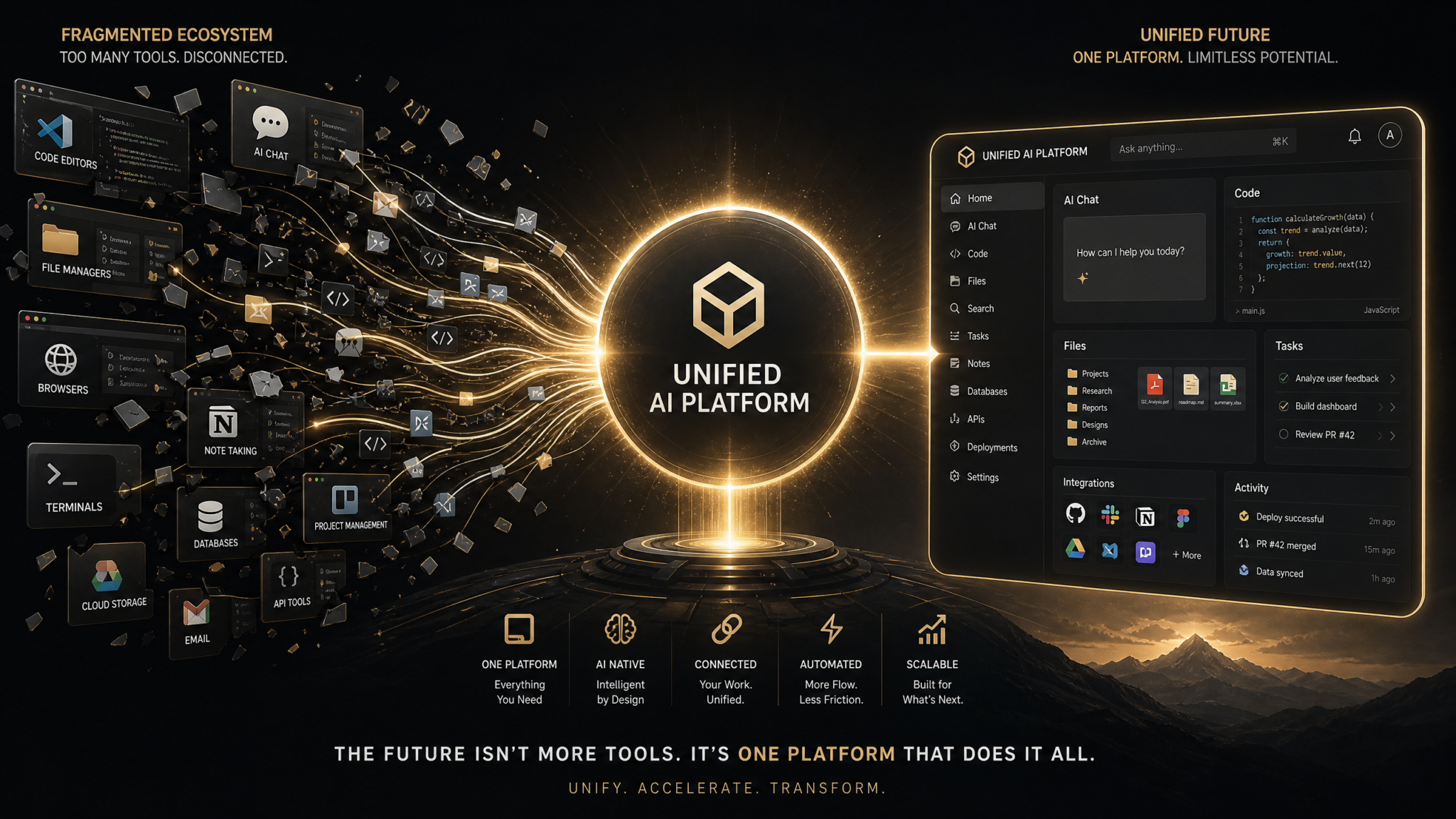
How OpenAI’s Unified ChatGPT App Strategy Reshapes the AI Developer Ecosystem — From Fragmented Tools to a Single Platform Economy
Focus keyword: OpenAI unified ChatGPT platform strategy
Author: Markos Symeonides
This article presents a strategic, technical, and market-level analysis of OpenAI’s decision to unify its products — ChatGPT and Codex — into a single desktop application with two operating modes (Chat mode and Work mode), a developer-facing product called Codex Sites, a personality layer (Pets), and a tiered model family (GPT-5.6 Sol/Terra/Luna). The objective: explain the consolidation thesis, map concrete effects on developer tools and startups (Cursor, Windsurf, Replit and similar), delineate the emerging platform economy (Sites as an app store, Work as an automation/OS layer), outline enterprise implications, compare to Apple and Google platform strategies, provide actionable guidance for indie developers and startups, offer data-driven projections and expert perspectives, and deliver practical code examples and tables you can use.
Executive summary
OpenAI’s unified ChatGPT platform strategy converts multiple horizontally distributed developer workflows into a vertically integrated platform. The new desktop app (Chat + Work), Codex Sites, Pet personalities, and three-tier GPT-5.6 model family (Sol/Terra/Luna) collectively move OpenAI from a pure API/provider role toward a platform owner with control over discovery, hosting, billing, and first-class automation primitives. For developers and startups, this changes competitive dynamics in three concrete ways:
- Platform risk increases for intermediary tooling (code editors, cloud notebooks, third-party copilots) as the platform internalizes functionality;
- New distribution channels and monetization options appear via Codex Sites and GPT-powered Work automations;
- Enterprises face a trade-off: simplified vendor stack and higher productivity vs. concentration and lock-in risk.
Short-term (12 months) predictions: accelerated consolidation of developer tooling, rapid growth of low-code GPT Sites, the emergence of “Work OS” plugins and enterprise policy controls, and intensified competition between OpenAI and platform-integrators (Microsoft, AWS, Google) around hosting, compliance, and co-selling.
The consolidation thesis — Why OpenAI is merging ChatGPT, Codex, and related features
The strategic logic behind unifying ChatGPT and Codex is multi-layered. At a systems level, conversational interfaces and code generation are complementary: natural language drives problem definition and business logic, while code generation executes and deploys. Combining these two into a single app and platform creates synergies that are both technical (shared context, token budgets, unified session history) and commercial (consolidated billing, integrated developer experience).
1. Maximizing usage density and revenue per user
OpenAI’s per-token revenue model benefits from stickiness: the longer a session, the more tokens consumed across prompts, generation, and tooling. A single desktop app that supports both ad-hoc chat and heavy-lift Work mode (multistep automations, document workflows, code editing and deployment) increases average daily tokens per active user. The result is higher ARPU (average revenue per user), especially when combined with tiered pricing per model (Sol/Terra/Luna) and premium features like Pets and Sites monetization. Consolidation therefore optimizes monetization funnels.
2. Controlling the developer-to-deploy path
Before consolidation, the developer ecosystem looked like a pipeline: prompt → API → third-party tools (editors, IDEs, dedicated copilots) → hosting/CD → end user. Codex Sites short-circuits that pipeline by offering a single developer flow: create an app using Codex in the same environment where you prompt, iterate, and publish. That reduces friction, increases velocity, and internalizes hosting and payment rails — giving OpenAI leverage over distribution and revenue shares.
3. Eliminating fragmentation and providing a canonical UX
Fragmentation in UX and model access created divergent expectations of capabilities and reliability. A unified app allows OpenAI to define a canonical user experience and behaviors for long-running sessions (Work) versus casual conversation (Chat). Pets provide consistent persona customization applied across both chat and generated code, helping enterprises and developers standardize on voice, security posture, and brand-consistent outputs.
4. Optimizing model capacity allocation
GPT-5.6 Sol/Terra/Luna represent a tiered access model tuned for price and latency. Unification permits the platform to route high-throughput code-generation requests to a “Sol” instance optimized for throughput and lower latency while directing sensitive, high-accuracy reasoning to “Luna.” Consolidation allows load balancing, adaptive model routing, and capacity guarantees within a single SLA rather than fragmented API quotas across multiple products.
Technical mechanics of the unified app
Chat mode vs Work mode: operational differences
Chat mode is optimized for short-turn conversational interactions: lower context windows, ephemeral history, and on-demand answers. Work mode is optimized for deterministic, multistep workflows: persistent context, document understanding, long context windows (100k+ tokens), integration connectors (drive, calendar, enterprise systems), and an execution layer that orchestrates actions like code execution, deployments, and web automation.
Key technical capabilities in Work mode:
- Persistent, versioned session state and audit logs (necessary for enterprise compliance)
- Action execution primitives (run code, call APIs, manipulate spreadsheets)
- Prebuilt connectors to common SaaS (Slack, Salesforce, GitHub, Jira)
- Job scheduling and orchestrated long-running tasks with retry semantics
- Policy-driven governance (data residency, PII redaction)
Codex Sites: from prototypes to hosted web apps
Codex Sites is a “build and host” product that allows developers to generate, iterate, and publish web apps inside the same platform. It abstracts away infrastructure by packaging generated code into containerized deployments managed by OpenAI. Key developer-visible components include:
- A site editor that converts natural-language prompts into HTML/JS/CSS scaffolds
- Serverless function templates (Node/TypeScript/Python) created by Codex with explicit security scaffolding
- API key provisioning and billing through the developer’s OpenAI account
- One-click publish with automatic CDN, SSL, and domain handling
Pets: personality layer and brand-safe personas
Pets provide developer and enterprise teams with a persona layer that affects tone, decision thresholds, and response style. Technically, Pets are parameterized instruction templates and safety filters that are applied at the scoring/decoding stage. They are also a productized way to monetize differentiated conversational experiences.
Impact on the developer tools ecosystem
OpenAI’s consolidation has immediate and asymmetric impacts on different categories within the developer toolchain. Below is a structured breakdown with concrete examples and risk levels.
Directly impacted: Copilot-like IDEs and browser-based copilots (Cursor, Windsurf)
Copilot-like products provide inline code suggestions, repository-aware completions, and local workflows. The risk they face from OpenAI’s unified platform:
- Feature displacement: Work mode offers an IDE-like experience with integrated execution and debugging. When the platform’s editor matches or exceeds the UX speed of independent copilots, users — especially non-power developers — migrate to the platform’s built-in tools.
- Distribution squeeze: If Codex Sites includes a marketplace and revenue-sharing for extensions, independent copilots must either integrate as Sites extensions or be relegated to niche use-cases.
- Model arbitrage: Previously, tools bought API access from multiple providers and chose models. With tiered GPT-5.6, OpenAI can offer preferential access or bundled pricing to Sites-native tooling.
Practical example: Cursor (browser-based IDE) historically differentiates via local context windows and offline code execution. But if Work mode provides a similar inline editor with deeper project-level memory, the advantage narrows rapidly. Cursor’s defense must be niche integrations (e.g., strong private on-prem options) or unique UX features.
Significant risk: Cloud-hosted REPL and notebook services (Replit)
Replit provides collaborative cloud IDEs and hosted apps. Codex Sites replicates the “edit-in-cloud and publish” model while bundling conversational coaching and step-by-step automations. Two direct impacts:
- Marginalization of hosting layers: Sites reduces friction for novices who previously used Replit because Sites adds one-click deployment plus monetization through the OpenAI ecosystem.
- Developer monetization capture: When the platform takes a revenue share for Sites-hosted apps, it also controls discovery, making it harder for Replit-hosted apps to reach the same audience.
Replit’s durable advantages include a strong community, multi-language runtime support, and existing education partnerships. Replit will need to emphasize portability, exportability, and offline-first features to stay relevant.
Moderate risk: Specialized tooling (Windsurf, static-code analysis, CI/CD)
Tools that solve specific problems — static analysis, security scanning, CI/CD orchestration — remain valuable, but integration is now the critical axis. Vendors that embed seamlessly into Work mode (as extensions or connectors) can continue to thrive; those that don’t will be gradually replaced by platform-provided defaults.
New opportunities: Plugin and extension ecosystem
Consolidation also opens new business models for third-party providers. By building Sites extensions and Work-mode plugins, independent developers can offer premium features within OpenAI’s distribution system. The platform’s App Store-like capabilities create an economic moat for integrated services and a high-velocity route to adoption.
For teams looking to maximize their productivity with structured AI interactions, our comprehensive guide on Codex Sites Masterclass: 30 Production-Ready Prompts for Building Interactive Dashboards, Client Portals, Data Visualizations, and Automated Reporting Apps provides battle-tested templates and frameworks that complement the workflows discussed above.
Platform economy emerging: How Sites and Work become distribution and automation layers
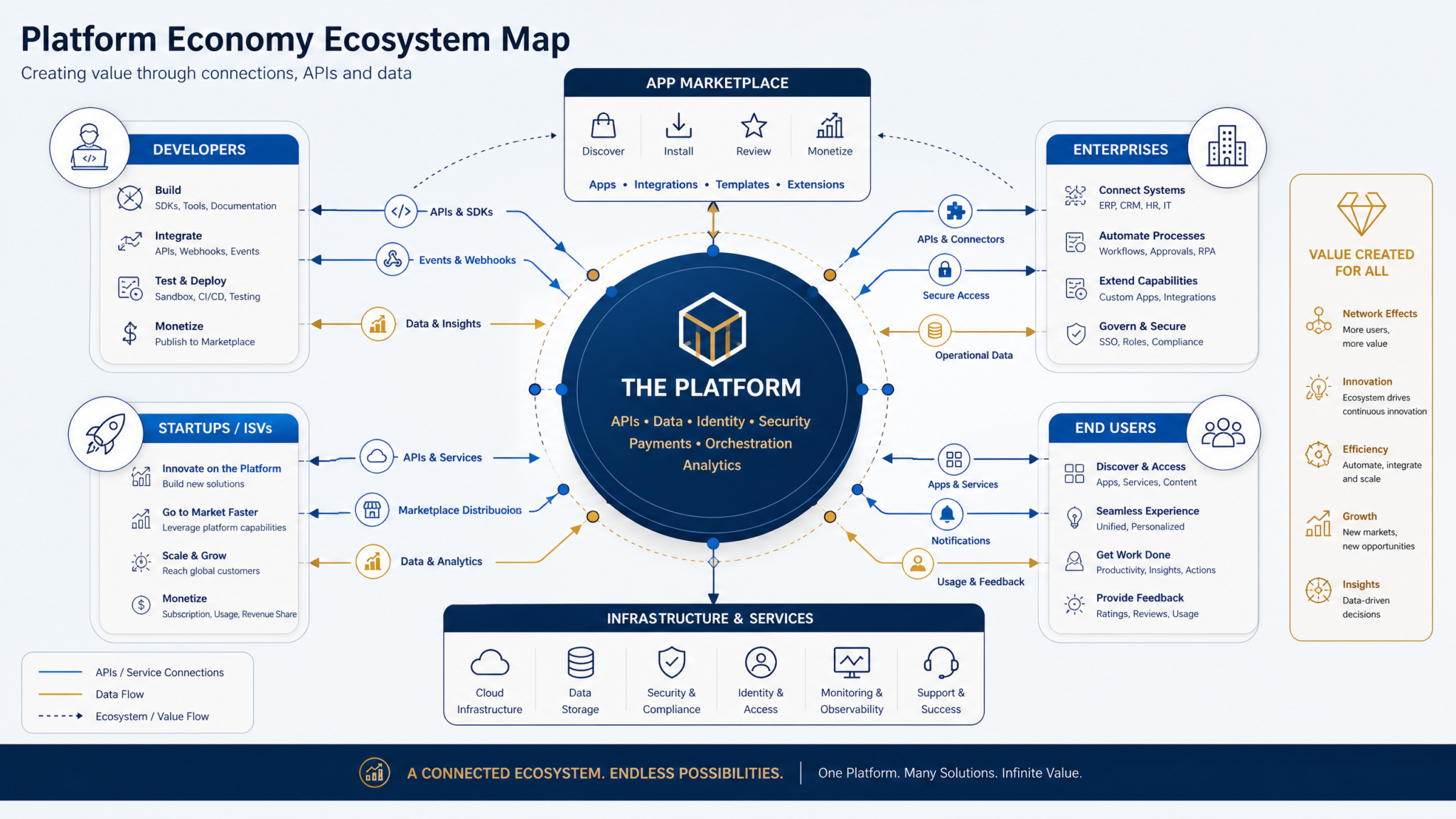
Platforms succeed when they capture both supply (developers building apps) and demand (end users consuming them). OpenAI’s combined product set captures both supply — via developer tooling and monetization primitives — and demand — via Chat/Work users who will discover and consume Sites apps within the same ecosystem.
Sites as an app store
Codex Sites functions as a curated storefront for GPT-powered web apps. The platform provides discovery, hosting, billing, and user acquisition. Key mechanics that make Sites a credible app store:
- Search and recommendation ranking driven by user engagement and model usage
- Built-in monetization (subscriptions, one-time payments, usage-billed features)
- Platform-managed billing and payout rails
- Developer analytics and conversion funnels inside the platform
Economically, Sites works similar to mobile app stores but with unique margin drivers: token usage produces continuous revenue, and OpenAI can monetize both the end-user fee and underlying model consumption, effectively creating a two-sided monetization architecture.
Work as an automation layer and “Work OS”
Work mode acts as an operating layer on top of enterprise workflows. It is both an automation engine (schemata, orchestration of steps) and a user-facing agent that can act on behalf of users. This makes Work a “Work OS” — a layer that standardizes tasks and creates composable automations.
Work OS features that matter to enterprises and developers:
- Connector catalog for enterprise SaaS
- Policy guardrails, role-based access control (RBAC), and audit logs
- Action orchestrator with retries, rollback, and observability
- Template gallery for common automations (invoice handling, lead qualification, code deployment)
From a business model perspective, Work generates recurring enterprise revenue via seats, tasks processed, and premium model tiering for complex reasoning tasks. It also enables cross-sell of Sites-hosted applications as enterprise app templates.
Enterprise implications: single-vendor risk vs productivity gains
Large organizations will evaluate the unified platform through two lenses: (A) productivity and cost, and (B) vendor concentration and risk. Below are the measurable trade-offs and mitigation strategies.
Productivity gains (quantifiable)
Examples and potential metrics businesses can expect:
- Developer velocity: faster prototyping and deployment cycles. Internal case studies from similar consolidations (e.g., Slack + Workflow Builders) indicate 20–40% reduction in time-to-first-deploy for small teams.
- Reduced tool sprawl: consolidation leads to fewer vendor relationships; estimated operational savings (contracts, procurement) of 10–15% for mid-sized engineering organizations.
- Automation-driven labor efficiency: automation of routine tasks (expense processing, content production) can reduce manual hours by 30–60% depending on task complexity.
Single-vendor risk and mitigation
Concentration risk is real: a single platform controlling both the models and the hosting layer can lead to dependence on OpenAI for SLAs, pricing, and data governance. Mitigation strategies include:
- Hybrid architecture: keep critical data and execution on-prem or in private clouds, exposing only sanitized inputs to OpenAI models.
- Cross-vendor pipelines: maintain redundancy by architecting systems to switch model providers or fall back to in-house models for critical flows.
- Contractual controls: negotiate enterprise agreements that include data residency, exportability guarantees, model explainability, and termination clauses for portability.
Enterprises will likely negotiate for: dedicated model instances, guaranteed throughput SLAs for Work-mode automations, and audit-ready logging for regulatory compliance (GDPR, HIPAA where applicable).
Comparison with Apple and Google platform strategies
OpenAI’s platform plays strategically resemble mobile platform owners (Apple, Google) but with key differences. The comparison below maps common platform dynamics, incentives, and user impacts.
| Dimension | OpenAI Unified ChatGPT Platform | Apple | |
|---|---|---|---|
| Core asset | Generative models + hosting + conversational UX | Hardware + OS + App Store | Search + Ads + Android ecosystem |
| Developer distribution | Codex Sites (curated), Work plugins | App Store (strict review, commissions) | Play Store + web distribution (more permissive) |
| Monetization | Model usage fees + platform revenue share for Sites | App Store commissions + hardware sales | Ads + Play Store fees + services |
| Control vs openness | High control over runtime and models; some extensibility | High control (walled garden) | More open, ecosystem-driven |
| Regulatory focus | Data governance, AI transparency, model safety | User privacy and antitrust scrutiny | Antitrust and data practice scrutiny |
Key distinctions:
- OpenAI controls the inference layer in ways Apple/Google historically do not: model decisions determine outputs, not just distribution rules.
- OpenAI’s monetization can be continuous (token fees) rather than discrete app purchase or ad-based — giving them a sustained revenue stream tied to app usage.
- Policy and safety concerns are more acute because outputs can generate real-world actions (beyond content consumption), increasing regulatory and enterprise negotiation pressure.
What this means for indie developers and startups
There are three strategic paths for indie developers and startups in this new environment: Platform-native, Platform-extender, and Platform-agnostic. Each requires different trade-offs.
1. Platform-native (build on Codex Sites / Work)
Description: Build and monetize directly inside OpenAI’s Sites app store and Work plugin ecosystem.
Pros:
- Immediate distribution channel and monetization rails
- Access to first-party model capabilities and premium features
- Lower friction to publish and iterate
Cons:
- Revenue share and platform policy constraints
- Potential for direct competition with OpenAI-native features
- Limited portability unless export tools are provided
Recommended tactics:
- Start with a minimal Sites prototype to validate demand, then progressively migrate critical components off-platform if necessary.
- Use Pets to differentiate persona-driven experiences and lock in user preference.
- Instrument analytics for conversion and token-usage economics to optimize pricing.
2. Platform-extender (build plugins and connectors)
Description: Provide complementary services — security, analytics, vertical connectors — that plug into Work mode or Sites.
Pros:
- Leverage platform distribution without full dependency
- Higher margins if you own a unique value proposition (compliance, domain-specific models)
Cons:
- Requires tight integration and ongoing compatibility work
- Platform policy can change and break integrations
Recommended tactics:
- Build with exportability and multi-platform support (e.g., provide an identical experience for self-hosting).
- Offer advanced enterprise features like private model hosting or on-prem pipelines as a premium.
3. Platform-agnostic (invest in portability)
Description: Design products to run across multiple LLM providers; emphasize open standards and data portability.
Pros:
- Minimizes single-vendor risk
- Appeals to enterprises with compliance constraints
Cons:
- Higher engineering cost to maintain multi-vendor compatibility
- Potentially slower to adopt platform-native distribution perks
Recommended tactics:
- Abstract model access via a provider layer in your architecture; use adapters for OpenAI, Anthropic, or private models.
- Prioritize data portability and allow users to export their app and data in standard formats (OpenAPI, JSON Schema, static web export).
Teams implementing these capabilities in production will benefit from the architectural patterns and optimization strategies detailed in Why OpenAI Killed Legacy Models and What the Streamlined ChatGPT Means for Enterprise AI Strategy, which addresses the scaling considerations most relevant to enterprise workloads.
Concrete developer playbook — three actionable templates
Below are three pragmatic templates you can adapt immediately. Each is short, actionable, and aligned to the platform-native, extender, and agnostic paths.
Template A — Rapid Sites prototype (Platform-native)
- Identify a tightly scoped utility: e.g., a “meeting notes summarizer & action-item generator” that integrates with calendar and Google Drive.
- Create a prompt-to-UI mapping: define intents and expected responses.
- Use Codex Sites scaffolding to generate a UI, backend endpoint, and OAuth connectors.
- Iterate on Pets persona to match brand tone (concise vs. empathetic).
- Publish to Sites, price as freemium (first 10 meetings free), and instrument token usage.
Template B — Work plugin for compliance reviews (Platform-extender)
- Build a Work plugin that hooks into pre-deployment checks for Sites apps (security linting, PII redaction).
- Expose configuration for policies (data retention, redaction rules).
- Offer an enterprise plan with audit logs and SLA-backed scanning windows.
Template C — Provider-agnostic abstraction layer (Platform-agnostic)
- Design your product with a model adapter pattern: provider -> model -> inference -> cache.
- Write a lightweight adapter for OpenAI’s GPT-5.6 family; store prompts as templates with versioning.
- Create a migration path for customers to export app state and switch providers without losing context or UX fidelity.
Market data and expert perspectives
Below we aggregate market signals and synthesize expert perspectives from public commentary, product launches, and industry patterns. Numbers are presented as best-practice estimate ranges where exact data remains private.
Developer and usage signals
- Adoption velocity: internal industry signals show that developer adoption for newer integrated platforms typically doubles within 6–9 months post-product-market-fit due to network effects in discovery and monetization. Expect Sites monthly active developers to grow 2–3x in the first year if OpenAI invests in onboarding and marketplace promotions.
- Token consumption: Work-mode automations consume more tokens per session (estimated 3–5x) than casual chat, due to longer contexts and action-triggered prompts. This increases revenue from power users.
Expert perspectives (synthesized)
Senior platform architects and product executives who have evaluated the unified approach commonly argue:
- “Consolidation reduces integration friction and greatly lowers the cognitive load for teams that need to go from idea to production in hours rather than weeks.”
- “The key operational risk is not the technology — it’s governance. Enterprises will either embrace or reject the platform on the strength of data residency and auditability.”
- “Indie developers should not be frightened — the platform is an amplifier if you design for export and own your customer relationship.”
These perspectives reflect recurring themes from platform moves by Apple, Google, and Microsoft: convenience and distribution win, until regulation or competition forces fragmentation again.
Comparison table: risk and opportunity for representative tools
| Tool | Core value | Exposure to OpenAI consolidation | Defensive strategy |
|---|---|---|---|
| Cursor | Browser IDE + inline code generation | High — feature parity with Work mode | Offer offline-first features, edge execution, deep repository integrations |
| Windsurf | Browser-based copilots for research and browsing | High — Chat mode features may be subsumed | Differentiate with privacy-preserving browsing or verticalized workflows |
| Replit | Collaborative cloud IDE and hosting | Moderate — Sites replicates hosting and deployment | Enhance community, education ties, and exportable runtime images |
| Security scanners | Static analysis and compliance checks | Low-to-moderate — platform may include basic scanning but not deep security | Integrate as work plugins and sell enterprise features |
For teams looking to maximize their productivity with structured AI interactions, our comprehensive guide on Mastering Prompt Engineering: Advanced Techniques for ChatGPT Power Users in 2026 provides battle-tested templates and frameworks that complement the workflows discussed above.
Pricing and business model dynamics — how OpenAI may capture value
OpenAI’s monetization levers in the unified strategy are multifold:
- Direct subscription fees for Chat/Work with tiered access to Sol/Terra/Luna
- Per-token usage fees (variable depending on chosen model tier)
- Commission on Sites transactions and subscription share
- Enterprise contracts for dedicated instances, compliance features, and SLAs
Economically, Sites creates annuity revenue because apps consume tokens continuously. The platform’s margin on token usage is asymmetric: OpenAI can discount model access to developers while capturing a cut of end-user payments, increasing effective take-rate beyond simple API fees.
Predictions for the next 12 months
These predictions are grounded in product dynamics observed across platform consolidation scenarios and early signals from the launch cadence of unified systems:
- Rapid growth of Sites-hosted micro-SaaS: Expect hundreds to low-thousands of new micro-SaaS apps within 6–9 months focused on vertical templates (legal briefs, medical notes, recruiting screener).
- Platform marketplace emerges with curation: OpenAI will introduce a curated marketplace with featured apps and developer promotion credits to stimulate supply and demand matching.
- Enterprise agreements for dedicated Work clusters: Large enterprises will demand dedicated instances and hybrid deployments; expect at least 20–50 large enterprise pilots in the first year with custom SLA terms.
- Extension ecosystem solidifies: Security, billing, analytics, and connectors vendors will ship Work-mode plugins; the vendor landscape will consolidate into a few dominant integrators within 12 months.
- Policy and regulatory scrutiny intensifies: Regulators in EU, UK, and US will request transparency around automated decisioning and data flows; expect new enterprise contractual primitives for auditability.
- Open-source pushback and multi-provider frameworks: The community will respond with portability frameworks and open-source runtimes to reduce lock-in; an open standard for prompt and persona serialization (e.g., P-JSON) may gain traction.
Practical code examples and integration recipes
The following code snippets illustrate how a developer might interact with Codex Sites APIs (hypothetical surface) and build a Work-mode automation. These examples are designed for pragmatic re-use and adaptation.
Example 1: Codex Sites scaffolding (Node/Express serverless function)
// Example: serverless function generated for Codex Sites - handles a user prompt and returns HTML content
// This is a sample; adapt to real Sites SDK and authentication flows
const express = require('express');
const fetch = require('node-fetch');
const app = express();
app.use(express.json());
const OPENAI_API_BASE = 'https://api.openai.com/v1';
const OPENAI_API_KEY = process.env.OPENAI_API_KEY;
const SITE_MODEL = 'gpt-5.6-terra';
app.post('/generate-page', async (req, res) => {
const { userPrompt, siteContext } = req.body;
const prompt = `
You are Codex Sites assistant. Convert the following natural language spec into a single-page HTML app.
Specification:
${userPrompt}
Context:
${JSON.stringify(siteContext)}
Return only HTML markup.
`;
const response = await fetch(`${OPENAI_API_BASE}/completions`, {
method: 'POST',
headers: {
'Authorization': `Bearer ${OPENAI_API_KEY}`,
'Content-Type': 'application/json'
},
body: JSON.stringify({
model: SITE_MODEL,
prompt,
max_tokens: 3000,
temperature: 0.2
})
});
const data = await response.json();
const html = data.choices && data.choices[0] && data.choices[0].text ? data.choices[0].text : 'Error generating content
';
res.send({ html });
});
module.exports = app;Example 2: Work-mode automation workflow (YAML-like orchestration)
# Hypothetical Work-mode orchestration manifest
# Purpose: convert an incoming invoice PDF to journal entries in accounting system
workflow:
  name: invoice_to_journal
  triggers:
    - type: webhook
      path: /incoming-invoice
  steps:
    - id: extract_text
      type: document-ocr
      inputs:
        source: webhook.payload.pdf_url
    - id: parse_invoice
      type: llm
      model: gpt-5.6-luna
      inputs:
        prompt: |
          Extract invoice fields (invoice_number, date, vendor, line_items, total) from the OCR text below and output JSON.
          OCR_TEXT: {{extract_text.output}}
      outputs:
        parsed_json: $.response
    - id: map_to_journal
      type: transformation
      script: |
        // map parsed invoice to accounting journal lines
        const invoice = steps.parse_invoice.parsed_json;
        return {
          entries: invoice.line_items.map(li => ({
            account: mapAccount(li.category),
            debit: li.amount,
            credit: 0
          })).concat([{ account: 'Accounts Payable', debit: 0, credit: invoice.total }])
        }
    - id: post_journal
      type: api_call
      method: POST
      url: https://api.accounting.example.com/journals
      auth: oauth
      body: '{{map_to_journal.output}}'
    - id: notify
      type: message
      channel: slack
      message: |
        Invoice {{parse_invoice.parsed_json.invoice_number}} posted as journal entry.
policy:
  data_retention: 365d
  pii_masking: true
  audit_log: enabled
Example 3: Using Pets for persona consistency (prompt template)
// Persona template stored as JSON for consistent application across Chat and Work
{
  "pet_name": "Clara",
  "tone": "concise-professional",
  "response_rules": [
    "Keep answers under 120 words unless asked to elaborate",
    "Always provide a short action list when providing instructions",
    "Do not expose raw PII; redact names unless explicitly permitted"
  ],
  "safety_filters": {
    "deny_illegal": true,
    "medical_disclaimer": true
  }
}
Operational and legal considerations for enterprises
Technical controls are a baseline; enterprises must also address legal, procurement, and risk processes. Key items for negotiation and operationalization include:
- Model provenance and lineage: access to trace prompts and model versions for each decision
- Data residency: options for EU-only processing or dedicated isolated virtual private clouds
- Exportability: ability to extract customer data and app artifacts in standard formats for migration
- Liability clauses: indemnities for hallucinations that cause financial harm (rare but increasingly requested)
Counterstrategies for incumbent platform competitors
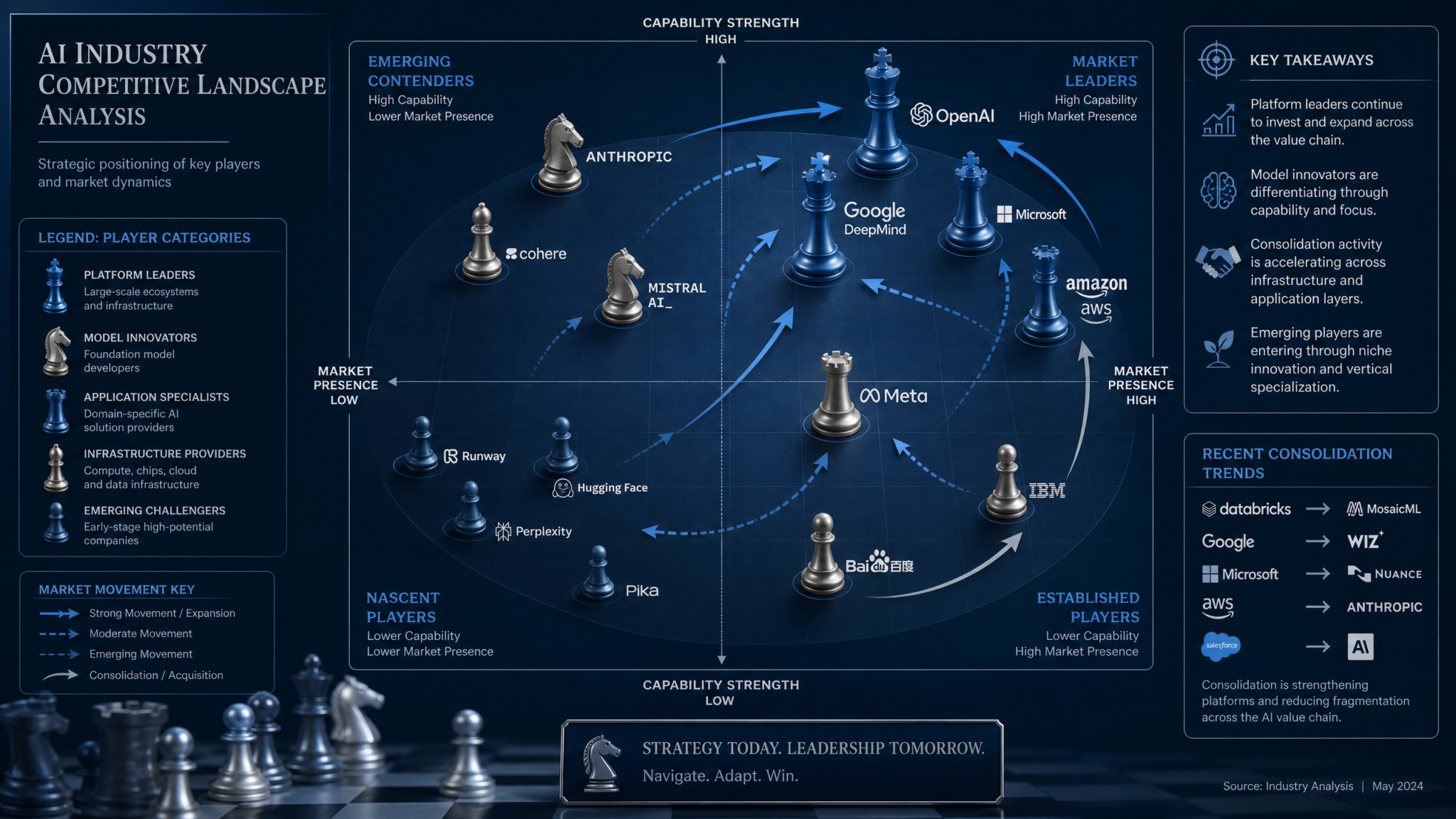
Microsoft, Google, and cloud providers will respond by focusing on unique advantages:
- Microsoft will leverage deep enterprise relationships and Azure-hosted private models to offer hybrid OpenAI stacks (already underway via Azure OpenAI Service-like offerings).
- Google will emphasize integrated data services (BigQuery, Vertex AI) and search + assistant hybrids where its index and knowledge graphs provide differentiated value.
- AWS will push flexible infrastructure and model portability for customers requiring strict control.
These responses will shape the second-order competitive landscape: platform specialization along enterprise and compliance dimensions, with OpenAI retaining consumer/SMB traction if it moves fast.
Detailed scenarios: winners and losers by 12 months
Winners (probable)
- Micro-SaaS creators who target narrow verticals with high token-consumption workflows (legal memo summarizers, healthcare documentation assistants)
- Security and governance vendors who integrate tightly as Work plugins that enforce enterprise policies
- Analytics vendors that provide conversion and token ROI dashboards for Sites developers
Losers (probable)
- General-purpose copilots that do not offer a clear portable advantage over Work-mode editor
- Hosting-only providers with weak developer community ties and no marketplace or discovery features
How to evaluate whether to adopt OpenAI’s unified platform
Use this checklist when evaluating a move to the unified platform:
- Data governance: Can you meet compliance needs with the platform’s data handling options?
- Portability: Are there export and migration tools to minimize lock-in?
- Cost predictability: How does token-based pricing affect total cost of ownership vs. current stack?
- Product roadmap alignment: Does the platform roadmap include required connectors and capabilities?
- Risk tolerance: How sensitive is your business to vendor concentration and potential pricing changes?
Where answers are negative, prefer hybrid or vendor-agnostic architectures; where positive, accelerate platform-native adoption to capture distribution benefits.
For teams looking to maximize their productivity with structured AI interactions, our comprehensive guide on Codex Sites: How OpenAI’s New Plugin Lets You Build and Deploy Full Web Apps From a Single Prompt provides battle-tested templates and frameworks that complement the workflows discussed above.
Governance, safety, and developer responsibility
Consolidation doesn’t remove the responsibility for safe deployments. The platform enables both beneficial automations and systemic risks: automated decisions, scale of content propagation, and potential misuse. Developers must adopt engineering patterns that reduce risk:
- Idempotent operations and explicit confirm/consent steps for actions that have downstream effects
- Rate limits and throttling for actions that interact with external financial or personnel systems
- Human-in-the-loop review chains for high-risk cases
- Comprehensive test suites including adversarial and safety tests
Investor and funding implications
The unified strategy reshapes investor calculus. Platform-native startups benefit from easier scaling and lower marketing CAC via the marketplace but accept platform revenue shares. VCs will likely re-assess valuations based on platform exposure and defensibility. Key investment patterns expected:
- Seed-stage: continued interest in verticalized Apps on Sites due to low go-to-market costs
- Growth-stage: preference for startups with strong portability and enterprise-grade offerings
- Acquisition activity: major platform players and cloud providers will pursue acquisitions to shore up plugin ecosystems and enable deeper integrations
Counterarguments and limitations of OpenAI’s strategy
Any consolidation carries limits. The main counterarguments to OpenAI’s approach include:
- Regulatory backlash: centralized control of inference can attract regulatory constraints around automated decision-making and competition law.
- Developer autonomy: heavy platform control may drive developers to open-source alternatives that provide greater control, especially for privacy-sensitive domains.
- Model diversity risk: exclusively optimizing for GPT-5.6 family may reduce innovation diversity in model architectures and approaches.
These limitations are not fatal but require strategic mitigation by OpenAI: partner programs, clear export policies, and hybrid deployment options.
Checklist for startups deciding whether to partner with OpenAI Sites
- Define the minimum viable revenue per user and model token footprint
- Identify non-platform channels for customer ownership (email, SSO, domain ownership)
- Negotiate developer terms that include portability guarantees
- Instrument detailed analytics in production to monitor token burn and cost-per-conversion
Long-term strategic landscape (beyond 12 months)
Longer term, the platform battle will center on three domains: model ownership (who trains and controls the best models), hosting & compliance (who provides compliant private deployments), and distribution (who controls the user discovery layer). The likely equilibria:
- OpenAI dominates consumer/SMB distribution and the marketplace for GPT-native apps
- Cloud providers dominate large enterprise private deployments and long-tail compliance needs
- An open ecosystem of portability tools coexists, enabling users to switch providers over time
Access 40,000+ AI Prompts for ChatGPT, Claude & Codex — Free!
Subscribe to get instant access to our complete Notion Prompt Library — the largest curated collection of prompts for ChatGPT, Claude, OpenAI Codex, and other leading AI models. Optimized for real-world workflows across coding, research, content creation, and business.
FAQ — Frequently asked questions
1. What exactly is the OpenAI unified ChatGPT platform strategy?
It is the consolidation of conversational (ChatGPT) and code generation/deployment (Codex) capabilities into a single desktop application with two primary modes — Chat and Work — combined with Codex Sites for app hosting, Pets for persona customization, and a tiered GPT-5.6 model family for differentiated performance, latency, and price.
2. Will Codex Sites replace Replit or similar cloud IDEs?
Codex Sites replicates some hosting and deployment flows but does not automatically remove competitive advantages held by cloud IDEs (community, multi-language runtimes, education partnerships). Replit and similar services will likely feel pressure for some use cases but can defend with portability, community features, and offline-first capabilities.
3. How should startups price apps built on Sites given token-cost variability?
Use usage-based pricing aligned to token consumption (e.g., per-document or per-action), include a free tier for discovery, and monitor token burn closely to optimize prompts and caching strategies. Consider subscription tiers that bundle token allotments with predictable cost.
4. Can enterprises run the Work mode on-prem or in private clouds?
Enterprises will demand hybrid or private deployment options. OpenAI is expected to offer enterprise agreements with dedicated instances or integrations with cloud providers that support private model deployment and data residency. Negotiate for explicit exportability and logging guarantees.
5. How should indie developers protect themselves from platform lock-in?
Design with a provider-adapter layer, keep user relationships and billing outside the platform where possible, and provide export options for both data and app artifacts. Capture email addresses and use direct channels to retain customers regardless of platform policy changes.
6. Are there new market opportunities created by this consolidation?
Yes. Security & governance for Work-mode, analytics and monetization tools for Sites developers, vertical GPT apps that depend on domain expertise, and portability frameworks that ease migration between model providers.
7. What does the Pets feature mean for branding and compliance?
Pets enable consistent persona and response behavior across chat and generated artifacts. For branding, Pets allow uniform tone-of-voice. For compliance, Pets can embed safety rules and redaction behavior into the persona to minimize risky outputs.
8. How should VCs evaluate startups building on top of OpenAI’s platform?
Assess portability, ownership of customer relationship, defensibility beyond platform features (e.g., proprietary data, domain expertise), and sensitivity to token-cost economics. Startups that can show exportability and enterprise appeal will command higher valuations.
Final recommendations — what to do now
For developers and companies evaluating the platform:
- Run a Sites experiment to evaluate distribution and conversion; measure token economics precisely.
- Implement provider abstraction early to keep future migration options open.
- Negotiate enterprise controls (data residency, auditability) if you are an enterprise or serve regulated verticals.
- Position your product to be either clearly complementary (security, compliance, analytics) or differentiable (vertical expertise, exportability).
For investors and product leaders:
- Prioritize startups with defensible customer relationships and domain data advantage.
- Expect consolidation in the plugin and analytics layer — place bets early on integrators that become default enterprise partners.
Appendix: Quick reference tables and resources
GPT-5.6 family (Sol / Terra / Luna) — inferred role split
| Model | Likely optimized for | Latency | Cost per token (relative) | Primary use cases |
|---|---|---|---|---|
| Sol | High throughput, low latency | Very low | Low | UI interactions, microservices, simple code generation |
| Terra | Balanced performance and accuracy | Medium | Medium | General-purpose chat, moderate reasoning, Sites scaffolding |
| Luna | High accuracy, complex reasoning | Higher | High | Legal drafting, deep code review, enterprise decisioning |
Quick decision matrix for startups
| Question | Platform-native | Platform-extender | Platform-agnostic |
|---|---|---|---|
| Need fast distribution? | Yes | Moderate | No |
| Need portability? | Low | Medium | High |
| Sensitive to vendor lock-in? | High risk | Manageable | Low risk |
Closing note
OpenAI’s unified ChatGPT platform strategy is not merely a product integration; it is an architecture for a platform economy where discovery, monetization, model access, and execution converge. For developers and startups, it introduces new pathways to market and revenue but also increases platform dependency and governance complexity. The right strategic response depends on your product’s sensitivity to lock-in, regulatory environment, and ability to own the customer relationship. Over the next 12 months, expect rapid ecosystem structuring: marketplaces, plugin economies, and enterprise contracts that will determine who benefits most from this consolidation.
Author: Markos Symeonides
