
The Complete GPT-5.6 Migration Masterclass: Moving from GPT-5.5 to Sol, Terra, or Luna
This masterclass is a hands-on, end-to-end migration guide for engineering teams upgrading from GPT-5.5 to GPT-5.6 across the Sol, Terra, and Luna tiers. We cover the API and model name changes, updated prompt formats, new parameters and capabilities, tier selection methodology, cost impact analysis, testing and evaluation strategies, rollback plans, and a battle-tested production launch checklist. The guide assumes you have access to GPT-5.6 under your organization’s account and that Sol/Terra/Luna are tiered variants of the same base model (offering different performance, limits, and pricing). Always verify actual model names, limits, and pricing in your account dashboard and official API documentation before roll-out.

At a high level, the migration breaks down into four phases: (1) Audit and plan, (2) Dual-run and validate, (3) Canary and ramp, and (4) Cutover with safety nets. We provide before/after code examples in Python, JavaScript/TypeScript (Node), and cURL, along with tooling tips for schema-validated JSON, streaming, tool/function calling, caching, and observability. If your stack includes custom prompt templates, function schemas, or in-house middleware, pay special attention to the sections on prompt normalization, strict JSON output, and structured tool calls.
Throughout the guide, we embed pragmatic advice drawn from common production patterns: feature flags, golden test sets, deterministic seeds for reproducibility, telemetry-driven evaluation, rate-limit-aware retry strategies, and automatic rollbacks. If you are new to the Responses API or strict JSON-mode generation, you will find annotated code snippets that illustrate safe defaults and pitfalls to avoid. For broader context on deployment patterns and experimentation culture, see
For a deeper exploration of related concepts, our comprehensive guide on The Codex Prompt Engineering Playbook: 15 Prompts for Optimizing AI-Generated Code Quality, Reducing Hallucinations, and Improving Test Coverage provides detailed frameworks and practical strategies that complement the approaches discussed in this article.
and
For a deeper exploration of related concepts, our comprehensive guide on OpenAI’s Frontier Governance Framework Explained: What Enterprise AI Teams Need to Know in 2026 provides detailed frameworks and practical strategies that complement the approaches discussed in this article.
.
What’s New in GPT-5.6: Overview and Key Takeaways
GPT-5.6 advances the GPT-5.5 line with a focus on better tool-use reliability, tighter control over JSON and structured outputs, improved streaming behavior, and clearer levers for performance versus cost via the Sol/Terra/Luna tiers. Model naming and endpoints may also shift if you are moving from legacy chat.completions to the newer Responses API, which unifies text, tools, images, and potentially other modalities under a single, composable interface. Depending on your current usage, you can take advantage of:
- Unified Responses API: A single endpoint for text generation, JSON-structured outputs, tool calls, and streaming (replacing or complementing chat.completions).
- Model tiers (Sol/Terra/Luna): Select cost/latency/accuracy trade-offs per use case, not per environment; you can also dynamically choose per request based on workload budgets.
- JSON Schema output control: Enforce strict JSON structures with schema-guided decoding to reduce downstream parsing errors and re-asks.
- More predictable tool calling: Richer tool definitions, better adherence to schemas, and options for tool selection strategies.
- Extended context and improved grounding: Longer contexts (tier-dependent) and tighter instruction-following for system prompts and safety guidelines.
- Streamlined parameters: Consolidated or renamed parameters (for example, max_tokens becomes max_output_tokens in some clients), plus finer-grained controls like seed for reproducibility.
In practice, most teams see improvements in latency stability and output reliability with GPT-5.6—especially when adopting schema-validated outputs and modern tool calling. However, the shift can reveal brittle prompt patterns, underspecified schemas, or implicit business rules hidden in your post-processing. Expect a short hardening cycle during dual-run as you normalize prompts, schemas, and retries.
Model Names, Endpoints, and Compatibility Matrix
Before changing code, map your current GPT-5.5 models and endpoints to GPT-5.6 equivalents. The following tables use representative naming patterns; verify exact names in your account.
Model Naming Patterns
| Use Case | GPT-5.5 (Example) | GPT-5.6 (Tiered Examples) | Notes |
|---|---|---|---|
| General-purpose chat | gpt-5.5-pro | gpt-5.6-sol, gpt-5.6-terra, gpt-5.6-luna | Pick tier based on latency/cost targets; Sol balanced, Terra premium, Luna economy (verify actual tier definitions). |
| JSON/structured output | gpt-5.5-pro-json | gpt-5.6-sol (with response_format), gpt-5.6-terra, gpt-5.6-luna | Prefer Responses API with response_format.json_schema for strong guarantees. |
| Tool/function calling | gpt-5.5-tools | gpt-5.6-*-tools (same base names; enable tools in request) | Use tools array; verify tool_choice strategies and parallel behavior. |
| Long-context tasks | gpt-5.5-extended | gpt-5.6-terra-long, gpt-5.6-sol-long (if available) | Context windows are tier-dependent; confirm limits per tier. |
Endpoint and Parameter Mapping
| Aspect | GPT-5.5 (Legacy) | GPT-5.6 (Recommended) | Migration Note |
|---|---|---|---|
| Endpoint | /v1/chat/completions | /v1/responses | Responses unifies chat, tools, JSON schemas, and streaming. |
| Prompt container | messages: [{role, content}] | input: string or [{role, content}] | Both supported; prefer input for multi-modal/tool requests. |
| Max tokens | max_tokens | max_output_tokens | Some SDKs rename; verify in your client library. |
| JSON mode | response_format: {type: “json_object”} | response_format: {type: “json_schema”, json_schema: {…}} | Schema-guided output is more reliable and debuggable. |
| Function calling | functions/function_call | tools/tool_choice | Define tools; model returns tool calls with structured arguments. |
| Determinism | temperature, top_p | temperature, top_p, seed | Use seed in tests to stabilize outputs for snapshots. |
| Streaming | SSE deltas per token | SSE events with structured items (text/tool/json) | Update your stream assembler to handle multiple event types. |
Backward compatibility is good but not perfect. If you stay on chat.completions you can often swap model names and proceed. However, to leverage JSON Schema, better tool adherence, and unified streaming, plan to migrate to Responses. The sections below show before/after code for each approach and call out subtle differences that affect production systems.
Before/After: Minimal Text Generation
Python (chat.completions → responses)
# BEFORE (GPT-5.5, chat.completions)
from openai import OpenAI
client = OpenAI()

resp = client.chat.completions.create(
    model="gpt-5.5-pro",
    messages=[
        {"role": "system", "content": "You are a concise assistant."},
        {"role": "user", "content": "Summarize the key differences between HTTP/1.1 and HTTP/2."}
    ],
    temperature=0.2,
    max_tokens=400
)
print(resp.choices[0].message.content)

# AFTER (GPT-5.6, responses)
from openai import OpenAI
client = OpenAI()

resp = client.responses.create(
    model="gpt-5.6-sol",
    input=[
        {"role": "system", "content": "You are a concise assistant."},
        {"role": "user", "content": "Summarize the key differences between HTTP/1.1 and HTTP/2."}
    ],
    temperature=0.2,
    max_output_tokens=400,
    seed=7  # Stabilize for tests
)
print(resp.output_text)
Node.js/TypeScript
// BEFORE (GPT-5.5, chat.completions)
import OpenAI from "openai";
const client = new OpenAI({ apiKey: process.env.OPENAI_API_KEY });

const cc = await client.chat.completions.create({
  model: "gpt-5.5-pro",
  messages: [
    { role: "system", content: "You are a concise assistant." },
    { role: "user", content: "List 3 ways to optimize Postgres queries." }
  ],
  temperature: 0.3,
  max_tokens: 300
});
console.log(cc.choices[0].message.content);

// AFTER (GPT-5.6, responses)
import OpenAI from "openai";
const client = new OpenAI({ apiKey: process.env.OPENAI_API_KEY });

const r = await client.responses.create({
  model: "gpt-5.6-sol",
  input: [
    { role: "system", content: "You are a concise assistant." },
    { role: "user", content: "List 3 ways to optimize Postgres queries." }
  ],
  temperature: 0.3,
  max_output_tokens: 300,
  seed: 42
});
console.log(r.output_text);
cURL
# BEFORE (GPT-5.5, chat.completions)
curl https://api.openai.com/v1/chat/completions \
  -H "Authorization: Bearer $OPENAI_API_KEY" \
  -H "Content-Type: application/json" \
  -d '{
    "model": "gpt-5.5-pro",
    "messages": [
      {"role": "system", "content": "You are a concise assistant."},
      {"role": "user", "content": "Explain ACID in databases."}
    ],
    "temperature": 0.2,
    "max_tokens": 250
  }'

# AFTER (GPT-5.6, responses)
curl https://api.openai.com/v1/responses \
  -H "Authorization: Bearer $OPENAI_API_KEY" \
  -H "Content-Type: application/json" \
  -d '{
    "model": "gpt-5.6-sol",
    "input": [
      {"role": "system", "content": "You are a concise assistant."},
      {"role": "user", "content": "Explain ACID in databases."}
    ],
    "temperature": 0.2,
    "max_output_tokens": 250,
    "seed": 11
  }'
The changes above are minimal; you can often migrate a class of endpoints in hours. The deeper value appears when you adopt structured outputs, stronger tool schemas, and streaming refinements.
Prompt Format Differences and Best Practices
Prompt shape matters more in GPT-5.6 because schema-validated outputs and tool calling rely on explicit structure. While many GPT-5.5 prompts will “just work,” tightening structure and explicitly separating system directives from user content improves reliability and reduces drift. Treat these as upgrade tasks, not optional chores.
System and Developer Instructions
- Centralize system instructions: Keep safety, style, and do/don’t rules in the system message. Avoid leaking business logic into user content.
- Use developer instructions to bind tool semantics: If tools require specific contract behavior, anchor that in the system prompt and tool descriptions.
- Keep prompts idempotent: Externalize request-specific metadata (like user IDs) outside the model’s text; pass via headers or tool inputs.
From Ad-hoc JSON to JSON Schema
If you previously asked the model to “output JSON like {x:…, y:…}”, move to schema-guided decoding. Schema-backed outputs reduce parsing errors, close gaps in required fields, and help align cross-language clients. A minimal example follows:
# Python: Strict JSON schema output
from openai import OpenAI
client = OpenAI()

schema = {
    "name": "KeywordSummary",
    "schema": {
        "type": "object",
        "properties": {
            "title": {"type": "string"},
            "keywords": {
                "type": "array",
                "items": {"type": "string"},
                "minItems": 3,
                "maxItems": 8
            },
            "confidence": {"type": "number", "minimum": 0, "maximum": 1}
        },
        "required": ["title", "keywords", "confidence"],
        "additionalProperties": False
    },
    "strict": True
}

resp = client.responses.create(
    model="gpt-5.6-terra",
    input=[
        {"role": "system", "content": "Extract concise metadata."},
        {"role": "user", "content": "Text: Serverless scaling patterns for high-concurrency APIs..."}
    ],
    response_format={"type": "json_schema", "json_schema": schema},
    temperature=0,
    max_output_tokens=300
)
data = resp.output[0].content[0].json  # depending on SDK; or json.loads(resp.output_text)
print(data["keywords"])
Key tips:
- Set strict: true and additionalProperties: false to prevent extra fields that might break downstream validation.
- Prefer enums, minItems/maxItems, and numeric bounds; they significantly improve adherence.
- Use temperature=0 for extraction and classification tasks. For creative tasks, allow some variability but keep a schema.
Messages vs. Input
Responses accepts either a single string or an array of role/content messages. For multi-step conversations, tools, or mixed content types (e.g., text + image), prefer the messages form under input, which mirrors prior chat patterns but enables more modalities. Keep content granular: one concern per message. This makes debugging easier and reduces prompt collisions.
New and Notable Parameters in GPT-5.6
Exact parameter names can vary by SDK version; confirm in your client library. The list below captures common patterns you’ll encounter moving from GPT-5.5 to GPT-5.6:
- max_output_tokens: Replaces or aliases max_tokens in many SDKs for Responses. Enforce sane ceilings to avoid runaway cost.
- response_format: Use {type: “json_schema”, json_schema: {…}} to force structured output. For prose, omit or use text output.
- tools and tool_choice: Define available tools; use tool_choice: “auto” for autonomous selection or specify an exact tool.
- seed: Stabilizes outputs for testing and reproducibility. Avoid using seed in production where natural variation is desired.
- presence_penalty and frequency_penalty: Still useful for tuning repetitiveness in generative tasks.
- temperature and top_p: Keep temperature low for deterministic tasks; tune top_p sparingly.
- metadata: Many SDKs allow attaching metadata to requests for tracing; avoid PII in metadata unless compliant.
When you enable streaming, consider output event types. In GPT-5.6, streams may include text deltas, tool_call announcements, and finalization events. Update your client to handle these distinctly rather than concatenating all message types into plain text.
Tool/Function Calling in GPT-5.6
Tool calling stabilizes in GPT-5.6 with a clear tools array and explicit tool_choice strategies. If you previously used functions/function_call, migrate to tools with JSON Schema parameters. Tools can be executed automatically (“auto”), forced (choose a specific tool), or disabled. Handle parallel or sequential calls deterministically in your orchestrator.
Node.js Example: Weather Tool
import OpenAI from "openai";
const client = new OpenAI();

const tools = [
  {
    type: "function",
    function: {
      name: "get_weather",
      description: "Get current weather for a city",
      parameters: {
        type: "object",
        properties: {
          city: { type: "string" },
          units: { type: "string", enum: ["metric", "imperial"] }
        },
        required: ["city"],
        additionalProperties: false
      }
    }
  }
];

const r = await client.responses.create({
  model: "gpt-5.6-sol",
  input: [
    { role: "system", content: "You are a helpful travel assistant." },
    { role: "user", content: "What should I wear in Paris today?" }
  ],
  tools,
  tool_choice: "auto",
  temperature: 0.2,
  max_output_tokens: 300
});

// Handle tool calls
for (const item of r.output ?? []) {
  for (const part of item.content ?? []) {
    if (part.type === "tool_call") {
      const { name, arguments: args } = part;
      if (name === "get_weather") {
        const result = await fetchWeather(args.city, args.units ?? "metric");
        // Send tool result back to the model to continue
        const followup = await client.responses.create({
          model: "gpt-5.6-sol",
          input: [
            { role: "system", content: "You are a helpful travel assistant." },
            { role: "user", content: "What should I wear in Paris today?" },
            {
              role: "tool",
              content: JSON.stringify(result),
              name: "get_weather"
            }
          ],
          temperature: 0.2
        });
        console.log(followup.output_text);
      }
    }
  }
}
Notes:
- Define parameters with strict schemas; avoid free-form “any” arguments.
- Echo the original user query along with the tool result in the follow-up to preserve context.
- If your orchestrator supports parallel tool calls, queue and reconcile them deterministically; decide merge rules for partial tool failures.
Selecting Sol, Terra, or Luna
Sol/Terra/Luna tiers are designed to expose cost/performance trade-offs. Although names and specs can vary, a practical selection heuristic is:
- Luna: cost-optimized; good for high-volume, tolerant tasks (e.g., lightweight classification, drafts).
- Sol: balanced; strong default for most production chat, tool use, and structured outputs.
- Terra: premium; better long-context, reasoning adherence, or tighter JSON compliance (verify actual deltas in your org).
Decide per use case, not globally. In many stacks, a single app uses multiple tiers: for example, Luna for first-pass summarization, Sol for user-facing responses, and Terra for policy-critical or long-context tasks. Adopt a tier router in your service layer keyed by request type and SLA/budget constraints. Consider pairing this with a budget guard that rejects or downgrades requests when quotas are near limits.
Tier Decision Matrix
| Criterion | Luna | Sol | Terra | Routing Hint |
|---|---|---|---|---|
| Latency stability | Good | Very Good | Excellent | Use Terra for strict SLA endpoints. |
| Accuracy/Adherence | Good | Very Good | Excellent | Terra for policy-critical outputs; Sol for general UX. |
| Context window | Medium | Large | Largest | Long docs → Terra/Sol-long variants. |
| Token price | Lowest | Mid | Highest | Batch jobs → Luna; interactive → Sol/Terra. |
| Tool adherence | Good | Very Good | Excellent | Complex tools → Terra, default → Sol. |
Introduce a configuration-driven tier selector. Example: map actions to tiers in a YAML/JSON config so product managers can adjust without code changes. Monitor per-action cost and quality with dashboards to validate that the mapping is optimal. See
For a deeper exploration of related concepts, our comprehensive guide on The AI Token Cost Crisis: Surviving Anthropic’s New Billing Split and the OpenAI Pricing War provides detailed frameworks and practical strategies that complement the approaches discussed in this article.
for techniques to forecast spend and optimize token ceilings.
Cost Impact Analysis (Methodology and Examples)
Token pricing varies by tier and by input/output direction. Instead of anchoring to static numbers, use a model-agnostic calculator that ingests your workload metrics. The steps below produce accurate forecasts and enable defensible budgeting.
1) Capture Real Token Distributions
- Instrument your GPT-5.5 calls for N days: record input_token_count, output_token_count per request and endpoint.
- Group by action: “answer_chat”, “summarize_doc”, “classify_ticket”, “generate_sql”, etc.
- Compute P50, P90, P99 for both input and output tokens per action.
2) Define Tier Price Table
Create a table in your config with per-million token prices for input and output (for each tier). Keep this out of code for quick updates when pricing changes.
3) Forecast by Scenario
For each action, estimate monthly volume and multiply by expected tokens at P50 / P90 / P99 for input and output separately. Then compare GPT-5.5 versus GPT-5.6(Luna/Sol/Terra). Include a sensitivity buffer (e.g., +15%) to cover drift when prompts change.
Sample Cost Comparison Table (Illustrative)
| Action | Volume (M) | Inp Tok (P50) | Out Tok (P50) | 5.5 Cost | 5.6 Luna | 5.6 Sol | 5.6 Terra | Notes |
|---|---|---|---|---|---|---|---|---|
| answer_chat | 1.2 | 450 | 250 | $X (baseline) | $X·α | $X·β | $X·γ | Set max_output_tokens=300; streaming on. |
| summarize_doc | 0.4 | 2,500 | 600 | $Y (baseline) | $Y·α | $Y·β | $Y·γ | Consider Terra for long-context docs. |
| classify_ticket | 3.0 | 120 | 60 | $Z (baseline) | $Z·α | $Z·β | $Z·γ | Use JSON schema; temperature=0. |
Where α, β, γ are cost multipliers for Luna/Sol/Terra versus GPT-5.5. Update with real rates for your account. Run several what-if analyses to find a cost-minimizing tier map that holds quality. Finally, enforce guardrails:
- Ceilings: Per-action max_output_tokens; reject or compress requests exceeding limits.
- Compression: Summarize long inputs with a cheaper tier before sending to a premium tier.
- Caching: Use semantic or prompt-keyed caches for idempotent queries to cut spend.
Migration Workflow and Timeline
Below is a pragmatic four-phase plan with concrete deliverables. Teams often complete this in 2–4 weeks depending on surface area.
Phase 0 — Readiness (1–2 days)
- Access: Ensure GPT-5.6 Sol/Terra/Luna are enabled for your org and API keys.
- Inventory: Export a list of all GPT-5.5 endpoints, prompt templates, tools, and post-processing steps.
- SDKs: Pin client libraries to recent versions that fully support /v1/responses.
- Plan: Choose initial Sol/Terra/Luna mapping per action with fallback tiers.
Phase 1 — Dual-Stack Foundations (3–5 days)
- Abstraction: Wrap your OpenAI client in a service with a FeatureFlag(modelVersion=”5.5|5.6″, tier=”luna|sol|terra”).
- Prompt normalization: Separate system and user messages; enforce schema-based outputs where applicable.
- Test harness: Build golden test sets and snapshot comparators with seed support.
- Shadow mode: Send traffic to 5.6 in parallel (no user impact), store outputs for evaluation.
Phase 2 — Canary and Ramp (3–7 days)
- Canary: Route 1–5% user traffic to 5.6 for selected actions; monitor quality, latency, and cost.
- Remediation: Tweak prompts, schemas, and tool definitions to fix deviations.
- Tier tuning: Swap Sol↔Terra↔Luna where metrics suggest better trade-offs.
- Observability: Confirm logs, metrics, tracing, and PII redaction policies are correct.
Phase 3 — Cutover with Rollback (1–3 days)
- Ramp: Increase to 25% → 50% → 100% with automated rollback triggers (error rate, latency p99, eval score drops).
- Post-cutover audit: Freeze prompt templates, pin model versions, and export a change report.
- Cleanup: Decommission remaining 5.5 paths after a stabilization window.
Testing and Evaluation Strategies
A disciplined eval loop is the difference between a safe upgrade and a risky guess. Use layered tests: unit-level parsing checks, golden prompt sets for core tasks, probabilistic evals for open-ended outputs, and online A/B for user-visible metrics.
Golden Test Harness (Python)
import json
import time
from openai import OpenAI

client = OpenAI()

TESTS = [
    {
        "name": "classify_priority",
        "system": "Classify ticket priority as one of: low, medium, high.",
        "user": "Server is intermittently failing with 500 errors during peak.",
        "schema": {
            "name": "TicketPriority",
            "schema": {
                "type": "object",
                "properties": {"priority": {"type": "string", "enum": ["low", "medium", "high"]}},
                "required": ["priority"],
                "additionalProperties": False
            },
            "strict": True
        },
        "expected": {"priority": "high"}
    },
    {
        "name": "extract_keywords",
        "system": "Extract 3-5 keywords.",
        "user": "Improve cache hit ratio by normalizing query strings and using surrogate keys.",
        "schema": {
            "name": "Keywords",
            "schema": {
                "type": "object",
                "properties": {"keywords": {"type": "array", "items": {"type":"string"}, "minItems":3, "maxItems":5}},
                "required": ["keywords"],
                "additionalProperties": False
            },
            "strict": True
        }
    }
]

def run(model: str, seed: int = 7):
    results = []
    for t in TESTS:
        t0 = time.time()
        r = client.responses.create(
            model=model,
            input=[
                {"role": "system", "content": t["system"]},
                {"role": "user", "content": t["user"]}
            ],
            response_format={"type": "json_schema", "json_schema": t["schema"]},
            temperature=0,
            max_output_tokens=200,
            seed=seed
        )
        latency_ms = int((time.time() - t0) * 1000)
        payload = r.output[0].content[0].json  # SDK dependent; parse accordingly
        results.append({"name": t["name"], "latency_ms": latency_ms, "payload": payload})
    return results

five_five = run("gpt-5.5-pro")
five_six = run("gpt-5.6-sol")

print("5.5:", json.dumps(five_five, indent=2))
print("5.6:", json.dumps(five_six, indent=2))
Augment this with pass/fail logic, JSON Schema validation, and diffing. Persist results to your data warehouse for trend analysis. For open-ended outputs (e.g., long-form text), use LLM judges with strict rubrics, or reference
For a deeper exploration of related concepts, our comprehensive guide on OpenAI’s Frontier Governance Framework Explained: What Enterprise AI Teams Need to Know in 2026 provides detailed frameworks and practical strategies that complement the approaches discussed in this article.
for composite scoring strategies (correctness, style, safety).
Online A/B and Canary Metrics
- Quality: Task-specific KPIs (resolution rate, deflection, NPS), LLM-judge scores for cohorts with human backstops.
- Latency: p50/p90/p99 end-to-end, including tool latencies.
- Cost: Input/output tokens per request and effective $/request by tier.
- Error Budget: 429s, 5xx errors, timeouts, schema validation failures.
Pin seeds for deterministic offline tests; unpin for online canaries to reflect real-world variance. Always record model version strings emitted by responses for later audits. If your workflow spans multiple tools, add span-level tracing to isolate slow or flaky hops.
Streaming: From Text Deltas to Structured Events
GPT-5.6 streaming may deliver multiple event types: text deltas, tool_call start/completion, and finalization. Ensure your stream assembler differentiates between types to avoid mixing tool JSON into user-facing text.
Node.js Streaming (Responses API)
import OpenAI from "openai";
const client = new OpenAI();

const stream = await client.responses.stream({
  model: "gpt-5.6-sol",
  input: [
    { role: "system", content: "You are terse." },
    { role: "user", content: "Generate a 2-bullet summary of Kafka vs. Pulsar." }
  ],
  temperature: 0.2,
  max_output_tokens: 180,
});

let text = "";
for await (const event of stream) {
  switch (event.type) {
    case "response.output_text.delta":
      process.stdout.write(event.delta);
      text += event.delta;
      break;
    case "response.output_text.done":
      console.log("\n--- done ---");
      break;
    case "response.error":
      console.error("Error:", event.error);
      break;
    default:
      // Handle tool events or ignore others as needed
      break;
  }
}
Python Streaming (Fetch/SSE)
# Pseudocode: using requests and SSE client of your choice
import json, sseclient, requests, os

url = "https://api.openai.com/v1/responses"
headers = {"Authorization": f"Bearer {os.environ['OPENAI_API_KEY']}", "Content-Type": "application/json"}
payload = {
    "model": "gpt-5.6-sol",
    "input": [{"role": "user", "content": "Explain zero-copy IO in 2 sentences."}],
    "stream": True,
    "temperature": 0.1
}
resp = requests.post(url, headers=headers, data=json.dumps(payload), stream=True)
client = sseclient.SSEClient(resp)

for event in client.events():
    data = json.loads(event.data)
    if data.get("type") == "response.output_text.delta":
        print(data.get("delta"), end="", flush=True)
    elif data.get("type") == "response.output_text.done":
        print("\n[done]")
    elif data.get("type") == "response.error":
        print("Error:", data.get("error"))
Production tips:
- Time-box streams with server-side and client-side timeouts.
- Debounce partial tokens in UIs to reduce reflows; emit every N ms.
- Never concatenate tool_call arguments into user-visible text; route them to the orchestrator.
Common Pitfalls and How to Avoid Them
- Brittle prompts: If your 5.5 prompt relied on “do X but also Y unless Z,” split into rules in the system message and task in the user message. Add examples if ambiguity remains.
- Loose JSON contracts: “Output JSON with fields a/b/c” is not enough. Migrate to response_format.json_schema with strict validation and explicit enums/ranges.
- Over-long contexts: Verify tier context limits. Add summarization passes or sliding windows for long docs; enforce ceilings.
- Ignoring tool choice: Forcing a tool when none is needed can degrade quality. Start with “auto” and measure, then pin for deterministic flows.
- Streaming text bleed: Tool JSON can sneak into text streams if you treat all events as text. Update your stream multiplexer.
- Rate limit surprises: GPT-5.6 tiers may have different rate limits. Implement retry with jitter and backoff; shard keys if needed.
- Unpinned versions: Always record and pin model versions for reproducibility in audits and incident response.
Rollback Strategies
Plan rollbacks before you need them. The safest migrations keep 5.5 and 5.6 callable in parallel behind a feature flag, with crisp triggers to revert automatically.
- Feature flags: Wrap model selection behind a dynamic flag per action; allow instant flips by on-call engineers.
- Blue/green: Maintain both environments (5.5=blue, 5.6=green); swap traffic via load balancer or router.
- Automatic triggers: Roll back on p99 latency spikes, schema failure rate spikes, or eval score dips beyond thresholds.
- State insulation: Don’t persist 5.6-specific artifacts in durable state during canary; keep outputs ephemeral until stable.
- Data snapshots: Capture before/after outputs for a representative sample; keep for 30–90 days to aid incident investigations.
Production Deployment Checklist
- Access and quotas: Confirm GPT-5.6 Sol/Terra/Luna access, rate limits, and budget alerts.
- SDK versions: Pin to a client version that fully supports /v1/responses, tools, and JSON Schema.
- Config: Centralize model names, tiers, token ceilings, and tool schemas in version-controlled config.
- Observability: Logs (redacted), metrics (latency, token counts, cost), tracing (tool spans), and alerting (SLOs).
- Security/Privacy: PII handling policies, encryption at rest/in transit, secret rotation, audit logs.
- Testing: Golden sets with seeds; schema validators; A/B harness ready; shadow mode artifacts retained.
- Streaming: Multiplexer updated for structured events; UI debouncing in place.
- Resilience: Timeouts, retries with backoff, circuit breakers, idempotency keys for tool calls.
- Rollback: Feature flags, blue/green, and pre-verified revert playbook.
- Docs & Runbooks: On-call SOPs, dashboards, known-issue list, and escalation path.
Full Before/After Example: Structured Output with Tools
This example upgrades a “product lookup → response generation” flow from GPT-5.5 chat.completions to GPT-5.6 responses with strict JSON and a product-catalog tool.
Before (GPT-5.5, Node.js)
import OpenAI from "openai";
const client = new OpenAI();

const messages = [
  { role: "system", content: "You are a product support AI. Always recommend 2-3 SKUs." },
  { role: "user", content: "I need a 27-inch 4K monitor for programming under $400." }
];

const functions = [
  {
    name: "search_products",
    description: "Search products by query and price_ceiling",
    parameters: {
      type: "object",
      properties: {
        query: { type: "string" },
        price_ceiling: { type: "number" }
      },
      required: ["query"]
    }
  }
];

const resp = await client.chat.completions.create({
  model: "gpt-5.5-pro",
  messages,
  functions,
  function_call: "auto",
  temperature: 0.2,
  max_tokens: 500
});

// ... parse function_call, call search, then ask model to draft response in prose JSON-ish format
After (GPT-5.6, Node.js with Responses)
import OpenAI from "openai";
const client = new OpenAI();

const tools = [
  {
    type: "function",
    function: {
      name: "search_products",
      description: "Search products by query and price_ceiling",
      parameters: {
        type: "object",
        properties: {
          query: { type: "string" },
          price_ceiling: { type: "number", minimum: 0, maximum: 100000 }
        },
        required: ["query"],
        additionalProperties: false
      }
    }
  }
];

const recommendationSchema = {
  name: "Recommendations",
  schema: {
    type: "object",
    properties: {
      items: {
        type: "array",
        items: {
          type: "object",
          properties: {
            sku: { type: "string" },
            name: { type: "string" },
            price: { type: "number" },
            reason: { type: "string" }
          },
          required: ["sku", "name", "price", "reason"],
          additionalProperties: false
        },
        minItems: 2,
        maxItems: 3
      }
    },
    required: ["items"],
    additionalProperties: false
  },
  strict: True
};

const query = "I need a 27-inch 4K monitor for programming under $400.";

const first = await client.responses.create({
  model: "gpt-5.6-sol",
  input: [
    { role: "system", content: "You are a product support AI. Use tools if needed." },
    { role: "user", content: query }
  ],
  tools,
  tool_choice: "auto",
  temperature: 0.2,
  max_output_tokens: 300,
  seed: 13
});

// Orchestrate any tool calls:
let toolResult = null;
for (const item of first.output ?? []) {
  for (const part of item.content ?? []) {
    if (part.type === "tool_call" && part.name === "search_products") {
      const args = part.arguments;
      toolResult = await catalogSearch(args.query, args.price_ceiling ?? 999999);
    }
  }
}

// Ask for final structured recommendations using JSON Schema
const second = await client.responses.create({
  model: "gpt-5.6-sol",
  input: [
    { role: "system", content: "You are a product support AI. Output only the JSON per schema." },
    { role: "user", content: query },
    { role: "tool", name: "search_products", content: JSON.stringify(toolResult ?? []) }
  ],
  response_format: { type: "json_schema", json_schema: recommendationSchema },
  temperature: 0.1,
  max_output_tokens: 400
});

// Parse structured recommendations
const recs = second.output[0].content[0].json;
console.log("Recommendations:", recs.items);
This refactor eliminates ad-hoc JSON, ensures stable structure, and elevates the tool contract to a first-class interface. It demonstrates a pattern you can replicate across classification, extraction, and multi-step assistants. For adjacent patterns like guardrails and post-processing, see
For a deeper exploration of related concepts, our comprehensive guide on How to Build Custom AI Agents with OpenAI’s Responses API: From Single-Turn Chat to Multi-Step Autonomous Workflows provides detailed frameworks and practical strategies that complement the approaches discussed in this article.
and
For a deeper exploration of related concepts, our comprehensive guide on 40 ChatGPT-5.5 Prompts for UX Designers: User Journey Mapping, Wireframe Descriptions, Usability Testing Scripts, and Design System Documentation provides detailed frameworks and practical strategies that complement the approaches discussed in this article.
.
API Error Handling, Retries, and Idempotency
Compared to GPT-5.5, GPT-5.6 often introduces tier-dependent rate limits and transient error profiles. Harden your clients:
- Timeouts: Set per-request timeouts (client and server) and enforce absolute maximum response times.
- Retries: Backoff with jitter, respect Retry-After headers, and retry on safe error codes (429, some 5xx). Cap attempts strictly.
- Idempotency: Use idempotency keys for tool-invoking requests so that retried calls do not double-execute external effects.
- Partial failures: If streaming fails mid-way, decide whether to retry from scratch or accept partial output based on endpoint semantics.
Retry Helper (TypeScript)
type Fn<T> = () => Promise<T>;

async function withRetry<T>(fn: Fn<T>, attempts = 3, baseMs = 250): Promise<T> {
  let lastErr: any;
  for (let i = 0; i < attempts; i++) {
    try {
      return await fn();
    } catch (err: any) {
      lastErr = err;
      const jitter = Math.random() * baseMs;
      const delay = baseMs * Math.pow(2, i) + jitter;
      await new Promise(r => setTimeout(r, delay));
    }
  }
  throw lastErr;
}
Security, Privacy, and Compliance Considerations
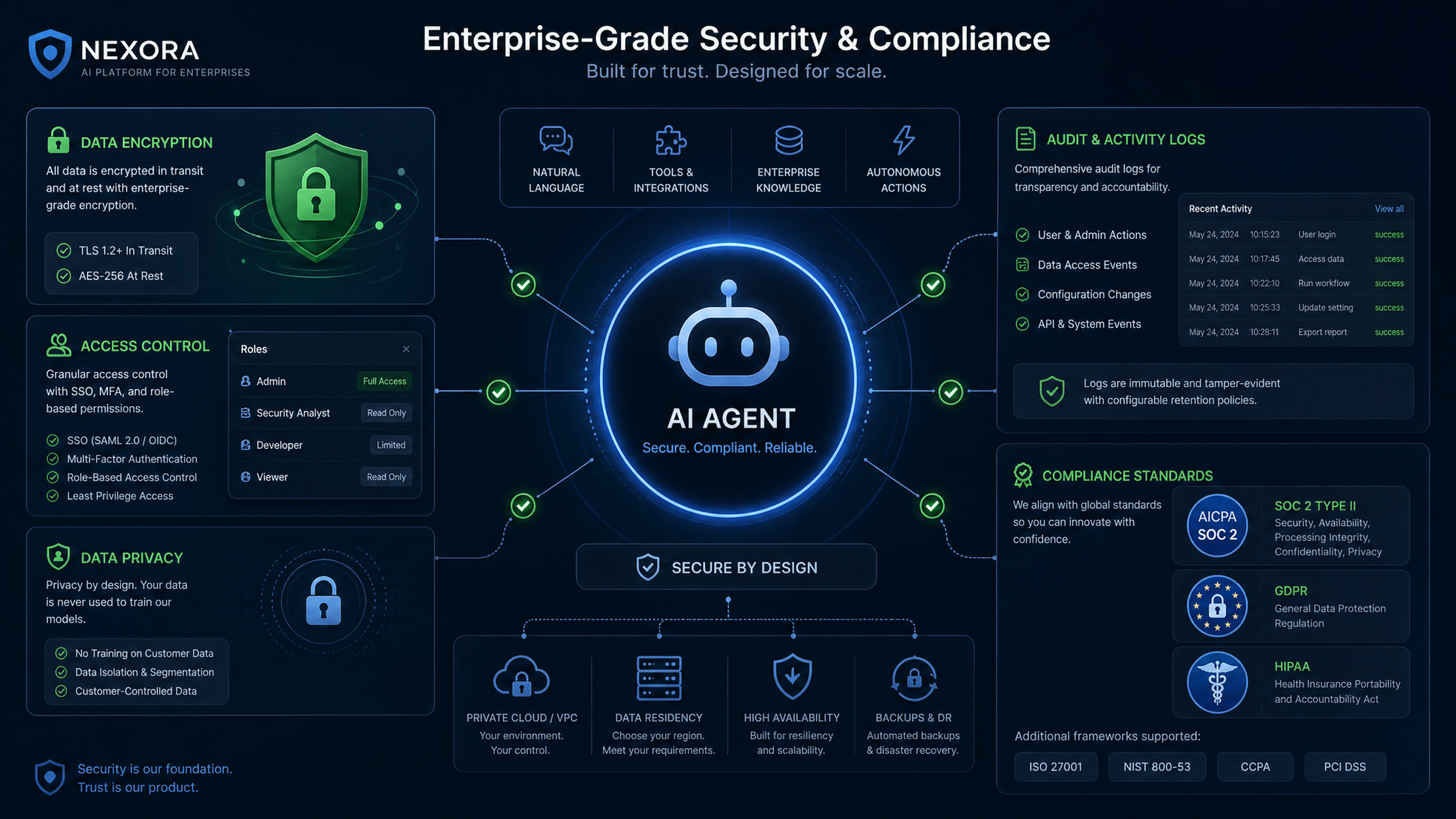
Upgrades are a natural moment to review data handling. Validate that model selection and logging policies match your compliance posture:
- Prompt redaction: Strip or mask PII from prompts and tool arguments where not strictly required for the task.
- Access control: Use scoped API keys per service; rotate keys on a cadence; restrict IAM privileges.
- Data retention: Confirm model/provider retention settings; adopt per-action retention policies where applicable.
- Auditability: Persist request metadata (without sensitive content) and model version IDs for audits and root-cause analyses.
Observability: What to Measure and How
Instrument end-to-end flows with structured logs and metrics. At minimum, capture:
- Request metadata: action, model, tier, token ceilings, tool list, seed (if any).
- Outcomes: latency, input/output tokens, cost estimate, error codes, schema validation pass/fail.
- Quality: eval scores per test cohort, human review flags, escalation rates.
- Drift indicators: rolling averages of output length, rate of tool invocations per action, vocabulary entropy for creative tasks.
Dashboards should surface comparisons across GPT-5.5 vs. GPT-5.6 by action. Add annotations for code or prompt deployments to correlate metric shifts. This practice underpins safe canaries and fast rollbacks.
Phased Migration Timeline (Sample Gantt)
Below is a sample 4-week plan for a midsize product surface with 8–12 GPT-backed endpoints.
Week 1: Audit and Harness
- Inventory endpoints, prompts, schemas, and tools. Define tier routing table.
- Implement abstraction layer with FeatureFlag(modelVersion, tier).
- Build golden tests and baseline evals on 5.5; add seed support.
- Introduce response_format.json_schema for 2–3 structured endpoints.
Week 2: Dual-Run and Shadow
- Enable 5.6 shadow traffic for all endpoints; store outputs and metrics.
- Fix schema gaps, prompt brittleness, and tool argument inconsistencies.
- Adopt streaming multiplexer for structured events.
- Initial cost analysis; adjust token ceilings and tier routing.
Week 3: Canary and Tuning
- Canary 1–5% production traffic on 3–4 endpoints; add automated rollbacks.
- Compare quality and latency; iterate prompts and tool descriptions.
- Refine caching and compression (Luna pre-summarization where useful).
- Finalize observability dashboards and alerts.
Week 4: Ramp, Cutover, and Hardening
- Ramp to 25% → 50% → 100% per endpoint with gates.
- Pin versions; document and freeze prompts; produce change logs.
- Archive 5.5 artifacts; keep a rollback path for 1–2 weeks.
- Post-mortem: identify pipeline improvements for the next upgrade cycle.
Frequently Asked Migration Questions
- Can I stay on chat.completions? Yes, but you’ll miss unified features (schemas/tools/streaming). New work should prefer /v1/responses.
- Do I need to rewrite all prompts? No; start with high-impact prompts. However, separating system/user roles and adopting schemas pays for itself quickly.
- What if the tier I want isn’t available in my region? Use a temporary mapping to the nearest available tier; monitor latency impact; revisit later.
- How do I keep costs in check? Cap tokens, choose tiers per action, cache aggressively, and pre-summarize or chunk documents.
- How do I ensure quality doesn’t drop? Golden tests with seeds, LLM-judged evals for open-ended tasks, and measured canaries with rollback triggers.
Complete Python Template: Switchable 5.5 ↔ 5.6 Client
from dataclasses import dataclass
from typing import List, Dict, Any, Optional
from openai import OpenAI

@dataclass
class ModelRoute:
    version: str  # "5.5" or "5.6"
    tier: Optional[str] = None  # "luna" | "sol" | "terra"
    name_override: Optional[str] = None

class GPTClient:
    def __init__(self, route: ModelRoute):
        self.client = OpenAI()
        self.route = route

    def model_name(self) -> str:
        if self.route.name_override:
            return self.route.name_override
        if self.route.version == "5.5":
            return "gpt-5.5-pro"
        if self.route.version == "5.6":
            base = "gpt-5.6"
            tier = self.route.tier or "sol"
            return f"{base}-{tier}"
        raise ValueError("Unknown version")

    def complete(self, system: str, user: str, schema: Optional[Dict[str, Any]] = None) -> Dict[str, Any]:
        model = self.model_name()
        if self.route.version == "5.5":
            r = self.client.chat.completions.create(
                model=model,
                messages=[{"role": "system", "content": system}, {"role": "user", "content": user}],
                temperature=0,
                max_tokens=300
            )
            return {"text": r.choices[0].message.content}
        else:
            kwargs = {
                "model": model,
                "input": [{"role": "system", "content": system}, {"role": "user", "content": user}],
                "temperature": 0,
                "max_output_tokens": 300
            }
            if schema:
                kwargs["response_format"] = {"type": "json_schema", "json_schema": schema}
            r = self.client.responses.create(**kwargs)
            if schema:
                return {"json": r.output[0].content[0].json}
            return {"text": r.output_text}

# Usage
route = ModelRoute(version="5.6", tier="sol")
cli = GPTClient(route)
system = "Summarize the text in one sentence."
user = "The Raft protocol provides a practical approach to distributed consensus."
out = cli.complete(system, user)
print(out)
Governance and Change Management
Treat the migration as a governed change:
- Design review: Share prompt diffs, tool schema changes, and tier routing with stakeholders (security, data, product).
- Sign-offs: Require approvers for cost-impacting changes and schema relaxations.
- Versioning: Semantically version prompts and tool definitions (e.g., tools v1.3). Keep a changelog.
- Runbooks: Document rollback and debugging procedures for on-call engineers.
Summary and Action Plan
Upgrading to GPT-5.6 is straightforward if you approach it methodically. Start by mapping model names and endpoints, then adopt the Responses API to unify chat, tooling, streaming, and JSON schemas. Select Sol/Terra/Luna per action with a cost-aware router. Invest in prompt normalization, strict JSON contracts, and test harnesses with seeds. Roll out with shadow mode and canaries, monitor with strong telemetry, and keep a crisp rollback playbook. Once stable, freeze prompts and versions, decommission 5.5 paths, and capture lessons for the next upgrade cycle.
For adjacent deep dives and reusable patterns, explore
For a deeper exploration of related concepts, our comprehensive guide on How OpenAI’s $30 Billion Revenue Target Is Reshaping the AI Industry: From Research Lab to Enterprise Platform provides detailed frameworks and practical strategies that complement the approaches discussed in this article.
and
For a deeper exploration of related concepts, our comprehensive guide on OpenAI Sunsets GPT-5.2 and GPT-5.3-Codex: What Developers Need to Know About the Model Transition provides detailed frameworks and practical strategies that complement the approaches discussed in this article.
to extend this playbook across your broader platform.
Access 40,000+ AI Prompts for ChatGPT, Claude & Codex — Free!
Subscribe to get instant access to our complete Notion Prompt Library — the largest curated collection of prompts for ChatGPT, Claude, OpenAI Codex, and other leading AI models. Optimized for real-world workflows across coding, research, content creation, and business.
