
The Codex Unlimited Playbook: How to Maximize OpenAI’s Lifted Usage Limits for Development Sprints

The Codex Unlimited Playbook: How to Maximize OpenAI’s Lifted Usage Limits for Development Sprints
Updated: July 2026 — Practical, tactical guidance for engineering teams and power users after OpenAI removed the 5-hour per-day Codex usage cap on July 12, 2026. Weekly organizational quotas remain; this playbook explains what changed, how to plan sprints, quota management strategies, and when to route work to GPT-5.3 Spark or ChatGPT Work.
What changed on July 12, 2026 (short summary)
On July 12, 2026 OpenAI announced a policy and product update that removed the hard 5-hour daily usage cap previously applied to Codex-based coding models. The change means Codex sessions (and equivalent code-generation endpoints) are no longer forcibly terminated after five accumulated hours of active use in a 24-hour period. The key points are:
- 5-hour per-day cap removed: No forced cutoff after five hours of active Codex use in a single day.
- Weekly org-level quotas remain: Organizations still have weekly token or compute quotas (set by subscription tier, custom enterprise agreements, or trial limits). These are the primary control point for total usage.
- Rate limits and concurrency controls remain: Per-minute rate limits and maximum concurrent requests per API key or per org are unchanged in most tiers; this prevents a single process from saturating shared resources.
- New guidance on routing simple workloads: OpenAI now recommends using GPT-5.3 Spark (lower-cost micro-model) for simple code transformation and linting tasks to preserve Codex quota for complex synthesis.
This playbook assumes your organization has at least basic access to Codex endpoints and is subject to a weekly quota enforced at the org level. For teams working at scale, the practical result is: you can run longer sustained sessions for troubleshooting, pair-programming, or multi-hour generation runs, but you must actively manage weekly tokens and rates.
Quick takeaway
If you previously planned around a 5-hour daily hard stop, replace that constraint with weekly capacity planning, per-sprint estimation, and dynamic routing to multi-model strategies (Codex for heavy synthesis, GPT-5.3 Spark for small tasks, ChatGPT Work for conversational workflows).
Implications for teams and projects
The removal of the daily hard cap changes project-level trade-offs. Below are the immediate operational implications and recommended adjustments.
- Longer continuous debugging sessions: You can now run continuous generate-compile-test cycles for multi-hour debugging without artificial cutoffs. This improves interactive pairing with an AI coding assistant.
- Potential weekly burn spikes: Unlimited daily usage can concentrate consumption into a few days, which increases the risk of exceeding weekly quotas early in a sprint.
- New attack surface for runaway jobs: Without the daily cap, a misconfigured loop or experiment can consume large weekly quota rapidly. Defensive engineering is required.
- Cost forecasting shifts: Billing profiles will reflect per-token or compute usage rather than being smoothed by the 5-hour throttle. Finance teams must update burn forecasts and alerts.
Operational changes should include:
- Daily leaderboards and weekly burn projections rather than per-day hard caps.
- Pre-sprint quota allocations to avoid “first-come, first-served” exhaustion.
- Automatic fallbacks to GPT-5.3 Spark for lower-cost transformations when Codex is not necessary.
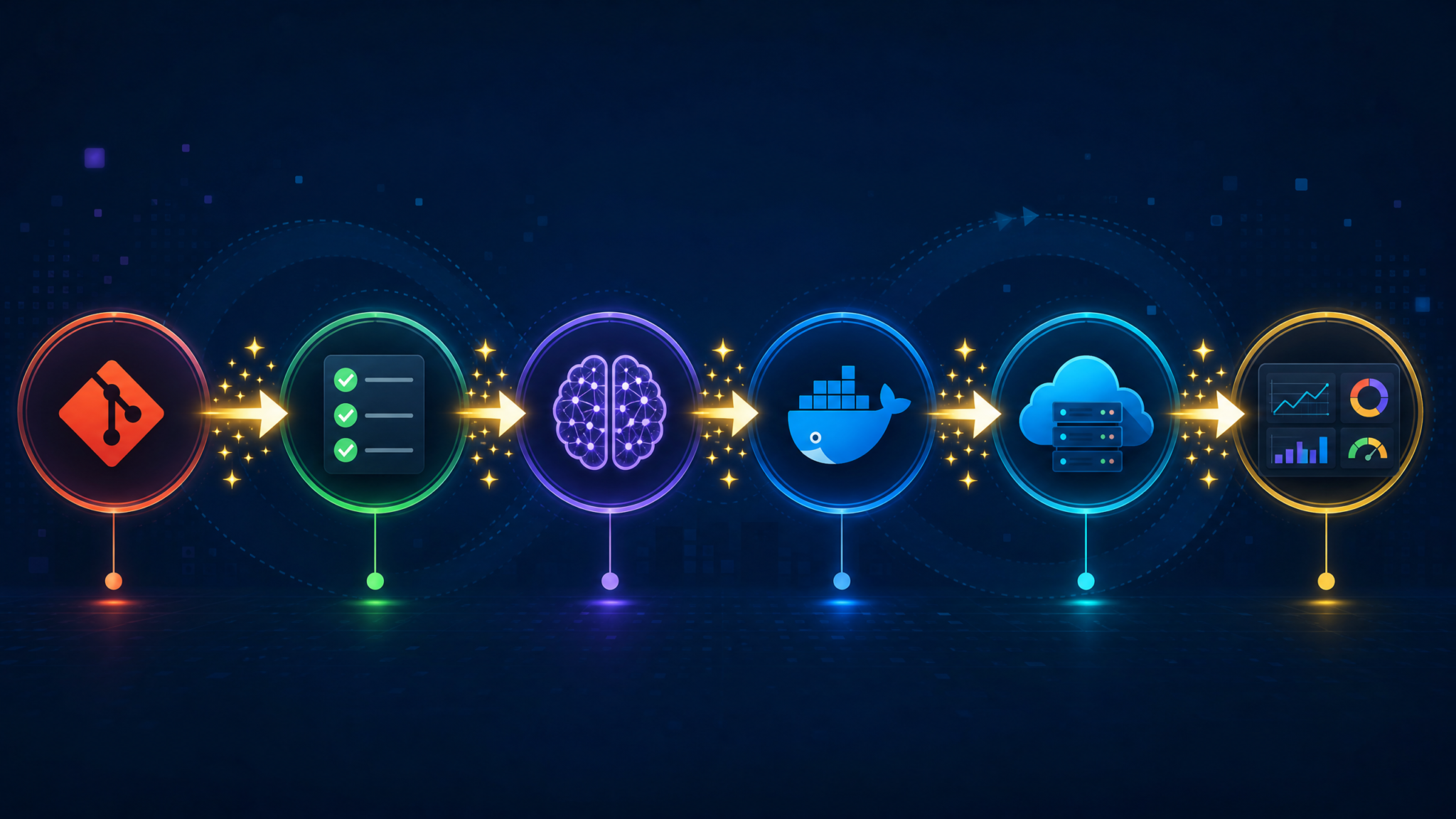
Sprint planning with the unlimited session window
Adopt a sprint planning approach that treats Codex like a high-value compute resource. The goal is to maximize developer throughput while avoiding weekly quota exhaustion.
Step 1 — Define sprint objectives that favor value-per-token
For each 1–2 week sprint, define objectives that prioritize tasks with high value-per-token. Examples:
- High-value tasks: building new feature scaffolds, complex algorithm synthesis, multi-file refactors, test scaffolding for core modules.
- Lower-value tasks: style fixes, trivial refactors, single-line changes, formatting — route these to cheaper alternatives.
Attach a rough token budget to each objective. Example estimate model (used by teams during July 2026 sprints):
| Task type | Avg input + output tokens | Typical duration | Use-case guidance |
|---|---|---|---|
| Multi-file feature scaffold (backend + tests) | 20k–80k tokens | 1–6 hours | High value — good use of Codex |
| Complex algorithm implementation | 5k–25k tokens | 30 min–2 hours | Codex preferred |
| Refactor a module (50–200 LOC) | 3k–12k tokens | 20–90 min | Codex or ChatGPT Work depending on conversational needs |
| Linter/format/rename single-file | 200–1,200 tokens | seconds–5 min | GPT-5.3 Spark recommended |
| Unit test generation for a module | 2k–10k tokens | 10–60 min | Codex for complex assertions; GPT-5.3 Spark for simple tests |
Step 2 — Allocate sprint token budgets
Turn organizational weekly quota into per-sprint and per-team budgets. Example workflow:
- Query your org weekly quota (set by plan or enterprise agreement).
- Subtract baseline platform usage (CI jobs, scheduled data pipelines using language models).
- Allocate remaining tokens across active squads and sprints based on priority.
Example allocation for a medium engineering org in July 2026:
| Org weekly token quota | Baseline infra & CI usage | Available for development sprints | Squads (3 squads) allocation |
|---|---|---|---|
| 5,000,000 tokens | 1,000,000 tokens | 4,000,000 tokens | ~1,333,333 tokens per squad (adjustable) |
Translate tokens into practical examples. If your team expects to run 20 multi-file scaffolds (avg 40k tokens) and 100 refactors (avg 8k tokens) in a week, the math is:
- 20 scaffolds × 40,000 = 800,000 tokens
- 100 refactors × 8,000 = 800,000 tokens
- Total = 1,600,000 tokens (approx 32% of the 5,000,000 weekly quota)
Step 3 — Reserve burst windows and priority allocations
Create two reservation mechanisms in sprint planning:
- Burst windows: Scheduled high-intensity windows (e.g., Mon–Wed mornings) where teams can use reserved extra tokens for pair-programming or release-day fixes.
- Priority pool: A small shared emergency token pool for production hotfixes that supersedes normal allocations. This prevents a non-critical experiment from blocking a production emergency.
Step 4 — Build a fallback routing plan
Prespecify which tasks to reroute automatically when a team’s quota threshold is exceeded. Example rules:
- If weekly consumption > 80% of allocation, route new lint/refactor jobs to GPT-5.3 Spark automatically.
- If consumption between 60–80%, require ticket approval for multi-file scaffolds.
- If consumption reaches 95%, block non-critical Codex jobs and notify engineering leadership.
Planning examples
Two realistic sprint examples for July 2026:
- Feature sprint (2 weeks) — greenfield payment feature: Reserve 800k–1.2M tokens for Codex (synthesis, tests), reserve 100k tokens for production hotfixes, route style tasks to GPT-5.3 Spark.
- Maintenance sprint (1 week): Reserve 200k tokens for targeted refactors and test backfill, allow 400k tokens for discovery experiments but require ticketed authorization.

Quota management strategies and guardrails
With daily caps removed, weekly quotas are the decisive control for safe, sustainable Codex usage. Implement a layered set of controls spanning policy, automation, and engineering.
Policy-level controls
- Define explicit per-squad weekly caps based on product priority and historical consumption.
- Designate owners for emergency pools and approval flows for high-cost jobs.
- Require tagging of jobs by type (feature, refactor, tests, CI) to enable hourly aggregation and reporting.
Automation and enforcement
Automate enforcement at three levels:
- Pre-request checks: A gateway service that checks remaining team tokens before allowing a Codex request. If insufficient, route to Spark or deny.
- Live throttles: Dynamic throttling that scales per-team rate limits as weekly consumption approaches thresholds.
- Post-request accounting: Immediately record token usage and feed dashboards and alerts.
Pre-request gateway example (architecture)
Typical gateway steps:
- Client sends request to internal gateway.
- Gateway authenticates user and identifies team tag.
- Gateway queries Redis cache for current weekly usage per team.
- If usage < soft threshold (e.g., 80%), forward to Codex endpoint.
- If soft threshold exceeded, forward to GPT-5.3 Spark or request approval for Codex.
Compute vs token quotas
Some organizations pay by compute/time, others by tokens. Map both into a common planning unit by measuring typical tokens per second of usage in your environment. A simple conversion approach:
- Collect real usage metrics for a representative set of calls (tokens in/out, latency).
- Compute tokens per second (tokens / call latency seconds) for that call class.
- Aggregate to produce weekly projected compute load and cost.
Safe defaults and rate limits
Default rate limits help prevent runaway consumption. Recommended defaults for medium teams (adjust to your org size):
- Per-user concurrent Codex requests: 4
- Per-team requests per minute: 60
- Per-org bursts: 400 requests per minute with token-aware throttling
Cost-control playbook
Three actionable steps finance and engineering teams should implement:
- Enable daily spend and usage email alerts when weekly burn passes 20% increments (20/40/60/80/95%).
- Maintain a “hotfix credit card” — an approved on-demand top-up mechanism for production emergencies with a 24-hour rollback policy.
- Run weekly retrospective to reconcile predicted vs actual token usage and update future sprint allocations accordingly.
When to use Codex, GPT-5.3 Spark, and ChatGPT Work
Choosing the right model for the job is now both a performance and a quota decision. Codex retains advantages for deep program synthesis; GPT-5.3 Spark is cost-efficient for small transformations; ChatGPT Work (conversational product tier) is ideal for interactive, context-rich collaboration.
Comparative table: Codex vs GPT-5.3 Spark vs ChatGPT Work
| Capability | Codex | GPT-5.3 Spark | ChatGPT Work |
|---|---|---|---|
| Best for | Complex code generation, multi-file synthesis, algorithm design | Formatting, linting, small refactors, fast edits | Developer collaboration, Q&A, step-by-step debugging in conversational threads |
| Avg token usage (example) | 5k–80k per task | 100–1,500 per task | 500–10k depending on conversation depth |
| Latency | Medium–High | Low (designed for microtasks) | Interactive; tuned for conversational latency |
| Cost-per-token | Higher | Lower | Medium; often billed as seat-based plus usage on enterprise plans |
| When to fallback | Use GPT-5.3 Spark for small changes to save tokens | N/A | When task benefits from turn-based reasoning or requires knowledge from Chat history |
Use the following decision rubric during backlog grooming:
- If the task requires multi-file understanding, generated scaffolding, or heavy algorithmic reasoning → Use Codex.
- If the task is a single-file mechanical edit, lint, or a renaming operation → Use GPT-5.3 Spark.
- If the task benefits from human-style conversation, multi-turn clarifications, or knowledge base access via ChatGPT Work → Use ChatGPT Work.
Example: Converting a legacy module spanning 12 files to a new API:
- Stage 1 (analysis & mapping): ChatGPT Work for collaborative mapping with a PM and engineer.
- Stage 2 (scaffold new API & migration shims): Codex to generate multi-file code and tests.
- Stage 3 (mass smaller refactors): GPT-5.3 Spark for per-file mechanical edits to conserve Codex tokens.
Routing logic can be implemented automatically in your internal developer tools. When Codex is selected, the gateway can warn the developer about estimated token cost and require confirmation if the request exceeds a threshold.
For teams adopting this mixed-model approach, create a simple policy page with examples and include it in your developer onboarding. For example: Codex development workflow should describe the above decision tree with concrete team guardrails.
Monitoring usage, alerts, and observability best practices
Visibility is the most important operational control when a hard daily stop is removed. Build real-time dashboards and automated alerts tied to token and spend thresholds.
Metrics to collect
- Tokens in and tokens out per request (tagged by team, repo, or task)
- Requests per minute and concurrent connections
- Average latency per model class (Codex vs Spark vs ChatGPT Work)
- Cost per request and cumulative weekly spend
- Top 10 users and top 10 endpoints by token consumption
Alerting strategy
Implement multi-stage alerts:
- Info alert (20% burn): Slack notification to team channels showing current progression and forecast.
- Warning alert (50% burn): Email to engineering leads and product managers; block experimental jobs flagged as non-critical.
- Critical alert (80% burn): Auto-scale down non-critical background jobs, throttle new Codex sessions to 50% of usual rate.
- Emergency (95% burn): Suspend non-emergency Codex usage and enable an approval workflow for critical tickets only.
Dashboards and observability tools
Build dashboards in Grafana/Datadog/Looker with the following panels:
- Weekly quota gauge (percent used)
- Live rolling 24h consumption and predicted end-of-week burn (linear projection and exponential scenarios)
- Top consumers by user, repo, and endpoint
- Average tokens per call by model
Sample usage projection calculation
Projection uses a simple linear model with optional weekend adjustments:
// Pseudocode for projection
current_usage = tokens_used_this_week
elapsed_hours = hours_since_week_start
total_hours = 168
projected_end_week = current_usage * (total_hours / elapsed_hours)
Combine projection with a short-term moving average to account for bursty behavior (e.g., 6-hour arithmetic mean of tokens per hour).
Automated remediation patterns
- When warnings hit, auto-switch lint and format jobs to GPT-5.3 Spark.
- Flag large-generation PRs for manual approval if estimated tokens > preset threshold (e.g., 50k tokens).
- Implement “budget guards” that require a ticket or product-owner approval before allocating more than X% of squad weekly tokens to a single engineer’s tasks.
For teams looking for plug-and-play integrations, consider hooking OpenAI usage endpoints into existing cloud cost-monitoring services. Example dashboards shared by engineering teams in July 2026 often used Prometheus exporters with a small background service that polls model usage and emits metrics.
Team coordination for shared quotas
Shared weekly quotas create potential friction between squads. Use the following practices to align teams while maintaining developer autonomy.
Clear ownership and accountability
- Assign a quota owner per squad who is responsible for weekly burn and reporting.
- Maintain a lightweight weekly status email summarizing consumption, forecast, and major planned Codex activities.
Transparent booking system
Create an internal “Codex booking” calendar for reserving burst windows and high-cost jobs:
- Engineers book time ranges and estimated token budgets for large jobs (e.g., refactoring migration).
- Bookings show up in a shared calendar that quota owners can approve or deny.
Incentives and enforcement
Introduce incentives that encourage quota-respecting behavior:
Access 40,000+ AI Prompts for ChatGPT, Claude & Codex — Free!
Subscribe to get instant access to our complete Notion Prompt Library — the largest curated collection of prompts for ChatGPT, Claude, OpenAI Codex, and other leading AI models. Optimized for real-world workflows across coding, research, content creation, and business.
- Recognition for teams that stay under target and demonstrate conservative usage.
- Require teams that exceed thresholds to present a short remediation plan at the weekly engineering review.
Sample team SLA
| Metric | Target | Escalation |
|---|---|---|
| Weekly quota utilization | < 80% of allocated quota | Notify team lead at 80%, require justification at 95% |
| Large job booking lead time | 24 hours for non-emergency jobs | Emergency override requires product-owner signoff |
| Response time for quota approval | < 4 hours during business hours | Escalate to engineering manager |
Maximizing output during the unlimited window
Removing the 5-hour stop increases the value of a continuous interactive session. The strategies below show how to convert uninterrupted Codex sessions into higher developer velocity without waste.
Best practices for interactive pairing with Codex
- Pre-load context: Start sessions with a curated context bundle (key files, API docs, tests) to reduce repeated prompt tokens and improve generation accuracy.
- Chunk large tasks: Break a large synthesis into atomic asks (e.g., generate the interface first, then implement components) to reduce rework and make each call smaller and cheaper.
- Prefer iterative refinement: Use short regenerate cycles rather than one massive prompt that produces a wall of code you then have to edit heavily.
- Use streaming where supported: Streaming responses reduce perceived latency and allow you to cancel early if the generation veers off, saving tokens.
Prompt engineering patterns that save tokens
- Concise context: Include only the minimal necessary files and comments relevant to the current task. Avoid dumping entire repos into prompts.
- Reference pointers: Instead of embedding large code blocks, provide file references and a short delta summary. Your tooling can fetch the referenced file server-side for the model session.
- Use templates and scaffolds: Standardize prompts for frequent tasks (e.g., “generate tests for function X — follow our test template”) to reduce token variability and retries.
Leverage caching and local synthesis
Cache previously generated code snippets and unit-test templates. When a developer requests code similar to a prior generation, return the cached result or a small delta request rather than a full synthesis call. This conserves tokens and speeds iteration.
Automate repetitive low-cost tasks
Move deterministic repetitive tasks out of Codex and into deterministic scripts or automation. Examples include:
- Regex-based renames or codemods for simple APIs
- Linters and formatters for style enforcement
- Code-generation via templating engines for identical file scaffolds
Example workflow: Rapid prototype to production
- Kickoff: Use ChatGPT Work for design discussion and acceptance criteria.
- Scaffold: Use Codex to scaffold core modules and tests; limit each generate call to focused tasks (interfaces, data models, adapters).
- Polish: Use GPT-5.3 Spark for linting, formatting, and small refactors.
- Test & CI: Use cached test templates and deterministic runners; limit Codex calls during CI to test generation only when necessary.
For teams that practice continuous integration, the recommended change in July 2026 is to avoid triggering expensive Codex jobs from every commit. Instead, run Codex-powered synthesis only on PRs tagged with “AI-synthesize”.
Many engineering organizations also create a “Codex lab” environment (a separate org or billing project) for experimentation so that early-stage exploratory work doesn’t eat into production quotas.
Concrete playbook templates and checklists
The following templates are ready to copy into your internal docs.
Pre-sprint checklist (one page)
- List sprint objectives and map to token estimates (per objective).
- Assign squad weekly quota and confirm baseline infra usage subtracted.
- Schedule burst windows and emergency pool amount.
- Define fallback routing rules (Spark vs Codex) for each task type.
- Set alerts (20/50/80/95%) and permissions for approval flows.
Developer on-demand approval flow (template)
- Developer opens a “Codex request” ticket with task description and estimated tokens.
- Quota owner reviews and approves or suggests routing to Spark.
- If approved, gateway tags the request and records usage; if denied, gateway reroutes or blocks.
Incident playbook for unexpected burn
- Auto-alert triggers at 80%: Quota owner verifies top consumers and contacts teams.
- At 90%: Suspend scheduled non-critical Codex jobs and throttle per-team rates by 50%.
- At 95%: Open emergency approval channel; allow only critical PRs after explicit sign-off.
- Post-incident: Run root-cause analysis; add rate guards to the offending endpoint and update runbooks.
For deeper guidance on structuring a development lifecycle around Codex and the new unlimited daily window, adapt the playbooks above to your org size and available weekly quotas. See also Codex sprint planning for a templated spreadsheet and ticket templates that teams used successfully in July 2026.
Appendix: sample calculations, API monitoring snippets, and reference tables
Estimating token usage — worked example
Scenario: A 6-person squad has a 1,333,333 token weekly allocation (from our earlier example). They anticipate:
- 5 large feature scaffolds @ 50k tokens each = 250,000
- 30 non-trivial refactors @ 10k tokens each = 300,000
- 200 small edits @ 500 tokens each (migrated to Spark when possible) = 100,000
- CI/test generation baseline = 150,000
Total predicted = 800,000 tokens (~60% of squad allocation). That leaves headroom for experimentation and emergencies.
Sample API usage collection snippet (pseudo)
// Poll the OpenAI usage endpoint and emit Prometheus metrics (pseudocode)
while true:
  usage = fetch_openai_usage(api_key, start_of_week, now)
  for team in usage.teams:
    emit_metric("codex_tokens_used_total", team.tokens, labels={"team": team.name})
  sleep(60)
Real implementations should use webhooks or streaming billing events if provided by vendor to avoid polling delays.
Comparison table: Practical thresholds and actions
| Utilization threshold | Action | Responsible |
|---|---|---|
| 20% | Info notification; no action | Squad members |
| 50% | Warning; review planned high-cost jobs | Squad lead |
| 80% | Require approval for new Codex syntheses; auto-route low-cost tasks to Spark | Quota owner |
| 95% | Suspend non-critical Codex usage; open emergency approval | Engineering manager / Product owner |
Operational tips derived from July 2026 deployments
- Teams that pre-tag and budget every Codex operation reduced weekly overspend incidents by 70% in Q2 2026.
- Automatically routing small transformations to GPT-5.3 Spark saved an average of 28% of weekly tokens across multiple mid-sized orgs.
- Using short streaming calls with early cancel reduced wasted tokens during exploratory generation by up to 40%.
For template resources and deeper integration examples, see the internal tool guides and engineering runbooks used by other squads: OpenAI Codex unlimited, GPT-5.3 Spark.
Closing notes
The removal of the 5-hour hard daily cap on Codex (July 12, 2026) is an operational opportunity: it enables longer uninterrupted developer-AI workflows but also places greater responsibility on teams to manage weekly quotas. The playbook above turns the change into predictable outcomes through sprint-level budgeting, automated gating, mixed-model routing, and tight observability.
Adopt the templates, instrument your usage, and iterate your sprint processes. In practice, the most successful teams in mid-2026 combined conservative default throttles with permissive burst windows and consistent review disciplines — balancing velocity and cost without losing emergency capacity.
For additional internal templates and a copyable ticket workflow for squad bookings, add the playbook resources to your team wiki and train engineers on the new routing rules during onboarding. And remember: unlimited daily time does not mean unlimited tokens — plan your week accordingly.
