
The Future of AI in Education: Personalized Learning and Intelligent Tutoring Systems
Introduction: Why AI Matters in Education

The coming decade promises a major reconfiguration of how learning is organized, delivered, and assessed. This article argues that artificial intelligence—particularly personalized learning systems and intelligent tutoring systems (ITS)—will be central to that transformation. Traditional, one-size-fits-all approaches to schooling struggle to accommodate the deep diversity of learners’ backgrounds, prior knowledge, learning pace, and goals. At the same time, the volume and complexity of knowledge learners must master are expanding fast across disciplines. AI’s capacity to analyze large-scale learner data, adapt instruction in real time, and scale individualized support offers a pragmatic and evidence-based path to closing gaps in outcomes and unlocking more efficient, equitable learning journeys.
The problem statement: diversity of learners, pace differences, and system constraints
Educational systems were largely designed for economies of scale: cohorts of students progressing through standardized curricula on the same schedule. That design creates persistent mismatches between instruction and learner needs:
- Learner diversity — cognitive styles, prior attainment, language proficiency, socio-emotional supports, and special needs create highly variable starting points and trajectories.
- Pace differences — some learners master concepts rapidly and need enrichment; others require repeated exposure and scaffolding to achieve mastery.
- System constraints — finite teacher time, large class sizes, uneven resource distribution, and rigid assessment cycles limit opportunities for individualized support.
These mismatches produce inefficiencies (time spent on non-optimal instruction), inequities (systemic gaps by socioeconomic status and language), and opportunity costs (diminished motivation and increased dropout risk). As curricula grow more complex and lifetimes require continuous upskilling, these problems will intensify unless systems evolve.
What AI brings: data-driven adaptivity, scalability, and continuous improvement
AI technologies address the root constraints of conventional models by introducing three interlocking capabilities:
- Data-driven adaptivity: ITS and personalized platforms use fine-grained interaction data to model student knowledge, misconceptions, and affective state. That modeling enables dynamically tailored instruction—sequencing content, adjusting difficulty, and delivering targeted feedback precisely when learners need it.
- Scalability: Machine-driven tutoring can extend individualized support beyond what any single teacher can provide, offering synchronous or asynchronous remediation and enrichment at scale while freeing educators to focus on higher-level facilitation, mentorship, and complex pedagogical tasks.
- Continuous improvement: Learning systems instrumented with AI support iterative refinement. A/B testing, reinforcement learning, and model updating allow curricula, feedback heuristics, and intervention strategies to improve continuously based on observed outcomes.
Beyond instruction, AI assists administrative and operational functions—predicting enrollment trends, optimizing schedules, automating grading of routine assessments, and surfacing early-warning indicators for students at risk. Together, these capabilities create a more responsive, efficient, and evidence-based education ecosystem.
| Characteristic | Traditional One-Size-Fits-All | AI-Enabled Personalized Learning |
|---|---|---|
| Instructional pacing | Uniform; dictated by calendar | Adaptive; individualized to mastery |
| Feedback | Periodic, teacher-limited | Immediate, data-informed, scalable |
| Assessment | Summative, occasional | Continuous formative diagnostics |
| Scalability | Constrained by staffing | High—supports millions of learners |
| Improvement loop | Manual, slow | Automated, iterative |
Brief roadmap of the article (what readers will learn)
This article unpacks the promise and practicalities of AI in education across four major domains:
- Foundations: core AI concepts, pedagogical principles behind personalized learning and ITS, and a primer on relevant technologies (How to Use Codex Image Generation for UI Mockups and Design Prototyping: Complete Developer Playbook).
- Design and implementation: architectures for ITS, data requirements, human-AI workflows, classroom integration strategies, and change-management considerations for institutions.
- Evidence and outcomes: empirical findings on learning gains, equity impacts, cost-effectiveness, and real-world case studies that illustrate successes and failures.
- Risks, governance, and future directions: ethical considerations (bias, privacy, transparency), policy levers for quality assurance, and emerging frontiers such as multimodal tutoring and lifelong learning ecosystems.
Readers will leave with a grounded understanding of how AI-driven personalization differs from incremental edtech, what is required to implement effective ITS, how to evaluate vendor claims and research evidence, and how institutions can prepare teachers, students, and families for this transition. The subsequent sections balance technical detail with policy and pedagogical implications so that educators, administrators, technologists, and policymakers can make informed decisions about adopting AI responsibly and effectively.
The Case for AI in Education: Needs, Evidence, and Market Trends
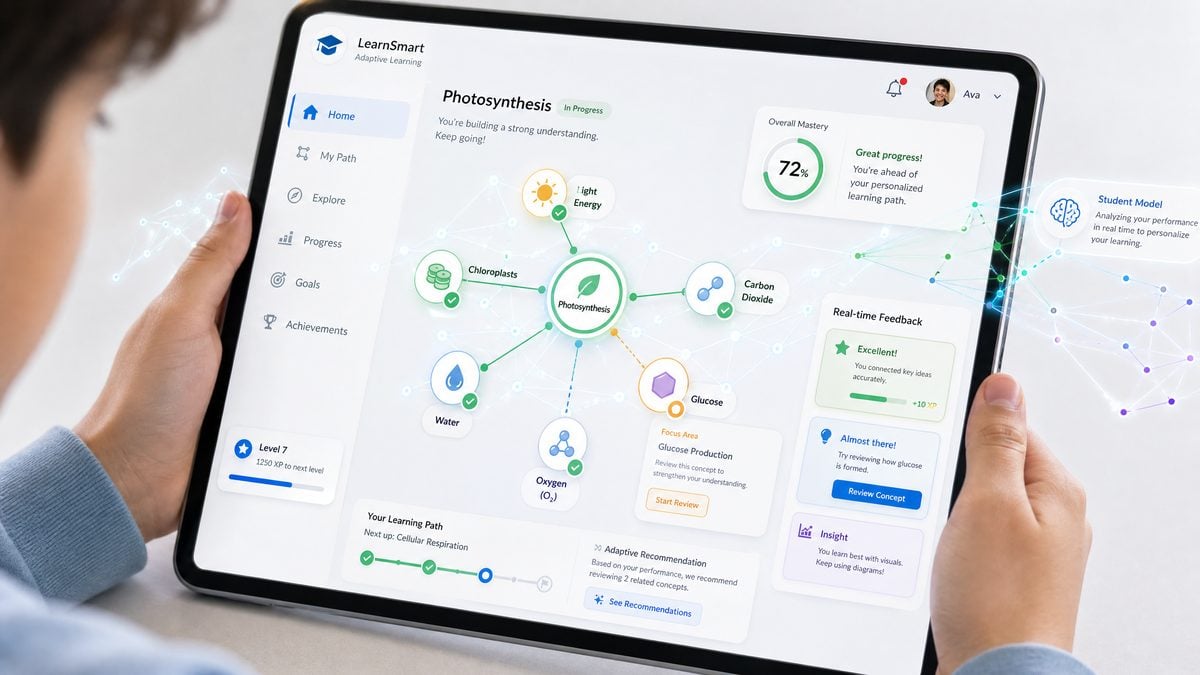
Adopting AI at scale in education is not a technological exercise; it is a response to persistent system-level problems, a growing body of empirical evidence that adaptive learning and intelligent tutoring systems (ITS) produce measurable learning gains, clear market and policy momentum, and an economic case that aligns better student outcomes with labor-market needs. This section summarizes the unmet needs AI can address, the research base and representative effect sizes, market and policy signals, a cost–benefit framing, and a realistic acknowledgment of limits and risks that require careful implementation and governance.
What problems does AI solve?
Education systems worldwide face recurring operational and instructional pain points that constrain learning outcomes and equity:
- Large class sizes and teacher bandwidth: Many classrooms exceed the capacity of a single teacher to provide timely, individualized diagnostic feedback, especially on higher-order reasoning and procedural practice.
- Limited teacher time for formative assessment: Manual grading and informal assessment consume teacher time that could be redirected to instruction and intervention planning.
- Curricular mismatch and variability in readiness: Students arrive with diverse prior knowledge and learning trajectories; one-size-fits-all pacing leads to both wasted teacher effort and student disengagement.
- Assessment lags and actionable data: Summative assessments often provide feedback too late to inform instruction; teachers need real-time, fine-grained diagnostics to adapt teaching.
AI-powered systems — adaptive learning platforms, ITS, automated assessment tools, and analytics dashboards — are designed to address these gaps by scaling diagnostic feedback, personalizing practice pathways, automating routine assessment tasks, and surfacing interpretable recommendations for teachers.
Research snapshot
The empirical literature on adaptive systems and ITS spans laboratory experiments, randomized controlled trials (RCTs) in schools, and meta-analyses. While methods and contexts vary, convergent findings show that well-designed, curriculum-aligned ITS and adaptive systems consistently produce positive learning effects, particularly for procedural and domain-specific knowledge when used as part of blended instructional models.
| Study / Report | Design | Representative Effect Size (Hedges’ g) | Notes |
|---|---|---|---|
| Bloom (1984) | Review | ~+2.0 SD (Human one-on-one tutoring) | “Two-sigma” finding illustrating potential ceiling for individualized tutoring; benchmark for ITS goals. |
| VanLehn (2011) | Meta-analysis of ITS studies | Moderate to large; many studies show effects comparable to human tutoring on specific tasks | Concluded ITS can achieve substantial gains relative to classroom instruction for targeted domains. |
| Ma, Adesope, Nesbit & Liu (2014) | Meta-analysis | Small-to-moderate (typical range 0.20–0.50) | Effects vary by outcome, domain, and comparison condition; stronger for problem-solving practice and formative feedback. |
| PANE et al. / RAND (personalized learning evaluations) | Large-scale RCT/quasi-experimental | Small to modest (e.g., ~0.1–0.2 in some math outcomes) | Positive effects when personalized learning practices were implemented with fidelity; variability across schools. |
| Koedinger, Corbett & colleagues (Cognitive tutors) | Multiple RCTs and quasi-experimental | Small-to-moderate (0.2–0.6) depending on context | Demonstrated measurable gains in mathematics when ITS supplemented classroom instruction. |
Across meta-analyses and systematic reviews, effect-size estimates vary depending on the outcome (mastery of specific skills vs. transfer), comparison condition (business-as-usual vs. other technological interventions), and fidelity of implementation. A pragmatic summary from the literature: adaptive systems and ITS can produce small-to-moderate average effects on learning outcomes (commonly reported in the 0.2–0.6 standard-deviation range), with higher impacts when systems provide immediate, explanatory feedback and are integrated into teacher-led instruction.
Codex In-App Browsing vs Chrome Extension: Which Web Integration Should Developers Use in 2026 to methodology appendix on effect-size interpretation and study selection.
Market momentum
Several market and policy signals indicate rapid adoption and growing institutional support for AI in education:
- Edtech market growth: Investment and revenues in educational technology have grown sharply over the last decade as digital learning moved from a niche to mainstream utility in K–12, higher education, and corporate training. Venture, private equity, and corporate R&D flows have prioritized adaptive learning, learning analytics, and automated assessment.
- Major investments and partnerships: Large technology firms, startups, and publishers are investing in AI capabilities (natural language processing, automated scoring, recommender systems) and forming partnerships with school districts and higher-education institutions to pilot scale deployments.
- Government pilots and strategy: National and regional governments have launched research programs and pilots to evaluate AI in classrooms, issued guidance and funding streams for edtech adoption, and included AI competencies in workforce strategies.
- International initiatives: Multilateral organizations and consortia are producing guidance on AI in education (technical standards, ethical frameworks, and interoperability) and supporting cross-country pilots that test ITS in diverse contexts.
These signals reflect both supply-side capacity (better models, cloud infrastructure) and demand-side needs (teacher shortages, pressure to raise attainment and make learning more relevant to workforce demands).
Cost–benefit framing
Scaling AI in education should be framed as an investment decision: costs include procurement, integration, professional development, data infrastructure, and ongoing maintenance; benefits include time saved by teachers, improved student retention and attainment, and long-term economic returns from a more skilled workforce.
- Teacher time: Automated grading, formative diagnostics, and content-recommendation engines can free teacher hours currently spent on repetitive tasks, permitting more time for coaching, differentiation, and socio-emotional support. Demonstration projects and district pilots frequently report single-digit to low-double-digit percentage reductions in time spent on administrative tasks.
- Retention and attainment: Better-targeted instruction reduces off-track rates and summer learning loss; even small improvements in grade-level mastery compound over time and increase graduation and postsecondary enrollment probabilities.
- Workforce impacts: Higher-quality foundational skills (e.g., numeracy, literacy, problem solving) translate into higher productivity and lifetime earnings; macroeconomic models typically show positive returns to investments in basic and technical education.
Quantifying ROI depends on context, but conservative scenario modeling shows that moderate learning gains (e.g., a 0.1–0.2 SD increase across cohorts) can justify medium-term investments when scaled across large student populations because human-capital gains persist into employment.
Counterpoints: why AI is not a silver bullet
While the evidence and market signals support adoption, AI is not a panacea. Key caveats include:
- Implementation sensitivity: Benefits are contingent on alignment with curriculum, teacher training, and uninterrupted data flows; poorly integrated tools produce little or no gain.
- Equity and access: Digital divides in connectivity, devices, and language resources can widen inequities if not proactively addressed.
- Data quality and bias: Algorithmic recommendations require accurate representations of students’ knowledge; biased or incomplete data can produce unfair or ineffective interventions.
- Privacy and governance: Student data protection, consent, and transparency are non-negotiable prerequisites for responsible scaling.
These limitations set up the ethical, policy, and implementation sections that follow. Responsible scale-up requires evidence-driven procurement, continuous evaluation, teacher-centered design, and governance frameworks that ensure AI complements — rather than replaces — professional judgment.
Personalized Learning: Models, Technologies, and Classroom Practices
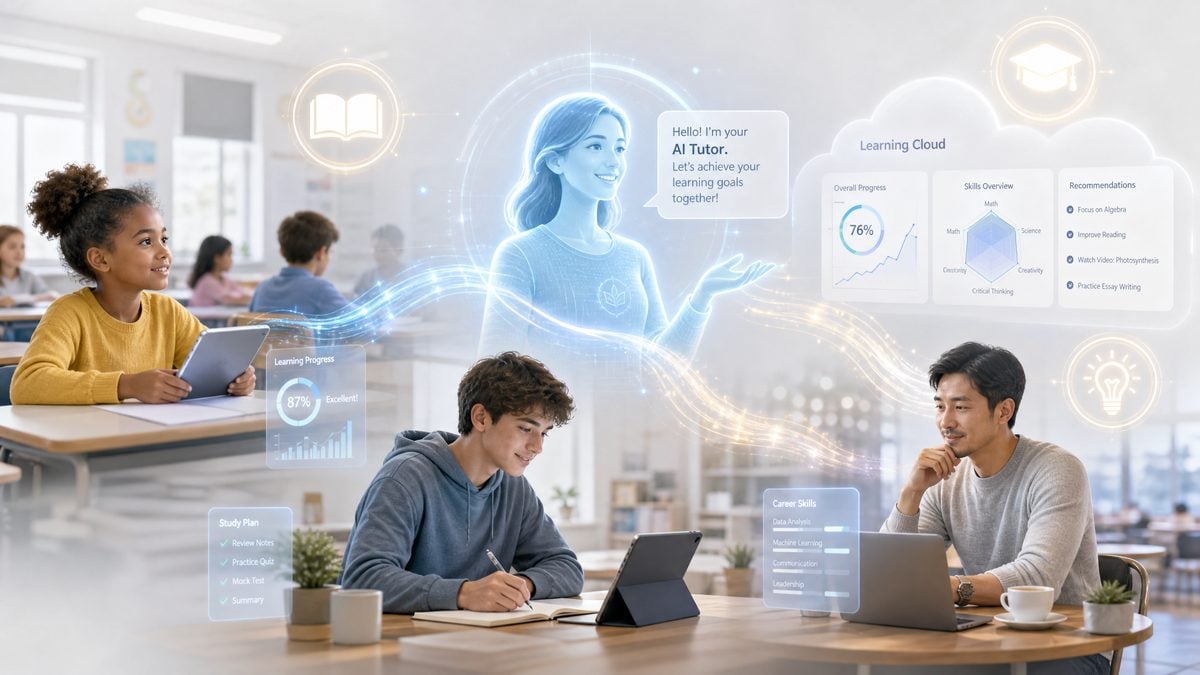
Personalized learning powered by AI refers to instructional approaches and systems that use data and algorithmic decision-making to tailor content, pacing, feedback, and pathways to an individual learner’s needs, prior knowledge, preferences, and goals. It differs from traditional differentiated instruction in scale and automation: differentiated instruction is a teacher-led practice of adapting materials and grouping in response to observed differences, while AI-enabled personalization continuously models learners and automatically recommends sequenced actions, freeing teachers to focus on higher-order guidance.
Definition and taxonomy
AI-driven personalization can be usefully categorized into three broad models:
| Model | Description | Typical technologies | Classroom fit |
|---|---|---|---|
| Rule-based personalization | If–then rules and decision trees that map learner conditions to pre-defined interventions (e.g., remedial practice after mistakes). | Expert systems, scripted logic, simple adaptivity engines | Simple branching tutorials, low-cost solutions, clear pedagogical control |
| Adaptive learning (data-driven) | Continuous modeling (e.g., Bayesian Knowledge Tracing, Item Response Theory) that adjusts content based on observed performance and prediction. | Learning analytics, knowledge tracing, recommender systems | Personalized sequencing, formative feedback, real-time interventions |
| Competency-based progression | Focuses on mastery of defined competencies; learners progress when evidence shows mastery regardless of time spent. | Mastery tracking systems, assessment engines, portfolios | Blended/hybrid programs, credit recovery, college readiness |
How personalization works
- Learner modeling — create dynamic profiles of knowledge, misconceptions, affect, engagement, and preferences using performance data, clickstreams, and sometimes biometric inputs.
- Learning analytics — aggregate and visualize key indicators (mastery levels, time-on-task, error patterns) to inform decisions.
- Recommendation engines — rank and suggest next activities, resources, or grouping strategies based on predicted learning gain.
- Content sequencing — algorithmic ordering of materials (scaffolds, practice, assessments) to maximize retention and transfer.
- Formative assessment loops — frequent low-stakes checks feeding back immediately into the model to refine recommendations and remediation.
Instructional design patterns enabled by AI
- Mastery learning — AI enforces mastery thresholds: students receive tailored remediation until mastery is demonstrated, then move forward.
- Microlearning — bite-sized, focused activities delivered at the right time to reduce cognitive load and permit frequent success.
- Spaced repetition — algorithms schedule review items at optimized intervals to strengthen long-term retention.
- Scaffolding — dynamic scaffolds (hints, worked examples, chunking) gradually fade as the learner demonstrates competence.
In-class implementations
Below are concrete classroom-level examples that show how these patterns and technologies translate into practice:
- K–12 adaptive math tutoring: A platform begins with a short diagnostic and constructs a skill map. The system sequences problems to fill knowledge gaps, supplies graduated hints, and uses mastery thresholds to determine retention checks. Teachers receive an alert when a student is repeatedly stuck on a canonical prerequisite, enabling small-group intervention.
- Language-learning vocabulary practice: A language app personalizes vocabulary review with spaced repetition and varied modalities (written, oral, contextual sentences). The system monitors pronunciation and recall, giving extra contextualized practice for words showing low retention and offering optional conversational practice sessions grouped by complementary needs.
- Higher-education adaptive textbooks: An adaptive textbook interleaves readings with embedded formative checks; students who err receive targeted mini-lessons and practice sets. Instructors see class- and cohort-level mastery maps and can adjust lecture focus or assign remediation modules to students not meeting competency targets.
Teacher roles and new workflows
AI shifts the teacher’s role from primary content deliverer to coach, mentor, and designer of learning experiences. Typical new workflows include:
- Reviewing AI dashboards and action-focused analytics to identify misconceptions, at-risk students, and small-group themes.
- Designing or curating supplemental resources and setting pedagogical constraints (learning objectives, acceptable pathways).
- Conducting targeted interventions—conferences, Socratic questioning, project-based extensions—while AI manages routine practice and formative checks.
- Using 30 ChatGPT Prompts for AI Agent Safety Testing: Red-Team Your Autonomous Systems Before They Red-Team You materials for curriculum alignment and professional development to integrate AI tools effectively into lesson planning.
Design principles and cautions for effective personalization
When designing or adopting AI personalization, follow these principles:
- Align personalization to clear pedagogical objectives—avoid personalization for its own sake.
- Preserve learner agency—allow students to set goals, review recommendations, and override or choose alternate paths.
- Ensure transparency—explain why a suggestion is made and what evidence supports it.
- Monitor for bias and fairness—validate that models do not systematically disadvantage groups or narrow learning opportunities.
- Balance personalization and social learning—maintain group work, discussion, and collaborative projects to develop higher-order skills.
- Protect privacy and data security—limit data collection to what is pedagogically necessary and be explicit about use.
Pitfalls and design cautions
Key risks include over-personalization that narrows curriculum exposure, opaque algorithms that undermine trust, learner dependence on automated hints that reduces struggle-driven learning, and misaligned optimization (e.g., systems that prioritize short-term quizzes over deeper understanding). Design interventions should include human-in-the-loop oversight, regular validity checks (do model predictions match learning outcomes?), and mechanisms that surface and correct errors or biases.
When implemented with clear objectives, teacher empowerment, and careful design, AI personalization can increase efficiency, improve mastery rates, and free classroom time for richer, human-centered instruction. The next section outlines implementation checklists and metrics for evaluating personalized learning systems in practice.
Intelligent Tutoring Systems (ITS): Architecture, Algorithms, and Effectiveness
ITS anatomy
Intelligent Tutoring Systems (ITS) are software systems that provide targeted instruction and feedback to individual learners. Their historical roots trace back to the 1970s and 1980s, when early cognitive tutors and rule‑based systems encoded expert problem solvers and domain knowledge. After a period of rule‑based dominance, ITS have enjoyed a modern resurgence driven by machine learning, natural language processing (NLP), and increased computing scale. Contemporary ITS combine statistical student modeling, data‑driven content sequencing, and conversational interfaces to deliver personalized learning at scale.
Most ITS are organized around four core components:
- Domain model — an explicit representation of the subject matter (skills, concepts, tasks, problem spaces) that the system can teach and assess.
- Student/learner model — a dynamic estimate of a learner’s knowledge state, misconceptions, affect, and engagement, often represented as probabilities over skills or latent trait values.
- Tutoring model (pedagogical strategies) — the decision logic that selects next activities, hints, scaffolds, feedback, and interventions based on the domain and learner models. Strategies include mastery learning, spaced practice, error‑contingent scaffolding, and Socratic questioning.
- User interface — the front end (visual, conversational, multimodal) where content is delivered and responses are collected; a well‑designed UI integrates explanations, worked examples, and formative assessments.
In practice these components interact in a loop: the interface collects student actions, the learner model updates beliefs, the tutoring model chooses the next pedagogy, and the domain model informs correct/incorrect responses and hints.
Algorithms that adapt
Adaptive ITS rely on a mix of classical psychometric models, sequential decision methods, collaborative techniques, and modern deep learning. Common approaches include:
| Algorithm | Mechanism | Strengths | Weaknesses |
|---|---|---|---|
| Bayesian Knowledge Tracing (BKT) | Hidden Markov model tracking mastery probability per skill | Interpretable; suits mastery/fact learning; lightweight | Binary skill representation; limited multi‑skill interactions |
| Item Response Theory (IRT) | Latent trait model relating item difficulty and learner ability | Well‑calibrated for assessment; supports adaptive testing | Assumes unidimensional traits; less suited to complex skills |
| Reinforcement Learning (RL) | Policy optimization to choose pedagogical actions for long‑term outcomes | Optimizes sequencing and long‑term learning gains | Requires exploration; sample‑inefficient; safety/ethics concerns |
| Collaborative Filtering | Uses patterns across learners to recommend problems/content | Cold‑start with many users; leverages population trends | May ignore individual learning trajectories; popularity bias |
| Deep Learning (RNNs, Transformers) | Sequence and representation learning for responses, dialogue, and skill embeddings | Handles rich, multimodal, and open‑ended data; powerful generalization | Opaque; data‑hungry; harder to ensure pedagogical alignment |
Extensions and hybrids are common: IRT+BKT hybrids for multidimensional skills, RL with safety constraints, and deep models that output interpretable features used by symbolic pedagogical rules. Recent advances exploit transformers for student trace prediction, graph neural networks for skill relations, and meta‑learning to adapt quickly to new learners or domains.
Natural language and conversational tutors
NLP has enabled ITS to engage learners in Socratic dialogue, generate contextually appropriate hints, and provide formative feedback on free‑text answers. Systems like AutoTutor pioneered mixed‑initiative dialogue by combining pattern matching, semantic analyzers, and dialog managers. Modern approaches use pretrained language models to generate explanations, detect errors in reasoning, and scaffold student responses.
Key capabilities include semantic parsing of student explanations, automatic hint generation, and dialogue policy that decides when to ask questions versus when to provide worked examples. However, open‑ended responses pose major challenges: semantic variability, partial credit, constructive but incorrect reasoning, and adversarial or off‑topic answers. Reliable grading and feedback often require task‑specific rubrics, latent variable models of partial knowledge, or hybrid pipelines that combine rule‑based checks with neural scorers.
What the research says
Evaluation of ITS typically examines multiple outcome dimensions: immediate learning gains (pre/post), transfer to novel problems, long‑term retention, engagement and motivation, and classroom adoption metrics. Meta‑analyses of ITS and intelligent tutoring interventions report small to moderate positive effects on learning outcomes (commonly on the order of a few tenths of a standard deviation), with larger effects when systems provide deep, step‑by‑step feedback (e.g., cognitive tutors) versus surface‑level hints.
Evidence sources include randomized controlled trials, quasi‑experimental classroom studies, and longitudinal studies that measure persistence and transfer. Notable findings: well‑designed ITS can replicate 1:1 tutoring benefits for some domains; mastery‑based sequencing improves retention; dialogic tutors improve conceptual understanding when they elicit student explanations. However, transfer to complex, ill‑structured tasks and sustained gains across years is more mixed and depends on curricular integration and teacher mediation.
Examples in practice
- Carnegie Learning’s Cognitive Tutor / MATHia — uses cognitive models and data‑driven sequencing for mathematics; supported by multiple classroom studies.
- ALEKS (Assessment and LEarning in Knowledge Spaces) — employs knowledge‑space theory and adaptive assessment for mathematics; emphasizes mastery and precise skill mapping.
- Language tutors and writing assistants — combine NLP scoring, automated feedback, and conversation practice (research prototypes include AutoTutor, ITSs for second‑language speaking, and intelligent writing tutors).
- Research prototypes — systems like iTalk2Learn, ASSISTments, and RL‑driven tutors explore multimodal input, teacher dashboards, and policy optimization.
Limitations and frontier problems
Remaining technical and pedagogical challenges include robustly modeling misconceptions and productive errors, scaffolding complex multi‑step and collaborative problem solving, and integrating multimodal sensing (speech, gesture, eye tracking, code traces). Interpretability is another frontier: transparent models facilitate teacher trust and student metacognition, while opaque deep models risk inscrutable feedback. Finally, ensuring equitable personalization without reinforcing bias, and validating ITS across diverse populations and classroom contexts, are active research and deployment priorities.
As ITS continue to merge symbolic pedagogy with data‑driven models and sophisticated NLP, their potential to provide scalable, personalized learning increases—but realizing that potential requires rigorous evaluation, careful design of human–AI workflows, and attention to the limits of current algorithms.
Implementation and Integration: From Pilot to Scale
Moving from concept to classroom requires a practical, phased roadmap that balances technical requirements, human capacity, thoughtful governance, and evaluative rigor. Below is a structured implementation pathway for schools, districts, and higher-education institutions deploying AI-powered personalized learning and intelligent tutoring systems (ITS). It covers readiness assessment, professional development and change management, technical integration, data governance, measurement of impact, and sustainable budgeting.
Readiness assessment
Begin with a comprehensive readiness audit that identifies gaps and priorities across five domains:
- Infrastructure & connectivity: Network bandwidth, Wi‑Fi stability, redundancy, and peak‑use performance testing.
- Device access: Device-to-student ratios, device management (MDM), browser/OS compatibility, and charging/storage logistics.
- Data maturity: Existing data sources (LMS, SIS, assessments), data quality, identifiers for longitudinal tracking, and ETL capacity.
- Stakeholder buy-in: Teacher, student, family, and administrator readiness, concerns, and priorities.
- Policy & compliance baseline: Current privacy policies, consent practices, and legal/regulatory constraints (e.g., applicable local/state/national privacy laws).
Use a scoring rubric (e.g., green/amber/red) to prioritize investments. Produce a one-page readiness dashboard for leadership decision-making.
Pilot design
Design pilots to be tight, measurable, and ethically sound.
- Define scope & objectives: Specific learning goals, grade bands, subject areas, and equity aims.
- Sample & scale: Start with representative classrooms or courses (including diverse socioeconomic contexts) rather than convenience samples.
- Timeline & milestones: Pre-implementation baseline, midline checkpoints, and endline evaluation with clear decision gates.
- Ethics & consent: Obtain parental/student consent where required, outline opt‑out procedures, and secure institutional review if needed.
- Fidelity monitoring: Track how tools are used versus intended design; collect teacher logs and usage data.
Professional development and change management
Successful implementation depends more on people than technology. Plan PD and change management around three pillars:
- Interpretation & actionability: Train educators to interpret AI outputs, differentiate between signal and noise, and translate insights into instructional decisions.
- Curriculum redesign: Support co‑design workshops where teachers adapt pacing guides, formative assessments, and grouping strategies informed by ITS recommendations.
- Ongoing coaching & communities of practice: Pair initial workshops with in‑class coaching, peer observation, and regular reflection cycles to institutionalize new practices.
Include micro‑credentials or digital badging to recognize teacher mastery in using AI insights responsibly.
Integration strategies
Adopt phased integration with clear interoperability expectations:
- Phased pilots: Start small, iterate quickly, and expand by cohort. Use pilot learnings to refine procurement and PD plans.
- Blended learning models: Combine ITS with teacher-led small groups, project work, and social learning to preserve human judgment.
- Interoperability: Require support for LMS and SIS integration via standards such as LTI (Learning Tools Interoperability), xAPI (Experience API), and OneRoster. Ensure single sign-on (SSO) and roster synchronization.
- Vendor selection criteria: Evaluate vendors on data security, evidence of effectiveness, explainability of AI models, interoperability, SLAs, accessibility, support for localization/customization, total cost of ownership (TCO), and exit/portability provisions.
Data practices and governance
Establish a transparent, enforceable data governance framework before large-scale data collection:
- Anonymization & minimization: Collect only what is necessary; apply anonymization or pseudonymization for analytics sets.
- Consent & transparency: Clear, age-appropriate notices and opt-out pathways; document lawful bases for processing.
- Access controls & role-based permissions: Principle of least privilege; audit logs for data access.
- Data retention & deletion policy: Defined retention schedules, archival procedures, and secure deletion processes.
- Security & vendor controls: Encryption at rest/in transit, breach notification timelines, and contractual audits of third-party vendors.
Create a data governance board with representation from IT, academics, legal, teachers, students, and families to review policies and exceptional requests.
Measuring success
Adopt a mixed-methods evaluation plan combining quantitative KPIs and qualitative insights. Core KPIs include:
- Learning outcomes: Standardized assessment gains, improvement on formative assessments, mastery rates.
- Engagement: Time-on-task, completion rates, active participation, attendance.
- Equity metrics: Disaggregated outcomes by race, SES, English proficiency, special education status; measures of access and differential adoption.
- Teacher impact: Changes in planning time, perceived efficacy, and workload measures.
- Sustainability & adoption: Retention of use, expansion rates, and cost-per-student over time.
Evaluation methods:
- Quasi-experimental designs or randomized controlled trials where feasible.
- Pre-post achievement analyses and longitudinal cohort tracking.
- Classroom observations, teacher and student interviews, focus groups, and surveys to surface contextual drivers.
- Dashboarding for continuous monitoring and rapid feedback loops.
Budgeting and sustainability
Plan for recurring and one-time costs and consider multiple procurement models:
- Cost components: Licensing, cloud hosting, integration services, PD, device refresh, and data storage/retention costs.
- Open-source vs. commercial: Open-source can reduce licensing fees and increase transparency but may require higher in-house technical capacity and support costs. Commercial vendors often include enterprise support and faster product roadmaps—evaluate trade-offs in TCO.
- Partnerships and funding: Leverage research partnerships, foundation grants, consortium purchasing, and public–private partnerships to lower risk and share evidence generation.
- Sustainability plan: Forecast three- to five-year budgets, identify recurring revenue streams, and include metrics that justify ongoing investment.
Scaling responsibly
When scaling, preserve safeguards and adapt governance:
- Stagger rollouts by school/district/department and monitor equity impacts at each stage.
- Maintain feedback loops and update decision rules in AI models to avoid drift and unintended bias.
- Ensure procurement contracts include data portability, audit rights, and sunset clauses for graceful exit.
Operational checklist
| Action | Owner | Target Date | Status |
|---|---|---|---|
| Conduct readiness assessment (infrastructure, devices, data) | IT / Evaluation Lead | Month 0–1 | — |
| Define pilot goals, samples, and evaluation plan | Academic Lead / Research Partner | Month 1–2 | — |
| Establish data governance policies and consent forms | Legal / Data Governance Board | Month 1–2 | — |
| Select vendors and verify interoperability & security | Procurement / IT | Month 2–3 | — |
| Deliver PD and coaching plan | PD Lead / Instructional Coaches | Month 2–4 | — |
| Launch pilot and begin continuous monitoring | Pilot Core Team | Month 4 | — |
| Evaluate pilot and decide scale/adjust | Evaluation Team / Leadership | Month 8–12 | — |
Implementation of AI in education is an iterative journey. By starting with a thorough readiness assessment, investing in educator capacity, ensuring technical interoperability, instituting strict data governance, evaluating using mixed methods, and planning for sustainable funding, institutions can move from pilots to scaled programs while safeguarding equity, privacy, and instructional quality. For procurement templates and an institutional case study, see: .
Ethics, Equity, and Data Privacy
As AI systems become embedded in classrooms and learning platforms, ethical considerations, equity implications, and data-protection practices must move from optional safeguards to core design and procurement requirements. This section examines the primary risks—privacy breaches, algorithmic bias, opaque decision-making, and erosion of student agency—and proposes concrete guardrails that institutions, vendors, teachers, students, and regulators can adopt to ensure AI supports equitable, trustworthy learning.
Privacy & compliance
Student data are highly sensitive. Compliance with sectoral and territorial laws such as FERPA in the United States and GDPR in the European Union is a baseline, not a substitute for ethical practice. Institutions must adopt clear practices for parental consent, age-appropriate disclosures, and secure data pipelines that minimize exposure.
- FERPA/GDPR implications: Map all data flows to identify where personally identifiable information (PII) leaves institutional control; implement data minimization and purpose limitation; maintain records of processing activities.
- Parental and student consent: Use layered notices and opt-in consent where required; provide clear, accessible explanations of what data are collected and how they will be used.
- Secure data pipelines: Encrypt data in transit and at rest, limit retention, apply role-based access controls, and require vendor adherence to secure hosting and incident response standards.
Mitigating bias
Algorithmic fairness is central to equity. Biased training data and poorly specified optimization objectives can produce differential outcomes for marginalized groups, reinforcing existing disparities. Addressing bias requires both technical processes and organizational commitment.
- Bias sources: Historical biases in curricula and assessments, underrepresentation of certain demographic groups, and proxy variables that correlate with protected characteristics.
- Auditing mechanisms: Regular fairness audits that measure disparate impact across subgroups, synthetic and stress testing of models, and independent third‑party reviews.
- Corrective measures: Rebalancing training sets, introducing fairness-aware learning objectives, and continuous monitoring in production to detect concept drift and emergent disparities.
Audits should produce actionable remediation plans with timelines, and their findings should be reported to institutional governance bodies, not kept solely at vendor discretion.
Designing for agency
Preserving student and family agency means ensuring that AI augments rather than replaces human judgment and that learners retain meaningful control over their data and learning pathways.
- Transparency and explainability: Systems must provide explanations for recommendations and assessments in language appropriate to teachers, students, and parents (e.g., “Because you scored X on Y, the system recommends Z” with supporting evidence).
- Consent and opt-out: Provide robust, accessible opt-out mechanisms for data sharing and algorithmic features; allow students to control personalized settings and to request human review of automated decisions.
- Limit surveillance: Avoid continuous monitoring architectures that profile behavior beyond pedagogical needs; define explicit retention and deletion policies for behavioral data.
Regulatory and policy landscape
Institutions should adopt policies and contract terms that operationalize ethical principles.
- Institutional policies: Require data protection impact assessments (DPIAs) before deployment, mandate periodic fairness and security audits, and establish clear escalation pathways for harms.
- Vendor contracts: Insist on service-level agreements (SLAs) for privacy/security, clauses that prohibit secondary use and targeted advertising, audit rights, and obligations to support data subject requests.
- Accountability frameworks: Establish a cross-functional AI governance committee (including legal, IT, educators, students/parents) to review approvals, incidents, and remediation plans.
Practical mitigation strategies
Operationalizing ethics requires concrete practices that span procurement, deployment, and classroom use.
- Fairness audits: Pre-deployment and periodic post-deployment audits, with subgroup performance metrics and mitigation tracking.
- Human-in-the-loop designs: Ensure teachers retain final authority over grading, placement, and disciplinary recommendations; design interfaces that surface model confidence and limitations.
- Participatory design: Involve educators, students, and families in requirements gathering, pilot testing, and evaluation to surface contextual harms and ensure cultural relevance.
- Robust opt-out options: Implement simple mechanisms for students/families to exclude personal data from models or to use non-personalized, functionality-equivalent alternatives.
| Risk | Principle | Practical Measures |
|---|---|---|
| Data breach / misuse | Privacy & minimization | Encryption, retention limits, DPIAs, SLAs with breach notification |
| Biased outcomes | Fairness & accountability | Fairness audits, diverse training data, third‑party review |
| Opaque decisions | Transparency & explainability | Human‑readable explanations, model cards, teacher dashboards |
| Loss of agency | Consent & autonomy | Opt‑outs, human‑in‑the‑loop, participatory design |
| Vendor risk | Governance | Contract clauses, audit rights, liability terms |
Finally, embed ethics into the lifecycle: require ethics review at procurement, continuous monitoring while systems are live, and accessible remediation pathways when harms or errors are identified. For further guidance on operational templates and assessment tools, see .
Evidence, Case Studies, and Real-World Impact
This section synthesizes concrete, documented implementations of AI-enabled personalized learning and intelligent tutoring systems (ITS), summarizes cross-case lessons, evaluates return on investment and long-term outcomes, and identifies priority gaps for future research. The examples below are representative short case studies drawn from district, campus, and commercial deployments that report measurable impacts on mastery, retention, and course success. For more detailed reports and additional case studies see .
Short case studies
K–12 district pilot: improving mastery rates
In a mid-sized suburban K–12 district pilot, adaptive learning modules and an ITS were integrated into 7th–9th grade mathematics classrooms across eight schools. Teachers used the system to assign individualized practice, receive real-time dashboards, and tailor small-group instruction. Over a single academic year, formative assessment data reported by the district showed average mastery rates on standards-aligned assessments rising from 62% to 78% among participating students, with the largest gains for students previously scoring in the 40–60% band. Teachers attributed improvement to targeted practice cycles and automatic diagnostics that highlighted misconceptions for immediate remediation.
University deployment: increasing gateway course pass rates
A public university implemented an intelligent tutoring layer and automated homework feedback for introductory calculus and introductory biology—gateway courses with historically high D/F/W (drop/fail/withdraw) rates. The ITS provided adaptive problem sequences, timely feedback, and scaffolding tied to weekly learning objectives. In the first two semesters of deployment, the university reported an increase in pass rates from 68% to 80% in calculus and from 71% to 83% in biology among students who used the system at least weekly. The program also reduced the equity gap: first-generation students using the ITS achieved pass rates comparable to institutional averages.
Language app: increasing retention and engagement
A commercially available language-learning app augmented its spaced-repetition engine with an intelligent conversational tutor that adapts prompt difficulty and feedback style to learner affect and response latency. A six-month A/B trial with 50,000 users measured retention (continued active use) and engagement (daily minutes). Users exposed to the ITS-supplemented experience retained at higher rates—30% monthly active retention vs. 22% for control—and averaged 18 minutes/day vs. 12 minutes/day for control. Qualitative feedback emphasized stronger motivation due to personalized streak goals and context-sensitive prompts that reduced frustration on difficult items.
Cross-case lessons
Across diverse contexts, common success factors recur alongside recurring failure modes. These patterns provide pragmatic guidance for districts, campuses, and vendors pursuing scaling.
- Common success factors
- Teacher and instructor engagement: systems that position teachers as facilitators—providing actionable dashboards and flexible control—succeed more than those that attempt to replace instruction.
- Iterative, user-centered design: pilots with frequent teacher and student feedback cycles refine content, reduce friction, and improve adoption.
- Clear, aligned metrics: success is tracked with standards-aligned formative indicators, retention metrics, and concrete learning objectives rather than vanity metrics.
- Targeted professional development (PD): PD that pairs pedagogical strategies with technical training enhances fidelity and outcomes.
- Common failure modes
- Lack of sustained PD: one-off training sessions correlate with poor long-term use and superficial integration.
- Poor integration into existing workflows: systems that disrupt grading, pacing guides, or LMS interoperability encounter teacher resistance.
- Overreliance on single data signals: platforms that surface raw correctness rates without diagnostic context lead to misinterpretation and mistargeted interventions.
- Insufficient attention to access and device equity: pilots that assume ubiquitous connectivity widen gaps.
ROI and long-term outcomes
Impact assessment should include direct instructional benefits and broader societal returns: workforce readiness, lifelong learning engagement, and economic effects. Below is a concise synthesis of ROI indicators observed across deployments and the types of economic modeling used.
| Outcome | Representative metric(s) | Observed range / modeling note |
|---|---|---|
| Improved course pass/mastery | Pass rate increase; mastery % points | ~8–16 percentage point gains in documented pilots; modeled to reduce remediation costs |
| Retention and completion | Semester-to-semester retention; program completion | Boosts in retention of 5–12% in early deployments; long-term degree completion modeling shows compounded benefits |
| Engagement / lifetime learning | Active users; minutes/day; course enrollments post-deployment | Higher sustained engagement in personalized systems; models link higher engagement to greater skill accumulation over life-course |
| Economic ROI | Cost per learning gain; reduced remediation; projected earnings uplift | Estimates vary. Conservative models project positive ROI within 3–7 years when systems reduce repeat-course needs and time-to-degree; workforce earnings models depend on skill alignment. |
Collectively, evidence supports that AI-enabled personalization can accelerate skill acquisition and reduce institutional costs associated with remediation and repeat enrollment. When aligned to labor-market needs (e.g., scaffolded digital skills, data literacy), these gains map to improved workforce readiness. However, quantifying lifetime economic returns requires long-term linkage of education records to earnings data—an area still underdeveloped in many studies.
Calls for more rigorous research
Despite promising case evidence, the field needs more rigorous, transparent, and equity-focused evaluation to move from pilots to policy. Priority gaps and opportunities include:
- Longitudinal studies that track learners across multiple years to measure persistence, credential completion, and labor-market outcomes.
- Equity-focused analyses disaggregated by race/ethnicity, socioeconomic status, first-generation status, language background, and disability to ensure systems narrow—not widen—gaps.
- Randomized controlled trials (RCTs) and quasi-experimental designs in diverse settings to isolate causal effects and explore dose–response relationships (e.g., frequency of use vs. outcomes).
- Open data and shared benchmarks: platforms should enable anonymized, interoperable datasets and common outcome rubrics to facilitate meta-analyses and replication.
- Cost-effectiveness and sensitivity analyses that test assumptions used in economic modeling (e.g., discount rates, labor-market returns to microcredentials).
Researchers, practitioners, and vendors should collaborate on pre-registered trials, shared instruments, and repositories of de-identified impact data to strengthen evidence. For implementation teams seeking models and reproducible protocols, consult the repository of impact reports and case materials at .
Future Trends and Opportunities
Looking ahead 5–15 years, AI will move from complementary educational tools to foundational infrastructure that reshapes how learning is designed, delivered, assessed, and credentialed. Advances in sensing, natural language processing, large-scale analytics, and human–computer interaction will converge to create systems that are more personalized, context-aware, and integrated across formal and informal learning contexts. The following sections outline near-term trends, mid-to-long-term innovations, technological convergence, and the policy and workforce implications institutions must anticipate.
Near-term trends
Over the next 3–5 years, practical, incremental improvements will make AI-driven personalization more effective and more broadly adopted.
- Multimodal personalization: Systems will combine clickstream data with physiological and behavioral signals—eye-tracking, gaze patterns, facial affect, keystroke dynamics, and speech prosody—to infer engagement, confusion, and cognitive load in real time. These signals will enable finer-grained pacing, scaffolded hints, and context-sensitive remediation.
- Improved NLP tutors: Advances in domain-adaptive language models, retrieval-augmented generation, and conversational agents will yield tutors that provide more accurate explanations, Socratic questioning, code-debugging assistance, and essay feedback while better managing hallucinations and factuality through grounding techniques.
- Integration with LMS ecosystems: Expect seamless plug-ins and interoperable connectors (LTI, xAPI, Caliper) that embed AI tutors, analytics dashboards, and recommendation engines directly into learning management systems, enabling curriculum-wide personalization and teacher-facing insights without duplicative platforms.
Mid-to-long-term innovations
In the 5–15 year window, bolder transformations become feasible as AI capabilities and institutional practices co-evolve.
- AI-driven curriculum generation: Systems will auto-generate learning pathways and materials aligned to competencies and standards, dynamically sequencing content based on learner models, prerequisites, and real-world task distributions. Educators will curate and validate generated content, shifting authorship toward human–AI co-creation.
- Fully realized lifelong learning passports: Portable, verifiable records of competencies—aggregated from formal courses, micro-credentials, work-based projects, and assessments—will travel with learners across institutions and borders. Open standards and privacy-preserving verification (e.g., federated attestations) will be critical.
- Cross-institutional learning analytics: Federated analytics and privacy-preserving aggregation will enable regional and national insights into learning pathways, equity gaps, and labor-market alignment. These macro views will inform policy, program design, and resource allocation.
- AI mentors for career guidance: Personal AI mentors will combine psychometric profiles, portfolio evidence, labor-market forecasting, and employer preferences to recommend career pathways, skill development plans, and capstone projects, helping learners navigate transitions over decades.
Convergence with other technologies
AI’s impact will be magnified as it converges with XR, IoT, edge computing, and blockchain-style credentialing.
- XR/AR + AI for immersive learning: AI-driven simulations and virtual tutors within XR environments will provide authentic, safe practice for clinical skills, laboratory experiments, language immersion, and soft-skills training. Real-time intelligent agents can role-play, provide feedback, and adapt scenarios to learner performance.
- AI-assisted assessment and accreditation: Automated scoring, competency mapping, adaptive testing, and multimodal proctoring will streamline assessment processes. Accreditation bodies will need new frameworks to validate AI-supported evidence while safeguarding fairness and validity.
- Smart classrooms: Sensor-rich spaces with edge AI will support dynamic grouping, formative assessment, and environmental adaptations (lighting, acoustics) that optimize learning conditions. Edge processing will reduce latency and protect sensitive data by keeping inference local.
| Timeframe | Key Technologies | Primary Outcomes | Implications for Educators |
|---|---|---|---|
| Near-term (3–5 yrs) | Multimodal sensing, improved LLMs, LMS integrations | Finer personalization, scalable tutoring, teacher dashboards | Adopt tools, validate AI recommendations, interpret analytics |
| Mid-term (5–10 yrs) | Curriculum generation, federated analytics, XR agents | Dynamic curricula, cross-institution insights, immersive practice | Co-design AI-curated content, assess generated materials, facilitate projects |
| Long-term (10–15 yrs) | Lifelong passports, AI career mentors, edge-native smart classrooms | Portable credentials, continuous guidance, context-aware learning spaces | Shift to mentorship, credential stewardship, advanced pedagogical design |
Technologies to watch
- Federated learning and privacy-preserving AI: Enables cross-institution models without centralizing raw student data.
- Explainable and auditable AI: Tools that provide interpretable decision traces for personalization and assessment recommendations.
- Edge AI and low-latency inference: Critical for real-time multimodal feedback in classrooms and XR.
- Standards for competencies and credentials: Open taxonomies and interoperable APIs for lifelong learning records.
- Human-in-the-loop authoring tools: Interfaces that let educators guide content generation, bias mitigation, and quality control.
Societal impacts
AI-driven transformations will bring broad societal effects that require proactive policy and governance.
- Equity and access: Personalization can reduce achievement gaps if access to devices, connectivity, and high-quality content is equitable. Otherwise, the digital divide risks deepening disparities.
- Privacy and surveillance concerns: Multimodal sensing and continuous monitoring raise consent, data minimization, and proportionality questions. Clear governance and student-centric control of data are essential.
- Labor-market alignment and displacement: Improved career guidance and micro-credentialing can accelerate workforce reskilling, but automation also changes job profiles for educators, administrators, and assessment professionals.
- Academic integrity and trust: As AI generates more content and assessment evidence, institutions must evolve validation, authenticity checks, and honor frameworks.
Preparing for the future
Institutions, policymakers, and educators can take concrete steps now to maximize benefits and mitigate risks.
- Develop governance frameworks: Establish clear policies for data governance, consent, algorithmic accountability, and ethical use before broad deployments.
- Invest in teacher upskilling: Prioritize AI literacy, data interpretation, curriculum co-design skills, and pedagogies for blended human–AI instruction.
- Adopt interoperable standards: Use open standards for competencies, credentialing, and learning data to ensure portability and vendor neutrality.
- Pilot with evaluation: Run small, rigorous pilots that measure learning gains, equity impacts, and cost-effectiveness; iterate based on evidence.
- Engage stakeholders: Include students, families, employers, and community representatives in design and governance to align systems with social values.
AI’s future in education is not predetermined; it will reflect technical choices, policy priorities, and the values educators embed today. By focusing on interoperable systems, human-centered design, and rigorous governance, stakeholders can steer AI toward expanding opportunity, improving learning outcomes, and sustaining trust across the lifelong learning ecosystem. For practical implementation examples and design patterns, see for related guidance and case studies.
Useful Links
This curated list gathers authoritative, practical, and up-to-date resources for readers who want to dig deeper into personalized learning and intelligent tutoring systems (ITS). Links are organized by purpose—research, policy, standards, tools, and communities—with a short annotation for each resource. Use these to support evidence-based adoption, vendor evaluation, interoperability planning, professional development, and policy compliance. For implementation guidance and case studies within this article, see .
How to use this list
Start with the research items to ground decisions in evidence. Consult policy and ethics resources while designing data collection and consent workflows. Use standards links when specifying technical requirements for procurement or integration. Evaluate platforms and tools with a shortlist derived from the research and standards guidance. Finally, join communities and conferences to keep current as the field evolves.
Research and reports
- Carnegie Mellon LearnLab — Publications — A large repository of peer-reviewed research, evaluation studies, and technical reports on ITS, cognitive tutors, and adaptive learning from CMU and collaborators.
- EDUCAUSE Review — Adaptive Learning Systems — A practitioner-focused review explaining adaptive learning concepts, evaluation strategies, and institutional considerations for adoption.
Policy and ethics
- U.S. Student Privacy Compass (FERPA guidance) — studentprivacy.ed.gov — Official U.S. guidance and resources for protecting student privacy and compliance with FERPA when using edtech and data-driven systems.
- UNESCO — Recommendation on the Ethics of Artificial Intelligence — International policy framework and principles for the ethical development and deployment of AI technologies, including educational applications.
Standards and interoperability
- IMS Global — Learning Tools Interoperability (LTI) — Specification and resources for integrating external learning applications (including ITS components) securely and seamlessly within LMS platforms.
- xAPI (Experience API) — About xAPI — Documentation and use-cases for a modern learning-data specification that enables granular tracking of learner interactions across tools and content.
Platforms and tools (vendors and open source)
- DreamBox Learning — A widely adopted adaptive mathematics platform for K–8 with real-time adaptivity and classroom analytics.
- CTAT — Cognitive Tutor Authoring Tools (CMU) — An open-source suite to build, run, and evaluate ITS components and problem-solving tutors; useful for institutions that want to develop custom ITS content.
Communities and conferences
- International AIED Society — The professional society for artificial intelligence in education; central hub for the annual AIED conference, community resources, and research networks.
| Resource | Category | Why it matters |
|---|---|---|
| LearnLab — Publications | Research | Extensive empirical studies and technical reports on ITS effectiveness and design. |
| EDUCAUSE — Adaptive Learning | Research / Practice | Practitioner-focused analysis of adaptive systems, institutional adoption, and evaluation suggestions. |
| U.S. Student Privacy Compass | Policy | Operational guidance on FERPA and privacy best practices for K–12 and higher education settings. |
| UNESCO — AI Ethics | Policy / Ethics | International ethical framework suited to institutional policymaking and vendor procurement. |
| IMS Global — LTI | Standards | De-facto standard for secure LMS integrations—critical for ITS deployment at scale. |
| xAPI — Experience API | Standards | Enables cross-platform learning analytics and historical records of learner activity. |
| DreamBox Learning | Platform | Commercial adaptive learning system widely used in K–8 math programs. |
| CTAT — Cognitive Tutor Authoring Tools | Open Source / Tools | Authoring and simulation tools for building ITS-style tutors and evaluating student models. |
| International AIED Society | Community / Conference | Primary academic and practitioner community for AI-in-education research and conferences. |
Practical recommendations and next steps
- Prioritize reading one research synthesis (LearnLab) and one practitioner review (EDUCAUSE) before initiating procurement.
- Use the FERPA and UNESCO links during planning to draft consent, data-retention, and algorithmic-transparency policies.
- Make LTI and xAPI compliance minimum requirements in RFPs to ensure future interoperability and analytics portability.
- Pilot open-source tools (CTAT) alongside commercial platforms (DreamBox) to compare adaptability, cost, and local content needs.
- Engage with the AIED community and attend at least one major conference per year to monitor evaluation standards, new evidence, and emerging best practices.
For a vendor-evaluation checklist, suggested procurement language, and sample consent forms, consult the implementation appendices in this article: .
Conclusion and Recommendations
[IMAGE_PLACEHOLDER_SUMMARY]
This article has examined how artificial intelligence—particularly personalized learning platforms and intelligent tutoring systems (ITS)—can transform education by scaffolding individualized instruction, automating formative assessment, and amplifying teacher expertise. AI’s strengths lie in adaptive feedback, scalability, and data-informed decision-making. However, significant limits remain: models can encode bias, data practices may jeopardize privacy, pedagogical nuance resists full automation, and unequal access risks widening achievement gaps. Realizing AI’s promise therefore requires deliberate policy, careful design, sustained research, and robust accountability.
Synthesis of Main Points
- Potential: AI-enabled personalization can increase engagement, target misconceptions, and provide timely scaffolds at scale.
- Limits: Current systems often lack transparency, struggle with contextualized judgment, and can produce harmful or misleading outputs without guardrails.
- Equity risk: Without targeted investment, under-resourced schools will fall further behind, and algorithmic bias can reproduce inequities.
- Teacher role: AI should augment—never replace—professional educators; teacher involvement improves relevance and ethical use.
- Evidence gap: Short-term pilot studies dominate; there is a pressing need for long-term, diverse, and replicable evaluations.
Prioritized Next Steps (Near-, Mid-, and Long-Term)
| Horizon | Focus | Concrete Actions | Indicators of Success |
|---|---|---|---|
| Near-term (1–2 years) | Foundations & pilots | Run rigorous pilots; build teacher PD; establish data governance policies. | Validated pilot outcomes; PD completion rates; published data-protection policies. |
| Mid-term (3–5 years) | Scaling & standards | Scale proven systems; adopt interoperability standards; fund longitudinal studies. | Increase in equitable access metrics; interoperable deployments; peer-reviewed longitudinal results. |
| Long-term (5+ years) | Sustainability & accountability | Institutionalize evaluation frameworks; legislate robust safeguards; create open research infrastructure. | Legislation enacted; national evaluation dashboards; open datasets and benchmarks. |
Audience-Focused Recommendations
The following prioritized recommendations align actions to roles and levers of influence.
For Policymakers
- Invest in broadband and device infrastructure to close access gaps and enable equitable deployment.
- Establish clear, enforceable data protection and algorithmic accountability standards tailored to education.
- Prioritize sustained funding for independent, multidisciplinary research that evaluates long-term learning outcomes and equity impacts.
- Support open standards and procurement practices that incentivize interoperability and avoid vendor lock-in.
For School Leaders and Administrators
- Start with small, well-scoped pilots tied to measurable learning goals and diverse student populations.
- Invest in high-quality professional development (PD) that trains teachers to interpret AI outputs and integrate tools into pedagogy.
- Develop transparent evaluation frameworks (learning outcomes, equity indicators, usability, and privacy compliance) before scaling.
- Create governance structures—including teacher and family representation—for procurement and ongoing oversight.
For Teachers
- Engage in co-design and pilot activities so tools reflect classroom realities and curricular priorities.
- Demand transparency from vendors about training data, model limitations, and recommended uses.
- Prioritize learner agency by using AI to support student choice, metacognition, and reflection—not just automated grading.
- Advocate for PD, time, and compensation for adopting new tools responsibly.
For Researchers and Vendors
- Center equity in study design: measure differential impacts across socioeconomic, linguistic, and ability groups.
- Conduct long-term randomized and quasi-experimental studies; publish negative results and replication attempts.
- Adopt and help develop open standards, shared benchmarks, and interoperable APIs to foster innovation and accountability.
- Improve transparency: release model cards, data provenance statements, and accessible risk assessments.
Research and Practice Agenda
To ensure AI in education realizes its potential while avoiding harms, stakeholders should pursue a coordinated agenda:
- Create multi-site longitudinal studies that track cohorts across years to capture durable learning effects and unintended consequences.
- Establish an independent repository of anonymized educational datasets and validated benchmarks to accelerate reproducible research.
- Develop participatory design protocols and evaluation rubrics that center students, teachers, and communities—especially historically marginalized groups.
- Prioritize research on interpretability, fail-safe mechanisms, and human-in-the-loop workflows that preserve teacher judgment and student dignity.
- Form interdisciplinary consortia (education, AI, ethics, law, social sciences) to translate findings into standards, procurement guidelines, and policy recommendations.
Final Note
AI offers powerful tools for personalization and support, but technology alone will not produce equitable learning. Progress depends on aligning policy, practice, and research: robust infrastructure and safeguards, teacher-centered design and professional learning, transparent and evidence-based vendors, and sustained, rigorous study. By following the prioritized recommendations above and investing in a collaborative research-and-practice agenda, stakeholders can harness AI’s benefits while minimizing risks—ensuring AI becomes a means to deepen human teaching and learning, not a substitute for it.
