
The Future of AI in Education: Personalized Learning and Intelligent Tutoring Systems
Introduction and the Current State of AI in Education
Also read: OpenAI Student Collective Guide
Related: Best Practices for Implementing AI in Education
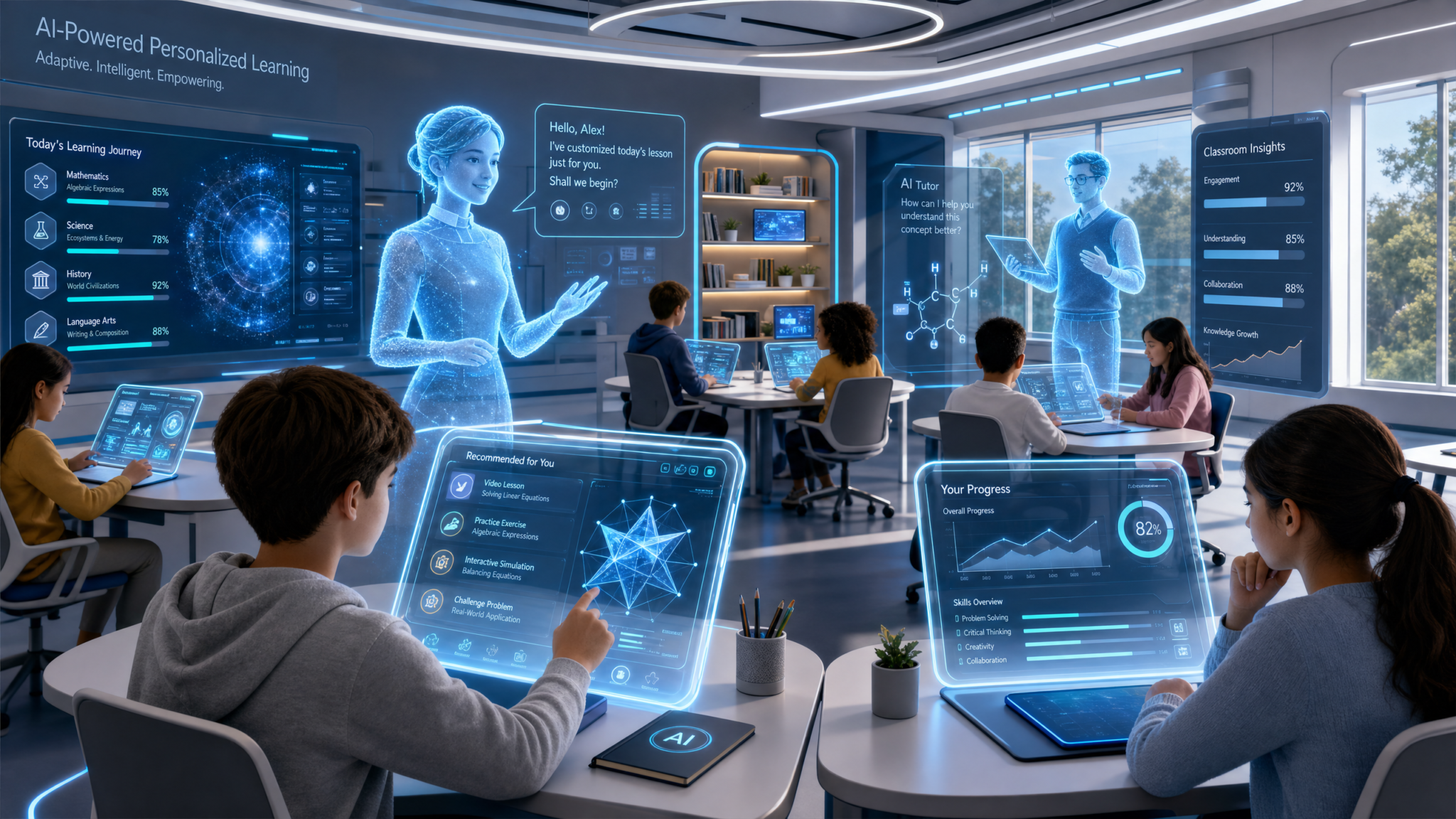
The integration of Artificial Intelligence (AI) into education marks a transformative era in how knowledge is delivered, absorbed, and assessed. As technology continues to advance at an unprecedented pace, AI-driven tools are increasingly becoming indispensable in classrooms, online learning platforms, and educational institutions worldwide. The future of education is not only digital but also intelligent, adaptive, and personalized, reshaping traditional pedagogical methods to meet the diverse needs of learners.
At its core, AI in education harnesses the power of machine learning, natural language processing, and data analytics to create systems that can understand, predict, and respond to individual student needs. This evolution is particularly evident in the rise of personalized learning and intelligent tutoring systems (ITS), which aim to tailor educational experiences to each learner’s unique pace, style, and challenges.
The Current Landscape of AI in Education
Currently, AI applications in education can be broadly categorized into several key areas, each contributing to the enhancement of teaching and learning processes:
- Adaptive Learning Platforms: These platforms use AI algorithms to adjust the difficulty level and content delivery based on real-time student performance. Examples include platforms like DreamBox Learning and Knewton, which modify math and reading exercises dynamically to optimize student engagement and mastery.
- Intelligent Tutoring Systems (ITS): ITS simulate one-on-one tutoring by providing step-by-step guidance, instant feedback, and personalized support. Carnegie Learning’s MATHia software is a prominent example, offering AI-driven math tutoring that adapts to the learner’s problem-solving approach and misconceptions.
- Automated Grading and Assessment: AI tools are increasingly used to grade assignments, essays, and exams, reducing the administrative burden on educators and providing faster feedback. Platforms like Gradescope leverage machine learning to evaluate student work with consistency and fairness.
- Natural Language Processing (NLP) Applications: NLP enables AI systems to understand and interact using human language. This capability powers chatbots for student support, language learning apps like Duolingo, and essay scoring systems that analyze writing quality and coherence.
- Learning Analytics: AI collects and analyzes vast amounts of educational data to identify learning patterns, predict student outcomes, and inform instructional decisions. This empowers educators to intervene promptly and tailor their teaching strategies effectively.
Examples of AI Impact in Today’s Educational Settings
Several real-world implementations illustrate how AI is already reshaping education:
- Personalized Learning Paths: Platforms like Coursera and edX utilize AI to recommend courses and resources based on learner history and preferences, enabling highly customized learning journeys for millions of users worldwide.
- Virtual Tutors and Assistants: AI-powered tools such as IBM Watson Tutor provide 24/7 academic assistance, answering questions and guiding students through complex subjects without the constraints of traditional classroom hours.
- Enhanced Accessibility: AI technologies facilitate inclusive education by supporting students with disabilities. Speech recognition and text-to-speech tools, powered by AI, help learners with visual or hearing impairments engage with content more effectively.
- Gamification and Engagement: AI-driven gamified learning environments adjust challenges in real time to maintain optimal engagement, as seen in platforms like Kahoot! and Classcraft.
Challenges and Considerations in AI Adoption
While AI holds immense promise, its current integration faces several challenges that warrant careful attention:
- Data Privacy and Security: The extensive data collection required for personalized learning raises concerns over student privacy and data protection. Educational institutions must implement robust security measures and comply with regulations such as GDPR and FERPA.
- Equity and Access: There is a risk that AI-powered educational tools may widen the digital divide if underserved communities lack access to necessary devices or reliable internet connectivity.
- Teacher Roles and Training: The evolving educational landscape demands that educators adapt to new technologies, requiring comprehensive professional development and a clear understanding of AI’s capabilities and limitations.
- Bias and Fairness: AI models can inadvertently perpetuate biases present in training data, potentially affecting fair treatment and assessment of diverse student populations.
Looking Ahead: Why Understanding the Current State Matters
Understanding where AI currently stands in education is essential for envisioning its future trajectory. The technologies that underpin personalized learning and intelligent tutoring systems are not static; they evolve alongside advances in AI research and educational theory. As institutions, educators, and policymakers navigate this transformation, grounding decisions in a comprehensive understanding of existing capabilities and challenges will be crucial.
In the sections that follow, we will delve deeper into how AI-driven personalized learning and ITS are shaping the future of education, exploring emerging trends, innovative use cases, and the implications for learners and educators alike.
The Core Principles of Personalized Learning with AI
Also read: OpenAI Student Collective Guide
Personalized learning represents a transformative approach in education, shifting away from one-size-fits-all methodologies to tailor instruction according to each student’s unique needs, preferences, and pace. Artificial intelligence (AI) plays a pivotal role in realizing this vision by leveraging data-driven insights and adaptive technologies. Understanding the core principles that underpin personalized learning with AI is essential for educators, administrators, and policymakers aiming to harness its full potential.
1. Learner-Centered Adaptation
At the heart of personalized learning is the commitment to place the learner’s individual characteristics at the forefront of educational delivery. AI systems dynamically adjust content, assessments, and feedback based on real-time analysis of student performance, learning styles, and even emotional states.
- Adaptive Content Delivery: AI algorithms evaluate which topics a student has mastered and which require additional focus. For example, platforms like DreamBox Learning use continuous assessment to adjust math lessons, offering more challenging problems as mastery grows or providing remedial support where needed.
- Multimodal Learning Preferences: AI can identify whether a student prefers visual, auditory, or kinesthetic learning modalities by analyzing interaction patterns. This allows the system to modify content presentation accordingly, enhancing engagement and comprehension.
By centering the learning experience on the student, AI-driven personalized learning fosters autonomy, motivation, and deeper understanding.
2. Data-Driven Insights and Continuous Feedback
Personalized learning thrives on the collection and analysis of extensive learner data to inform instructional decisions. AI excels in this domain by processing vast quantities of data rapidly and accurately, enabling continuous feedback loops that benefit both students and educators.
- Real-Time Performance Monitoring: Intelligent tutoring systems track student responses, time spent on tasks, and error patterns, allowing immediate identification of misconceptions or knowledge gaps. For instance, Carnegie Learning’s AI tutors provide instant hints and corrective feedback tailored to specific mistakes.
- Predictive Analytics: AI can forecast a student’s future performance or risk of disengagement based on historical data trends, enabling timely interventions. Educational institutions can thus allocate resources more effectively and support at-risk learners before problems escalate.
- Personalized Progress Reports: Detailed, data-rich reports generated by AI systems help students understand their strengths and areas for improvement, fostering metacognitive skills that contribute to lifelong learning.
This principle ensures that learning is not static but evolves responsively, with AI acting as a continuous facilitator of growth.
3. Scalability and Flexibility
One of AI’s greatest advantages in personalized learning is its ability to scale individualized instruction across diverse student populations without compromising quality.
- Mass Customization: Unlike traditional models limited by teacher-to-student ratios, AI-powered platforms can simultaneously tailor learning experiences for thousands of students, each receiving unique content and pacing.
- Cross-Disciplinary Application: AI can be deployed across various subjects and educational levels—from early childhood literacy tools like Lexia Learning to advanced STEM tutoring systems—making personalized learning universally accessible.
- Asynchronous Learning: AI facilitates self-paced study by providing intelligent guidance outside the classroom, supporting diverse schedules and learning environments, which is particularly valuable in remote or hybrid education settings.
Scalability paired with flexibility ensures personalized learning powered by AI can meet the needs of modern education systems at a systemic level.
4. Human-AI Collaboration
While AI offers powerful tools and insights, personalized learning is most effective when AI acts as a complement to, rather than a replacement for, human educators.
- Augmented Teaching: AI handles routine tasks such as grading and progress tracking, freeing teachers to focus on high-value activities like mentoring, facilitating discussions, and addressing complex student needs.
- Informed Instructional Strategies: Educators receive actionable data from AI systems, enabling them to design more targeted lesson plans and interventions. For example, teachers can use AI-generated diagnostics to group students by readiness levels or skill gaps.
- Emotional and Social Support: Human teachers provide empathy, motivation, and social context—dimensions AI still struggles to replicate fully. Personalized learning frameworks thus position AI as an assistant that enhances, rather than diminishes, the teacher-student relationship.
Effective personalized learning strategies integrate AI capabilities with human expertise to create holistic educational experiences.
5. Ethical Use and Transparency
Ethical considerations and transparency are foundational principles in the deployment of AI for personalized learning. Students, educators, and parents must trust that AI systems operate fairly, securely, and with clear intent.
- Bias Mitigation: AI algorithms must be designed and monitored to avoid perpetuating biases related to race, gender, socioeconomic status, or disability. Diverse and representative training data, as well as ongoing audits, are essential.
- Data Privacy: Compliance with regulations like GDPR and FERPA ensures that student data is protected and used responsibly. Transparency about data collection, storage, and usage policies builds stakeholder confidence.
- Explainability: AI systems should provide understandable explanations of their recommendations and decisions, allowing educators and students to question and verify outputs rather than accept them blindly.
Adhering to these ethical principles safeguards student rights and promotes equitable access to personalized learning benefits.
Conclusion
The core principles of personalized learning with AI—learner-centered adaptation, data-driven continuous feedback, scalability and flexibility, human-AI collaboration, and ethical use—collectively define a future in which education is more responsive, inclusive, and effective. As AI technologies continue to evolve, these guiding tenets will ensure that personalized learning not only enhances academic outcomes but also nurtures the holistic development of every learner.
Deep Dive into Intelligent Tutoring Systems (ITS): Architecture and Impact
Intelligent Tutoring Systems (ITS) stand at the forefront of AI-driven personalized learning, offering tailored educational experiences that adapt dynamically to individual student needs. Unlike traditional one-size-fits-all teaching methods, ITS leverage sophisticated algorithms and data-driven insights to create highly interactive and effective tutoring environments. This section explores the intricate architecture of ITS and examines their transformative impact on education.
1. Architecture of Intelligent Tutoring Systems
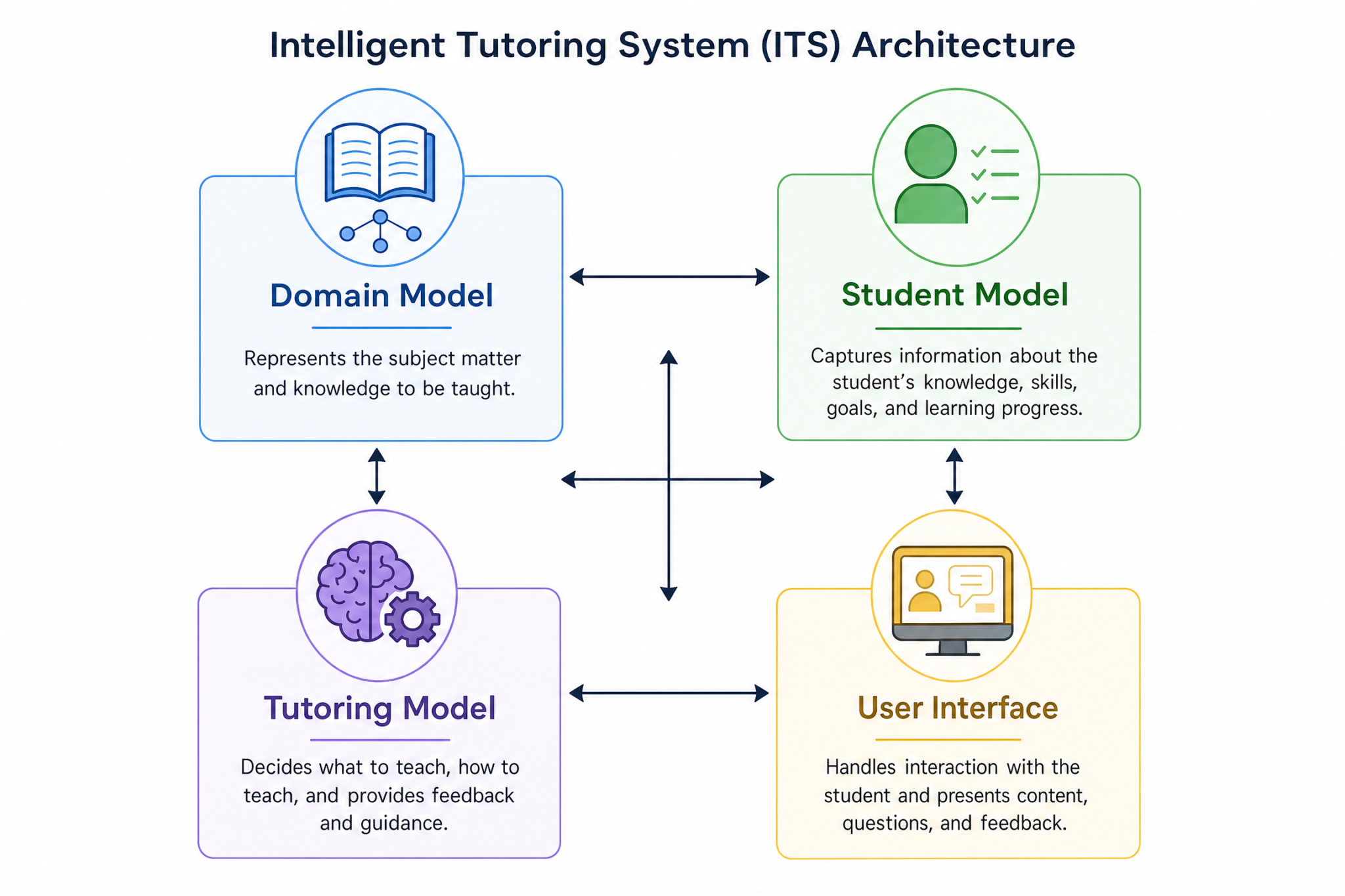
At their core, Intelligent Tutoring Systems are complex software frameworks designed to simulate one-on-one human tutoring. Their architecture typically comprises several interrelated components that work synergistically to deliver personalized instruction. These components include:
- Domain Model: This component represents the subject matter knowledge that the ITS is designed to teach. It includes facts, concepts, problem-solving strategies, and rules within a specific discipline. For example, in a mathematics ITS, the domain model might encompass algebraic equations, geometric principles, and calculation methods. The domain model serves as the reference framework against which student responses are evaluated.
- Student Model: The student model is a dynamic representation of the learner’s current knowledge, skills, misconceptions, and learning progress. It continuously updates based on student interactions, quiz results, and behavioral data. For instance, if a student consistently struggles with quadratic equations, the ITS adjusts the student model to reflect this gap, enabling targeted intervention.
- Tutoring Model: Serving as the decision-making engine, the tutoring model determines how the system interacts with the student. It decides when to provide hints, offer explanations, pose questions, or present new challenges. This component employs pedagogical strategies that mimic expert human tutors, adapting instructional techniques to suit individual learning styles.
- User Interface: The user interface facilitates interaction between the student and the ITS. It is designed to be intuitive and engaging, often incorporating multimedia elements such as interactive simulations, videos, and gamified exercises. Accessibility features ensure inclusivity for diverse learner populations.

2. Key Technologies Powering ITS
Modern ITS leverage a variety of advanced AI technologies to enhance their adaptability and effectiveness:
- Machine Learning: Machine learning algorithms analyze large datasets of student interactions to identify patterns, predict learning difficulties, and personalize content delivery. For example, reinforcement learning techniques enable the tutoring model to optimize instructional strategies based on real-time feedback.
- Natural Language Processing (NLP): NLP allows ITS to understand and interpret student input expressed in natural language. This capability is critical for systems that support open-ended questions or conversational tutoring, enabling more natural and flexible communication.
- Knowledge Representation and Reasoning: These AI techniques underpin the domain and student models by structuring knowledge in ways that allow logical inference. This enables the ITS to diagnose misconceptions and generate tailored explanations.
- Adaptive Feedback Systems: ITS provide immediate and context-aware feedback, a feature proven to enhance learning outcomes. Adaptive feedback adjusts in complexity and detail based on the student’s proficiency level and response accuracy.
3. Impact of Intelligent Tutoring Systems on Education
The integration of ITS into educational environments is reshaping how knowledge is imparted and absorbed. Their impact can be examined across several dimensions:
- Personalized Learning at Scale: ITS enable personalization that would be impractical with human tutors alone, allowing each student to progress at their own pace with customized support. This scalability is particularly valuable in classrooms with high student-to-teacher ratios.
- Improved Learning Outcomes: Numerous studies have demonstrated that students using ITS show higher retention rates, better problem-solving skills, and deeper conceptual understanding compared to those in traditional learning settings. For instance, Carnegie Learning’s math ITS has been shown to improve standardized test scores by providing adaptive problem sets and hints.
- Enhanced Engagement and Motivation: By offering interactive and gamified experiences, ITS maintain student engagement over extended periods. Real-time feedback and personalized challenges foster a growth mindset and encourage persistence in learning tasks.
- Supporting Diverse Learners: ITS can be tailored to accommodate different learning styles, disabilities, and language proficiencies. For example, ITS equipped with speech recognition and synthesis can assist students with visual impairments or reading difficulties.
- Data-Driven Insights for Educators: The rich data generated by ITS provide educators with actionable insights into student progress and difficulties. This enables timely interventions, informed curriculum adjustments, and targeted professional development.
4. Challenges and Future Directions
While ITS have made significant strides, several challenges remain in their widespread adoption and optimization:
- Complexity of Human Learning: Replicating the nuanced judgment and empathy of human tutors remains difficult. Future ITS will need to incorporate more sophisticated emotional and social intelligence to better support learners.
- Integration with Classroom Dynamics: Aligning ITS with existing curricula and teaching practices requires thoughtful design and collaboration with educators to ensure complementarity rather than replacement.
- Ethical and Privacy Concerns: As with all AI in education, ITS must prioritize data security, transparency, and fairness to build trust among users.
- Expanding Subject Coverage: Current ITS are often domain-specific. Scaling ITS across diverse subjects and interdisciplinary fields remains an ongoing research and development focus.
Looking ahead, advances in AI, including affective computing and multimodal interaction, promise to make ITS even more responsive and human-like. Integration with virtual and augmented reality could further immerse students in personalized learning environments, transforming education into an engaging, adaptive journey tailored uniquely to each learner.
In conclusion, Intelligent Tutoring Systems exemplify the potential of AI to revolutionize education by providing personalized, scalable, and effective learning experiences. Their continued evolution and thoughtful implementation will be critical to unlocking the full promise of AI in the classrooms of the future.
The Role of Generative AI (ChatGPT, Claude) in Modern Classrooms
Generative AI technologies such as OpenAI’s ChatGPT and Anthropic’s Claude are rapidly transforming educational environments by introducing new possibilities for personalized learning and intelligent tutoring. These advanced language models leverage deep learning to understand, generate, and interact with human language in a remarkably natural and context-aware manner. Their integration into modern classrooms complements existing Intelligent Tutoring Systems (ITS) by offering dynamic, adaptive, and scalable educational support that can be tailored to the unique needs of each student.
Enhancing Personalized Learning Experiences
One of the most profound impacts of generative AI in education is its ability to facilitate highly personalized learning experiences. Traditional classroom instruction often struggles to accommodate the diverse learning styles, paces, and interests of individual students. Generative AI addresses this challenge by engaging learners in customized dialogues, providing instant feedback, and adapting content complexity based on real-time interactions.
For example, ChatGPT can serve as a conversational partner for students struggling with complex subjects such as mathematics, literature analysis, or foreign languages. Unlike static instructional materials, these AI models can generate explanations, examples, and practice problems tailored to the student’s current level of understanding. If a student demonstrates difficulty with a particular concept, the AI can reframe explanations using simpler language, analogies, or step-by-step breakdowns until mastery is achieved.
Claude, developed with an emphasis on ethical AI use, offers a complementary approach by encouraging reflective learning and critical thinking. It can pose open-ended questions, simulate debates, or guide students through problem-solving scenarios, thereby fostering deeper engagement and metacognitive skills. This level of interactivity helps students develop autonomy and confidence as learners, while the AI continuously adapts based on user input.
Supporting Educators with Intelligent Tutoring and Administrative Assistance
Generative AI’s versatility extends beyond direct student interaction; it also serves as a powerful assistant for educators. By automating routine tasks such as grading, lesson planning, and generating educational content, AI frees up valuable time for teachers to focus on high-impact activities like mentoring and individualized intervention.
- Automated Content Generation: AI models can create quizzes, writing prompts, summaries, and multimedia lesson materials aligned with curriculum standards quickly and efficiently. For instance, a teacher preparing a unit on Shakespeare can request ChatGPT to generate discussion questions, essay topics, and even character analyses, all customized to the class’s proficiency levels.
- Real-Time Student Support: In classrooms equipped with AI chatbots, students can receive immediate answers to questions outside of classroom hours, enabling continuous learning. This is particularly valuable in hybrid or remote learning settings where teacher availability is limited.
- Data-Driven Insights: Generative AI can analyze student responses and interaction patterns to identify knowledge gaps, misconceptions, and engagement trends. These insights can be presented to educators through intuitive dashboards, facilitating timely and targeted instructional adjustments.
Examples of Generative AI Integration in Educational Settings
Many pioneering educational institutions and edtech companies have begun integrating generative AI tools to enhance classroom learning:
- AI-Powered Writing Assistants: Tools like Grammarly and QuillBot, which incorporate generative language models, help students improve writing clarity, grammar, and style. ChatGPT takes this further by assisting in brainstorming ideas, structuring essays, and providing constructive critique.
- Language Learning Apps: Applications such as Duolingo employ AI-driven conversational agents that simulate real-life dialogues, offering personalized language practice and instant correction.
- Virtual Teaching Assistants: Some universities have deployed AI chatbots to answer frequently asked questions, guide students through course materials, and facilitate administrative processes, thereby enhancing student support services.

Addressing Challenges and Ensuring Ethical Implementation
Despite the promising benefits, integrating generative AI in education requires careful consideration of several challenges to ensure positive outcomes:
- Bias and Fairness: Generative AI models learn from vast datasets that may contain biases, potentially leading to unfair or inappropriate responses. Continuous monitoring, diverse training data, and transparent algorithms are essential to mitigate these risks.
- Student Data Privacy: AI systems frequently process sensitive student information. Robust data protection policies and compliance with regulations such as FERPA and GDPR are critical to safeguard privacy and build trust among users.
- Overreliance and Academic Integrity: There is a risk that students might overuse AI assistance, potentially hindering independent critical thinking or encouraging academic dishonesty. Educators must establish clear guidelines on AI use and incorporate activities that promote genuine understanding.
- Accessibility and Equity: Ensuring equitable access to AI-enhanced learning tools is vital to avoid widening the digital divide. Investments in infrastructure, training, and inclusive design are necessary to reach underserved populations.
Future Directions for Generative AI in Education
Looking ahead, the evolution of generative AI promises to bring even more transformative changes to education:
- Multimodal Learning Experiences: Future AI systems will likely integrate text, speech, images, and video to provide richer, more immersive educational interactions.
- Emotional and Social Intelligence: Advances in affective computing could enable AI tutors to recognize and respond to students’ emotional states, offering empathy and encouragement akin to human teachers.
- Collaborative Learning Platforms: Generative AI could facilitate peer-to-peer learning by orchestrating group discussions, mediating conflicts, and fostering teamwork skills.
- Continuous Professional Development: AI-driven analytics will help educators identify their own learning needs and recommend personalized training resources to enhance their teaching effectiveness.
In conclusion, generative AI models like ChatGPT and Claude are poised to play an integral role in shaping the classrooms of the future. By enabling personalized, interactive, and accessible learning experiences, they have the potential to augment human teaching and empower students to achieve their fullest potential. However, realizing this promise requires ongoing collaboration among educators, technologists, policymakers, and learners to navigate challenges and implement AI thoughtfully and ethically.
Overcoming Challenges: Privacy, Ethics, and the Digital Divide
As artificial intelligence (AI) continues to revolutionize education through personalized learning and intelligent tutoring systems, it simultaneously raises critical challenges that must be addressed to realize its full potential responsibly and equitably. Among the most pressing concerns are privacy, ethics, and the digital divide. These issues, if left unaddressed, could undermine trust, widen educational inequalities, and ultimately hinder the adoption of AI-driven educational technologies.
Privacy Concerns in AI-Driven Education
The deployment of AI in education often involves collecting, processing, and analyzing vast amounts of student data. This data can include sensitive personal information, learning behaviors, performance metrics, and even biometric or emotional indicators in advanced systems. While this data is invaluable for delivering tailored educational experiences, it simultaneously presents significant privacy risks.
Data Security and Confidentiality: Protecting student data from unauthorized access, breaches, or misuse is paramount. Schools and AI providers must implement robust encryption methods, secure data storage solutions, and strict access controls. For example, the General Data Protection Regulation (GDPR) in Europe and the Family Educational Rights and Privacy Act (FERPA) in the United States set legal frameworks that guide data privacy in educational contexts. AI systems that comply with such regulations demonstrate a commitment to safeguarding student information.
Informed Consent and Transparency: Students, parents, and educators must be fully informed about what data is collected, how it is used, and who has access. Transparent privacy policies and consent mechanisms empower users to make educated decisions about their participation. An example of best practice is the use of clear, jargon-free consent forms that outline data practices in easy-to-understand language. Moreover, AI providers should offer options for data anonymization or opting out of data collection where feasible.
Minimizing Data Bias and Profiling Risks: AI systems that analyze student data risk reinforcing biases or unfairly profiling learners based on incomplete or skewed datasets. Ensuring that data collection and processing methods are fair, unbiased, and regularly audited is essential to protect students from discriminatory outcomes.
Ethical Considerations in AI Integration
Beyond privacy, ethical issues in AI-powered education extend to algorithmic fairness, transparency, accountability, and the broader impact on the educational ecosystem.
- Algorithmic Fairness: AI models must be designed to treat all learners equitably, regardless of their background, socioeconomic status, or learning abilities. For instance, an intelligent tutoring system should adapt to diverse learning styles without disadvantaging any group. Continuous testing for bias and inclusive training data are critical to achieving fairness.
- Transparency and Explainability: Educators and students should understand how AI systems make decisions or recommendations. Explainable AI (XAI) techniques that clarify the rationale behind AI outputs help build trust and allow educators to intervene when necessary. For example, if an AI tutor suggests additional practice in algebra, it should provide clear reasons based on the student’s past performance.
- Accountability and Human Oversight: Responsibility for educational outcomes should not be abdicated to machines. Educators must retain oversight and the ability to override AI decisions. Establishing clear accountability frameworks ensures that AI tools support rather than replace human judgment.
- Promoting Academic Integrity: Ethical AI integration includes discouraging misuse such as plagiarism or over-reliance on AI-generated content. Educators should develop guidelines that encourage AI as a learning aid rather than a shortcut, fostering genuine mastery of subject matter.
Bridging the Digital Divide: Ensuring Accessibility and Equity
The transformative promise of AI in education hinges on equitable access. Unfortunately, disparities in technology availability, internet connectivity, and digital literacy threaten to deepen the existing digital divide, leaving marginalized and underserved learners behind.
Infrastructure Development: Many rural, low-income, or developing regions lack the necessary infrastructure to support AI-powered educational systems. Reliable internet access, modern hardware, and technical support are prerequisites for effective AI adoption. Governments and private sectors must collaborate to expand broadband coverage, subsidize devices, and establish community technology centers.
Inclusive Design and Usability: AI educational tools should be designed with inclusivity at their core. This includes accommodating learners with disabilities through features like screen readers, captioning, and adaptive interfaces. Moreover, interfaces should be intuitive and culturally relevant to diverse user groups, minimizing language barriers and cognitive load.
Training and Capacity Building: Educators and students alike require training to effectively engage with AI technologies. Professional development programs can equip teachers with the skills to integrate AI tools into their pedagogy thoughtfully. Similarly, digital literacy initiatives can empower students to utilize AI resources responsibly and critically.
Cost and Sustainability: High costs associated with AI tools can exclude underfunded schools or families. Open-source AI platforms, government grants, and public-private partnerships can lower entry barriers and promote sustainable adoption.
Case Studies Highlighting Progress and Challenges
Case Study 1: Privacy-Conscious AI in Scandinavian Schools
In Scandinavian countries, where data privacy is strongly regulated, AI-driven platforms prioritize student anonymity and data minimization. For example, some systems use encrypted data aggregation that allows personalization without exposing individual identities. These measures have fostered high trust levels among students and parents, facilitating smoother AI integration.
Case Study 2: Addressing the Digital Divide in Sub-Saharan Africa
Initiatives like the “One Laptop per Child” program coupled with AI tutoring apps adapted for offline use have begun to bridge gaps in regions with limited internet. By designing AI systems that function on low-cost devices and store data locally, these projects demonstrate innovative approaches to overcome infrastructural constraints.
Looking Ahead: Strategic Recommendations
- Policy and Regulation: Developing comprehensive policies that address AI ethics, privacy safeguards, and equitable access is essential. Educational institutions, technology developers, and policymakers must collaborate to create standards that balance innovation with responsibility.
- Community Engagement: Involving students, parents, educators, and local communities in AI implementation decisions ensures that solutions are contextually relevant and ethically sound.
- Continuous Monitoring and Evaluation: Establishing feedback loops and performance metrics for AI systems helps identify emerging issues related to privacy, ethics, and accessibility, enabling timely interventions.
- Promoting Digital Inclusion: Expanding access initiatives and prioritizing digital literacy will mitigate the risk of AI widening existing inequalities, ensuring that all learners benefit from technological advances.
In conclusion, while AI holds immense promise for transforming education through personalized learning and intelligent tutoring, addressing
The Future Outlook: Affective Computing and VR/AR Integration
As artificial intelligence continues to evolve, its impact on education is expected to deepen and diversify. Two of the most promising frontiers in this evolution are affective computing and the integration of virtual reality (VR) and augmented reality (AR) technologies. Together, these advancements promise to transform personalized learning and intelligent tutoring systems (ITS) in profound ways, making education more immersive, emotionally responsive, and adaptive to individual learner needs.
Understanding Affective Computing in Education
Affective computing refers to the development of systems and devices that can recognize, interpret, and respond to human emotions. In the context of education, affective computing enables AI-driven tools to assess students’ emotional states—such as frustration, boredom, or excitement—and adjust instructional strategies accordingly. This capability is a critical step beyond traditional adaptive learning, which primarily responds to cognitive performance metrics like quiz scores or time spent on tasks.
For example, an intelligent tutoring system equipped with affective computing can detect if a student is struggling with a math problem based on facial expressions or voice tone analysis. Rather than merely repeating the lesson, the system might switch to a different teaching approach, provide motivational feedback, or suggest a short break to prevent disengagement. This emotional sensitivity helps maintain student motivation and reduces dropout rates, especially in remote and self-paced learning environments.
One pioneering example is the AutoTutor system developed at the University of Memphis. AutoTutor uses natural language processing combined with emotion recognition to simulate a human tutor’s empathetic responses. It can detect confusion or frustration through a student’s input and respond with encouragement or clarifying hints, creating a more human-like tutoring experience. Such systems demonstrate how affective computing can personalize learning beyond cognitive metrics by factoring in emotional well-being.
VR and AR: Immersive Learning Environments
Virtual reality (VR) and augmented reality (AR) technologies extend the potential of AI in education by creating immersive, interactive environments that foster experiential learning. VR immerses students in fully simulated worlds, while AR overlays digital information onto the real world through devices like smartphones or smart glasses.
When integrated with AI, VR and AR enable intelligent tutoring systems to offer context-rich, hands-on learning experiences tailored to individual needs. For example, medical students can practice surgical procedures in a VR simulation that adapts complexity based on their proficiency. Similarly, language learners can engage in AR conversations with virtual avatars that adjust their speaking pace and vocabulary complexity in real-time.
The Labster platform exemplifies this integration by combining VR simulations with AI-driven guidance. Students can conduct virtual science experiments in safe, cost-effective settings while receiving personalized prompts and feedback. This approach not only enhances engagement but also allows for scalable access to high-quality STEM education, even in under-resourced schools.
Synergizing Affective Computing with VR/AR for Next-Generation Intelligent Tutoring
The convergence of affective computing and VR/AR technologies heralds a future where intelligent tutoring systems become truly holistic, addressing cognitive, emotional, and contextual dimensions of learning simultaneously.
- Emotionally Adaptive VR Tutors: Future VR learning environments could incorporate real-time emotion sensing through wearable sensors or camera-based affect recognition. For instance, if a student exhibits signs of anxiety during a complex chemistry simulation, the AI tutor might simplify the task, offer calming guidance, or suggest mindfulness exercises embedded within the VR experience.
- Context-Aware AR Assistance: AR applications can provide just-in-time tutoring based on the learner’s physical surroundings and emotional state. Imagine an AR app guiding a student through a physics experiment, detecting confusion through voice stress analysis, and instantly displaying animated visual aids or alternative explanations overlaid on the actual equipment.
- Personalized Learning Analytics: By combining data from affective sensors and VR/AR interactions, AI systems can generate comprehensive learner profiles that include emotional resilience, engagement patterns, and spatial reasoning skills. Educators can leverage these insights to tailor curriculum design and intervention strategies more effectively.
Challenges and Ethical Considerations
Despite the exciting potential, implementing affective computing and VR/AR in education raises important challenges and ethical questions. Privacy concerns are paramount, as emotion recognition involves collecting sensitive biometric data. Ensuring data security and obtaining informed consent must be foundational principles in system design.
Moreover, there is a risk of bias in emotion detection algorithms if training datasets lack diversity, potentially leading to misinterpretations for students from different cultural or linguistic backgrounds. Educational institutions need to adopt rigorous validation and continuous monitoring to mitigate these risks.
Accessibility is another critical factor. High-quality VR/AR hardware may be cost-prohibitive for many schools, especially in low-income regions. To address this, developers are exploring lightweight, mobile-compatible AR applications and affordable VR headsets. Open-source platforms and partnerships with nonprofit organizations can also facilitate equitable technology distribution.
Looking Forward: Strategic Implementation Recommendations
- Invest in Multimodal Data Research: Encourage cross-disciplinary research combining affective computing, VR/AR, and learning sciences to refine emotion detection accuracy and pedagogical integration.
- Develop Inclusive AI Models: Prioritize the creation of culturally sensitive affective algorithms through diverse training datasets and stakeholder engagement.
- Enhance Teacher Training: Equip educators with skills to interpret AI-generated emotional and immersive learning data, enabling them to complement AI tutors with human empathy and judgment.
- Promote Scalable Access: Support initiatives that subsidize VR/AR hardware and develop offline-capable affective AI tools to bridge digital divides.
- Establish Ethical Frameworks: Formulate clear policies on data privacy, consent, and transparency specific to emotion-sensing and immersive AI applications in education.
In conclusion, the integration of affective computing and VR/AR technologies represents a transformative leap toward truly personalized, engaging, and empathetic education. By navigating associated challenges with foresight and inclusivity, AI-driven intelligent tutoring systems can unlock new potentials for learners worldwide, making education not only smarter but also more human.
Case Studies: Successful AI Implementations in Global Education
As artificial intelligence continues to reshape the educational landscape, numerous institutions and governments worldwide have embraced AI-driven solutions to enhance learning outcomes, personalize student experiences, and optimize administrative efficiency. This section explores several compelling case studies that illustrate how AI technologies—particularly personalized learning platforms and intelligent tutoring systems—are transforming education on a global scale. These examples highlight best practices, measurable impacts, and the diverse challenges overcome in deploying AI-powered educational solutions.
1. Carnegie Learning’s Intelligent Tutoring System: Revolutionizing Math Education in the United States
Carnegie Learning, a U.S.-based education technology company, developed an AI-driven intelligent tutoring system (ITS) that delivers personalized math instruction to middle and high school students. Leveraging machine learning algorithms and cognitive science principles, the system dynamically adapts to each learner’s strengths and weaknesses, providing customized problem sets, step-by-step guidance, and real-time feedback.
The ITS incorporates natural language processing (NLP) to understand students’ input and misconceptions, enabling it to tailor hints and explanations accordingly. For example, if a student frequently errs in solving algebraic expressions, the system identifies the specific conceptual gaps and adjusts subsequent lessons to reinforce foundational skills.
Impact: In a randomized controlled trial conducted across multiple U.S. school districts, students using Carnegie Learning’s ITS showed significant improvement in standardized math test scores compared to peers receiving traditional instruction. Teachers reported increased engagement and confidence among students, as well as valuable insights from the system’s analytics dashboard that enabled targeted interventions.
This implementation underscores the potential of ITS to complement classroom instruction by providing personalized, scalable support—especially in subjects with cumulative knowledge requirements like mathematics.
2. Squirrel AI Learning: Personalized Adaptive Learning in China
Squirrel AI Learning is a pioneering AI education company in China that employs an adaptive learning engine to deliver highly personalized instruction across K-12 subjects. Its platform uses a knowledge graph and fine-grained learner profiles to continuously assess student mastery and learning pace, adapting content difficulty and presentation style in real time.
The system integrates cognitive diagnosis models and reinforcement learning algorithms to optimize learning paths, ensuring students spend more time on weak areas without redundancy. Additionally, Squirrel AI’s intelligent tutoring agents simulate human tutors by engaging students with interactive dialogues, hints, and motivational prompts.
Impact: Squirrel AI has expanded rapidly across China and Southeast Asia, with over 1,000 learning centers and millions of registered users. Independent studies demonstrate that students using Squirrel AI’s platform improve knowledge retention and test scores by up to 30% compared to conventional classroom methods. Moreover, the platform’s scalability and cost-effectiveness have made quality education accessible in rural and underserved regions.
This case illustrates how AI-powered personalized learning systems can bridge educational divides by delivering tailored instruction at scale, optimizing both engagement and efficacy.
3. Third Space Learning: Online Tutoring with AI-Powered Personalization in the UK
Third Space Learning, a UK-based organization, provides one-to-one math tutoring for primary and secondary school students, integrating AI to enhance tutor matching and lesson personalization. Using data analytics and AI algorithms, the platform assesses student progress and learning styles to pair learners with the most suitable tutors and to design individualized lesson plans.
During sessions, AI tools monitor student responses and engagement, offering tutors real-time suggestions for adjusting instructional strategies. The platform’s backend continuously analyzes aggregated data to improve curriculum design and identify common learning obstacles.
Impact: Independent evaluations indicate that students participating in Third Space Learning’s tutoring programs achieve on average a six-month academic gain within a 14-week period. The AI integration has improved tutor effectiveness and learner satisfaction, while enabling the program to scale efficiently during the COVID-19 pandemic when remote learning became critical.
This example demonstrates the synergy between human expertise and AI assistance, where intelligent systems augment rather than replace educators, fostering more personalized and impactful learning experiences.
4. Smart Sparrow: Adaptive eLearning Platforms in Australian Higher Education
Smart Sparrow, an Australian edtech company, offers an adaptive eLearning platform that empowers educators to create intelligent, interactive courses using AI-driven analytics. The platform supports personalized learning by dynamically adjusting content flow based on learner interactions, responses, and competencies.
For instance, in medical education, Smart Sparrow’s platform delivers scenario-based simulations where students’ choices lead to tailored feedback and branching paths, mimicking real-world decision-making processes. The AI continuously assesses learner performance to recommend remediation or advanced challenges.
Impact: Universities employing Smart Sparrow report improved student engagement, higher completion rates, and better knowledge transfer. Educators appreciate the granular insights into learner behavior, enabling timely and targeted support. The platform’s flexibility also facilitates inclusive design, accommodating diverse learning needs and accessibility requirements.
This case highlights how adaptive AI tools can enrich higher education by making complex, applied learning more interactive and individualized.
5. Eneza Education: Mobile AI Tutoring in Sub-Saharan Africa
Eneza Education is an innovative mobile learning platform that uses AI to provide affordable, accessible tutoring to millions of students in Kenya, Ghana, and other Sub-Saharan African countries. Recognizing infrastructure and device constraints, Eneza’s platform operates via SMS and low-data apps, delivering personalized quizzes, lessons, and revision materials.
The AI component analyzes learner responses to identify knowledge gaps and adapts content sequencing accordingly. It also integrates motivational nudges and gamification elements to sustain engagement in challenging environments.
Impact: Eneza Education has reached over 3 million learners, many in rural areas with limited school resources. Evaluations reveal improvements in literacy and numeracy scores, alongside increased study time outside of school hours. The platform’s low-cost, low-bandwidth design exemplifies how AI can democratize education under resource constraints.
This initiative demonstrates the critical importance of contextualizing AI solutions to local needs and technological realities, ensuring inclusive educational innovation.
Key Takeaways from Global AI Education Implementations
- Personalization Drives Engagement and Achievement: Across diverse contexts, AI systems that adapt to individual learning needs significantly improve academic outcomes and motivation.
- Human-AI Collaboration is Essential: Successful implementations emphasize AI as a complement to, not a replacement for, skilled educators, enhancing their ability to provide targeted support.
- Scalability and Accessibility Matter: AI platforms designed with cost-efficiency and infrastructure limitations in mind can broaden educational access in underserved regions.
- Data Privacy and Ethics Must Be Prioritized: Transparent data practices and culturally sensitive AI models are critical to building trust and equitable learning environments.
- Continuous Evaluation and Iteration Are Key:Practical Guide for Educators: How to Adopt AI Tools Today
As artificial intelligence (AI) continues to reshape education worldwide, educators in diverse contexts — including those in Sub-Saharan Africa — are uniquely positioned to harness these technologies to enhance personalized learning and intelligent tutoring. However, adopting AI tools in classrooms or remote learning environments requires careful planning, contextual awareness, and an understanding of the available resources.
This practical guide offers educators a comprehensive roadmap to integrate AI-powered educational tools effectively, maximizing their impact on student outcomes while addressing common challenges such as infrastructure limitations and teacher readiness.
1. Assess Your Educational Environment and Needs
Before selecting or implementing any AI tool, it is essential to conduct a thorough assessment of your educational environment. This includes:
- Technological infrastructure: Determine the availability of internet connectivity, device accessibility (smartphones, tablets, computers), and electricity reliability.
- Student demographics and learning contexts: Understand the learners’ backgrounds, language preferences, literacy levels, and socio-economic factors.
- Curriculum requirements and learning objectives: Identify specific areas where AI tools can support or supplement existing teaching methods, such as literacy, numeracy, or STEM subjects.
- Teacher readiness and training needs: Gauge educators’ familiarity with technology and their openness to adopting AI solutions.
For example, Eneza Education’s success in Kenya and Ghana stems from its deep understanding of local contexts — opting for SMS and low-data applications to overcome connectivity and device constraints. This kind of contextualization is key to ensuring AI tools are both accessible and relevant.
2. Choose AI Tools That Align with Your Context
There is a growing variety of AI-powered educational platforms, each with unique features and system requirements. When selecting AI tools, consider the following factors:
- Accessibility: Does the tool work on low-bandwidth networks or offline? Can it be accessed via basic mobile phones or requires smartphones?
- Personalization capabilities: Does the AI adapt to individual learner responses by providing tailored content, pacing, and feedback?
- Content relevance: Is the curriculum aligned with your national or school syllabus? Can content be customized or localized?
- User engagement features: Does the platform incorporate gamification, motivational nudges, or social learning elements to sustain student interest?
- Data privacy and security: Are learners’ data protected in compliance with local regulations and ethical standards?
Platforms like Eneza utilize AI to analyze learner inputs, identify knowledge gaps, and sequence lessons accordingly, all delivered via SMS. This approach ensures even students in remote regions without smartphones benefit from personalized learning. Other tools, such as intelligent tutoring systems (ITS) like Carnegie Learning or Knewton, may require more advanced devices but offer in-depth interactive problem-solving guidance and real-time feedback.
3. Plan for Teacher Training and Ongoing Support
Educators play a pivotal role in integrating AI tools effectively. Without adequate training and support, even the most advanced AI solutions may fail to realize their full potential. Consider the following strategies:
- Professional development workshops: Organize sessions that familiarize teachers with AI tools, demonstrate their features, and illustrate best practices for classroom integration.
- Peer learning communities: Encourage collaboration among educators to share experiences, challenges, and tips on using AI for personalized learning.
- Technical support channels: Establish mechanisms for timely assistance, whether through help desks, online forums, or local coordinators.
- Continuous feedback loops: Collect teacher and student feedback regularly to adapt the AI tool usage and address emerging issues.
For instance, Eneza Education partners with local schools and education ministries to train teachers on interpreting AI-generated learner analytics, enabling them to provide targeted support. This human-AI collaboration enhances the overall learning experience and builds educator confidence.
4. Start Small and Scale Gradually
Adopting AI in education is not an all-or-nothing endeavor. Starting with a pilot program or limited rollout allows educators to:
- Test the AI tool’s functionality and suitability in their specific context.
- Identify and address technical or pedagogical challenges.
- Gather evidence of impact on learner engagement and achievement.
- Build buy-in from stakeholders including students, parents, and school administrators.
Once initial successes and lessons are documented, scaling the use of AI tools can proceed more confidently and sustainably. For example, Eneza’s phased expansion across rural and urban schools in multiple countries exemplifies this iterative approach.
5. Leverage Data Insights to Inform Instruction
One of AI’s most powerful contributions to education is its ability to generate actionable data insights. Educators can use AI analytics to:
- Identify individual learner strengths and weaknesses at scale.
- Tailor lesson plans and interventions to address specific knowledge gaps.
- Monitor progress over time and adjust instructional strategies accordingly.
- Recognize patterns such as engagement trends or common misconceptions.
Tools that provide intuitive dashboards or reports make this process accessible even to educators with limited data analysis experience. For example, intelligent tutoring systems often track student problem-solving steps, enabling teachers to pinpoint where learners struggle most.
6. Embrace Ethical Considerations and Inclusivity
While AI can democratize access to quality education, educators must remain vigilant about ethical implications. Key considerations include:
- Avoiding bias: Ensuring AI algorithms do not perpetuate stereotypes or unfairly disadvantage certain groups.
- Transparency: Being clear with learners and parents about how AI tools function and use data.
- Data privacy: Securing personal information and complying with relevant data protection laws.
- Inclusivity: Designing or choosing AI tools that accommodate learners with disabilities or diverse learning needs.
By prioritizing these ethical dimensions, educators can foster trust and create safe, supportive learning environments.
7. Stay Informed and Adapt to Evolving Technologies
AI in education is a rapidly evolving field. Educators should actively engage with professional networks, attend webinars and conferences, and read current research to keep abreast of new tools, best practices, and policy developments. This ongoing learning will ensure that AI adoption remains effective, relevant
Conclusion and Future Predictions: The Transformative Path of AI in Education
As we reflect on the integration of artificial intelligence in education, it is clear that personalized learning and intelligent tutoring systems herald a new era of teaching and learning. AI’s capacity to analyze vast amounts of data, adapt to individual learner needs, and provide real-time feedback is reshaping traditional educational paradigms. This transformation not only empowers educators with deeper insights but also offers learners a tailored experience that fosters engagement, motivation, and mastery.
Looking ahead, the future of AI in education promises even more profound innovations, with several key trends and developments poised to redefine how knowledge is imparted and acquired.
1. Hyper-Personalization Through Advanced AI Algorithms
While current AI-driven platforms already customize content based on learner profiles, future systems will leverage deep learning and natural language processing to deliver hyper-personalized learning pathways. These pathways will consider not only academic performance but also emotional states, learning preferences, and even cognitive load.
- Adaptive content sequencing: AI will dynamically adjust lesson difficulty and order to optimize retention and challenge learners appropriately.
- Emotional intelligence integration: By analyzing facial expressions, voice tone, and interaction patterns, AI tutors will identify frustration, boredom, or enthusiasm, modifying approaches to maintain engagement.
- Holistic learner models: Combining data from multiple sources—including wearable technology and classroom behavior—AI will create comprehensive profiles that support customized learning experiences beyond academics.
For example, an intelligent tutoring system in a mathematics class might detect a student’s frustration during problem-solving and offer motivational prompts or suggest a brief gamified break, enhancing both learning outcomes and emotional wellbeing.
2. Expansion of Intelligent Tutoring Systems as Collaborative Partners
Future intelligent tutoring systems will evolve from being mere content deliverers to becoming collaborative partners in the educational process. These systems will facilitate co-creation of knowledge, encourage critical thinking, and foster creativity.
- Dialogue-based tutoring: Through conversational AI, students will engage in Socratic-style questioning, promoting deeper understanding rather than rote memorization.
- Project-based learning facilitation: AI will assist in managing complex group projects by coordinating tasks, providing timely feedback, and suggesting resources tailored to group dynamics.
- Peer learning augmentation: Intelligent platforms will match learners for peer tutoring based on complementary strengths and weaknesses, supported by AI-moderated discussions.
Consider a language learning platform where the AI tutor acts as both a conversation partner and a cultural guide, helping learners navigate nuances and idiomatic expressions through interactive dialogue, thereby enriching the learning context.
3. Integrating AI with Augmented and Virtual Reality for Immersive Learning
The convergence of AI with augmented reality (AR) and virtual reality (VR) technologies is anticipated to create immersive educational environments that transcend the limitations of physical classrooms.
- Contextualized simulations: AI-driven VR experiences will adapt scenarios based on learner progress, enabling practice in realistic settings such as virtual laboratories or historical reconstructions.
- Personalized AR overlays: Learners using AR glasses can receive real-time, AI-generated contextual information layered onto physical objects, facilitating hands-on learning.
- Accessibility enhancements: Immersive environments will incorporate AI-powered translation and transcription, making learning more inclusive for diverse linguistic and cognitive needs.
For instance, medical students might practice surgical procedures within a virtual operating room guided by an AI mentor that provides step-by-step instructions and corrective feedback, enhancing skill acquisition without risks.

4. Ethical AI and Equity as Pillars of Educational Innovation
As AI becomes increasingly embedded in education, ethical considerations will take center stage to ensure technology serves all learners fairly and responsibly.
- Bias mitigation: Future AI systems will incorporate transparent algorithms and continuous auditing to minimize biases related to race, gender, socio-economic status, or learning abilities.
- Data privacy and security: Robust frameworks will protect learner data, granting users control over their information and ensuring compliance with evolving regulations.
- Inclusive design: AI tools will be developed with input from diverse stakeholders, ensuring accessibility for learners with disabilities and those from underrepresented communities.
- Teacher-AI collaboration: Emphasizing AI as a support tool rather than a replacement, future systems will empower educators, respecting their professional judgment and fostering human-centered learning environments.
For example, an AI platform designed for a multicultural classroom might include customizable content filters and language options, ensuring cultural relevance and sensitivity while maintaining pedagogical integrity.
5. Lifelong Learning and Skill Development Beyond Traditional Boundaries
AI’s role in education will extend far beyond K-12 or higher education, supporting lifelong learning and continuous skill development essential in a rapidly changing workforce.
- Micro-credentialing and personalized upskilling: AI will help learners identify skill gaps, recommend targeted courses, and validate competencies through digital badges and certificates.
- Career path guidance: Intelligent systems will analyze labor market trends and individual profiles to suggest career trajectories aligned with evolving industry demands.
- Flexible learning ecosystems: AI-enabled platforms will integrate formal, informal, and experiential learning opportunities, offering seamless transitions across educational stages and settings.
Imagine a professional seeking to pivot careers using an AI-powered platform that curates a personalized curriculum, connects them with mentors, and tracks progress toward earning credentials recognized by employers worldwide.
Final Thoughts
The future of AI in education is rich with potential to create more equitable, engaging, and effective learning experiences. By harnessing advanced analytics, adaptive technologies, and immersive environments, educators and learners alike stand to benefit from a system that recognizes individuality and fosters growth at every stage.
However, realizing this vision requires a balanced approach—one that embraces innovation while upholding ethical standards and inclusivity. As AI continues to evolve, ongoing collaboration among educators, technologists, policymakers, and learners will be crucial to shaping an educational landscape that empowers everyone to thrive in the digital age.
Useful Links and FAQ
Useful Links
- Stanford Graduate School of Education: The Future of AI in Education – An in-depth exploration of AI’s role in transforming educational models and personalized learning approaches.
- EdSurge: How AI is Revolutionizing Intelligent Tutoring Systems – A comprehensive overview of recent advancements in intelligent tutoring technologies and their impact on learners.
- Frontiers in Education: Personalized Learning Through AI – Academic research discussing methodologies and case studies on AI-driven personalized learning environments.
- Western Governors University: How AI Personalizes Learning – Practical examples of AI applications in adaptive learning and student engagement.
- Edsys: Benefits of Intelligent Tutoring Systems in Education – An accessible guide on ITS benefits, challenges, and future potential in classroom and remote learning settings.
Frequently Asked Questions (FAQ)
1. What is personalized learning, and how does AI enhance it?
Personalized learning refers to tailoring educational experiences to individual learners’ needs, preferences, and pace. AI enhances personalized learning by analyzing vast amounts of learner data—such as progress, strengths, weaknesses, and engagement patterns—to recommend customized content, adaptive assessments, and tailored feedback. For example, platforms like DreamBox Learning use AI to adjust math lessons dynamically based on the learner’s mastery level.
2. How do Intelligent Tutoring Systems (ITS) work?
Intelligent Tutoring Systems are AI-powered platforms designed to simulate one-on-one tutoring by providing personalized instruction and feedback. They use algorithms to model the learner’s knowledge state, predict misconceptions, and adapt the difficulty and presentation of material accordingly. ITS like Carnegie Learning’s MATHia offer interactive problem-solving sessions that mimic human tutors’ responsiveness, leading to better learning outcomes.
3. Are AI-powered educational tools accessible to all students?
While AI tools have the potential to democratize education by providing personalized support, accessibility varies depending on infrastructure, device availability, and language support. Efforts are underway to create inclusive AI models that consider diverse linguistic and cultural backgrounds, but equitable access remains a challenge in under-resourced regions. Increasingly, open-source AI education platforms and mobile-compatible solutions aim to bridge this gap.
4. What privacy concerns exist with AI in education?
AI-driven education relies heavily on collecting and analyzing personal data, raising concerns about student privacy and data security. Institutions and developers must adhere to regulations such as FERPA (Family Educational Rights and Privacy Act) and GDPR (General Data Protection Regulation) to protect sensitive information. Transparent data policies, anonymization techniques, and secure cloud infrastructures are critical to maintaining trust and compliance.
5. How will AI impact teachers’ roles in the future?
Rather than replacing educators, AI will augment teachers’ capabilities by automating routine tasks like grading and attendance, enabling more time for personalized interaction and mentorship. Teachers will increasingly act as facilitators and learning designers, leveraging AI insights to identify student needs and tailor instructional strategies. Professional development will focus on integrating AI tools effectively into pedagogy.
6. Can AI support lifelong learning and career development?
Absolutely. AI-driven platforms are designed to support continuous education beyond formal schooling by recommending micro-credentials, identifying skill gaps, and mapping personalized career pathways. For instance, platforms like LinkedIn Learning and Coursera use AI to suggest courses based on industry trends and individual career goals, thereby facilitating ongoing professional growth in an evolving job market.
7. What are some challenges facing AI implementation in education?
Key challenges include ensuring algorithmic fairness to prevent bias, maintaining data privacy, integrating AI seamlessly into existing curricula, and addressing the digital divide. Additionally, there is a need for rigorous validation of AI tools’ educational efficacy and ongoing support for teachers and learners to adapt to new technologies. Collaboration among educators, technologists, policymakers, and learners is essential to overcome these obstacles.
By exploring these resources and addressing common questions, educators, students, and policymakers can better understand the transformative potential of AI in education. As personalized learning and intelligent tutoring systems evolve, they promise to create more engaging, inclusive, and effective educational experiences worldwide.
