

Artificial Intelligence (AI) technologies have evolved at an unprecedented pace over the past decade, transforming how businesses, developers, and consumers interact with machines. Among the titans of this revolution, OpenAI has been at the forefront, pioneering conversational AI with ChatGPT, coding assistance with OpenAI Codex, and real-time browsing and contextual data retrieval with the Atlas browsing agent. Today, we stand on the cusp of a new paradigm — the AI Superapp Era — where these powerful tools are converging into a singular, unified platform designed to deliver an agent-first experience that seamlessly combines conversation, code generation, and live knowledge access. This in-depth feature explores the genesis of this AI convergence, the technical architecture challenges, the competitive landscape, and what the future holds for enterprise users and the industry at large through 2027 and beyond.
The Fragmented Past: A History of AI Tools and Their Disparate Evolution
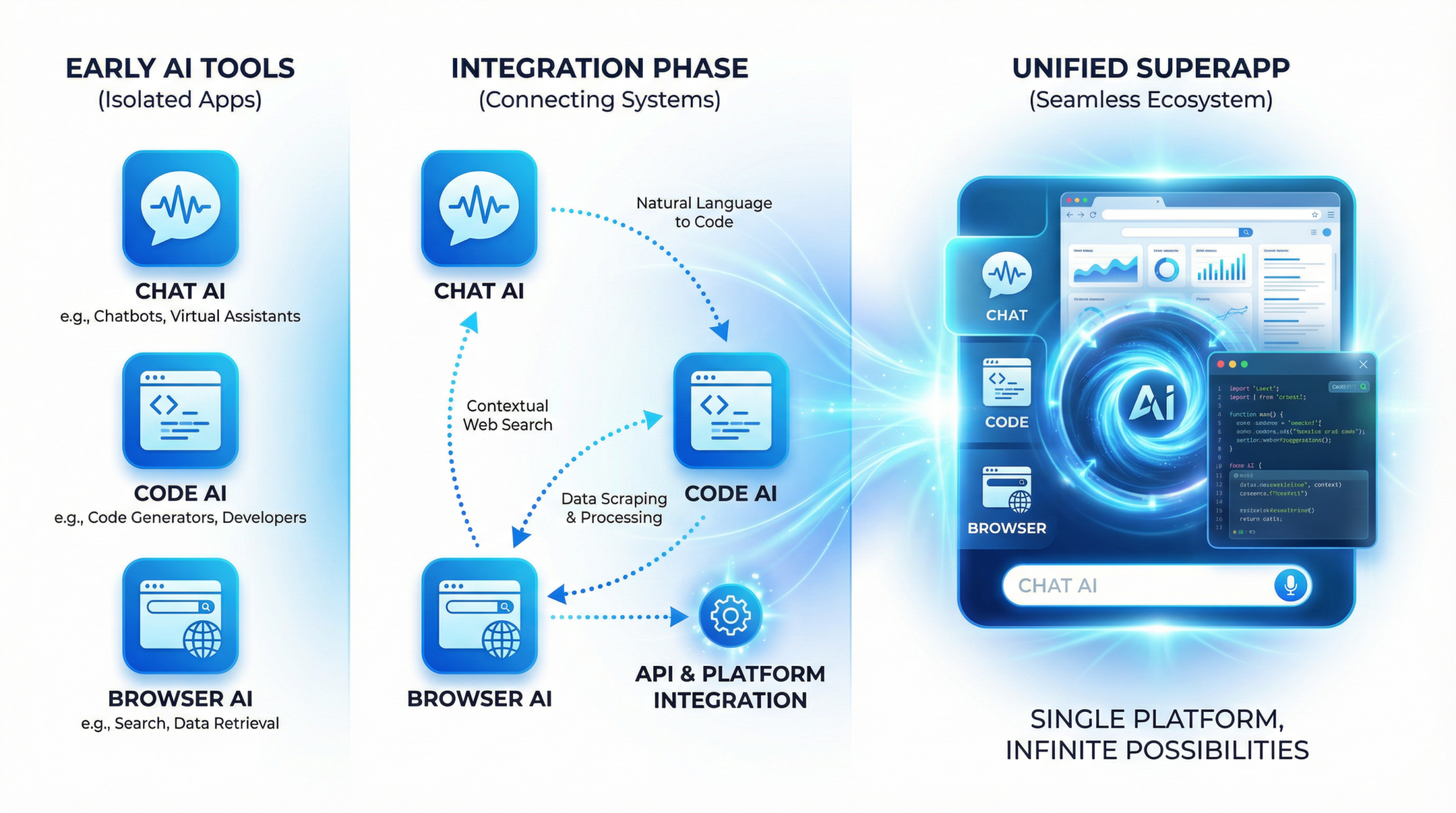
To appreciate the significance of OpenAI’s mission to unify ChatGPT, Codex, and Atlas, it’s essential to understand the historical fragmentation of AI tools. Early AI applications were siloed; one tool handled natural language understanding, another specialized in code generation, while yet another focused on data retrieval or browsing. This separation created multiple user experiences, each with its own interface, API, and limitations. Developers had to juggle numerous platforms to fulfill their varied AI needs.
ChatGPT emerged as a breakthrough conversational AI, capable of generating human-like dialogue, assisting in customer service, brainstorming, and content creation. However, it lacked direct integration with live data sources and coding environments. Codex, launched as an AI coding assistant, revolutionized software development by converting natural language prompts into executable code snippets, but its focus was narrow, targeting programmers rather than general users. Atlas, the AI browsing agent, aimed to bridge the gap by enabling real-time data retrieval and web navigation, yet it functioned as a distinct utility with limited interoperability with other AI models.
This fragmentation posed several challenges:
- Workflow discontinuity: Users had to switch contexts when moving from natural language conversations to coding or web research.
- Integration complexity: Combining outputs from disparate AI tools required bespoke engineering and often resulted in inconsistent user experiences.
- Enterprise adoption barriers: Organizations struggled to adopt multiple AI platforms due to security, compliance, and training overheads.
Recognizing these pain points, OpenAI envisioned an integrated “superapp” that would offer a coherent agent-first experience, enabling users to leverage the strengths of ChatGPT, Codex, and Atlas within a single, extensible platform. This vision marks a pivotal shift in AI’s trajectory, addressing fragmentation and unlocking new possibilities for productivity and innovation.
Technical Challenges and Innovations in Unifying AI Models

The ambition to fuse conversational AI, coding assistance, and browsing capabilities into a unified platform involves overcoming substantial technical hurdles. Each AI component operates on different data modalities, optimization objectives, and latency requirements. Integrating these into a seamless user experience demands innovations in model architecture, system design, and API orchestration.
1. Harmonizing Diverse AI Modalities
ChatGPT is optimized for dialogue generation and contextual understanding of natural language, Codex specializes in code synthesis across multiple programming languages, and Atlas focuses on real-time information retrieval from the internet. Their underlying models have different training datasets, tokenization schemas, and output formats.
To unify these capabilities, OpenAI engineers are developing a multi-modal AI backbone that supports:
- Shared contextual embeddings: Creating a unified representation of user intent that can be leveraged by conversational, coding, and browsing tasks alike.
- Dynamic model routing: Intelligent dispatching of user queries to the most appropriate AI sub-module, with fallback mechanisms ensuring fluid handoffs.
- Cross-modal feedback loops: For example, code generated by Codex can be validated against live data fetched by Atlas, and then summarized conversationally by ChatGPT.
2. Ensuring Low Latency and Scalability
Enterprise users demand real-time responsiveness. Integrating browsing in particular introduces network latency and inconsistent data freshness. OpenAI’s platform employs advanced caching, asynchronous query pipelines, and edge computing to minimize delays.
3. Robust Security and Privacy
Handling sensitive enterprise data requires airtight security. The platform encrypts data both in transit and at rest, uses differential privacy techniques, and incorporates user-level access controls. Codex’s code outputs are sandboxed to prevent injection attacks, while browsing sessions are isolated to avoid data leakage.
4. Developer-Friendly Extensibility
OpenAI provides comprehensive APIs and SDKs that allow enterprises to customize AI workflows, integrate their own data sources, and build domain-specific agents on top of the superapp framework. These tools include:
- Fine-tuning interfaces for specific industries
- Plug-and-play modules for third-party data connectors
- Visual scripting tools for designing complex multi-agent interactions
This technical foundation not only powers a smooth user experience but also sets the stage for rapid innovation and adoption across sectors.
Competitive Landscape: How OpenAI’s Superapp Stacks Up Against Anthropic and Google
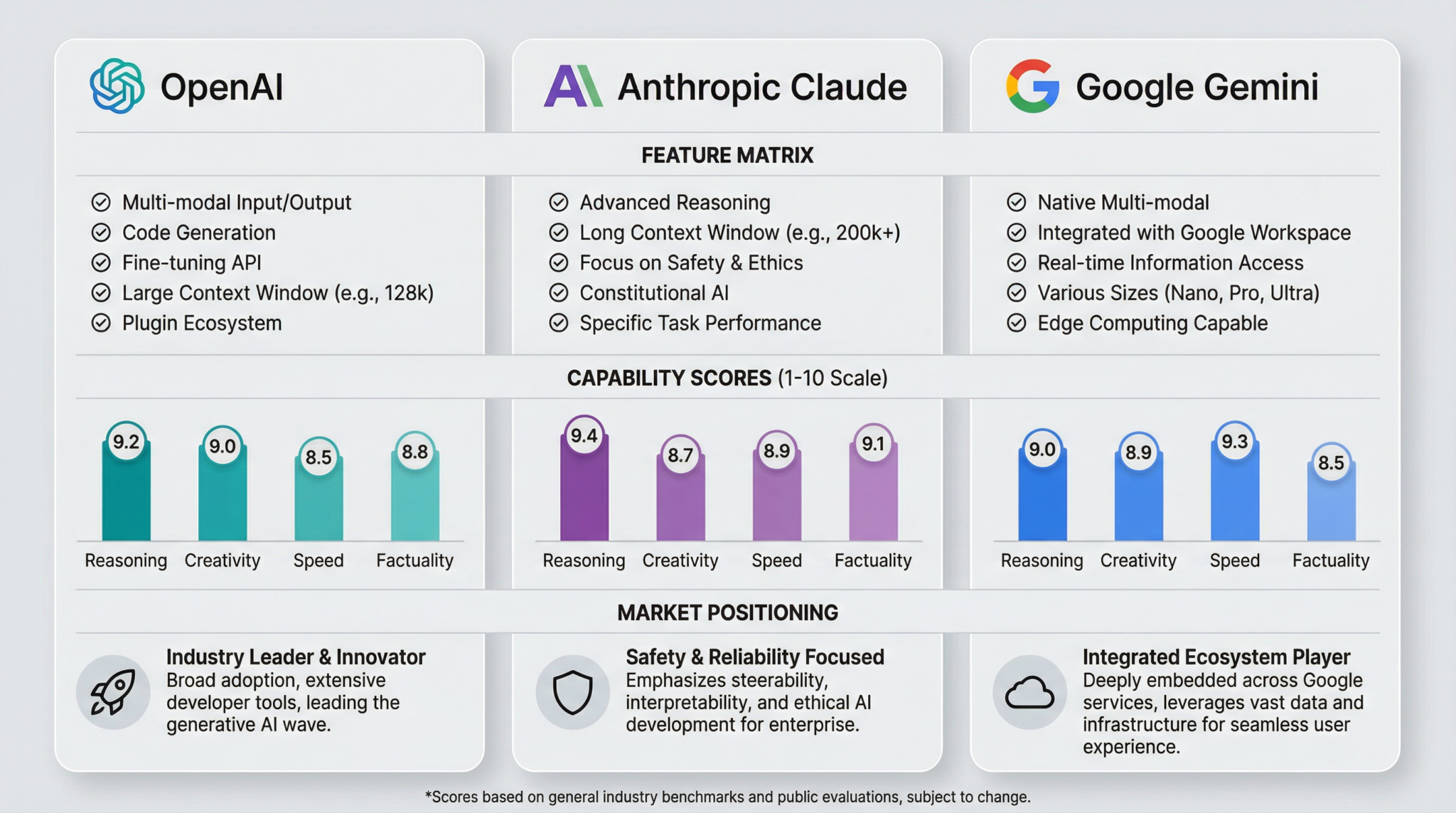
The AI superapp concept is not unique to OpenAI, but its execution is setting industry benchmarks. Understanding the competitive landscape helps contextualize OpenAI’s strategic moves and technological advantages.
Anthropic: Safety-First Conversational AI
Anthropic, founded by former OpenAI researchers, emphasizes AI safety and interpretability. Their Claude AI focuses primarily on conversational capabilities with strong guardrails. While Claude supports complex dialogue, its integration with coding and browsing tools is nascent compared to OpenAI’s unified platform.
Anthropic’s approach appeals to enterprises prioritizing ethical AI use and compliance, but its narrower toolset leaves gaps in developer productivity that OpenAI’s Codex and Atlas integrations address.
Google: Versatile AI Ecosystem with Bard and PaLM
Google’s AI initiatives include Bard for conversational AI and PaLM for large language model applications, as well as extensive investments in AI-powered coding tools (e.g., AlphaCode) and browsing via search augmentation. Google’s ecosystem benefits from unmatched data resources and infrastructure scale.
However, Google’s AI tools are often siloed within separate products or services. The lack of a singular superapp experience means users must navigate multiple interfaces and APIs, which can dilute efficiency in enterprise workflows.
OpenAI’s Differentiators
- Unified agent-first interface: Seamlessly combining ChatGPT’s dialogue, Codex’s code generation, and Atlas’s browsing in a single coherent platform.
- Enterprise-grade customization: Flexible APIs and extensibility for domain-specific AI solutions.
- Strong ecosystem partnerships: Integration with Microsoft Azure, GitHub Copilot, and other platforms enhances reach and usability.
- Rapid innovation cadence: Continuous model improvements and feature rollouts keep the platform ahead.
These factors position OpenAI’s superapp as a market leader for organizations seeking a comprehensive AI assistant capable of handling diverse tasks without friction.
Enterprise Implications: Transforming Workflows and Productivity
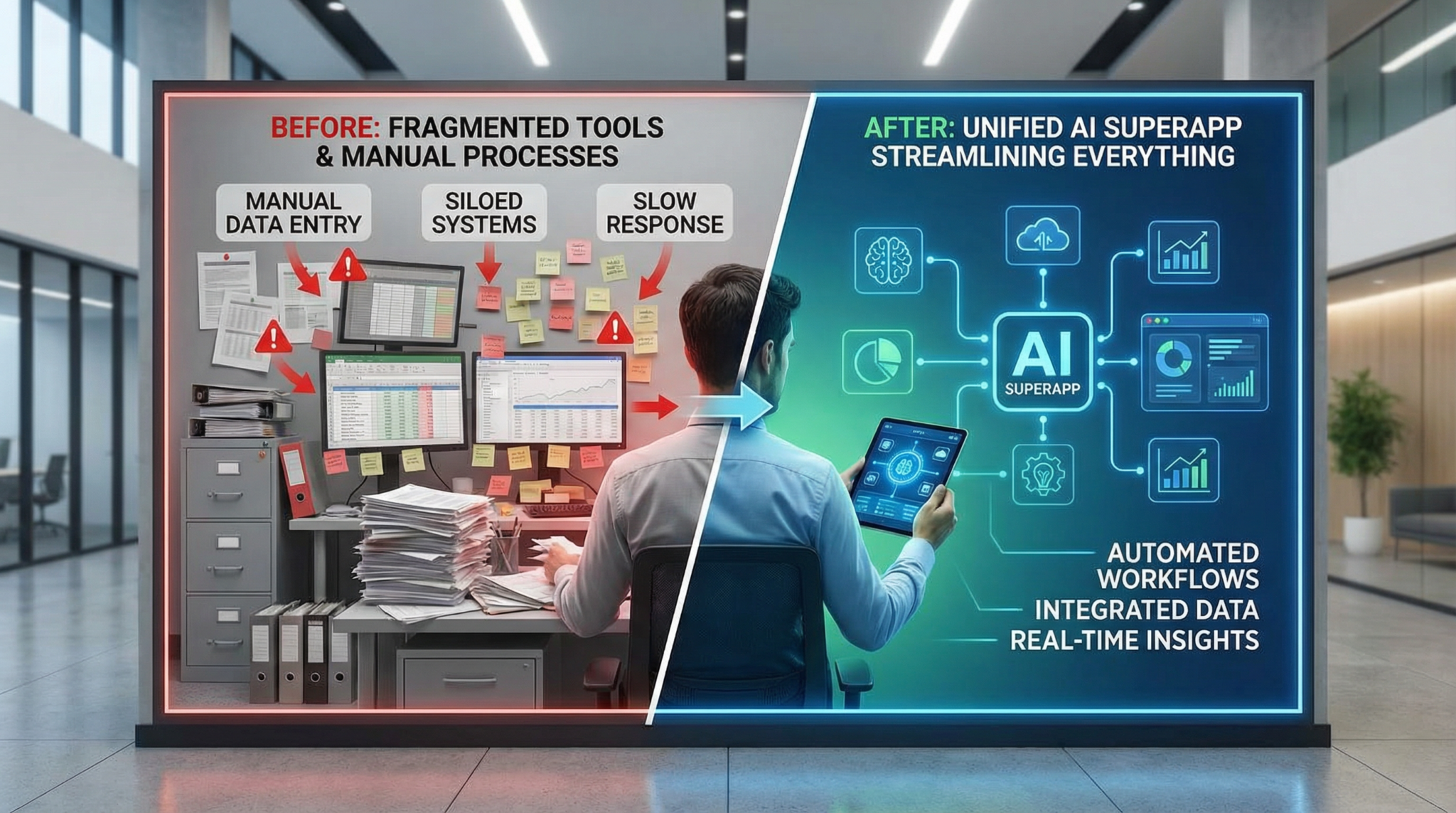
The integration of ChatGPT, Codex, and Atlas into a single AI superapp is poised to revolutionize enterprise workflows across multiple dimensions:
Streamlined Knowledge Work
Enterprises often suffer from information silos and inefficient research processes. The AI superapp enables employees to ask complex questions conversationally, retrieve real-time data, and generate actionable insights without switching tools. For example, a business analyst can query financial trends, access relevant news via Atlas, and then draft reports with ChatGPT’s help.
Accelerated Software Development
Developers benefit immensely from Codex’s code generation combined with contextual data retrieval. They can request code snippets, verify latest API changes, and debug with conversational guidance in one environment. This tight integration reduces development cycles and improves code quality.
Enhanced Customer Support and Automation
Customer service teams can leverage the AI superapp to provide instant, accurate responses, escalate complex issues to human agents, and automate routine tasks. The browsing capabilities ensure answers reflect up-to-date information, crucial for industries with rapidly changing regulations or product lines.
Cross-Functional Collaboration
By unifying AI capabilities, organizations can foster collaboration between data scientists, developers, marketers, and executives. The platform acts as a shared assistant, understanding diverse domain languages and facilitating communication.
For enterprises planning digital transformation, adopting this AI superapp can yield substantial ROI by reducing operational friction and empowering knowledge workers.
Building on the integration of AI capabilities in platforms like OpenAI’s superapp, the AI Enterprise Solutions post examines how 41 organizations across seven countries have successfully transitioned from pilot projects to full-scale AI deployments, achieving measurable ROI. Stanford’s 2026 Enterprise AI Playbook highlights key findings, addresses the activation gap, and provides a practical framework for scaling AI in the enterprise.
Architectural Overview: How the AI Superapp Operates Under the Hood
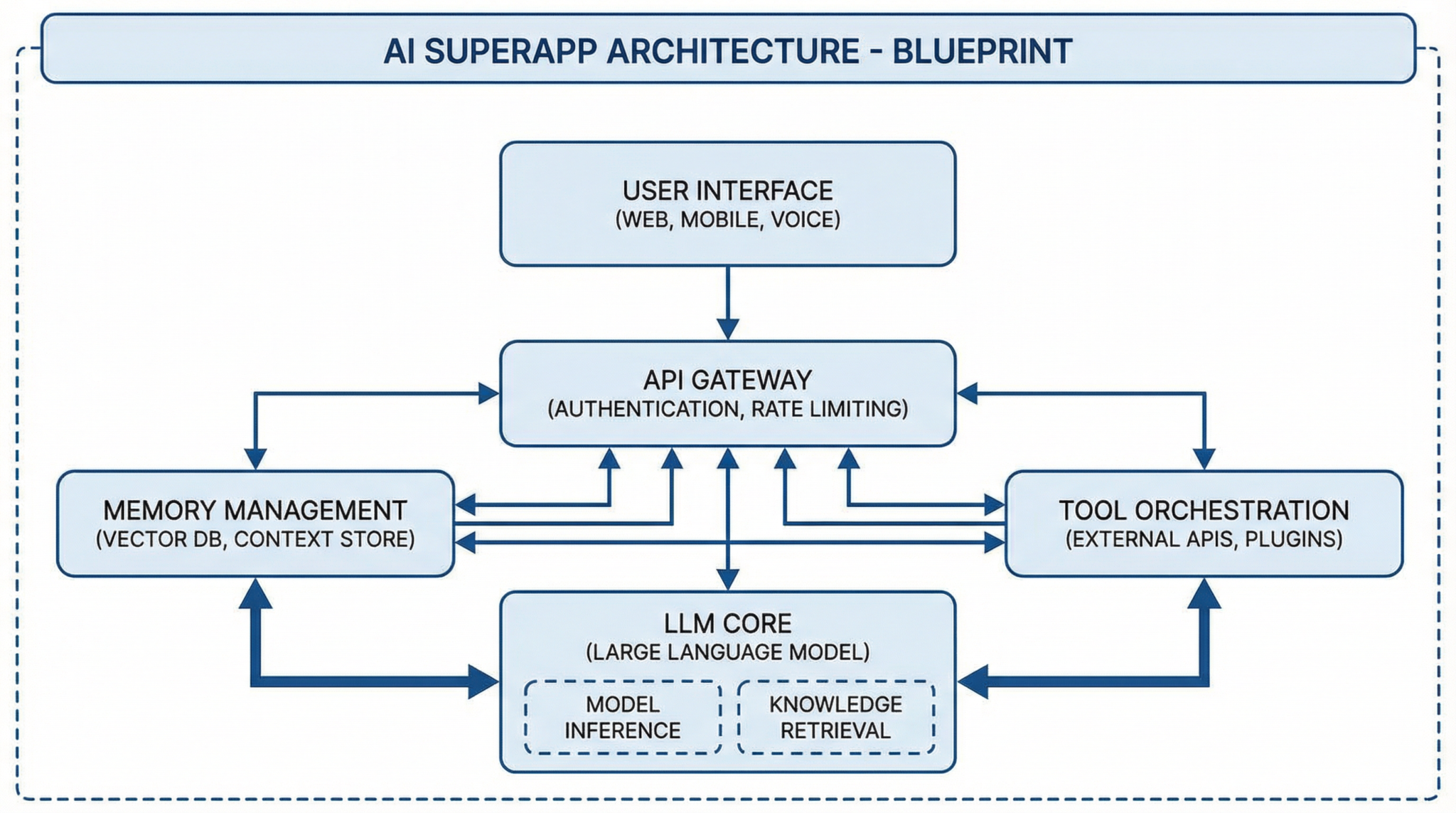
Understanding the architectural design of OpenAI’s superapp sheds light on its scalability and extensibility. The platform is fundamentally agent-centric, where the user interacts with a singular AI “agent” capable of multi-modal reasoning and task execution.
Core Components
- User Interface Layer: Provides chat-based, voice, and IDE-integrated interfaces, delivering consistent user experiences.
- Agent Orchestration Engine: Acts as the brain coordinating interactions among ChatGPT, Codex, and Atlas, managing context retention, task switching, and error handling.
- Model Serving Infrastructure: Hosts multiple AI models with dynamic scaling and load balancing to meet demand.
- Data Connectors and Plugins: Enables integration with enterprise data sources, cloud services, and external APIs, enriching the agent’s capabilities.
- Security and Compliance Framework: Monitors data access, implements auditing, and ensures regulatory adherence.
Workflow Example
Consider a product manager asking the agent: “Generate a project plan in Python that pulls real-time sales data from our CRM.” The agent first uses Atlas to retrieve the latest CRM API documentation and sales metrics, then invokes Codex to write the Python script, and finally uses ChatGPT to summarize the plan and provide step-by-step guidance—all in a single conversational thread.
This seamless orchestration relies on sophisticated context management and real-time decision-making within the agent orchestration engine, ensuring user queries are routed and resolved efficiently.
Use Cases Across Industries: AI Superapp in Action
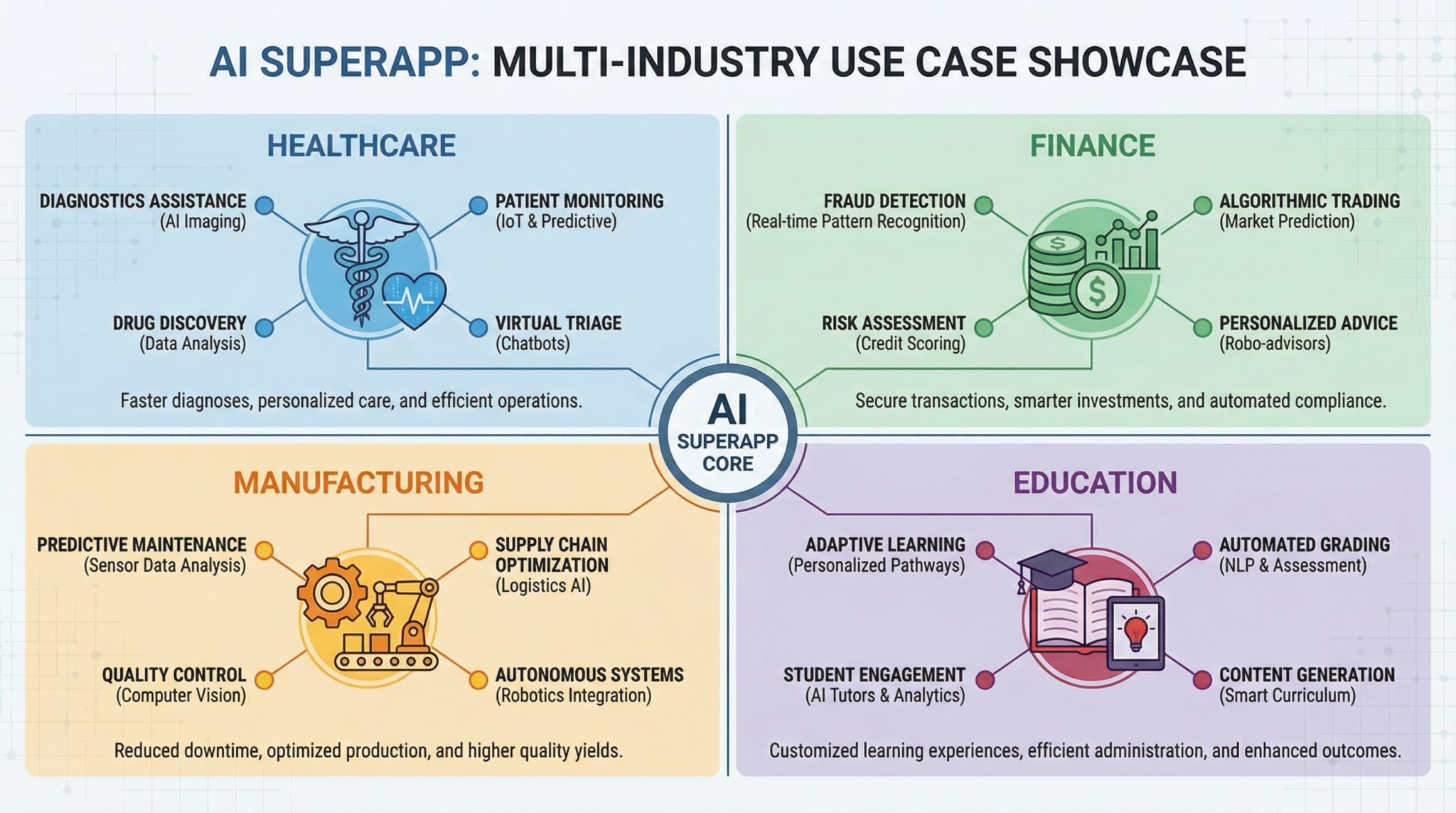
The AI superapp’s versatility enables transformative applications across numerous sectors:
Healthcare
Medical professionals can use the AI superapp to access the latest research through Atlas, generate diagnostic code or scripts via Codex for hospital management systems, and communicate findings with patients through ChatGPT-powered translations and explanations. This integrated approach accelerates clinical decision-making and improves patient outcomes.
Finance
Financial analysts leverage live market data browsing, automated report generation, and code-driven algorithmic trading strategies within the same platform. The AI superapp helps maintain compliance by dynamically incorporating regulatory updates and generating audit trails.
Education
Educators design interactive lesson plans, code educational software, and provide personalized tutoring experiences via conversational AI. Students benefit from instant access to verified knowledge sources and coding help, enhancing remote and hybrid learning environments.
Legal
Law firms utilize the platform to browse case law databases, draft legal documents, and automate contract analysis. The AI superapp’s ability to synthesize complex information and generate precise code for document management streamlines legal workflows.
These examples illustrate the profound impact of AI integration on domain-specific productivity, enabling organizations to innovate faster and more effectively.
For a concrete example of how integrating OpenAI Codex plugins and ChatGPT Enterprise can drive significant business impact, explore how a Fortune 500 retailer reduced development costs by 40% through these technologies in our case study on AI Applications by Industry.
Future Predictions: The AI Superapp Landscape in 2027 and Beyond
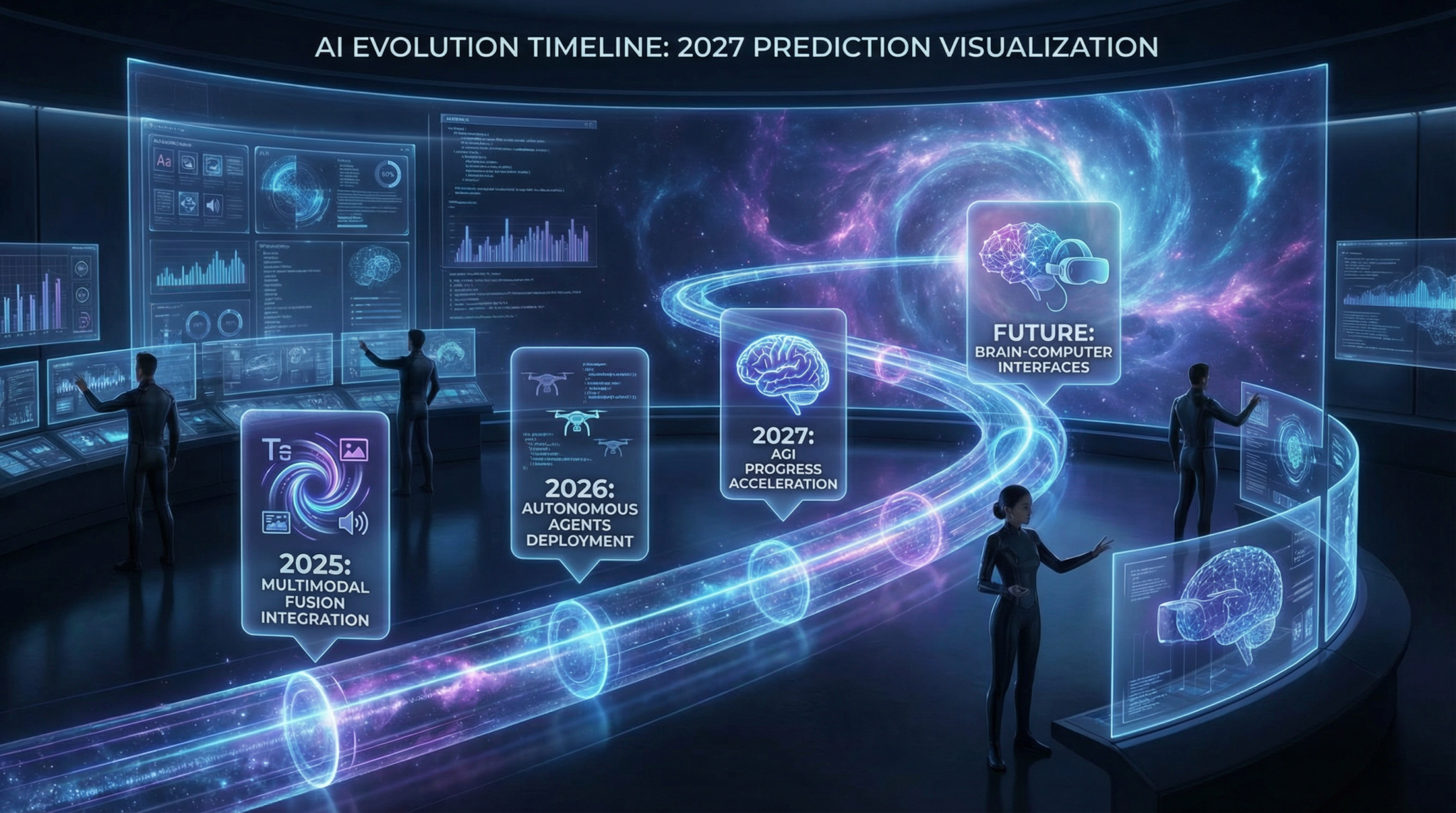
Looking ahead, the AI superapp is expected to evolve into an indispensable platform that drives innovation and automation at scale. Several trends will shape its trajectory:
1. Hyper-Personalization
Future AI agents will tailor interactions based on user behavior, organizational context, and real-time feedback. This personalization will extend beyond simple preferences to dynamic adaptation of AI capabilities and workflows.
2. Expanded Multimodal Integration
Beyond text and code, superapps will integrate voice, video, images, and sensor data inputs. Imagine an AI agent that can review video calls, interpret design sketches, or monitor IoT devices within the same interface.
3. Autonomous Agents and Workflow Automation
By 2027, AI superapps are predicted to orchestrate complex multi-step processes autonomously, such as end-to-end software deployment, supply chain management, or customer journey orchestration, with minimal human intervention.
4. Ethical and Transparent AI Governance
As AI superapps become pervasive, frameworks for accountability, explainability, and bias mitigation will mature. OpenAI and peers will embed ethical guardrails that align AI actions with human values and legal standards.
5. Democratization of AI Development
Low-code/no-code interfaces powered by the superapp will empower non-technical users to build custom AI agents, accelerating innovation and broadening AI adoption across all enterprise roles.
Building on the integration of ChatGPT, Codex, and Atlas into a unified AI superapp, OpenAI’s recent $122 billion funding round marks a pivotal moment for advancing these technologies. Explore how this unprecedented investment is set to accelerate innovation and shape the Future of AI Technology in transformative ways.
Conclusion: Embracing the AI Superapp Era
The fusion of OpenAI’s ChatGPT, Codex, and Atlas into a unified AI superapp platform signals a transformative milestone in artificial intelligence history. By overcoming fragmentation, technical complexity, and security challenges, OpenAI is delivering an agent-first experience that empowers enterprises to streamline workflows, enhance productivity, and innovate rapidly.
In a competitive landscape featuring Anthropic’s safety-centric AI and Google’s vast resources, OpenAI distinguishes itself through seamless integration, extensibility, and a relentless innovation cadence. As the AI superapp evolves, it will redefine human-computer interaction, making AI an intuitive collaborator across industries and disciplines.
Organizations poised to harness this convergence will unlock unprecedented efficiencies and competitive advantages. The AI superapp is not just a technological advancement — it is a foundational platform shaping the future of work, creativity, and decision-making.
As OpenAI continues to unify powerful models like ChatGPT, Codex, and Atlas into a single platform, understanding practical applications becomes crucial. Our detailed guide on Integrating AI APIs walks through building AI-powered automation workflows using the ChatGPT API alongside Zapier and Google Sheets, demonstrating how to streamline business processes effectively in 2026.
Access 40,000+ AI Prompts for ChatGPT, Claude & Codex — Free!
Subscribe to get instant access to our complete Notion Prompt Library — the largest curated collection of prompts for ChatGPT, Claude, OpenAI Codex, and other leading AI models. Optimized for real-world workflows across coding, research, content creation, and business.

