
OpenAI Makes GPT-5.5 Instant Mini the New Fallback in ChatGPT, Replacing 5.3: What Changes on July 6, 2026

On July 6, 2026, OpenAI updated ChatGPT’s default routing so that GPT-5.5 Instant Mini replaces GPT-5.3 Instant Mini as the fallback model served when users do not explicitly choose a model. The move aligns ChatGPT’s baseline experience with the GPT‑5.5 family that has been rolling out across tiers since spring, and it comes amid a broader reshuffle: GPT‑4.5 was retired on June 26–27, 2026, the o3 line is scheduled to retire on August 26, 2026, and next‑generation GPT‑5.6 variants (Sol, Terra, Luna) were previewed on June 26, 2026.
Opening Summary: Who, What, When, Why
OpenAI has made GPT‑5.5 Instant Mini the new fallback model for ChatGPT as of July 6, 2026. Fallback is the engine ChatGPT serves when the user does not explicitly select a model. By swapping out GPT‑5.3 Instant Mini for GPT‑5.5 Instant Mini, OpenAI aligns the day‑to‑day baseline experience with the most recent 5.5‑series improvements in reasoning quality, instruction following, and hallucination mitigation. GPT‑5.5 Instant had already been the default for many users since May 5, 2026; today’s change brings the “Mini” tier into the same family, closing the gap between free/default experiences and the broader 5.5 lineup.
The timing sits within a broader reorganization of OpenAI’s model portfolio. GPT‑4.5 completed retirement on June 26–27, 2026. The o3 series is on a published retirement path toward August 26, 2026. On June 26, OpenAI also previewed GPT‑5.6 Sol, Terra, and Luna, signaling the next generation’s direction. Together, these changes indicate a deliberate consolidation around the 5.x families, with clearer tiers from “Mini” up to advanced research‑grade models.
For users, the immediate effect is subtle but important: unless you manually choose a specific model, ChatGPT now routes to GPT‑5.5 Instant Mini for general tasks where it previously routed to GPT‑5.3 Instant Mini. For Free tier users—who typically rely on the default—the shift defines their primary model moving forward. For Plus and enterprise plans, the change primarily affects fallback behavior in sessions where a model is not pinned or where the chosen model is temporarily unavailable.
What GPT‑5.5 Instant Mini Is and Where It Fits
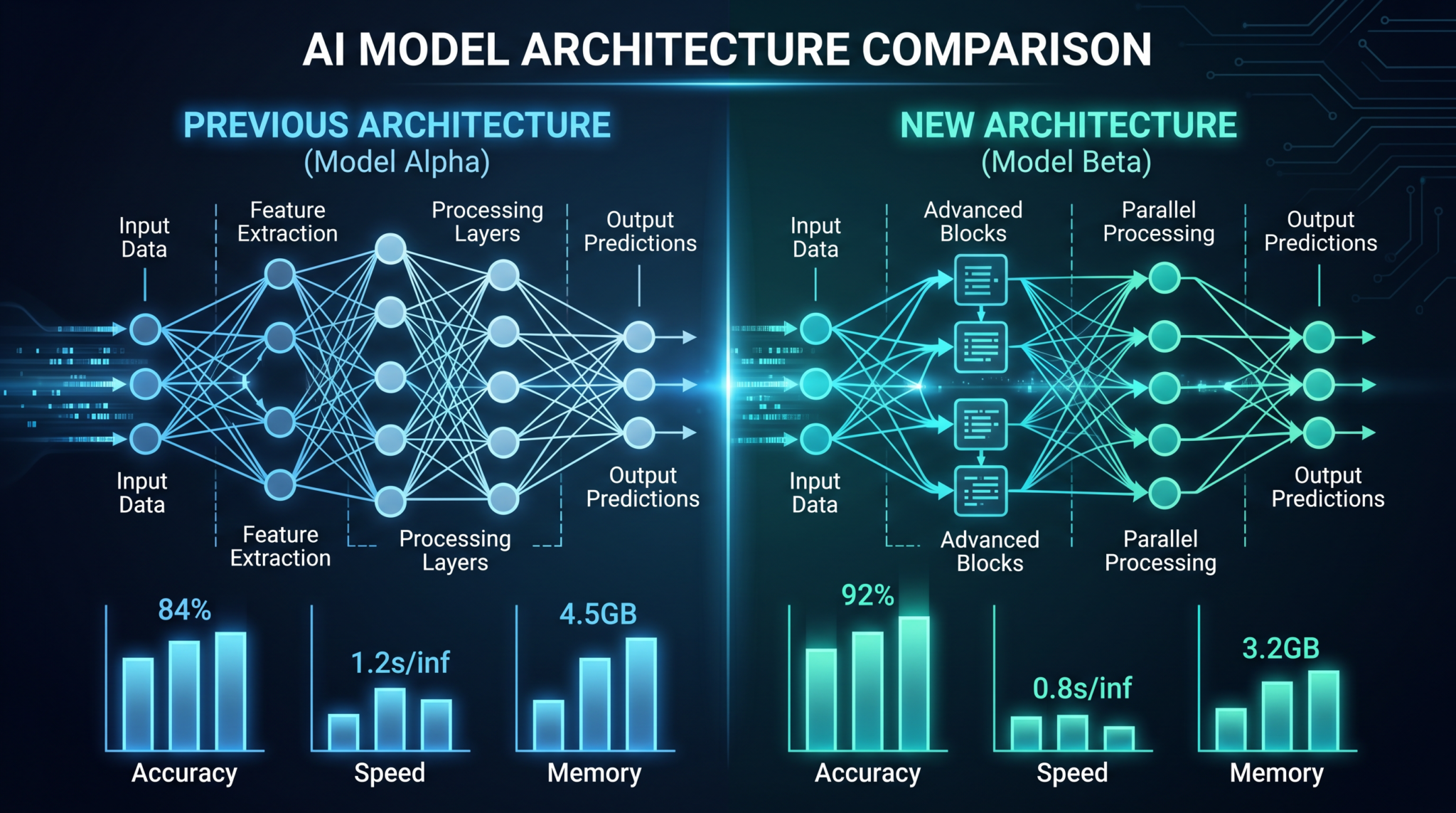
GPT‑5.5 Instant Mini is the lighter, fast‑response variant within the 5.5 Instant family that OpenAI positions for everyday conversational assistance, productivity tasks, and general knowledge queries. In OpenAI’s model hierarchy, “Instant” denotes models optimized for low latency, and “Mini” indicates a further trim relative to full Instant variants, prioritizing responsiveness and cost efficiency over advanced, heavy‑compute reasoning. This tradeoff makes Mini models well‑suited as fallbacks and defaults for broad, mixed‑traffic workloads where predictable speed matters as much as raw capability.
The placement is deliberate within the 2026 lineup. OpenAI’s stack currently spans multiple tiers, each mapped to a dominant use case pattern:
- Mini tier: Lightweight, quick responses, tuned for high availability and broad default/fallback coverage in consumer chat.
- Instant tier: Still optimized for speed, but generally stronger reasoning and instruction adherence than Mini; historically the default since May 5, 2026 (GPT‑5.5 Instant).
- Advanced 5.x and research lines: Higher‑capacity models aimed at complex analysis, extended reasoning, and specialized workflows.
- Forthcoming 5.6 variants (Sol, Terra, Luna): Previewed on June 26, 2026 as the next wave, signaling a new capability frontier with a similar tiered approach.
Within ChatGPT’s routing, GPT‑5.5 Instant Mini now serves as the model of record when the user does not specify a model. That means first‑time users, lightweight sessions, and quick lookup or drafting tasks will, by default, run on 5.5 Instant Mini. Users who explicitly pick another model will continue to receive the chosen model, subject to availability, with Mini stepping in only under fallback circumstances such as transient load balancing.
For readers mapping this shift across their workflows, the key takeaway is alignment: the same 5.5‑series design choices that have informed the default Instant model since early May now underlie the fallback Mini experience. This reduces fragmentation for users who switch between implicit default sessions and explicitly chosen models, and it simplifies support and training content for teams that must accommodate a mix of user behaviors within a single organization or classroom.
Technical Differences vs GPT‑5.3 Instant Mini
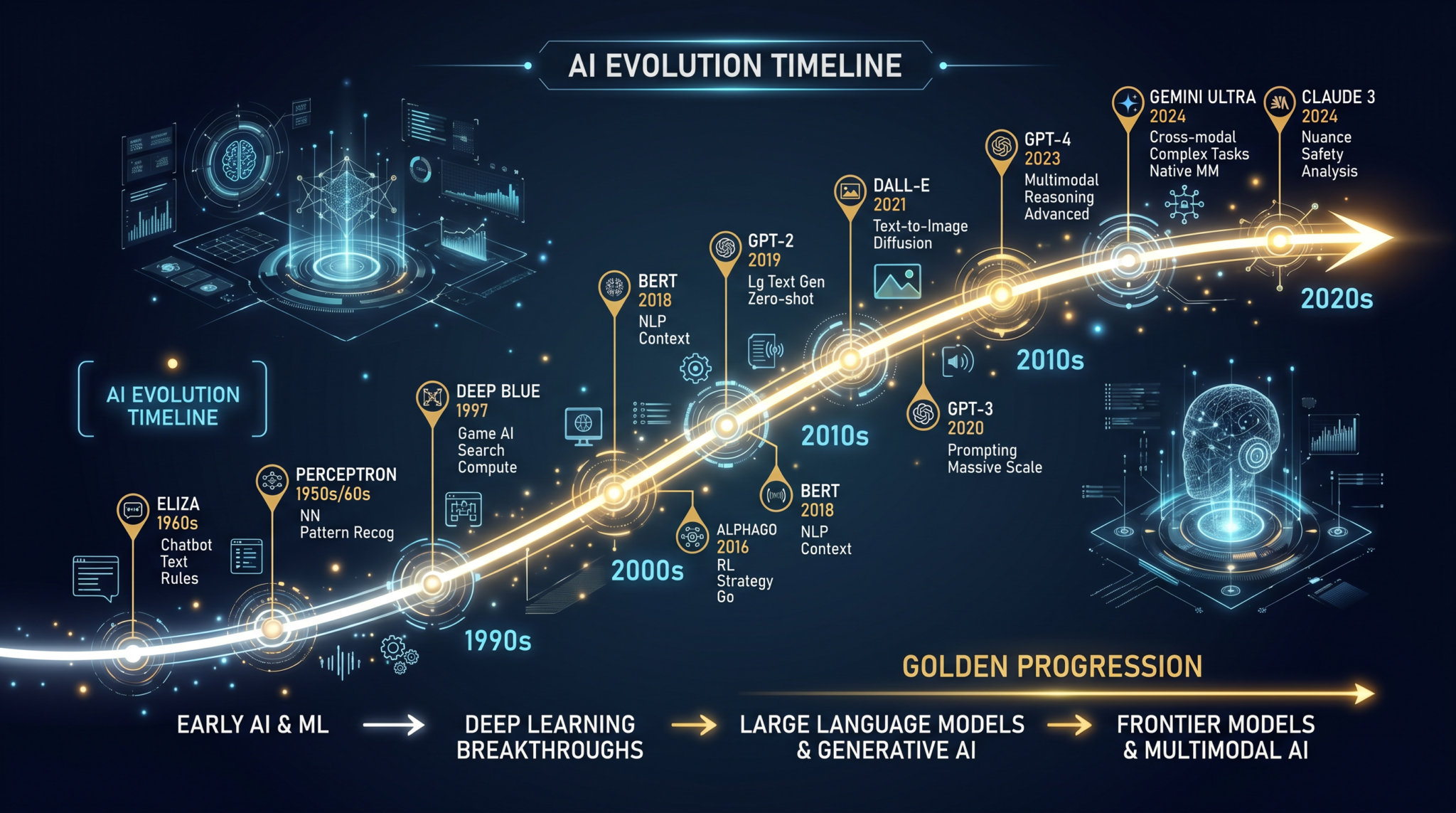
OpenAI’s 5.5‑series release is positioned as an iterative but meaningful upgrade over the 5.3 generation, with emphasis on three dimensions that matter in default/fallback contexts: reasoning quality on everyday tasks, better adherence to instructions and output formats, and reduced incidence of unsupported assertions (hallucinations) in open‑domain queries. While OpenAI has not attached public benchmark numbers in this context, the architectural and tuning goals are clear enough to outline practical differences users should expect when moving from GPT‑5.3 Instant Mini to GPT‑5.5 Instant Mini.
Reasoning and Multi‑Step Task Handling
“Mini” variants are not designed to match the longest‑horizon reasoning of flagship models, but the 5.5 update concentrates on everyday reasoning patterns where earlier Minis could stumble—multi‑constraint instructions, stepwise transformations, and reconciliation of conflicting cues across a short conversation. In practice, this means fewer dead‑ends on tasks like merging two sets of bullet points by common themes, refactoring a paragraph to satisfy three formatting rules simultaneously, or generating concise summaries that honor explicit word or character budgets without drifting.
- Short‑horizon planning: Better at maintaining the immediate set of constraints across 1–3 turns, such as “rewrite this in active voice, keep all numbers, and add a single‑sentence conclusion.”
- Disambiguation: More consistent in picking a reasonable default interpretation when prompts are underspecified, while flagging ambiguity in a straightforward sentence instead of proceeding incorrectly.
- Consistency across edits: Improved continuity when a user asks for serial edits (e.g., “now add a counterargument,” “now compress to 120 words”), reducing regression to earlier drafts.
Instruction Following and Output Discipline
Instruction following for Mini models commonly centers on fidelity to explicit constraints. The 5.5 Instant Mini shows tighter compliance when users specify output formats or schema‑like structures, especially simple JSON or bullet structures. The intention is not to rival dedicated structured‑output models but to close gaps that made Minis brittle in automation‑adjacent use cases like templated emails, checklist generation, or small policy summaries.
- Format fidelity: Stricter adherence to list lengths, section headings, and light schema descriptors in user prompts.
- Constraint memory: Better at maintaining 1–2 named constraints across paraphrasing or translation (“use UK spelling; include at most three acronyms”).
- Error surfacing: More likely to signal infeasible instructions (“one paragraph under 40 words and five separate citations”) instead of fabricating to satisfy contradictory constraints.
Reduced Hallucinations in Open‑Domain Queries
Hallucinations remain a risk in generative systems, especially when prompted for specific facts without references. The 5.5 update targets the most common pitfalls that surface in default chat: inventing references, confounding near‑identical entities, and extrapolating from partial context. The model is tuned to refrain and to prompt for clarification more often when information is insufficient. For users, this manifests as fewer fabricated proper nouns, more explicit uncertainty notices, and more frequent suggestions to check authoritative sources for claimed facts.
- Entity disambiguation: Increased caution when multiple candidates share a name or acronym, encouraging the user to specify the target.
- Reference hygiene: Lower propensity to generate unverified citations; higher likelihood of using generic attributions or advising verification steps.
- Claim boundaries: Clearer distinction between widely known facts versus plausible but unverified inferences, especially in technical domains.
Safety, Refusals, and Guardrails
Default/fallback models must balance helpfulness with safety. With 5.5 Instant Mini, refusals are targeted to be more precise: declining requests that cross policy boundaries while still offering allowed alternatives or safe summaries. This tuning especially matters in classroom and workplace contexts, where fallback responses must be reliable even without explicit model selection by the user.
Latency and Throughput Characteristics
Although OpenAI has not published latency numbers here, Mini variants are selected as fallbacks precisely because they maintain responsive behavior at scale. The 5.5 series aims to preserve or improve responsiveness under load relative to 5.3 Instant Mini. For most users, round‑trip times in typical drafts, summaries, and Q&A should feel at least as snappy as before, with fewer retried responses in peak periods due to the model’s role in load balancing.
Illustrative Prompts That Expose Differences
Users can quickly probe differences between 5.3 and 5.5 Minis with simple, low‑risk prompts:
- “Summarize this 250‑word text in exactly 60–70 words, using UK English, and preserve all dates and numbers.” Look for tighter adherence to the word band and spelling preference.
- “Create a 6‑item checklist with imperative verbs only, each under 10 words, and order by risk level.” Expect cleaner compliance on length and lexical rule.
- “I mean Mercury—do you think I meant the element or the planet?” Watch for clarifying questions rather than guesses.
- “Produce a JSON object with keys ‘title’ (string), ‘tags’ (array of 3 strings), and ‘draft’ (2 sentences). No extra keys.” Check for stray keys or malformed arrays.
These probes tend to surface the 5.5 Mini’s instruction‑tracking and output discipline without requiring heavyweight reasoning or domain expertise.
Impact on ChatGPT Free Users
Free tier users typically interact with ChatGPT via the default model selection. With today’s change, GPT‑5.5 Instant Mini becomes their primary model for most sessions, unless they manually switch to another available option in their interface. The expected impact is a general uplift in day‑to‑day reliability on common tasks: clearer compliance with instructions, fewer spurious assertions in general knowledge Q&A, and greater stability under peak load when drafting or editing text.
Day‑to‑Day Tasks That Benefit
- Summarization with constraints: Meeting word counts or tone requirements with less drift.
- Email and message drafting: Cleaner adherence to bullet or section formats; improved handling of style instructions (“neutral,” “warm,” “direct”).
- Study aids and concept overviews: More explicit signaling when uncertain; fewer invented facts in introductory explanations.
- Lightweight translation and paraphrasing: Better preservation of named entities and numbers when switching languages or rephrasing.
- Brainstorming within constraints: Lists that respect maximum item counts, unique ideas without duplicates, and minimal redundancy.
What to Watch For
- Factual verification: Although hallucinations are reduced, Free users should remain cautious with niche facts and rely on source verification for critical decisions.
- Complex reasoning: For multi‑step technical problems or long contextual chains, higher‑tier models may still outperform Mini. If available, manually choose a stronger model for in‑depth analysis.
- Formatting strictness: 5.5 Mini is better at schema‑like outputs, but for machine‑consumed JSON or strict compliance tasks, validate outputs before use.
Practical Tips for Free Users
- Specify constraints up front: Include word limits, tone, and required sections in your first prompt; 5.5 Mini is tuned to honor early constraints.
- Ask for confirmation: If a detail is critical, add “If unsure, ask me to clarify” to prompt the model to seek confirmation rather than guess.
- Use simple schemas: When requesting structured output, define a small set of keys and indicate required types in plain language.
Impact on ChatGPT Plus and Enterprise/Pro Users
For paying tiers, the most common pattern is that users explicitly select a preferred model for a given workflow. Today’s update primarily affects two situations: sessions initiated without an explicit model choice (which now route to GPT‑5.5 Instant Mini) and transient fallback events when a requested model is momentarily unavailable or load‑balanced. In both cases, GPT‑5.5 Instant Mini replaces 5.3 Instant Mini in the fallback role.
When You’re Likely to Notice the Change
- Unpinned sessions: Starting a new conversation without selecting a model now defaults to 5.5 Instant Mini rather than 5.3.
- Load balancing: During temporary congestion for your chosen model, the system may route to 5.5 Instant Mini to maintain responsiveness, depending on your plan and settings.
- Lightweight prompts inside heavy workflows: If you tend to mix quick drafting prompts within threads primarily intended for advanced models, occasional fallbacks may feel more precise and format‑faithful than before.
Recommendations for Plus/Pro Teams
- Pin mission‑critical workflows: For production‑adjacent tasks (e.g., exporting structured responses to downstream systems), explicitly select your target model per chat or per project.
- Add lightweight validation: Even with improved format adherence, include quick validation or linters for structured outputs used by tools or scripts.
- Standardize prompt headers: If multiple team members rely on fallbacks, maintain a shared set of instruction templates (tone, length, structure) that 5.5 Mini reliably respects.
Format and Policy Fidelity
Teams who care about consistent output formatting and policy‑aligned refusals should find the 5.5 Mini fallback more predictable than its 5.3 predecessor, especially for short compositional work. However, for long analytical reasoning or technical coding assistance that demands rigorous citations or stepwise proofs, it remains prudent to anchor threads on higher‑capacity models and to monitor when the interface signals that a fallback occurred.
Model Retirement Timeline: GPT‑4.5 Gone, o3 Next
OpenAI’s July 6 change lands amid a series of lifecycle adjustments that tighten the product’s focus on 5.x‑series models. The retirement of GPT‑4.5 at the end of June removed a widely used intermediate option, while the scheduled retirement of the o3 family on August 26, 2026, further simplifies the catalog. The preview of GPT‑5.6 variants on June 26, 2026, marks the next frontier while 5.5 anchors the mainstream experience.
| Date | Event | Practical Implication |
|---|---|---|
| May 5, 2026 | GPT‑5.5 Instant becomes the default model in ChatGPT. | Most users interacting with “default” receive 5.5 Instant for general tasks. |
| June 26–27, 2026 | GPT‑4.5 retired. | Users and developers relying on 4.5 migrated to 5.x alternatives; reduced fragmentation. |
| June 26, 2026 | GPT‑5.6 Sol, Terra, Luna previewed. | Signals next‑gen direction and tiering; not yet the default or fallback. |
| July 6, 2026 | GPT‑5.5 Instant Mini replaces GPT‑5.3 Instant Mini as ChatGPT’s fallback. | Default routing when users do not pick a model now sits on the 5.5 Mini tier. |
| August 26, 2026 | o3 family scheduled retirement. | Continued simplification around 5.x lines; encourages consolidation of workloads. |
Why These Retirements Matter
Model retirements and defaults shape user experience even more than flagship launches, because defaults and fallbacks handle the overwhelming majority of traffic. Removing older lines eliminates edge cases where users encounter divergent behaviors across superficially similar sessions. The result is a clearer support posture for organizations and more consistent learning curves for new users.
Migration Considerations
- Audit model dependencies: If your team documents workflows that referenced GPT‑4.5 or o3, update them to 5.x equivalents and verify outputs.
- Clarify defaults in training: Update internal education material to reflect that unpinned sessions now run on 5.5 Instant Mini.
- Monitor edge prompts: Identify prompts whose outputs drifted across 5.3 to 5.5; tune instructions to lock in the desired format.
What This Means for Developers Using the API
The July 6 change primarily affects the ChatGPT application’s default routing. API consumers retain explicit control over model selection. That said, developers often mirror ChatGPT defaults in prototypes or internal tools, so it is wise to align on the 5.5 series now and plan for o3 retirement in August.
Action Items for API Teams
- Use explicit model IDs: Avoid runtime “auto” aliasing in production where behavior must be stable. Select the intended 5.x model explicitly once validated in staging.
- Compare Minis vs non‑Mini: For latency‑sensitive endpoints, evaluate 5.5 Instant Mini against non‑Mini 5.5 Instant to balance speed and fidelity for your use case.
- Harden structured outputs: If you rely on JSON or YAML outputs, add schema checks. 5.5 Minis are better at format compliance but still benefit from validators.
- Prepare for retirements: If any services still reference GPT‑4.5 or o3 endpoints, migrate promptly and track any instruction adjustments needed to preserve behavior.
- Track release notes: Monitor OpenAI API updates for any versioned deprecations of 5.3 Mini variants and to confirm recommended 5.5 endpoints.
Performance and Cost Posture
Mini models are generally selected for their responsiveness and cost efficiency relative to larger peers. While OpenAI has not published public rate or token changes in the context of this news, development teams should measure end‑to‑end cost per successful task for both 5.5 Instant Mini and 5.5 Instant, because improvements in instruction following can reduce retries and post‑processing—often the largest hidden cost driver in production systems.
Testing for Behavioral Consistency
- Golden prompts: Maintain a compact suite of prompts that represent your critical use cases (summaries with strict word budgets; simple schema outputs; short disambiguation tasks). Compare results between 5.3 Mini and 5.5 Mini to document differences.
- Guardrails vs flexibility: If you provide tool instructions or system prompts, test that 5.5 Mini respects them without over‑restricting allowed behaviors.
- User messaging: Update any inline help text describing expectations (“the assistant will ask for clarification if uncertain”) to reflect 5.5 behavior.
Developer Documentation and Links
For a living picture of model positions and capabilities across tiers, consult internal or OpenAI materials that compare default, Mini, and advanced models. Start with the ChatGPT AI Hub’s explainer at ChatGPT model comparison and review model lifecycle notes at OpenAI API updates.
How This Fits OpenAI’s Strategy Toward GPT‑5.6
The July 6 fallback change is one piece of a broader, deliberate simplification. The model portfolio is concentrating around the 5.x families, with a clear separation of duties: Minis for dependable, fast defaults; Instant for mainstream default sessions; and advanced lines for complex or specialized reasoning. Retiring GPT‑4.5 and sunsetting o3 in August reduce cross‑family heterogeneity, supporting a crisper upgrade cadence and cleaner expectations for users.
The preview of GPT‑5.6 Sol, Terra, and Luna on June 26 suggests that OpenAI is preparing an even more structured tiering—one that can scale both up and down more predictably. By aligning the fallback to 5.5 now, OpenAI positions 5.5 as the stable bridge into the 5.6 era. Users grow accustomed to 5.5’s instruction style, refusal behavior, and output formatting, making the eventual migration to 5.6 less disruptive.
Strategically, the fallback model is a powerful lever. It touches the majority of casual sessions, sets the tone for perceived “ChatGPT quality,” and forms the baseline for educational and workplace adoption at scale. By lifting the fallback from 5.3 to 5.5, OpenAI effectively accelerates quality improvements into the largest pool of interactions without forcing users to make an explicit selection—an efficient route to raise satisfaction metrics while preserving headroom for premium upsell to higher tiers.
In short, today’s change is less about showcasing a single model’s ceiling and more about raising the floor across the ecosystem—exactly the job of a fallback default when the company is preparing the runway for a new generation of models such as GPT‑5.6.
Expert Analysis and Industry Context
Across the industry, the default or fallback model is the most consequential product choice because it governs the experience for users who never change settings—typically a large majority. When that fallback gains better instruction adherence and lower hallucination rates, user trust increases, onboarding friction drops, and support costs decline. Meanwhile, power users retain the option to select heavier models for advanced tasks. This two‑track strategy—raise the baseline while preserving headroom—has become a standard pattern for large model providers managing consumer and enterprise portfolios simultaneously.
Why Moving to 5.5 Mini Matters Now
With GPT‑4.5 retired and the o3 family heading toward sunset, OpenAI is aligning both default and fallback to a single, contemporary family (5.5) before debuting 5.6 in general availability. The company is effectively minimizing the distance between what new users experience first and what they are likely to adopt for sustained usage. This has product‑market fit implications: fewer surprises when moving from initial experiments to real workflows, less need to rewrite prompts across families, and clearer customer education.
Model Cohesion as a Competitive Factor
The history of model rollouts in the last few years shows that families with coherent instruction styles and refusal patterns help teams scale internal trainings and templates. When defaults and fallbacks share that coherence, organizations can standardize with fewer edge cases. This is particularly valuable for education and compliance teams who must document expected behavior and exceptions—something much harder when defaults switch families without notice or when fallbacks do not match the tenor of primary models.
Balancing Capability, Cost, and Availability
Default and fallback models sit at the intersection of capability, cost, and availability. The “Mini” designation acknowledges this balancing act at scale. Rather than maximize rare‑case reasoning, the fallback focuses on reliably solving the common 80–90% of prompts: concise drafts, summaries, lightweight transformations, and general questions. Aligning that fallback with the 5.5 family’s improvements strengthens this center of gravity without incurring the latency or cost profile of heavier models where not needed.
Editorial take: In generative AI, raising the baseline is often more impactful than extending the frontier. Moving ChatGPT’s fallback to GPT‑5.5 Instant Mini raises that baseline for the largest cohort—users who rely on default behavior—while laying a smoother path toward 5.6.
What to Watch Between Now and August 26
- o3 retirement effects: As the o3 series sunsets, expect further simplification in model menus and documentation, with migration nudges toward 5.x.
- Preview‑to‑GA transitions for 5.6: Feature parity and instruction style continuity will determine how seamless upgrades feel from 5.5 to 5.6.
- Education and enterprise adoption: Institutions sensitive to hallucinations and formatting issues may accelerate adoption now that the fallback improves on both fronts.
Practical Guidance and Migration Checklists
Whether you are an individual user, a team lead, or an application developer, shifting the fallback from 5.3 Mini to 5.5 Mini invites a quick round of validation. The following checklists help ensure your prompts, templates, and expectations are in sync with the new baseline.
For Individual Users
- Refresh prompt templates: Update your go‑to prompts to explicitly mention constraints (word limits, tone, bulleted style) so 5.5 Mini can lock onto them early.
- Use clarifying clauses: Add “If any part is ambiguous, ask me to clarify” to raise the chance of a clarification question instead of a wrong guess.
- Validate critical facts: For career, medical, legal, or financial information, cross‑check with authoritative sources; treat the model as an assistant, not an oracle.
For Team Leads and Educators
- Audit shared workflows: Identify lessons or SOPs that referenced GPT‑5.3 Mini; test them with 5.5 Mini and note any changed behaviors.
- Standardize output formats: Publish a short style guide for headings, bullet conventions, and schema for structured snippets (e.g., title/tags/summary) to improve consistency across users.
- Document escalation paths: Indicate when to switch from fallback Mini to a higher‑tier model (e.g., lengthy policy comparisons, complex data interpretation).
For Developers and Product Owners
- Golden set validation: Build a 20–50 prompt golden set that covers your app’s core tasks; compare behaviors between 5.3 Mini and 5.5 Mini and record any prompt adjustments.
- Schema checks and retries: Implement lightweight schema validation and a single retry with a corrective instruction for structured outputs (e.g., “Re‑emit JSON with only keys X, Y, Z”).
- Fallback transparency: If your app mirrors ChatGPT’s fallback behavior, surface the active model to users so they understand which tier generated the response.
- Lifecycle tracking: Subscribe to notes at OpenAI API updates to plan around o3 retirement and any 5.3 Mini deprecations.
How to Tell Which Model Served Your Response
In ChatGPT, the interface typically indicates the active model near the conversation header or model switcher. Before assuming long‑horizon capabilities, confirm which model is engaged—especially in new sessions or after periods of high load. If your work depends on strict outputs, explicitly select the desired model at the start of a thread to avoid implicit fallbacks.
Access 40,000+ AI Prompts for ChatGPT, Claude & Codex — Free!
Subscribe to get instant access to our complete Notion Prompt Library — the largest curated collection of prompts for ChatGPT, Claude, OpenAI Codex, and other leading AI models. Optimized for real-world workflows across coding, research, content creation, and business.
Key Questions and Answers
What exactly changed on July 6, 2026?
OpenAI replaced GPT‑5.3 Instant Mini with GPT‑5.5 Instant Mini as ChatGPT’s fallback model. This is the model served when users do not explicitly select a model. The change aligns the fallback with the 5.5 family that has been the default since May 5, 2026 for the non‑Mini Instant tier.
Does this affect the default model if I never change settings?
Yes. If you typically use ChatGPT without selecting a model, you will now be served GPT‑5.5 Instant Mini where you previously would have received GPT‑5.3 Instant Mini for fallback cases. The intent is to improve instruction following and reduce unsupported assertions in everyday use.
What’s the difference between Instant and Instant Mini?
Instant models aim for low latency at mainstream capability. Instant Mini goes further in prioritizing responsiveness and cost efficiency. Minis trade some advanced reasoning headroom for predictability and speed, making them well‑suited as fallbacks and defaults for broad, mixed‑traffic workloads.
What happened to GPT‑4.5 and the o3 series?
GPT‑4.5 was retired on June 26–27, 2026. The o3 family is scheduled for retirement on August 26, 2026. These removals streamline the catalog around 5.x families and reduce behavioral fragmentation for users.
What are GPT‑5.6 Sol, Terra, and Luna?
They are previewed variants in the forthcoming GPT‑5.6 family as of June 26, 2026, indicating the next generation’s capability direction and likely a continued tiered approach. The July 6 change does not make 5.6 the default or fallback; it simply aligns fallback to 5.5 as a stable bridge.
How should developers respond to this change?
Developers retain explicit control over model selection in the API. It is prudent to benchmark 5.5 Instant Mini against your current default, implement schema validation for structured outputs, and prepare for o3 retirement. Track announcements via OpenAI API updates.
Where can I compare ChatGPT’s current models?
For a structured overview of capabilities and typical use cases across current tiers, see ChatGPT model comparison. For a forward‑looking breakdown of upcoming features and tiers in the 5.x line, see GPT‑5 features.
Will I see fewer hallucinations now?
You should observe fewer unsupported assertions and better ambiguity handling compared to 5.3 Instant Mini in everyday prompts. Still, for critical or niche facts, verify against authoritative sources. The model is tuned to ask for clarification more often when context is insufficient.
Does this change impact pricing or quotas?
The July 6 announcement concerns default routing and fallback behavior in ChatGPT. OpenAI has not tied pricing or quota changes to this particular update. Consult plan details in your account and release notes for any future adjustments.
How can I adapt prompts to take advantage of 5.5 Mini?
State all constraints in the first message, define any required output structure simply, and invite the model to ask clarifying questions when necessary. These practices amplify the instruction‑following improvements in 5.5 Instant Mini.
