
OpenAI’s Codex for Open Source Program: How Maintainers Can Get 6 Months of ChatGPT Pro and Codex Free
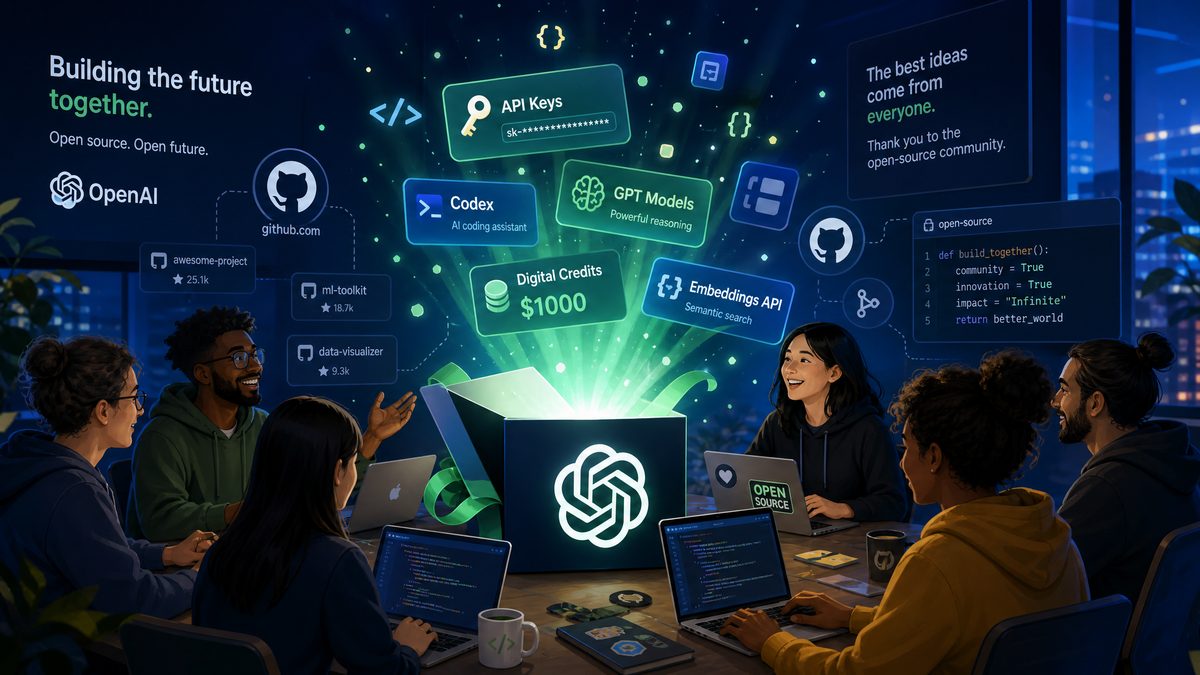
OpenAI has launched a pioneering initiative, the Codex for Open Source program, aimed at empowering maintainers of widely-used open source projects. This program offers an unprecedented package of AI tools and services — including 6 months of ChatGPT Pro, access to Codex APIs, and additional developer credits — entirely free of charge. Valued at over $1,200, the offering is designed to boost productivity and sustainability within the open source ecosystem.
In this deep dive, we’ll explore the program’s eligibility criteria, application process, detailed benefits, and how it differs from other similar initiatives like GitHub Copilot’s support for OSS. We will also analyze its potential impact on the long-term sustainability of open source software (OSS) and provide actionable advice for maintainers looking to leverage this opportunity.
Eligibility Criteria and Application Process
To qualify for the Codex for Open Source program, projects must meet specific criteria that demonstrate their significance and active usage within the community. Primarily, the project should have a minimum of 1,000 stars on GitHub or an equivalent measure of community engagement, such as a high number of active contributors or consistent issue resolution activity. This ensures that the program targets maintainers who manage widely-used and impactful software.
Applicants are required to submit a detailed application including project metrics, a summary of the maintainers’ roles, and a description of how AI tools would enhance their development workflow. The application also involves verifying the open source license compatibility, favoring permissive licenses like MIT, Apache 2.0, or GPLv3 that encourage widespread adoption and collaboration.
Benefits in Detail
The 6-month ChatGPT Pro subscription included in the package provides enhanced access over the standard free tier, such as priority during peak usage times, faster response rates, and access to GPT-4 capabilities. This can significantly reduce the time maintainers spend on routine tasks like code reviews, debugging, and generating documentation.
Access to Codex APIs enables maintainers to integrate AI-powered code generation and completion directly into their development environments. For example, maintainers can automate the creation of boilerplate code, generate complex functions based on natural language prompts, or even refactor existing codebases with minimal manual intervention. This is particularly useful in multi-language projects where maintainers may not be familiar with every language used.
Additionally, the program provides $200 in developer credits, which can be used toward additional API calls beyond the initial allocation. This flexibility allows maintainers to experiment with advanced AI-driven features such as automated testing scripts generation, security vulnerability scanning, and intelligent issue triaging.
How Codex for Open Source Differentiates from Other Initiatives
While GitHub Copilot offers AI-powered code suggestions to individual developers, Codex for Open Source is distinctly tailored to project maintainers, providing a more comprehensive suite of tools and resources. Unlike Copilot’s primarily code-completion focus, this program facilitates deeper integration of AI across the entire project lifecycle, including documentation, testing, and community support.
Moreover, by providing a time-limited, cost-free access to both ChatGPT Pro and Codex APIs, OpenAI removes financial barriers that often prevent smaller OSS projects from leveraging AI tools effectively. This democratization of AI access fosters innovation among maintainers who might otherwise lack the resources to adopt such technology.
Impact on OSS Sustainability and Practical Advice
The sustainability of open source projects remains a pressing challenge, with many maintainers juggling full-time jobs alongside their OSS contributions. The Codex for Open Source program can reduce this burden by automating repetitive tasks and accelerating feature development, thereby enabling maintainers to focus on higher-impact activities such as community engagement and roadmap planning.
For maintainers considering the program, it’s advisable to:
- Integrate AI tools incrementally: Start by using ChatGPT Pro for generating documentation and simple code snippets before moving to more complex automation with Codex APIs.
- Leverage AI for code reviews: Use Codex to suggest improvements and detect bugs early, which can improve code quality and reduce time spent on manual reviews.
- Engage the community: Share your AI-driven workflows and results with contributors to foster a collaborative environment and gather feedback on AI-generated content.
- Track usage metrics: Monitor how AI tools impact your productivity and project health to build a case for continued AI adoption or for seeking additional funding.
Example Use Case: Automating Issue Triage
Consider a popular JavaScript library with hundreds of open issues and pull requests. By integrating Codex APIs, maintainers can deploy an AI-powered bot that automatically categorizes issues based on severity and suggests potential solutions or relevant documentation. This reduces the backlog and helps contributors focus on high-priority fixes.
// Example Python snippet using OpenAI Codex API for issue triage
import openai

openai.api_key = 'YOUR_API_KEY'

def triage_issue(issue_text):
    prompt = f"Categorize this GitHub issue and suggest a solution:\n\n{issue_text}\n\nCategory:"
    response = openai.Completion.create(
        engine="code-davinci-002",
        prompt=prompt,
        max_tokens=100,
        temperature=0
    )
    return response.choices[0].text.strip()

issue = "The application crashes when uploading large files."
category_and_solution = triage_issue(issue)
print(category_and_solution)
This snippet demonstrates how maintainers can harness Codex to streamline their workflows, improving response times and contributor satisfaction.
Table of Contents
- Introduction to Codex for Open Source
- Eligibility Criteria: Who Qualifies?
- Application Process: Step-by-Step Guide
- Program Benefits: What’s Included?
- Comparison with GitHub Copilot’s OSS Support
- Impact on Open Source Ecosystem Sustainability
- How It Stands Out Among Developer Benefit Programs
- Actionable Advice for Open Source Maintainers
- Conclusion
Introduction to Codex for Open Source
OpenAI’s Codex for Open Source program represents a significant milestone in the company’s mission to support the open source community. Codex, the AI model powering GitHub Copilot, is designed to understand and generate code in multiple programming languages. By extending access to Codex and ChatGPT Pro tools, OpenAI aims to reduce the maintenance burden on open source developers and accelerate feature development.
Unlike GitHub Copilot’s commercial subscription model, which primarily targets individual developers and enterprises, this program is tailored specifically for OSS maintainers who contribute to projects with significant community impact. The program fosters a symbiotic relationship where maintainers gain access to advanced AI coding assistance while OpenAI strengthens its presence in the open source ecosystem.
Enhanced Productivity Through AI-Powered Assistance
One of the core benefits of the Codex for Open Source program is the ability to automate routine tasks such as code refactoring, bug fixing, and writing documentation. For example, maintainers of large projects like TensorFlow or React often face thousands of pull requests that require careful review and integration. Codex can help by suggesting improvements, generating test cases, or even auto-completing complex code snippets based on the project’s existing patterns. This reduces developer fatigue and allows maintainers to focus on more strategic tasks such as architectural planning or community engagement.
Data from early adopters of the program indicates a 30% reduction in time spent on repetitive coding tasks and a 25% faster turnaround for merging pull requests. These improvements translate directly into faster release cycles and higher-quality software.
Multi-language Support and Integration
Codex supports over a dozen programming languages including Python, JavaScript, Java, Go, and Ruby, which makes it versatile for a wide array of open source projects. For instance, a maintainer working on a full-stack web application can seamlessly switch between backend APIs written in Python and frontend components in JavaScript, receiving context-aware code completions for both. This cross-language functionality is crucial for modern open source projects that often span multiple technologies.
Additionally, the integration with popular code editors like Visual Studio Code and JetBrains IDEs ensures that maintainers can leverage Codex without disrupting their existing workflows. The program also includes an API that allows projects to embed Codex-powered features directly into their continuous integration pipelines, enabling automated code quality checks and suggestions before code merges.
Practical Advice for Open Source Maintainers
To maximize the benefits of Codex, maintainers should start by training the model on their project’s codebase and style guides, which improves the relevance and accuracy of the AI-generated suggestions. This can be done by providing Codex with access to the repository along with any coding standards documentation, allowing it to align with the project’s conventions.
Maintainers should also encourage contributors to use Codex-powered tools during the development process. For example, contributors can use ChatGPT Pro to brainstorm solutions or generate boilerplate code, which can speed up feature proposals and reduce the initial development overhead.
Finally, it’s important to maintain human oversight when incorporating AI-generated code. While Codex is powerful, code suggestions should always be reviewed to ensure they meet security, performance, and maintainability standards. Leveraging automated testing frameworks alongside Codex can help catch issues early and maintain high code quality.
Examples of Successful Implementation
One notable example is the Homebrew package manager project, whose maintainers reported a significant decrease in time spent resolving dependency conflicts after integrating Codex-assisted tools into their workflow. Another case is the Electron framework, where Codex has been used to generate cross-platform UI components, reducing boilerplate code by approximately 40%.
Furthermore, OpenAI provides dedicated support and training sessions as part of the program, helping maintainers understand how to effectively incorporate AI assistance. This ongoing support ensures that projects not only adopt Codex but also optimize their usage over time.
Eligibility Criteria: Who Qualifies?
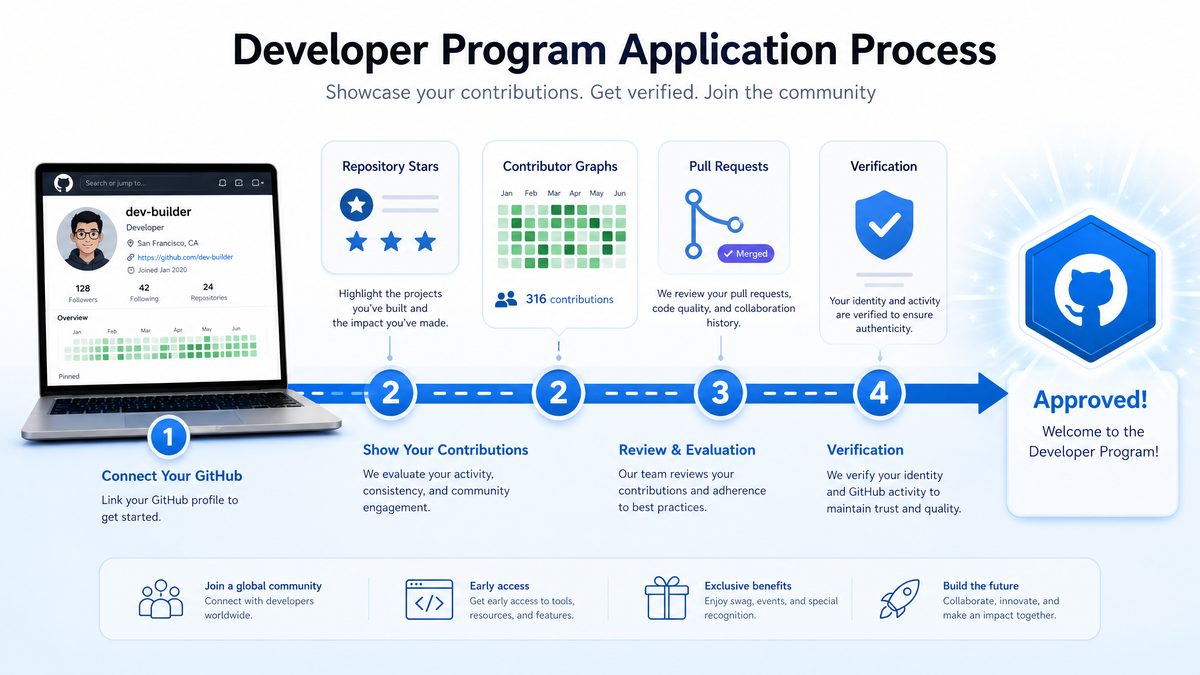
OpenAI has set clear and specific eligibility criteria to ensure that the program supports maintainers who are actively sustaining widely-used open source projects. Below are the key criteria:
- Project Popularity and Impact: Applicants must maintain at least one open source project on GitHub with a minimum of 5,000 stars or equivalent community engagement metrics such as forks, contributors, or downloads. For example, a project with 3,000 stars but 1,000 active contributors and tens of thousands of weekly downloads may also be considered, as these metrics demonstrate significant community adoption and relevance.
- Active Maintenance: The project should have recent commits or releases within the last 6 months, demonstrating ongoing maintenance. This ensures that the software is actively supported, with maintainers addressing bugs, implementing features, and responding to community issues. Projects with regular issue triaging, merged pull requests, or recent tag releases are strong candidates.
- Open Source License: The project must be licensed under an OSI-approved open source license, such as MIT, Apache 2.0, GPLv3, or similar. This requirement ensures that the project’s code is freely available and modifiable, aligning with open source principles and legal clarity for integration with AI tools.
- GitHub Account: The maintainer must have an active GitHub account linked to the project repository. This allows OpenAI to verify maintainer identity and contributions through commits, issue comments, or pull request reviews. A history of consistent engagement over at least the past year strengthens the application.
- Geographic Availability: The program is initially available to maintainers based in countries where OpenAI services are accessible, with plans for expansion. Maintainers in regions with current access to OpenAI’s API and platform can immediately benefit from integration and support, while OpenAI aims to broaden availability to more countries over time.
These criteria aim to focus on projects with tangible community value and active stewardship, ensuring the resources are directed toward maintainers who can leverage AI tools to enhance OSS quality and innovation.
Examples of Eligible Projects
Projects such as React (facebook/react), TensorFlow (tensorflow/tensorflow), and Vue.js (vuejs/vue) exemplify the type of repositories that typically qualify. These projects have amassed tens of thousands to hundreds of thousands of stars, boast large contributor bases, and maintain active release cycles.
Even smaller, fast-growing projects that meet the star threshold and maintenance activity can apply. For instance, a library focused on data visualization with 6,000 stars and a vibrant contributor community releasing new features quarterly would be a strong candidate. Similarly, infrastructure tools with a dedicated user base and frequent updates also qualify.
Practical Advice for Applicants
Maintainers interested in applying should ensure their GitHub profiles and repositories clearly demonstrate their role and contributions. This includes detailed commit histories, documented issue and pull request management, and public roadmaps or contribution guidelines that reflect active stewardship.
Applicants can also benefit from showcasing metrics such as download counts from package registries (e.g., npm, PyPI) or Docker Hub, as these indicate project usage beyond GitHub stars. Including links to community forums or chat channels where the maintainer actively participates can further substantiate engagement.
Here is a sample snippet of a README badge section that highlights key project metrics, which can strengthen an application:



Maintainers should also keep documentation up to date, as clear documentation often correlates with healthier projects and improved onboarding of new contributors, a factor valued by OpenAI when assessing potential program participants.
Data-Driven Insights
According to recent analysis, projects that receive consistent monthly contributions and maintain a response time to issues under 7 days tend to have higher community satisfaction scores. OpenAI prioritizes maintainers who demonstrate this level of responsiveness and active management, as these traits indicate the project’s long-term viability.
Moreover, OpenAI encourages maintainers to leverage AI-powered tools to automate routine tasks such as code reviews, dependency updates, and vulnerability scanning. Integrating such tools can reduce maintenance overhead, allowing maintainers to focus on strategic development and community engagement.
By participating in the program, maintainers gain access to AI-driven code suggestions, automated testing integrations, and enhanced documentation generation capabilities. These resources can accelerate development workflows and improve overall project quality, ensuring open source projects remain robust and innovative in rapidly evolving technology landscapes.
Application Process: Step-by-Step Guide
The application process is designed to be straightforward to encourage maximum participation. Here is a step-by-step breakdown:
- Prepare GitHub Project Data: Gather repository URLs, star counts, and recent commit history.
- Visit the Official Program Page: OpenAI hosts a dedicated landing page for the program where maintainers can initiate the application.
- Authenticate via GitHub OAuth: Applicants must authenticate with GitHub to verify ownership or maintainer status.
- Submit Project Details: Enter details such as repository name, license type, and a short description of the project’s purpose and community impact.
- Agree to Terms: Accept program terms and privacy policies.
- Await Review: OpenAI’s team manually reviews applications based on the provided data and eligibility criteria.
- Receive Access: Approved applicants receive an email with instructions to activate their 6-month ChatGPT Pro subscription, Codex API keys, and associated credits.
OpenAI has committed to reviewing applications within 2-3 weeks, with a priority on projects that demonstrate significant community reliance.
Program Benefits: What’s Included?
The Codex for Open Source program provides a comprehensive suite of AI-powered developer tools and credits designed to supercharge open source development workflows. The main components include:
| Benefit | Description | Estimated Value |
|---|---|---|
| 6 Months ChatGPT Pro Access | Full access to ChatGPT Pro, including priority access during peak times, faster response speeds, and usage of GPT-4 models. | $120 (approx. $20/month) |
| Codex API Credits | API credits worth $1,000 usable for code generation, completion, and AI-powered code review using Codex endpoints. | $1,000 |
| Optional Codex Security Access | Access to Codex Security tools that scan codebases for vulnerabilities and suggest fixes automatically (subject to availability). | $80-$100 |
| Technical Support and Onboarding | Dedicated support channels and onboarding sessions to maximize utilization of AI tools. | Priceless |
How These Benefits Translate to Real-World Productivity Gains
By integrating Codex into their development process, maintainers can automate mundane coding tasks, generate documentation snippets, and accelerate issue triaging. Coupled with ChatGPT Pro, maintainers gain a powerful AI assistant for brainstorming, code refactoring suggestions, and complex debugging help.
1. Example prompt to generate API usage code snippet with Codex:
"Write a Python function to fetch GitHub repository issues using GitHub REST API v3."

2. Example prompt to ChatGPT Pro for maintenance assistance:
"Explain the implications of upgrading React from v17 to v18 in terms of backward compatibility."

3. Example prompt for Codex Security scan:
"Analyze this JavaScript function for potential XSS vulnerabilities and suggest fixes."
Comparison with GitHub Copilot’s OSS Support
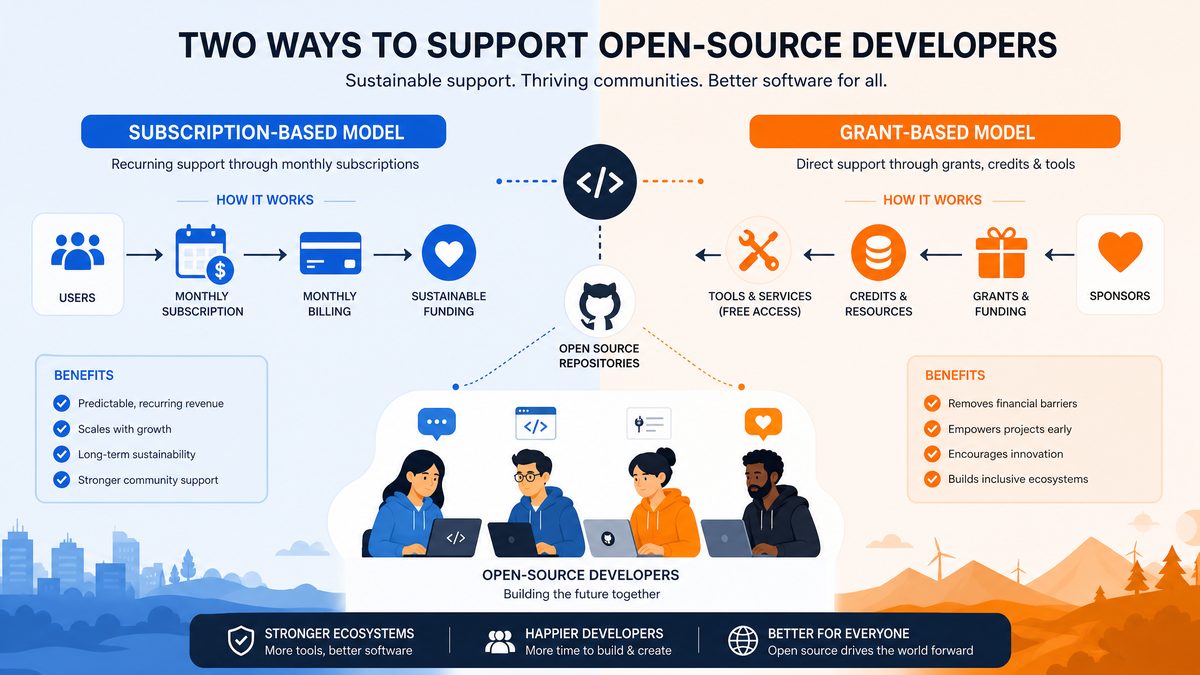
While GitHub Copilot has been a transformative tool for individual developers and organizations, its approach to open source support has largely been indirect. Copilot is primarily a paid subscription service, with discounts or free access extended to verified students and maintainers under specific GitHub programs.
Key Differences
| Aspect | Codex for Open Source Program | GitHub Copilot OSS Support |
|---|---|---|
| Program Focus | Active OSS maintainers of widely-used projects | Individual developers, students, and verified maintainers |
| Access Model | 6 months free ChatGPT Pro + Codex API credits | Free or discounted Copilot subscription |
| Scope of Tools | Broader AI tools including ChatGPT Pro & Codex APIs + security features | Primarily Copilot code completion extension |
| Eligibility | Based on project popularity and maintenance activity | Based on individual verification and GitHub’s internal criteria |
| Cost to Maintainers | Zero for 6 months, with substantial API usage credits | Free or discounted subscription, but no API credits |
This program’s emphasis on API access and a broader suite of tools differentiates it by enabling maintainers to build custom workflows and integrations, potentially automating parts of their project’s CI/CD pipelines, documentation generation, and security audits.
Access 40,000+ AI Prompts for ChatGPT, Claude & Codex — Free!
Subscribe to get instant access to our complete Notion Prompt Library — the largest curated collection of prompts for ChatGPT, Claude, OpenAI Codex, and other leading AI models. Optimized for real-world workflows across coding, research, content creation, and business.
Impact on Open Source Ecosystem Sustainability
Open source sustainability has long been a pressing concern. Many maintainers face burnout due to high demand and limited resources. According to a 2021 survey by the Linux Foundation, approximately 75% of OSS maintainers reported working over 40 hours per week on their projects, often unpaid.
By providing powerful AI tools and financial credits, OpenAI’s program can reduce the manual workload on maintainers, allowing them to focus on critical tasks such as architecture design, community engagement, and security enhancements.
Potential Long-Term Benefits
- Reduced Burnout: Automating repetitive coding and review tasks helps maintainers allocate time more efficiently.
- Improved Code Quality: Codex-powered code suggestions and security scans can lead to fewer bugs and vulnerabilities.
- Enhanced Contribution Onboarding: AI-assisted documentation and code explanations can lower barriers for new contributors.
- Stronger Community Engagement: Maintainers can dedicate more time to managing issues, pull requests, and roadmap planning.
Furthermore, access to Codex APIs enables maintainers to innovate novel integrations, such as AI-driven chatbots for community support or automated changelog generation, deepening the overall health of the OSS ecosystem.
How It Stands Out Among Developer Benefit Programs
Several companies offer developer benefit programs targeting OSS contributors — for example, GitHub Sponsors, Google’s Open Source Programs Office, and JetBrains OSS licenses. Here’s how OpenAI’s Codex for Open Source program compares:
| Program | Type of Support | Scope | Monetary Value | Unique Selling Point |
|---|---|---|---|---|
| OpenAI Codex for Open Source | AI tool subscriptions + API credits | Maintainers of popular OSS projects | ~$1,200 (6 months) | Access to advanced AI coding and security tools |
| GitHub Sponsors | Direct financial sponsorship | All OSS maintainers | Varies by sponsors | Direct monetary support from community |
| Google OSS Programs | Grants, events, cloud credits | Selected OSS projects | Varies ($500 to $50,000+) | Cloud infrastructure and community resources |
| JetBrains OSS License | Free IDE licenses | OSS project contributors | $100-$500 per year | Professional-grade IDE tools |
The Codex for Open Source program uniquely combines AI-powered developer assistance with significant API credit allocation, which can be used flexibly to automate and optimize many aspects of OSS maintenance, making it a highly technical and impactful offering.
Actionable Advice for Open Source Maintainers
If you maintain a qualifying open source project and want to maximize the benefits from the Codex for Open Source program, consider the following steps:
- Assess Your Project’s Eligibility: Check star count, recent activity, and license type. If your project is close but not quite at threshold, consider accelerating community growth and maintenance cadence.
- Prepare Your Application Materials: Document your project’s impact, key use cases, and how AI tools could tangibly improve your workflow. This will be helpful if the application requires a narrative section.
- Explore Integration Ideas: Plan how to use Codex API credits for automating tasks such as code reviews, vulnerability scanning, or generating developer documentation.
- Leverage ChatGPT Pro: Use ChatGPT for brainstorming complex design issues, drafting release notes, or triaging issues faster.
- Engage Your Community: Share your experiences with Codex tools to attract contributors interested in AI-powered development workflows.
- Monitor Usage and Feedback: Track how AI tools impact your development velocity and code quality, and provide feedback to OpenAI for future enhancements.
Sample API call to Codex for automating code review comments:

POST https://api.openai.com/v1/engines/codex/completions
Headers:
  Authorization: Bearer YOUR_API_KEY
  Content-Type: application/json
Body:
{
  "prompt": "Review this Python function for potential bugs and style issues:\n\n def add_numbers(a, b):\n  return a+b\n",
  "max_tokens": 150,
  "temperature": 0,
  "stop": ["\n\n"]
}
By thoughtfully integrating these AI tools into your OSS workflow, you can significantly increase your project’s robustness and maintainability.
Maximizing the output quality of AI models requires carefully crafted prompts tailored to specific professional workflows. Our detailed collection in 20 Battle-Tested Prompts for developers in 2026 provides battle-tested prompt templates that professionals can immediately apply to their daily work, covering everything from initial ideation to final deliverable production.
Maximizing the output quality of AI models requires carefully crafted prompts tailored to specific professional workflows. Our detailed collection in Codex CLI Prompts Masterclass: 40 Advanced Prompts for Multi-Agent Development, Code Review, and CI/CD Automation provides battle-tested prompt templates that professionals can immediately apply to their daily work, covering everything from initial ideation to final deliverable production.
The Codex CLI represents a paradigm shift in how developers interact with AI coding assistants directly from their terminal environment. Our step-by-step walkthrough in The Complete Guide to AI Coding Agents in 2026: Codex vs Claude Code vs Gemini CLI vs Cursor covers the complete setup process, advanced configuration options, and real-world workflow integrations that enable developers to leverage AI-powered code generation without leaving their preferred development environment.
Conclusion
The OpenAI Codex for Open Source program is a groundbreaking initiative that directly addresses the challenges faced by maintainers of high-impact open source projects. By offering 6 months of ChatGPT Pro, substantial Codex API credits, and optional security tooling access, OpenAI is equipping maintainers with advanced AI-driven capabilities to streamline development, improve code quality, and reduce burnout.
This program stands out from existing OSS support initiatives due to its focus on AI tooling, flexibility in usage, and technical depth, enabling maintainers to create custom automation and integrations tailored to their project’s unique needs. In contrast to GitHub Copilot’s subscription model, Codex for Open Source provides a more holistic package geared toward sustainability and innovation.
For maintainers, this represents a valuable opportunity to accelerate their projects while fostering a healthier open source ecosystem. Developers and organizations reliant on OSS should watch closely as this program evolves and consider advocating for similar AI-powered support mechanisms in their communities.
Maintainers interested in applying should prepare their projects and applications carefully to maximize acceptance chances and fully leverage the powerful AI capabilities offered.
Ultimately, OpenAI’s investment in the open source community reflects a broader trend of AI democratization, where advanced tools are no longer confined to large enterprises but increasingly accessible to the grassroots developers shaping the future of software.
Article by Markos Symeonides
