
OpenAI’s Strategic Retreat: The Discontinuation of Sora and Its Implications for AI Video Generation
By Markos Symeonides. Date: April 2, 2026.
Introduction
In a move that has surprised many within the AI community, OpenAI announced the phased discontinuation of Sora, its ambitious AI-driven video generation product. Scheduled for a complete shutdown by September 24, 2026, this decision marks a significant pivot away from what was once considered a promising frontier in generative AI. Sora’s journey—from viral demonstrations that captivated creators to its quiet sunset—reflects broader strategic recalibrations within OpenAI amid unprecedented funding and valuation milestones.
This analysis delves deeply into the timeline of Sora’s shutdown, the strategic rationale behind OpenAI’s decision, the competitive landscape reshaping AI video generation, and the potential future of video capabilities in OpenAI’s evolving ecosystem.
Timeline: The Phased Discontinuation of Sora
OpenAI has outlined a clear timeline for Sora’s wind-down:
- April 26, 2026: Web and mobile app services for Sora will cease operations. Users will no longer be able to generate new videos or access the platform interface after this date.
- September 24, 2026: The Sora API will be officially deprecated and shut down, ending all programmatic access to its video generation capabilities.
During this transition period, OpenAI has urged users and developers to export and back up their content before services become unavailable. This phased approach seeks to provide ample time for migration and adjustment.

Why OpenAI Is Shutting Down Sora: Strategic Refocusing on Core Products
OpenAI’s decision must be understood in the context of its evolving corporate strategy. The company is now navigating the complexities of managing a vast portfolio of AI products amid a historic funding round that raised $122 billion, propelling the valuation to an eye-watering $852 billion. This financial milestone brings immense pressure to optimize resource allocation and concentrate on AI offerings with the highest strategic and commercial impact.
Inside sources indicate that OpenAI views its core strengths as centered on foundational language models, the ChatGPT ecosystem, and multimodal AI that tightly integrates text and images. Video generation, while innovative, remains resource-intensive and less mature in terms of user adoption and monetization. The company is prioritizing:
- Enhancing ChatGPT’s conversational and multimodal abilities, including text-to-image and image editing tools.
- Expanding enterprise AI applications that deliver measurable ROI.
- Reducing operational complexity by trimming experimental or peripheral product lines like Sora.
This recalibration is designed to ensure long-term sustainability and leadership in AI, focusing on products with proven traction and scalable business models.
The Broader Context: Funding, Valuation, and Market Pressures
The sheer scale of OpenAI’s latest funding round—$122 billion raised at an $852 billion valuation—places the company squarely under the spotlight. Investors and stakeholders expect disciplined execution and clear pathways to profitability. In this environment, feature sprawl and scattered innovation risk diluting focus and increasing burn rates.
OpenAI’s leadership has publicly acknowledged these pressures, emphasizing a shift from “moonshot” experimentation toward “core product excellence.” The shutdown of Sora signals a broader industry trend of prioritizing practical, scalable AI solutions over standalone, hype-driven demos.
What Happened to Sora’s Promise: Viral Demos to Quiet Shutdown
Upon launch, Sora generated excitement with its ability to create realistic, customizable AI videos from text prompts. Viral demos showcased everything from dynamic storytelling to rapid prototyping for creators and marketers. However, sustained user engagement plateaued, and monetization strategies struggled to gain traction.
Several factors contributed to Sora’s muted trajectory:
- Technical challenges: High computational costs and latency issues limited scalability.
- User experience hurdles: The learning curve and content generation constraints impeded mass adoption.
- Market readiness: The demand for AI-generated video was nascent compared to other modalities like text and image.
Over time, Sora faded from the spotlight, overshadowed by OpenAI’s flagship ChatGPT products and newer multimodal integrations.
The Competitive Landscape: Smaller Players Filling the AI Video Gap
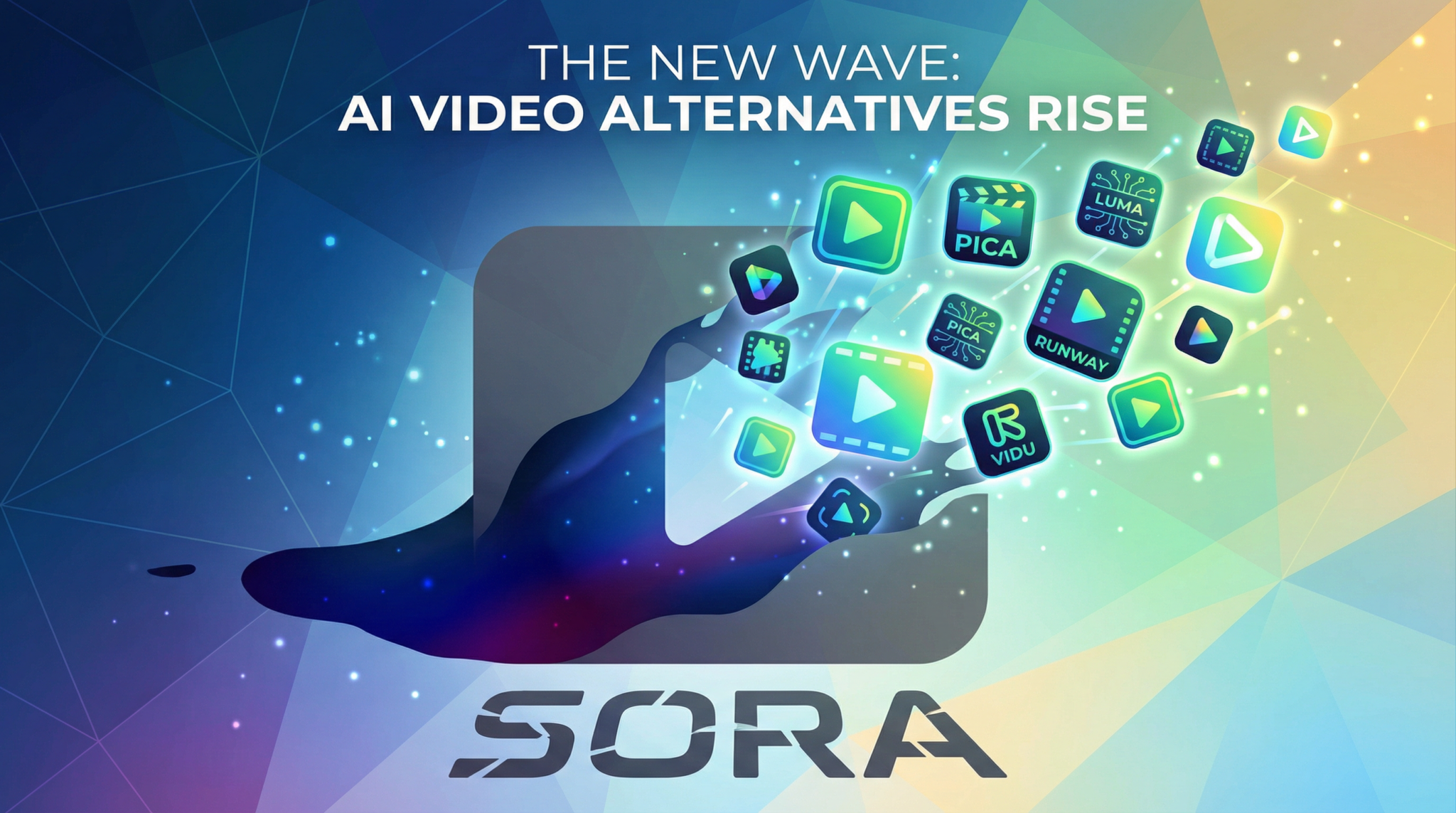
With OpenAI’s exit from direct video generation, a new wave of smaller specialized startups and apps has surged to fill the void. These companies leverage more focused, lightweight AI architectures tailored for specific video niches such as social media content, marketing clips, and personalized videos.
Unlike Sora’s broad ambitions, these emerging players often:
- Target specific use cases with streamlined user experiences.
- Offer lower-cost, higher-speed video generation optimized for mobile environments.
- Integrate easily with existing content creation pipelines and social platforms.
This fragmentation and specialization highlight a maturation of the AI video market, moving from general-purpose prototypes to pragmatic, verticalized solutions.
Implications for ChatGPT’s Evolution and OpenAI’s Product Strategy
OpenAI’s pivot away from Sora indicates a strategic consolidation around ChatGPT as the central AI interface. Video generation capabilities are expected to be incrementally integrated into ChatGPT’s evolving multimodal toolkit, especially within its image editing and generation features.
This direction aligns with several trends:
- Unified AI experiences: Users prefer a single interface capable of handling text, images, and potentially short-form video snippets seamlessly.
- Cross-modal creativity: Combining text prompts with images and lightweight animations enhances expressiveness without the overhead of full video rendering.
- Developer ecosystem focus: APIs centered on multimodal text/image/video capabilities will likely be more maintainable and commercially viable.
Thus, while standalone video generation platforms like Sora are discontinued, the underlying technology will persist, embedded within the broader ChatGPT ecosystem.
The End of the “Age of Frivolity” in AI: From Demos to Practical Tools
Sora’s sunset symbolizes the closing chapter of what some industry observers call the “age of frivolity” in AI—an era marked by flashy, experimental demos designed primarily to showcase technological potential rather than deliver sustained user value.
“The future belongs to AI tools that solve real-world problems efficiently, rather than those that merely dazzle momentarily.” – Industry Analyst
OpenAI’s renewed focus on practical applications signals a maturation phase where reliability, integration, and user-centric design take precedence over novelty alone. This trend is evident not only within OpenAI but also across the broader AI landscape where users demand tangible productivity gains.
Impact on Creators and Developers Who Built on Sora
The discontinuation of Sora presents challenges for creators and developers who invested time and resources into building workflows, applications, or content using its platform. Key concerns include:
- Data and asset migration: Ensuring all generated video content is exported before April 26, 2026.
- API-dependent integrations: Re-engineering applications that relied on the Sora API before the September 24 shutdown.
- Finding alternative tools: Transitioning to competitive AI video platforms or adapting to emerging multimodal features within ChatGPT.
OpenAI has committed to supporting affected users through documentation and transition assistance, but the shift requires proactive adaptation.
Future Integration of Video Generation into ChatGPT’s Image Tools
Rather than abandoning video generation technology outright, OpenAI appears set to subsume these capabilities into ChatGPT’s image generation and editing functionalities. This approach leverages synergies between still images, animations, and short video content to create richer multimodal outputs within a unified interface.
Potential developments include:
- Animated images and GIF-style content generated alongside static images.
- Enhanced storytelling tools combining text, images, and video snippets.
- Streamlined user experiences that reduce the complexity of full video production.
This model aligns with OpenAI’s broader product philosophy emphasizing accessibility, speed, and integration.
Lessons for the AI Industry: Product Focus vs. Feature Sprawl
Sora’s lifecycle offers important lessons for AI companies navigating rapid innovation cycles:
- Maintain strategic focus: Avoid diluting resources across too many disparate product lines.
- Validate market demand early: Ensure emerging features address real user needs and have clear monetization paths.
- Iterate toward integration: Favor embedding new capabilities into existing, well-adopted platforms rather than standalone experiments.
These principles help balance innovation with sustainability in an intensely competitive AI ecosystem.
What Users Should Do: Export Content Before the Deadline
OpenAI strongly advises all Sora users to export their videos and related data before the April 26, 2026 app/web shutdown. After this date, the ability to access or generate new content will cease. Additionally, developers utilizing the Sora API have until September 24, 2026, to transition their applications to other platforms or integrate alternative AI services.
Proactive migration will minimize disruption and preserve valuable creative assets.
Access 40,000+ AI Prompts for ChatGPT, Claude & Codex — Free!
Subscribe to get instant access to our complete Notion Prompt Library — the largest curated collection of prompts for ChatGPT, Claude, OpenAI Codex, and other leading AI models. Optimized for real-world workflows across coding, research, content creation, and business.
Conclusion
The discontinuation of Sora underscores OpenAI’s strategic pivot towards core competencies amid unprecedented funding and valuation pressures. While the AI video generation space remains vibrant, OpenAI’s withdrawal from a standalone video tool reflects a broader industry shift—from exploratory demos to integrated, practical AI solutions centered on the ChatGPT platform.
For creators and developers, this moment offers both challenges and opportunities: the need to adapt while anticipating richer, multimodal AI capabilities embedded within familiar interfaces. The lessons of Sora’s rise and fall provide a roadmap for sustainable innovation and focus in the rapidly evolving AI landscape.
To understand how OpenAI plans to leverage its innovations for broader impact, our article on OpenAI’s 2026 Strategy: Driving Enterprise Growth Through Practical AI Adoption explores how the company aims to implement scalable, enterprise-ready AI solutions that foster sustainable growth and practical deployment across various industries.

