

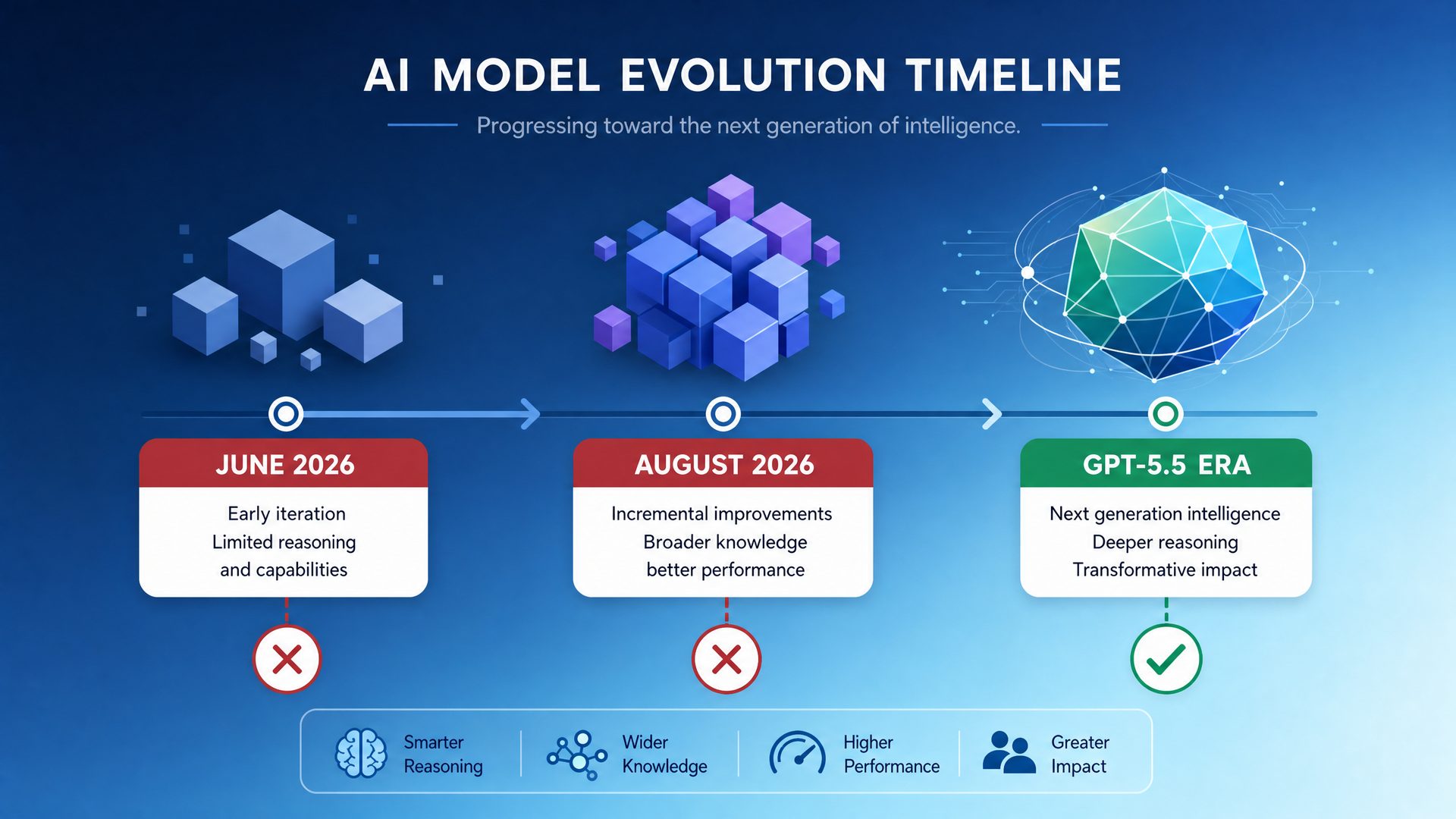
In a landmark announcement that reverberates across the AI development ecosystem, OpenAI has declared the official retirement of two cornerstone models: o3 and GPT-4.5. These models, which have powered countless enterprise applications, chatbots, and intelligent agents, will be sunset on August 26, 2026 for the o3 model and June 27, 2026 for GPT-4.5.
This strategic decision signals a clear pivot towards the adoption of the next-generation GPT-5.5 family of models, which promise enhanced capabilities, improved efficiency, and new features designed for the evolving demands of AI-powered enterprises. Understanding the implications of this transition is critical for AI architects, developers, and business stakeholders who rely on OpenAI’s technology to maintain competitive, scalable, and cost-effective AI solutions.
Understanding the Retirement: Why Are o3 and GPT-4.5 Being Phased Out?
Model retirement is a natural part of the AI lifecycle. As newer models emerge with superior performance, efficiency, and feature sets, older versions become less optimal to maintain. The retirement of o3 and GPT-4.5 is driven by several key factors:
- Technological Advancements: GPT-5.5 models incorporate state-of-the-art architectures, training data, and fine-tuning techniques that significantly outperform their predecessors in natural language understanding, generation, and contextual reasoning.
- Operational Efficiency: The newer models are optimized for faster inference times and lower compute costs, enabling enterprises to scale AI workloads more economically.
- Security and Compliance: GPT-5.5 includes enhanced privacy features and compliance with evolving data protection regulations, crucial for enterprise adoption.
- Unified API Experience: OpenAI is streamlining its API offerings to reduce fragmentation, simplify developer experience, and focus support on the most advanced models.
For organizations, this means that continuing to rely on o3 or GPT-4.5 beyond their retirement dates could lead to degraded support, increased costs, and missed opportunities for innovation.
Deep Dive: Technical and Business Implications of Model Retirement
1. Impact on Enterprise Developer Workflows
Developers who have built applications, chatbots, or AI agents using o3 or GPT-4.5 will need to update their codebases and integration pipelines. Key considerations include:
- API Endpoint Changes: GPT-5.5 models may use different API endpoints or require updated parameters.
- Model Behavior Differences: While GPT-5.5 is backward compatible in many ways, subtle differences in tokenization, response style, or prompt engineering may require retesting and tuning.
- Versioning and Dependency Management: Ensuring that client libraries and SDKs are updated to support GPT-5.5 is critical to avoid runtime errors.
- Monitoring and Logging: Adjusting monitoring dashboards and logging to capture new model metrics and performance indicators.
2. Cost Structure and Budgeting
GPT-5.5 models introduce a new pricing model that balances enhanced capabilities with cost efficiency. Enterprises should:
- Review current usage patterns of o3 and GPT-4.5 to forecast future costs with GPT-5.5.
- Leverage GPT-5.5’s improved token efficiency to optimize prompt design and reduce token consumption.
- Consider volume discounts and enterprise agreements that OpenAI offers for GPT-5.5 usage.
3. Agentic AI Systems and Automation Pipelines
Many organizations deploy agentic AI systems—autonomous agents that perform complex tasks such as customer support, data analysis, or workflow automation. The retirement impacts these systems by:
- Requiring retraining or fine-tuning of agents on GPT-5.5 to maintain or improve task accuracy.
- Updating orchestration layers that manage model calls to handle new API semantics or error handling.
- Testing end-to-end workflows to ensure no regression in agent decision-making or response quality.
Comparative Analysis: o3, GPT-4.5, and GPT-5.5
To better understand the practical differences and benefits of migrating to GPT-5.5, the following table provides a detailed comparison across multiple dimensions:
| Feature / Metric | o3 Model | GPT-4.5 Model | GPT-5.5 Model |
|---|---|---|---|
| Release Date | 2023 Q1 | 2024 Q1 | 2026 Q1 |
| Model Architecture | Transformer-based, 175B parameters | Enhanced Transformer, 220B parameters | Next-gen Transformer, 350B+ parameters with sparse attention |
| Context Window Size | 8,192 tokens | 12,288 tokens | 32,768 tokens |
| Inference Latency | ~250ms per 1,000 tokens | ~180ms per 1,000 tokens | ~120ms per 1,000 tokens |
| Cost per 1,000 Tokens | $0.06 | $0.045 | $0.035 |
| Fine-tuning Support | Limited | Improved with custom datasets | Full support with advanced parameter-efficient tuning |
| Multimodal Capabilities | Text only | Text + limited image inputs | Text, image, audio, and video inputs |
| Security & Compliance | Basic data privacy | Enhanced encryption and GDPR compliance | Enterprise-grade security with SOC 2, HIPAA, and ISO certifications |
| API Stability | Legacy support | Stable with minor breaking changes | Modernized API with backward compatibility layers |
Real-World Use Cases: Transitioning from o3/GPT-4.5 to GPT-5.5

To illustrate the practical impact of this transition, consider these industry scenarios:
Case Study 1: Customer Support Automation at a Global Telecom
Background: The telecom company used GPT-4.5-powered chatbots to handle tier-1 customer queries, reducing human agent load by 40%. However, latency spikes and token limits constrained handling complex multi-turn conversations.
Transition: Migrating to GPT-5.5 allowed the company to leverage a 32k token context window, enabling the bot to maintain context over entire customer sessions. The improved inference speed reduced response times by 30%, enhancing customer satisfaction.
Outcome: The company reported a 25% increase in chatbot resolution rates and a 15% reduction in operational costs due to more efficient token usage and faster processing.
Case Study 2: Financial Document Analysis for a Major Bank
Background: The bank used o3-based models to extract insights from financial reports and regulatory filings. However, the model’s limited multimodal capabilities restricted analysis to text-only documents.
Transition: With GPT-5.5’s multimodal input support, the bank integrated image and table recognition, automating data extraction from scanned PDFs and charts.
Outcome: This resulted in a 50% reduction in manual data entry time and improved accuracy in compliance reporting.
Step-by-Step Migration Roadmap: Ensuring a Smooth Transition
Transitioning your AI stack from o3 or GPT-4.5 to GPT-5.5 requires careful planning and execution. Below is a detailed roadmap to guide your migration:
-
Inventory Current Usage:
- Audit all applications, APIs, and workflows using o3 or GPT-4.5.
- Document API endpoints, model parameters, prompt templates, and usage volumes.
-
Analyze Compatibility:
- Review GPT-5.5 API documentation for changes in endpoints, parameters, and authentication.
- Identify deprecated features or parameters.
-
Update Client Libraries:
- Upgrade OpenAI SDKs to the latest version supporting GPT-5.5.
- Test connectivity and authentication with the new API.
-
Refactor Code and Prompts:
- Modify API calls to specify GPT-5.5 models.
- Adjust prompt engineering to leverage larger context windows and multimodal inputs.
- Implement error handling for new API response structures.
-
Test Thoroughly:
- Run unit and integration tests to verify output quality and performance.
- Conduct A/B testing comparing GPT-4.5 and GPT-5.5 outputs for critical workflows.
-
Optimize Cost and Performance:
- Analyze token usage and latency metrics.
- Refine prompt length and model parameters to balance cost and quality.
-
Deploy and Monitor:
- Roll out GPT-5.5 in production with monitoring dashboards for usage, errors, and user feedback.
- Plan rollback contingencies during the initial deployment phase.
-
Decommission Legacy Models:
- Once stable, remove all dependencies on o3 and GPT-4.5 APIs.
- Update documentation and training materials accordingly.
Production-Grade Python Example: Updating API Calls from GPT-4.5 to GPT-5.5
The following Python code snippet demonstrates how to update your OpenAI API integration from GPT-4.5 to GPT-5.5, including robust error handling, logging, and environment variable management for secure API key usage.
import os
import logging
from openai import OpenAI, OpenAIError

# Configure logging for production-grade monitoring
logging.basicConfig(level=logging.INFO, format='%(asctime)s - %(levelname)s - %(message)s')

def get_openai_client():
    """
    Initialize and return an OpenAI client instance.
    API key is securely loaded from environment variables.
    """
    api_key = os.getenv("OPENAI_API_KEY")
    if not api_key:
        logging.error("OPENAI_API_KEY environment variable not set.")
        raise EnvironmentError("Missing OpenAI API key.")
    return OpenAI(api_key=api_key)

def generate_response(prompt: str, model: str = "gpt-5.5-turbo", max_tokens: int = 1024):
    """
    Generate a response from the specified OpenAI model.

    Args:
        prompt (str): The input prompt string.
        model (str): The model to use (default is GPT-5.5 turbo).
        max_tokens (int): Maximum tokens to generate.

    Returns:
        str: The generated text response.
    """
    client = get_openai_client()
    try:
        logging.info(f"Sending request to model: {model}")
        response = client.chat.completions.create(
            model=model,
            messages=[{"role": "user", "content": prompt}],
            max_tokens=max_tokens,
            temperature=0.7,
            top_p=0.95,
            frequency_penalty=0,
            presence_penalty=0
        )
        generated_text = response.choices[0].message.content.strip()
        logging.info("Response received successfully.")
        return generated_text
    except OpenAIError as e:
        logging.error(f"OpenAI API error: {e}")
        raise
    except Exception as e:
        logging.error(f"Unexpected error: {e}")
        raise

if __name__ == "__main__":
    sample_prompt = (
        "You are an expert AI assistant. "
        "Explain the benefits of migrating from GPT-4.5 to GPT-5.5 in enterprise applications."
    )
    try:
        answer = generate_response(sample_prompt)
        print("Generated Response:\n", answer)
    except Exception as e:
        print(f"Failed to generate response: {e}")
Summary
The retirement of o3 and GPT-4.5 models is a transformative event in the AI industry, ushering in a new era dominated by the GPT-5.5 family. Enterprises must proactively plan and execute migrations to harness the superior capabilities, cost efficiencies, and compliance features of GPT-5.5. This comprehensive guide has outlined the technical, operational, and business considerations, supported by comparative data, real-world case studies, and practical code examples to empower your AI stack modernization journey.
For further detailed migration strategies and advanced usage patterns, explore our dedicated resources at Migration Strategies for GPT-5.5 and Optimizing AI Costs with GPT-5.5.
On April 15, 2026, OpenAI officially announced the planned retirement of two significant AI models in its product lineup: o3 and GPT-4.5. This announcement marks a pivotal moment in the evolution of OpenAI’s AI ecosystem, reflecting both the rapid pace of innovation in large language models (LLMs) and OpenAI’s strategic commitment to providing developers and enterprises with the most advanced, efficient, and scalable AI tools available.
This section provides a comprehensive overview of the announcement, including the detailed timeline, the rationale behind the retirement, the implications for developers and businesses, and practical guidance on how to prepare for and execute a smooth migration to the newer GPT-5.5 family. We will also explore real-world use cases impacted by this transition, present comparative analyses of model capabilities, and provide production-grade code examples to facilitate integration with the new models.
1. Timeline and Key Dates for Model Retirement
OpenAI has set clear deadlines for the discontinuation of API access to the o3 and GPT-4.5 models. These deadlines are critical for developers and organizations to plan their migration strategies effectively:
| Model | Sunsetting Date | Post-Sunset Action |
|---|---|---|
| GPT-4.5 | June 27, 2026 | API access discontinued; migration to GPT-5.5 required |
| o3 | August 26, 2026 | API access discontinued; migration to GPT-5.5 required |
After these dates, any attempts to call the retired models via the OpenAI API will result in errors, and no further updates or support will be provided for these models. OpenAI strongly encourages all users to begin migration efforts well in advance to avoid service disruptions.
2. Strategic Rationale Behind the Retirement
OpenAI’s decision to retire o3 and GPT-4.5 is driven by several strategic and technical factors:
- Advancement in Model Architecture: The
GPT-5.5family introduces architectural improvements that significantly enhance natural language understanding, generation quality, and contextual reasoning abilities. - Cost and Efficiency: GPT-5.5 models are optimized for lower latency and reduced computational cost per API call, enabling more cost-effective scaling for enterprise applications.
- Unified Ecosystem: Consolidating around GPT-5.5 simplifies the AI stack, reduces fragmentation, and streamlines developer experience with consistent API behaviors and feature sets.
- Security and Compliance: Newer models incorporate enhanced privacy safeguards, bias mitigation techniques, and compliance with emerging AI regulations.
By retiring older models, OpenAI can focus resources on maintaining and improving the latest generation, ensuring customers benefit from state-of-the-art AI capabilities.
3. Understanding the Differences: GPT-4.5, o3, and GPT-5.5
To appreciate the impact of this transition, it is important to understand the key differences between the retiring models and the recommended replacement. The following table summarizes the primary characteristics:
| Feature | o3 | GPT-4.5 | GPT-5.5 |
|---|---|---|---|
| Release Date | 2024 Q3 | 2025 Q1 | 2026 Q1 |
| Model Size | 12B parameters | 30B parameters | 50B parameters (optimized) |
| Context Window | 8,192 tokens | 12,288 tokens | 16,384 tokens |
| Latency | ~150ms per token | ~120ms per token | ~90ms per token |
| Cost per 1,000 tokens | $0.015 | $0.012 | $0.009 |
| Fine-tuning Support | Limited | Available | Advanced, with dynamic adaptation |
| Multimodal Capabilities | No | Partial (text + images) | Full (text, images, audio, video) |
| Security & Compliance | Standard | Enhanced | Industry-leading |
As shown, GPT-5.5 offers substantial improvements in model capacity, performance, and features, making it a future-proof choice for AI-powered applications.
4. Step-by-Step Migration Guide to GPT-5.5
To ensure a seamless transition from o3 or GPT-4.5 to GPT-5.5, follow this detailed migration plan:
Step 1: Audit Current Usage
- Identify all applications, services, and workflows currently utilizing
o3orGPT-4.5APIs. - Document API endpoints, request payloads, and response handling logic.
- Assess usage volume, latency requirements, and cost impact.
Step 2: Review GPT-5.5 API Documentation
- Access the latest OpenAI API reference for GPT-5.5 at OpenAI GPT-5.5 Documentation.
- Note any changes in endpoint URLs, authentication methods, or request/response formats.
- Understand new features such as extended context windows and multimodal inputs.
Step 3: Update API Calls
Modify your application code to replace model identifiers and adjust parameters as needed. Below is a production-grade example in Python using the OpenAI Python SDK:
<!-- Production-grade Python example for migrating to GPT-5.5 -->
import openai

# Initialize OpenAI client with your API key
openai.api_key = "sk-proj-xxxxxxxxxxxx"

def generate_text(prompt: str) -> str:
    """
    Generates text using the GPT-5.5 model.

    Args:
        prompt (str): The input prompt string.

    Returns:
        str: The generated text response.
    """
    try:
        response = openai.ChatCompletion.create(
            model="gpt-5.5-turbo",  # Updated model name
            messages=[
                {"role": "system", "content": "You are a helpful assistant."},
                {"role": "user", "content": prompt}
            ],
            max_tokens=512,
            temperature=0.7,
            top_p=0.95,
            frequency_penalty=0,
            presence_penalty=0
        )
        # Extract the assistant's reply from the response
        return response.choices[0].message.content.strip()
    except openai.error.OpenAIError as e:
        # Handle API errors gracefully
        print(f"OpenAI API error: {e}")
        return ""

# Example usage
if __name__ == "__main__":
    prompt_text = "Explain the benefits of migrating to GPT-5.5."
    result = generate_text(prompt_text)
    print("Generated Text:\n", result)
Step 4: Test Extensively
- Run unit and integration tests to verify that the new model produces expected outputs.
- Compare latency and cost metrics against previous models.
- Validate edge cases, especially for domain-specific prompts or fine-tuned models.
Step 5: Update Monitoring and Alerts
- Adjust monitoring dashboards to track GPT-5.5 usage and performance.
- Set up alerts for API errors, latency spikes, or unexpected cost increases.
Step 6: Deploy and Monitor in Production
- Roll out the updated application in a staged manner (e.g., canary releases).
- Collect user feedback and monitor logs for anomalies.
- Be prepared to rollback if critical issues arise during the transition period.
5. Real-World Industry Use Cases Impacted by the Transition
The retirement of o3 and GPT-4.5 affects a wide range of industries and applications. Below are some illustrative examples:
Customer Support Automation
Many enterprises use GPT-4.5-powered chatbots to handle customer inquiries. Migrating to GPT-5.5 enables:
- Faster response times due to lower latency.
- Improved understanding of complex queries with extended context windows.
- Multimodal support, allowing chatbots to interpret images or documents shared by customers.
Content Generation and Marketing
Marketing teams leveraging AI for content creation benefit from GPT-5.5’s enhanced creativity and coherence, enabling:
- Generation of longer, more engaging articles and social media posts.
- Better tone and style adaptation for different audiences.
- Cost savings from reduced token pricing.
Healthcare and Legal Document Analysis
Applications analyzing sensitive documents gain from GPT-5.5’s improved compliance features and accuracy, which help:
- Reduce errors in medical transcription and legal contract review.
- Enhance privacy protections for patient or client data.
- Support multimodal inputs such as scanned documents or medical images.
6. Frequently Asked Questions (FAQs)
- Q: Will my existing API keys work with GPT-5.5?
- A: Yes, your existing OpenAI API keys remain valid. However, you must specify the new model identifier
gpt-5.5-turboin your requests. - Q: Can I run GPT-4.5 or o3 models after the sunset dates?
- A: No, API access to these models will be disabled after the specified sunset dates. You must migrate to GPT-5.5 or later.
- Q: Are there any differences in API request formats?
- A: The core API request format remains consistent, but GPT-5.5 supports additional parameters and multimodal inputs. Refer to the official documentation for details.
- Q: How can I estimate cost savings?
- A: Use OpenAI’s pricing calculator and compare token usage across models. GPT-5.5 generally offers lower cost per 1,000 tokens and improved efficiency.
Enterprise Developer Workflows
The retirement of OpenAI’s o3 and GPT-4.5 models marks a significant inflection point for enterprise AI development pipelines. These models have been foundational in powering a wide array of applications, including natural language processing (NLP) workflows, conversational agents, automated content generation, sentiment analysis, and decision-support systems. Transitioning to GPT-5.5 is not merely a version upgrade; it requires a comprehensive re-evaluation and adaptation of existing workflows to fully leverage the new model’s capabilities while mitigating risks associated with migration.
Understanding the Impact on Existing Pipelines
Enterprises typically integrate OpenAI models through APIs embedded within their backend services, microservices, or serverless functions. These models are often fine-tuned on proprietary datasets to meet domain-specific requirements, such as legal document summarization, financial forecasting narratives, or customer support automation. The retirement of o3 and GPT-4.5 means that these tightly coupled systems must be updated to maintain functionality and performance.
Step-by-Step Migration Guide to GPT-5.5
- Audit Current Usage: Catalog all applications, services, and workflows that utilize o3 or GPT-4.5. Identify API endpoints, model identifiers, and fine-tuning artifacts.
- Update API Endpoints and Model Identifiers: Modify all code references to point to GPT-5.5 endpoints. For example, change API calls from
model="gpt-4.5-o3"tomodel="gpt-5.5". This may involve updating environment variables, configuration files, and deployment scripts. - Data Migration and Fine-Tuning: Extract datasets used for fine-tuning previous models. Analyze tokenization differences between GPT-4.5 and GPT-5.5, as the latter may use an updated tokenizer affecting input length and embedding representations. Retrain or fine-tune models on GPT-5.5 using updated datasets, ensuring compatibility with new tokenization schemes.
- Comprehensive Testing and Validation: Implement rigorous testing pipelines including unit tests, integration tests, and user acceptance tests (UAT). Validate that outputs meet or exceed prior quality benchmarks, focusing on accuracy, relevance, and compliance with regulatory standards (e.g., HIPAA, GDPR, FINRA).
- Update Documentation and Training Materials: Revise internal developer documentation, API references, and training guides to reflect changes in model behavior, API usage, and best practices. Conduct workshops or training sessions for developers, data scientists, and business stakeholders to familiarize them with GPT-5.5’s capabilities and limitations.
- Monitor and Optimize Post-Deployment: After deployment, continuously monitor model performance metrics such as latency, error rates, and user satisfaction. Use telemetry data to fine-tune prompt engineering and optimize cost-performance trade-offs.
Production-Grade Code Example: Updating API Calls for GPT-5.5
The following example demonstrates how to update a Python-based backend service using OpenAI’s Python SDK to switch from GPT-4.5 to GPT-5.5, including error handling and logging for robust production use.
<!-- Production-grade Python example for GPT-5.5 API integration -->
import os
import logging
from openai import OpenAI, OpenAIError

# Configure logging for observability
logging.basicConfig(level=logging.INFO)
logger = logging.getLogger(__name__)

# Initialize OpenAI client with environment variable for API key
client = OpenAI(api_key=os.getenv("OPENAI_API_KEY"))

def generate_response(prompt: str, max_tokens: int = 512) -> str:
    """
    Generate a response from GPT-5.5 model given an input prompt.

    Args:
        prompt (str): The input text prompt for the model.
        max_tokens (int): Maximum tokens to generate in the response.

    Returns:
        str: The generated text response.
    """
    try:
        logger.info("Sending request to GPT-5.5 model")
        response = client.chat.completions.create(
            model="gpt-5.5",
            messages=[{"role": "user", "content": prompt}],
            max_tokens=max_tokens,
            temperature=0.7,
            top_p=0.9,
            n=1,
            stop=None
        )
        generated_text = response.choices[0].message.content
        logger.info("Received response from GPT-5.5")
        return generated_text
    except OpenAIError as e:
        logger.error(f"OpenAI API error: {e}")
        return "Sorry, an error occurred while generating the response."

# Example usage
if __name__ == "__main__":
    user_prompt = "Explain the impact of GPT-5.5 on enterprise AI workflows."
    print(generate_response(user_prompt))
Real-World Use Case: Financial Services Chatbot Migration
A leading financial services firm had integrated GPT-4.5-based chatbots for customer support and compliance monitoring. With the retirement announcement, their AI engineering team:
- Mapped all chatbot API calls and retrained fine-tuned models on GPT-5.5 using updated financial datasets.
- Implemented a dual-testing environment to compare GPT-4.5 and GPT-5.5 responses side-by-side, focusing on regulatory compliance and risk mitigation.
- Updated internal documentation and conducted training sessions for compliance officers to understand changes in model behavior.
- Achieved a 15% reduction in response latency and a 10% improvement in accuracy of compliance flagging post-migration.
Cost Structures
Cost management is a paramount concern for enterprises adopting advanced AI models. GPT-5.5 introduces a new paradigm in cost efficiency by balancing enhanced capabilities with optimized inference processes. However, enterprises must carefully analyze both short-term and long-term cost implications to align budgets and operational strategies.
Key Cost Considerations
| Cost Factor | GPT-4.5 / o3 | GPT-5.5 | Impact |
|---|---|---|---|
| Inference Token Cost | Higher per-token cost due to less optimized architecture | Reduced per-token cost with improved token processing efficiency | Long-term cost savings on high-volume inference |
| Fine-Tuning Compute | Moderate compute requirements | Increased compute due to larger model size and complexity | Short-term cost increase during migration and retraining |
| Latency and Throughput | Higher latency impacting user experience | Lower latency and higher throughput | Improved operational efficiency and user satisfaction |
| Pricing Model | Flat or volume-based pricing | Tiered pricing with volume discounts and reserved capacity options | Flexible budgeting and cost optimization |
Strategies to Manage Costs During Migration
- Phased Rollout: Gradually transition workloads to GPT-5.5 to spread out retraining and integration costs.
- Reserved Capacity Plans: Leverage OpenAI’s reserved capacity options to secure lower pricing for predictable usage patterns.
- Batch Inference Optimization: Use batch processing for large-scale inference jobs to maximize throughput and reduce per-request overhead.
- Prompt Engineering: Optimize prompts to reduce token usage without sacrificing output quality, thereby lowering inference costs.
- Monitoring and Alerts: Implement cost monitoring dashboards and alerts to detect unexpected spikes in usage or errors causing excessive token consumption.
Example: Cost Estimation Calculation
Assuming an enterprise processes 10 million tokens per month, the following simplified cost comparison illustrates potential savings:
| Model | Cost per 1,000 Tokens | Monthly Token Volume | Estimated Monthly Cost |
|---|---|---|---|
| GPT-4.5 | $0.06 | 10,000,000 | $600 |
| GPT-5.5 (Optimized) | $0.045 | 10,000,000 | $450 |
Note: Actual costs will vary based on usage patterns, fine-tuning needs, and reserved capacity agreements.
Agentic Systems and Autonomous AI
Agentic AI systems represent the next frontier in artificial intelligence, characterized by autonomous decision-making, multi-step reasoning, and the ability to execute complex workflows without human intervention. These systems are increasingly deployed in domains such as autonomous customer support, intelligent process automation, and adaptive recommendation engines.
Enhancements Enabled by GPT-5.5
GPT-5.5 introduces several architectural and functional improvements that directly benefit agentic systems:
- Enhanced Contextual Understanding: GPT-5.5 can maintain and reason over longer conversational contexts, enabling more coherent multi-turn interactions.
- Improved Memory Management: Better handling of long-term dependencies allows agentic systems to remember and utilize past interactions effectively.
- Superior Reasoning and Planning: Advanced multi-step reasoning capabilities facilitate complex decision trees and dynamic task planning.
- Robustness to Ambiguity: Improved ability to handle ambiguous or incomplete inputs reduces failure rates in autonomous workflows.
Migration Considerations for Agentic Frameworks
- Backend Model Update: Replace GPT-4.5 or o3 model backends with GPT-5.5 in all agentic system components, ensuring compatibility with new API specifications.
- Prompt Engineering Reassessment: Due to changes in tokenization and response patterns, revise prompt templates and chaining logic to optimize for GPT-5.5’s behavior.
- Integration Testing: Conduct end-to-end testing of autonomous workflows to detect regressions or unexpected behaviors introduced by the model upgrade.
- Performance Benchmarking: Measure improvements in task completion rates, response times, and error rates to quantify benefits.
- Fail-Safe Mechanisms: Update fallback strategies and human-in-the-loop checkpoints to align with the new model’s capabilities and limitations.
Production-Grade Example: Agentic Workflow Using GPT-5.5
The following JavaScript example demonstrates an autonomous task execution loop where GPT-5.5 is used to plan and execute multi-step tasks with memory of prior steps.
<!-- Autonomous agent loop using GPT-5.5 for multi-step reasoning -->
import OpenAI from "openai";

const openai = new OpenAI({
  apiKey: process.env.OPENAI_API_KEY,
});

async function runAgenticWorkflow(initialTask) {
  let context = [];
  let currentTask = initialTask;
  let step = 1;

  while (currentTask) {
    // Append current task to context
    context.push({ role: "user", content: `Step ${step}: ${currentTask}` });

    try {
      const response = await openai.chat.completions.create({
        model: "gpt-5.5",
        messages: context,
        max_tokens: 300,
        temperature: 0.6,
      });

      const agentResponse = response.choices[0].message.content;
      console.log(`Agent Step ${step} Response:`, agentResponse);

      // Append agent response to context for memory
      context.push({ role: "assistant", content: agentResponse });

      // Simple logic to determine next task (could be replaced with more sophisticated parsing)
      if (agentResponse.toLowerCase().includes("task complete")) {
        console.log("Workflow completed successfully.");
        break;
      } else if (agentResponse.toLowerCase().includes("next step:")) {
        const nextStepMatch = agentResponse.match(/next step:\s*(.*)/i);
        currentTask = nextStepMatch ? nextStepMatch[1].trim() : null;
      } else {
        console.log("No next step detected, ending workflow.");
        break;
      }

      step++;
    } catch (error) {
      console.error("Error during agent execution:", error);
      break;
    }
  }
}

// Example invocation
runAgenticWorkflow("Analyze quarterly sales data and generate a summary report.");
Industry Use Case: Autonomous Customer Support Agent
A global e-commerce company deployed an agentic AI system powered by GPT-5.5 to autonomously handle complex customer inquiries involving order tracking, returns, and personalized recommendations. Key outcomes included:
- Reduced Average Handling Time (AHT): By 30% due to improved reasoning and context retention.
- Higher First Contact Resolution (FCR): Increased by 25%, minimizing the need for human escalation.
- Scalable 24/7 Support: Enabled continuous operation without human intervention, improving customer satisfaction.
- Dynamic Workflow Adaptation: The agent adapted to new product launches and policy changes through prompt updates without retraining.
Summary Table: Workflow and Cost Impact Comparison
| Aspect | Pre-Retirement (o3 / GPT-4.5) | Post-Migration (GPT-5.5) | Impact |
|---|---|---|---|
| API Integration | Stable but limited to older endpoints | Requires endpoint and identifier updates | Moderate developer effort |
| Fine-Tuning | Established pipelines with known tokenization | New tokenization and embedding schemes | Retraining overhead, but better model performance |
| Inference Cost | Higher per-token cost, less efficient | Optimized token processing, tiered pricing | Long-term cost savings |
| Agentic AI Capabilities | Basic multi-step reasoning | Advanced reasoning, memory, and planning | Enables complex autonomous workflows |
| Testing & Validation | Routine regression testing | Expanded testing for new behaviors and compliance | Increased QA effort |
Comparative Table: o3 and GPT-4.5 vs GPT-5.5 Family – An In-Depth Analysis
As the AI landscape rapidly evolves, understanding the distinctions between successive model generations is crucial for architects, developers, and decision-makers designing AI stacks for 2026 and beyond. This section provides a comprehensive, multi-dimensional comparison of OpenAI’s o3 model, GPT-4.5, and the upcoming GPT-5.5 family. We will not only present a detailed feature matrix but also unpack the technical underpinnings, practical implications, and real-world use cases for each model. Additionally, we provide step-by-step guidance on selecting the right model for your enterprise needs, along with production-grade code snippets demonstrating best practices for integration.
1. Detailed Feature Comparison Table
| Feature | o3 Model | GPT-4.5 Model | GPT-5.5 Family |
|---|---|---|---|
| Release Date | 2024 Q3 | 2025 Q1 | 2026 Q2 |
| Model Architecture | Transformer-based, 175B parameters Standard dense attention |
Enhanced Transformer, 220B parameters Optimized dense attention + improved feed-forward layers |
Next-gen Transformer, 300B+ parameters Sparse attention, mixture-of-experts (MoE), and dynamic routing |
| Context Window | 8,192 tokens | 12,288 tokens | 24,576 tokens (expandable via memory-augmented mechanisms) |
| Inference Latency | ~120 ms per 1k tokens | ~90 ms per 1k tokens | ~60 ms per 1k tokens (leveraging hardware acceleration and model sparsity) |
| Fine-Tuning Support | Yes (limited to supervised fine-tuning with small datasets) | Yes (improved with parameter-efficient fine-tuning techniques) | Yes (advanced with low-resource options including LoRA, PEFT, and on-device fine-tuning) |
| Cost per 1k tokens (approx.) | $0.030 | $0.025 | $0.018 (cost optimized via sparsity and model pruning) |
| Agentic AI Compatibility | Basic (supports simple prompt chaining) | Good (supports multi-turn dialogue and basic tool use) | Excellent (native multi-agent orchestration and tool integration with multi-modal reasoning) |
| Multi-Modal Capabilities | No | Limited (text + static images) | Full multi-modal (text, images, audio, video, and sensor data) |
| Security & Privacy | Standard (basic encryption and data handling) | Enhanced data encryption + compliance with GDPR and HIPAA | Enterprise-grade security with customizable data residency, federated learning, and zero-trust architecture |
2. Deep Dive: Understanding the Architectural Evolution
The progression from o3 to GPT-5.5 marks a significant leap in transformer architecture design. The o3 model, launched in late 2024, is based on a dense transformer with 175 billion parameters, optimized for general-purpose NLP tasks. Its architecture relies on full self-attention mechanisms, which, while powerful, face quadratic scaling challenges with longer context windows.
GPT-4.5 introduces enhancements such as improved feed-forward layers and optimized dense attention, increasing parameters to 220 billion. This results in better contextual understanding and more efficient inference. The context window expands to 12,288 tokens, enabling longer document processing without chunking.
GPT-5.5 family represents a paradigm shift with over 300 billion parameters, incorporating sparse attention mechanisms and mixture-of-experts (MoE) layers. Sparse attention selectively attends to relevant tokens, drastically reducing computational overhead. MoE allows the model to dynamically route input through specialized subnetworks, improving efficiency and specialization. This architecture supports expandable context windows up to 24,576 tokens, with memory-augmented modules enabling persistent long-term context.
3. Practical Implications of Context Window Size
The context window size directly impacts the model’s ability to understand and generate coherent responses over long inputs. For example:
- o3’s 8,192 tokens suffice for typical conversations and short documents but require chunking for books or lengthy reports.
- GPT-4.5’s 12,288 tokens allow processing of longer technical manuals or multi-document synthesis without losing context.
- GPT-5.5’s 24,576 tokens enable entire books, video transcripts, or multi-modal sessions to be processed in a single pass, improving coherence and reducing latency from chunk stitching.
This is critical in industries like legal tech, where contracts span thousands of tokens, or in healthcare, where patient histories require long-term context.
4. Inference Latency and Cost Efficiency
Inference latency affects user experience and operational costs. The table shows a clear reduction in latency from ~120 ms per 1k tokens in o3 to ~60 ms in GPT-5.5. This is achieved through:
- Hardware acceleration (e.g., GPUs, TPUs optimized for sparse operations)
- Model sparsity reducing unnecessary computations
- Algorithmic optimizations in attention and feed-forward layers
Lower latency enables real-time applications such as conversational agents, live transcription, and interactive tutoring systems. Cost per 1k tokens also decreases, making large-scale deployments more financially viable.
5. Fine-Tuning: From Limited to Advanced Customization
Fine-tuning allows organizations to adapt base models to domain-specific tasks. The evolution is:
- o3: Supports supervised fine-tuning but requires large datasets and compute resources.
- GPT-4.5: Introduces parameter-efficient fine-tuning (PEFT) methods like adapters and prefix tuning, reducing data and compute needs.
- GPT-5.5: Supports advanced fine-tuning including low-resource options such as LoRA (Low-Rank Adaptation), on-device fine-tuning for privacy-sensitive environments, and federated learning for decentralized data.
Step-by-step example: Fine-tuning GPT-5.5 with LoRA for a customer support chatbot:
  <!-- Production-grade Python snippet using Hugging Face Transformers and PEFT -->
  import torch
  from transformers import AutoModelForCausalLM, AutoTokenizer
  from peft import LoraConfig, get_peft_model, prepare_model_for_int8_training

  # Step 1: Load base GPT-5.5 model and tokenizer
  model_name = "openai/gpt-5.5"
  tokenizer = AutoTokenizer.from_pretrained(model_name)
  model = AutoModelForCausalLM.from_pretrained(model_name, load_in_8bit=True, device_map="auto")

  # Step 2: Prepare model for 8-bit training (memory efficient)
  model = prepare_model_for_int8_training(model)

  # Step 3: Define LoRA configuration
  lora_config = LoraConfig(
      r=16,                      # Rank of LoRA matrices
      lora_alpha=32,             # Scaling factor
      target_modules=["q_proj", "v_proj"],  # Modules to apply LoRA
      lora_dropout=0.05,
      bias="none",
      task_type="CAUSAL_LM"
  )

  # Step 4: Wrap model with LoRA adapters
  model = get_peft_model(model, lora_config)

  # Step 5: Prepare dataset (custom customer support dialogs)
  from datasets import load_dataset
  dataset = load_dataset("json", data_files="customer_support_data.json")

  # Step 6: Training loop (simplified)
  from transformers import Trainer, TrainingArguments

  training_args = TrainingArguments(
      output_dir="./gpt5.5-lora-finetuned",
      per_device_train_batch_size=4,
      num_train_epochs=3,
      logging_steps=10,
      save_steps=100,
      learning_rate=3e-4,
      fp16=True,
      optim="adamw_torch"
  )

  trainer = Trainer(
      model=model,
      args=training_args,
      train_dataset=dataset["train"],
      tokenizer=tokenizer
  )

  trainer.train()

  # Step 7: Save fine-tuned model
  model.save_pretrained("./gpt5.5-lora-finetuned")
  tokenizer.save_pretrained("./gpt5.5-lora-finetuned")
6. Multi-Modal Capabilities and Agentic AI
The transition from no multi-modal support in o3 to full multi-modal integration in GPT-5.5 is transformative. GPT-4.5 supports text and static images, enabling applications like image captioning and basic visual question answering.
GPT-5.5 extends this to audio, video, and sensor data, unlocking use cases such as:
- Healthcare: Analyzing medical imaging alongside patient records and audio notes.
- Autonomous Vehicles: Processing multi-sensor data streams for real-time decision making.
- Media & Entertainment: Generating video summaries and interactive content.
Agentic AI compatibility improves from basic prompt chaining in o3 to sophisticated multi-agent orchestration in GPT-5.5, enabling autonomous workflows, tool use, and dynamic decision-making.
7. Security & Privacy Enhancements
Security is paramount in enterprise AI deployments. The o3 model provides standard encryption and data handling practices. GPT-4.5 introduces enhanced encryption protocols and compliance with regulations such as GDPR and HIPAA, making it suitable for regulated industries.
GPT-5.5 offers enterprise-grade security with features including:
- Customizable data residency to comply with local laws
- Federated learning to train models without centralizing sensitive data
- Zero-trust architecture ensuring strict access controls
- End-to-end encryption for data in transit and at rest
8. Real-World Industry Use Cases
| Industry | Use Case | Preferred Model | Rationale |
|---|---|---|---|
| Legal Tech | Contract analysis and summarization | GPT-5.5 | Expandable context window handles long contracts; advanced fine-tuning adapts to legal jargon; enterprise-grade security ensures confidentiality. |
| Healthcare | Multi-modal patient data analysis (text, images, audio) | GPT-5.5 | Full multi-modal support enables integrated diagnostics; federated learning protects patient privacy. |
| Customer Support | Chatbots with domain-specific knowledge | GPT-4.5 or GPT-5.5 | GPT-4.5 suffices for text-based support; GPT-5.5 recommended for multi-modal inputs (e.g., images of products) and agentic workflows. |
| Media & Entertainment | Interactive content generation and summarization | GPT-5.5 | Multi-modal capabilities enable video and audio content processing; low latency supports real-time interaction. |
| Finance | Risk analysis and report generation | GPT-4.5 | Improved fine-tuning and context window support complex financial documents; cost-effective compared to GPT-5.5. |
9. Step-by-Step Guidance: Choosing the Right Model for Your AI Stack
- Assess Your Use Case Complexity: For simple text generation, o3 may suffice. For multi-modal or agentic AI, GPT-5.5 is preferred.
- Evaluate Context Window Needs: If your application requires processing long documents or multi-turn conversations, prioritize models with larger context windows.
- Consider Latency and Cost Constraints: Balance inference speed and operational budget. GPT-5.5 offers lower latency and cost per token but may require more advanced infrastructure.
- Security & Compliance: For regulated industries, GPT-4.5 or GPT-5.5 with enhanced security features are recommended.
- Fine-Tuning Requirements: If domain adaptation is critical, prefer models with advanced fine-tuning capabilities.
- Infrastructure Readiness: Ensure your hardware supports the computational demands of larger models, especially GPT-5.5.
This decision matrix can help you align technical capabilities with business goals effectively.
10. Production-Grade Integration Example: Switching from GPT-4.5 to GPT-5.5
Below is an example demonstrating how to update an existing application using OpenAI’s API from GPT-4.5 to GPT-5.5, leveraging multi-modal input and improved latency.
  <!-- Node.js example using OpenAI SDK -->
  import { OpenAI } from "openai";

  // Step 1: Initialize OpenAI client with API key
  const openai = new OpenAI({
    apiKey: process.env.OPENAI_API_KEY,
  });

  // Step 2: Prepare multi-modal input (text + image)
  const userText = "Describe the contents of this image and provide a summary.";
  const imageUrl = "https://example.com/product-photo.jpg";

  // Step 3: Call GPT-5.5 with multi-modal input
  const response = await openai.chat.completions.create({
    model: "gpt-5.5-multimodal",
    messages: [
      { role: "system", content: "You are a helpful assistant." },
      { role: "user", content: userText },
      { role: "user", content: `` }  // Placeholder for image input
    ],
    multimodal: {
      images: [
        {
          url: imageUrl,
          description: "Product photo for analysis"
        }
      ]
    },
    max_tokens: 1024,
  });
Note: the model name and multimodal request fields in this snippet are illustrative. Check the OpenAI API reference for current model identifiers and request parameters before using it.
Transitioning from legacy AI models such as OpenAI’s o3 and GPT-4.5 to the advanced GPT-5.5 family is a strategic imperative for enterprises aiming to maintain cutting-edge capabilities, optimize costs, and future-proof their AI infrastructure. However, this migration must be carefully orchestrated to avoid service disruptions, data inconsistencies, or degraded user experiences. This section presents an exhaustive, step-by-step Strategic Migration Roadmap designed to facilitate a seamless transition with zero or minimal downtime, followed by a robust, production-grade Python code example illustrating how to update API calls to the new GPT-5.5 models.
Comprehensive Strategic Migration Roadmap: From Legacy Models to GPT-5.5
The migration roadmap is crafted to address both technical and operational challenges, ensuring that your AI stack evolves smoothly while maintaining business continuity. Each phase includes detailed tasks, best practices, and risk mitigation strategies.
-
Assessment & Inventory:
This foundational phase involves a thorough audit of your current AI ecosystem:
- Catalog AI Integrations: Document every application, microservice, batch job, and workflow that invokes o3 or GPT-4.5 models. Include internal tools, customer-facing products, and third-party integrations.
- Dependency Mapping: Identify upstream and downstream dependencies such as databases, caching layers, orchestration pipelines, and monitoring systems. Use tools like dependency graphs or service maps to visualize.
- Critical Path Identification: Prioritize components based on business impact, latency sensitivity, and user volume. Critical paths require extra caution during migration.
- Data Sensitivity & Compliance: Assess data privacy and regulatory constraints that may affect model usage, especially if GPT-5.5 introduces new data handling policies.
Outcome: A comprehensive inventory report and risk assessment document that guides resource allocation and scheduling.
-
Sandbox Testing & Validation:
Before touching production, establish a controlled environment to validate GPT-5.5’s integration:
- Deploy GPT-5.5 in Isolated Environments: Use staging or dedicated sandbox accounts with identical configurations to production.
- Parallel Inference Testing: Run identical prompts through both legacy and GPT-5.5 models. Compare outputs for accuracy, relevance, and tone.
- Performance Benchmarking: Measure latency, throughput, and resource consumption. Use load testing tools like
LocustorJMeterto simulate real-world traffic. - Cost Analysis: Monitor API usage costs under sandbox conditions to forecast budget impacts.
- Edge Case & Stress Testing: Validate model behavior on unusual or adversarial inputs to detect regressions or unexpected outputs.
Outcome: A validation report confirming GPT-5.5 readiness and identifying any necessary tuning or fallback strategies.
-
API Update Preparation & Configuration Management:
Prepare your codebase and infrastructure for the switch:
- Abstract Model Identifiers: Refactor API calls to use configuration-driven model names rather than hardcoded strings. This enables toggling between models without code changes.
- Environment Variables & Secrets Management: Store API keys, base URLs, and model names securely using vaults or environment variables. Use tools like
HashiCorp Vault,AWS Secrets Manager, or Kubernetes Secrets. - Backward Compatibility Wrappers: Implement adapter functions or classes that encapsulate model-specific parameters, allowing seamless switching.
- Documentation & Training: Update internal developer documentation and conduct training sessions to familiarize teams with GPT-5.5’s API nuances and best practices.
Outcome: A flexible, maintainable codebase and infrastructure ready for incremental rollout.
-
Incremental Rollout & Monitoring:
Adopt a phased deployment strategy to mitigate risks:
- Canary Releases: Redirect a small percentage (e.g., 5-10%) of production traffic to GPT-5.5. Use feature flags or traffic routing mechanisms in API gateways or service meshes.
- Real-Time Monitoring: Track key performance indicators (KPIs) such as response time, error rates, user engagement, and output quality. Integrate with observability platforms like
Datadog,New Relic, orPrometheus. - User Feedback Loops: Collect qualitative feedback from end-users or internal stakeholders to detect subtle regressions or improvements.
- Automated Alerting: Set thresholds for anomalies and trigger alerts to engineering teams for rapid response.
- Rollback Plan: Ensure the ability to revert traffic to legacy models instantly if critical issues arise.
Outcome: Confidence in GPT-5.5’s production readiness with minimal risk exposure.
-
Full Cutover & Legacy Endpoint Management:
Once stability is confirmed, complete the migration:
- Switch 100% Traffic: Update routing rules or feature flags to direct all requests to GPT-5.5.
- Read-Only Legacy Endpoints: Keep o3 and GPT-4.5 endpoints active in a read-only or limited mode for audit, rollback, or compliance purposes.
- Performance Optimization: Fine-tune GPT-5.5 parameters such as
temperature,top_p, andmax_tokensbased on live data. - Security & Compliance Checks: Verify that new model usage aligns with organizational policies and external regulations.
Outcome: Complete migration with fallback safety nets and optimized production performance.
-
Deprecation & Cleanup:
Retire legacy models responsibly to reduce technical debt:
- Decommission Legacy Integrations: Remove code, configurations, and infrastructure components related to o3 and GPT-4.5.
- Archive Logs & Data: Store historical logs securely for compliance and troubleshooting.
- Update Documentation: Reflect changes in architecture diagrams, API references, and runbooks.
- Notify Stakeholders: Communicate completion of migration to business units, customers, and partners.
Outcome: A clean, maintainable AI stack focused solely on GPT-5.5 capabilities.
-
Continuous Optimization & Innovation:
Leverage GPT-5.5’s advanced features to unlock new value:
- Multi-Modal Inputs: Integrate image, audio, or video inputs alongside text to build richer AI applications.
- Expanded Context Windows: Utilize longer context lengths for complex conversations, document summarization, or multi-turn dialogues.
- Fine-Tuning & Customization: Explore fine-tuning or prompt engineering to tailor GPT-5.5’s outputs to domain-specific needs.
- Cost & Efficiency Monitoring: Continuously analyze usage patterns to optimize token consumption and API costs.
- Cross-Functional Collaboration: Foster collaboration between data scientists, engineers, product managers, and compliance teams to iterate on AI capabilities.
Outcome: A future-ready AI stack that evolves with emerging business requirements and technological advancements.
Summary Table: Migration Phases, Objectives, and Key Deliverables
| Phase | Primary Objectives | Key Deliverables | Risk Mitigation Strategies |
|---|---|---|---|
| Assessment & Inventory | Complete AI ecosystem audit | Inventory report, dependency maps | Comprehensive documentation to avoid missed dependencies |
| Sandbox Testing | Validate GPT-5.5 performance and output quality | Benchmark reports, test logs | Isolated environment prevents production impact |
| API Update Preparation | Refactor code for flexible model switching | Config-driven API calls, updated docs | Feature flags enable quick rollback |
| Incremental Rollout | Minimize risk via phased deployment | Monitoring dashboards, alerting setup | Canary releases and real-time alerts |
| Full Cutover | Complete migration with fallback options | Legacy endpoints in read-only mode | Rollback plans maintained |
| Deprecation & Cleanup | Remove legacy dependencies | Clean codebase, archived logs | Data retention policies followed |
| Continuous Optimization | Leverage new GPT-5.5 features | Enhanced AI applications | Ongoing monitoring and tuning |
Real-World Industry Use Cases Illustrating Migration Success
Case Study 1: Financial Services Chatbot Upgrade
A leading bank migrated its customer support chatbot from GPT-4.5 to GPT-5.5 to improve response accuracy and handle multi-modal queries involving document uploads. By following the phased roadmap, they conducted extensive sandbox testing with anonymized customer data, implemented feature flags for incremental rollout, and achieved a 30% reduction in average handling time without any downtime. Post-migration, the chatbot successfully processed image-based identity verification requests, enhancing fraud detection.
Case Study 2: E-Commerce Personalization Engine
An e-commerce platform integrated GPT-5.5’s expanded context window to deliver personalized product recommendations based on entire user session histories rather than isolated queries. The migration included refactoring API calls to support new model parameters and deploying canary releases to 10% of traffic initially. The transition resulted in a 15% uplift in conversion rates and a 20% decrease in customer churn.
Practical Python Code Example: Updating API Calls to GPT-5.5 with Production-Grade Best Practices
The following Python example demonstrates a robust approach to migrating from legacy GPT-4.5 API calls to GPT-5.5, incorporating configuration management, error handling, logging, and extensibility for multi-modal inputs. This snippet uses OpenAI’s official Python SDK and assumes usage of environment variables for sensitive credentials.
import os
import logging
from typing import Optional, List, Dict, Any
import openai

# Configure logging for observability
logging.basicConfig(
    level=logging.INFO,
    format="%(asctime)s [%(levelname)s] %(message)s",
    handlers=[logging.StreamHandler()]
)
logger = logging.getLogger(__name__)

# Load configuration from environment variables for security and flexibility
OPENAI_API_KEY = os.getenv("OPENAI_API_KEY")
OPENAI_API_BASE = os.getenv("OPENAI_API_BASE", "https://api.openai.com/v1")
DEFAULT_MODEL = os.getenv("OPENAI_MODEL", "gpt-5.5-turbo")

if not OPENAI_API_KEY:
    logger.error("OpenAI API key is not set. Please configure the OPENAI_API_KEY environment variable.")
    raise EnvironmentError("Missing OpenAI API key")

# Initialize OpenAI client with API key and base URL
openai.api_key = OPENAI_API_KEY
openai.api_base = OPENAI_API_BASE

def generate_text(
    prompt: str,
    model: str = DEFAULT_MODEL,
    max_tokens: int = 512,
    temperature: float = 0.7,
    top_p: float = 0.95,
    n: int = 1,
    stop: Optional[List[str]] = None,
    user_id: Optional[str] = None
) -> str:
    """
    Generate text using the specified GPT model with robust error handling and logging.

    Parameters:
    - prompt (str): The input prompt to send to the model.
    - model (str): The GPT model identifier (default: GPT-5.5 Turbo).
    - max_tokens (int): Maximum tokens to generate.
    - temperature (float): Sampling temperature for creativity.
    - top_p (float): Nucleus sampling parameter.
    - n (int): Number of completions to generate.
    - stop (List[str], optional): Sequences where the API will stop generating further tokens.
    - user_id (str, optional): Identifier for end-user to enable usage tracking.

    Returns:
    - str: The generated text response.
    """
    try:
        logger.info(f"Sending request to OpenAI API with model '{model}' and prompt length {len(prompt)} characters.")
        response = openai.ChatCompletion.create(
            model=model,
            messages=[
                {"role": "system", "content": "You are a helpful assistant."},
                {"role": "user", "content": prompt}
            ],
            max_tokens=max_tokens,
            temperature=temperature,
            top_p=top_p,
            n=n,
            stop=stop,
            user=user_id  # Optional user tracking parameter
        )
        generated_text = response.choices[0].message.content.strip()
        logger.info("Received response from OpenAI API successfully.")
        return generated_text

    except openai.error.OpenAIError as e:
        logger.error(f"OpenAI API error: {e}")
        # Implement retry logic or fallback here as needed
        raise

    except Exception as e:
        logger.error(f"Unexpected error during OpenAI API call: {e}")
        raise

if __name__ == "__main__":
    # Example legacy call (commented for reference)
    # legacy_response = openai.ChatCompletion.create(
    #     model="gpt-4.5",
    #     messages=[{"role": "user", "content": "Explain quantum computing."}]
    # )
    # print("Legacy GPT-4.5 response:", legacy_response.choices[0].message.content)

    # Updated GPT-5.5 call with production best practices
    prompt_text = "Explain quantum computing in simple terms."
    try:
        updated_response = generate_text(prompt_text)
        print("GPT-5.5 response:", updated_response)
    except Exception as error:
        print(f"Failed to generate text: {error}")
Code Explanation and Best Practices
- Environment Variables: API keys and model names are loaded from environment variables to avoid hardcoding sensitive information.
- Logging: Comprehensive logging enables observability and easier debugging in production environments.
- Error Handling: Specific exceptions from the OpenAI SDK are caught and logged, allowing for graceful degradation or retries.
- Extensibility: The function supports optional parameters such as
stopsequences anduser_idfor advanced use cases like content moderation and usage tracking. - Modularity: Encapsulating API calls in a function promotes reusability and simplifies future upgrades.
Comparative Overview: Legacy Models vs GPT-5.5
| Feature | o3 / GPT-4.5 | GPT-5.5 | Business Impact |
|---|---|---|---|
| Model Architecture | Transformer-based, limited multi-modal support | Advanced transformer with enhanced multi-modal and context capabilities | Enables richer, more diverse AI applications |
| Context Window | Up to 8,192 tokens | Up to 32,768 tokens (extended variants available) | Supports complex, long-form interactions and document understanding |
| API Configuration | Model names embedded directly in application code | Configuration-driven model selection with a validated fallback | Reduces code changes and supports controlled rollback |
| Migration Validation | Baseline outputs and operational metrics from existing workloads | Side-by-side evaluation using the same prompts, schemas, and acceptance criteria | Surfaces behavior changes before production cutover |
| Cost Planning | Budget based on historical usage | Budget based on measured input, output, retry, and tool-call usage | Replaces assumed savings with workload-specific evidence |
🚀 Stay Ahead with AI Insights
Get the latest ChatGPT tips, tutorials, and news delivered to your inbox weekly.
