
Transforming Academic Research Accessibility with ChatGPT: A Case Study at the University of Texas at Austin

By Markos Symeonides | April 2, 2026
Background: The Accessibility Challenge of Academic Research
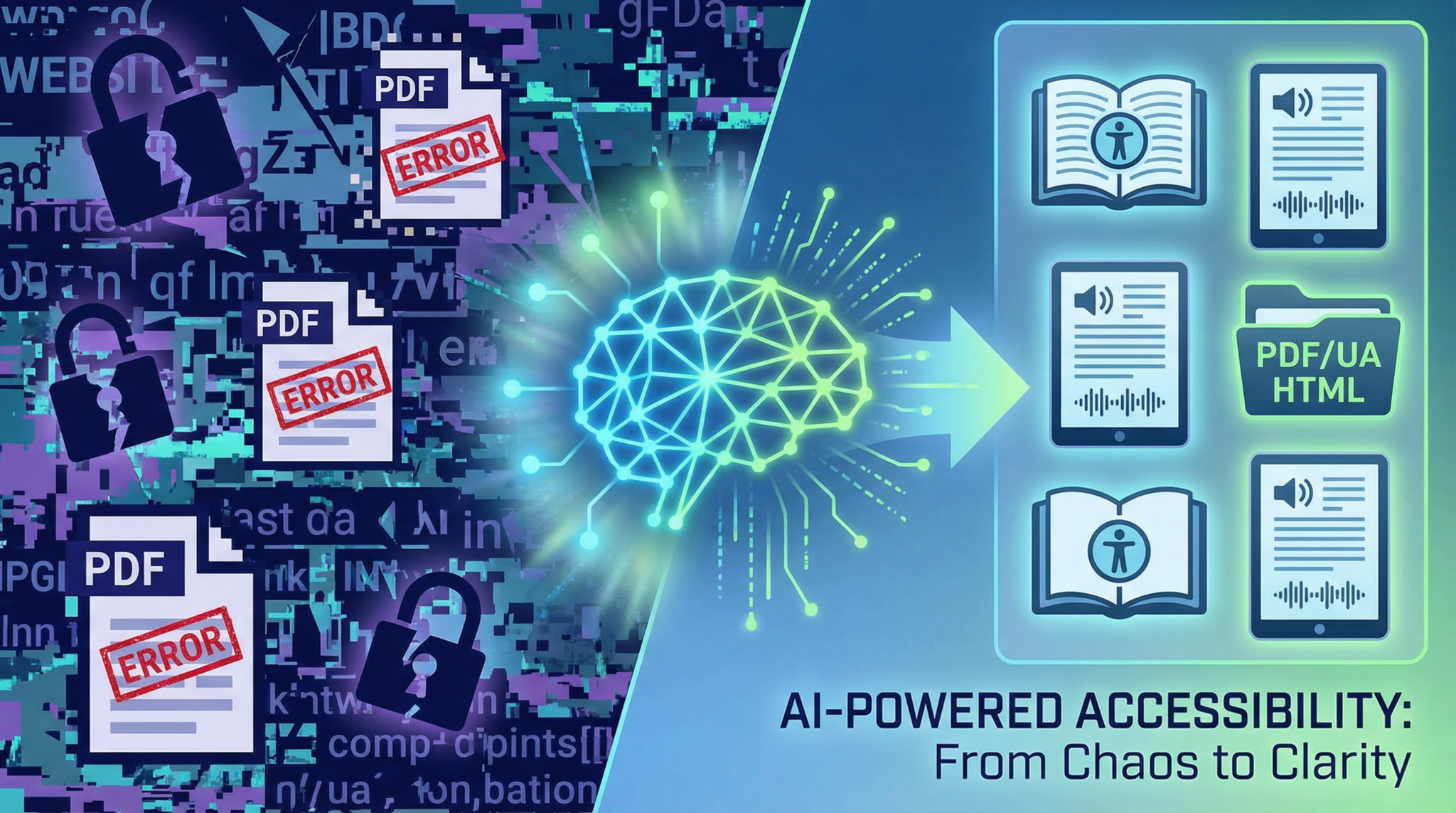
Universities around the world struggle with an often-overlooked barrier: the inaccessibility of academic research materials for students with visual impairments. Research papers, predominantly distributed as PDF documents, pose significant challenges for screen readers and other assistive technologies. These PDFs frequently contain broken formatting, scanned images of text, complex tables, and embedded figures, all of which contribute to a fragmented and frustrating user experience for those relying on non-visual access methods.
At the University of Texas at Austin (UT Austin), this issue is particularly acute given the institution’s strong emphasis on research output across STEM fields, social sciences, and humanities. While the university maintains a commitment to inclusivity, the technical limitations of legacy document formats have hindered equitable access to crucial academic content.
The Protagonist: Jaxsen Day’s Journey to Overcome Barriers
Jaxsen Day, a graduate student at UT Austin majoring in Cognitive Science, embodies the lived experience of these accessibility challenges. Jaxsen has a visual impairment that necessitates the use of screen readers for reading academic content. Encountering broken PDFs with incoherent text flow, non-parsed tables, and inaccessible figures, Jaxsen’s academic progress was repeatedly slowed by the time-consuming task of manually reconstructing research papers into usable formats.
Determined to find a solution, Jaxsen began exploring advanced AI tools that could bridge the accessibility gap. The breakthrough came when the university piloted ChatGPT’s AI capabilities to assist students with disabilities in research workflows.
The Problem: Locked Formats and Inaccessible Research Papers
Academic publishers largely rely on PDF as the de facto format for disseminating research. Unfortunately, many PDFs are created through scanned images or complex layout templates that do not translate well to screen readers. The core problems include:
- Broken text flow: Screen readers stumble on non-linear text arrangements and embedded columns.
- Unparseable tables and figures: Tabular data and charts are often images or poorly tagged, making data extraction impossible.
- Non-semantic formatting: Lack of proper tagging for headings, sections, and references prevents logical document navigation.
For visually impaired students like Jaxsen, this means spending hours reformatting or manually interpreting research papers, detracting from time that could be devoted to analysis and synthesis.
The Solution: ChatGPT Rebuilds the Research Workflow
UT Austin’s collaboration with OpenAI introduced ChatGPT as an assistive AI tool to reconstruct academic materials dynamically. ChatGPT’s natural language processing (NLP) and document parsing capabilities enable it to:
- Convert inaccessible PDFs: By ingesting raw PDF content, ChatGPT generates accessible text versions that preserve logical flow.
- Summarize complex sections: Methodologies, results, and discussions are distilled into concise, clear summaries.
- Extract and interpret data: Tables and key data points are parsed into structured formats suitable for screen readers and further analysis.
This AI-driven workflow reduces the manual labor involved in transforming research papers into accessible formats, providing students like Jaxsen with immediate, usable content tailored to their needs.
How ChatGPT Supports the Workflow
Key ChatGPT features leveraged in this initiative include:
- Deep Research Mode: Enables in-depth document analysis beyond surface text extraction, understanding context and technical terminology.
- Document Analysis: Parses complex PDF elements such as tables, footnotes, and multi-column layouts into readable text.
- Voice Mode Integration: Works seamlessly with screen readers and voice output tools, facilitating auditory consumption of research content.
Specific Use Cases at UT Austin
The AI-assisted research workflow has been successfully applied across multiple academic scenarios:
- Parsing Complex PDFs: Engineering and physics papers with intricate formulae and multi-column formatting are converted into linear, screen reader-friendly text.
- Extracting Data from Tables: Biomedical research often relies on large data tables. ChatGPT automatically extracts and reformats this data so it can be audibly presented or exported for statistical tools.
- Summarizing Methodology Sections: Lengthy, jargon-heavy methodology descriptions are distilled into clear summaries highlighting key experimental design elements and procedures.
Quantifiable Results: Time Saved and Accessibility Gains
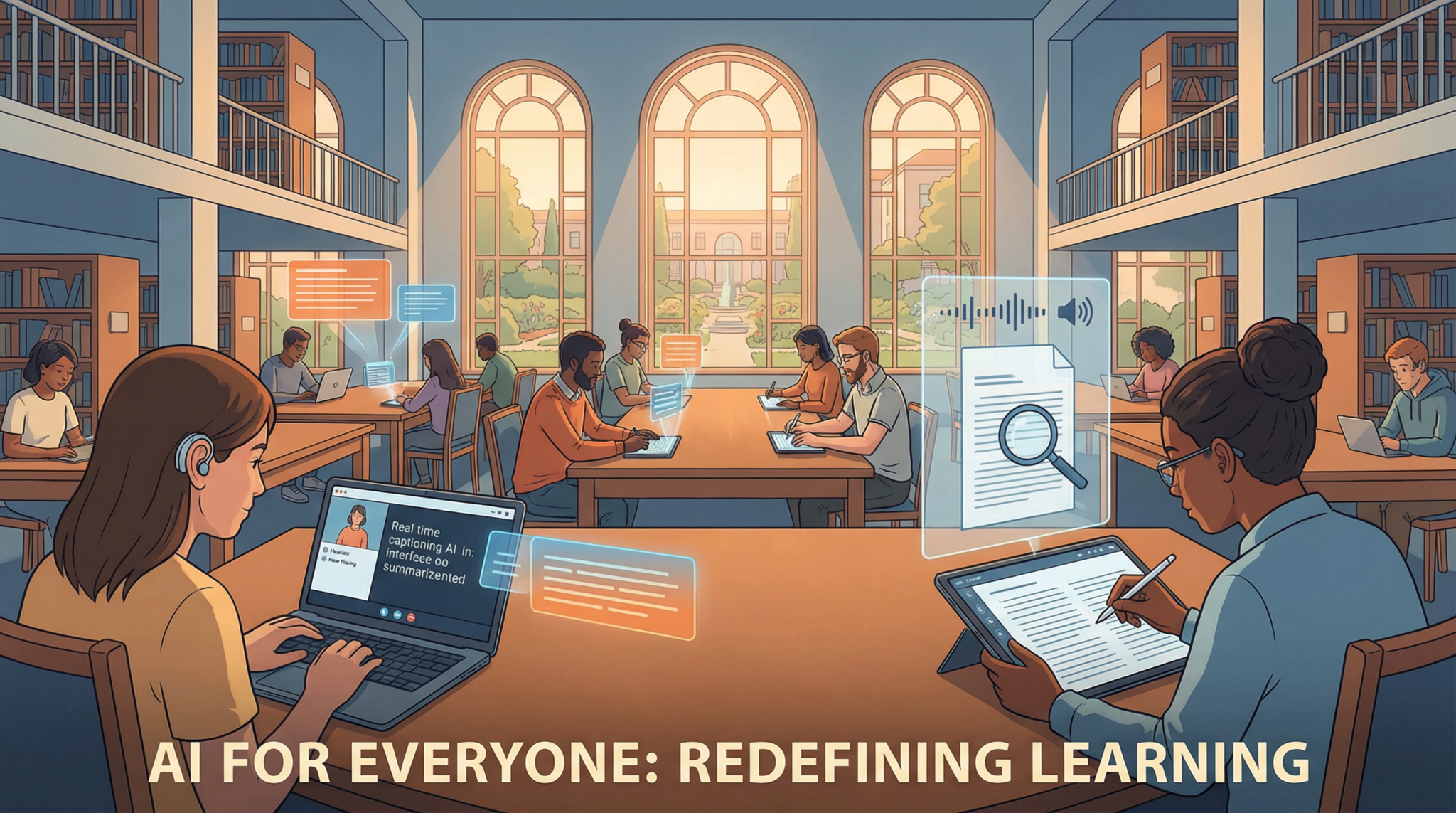
The impact of integrating ChatGPT into UT Austin’s academic research accessibility program has been substantial. Key metrics include:
- Time Efficiency: Students report a reduction of up to 70% in time spent preparing research papers for study and review.
- Volume of Processed Papers: Over 2,000 academic documents were converted and made accessible within the first academic year of deployment.
- Improved Comprehension: User feedback indicates a marked increase in understanding complex content due to AI-generated summaries and structured data presentation.
Jaxsen notes,
“ChatGPT transformed my research process. Instead of struggling through broken PDFs, I now receive research content in a format that works seamlessly with my screen reader, allowing me to focus on learning rather than formatting.”
Broader Implications: Democratizing Access to Knowledge
The UT Austin case exemplifies a larger trend where AI technologies like ChatGPT democratize academic knowledge by breaking down longstanding accessibility barriers. By enabling equitable access to research materials, AI empowers students with disabilities to participate fully in academic discourse and innovation.
This democratization also benefits the broader scholarly community by encouraging publishers and institutions to rethink document accessibility standards and invest in AI-powered assistive technologies.
Technical Implementation Details
The pilot program at UT Austin was developed in partnership with OpenAI’s research team, focusing on optimizing ChatGPT for academic accessibility. The technical setup includes:
- PDF Ingestion Pipelines: Custom scripts feed raw PDFs into ChatGPT’s document analysis APIs for conversion.
- Contextual NLP Models: Fine-tuned models recognize domain-specific terminology and extract semantic meaning from research texts.
- Integration with Screen Readers: Outputs are formatted into accessible HTML and text files designed for compatibility with popular screen readers such as NVDA and JAWS.
Special attention was given to the Deep Research Mode, which allows ChatGPT to maintain contextual coherence over multi-page documents, ensuring summaries and data extraction are accurate and relevant.
Challenges and Limitations Encountered
Despite its successes, the project faced several obstacles:
- Complex Visual Data: Figures such as graphs and charts remain difficult to fully contextualize and describe in audio formats.
- PDF Quality Variability: Poorly scanned or low-resolution documents sometimes limit ChatGPT’s parsing accuracy.
- Technical Vocabulary: Highly specialized jargon occasionally requires additional fine-tuning of AI models to ensure correct interpretation.
Furthermore, the AI’s reliance on source document quality necessitates ongoing collaboration with publishers to improve accessibility standards at the point of publication.
Lessons for Other Universities and Institutions
UT Austin’s experience provides valuable insights for institutions seeking to enhance academic accessibility:
- Embrace AI as a Complement: AI tools like ChatGPT should augment existing accessibility services rather than replace human expertise.
- Invest in Training: Educate students and faculty on how to effectively utilize AI-powered accessibility tools.
- Collaborate with Publishers: Advocate for improved document standards and open-access formats to facilitate AI parsing.
These strategies contribute to creating a sustainable, scalable model for addressing accessibility challenges in academia.
Building on the discussion of AI-powered research tools in higher education, the Claude Code vs OpenAI Codex in 2026: The Definitive Comparison Guide for AI-Powered Development offers an in-depth analysis of how emerging AI coding models compare in terms of performance, versatility, and future prospects, helping technologists and educators understand which platform may shape the next wave of intelligent automation.
Future Potential: The Evolution of AI Accessibility Tools
Looking ahead, the potential for AI to further revolutionize accessibility in academic research is vast. Emerging developments include:
- Multimodal AI: Combining text, image, and speech analysis to generate richer descriptions of visual data such as figures and charts.
- Real-time Document Conversion: Instantaneous transformation of research materials during live lectures or presentations for accessible consumption.
- Personalized Learning Aids: AI-generated tailored summaries, glossaries, and interactive Q&A to support diverse learning styles.
UT Austin’s pioneering program sets a precedent for continued innovation in this space, encouraging other institutions to integrate AI as a core component of their accessibility frameworks.
To gain deeper insights into the inner workings of advanced AI systems, our article on inside the Claude code source leak and what 512,000 lines of source code reveal about Anthropic’s AI architecture explores the technical architecture, vulnerabilities, and implications of leaked code for understanding AI development and security.
Access 40,000+ AI Prompts for ChatGPT, Claude & Codex — Free!
Subscribe to get instant access to our complete Notion Prompt Library — the largest curated collection of prompts for ChatGPT, Claude, OpenAI Codex, and other leading AI models. Optimized for real-world workflows across coding, research, content creation, and business.
Conclusion
The University of Texas at Austin’s adoption of ChatGPT to transform academic research accessibility demonstrates the powerful role AI can play in leveling the educational playing field. Through intelligent document conversion, summarization, and data extraction, ChatGPT addresses persistent barriers faced by visually impaired students. The quantifiable improvements in time efficiency and comprehension underscore the tangible benefits of integrating AI into academic workflows.
While challenges remain, UT Austin’s experience offers a replicable model for universities worldwide seeking to harness AI for inclusive education. As AI accessibility tools continue to evolve, the prospect of truly democratized knowledge access becomes an attainable reality for all students.
As institutions explore the evolving landscape of AI-driven content creation, our upcoming article on OpenAI’s shutdown of Sora and its implications for AI video creation in 2026 offers insights into how such changes may impact the future of AI-generated media and the opportunities—and challenges—they present for academic and creative communities.

