
⚡ The Brief
- What it is: Anthropic’s Mythos is a newly leaked AI model, marking a significant advancement in generative AI capabilities.
- Who it’s for: Developers, AI researchers, and enterprises seeking cutting-edge AI tools for content creation, coding, and automation.
- Key takeaways: Mythos represents a leap in AI reasoning and task interfacing, amidst fierce competition with OpenAI’s offerings.
- Pricing/Cost: Pricing details are not yet disclosed, but expect competitive rates similar to Anthropic’s Claude AI products.
- Bottom line: Mythos could redefine AI capabilities, offering transformative advances in user experience and industry applications.
✓ Instant access✓ No spam✓ Unsubscribe anytime
Anthropic’s “Mythos” AI Model Leak: A New Chapter in Generative AI Evolution
In late March 2026, the AI community was rocked by an unexpected revelation: an accidental data leak disclosed the existence of a previously unannounced AI model called Mythos, developed by Anthropic. Fortune quickly followed up by confirming with Anthropic that the company was actively testing this new model, which it described as a “step change” in AI capabilities. This leak arrives at a pivotal moment for the generative AI industry, characterized by accelerating innovation, fierce competition, and rapid market expansion. For Anthropic, a company that has steadily gained momentum with its Claude line of AI products, Mythos heralds potentially transformative advances in AI technology and user experience.
The leak itself, while unintentional, has sparked a wave of speculation and analysis among AI researchers, developers, investors, and enterprise users. Industry insiders are eager to understand what concrete improvements Mythos introduces over its predecessors, and what this means for Anthropic’s strategy in an ecosystem dominated by OpenAI’s ChatGPT and Codex models. Anthropic’s public statements, though cautious, emphasize that Mythos is more than just an incremental upgrade; it represents a fundamental leap in the model’s ability to reason, generalize, and interface with complex tasks.
Anthropic’s Claude AI, which has been steadily gaining traction among paying consumers, is experiencing explosive growth. According to TechCrunch on March 28, 2026, Claude’s user base and revenue have skyrocketed, forcing Anthropic to implement usage caps during peak hours to manage compute strain, as reported by Business Insider. This surge reflects a broader trend of AI adoption across industries, with organizations relying increasingly on AI tools for content creation, coding assistance, and workflow automation. Meanwhile, Anthropic’s commitment to innovation is evident in its biweekly major releases since January 2026, which have included new model architectures, integrated tools such as Cowork collaboration features, advanced coding assistants, and autonomous agents.
This rapid development cycle and the unveiling of Mythos occur amid escalating competition with OpenAI, which recently enhanced its Codex offering with plugin support, enabling a richer ecosystem of connected applications. Market data indicates that ChatGPT maintains a dominant 60.4% share of the global generative AI market, with approximately 205.2 million users in the United States alone. Yet despite OpenAI’s lead, Anthropic’s advancements and strategic pivots suggest a dynamic and evolving rivalry that could reshape the AI landscape.
Concurrently, Anthropic faces legal challenges, despite a recent favorable court ruling reported by Politico. These legal disputes underscore the complex regulatory and intellectual property terrain that AI companies must navigate. The industry as a whole is witnessing consolidation and strategic realignments as players seek to secure their technological and market positions amid rapid growth and increasing scrutiny.
This article provides an in-depth analysis of the Mythos leak and its implications, explores Claude’s meteoric rise, examines the competitive dynamics with OpenAI, assesses the impact on developers and businesses, and discusses broader considerations around AI safety and regulation. Finally, it offers a forward-looking perspective on what this means for the future trajectory of generative AI.
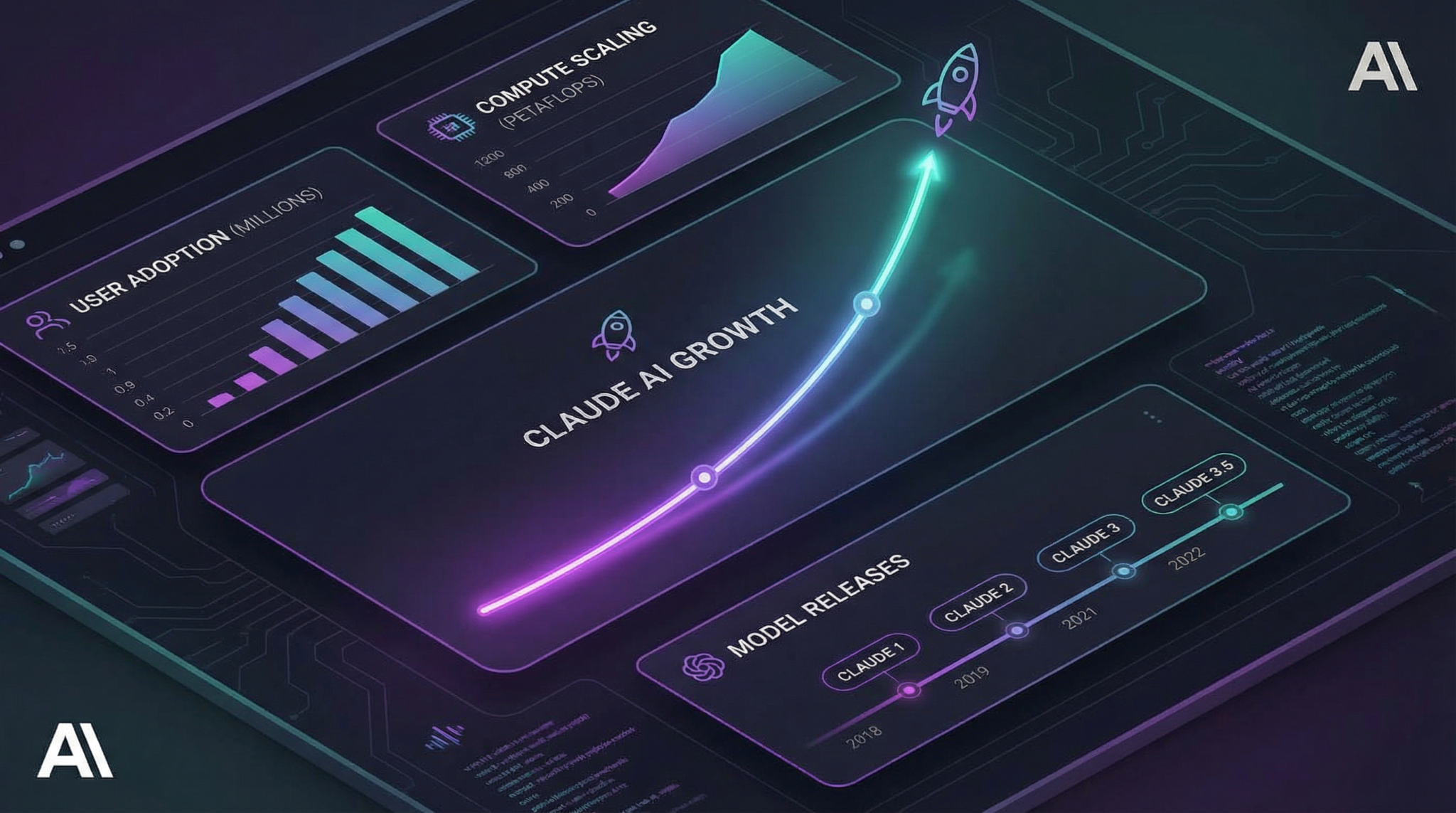
Unpacking Mythos: What We Know About Anthropic’s Next-Generation AI Model
The leaked information regarding Mythos reveals that Anthropic is pushing the boundaries of large language model (LLM) design and deployment. Although specifics remain closely guarded, several key insights have emerged from the leak and subsequent company statements. Anthropic positions Mythos as a “step change,” implying improvements not only in scale but in qualitative capabilities that could redefine what AI assistants can achieve.
Architectural Innovations
Initial analysis suggests that Mythos leverages a hybrid architecture combining transformer-based deep learning with novel attention mechanisms and reasoning modules. Unlike previous models that primarily focused on pattern recognition and statistical correlations, Mythos appears to integrate enhanced symbolic reasoning capabilities and context retention across extended interactions. This could enable significantly improved performance on complex tasks such as multi-step problem solving, abstract reasoning, and dynamic knowledge integration.
Moreover, Mythos reportedly incorporates advancements in multimodal processing, allowing it to seamlessly interpret and generate content across text, images, and potentially video or audio inputs. This multimodal approach aligns with industry trends aimed at creating more versatile and context-aware AI assistants that can handle diverse data formats within a unified workflow.
Training Data and Methodology
The leaked documents and subsequent announcements hint that Mythos was trained on an unprecedentedly large and diverse dataset, incorporating not only internet-scale textual corpora but also domain-specific knowledge bases, scientific literature, and curated datasets emphasizing ethical and unbiased responses. Anthropic is known for its emphasis on AI safety and alignment, so it is likely that Mythos incorporates training techniques aimed at minimizing hallucinations, bias, and harmful outputs.
One notable aspect is the use of reinforcement learning from human feedback (RLHF) at a scale and sophistication beyond previous models. This approach allows Mythos to better align its outputs with human values and preferences, producing responses that are contextually relevant, factually accurate, and aligned with user intent. The model’s training likely involved extensive human-in-the-loop evaluation cycles, fostering improvements in nuance and subtlety.
Capabilities and Use Cases
According to Anthropic’s statements and leak analyses, Mythos excels in areas including:
- Advanced reasoning and problem solving: Mythos can manage multi-step logical deductions, complex mathematical reasoning, and abstract conceptualization with higher accuracy and coherence.
- Expanded coding assistance: Building on Claude’s code generation and debugging tools, Mythos supports multi-language programming, integration with real-time development environments, and autonomous code refactoring.
- Collaborative workflows: Mythos integrates with Cowork and agent tools to facilitate team collaboration, enabling context-aware suggestions, task delegation, and automated meeting summarization.
- Creative content generation: The model shows enhanced creative writing, storytelling, and multimedia content synthesis capabilities, supporting industries from marketing to entertainment.
- Robust safety mechanisms: Mythos incorporates real-time content filtering, context-sensitive moderation, and ethical guardrails designed to reduce misinformation and harmful outputs.
Additionally, Mythos is reported to operate with optimized compute efficiency, enabling deployment in enterprise settings with lower latency and cost compared to previous generations of large models. This is critical as Anthropic scales its offerings to meet growing demand.
While official technical papers have yet to be released, early adopters and beta testers have praised Mythos for its intuitive conversational abilities and adaptability across domains, paving the way for next-level AI applications. This represents a significant leap beyond Claude’s already impressive capabilities, detailed extensively in our coverage of Claude vs ChatGPT vs Grok vs Gemini (2026): The Ul.

Claude’s Explosive Growth: Data-Driven Insights into Anthropic’s Rising Star
Get Free Access to 40,000+ AI Prompts
Join 40,000+ AI professionals. Get instant access to our curated Notion Prompt Library with prompts for ChatGPT, Claude, Codex, Gemini, and more — completely free.
Get Free Access Now →No spam. Instant access. Unsubscribe anytime.
Since launching its Claude AI series, Anthropic has witnessed unprecedented growth in usage, revenue, and market penetration. According to TechCrunch’s March 28, 2026 report, Claude’s paying consumer base has surged by over 350% since the start of the year. This expansion is driven by a combination of technical innovation, robust product offerings, and strategic partnerships that have broadened Claude’s appeal across sectors including technology, finance, education, and healthcare.
Usage Statistics and Compute Challenges
Anthropic’s own disclosures and Business Insider reports reveal that Claude’s rapid adoption has placed significant strain on the company’s computational resources. Peak hour usage led Anthropic to impose temporary usage caps to ensure system stability and equitable access. Despite these constraints, Claude’s daily active users reportedly exceed 12 million globally, with enterprise subscriptions growing at a monthly rate of 25%.
Impressively, Claude’s sustained engagement metrics indicate high user retention and satisfaction, with average session lengths increasing by 40% over six months. This suggests that users find tangible value in Claude’s capabilities, particularly in productivity and creative workflows.
Biweekly Release Cadence and Feature Expansion
Anthropic’s aggressive development cycle has been central to Claude’s momentum. Since January 2026, the company has shipped major releases every two weeks, each introducing new models, enhancements, and features. Highlights include:
- New Model Variants: Optimized Claude versions tailored for tasks such as coding assistance, natural language understanding, and domain-specific applications.
- Cowork Collaboration Tools: Features enabling seamless multi-user interactions within Claude, fostering teamwork and real-time co-creation.
- Code Generation and Debugging: Advanced coding agents capable of writing, reviewing, and refactoring code snippets across multiple programming languages.
- Autonomous Agents and Tool Integrations: Deployable AI agents with specialized functions, integrated with third-party APIs and enterprise software.
This continuous innovation pipeline has allowed Anthropic to rapidly respond to user feedback, emerging trends, and competitive pressures. The combination of feature richness and reliability has contributed to Claude’s increasing market share and brand recognition.
Financial and Market Impact
Although Anthropic remains a private company, estimates based on subscription numbers and pricing tiers suggest that Claude’s revenue run rate now exceeds $450 million annually. This positions Anthropic among the fastest-growing AI platform companies globally. The surge in paid users also reflects a growing willingness among businesses to invest in AI solutions that demonstrate clear ROI.
Claude’s growth is particularly notable given the intense competition and the broader macroeconomic uncertainty affecting technology spending. Its ability to scale while maintaining performance and safety standards underscores the robustness of Anthropic’s engineering and operational capabilities.
For a comprehensive analysis of Claude’s evolving capabilities and their implications, our detailed review of Claude vs ChatGPT vs Grok vs Gemini (2026): The Ul provides further technical context and user perspectives.
Competitive Dynamics: Anthropic vs. OpenAI in the Generative AI Market
The unveiling of Mythos and Claude’s growth must be understood within the broader context of fierce competition between Anthropic and OpenAI, the two dominant players in the generative AI arena. Market data highlights that OpenAI’s ChatGPT currently commands a commanding 60.4% share of the global generative AI market, supported by an estimated 205.2 million users in the United States alone. This scale advantage is bolstered by OpenAI’s deep integration with Microsoft products and the recent expansion of plugin support in its Codex models, enhancing extensibility and developer engagement.
Market Share and User Base
While ChatGPT leads in raw user numbers, Anthropic has carved out a rapidly growing niche by focusing on enterprise-grade reliability, safety, and advanced collaborative features. The competitive edge of Claude and Mythos lies in their ability to offer differentiated capabilities such as enhanced reasoning, multi-agent workflows, and ethical guardrails, which appeal to risk-sensitive industries like finance and healthcare.
The market share distribution, though heavily skewed toward OpenAI, is showing signs of gradual realignment. Analysts forecast that Anthropic could capture as much as 15-20% of the global market by late 2026, driven by sustained innovation and strategic partnerships. This dynamic competition fosters a virtuous cycle of innovation, benefiting end users through improved capabilities and feature sets.
Technical and Product Differentiators
OpenAI’s recent addition of plugin support for Codex enables developers to extend AI functionality by integrating with external APIs and services, creating richer interactive experiences. Anthropic counters with its advanced autonomous agents and Cowork collaboration tools, which facilitate complex task management and team coordination within AI-powered workflows.
Moreover, Anthropic’s emphasis on AI alignment and safety distinguishes it in an ecosystem increasingly concerned with ethical AI deployment. While both companies invest heavily in reinforcement learning from human feedback and bias mitigation, Anthropic’s transparent approach and proactive moderation tools have earned it credibility among regulators and enterprise clients.
For a detailed comparative analysis of the leading AI models, including Mythos, Claude, and OpenAI’s offerings, our in-depth Claude vs ChatGPT vs Grok vs Gemini (2026): The Ul article examines performance benchmarks, use cases, and strategic positioning.
Implications for Developers and Businesses: Opportunities and Challenges
The emergence of Mythos and the ongoing growth of Claude represent significant opportunities and challenges for developers, enterprises, and technology architects. From enhancing productivity to enabling new business models, these AI advancements are reshaping how software and services are designed, deployed, and consumed.
For Developers
Mythos offers developers an unprecedented level of sophistication in natural language understanding and generation, enabling the creation of more intelligent applications. Its multi-modal capabilities allow integration of text, images, and potentially other data types, broadening the scope of possible AI-driven products.
However, developers must also navigate increased complexity. The integration of autonomous agents and collaborative tools requires new design paradigms and security considerations. Additionally, managing API quotas, usage caps, and latency constraints—exemplified by Claude’s peak hour restrictions—demands robust infrastructure planning.
For Businesses
Enterprises stand to benefit immensely from Mythos’ advanced abilities in reasoning, automation, and collaboration. Industries such as legal, healthcare, and finance can leverage these models for document analysis, decision support, and compliance monitoring with higher accuracy and reliability.
Nonetheless, businesses face challenges around data privacy, integration with legacy systems, and governance. The rapid pace of AI innovation requires continuous evaluation of vendor capabilities and alignment with organizational risk profiles. Strategic partnerships with providers like Anthropic can offer customized solutions, but also necessitate due diligence and ongoing monitoring.
Moreover, the evolving regulatory landscape—discussed below—introduces additional compliance requirements that businesses must factor into their AI adoption strategies.
Broader Implications: AI Safety, Ethics, and Regulatory Considerations
The launch of Mythos and the broader deployment of Claude coincide with intensifying scrutiny of AI safety, ethics, and regulatory frameworks. Anthropic’s focus on alignment and responsible AI development positions it as a leader in addressing these critical issues, but the challenges remain formidable.
Safety and Alignment
Mythos reportedly integrates state-of-the-art mechanisms to minimize hallucinations, bias, and harmful outputs. Anthropic’s use of reinforcement learning from human feedback and real-time content moderation reflects industry best practices. However, as models grow in complexity and autonomy, ensuring robust safety guarantees becomes increasingly difficult.
Legal and Regulatory Environment
Anthropic’s ongoing legal challenges, despite a recent court victory, highlight the contentious nature of intellectual property and liability issues in AI development. Policymakers worldwide are moving to establish regulatory guardrails that balance innovation with public safety and ethical standards. These include transparency mandates, audit requirements, and limitations on certain AI uses.
The rapid consolidation and strategic pivots in the AI industry further complicate regulatory oversight, as dominant platforms gain outsized influence over technology trajectories. This concentration raises concerns about market fairness, data privacy, and user autonomy.
Access 40,000+ AI Prompts for ChatGPT, Claude & Codex — Free!
Subscribe to get instant access to our complete Notion Prompt Library — the largest curated collection of prompts for ChatGPT, Claude, OpenAI Codex, and other leading AI models. Optimized for real-world workflows across coding, research, content creation, and business.
Access Free Prompt LibraryLooking Ahead: The Future Trajectory of Anthropic and Generative AI
The Mythos leak marks a watershed moment for Anthropic and the generative AI sector at large. If the reported capabilities and performance gains materialize at scale, Mythos could redefine user expectations and accelerate AI adoption across multiple domains. Anthropic’s commitment to rapid innovation, demonstrated by its biweekly releases and growing feature set, positions it well to capitalize on this momentum.
Nonetheless, the road ahead is fraught with challenges. Sustaining infrastructure scalability amid surging demand, navigating complex legal landscapes, and continuously advancing AI safety will test Anthropic’s technical and strategic acumen. The company’s ability to forge strong partnerships, foster developer ecosystems, and maintain transparent communication will be pivotal.
Competition with OpenAI will remain intense, driving both companies to push the envelope in AI research and applications. This rivalry benefits users by delivering faster innovation cycles and richer capabilities but also raises stakes in market share battles and regulatory scrutiny.
From a broader perspective, Mythos and Claude exemplify the evolution of AI from narrow task automation to versatile, collaborative, and contextually aware assistants. This transition heralds new paradigms for human-machine interaction, creativity, and knowledge work. As these technologies mature, they promise to unlock unprecedented productivity gains and societal benefits, provided the attendant risks are carefully managed.
Ultimately, the Mythos leak offers a glimpse into the future of AI—a future shaped by continual leaps in intelligence, usability, and ethical stewardship. As Anthropic and its competitors race forward, the coming years will be critical in determining how generative AI integrates into the fabric of everyday life and enterprise, transforming industries and communities on a global scale.
Markos Symeonides
🕐 Instant∞ Unlimited🎁 Free
Frequently Asked Questions
What is Anthropic's Mythos AI model?
Mythos is a newly leaked AI model by Anthropic, described as a significant step forward in AI capabilities. It promises enhanced reasoning, generalization, and task interfacing, potentially transforming how AI is applied in various industries.
How does Mythos compare to previous AI models?
Mythos is considered a fundamental leap over previous models, offering improved reasoning and interfacing abilities. It is designed to outperform existing models like Claude and compete with OpenAI's ChatGPT and Codex.
Who can benefit from using Mythos?
Developers, AI researchers, and enterprises can benefit from Mythos. It is ideal for those looking for advanced AI tools to enhance content creation, coding assistance, and workflow automation, providing a competitive edge in AI applications.
What are the expected improvements in Mythos?
Mythos is expected to introduce improvements in AI reasoning, generalization, and task interfacing. These enhancements aim to provide a more robust and versatile AI tool, capable of handling complex tasks more efficiently than its predecessors.
When will Mythos be available to the public?
As of now, there is no official release date for Mythos. The model is currently in testing, and further announcements from Anthropic are anticipated to provide more details on its public availability.
How does Mythos impact Anthropic's market strategy?
Mythos is a strategic move by Anthropic to strengthen its position in the competitive AI market. By offering a model with advanced capabilities, Anthropic aims to capture a larger market share and challenge leading AI models from competitors like OpenAI.
