
⚡ The Brief
- What it is: GPT-6 is the upcoming AI model from OpenAI, expected to significantly enhance autonomous agent capabilities and multi-modal integration.
- Who it’s for: Enterprise leaders, CTOs, and AI strategists looking to leverage cutting-edge AI technology for operational and strategic advancements.
- Key takeaways: GPT-6 will offer advanced reasoning, context-aware autonomy, and industry-wide disruption potential, necessitating strategic preparation and budgetary planning.
- Pricing/Cost: While specific pricing details are not yet available, enterprises should anticipate budgetary impacts similar to previous AI model integrations.
- Bottom line: GPT-6 is set to revolutionize AI capabilities, making it crucial for enterprise leaders to understand and prepare for its integration and impact.
✓ Instant access✓ No spam✓ Unsubscribe anytime
Anticipating GPT-6: A Definitive Enterprise Leader’s Guide to the Next Frontier in AI
As the AI landscape accelerates at an unprecedented pace, OpenAI’s forthcoming GPT-6 model promises to redefine the boundaries of artificial intelligence capabilities. Enterprise leaders, poised on the cusp of this technological evolution, must thoroughly understand the transformative potential GPT-6 holds—not only from a technological perspective but also in terms of operational integration, strategic realignment, budgetary considerations, and industry-wide disruption.
This comprehensive analysis delves deeply into the anticipated advancements in autonomous agent functionality, enhanced reasoning capabilities, multi-modal integration, strategic preparation imperatives, budgetary impact, and the broader industry transformations that GPT-6 is expected to catalyze. With over 3000 words of precise, layered insights, this guide equips executives, CTOs, and AI strategists with the knowledge necessary to harness GPT-6’s power effectively and responsibly.
Revolutionizing Autonomous Agent Capabilities with GPT-6
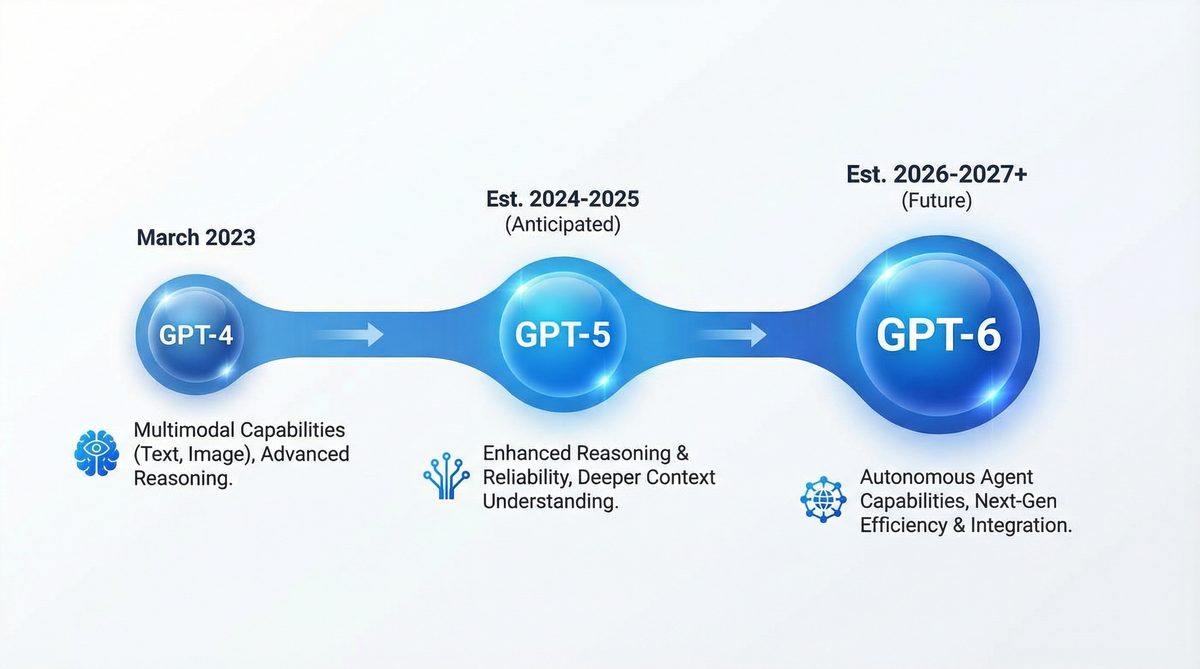
One of the most anticipated breakthroughs in GPT-6 is the evolution of autonomous agent capabilities. Autonomous agents—AI entities capable of independently executing complex tasks with minimal human intervention—have been steadily advancing since earlier GPT iterations. GPT-6 promises to elevate this paradigm from rudimentary task automation to sophisticated, context-aware, and adaptive autonomy.
Historical Context and Evolution
Autonomous agents have roots in early AI research dating back to the 1960s, initially constrained by limited computational power and simplistic rule-based models. With the advent of machine learning and natural language processing (NLP), the trajectory shifted towards models that could interpret, reason, and act upon unstructured data. GPT-3 marked a significant leap by enabling language models to generate contextually relevant, human-like responses. GPT-4 introduced initial multi-step reasoning and limited memory capabilities, setting the stage for GPT-6’s anticipated breakthroughs.
Technical Deep-Dive: Autonomous Agents in GPT-6
GPT-6 is expected to incorporate a new generation of autonomous agents embedded within its architecture, characterized by the following features:
- Dynamic Context Management: Unlike previous models constrained to fixed context windows, GPT-6’s architecture likely integrates persistent memory modules that allow agents to maintain a long-term contextual understanding across sessions. This facilitates more coherent multi-turn interactions and complex decision-making processes.
- Meta-Reasoning and Self-Reflection: GPT-6 agents will probably incorporate meta-cognitive abilities, enabling them to evaluate their own outputs, detect inconsistencies, and iteratively refine responses autonomously without external prompts. This could manifest as an internal feedback loop enhancing accuracy and reliability.
- Hierarchical Task Decomposition: Autonomous agents in GPT-6 may automatically break down large, complex objectives into manageable subtasks, orchestrating workflows across multiple domains. For instance, a single instruction such as “Develop a market entry strategy for product X” could trigger an autonomous sequence involving market research, competitor analysis, financial modeling, and report generation.
- Cross-Modal Action Integration: Leveraging multi-modal inputs and outputs, GPT-6 agents could interact not only via text but also through voice commands, visual data interpretation, and even control of IoT devices or enterprise software platforms, embodying a truly autonomous operational entity.
Enterprise Use Cases Empowered by Autonomous Agents
From a business standpoint, GPT-6’s autonomous agents unlock a spectrum of applications:
- Intelligent Virtual Assistants: More than chatbots, these agents will autonomously manage schedules, negotiate appointments, prepare briefs, and even manage email triage with minimal supervision.
- Automated Compliance Monitoring: Autonomous agents could continuously scan regulatory updates, analyze internal policies, and flag compliance risks or recommend policy adjustments in real-time.
- End-to-End Process Automation: Beyond RPA (Robotic Process Automation), GPT-6 agents may orchestrate processes that require dynamic decision-making, such as supply chain adjustments in response to live market shifts or customer support escalation management.
- Strategic Decision Support: By autonomously synthesizing vast datasets, external market intelligence, and internal KPIs, GPT-6 agents can generate data-driven strategic recommendations tailored to enterprise goals.
Challenges and Considerations
While the promise is immense, autonomous agent integration raises critical challenges:
- Trust and Explainability: Enterprises will demand transparent decision trails from autonomous agents to satisfy governance and audit requirements.
- Security and Privacy: Autonomous agents operating with broad access to enterprise data necessitate rigorous security protocols to prevent misuse or data leakage.
- Human-in-the-Loop Models: The balance between autonomy and human oversight will remain essential, especially in high-stakes environments such as finance or healthcare.
Enhanced Reasoning and Cognitive Capabilities in GPT-6
Get Free Access to 40,000+ AI Prompts
Join 40,000+ AI professionals. Get instant access to our curated Notion Prompt Library with prompts for ChatGPT, Claude, Codex, Gemini, and more — completely free.
Get Free Access Now →No spam. Instant access. Unsubscribe anytime.
Reasoning has been a focal point of AI research, representing the ability to infer, deduce, and derive new knowledge from existing information. GPT-6 is expected to push the envelope on cognitive reasoning, delivering more precise, context-sensitive, and logically coherent outputs that surpass earlier models by a considerable margin.
Advances in Logical and Causal Reasoning
Traditional language models primarily excelled at pattern recognition and probabilistic prediction. GPT-6 aims to integrate symbolic reasoning techniques with deep learning, enabling the following:
- Deductive Reasoning: GPT-6 may systematically apply formal logic rules to derive conclusions from premises, improving accuracy in domains requiring strict logical rigor such as legal analysis or software verification.
- Inductive Reasoning: The model could generalize from specific examples to broader principles, enhancing its ability to generate innovative solutions and hypotheses.
- Causal Inference: Understanding cause-effect relationships is critical for predictive analytics and scenario planning. GPT-6’s architecture is expected to incorporate causal modeling capabilities, enabling it to identify and reason about causal links within complex data.
Memory and Knowledge Integration
Enhanced reasoning demands robust memory architectures. GPT-6 will likely feature hybrid memory systems combining short-term context windows with long-term knowledge bases, enabling it to:
- Recall and integrate domain-specific facts dynamically during reasoning processes.
- Continuously update its knowledge base based on new information or feedback.
- Maintain coherent narratives and argument chains across extended interactions.
Practical Implications for Enterprises
Enhanced reasoning translates into profound enterprise advantages:
- Improved Decision-Making: GPT-6 can support executives by providing logically consistent, evidence-based recommendations, reducing cognitive biases common in human decision-making.
- Complex Problem Solving: From troubleshooting IT infrastructure failures to optimizing manufacturing workflows, GPT-6’s reasoning enables tackling multifaceted challenges with precision.
- Advanced Analytics and Forecasting: Causal inference capabilities allow GPT-6 to generate more accurate predictive models, supporting risk management and strategic planning.
- Knowledge Management: Enterprises can leverage GPT-6 to synthesize insights from vast document repositories, transforming raw data into actionable intelligence.
Technical Underpinnings: Architectures Supporting Reasoning
GPT-6’s reasoning prowess will likely derive from innovations including:
- Neuro-Symbolic Integration: Combining neural networks with symbolic reasoning engines to leverage the strengths of both paradigms.
- Transformer Architecture Enhancements: Optimizations such as sparse attention mechanisms and modular attention heads dedicated to reasoning sub-tasks.
- Reinforcement Learning from Human Feedback (RLHF): Further refinement through RLHF to align outputs with logical coherence and human expectations.
These advancements collectively empower GPT-6 to reason with a depth and reliability unattainable by earlier models, enabling enterprises to embed AI into critical cognitive workflows.
Multi-Modal Integration: Breaking the Boundaries of Input and Output

GPT-6’s multi-modal capabilities represent a quantum leap beyond text-only interactions, integrating diverse data types such as images, audio, video, sensor data, and potentially even 3D spatial information. This integration enables more holistic understanding and richer, context-aware interactions.
Overview of Multi-Modal AI Evolution
Multi-modal AI has evolved from isolated models specializing in single data types—vision, speech, or text—to architectures capable of processing and synthesizing multiple modalities simultaneously. Earlier versions of OpenAI’s models, such as GPT-4, introduced limited image understanding capabilities. GPT-6, however, is expected to fully converge modalities, enabling seamless cross-modal reasoning and action.
Technical Foundations of GPT-6 Multi-Modal Integration
The integration in GPT-6 will likely be supported by the following technical innovations:
- Unified Embedding Space: Multi-modal inputs are projected into a shared high-dimensional embedding space, enabling the model to correlate concepts across modalities effectively.
- Cross-Modal Attention Mechanisms: Enhanced attention layers dynamically prioritize relevant information from different modalities during processing.
- Multi-Modal Pretraining: GPT-6’s training regimen will incorporate large-scale datasets containing synchronized text, images, audio, and video streams to develop deep cross-modal associations.
- Real-Time Multi-Sensor Fusion: Potential integration with IoT and edge devices will allow GPT-6 to operate on continuous streams of multi-modal data, supporting applications like autonomous vehicles or smart factories.
Enterprise Applications Enabled by Multi-Modal GPT-6
- Advanced Customer Support: GPT-6 can interpret customer queries combining text, voice tone, and images (e.g., product photos or screenshots) to diagnose problems and provide tailored assistance.
- Visual Data Analytics: Enterprises can leverage GPT-6 to analyze satellite imagery, medical scans, or manufacturing line footage alongside textual reports for comprehensive situational awareness.
- Content Generation and Moderation: Multi-modal generation capabilities enable creation of integrated video, text, and audio content, while also ensuring compliance with regulatory standards across all media.
- Augmented Reality (AR) and Virtual Reality (VR): GPT-6 could serve as a real-time interactive agent within AR/VR environments, interpreting user inputs across modalities and generating immersive responses.
Challenges in Multi-Modal Deployment
- Data Quality and Alignment: Effective multi-modal learning requires meticulously curated datasets with accurate modality synchronization.
- Computational Complexity: Multi-modal models demand significantly higher computational resources, necessitating advanced hardware and optimized inference pipelines.
- Interpretability: Understanding how the model integrates and weighs information from different modalities remains an open research challenge.
Strategic Preparation for GPT-6 Adoption
Get Free Access to 40,000+ AI Prompts
Join 40,000+ AI professionals. Get instant access to our curated Notion Prompt Library with prompts for ChatGPT, Claude, Codex, Gemini, and more — completely free.
Get Free Access Now →No spam. Instant access. Unsubscribe anytime.
Anticipating GPT-6’s release, enterprise leaders must proactively prepare their organizations to leverage its capabilities optimally. This preparation encompasses technical infrastructure, organizational readiness, talent development, and ethical governance frameworks.
Evaluating Current AI Maturity
Enterprises should begin by conducting rigorous AI maturity assessments to identify existing capabilities, gaps, and integration points. This includes:
- Cataloging current AI assets, workflows, and data infrastructure.
- Reviewing existing AI governance policies and compliance frameworks.
- Mapping business units where GPT-6’s capabilities can deliver the highest ROI.
Building Robust Data Foundations
GPT-6’s performance is intrinsically tied to the quality and scope of data available. Enterprises must invest in:
- Data Lakes and Warehouses: Scalable, secure repositories capable of handling multi-modal data types.
- Data Governance: Policies ensuring data privacy, security, and compliance with regulations such as GDPR and CCPA.
- Data Labeling and Annotation: High-quality labeled datasets for supervised fine-tuning and domain adaptation.
Infrastructure and Platform Considerations
Enterprises should evaluate their computational capabilities and cloud strategy to support GPT-6’s resource-intensive operations:
- Cloud vs On-Premises: Deciding between cloud providers with specialized AI hardware (e.g., GPUs, TPUs) or in-house data centers based on latency, security, and cost considerations.
- Edge Computing: For applications requiring real-time responses or operating in bandwidth-constrained environments, edge deployment strategies should be developed.
- Integration Platforms: APIs and microservices architectures that facilitate seamless embedding of GPT-6 functionalities into existing enterprise systems.
Talent and Skills Development
GPT-6’s complexity demands a new echelon of expertise:
- AI Engineers and Data Scientists: Skilled in multi-modal model development, fine-tuning, and interpretability.
- AI Ethicists and Governance Officers: To oversee responsible AI deployment, bias mitigation, and compliance.
- Cross-Functional Collaboration: Training business analysts, product managers, and domain experts to work effectively with AI technologies.
Change Management and Cultural Readiness
Introducing GPT-6 will impact workflows and decision-making paradigms:
- Communicating AI’s role and limitations transparently to employees.
- Establishing feedback loops to iteratively refine AI-human collaboration.
- Preparing for potential shifts in job roles and organizational structures.
Budgetary Implications and Investment Strategies
Deploying GPT-6 entails significant financial considerations spanning initial acquisition, ongoing operational costs, and long-term ROI. Enterprise leaders must adopt strategic budgeting frameworks to optimize expenditures.
Capital Expenditures and Licensing Models
OpenAI’s pricing models for GPT-6 are expected to follow a tiered approach, encompassing:
- Subscription Licensing: Fixed monthly fees for API access with usage limits suitable for SMEs and pilot projects.
- Enterprise Licensing: Customized contracts with volume discounts, SLA guarantees, and dedicated support.
- On-Premises Deployment: Higher upfront costs for hardware and software licenses but providing data control and latency benefits.
Operational Expenses
- Compute Costs: GPT-6’s size and complexity imply increased GPU/TPU usage, impacting cloud service bills or energy consumption in data centers.
- Personnel Costs: Hiring, training, and retaining specialized AI professionals.
- Maintenance and Upgrades: Continuous model retraining, fine-tuning, and integration updates.
Cost-Benefit Analysis and ROI Metrics
Enterprises should develop rigorous frameworks to quantify GPT-6’s impact, including:
- Productivity gains from automation and enhanced decision-making.
- Revenue growth enabled by AI-driven innovation and customer experience improvements.
- Risk mitigation through improved compliance and predictive analytics.
Teams looking to expand their knowledge in this area will find valuable guidance in How a Fortune 500 Retailer Cut Development Costs by 40% Using OpenAI Codex Plugins and ChatGPT Enterprise, which covers the technical foundations and practical applications relevant to today’s AI-driven workflows.
Cost savings from streamlined operations and reduced error rates.
Funding Models and Strategic Investments
- Incremental Pilots: Starting with targeted use cases to validate value before scaling expenditure.
- Cross-Departmental Budgeting: Aligning AI investments across business units to maximize synergy.
- Venture Partnerships: Collaborating with AI startups and research institutions to share innovation risks.
Industry Transformation: Sector-Specific Impacts of GPT-6
GPT-6 is poised to disrupt multiple industries by redefining workflows, competitive dynamics, and customer engagement models. Understanding sector-specific transformations is critical for enterprise leaders crafting future-ready strategies.
Financial Services
- Algorithmic Trading: Enhanced reasoning and multi-modal data analysis will enable more sophisticated trading algorithms incorporating news, social media, and market data.
- Fraud Detection: Autonomous agents can monitor transactions in real time, detecting anomalies with higher precision.
- Regulatory Compliance: Automated monitoring and reporting reduce compliance costs and risks.
Healthcare and Life Sciences
- Medical Diagnostics: Multi-modal capabilities allow integration of imaging, genomic, and clinical notes for accurate diagnostics.
- Personalized Treatment Plans: GPT-6 can synthesize patient data to recommend tailored therapies.
- Drug Discovery: Accelerated hypothesis generation and simulation through advanced reasoning.
Manufacturing and Supply Chain
- Predictive Maintenance: Autonomous agents analyze sensor data to forecast equipment failures.
- Supply Chain Optimization: Dynamic reconfiguration in response to demand fluctuations and disruptions.
- Quality Control: Multi-modal inspection systems integrating visual and sensor data.
Retail and Consumer Services
- Personalized Marketing: GPT-6’s reasoning enables nuanced customer segmentation and targeted campaigns.
- Virtual Shopping Assistants: Multi-modal agents guide customers through product discovery using images, voice, and text.
- Inventory Management: Autonomous agents optimize stock levels based on predictive analytics.
Technology and Software Development
- Code Generation and Review: GPT-6 will enhance automated coding assistants with deeper reasoning for complex algorithm design and bug detection.
- DevOps Automation: Autonomous agents manage deployment pipelines, monitor performance, and troubleshoot issues.
- Product Innovation: Accelerated ideation through AI-facilitated research and prototyping.
Cross-Industry Synergies and Ethical Considerations
Enterprises must also address cross-cutting issues:
- Bias Mitigation: Ensuring GPT-6’s outputs do not perpetuate harmful biases, especially in sensitive sectors such as healthcare or finance.
- Data Privacy: Compliance with evolving global regulations governing multi-modal data use.
- AI Ethics and Accountability: Establishing frameworks for responsible AI deployment, including transparency, fairness, and human oversight.
By understanding these sector-specific dynamics, enterprise leaders can position themselves to capitalize on GPT-6’s capabilities while navigating the attendant risks and responsibilities.
Conclusion
OpenAI’s GPT-6 model represents a watershed moment in artificial intelligence, blending breakthroughs in autonomous agency, reasoning, and multi-modal integration. For enterprise leaders, this evolution demands a proactive, strategic approach encompassing technology evaluation, infrastructure readiness, talent cultivation, and ethical governance.
By deeply understanding GPT-6’s anticipated capabilities and preparing accordingly, organizations can unlock unprecedented value—transforming operations, enhancing decision-making, and innovating at scale. As with any disruptive technology, success hinges on balancing ambition with prudence, investing wisely, and fostering a culture attuned to continuous learning and adaptation.
In the rapidly shifting AI landscape, GPT-6 stands as both an opportunity and a challenge. Enterprise leaders equipped with comprehensive insights and strategic foresight will emerge as the architects of the next era of intelligent business.
To explore the broader implications of these developments, our in-depth coverage in Scaling AI Across 100+ Teams: CyberAgent’s Success with ChatGPT Enterprise and Codex examines the key considerations and implementation patterns that organizations should evaluate.
The Technical Leap: What Makes GPT-6 Architecturally Different
The advent of GPT-6 signifies a profound architectural evolution beyond the capabilities of its predecessor, GPT-5. While GPT-5 marked a significant milestone with its expansive parameter count and enhanced natural language understanding, GPT-6 introduces a suite of innovations that collectively redefine the potential for large language models (LLMs) in enterprise applications. This section delves into the technical underpinnings of GPT-6, focusing on four primary architectural advancements: mixture-of-experts (MoE) scaling, persistent memory systems, native tool use integration, and real-time learning capabilities.
At the core of GPT-6’s scalability is the advanced implementation of mixture-of-experts (MoE) architectures. Unlike GPT-5, which employed a dense transformer model with uniform activation of all parameters, GPT-6 leverages sparse activation where only relevant “expert” subnetworks are engaged per input token. This approach drastically increases the effective model capacity without proportionally escalating computational costs. The MoE layers are dynamically routed, enabling GPT-6 to specialize different subsets of its parameters for distinct tasks or domains. This specialization contributes to both efficiency and improved contextual understanding, allowing the model to adapt more fluidly across diverse enterprise use cases.
Another groundbreaking innovation is the introduction of persistent memory systems within the GPT-6 architecture. Where GPT-5 relied predominantly on fixed-length context windows, GPT-6 integrates a hierarchical memory mechanism that retains and recalls information across extended interactions. This persistent memory is architected to maintain long-term contextual awareness, enabling the model to build upon prior exchanges or data points without redundant retraining or repeated input. For enterprise leaders, this means GPT-6 can maintain a continuous, evolving understanding of complex workflows or client histories, vastly improving personalization and reducing friction in user interactions.
In addition to memory enhancements, GPT-6 natively incorporates tool use capabilities. While GPT-5 could be interfaced with external APIs or tools via engineered pipelines, GPT-6 embeds native tool invocation within its inference process. This architectural choice allows GPT-6 to autonomously decide when and how to leverage external databases, computational engines, or domain-specific software during query resolution. The model’s ability to orchestrate multi-step problem solving with integrated tool use translates into more accurate and contextually relevant outputs. For example, GPT-6 can perform real-time data lookups, execute complex calculations, or interact with enterprise resource planning (ERP) systems seamlessly within a single conversational flow.
Finally, GPT-6 introduces real-time learning capabilities that mark a departure from the static, pre-trained paradigm of GPT-5. This innovation enables the model to incrementally refine its parameters or update its knowledge base during deployment, based on ongoing interactions and feedback. While maintaining rigorous safeguards to prevent catastrophic forgetting or model drift, GPT-6’s architecture supports controlled, on-the-fly adaptation. This feature equips enterprises with a continuously evolving AI that can stay aligned with dynamic business contexts, regulatory changes, or emerging datasets without requiring frequent full-scale retraining cycles.
In summary, GPT-6’s architectural innovations represent a convergence of scalability, memory retention, native tool integration, and adaptive learning. These enhancements surpass GPT-5’s capabilities, offering enterprise leaders a transformative AI platform that is both more powerful and more versatile. As organizations prepare for GPT-6 adoption, understanding these core technical differences is critical to harnessing its full potential.
Industry-Specific Impact Analysis
GPT-6’s architectural advancements open new frontiers across multiple industries, enabling applications that were previously impractical or insufficiently accurate. This section provides a detailed analysis of how GPT-6 is poised to revolutionize four critical sectors: healthcare, finance, legal, and manufacturing. Each industry benefits uniquely from GPT-6’s capabilities, driving both operational efficiencies and strategic innovation.
Healthcare: Clinical Decision Support
In healthcare, GPT-6’s persistent memory and real-time learning facilitate robust clinical decision support systems (CDSS). Unlike earlier models that provided generic recommendations, GPT-6 can maintain longitudinal patient data context, integrating electronic health records (EHR), lab results, imaging reports, and physician notes to offer nuanced diagnostic and treatment suggestions. Its native tool use enables seamless querying of medical databases, drug interaction checkers, and clinical guidelines within a single interface.
This deep contextual awareness enhances diagnostic accuracy by correlating subtle symptom patterns with emerging medical literature, which GPT-6 can continuously ingest and learn from. The model’s ability to adapt to institution-specific protocols or regional regulatory requirements ensures that recommendations remain compliant and tailored. For clinicians, this translates to reduced cognitive load, faster decision cycles, and improved patient outcomes. Moreover, GPT-6 can assist in personalized medicine by analyzing genomic data alongside clinical variables, supporting precision therapies.
Finance: Autonomous Trading and Risk Management
GPT-6’s mixture-of-experts architecture excels in parsing vast, heterogeneous financial data streams, including market prices, news sentiment, and macroeconomic indicators. Autonomous trading systems powered by GPT-6 can execute complex strategies with enhanced predictive accuracy and risk sensitivity. The model’s real-time learning capability allows it to adapt rapidly to market volatility, regulatory shifts, or emerging financial instruments without human intervention.
Risk management benefits from GPT-6’s native integration with enterprise risk databases and compliance tools, enabling dynamic scenario modeling and stress testing. The persistent memory system helps maintain an evolving understanding of counterparty exposures, portfolio correlations, and systemic risks. Consequently, enterprises can anticipate adverse events earlier and formulate proactive mitigation strategies. GPT-6 also improves transparency by generating detailed, explainable audit trails of trading decisions and risk assessments, addressing a critical need for regulatory compliance.
Legal: Contract Analysis and Litigation Support
GPT-6 transforms legal workflows through advanced contract analysis and litigation support functionalities. Its ability to natively invoke specialized legal databases and precedent repositories accelerates the review and drafting of complex contracts. The model’s persistent memory supports the tracking of negotiation histories and clause variations, enabling more efficient risk assessment and compliance verification.
In litigation, GPT-6 assists by synthesizing voluminous case law, statutes, and evidentiary documents, highlighting relevant arguments and potential weaknesses. Real-time learning enables it to adapt to jurisdiction-specific legal nuances and evolving jurisprudence. This reduces the time and cost of legal research while enhancing the quality of legal advice. Furthermore, GPT-6’s capacity for natural language generation streamlines the creation of briefs, motions, and discovery requests, freeing attorneys to focus on strategic analysis.
Manufacturing: Predictive Maintenance and Supply Chain Optimization
Within manufacturing, GPT-6’s architecture supports sophisticated predictive maintenance programs by integrating sensor data, maintenance logs, and operational schedules into a coherent analytic framework. Its persistent memory allows for continuous monitoring and trend analysis, predicting equipment failures before they occur and optimizing maintenance windows to minimize downtime.
Supply chain management leverages GPT-6’s native tool use to interact directly with logistics platforms, inventory systems, and supplier databases. This integration facilitates real-time demand forecasting, dynamic routing, and inventory optimization. The model’s real-time learning capability enables rapid adaptation to disruptions such as supplier delays or geopolitical events, maintaining resilience and continuity. Overall, GPT-6 empowers manufacturers to enhance operational efficiency, reduce costs, and improve product quality through intelligent automation and data-driven decision-making.
Building Your GPT-6 Readiness Checklist
Successful adoption of GPT-6 in enterprise environments requires meticulous preparation across multiple dimensions. This comprehensive 20-point checklist provides enterprise leaders with a structured framework to evaluate and enhance their organizations’ readiness for GPT-6 integration.
- Infrastructure Scalability: Assess and upgrade compute resources to support GPT-6’s advanced model requirements, including GPU/TPU availability and network bandwidth.
- Cloud vs. On-Premises Strategy: Determine the optimal deployment environment balancing latency, security, and compliance considerations.
- Data Governance Policies: Establish clear protocols for data privacy, security, and ethical use aligned with GPT-6’s persistent memory features.
- Data Quality and Labeling: Invest in high-quality, domain-specific datasets and continuous data curation to maximize model relevance and accuracy.
- Integration Architecture: Design APIs and middleware to facilitate seamless GPT-6 native tool use and interoperability with existing enterprise systems.
- Change Management Framework: Develop communication and training plans to support organizational adoption and minimize resistance.
- Talent Acquisition and Upskilling: Build multidisciplinary teams with expertise in AI, data science, domain knowledge, and ethical AI governance.
- Vendor Evaluation: Conduct thorough due diligence on GPT-6 providers and ancillary technology partners regarding support, customization, and compliance.
- Security Posture: Implement robust cybersecurity measures addressing model access, data leakage risks, and adversarial robustness.
- Compliance Alignment: Ensure GPT-6 use cases adhere to relevant industry regulations such as HIPAA, GDPR, SOX, or FINRA.
- Performance Benchmarking: Define KPIs and run pilot programs to validate GPT-6’s impact on key business processes before full-scale rollout.
- Ethical AI Framework: Create guidelines to prevent bias, ensure fairness, and promote transparency in GPT-6 outputs.
- Monitoring and Auditing: Establish continuous monitoring systems for model performance, drift detection, and output validation.
- Backup and Recovery Plans: Develop contingencies for system failures or model rollback scenarios to maintain business continuity.
- User Experience Design: Invest in intuitive interfaces that leverage GPT-6’s conversational and tool use capabilities to maximize user adoption.
- Cross-Functional Collaboration: Foster collaboration between IT, legal, compliance, and business units to align GPT-6 initiatives with organizational goals.
- Cost Management: Budget for initial deployment, ongoing maintenance, and scaling expenses associated with GPT-6 infrastructure and licensing.
- Feedback Loops: Implement mechanisms for end-users to provide feedback and corrections to facilitate GPT-6’s real-time learning adaptation.
- Documentation and Knowledge Sharing: Maintain comprehensive records of GPT-6 configurations, use cases, and lessons learned to accelerate future projects.
- Future-Proofing Strategies: Monitor emerging AI trends and plan iterative upgrades to sustain competitive advantage beyond initial GPT-6 deployment.
By systematically addressing these checklist items, enterprise leaders can build a resilient foundation for GPT-6 adoption that maximizes value while mitigating risks. The complexity and transformative potential of GPT-6 demand a holistic, proactive approach to readiness that encompasses technology, people, and processes alike.
🕐 Instant∞ Unlimited🎁 Free
Frequently Asked Questions
What are the key features of GPT-6?
GPT-6 is expected to feature enhanced autonomous agent capabilities, dynamic context management, and improved multi-modal integration. These advancements will allow for more sophisticated task execution and adaptive autonomy, setting new standards in AI functionality.
How will GPT-6 impact enterprise operations?
GPT-6 will likely transform enterprise operations by enabling more efficient task automation and strategic decision-making. Its advanced capabilities can streamline processes, reduce operational costs, and enhance productivity, making it a valuable asset for competitive advantage.
What industries will benefit most from GPT-6?
Industries such as finance, healthcare, and technology are poised to benefit significantly from GPT-6. Its advanced reasoning and data processing capabilities can improve decision-making, enhance customer interactions, and drive innovation across various sectors.
How should enterprises prepare for GPT-6 integration?
Enterprises should begin by assessing their current AI infrastructure and identifying areas for improvement. Strategic planning, budget allocation, and staff training on AI technologies are crucial steps to ensure a smooth integration of GPT-6 into existing systems.
What are the potential challenges of adopting GPT-6?
Challenges may include high implementation costs, the need for specialized technical expertise, and potential disruptions to existing workflows. Enterprises must also consider data privacy and ethical implications when deploying advanced AI models like GPT-6.
When is GPT-6 expected to be released?
While an exact release date for GPT-6 has not been announced, it is anticipated to be unveiled within the next few years, following the typical development cycle of previous GPT models. Enterprises should stay informed about updates from OpenAI for precise timelines.
Get Free Access to 40,000+ AI Prompts
Join 40,000+ AI professionals. Get instant access to our curated Notion Prompt Library with prompts for ChatGPT, Claude, Codex, Gemini, and more — completely free.
Get Free Access Now →No spam. Instant access. Unsubscribe anytime.
