
⚡ The Brief
- What it is: Claude Managed Agents are autonomous AI entities designed by Anthropic, built on Claude language models, to execute complex workflows in enterprise settings.
- Who it’s for: This guide is crafted for developers, AI architects, and technology leaders aiming to integrate intelligent agents into enterprise systems.
- Key takeaways: Learn about Claude Managed Agents’ architecture, deployment strategies, and operational management, including security protocols and ROI analysis.
- Pricing/Cost: Pricing details for Claude Managed Agents are typically customized based on enterprise needs and deployment scale. Contact Anthropic for specific quotes.
- Bottom line: Claude Managed Agents offer a scalable, secure solution for enterprises looking to leverage AI for complex, multi-step workflows.
Comprehensive Guide to Anthropic’s Claude Managed Agents for Enterprise Deployment
In the rapidly evolving landscape of artificial intelligence, enterprise adoption of AI-powered autonomous agents is accelerating. Anthropic’s Claude Managed Agents represent a significant advancement in this domain, offering a robust, scalable, and secure framework designed to empower enterprises with intelligent autonomous agents capable of complex workflows. This comprehensive guide delves deeply into the architecture, deployment strategies, operational management, and critical enterprise considerations for Claude Managed Agents. We will explore agent orchestration, sandboxing mechanisms, tool execution paradigms, memory management techniques, security protocols, multi-department scaling strategies, and ROI analysis. This document is crafted for developers, AI architects, and technology leaders seeking a granular understanding of Claude Managed Agents to drive successful enterprise deployment.
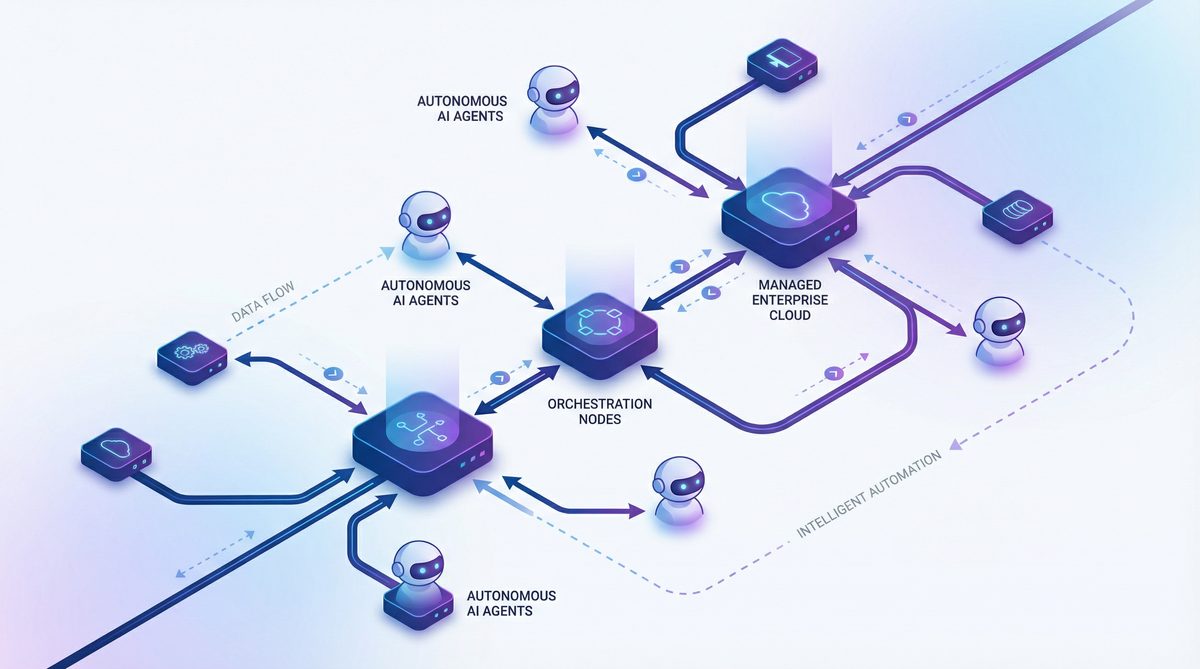
Understanding Claude Managed Agents: Architecture and Core Concepts
Before unpacking the operational and deployment specifics, it is essential to understand what Claude Managed Agents are, their underlying architecture, and how they fit into enterprise AI strategies. Claude Managed Agents are autonomous AI entities built atop Anthropic’s Claude language models, designed to execute complex, multi-step workflows that integrate external tools and APIs. Unlike simple chatbot instances, these agents function as intelligent digital workers, capable of making contextual decisions, managing stateful interactions, and interfacing with enterprise systems.
Architectural Overview
The Claude Managed Agents architecture can be conceptualized in layers:
- Core Language Model Layer: At the foundation lies the Claude language model, a large-scale transformer-based LLM fine-tuned for safety, reliability, and contextual understanding.
- Agent Orchestration Layer: This layer manages the lifecycle of agents, including instantiation, task assignment, context updates, and inter-agent communication.
- Tool Execution Layer: Interfaces with external APIs, databases, and enterprise tools to execute domain-specific actions.
- Memory and Context Management Layer: Maintains persistent and ephemeral memory across agent sessions, ensuring contextual continuity and historical awareness.
- Security and Sandboxing Layer: Enforces strict execution boundaries and access controls to safeguard enterprise environments.
This modular architecture enables enterprises to tailor deployments based on specific operational requirements while maintaining stringent security and compliance standards.
Core Capabilities
- Autonomy: Agents can autonomously decompose tasks, orchestrate sub-tasks, and interact with multiple tools without human intervention.
- Contextual Awareness: Leveraging advanced memory management, agents maintain rich session contexts for personalized and relevant outcomes.
- Tool Integration: Support for seamless integration with enterprise software stacks such as CRMs, ERPs, and custom APIs.
- Multi-agent Coordination: Agents can coordinate with peers to distribute workloads and collaborate on complex objectives.
- Security-first Design: Enterprise-grade sandboxing and monitoring ensure compliance with internal security policies.
Deployment Models
Claude Managed Agents can be deployed in various configurations tailored to enterprise needs:
- Cloud-hosted: Anthropic-managed cloud environments offering scalability and managed infrastructure.
- Hybrid Deployments: Combining on-premises data centers with cloud services to meet regulatory and latency requirements.
- On-premises: Full control deployment within enterprise environments, ideal for sensitive data domains.
The choice of deployment model directly impacts orchestration, security, and scaling considerations discussed in subsequent sections.
Agent Orchestration in Claude Managed Agents
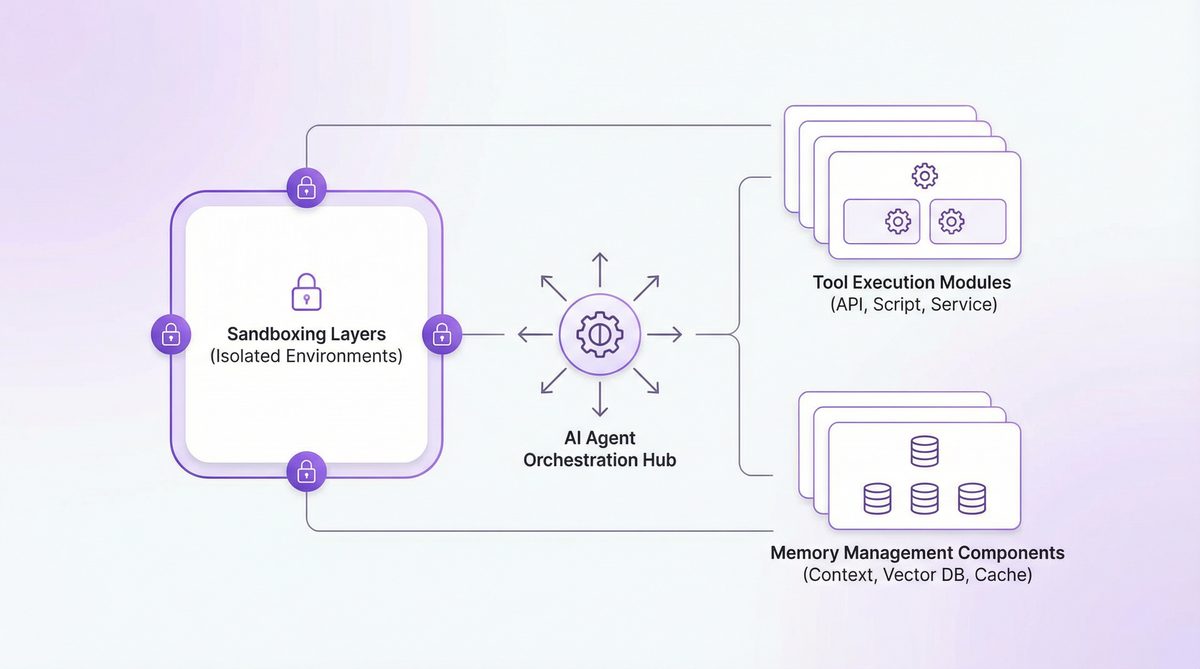
Agent orchestration is a central pillar in the effective deployment of Claude Managed Agents. It refers to the mechanisms and processes used to manage the lifecycle, execution flow, and coordination of multiple autonomous agents within an enterprise environment. This section explores orchestration in meticulous detail, highlighting architectural components, orchestration strategies, failure handling, and integration with enterprise workflows.
Orchestration Architecture
The orchestration system for Claude Managed Agents consists of several interconnected components:
- Agent Manager: A service responsible for spawning agent instances, tracking their status, and managing their lifecycle events.
- Task Scheduler: Allocates tasks to agents based on priority, resource availability, and agent specialization.
- Workflow Engine: Defines and controls multi-step workflows, enabling agents to execute sequential, parallel, or conditional tasks.
- Inter-Agent Communication Bus: Facilitates message passing and coordination between agents, enabling complex collaborative behaviors.
- Monitoring and Logging: Provides real-time observability into agent actions, performance metrics, and error states.
This architecture supports both synchronous and asynchronous task execution, allowing enterprises to tailor agent orchestration to workload characteristics.
Workflow Design and Execution
Enterprises typically structure agent workflows using a declarative approach, defining sequences of tasks, decision branches, and error recovery paths. For example, a customer support agent may:
- Receive a customer inquiry.
- Parse and classify the issue.
- Retrieve relevant knowledge base articles via API calls.
- Generate a customized response.
- Escalate to human support if confidence falls below a threshold.
The orchestration engine ensures each step executes reliably, with the ability to pause, retry, or reroute tasks as necessary. This is critical for maintaining enterprise service-level agreements (SLAs).
Multi-Agent Coordination
Complex enterprise scenarios often require multiple agents working in concert. For instance, in a supply chain management system, one agent may track inventory levels, another may forecast demand, and a third may place purchase orders. Claude Managed Agents support coordination mechanisms such as:
- Task Delegation: Agents can delegate subtasks to specialized peers.
- State Sharing: Shared memory or message passing enables agents to exchange contextual information.
- Conflict Resolution: Arbitration protocols prevent conflicting actions, ensuring consistency.
Advanced orchestration strategies involve dynamic agent creation and dissolution based on workload, enabling elastic resource usage.
Failure Handling and Resilience
Enterprises require high reliability from autonomous agents. The orchestration system incorporates robust failure handling approaches:
- Automatic Retries: Transient errors trigger automated retry mechanisms with exponential backoff.
- Fallback Procedures: Agents can revert to simpler heuristics or escalate to human operators upon persistent failures.
- Checkpointing: Workflow state is periodically persisted to enable recovery after crashes or restarts.
- Alerting and Incident Management: Integration with enterprise monitoring tools ensures timely notifications for critical failures.
These features ensure business continuity and maintain service quality even under adverse conditions.
Integration with Enterprise Systems
Orchestration frameworks must integrate seamlessly with existing enterprise infrastructure, including:
- Identity and Access Management (IAM): Ensuring agents operate with appropriate credentials and permissions.
- Enterprise Service Bus (ESB): Leveraging messaging middleware for event-driven workflows.
- Data Lakes and Warehouses: Accessing enterprise data stores for enriched agent context.
- DevOps Pipelines: Automating agent deployment, updates, and configuration through CI/CD tools.
This integration capability enables Claude Managed Agents to become first-class components within enterprise digital ecosystems.
Sandboxing and Secure Tool Execution
Security is paramount in enterprise AI deployments, particularly when autonomous agents execute external tools or access sensitive data. Anthropic’s Claude Managed Agents implement rigorous sandboxing and secure tool execution protocols to mitigate risks. This section provides an in-depth technical exploration of these security controls.
Sandboxing Architecture
Sandboxing isolates agent executions from critical infrastructure and data, preventing unauthorized access or lateral movement during runtime. Key sandboxing components include:
- Execution Environment Isolation: Agents run in containerized or VM-isolated environments with tightly bound resource constraints.
- Network Segmentation: Fine-grained network policies restrict agent communications to approved endpoints and services.
- Filesystem Restrictions: Agents have limited filesystem access, typically read-only or scoped to temporary storage.
- Capability Limiting: Linux capabilities and process privileges are minimized to mitigate escalation risks.
These controls collectively establish a zero-trust execution perimeter for each agent instance.
Tool Execution Paradigms
Claude Managed Agents interact with external tools and APIs through controlled execution pathways. There are two primary paradigms:
- Direct API Invocation: Agents invoke external REST/GraphQL APIs through authenticated and encrypted channels, with all calls logged and monitored.
- Command Execution via Adapters: For tools requiring command-line interaction or RPC, agents communicate with intermediary adapters that enforce validation and rate limiting.
Before execution, the agent’s internal reasoning validates the tool’s applicability to the current task, preventing arbitrary or unsafe commands. Additionally, tool inputs and outputs are sanitized to prevent injection or data leakage attacks.
Security Protocols and Compliance
Anthropic’s Claude Managed Agents incorporate comprehensive security protocols aligned with enterprise compliance frameworks such as SOC 2, ISO 27001, and GDPR:
- Authentication and Authorization: Agents authenticate using OAuth2 or enterprise SSO mechanisms, with role-based access control (RBAC) governing tool usage.
- Encryption: All data in transit and at rest is encrypted using AES-256 and TLS 1.3 standards.
- Audit Logging: Immutable logs record all agent actions, tool invocations, and data access for forensic analysis.
- Data Minimization: Agents are designed to minimize data retention, adhering to data privacy regulations.
- Vulnerability Management: Continuous security scanning and patching workflows address emerging threats.
These protocols ensure that enterprise deployments maintain trust and meet regulatory obligations.
Runtime Monitoring and Anomaly Detection
To proactively detect and mitigate security incidents, Claude Managed Agents incorporate runtime monitoring features:
- Behavioral Analytics: Machine learning models analyze agent behavior patterns to identify anomalies or potential compromises.
- Resource Usage Monitoring: Unusual spikes in CPU, memory, or network utilization trigger alerts.
- Execution Traceability: Detailed tracing of agent decision paths facilitates incident investigation.
Enterprises can integrate these monitoring streams into their SIEM (Security Information and Event Management) systems for centralized oversight.
Memory Management and Context Handling
🕐 Instant∞ Unlimited🎁 Free
Effective memory and context management are essential for Claude Managed Agents to maintain coherent and relevant interactions over time. This section provides a detailed examination of memory layers, persistence strategies, and optimization techniques that ensure agents operate with high contextual fidelity.
Memory Architecture
Claude Managed Agents utilize a multi-tiered memory architecture:
- Short-Term Memory (STM): Ephemeral memory stores immediate conversational context and recent agent actions, typically within a single session.
- Long-Term Memory (LTM): Persistent memory that archives structured knowledge, past interactions, and domain-specific information across sessions.
- Working Memory: A dynamic buffer that agents use during task execution to hold intermediate results and transient data.
This separation allows agents to balance responsiveness with contextual depth while controlling memory footprint.
Memory Persistence and Storage
Long-term memory is stored in enterprise-compatible databases optimized for fast retrieval and secure storage. Common storage backends include:
- Vector Databases: For semantic search and similarity matching of text embeddings generated by Claude.
- Relational Databases: For structured data such as user profiles, transaction logs, and workflow states.
- Document Stores: For unstructured or semi-structured data like emails, documents, and chat transcripts.
Data schemas are designed to support efficient querying, indexing, and versioning of agent memory artifacts.
Context Window Management
Given the size limitations of language model input contexts, Claude Managed Agents implement sophisticated context window management techniques:
- Relevance-Based Summarization: Older or less relevant memory entries are compressed or summarized to save space.
- Dynamic Context Pruning: Non-essential information is pruned based on task priorities and agent goals.
- Hierarchical Context Structuring: Context is organized hierarchically, enabling agents to retrieve high-level overviews or detailed records as needed.
These techniques allow agents to operate effectively even with large historical contexts.
Memory Security and Privacy
Memory management is tightly integrated with security protocols to ensure sensitive data is protected:
- Access Controls: Memory access is governed by fine-grained permissions tied to agent roles and tasks.
- Data Encryption: Persistent memory is encrypted both at rest and in transit.
- Data Retention Policies: Enterprises can configure retention and deletion policies to comply with privacy regulations.
- Redaction and Anonymization: Sensitive information is automatically redacted or anonymized within agent memory where applicable.
This ensures that agents do not inadvertently expose or misuse private data.
Scaling Claude Managed Agents Across Enterprise Departments
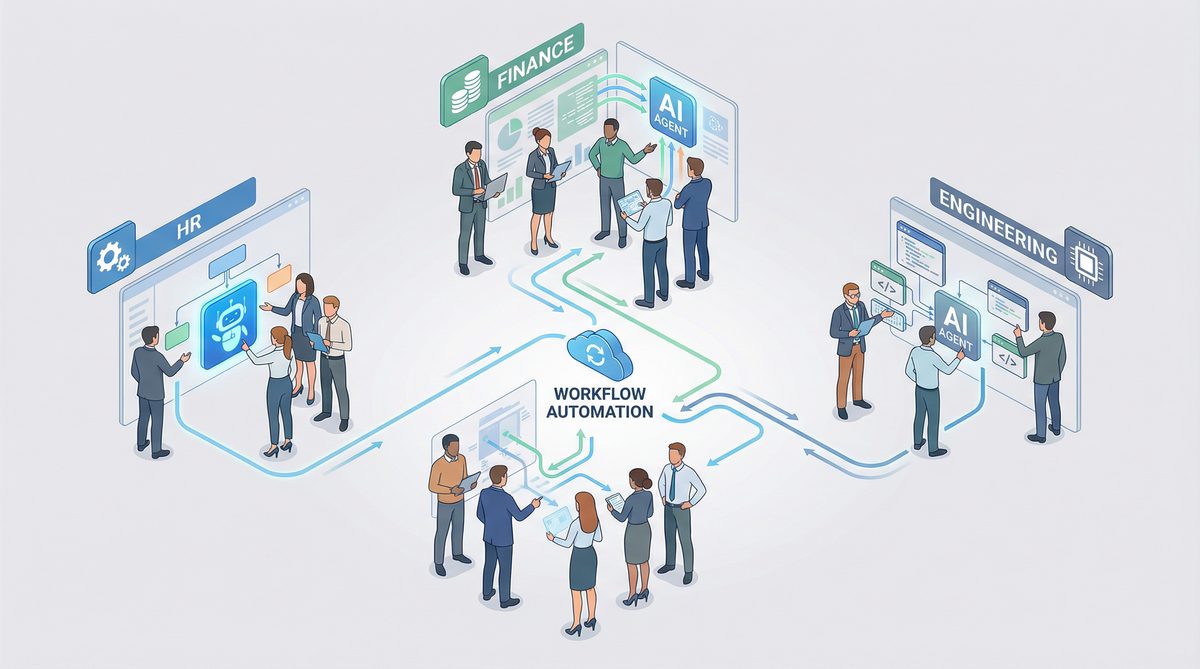
Enterprises often deploy Claude Managed Agents across multiple departments such as customer support, finance, HR, and operations. Scaling these agents while maintaining efficiency, security, and governance is a complex challenge. This section analyzes strategies for departmental scaling and cross-functional collaboration.
Departmental Deployment Models
Scaling can be approached through several deployment models:
- Centralized Agent Hub: A centralized orchestration platform manages agents deployed across departments, allowing shared resources and unified governance.
- Federated Deployment: Departments deploy and manage their own agents independently, while central IT enforces security and compliance standards.
- Hybrid Approach: Core agents and infrastructure are centrally managed, with department-specific customization layers.
The choice depends on organizational structure, compliance requirements, and operational priorities.
Resource Allocation and Load Balancing
To handle varying workloads across departments, enterprises implement resource allocation strategies:
- Dynamic Scaling: Cloud-native autoscaling adjusts compute and memory resources based on real-time demand.
- Priority Queuing: Critical departmental workflows receive prioritized scheduling.
- Geographic Distribution: Agents are deployed in data centers close to user bases to reduce latency.
Load balancing mechanisms distribute task loads evenly to prevent bottlenecks and ensure consistent performance.
Governance and Compliance
Multi-departmental deployments necessitate rigorous governance frameworks:
- Policy Enforcement: Centralized policies define acceptable use, data handling, and audit requirements.
- Role-Based Access: Department-specific permissions control agent capabilities and data access.
- Change Management: Formal processes govern updates and configuration changes to prevent service disruptions.
- Compliance Audits: Regular reviews verify adherence to internal and external regulatory mandates.
These governance layers ensure that departmental autonomy does not compromise enterprise security or compliance.
Cross-Department Collaboration
Claude Managed Agents can facilitate collaboration between departments by sharing contextual knowledge and workflows:
- Shared Memory Repositories: Common knowledge bases reduce duplication and provide unified information access.
- Cross-Agent Messaging: Agents can send requests or updates to agents in other departments, streamlining business processes.
- Unified Reporting Dashboards: Aggregated metrics enable management to monitor AI-driven workflows enterprise-wide.
This cross-functional integration enhances organizational agility and innovation.
Return on Investment (ROI) Analysis for Enterprises Deploying Claude Managed Agents
The adoption of Claude Managed Agents represents a significant technological investment. Quantifying the return on investment is critical for enterprise decision-makers. This section presents a detailed framework for assessing ROI, including cost factors, productivity gains, and strategic benefits.
Cost Components
Enterprise deployments involve various cost components:
- Licensing and Subscription: Fees paid to Anthropic for access to Claude Managed Agents and related services.
- Infrastructure: Costs for cloud or on-premises compute, storage, and networking resources.
- Development and Integration: Engineering effort required to customize, integrate, and maintain agents.
- Security and Compliance: Investment in security tooling, audits, and governance processes.
- Training and Change Management: Expenses related to end-user training and organizational adoption.
Accurately forecasting these costs enables realistic budgeting.
Quantifying Productivity Gains
Claude Managed Agents can drive productivity improvements through:
- Automation of Routine Tasks: Reduction in manual labor for repetitive workflows such as data entry, triage, and reporting.
- Improved Response Times: Faster handling of customer inquiries or internal requests enhances operational efficiency.
- Enhanced Accuracy: Reduction in human errors through AI-augmented decision making.
- 24/7 Availability: Agents provide continuous services without downtime.
- Scalability: Ability to handle peak workloads without proportional increases in staffing.
These gains translate into measurable cost savings and revenue uplift.
Strategic Benefits
Beyond direct financial metrics, Claude Managed Agents offer strategic advantages:
- Innovation Enablement: Accelerate digital transformation initiatives by embedding advanced AI capabilities.
- Competitive Differentiation: Deliver superior customer experiences and operational agility.
- Risk Mitigation: Enhance compliance and reduce exposure through automated monitoring and controls.
- Data-Driven Insights: Leverage agent interactions to generate actionable business intelligence.
These intangible benefits contribute to long-term enterprise value.
ROI Calculation Methodology
A robust ROI analysis involves:
- Baseline Establishment: Document current operational costs and performance metrics.
- Benefit Estimation: Quantify expected improvements in efficiency, revenue, and risk reduction.
- Cost Aggregation: Sum total implementation and operational expenses over the analysis period.
- Net Present Value (NPV): Discount future benefits and costs to present value.
- Payback Period: Determine the timeframe to recoup initial investments.
Scenario modeling with sensitivity analysis helps to account for uncertainties in projections.
Implementation Best Practices
Successful enterprise deployment of Claude Managed Agents requires adherence to best practices:
- Incremental Rollout: Begin with pilot projects in low-risk domains, iterating rapidly based on feedback.
- Cross-Functional Teams: Involve stakeholders from IT, security, compliance, and business units throughout the deployment lifecycle.
- Continuous Monitoring: Establish KPIs and monitoring dashboards to track agent performance and user satisfaction.
- Security by Design: Embed security considerations in all phases, from development to operations.
- User Training: Provide comprehensive training to end-users and support staff to maximize adoption.
- Documentation and Knowledge Sharing: Maintain detailed technical and operational documentation to support maintenance and scaling.
These practices reduce risks and enhance the likelihood of sustained success.
Future Outlook and Innovations
Anthropic continues to evolve Claude Managed Agents with innovations in model capabilities, orchestration frameworks, and integration tooling. Expected advancements include:
- Enhanced Multi-Agent Collaboration: More sophisticated protocols for agent teamwork and negotiation.
- Adaptive Memory Systems: Contextual memory that dynamically adjusts granularity and retention based on task demands.
- Explainability Features: Improved transparency into agent decision processes to foster trust.
- Domain-Specific Agents: Pre-trained agents optimized for vertical industries such as healthcare, finance, and manufacturing.
- Edge Deployments: Support for deploying agents closer to data sources to reduce latency and improve privacy.
Staying abreast of these developments will enable enterprises to leverage Claude Managed Agents to their fullest potential.
Conclusion
Anthropic’s Claude Managed Agents offer a powerful, flexible, and secure framework for enterprises seeking to harness autonomous AI agents. Through detailed orchestration, robust sandboxing, sophisticated memory management, and scalable deployment models, enterprises can unlock significant operational efficiencies and strategic benefits. Comprehensive ROI analysis further supports informed investment decisions. By following the deep technical insights and best practices outlined in this guide, technology leaders and developers can architect successful Claude Managed Agent deployments that drive innovation and competitive advantage.
For further exploration of related AI orchestration frameworks and memory optimization techniques, see
For a deeper understanding of how these concepts apply in practice, our comprehensive analysis in Building Company-Wide AI Agents with ChatGPT Enterprise and Codex in 2026 provides detailed insights and actionable strategies that complement the topics discussed in this article.
. To understand detailed security compliance mappings for AI systems, refer toTeams looking to expand their knowledge in this area will find valuable guidance in Anthropic’s Conway: The Always-On AI Agent That Could Replace Your Digital Workforce, which covers the technical foundations and practical applications relevant to today’s AI-driven workflows.
. For advanced strategies in multi-agent collaboration and enterprise scaling, consultTo explore the broader implications of these developments, our in-depth coverage in Scaling AI Across 100+ Teams: CyberAgent’s Success with ChatGPT Enterprise and Codex examines the key considerations and implementation patterns that organizations should evaluate.
Advanced Agent Patterns: Multi-Agent Collaboration and Hierarchical Orchestration
As enterprise applications grow in complexity, single-agent deployments often become insufficient to handle intricate workflows, large datasets, or parallel task execution. Advanced agent patterns such as multi-agent collaboration and hierarchical orchestration enable scalable, modular, and resilient AI systems by distributing responsibilities across multiple Claude Managed Agents. These architectural designs improve fault tolerance, enable specialization, and enhance overall system efficiency.
One foundational pattern is the supervisor-worker model, wherein a supervisory agent delegates discrete subtasks to multiple worker agents. The supervisor is responsible for task decomposition, result aggregation, and error handling, while workers focus on specialized processing such as data extraction, natural language understanding, or domain-specific reasoning. This separation of concerns promotes parallelism and domain expertise encapsulation.
In a typical implementation, the supervisor agent receives a high-level query or objective. It then identifies relevant subtasks and dispatches them as requests to worker agents, each configured with tailored prompts, context, or knowledge bases. Once the workers respond, the supervisor performs validation, merges partial outputs, and synthesizes a coherent final response. This modular approach allows enterprises to incrementally scale capabilities by adding or updating workers without disrupting the overall workflow.
Another powerful architectural paradigm is peer-to-peer collaboration among agents. Here, multiple agents operate at the same hierarchical level, communicating asynchronously to negotiate solutions, share knowledge, or resolve conflicts. Unlike the supervisor-worker model’s clear control flow, peer collaboration relies on coordination protocols, consensus mechanisms, or message passing. This pattern is especially useful for distributed problem solving, where agents represent different domain experts or geographic regions.
For instance, a network of agents in a global financial institution might exchange risk assessments or compliance updates, each contributing localized insights. Implementing peer collaboration involves designing communication channels, message schemas, and conflict resolution strategies to maintain consistency and responsiveness.
Extending these models, hierarchical delegation chains organize agents into multiple tiers, combining supervisory and peer collaboration patterns. At the top level, a master agent orchestrates high-level objectives, delegating to mid-level supervisors who manage clusters of worker agents. This hierarchy supports complex workflows with nested dependencies and varying granularity.
Architecturally, this can be visualized as a tree structure:
- Root Master Agent: Oversees overall goals, assigns major tasks to supervisors.
- Supervisor Agents: Manage workers, perform task decomposition, and intermediate aggregation.
- Worker Agents: Execute specialized subtasks with domain-specific prompts or data.
Such a hierarchical setup enables fault isolation (failures in one subtree do not cascade), load balancing, and flexible scaling. It also facilitates role-based access and logging at each tier, improving governance.
Practical Implementation Example
Consider an enterprise customer support system powered by Claude Managed Agents. The master agent receives incoming customer queries and categorizes them by complexity and domain. Simple queries are routed directly to worker agents specialized in FAQs or billing. Complex issues are escalated to supervisor agents that coordinate multiple workers handling diagnostics, policy lookup, and resolution drafting.
Messages are exchanged via asynchronous APIs with standardized JSON schemas. Each agent maintains contextual state to ensure continuity across interactions. Monitoring dashboards track task progress and agent health metrics, enabling dynamic rerouting in case of failures or overload.
This modular multi-agent system improves response times, reduces manual intervention, and enables continuous improvement through targeted agent retraining.
Security and Compliance: Governing AI Agents in Regulated Industries
Deploying Claude Managed Agents within heavily regulated sectors such as healthcare, finance, and government requires stringent adherence to security and compliance mandates. These industries are governed by frameworks like HIPAA (Health Insurance Portability and Accountability Act), SOX (Sarbanes-Oxley Act), FedRAMP (Federal Risk and Authorization Management Program), and GDPR (General Data Protection Regulation). Failure to comply can result in significant legal and financial penalties, as well as reputational damage.
To ensure compliance, enterprises must implement comprehensive controls across data handling, access management, auditability, and infrastructure.
Audit Logging and Transparency
Audit logs are a critical component for regulatory oversight. Claude Managed Agents should be configured to record detailed, immutable logs of all interactions, including input prompts, agent responses, API calls, and system events. These logs must include timestamps, user identifiers, and agent versions to support traceability and forensic analysis.
Logs should be stored securely with encryption at rest and in transit, and retained according to relevant regulatory retention periods. Access to audit logs must be strictly controlled and monitored to prevent tampering or unauthorized disclosure.
Data Residency and Sovereignty
Regulated industries often require that sensitive data remain within specific geographic boundaries or data centers. Claude Managed Agents must be deployed in cloud regions or on-premises environments that comply with these data residency requirements. Enterprises leveraging Claude’s platform can select deployment zones that align with jurisdictional mandates.
Additionally, data minimization principles should be enforced. Agents should be designed to process only the necessary data, avoid storing personal identifiers unless essential, and support data anonymization or pseudonymization where feasible.
Access Controls and Identity Management
Robust access controls are mandatory to limit agent and user privileges. Role-based access control (RBAC) models should be implemented to segregate duties, ensuring that agents only access data and functions required for their role. Multi-factor authentication (MFA), single sign-on (SSO), and integration with enterprise identity providers (e.g., LDAP, SAML) enhance security.
Furthermore, secrets management for API keys, tokens, and credentials must follow best practices, including rotation policies, secure vault storage, and audit trails.
Compliance with Industry-Specific Frameworks
- HIPAA: Deploy agents within HIPAA-compliant environments. Implement Business Associate Agreements (BAAs) with service providers. Ensure Protected Health Information (PHI) is encrypted and access-controlled.
- SOX: Establish controls for financial data integrity, including segregation of duties, change management for agent logic, and audit trails for financial transactions processed or analyzed by agents.
- FedRAMP: Utilize cloud environments authorized under FedRAMP with required security controls. Incorporate continuous monitoring and incident response processes.
- GDPR: Ensure agents support data subject rights such as access, correction, and deletion. Conduct Data Protection Impact Assessments (DPIAs) for agent deployments handling personal data.
By integrating Claude Managed Agents within a broader governance framework encompassing policies, training, and incident management, enterprises can safely harness AI capabilities while meeting regulatory expectations.
Cost Optimization and Performance Benchmarking
Scaling Claude Managed Agents across enterprise workloads can lead to significant API usage costs and infrastructure demands. Balancing performance with cost efficiency requires deliberate strategies for usage optimization, caching, and monitoring.
Managing API Costs at Scale
Enterprises can mitigate costs by implementing rate limiting, batching requests, and prioritizing high-value interactions. For example, grouping multiple related queries into a single API call reduces overhead. Additionally, employing usage quotas and alerts prevents unexpected spikes that inflate costs.
Careful prompt engineering also plays a vital role. Crafting concise, information-dense prompts reduces token consumption per API call. Avoiding redundant context and leveraging agent memory effectively minimize repeated data transmission.
Caching Strategies
Caching frequent queries and agent responses can dramatically reduce API calls. Implementing a multi-layer cache architecture—comprising in-memory caches for ultra-fast retrieval and persistent caches for less latency-sensitive data—improves responsiveness and cost control.
Cache invalidation policies should be designed based on data freshness requirements. For example, static reference data can be cached long-term, while dynamic or personalized content requires shorter TTLs (time-to-live) or conditional refresh triggers.
Token Optimization Techniques
Tokens directly impact API pricing, as costs are generally proportional to token count. Approaches to optimize token usage include:
- Using abbreviated but unambiguous language in prompts.
- Employing context windows efficiently by trimming irrelevant prior conversation history.
- Leveraging compressed representations such as embeddings for similarity search instead of full-text prompts.
- Segmenting large inputs and processing incrementally when full context is unnecessary.
Performance Benchmarking of Agent Configurations
Benchmarking different Claude Managed Agent configurations is essential to identify optimal trade-offs between latency, accuracy, and cost. Key performance indicators (KPIs) include response time, token consumption, success rate, and resource utilization.
For example, experiments may compare:
- Single-agent versus multi-agent orchestration models to evaluate throughput and fault tolerance.
- Different prompt templates and model sizes to balance cost and answer quality.
- Cache hit rates and their effect on latency reduction.
Benchmark results should inform iterative improvements in architecture and prompt design. Automated load testing and monitoring tools can simulate production workloads, detect bottlenecks, and validate scaling strategies.
By combining rigorous cost management with continuous performance evaluation, enterprises ensure sustainable, high-quality AI agent deployments that maximize ROI.
🕐 Instant∞ Unlimited🎁 Free
Frequently Asked Questions
What are Claude Managed Agents used for in enterprises?
Claude Managed Agents are used to automate complex workflows within enterprise environments. They integrate with external tools and APIs, making contextual decisions and managing stateful interactions to enhance operational efficiency.
How do Claude Managed Agents differ from chatbots?
Unlike chatbots, Claude Managed Agents are designed to function as intelligent digital workers. They execute complex, multi-step workflows, manage stateful interactions, and interface with enterprise systems, providing a more robust and context-aware solution.
What is the core architecture of Claude Managed Agents?
The architecture consists of several layers: Core Language Model, Agent Orchestration, Tool Execution, Memory and Context Management, and Security and Sandboxing. These layers work together to ensure reliable and secure agent operations.
How do Claude Managed Agents handle security?
Security is managed through a dedicated layer that enforces execution boundaries and access controls. This ensures that agents operate within strict security protocols, safeguarding enterprise environments from unauthorized access.
What deployment strategies are recommended for Claude Managed Agents?
Deployment strategies include understanding the architecture, managing agent orchestration, and ensuring proper security protocols. Multi-department scaling and ROI analysis are also crucial for successful implementation.
Can Claude Managed Agents scale across multiple departments?
Yes, Claude Managed Agents are designed to scale across multiple departments, providing a consistent and efficient solution for enterprise-wide AI deployment. This scalability is supported by their robust architecture and orchestration capabilities.
Get Free Access to 40,000+ AI Prompts
Join 40,000+ AI professionals. Get instant access to our curated Notion Prompt Library with prompts for ChatGPT, Claude, Codex, Gemini, and more — completely free.
Get Free Access Now →No spam. Instant access. Unsubscribe anytime.
