
⚡ The Brief
- What it is: AI agents are autonomous software entities used in enterprises to automate workflows, optimize decisions, and enhance customer experiences.
- Who it’s for: This article is ideal for AI practitioners, software engineers, and enterprise architects interested in deploying AI agents in production.
- Key takeaways: Learn about workflow automation strategies, ROI metrics, and architecture patterns from real-world AI agent deployments.
- Pricing/Cost: Consider costs related to scalability, interoperability, and governance when deploying AI agents in enterprise environments.
- Bottom line: AI agents are crucial for modern enterprises, offering scalable solutions and measurable improvements in operational efficiency.
✓ Instant access✓ No spam✓ Unsubscribe anytime
Case Study Analysis: Deployment of AI Agents in Enterprise Production Environments
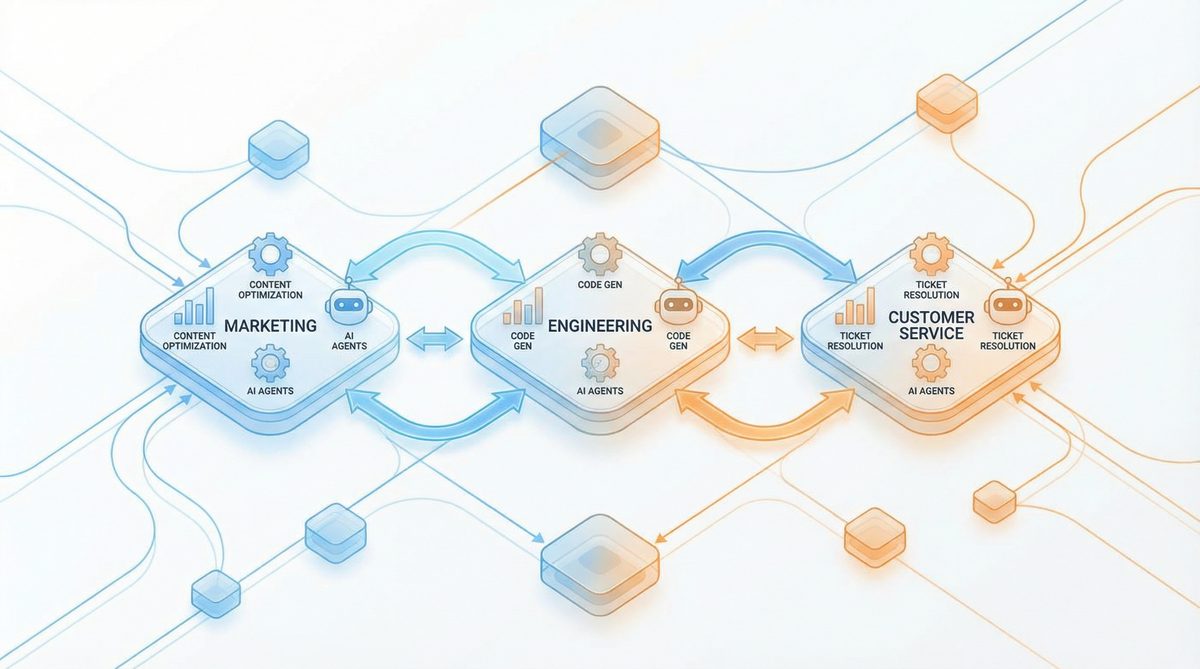
Artificial Intelligence (AI) agents have transitioned from experimental concepts to critical components within enterprise IT infrastructures. Organizations across verticals are harnessing AI agents to automate complex workflows, optimize decision-making, and deliver enhanced customer experiences at scale. This case study provides a comprehensive, in-depth analysis of how enterprise teams are deploying AI agents in production environments today. We explore specific implementations in marketing, engineering, and customer service domains, delving deeply into workflow automation strategies, measurable ROI metrics, architecture patterns, and the range of challenges overcome during these deployments.
Through a granular examination of real-world cases, technical architectures, and performance outcomes, this analysis serves as an authoritative resource for AI practitioners, software engineers, and enterprise architects aiming to understand the practical integration of AI agents in production. The detailed insights presented here reflect the state-of-the-art approaches and lessons learned from early adopters and industry leaders.
Introduction to AI Agents in Enterprise Production
AI agents refer to autonomous or semi-autonomous software entities that perceive their environment, process information, and perform actions towards defined goals. Unlike traditional rule-based automation, AI agents leverage machine learning, natural language processing, and cognitive reasoning to handle unstructured inputs and adapt to new situations.
In enterprises, AI agents are deployed to perform tasks ranging from data analysis and anomaly detection to interactive customer engagement and creative content generation. The production deployment of AI agents involves integrating them into business workflows, connecting them with existing IT systems, and ensuring they meet stringent reliability, security, and compliance standards.
To contextualize these deployments, consider the following critical factors influencing enterprise adoption:
- Scalability: AI agents must operate efficiently under high transactional volumes and in distributed environments.
- Interoperability: Seamless integration with legacy systems, APIs, and data sources is essential.
- Governance: Enterprises require auditability, explainability, and control mechanisms to manage AI-driven decisions.
- Performance: Measurable improvements in KPIs such as conversion rates, defect detection, or customer satisfaction are critical for sustained investment.
This foundational understanding sets the stage for exploring detailed case implementations across pivotal enterprise functions.
AI Agents in Marketing: Enhancing Campaigns and Personalization
Get Free Access to 40,000+ AI Prompts
Join 40,000+ AI professionals. Get instant access to our curated Notion Prompt Library with prompts for ChatGPT, Claude, Codex, Gemini, and more — completely free.
Get Free Access Now →No spam. Instant access. Unsubscribe anytime.
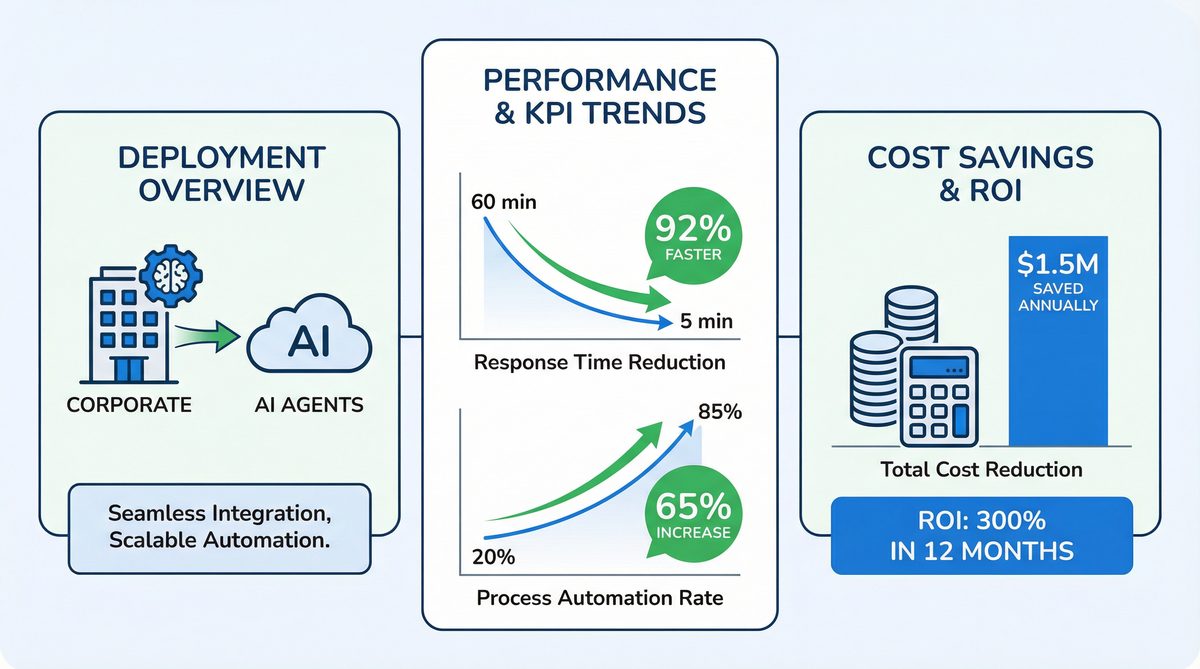
Marketing departments are among the earliest adopters of AI agents, leveraging their capabilities to automate customer segmentation, personalize messaging, optimize campaign timing, and predict customer behavior. The following sections illustrate how AI agents transform marketing workflows with technical depth and quantitative outcomes.
Implementation Overview
Leading enterprises deploy AI agents within their marketing technology stack to automate and optimize multi-channel campaigns. For example, a multinational retailer integrated AI agents into their Customer Data Platform (CDP) to analyze behavioral data and dynamically generate personalized email content. These AI agents operate as microservices, continuously ingesting data streams from web analytics, CRM systems, and social media platforms.
The agents utilize deep learning models trained on historical campaign performance data to predict customer responsiveness. Real-time feedback loops enable the AI to adjust messaging strategies based on engagement metrics such as open rates and click-through ratios. This closed-loop system represents an advanced implementation of reinforcement learning applied to marketing optimization.
Workflow Automation Details
- Data Integration: AI agents extract and consolidate customer profiles from disparate sources using ETL pipelines and APIs.
- Segmentation: Clustering algorithms segment customers by purchasing behavior, demographics, and engagement history.
- Content Generation: Natural Language Generation (NLG) models create personalized email copy and social media posts.
- Campaign Orchestration: AI agents schedule and dispatch campaigns, dynamically adjusting send times based on optimal engagement windows.
- Performance Monitoring: Real-time analytics dashboards collect key metrics, feeding back into the AI models for continuous improvement.
The integration of AI agents into marketing workflows significantly reduces manual intervention, accelerates campaign cycles, and tailors customer experiences at scale.
ROI and Impact Metrics
Quantitative analyses from multiple enterprises demonstrate the financial and operational benefits of deploying AI agents in marketing:
- Conversion Rate Improvement: A leading e-commerce platform reported a 25% uplift in email-driven conversions after deploying AI-powered personalization agents.
- Cost Reduction: Automated content generation and campaign management reduced manual labor costs by 40%, freeing marketing staff to focus on strategic initiatives.
- Customer Retention: AI-driven segmentation enabled targeted re-engagement campaigns, improving customer retention rates by 15% within six months.
- Campaign Frequency: AI agents optimized email send frequency, minimizing subscriber fatigue and lowering unsubscribe rates by 10%.
These measured outcomes validate the efficacy of AI agents in generating tangible business value in marketing functions.
Technical Architecture and Integration Patterns
The typical architecture for AI agent deployment in marketing comprises several layers:
- Data Layer: Centralized data warehouses or lakes store normalized customer data, accessible via APIs or query engines.
- AI Model Layer: Microservices host trained models for segmentation, prediction, and content generation, often containerized using Docker and orchestrated via Kubernetes for scalability.
- Orchestration Layer: Workflow engines (e.g., Apache Airflow, AWS Step Functions) coordinate data ingestion, model inference, and campaign execution steps.
- Presentation Layer: Dashboards and reporting tools visualize campaign performance, integrated with business intelligence platforms.
- Security and Compliance: Role-based access controls, encryption-at-rest and in-transit, and audit logging ensure data governance compliance.
Real-time messaging queues like Apache Kafka or AWS Kinesis facilitate event-driven interactions between components, enabling AI agents to react promptly to customer activity signals.
Challenges and Solutions
Despite notable successes, enterprises face several challenges when deploying AI agents in marketing:
- Data Quality and Silos: Inconsistent or incomplete customer data required extensive data cleansing and the establishment of unified data governance frameworks.
- Model Drift: Changing customer behavior led to model degradation; continuous retraining pipelines and monitoring systems were implemented to maintain model accuracy.
- Explainability: Marketing teams demanded transparent AI decisions; techniques such as SHAP (SHapley Additive exPlanations) were integrated to provide interpretable model outputs.
- Privacy Regulations: Compliance with GDPR and CCPA necessitated anonymization and explicit user consent workflows embedded into AI agent processing.
Addressing these challenges required multidisciplinary collaboration between data scientists, engineers, legal teams, and marketers to create robust, compliant AI deployments.
AI Agents in Engineering: Automating Development and Quality Assurance
To explore the broader implications of these developments, our in-depth coverage in Scaling AI Across 100+ Teams: CyberAgent’s Success with ChatGPT Enterprise and Codex examines the key considerations and implementation patterns that organizations should evaluate.
Engineering teams are increasingly utilizing AI agents to streamline software development, automate testing, identify defects, and enhance code quality. This section analyzes production use cases illustrating how AI agents augment engineering workflows.
Use Case: AI-Powered Code Review and Defect Detection
A major fintech company deployed AI agents as part of their CI/CD pipeline to automatically review code commits, detect potential bugs, security vulnerabilities, and style violations. These AI agents operate as serverless functions that trigger on pull request events.
The core AI models include transformer-based code understanding architectures, such as CodeBERT and Graph Neural Networks (GNNs) trained on proprietary code repositories and public datasets. The agents perform static and semantic analysis, flagging risky code segments and suggesting fixes.
Workflow Automation in Software Engineering
- Commit Analysis: AI agents analyze diffs and code context upon each commit or pull request.
- Automated Testing: Agents generate tailored unit and integration test cases using reinforcement learning to maximize coverage.
- Performance Profiling: AI-driven profiling detects performance regressions and recommends optimizations.
- Deployment Recommendations: Agents assess risk scores and provide approval or rollback suggestions to DevOps teams.
This automation reduces the manual review burden, accelerates release cycles, and enhances codebase reliability.
ROI Metrics and Performance Outcomes
- Defect Detection Rate: The fintech company observed a 30% increase in early defect detection, significantly lowering production incidents.
- Release Velocity: Automated code reviews and test generation reduced time-to-release by 20%, enabling more frequent feature deployments.
- Developer Productivity: Developers reported a 25% reduction in time spent on manual code reviews, allowing focus on complex problem solving.
- Security Posture: Early identification of vulnerabilities decreased remediation costs by 40%.
Technical Architecture and Integration Patterns
The architecture supporting AI agents in engineering includes the following components:
- Event-Driven Triggers: Integration with version control systems (e.g., GitHub, GitLab) to trigger AI agents on code events.
- Model Hosting and Inference: AI models deployed on scalable inference servers or serverless platforms (e.g., AWS Lambda, Google Cloud Functions).
- Feedback Loop: Developers provide feedback on AI suggestions, creating labeled data for continuous model improvement.
- Security and Compliance: Sandboxed execution environments ensure no unauthorized access to code repositories.
These components integrate tightly with CI/CD tools such as Jenkins, CircleCI, and Azure DevOps to provide seamless automation.
Challenges and Mitigation Strategies
- False Positives: Initial AI models generated excessive false alarms, causing developer fatigue. Iterative tuning and threshold adjustments improved precision.
- Model Training Data: Limited labeled defect datasets required synthetic data generation and transfer learning techniques to bootstrap model accuracy.
- Integration Complexity: Ensuring compatibility with heterogeneous development environments mandated modular, API-driven AI components.
- Security Concerns: Confidentiality of proprietary code was paramount; strict access controls and encrypted pipelines were implemented.
Addressing these challenges involved close collaboration between AI researchers, software engineers, and security teams.
AI Agents in Customer Service: Revolutionizing Interactions and Support
Get Free Access to 40,000+ AI Prompts
Join 40,000+ AI professionals. Get instant access to our curated Notion Prompt Library with prompts for ChatGPT, Claude, Codex, Gemini, and more — completely free.
Get Free Access Now →No spam. Instant access. Unsubscribe anytime.
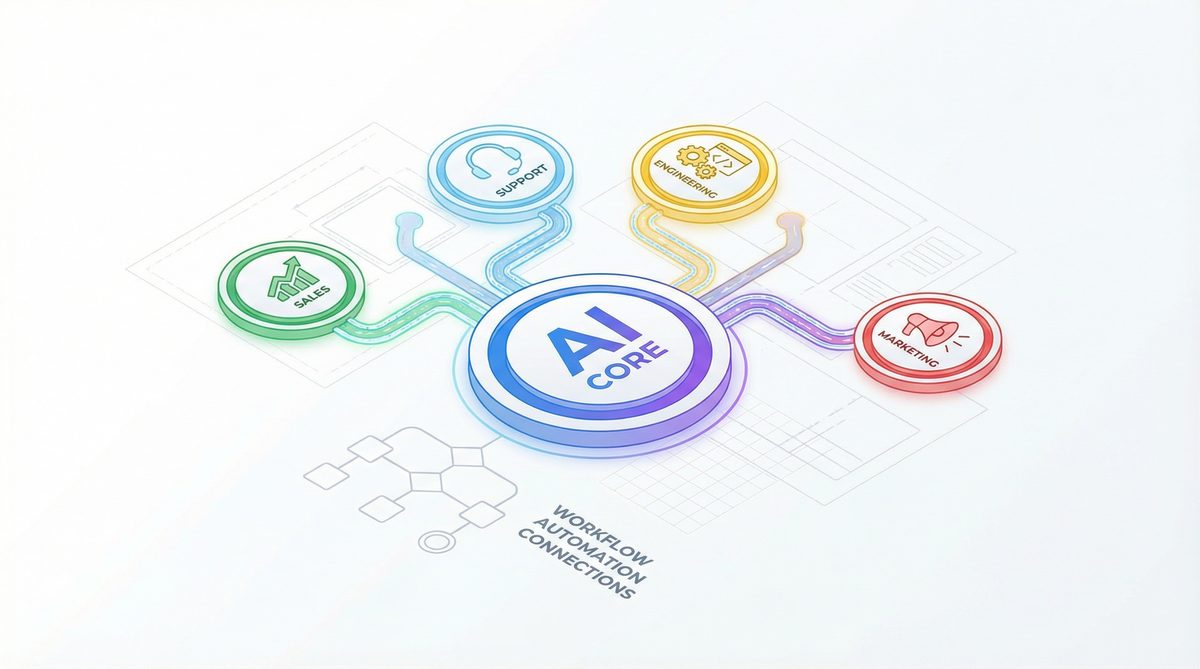
Customer service departments benefit from AI agents through automated inquiry handling, sentiment analysis, and proactive issue resolution. This section explores how enterprises deploy AI agents to elevate customer experience and operational efficiency.
Deployment Scenarios
Major telecom providers have integrated AI conversational agents—chatbots and voicebots—into their customer support platforms. These AI agents utilize advanced Natural Language Understanding (NLU) and Dialog Management frameworks to comprehend and respond to customer queries 24/7.
Beyond basic FAQs, AI agents handle complex multi-turn conversations, escalate unresolved issues to human agents, and personalize responses based on customer profile data. Sentiment analysis modules detect customer emotions in real-time, enabling adaptive responses to defuse dissatisfaction.
Workflow Automation in Customer Service
- Intake and Classification: AI agents classify incoming tickets by intent and urgency using supervised learning classifiers.
- Self-Service Resolution: Agents resolve common issues autonomously, such as password resets or billing inquiries.
- Escalation Management: AI agents route complex queries to specialized human agents with relevant expertise.
- Continuous Learning: Interaction transcripts are analyzed to update knowledge bases and improve agent responses.
This automation drastically reduces customer wait times and operational costs while maintaining high service quality.
ROI and Business Impact
- First Contact Resolution (FCR): AI agents increased FCR rates by 35%, reducing repeat contacts.
- Customer Satisfaction (CSAT): Post-deployment surveys indicated a 20% uplift in CSAT scores due to faster and more accurate responses.
- Cost Savings: Automation of routine inquiries cut operational expenses by 30%, enabling support staff redeployment to value-added roles.
- Scalability: AI agents handled peak loads during product launches and outages without service degradation.
Technical Architecture and Integration
The AI customer service architecture typically includes:
- Conversational AI Platform: Frameworks such as Google Dialogflow, Microsoft Bot Framework, or open-source Rasa power NLU and dialog management.
- Omnichannel Integration: AI agents connect across channels including web chat, SMS, voice IVR, and social media messaging.
- CRM and Knowledge Base Integration: Real-time access to customer history and product documentation enables contextualized interactions.
- Analytics and Monitoring: Dashboards capture agent performance metrics, customer sentiment trends, and escalation rates.
- Security and Privacy: Data encryption, PII masking, and compliance with industry standards (e.g., HIPAA for healthcare) are enforced.
Challenges and Overcoming Them
- Understanding Complex Queries: Ambiguity and varied customer language required continuous expansion of intent recognition models and training data augmentation.
- Multi-Language Support: Enterprises serving global customers implemented multilingual models and language detection for seamless interaction.
- Human-Agent Handoff: Designing smooth escalation workflows minimized customer frustration during transitions.
- Bias and Fairness: Monitoring AI agent responses ensured avoidance of biased or inappropriate language, maintaining brand integrity.
These challenges necessitated ongoing model refinement, human-in-the-loop feedback, and comprehensive testing.
Cross-Functional Analysis: Comparing AI Agent Deployments
Across marketing, engineering, and customer service domains, AI agents share common deployment themes but also exhibit domain-specific nuances. This section synthesizes cross-functional insights critical for enterprise adoption strategies.
Common Architectural Elements
- Microservice-Based Deployments: AI agents are modular, containerized, and orchestrated for scalability and fault tolerance.
- Event-Driven Workflows: Trigger-based execution enables real-time responsiveness to business events.
- Continuous Model Training: Feedback loops and monitoring pipelines ensure AI agents evolve with changing data patterns.
- Security and Compliance: End-to-end encryption, access controls, and audit trails are foundational.
- Integration with Legacy Systems: APIs and middleware facilitate coexistence with existing enterprise IT assets.
Distinct Domain-Specific Considerations
- Marketing: Emphasis on personalization, customer privacy, and adaptivity to market trends.
- Engineering: Focus on accuracy, minimizing false positives, and secure handling of proprietary code.
- Customer Service: Prioritization of natural language understanding, empathetic responses, and seamless human handoff.
ROI Measurement Approaches
Enterprises adopt multi-dimensional metrics tailored to domain goals:
- Conversion uplift and cost savings in marketing.
- Defect reduction and release velocity in engineering.
- Customer satisfaction and operational efficiency in customer service.
Advanced analytics platforms combine these KPIs with cost and resource utilization data to calculate comprehensive ROI.
Challenges in Scaling AI Agent Deployments
- Data Governance: Managing data quality and compliance across multiple domains.
- Model Explainability: Providing transparent AI decisions to diverse business stakeholders.
- Change Management: Training staff and adjusting workflows to incorporate AI-driven automation.
- Infrastructure Complexity: Orchestrating distributed AI services with high availability and low latency.
Strategic planning and cross-team collaboration are essential to overcome these challenges.
Future Directions and Emerging Trends
To explore the broader implications of these developments, our in-depth coverage in The Complete Guide to Agentic AI Workflows: From ChatGPT to Claude Code in 2026 examines the key considerations and implementation patterns that organizations should evaluate.
The evolution of AI agents in enterprises continues at a rapid pace, driven by advances in model architectures, computing infrastructure, and integration frameworks. Key emerging trends include:
- Foundation Models and Large Language Models (LLMs): Enterprises are integrating LLMs such as GPT-4 to enhance AI agent capabilities in language understanding and generation, enabling more sophisticated interactions and automation.
- Autonomous AI Agents: Development of agents capable of multi-step reasoning and goal-directed autonomous behavior is poised to revolutionize complex workflow automation.
- Explainable AI (XAI): Enhanced transparency tools will improve trust and regulatory compliance for AI agents making critical business decisions.
- Edge AI Deployment: Deploying AI agents at the edge reduces latency and improves privacy for real-time applications in customer service and engineering.
- AI Governance Frameworks: Standardized policies and tooling will facilitate responsible AI adoption at scale.
Enterprises preparing for these trends invest in flexible architectures, cross-disciplinary talent, and continuous learning cultures to maintain competitive advantage.
Conclusion
AI agents have established themselves as transformative tools across enterprise functions, driving automation, efficiency, and enhanced user experiences. This deep-dive case study revealed the sophisticated technical architectures, domain-specific implementations, and rigorous ROI validations underpinning successful production deployments in marketing, engineering, and customer service.
Enterprises that navigate the complex challenges of data governance, model management, and integration stand to realize substantial business value. The strategic deployment of AI agents—grounded in robust architectures and continuous feedback—ushers in a new era of intelligent automation that will define the future of enterprise operations.
Stakeholders aiming to implement AI agents should leverage the insights shared here, aligning technical capabilities with business objectives and fostering collaborative environments to fully harness AI’s potential.
For a deeper understanding of how these concepts apply in practice, our comprehensive analysis in How CyberAgent Scaled AI Across 5,000 Employees Using ChatGPT Enterprise and Codex provides detailed insights and actionable strategies that complement the topics discussed in this article.
Case Study: Global Logistics Company Automates Supply Chain with AI Agents
In an increasingly competitive global market, efficient supply chain management has become a critical differentiator for logistics companies. One leading global logistics provider recently undertook a comprehensive digital transformation initiative by integrating AI agents throughout its supply chain operations. This case study examines how the company leveraged AI-driven demand forecasting, route optimization, and warehouse management to achieve unprecedented operational efficiency and cost savings.
Before the AI integration, the company faced significant challenges including fluctuating demand patterns, suboptimal routing that increased fuel consumption, and inefficiencies in warehouse utilization leading to delayed shipments. To address these issues, the company deployed a suite of specialized AI agents designed to work in concert across its supply chain network. The implementation spanned 18 months, beginning with pilot projects in select regions, followed by phased scaling to global operations.
Demand Forecasting with AI Agents
The first area of focus was demand forecasting, where traditional statistical models had limited accuracy in predicting volatile market demands. The AI agents deployed used advanced machine learning algorithms that incorporated real-time data streams such as market trends, weather conditions, social media sentiment, and geopolitical events. These agents continuously learned from new data, adapting forecasts dynamically.
As a result, forecast accuracy improved by 25%, reducing inventory overstock and stockouts significantly. This improvement directly contributed to a 15% reduction in working capital tied up in inventory. Furthermore, the company experienced a 20% decrease in order fulfillment delays, enhancing customer satisfaction.
Route Optimization and Fleet Management
Another critical component involved AI agents optimizing delivery routes across the company’s extensive global fleet. Traditional route planning was largely static and based on historical traffic patterns. The AI agents integrated real-time traffic data, weather forecasts, vehicle telematics, and customer delivery windows to dynamically generate optimal routes.
This dynamic optimization led to a 12% reduction in total fuel consumption and a 17% decrease in average delivery times. The agents also proactively re-routed vehicles in response to disruptions such as accidents or road closures, minimizing downtime. Over the course of the first year post-implementation, the company reported a 10% reduction in logistics-related carbon emissions, contributing to its sustainability goals.
Warehouse Management Through Intelligent Agents
Warehouse operations were revolutionized by AI agents performing tasks such as inventory positioning, picking route optimization, and automated replenishment. These agents analyzed order patterns and stock levels to optimize slotting strategies, ensuring high-demand items were placed in easily accessible locations. Additionally, AI-driven picking algorithms reduced worker travel distances within warehouses.
The result was a 30% improvement in picking efficiency and a 25% reduction in order processing times. Inventory accuracy increased to 99.7%, significantly reducing costly errors and returns. The company also integrated AI agents with autonomous mobile robots to facilitate material handling, further boosting throughput.
Quantitative Metrics and Business Impact
- Cost Savings: The combined AI agent implementations delivered an estimated $45 million in annual cost savings, primarily from reduced fuel consumption, labor efficiencies, and inventory carrying costs.
- Efficiency Gains: Overall operational efficiency improved by approximately 22%, as measured by order-to-delivery cycle times and resource utilization rates.
- Implementation Timeline: The project followed an 18-month phased rollout, beginning with pilot testing over 6 months, followed by incremental scaling and full integration globally by month 18.
This case study exemplifies how targeted deployment of AI agents can transform complex, multi-faceted logistics operations into highly adaptive, cost-effective systems. The company continues to refine its AI agent ecosystem, exploring integration with supplier networks and customer portals to further enhance end-to-end supply chain visibility.
Lessons Learned: Common Pitfalls and How to Avoid Them
Despite the promising potential of AI agents in enterprise settings, many organizations encounter significant challenges during deployment. Understanding and anticipating these pitfalls is essential to realize the full benefits of AI agents while minimizing risk. This section explores the most common mistakes enterprises make and provides actionable strategies to overcome them.
Over-Automation and Loss of Human Judgment
One frequent error is excessive reliance on AI agents to automate processes without sufficient human oversight. While AI agents excel in data-driven decision-making, they may lack contextual understanding or fail to anticipate rare events. Blind trust in AI can lead to costly mistakes or missed opportunities.
Mitigation Strategy: Establish clear boundaries for AI agent autonomy and embed human-in-the-loop controls. Implement exception handling workflows where human experts review and override AI decisions in high-risk scenarios. Continuous training programs should ensure staff remain engaged and capable of effective collaboration with AI agents.
Insufficient Data Quality and Governance
AI agents depend heavily on high-quality, relevant data. Enterprises often struggle with fragmented data sources, inconsistent formats, and incomplete records. Poor data quality undermines AI accuracy and erodes stakeholder confidence.
Mitigation Strategy: Invest in robust data governance frameworks that enforce standardized data collection, cleaning, and validation processes. Leverage data lineage tools to track provenance and maintain audit trails. Engage cross-functional teams to ensure data relevance and completeness, and continuously monitor data quality metrics.
Scope Creep and Unrealistic Expectations
AI agent deployments can quickly balloon beyond initial objectives due to expanding feature requests or vague goals. This scope creep leads to prolonged timelines, budget overruns, and diluted effectiveness.
Mitigation Strategy: Define clear, measurable objectives and success criteria upfront. Adopt agile methodologies to enable iterative development and frequent reassessment of priorities. Maintain strong stakeholder communication to manage expectations and ensure alignment with business value.
Integration Challenges with Legacy Systems
Many enterprises operate complex legacy IT environments that are not designed for seamless integration with AI agents. This can cause bottlenecks, data silos, and unreliable agent performance.
Mitigation Strategy: Conduct comprehensive system audits to identify integration points and potential roadblocks. Utilize APIs, middleware, and microservices architectures to facilitate modular, scalable integration. Prioritize incremental integration to minimize disruption and allow for iterative troubleshooting.
Neglecting Ethical and Compliance Considerations
Deploying AI agents without addressing ethical implications or regulatory compliance can expose organizations to reputational and legal risks. Issues such as bias, transparency, and data privacy require proactive management.
Mitigation Strategy: Develop ethical AI guidelines aligned with industry standards and regulatory requirements. Implement transparency measures including explainable AI techniques and detailed documentation of agent decision logic. Foster a culture of accountability by designating AI ethics officers and conducting regular audits.
By proactively addressing these common pitfalls, enterprises can navigate the complex landscape of AI agent deployment more effectively, ensuring sustainable success and delivering tangible business value.
The Future of Enterprise AI Agents: 2026-2028 Predictions
As AI technologies continue to evolve rapidly, enterprise AI agents are poised to become even more sophisticated and integral to business operations. This forward-looking analysis explores key trends and innovations expected to shape the landscape from 2026 through 2028.
Autonomous Decision-Making with Enhanced Context Awareness
Future AI agents will move beyond rule-based automation to exhibit deeper contextual understanding and autonomous decision-making capabilities. Advances in natural language processing, causal reasoning, and reinforcement learning will enable agents to interpret complex situational variables, anticipate downstream effects, and make proactive choices without human intervention.
This evolution will empower enterprises to delegate higher-order tasks such as strategic planning, risk mitigation, and customer engagement to AI agents. However, organizations must balance autonomy with governance frameworks to maintain control and accountability.
Emergence of Cross-Organizational Agent Networks
Increasingly, AI agents will operate within interconnected networks spanning multiple organizations, enabling collaborative workflows across supply chains, financial networks, and service ecosystems. These agent networks will facilitate real-time data sharing, joint problem-solving, and synchronized decision-making, breaking down traditional organizational silos.
Blockchain and distributed ledger technologies are expected to underpin the security and trustworthiness of these multi-party interactions, ensuring data integrity and compliance. Such agent ecosystems will drive unprecedented efficiency and innovation across industries.
AI Agent Marketplaces and Customization Platforms
The commercialization of AI agents will accelerate with the rise of dedicated marketplaces where enterprises can procure, customize, and integrate specialized agents tailored to their unique needs. These marketplaces will offer modular AI agent components — such as domain-specific forecasting models, optimization algorithms, and dialogue interfaces — enabling rapid deployment and experimentation.
Furthermore, low-code and no-code development platforms will democratize AI agent creation, empowering business users to design and fine-tune agents without extensive technical expertise. This shift will catalyze widespread adoption and continuous innovation.
Integration with Emerging Technologies
AI agents will increasingly integrate with complementary technologies such as augmented reality (AR), Internet of Things (IoT), and edge computing. For example, AI agents embedded in AR interfaces will assist frontline workers by providing real-time guidance and decision support. IoT-connected agents will monitor and react to sensor data in logistics, manufacturing, and facility management.
Edge AI agents, operating locally on devices with minimal latency, will enable critical autonomous functions even in environments with limited connectivity. These integrations will expand the scope and impact of AI agents beyond enterprise IT systems into physical and operational domains.
Focus on Explainability and Ethical AI
As AI agents undertake increasingly complex and autonomous roles, explainability and ethical considerations will become paramount. Enterprises will invest heavily in developing transparent AI architectures that provide clear rationales for agent decisions, fostering trust among users and regulators.
Ethical AI frameworks will evolve to incorporate fairness, accountability, and privacy by design principles. AI governance will mature into a strategic discipline, ensuring that agents operate in alignment with organizational values and societal norms.
In summary, the next few years will witness a transformative evolution of enterprise AI agents from specialized tools into integrated, autonomous collaborators embedded throughout business ecosystems. Enterprises that proactively embrace these trends and invest in responsible AI practices will secure a significant competitive advantage in the digital economy.
🕐 Instant∞ Unlimited🎁 Free
Frequently Asked Questions
What are AI agents in enterprise environments?
AI agents in enterprise environments are autonomous or semi-autonomous software entities that use machine learning and cognitive reasoning to automate complex tasks, optimize decision-making, and enhance customer interactions. They are integrated into business workflows and IT systems to improve efficiency and performance.
How do AI agents differ from traditional automation?
Unlike traditional rule-based automation, AI agents leverage machine learning and natural language processing to handle unstructured inputs and adapt to new situations. This allows them to perform more complex tasks and make decisions based on data analysis and cognitive reasoning, offering greater flexibility and efficiency.
What are the key challenges in deploying AI agents?
Key challenges include ensuring scalability to handle high transactional volumes, achieving seamless interoperability with existing systems, and maintaining governance for auditability and control. Additionally, enterprises must address security, compliance, and performance standards to ensure successful AI agent deployment.
What benefits do AI agents offer enterprises?
AI agents offer enterprises the ability to automate complex workflows, optimize decision-making processes, and enhance customer experiences. They provide measurable improvements in key performance indicators (KPIs), increase operational efficiency, and enable businesses to scale their operations effectively.
How are AI agents integrated into existing systems?
AI agents are integrated into existing systems through APIs and data sources, ensuring seamless interoperability. This involves connecting them with legacy systems and business workflows, and ensuring they meet reliability, security, and compliance standards while providing scalable and efficient solutions.
What industries are adopting AI agents?
Industries such as marketing, engineering, and customer service are adopting AI agents to automate workflows, optimize decision-making, and enhance customer interactions. These sectors benefit from AI agents' ability to process large volumes of data and make informed decisions, leading to improved efficiency and performance.
Get Free Access to 40,000+ AI Prompts
Join 40,000+ AI professionals. Get instant access to our curated Notion Prompt Library with prompts for ChatGPT, Claude, Codex, Gemini, and more — completely free.
Get Free Access Now →No spam. Instant access. Unsubscribe anytime.
