
⚡ The Brief
- What it is: The ChatGPT Superapp is a unified platform integrating ChatGPT, Codex, and Atlas into a seamless desktop application.
- Who it’s for: Designed for developers and tech enthusiasts seeking advanced AI capabilities in a single, cohesive interface.
- Key takeaways: Features include modular microservices architecture, hybrid on-device/cloud processing, and multi-modal data fusion for enhanced performance and reliability.
- Pricing/Cost: Pricing details are not specified, but the platform optimizes resource allocation to balance cost and performance.
- Bottom line: The ChatGPT Superapp represents a significant leap in AI integration, offering robust, scalable solutions for complex tasks.
✓ Instant access✓ No spam✓ Unsubscribe anytime
Technical Architecture and Practical Implementation of the ChatGPT Superapp
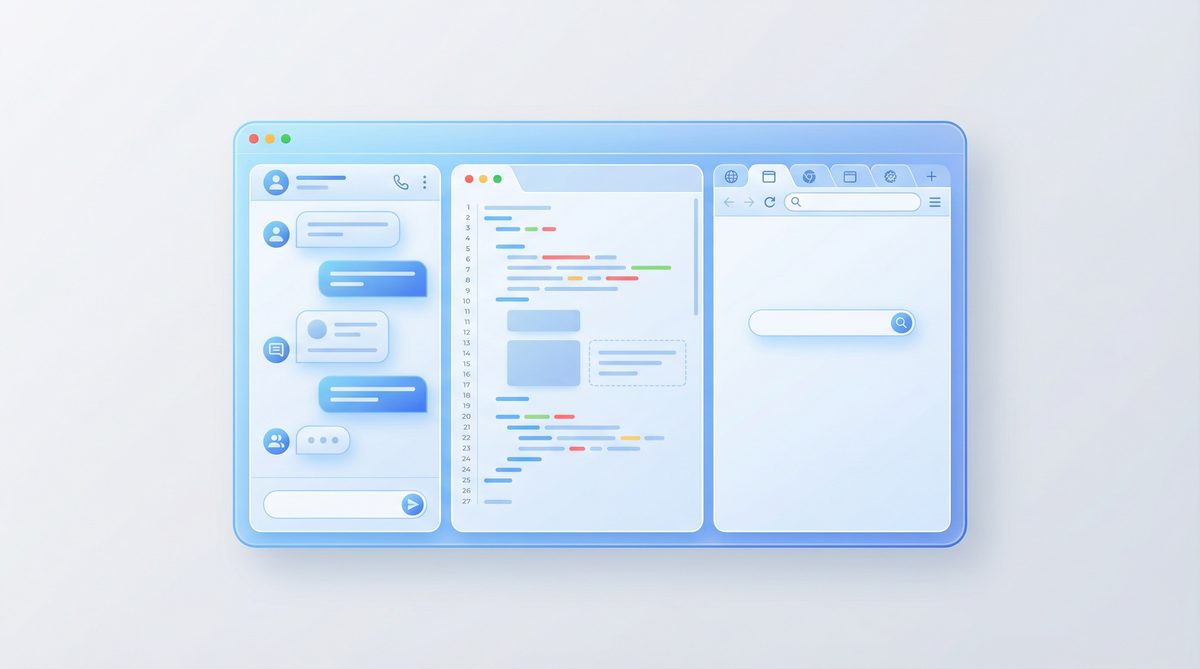
The ChatGPT Superapp is a technically ambitious project that fundamentally restructures the deployment and integration of multiple advanced AI models into a cohesive desktop platform. At its core, the Superapp leverages a modular microservices architecture combined with a high-performance client interface to deliver seamless interaction between ChatGPT, Codex, and Atlas.
Modular Microservices Architecture
The Superapp backend is designed around a microservices framework, where each AI component—ChatGPT, Codex, and Atlas—operates as an independently scalable service. These services communicate through well-defined RESTful APIs and event-driven message queues, providing flexibility and fault isolation. This architecture supports the following technical benefits:
- Independent Scaling: Compute resources for ChatGPT’s large language model, Codex’s code generation engine, and Atlas’s web retrieval system can be dynamically allocated based on workload demand, optimizing cost and performance.
- Fault Tolerance: Failure in one service (e.g., Atlas browser fetching) does not cascade to the others, enabling graceful degradation and improved uptime for end-users.
- Continuous Deployment: Each service can be updated and improved independently, allowing OpenAI engineers to rapidly iterate on model fine-tuning, bug fixes, and new features without disrupting the overall system.
Hybrid On-Device and Cloud Processing
One of the key technical innovations in the Superapp is its hybrid processing model. While the core AI inference workloads run in the cloud on OpenAI’s optimized GPU clusters, the desktop client performs lightweight preprocessing, context management, and caching locally. This approach minimizes latency and improves user experience:
- Local Context Management: The client maintains conversational context, user preferences, and multi-turn dialogue state, reducing redundant data transmission and enabling faster response generation.
- Incremental Updates: Instead of sending full conversation histories on every request, the client transmits incremental updates, significantly lowering bandwidth usage and server load.
- Secure Data Handling: Sensitive user data is encrypted end-to-end, with local caching ensuring minimal exposure to network vulnerabilities.
Multi-Modal Data Fusion and Query Orchestration
The Superapp’s ability to combine textual generation, code synthesis, and real-time web information relies on sophisticated query orchestration and multi-modal data fusion techniques. When a user submits a query, the system dynamically parses the input to determine which AI service(s) are relevant. For example:
- Pure Language Tasks: Queries seeking explanations or summaries are routed primarily to ChatGPT.
- Code Generation or Debugging: Requests involving programming languages trigger Codex, which uses semantic parsing to understand intent and generate syntactically correct code snippets.
- Real-Time Information Retrieval: When the query involves up-to-date data or fact-checking, Atlas executes targeted web crawls and API lookups to supplement the AI-generated content.
The results from these services are then aggregated using a neural ranker model that prioritizes the most relevant responses and integrates them into a coherent final output. This fusion mechanism ensures that the user receives answers that are not only linguistically fluent but also factually accurate and contextually appropriate.
Advanced Developer Tooling and API Integration
For software engineers, the Superapp exposes a rich SDK and extensible plugin architecture. This allows developers to embed Codex-powered code generation into their own IDE environments or build custom Atlas data connectors to specialized knowledge bases. Key technical features include:
- Language-Aware Code Editing: The desktop app integrates with popular code editors via LSP (Language Server Protocol), enabling inline code completions, refactoring suggestions, and error detection powered by Codex.
- Custom Data Source Plugins: Atlas supports plugin modules that connect to enterprise APIs, databases, or proprietary datasets, allowing domain-specific knowledge retrieval to augment AI responses.
- Event Hooks and Automation: Developers can program event-driven workflows within the Superapp, linking AI outputs to continuous integration pipelines, testing frameworks, or deployment scripts.
Security and Privacy Considerations
Given the sensitivity of code and personal data processed within the Superapp, OpenAI has implemented robust security protocols. These include:
- End-to-End Encryption: All communications between client and server are encrypted using TLS 1.3, with additional encryption layers for stored data caches.
- Federated Learning: To improve Codex and ChatGPT models without compromising user privacy, OpenAI employs federated learning techniques that aggregate model updates from clients without transmitting raw data.
- Access Controls and Audit Logs: The platform supports granular permission settings and maintains detailed audit trails for enterprise deployments, facilitating compliance with data governance policies.
Real-World Application Scenarios
The architecture and implementation details of the ChatGPT Superapp translate into tangible benefits across multiple sectors:
- Software Development: Developers can rapidly prototype, debug, and deploy code while simultaneously referencing documentation and live data, dramatically reducing context switching.
- Research and Knowledge Work: Academics and analysts leverage the integrated Atlas browser to pull the latest research articles and data sets, while ChatGPT synthesizes summaries and generates reports.
- Customer Support Automation: Support agents use the platform to generate personalized responses augmented by real-time product updates and technical documentation from Atlas.
- Creative Content Generation: Writers and designers combine ChatGPT’s narrative capabilities with Codex’s automation scripts to generate interactive multimedia content, streamlining creative workflows.
Industry Impact and Competitive Landscape of OpenAI’s ChatGPT Superapp
The introduction of the ChatGPT Superapp signals a pivotal shift in the AI software ecosystem, particularly in how integrated AI tools can redefine user engagement and productivity across multiple sectors. By consolidating conversational AI, code generation, and intelligent browsing into a single desktop platform, OpenAI is positioning itself to disrupt longstanding software paradigms and challenge both specialized and generalized AI providers.
Transforming Developer and Enterprise Workflows
One of the most significant industry impacts of the Superapp lies in its potential to streamline developer workflows. Traditionally, software engineers and data scientists have relied on a fragmented toolchain: code editors, API documentation, debugging consoles, and search engines operate independently, often requiring manual context switching that disrupts cognitive flow. The Superapp’s integration of Codex with ChatGPT and Atlas creates a unified environment where:
- Natural language queries can instantly generate, refactor, and debug code without leaving the conversation interface.
- Real-time data retrieval via Atlas enriches code validation by providing up-to-date API references, security advisories, or dependency updates.
- Contextual awareness across modules enables dynamic adaptation of AI responses based on user history, project specifics, or organizational coding standards.
For enterprises, this amalgamation reduces operational friction and accelerates product development cycles. The Superapp’s extensible architecture also allows integration with existing CI/CD pipelines, version control systems, and collaboration tools, enabling seamless adoption within complex tech stacks.
Market Analysis and Positioning
From a market perspective, OpenAI’s Superapp enters a competitive landscape characterized by emerging AI platforms targeting productivity enhancement, such as Microsoft’s Copilot, Google’s Bard integration frameworks, and specialized AI-assisted coding tools like Tabnine and Kite. However, the Superapp’s comprehensive approach offers several differentiators:
- Holistic AI Capabilities: Unlike single-function AI assistants, the Superapp’s tri-modal integration of conversational AI, coding assistance, and real-time browsing addresses a broad spectrum of user needs within one interface.
- Platform Agnosticism: Designed as a native desktop application, it supports cross-platform deployment (Windows, macOS, Linux), targeting developers and professionals across diverse computing environments.
- Scalable Subscription Model: The introduction of the Pro tier leverages usage-based pricing, appealing to both individual developers and large-scale enterprise customers seeking premium performance and dedicated support.
- OpenAI Ecosystem Synergy: Tight integration with OpenAI’s API ecosystem allows for customization, plug-ins, and third-party enhancements, fostering a vibrant developer community and marketplace.
Market analysts project that this strategic positioning could enable OpenAI to capture an increasing share of the AI-driven productivity tools market, which McKinsey estimates will reach $100 billion globally by 2030. The Superapp’s ability to reduce context switching and increase automation places it well ahead of incremental feature updates from competitors.
Competitive Challenges and Strategic Responses
Despite these advantages, the Superapp faces competitive challenges on multiple fronts:
- Legacy Tool Entrenchment: Many organizations have heavily invested in established Integrated Development Environments (IDEs) and knowledge management platforms. Encouraging migration or parallel use requires demonstrating clear ROI and seamless interoperability.
- Data Privacy and Security Concerns: Integrating real-time internet browsing and code generation raises potential risks related to intellectual property leakage, data compliance, and vulnerability to adversarial inputs. OpenAI must continue to fortify security protocols and transparent data governance policies.
- AI Model Robustness and Bias Mitigation: Ensuring that Codex and ChatGPT outputs remain accurate, contextually appropriate, and free from harmful biases is critical to maintaining user trust and regulatory compliance.
To address these challenges, OpenAI is investing in enterprise-grade security features such as end-to-end encryption, customizable data retention policies, and role-based access controls within the Superapp. Additionally, continuous model fine-tuning and user feedback loops are employed to improve output reliability and reduce hallucination rates.
Future Implications for AI-Driven Desktop Platforms
The launch of the ChatGPT Superapp may catalyze a broader industry trend toward AI-centric desktop environments that transcend traditional software boundaries. Anticipated future developments include:
- Multi-Modal Interaction: Integration of voice commands, gesture recognition, and augmented reality interfaces to facilitate more natural and immersive user experiences.
- Adaptive AI Agents: Personalized AI assistants capable of learning user preferences, project contexts, and collaborative patterns to proactively suggest solutions and automate routine tasks.
- Cross-Domain AI Fusion: Combining AI capabilities from diverse domains such as computer vision, robotics, and natural language processing into unified platforms enabling complex problem-solving workflows.
- Decentralized AI Models: Leveraging edge computing and federated learning to enable privacy-preserving, locally hosted AI inference within desktop applications, reducing dependence on cloud infrastructure.
In summary, OpenAI’s ChatGPT Superapp not only redefines integrated AI productivity tools but also sets a new benchmark for the evolution of intelligent desktop platforms. Its success will likely spur innovation, competition, and adoption of AI-enhanced workflows across industries, reshaping the landscape of human-computer interaction over the coming decade.
Advanced Strategies and Best Practices for Maximizing the ChatGPT Superapp
Get Free Access to 40,000+ AI Prompts
Join 40,000+ AI professionals. Get instant access to our curated Notion Prompt Library with prompts for ChatGPT, Claude, Codex, Gemini, and more — completely free.
Get Free Access Now →No spam. Instant access. Unsubscribe anytime.
As the ChatGPT Superapp consolidates language understanding, code generation, and real-time browsing into a single platform, mastering its advanced capabilities requires a nuanced understanding of how to orchestrate its components effectively. This section delves into expert recommendations, best practices, and common pitfalls to avoid when leveraging the Superapp in professional and development contexts.
Optimizing Prompt Engineering for Multi-Modal AI Workflows
One of the central challenges in harnessing the full potential of the ChatGPT Superapp is crafting prompts that seamlessly engage ChatGPT, Codex, and Atlas in concert. Unlike single-model interactions, strategic prompt engineering here involves structuring queries to clearly delineate when to invoke natural language understanding, code synthesis, or live data retrieval.
- Explicit Task Segmentation: Begin prompts by defining the specific role expected from each AI component. For example, “Using Codex, generate a Python script that…; Next, with ChatGPT, explain the logic behind the code; Finally, verify with Atlas whether any recent API changes affect this approach.”
- Context Preservation: Utilize the Superapp’s session management to maintain context across interactions. This avoids redundant input and allows the AI to build upon previous outputs for iterative refinement.
- Instruction Chaining: Employ stepwise instructions that guide the AI through complex multi-step tasks, ensuring each component executes its function optimally before transitioning to the next.
Leveraging Codex for Advanced Development Workflows
Codex integration within the Superapp is a powerful asset for developers, but maximizing its utility necessitates an understanding of its current capabilities and limitations.
- Modular Code Generation: Request code in modular, testable units rather than monolithic blocks. This facilitates easier debugging and incremental integration into larger projects.
- Interactive Debugging: Use the Superapp’s interactive environment to iteratively refine generated code by prompting Codex to explain errors or suggest optimizations based on runtime feedback.
- Security Awareness: Always review generated code for potential security vulnerabilities or deprecated practices, as Codex may produce syntactically correct but suboptimal or insecure code snippets.
Harnessing Atlas for Real-Time Contextual Intelligence
The Atlas browser’s ability to fetch and incorporate up-to-date information transforms static AI outputs into context-aware, dynamic responses. Experts recommend several approaches to fully exploit this capability:
- Data Validation: Use Atlas to cross-verify facts, statistics, and emerging trends cited by ChatGPT or Codex-generated content, especially in fast-moving domains like cybersecurity or finance.
- Custom Knowledge Graphs: Employ Atlas to build domain-specific knowledge graphs by continuously querying and aggregating relevant web data, enabling specialized AI assistance tailored to niche sectors.
- Dynamic Prompt Augmentation: Integrate Atlas’s real-time search results directly into interaction prompts to enrich the AI’s contextual understanding before generating responses.
Common Pitfalls and How to Avoid Them
Despite its advanced capabilities, the ChatGPT Superapp presents several challenges that users should anticipate and mitigate:
- Overloading Prompts: Combining too many distinct requests in a single prompt can confuse the AI, leading to incomplete or inaccurate outputs. Segment complex tasks into manageable chunks.
- Context Drift: Extended sessions without resetting context may cause the AI to “forget” or misconstrue earlier user intents. Regularly summarize or restate key points to maintain alignment.
- Overreliance on Automation: Blindly trusting AI-generated code or information without human review can introduce errors or security risks. Maintain rigorous code review and fact-checking protocols.
- Latency in Real-Time Data: While Atlas provides live browsing, network latency and website access restrictions can delay or limit data retrieval. Plan for fallback strategies when real-time data is unavailable.
Advanced Integration Techniques for Enterprise Environments
For organizations integrating the ChatGPT Superapp into enterprise workflows, several advanced strategies can enhance scalability and compliance:
- API Orchestration: Combine the Superapp’s desktop interface with backend API calls to automate repetitive tasks, enabling seamless integration with CI/CD pipelines, ticketing systems, and documentation workflows.
- Custom Model Fine-Tuning: Leverage OpenAI’s fine-tuning capabilities to tailor ChatGPT and Codex outputs to organization-specific jargon, coding standards, and compliance requirements.
- Audit Logging and Monitoring: Implement detailed logging of AI interactions within the Superapp to maintain audit trails for regulatory compliance and to identify patterns for continuous improvement.
- Role-Based Access Controls: Utilize granular permission settings to control which team members can access sensitive AI functions, such as code generation or internet browsing, reducing risk exposure.
Future-Proofing AI Workflows with the ChatGPT Superapp
As AI models rapidly evolve, maintaining adaptability in workflows is critical. The Superapp’s modular architecture and continuous update cycle allow users to future-proof their AI interactions by:
- Regularly Updating Prompts and Scripts: Monitor OpenAI release notes and adjust prompt designs to align with new capabilities and model improvements.
- Experimenting with Multi-Modal Inputs: Anticipate integration of voice, image, and video inputs, preparing workflows to incorporate these modalities as they become available within the Superapp.
- Community Engagement: Participate in OpenAI forums and developer communities to share best practices, discover emerging use cases, and contribute to evolving prompt engineering standards.
By adhering to these advanced strategies and best practices, users can fully exploit the transformative potential of OpenAI’s ChatGPT Superapp, driving innovation and efficiency in AI-augmented human-computer interaction.
OpenAI’s ChatGPT Superapp: Revolutionizing AI Interaction on the Desktop
In a groundbreaking move set to redefine how developers and users interact with artificial intelligence, OpenAI has announced the launch of its new ChatGPT Superapp. This innovative desktop platform merges the capabilities of ChatGPT, Codex, and the Atlas browser into a seamless, unified environment. Spearheaded by OpenAI’s CTO Greg Brockman, the Superapp aims to enhance productivity and streamline AI-powered workflows for nearly a billion weekly users globally.
With the rapid evolution of AI tools and their integration into daily technology use, OpenAI’s decision to consolidate its flagship products into a single desktop application marks a significant milestone. This article explores the features, strategic goals, and implications of the ChatGPT Superapp, alongside details of the new Pro subscription tier and competitive positioning against industry rivals.

Integrating ChatGPT, Codex, and Atlas: A Unified AI Experience
The ChatGPT Superapp represents a sophisticated integration of three distinct yet complementary AI services:
- ChatGPT: OpenAI’s conversational language model renowned for natural language understanding and generation.
- Codex: A powerful AI coding assistant that interprets natural language prompts to generate and debug code.
- Atlas Browser: A proprietary browsing tool designed to augment AI responses with real-time internet access and data retrieval.
This integration allows users to engage in complex workflows without switching contexts or applications. Developers, for example, can query ChatGPT for explanations, generate code snippets with Codex, and verify information through Atlas—all from within one desktop interface.
Greg Brockman, OpenAI’s co-founder and CTO, is leading the overhaul with a clear focus on enhancing user experience and expanding accessibility. According to Brockman, the Superapp “streamlines AI interaction by combining conversational AI, code generation, and browsing capabilities, empowering users to achieve more with less friction.”
The platform’s design emphasizes speed, responsiveness, and depth of understanding, critical for professional environments where accuracy and efficiency are paramount. This strategic integration also anticipates future expansions, such as incorporating additional AI models or third-party plugins, positioning the Superapp as a scalable hub for AI-powered productivity.
Given the staggering number of weekly active users—nearly one billion across ChatGPT and Codex platforms—the consolidation into a single desktop app promises to simplify access and foster a more cohesive user community. The Superapp also supports cross-platform functionality, ensuring seamless operation on Windows, macOS, and Linux systems.
The enhanced user interface and backend optimizations enable the Superapp to handle complex, multi-turn conversations and coding sessions with minimal latency. This level of integration showcases OpenAI’s commitment to delivering enterprise-grade tools that meet the demands of developers, data scientists, and AI researchers alike.
For detailed operational insights and developer guidelines, OpenAI has published extensive documentation and tutorials available through their official channels The AI Superapp Era: How OpenAI Is Merging ChatGPT, Codex, and Atlas Into One Platform.
Subscription Model and Market Positioning: The $100/Month Pro Tier
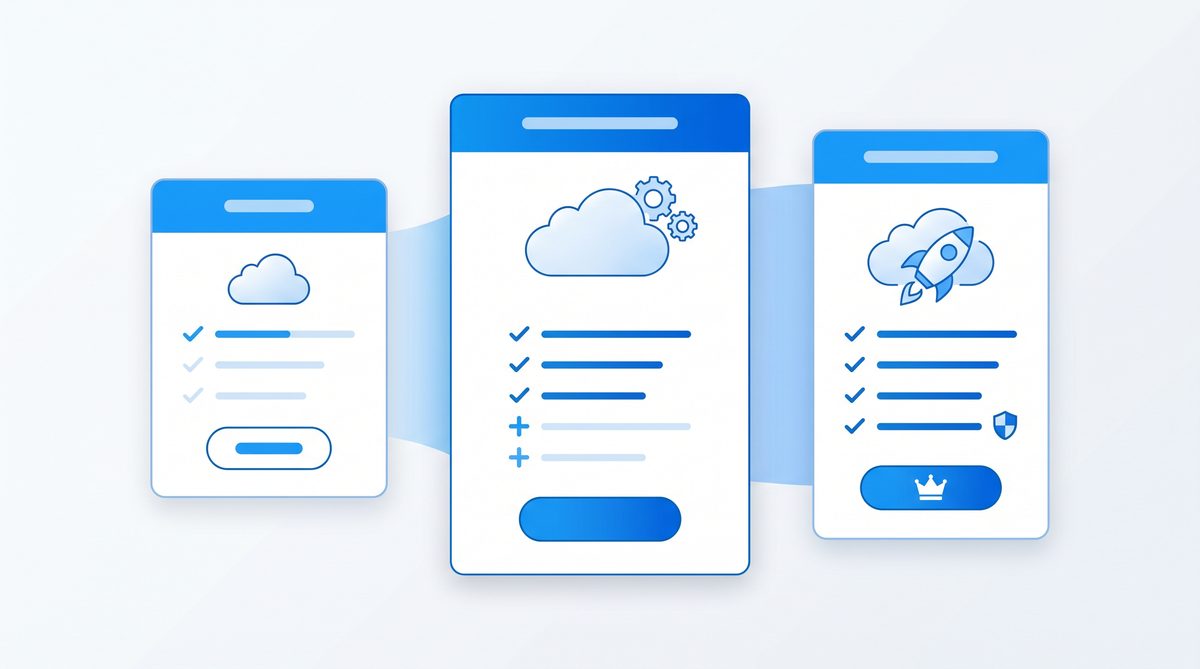
Coinciding with the Superapp launch on April 9, 2026, OpenAI introduced a new Pro subscription tier priced at $100 per month. This premium plan offers users significant enhancements over the existing Plus tier, including:
- Access to the Superapp with full integration of ChatGPT, Codex, and Atlas features.
- Up to 5 times more Codex usage compared to the Plus plan, catering to developers with heavy coding demands.
- A 10x launch promotion, providing early adopters with increased usage quotas and priority support.
- Optimized performance with priority access to new features and model updates.
This pricing strategy directly targets the competitive landscape, particularly aiming to match or undercut the pricing of Claude Max, a leading AI-powered assistant from Anthropic. By aligning the Pro tier with the price point of Claude Max, OpenAI intends to capture enterprise clients and power users who require robust AI capabilities at a predictable cost.
Industry analysts view this move as a decisive step in solidifying OpenAI’s dominance in the AI assistant market. The increased Codex allocation is particularly attractive for software development teams leveraging AI to accelerate application development cycles and reduce manual coding errors.
Moreover, the integration of Atlas browser functionality within the Superapp subscription enhances real-time data access, enabling users to complement AI-generated insights with up-to-date internet information, a feature increasingly critical for research-intensive tasks and dynamic content generation.
OpenAI has also maintained a free-tier access model for casual users, ensuring broad accessibility while incentivizing power users to upgrade to the Pro tier for advanced capabilities. The company’s approach balances monetization with community growth, critical for sustaining AI development and infrastructure costs.
For subscription details, upgrade procedures, and terms of service, prospective users can refer to OpenAI’s official subscription portal Advanced Prompt Engineering for ChatGPT, Claude, and Codex: The 2026 Playbook.
Competitive Implications and Market Outlook
The launch of the ChatGPT Superapp and the accompanying Pro subscription mark a strategic enhancement in OpenAI’s product ecosystem. By merging conversational AI, code generation, and browsing into a single platform, OpenAI addresses a growing demand for integrated AI tools that reduce friction and improve user workflows.
Competitors like Anthropic’s Claude Max and Google’s Bard are also evolving, but OpenAI’s emphasis on developer-centric features and scalable usage positions the Superapp favorably. The aggressive pricing and usage promotions fortify OpenAI’s appeal to enterprise clients and developers seeking cost-effective yet powerful AI solutions.
As AI adoption continues to expand across industries—from software engineering and content creation to research and customer service—the ChatGPT Superapp is poised to become a central hub for AI interactions. Its modular design and ongoing updates suggest a roadmap that will introduce further innovations, potentially including advanced natural language understanding, multimodal AI capabilities, and deeper integrations with cloud services.
OpenAI’s vision, articulated by Greg Brockman, is to create an AI platform that not only responds to queries but anticipates user needs, automates complex tasks, and seamlessly integrates into existing workflows. The Superapp launch is a significant step toward realizing this vision.
Readers interested in the technical architecture and future roadmap of the ChatGPT Superapp can explore detailed whitepapers and developer forums hosted by OpenAI OpenAI Launches $100 ChatGPT Pro Tier: 5x Codex Access Takes Aim at Claude Max.
Useful Links
- OpenAI Official Blog: ChatGPT Superapp Announcement
- OpenAI Pricing and Subscription Plans
- OpenAI GitHub Repository for Developer Resources
- Anthropic Claude Max Official Page
- Research Paper on Codex and AI-Powered Code Generation
🕐 Instant∞ Unlimited🎁 Free
Frequently Asked Questions
How does the ChatGPT Superapp handle scalability?
The Superapp employs a modular microservices architecture, allowing each AI component to scale independently. This design ensures that resources for ChatGPT, Codex, and Atlas can be dynamically adjusted based on demand, optimizing both performance and cost. This flexibility is crucial for maintaining high availability and responsiveness under varying workloads.
What is the hybrid processing model in the Superapp?
The hybrid processing model combines cloud-based AI inference with local client-side processing. Core AI tasks run on OpenAI’s cloud infrastructure, while the desktop client handles preprocessing and context management. This reduces latency and bandwidth usage, enhancing user experience by delivering faster and more efficient interactions.
How does the Superapp ensure data security?
The Superapp prioritizes data security through end-to-end encryption and local caching. Sensitive user data is protected from network vulnerabilities, while local caching minimizes unnecessary data exposure. This approach ensures that user privacy is maintained without compromising the app's functionality or performance.
What are the benefits of multi-modal data fusion?
Multi-modal data fusion in the Superapp allows for the integration of diverse data types, enhancing the AI's ability to understand and respond to complex queries. This capability improves the accuracy and relevance of the AI's outputs, making it a powerful tool for developers needing comprehensive solutions across different domains.
Can the Superapp be updated independently?
Yes, the Superapp's architecture supports continuous deployment, allowing each service to be updated independently. This means OpenAI can implement model improvements, bug fixes, and new features without disrupting the overall system, ensuring users always have access to the latest advancements.
What makes the Superapp suitable for developers?
The Superapp is tailored for developers by integrating advanced AI models like ChatGPT, Codex, and Atlas into a single platform. It supports structured outputs, tool-use, and modern prompt engineering techniques, making it ideal for complex development tasks and enhancing productivity through streamlined workflows.
Get Free Access to 40,000+ AI Prompts
Join 40,000+ AI professionals. Get instant access to our curated Notion Prompt Library with prompts for ChatGPT, Claude, Codex, Gemini, and more — completely free.
Get Free Access Now →No spam. Instant access. Unsubscribe anytime.
