
⚡ The Brief
- What it is: A detailed comparison of Claude Code and OpenAI Codex, two leading AI models for code generation and development in 2026.
- Who it’s for: Developers and tech professionals seeking to leverage AI for complex software projects, focusing on architectural innovations and integration capabilities.
- Key takeaways: Claude Code emphasizes safety and alignment with a longer context window, while Codex excels in natural language to code translation with efficient code snippet generation.
- Pricing/Cost: Both models are available through subscription-based access, with pricing tiers based on usage and integration needs.
- Bottom line: Choosing between Claude Code and Codex depends on project requirements, such as context length needs and natural language processing capabilities.
✓ Instant access✓ No spam✓ Unsubscribe anytime
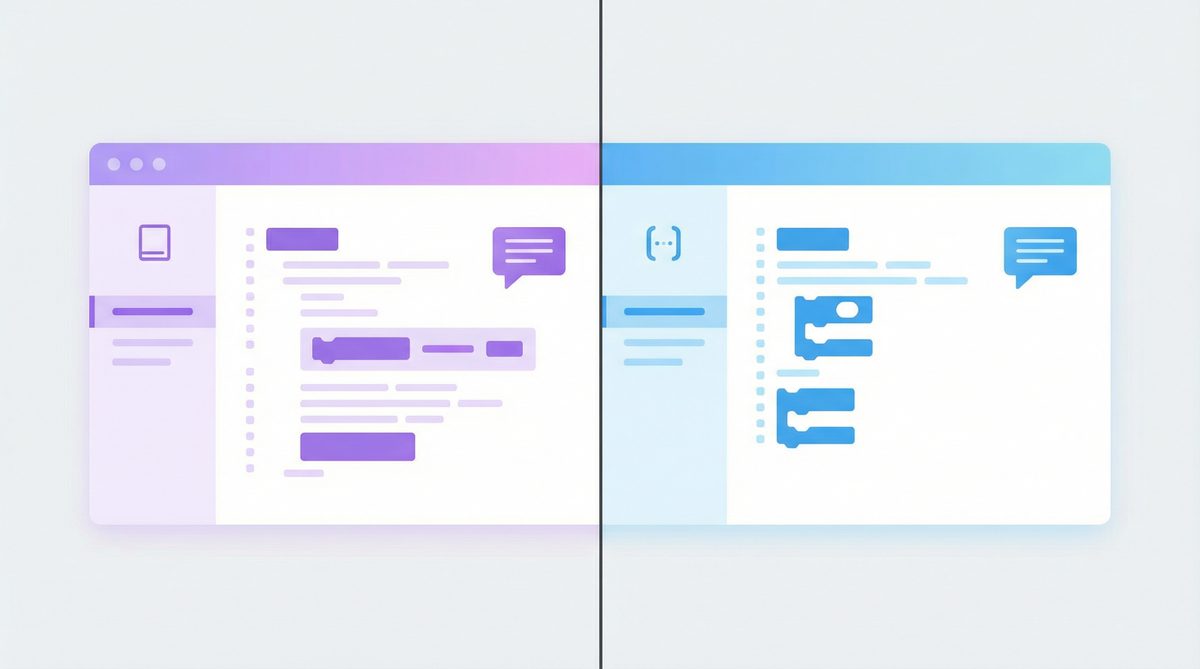
Architectural Innovations and Underlying Technologies in Claude Code and OpenAI Codex
Understanding the fundamental architectural differences and technological underpinnings of Claude Code and OpenAI Codex is critical for developers aiming to utilize these models effectively in complex, large-scale software projects. Both systems leverage advancements in large language model (LLM) architectures but diverge significantly in design choices, training methodologies, and integration capabilities.
Model Architecture and Training Paradigms
- Claude Code: Claude Code is built upon Anthropic’s proprietary Constitutional AI framework, which emphasizes safety and alignment through iterative reward modeling and human feedback loops. It employs a transformer-based architecture with a strong emphasis on context retention across longer dialogues, optimizing for sustained coding conversations. The model benefits from a hybrid training approach combining supervised learning on extensive code repositories and reinforcement learning from human feedback (RLHF) tuned explicitly for coding tasks. This training regimen fine-tunes the model’s ability to generate syntactically correct and semantically coherent code while maintaining alignment with developer intent.
- OpenAI Codex: Codex is an evolution of OpenAI’s GPT-3 family, specifically fine-tuned on a massive corpus of publicly available code from GitHub and other sources. Its architecture utilizes dense transformer layers optimized for next-token prediction in multi-language code generation tasks. Codex’s training employs a mixture of unsupervised pretraining on natural language and code, followed by supervised fine-tuning on labeled code examples. This allows Codex to excel at understanding natural language prompts and translating them into code, with a strong emphasis on generating idiomatic and efficient code snippets.
Context Window and Memory Management
- Claude Code: One of Claude Code’s architectural strengths is its extended context window, supporting up to 128k tokens in 2026 iterations. This enables handling of entire codebases or large modules within a single session, facilitating comprehensive code review, refactoring, and multi-file generation. Claude’s internal memory management includes segmenting context into hierarchical structures, allowing for efficient retrieval of relevant code sections and prior conversation history without overwhelming the model’s attention mechanism. This makes Claude particularly suited for complex debugging and incremental feature development workflows.
- OpenAI Codex: Codex traditionally supports a context window of up to 16k tokens, which is sufficient for most single-file or function-level coding tasks. While this is smaller than Claude’s, Codex compensates with highly optimized token embeddings and positional encodings that prioritize recent context for snippet generation. Codex’s memory strategy focuses on precision over scale, making it well-suited for scenarios requiring detailed, targeted code completions or API usage examples rather than large-scale architectural reasoning.
Multi-Lingual and Framework Support
Both Claude Code and OpenAI Codex support a broad spectrum of programming languages and frameworks, but their specialization and adaptability differ in nuanced ways:
- Claude Code: Claude’s training corpus includes a diverse range of programming languages, with additional emphasis on emerging and domain-specific languages such as Rust, Kotlin, Julia, and WebAssembly. Claude’s model architecture allows it to adapt dynamically to new language syntax and idioms through prompt engineering and fine-tuning layers. It also integrates natively with modern development frameworks like React, Flutter, and TensorFlow, offering context-aware suggestions that understand framework-specific conventions and lifecycle methods.
- OpenAI Codex: Codex maintains broad support for mainstream languages including Python, JavaScript, Java, C++, and SQL. Its strength lies in generating idiomatic code for well-established frameworks such as Node.js, Django, and Angular. Codex’s fine-tuning on extensive open-source repositories ensures it excels at replicating common design patterns and best practices within these ecosystems. However, its adaptation to niche or rapidly evolving languages is less fluid compared to Claude’s modular training approach.
Integration and Deployment Flexibility
- Claude Code: Claude Code is designed for seamless integration into enterprise-grade IDEs and CI/CD pipelines. It supports RESTful APIs with streaming capabilities and WebSocket connections for real-time collaboration features. Claude’s composable architecture enables multi-agent setups where different instances specialize in specific coding tasks (e.g., testing, documentation, optimization) and communicate asynchronously. This modularity facilitates deployment in hybrid cloud/on-premise environments, meeting stringent data privacy and compliance requirements.
- OpenAI Codex: Codex offers robust SDKs and plugins for popular developer tools like Visual Studio Code, JetBrains IDEs, and GitHub Copilot. Its API is optimized for high-throughput batch processing, enabling large-scale code generation and bulk refactoring jobs. Codex also integrates with cloud-based development environments, utilizing scalable GPU clusters to handle variable workloads. However, its architecture is more monolithic, focusing on delivering a unified coding assistant experience rather than composable multi-agent orchestration.
Advanced Debugging and Static Analysis Capabilities
Beyond code generation, both models incorporate advanced features to assist developers in debugging and static analysis, though their approaches differ:
- Claude Code: Equipped with an internal symbolic reasoning engine, Claude Code can perform semantic code analysis, enabling it to identify logic errors, potential security vulnerabilities, and performance bottlenecks. Its architecture supports deep integration with static analysis tools and linters, allowing it to provide inline suggestions that conform to organizational coding standards. Claude’s multi-turn conversational interface allows developers to iteratively explore error traces, facilitating root-cause analysis in complex systems.
- OpenAI Codex: Codex excels at pattern matching and heuristic-based bug detection by leveraging its extensive training on diverse codebases containing real-world bugs and fixes. It can generate unit tests, suggest fixes, and propose code improvements based on best practice heuristics. However, Codex’s lack of built-in symbolic reasoning limits its ability to perform deep semantic analysis, making it more reliant on external static analysis tools for comprehensive debugging.
Industry Impact and Market Dynamics of Claude Code and OpenAI Codex in 2026
By 2026, Claude Code and OpenAI Codex have not only reshaped individual developer workflows but also significantly influenced the broader software development industry and AI-assisted coding market. Understanding their impact requires analyzing how these platforms have altered development paradigms, affected market competition, and shaped future trajectories in AI-driven programming.
Transforming Software Development Workflows
Claude Code and OpenAI Codex have become foundational tools in modern Integrated Development Environments (IDEs), Continuous Integration/Continuous Deployment (CI/CD) pipelines, and collaborative coding platforms. Their integration has led to profound shifts in how software is designed, coded, tested, and maintained:
- Automated Code Generation at Scale: Both models have enabled enterprises to automate significant portions of routine and repetitive coding tasks, such as boilerplate code generation, API integrations, and documentation. Claude Code’s rapid iteration model is particularly favored for exploratory and agile development cycles, while Codex’s precision suits projects requiring strict adherence to specifications and safety standards.
- Enhanced Code Review and Debugging: Leveraging advanced semantic understanding, these AI engines perform preliminary code reviews, flag potential bugs, and suggest optimizations. This has reduced the burden on human reviewers and accelerated release cycles, especially in large-scale codebases.
- Cross-Language and Multi-Framework Support: The multilingual capabilities of both tools have facilitated polyglot development environments, enabling seamless transition between languages and frameworks. This interoperability has been crucial for organizations adopting microservices and hybrid architectures.
Market Analysis: Adoption Trends and Developer Preferences
Market research in 2026 indicates a bifurcation in the adoption patterns of Claude Code and OpenAI Codex based on industry verticals, company size, and project complexity:
- Enterprise vs. Startup Use Cases: Large enterprises with stringent compliance and security requirements tend to prefer OpenAI Codex due to its methodical code generation and enhanced auditability features. Conversely, startups and innovation-driven teams lean towards Claude Code for its agility, conversational interface, and faster prototyping capabilities.
- Geographic and Regulatory Influences: Claude Code, heavily optimized for privacy-conscious deployments, has gained traction in regions with strict data sovereignty regulations, such as the EU and parts of Asia. OpenAI Codex, meanwhile, remains dominant in markets favoring cloud-native, scalable AI services.
- Developer Community and Ecosystem Growth: The open-source ecosystem surrounding OpenAI Codex, including extensive third-party plugins and integrations, has contributed to a broad developer base. Claude Code, supported by Anthropic’s safety-first design principles, attracts developers prioritizing ethical AI use and transparency.
Competitive Landscape and Strategic Positioning
The competitive interplay between Claude Code and OpenAI Codex has catalyzed innovation and diversification across AI-assisted development tools. Key competitive dynamics include:
- Composability and Multi-Agent Architectures: Both platforms have expanded beyond monolithic AI models toward composable AI stacks, enabling multi-agent collaboration where Claude Code and Codex agents handle specialized subtasks. This modular approach has fostered partnerships and interoperability with other AI services, strengthening their market positions.
- Pricing and Tiered Offerings: The $100/month tier for Claude Max and ChatGPT Pro illustrates the trend toward premium, subscription-based AI coding services. Competitive pricing models have driven commoditization of baseline features while differentiating through advanced capabilities such as enhanced contextual understanding, domain-specific tuning, and real-time code execution.
- Focus on Safety and Explainability: Claude Code’s emphasis on interpretability and risk mitigation has positioned it favorably in sectors like finance, healthcare, and government, where explainable AI is a regulatory necessity. OpenAI Codex counters with rigorous model validation and robust security features embedded in its cloud infrastructure.
Future Implications and Emerging Opportunities
Looking ahead, the evolution of Claude Code and OpenAI Codex is poised to further disrupt software engineering and adjacent domains through several emerging trends:
- Integration with Low-Code/No-Code Platforms: Both AI models are increasingly embedded as core engines within visual programming environments, democratizing software creation by enabling non-technical users to generate complex applications through natural language commands coupled with AI-suggested code.
- Adaptive Learning and Personalization: Advances in federated learning and on-device AI will allow Claude Code and Codex to personalize coding assistance based on individual developer styles, project domains, and team conventions without compromising data privacy.
- AI-Driven Software Architecture Design: Beyond line-level code generation, these models are evolving toward higher-level architectural reasoning, capable of proposing system designs, dependency graphs, and scalability strategies that align with business objectives.
- Ethical and Governance Frameworks: As reliance on AI coding tools deepens, emphasis on transparency, bias mitigation, and audit trails will intensify. Claude Code’s architecture, designed with ethical guardrails, is likely to influence industry standards and regulatory policies.
In summary, Claude Code and OpenAI Codex have catalyzed a paradigm shift in the software development landscape by blending AI capabilities with developer expertise. Their continued innovation, competitive interplay, and alignment with industry needs will define the contours of AI-assisted programming for years to come.
Advanced Strategies and Best Practices for Integrating Claude Code and OpenAI Codex in Developer Workflows
As AI-assisted coding tools like Claude Code and OpenAI Codex mature, maximizing their value in real-world software engineering requires more than simple usage. Developers and teams must adopt sophisticated workflows, understand model-specific nuances, and implement strategic orchestration to avoid common pitfalls and fully harness these models’ capabilities. This section outlines expert recommendations and proven best practices for integrating Claude Code and Codex into complex development environments in 2026.
1. Leveraging Hybrid Model Orchestration for Optimal Results
One of the most effective advanced strategies is to employ hybrid orchestration that dynamically routes coding tasks between Claude Code and OpenAI Codex based on task complexity, codebase context, and interaction style preferences.
- Task Routing: Use Claude Code for rapid prototyping, exploratory coding, and conversational debugging where speed and iterative engagement matter most. Route well-defined, security-critical, or algorithmically intensive code generation requests to OpenAI Codex to leverage its precision and depth.
- Multi-Agent Coordination: Implement multi-agent workflows where Claude Code generates initial drafts or suggestions, and Codex performs detailed code reviews, optimization, or compliance checks. This layered approach ensures both speed and quality assurance.
- Context-Aware Switching: Integrate context detection middleware that analyzes code complexity, project domain, and developer prompts to automatically select the optimal model, reducing manual switching overhead.
2. Embedding AI Models into Continuous Integration and Deployment Pipelines
Embedding Claude Code and Codex into CI/CD pipelines can revolutionize automated testing, code quality enforcement, and deployment readiness checks. However, this requires deliberate design to avoid common pitfalls such as over-reliance on AI outputs without human oversight.
- Automated Code Review Augmentation: Use Codex-powered code review bots to flag security vulnerabilities, enforce style guides, and suggest performance optimizations before merging pull requests. Claude Code can augment this by providing contextual explanations and suggesting alternative implementations interactively.
- Test Case Generation: Deploy Claude Code in CI workflows to generate unit and integration test cases based on recent code changes, accelerating coverage expansion. Validate these tests using Codex’s deeper understanding of edge cases and failure modes.
- Guardrails and Validation Layers: Introduce validation steps post-AI code generation to run static analysis, linting, and security scans ensuring AI-generated code meets organizational standards before deployment.
3. Custom Fine-Tuning and Domain Specialization
Although both Claude Code and Codex offer robust base models, tuning them to specific codebases and domains unlocks substantial gains in relevance and accuracy.
- Domain-Specific Corpora: Fine-tune models on internal code repositories, proprietary APIs, and domain-specific libraries to enhance understanding of project-specific idioms, naming conventions, and architectural patterns.
- Continuous Feedback Loops: Implement feedback mechanisms where developers rate AI-generated snippets and flag inaccuracies, enabling iterative fine-tuning cycles to address weaknesses and biases.
- Custom Prompt Engineering: Develop standardized prompt templates and context enrichment strategies tailored to your domain and coding standards to achieve more consistent and precise AI outputs.
4. Managing AI-Generated Code Quality and Maintainability
AI-generated code can introduce maintainability risks if not carefully managed. Experts recommend proactive strategies to ensure code quality aligns with long-term project goals.
- Code Style Enforcement: Integrate AI tools with existing linters and formatters to automatically align generated code with team style guides, reducing technical debt.
- Explainability and Documentation: Encourage the use of Claude Code’s conversational abilities to generate inline comments and documentation alongside code snippets, improving transparency and future maintainability.
- Human-in-the-Loop Review: Maintain mandatory human review checkpoints for all AI-generated code, particularly for complex logic and security-sensitive modules, to prevent propagation of subtle bugs or anti-patterns.
5. Avoiding Common Pitfalls: Overreliance, Security, and Ethical Considerations
Despite the powerful capabilities of Claude Code and OpenAI Codex, developers must be vigilant against risks stemming from overdependence on AI-generated code and uncritical acceptance of outputs.
- Overfitting to AI Suggestions: Avoid blindly accepting AI code completions. Use AI outputs as suggestions rather than final solutions and encourage active developer engagement and critical evaluation.
- Security Vulnerabilities: Recognize that AI models may generate code with subtle security flaws or outdated practices. Regularly update AI models and incorporate dedicated security scanners in your workflow.
- Data Privacy and Compliance: When fine-tuning or feeding proprietary code to AI models, ensure compliance with data privacy regulations and intellectual property policies. Prefer on-premises or private cloud deployments if sensitive data is involved.
- Ethical Use and Bias Mitigation: Be aware of potential biases in AI outputs, especially in naming conventions, language usage, and algorithmic logic. Implement monitoring and corrective feedback to mitigate such biases.
6. Future-Proofing AI Coding Workflows
Looking beyond 2026, developers should architect AI-assisted coding ecosystems with adaptability and extensibility in mind to accommodate rapid advancements and evolving team needs.
- Composable AI Stacks: Build modular integrations that allow adding or replacing AI models and tools with minimal disruption, supporting experimentation with emerging models beyond Claude Code and Codex.
- Meta-Learning and Self-Optimization: Explore meta-learning approaches where AI models learn from their own performance metrics and developer feedback to self-optimize over time.
- Cross-Model Knowledge Sharing: Develop systems that enable knowledge transfer between Claude Code, Codex, and other AI agents, enhancing overall system intelligence and reducing redundant computation.
By implementing these advanced strategies and adhering to best practices, developers and organizations can unlock the full potential of Claude Code and OpenAI Codex, transforming software development into a more efficient, intelligent, and collaborative endeavor in 2026 and beyond.
Claude Code vs OpenAI Codex in 2026: Complete Developer Comparison Guide
As AI-assisted coding tools continue to evolve, developers in 2026 face an increasingly diverse ecosystem of intelligent coding assistants. Among the most prominent players are Claude Code and OpenAI Codex, each offering unique strengths tailored to different programming workflows and project needs. This comprehensive guide provides an in-depth comparison of these two cutting-edge AI coding models, helping developers understand their capabilities, differences, and how to best leverage them in modern development environments.
In addition, we will explore how Claude Code, Codex, and other tools like Cursor are converging into a composable AI coding stack, enabling sophisticated multi-agent setups. We’ll also review model routing strategies and provide insights on the premium Claude Max and ChatGPT Pro offerings at the $100/month tier.
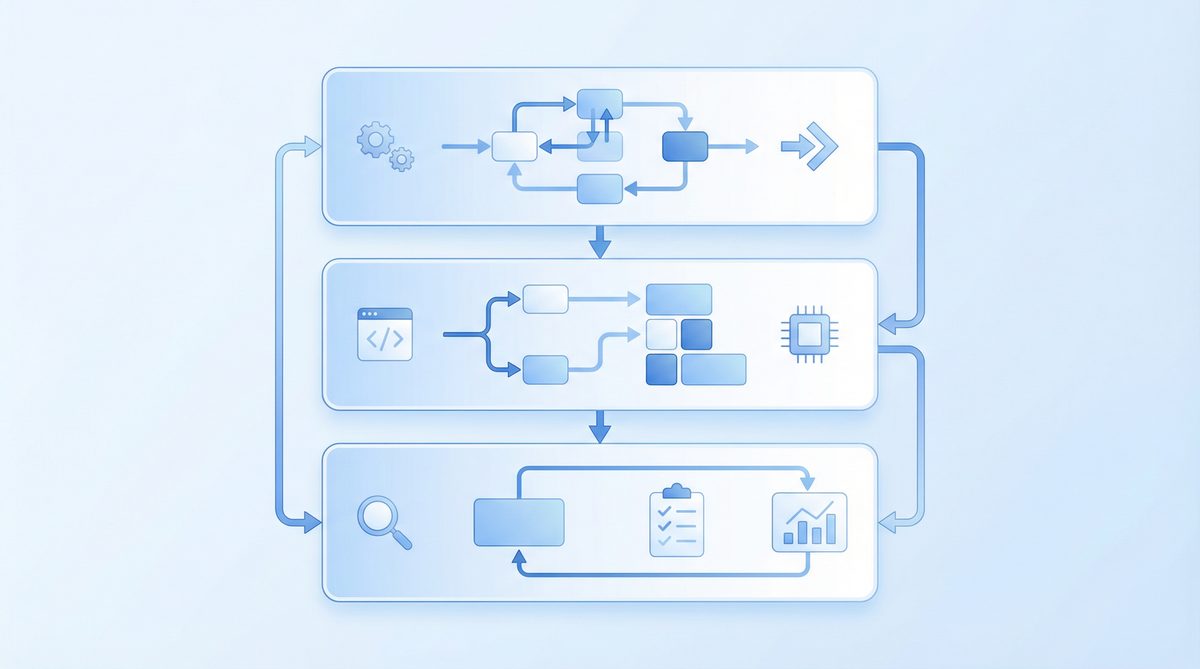
Core Differences: Claude Code and OpenAI Codex
🕐 Instant∞ Unlimited🎁 Free
Both Claude Code and OpenAI Codex are AI models designed to assist developers by generating, reviewing, and refactoring code. However, their design philosophies, interaction styles, and operational characteristics differ significantly, affecting how they perform in various coding scenarios.
Speed and Interaction Dynamics
- Claude Code: Known for its rapid response times, Claude Code excels in interactive coding sessions where fast iteration is essential. It thrives in environments where developers prefer quick, conversational exchanges and iterative refinement of code snippets.
- OpenAI Codex: Codex operates at a more deliberate pace, emphasizing accuracy and thoughtful code generation. This results in slower response times, but often with higher precision on targeted, well-scoped requests.
Usability and Task Scope
- Claude Code: Features advanced user interfaces that facilitate broad, exploratory tasks. Its UI design supports multi-turn dialogues and complex problem-solving workflows, making it ideal for brainstorming, prototyping, or tackling loosely defined requirements.
- OpenAI Codex: Optimized for narrow, specific instructions. Its sandboxed, controlled approach reduces the risk of unintended outputs, making Codex a reliable assistant for well-defined coding tasks such as generating boilerplate code, translating pseudocode, or writing unit tests.
Risk Management and Safety
- Claude Code: While faster and more flexible, Claude Code requires more active supervision or “babysitting” by developers to ensure output quality and correctness. Its interactive nature means it can sometimes generate overly broad or speculative code that needs refinement.
- OpenAI Codex: The sandboxed design confines code generation within stricter boundaries, reducing the risk of harmful or erroneous outputs. This makes Codex a safer choice for high-stakes environments where code quality and security are paramount.
Understanding these core differences is essential to selecting the right AI assistant for your coding tasks. Developers should weigh speed against precision, and interactivity against safety, depending on project requirements.
The 2026 AI Coding Tools Showdown: Codex, Claude Code, Cursor, Copilot, and Gemini CLI Compared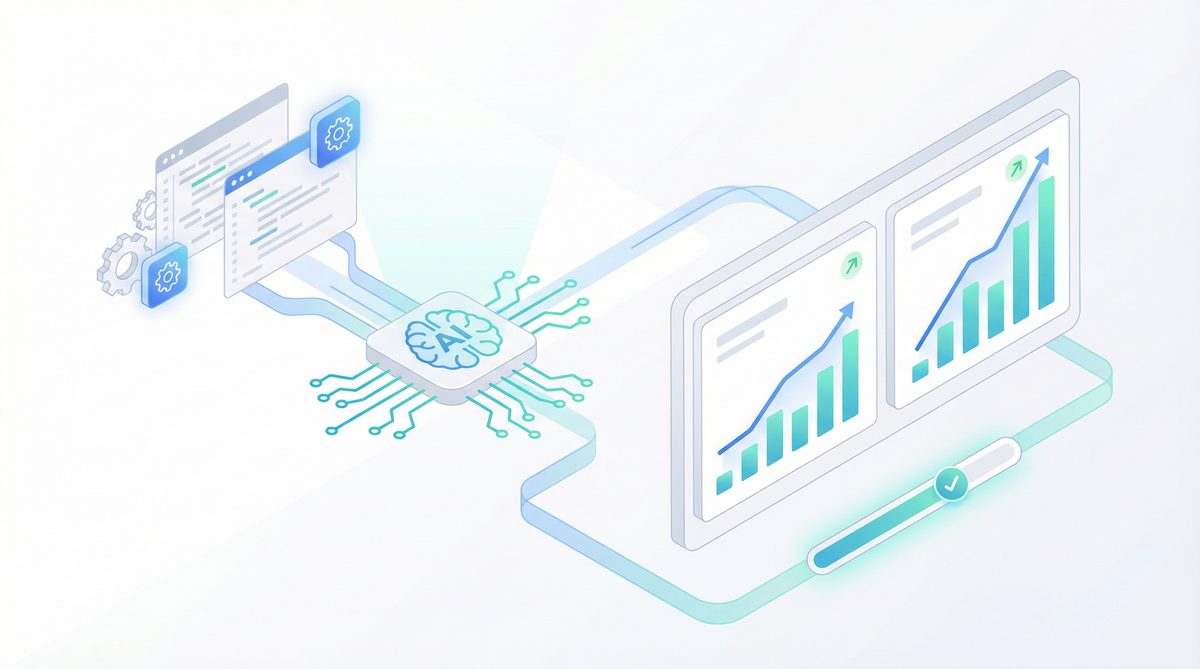
Composable AI Coding Stack: Claude Code, Codex, and Cursor
In 2026, advanced AI coding workflows increasingly leverage multiple specialized models working in concert. Claude Code, OpenAI Codex, and Cursor form a composable AI coding stack that enables developers to orchestrate diverse AI agents based on task complexity and role specialization.
Role-Based Model Routing
One of the most powerful paradigms is Augment Code routing, where different AI models are assigned specific agent roles within the coding pipeline:
- Claude Code: Acts as the generalist front-end agent, managing broad, multi-turn conversations and exploratory coding. It handles brainstorming, drafting, and high-level architectural suggestions.
- OpenAI Codex: Functions as the specialist reviewer and executor. It takes precise instructions from Claude Code and generates sandboxed, verified code snippets or performs code reviews to ensure correctness and security.
- Cursor: Integrates seamlessly with both Claude Code and Codex to provide inline code completions and developer-centric IDE enhancements. Cursor’s capabilities complement the higher-level AI workflows by delivering context-aware suggestions directly within the coding environment.
Benefits of the Composable Stack Approach
- Improved Accuracy: Leveraging Codex’s deliberate, sandboxed generation within Claude Code’s interactive environment balances speed with reliability.
- Enhanced Flexibility: Developers can customize agent roles based on project phases, such as rapid prototyping with Claude Code followed by rigorous testing with Codex.
- Optimized Workflows: This multi-agent setup streamlines complex tasks by routing requests intelligently, reducing the need for manual context switching.
Developers and teams should consider adopting composable AI stacks to maximize productivity and code quality in AI-assisted software development.
The Complete Guide to AI Coding Agents in 2026: Codex vs Claude Code vs Gemini Code AssistClaude Max vs ChatGPT Pro: Premium AI Coding Subscriptions in 2026
At the $100/month price point, two premium AI coding subscriptions dominate: Claude Max and ChatGPT Pro. Both offer enhanced capabilities over their standard counterparts but differ in key areas relevant to developers.
Claude Max
- Performance: Offers access to the fastest Claude Code models with priority compute resources, reducing latency during peak demand.
- Extended Context Windows: Supports longer conversations and codebases, facilitating large-scale refactoring and design discussions.
- Advanced UI Features: Includes sophisticated debugging tools and integrated code review workflows, streamlining developer productivity.
ChatGPT Pro
- Robustness: Built on ChatGPT’s GPT-4 architecture, optimized for general conversational AI with strong coding capabilities.
- Sandboxed Execution: Emphasizes safe code generation in high-risk projects, similar to Codex’s approach.
- Integration: Provides extensive API support for embedding AI assistants into custom developer tools and platforms.
Choosing between Claude Max and ChatGPT Pro depends on workflow priorities: Claude Max excels in rapid, interactive development cycles with extensive UI support, while ChatGPT Pro offers a stable, secure environment for precise coding tasks and integration needs.
Claude Code vs OpenAI Codex in 2026: The Definitive Comparison Guide for AI-Powered DevelopmentBest Practices for Developers Using AI Coding Models in 2026
- Define Task Scope Clearly: Use Codex for narrowly defined, high-precision tasks, and Claude Code for exploratory or broad-scope coding sessions.
- Employ Multi-Agent Workflows: Combine Claude Code and Codex strategically via augment code routing for balanced speed and safety.
- Monitor AI Outputs Actively: Given Claude Code’s need for babysitting, always review generated code and test thoroughly before deployment.
- Leverage Context Windows: Use premium subscriptions to exploit extended context capabilities for complex codebases.
- Integrate AI with Existing Toolchains: Utilize Cursor and API integrations to embed AI assistants seamlessly into your IDE and CI/CD pipelines.
Conclusion
Claude Code and OpenAI Codex represent two complementary approaches to AI-assisted coding in 2026. Claude Code’s speed and interactive design enable rapid ideation and broad problem solving, while Codex’s deliberate, sandboxed approach ensures safety and precision for specific coding tasks. Together with tools like Cursor, they form a powerful composable AI stack that can adapt to diverse developer needs.
By understanding their strengths and deploying them according to well-defined roles, developers can significantly enhance productivity, code quality, and innovation in software development workflows.
Useful Links
- OpenAI Codex Official Blog
- Anthropic Claude AI Platform
- Cursor AI Coding Assistant
- OpenAI API Documentation
- ChatGPT Pro Subscription Details
🕐 Instant∞ Unlimited🎁 Free
Frequently Asked Questions
How does Claude Code handle long coding sessions?
Claude Code supports up to 128k tokens, allowing it to manage entire codebases or large modules in a single session. Its memory management system segments context into hierarchical structures, enabling efficient retrieval of relevant sections without overwhelming the model's attention mechanisms.
What training methods are used for Claude Code?
Claude Code uses a hybrid training approach combining supervised learning on extensive code repositories with reinforcement learning from human feedback (RLHF). This method fine-tunes the model to generate syntactically correct and semantically coherent code while aligning with developer intent.
What are the architectural strengths of OpenAI Codex?
OpenAI Codex is built on dense transformer layers optimized for next-token prediction in multi-language code generation tasks. It excels in translating natural language prompts into code, generating idiomatic and efficient code snippets, and understanding complex coding instructions.
How does OpenAI Codex handle code generation?
Codex is fine-tuned on a massive corpus of publicly available code, employing a mixture of unsupervised pretraining on natural language and code, followed by supervised fine-tuning. This allows it to understand prompts and generate accurate, idiomatic code efficiently.
What are the integration capabilities of Claude Code?
Claude Code integrates seamlessly into development environments, supporting extended dialogues and multi-file generation. Its architecture is designed to maintain context across long sessions, making it ideal for comprehensive code review and refactoring tasks.
What is the focus of Claude Code's architectural design?
Claude Code focuses on safety and alignment, utilizing Anthropic’s Constitutional AI framework. Its design emphasizes context retention and alignment with developer intent, optimizing for sustained coding conversations and accurate code generation.
Get Free Access to 40,000+ AI Prompts
Join 40,000+ AI professionals. Get instant access to our curated Notion Prompt Library with prompts for ChatGPT, Claude, Codex, Gemini, and more — completely free.
Get Free Access Now →No spam. Instant access. Unsubscribe anytime.
