
Introduction
OpenAI is spearheading a transformative initiative to redefine the concept of super apps through an unprecedented integration of advanced artificial intelligence technologies. This initiative envisions a unified agentic super app that transcends traditional multifunctional platforms by embedding autonomous decision-making and adaptive intelligence directly into user interactions. Unlike conventional super apps that primarily aggregate diverse features into a single interface, OpenAI’s agentic super app aims to act proactively on behalf of users—anticipating needs, making complex decisions, and continuously learning from context.
The article OpenAI Unveils AI Superapp Strategy: ChatGPT, Codex, and Agentic AI Merge Into One Platform details OpenAI’s strategic move to combine ChatGPT, Codex, and agentic AI into a unified super app. This integration aligns closely with the rise of agentic super apps discussed here, providing insight into how OpenAI envisions a cross-platform AI ecosystem that streamlines workflows and enhances productivity.
This bold vision is underpinned by a landmark $122 billion funding round, signaling a new era of innovation and ambition in artificial intelligence and digital ecosystems. The magnitude of this capital infusion allows OpenAI not only to accelerate research and development but also to pursue a comprehensive cross-platform deployment strategy that spans mobile devices, desktops, and Internet of Things (IoT) environments.
This article explores the multifaceted dimensions of OpenAI’s agentic super app vision. We begin by tracing the evolution of super apps and the limitations they face, then delve into the technical architecture and components of OpenAI’s unified platform. We examine the strategic implications of the record-setting funding round and detail Codex’s expanding role beyond code generation. Practical use cases illustrate how agentic capabilities reshape workflows and user experiences, followed by a critical analysis of the ethical, privacy, and societal considerations. Finally, we offer a forward-looking perspective on what agentic super apps mean for the future of digital life and human-computer interaction.
The Evolution of Super Apps: From Multifunctional Platforms to Agentic Intelligence
The term “super app” originally emerged from the vibrant mobile ecosystems of Asia, epitomized by platforms such as WeChat, Grab, and Gojek. These apps operate as digital ecosystems, bundling messaging, payments, ride-hailing, e-commerce, and more into a single interface. Their success lies in seamless user experience and convenience, enabling users to perform a multitude of tasks without switching contexts or applications.
Super apps like WeChat revolutionized how users interact with digital services by collapsing many traditionally separate applications into one, drastically reducing friction and increasing engagement. For example, WeChat introduced mini-programs—embedded apps within the app—that allow users to access a variety of services without ever leaving the platform. This ecosystem approach created a network effect, where the value of the app increases as more services and users join, further cementing its place as an indispensable tool in daily life.
However, traditional super apps largely function as feature aggregators or marketplaces of services. Their intelligence is limited to user interface integration and backend service orchestration, with minimal autonomous behavior or decision-making capabilities. For instance, while WeChat allows users to order food, pay bills, and chat, it does not autonomously suggest or execute these actions on behalf of the user without explicit commands.
This limitation has become increasingly apparent as users demand more personalized, anticipatory, and context-aware digital assistants. The proliferation of data and the rise of AI capabilities have created expectations for systems that not only serve as portals to services but also as intelligent partners that anticipate and streamline user needs.
Enter the concept of the “agentic” super app—an evolution that infuses autonomous agency into the core architecture. Agentic super apps are not passive tools; they are active agents capable of understanding user intent, making decisions, learning from interactions, and adapting dynamically to changing environments.
Agentic capabilities transform user interaction paradigms by shifting from command-based inputs to collaborative dialogues where the app can initiate actions and offer proactive solutions. For example, an agentic super app could recognize a user’s travel plans, automatically book transportation, manage itinerary changes, and optimize schedules, all with minimal user intervention.
To illustrate, consider a user planning a business trip. Traditionally, the user would manually book flights, reserve hotels, arrange airport transfers, and coordinate meetings using multiple apps. In contrast, an agentic super app could autonomously handle these tasks by scanning calendar entries, checking preferences, comparing options, and executing bookings—all while continuously updating the user on changes or alerts. This level of autonomy represents a quantum leap in convenience and efficiency.
Artificial intelligence, particularly advances in natural language processing, reinforcement learning, and multimodal understanding, is the linchpin enabling this shift. AI empowers super apps to move beyond static feature sets to intelligent agents that continuously refine their behavior based on data and user feedback, effectively blurring the line between user and machine agency.
Furthermore, the agentic super app model supports personalization at scale. By learning from user behaviors and preferences over time, the app can tailor recommendations, anticipate needs, and reduce redundant interactions. This personalization is not static; it evolves with changing contexts, environments, and user goals, making the technology feel more like a human assistant than a conventional app.
In summary, the transition from multifunctional super apps to agentic super apps marks a fundamental shift—from convenience to autonomy, from aggregation to intelligence, and from reactive tools to proactive partners.
Historical Context and Market Drivers
The rise of super apps was initially driven by market conditions in Asia, where mobile-first economies and limited desktop penetration necessitated the consolidation of services. Users valued the simplicity of a single app for all needs, especially in regions with fragmented service providers and diverse payment systems.
In contrast, Western markets traditionally favored specialized apps, each focused on specific tasks. However, recent trends show a growing appetite for integrated experiences, particularly as AI matures and user expectations evolve. The agentic super app concept leverages these trends, creating opportunities for cross-market expansion and innovation.
Moreover, the acceleration of remote work, IoT adoption, and the growing complexity of digital lives underscore the need for intelligent orchestration of multiple services and devices. Agentic super apps are ideally positioned to meet these demands by offering seamless, context-aware assistance across domains.
Comparative Analysis: Agentic Super Apps vs Traditional Virtual Assistants
While virtual assistants like Siri, Alexa, and Google Assistant have introduced AI-driven interactions, their capabilities remain largely reactive and siloed. They excel at executing direct commands but lack comprehensive autonomy or deep integration across multiple services.
Agentic super apps surpass these limitations by integrating decision-making processes, learning mechanisms, and cross-service orchestration into a unified agent. This holistic approach enables continuous task management, context retention, and proactive behavior that virtual assistants currently do not fully deliver.
For example, a virtual assistant might set a reminder when asked, but an agentic super app could proactively adjust a user’s schedule based on traffic data, meeting changes, and personal preferences, all without explicit prompts.
OpenAI’s Unified Super App Vision: Components and Architecture
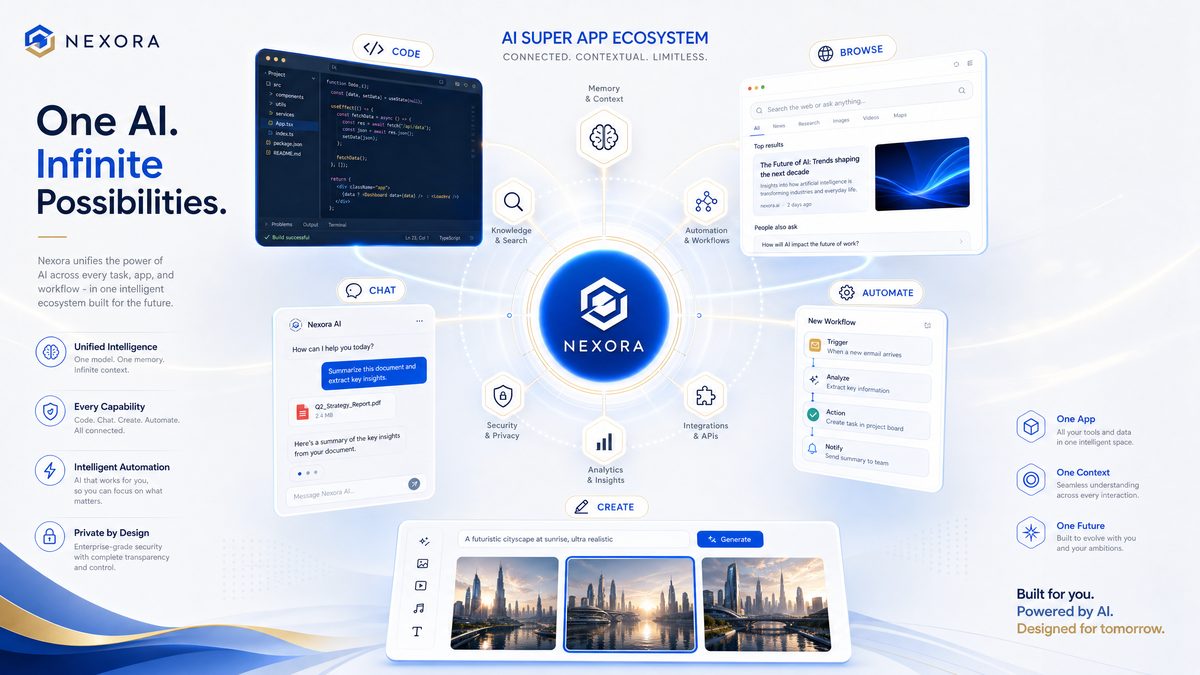
OpenAI’s strategy for realizing an agentic super app centers on the integration of several cutting-edge AI technologies into a cohesive platform that operates seamlessly across devices and contexts. The core components include:
- ChatGPT: Serving as the conversational AI backbone, ChatGPT provides natural language understanding and generation capabilities. It enables fluid dialogue, question answering, and contextual comprehension, facilitating intuitive user interactions.
- Codex: Originally designed as a coding assistant that translates natural language prompts into executable code, Codex is evolving into a versatile agent capable of managing general computer operations. It can automate tasks, manipulate data, and interface with system APIs.
- Browsing and Real-Time Information Retrieval: Integration with live web browsing allows the super app to access and synthesize up-to-date information, ensuring responses and actions reflect the current state of the world.
- Agentic Capabilities: These include proactive decision-making, continuous learning, and adaptive behavior. The super app can anticipate user needs, execute multi-step workflows autonomously, and adjust strategies based on feedback loops.
Underpinning these components is a sophisticated architecture leveraging state-of-the-art models such as GPT-4 and emerging GPT-5 iterations, augmented by reinforcement learning techniques that optimize agent behavior over time. Multimodal inputs enable the super app to process text, voice, images, and potentially video, enriching the interaction modalities available to users.
Cross-platform deployment is a critical design consideration. The super app is engineered to provide a seamless experience whether accessed via smartphones, desktop environments, or IoT devices embedded in smart homes and workplaces. This ubiquity ensures continuous user engagement and context-aware assistance regardless of device or location.
Moreover, OpenAI emphasizes modularity and extensibility, allowing third-party developers to integrate APIs and services, thereby expanding the super app’s capabilities organically and fostering an ecosystem of agentic applications.
The architectural blueprint anticipates rigorous security and privacy frameworks, leveraging encrypted data flows and user consent mechanisms to maintain trust and compliance with global regulations.
Technical Deep Dive: Multimodal Integration and Model Synergy
The agentic super app architecture relies on the seamless fusion of multiple AI modalities. Text-based natural language processing forms the core, but expanding capabilities incorporate speech recognition and synthesis for voice interactions, computer vision for image interpretation, and soon, video understanding to capture complex situational awareness.
This multimodal approach enables richer context comprehension. For example, a user might show a photo of a damaged appliance to the app, which can then diagnose the issue and autonomously schedule a repair appointment. Alternatively, voice commands combined with environmental sensors in IoT devices allow the app to adjust home settings proactively based on user mood or activity.
Model synergy is another key design aspect. ChatGPT handles conversational flow and understanding, Codex manages operational execution, and real-time browsing modules inject current knowledge. Reinforcement learning from human feedback (RLHF) refines decision-making policies, ensuring responsiveness and alignment with user values.
Cross-Platform Challenges and Solutions
Delivering an agentic super app across diverse platforms entails overcoming numerous challenges:
- Latency and Performance: Real-time agentic actions require low latency inference. OpenAI addresses this by deploying distributed cloud infrastructure and leveraging edge computing to minimize delays.
- Data Synchronization: Maintaining consistent state and context across devices necessitates robust synchronization protocols and user profile management.
- Hardware Diversity: The app must adapt to disparate hardware capabilities—from powerful desktops to resource-constrained IoT devices—requiring scalable AI model architectures and adaptive computation.
- Security Across Platforms: Ensuring end-to-end encryption and secure authentication mechanisms prevents data breaches and unauthorized agent actions.
OpenAI’s modular design enables incremental rollout of features adapted to each platform’s strengths, while maintaining a unified user experience.
The $122 Billion Funding Round: Fueling Ambition and Innovation
In one of the most significant funding events in AI history, OpenAI secured a $122 billion investment round from a consortium of leading technology companies, venture capital firms, and strategic partners. This capital injection underscores the confidence of the market in OpenAI’s vision and the transformative potential of agentic super apps.
The breakdown of this funding reveals a diversified portfolio of investors, including cloud infrastructure providers, consumer electronics manufacturers, and enterprise software vendors. This broad base reflects the cross-industry impact anticipated from the agentic super app paradigm.
With this unprecedented budget, OpenAI is poised to dramatically accelerate its research and development timelines. Key strategic priorities enabled by the funding include:
- Scaling Infrastructure: Massive investments in cloud compute resources, data centers, and edge computing capabilities to support real-time AI inference at global scale.
- Talent Acquisition: Recruiting top-tier AI researchers, software engineers, and product designers to advance core technologies and user experience design.
- Cross-Platform Development: Building robust SDKs and frameworks to support deployment across diverse hardware and operating systems.
- Ethics and Governance: Establishing dedicated teams to oversee responsible AI practices, transparency, and compliance.
- Global Expansion and Localization: Funding supports the adaptation of the super app for multiple languages, cultural contexts, and regulatory environments worldwide.
This capital influx also intensifies competition in the AI and super app markets, compelling incumbents and startups alike to innovate rapidly or risk obsolescence. The scale of investment raises questions about accountability, risk management, and the societal impact of accelerated AI deployment.
Strategic Implications for Industry and Innovation
The influx of $122 billion empowers OpenAI to pursue ambitious projects that were previously constrained by financial or technical limitations. For example, the development of GPT-5 and beyond, with enhanced reasoning and multimodal capabilities, becomes feasible at an accelerated pace.
OpenAI’s expanded infrastructure will also support democratized access to AI, enabling developers worldwide to build agentic applications with lower barriers to entry. This could catalyze a new wave of innovation across sectors such as healthcare, finance, education, and entertainment.
At the same time, the funding signals a consolidation of AI leadership, potentially raising concerns about market dominance and the concentration of technological power. OpenAI’s governance structures and collaboration models will be critical in maintaining a balanced ecosystem.
Investor Perspectives and Market Expectations
Investors view the agentic super app as a high-leverage opportunity, expecting long-term value from pervasive AI integration. Their involvement extends beyond capital, often bringing strategic partnerships that facilitate hardware integration, cloud services, and distribution channels.
Market analysts predict that agentic super apps could redefine user engagement metrics, monetization models, and competitive dynamics in mobile and desktop ecosystems. Monetization may shift from advertising to subscription services, value-added AI functionalities, and transaction facilitation.
Codex Beyond Coding: Redefining User-Computer Interactions
Codex has evolved dramatically from its initial incarnation as an AI-driven code generation tool. Today, it serves as a general-purpose agent capable of managing complex computer operations and workflows autonomously. This evolution is central to OpenAI’s agentic super app concept.
Codex can now perform agentic tasks such as automating repetitive workflows, conducting data analysis, orchestrating system maintenance, and interfacing with third-party applications through API calls. For example, a user could instruct Codex to generate a comprehensive report by aggregating data from multiple sources, cleaning datasets, and visualizing results—all executed without manual intervention.
This expanded capability fundamentally blurs the boundary between user and machine agency. Users shift from direct manipulation of software interfaces to delegating high-level objectives to Codex, which then determines the optimal sequence of actions to achieve the desired outcome. This paradigm enhances productivity by reducing cognitive load and task fragmentation.
Moreover, Codex’s natural language interface democratizes access to computing power, lowering barriers for users lacking programming expertise or specialized skills. This has significant implications for accessibility and digital literacy, enabling a broader population to leverage sophisticated computational resources.
Codex’s integration with system APIs and third-party services also facilitates complex multi-application workflows. For instance, in a marketing context, Codex can extract data from CRM systems, analyze customer engagement metrics, generate campaign content, schedule posts, and monitor analytics autonomously.
Nevertheless, the transition to agentic operation introduces challenges. Ensuring reliability and accuracy in autonomous task execution is paramount to maintaining user trust. Error handling mechanisms must be robust, with transparent feedback loops and options for user override. OpenAI continues to refine these aspects, balancing automation benefits with safety and control.
Case Study: Codex in Enterprise Automation
In an enterprise environment, Codex has been piloted to automate IT support tasks. For example, it can detect system anomalies through log analysis, initiate diagnostic scripts, and coordinate remediation actions such as restarting services or applying patches—all while notifying human operators of progress and exceptions.
This reduces downtime and frees human staff to focus on higher-level strategic work. The ability of Codex to interpret natural language requests and translate them into executable commands creates a seamless interface bridging technical complexity and user intent.
Future Directions for Codex
OpenAI plans to enhance Codex’s capabilities by integrating multimodal reasoning, enabling it to interpret visual data such as system dashboards or error screenshots. Additionally, expanding its contextual memory will allow Codex to handle longer workflows with better continuity and adapt to evolving user preferences.
Research is also underway to enable Codex to negotiate and collaborate with other AI agents, opening possibilities for distributed AI ecosystems where specialized agents coordinate to solve complex problems.
Agentic Super Apps in Practice: Use Cases and Early Demonstrations
Early demonstrations of OpenAI’s agentic super app reveal a spectrum of compelling use cases that showcase the platform’s transformative potential:
- Personal Assistant Functions: The super app can autonomously manage calendars, schedule meetings based on user preferences and priorities, handle communications including email drafting and responses, and delegate tasks to connected services or human collaborators. For instance, it might detect an upcoming deadline and proactively allocate time blocks while notifying relevant stakeholders.
- Professional Workflows: Codex-driven automation accelerates software development by generating, testing, and deploying code modules with minimal human intervention. Data researchers benefit from AI-assisted literature reviews, hypothesis generation, and report synthesis, enhancing analytical throughput and insight discovery.
- Cross-Platform Continuity: Users enjoy a seamless transition between devices—starting a task on a desktop, continuing on a smartphone, and receiving context-aware notifications via IoT devices like smart speakers or connected wearables. This continuity ensures persistent awareness and responsiveness across all touchpoints.
- Third-Party Service Integration: The platform supports integration with external APIs ranging from financial services to smart home controls, enabling users to orchestrate workflows that span multiple systems from one conversational interface. Sensitive or irreversible actions should pause for explicit approval, while routine steps can proceed within clear user-defined limits.
These scenarios show where agentic design is most useful: coordinating multi-step work while preserving context across services and devices. Practical deployments should define permissions, approval points, failure handling, and an audit trail before granting an agent broader authority.
Conclusion
The agentic super app shifts the interface from a collection of isolated features toward goal-based assistance. Its value depends not only on capable models, but also on dependable integrations, cross-platform state management, and clear boundaries around autonomous action.
A sound implementation starts with narrow workflows, keeps users in control of consequential decisions, and expands autonomy only after the system proves predictable and recoverable.
