
OpenAI Unveils AI Superapp Strategy: ChatGPT, Codex, and Agentic AI Merge Into One Platform
⚡ The Brief
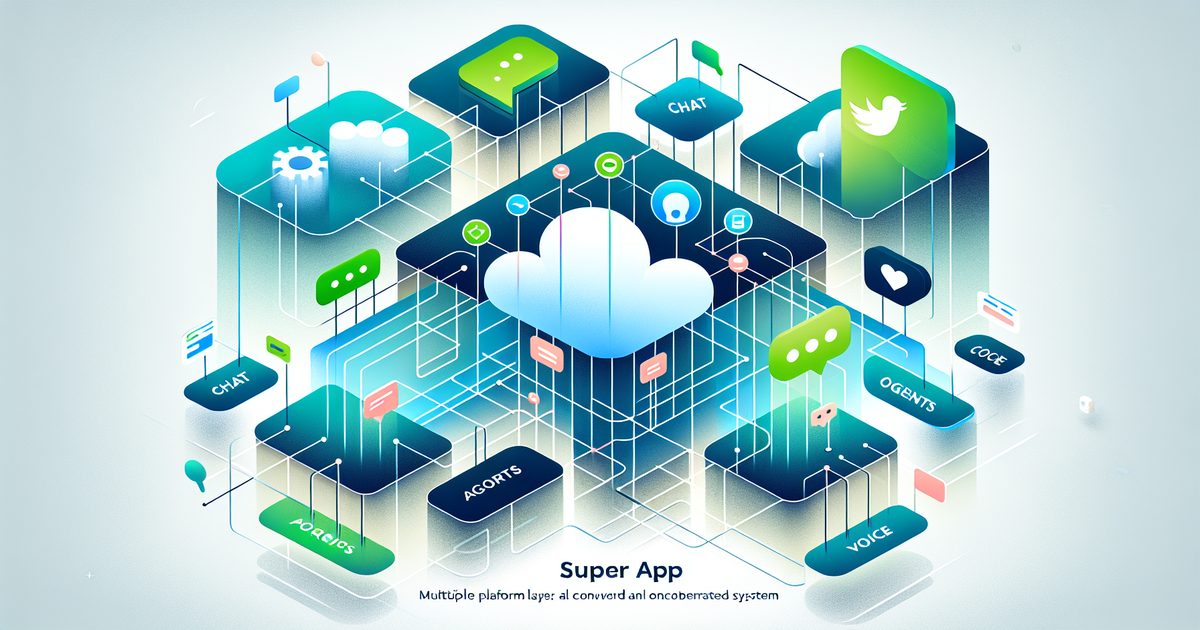
- What it is: OpenAI’s ‘superapp’ strategy merges ChatGPT, Codex, and agentic AI into a single orchestrated product spanning chat, coding, computer-use, and voice.
- Who it’s for: Product leaders, engineers, and enterprise buyers tracking where consumer + developer AI is converging.
- Why it matters: OpenAI is positioning ChatGPT as the default ‘agent router’ — user intent in, right agent + right model out.
- Winners: Consumers get one destination. Developers get unified APIs. Losers: standalone vertical AI apps that don’t plug into the router.
- Bottom line: If you’re building AI products in 2026, you need a plan for the OpenAI superapp — either integrate with it or credibly differentiate against it.
✓ Instant access✓ No spam✓ Unsubscribe anytime

In a landmark announcement following its monumental $122 billion funding round, OpenAI has revealed its ambitious AI superapp strategy that promises to redefine the landscape of artificial intelligence applications. The tech giant is consolidating its flagship AI technologies — ChatGPT, Codex, browsing capabilities, and agentic AI — into a unified, agent-first platform designed to serve an ever-growing global user base. This move not only enhances user experience but also positions OpenAI at the forefront of AI innovation with the upcoming launch of GPT-5.4. With a staggering 900 million weekly users and a revenue generation of $2 billion per month, OpenAI’s superapp is set to become the definitive AI ecosystem for developers, enterprises, and consumers alike.
The Genesis of OpenAI’s Superapp Vision
OpenAI’s new AI superapp strategy emerges as a natural evolution from its previous successes. ChatGPT, the conversational AI that revolutionized human-computer interaction, and Codex, the powerful code-generation model, have both been standalone pillars of OpenAI’s product suite. However, as AI capabilities expanded, so did the demand for more integrated, seamless solutions that could tackle diverse tasks within a single environment.
By merging these technologies with enhanced browsing features and agentic AI — which enables autonomous decision-making and task execution — OpenAI is crafting a platform that is not just reactive but proactively assists users in complex workflows. This agent-first experience is tailored to anticipate user needs, provide contextual insights, and automate multi-step processes.
Industry analysts have noted that this integration is reminiscent of superapps popularized in other tech sectors but tailored for the AI era, combining natural language processing, code synthesis, real-time data access, and autonomous AI agents into one cohesive interface.
Key Components of the AI Superapp
- ChatGPT Integration: Enhanced conversational abilities with GPT-5.4, offering deeper understanding, improved context retention, and more human-like interactions.
- Codex Inclusion: Seamless code generation and debugging tools embedded directly within the platform, accelerating software development cycles.
- Browsing Capabilities: Real-time internet access enabling up-to-date information retrieval, fact-checking, and dynamic content generation.
- Agentic AI: Autonomous agents capable of executing multi-step tasks, decision-making, and proactive assistance based on user goals.

GPT-5.4: The Powerhouse Behind the Superapp
The imminent launch of GPT-5.4 is a cornerstone of this superapp strategy. This model iteration pushes the limits of AI language understanding and generation, delivering unprecedented accuracy, nuance, and versatility. GPT-5.4 is engineered to support the complex interactivity required by the agentic AI framework, enabling more sophisticated autonomous behaviors and personalized experiences.
OpenAI’s engineering team has emphasized that GPT-5.4 improves not only raw performance metrics but also the ethical guardrails and safety features embedded within the model. This ensures responsible AI usage even as the platform scales to hundreds of millions of users worldwide.
With 900 million users interacting weekly, the superapp’s massive adoption underscores the demand for integrated AI tools that can handle everything from casual queries to enterprise-level automation. At an impressive $2 billion in monthly revenue, OpenAI’s approach also validates the commercial viability of advanced AI services at scale.
Transforming Developer and User Experiences
Developers leveraging
The broader implications of these developments are examined in detail in How to Use OpenAI Codex and Claude Code Together: A Complete Developer Setup Guide, where we analyze the technical foundations, compare alternative approaches, and outline actionable next steps for professionals adopting these tools.
will find the superapp indispensable for rapid prototyping and production deployment. By embedding Codex directly into the AI superapp, users can iterate on software projects with immediate natural language feedback and code suggestions, dramatically reducing development time.For general users and businesses, the amalgamation of browsing and agentic AI capabilities means access to a highly intelligent assistant that can research, summarize, and act on information autonomously. This reduces cognitive load and increases productivity across myriad domains such as customer service, content creation, and data analysis.
Competitive Landscape and Market Implications
OpenAI’s superapp announcement sends ripples throughout the AI industry. Competitors like Anthropic’s
The broader implications of these developments are examined in detail in How Development Teams Are Adopting AI Coding Assistants in 2026: Codex and Claude Code in Production, where we analyze the technical foundations, compare alternative approaches, and outline actionable next steps for professionals adopting these tools.
and various AI tool providers are challenged to match the scope and integration levels OpenAI now offers. The superapp’s agent-first philosophy also pushes the boundaries of what AI assistants can do, moving beyond scripted responses to genuine agency and collaboration.Market analysts predict that this consolidation will drive further investment into multi-modal AI and agentic technologies, fostering an ecosystem where AI not only answers but acts on behalf of users in complex environments. The $122 billion funding round fueling this development signals investor confidence in AI’s transformative potential.
Looking Ahead: The Future of AI Superapps
OpenAI’s strategy represents a paradigm shift in how AI services are packaged and delivered. By uniting powerful models and autonomous capabilities within a single platform, the superapp approach promises to create more intuitive, efficient, and impactful user experiences. This will likely inspire a new generation of AI innovations and redefine standards for
For a deeper exploration of how these capabilities apply in practice, our comprehensive analysis in Mastering ChatGPT Prompts in 2026: The Practitioner’s Framework for Structured, High-Impact Prompting provides detailed walkthroughs, benchmarks, and implementation strategies that complement the concepts discussed in this article.
and AI interaction design.As OpenAI continues to roll out GPT-5.4 and iterate on its agentic AI framework, the industry will be watching closely to see how this superapp shapes productivity, creativity, and enterprise workflows across sectors. One thing is clear: the future of AI is unified, intelligent, and agent-driven.
Access 40,000+ AI Prompts for ChatGPT, Claude & Codex — Free!
Subscribe to get instant access to our complete Notion Prompt Library — the largest curated collection of prompts for ChatGPT, Claude, OpenAI Codex, and other leading AI models. Optimized for real-world workflows across coding, research, content creation, and business.
Access Free Prompt LibraryFrequently Asked Questions
What is OpenAI's 'superapp' strategy?
OpenAI is consolidating ChatGPT, Codex (coding), Computer Use (desktop agent), Advanced Voice, Images 2.0, and autonomous agents into a single product surface. User intent is routed to the right specialist agent + model automatically, rather than the user choosing a tool per task.
How is this different from what ChatGPT already is?
Today ChatGPT is primarily a chat interface with some tools attached. The superapp vision treats ChatGPT as an 'agent router' — a front door to a set of specialized capabilities (coding, desktop control, voice, research, image generation) orchestrated automatically based on what the user asks for.
Does this affect developers building on the OpenAI API?
Yes, significantly. The same capabilities exposed in the superapp are available to developers through unified API surfaces — Assistants, Codex API, Computer Use API, Realtime API. Teams that align with OpenAI's orchestration primitives get leverage; teams that build parallel routing/orchestration risk duplicating work that OpenAI will ship for free.
What happens to competing AI apps?
Apps that offer thin wrappers over OpenAI models — especially in chat, writing assist, basic coding, and research — face significant pressure. Apps that own proprietary data, workflows, or vertical integrations are less affected. Expect a wave of consolidation in mid-market AI productivity tools.
Is OpenAI trying to compete with Apple, Google, and Microsoft?
Directly, yes. The superapp strategy positions ChatGPT as the primary consumer AI interface — the role Siri, Google Assistant, and Copilot currently hold. This is why Microsoft's deepening Copilot investment and Google's Gemini push into Pixel/Chrome matter: they're defending against ChatGPT becoming the default.
Should I wait for the OpenAI superapp before building anything?
No. But do design with the assumption that OpenAI will own the general-purpose agent layer, and focus your moat on data, domain expertise, workflow integration, or distribution — things OpenAI cannot easily replicate.
🕐 Instant∞ Unlimited🎁 Free
