
Elon Musk vs OpenAI Trial Concludes: Jurors Reject Lawsuit, Shaping AI Industry’s Future
By Expert AI Writer | June 2024
In a landmark legal battle drawing intense media and industry focus, a California jury has ruled against Elon Musk’s lawsuit targeting OpenAI, its CEO Sam Altman, co-founder Greg Brockman, and Microsoft. The verdict, reached after weeks of testimonies and deliberations, effectively dismisses Musk’s claims and raises profound questions on the future of artificial intelligence development, open source innovation, and artificial general intelligence (AGI) governance.
Background: The Origins of the Musk vs OpenAI Dispute
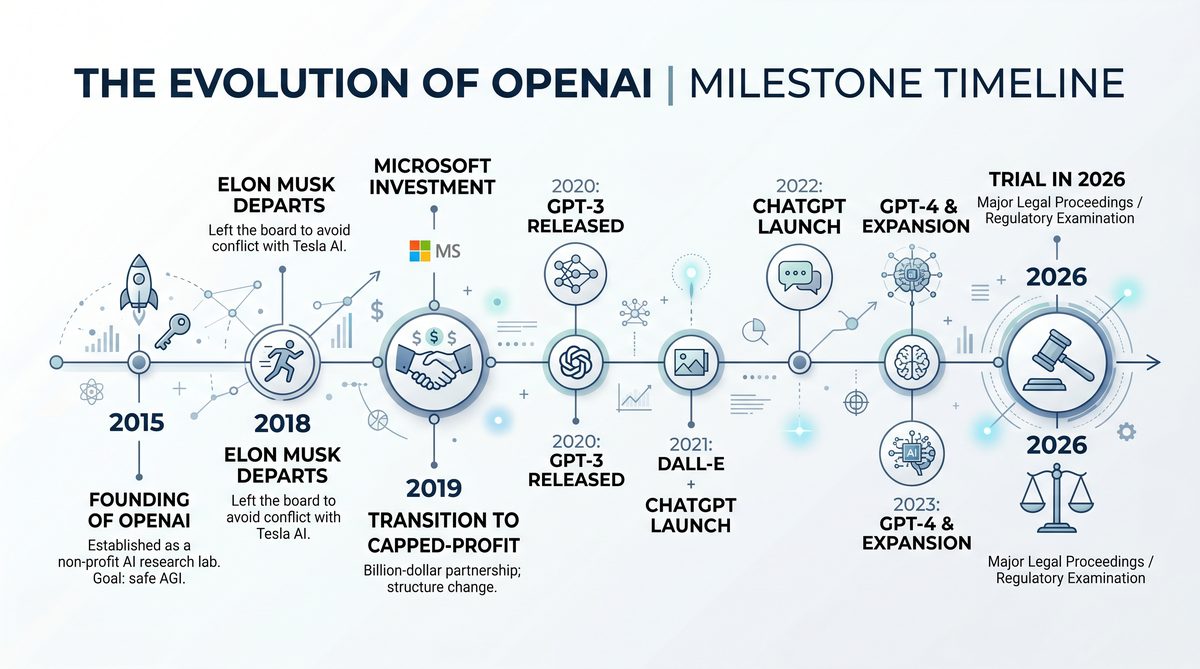
Elon Musk’s involvement with OpenAI traces back to the founding days of the organization in 2015, when he contributed as a notable co-founder and donor. His vision, in alignment with other early proponents, emphasized the creation of a nonprofit AI research institute dedicated to ensuring that advances in AI would be universally beneficial and safe. Musk’s early support centered on fostering transparency, open source cooperation, and broad academic collaboration in AI research. However, by 2018, Musk severed ties with OpenAI, citing conflicts of interest with Tesla’s competitive AI development efforts, as well as wariness over OpenAI’s pivot from its pure nonprofit roots.
Following his departure, Musk grew publicly critical of OpenAI’s strategic shift towards a capped-profit model, which was designed to attract capital and talent by offering financial incentives balanced by ethical commitments. This transition facilitated partnerships with significant corporate entities, most notably Microsoft’s multi-billion dollar investment and integration of OpenAI’s models into Azure cloud services. Musk’s criticism intensified amid concerns that these partnerships and the move away from open source AI research eroded the foundational principles of AI transparency and broad accessibility.
In early 2023, Musk initiated a high-profile lawsuit filed in California Superior Court accusing OpenAI, Sam Altman, Greg Brockman, and Microsoft of breaches including breach of contract, illegal use of proprietary information, and anticompetitive monopolistic behaviors. The lawsuit alleged that OpenAI violated its original charter and co-founder agreements by restricting access to advanced AI models, engaging in secretive partnerships, and consolidating power in ways that could stunt the broader AI ecosystem’s growth. Musk framed these allegations within a broader appeal to global AI safety concerns, warning that consolidative practices threaten the responsible development and governance of artificial general intelligence (AGI).
The lawsuit specifically highlighted Musk’s view that OpenAI’s concentrated ownership over AGI research and IP could create dangerous market monopolies, reduce transparency, and increase risks by centralizing control over technologies that could profoundly impact human society. He argued that OpenAI had forsaken its ethical commitments to ensure AI benefits are widely shared, favoring instead corporate profit and influence.
Trial Details: Proceedings, Key Arguments, and the Statute of Limitations Issue
The trial began in early 2024 in the California Superior Court, held before a jury of twelve citizens selected for their varying experiences in business, technology, and law. The courtroom became the focal point of intense public and industry scrutiny, reflecting the high stakes of AI’s ongoing evolution. Opening arguments from Musk’s legal team framed OpenAI as having “broken its solemn promise” to maintain open access to groundbreaking AI technology and instead locking it behind corporate exclusivities enabled by Microsoft’s investment and infrastructure dominance.
Musk’s lawyers offered a trove of evidence including leaked internal communications, email correspondences, and contract drafts to argue that OpenAI covertly reneged on transparency commitments. They asserted the partnership with Microsoft was structured to monopolize AI advancements, locking out competitors and limiting public benefits. Expert witnesses testified about how closed development models threaten innovation environments and exacerbate AI safety risks by reducing external scrutiny.
Conversely, OpenAI’s legal team, supported by testimony from CEO Sam Altman and co-founder Greg Brockman, emphasized the legal transformation of their organizational structure as essential for scaling development while managing financial sustainability. They highlighted the widely publicized capped-profit model defined explicitly to balance commercial viability with societal benefits, including mandatory safety research investment. Altman and Brockman described the Microsoft partnership as pivotal for access to cutting-edge cloud infrastructure, accelerating AI model training capabilities beyond what OpenAI could achieve independently.
Microsoft’s representatives testified that their role was supportive and compliant with antitrust laws, underscoring that their investment aimed to democratize access to powerful AI technologies rather than exploiting a monopolistic position. They challenged Musk’s allegations as speculative, emphasizing the competitive, global AI market featuring numerous players.
A major turning point during the trial was the focus on the statute of limitations. OpenAI’s defense successfully argued that many of Musk’s allegations were based on actions and contracts from 2018-2019, which under California law, were governed by two- to four-year filing deadlines depending on the claim category. They insisted that these claims were time-barred and thus should be dismissed as a matter of law. Despite Musk’s attempts to frame ongoing breaches or new violations, the judge ruled that most of the court’s attention must be limited to recent conduct and contract terms.
The narrowing of claims fundamentally changed the dynamic of the remaining litigation. Jurors’ assessments of witness credibility, inconsistencies in testimonies, and the technical complexity of AI development and business models created a challenging deliberative environment. The trial showcased the difficulties courts face adjudicating issues at the AI frontier where technology outpaces legal precedent.
The Verdict: Jury Rejects Musk’s Claims
After several days of intense deliberation, the jury returned a unanimous verdict rejecting all of Elon Musk’s claims against OpenAI, Sam Altman, Greg Brockman, and Microsoft. The decision was publicly announced on June 12, 2024, marking a decisive legal victory for the defendants and reinforcing OpenAI’s business trajectory amidst questions of AI ownership and governance.
In their formal explanation, jurors cited insufficient evidence supporting breach of contract claims or allegations of unlawful monopolistic behavior. Several noted that OpenAI’s adaptation of its business model was consistent with evolving industry norms and within the scope of existing agreements. The critical dismissal of claims under the statute of limitations significantly undermined the lawsuit’s foundation, contributing to the verdict.
Legal analysts have described this outcome as a landmark case illuminating the complexities where emerging technology development intersects with traditional corporate governance and intellectual property law. Some view the verdict as setting important precedent for the treatment of AI research organizations navigating between nonprofit ideals and market realities. This ruling clarifies the legal latitude companies have when evolving operating models in high-tech sectors.
Elon Musk publicly reacted via Twitter, expressing respect for the court’s decision while reiterating his ongoing concerns about AI’s rapid development trajectory and potential risks if corporate entities hold disproportionate influence. Musk’s statement called for renewed discourse on international AI policy, transparency mandates, and multi-stakeholder governance, emphasizing that the broader debate over AGI safety remains unfinished.
Massive Implications: Impact on AI Industry, Open Source, and AGI Governance
The ruling in the Musk vs OpenAI case holds profound implications for multiple dimensions of artificial intelligence’s future.
- AI Industry Dynamics: The verdict solidifies OpenAI’s operational model and its powerful alliance with Microsoft, enabling continued massive investments in AI research and product development. This legal affirmation is likely to embolden OpenAI to intensify efforts to commercialize AI technologies and compete globally. Moreover, it may encourage other AI firms to adopt hybrid organizational models combining capped-profit motives with commitments to public interest, reflecting a new paradigm in AI enterprise strategies.
- Open Source Debate: The case rekindled critical discussions around open source values in AI. While the ruling supports OpenAI’s limited openness in favor of strategic partnerships, it underscores tensions between proprietary development and communal innovation. Industry advocates and academic voices argue that clearer regulatory frameworks and community-driven standards are essential to preserving AI accessibility, preventing undue concentration of power, and fostering collaboration in AI model development.
- AGI Governance and Safety: Musk’s arguments underscored AGI’s unique governance challenges—technologies potentially capable of transformative social and economic impacts demand robust oversight. The verdict spotlights gaps in current legal and regulatory systems, which remain inadequate in managing emerging risks from AGI. This fuels calls within governments, international organizations, and civil society for comprehensive AI safety standards, transparency mandates, and multilateral governance architectures enabling stakeholder inclusion and risk mitigation.
These multifaceted impacts confirm that the lawsuit’s conclusion is not the final chapter in the evolving discourse on the ethical, legal, and technological dimensions of AI innovation.
For readers interested in understanding the evolving AI legislation landscape and related governance challenges, comprehensive insights are available through our coverage on AI legal frameworks and policy development
The trial outcome removes a significant legal overhang just as OpenAI prepares for its historic initial public offering, which our detailed analysis of OpenAI’s IPO filing timeline and implications for the broader AI industry explores in depth. Read the full article: OpenAI Prepares for IPO Filing: What the 2026 Public Debut Means for the AI Industry.
. In addition, our in-depth analysis of the open source AI movement and industry trends offers critical context for those monitoring the changing competitive environment in AI research and products
Musk’s core argument centered on OpenAI abandoning its nonprofit mission, a transformation we analyzed comprehensively in our examination of why OpenAI pivoted from pure research to enterprise deployment and the $14 billion funding decisions that drove that strategic shift. Read the full article: The $14 Billion Question: Why OpenAI is Pivoting from Pure Research to Enterprise Deployment.
. To stay informed on the latest developments in AI safety initiatives and international policy proposals, please refer to our regularly updated reports here:
With the legal cloud now cleared, OpenAI can accelerate its enterprise AI agent strategy, which relies on the sophisticated infrastructure architecture detailed in our comprehensive guide to AI agent infrastructure covering orchestration, sandboxing, and deployment patterns. Read the full article: The Ultimate Guide to AI Agent Infrastructure in 2026.
.
Comparative Analysis: OpenAI’s Business Models Versus Traditional AI Organizations
Understanding the significance of the Musk lawsuit requires examining how OpenAI’s operational paradigm contrasts with other key players in the AI ecosystem. The table below compares OpenAI’s capped-profit model with traditional nonprofit and fully commercial AI organizations, highlighting differences in funding structure, governance, research openness, and safety commitments.
| Attribute | OpenAI (Capped-Profit Model) | Traditional Nonprofit AI Organizations | Commercial AI Companies |
|---|---|---|---|
| Funding Sources | Hybrid: charitable donations, capped investor returns, corporate partnerships (e.g., Microsoft) | Charitable foundations, government grants, academic funding | Private venture capital, corporate investment, revenue from AI products |
| Governance Structure | Board with capped-profit stakeholder oversight, mission-focused trustees | Nonprofit board, typically academia or philanthropic leaders | Shareholders and executives, profit-maximization priority |
| Research Openness | Partial openness; selective model releases balancing safety and commercial interests | Fully open research dissemination and open source code | Mostly proprietary; intellectual property central to competitive advantage |
| AI Safety Commitment | Integral to charter; invests significantly in safety research and deployment protocols | Strong focus; often foundational safety research | Varies; some dedicated teams, with regulatory compliance focus |
| Market Orientation | Hybrid: balancing innovation funding and social impact | Non-commercial | Commercial profit driven |
Key Legal and Ethical Lessons from the Trial
The Musk vs OpenAI litigation embodies a nexus of technology, law, and ethics. Several key lessons emerge for stakeholders navigating the increasingly complex AI domain:
- Legal Frameworks Must Evolve with Technology: Traditional contract law and antitrust principles face significant challenges when applied to AI entities balancing innovation speed, ethical commitments, and hybrid business models. This case illustrates the pressing need for updated legal standards that reflect AI’s unique dynamics.
- Transparency and Governance Are Not Simple Binary Choices: OpenAI’s approach exemplifies attempts to strike a middle ground between open access ideals and practical constraints of funding cutting-edge AI research. Future governance models will demand nuance to align commercial incentives with public good.
- Multi-Stakeholder Oversight Is Crucial for AGI Safety: Musk’s safety focus reinforces how global cooperation among governments, industry, academia, and civil society remains essential to manage unprecedented risks posed by AGI. Robust transparency mandates and inclusive regulatory frameworks are urgent imperatives.
- Intellectual Property Needs Careful Balancing: Protecting proprietary innovations must be balanced against risks of monopolies and innovation stifling, especially regarding foundational AI technologies with wide societal impact. This balance continues to be an unsettled issue in AI policy discussions.
Useful Links
- Lawfare: AI Regulation and Legal Challenges
- Google AI Blog: Governance Principles for Responsible AI
- OpenSource.com: Understanding Open Source Software
- Microsoft AI: Commitment to Transparency and Responsible AI
- Future of Life Institute: AI Safety Research
- OECD AI Policy Observatory
- World Intellectual Property Organization: AI and Intellectual Property
Access 40,000+ AI Prompts for ChatGPT, Claude & Codex — Free!
Subscribe to get instant access to our complete Notion Prompt Library — the largest curated collection of prompts for ChatGPT, Claude, OpenAI Codex, and other leading AI models. Optimized for real-world workflows across coding, research, content creation, and business.
