
Comprehensive Guide to Anthropic’s Claude Sonnet 5 (Fennec) Model
An in-depth exploration of Anthropic’s latest AI language model – Claude Sonnet 5, also known as Fennec. Discover its groundbreaking advancements, performance metrics, and practical deployment strategies for engineering teams.
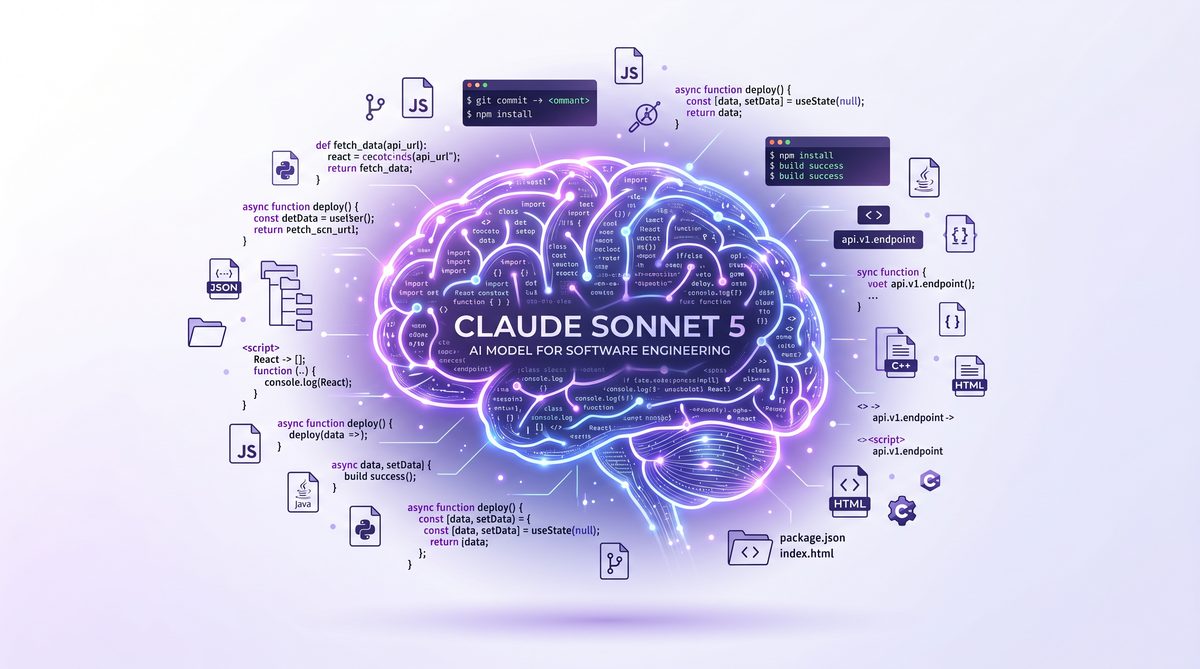
Introduction to Claude Sonnet 5 (Fennec)
Anthropic, a leading organization in building reliable and steerable AI systems, recently unveiled its most advanced large language model, Claude Sonnet 5, codenamed Fennec. This model represents significant leaps in natural language understanding, code generation, and multi-file reasoning. Its design focuses on scaling context length, enhancing coding accuracy, and delivering robust reasoning across complex inputs.
Claude Sonnet 5 builds upon Anthropic’s previous successes and introduces several cutting-edge features to the AI ecosystem, aimed at supporting developers and enterprises with complex workflows, especially in software development and data analysis.
In this guide, we’ll break down everything you need to know about Fennec: from its impressive SWE-bench score and 1 million token context window, to the seamless integration with Claude Code and why it outperforms competitors like Opus in coding tasks. We’ll conclude by detailing how engineering teams can best deploy this powerful model.
Key Features and Performance Metrics of Claude Sonnet 5
Breaking Down the 82.1% SWE-bench Score
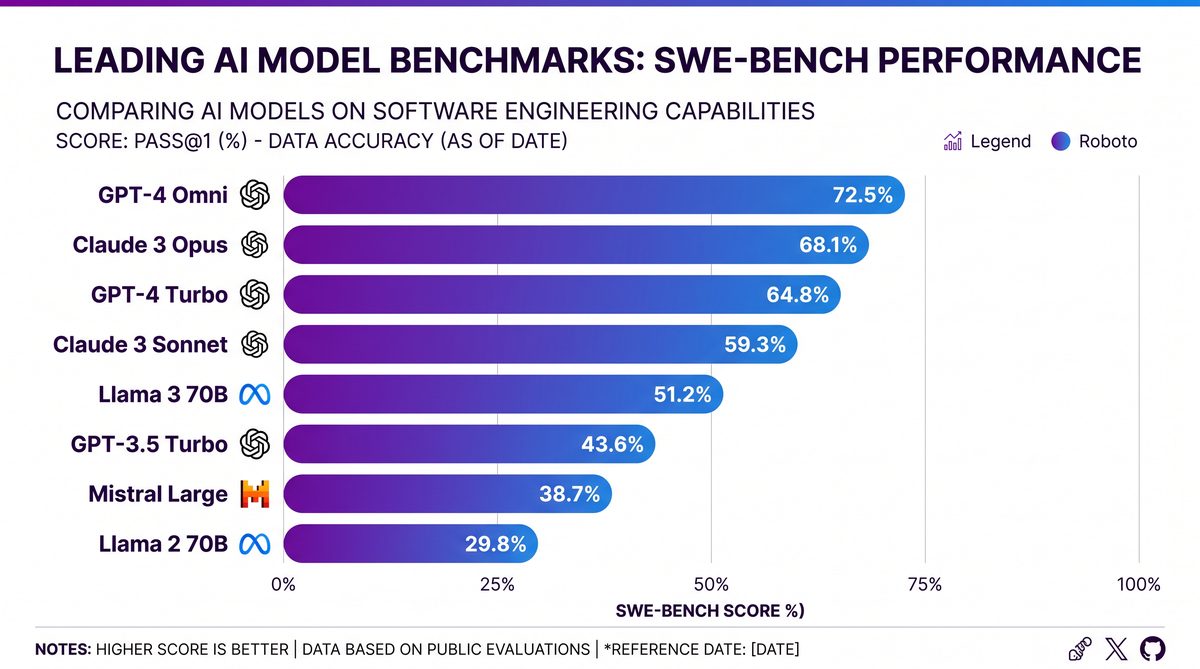
One of the most notable achievements of Claude Sonnet 5 is its outstanding 82.1% score on the SWE-bench. The SWE-bench (Software Engineering Benchmark) is a comprehensive evaluation framework that tests the model’s performance on software engineering tasks such as code generation, bug fixing, code understanding, and documentation.
Achieving 82.1% places Fennec ahead of many state-of-the-art models, demonstrating its deep understanding of programming languages, APIs, and intricate software logic. This score reflects reliability in practical scenarios and indicates the model’s strong problem-solving and reasoning capabilities within codebases.
Unprecedented 1 Million Token Context Window
Claude Sonnet 5 brings to market an unprecedented 1 million token context window. This massive context length allows Fennec to ingest and analyze extremely large documents, datasets, or multi-file projects without losing track of important context.
For comparison, many contemporary models struggle with context windows generally limited to 2k or 8k tokens. With a 1 million token window, Fennec unlocks applications in complex codebases with thousands of files, large legal or scientific documents, and real-time streaming data with superior coherence.
Advanced Multi-file Reasoning and Contextual Awareness
The sizable context window powers Claude Sonnet 5’s ability for multi-file reasoning, which means it can understand interdependencies, function calls, and variable scopes spread across multiple files simultaneously. This is invaluable for software developers dealing with large applications, enabling smarter code navigation, refactoring suggestions, and debugging assistance.
Fennec surpasses earlier models by retaining long-range dependencies and structured knowledge, preserving context across calls and modules, and delivering sophisticated reasoning beyond line-by-line code generation.

Integration with Claude Code and Why Fennec Beats Opus for Coding
Seamless Compatibility with Claude Code
Claude Sonnet 5 is designed to integrate smoothly with Anthropic’s programming-focused AI toolkit, Claude Code. This synergy enables developers to leverage Fennec’s extended context and reasoning alongside robust code generation and editing features tailored for multi-language support and diverse coding paradigms.
By coupling the two, users can harness Fennec’s multi-file reasoning capabilities within developer IDEs, code review platforms, and continuous integration pipelines, increasing productivity and reducing manual overhead.
Why Fennec Outperforms Opus in Coding Tasks
While Opus has been a formidable model for code generation, Claude Sonnet 5 sets a new benchmark in accuracy, context handling, and multi-file understanding. Here are the key reasons Fennec outshines Opus:
- Context Scale: Fennec’s 1 million token context window dwarfs Opus’s more limited capacity, enabling better comprehension of complex, multi-file projects.
- Software Engineering Benchmark: With an 82.1% SWE-bench score, Fennec demonstrates superior coding skill, bug fixing, and logical reasoning abilities compared to Opus.
- Multi-file Reasoning: Fennec’s aptitude at understanding interactions and dependencies across files is unmatched, whereas Opus is more optimized for isolated code snippets.
- Claude Code Ecosystem: The integration with Claude Code allows optimized workflows and fine-grained control for developers that Opus does not provide natively.
The resulting combination means that teams adopting Fennec experience fewer errors, more relevant suggestions, and superior handling of legacy or large-scale codebases.
How Engineering Teams Should Deploy Claude Sonnet 5
Identifying Use Cases
To fully leverage Claude Sonnet 5’s capabilities, engineering teams should identify workflows that benefit from extended context and multi-file analysis. Ideal use cases include:
- Large-scale codebase refactoring and modular redesign.
- Automated code reviews spanning numerous files with cross-referencing.
- Complex debugging sessions where tracebacks or call stacks span multiple source files.
- Documentation generation and code summarization for sprawling projects.
- Data science notebooks and workflows where extensive context is essential.
Deployment Strategies and Best Practices
Engineering teams should consider the following strategies to maximize value from Claude Sonnet 5:
- Context Management: Use incremental context feeding and summarization techniques to manage extremely large projects efficiently.
- Integration with CI/CD: Embed Fennec-powered models within continuous integration pipelines for automated code review and vulnerability detection.
- Secure Environment: Ensure deployment within secure infrastructure, respecting data privacy and compliance requirements.
- Training and Onboarding: Educate engineering teams on best prompt engineering practices to tailor Fennec’s responses optimally.
- API Utilization: Leverage Anthropic’s APIs to customize workflows and integrate Fennec with existing development tools and platforms.
Monitoring and Evaluation
Continuous monitoring of model outputs is essential to ensure reliability. Teams should set up feedback loops and validation mechanisms to track performance metrics and maintain quality over time. Combining Claude Sonnet 5 analytics with human-in-the-loop evaluation can refine model suggestions and tailor outputs to team standards.
For further guidance on deploying models at scale, visit our detailed best practices hub:
Teams evaluating Sonnet 5 will inevitably compare it against OpenAI’s Codex; our comprehensive comparison of Codex versus Claude Code in 2026 breaks down performance benchmarks, pricing, and workflow integration differences to help teams make informed tooling decisions. Read the full article: OpenAI Codex vs Claude Code in 2026: The Complete Guide to AI Coding Assistants.
.
Future Outlook
With the arrival of Claude Sonnet 5, Anthropic has established a new paradigm for AI in software engineering. As the model evolves, expect additional capabilities around reasoning, memory retention, and integration flexibility. Teams investing now in Fennec stand to gain a significant competitive advantage in AI-assisted coding workflows.
For advanced prompts and integration tutorials, check out our repository here:
Sonnet 5 represents the latest milestone in a rapidly evolving landscape; our analysis of how AI coding assistants evolved throughout 2026 provides essential context on the architectural shifts that made models like Fennec possible. Read the full article: The Evolution of AI Coding Assistants in 2026: Codex, Claude Code, and Beyond.
. And don’t miss ongoing updates in the AI engineering community:
While Sonnet 5 excels at enterprise-scale engineering, smaller teams can also leverage Claude’s capabilities effectively; our guide to 15 agentic workflows for small businesses demonstrates practical automation patterns that work with both Sonnet 4.6 and Sonnet 5. Read the full article: Claude for Small Business: Complete Guide to 15 Agentic Workflows.
.
Comparative Performance: Claude Sonnet 5 vs. Opus and Other Leading Models
To better contextualize Claude Sonnet 5’s performance, here is a detailed comparison of key metrics regarding code generation, context window size, and evaluated benchmarks.
| Model | Context Window | SWE-bench Score (%) | Multi-file Reasoning | Code Generation Languages Supported |
|---|---|---|---|---|
| Claude Sonnet 5 (Fennec) | 1,000,000 tokens | 82.1% | Advanced (Inter-file dependency tracking) | Python, JavaScript, Java, C++, Go, Rust, Ruby, and more |
| Opus | 64k tokens (approx.) | 76.5% | Basic (Optimized for isolated snippets) | Python, JavaScript, Java, C#, Ruby |
| OpenAI Codex | 8k tokens | 73.4% | Limited | Python, JavaScript, Java, Go |
| Google PaLM 2 | 128k tokens | 79.0% | Moderate | Python, JavaScript, Java, C++, SQL |
This table highlights Fennec’s clear advantages in context capacity and software engineering proficiency, especially when handling complicated, cross-file coding scenarios. Its support for a broad set of languages further strengthens its applicability in diverse development environments.
Technical Architecture and Innovations Behind Claude Sonnet 5
Understanding Fennec’s architectural innovations provides insight into how Anthropic achieved these leaps in performance. Claude Sonnet 5 incorporates several advanced design choices:
- Hierarchical Context Encoding: This technique allows the model to encode and prioritize information from large documents effectively, maintaining coherence across extensive inputs.
- Adaptive Attention Mechanisms: Fennec employs scalable attention layers optimized to handle extremely long context windows without prohibitive computational costs.
- Steerable AI Safety Layers: Building on Anthropic’s focus on reliable AI, Fennec integrates steerability features for controlled and ethical AI outputs, minimizing hallucinations and harmful content.
- Multimodal Extensions (Experimental): While primarily text-based, Fennec’s architecture is designed to support multimodal input, enabling future integration of code, diagrams, and data visualizations within the same context window.
These architectural choices also facilitate streamlined fine-tuning, allowing organizations to customize Fennec’s behavior for domain-specific applications with less data and compute resources.
Use Case Spotlight: Large-Scale Software Refactoring with Claude Sonnet 5
Consider a software engineering team tasked with refactoring a legacy application consisting of 15,000 source files written in a mix of Java and C++. Identifying redundant code, broken dependencies, and refactoring opportunities manually would be time-consuming and error-prone.
With Claude Sonnet 5, the team can:
- Load the entire project context simultaneously due to the expansive 1 million token window, avoiding partial or fragmented analysis.
- Execute cross-file pattern detection to identify duplicated logic and deprecated APIs.
- Generate update suggestions that reflect changes across function calls and class hierarchies consistently.
- Automatically generate documentation summaries reflecting the updated code base structures and module responsibilities.
This automated assistance greatly shortens turnaround time, reduces the risk of introducing new bugs, and improves maintainability. Moreover, coupling this workflow with the Claude Code ecosystem ensures smooth integration into existing IDEs and automated testing pipelines—streamlining the entire refactoring process.
Useful Links
- Anthropic Official Website
- Claude Sonnet 5 Technical Paper
- SWE-bench Software Engineering Benchmark
- Claude Code GitHub Repository
- OpenAI Codex Overview
- Google PaLM 2 Announcement
- Hugging Face Model Repository
- Advanced Prompt Engineering Techniques
- Best Practices for AI Model Deployment
Access 40,000+ AI Prompts for ChatGPT, Claude & Codex — Free!
Subscribe to get instant access to our complete Notion Prompt Library — the largest curated collection of prompts for ChatGPT, Claude, OpenAI Codex, and other leading AI models. Optimized for real-world workflows across coding, research, content creation, and business.
