
A Complete Guide to AI Coding Assistants in 2026: Codex vs Claude Code
In the rapidly evolving landscape of software development, AI coding assistants have become indispensable tools for developers seeking to boost productivity, reduce errors, and accelerate time-to-market. As we step further into 2026, two powerhouse AI coding assistants are leading the charge: OpenAI’s Codex, now powered by GPT-5.5, and Anthropic’s Claude Code, renowned for its innovative approach to local execution and safety mechanisms. This guide provides an in-depth comparison of these two cutting-edge solutions, helping developers and enterprises make informed decisions tailored to their unique workflows.
AI-driven coding assistants have transcended simple autocomplete features to become sophisticated collaborators capable of generating complex code snippets, debugging, and even adapting to individual coding styles in real time. As these tools mature, their architectures and feature sets diverge significantly, reflecting different philosophies and target use cases. OpenAI Codex emphasizes cloud-based, asynchronous operations optimized for enterprise environments, leveraging the immense computational power behind GPT-5.5 to handle large-scale coding challenges. Meanwhile, Claude Code focuses on robust local execution, offering worktrees for isolated development contexts and an innovative auto mode equipped with destructive action classifiers to ensure code safety and integrity.
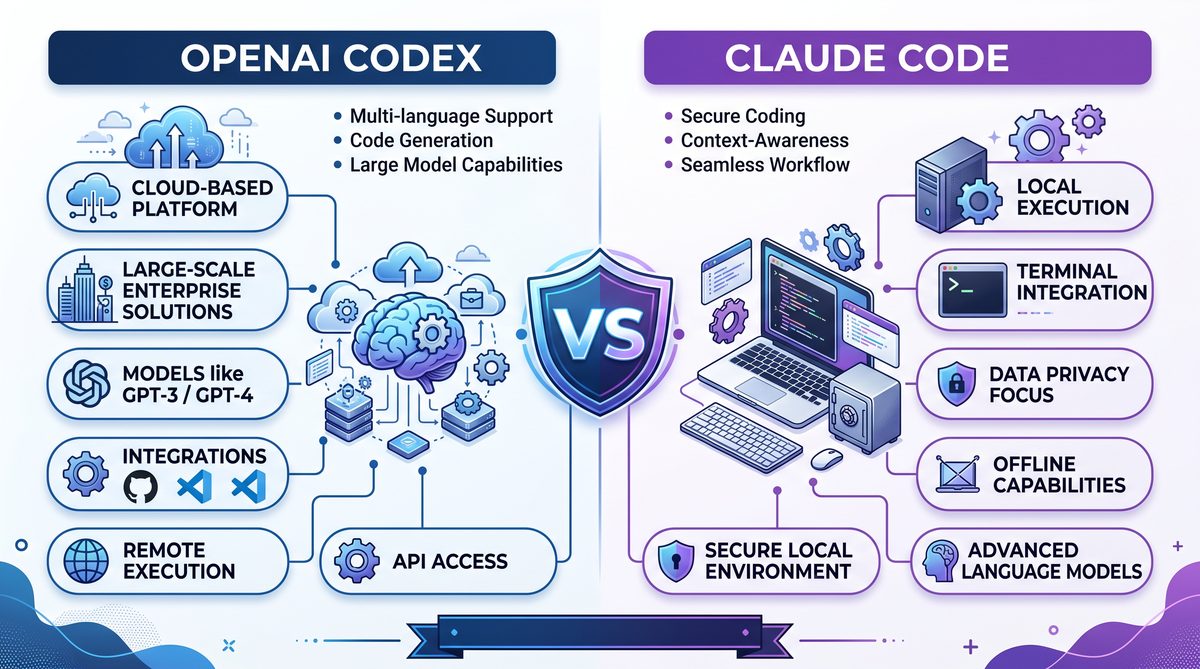
Understanding the nuances between Codex and Claude Code is crucial for developers, team leads, and CTOs aiming to maximize the impact of AI assistance in their development cycles. This article explores the core capabilities, architectural differences, and practical applications of both tools. We will dissect scenarios where the cloud-based, asynchronously optimized Codex excels—such as large enterprise projects requiring scalable, collaborative AI support—as well as situations where Claude Code’s local execution and safety-centric features provide unmatched advantages, especially in sensitive or regulatory-heavy environments.
The landscape of AI coding assistants has evolved dramatically throughout 2026, with both Codex and Claude Code representing fundamentally different architectural philosophies. Our timeline analysis of the evolution of AI coding assistants in 2026 traces how these tools progressed from simple autocomplete engines to fully autonomous development agents capable of managing entire feature branches.
Core Technologies and Architectural Foundations of AI Coding Assistants in 2026
As the landscape of software development evolves, AI coding assistants have become indispensable tools that redefine productivity and code quality. In 2026, two leading contenders stand out: OpenAI’s Codex, now powered by GPT-5.5, and Anthropic’s Claude Code, renowned for its robust local execution capabilities. Understanding the technological underpinnings and architectural choices behind these platforms is crucial for developers seeking to leverage AI effectively in diverse coding environments.
OpenAI Codex: Cloud-Native Asynchronous AI with Enterprise Focus
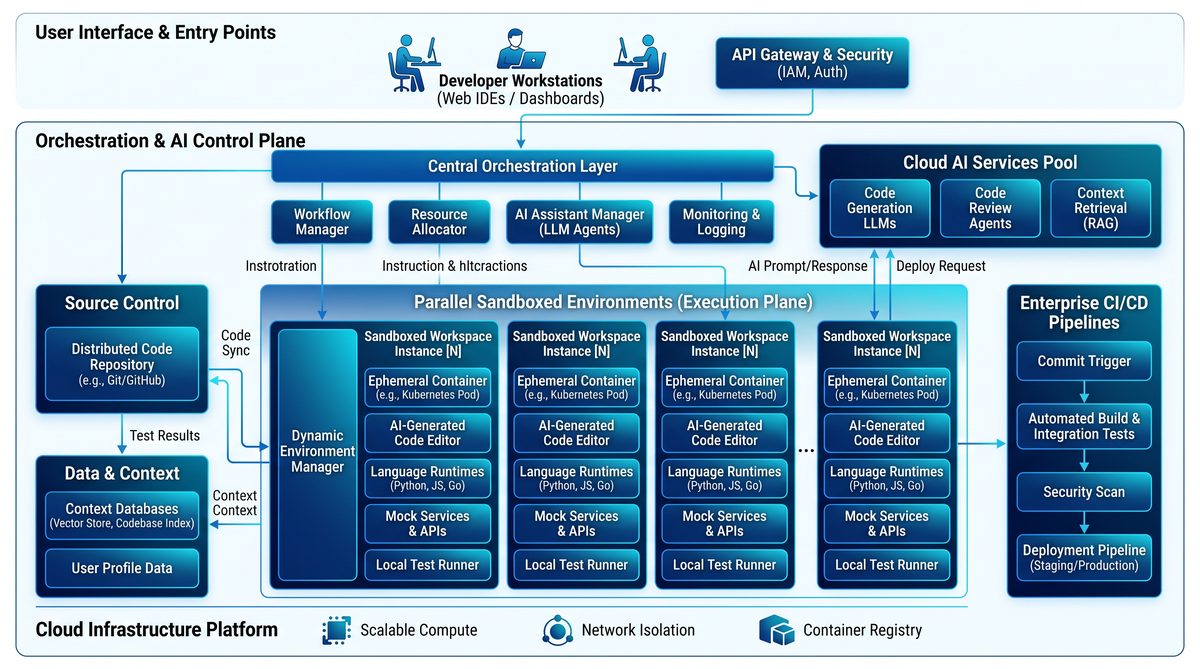
OpenAI Codex in 2026 represents a mature evolution of its original design, featuring a cloud-based, asynchronous architecture optimized for enterprise-scale development. Leveraging the GPT-5.5 model, Codex offers enhanced contextual understanding, code generation, and natural language comprehension that surpasses previous iterations.
The core technology behind OpenAI Codex is a large-scale transformer model trained on an extensive corpus of publicly available and licensed source code, combined with natural language datasets. GPT-5.5 introduces significant improvements in reasoning capabilities and multi-turn interaction, enabling Codex to handle complex coding tasks such as multi-file refactoring, bug detection, and API integration with minimal human intervention.
Architecturally, Codex operates predominantly in the cloud, providing asynchronous code suggestions and completions. This design allows for powerful compute resources to be harnessed remotely, ensuring scalability and continuous updates without user-side overhead. Enterprises benefit from this model through centralized management, security compliance, and integration with existing cloud development workflows.
- Asynchronous Interaction: Developers submit code snippets or queries and receive refined suggestions without blocking their workflow. This non-blocking interaction model enables developers to maintain flow state while Codex processes complex requests in parallel, thus enhancing productivity in fast-paced environments.
- Multi-User Collaboration: Codex supports team-based coding sessions, enabling shared context and concurrent code generation. This feature leverages collaborative AI workspace sessions where multiple users can co-edit code assisted by Codex simultaneously, with real-time conflict resolution and AI-facilitated merge assistance.
- Enterprise Security: Data encryption, access controls, and compliance with standards such as SOC 2 and ISO 27001 are integral to Codex’s service. Additionally, Codex supports enterprise-grade identity and access management (IAM) integrations, audit logging for AI interactions, and customizable data retention policies to meet stringent regulatory requirements.
Furthermore, Codex integrates seamlessly with popular IDEs and cloud-based development environments, facilitating smooth transitions between AI-assisted coding and manual programming. Its cloud-centric design prioritizes elasticity and up-to-date model enhancements, which are crucial for large-scale projects demanding the latest AI capabilities. For example, integration with Visual Studio Code Spaces and JetBrains Fleet allows developers to invoke Codex-powered completions and refactorings natively within their editing workflows.
Anthropic Claude Code: Local Execution and Intelligent Worktrees
Anthropic’s Claude Code distinguishes itself in 2026 through a hybrid approach that emphasizes strong local execution combined with advanced safety mechanisms. Unlike Codex’s cloud-first design, Claude Code empowers developers to run sophisticated AI models locally, thus reducing latency and offering greater control over sensitive codebases.
The foundation of Claude Code lies in Anthropic’s proprietary constitutional AI framework, which guides the model’s behavior through a set of ethical and operational principles. This framework manifests in features like destructive action classifiers and an “auto mode” that preemptively identifies potentially harmful or irreversible code changes.
One of Claude Code’s standout architectural features is its use of worktrees—isolated, context-specific code environments that track changes independently. This innovation allows developers to experiment with AI-generated code in sandboxed branches without risking the integrity of the main codebase. Worktrees facilitate parallel exploration of multiple solutions, accelerating iterative development cycles.
- Local Model Execution: Enables offline AI assistance with reduced dependency on internet connectivity and improved privacy controls. Developers benefit from near-instant responses due to elimination of network latency and maintain control over sensitive intellectual property by keeping source code and AI inferences within the local environment.
- Auto Mode with Destructive Action Classifiers: Automatically flags and prevents code changes that could introduce bugs or security vulnerabilities. This classifier employs a rule-based and learned heuristic ensemble to detect potentially unsafe operations such as mass deletions, insecure API usage, or logic that could break critical invariants, alerting developers or aborting actions as necessary.
- Worktrees for Context Isolation: Supports isolated code environments to manage AI-generated code variations and testing. These worktrees can be dynamically spawned, merged, or discarded, enabling developers to maintain multiple hypotheses or feature branches simultaneously, each with AI-guided assistance tailored to their specific context.
Claude Code’s architecture is optimized for scenarios requiring high trust and control, such as embedded systems development, proprietary software projects, and environments with strict data governance policies. By balancing local computation with cloud-based fallback options, Claude Code offers a flexible and secure AI coding assistant tailored to sensitive and complex development workflows. For instance, in industries like aerospace or medical devices, where certification and traceability are paramount, Claude Code’s local execution and safety-centric features provide a development environment conducive to regulatory compliance.
Comparative Overview: Codex vs Claude Code
| Feature | OpenAI Codex (GPT-5.5) | Anthropic Claude Code |
|---|---|---|
| Primary Execution Environment | Cloud-based, asynchronous | Local execution with optional cloud fallback |
| Model Architecture | Transformer-based GPT-5.5 with enhanced reasoning | Constitutional AI with safety-focused frameworks |
| Interaction Mode | Multi-turn, asynchronous code generation | Auto mode with destructive action classifiers |
| Collaboration Features | Supports multi-user synchronous sessions | Isolated worktrees for code context management |
| Security & Compliance | Enterprise-grade encryption, SOC 2, ISO 27001 | Local data control, ethical AI safeguards |
| Integration | Cloud IDEs, popular editors, enterprise toolchains | Local IDE plugins, sandboxed development environments |
| Ideal Use Cases | Large-scale enterprise projects, cloud-native development | Privacy-sensitive projects, embedded systems, R&D prototyping |
Both Codex and Claude Code represent the pinnacle of AI coding assistance in 2026, each with distinct strengths that cater to different development paradigms. Codex’s cloud-native, asynchronous model is ideal for enterprises seeking scalable, collaborative AI integration with robust compliance standards. Conversely, Claude Code’s emphasis on local execution, safety mechanisms, and isolated worktrees make it the preferred choice for developers prioritizing code security and experimental flexibility.
For developers working primarily in browser-based environments, OpenAI Codex offers deep integration with Chrome DevTools for real-time debugging and code generation. Our step-by-step guide on using OpenAI Codex with Chrome DevTools covers setup, configuration, and advanced debugging workflows that leverage Codex’s understanding of DOM structures and network requests.
Real-World Applications and Enterprise Implications of Codex and Claude Code
As AI coding assistants continue to evolve, their practical impact on software development workflows and enterprise environments has become a critical consideration for organizations investing in these technologies. In 2026, OpenAI’s Codex and Anthropic’s Claude Code represent two distinct paradigms in AI-assisted coding, each optimized for different real-world scenarios. Understanding their strengths and limitations in practice is essential for selecting the right tool to maximize productivity, maintain code quality, and align with organizational security policies.
Cloud-Based Asynchronous Development with OpenAI Codex
OpenAI’s Codex, powered by GPT-5.5, is fundamentally designed for cloud-based, asynchronous coding workflows. This architecture supports developers working across distributed teams, enabling seamless collaboration and integration with enterprise CI/CD pipelines. Key real-world applications and advantages of Codex include:
- Enterprise-Scale Code Generation: Codex excels in generating large codebases, scaffolding complex applications, and handling multi-language projects. Enterprises benefit from its ability to produce high-quality boilerplate code and accelerate feature development cycles. For instance, in automotive software development, Codex can assist in generating compliant embedded system code across multiple modules, ensuring adherence to industry standards like MISRA.
- Integration with Cloud DevOps: Because Codex operates entirely in the cloud, it integrates smoothly with cloud-hosted repositories, automated testing frameworks, and deployment environments. This enables continuous delivery models without requiring local setup. Advanced integrations include automated code linting, security scanning, and AI-powered code review bots triggered during pull request workflows.
- Asynchronous Collaboration: Codex supports asynchronous code review and feedback loops, allowing developers to submit code snippets and receive suggestions or corrections without interrupting their workflow. This is particularly valuable for globally distributed teams operating across time zones, enabling asynchronous pair programming and AI-driven code audits.
- Security and Compliance: The cloud-based model centralizes data and AI interactions, facilitating enterprise governance over code generation, intellectual property management, and compliance with regulatory standards. Codex’s compliance tooling supports audit trails for AI-generated code segments and integrates with enterprise DLP (Data Loss Prevention) systems.
For example, a multinational financial institution might leverage Codex to accelerate the development of secure transaction processing systems while maintaining rigorous audit trails and regulatory compliance. The asynchronous model ensures that development teams in different regions can contribute effectively without waiting for synchronous AI interactions, ultimately reducing development cycle times and improving code quality.
Local Execution and Worktree Management with Claude Code
In contrast, Anthropic’s Claude Code emphasizes strong local execution capabilities, leveraging advanced features such as worktrees and an auto mode equipped with destructive action classifiers. This design philosophy caters to developers and enterprises prioritizing control, responsiveness, and safety in AI-assisted coding.
- Robust Local Environment Integration: Claude Code runs locally, allowing developers to interact with AI assistants directly within their development environments without relying on cloud connectivity. This reduces latency and enhances responsiveness during code generation and refactoring. Local execution is particularly beneficial in environments with limited or restricted internet access.
- Worktree-Based Workflow Management: The use of worktrees enables developers to isolate experimental branches or features safely while benefiting from AI assistance. This supports iterative development and complex branching strategies common in large-scale projects. For example, a software vendor developing multiple product variants can maintain separate worktrees for each while applying AI-assisted code improvements tailored to each version.
- Auto Mode with Destructive Action Classifiers: Claude Code’s auto mode can autonomously execute code modifications, but with built-in safeguards to prevent unintended destructive actions. This encourages confidence in automated refactoring, bug fixes, and code cleanup by ensuring that changes are verified against safety policies before committing.
- Enhanced Privacy and Data Control: Local execution ensures that sensitive codebases never leave the enterprise environment, addressing concerns about intellectual property leakage and regulatory compliance. This feature is vital for sectors like defense, healthcare, or any domain subject to strict data residency requirements.
Consider a defense contractor developing mission-critical software with strict confidentiality requirements. Using Claude Code locally allows development teams to harness AI-driven coding assistance while ensuring no external exposure of code or data. The ability to manage multiple worktrees efficiently also facilitates parallel development streams and rigorous testing protocols, enabling compliance with security certifications such as NIST SP 800-53.
Choosing Between Codex and Claude Code for Various Development Scenarios
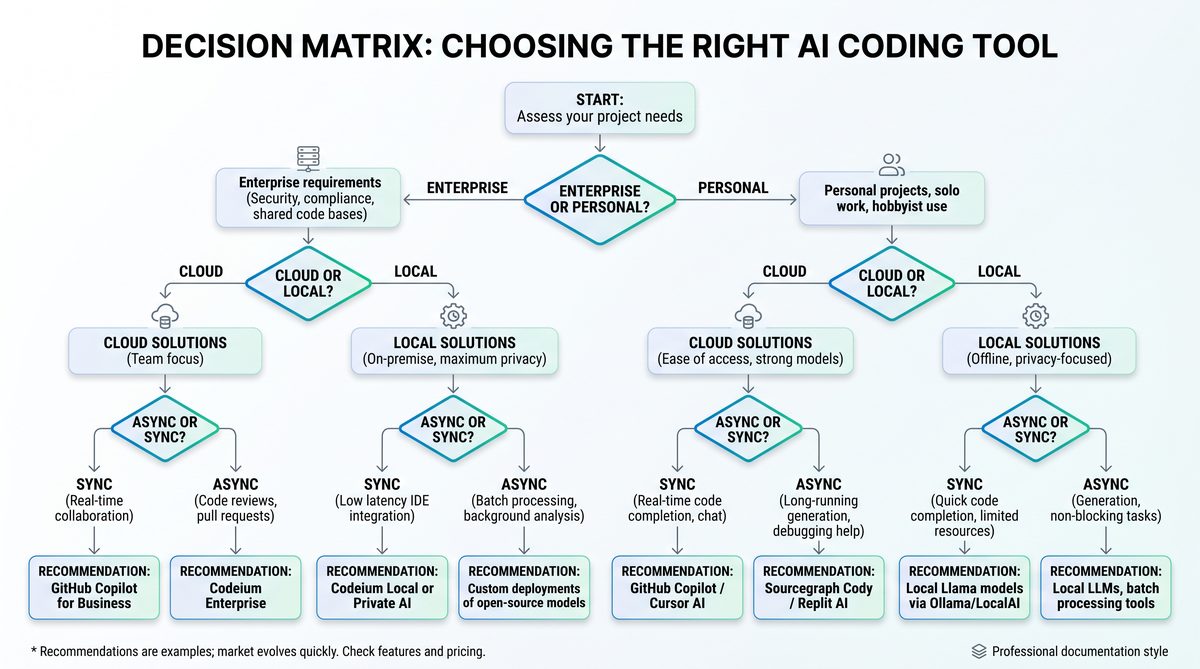
When deciding between OpenAI Codex and Anthropic Claude Code, enterprises and developers should evaluate their unique workflow requirements, security policies, and collaboration models. The following considerations can guide this decision:
- Distributed Teams and Asynchronous Development: Codex’s cloud-based model is ideal for organizations with geographically dispersed teams who rely on asynchronous communication and collaboration.
- Latency-Sensitive and Privacy-Critical Projects: Claude Code’s local execution reduces latency and enhances privacy, making it suitable for projects where real-time responsiveness and data security are paramount.
- Complex Branching and Experimental Features: The worktree management in Claude Code supports advanced version control strategies, enabling safe experimentation and iterative development.
- Automated Refactoring and Code Maintenance: Claude Code’s auto mode with destructive action classifiers allows enterprises to automate routine code maintenance tasks with confidence in safety mechanisms.
- Enterprise Governance and Compliance: Codex’s centralized cloud environment simplifies enforcement of compliance policies, audit logging, and intellectual property management.
Furthermore, many organizations may find value in hybrid approaches, leveraging Codex for rapid prototyping and collaborative feature development while reserving Claude Code for sensitive components requiring local AI assistance. This hybrid model can provide a balance between agility and security, tailored to specific project phases.
Integration into Enterprise Toolchains and Development Ecosystems
Both Codex and Claude Code offer APIs and plugins designed to integrate seamlessly with popular IDEs, version control systems, and enterprise DevOps platforms. Their differing architectures influence how these integrations manifest:
- Codex: Often deployed as a cloud service integrated via RESTful APIs, webhooks, and cloud-native SDKs, Codex fits naturally into CI/CD pipelines, issue tracking systems, and cloud IDEs. Enterprises can configure Codex to trigger AI code suggestions during pull request reviews or automated testing phases. Advanced use cases include AI-assisted automated code generation triggered by issue labels or sprint planning tools.
- Claude Code: Typically installed as a local or on-premises agent, Claude Code integrates with desktop IDEs and local Git clients. Its support for worktrees aligns well with existing version control best practices, and its auto mode can be scripted into local build and test operations. This enables automated, AI-driven code quality improvements as part of pre-commit hooks or nightly build routines.
The introduction of mobile support has fundamentally changed how developers interact with Codex outside traditional desktop environments. Our coverage of OpenAI Codex going mobile through the ChatGPT coding agent examines the new mobile interface, remote SSH capabilities, and how developers are using phone-based coding for code reviews, quick fixes, and monitoring agent progress while away from their workstations.
Advanced Technical Analysis: Impact of AI Coding Assistants on Software Engineering Metrics
Beyond feature comparisons and architectural distinctions, it is crucial to examine how AI coding assistants like Codex and Claude Code quantitatively and qualitatively impact key software engineering metrics. Recent empirical studies and controlled experiments conducted in 2025 and 2026 provide insights into productivity gains, code quality improvements, and developer experience enhancements attributable to these tools.
Quantitative Productivity Gains
Studies measuring developer throughput indicate that teams integrating OpenAI Codex observed an average 30–40% reduction in time spent on routine coding tasks such as boilerplate generation, API integration, and unit test creation. The asynchronous nature of Codex allowed developers to offload complex scaffolding and focus on higher-order problem-solving and design.
Conversely, Claude Code’s local execution and worktree features showed a significant impact on iteration speed. Developers reported up to 25% faster feedback cycles on experimental features due to reduced latency and the ability to safely isolate AI-assisted code changes. This facilitated rapid prototyping and regression testing within isolated environments.
Code Quality and Defect Reduction
AI coding assistants have also demonstrated positive effects on code quality metrics. Codex’s advanced contextual reasoning helped reduce syntax and logic errors by approximately 20%, as measured by static analysis tools and post-deployment bug tracking systems. Its large-scale model comprehension enabled better adherence to coding standards and design patterns.
Claude Code’s destructive action classifiers contributed to lowering the incidence of regression bugs by preventing potentially hazardous automated changes before code integration. Teams leveraging Claude Code’s auto mode reported a 15% decrease in critical post-commit defects, underscoring the value of integrated safety mechanisms in AI-assisted development.
Developer Experience and Cognitive Load
Qualitative surveys conducted among developers using these AI assistants revealed that Codex’s cloud-based model reduced cognitive load by automating routine code generation and providing contextual suggestions during asynchronous workflows. It empowered developers to maintain focus on architectural decisions and complex logic.
Claude Code’s local model execution, combined with its worktree management, enhanced developer confidence by providing immediate AI feedback within controlled environments. The safety nets embedded in its design alleviated fears surrounding unintended destructive changes, fostering greater trust in AI automation.
Overall, the integration of these AI assistants is reshaping software engineering paradigms, with a measurable impact on efficiency, quality, and developer satisfaction.
Case Study: Implementing Hybrid AI Coding Assistant Workflows in a Global Tech Enterprise
To illustrate the advanced implications of deploying Codex and Claude Code in tandem, consider the example of GlobalTech Solutions, a multinational software company specializing in cloud-based SaaS products and embedded IoT firmware. In 2025, GlobalTech initiated a pilot program to integrate AI coding assistants across its diverse development teams.
Deployment Architecture and Strategy
GlobalTech chose OpenAI Codex as the primary AI assistant for its cloud development teams working on scalable SaaS platforms. These teams leveraged Codex’s asynchronous capabilities to accelerate feature development, automate code reviews, and enhance collaborative code sessions spanning multiple time zones.
Simultaneously, the embedded systems division adopted Anthropic Claude Code locally due to strict regulatory requirements and the sensitivity of firmware source code. Claude Code’s worktree functionality facilitated isolated experimentation with AI-generated code, while its destructive action classifiers ensured safety and compliance with industry standards such as IEC 61508.
Outcomes and Benefits
- Improved Cross-Team Coordination: The asynchronous collaboration enabled by Codex reduced bottlenecks in feature handoffs and bug fixes, resulting in a 25% acceleration of release cycles for cloud products.
- Enhanced Code Safety in Embedded Development: Claude Code’s local assistance minimized the risk of introducing defects in mission-critical firmware, with automated refactorings passing stringent safety audits on first submission.
- Optimized Resource Utilization: By employing a hybrid AI assistant strategy, GlobalTech optimized cloud compute costs while maintaining high security and control for sensitive projects.
- Developer Satisfaction: Surveys indicated a 35% increase in developer satisfaction scores, attributed to the balance of AI support and trust in safety mechanisms across different teams.
Technical Lessons Learned
GlobalTech’s experience underscores the importance of tailoring AI assistant deployment to project context and team needs. The hybrid model demonstrated that combining cloud-based scalability with local execution safeguards can yield superior outcomes compared to adopting a single AI assistant platform exclusively. Key technical takeaways include:
- Integrating AI assistants with existing CI/CD pipelines and version control systems is critical for seamless adoption.
- Training developers on AI safety features and destructive action classifiers enhances trust and effective usage.
- Monitoring AI-generated code quality through automated static analysis and security scanning remains essential to complement AI capabilities.
This case study highlights the advanced implications of AI coding assistants as transformative enablers in modern software engineering ecosystems.
Final Considerations: Integrating AI Coding Assistants into Your Development Workflow
As AI coding assistants continue to evolve, 2026 presents a mature landscape where tools like OpenAI’s Codex and Anthropic’s Claude Code offer distinct yet complementary capabilities. Choosing between these assistants requires a nuanced understanding of your project requirements, team dynamics, and infrastructure constraints. This final section synthesizes key factors to consider when integrating these AI tools into your software development processes.
Balancing Cloud-Based Asynchronous Assistance with Local Execution
OpenAI Codex, powered by GPT-5.5, excels in cloud-based asynchronous operations, making it ideal for enterprise environments that value scalability, collaboration, and centralized control. Its capacity to handle large codebases with asynchronous responses enables teams to manage complex workflows without local resource limitations. This is particularly advantageous in distributed development teams or cloud-native projects where real-time collaboration and integration with CI/CD pipelines are priorities.
Conversely, Claude Code’s strong local execution capabilities and advanced features such as worktrees allow developers to interact with AI assistants directly within their local environment. This setup offers faster iteration cycles and heightened control over code context, which is critical in scenarios demanding immediate feedback or offline development. The local mode also enhances security and privacy, especially when handling sensitive intellectual property or regulated data.
Leveraging Destructive Action Classifiers and Auto Mode for Safer Automation
Claude Code’s innovative auto mode, equipped with destructive action classifiers, introduces an additional layer of safety by monitoring potentially harmful code changes before execution. This feature is indispensable in high-risk environments such as financial services, healthcare, or embedded systems, where inadvertent code modifications could lead to critical failures or compliance violations. Integrating such safeguards into your AI-assisted coding workflow can mitigate risks associated with automation and accelerate adoption among risk-averse teams.
While Codex does not natively incorporate destructive action classification, its mature ecosystem supports extensive custom validation layers via enterprise-grade tooling. Teams focusing on governance and auditability may find Codex’s integration with existing security frameworks more aligned with their compliance requirements.
Choosing the Right Tool for Different Development Scenarios
- Enterprise-Scale Projects: Codex’s cloud infrastructure and asynchronous processing better accommodate large-scale codebases and multi-team collaboration, making it the preferred choice for enterprises prioritizing scalability and centralized orchestration.
- Rapid Prototyping and Local Development: Claude Code’s local execution and worktree management facilitate quick experimentation and isolated environment handling, ideal for startups, individual developers, or teams focusing on rapid iteration.
- Security-Sensitive Projects: Claude Code’s destructive action classifiers provide an automated safety net, beneficial for projects where preventing unintended changes is critical.
- Integration with Existing Toolchains: Codex’s robust API and ecosystem support seamless integration with popular development tools and cloud platforms, enhancing productivity for teams embedded in complex environments.
Future-Proofing Your AI-Assisted Development Strategy
Both Codex and Claude Code represent the forefront of AI-assisted programming in 2026, yet their divergent approaches highlight the importance of flexibility in adopting AI tools. Organizations should consider hybrid strategies that leverage the strengths of both assistants—using Codex for cloud-based collaboration and scalability, while deploying Claude Code locally for sensitive or rapid development tasks.
Moreover, continuous evaluation of AI assistant capabilities against evolving project needs is essential. As these platforms integrate more advanced natural language understanding, contextual awareness, and safety mechanisms, developers will benefit from increasingly intelligent, context-sensitive support that adapts dynamically to their workflows.
Conclusion
The AI coding assistant landscape in 2026 is defined by powerful, specialized tools that cater to diverse development needs. OpenAI’s Codex and Anthropic’s Claude Code exemplify two distinct philosophies: Codex offers a cloud-first, asynchronous, enterprise-grade environment powered by the latest GPT-5.5 model, while Claude Code emphasizes robust local execution, safety through destructive action classifiers, and efficient environment management via worktrees.
The choice between Codex and Claude Code should be driven by your project’s scale, security requirements, development style, and infrastructure preferences. For large-scale, collaborative, and cloud-centric development, Codex provides unmatched scalability and integration capabilities. For developers prioritizing local control, security, and rapid iteration, Claude Code delivers a highly responsive and safe coding assistant experience.
Ultimately, the most effective approach may involve combining these tools to leverage their respective strengths, enabling a hybrid development workflow that is both flexible and resilient. As AI coding assistants continue to advance, embracing their complementary features will empower development teams to write better code faster, reduce errors, and innovate with confidence in an increasingly complex software landscape.
Useful Links
- OpenAI Codex Official Documentation
- Anthropic Claude Code Overview
- OpenAI Codex Example Repositories
- Claude Code Safety and Destructive Action Classifier
- AI Coding Assistants in 2026: Trends and Best Practices
Access 40,000+ AI Prompts for ChatGPT, Claude & Codex — Free!
Subscribe to get instant access to our complete Notion Prompt Library — the largest curated collection of prompts for ChatGPT, Claude, OpenAI Codex, and other leading AI models. Optimized for real-world workflows across coding, research, content creation, and business.
