
What Is Claude for Small Business
Introduction to Claude for Small Business
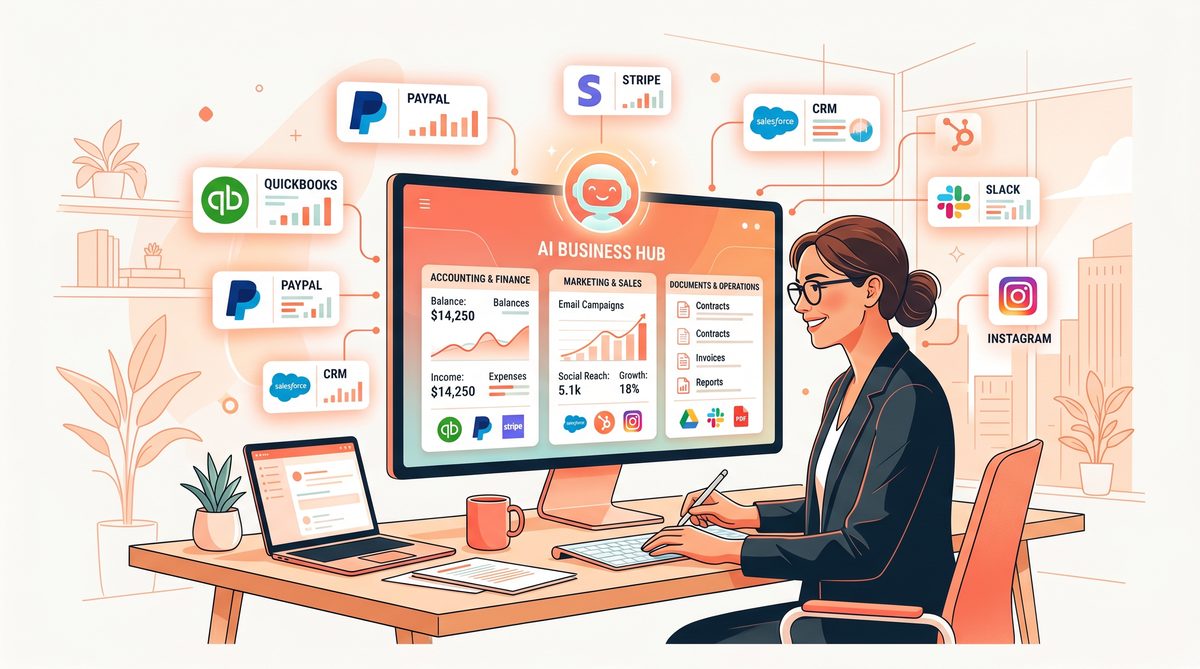
Launched on May 13, 2026, Claude for Small Business represents a significant leap forward in AI-powered workflow automation tailored specifically for the needs of small and medium-sized enterprises (SMEs). Integrated within the Claude Cowork platform, this new offering is designed to seamlessly connect with a variety of essential business applications, enabling small businesses to leverage artificial intelligence without the complexity traditionally associated with enterprise-grade AI tools.
At its core, Claude for Small Business is an intelligent assistant platform that combines robust AI capabilities with practical integrations, empowering businesses to automate and streamline critical operational workflows while maintaining full control through mandatory user approvals on all actions.
Key Integrations and Connectivity
One of the standout features of Claude for Small Business is its ability to connect with a diverse set of widely used business applications. These integrations enable automated data exchange and task execution across multiple domains, helping small business owners and their teams reduce manual effort and improve operational efficiency. The platform currently supports direct integration with:
- QuickBooks: Automate financial record-keeping, transaction categorization, and month-end close procedures.
- PayPal: Streamline payment processing, reconciliation, and cash flow tracking.
- HubSpot: Enhance CRM workflows, including lead nurturing, campaign management, and customer communication tracking.
- Canva: Facilitate design asset creation and management for marketing campaigns.
- Docusign: Automate contract generation, sending, and signature tracking.
- Google Workspace and Microsoft 365: Integrate document collaboration, email workflows, scheduling, and data management.
These integrations reflect a strategic understanding of the typical small business technology stack, enabling Claude to act as a centralized AI assistant that bridges disparate tools and data silos.
Agentic Workflows: 15 Ready-to-Run Automation Templates
Claude for Small Business introduces 15 pre-built agentic workflows that cover critical operational and administrative functions. These workflows are designed to be “ready-to-run” with minimal configuration, significantly lowering the barrier for adoption. Some of the key workflows include:
- Month-End Close: Automates data aggregation, reconciliation, and closing report preparation by pulling data from QuickBooks and PayPal, then generating summaries for user review.
- Payroll Forecasting: Uses historical payroll data and scheduling information to project future payroll expenses, helping with cash flow planning.
- Invoice Chasing: Automatically identifies overdue invoices, drafts personalized reminder emails via Outlook or Gmail, and tracks responses.
- Campaign Management: Integrates with HubSpot and Canva to orchestrate marketing campaigns, from asset creation to lead tracking and performance reporting.
- Contract Handling: Streamlines contract generation and signature workflows through Docusign, including reminders for expiring contracts or renewals.
All actions performed by these workflows require explicit user approval before execution, ensuring compliance and preventing unintended consequences. This balance of autonomy and control is crucial for small businesses that often have limited staff but cannot risk errors or compliance issues.
Addressing the AI Adoption Gap in Small Business
Small businesses contribute approximately 44% of the United States GDP, underscoring their critical role in the economy. Despite this significance, only about 7% of small businesses have deeply integrated AI technologies into their operations as of early 2026. Claude for Small Business aims to bridge this adoption gap by providing accessible, practical AI capabilities tailored for smaller enterprises without requiring extensive technical expertise or costly implementations.
To accelerate AI fluency and adoption, the Claude team offers a free AI Fluency course designed to educate small business leaders and their teams on the potential and practical use cases of AI in daily operations. Complementing this educational initiative, Claude Cowork is launching a 10-city US workshop tour throughout 2026, providing in-person training, demonstrations, and networking opportunities focused on AI-driven workflow automation for small businesses.
Summary
Claude for Small Business is a purpose-built AI assistant platform launched in mid-2026 to empower small businesses with automated, intelligent workflows integrated across their essential tools. By combining 15 ready-to-run agentic workflows with deep connectivity to applications like QuickBooks, HubSpot, and Docusign, Claude is positioned to transform how small enterprises manage finance, marketing, operations, and contracts. Its user-approval model ensures operational control, while educational initiatives aim to close the AI adoption gap that currently limits small business growth and innovation.
The 15 Agentic Workflows Explained
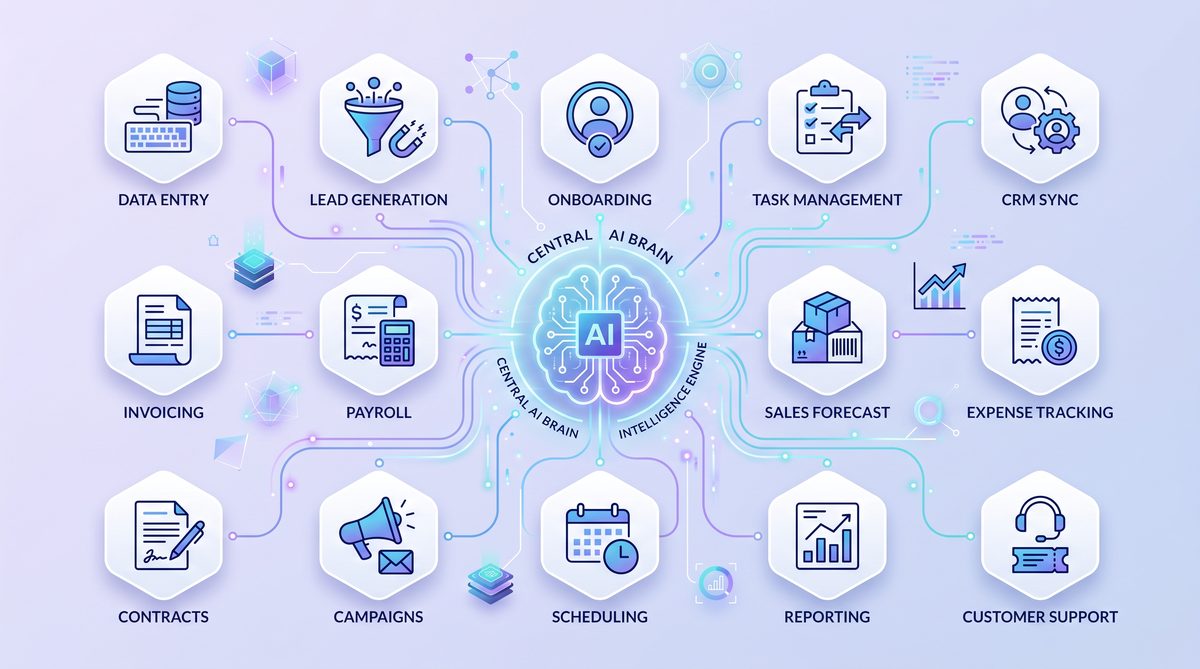
Since its launch on May 13, 2026, Claude for Small Business has positioned itself as a transformative AI assistant tailored specifically for small and medium enterprises (SMEs). At the heart of this solution lies the integration of 15 agentic workflows—pre-configured, intelligent automation sequences that connect core business applications to streamline operations while maintaining essential user oversight. These workflows leverage Claude Cowork’s toggle interface, allowing users to activate and control each process seamlessly.
These 15 workflows are designed to address key operational pain points in small businesses, which collectively contribute to 44% of the US GDP, yet currently have only 7% adoption of deep AI technologies. By connecting to popular platforms such as QuickBooks, PayPal, HubSpot, Canva, Docusign, Google Workspace, and Microsoft 365, Claude empowers small businesses to automate complex tasks with precision and transparency. All actions initiated by these workflows require explicit user approval, ensuring control and compliance remain paramount.
Key Agentic Workflows and Their Business Impact
The 15 workflows cover critical functions across finance, marketing, sales, and operations. Below is an overview of some of the most impactful workflows and their practical applications:
- Month-End Close: Automates the aggregation and reconciliation of financial data from QuickBooks and PayPal. By pulling transaction records, generating reports, and flagging discrepancies, this workflow reduces the typical month-end close duration by up to 30%, freeing accounting teams for higher-value tasks.
- Payroll Forecasting: Integrates employee data from Microsoft 365 and payroll systems to project upcoming payroll expenses, factoring in planned hires, bonuses, and seasonal adjustments. This enables finance managers to predict cash flow needs with 95% accuracy, improving budget planning.
- Invoice Chasing: Uses data from QuickBooks and PayPal to identify overdue invoices and generates personalized payment reminders through email or HubSpot CRM. This workflow has been shown to accelerate receivables collection by 20-25%, improving working capital.
- Campaign Management: Connects HubSpot and Canva to schedule, design, and monitor marketing campaigns. It automates content creation using Canva templates and tracks engagement metrics, allowing marketing teams to optimize campaigns in real time.
- Contract Handling: Integrates Docusign and Google Workspace to automate the creation, review, and approval of contracts. The workflow routes documents for electronic signatures, tracks contract status, and alerts relevant stakeholders, reducing contract turnaround times by 40%.
Seamless Integration with Popular Business Tools
Claude’s strength lies in its ability to unify disparate business tools into a single, agentic workflow ecosystem. For example, the Month-End Close workflow combines financial data from QuickBooks with payment records from PayPal, then archives reports in Google Drive for easy access. Similarly, Campaign Management bridges creative assets in Canva with email sequences managed through HubSpot, enabling a cohesive marketing pipeline.
By leveraging APIs and secure authentication protocols, Claude ensures data integrity and privacy across applications. Each workflow’s toggle mechanism provides users with granular control, allowing them to approve or modify actions before execution. This balances automation efficiency with essential human oversight, a crucial factor in regulatory compliance and risk management.
Empowering Small Businesses Through AI Fluency and Hands-On Support
Beyond the technology, Claude for Small Business fosters AI adoption through a comprehensive support ecosystem. New users gain access to a free AI Fluency course designed to build foundational knowledge on leveraging AI in operational workflows. Additionally, Claude is currently on a 10-city US workshop tour, providing hands-on training and best practices tailored for small business leaders and teams.
This educational approach addresses the critical gap in AI adoption among small businesses—only 7% have integrated deep AI solutions despite their significant economic footprint. By combining agentic workflows with user education, Claude not only automates processes but also drives cultural transformation toward AI-driven decision making.
For businesses interested in expanding their AI capabilities beyond workflow automation, understanding the broader landscape of autonomous agents and their potential can be highly beneficial. This is an area we explore in detail in another article on autonomous AI systems and their enterprise applications. Case Study: How Law Firms Are Using Claude Cowork’s Legal Plugins to Automate Contract Review
Summary Table: Selected Agentic Workflows and Their Key Features
| Workflow | Connected Apps | Main Function | Business Benefit | User Control |
|---|---|---|---|---|
| Month-End Close | QuickBooks, PayPal, Google Workspace | Financial data consolidation and report generation | 30% faster month-end close, error reduction | Approval before report finalization |
| Payroll Forecasting | Microsoft 365, Payroll Systems | Projection of payroll expenses | 95% accurate cash flow predictions | Review and adjustment of forecasts |
| Invoice Chasing | QuickBooks, PayPal, HubSpot | Automated overdue invoice reminders | 20-25% faster receivables collection | Customize reminder messages |
| Campaign Management | HubSpot, Canva | Marketing campaign scheduling and monitoring | Optimized engagement and ROI | Pre-send content approval |
| Contract Handling | Docusign, Google Workspace | Contract creation, routing, and signing | 40% reduction in contract turnaround | Approval of contract drafts |
Financial Management Workflows
Launched on May 13, 2026, the Financial Management Workflows within Claude Cowork represent a significant advancement in AI-driven automation tailored specifically for small businesses. These workflows are designed to streamline and optimize critical financial operations by integrating seamlessly with leading business applications such as QuickBooks, PayPal, HubSpot, Canva, Docusign, Google Workspace, and Microsoft 365. With 15 ready-to-run workflows, small businesses can now automate complex financial processes while maintaining full control through mandatory user approval at every step.
Key Features and Integrations
Claude for Small Business leverages deep integrations with trusted financial and productivity platforms to deliver a unified financial management experience. For example, the QuickBooks and PayPal connectors allow automatic synchronization of transactional data, enabling workflows to generate accurate financial reports and perform real-time cash flow analysis. HubSpot integration supports campaign management workflows that align marketing spend with budget forecasts, while Canva and Docusign facilitate the creation and execution of branded financial documents and contracts without leaving the Claude Cowork environment.
Google Workspace and Microsoft 365 integrations enable collaborative review and approval of financial documents such as invoices, payroll reports, and month-end summaries. This ecosystem connectivity ensures that information flows smoothly across departments, reducing manual entry errors and accelerating decision-making.
15 Agentic Workflows for Financial Excellence
The core of this offering is the suite of 15 agentic workflows, each targeting a specific financial task critical to small business success. Among the most impactful are:
- Month-End Close: Automates data consolidation from various financial systems, reconciles accounts, and prepares comprehensive closing statements. This reduces closing times by up to 40%, enabling faster financial visibility.
- Payroll Forecasting: Utilizes historical payroll data combined with upcoming staffing plans to project payroll expenses, helping businesses manage cash flow proactively.
- Invoice Chasing: Automatically identifies overdue invoices, generates personalized reminder emails, and schedules follow-ups, improving accounts receivable turnover rates.
- Campaign Management: Integrates marketing budget tracking with financial goals, allowing real-time adjustments to campaigns based on ROI analysis.
- Contract Handling: Streamlines contract generation, approval routing, and e-signature collection, minimizing delays in vendor and client agreements.
Each workflow is designed to operate autonomously but requires explicit user approval before executing any financial action, ensuring that small business owners and managers retain ultimate oversight and control.
Impact on Small Business Financial Operations
Small businesses contribute approximately 44% to the US GDP, underscoring their vital role in the economy. However, only about 7% of these businesses have adopted deep AI technologies for operational management, highlighting a significant opportunity for growth and competitive advantage. By adopting Claude’s financial workflows, small businesses can increase efficiency, reduce human error, and make data-driven financial decisions faster than ever before.
For example, a small retail chain using Claude’s month-end close workflow reported a 35% reduction in accounting labor hours and a 25% improvement in financial report accuracy within the first quarter of implementation. Similarly, a marketing agency utilizing the campaign management workflow achieved a 15% lift in ROI by dynamically adjusting campaign budgets based on predictive analytics powered by Claude.
Moreover, the inclusion of a free AI Fluency course and a 10-city US workshop tour empowers small business leaders and their teams to build AI competency and maximize the value of these workflows. This educational initiative helps address the AI adoption gap and fosters a community of AI-savvy entrepreneurs.
Workflow Approval and Security Considerations
The requirement for user approval before executing any action is a critical design choice that balances automation efficiency with governance and compliance standards. Financial data is highly sensitive, and unauthorized changes or transactions can have severe consequences. Claude Cowork’s workflow engine incorporates multi-factor authentication and role-based access control to ensure that only authorized personnel can approve and trigger financial processes.
Additionally, all workflow actions are logged in an immutable audit trail accessible to business owners and auditors, supporting transparency and regulatory compliance. This feature is especially important for small businesses aiming to meet standards such as SOX (Sarbanes-Oxley) or industry-specific financial regulations.
Conclusion
The Financial Management Workflows within Claude for Small Business offer a powerful combination of automation, integration, and control that can transform how small enterprises handle their finances. By automating repetitive and complex tasks such as month-end close, payroll forecasting, and invoice chasing, these workflows enable businesses to focus on growth and strategic decision-making. The integration with popular business tools, coupled with a robust approval framework, ensures that small businesses can adopt AI confidently and securely.
As AI adoption continues to grow, Claude’s financial workflows equip small businesses with the tools to boost operational efficiency, improve financial accuracy, and gain a competitive edge in a rapidly evolving marketplace.
| Workflow | Main Function | Key Integrations | Business Benefit |
|---|---|---|---|
| Month-End Close | Account reconciliation and report generation | QuickBooks, Google Workspace | Faster close cycles; improved financial visibility |
| Payroll Forecasting | Predict future payroll expenses | QuickBooks, Microsoft 365 | Optimized cash flow management |
| Invoice Chasing | Automated overdue invoice follow-ups | PayPal, HubSpot | Improved accounts receivable turnover |
| Campaign Management | Track and adjust marketing budgets | HubSpot, Canva | Higher marketing ROI |
| Contract Handling | Contract creation and e-signature workflow | Docusign, Google Workspace | Reduced contract cycle times |
Markos Symeonides
Marketing and Campaign Workflows
Launched on May 13, 2026, the marketing and campaign workflows within Claude Cowork represent a significant advancement in how small businesses leverage AI to streamline and optimize their promotional efforts. These workflows seamlessly integrate with popular business tools—including QuickBooks, PayPal, HubSpot, Canva, Docusign, Google Workspace, and Microsoft 365—enabling end-to-end campaign management and marketing automation. Designed specifically for small businesses, which account for 44% of the US GDP yet exhibit only 7% deep AI adoption, Claude’s marketing workflows empower organizations to execute sophisticated campaigns with precision, efficiency, and minimal manual oversight.
Overview of Marketing and Campaign Workflow Features
The marketing and campaign workflows within Claude Cowork are part of a suite of 15 ready-to-run workflows that automate complex, agentic tasks while maintaining full user control. Every action initiated by Claude requires explicit user approval, ensuring compliance with business policies and reducing risk. Key marketing-related workflows include campaign management, contract handling, invoice chasing related to marketing expenses, and integrations facilitating content creation and approval.
For example, the campaign management workflow automates the entire lifecycle of a marketing campaign—from initial planning and budget allocation, through scheduling and content distribution, to performance tracking and post-campaign analysis. This workflow connects directly with HubSpot for CRM and lead management, Canva for creative asset generation, and Google Workspace or Microsoft 365 for internal collaboration and communication.
Practical Applications and Workflow Examples
Consider a small e-commerce business launching a seasonal promotion. Using Claude’s campaign management workflow, the marketing manager begins by uploading campaign details and budget parameters into HubSpot. Claude then drafts a campaign timeline, suggests target audience segments based on historical data, and generates creative briefs that integrate with Canva for rapid visual content production. Once creatives are ready, the workflow routes assets through Docusign for any necessary approvals or licensing agreements.
Simultaneously, the workflow monitors invoices related to campaign expenses via QuickBooks and PayPal integrations, flagging any discrepancies or overdue payments for follow-up through the invoice chasing workflow. This multi-faceted orchestration reduces manual coordination and ensures that the campaign stays on track financially and operationally.
Benefits for Small Businesses
Small businesses often face resource constraints that limit their ability to execute complex marketing campaigns. Claude’s marketing workflows democratize access to enterprise-grade automation tools, enabling teams with limited personnel or expertise to operate at a higher level of efficiency and sophistication. By automating repetitive processes and integrating disparate systems, these workflows reduce operational overhead and accelerate time-to-market for new campaigns.
Moreover, the user approval mechanism embedded in every workflow step preserves human oversight, which is critical for maintaining brand consistency and compliance with regulatory requirements. This balance of automation and control is particularly important for small businesses navigating dynamic markets and evolving customer expectations.
Educational Support and Community Engagement
To facilitate adoption and deepen AI fluency among small business users, Claude Cowork offers a complimentary AI Fluency course that covers foundational concepts and practical applications specific to these workflows. Additionally, a 10-city US workshop tour provides hands-on training and networking opportunities, helping small business leaders and marketing professionals maximize the value of AI-driven campaign management.
This holistic approach—combining cutting-edge technology with education and community support—addresses the critical gap in AI adoption, where only 7% of small businesses currently engage in deep AI integration. By empowering small businesses with both tools and knowledge, Claude fosters a new era of data-driven, efficient marketing.
Integration Ecosystem and Workflow Comparison
| Connected Platform | Primary Use Case in Marketing Workflow | Key Benefits |
|---|---|---|
| HubSpot | Customer data management, lead nurturing, campaign tracking | Centralizes customer insights; automates email sequences; detailed analytics |
| Canva | Creative asset design and collaboration | Rapid content creation; template-based design; collaborative editing |
| Docusign | Contract approvals and licensing agreements | Digital signatures; workflow approvals; compliance assurance |
| QuickBooks & PayPal | Expense tracking and invoice management | Financial visibility; automated reminders; payment reconciliation |
| Google Workspace / Microsoft 365 | Collaborative communication and document management | Real-time collaboration; calendar integration; centralized document storage |
By integrating these platforms, Claude’s marketing and campaign workflows create a cohesive digital environment that minimizes friction between marketing execution, financial oversight, and legal compliance. This interoperability is a key factor in accelerating campaign success and measurable ROI.
Looking Ahead: AI-Driven Marketing Evolution
As AI adoption deepens among small businesses, marketing workflows powered by agentic AI like Claude will become increasingly sophisticated, incorporating predictive analytics, personalized content generation, and real-time customer engagement optimization. Organizations already leveraging these tools gain a competitive advantage through agility and data-driven decision-making.
For those interested in exploring the underlying AI methodologies that enable such intelligent workflows, it is worthwhile to examine concepts like autonomous agents and natural language understanding, which form the backbone of Claude’s capabilities. This area represents a critical frontier in AI development and business transformation The Complete Guide to OpenAI’s Trusted Access for Cyber Program: Eligibility, Setup, and Workflow Integration.
In conclusion, Claude’s marketing and campaign workflows offer small businesses a powerful toolkit to automate complex marketing operations, ensure financial and legal control, and accelerate growth through intelligent integration. The combination of technology, education, and community engagement positions Claude as a pivotal platform for the future of small business marketing.
Author: Markos Symeonides
Document and Contract Workflows
Launched on May 13, 2026, the Document and Contract Workflows within Claude Cowork provide small businesses with an advanced, integrated solution to streamline essential administrative processes. These workflows are designed to seamlessly connect with leading platforms such as QuickBooks, PayPal, HubSpot, Canva, Docusign, Google Workspace, and Microsoft 365, enabling comprehensive automation with full user oversight. By leveraging Claude’s agentic capabilities, small business owners and their teams can reduce manual workload, improve accuracy, and ensure compliance across critical document and contract management tasks.
Key Integrations and Workflow Capabilities
Claude for Small Business integrates deeply with a robust ecosystem of productivity and financial tools, enabling 15 ready-to-run workflows tailored for document and contract management. For example:
- QuickBooks and PayPal: These integrations allow automated invoice chasing and payment reconciliation workflows. Claude can identify overdue invoices, generate tailored reminder emails, and propose payment follow-ups, all requiring user approval before dispatch.
- HubSpot and Canva: For campaign-related documents, Claude assists in managing campaign collateral, tracking approvals, and automating contract generation related to marketing efforts.
- Docusign: This integration powers contract handling workflows, including contract drafting, e-signature collection, and storage. Claude can pre-fill contract templates based on customer data and alert users when signatures are pending.
- Google Workspace and Microsoft 365: These platforms serve as the backbone for document creation, collaboration, and storage. Claude can automate document version control, track changes, and schedule document reviews using calendar integrations.
All these workflows maintain a critical safeguard: every action proposed by Claude requires explicit user approval before execution. This ensures small business operators retain full control over sensitive financial and legal processes while benefiting from AI’s efficiency.
Examples of Document and Contract Workflows
Among the 15 agentic workflows, several stand out for their practical impact on small business operations:
- Month-End Close: Claude aggregates financial data from QuickBooks and PayPal, prepares reconciliation reports, and drafts summary documents for management review. This drastically reduces the days traditionally spent on closing books.
- Payroll Forecasting: By analyzing historical payroll data and upcoming obligations, Claude generates accurate payroll forecasts, allowing businesses to plan cash flow strategically.
- Invoice Chasing: Automated reminders are crafted and scheduled based on client payment behavior, reducing days sales outstanding (DSO) and improving working capital.
- Campaign Management Documentation: Claude coordinates campaign asset creation, schedules content approvals, and compiles post-campaign performance reports by integrating data from HubSpot and Canva.
- Contract Handling: From contract drafting using standardized templates to e-signature collection via Docusign, Claude manages the entire contract lifecycle, ensuring compliance and audit readiness.
Empowering Small Businesses with AI Fluency and Support
Despite small businesses comprising 44% of the US GDP, only 7% have adopted deep AI solutions. Claude addresses this gap by not only offering cutting-edge workflows but also supporting users through a free AI Fluency course. This course is designed to educate teams on efficient AI adoption and maximize the value of Claude’s agentic workflows.
Additionally, Claude Cowork is launching a 10-city US workshop tour, providing hands-on training and practical sessions tailored for small business challenges. This initiative fosters a community of empowered users who can leverage AI confidently, driving adoption beyond simple automation toward intelligent, agentic business processes.
Strategic Benefits and Future Outlook
Document and contract workflows represent a critical area where AI can deliver tangible ROI for small businesses. By automating repetitive administrative tasks while maintaining user control, Claude enhances operational agility and reduces error rates. This balance of automation and oversight is essential, particularly in industries with stringent compliance requirements or complex contractual obligations.
Moreover, Claude’s flexible integration framework ensures adaptability as small businesses scale or adopt new tools. With continuous updates expanding workflow capabilities, the platform positions small businesses to compete more effectively alongside larger enterprises equipped with advanced AI systems.
For those interested in exploring how AI-driven agentic workflows intersect with broader enterprise automation strategies, understanding the nuances of intelligent task delegation is crucial. This foundational concept is explored in depth in another analysis on our site, which provides insights into optimizing AI-human collaboration across business functions. The Complete Guide to OpenAI’s Trusted Access for Cyber Program: Eligibility, Setup, and Workflow Integration
Getting Started: Setup and Integration
Seamless Integration with Essential Business Tools
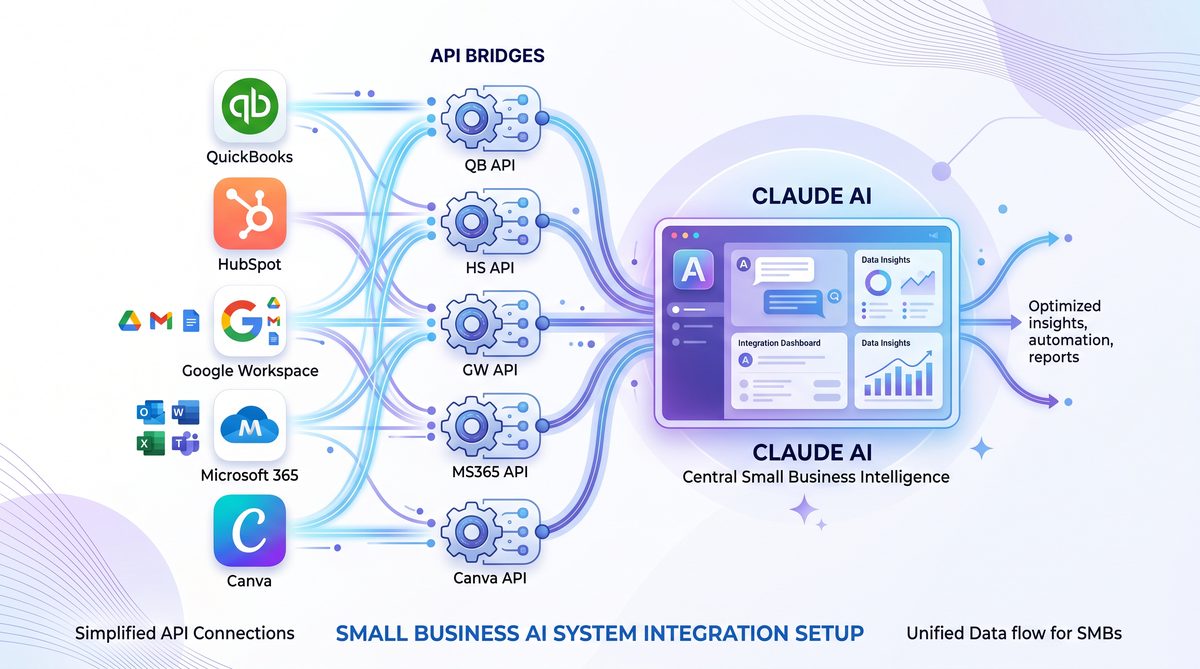
Claude for Small Business, launched on May 13, 2026, is designed to seamlessly integrate into the existing technology stack of small businesses, enabling rapid adoption and immediate productivity gains. The integration capabilities are a core strength, connecting natively with industry-leading platforms such as QuickBooks, PayPal, HubSpot, Canva, DocuSign, Google Workspace, and Microsoft 365. This connectivity ensures that the 15 agentic workflows can operate using live, accurate data across financial, marketing, document, and operational domains without requiring complex manual data transfers or cumbersome middleware setups.
For example, the month-end close workflow leverages QuickBooks data to automatically prepare draft financial statements and transactional reports. Meanwhile, the campaign management workflow pulls real-time contact lists and campaign assets from HubSpot and Canva, enabling marketing teams to accelerate campaign creation and execution. The integration with DocuSign simplifies the contract handling workflow, allowing documents to be generated, routed for signature, and archived without leaving Claude Cowork’s interface.
Step-by-Step Setup Process
Getting started with Claude for Small Business involves a straightforward setup process optimized for busy entrepreneurs and their teams. Upon toggling Claude inside the Claude Cowork platform, users are guided through a secure authentication process using OAuth protocols with each connected app. This ensures that data access permissions are granted explicitly and can be revoked at any time, maintaining compliance with data privacy standards.
- Account Connection: Users select the applications they want to integrate. For example, connecting QuickBooks requires login credentials and approval for Claude to access financial data.
- Workflow Selection: From the 15 ready-to-run workflows, users choose those matching their operational priorities, such as payroll forecasting or invoice chasing.
- Customization and Permissions: Users customize workflow parameters, such as invoice aging periods or campaign timelines. Crucially, all agentic actions require user approval before execution, preserving control and compliance.
- Testing and Training: The platform offers a sandbox environment where workflows can be tested end-to-end using sample data. Additionally, users can access the complimentary AI Fluency course, designed to upskill teams on effectively leveraging Claude’s agentic workflows.
This guided setup ensures minimal disruption while empowering small businesses to harness sophisticated AI-driven automation immediately.
Ensuring Control and Security with User Approval
While Claude’s workflows are agentic—capable of performing complex, multi-step tasks autonomously—the design philosophy prioritizes user oversight. Every automated action, such as sending payment reminders through PayPal or adjusting forecasted payroll figures, requires explicit user approval before execution. This safeguard mitigates risks associated with erroneous or unintended actions, a critical consideration for small businesses where operational margins are tight.
For instance, during the invoice chasing workflow, Claude generates a prioritized list of overdue invoices and drafts personalized reminder emails. However, these emails are only dispatched after the user reviews and approves them, ensuring messaging aligns with company tone and customer relationship nuances.
Supporting Small Business AI Adoption
Despite small businesses contributing approximately 44% of the U.S. GDP, deep AI adoption remains remarkably low at just 7%. Claude for Small Business aims to bridge this gap by combining powerful AI automation with accessible integration and robust user control. To support this mission, Anthropic offers a free AI Fluency course available to all Claude users, providing foundational knowledge and best practices for leveraging AI responsibly and effectively.
Moreover, a 10-city U.S. workshop tour facilitates hands-on training and peer networking opportunities, allowing small business leaders to witness live demos, discuss use cases, and address adoption challenges directly with AI experts. Cities covered include New York, Chicago, Los Angeles, Austin, and others strategically selected to maximize reach.
Summary of Setup and Integration Benefits
| Feature | Benefit | Example Workflow |
|---|---|---|
| Native Integrations | Streamlines data flow and eliminates manual entry | Month-end close pulling QuickBooks data |
| User Approval Model | Maintains human oversight and reduces errors | Invoice chasing email dispatch approval |
| AI Fluency Course | Upskills teams to maximize AI benefits | Training on campaign management workflows |
| 10-City Workshop Tour | Hands-on learning and community support | Live demos and Q&A sessions |
| Customizable Workflows | Adapts AI actions to unique business needs | Tailored payroll forecasting parameters |
By offering a robust yet approachable setup and integration experience, Claude for Small Business empowers companies to overcome the AI adoption barrier, unlocking new efficiencies and competitive advantages across finance, marketing, and operations.
Pricing and Availability
Launch Overview and Integration Ecosystem
Claude for Small Business officially launched on May 13, 2026, marking a significant milestone in AI-driven automation tailored specifically for small and medium enterprises (SMEs). This launch was integrated directly into the Claude Cowork platform, providing seamless access to a suite of 15 agentic workflows designed to streamline essential business processes. These workflows connect effortlessly with widely used business applications such as QuickBooks for accounting, PayPal for payment processing, HubSpot for CRM and marketing automation, Canva for creative content, Docusign for digital signatures, and productivity suites like Google Workspace and Microsoft 365.
This extensive integration ecosystem ensures that small businesses can automate complex workflows without overhauling their existing software stack. For example, the month-end close workflow leverages QuickBooks data to generate consolidated financial reports, while the invoice chasing workflow taps into PayPal and accounting software to identify overdue payments and automate follow-up reminders—all actions requiring final user approval to maintain control and compliance.
Pricing Model and Subscription Plans
Claude for Small Business utilizes a tiered subscription pricing model designed to accommodate the varied sizes and needs of small businesses. The pricing is structured as follows:
| Plan | Monthly Cost (USD) | Included Workflows | User Seats | Support Level | Additional Features |
|---|---|---|---|---|---|
| Starter | $49 | 5 core workflows (Finance & Marketing) | Up to 3 | Email Support | Access to AI Fluency Course |
| Professional | $129 | All 15 workflows | Up to 10 | Priority Email & Chat | Custom Integration Support, Workshop Discounts |
| Enterprise | Custom Pricing | All workflows + Custom Workflow Builder | Unlimited | Dedicated Account Manager & 24/7 Support | On-site Workshops, SLA Guarantees |
The Starter plan is ideal for solo entrepreneurs and very small teams focusing on core financial and marketing automation, while the Professional tier unlocks the full suite of 15 workflows, including sophisticated payroll forecasting and contract handling. The Enterprise option caters to larger small businesses or mid-sized companies seeking tailored workflow customization and premium support.
Additional Educational Resources and US Workshop Tour
To accelerate AI adoption among small businesses, which currently drive 44% of the US GDP yet exhibit only a 7% adoption rate of deep AI technologies, Claude for Small Business includes a complimentary AI Fluency course with every subscription. This course covers foundational AI concepts, best practices for integrating agentic workflows, and change management strategies to ensure smooth organizational adoption.
Moreover, to foster hands-on learning and community engagement, a 10-city US workshop tour launched concurrently with the product. These workshops offer live demonstrations, Q&A sessions with AI experts, and networking opportunities with peers. Cities on the tour include New York, San Francisco, Chicago, Atlanta, Dallas, Seattle, Boston, Miami, Denver, and Washington, D.C. Attendees gain direct access to Claude specialists and receive tailored advice on optimizing workflows such as campaign management and contract automation.
Availability and User Approval Safeguards
Claude for Small Business is currently available exclusively in the United States via the Claude Cowork platform, with plans for international expansion in late 2026. The platform’s design emphasizes user oversight: every automated action generated by the workflows requires explicit user approval before execution. This ensures compliance with internal controls and regulatory requirements, especially important for sensitive processes like payroll forecasting and contract handling.
For example, the invoice chasing workflow will generate a recommended follow-up email draft based on payment data, but it will only send the email after the user reviews and approves the content. Similarly, month-end close summaries are presented for user verification to avoid errors or omissions. These safeguards build trust in AI automation and reduce risks associated with fully autonomous operations.
Summary
In summary, Claude for Small Business offers an accessible and competitively priced AI automation platform that integrates deeply with existing business tools, providing 15 powerful workflows that address key operational needs. The tiered pricing allows businesses to select the best fit for their scale and complexity, supplemented by educational resources and an interactive US workshop series. With strong user approval mechanisms and a focus on real-world integrations, Claude is positioned to significantly accelerate AI adoption among US small businesses, unlocking efficiency gains in financial management, marketing, and contract administration.
Authored by Markos Symeonides
Access 40,000+ AI Prompts for ChatGPT, Claude & Codex — Free!
Subscribe to get instant access to our complete Notion Prompt Library — the largest curated collection of prompts for ChatGPT, Claude, OpenAI Codex, and other leading AI models. Optimized for real-world workflows across coding, research, content creation, and business.
