
The Agentic Era — How Multi-Model AI Agents Are Reshaping Enterprise
Artificial intelligence continues its rapid evolution, fundamentally altering how businesses operate, innovate, and compete. We have passed beyond narrow AI applications focused on isolated tasks or vertical industries. Today, the frontier belongs to “agentic” AI: autonomous agents that seamlessly integrate multiple AI models—including language, vision, code, and decision systems—into holistic, context-aware problem solvers. This new era, which we term the Agentic Era, heralds transformative possibilities for the enterprise, opening pathways to unprecedented agility, productivity, and intelligence at scale.
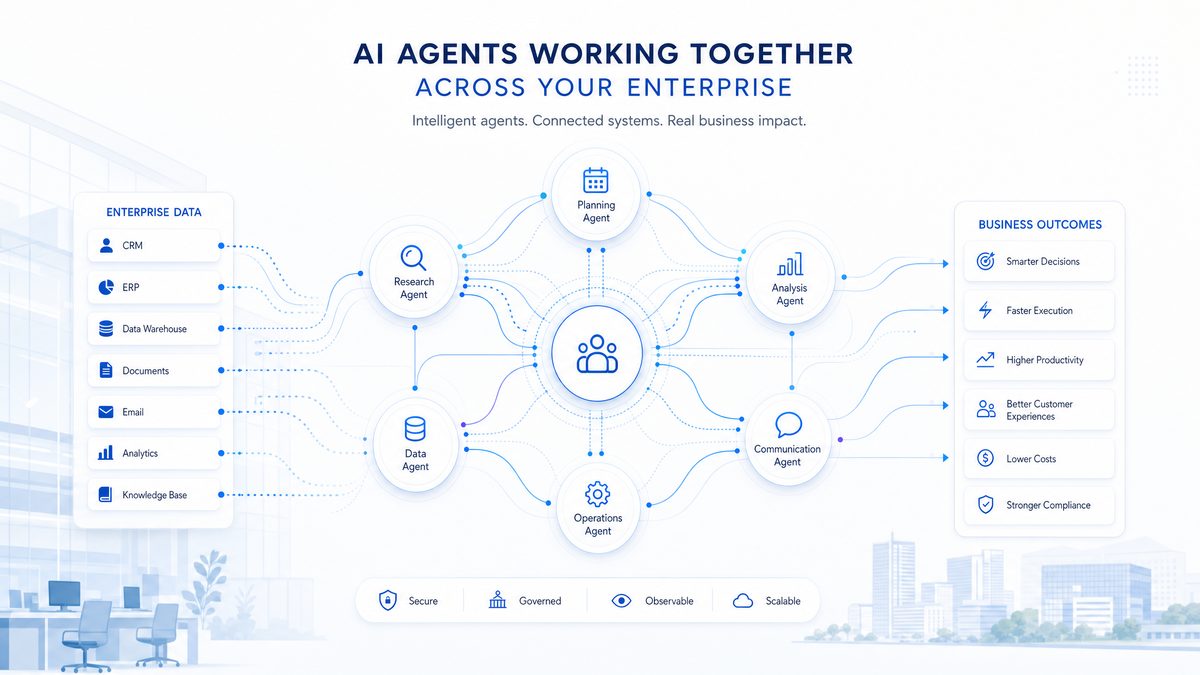
Understanding Multi-Model AI Agents: Foundations of the Agentic Era
At its core, a multi-model AI agent is a software entity empowered by several specialized AI systems that work together in concert to perform complex tasks. Unlike single-model AIs that operate on a single type of input (e.g., text-only natural language models), multi-model agents leverage diverse AI capabilities including:
- Large language models (LLMs): Processing and generating human-like text, reasoning, and dialog.
- Computer vision systems: Interpreting images, videos, and other visual data.
- Speech recognition and synthesis: Understanding and generating spoken language.
- Knowledge graphs and reasoning engines: Storing structured knowledge and performing logical deduction.
- Code generation and execution models: Creating and running code dynamically to automate workflows.
The cooperative architecture of these systems creates autonomous agents that perceive their environment, reason about goals, plan multi-step strategies, and act to realize objectives. The result is a leap beyond AI as a tool for narrow problem domains toward AI as an agent with initiative and context-awareness in broad scenarios.
Multi-model AI agents adopt philosophies from cognitive science and robotics, introducing notions of autonomy, goal-directed behavior, and adaptability. They are not static APIs but continuously learning, multi-modal systems capable of self-improvement and multi-turn engagements in enterprise workflows.
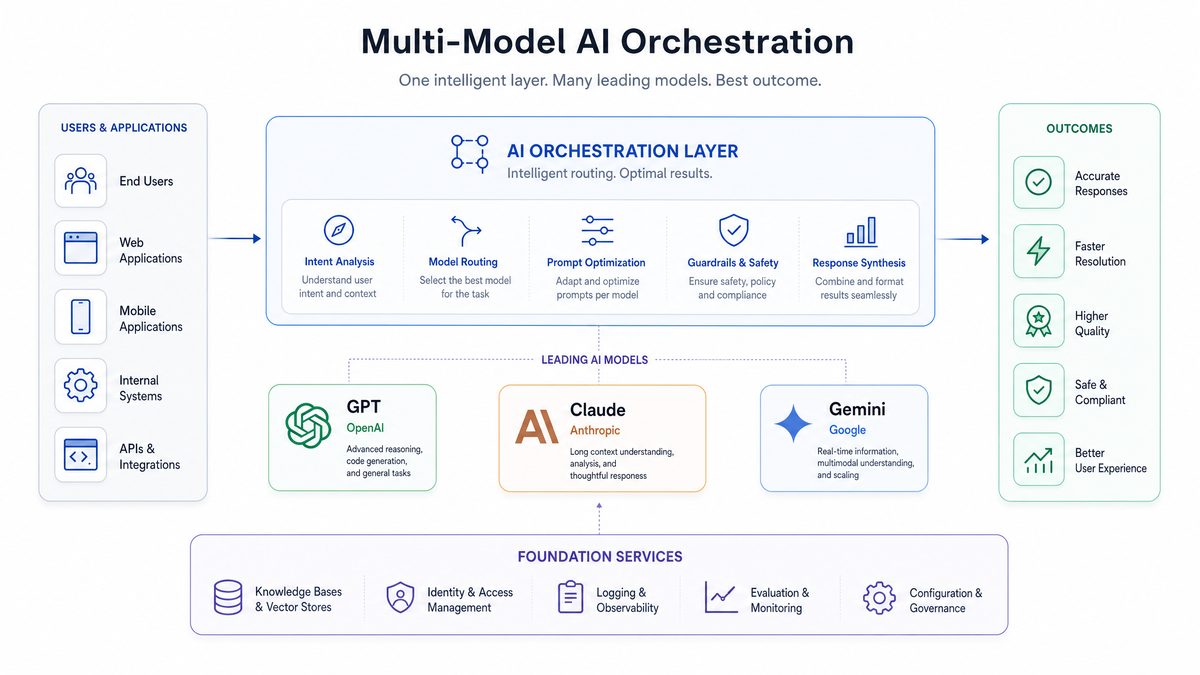
Key Architectural Components and Technologies Behind Multi-Model Agents
Building a robust multi-model AI agent capable of enterprise deployment entails overcoming numerous challenges across AI research, systems engineering, and software architecture. Let’s break down the critical components and their interplay:
1. Model Integration Frameworks
Integrating diverse AI models is non-trivial due to vocabulary mismatches, data heterogeneity, and divergent latent representations. Modern frameworks establish APIs and protocols allowing different models to communicate. Examples include:
- Prompt orchestration engines for coordinating LLMs with vision or code models.
- Shared embedding spaces enabling joint reasoning across modalities.
- Middleware for data normalization and transformation.
2. Contextual Memory and Knowledge Management
Enterprise problems require longer context horizons and more persistent memory than typical AI calls. Multi-model agents employ external memory systems that store conversation histories, documents, state information, and evolving knowledge graphs to sustain context-aware interactions.
3. Planning and Decision-Making Modules
Multi-stage problem solving mandates a planner—usually a combination of symbolic AI and reinforcement learning—that can generate task decompositions, evaluate action sequences, and adapt to new inputs or constraints. This turns static models into dynamic strategists.
4. Execution and Automation Interfaces
Agents interface with enterprise IT systems—CRMs, ERPs, communication tools, databases—to enact decisions. This requires APIs and RPA (robotic process automation) integration for seamless task execution, including code generation for scripted automation.
5. Continuous Learning and Human Feedback Loops
Agents incorporate supervised fine-tuning, reward modeling from human feedback, and real-time error correction pipelines enabling the system to evolve with enterprise needs and improve performance over time.
Technical Challenges In Multi-Model AI Agent Development
Despite rapid advances, engineering reliable multi-model agents for enterprise environments involves surmounting key obstacles:
- Data Privacy & Security: Enterprises face stringent regulations and must ensure agents comply with data sovereignty and confidentiality requirements.
- Model Alignment & Explainability: AI agents must produce transparent, auditable outputs to foster user trust and regulatory compliance.
- Scalability & Latency: Combining numerous large models demands optimization to maintain acceptable inference latencies and resource efficiency.
- Robustness to Ambiguity and Noise: Real-world data is messy; agents need capabilities for uncertainty quantification and recovery from misinterpretations.
- Integration with Legacy Systems: Enterprise environments typically contain heterogeneous, legacy software stacks requiring customized connectors and adapters.
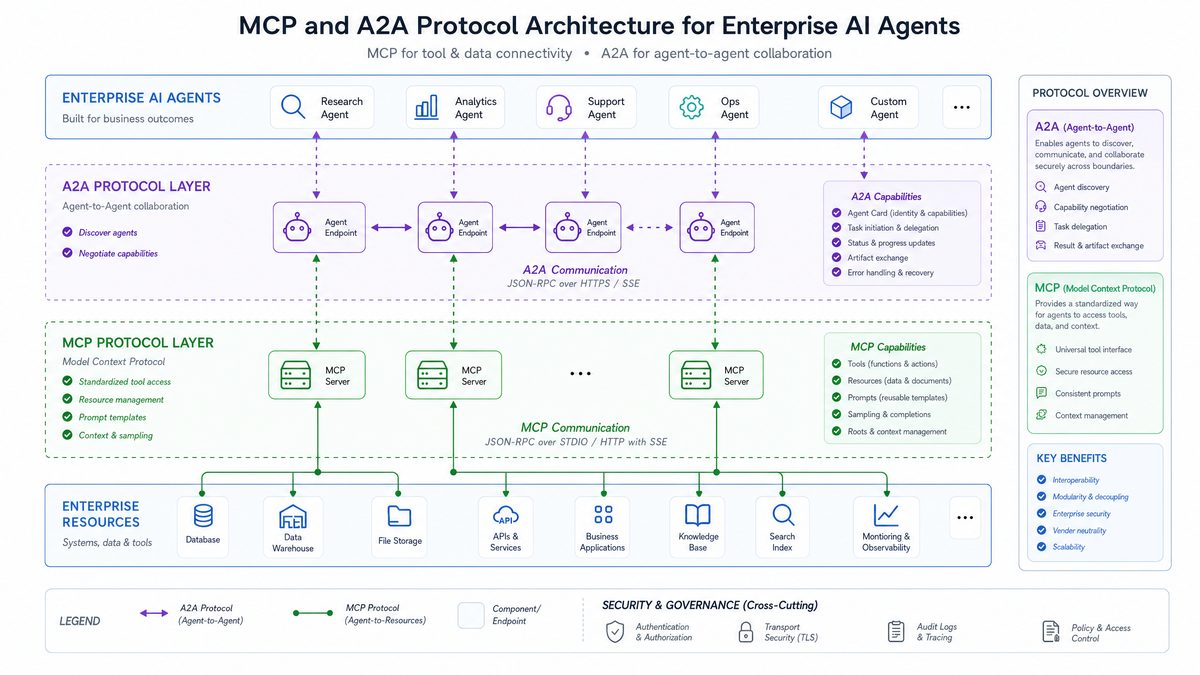
Enterprise Use Cases Transforming with Multi-Model AI Agents
Multi-model AI agents have begun making substantive contributions to various enterprise verticals by automating complex workflows and augmenting human expertise. Key transformative use cases include:
Customer Experience and Support
- AI agents triage customer inquiries by interpreting voice, text, and image inputs while consulting internal knowledge bases.
- Proactive support bots diagnose issues, trigger system diagnostics, and escalate to humans with enriched context.
- Personalized marketing campaigns driven by analyzing multimodal customer data generate dynamic, relevant messaging.
Business Intelligence and Decision Support
- Agents integrate structured data, unstructured documents, and live feeds to generate comprehensive reports and forecasts.
- Multi-modal agents answer complex business queries with explanations and source citations to support executive decision making.
Supply Chain and Operations
- Multi-sensor fusion AI agents monitor production lines and logistics using video, IoT sensor data, and textual reports.
- Dynamic scheduling and resource allocation are optimized continually by multi-model planning agents adapting to changing conditions.
Software Development and IT Automation
- Generative AI agents provide multi-modal code synthesis, test generation, and infrastructure orchestration.
- Autonomous agents monitor system health and automatically remediate issues by running self-generated scripts.
Human Resources and Compliance
- AI assistants automate candidate screening from resumes and video interviews with emotion and sentiment analysis.
- Compliance agents scan communication channels and documents for regulatory risks.
Comparative Overview of Leading Multi-Model AI Agent Frameworks
The landscape of frameworks supporting multi-model AI agents is rapidly evolving. Below is a comparative table highlighting prominent solutions designed to accelerate development and deployment in enterprise contexts:
| Framework | Primary Models Supported | Architecture | Enterprise Features | Open Source / Commercial | Use Case Focus |
|---|---|---|---|---|---|
| LangChain | LLMs, Embeddings, Vision APIs | Modular pipeline w/ prompt templates & chaining | Memory, tool integration, multi-turn dialog | Open Source | Conversational Agents, Document QA |
| Hugging Face Transformers | Text, Vision, Audio Models | Unified model hub and inference API | Model hub, AutoNLP, Collaborative deployment | Open Source + Commercial | General Multi-Modal AI Development |
| Anthropic’s Claude | Large language model + safety mechanisms | Agent-augmented conversational AI platform | Enhanced alignment, human feedback loops | Commercial | Safe, Responsible AI Agents |
| Microsoft Bot Framework | Text, Speech, Language Understanding | Modular bot orchestration w/ connectors | Enterprise security, Azure integration | Commercial | Enterprise Chatbots & Voice Agents |
| OpenAI API + Function Calling | GPT models, Vision (DALL·E), Code (Codex) | Unified API w/ function calling & plugins | Task automation, multi-step reasoning | Commercial | Multi-Modal AI Agents and Automation |
Future Directions and the Strategic Impact on Enterprises
The Agentic Era of multi-model AI agents offers a new paradigm for enterprise innovation and strategy. Enterprises investing in these technologies can expect:
- Accelerated Decision Cycles: Automated intelligence synthesis enables real-time data-driven decisions across departments.
- Hyper-Personalization: Multi-modal interaction data powers individualized experiences at scale.
- Workforce Augmentation: Agents extend human capabilities in creativity, problem-solving, and execution, shifting labor from routine to strategic tasks.
- Resilience and Adaptability: Autonomous agents dynamically adapt to disruptions and opportunities across complex systems.
- New Business Models: Continuous multi-modal AI agents unlock novel product and service offerings enabled by proactive intelligence and automation.
However, responsible enterprise adoption demands holistic governance, ethical frameworks, and continual alignment with human values and organizational goals. Enterprises must pair technical innovation with culture change, workforce training, and transparent performance measurement.
How Enterprise Teams Are Using AI Agents in Production Today
Advanced Techniques in Multi-Model AI Agent Design
Developing state-of-the-art multi-model AI agents requires embracing advanced AI methodologies that push beyond straightforward model integration. These techniques enhance agent robustness, adaptability, and goal-directed behavior, enabling complex enterprise use cases to be addressed effectively.
Neural-Symbolic Integration
Traditional deep learning models excel at pattern recognition but often lack explainability and logical consistency. Neural-symbolic approaches combine neural networks with symbolic reasoning frameworks, allowing AI agents to:
- Represent high-level domain knowledge explicitly through logic rules or ontologies.
- Perform deductive reasoning and constraint satisfaction beyond pure statistical inference.
- Provide transparent, interpretable decisions that align with regulatory or business policies.
For example, an agent solving supply chain disruptions might leverage a symbolic planner integrated with probabilistic forecasts from a neural model, ensuring decisions comply with contractual constraints and safety regulations.
Meta-Learning and Agent Adaptivity
Meta-learning techniques empower AI agents to learn how to learn, improving their ability to generalize and adapt to novel tasks or environments quickly. Enterprise environments are dynamic, with constantly changing workflows and domain knowledge, so agents benefit from:
- Few-shot learning to rapidly incorporate new concepts from limited examples.
- Continuous adaptation without full retraining, enabling real-time responsiveness.
- Personalization to user preferences and organizational culture.
Implementing meta-learning in multi-model agents often requires hybrid architectures combining pre-trained foundation models with task-specific reinforcement learning loops and human-in-the-loop feedback.
Multi-Agent Collaboration and Coordination
In complex enterprises, multiple AI agents often need to collaborate to solve distributed tasks. Advances in multi-agent systems and game theory inform coordination strategies that achieve efficient, conflict-free cooperation:
- Communication protocols: Agents share intermediate observations and plans using standardized message formats to synchronize actions.
- Role specialization: Agents dynamically allocate tasks based on capabilities, optimizing team performance.
- Negotiation frameworks: Agents resolve resource conflicts or competing objectives through bargaining or voting mechanisms.
For example, a network of AI agents managing different nodes in a manufacturing pipeline might coordinate to mitigate bottlenecks and minimize downtime collaboratively.
Security, Governance, and Ethical Considerations in Multi-Model AI Agents
As enterprises increasingly deploy multi-model AI agents in critical workflows, strong emphasis on security, governance, and ethics becomes paramount to mitigate risks and sustain trust.
Data Governance and Compliance
Multi-model agents ingest vast and varied data types—protected health information, customer profiles, proprietary business data—necessitating:
- Rigorous access controls: Role-based permissions and encryption ensure sensitive data exposure is minimized.
- Audit trails: Detailed logging of agent inputs, decisions, and outputs facilitate transparency and accountability for compliance audits.
- Data anonymization: Techniques like differential privacy reduce leakage during training or inference phases.
Enterprises must map these controls to regulatory frameworks such as GDPR, HIPAA, or industry-specific mandates to avoid legal and reputational risks.
Robustness Against Adversarial Attacks
Multi-model agents are vulnerable to various attack vectors, including adversarial inputs crafted to mislead vision or language models, prompt injection attacks that manipulate model behavior, and supply chain threats targeting model weights or data pipelines. Defensive measures include:
- Input sanitization and validation: Preprocessing steps detect and filter anomalous or malicious data.
- Adversarial training: Incorporating perturbed examples during model training to improve resilience.
- Runtime monitoring: Behavioral anomaly detection flags suspicious agent outputs or actions.
Ethical AI and Alignment Strategies
AI agents operating autonomously must adhere to ethical principles that align with human values and societal norms. Practical strategies encompass:
- Value-sensitive design: Embedding fairness, transparency, and inclusiveness considerations throughout development.
- Human-in-the-loop oversight: Supervisory checkpoints where humans review and can override automated decisions.
- Continuous alignment feedback: Leveraging reinforcement learning with human feedback (RLHF) to refine agent behavior over time toward desired ethical standards.
Ensuring ethical AI deployment not only mitigates harm but also promotes user trust and long-term adoption success.
Comparing Data Fusion Techniques for Multi-Model Agents
Effective fusion of heterogeneous data sources—text, images, speech, structured data—is key for multi-model AI agents to form a unified understanding. Below is a comparison of common data fusion strategies and their applicability in agent architectures:
| Fusion Technique | Description | Advantages | Challenges | Enterprise Suitability |
|---|---|---|---|---|
| Early Fusion | Combines raw input data from multiple modalities before feature extraction. | Captures low-level correlations across modalities; simplifies downstream modeling. | High dimensionality; synchronization issues; sensitive to input noise. | Best for tightly coupled sensor data (e.g., audio-video in call centers). |
| Late Fusion | Processes each modality independently then combines outputs via weighting or voting. | Modular, flexible to add/remove modalities; easier debugging. | May miss cross-modal interactions; suboptimal performance if modalities are complementary. | Suitable for heterogeneous enterprise data with asynchronous arrival. |
| Hybrid Fusion | Combines both early and late fusion; multi-stage integration at features and decision levels. | Balances low and high-level interactions; often yields superior accuracy. | Complex implementation; requires careful tuning. | Optimal for complex workflows like fraud detection integrating text logs and transaction images. |
| Attention-Based Fusion | Employs attention mechanisms to dynamically weight and integrate modality contributions. | Enables context-aware fusion; adapts to varying data importance. | Computationally intensive; model interpretability can be challenging. | Preferred for real-time systems requiring dynamic context modeling. |
Best Practices for Integrating Multi-Model AI Agents into Enterprise Workflows
Successful enterprise adoption of multi-model AI agents depends not only on technology but also on how agents are integrated into existing processes. Consider the following best practices:
Incremental Deployment and Pilot Programs
Start with pilot projects targeting narrowly scoped, high-value workflows to validate agent performance and user acceptance. Use iterative feedback cycles to refine models and interfaces before scaling.
Human-Centered Design and Collaboration
Design agents to augment rather than replace human users. Provide transparent explanations, adjustable autonomy levels, and easy override mechanisms to foster trust and adoption.
Interoperability and API-First Approaches
Adopt modular designs with well-defined APIs to enable seamless integration into diverse enterprise systems. This future-proofs investments by allowing agents to leverage evolving backend technologies.
Robust Monitoring and Incident Response
Continuously monitor agent behavior in production including performance metrics, failure rates, bias indicators, and compliance adherence. Establish clear incident response protocols for anomalies or errors.
Comprehensive Training and Support
Equip staff with training on new workflows involving AI agents and provide continual support channels. This reduces resistance and enables maximal productivity gains.
Emerging Trends Shaping the Future of Multi-Model AI Agents
The evolution of multi-model AI agents is accelerating due to breakthroughs and shifting enterprise needs. Key emerging trends include:
Foundation Models as Agent Nuclei
Massively pre-trained foundation models (e.g., GPT-4, PaLM, Flamingo) serve as versatile cores around which multi-model capabilities are built. Their broad knowledge and flexible reasoning underlie increasingly capable agents.
Agent Personalization and Role Specialization
Future agents will not only generalize but also personalize deeply, learning user preferences, organizational roles, and domain axioms to deliver targeted assistance.
Zero-Shot and Few-Shot Task Generalization
Improvements in prompt engineering and meta-learning enable agents to tackle new tasks without explicit retraining, speeding time-to-value.
Edge and Federated Deployment
To meet data privacy and latency requirements, agents will increasingly operate on edge devices or within federated learning frameworks, balancing local autonomy with global knowledge sharing.
Explainable and Trustworthy AI
Explainability technologies and standardized trust certifications will become integral as agents take on higher-stakes decision-making roles.
Cross-Enterprise Agent Networks
Collaboration across organizations via federated multi-agent systems will unlock new levels of operational resilience and market intelligence.
Together, these trends point toward a future where multi-model AI agents are deeply embedded in enterprise fabric—serving as intelligent collaborators, catalysts of innovation, and strategic assets in the digital economy.
Building Company-Wide AI Agents with ChatGPT Enterprise and Codex in 2026
Advanced Integration Strategies for Multi-Model AI Agents
The integration of multi-model AI agents into enterprise systems requires strategic planning to ensure smooth deployment, scalability, and maintainability. Below are advanced integration strategies that maximize the potential of multi-model agents while mitigating common pitfalls:
Microservices-Based Agent Architectures
Deploying multi-model AI agents as microservices enables modular, scalable, and independently deployable components. Each model or functionality resides within a containerized microservice responsible for a specific modality or task, communicating through APIs or message brokers.
- Advantages: Easier maintenance, independent scaling, fault isolation, and flexibility to update individual models.
- Example: Separating an LLM-based natural language understanding service, a vision recognition microservice, and a knowledge graph query engine operating asynchronously but integrated via event-driven architecture.
Event-Driven and Stream Processing Pipelines
Multi-model agents consume varied data streams such as real-time logs, video feeds, and sensor data. Architectures based on event-driven and stream processing frameworks (e.g., Apache Kafka, Flink) are effective for:
- Orchestrating asynchronous, multi-modal data ingestion and preprocessing.
- Triggering agent responses or actions based on complex event patterns.
- Maintaining low-latency, scalable event flows supporting dynamic workflows.
API Gateways and Orchestration Layers
API gateways aggregate various AI model endpoints and provide unified interfaces for enterprise applications, including authentication, logging, and traffic shaping. Orchestration layers coordinate agent pipelines, handling dependencies, retries, and error handling seamlessly.
Example Integration Flow in Sales Automation
- Incoming customer email (text) and attachment images are ingested by separate model services.
- Text is parsed by an LLM for intent detection, while images are analyzed for product visuals.
- A planning agent coordinates multi-step follow-ups based on extracted information and customer history in CRM.
- Actions including email replies and updating the CRM are executed via automation interfaces.
Optimizing Performance: Techniques for Low-Latency Multi-Modal AI Agents
Latency is critical in enterprise workflows, especially in real-time interactions such as customer support and operational monitoring. Techniques for optimizing multi-model AI agents include:
Model Compression and Distillation
Large foundation models impose significant computational loads. Techniques such as knowledge distillation, quantization, and pruning reduce model sizes and inference time while maintaining accuracy:
- Knowledge Distillation: A smaller “student” model is trained to emulate the outputs of a larger “teacher” model.
- Quantization: Model weights and activations are converted to lower precision formats (e.g., INT8) to accelerate computation on specialized hardware.
- Pruning: Unimportant network connections are removed to simplify the model graph.
Selective Modality Activation
Multi-model agents do not always require all modalities at once. Dynamic routing allows agents to enable or disable specific models based on context or task requirements:
- For instance, a chatbot may process voice inputs initially, then switch to text-only if the visual data is irrelevant.
- This selective activation reduces unnecessary compute and speeds responses.
Edge and Distributed Inference
Deploying portions of multi-modal models closer to data sources (e.g., on edge devices) reduces round-trip latency and optimizes bandwidth:
- Example: A vision model running on a factory floor IoT device for immediate fault detection, while heavier reasoning models reside in the cloud.
- Hybrid edge-cloud inference pipelines optimize costs and responsiveness.
Caching and Pre-Computed Embeddings
For repeated queries or commonly accessed data, caching embeddings or intermediate representations avoids redundant computation and accelerates agent workflows.
Case Study: Multi-Model AI Agents in Financial Services
The financial industry exemplifies complex, high-stakes environments where multi-model AI agents deliver transformative value across compliance, customer service, fraud detection, and portfolio management.
Fraud Detection and Risk Management
Integrating text analysis of transaction logs, image verification of documents, and behavioral biometrics enables agents to identify suspicious activities with higher precision. Techniques include:
- Combining transaction metadata with video or facial recognition to verify identity.
- Analyzing email and chat communications for social engineering indicators.
- Using symbolic reasoning to enforce policy constraints on flagged accounts.
Automated Regulatory Compliance
Multi-model agents parse complex regulatory documents (PDFs, HTML) and monitor communication channels to ensure adherence. They generate audit trails and suggest corrective actions, reducing manual review burden.
Personalized Wealth Management Advisors
AI agents synthesize multi-modal client data—voice consultations, financial reports, market news—to provide tailored investment advice and react promptly to market changes.
Challenges and Solutions
| Challenge | Multi-Model Agent Strategy | Outcome/Benefit |
|---|---|---|
| Handling unstructured data from multiple sources | Fusion of NLP, computer vision, and knowledge graph models | Unified context enabling precise decision-making |
| Ensuring auditability and compliance transparency | Neural-symbolic reasoning with detailed decision logs | Improved regulatory reporting and trust |
| Maintaining low-latency fraud detection | Edge inference combined with cloud orchestration | Rapid response minimizing losses |
Practical Tips for Building Enterprise-Grade Multi-Model Agents
To foster success in multi-modal AI projects, enterprises should consider the following practical advice:
1. Start with Clear Use Case Definitions
Identify workflows that benefit explicitly from multi-modal insights rather than adapting existing single-modal solutions without clear ROI.
2. Prioritize Data Quality and Labeling Across Modalities
High-quality, representative datasets spanning text, images, audio, and structured data are crucial for training and evaluation. Invest in cross-modal annotation strategies and data governance.
3. Implement Modular Testing and Validation
Test each modality and integrated pipelines separately and in combination. Use domain expert review and automated checks to ensure outputs meet business expectations.
4. Monitor Ethical and Bias Metrics Consistently
Track fairness indicators across user groups and modalities, ensuring agents do not propagate or amplify biases hidden in multi-modal data sources.
5. Establish Cross-Functional Teams
Combine AI researchers, software engineers, domain experts, and security professionals to build comprehensive agent solutions covering all enterprise requirements.
6. Leverage Cloud-Native and Hybrid Infrastructure
Balance on-premises data restrictions with cloud scalability by employing hybrid deployment architectures enabling elasticity and control.
7. Plan for Lifecycle Management
Include continuous model retraining, versioning, rollback mechanisms, and documentation to handle model decay and evolving enterprise needs smoothly.
Interview Insights: Perspectives from Industry Leaders on Multi-Model AI Agents
Leading experts share their views on the evolving role of multi-modal AI agents in enterprises:
“The true power of multi-model agents lies not just in their capabilities but in how seamlessly they integrate within human workflows to amplify productivity and insight. Enterprises must focus on human-AI symbiosis rather than AI replacement.”
– Dr. Sara Li, Chief AI Officer, TechInnovate
“Ensuring transparency and explainability in multi-modal agents is challenging but essential. We advocate for hybrid approaches leveraging symbolic reasoning layered atop deep learning to meet regulatory and ethical standards.”
– Rajesh Mehta, Director of AI Ethics, FinSecure
“The biggest obstacle in deploying multi-model agents in enterprises is data silos and legacy interoperability. Investment in flexible API ecosystems is a prerequisite for unleashing agent potential.”
– Helena Schmidt, VP Engineering, GlobalRetail AI
Comparison of Multi-Modal Model Architectures
Designing multi-model AI agents requires selecting architectural paradigms that balance flexibility, performance, and interpretability. The table below compares major architecture types:
| Architecture Type | Description | Strengths | Limitations | Enterprise Use Cases |
|---|---|---|---|---|
| Unified Encoder-Decoder Models | Single model jointly encodes multiple modalities and decodes unified outputs. | End-to-end training; cross-modal interactions captured intrinsically. | High training complexity; difficult to update modalities independently. | Document understanding combining text and images (e.g., invoices). |
| Modular Ensemble Models | Separate modality-specific models combined via late fusion or meta-learning. | Flexible updates; modality specialization; easier debugging. | Potentially suboptimal cross-modal feature utilization. | Customer service chatbots leveraging independent vision and text modules. |
| Neural-Symbolic Hybrid Systems | Integration of neural networks with symbolic reasoning engines. | Improved interpretability; logical consistency; rule enforcement. | Complex system integration; potential performance overhead. | Regulatory compliance, supply chain planning with formal constraints. |
| Hierarchical Fusion Architectures | Multi-stage fusion combining early and late integration across hierarchical model stacks. | Captures both low and high-level cross-modal dependencies. | Increased design complexity; tuning and resource demands. | Fraud detection combining sensor data, logs, and transaction records. |
Measuring Success: Metrics and KPIs for Multi-Model AI Agents
Evaluating agent performance requires comprehensive metrics capturing accuracy, user experience, impact on business goals, and system robustness.
Technical Performance Metrics
- Accuracy / F1 Scores: For classification or prediction tasks across modalities.
- Latency: Response times for end-to-end multi-modal inference.
- Throughput: Number of processed interactions or transactions per unit time.
- Model Drift Indicators: Statistical measures tracking performance degradation over time.
User Experience Metrics
- User Satisfaction and Feedback Scores: Post-interaction surveys and NLP sentiment analysis.
- Adoption and Engagement Rates: Frequency and duration of interaction with agents.
- Error Recovery Rates: How often agents successfully recover from misunderstandings or failures.
Business Impact KPIs
- Process Automation Ratio: Proportion of tasks completed autonomously.
- Cost Savings and ROI: Measured reduction in labor and operational expenses.
- Compliance Incident Reduction: Fewer policy violations due to AI support.
- Revenue Growth: Enabled by improved customer insights and faster decisions.
Monitoring and Feedback Mechanisms
Continuous monitoring frameworks integrating dashboards and alerting systems enable rapid identification of issues and continuous improvement cycles based on these metrics.
Useful Links
- OpenAI Research
- Hugging Face Model Hub
- LangChain Official Website
- Microsoft AI Platform
- Anthropic AI Safety
- What is Multimodal AI? – IBM Cloud
- Survey of Multi-Modal Agents – arXiv
- Google Multimodal AI for Enterprise
Access 40,000+ AI Prompts for ChatGPT, Claude & Codex — Free!
Subscribe to get instant access to our complete Notion Prompt Library — the largest curated collection of prompts for ChatGPT, Claude, OpenAI Codex, and other leading AI models. Optimized for real-world workflows across coding, research, content creation, and business.
