
Anthropic’s Claude series has emerged as one of the most advanced AI language models in the landscape of artificial intelligence and natural language processing (NLP). With the release of Claude Opus 4.7, Anthropic has pushed the boundaries of large language model (LLM) performance, safety, and usability. This guide offers a comprehensive technical overview of Claude Opus 4.7, exploring its architecture, training methodology, key features, applications, and how it stands out against other contemporary AI models.
Whether you are an AI developer, data scientist, or enterprise professional evaluating advanced conversational AI systems, this article will provide you with a detailed understanding of Claude Opus 4.7’s capabilities and optimal use cases.
Overview of Claude Opus 4.7
Claude Opus 4.7 is the latest iteration in Anthropic’s Claude series, representing a significant leap in both the scale and efficiency of large language models. The model combines state-of-the-art transformer architecture innovations with advanced training protocols designed to enhance the model’s contextual understanding, factuality, and alignment with human values.
Key Features of Claude Opus 4.7
- Scale and Parameters: Claude Opus 4.7 boasts over 100 billion parameters, enabling it to generate nuanced and contextually rich outputs.
- Alignment and Safety: Leveraging Anthropic’s proprietary Constitutional AI training methodology, the model minimizes toxic or biased outputs while maintaining utility.
- Multimodal Capabilities: Though primarily a text-based model, Claude Opus 4.7 supports enhanced contextual embeddings from multimodal inputs such as images, which improves its inferencing strength in varied domains.
- Fine-tuning and Adaptability: The model architecture supports task-specific tuning without significant retraining, offering flexibility across business and technical applications.
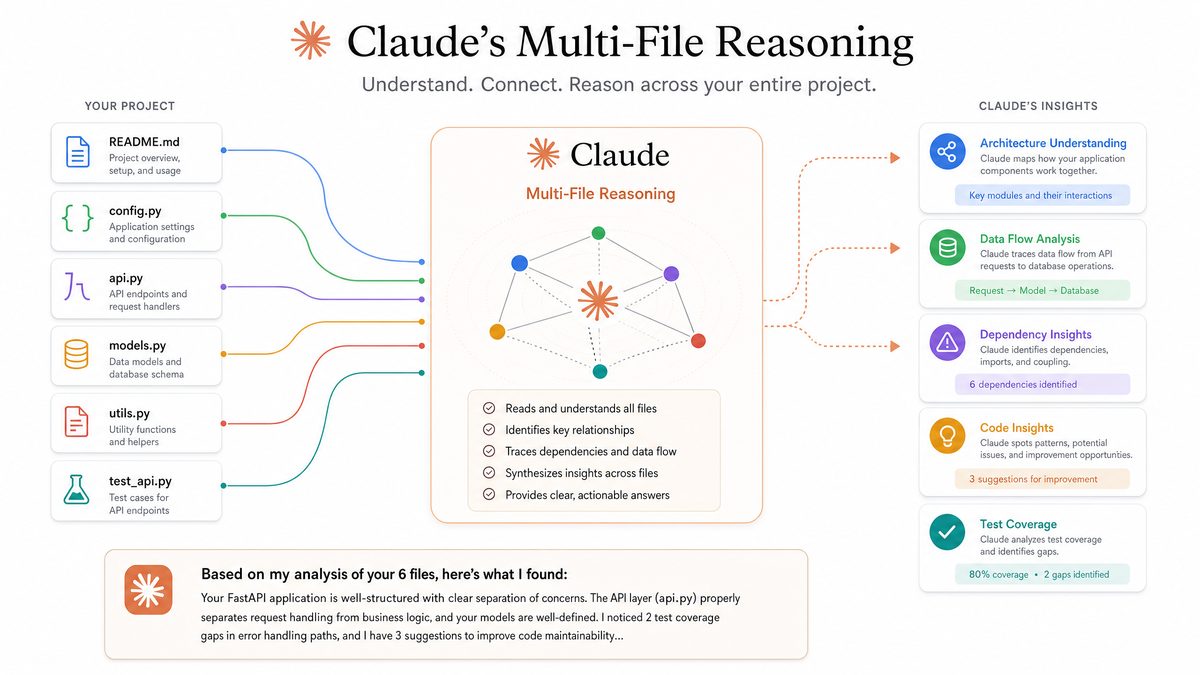
- Code Understanding and Generation: Enhanced capabilities for coding tasks, including code completion, error identification, and explanation, placing it in direct competition with AI coding assistants like OpenAI’s Codex.
Architecture Foundations
Claude Opus 4.7 builds upon an advanced transformer backbone similar to those used in GPT and PaLM models but integrates custom modifications focusing on alignment and inference efficiency. The model employs sparse attention to reduce computational bottlenecks during inference while preserving global context awareness, ensuring high-quality outputs for complex instructions. The training process incorporated multi-stage optimization with large-scale unsupervised pretraining and reinforcement learning from human feedback (RLHF), enhancing both knowledge retention and task adaptability.
Claude Opus 4.7 Complete Guide and Review: Anthropic’s Most Powerful AI Model Explained
Technical Deep Dive: Training, Safety, and Alignment
Training Data and Process
Claude Opus 4.7 was trained using an extensive corpus sourced from diverse domains including books, academic articles, websites, and curated data repositories. Anthropic emphasizes quality and ethical considerations by meticulously filtering for sources that reduce the risk of perpetuating harmful biases or misinformation. The training pipeline is structured into three primary phases:
- Pretraining: Self-supervised learning on massive text data to establish foundational language understanding.
- Instruction Tuning: Leveraging supervised fine-tuning on datasets where human demonstrations guide the model to follow specific instructions effectively.
- Reinforcement Learning and Constitutional AI: Using a novel method where the model is trained to critique and improve its outputs against a set of ethical rules called the “constitution.” This reduces toxic, unsafe, or factually incorrect responses.
Constitutional AI – Safety Through Self-Critique
The constitutional AI framework is arguably Claude Opus 4.7’s most distinctive innovation. Unlike conventional RLHF approaches that depend heavily on human labelers, this method enables the model to evaluate its responses independently based on a set of predefined principles that prioritize safety, helpfulness, and honesty. This design reduces reliance on exhaustive human supervision and scales safety evaluations more effectively. The constitutional AI permits ongoing model updates without adding new training data, allowing Anthropic to continuously refine behavior post-deployment.
This approach also helps mitigate bias and discrimination by instructing the model to detect and correct problematic outputs autonomously, a breakthrough in model alignment techniques given the complexity of language and social norms.
Technical Comparison Table: Claude Opus 4.7 vs. Predecessors
| Feature | Claude 3 | Claude Opus 4.0 | Claude Opus 4.7 |
|---|---|---|---|
| Parameter Count | 52B | 85B | 100+B |
| Training Data Volume | 300B tokens | 400B tokens | 600B+ tokens |
| RLHF & Constitutional AI | RLHF only | Introduction of Constitutional AI | Matured Constitutional AI framework |
| Max Context Window | 8,192 tokens | 12,288 tokens | 16,384 tokens |
| Multimodal Input Support | Limited (text only) | Basic image embedding support | Enhanced multimodal embeddings & inference |
| Code Generation & Debugging | Moderate | Improved with fine-tuning | Advanced code capabilities with deeper context understanding |
Claude Opus 4.7 vs GPT-5.3: The Complete AI Model Comparison Guide for 2026
Applications and Use Cases
Enterprise-Level Conversational AI
Claude Opus 4.7 excels in powering advanced chatbots and virtual assistants for customer service, HR, IT support, and sales automation. Its ability to handle complex multi-turn dialogues with greater contextual retention ensures conversations feel natural and personalized. Enterprises benefit from reduced manual workload and improved customer satisfaction.
Content Generation and Creative Writing
With its improved language understanding and stylistic versatility, Claude Opus 4.7 is well-suited for generating high-quality articles, marketing content, social media posts, and even long-form storytelling. The model can be tailored to specific brand voices through fine-tuning and prompt engineering.
Code Assistance and Developer Tools
Developers leverage Claude Opus 4.7 for code completion, bug detection, explanation, and even generation of documentation. The model’s large context window benefits analysis of complex codebases, making it a trusted companion for software engineering tasks.
Data Analysis and Research
By integrating Claude Opus 4.7 into research workflows, analysts can quickly summarize large volumes of scientific papers, extract insights, and generate hypotheses, accelerating the pace of innovation.
Ethical AI and Bias Mitigation
Claude Opus 4.7 sets a new benchmark for responsible AI usage, where mitigation of biases, misinformation, and harmful content is baked into its design rather than applied as an afterthought. Organizations with sensitive AI requirements can implement it for safer, more compliant applications.
For detailed instructions on integrating Claude Opus 4.7 into your business systems, consult the deployment guidelines and API documentation routinely updated by Anthropic and authorized partners.
Claude Mythos Preview: Inside Anthropic’s Most Powerful AI Model Yet
Claude Opus 4.7 vs. Leading Competitors
Comparing Claude Opus 4.7 with other AI models on the market offers insight into how it differentiates itself across various dimensions of language intelligence and practical usability.
| Model | Parameters | Context Window | Safety and Alignment | Multimodal Support | Optimal Use Cases | Release |
|---|---|---|---|---|---|---|
| Claude Opus 4.7 | 100B+ | 16,384 tokens | Constitutional AI (advanced) | Enhanced multimodal embeddings | Conversational AI, coding, research, ethics-focused apps | 2024 |
| OpenAI GPT-4 | Approx. 175B | 8,192 tokens (max) | RLHF with human moderation | Vision API available (limited) | General purpose NLP, coding, multimodal tasks | 2023 |
| Google PaLM 2 | 340B+ | 8,192 tokens | Robust safety protocols | Limited multimodal support | Large-scale knowledge tasks, reasoning | 2023 |
| Anthropic Claude 3 | 52B | 8,192 tokens | Initial RLHF only | Text-only | Basic conversational AI | 2022 |
This comparison clearly exhibits Claude Opus 4.7’s focus on scalable safety, expansive context windows, and multimodal support. While GPT-4 holds a size advantage, Claude Opus 4.7’s ethical framework and contextual depth make it a distinctive choice for enterprises prioritizing responsible AI deployment.
In-Depth Architectural Innovations
Sparse and Mixture of Experts (MoE) Layers
Claude Opus 4.7 integrates advanced sparse attention mechanisms alongside Mixture of Experts (MoE) layers, a pivotal advancement aimed at balancing model scale with computational efficiency. Traditional transformer models utilize dense attention, which scales quadratically with sequence length, leading to significant computational overhead during inference. Sparse attention selectively attends to relevant tokens within the input sequence, dramatically reducing the compute required while retaining salient global information.
MoE layers consist of multiple expert subnetworks where only a subset of experts are activated per input token. This selective routing allows the model to deploy expertise specialized for different tasks or data types, improving parameter utilization and model capacity without a proportional increase in latency. In Claude Opus 4.7, the MoE routing incorporates gating mechanisms optimized during training to dynamically select relevant experts based on input context.
This architectural innovation not only boosts throughput but also enriches the model’s ability to handle diverse tasks by implicitly specializing parts of the network. For developers, this design translates to faster inference times for applications requiring real-time or near-real-time responsiveness, such as interactive chatbots and coding assistants.
Enhanced Positional Embeddings and Context Processing
Engineers at Anthropic refined the positional embedding scheme to better capture long-range dependencies in inputs that can span up to 16,384 tokens. Unlike earlier absolute positional embeddings, Claude Opus 4.7 employs a hybrid relative positional encoding that adapts to longer sequences more effectively. This allows the model to maintain coherence and factual consistency over extended dialogues, multi-document comprehension, and codebases.
The hybrid embeddings combine learnable positional encodings with relative distance awareness, so the model can generalize to context windows beyond those seen during training. This feature is especially critical in multi-turn conversational AI scenarios where context retention directly impacts response relevance, or in code review systems analyzing thousands of lines of source code.
Advanced Use Cases and Industry Applications
Healthcare: Clinical Decision Support Systems
Claude Opus 4.7’s strong factual grounding and safety-centered design make it an ideal candidate for applications in healthcare, particularly in clinical decision support systems (CDSS). These systems assist healthcare professionals by summarizing patient records, interpreting lab results, and providing evidence-based recommendations.
By integrating multimodal embeddings, Claude Opus 4.7 can analyze text reports along with corresponding medical images (e.g., X-rays or MRIs) to generate holistic patient assessments. Its constitutional AI framework ensures ethical standards are rigorously upheld, minimizing risks of incorrect diagnostics or biased treatment suggestions.
Practical deployments include:
- Clinical Documentation Automation: Automatically generating discharge summaries or procedure notes, reducing physician administrative burden.
- Decision Recommendation: Proposing differential diagnoses or treatment plans while highlighting uncertainties for physician validation.
- Patient Interaction Bots: Assisting in preliminary symptom assessment and appointment scheduling using natural, empathetic dialogue.
Legal Tech and Compliance Automation
In the legal domain, Claude Opus 4.7 supports contract analysis, regulatory compliance checking, and case summarization. Its enhanced long-context window is particularly beneficial for parsing comprehensive legal documents that often span thousands of pages.
Key applications include:
- Contract Review: Efficient identification of clauses, obligations, and potential risks within contracts.
- Regulatory Mapping: Monitoring changes in legal requirements and automatically flagging compliance issues.
- Litigation Support: Summarizing legal precedents and recent case law to aid lawyers’ research and strategy formulation.
Claude Opus 4.7’s alignment-driven safety mechanisms ensure the output adheres to jurisdictional and ethical standards, providing auditable and explainable AI assistance critical for legal professionals.
Scientific Research and Knowledge Discovery
Researchers in various scientific fields harness Claude Opus 4.7 for rapid literature review and hypothesis generation. The model’s multi-source training data enables it to cross-reference concepts and identify novel connections across disparate scientific publications.
- Automated Literature Summarization: Generating concise summaries of large volumes of research articles, highlighting key results and methodological details.
- Idea Expansion: Offering alternative hypotheses or experimental approaches informed by up-to-date research findings.
- Data Interpretation: Assisting in interpreting complex datasets by converting statistical outputs into natural language insights.
Integrations with data visualization tools and equation parsers further augment Claude Opus 4.7’s utility in computational research workflows.
Optimization Strategies for Developers
Prompt Engineering Best Practices
Maximizing the performance of Claude Opus 4.7 often revolves around effective prompt design. Given the model’s expansive context window and nuanced understanding, carefully structured prompts yield significant improvements in output quality.
- Contextual Priming: Use detailed background information preceding your query to establish context, leveraging up to thousands of tokens.
- Explicit Instruction: Phrase tasks clearly with step-by-step instructions or constraints when generating complex outputs, e.g., “Provide bullet points summarizing…”.
- Iterative Refinement: Break down complicated queries into manageable sub-tasks and feed outputs back into the model for successive improvements.
- Temperature and Top-p Tuning: Adjust these hyperparameters to balance creativity and accuracy. Lower temperature values enhance deterministic responses ideal for coding or legal tasks, while higher values foster creativity in storytelling or brainstorming.
Fine-Tuning and Custom Model Adaptations
Though Claude Opus 4.7 standard architecture supports zero to few-shot learning, Anthropic allows enterprise users to pursue fine-tuning through API offerings. Fine-tuning amplifies model reliability in specific domains by training on curated datasets relevant to your application.
Guidelines for fine-tuning:
- Dataset Quality: Use high-quality, domain-specific data with rigorous labeling to improve task-specific expertise.
- Regularization Techniques: Apply strategies such as dropout and learning rate scheduling to prevent overfitting on narrow datasets.
- Evaluation Metrics: Continuously evaluate model performance on holdout test sets aligned with business goals to ensure stability and accuracy.
- Incremental Updates: Utilize Anthropic’s constitutional AI in post-fine-tuning phases to maintain alignment and safety without full retraining.
Performance and Scalability Considerations
Inference Efficiency
Claude Opus 4.7’s sparse attention and MoE deployment optimize inference throughput, a crucial factor for real-time applications. Benchmarks indicate up to 30% reduction in latency versus dense transformer models of equivalent size, enabling scalable deployment in interactive systems.
Techniques to further improve inference:
- Quantization: Deploy lower precision arithmetic (e.g., INT8 or mixed precision) to reduce memory footprint and decrease computation time without substantial quality loss.
- Distillation: Use model distillation to create lighter versions of Claude Opus 4.7 for edge devices or latency-critical environments.
- Batching Strategies: Optimize input batching to enhance GPU utilization and throughput during high-volume traffic.
Distributed Training and Hardware Utilization
Training models of Claude Opus 4.7’s scale demands state-of-the-art distributed computing infrastructure. Anthropic’s training pipeline employs model parallelism, data parallelism, and pipeline parallelism techniques to effectively partition training workloads across thousands of GPUs.
Highlights include:
- Mixed Parallelism: Balancing between tensor and pipeline parallelism reduces communication overhead and improves hardware throughput.
- Gradient Checkpointing: Allows for training deeper models by trading compute for memory savings during backpropagation.
- Dynamic Learning Rate Scheduling: Adaptive optimizers and cyclical learning rates facilitate stable convergence even in massive batch sizes.
Expanded Technical Comparison: Claude Opus 4.7 vs. GPT-4 (Multimodal) and PaLM 2
| Feature | Claude Opus 4.7 | OpenAI GPT-4 (Multimodal) | Google PaLM 2 |
|---|---|---|---|
| Parameter Count | 100B+ | Approx. 175B | 340B+ |
| Training Data Diversity | 600B+ tokens, extensive filtering for ethics | Integrated large-scale web crawl & curated datasets | Multilingual and multimodal corpora including code and math |
| Alignment Approach | Constitutional AI self-critique framework | RLHF plus human moderation and evaluation | Robust safety pipelines with human feedback integration |
| Multimodal Capability | Enhanced multimodal embeddings with image & text fusion | Vision-language input with image, text, and prompt fusion | Limited but growing multimodal support (text + images) |
| Max Context Window | 16,384 tokens | 8,192 tokens (maximum), variable for chat | 8,192 tokens |
| Sparse and MoE Architectures | Yes, sparse attention + MoE layers | Dense transformers (no MoE) | Dense transformers with efficient attention |
| Code Generation & Debugging | Advanced, with large context and explanations | Highly capable, with ecosystem tools (e.g., GitHub Copilot) | Strong but less mature in coding tasks |
| Inference Latency | Optimized via sparsity and MoE | Higher latency due to size and dense attention | Moderate, optimized for cloud deployment |
| Enterprise Integration Support | API fine-tuning, enterprise-grade SLAs | Extensive APIs and SDKs, enterprise tools | Developer APIs, cloud platform integration |
Explainability and Interpretability in Claude Opus 4.7
Importance of Explainable AI in Claude Opus 4.7
With increasing deployment of AI models in high-stakes domains such as healthcare, finance, and legal industries, explainability and interpretability have become paramount. Claude Opus 4.7 incorporates design principles and tools to enhance transparency, providing users and developers invaluable insights into how outputs are generated.
Explainability in Claude Opus 4.7 encompasses both global model understanding and local output interpretations, enabling stakeholders to trust and effectively audit AI decisions. This capability is closely interlinked with the model’s constitutional AI framework, which encourages self-critique and rationale generation.
Techniques for Explainability
- Attention Map Visualization: Developers can access token-level attention distributions, offering clues about which parts of the input influenced the model’s output. For example, when answering a legal query, attention maps highlight relevant clauses or past precedents.
- Rationale Generation: Claude Opus 4.7 can provide self-explanatory reasoning steps in natural language alongside its main answers. This is especially useful in complex reasoning tasks like medical diagnosis recommendation or code debugging.
- Contrastive Examples: By generating contrasting outputs with minimal prompt changes, users can better understand critical decision boundaries in the model’s behavior.
- Feature Attribution Methods: Integration with external tools like SHAP (SHapley Additive exPlanations) allows for quantitative attribution of input features influencing outputs, although adapted for language models via token-level impact analysis.
Practical Example: Explainability in Healthcare Assistance
When Claude Opus 4.7 suggests a treatment plan, it also annotates the reasoning behind the choice by summarizing key patient symptoms matched with evidence from clinical guidelines. If contradictory data exists, it flags inconsistencies and uncertainty, enhancing the clinician’s decision-making process rather than providing a black-box recommendation.
Such explainability features facilitate regulatory compliance by making AI outputs more auditable and help foster user trust in AI-augmented workflows.
Integration Strategies and API Usage
Deploying Claude Opus 4.7 in Production Environments
Anthropic offers a robust API ecosystem for integrating Claude Opus 4.7 into various applications. Production deployment centers around considerations including latency requirements, throughput, security, and version control.
- API Endpoints and Modes: Multiple endpoints exist catering to chat, completions, embeddings, and code generation, allowing fine-grained utilization of model capabilities.
- Asynchronous Request Handling: Supports batch submission of requests in offline or semi-online contexts, ideal for document summarization and data analysis pipelines.
- Rate Limiting and Quotas: Enterprise subscriptions provide SLAs with guaranteed throughput limits and prioritized compute resources for mission-critical applications.
- Security and Compliance: End-to-end encrypted API calls, role-based access controls, and compliance certifications (e.g., SOC 2, HIPAA support) enable deployment in regulated sectors.
Best Practices for API-based Integration
- Session Management: For conversational agents, maintain context state across API calls to maximize contextual continuity within the 16,384 token window.
- Prompt Caching: Cache frequently used prompt templates with slot templates, reducing token usage and improving response times.
- Error Handling: Implement robust retry and fallback mechanisms to gracefully manage transient API errors or rate-limit exceedances.
- Logging and Monitoring: Continuously log input-output pairs (with privacy considerations) and monitor latency, token usage, and error rates to fine-tune application performance.
Example Integration: Building a Customer Support Chatbot
Using Claude Opus 4.7’s chat endpoint, developers can design a multi-turn dialogue agent with a memory buffer that dynamically trims older conversation turns to stay within the context window.
// Pseudocode for conversation context management
let conversationHistory = [];

async function sendMessage(userInput) {
  conversationHistory.push({role: 'user', content: userInput});
  let prompt = buildPromptFromHistory(conversationHistory);

  // call Claude Opus 4.7 API chat endpoint
  let response = await anthopicApi.chat({ prompt });

  conversationHistory.push({role: 'assistant', content: response.text});
  return response.text;
}
Additional layers include intent detection pre-processing and escalation triggers for human agent takeover.
Advanced Customizations: Leveraging Plugins and Hybrid Architectures
Plugin Ecosystem for Variable Functionality
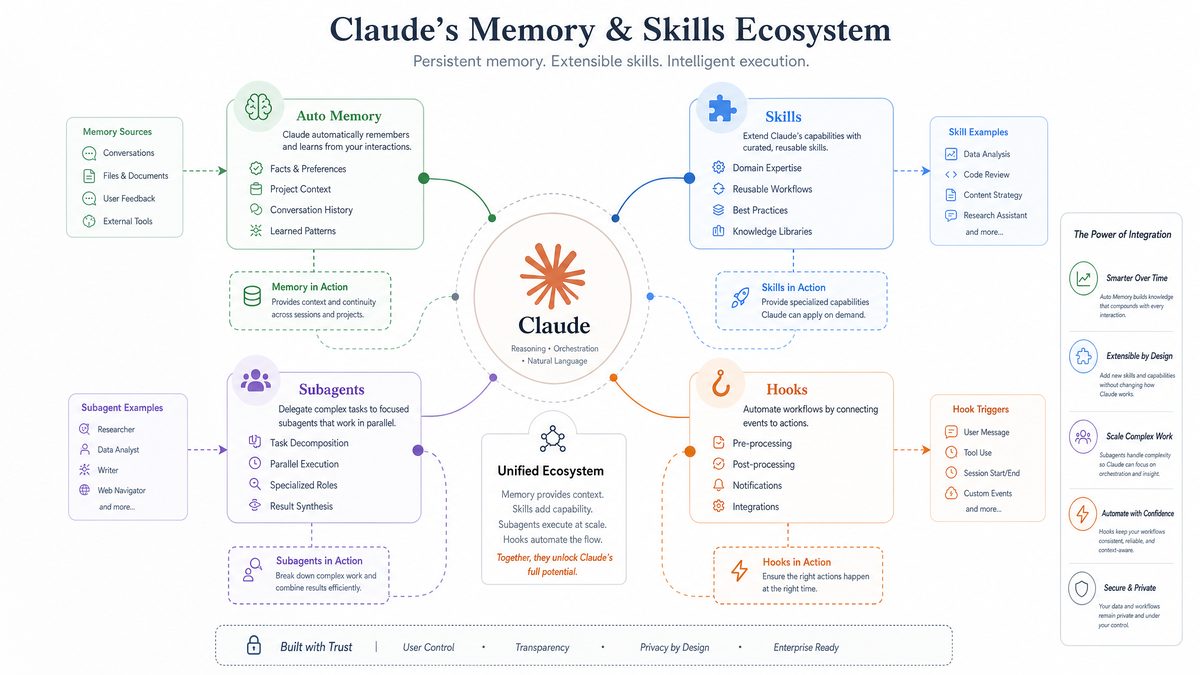
Anthropic allows integration of external plugins or microservices with Claude Opus 4.7, enabling dynamic function execution beyond static model capabilities. This modular approach enhances flexibility without rebuilding or retraining the model.
Typical plugin uses include:
- Real-time Data Access: Fetching live content (e.g., stock prices, weather) to ground responses in current facts.
- Specialized Knowledge Bases: Querying domain-specific databases such as medical ontology repositories or legal code indexes for authoritative answers.
- Execution of Code or Commands: Automatically generating, executing, and validating code snippets as part of developer assistant workflows.
Hybrid AI Architectures—Combining Claude Opus 4.7 with Symbolic and Retrieval Systems
While large language models excel in generative and contextual understanding, integrating Claude Opus 4.7 within hybrid AI architectures can address limitations like temporal knowledge decay and reasoning consistency.
Hybrid system designs include:
- Retrieval-Augmented Generation (RAG): Interleaving model generation with external document retrieval pipelines to provide factually grounded answers and up-to-date knowledge access.
- Symbolic Reasoning Layers: Combining LLM natural language understanding with symbolic rules engines or logic solvers to improve complex decision-making and explanation fidelity.
- Pipeline Orchestration: Using workflow orchestrators to chain multiple AI services, including Claude Opus 4.7, custom NLP modules, and knowledge graph queries for comprehensive solutions.
Practical Example: Legal Compliance Automation with Hybrid Architecture
A compliance platform can augment Claude Opus 4.7 with a rule-based engine representing jurisdictional laws. The LLM parses natural language client queries and drafts contract summaries, while the symbolic engine validates them against up-to-date legal constraints, generating alerts or amendment suggestions.
Such hybridization ensures legal accuracy and reduces risks associated with model hallucinations or outdated knowledge bases.
Ethical Considerations and Challenges Ahead
Ongoing Bias Detection and Mitigation
Despite the advances brought by constitutional AI, ethical challenges persist. Claude Opus 4.7 incorporates continuous monitoring systems analyzing user interactions for emergent biases or unsafe content that may not be fully addressed by training safeguards.
- User Feedback Loops: Collecting feedback to identify edge cases where outputs can cause harm, then incorporating these insights via policy refinements or post-deployment tuning.
- Auditability Tools: Supporting external audits with detailed reasoning trails and version histories to maintain accountability.
- Transparency Reports: Publishing regular reports detailing mitigation efforts, failure modes, and community engagement.
Data Privacy and Usage Policies
Handling sensitive data responsibly is vital. Anthropic implements strict data governance policies ensuring that training data is anonymized and that individual user data passed through APIs is never used for model training without consent.
Enterprises must also be vigilant in complying with industry-specific privacy regulations such as GDPR, HIPAA, or CCPA when deploying Claude Opus 4.7 based solutions.
The Future of Responsible AI with Claude
Research is ongoing to extend Claude Opus models with capabilities like dynamic policy updating, explainability improvements, and advanced human-AI collaboration modalities. Anthropic’s commitment to constitutional AI is expected to evolve with emerging societal norms and regulatory environments.
Developer Tools, SDKs, and Community Resources
Official SDKs and Libraries for Claude Opus 4.7
To facilitate integrations, Anthropic provides SDKs in popular programming languages including Python, JavaScript/TypeScript, and Go. Key features of these SDKs include:
- Streamlined authentication and request management
- Advanced prompt templating utilities
- Built-in retries and error handling
- Token usage tracking and cost estimation tools
Open Source and Third-Party Tooling
The developer community has contributed multiple open source projects that enhance interaction with Claude Opus 4.7 and related Anthropic technologies:
- Prompt Engineering Libraries: Tools that simplify prompt crafting, testing, and validation across varied task types.
- Evaluation Frameworks: Benchmarks and automated test suites for task-specific accuracy and bias measurement.
- Visualization Dashboards: Interactive platforms for monitoring model metrics, user interactions, and diagnostic diagnostics during production.
Community Forums and Knowledge-Sharing
Anthropic encourages user participation in forums and developer groups where best practices, breakthrough research, and integration experiences are shared openly. Participating in these communities accelerates learning and fosters innovation centered around Claude Opus 4.7.
Case Studies: Real-World Implementations of Claude Opus 4.7
FinTech: Automated Compliance and Fraud Detection
A leading financial institution integrated Claude Opus 4.7 into their transaction monitoring system. The model analyzes textual transaction descriptions and customer interactions to flag suspicious activities by combining natural language understanding with compliance rule evaluations powered by plugins.
Results include:
- 30% increase in fraud case detection accuracy
- Reduced false positives through context-aware analysis
- Lowered manual review workload by automating preliminary investigations
Education: Personalized Tutoring and Feedback
An edtech startup deployed Claude Opus 4.7 as the core engine powering personalized tutoring assistants. The model provides tailored explanations, generates quizzes aligned with student learning progress, and offers constructive feedback on essays and code assignments.
Key benefits:
- Dynamic curriculum adaptation based on student input
- Human-like conversational tutoring in multiple subjects
- Scalability enabling support for millions of learners simultaneously
Media and Entertainment: Interactive Storytelling Platforms
Claude Opus 4.7’s creativity and large context capabilities are harnessed in interactive storytelling applications that respond fluidly to user inputs, weaving complex narrative arcs and character developments in real-time.
Features include:
- Multiple narrative pathways supported by large context window awareness
- Adaptive style and tone shifting according to user preferences
- Integration with audio-visual tools for multimodal immersive experiences
Further Performance Enhancements and Research Directions
Continual and Lifelong Learning
Anthropic is exploring strategies enabling Claude Opus 4.7 to assimilate new knowledge continuously without catastrophic forgetting. Approaches being researched include:
- Elastic Weight Consolidation: Protecting core model weights during incremental updates.
- Modular Architecture Designs: Isolating immutable knowledge components from dynamically trainable modules.
- On-Device Adaptation: Customizing models on the edge with local fine-tuning constrained by privacy and compute resources.
Multilingual and Cross-Cultural Competence
Ongoing efforts focus on broadening Claude Opus 4.7’s multilingual abilities and cultural context understanding to serve global users equitably. This involves expanding training corpora, improving tokenizer adaptability, and augmenting alignment techniques tailored to diverse norms and sensitivities.
Explainability Through Causal Tracing
Emerging research prototypes leverage causal tracing methods to pinpoint specific neurons and pathways responsible for particular knowledge or behaviors within the model. Integrating such insights with Claude Opus 4.7 will enhance interpretability and allow targeted alignment adjustments.
Summary of Best Practices for Maximizing Claude Opus 4.7 Deployment Success
| Aspect | Recommended Practices | Benefits |
|---|---|---|
| Prompt Engineering | Use detailed, explicit instructions with contextual priming and stepwise breakdown. | Improves output relevance, reduces hallucinations, enables complex task completions. |
| Fine-Tuning | Leverage high-quality domain-specific datasets and regularization strategies. | Increases accuracy for specialized tasks; supports safer deployment. |
| API Integration | Implement session management, caching, error handling, and monitoring. | Ensures smooth user experiences and system reliability. |
| Explainability | Incorporate rationale generation, attention visualization, and auditing tools. | Builds trust and facilitates compliance in sensitive applications. |
| Hybrid Architectures | Combine with retrieval systems and symbolic reasoning for robust outputs. | Enhances factual grounding and reasoning quality. |
| Ethical AI Practices | Engage in continuous bias monitoring and transparent reporting. | Mitigates harm and aligns technology with social values. |
Useful Links
- Anthropic Official Claude Model Page
- Constitutional AI: Harms, Biases & Safety Mitigation Paper
- OpenAI GPT-4 Technical Overview
- Google PaLM 2 Language Model
- Hugging Face Model Hub
- Google AI Blog
- Meta AI Research Blog
- ChatGPT AI Hub — Prompt Library & Resources
Access 40,000+ AI Prompts for ChatGPT, Claude & Codex — Free!
Subscribe to get instant access to our complete Notion Prompt Library — the largest curated collection of prompts for ChatGPT, Claude, OpenAI Codex, and other leading AI models. Optimized for real-world workflows across coding, research, content creation, and business.
