
OpenAI’s Confidential IPO Filing: A New Chapter in AI Industry Evolution
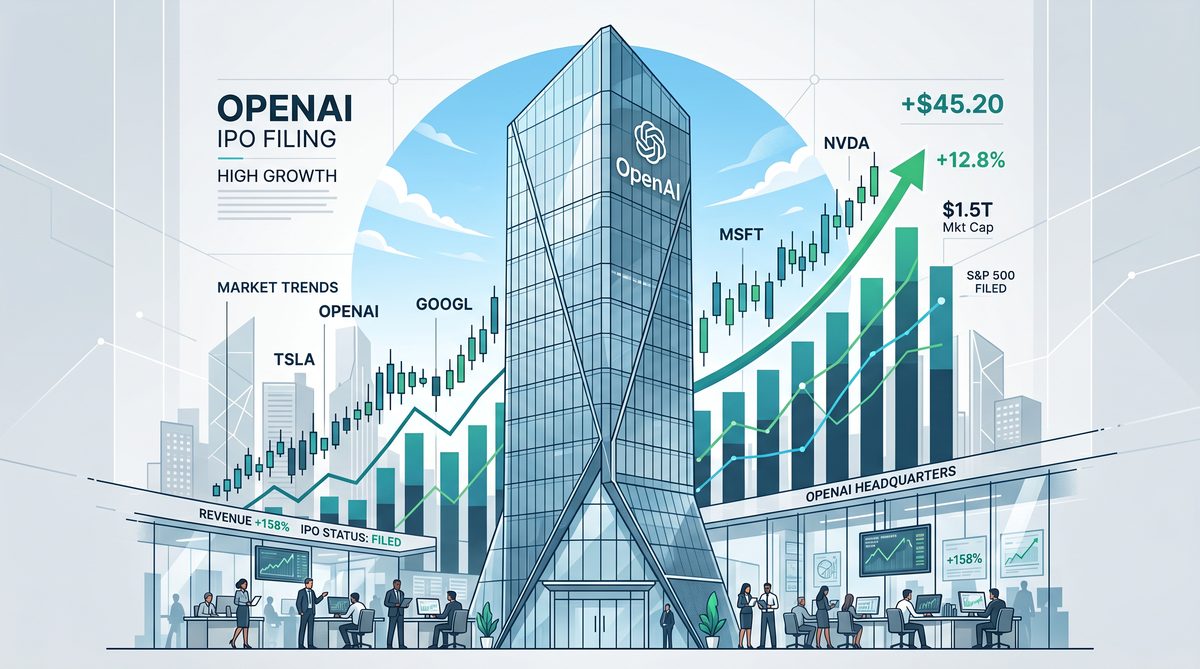
In a significant development that has captured the attention of investors, technologists, and policymakers worldwide, OpenAI is preparing to confidentially file for an initial public offering (IPO) in the coming weeks. This move marks a pivotal moment not only for the company itself but also for the broader artificial intelligence landscape. OpenAI, which has been at the forefront of generative artificial intelligence innovation, is transitioning from a privately held entity into a publicly traded company, signaling its intent to solidify its financial foundation and expand its market reach amid intensifying competition and growing commercial opportunities.
The confidential nature of the IPO filing, permitted under the Jumpstart Our Business Startups (JOBS) Act for companies below a certain revenue threshold, allows OpenAI to submit its registration documents to the U.S. Securities and Exchange Commission (SEC) without immediate public disclosure. This strategic approach provides the company with a valuable window for regulatory review and internal preparation, enabling it to address potential compliance issues before the details become public knowledge. Historically, this process also helps to manage market expectations and investor sentiment in advance of a formal offering announcement, allowing companies to refine their financial disclosures and business narratives to align with investor requirements.
OpenAI’s IPO plans come at a time when the company is projecting remarkable financial milestones. Foremost among these is its forecasted revenue of approximately $30 billion by 2026. This projection, if realized, would position OpenAI among the elite echelons of technology firms in terms of scale and influence. Such revenue expectations underscore the rapid adoption and monetization of AI-driven products and services, reflecting both the transformative potential of AI technologies and the robust demand from enterprises and consumers alike. The projection also highlights the confidence OpenAI’s management has in their ability to capitalize on the growing AI market, which is increasingly permeating diverse industries including healthcare, finance, education, and entertainment.
However, OpenAI’s financial narrative is complex and nuanced. Despite the optimistic revenue outlook, the company disclosed a negative 122% operating margin in the first quarter of 2026. This metric indicates that operational expenses vastly outpaced revenues during this period, underscoring the intensive capital investments and ongoing costs associated with research, development, infrastructure, and market expansion. This juxtaposition of high revenue growth alongside substantial operating losses highlights the inherent challenges of scaling cutting-edge AI businesses in a capital-intensive environment. It also reflects the strategic decision to prioritize long-term innovation and market capture over short-term profitability, a common pattern observed in disruptive technology sectors.
At the center of OpenAI’s commercial strategy is the effort to convert a large base of free users of its ChatGPT platform into paying subscribers. The company has introduced a tiered subscription model, including the well-established ChatGPT Plus plan and a newly launched Pro tier, both designed to capture more value from its user base while delivering enhanced service offerings. This monetization drive is critical for OpenAI’s ambition to achieve sustainable profitability and justify its valuation on the public markets. By creating differentiated tiers, OpenAI seeks to cater to a broad spectrum of users—from casual consumers to professional developers and enterprise clients—thereby maximizing revenue potential.
This article delves deeply into the multifaceted aspects of OpenAI’s IPO filing, its financial projections, operational challenges, and monetization strategies. It examines the implications of these developments for the AI industry, investors, and the broader technology ecosystem, providing a comprehensive and analytical perspective on one of the most consequential corporate moves in recent AI history. Through an exploration of the company’s strategic positioning, technological advancements, and market dynamics, this analysis seeks to illuminate the trajectory of OpenAI as it embarks on its public market journey.
Financial Landscape of OpenAI: Revenue Projections and Operating Margins
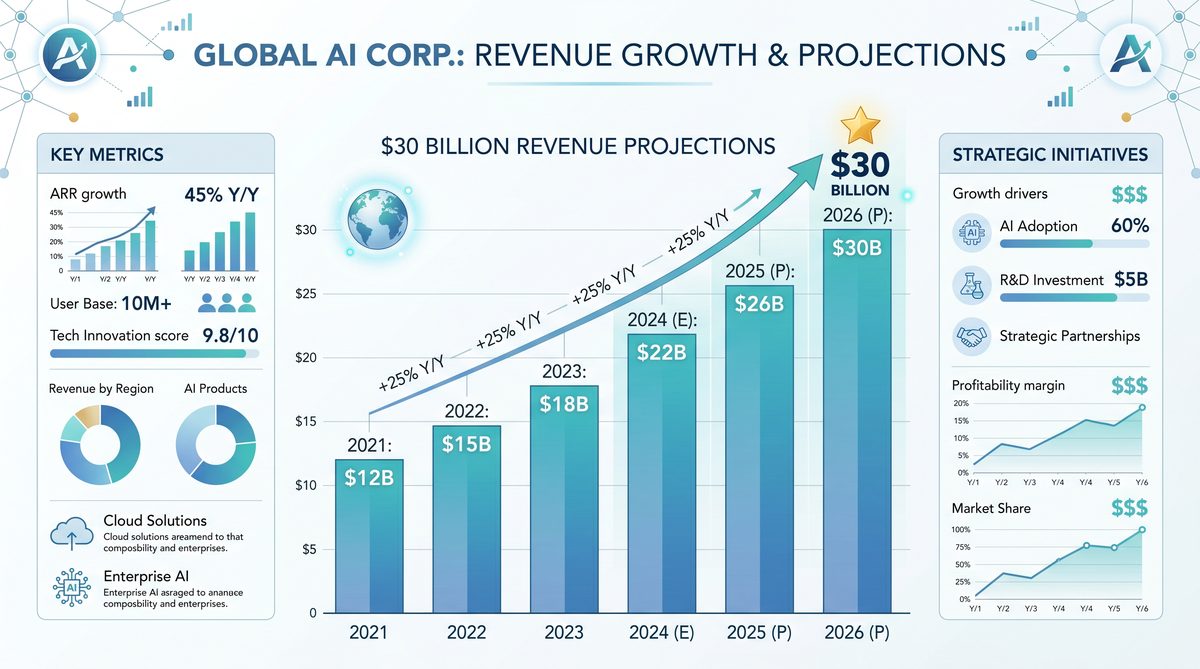
OpenAI’s financial profile embodies the paradox of rapid growth coupled with significant operating inefficiencies. The company’s projected revenue of $30 billion in 2026 represents an aggressive scale-up from its current financial performance. This forecast is predicated on the widespread adoption of its AI models, particularly the GPT series, across multiple sectors including software development, customer support, content creation, and enterprise automation. OpenAI’s technological leadership has positioned it to capitalize on the burgeoning AI market, which is anticipated to reach trillions of dollars globally over the next decade.
To provide context, the AI sector’s growth is driven by advancements in machine learning techniques, increased computational power, and the availability of vast datasets. OpenAI’s models, renowned for their natural language processing capabilities, have become foundational tools in enabling intelligent automation and augmenting human tasks. The anticipated revenue growth reflects expectations that AI will not only enhance efficiency but also create entirely new revenue streams through innovative applications such as AI-driven drug discovery, autonomous systems, and personalized education platforms.
The $30 billion revenue target reflects a compound annual growth rate (CAGR) that is unprecedented in the AI sector. Achieving this milestone will require OpenAI to significantly expand its user base, deepen enterprise partnerships, and diversify its product suite. Critical to this strategy is the expansion of subscription-based services, licensing agreements, and customized AI solutions for industry verticals. The company’s ability to scale these revenue streams will determine its long-term financial sustainability and market valuation.
OpenAI’s approach to revenue generation extends beyond consumer subscriptions to include API licensing, strategic collaborations, and potentially white-label solutions for large organizations. By embedding its AI models into third-party applications and services, OpenAI can capture value from diverse channels and create a resilient revenue mix. This diversification is crucial given the competitive landscape and the rapid pace of innovation that demands continuous adaptation.
Despite these promising revenue prospects, OpenAI’s operating margin paints a starkly different picture. The reported negative 122% operating margin in Q1 2026 indicates that for every dollar of revenue generated, OpenAI incurred more than double that amount in expenses. This level of operational loss is reflective of the immense costs associated with maintaining and training large-scale AI models, cloud infrastructure fees, research and development expenditures, and marketing activities aimed at user acquisition and retention.
The high operating losses underscore the capital-intensive nature of AI development. Training state-of-the-art models like GPT-4 and its successors involves massive computational resources, often leveraging thousands of GPUs over extended periods. These processes consume significant amounts of electricity and require sophisticated cooling and data center management. Moreover, the research teams responsible for innovating model architectures, improving safety protocols, and fine-tuning performance represent some of the highest-cost talent in the technology sector.
Additionally, OpenAI’s infrastructure costs have escalated with the deployment of AI services at scale. Handling millions of user queries daily necessitates robust and scalable cloud architectures, which entails substantial expenditure on cloud providers or proprietary data center investments. The company must also invest in security, compliance, and customer support to maintain trust and reliability in its offerings.
Financial analysts observing OpenAI’s trajectory note that such negative operating margins are not uncommon among high-growth technology companies in their pre-IPO phases. Firms often prioritize market share expansion and technological advancement over immediate profitability, anticipating that economies of scale and product maturation will eventually drive positive margins. OpenAI’s challenge will be to balance these competing priorities while maintaining investor confidence and operational discipline.
Historical parallels can be drawn to other technology giants such as Amazon and Tesla, which endured years of operating losses while investing heavily in infrastructure, product development, and market expansion before achieving sustained profitability. For OpenAI, the path to profitability will likely hinge on optimizing operational efficiencies, enhancing monetization mechanisms, and managing capital expenditures prudently.
In the context of the broader technology market, OpenAI’s financial data invites comparisons with other AI-centric and cloud-based enterprises. Many companies in adjacent fields have experienced similar growth-pain dynamics, with initial losses followed by eventual profitability as product ecosystems mature and customer lifetime values increase. OpenAI’s forthcoming IPO will provide a critical opportunity for investors to assess the company’s financial health, strategic direction, and risk profile in light of these factors.
Furthermore, the IPO will shed light on OpenAI’s capital structure, cash flow management, and investment priorities, offering transparency into how the company plans to allocate resources amid evolving technological and market demands. As AI continues to permeate various industries, the financial performance of leading firms like OpenAI will serve as important benchmarks for the sector’s health and maturity.
Monetization Strategies: From Free Users to Premium Plans

A central pillar of OpenAI’s strategy to improve its financial performance and justify its elevated valuation is the conversion of its extensive free user base into paying subscribers. Since the launch of ChatGPT, OpenAI has amassed tens of millions of users globally who interact with its conversational AI models at no cost. While this user acquisition strategy has been effective in building brand awareness and platform engagement, it has not directly translated into sustainable revenue streams.
The free access model facilitated rapid adoption by democratizing access to advanced AI capabilities, lowering the barrier to entry for individuals, educators, and small businesses. This approach also generated invaluable user data and feedback, allowing OpenAI to iteratively improve its models and tailor its offerings. However, the sustainability of this model depends on successfully transitioning a significant portion of users into paid plans that can support ongoing operational costs and research investments.
To address this gap, OpenAI introduced ChatGPT Plus, a subscription plan priced at $20 per month, offering users enhanced access, faster response times, and priority during peak usage periods. This model was OpenAI’s initial attempt to monetize its consumer-facing AI product, and it has garnered a substantial subscriber base. However, the company recognized the necessity to further segment its offerings to capture higher revenue per user and provide differentiated value propositions.
ChatGPT Plus users benefit from access to more advanced models and features, which enhance productivity and user experience. This subscription plan caters primarily to power users who rely on ChatGPT for professional or frequent use, representing a crucial revenue foundation. The success of Plus has validated the feasibility of subscription monetization for AI services, encouraging OpenAI to develop more sophisticated tiering options.
In response, OpenAI recently launched the ChatGPT Pro plan, targeted primarily at power users, developers, and enterprises requiring advanced features, higher usage limits, and dedicated support. The Pro plan includes capabilities such as increased API usage quotas, priority access to the latest AI models, customizable integration options, and enhanced security features. This tiered subscription architecture aims to create a revenue funnel, gradually transitioning users from free access to paid tiers with progressively enhanced functionality.
The Pro plan is particularly attractive to developers and businesses integrating OpenAI’s AI models into their workflows, applications, and products. By offering scalable usage and enterprise-grade support, OpenAI is positioning itself as an indispensable technology partner for digital transformation initiatives. This move aligns with broader trends toward AI-as-a-service (AIaaS), enabling organizations to leverage sophisticated AI without large upfront investments in infrastructure or expertise.
The shift from a predominantly free service to a subscription-based model introduces several challenges. Firstly, the company must strike a balance between monetization and user retention, ensuring that the introduction of paid plans does not alienate its broad community of free users. Maintaining a high-quality free tier is critical to sustaining organic growth and network effects, which in turn support the premium offerings. OpenAI must carefully calibrate feature differentiation to incentivize upgrading without undermining the free experience.
Secondly, OpenAI faces competitive pressures from other AI providers and platforms that offer free or lower-cost alternatives. To differentiate its subscription plans, OpenAI is investing in continuous innovation, improving model capabilities, and integrating new features that justify the cost premium. This includes advances in natural language understanding, multi-modal AI, and domain-specific adaptations that enhance usability and value for diverse customer segments.
Moreover, OpenAI is enhancing its ecosystem through partnerships and developer tools, facilitating the creation of third-party applications and plugins that expand the utility of its AI models. This ecosystem development not only drives user engagement but also opens avenues for revenue sharing and expanded monetization.
Furthermore, OpenAI’s monetization strategy extends beyond subscriptions. The company is actively exploring enterprise licensing agreements, strategic partnerships, and API monetization, enabling businesses to embed OpenAI’s models into their workflows and products. These initiatives are designed to create diversified revenue streams that complement consumer-facing subscriptions and contribute to revenue stability.
Enterprise solutions often involve bespoke contracts, tailored compliance and data privacy arrangements, and collaborative innovation efforts. By catering to high-value clients in sectors such as finance, healthcare, and manufacturing, OpenAI can command premium pricing and establish long-term contractual relationships. Such endeavors also enhance the company’s influence and integration within critical industry verticals.
The success of these monetization efforts will be a critical determinant of OpenAI’s profitability trajectory and its ability to meet or exceed its ambitious revenue targets. As the company prepares for its IPO, demonstrating a clear path from user engagement to sustainable revenue generation will be essential to attracting public market investors and achieving a favorable valuation. This will require transparent reporting of subscriber growth metrics, churn rates, average revenue per user (ARPU), and enterprise deal pipelines, providing investors with confidence in the business model’s robustness.
Implications for the AI Ecosystem and Investment Community
OpenAI’s impending IPO and its financial disclosures reverberate across the global artificial intelligence ecosystem and the investment community. As one of the most influential entities in AI research and commercialization, OpenAI’s trajectory offers valuable insights into market dynamics, technological innovation, and economic opportunities within this rapidly evolving sector.
For the AI ecosystem, OpenAI’s transition to a public company introduces a new paradigm for funding and accountability. The IPO will provide the company with access to substantial capital markets funding, potentially accelerating innovation cycles and expanding its capacity to scale infrastructure and product offerings. At the same time, public company status will subject OpenAI to greater regulatory scrutiny, governance requirements, and market pressures, which may influence its strategic choices and operational priorities.
The infusion of public capital could enable OpenAI to invest more aggressively in next-generation AI research areas such as reinforcement learning, unsupervised learning, and multi-modal AI systems that combine language, vision, and other sensory inputs. It may also support the expansion of global infrastructure, including edge computing capabilities and regional data centers, to enhance service reliability and compliance with data sovereignty laws.
The company’s financial results, including the negative operating margin and revenue projections, highlight the broader challenge of balancing innovation with commercial viability in AI. This tension is emblematic of the AI industry’s maturation, where early-stage excitement and rapid technological progress must increasingly be reconciled with sustainable business models and shareholder expectations.
From an investment perspective, OpenAI’s IPO represents a landmark opportunity to participate in the financial upside of AI advancements. Investors will be evaluating the company’s market positioning, competitive advantages, growth prospects, and risk factors in detail. Critical considerations include the scalability of AI products, user monetization effectiveness, cost management strategies, and the regulatory landscape surrounding AI applications.
OpenAI’s leadership in foundational AI models positions it favorably against competitors, but the market remains dynamic with significant entrants from cloud giants, startups, and open-source communities. Investors will also scrutinize OpenAI’s intellectual property portfolio, partnerships, and talent retention capabilities as indicators of long-term competitive moat.
Moreover, OpenAI’s IPO may catalyze increased investment activity in AI startups and related technologies. The public listing of a leading AI company can enhance market visibility, validate business models, and attract new capital flows into the sector. This could spur innovation and competition, with downstream effects on AI adoption, talent acquisition, and technological diffusion.
However, the IPO also raises important questions about valuation metrics and market expectations. Given the company’s current operating losses and the nascent stage of many AI applications, investors must carefully assess the sustainability of growth assumptions and the timing of profitability. Overly optimistic valuations could lead to market corrections, while prudent analysis may reveal compelling long-term opportunities.
In addition, OpenAI’s public offering will likely ignite discussions about AI governance, ethical considerations, and societal impact. As AI technologies become more pervasive, the responsibilities of leading companies like OpenAI in ensuring transparency, fairness, and safety will come under greater scrutiny by regulators, civil society, and the media. This includes issues such as bias mitigation, misinformation prevention, data privacy, and the ethical deployment of autonomous systems.
OpenAI has historically emphasized safety and ethical AI development through initiatives like the deployment of moderation tools and research into AI alignment. The public company status will amplify expectations for demonstrable commitments and accountability frameworks. Investors and stakeholders will demand clear reporting on governance policies, risk management, and social responsibility efforts.
Ultimately, OpenAI’s IPO is more than a financial event; it is a bellwether for the AI industry’s evolution from research-driven experimentation to a mature, commercially viable, and socially consequential domain. Its success or struggles will influence regulatory approaches, public perceptions, and the strategic priorities of numerous AI stakeholders worldwide. The IPO will also serve as a case study in how breakthrough technologies transition from innovation labs to mainstream economic drivers.
Useful Links
- U.S. Securities and Exchange Commission (SEC)
- OpenAI Official Website
- Nasdaq Stock Market
- Wall Street Journal Technology Section
- TechCrunch: OpenAI Coverage
Conclusion
The confidential IPO filing by OpenAI marks a historic juncture in the artificial intelligence domain, charting the company’s course toward public market participation amid ambitious growth prospects and operational challenges. With projections of $30 billion in revenue by 2026, alongside a substantial negative operating margin, OpenAI reveals the complex financial dynamics underpinning the rapid commercialization of advanced AI technologies. Central to its strategy is the effective conversion of its vast free user base into paying subscribers through enhanced plans such as ChatGPT Plus and the newly introduced Pro tier. These efforts are critical for enhancing revenue streams and progressing toward profitability.
As OpenAI prepares to navigate the rigorous demands of the public markets, its performance will be scrutinized not only for financial metrics but also for its broader impact on the AI ecosystem, technological innovation, and societal implications. The company’s IPO has the potential to reshape investment patterns in AI and signal the sector’s maturation, while also prompting vital discussions about governance and ethical stewardship in this transformative field.
Investors, industry stakeholders, and observers alike will closely monitor OpenAI’s journey as it transitions from a pioneering private entity into a publicly accountable enterprise. This evolution embodies both the promise and the challenges of harnessing artificial intelligence to drive economic growth and societal progress in the 21st century.
For further insights and updates on OpenAI’s IPO and AI industry developments, readers are encouraged to explore related topics such as
Understanding the full spectrum of ChatGPT subscription tiers is essential for evaluating OpenAI’s monetization strategy. Our detailed comparison of ChatGPT subscription plans, including Free, Plus, Team, and Enterprise tiers, breaks down the feature differences, pricing structures, and usage limits that drive OpenAI’s recurring revenue growth.
,
The release of GPT-5.5 represents a fundamental shift in how AI models handle personalization and contextual understanding. Our in-depth analysis of GPT-5.5 Instant and its personalized interaction capabilities explores how this model’s architecture enables more nuanced, context-aware responses that adapt to individual user patterns and preferences.
, and
Effective prompting remains the critical skill for extracting maximum value from AI coding tools. Our comprehensive guide on advanced prompting techniques for steering Codex and Claude Code provides tested frameworks for structuring instructions that produce reliable, production-quality code output from autonomous coding agents.
.
Author: Markos Symeonides
Access 40,000+ AI Prompts for ChatGPT, Claude & Codex — Free!
Subscribe to get instant access to our complete Notion Prompt Library — the largest curated collection of prompts for ChatGPT, Claude, OpenAI Codex, and other leading AI models. Optimized for real-world workflows across coding, research, content creation, and business.
