
Building a Multi-Model AI Strategy to Avoid Vendor Lock-in in 2026

As artificial intelligence continues its rapid evolution, enterprises and developers face an increasingly complex landscape of AI models and providers. By 2026, the AI market will be dominated not just by advancements in model quality but by strategic battles over customer lock-in. This guide provides an in-depth exploration of building a robust multi-model AI strategy designed to avoid vendor lock-in — ensuring flexibility, cost-efficiency, and future-proofing in your AI deployments.
The Lock-in Problem: OpenAI and Anthropic Competing on Stickiness Rather Than Model Quality

Historically, competition in AI has centered around the quality and capabilities of models. However, leading AI companies like OpenAI and Anthropic are increasingly focusing on building sticky ecosystems that keep customers locked into their platforms. This shift emphasizes integration depth, proprietary APIs, and exclusive features rather than purely model performance improvements.
OpenAI, with its GPT series, has created a broad ecosystem around its models, encompassing developer tools, fine-tuning capabilities, and premium support. Anthropic, on the other hand, emphasizes safety and alignment, packaging its Claude models with unique compliance and customization options. Both companies strive to make migration away from their platforms costly or complex — a classic vendor lock-in strategy.
This phenomenon means that even if a competitor offers a better model, customers may hesitate to switch due to integration costs, retraining, or workflow disruptions. Enterprises that invest heavily in one provider risk losing flexibility and negotiating power.
Why Lock-in Has Become a Priority
AI platforms benefit immensely from long-term customer relationships. Recurring revenue streams and data access incentivize providers to build ecosystems that discourage switching. From proprietary prompt engineering tools to unique API features, the emphasis on stickiness ensures higher customer lifetime value and competitive resilience.
However, this trend creates challenges for enterprises aiming to retain agility amid fast-moving AI innovations. The risk of being locked into a single provider can lead to inflated costs, slower adoption of new technologies, and reduced bargaining leverage.
Business Insider Analysis: “The Next Battle in AI Will Have Less to Do with Model Quality and More to Do with Customer Lock-in”
In a detailed analysis, Business Insider highlighted the evolving dynamics of AI competition. The report emphasized that as model quality improvements become incremental, the decisive factor for market dominance will be customer lock-in strategies.
The article cited several examples of AI providers enhancing their ecosystems through:
- Exclusive integrations with enterprise software
- Proprietary data formats and prompt engineering tools
- Cross-product synergy between AI and cloud services
Business Insider argues that this shift compels businesses to rethink their AI strategies. Rather than committing fully to one provider, enterprises must design their AI infrastructure to remain adaptable and avoid being trapped by vendor-specific constraints.
This analysis resonates deeply with current industry trends and underscores the necessity of multi-model strategies as a hedge against lock-in risks.
Walmart’s Code Puppy: Switching Between OpenAI, Anthropic, and Google Models to Avoid Dependence
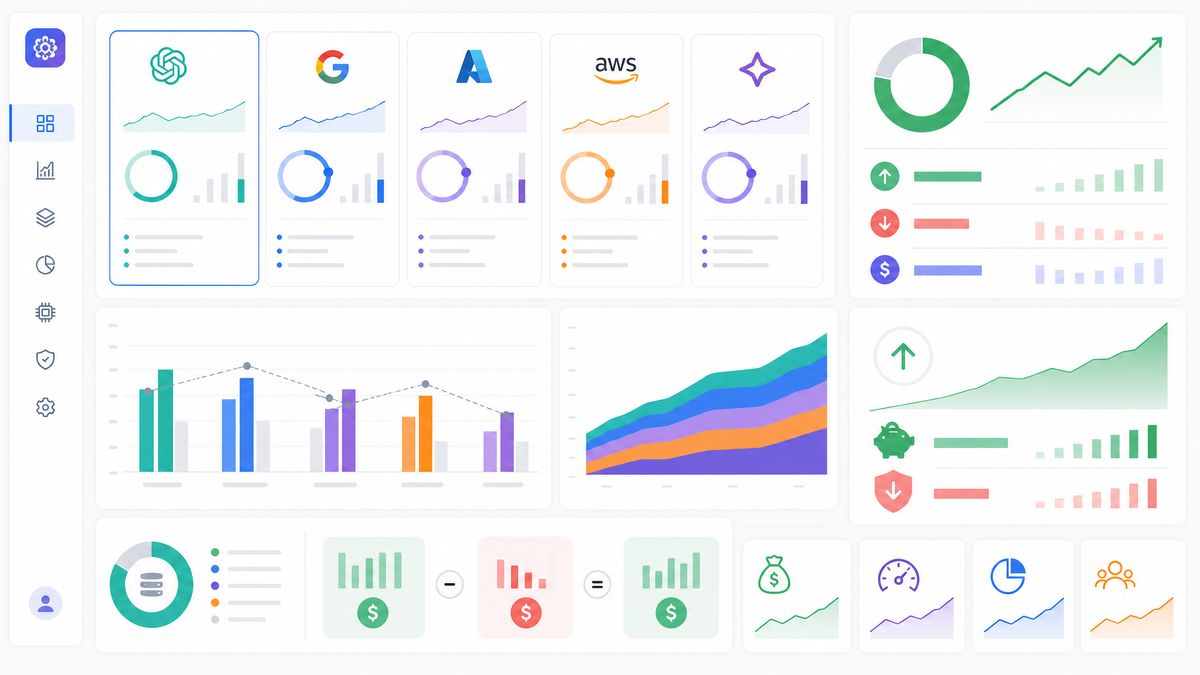
Walmart, one of the largest retail enterprises globally, provides a compelling case study with its AI assistant project codenamed Code Puppy. Rather than relying exclusively on a single AI model provider, Walmart has architected Code Puppy to dynamically switch between OpenAI’s GPT models, Anthropic’s Claude, and Google’s Gemini models.
How Code Puppy Achieves Multi-Model Flexibility
Code Puppy incorporates a multi-model routing system that evaluates factors such as cost, latency, and contextual suitability to determine the optimal model for each request. This approach enables Walmart to:
- Reduce dependency on any one provider
- Optimize costs by leveraging cheaper models for less critical queries
- Improve reliability by having fallback options in case of service disruptions
- Benefit from the unique strengths of each model (e.g., Claude’s safety features or Gemini’s integration with Google Cloud)
Benefits and Challenges
Walmart’s multi-model approach demonstrates clear advantages in risk management and operational flexibility. However, it also introduces complexity in orchestration, monitoring, and prompt standardization across models, which Walmart addresses through advanced abstraction layers and model-agnostic APIs.
Walmart’s case underscores the growing trend among large enterprises to build AI stacks that transcend vendor boundaries.
The Tension: AI Companies Want Sticky Ecosystems vs Enterprises Want Flexibility
The evolving AI market presents a fundamental tension:
- AI Providers: They seek to maximize customer retention through sticky ecosystems, proprietary features, and exclusive integrations — effectively increasing switching costs.
- Enterprises: They desire flexibility to choose the best models for each use case, avoid dependency risks, and optimize costs in a rapidly changing market.
This tension drives much of the innovation in multi-model AI strategies. Enterprises push for architectural designs and tooling that abstract away provider-specific details, while AI companies respond with deeper integrations and unique capabilities.
Resolving this tension requires sophisticated engineering and strategic planning, balancing the benefits of ecosystem features with the risks of lock-in.
Building a Multi-Model Architecture: Abstraction Layers, Model Routing, Fallback Strategies
Abstraction Layers
At the core of any multi-model AI strategy is an abstraction layer that decouples your application logic from specific AI providers. This layer translates generic requests into provider-specific API calls and normalizes responses.
Key components include:
- Unified API Interface: A single interface for all AI model interactions regardless of vendor.
- Prompt Normalization: Tools to standardize prompt formats and inputs.
- Response Parsing: Uniform extraction of outputs, regardless of provider response formats.
Model Routing
Model routing intelligently selects which AI model to invoke based on dynamic criteria such as:
- Use case requirements (e.g., creative writing vs factual summarization)
- Cost considerations
- Latency constraints
- Provider availability and service health
Fallback Strategies
Robust fallback mechanisms ensure reliability by switching to alternative providers if the primary model fails or yields unsatisfactory results. These strategies include:
- Automatic retries with secondary providers
- Escalation to human review when AI output confidence is low
- Graceful degradation modes prioritizing essential responses
Implementing these architectural principles creates a resilient AI stack capable of adapting as providers evolve or as business needs shift.
Cost Optimization Across Providers: When to Use GPT-5.5 vs Claude vs Gemini
With multiple leading models available, cost optimization becomes a critical factor in multi-model strategies. Each provider offers different pricing models, strengths, and performance characteristics.
GPT-5.5 (OpenAI)
OpenAI’s GPT-5.5, the latest iteration in the GPT series, excels in general-purpose language tasks with highly refined conversational abilities. It commands a premium price but delivers top-tier performance for complex queries, creative generation, and nuanced understanding.
Claude (Anthropic)
Anthropic’s Claude focuses heavily on safety, alignment, and controllability. It generally offers competitive pricing and is well-suited for compliance-sensitive environments, customer support, and moderated content generation.
Gemini (Google)
Google’s Gemini prioritizes integration with Google Cloud services and excels in multimodal tasks. Pricing tends to be competitive, especially for enterprises already invested in Google’s ecosystem.
Optimizing Usage
Enterprises can reduce costs by:
- Routing high-complexity or high-value requests to GPT-5.5
- Using Claude for safety-critical or compliance-heavy tasks
- Leveraging Gemini for tasks involving Google Cloud data or multimodal inputs
- Employing smaller or open source models for low-cost, high-volume workloads
This tiered approach balances quality and cost, enabling businesses to maximize ROI across AI providers.
Portability Frameworks: Standardized Prompt Formats, Model-Agnostic APIs
Portability is fundamental to avoiding lock-in. Developing or adopting portability frameworks enables seamless migration between AI models and providers.
Standardized Prompt Formats
Standardizing prompt templates and structures reduces the effort needed to adapt prompts across different models. Examples include:
- Using JSON-based prompt representations
- Defining template variables and variables consistently
- Abstracting prompt instructions from provider-specific syntax
Model-Agnostic APIs
Model-agnostic APIs provide a consistent interface for AI interactions, masking underlying differences between providers. Popular frameworks and middleware solutions include:
- OpenAI-compatible interfaces that support multiple backends
- Custom wrappers that unify error handling and rate limiting
- SDKs that enable plug-and-play model switching
Adopting these frameworks simplifies development, reduces integration costs, and accelerates experimentation with new models.
Open Source Alternatives: LLaMA, Mistral as Escape Valves
Open source AI models like LLaMA and Mistral are gaining prominence as powerful alternatives to proprietary models. They serve as important “escape valves” to reduce vendor dependency.
LLaMA
Developed by Meta, LLaMA models offer competitive performance and can be deployed on-premises or in private clouds, providing enterprises with full control over their AI infrastructure and data privacy.
Mistral
Mistral is emerging as a high-performance open source model with a focus on efficiency and scalability. Its permissive licensing encourages customization and integration within diverse AI stacks.
Benefits of Open Source Models
- Freedom from vendor pricing and usage restrictions
- Ability to fine-tune and adapt models to specific enterprise needs
- Enhanced data privacy and security controls
- Community-driven innovation and transparency
While open source models may require more operational expertise, their strategic value in mitigating lock-in is significant.
Enterprise Decision Framework: When Lock-in Is Acceptable vs When Flexibility Matters
Not all scenarios demand absolute vendor independence. Enterprises must evaluate the trade-offs between lock-in and flexibility to make informed AI infrastructure decisions.
When Lock-in Might Be Acceptable
- Strategic Partnerships: When a provider offers unique capabilities aligned with business goals.
- Speed to Market: When rapid deployment outweighs long-term flexibility concerns.
- Deep Integration: When AI is tightly embedded with proprietary software and workflows.
- Cost Predictability: When volume discounts or enterprise agreements justify commitment.
When Flexibility Matters Most
- Rapid Innovation: When the AI landscape is evolving quickly and switching providers is likely.
- Cost Sensitivity: When controlling AI spending is paramount.
- Compliance and Governance: When regulatory demands require vendor neutrality or data control.
- Multi-Use Case Environments: When different departments or applications require different model capabilities.
Developing a decision framework aligned with organizational priorities and risk tolerance ensures a balanced approach to vendor relationships.
Future-Proofing Your AI Stack: Preparing for the Super App Era
The AI industry is moving toward a “super app” era — integrated platforms that combine multiple AI models, services, and functionalities into seamless experiences. Future-proofing your AI stack means anticipating this convergence and building architectures that can:
- Integrate diverse AI capabilities from multiple providers
- Leverage composability and modular AI components
- Scale dynamically with evolving workload demands
- Support continuous model updates and swapping without disruption
Investing in modular, extensible AI infrastructure today positions enterprises to capitalize on future innovations and avoid costly re-architectures.
Embracing multi-model strategies, portability standards, and open source alternatives will be key pillars of this future-ready AI stack.
Implementing Multi-Model AI in Practice: Technical and Organizational Considerations
While the theory behind multi-model AI strategies is compelling, implementing them in real-world enterprise environments requires careful planning and coordination across technical and business teams.
Technical Implementation Details
Building a multi-model AI system involves integrating disparate APIs, managing authentication and rate limits, and ensuring consistent data formats. Key technical considerations include:
- API Gateway and Middleware: Develop or use an API gateway that handles request routing, authentication, and logging uniformly across providers.
- Unified Data Schema: Design a data interchange format that normalizes inputs and outputs, enabling seamless switching between models without breaking application logic.
- Prompt Engineering Automation: Create prompt templates that adapt dynamically to each model’s syntax and capabilities, possibly leveraging tools like prompt templating engines or DSLs (Domain Specific Languages).
- Monitoring and Analytics: Implement centralized monitoring to track model usage, performance metrics, cost, and error rates, enabling data-driven routing decisions.
- Security and Compliance: Ensure data encryption, access controls, and compliance with regulations such as GDPR or HIPAA, especially when dealing with multiple vendors and data jurisdictions.
Organizational and Process Challenges
Multi-model AI strategies require cross-functional collaboration between AI teams, DevOps, procurement, and legal departments. Some organizational challenges include:
- Vendor Management: Managing contracts, SLAs, and support agreements across multiple providers can be complex and resource-intensive.
- Skill Development: Teams must develop expertise in multiple AI platforms and stay current with evolving provider offerings.
- Change Management: Educating stakeholders about the benefits and trade-offs of multi-model strategies helps manage expectations and fosters adoption.
- Governance Frameworks: Establish policies for data usage, model selection criteria, and fallback protocols to maintain consistency and compliance.
Enterprises that invest in these technical and organizational capabilities are better positioned to reap the benefits of multi-model AI while mitigating integration complexity and operational risks.
Real-World Examples of Multi-Model AI Beyond Walmart
While Walmart’s Code Puppy is a high-profile example, multi-model AI adoption is gaining traction across diverse industries. Here are some additional case studies illustrating the approach:
Financial Services: JPMorgan Chase’s Smart AI Orchestrator
JPMorgan Chase has developed a system that dynamically routes natural language processing tasks between GPT-based models, Anthropic’s Claude, and internally developed AI models. This strategy enables the bank to optimize for compliance and data privacy while leveraging external innovation.
For instance, sensitive financial summaries are processed using models deployed within secure on-premises environments or vetted providers with strict data handling policies. Meanwhile, customer-facing chatbot interactions may use more agile, cloud-based models for responsiveness.
By combining multiple AI sources, JPMorgan balances risk, cost, and performance in a highly regulated environment.
Healthcare: Mayo Clinic’s AI Integration Platform
Mayo Clinic employs a multi-model strategy to enhance clinical decision support systems. Their platform integrates specialized medical NLP models with general-purpose large language models from multiple vendors.
This approach enables Mayo Clinic to leverage the strengths of different models: proprietary medical models offer high accuracy in diagnosis support, while commercial LLMs assist with patient communication and administrative tasks.
The multi-model framework also supports rapid testing and validation of emerging AI models, accelerating adoption while maintaining patient safety and compliance.
Media & Entertainment: Netflix’s Content Generation Pipeline
Netflix uses a mix of AI models to generate creative content suggestions, subtitle translations, and metadata generation. Their system dynamically selects models based on language, content type, and cost considerations.
For example, the company routes high-stakes creative writing tasks to premium GPT models, while relying on more cost-effective open source models for bulk subtitle generation. Netflix’s AI orchestration platform also incorporates fallback mechanisms to ensure content quality and availability globally.
These real-world examples highlight that multi-model AI strategies are not limited to retail but are becoming a strategic imperative across sectors requiring flexibility, compliance, and cost control.
Expert Analysis: Industry Leaders Weigh In on Multi-Model AI Strategies
Industry experts and thought leaders have increasingly emphasized the importance of multi-model AI architectures to navigate the evolving market dynamics.
Dr. Fei-Fei Li, Stanford University
“As AI models proliferate, no single provider will dominate all use cases. Building flexible, multi-model systems that leverage unique strengths across providers is essential for innovation and resilience.”
Andrew Ng, Co-founder of Google Brain and Landing AI
“The future of AI will be about orchestration — combining the best models for specific tasks while maintaining control over data and cost. Enterprises that plan for multi-model deployments will have a competitive advantage.”
Kriti Sharma, AI Ethics Expert
“Multi-model strategies also provide an opportunity to embed ethical considerations and safety controls by selecting models based on alignment and risk profiles, not just performance.”
These perspectives reinforce that multi-model AI is both a technical and strategic shift necessary to keep pace with innovation while managing complexity and risk.
Practical Advice: Steps to Start Building Your Multi-Model AI Strategy Today
For organizations ready to embark on multi-model AI adoption, the following practical steps can help lay a strong foundation:
1. Assess Current AI Usage and Dependencies
Perform an inventory of existing AI models, providers, and integration points. Identify critical dependencies and potential risks related to vendor lock-in.
2. Define Use Cases and Prioritize Flexibility Needs
Classify AI workloads by sensitivity, complexity, and cost constraints. Determine where flexibility is most valuable and where deeper integration with a single provider may be acceptable.
3. Design an Abstraction Layer
Create or adopt middleware that abstracts provider-specific APIs. Consider open source SDKs or commercial tools that facilitate multi-model orchestration.
4. Develop Prompt Templates and Testing Frameworks
Standardize prompt engineering to enable portability. Implement automated testing to validate outputs across models and detect regressions early.
5. Pilot Multi-Model Routing and Fallbacks
Start with a subset of use cases where model switching adds clear value. Monitor performance, cost, and user experience to refine routing logic.
6. Engage Cross-Functional Teams
Involve stakeholders from procurement, legal, security, and business units to ensure governance, compliance, and alignment with strategic goals.
7. Plan for Continuous Evolution
AI models and providers will keep evolving. Establish processes for continuous evaluation, onboarding new models, and sunsetting outdated ones.
Following these steps helps organizations move pragmatically toward multi-model AI adoption, mitigating lock-in risks while capturing the benefits of diverse provider ecosystems.
Technological Innovations Enabling Multi-Model Strategies
Recent technological advances have accelerated the feasibility and effectiveness of multi-model AI strategies. These innovations include:
Federated Learning and Privacy-Preserving AI
Federated learning allows training or fine-tuning models across decentralized data sources without moving sensitive data. Enterprises can thus customize open source or proprietary models securely and leverage multiple providers while maintaining data privacy.
This technology reduces lock-in by enabling enterprises to build bespoke models that complement commercial offerings or serve niche needs.
AI Model Marketplaces and Hubs
Platforms like Hugging Face Hub, AWS Marketplace for AI, and Google AI Hub provide centralized repositories of diverse AI models. These marketplaces facilitate easy discovery, deployment, and integration of models from multiple vendors and open source communities.
Such hubs simplify the operational overhead of multi-model adoption and foster experimentation with emerging models.
Containerization and Model Serving Platforms
Technologies like Kubernetes, Docker, and dedicated model serving platforms (e.g., TensorFlow Serving, TorchServe) enable enterprises to deploy models in containerized environments. This approach supports hybrid multi-cloud or on-premises architectures, enhancing portability and control.
Containerization also enables switching or upgrading models without disrupting services, a cornerstone of multi-model flexibility.
Automated Machine Learning (AutoML) and Meta-Learning
AutoML tools and meta-learning approaches can help automate prompt tuning, model selection, and hyperparameter optimization across multiple AI providers. These capabilities streamline multi-model orchestration and improve performance with less manual intervention.
Enterprises leveraging these innovations gain a competitive edge in managing complex AI ecosystems efficiently.
Ethical and Regulatory Implications of Multi-Model AI Strategies
As enterprises adopt multi-model AI architectures, it is crucial to consider the ethical and regulatory implications associated with data usage, model biases, and accountability.
Mitigating Bias and Ensuring Fairness
Different AI models exhibit varying biases based on their training data and design philosophies. Multi-model strategies provide an opportunity to cross-validate outputs and select models with better fairness profiles for sensitive applications.
For example, organizations can route content moderation tasks to models with demonstrated alignment to ethical guidelines or use ensemble approaches to reduce bias impact.
Data Residency and Compliance
Using multiple providers across jurisdictions raises challenges in data residency and compliance with regulations like GDPR, CCPA, and others. Enterprises must carefully manage data flows, ensure proper consent, and implement controls to prevent violations.
Multi-model architectures should incorporate compliance-aware routing that respects regulatory boundaries and audit requirements.
Transparency and Explainability
Maintaining transparency over which models generate specific outputs is vital for trust, especially in regulated domains like finance and healthcare. Multi-model systems need robust logging and explainability tools to provide audit trails and interpretability.
This transparency helps meet regulatory demands and supports ethical AI governance frameworks.
Accountability and Risk Management
Deploying multiple AI providers increases the complexity of accountability. Clear responsibility matrices, incident response plans, and contractual terms regarding model outputs and failures are necessary to mitigate risks.
Organizations should incorporate these considerations early in their multi-model strategy to avoid legal and reputational pitfalls.
Access 40,000+ AI Prompts for ChatGPT, Claude & Codex — Free!
Subscribe to get instant access to our complete Notion Prompt Library — the largest curated collection of prompts for ChatGPT, Claude, OpenAI Codex, and other leading AI models. Optimized for real-world workflows across coding, research, content creation, and business.
Conclusion
In 2026 and beyond, avoiding vendor lock-in will be a critical strategic imperative for enterprises deploying AI at scale. The competitive landscape — exemplified by OpenAI, Anthropic, and others — is increasingly about ecosystem stickiness rather than raw model quality.
By studying examples like Walmart’s Code Puppy, adopting multi-model architectures, optimizing costs across providers, and leveraging open source escape valves, organizations can maintain flexibility, manage risks, and optimize their AI investments.
Building a multi-model AI strategy is not just a technical challenge but a business imperative to thrive in the fast-evolving AI era.
Decision-makers evaluating AI platforms can find detailed feature-by-feature analysis in How Anthropic Is Challenging OpenAI Enterprise Dominance: The AI Platform War of 2026, which compares enterprise capabilities, security certifications, pricing models, and integration ecosystems across the leading AI providers.
AWS-native organizations can learn how to deploy GPT-5.5 through their existing cloud infrastructure in How to Access OpenAI Codex on Amazon Bedrock: Complete Enterprise Setup Guide, which provides step-by-step integration guides for Amazon Bedrock, including IAM configuration, endpoint setup, and cost management within AWS environments.
Teams already building with Codex Sites can deepen their implementation knowledge through OpenAI Codex Launches Sites, Annotations, and 6 Enterprise Plugins: Everything You Need to Know, which covers advanced deployment patterns, interactive component creation, and production-ready web application architectures using OpenAI’s integrated development platform.
