
OpenAI’s Super App vs Anthropic’s Cowork Platform in 2026: A Comprehensive Comparison

As artificial intelligence continues to permeate every facet of our digital lives, 2026 marks a pivotal year for two of the industry’s most influential AI companies: OpenAI and Anthropic. Both have charted ambitious paths toward transforming how individuals and enterprises interact with AI, but their strategies diverge in fundamental ways. OpenAI has pursued a unified “super app” approach, merging its flagship models—ChatGPT, Codex, and Atlas—into a single desktop experience. Anthropic, on the other hand, has developed Cowork, a modular enterprise AI workflow platform designed for seamless integration and customization.
This article provides an in-depth comparison of OpenAI’s super app strategy versus Anthropic’s Cowork platform, analyzing their features, pricing, developer ecosystems, enterprise traction, IPO readiness, lock-in strategies, and user experience. We conclude with a balanced assessment of which platform suits different user groups—from startups and enterprises to developers and knowledge workers.
OpenAI’s Vision: The ChatGPT + Codex + Atlas Super App
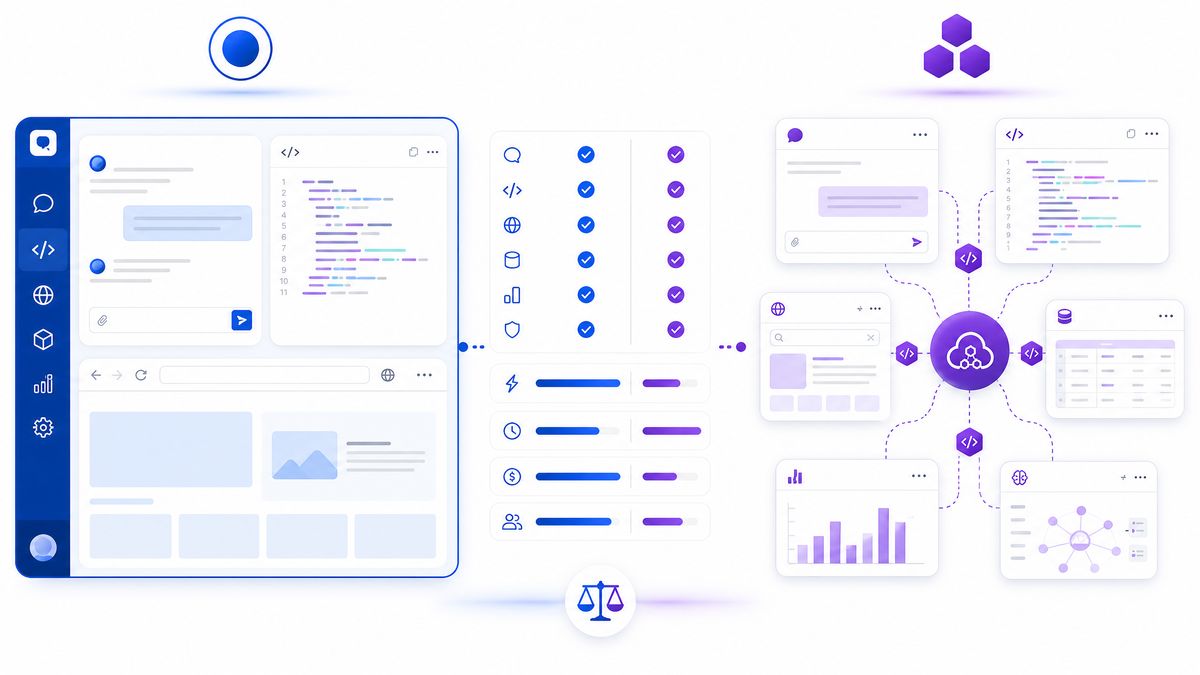
Overview of the Super App Concept
OpenAI’s 2026 vision revolves around consolidating its core AI offerings into a single, comprehensive desktop application. This super app unifies three major AI pillars:
- ChatGPT: The conversational AI interface beloved by millions for generating natural language responses, assisting in writing, brainstorming, and customer support.
- Codex: The coding assistant AI capable of writing, debugging, and optimizing code across dozens of programming languages.
- Atlas: The autonomous browsing and data retrieval AI that can research, extract, and synthesize information from the web in real time.
The goal is to create a seamless user experience where users can chat, code, and research without switching contexts or apps. The super app integrates these capabilities with a sleek, intuitive desktop interface that supports real-time collaboration and advanced plugin systems.
Key Features of the Super App
OpenAI’s super app boasts several defining features:
- Unified Workspace: A single interface that supports multi-modal AI workflows—from drafting documents and coding software to real-time data analysis.
- Autonomous Browsing: Leveraging Atlas, users can request the AI to perform complex research tasks, verify facts, and summarize content dynamically.
- Integrated Coding Agents: Codex-powered assistants can write, optimize, and troubleshoot code within the same environment where users interact with ChatGPT.
- Plugin Ecosystem: Six role-specific Codex plugins enhance productivity tailored to different professions, including developers, writers, analysts, and educators.
- Enterprise Tools: Security, compliance, multi-user management, and custom integrations designed for large organizations.
Through this holistic approach, OpenAI aims to dominate the desktop AI experience by eliminating friction and offering a powerful, all-encompassing AI assistant.
Anthropic’s Answer: The Cowork Platform for Enterprise AI Workflows

Overview of Cowork
Anthropic’s Cowork platform takes a different tack. Rather than a monolithic super app, Cowork is a modular, enterprise-focused AI workflow platform designed to be deeply customizable and integrable into existing business processes. It emphasizes flexibility, security, and collaboration for knowledge workers and developers alike.
Built around Anthropic’s Claude AI models, Cowork enables enterprises to construct AI-augmented workflows that span document analysis, coding assistance, customer service automation, and decision support—all via a centralized platform.
Core Features of Cowork
- Modular Workflow Builder: Users can design, test, and deploy AI workflows tailored to specific business needs without coding expertise.
- Enterprise-Grade Security: Built with stringent data privacy controls and compliance certifications, making it suitable for regulated industries.
- Tool Integration: Supports integration with both internal enterprise tools and third-party applications. Claude AI models can invoke external APIs and plugins on demand.
- Collaborative Environment: Shared workspaces and version control facilitate teamwork and auditability of AI-driven decisions.
- Focus on Explainability: Anthropic’s commitment to AI safety and interpretability is embedded in Cowork’s design, allowing users to understand and trust AI outputs.
Cowork’s approach targets enterprises seeking customizable AI solutions that can be gradually embedded into existing workflows rather than replacing entire user environments.
Feature Comparison: Coding Agents, Autonomous Browsing, Enterprise Tools, and Plugins
Coding Agents
OpenAI: The super app leverages Codex-powered coding agents that are seamlessly integrated. The six specialized plugins cover everything from code generation and debugging to documentation and code review. These agents can autonomously generate multi-file projects and integrate with version control systems.
Anthropic: Cowork employs Claude-based assistants that can write and review code within enterprise workflows. While not as deeply specialized as Codex plugins, Cowork’s coding agents emphasize safety and interpretability, with features to flag potential security risks and suggest improvements inline.
Autonomous Browsing
OpenAI: Atlas provides autonomous browsing capabilities, enabling users to ask the super app to fetch latest data, verify claims, or gather insights from the web in real time. This tightly integrated feature supports deep research workflows without leaving the app.
Anthropic: Cowork supports web access and API calls through Claude’s tool usage features, but browsing is more modular and controlled, aimed at minimizing risk in enterprise deployments. Browsing capabilities are often configured per workflow to comply with corporate policies.
Enterprise Tools
OpenAI: The super app includes robust enterprise features such as role-based access control, auditing, compliance reporting, data encryption, and custom integrations with popular enterprise software suites.
Anthropic: Cowork’s enterprise tools emphasize configurability and security, offering detailed data governance controls, customizable workflows, and SLA-backed support. The platform supports multi-cloud deployments to meet diverse enterprise infrastructure requirements.
Plugins and Extensibility
OpenAI: Six role-specific Codex plugins extend the super app’s capabilities, covering domains like software development, creative writing, data analysis, and education. These plugins are curated and maintained by OpenAI to ensure quality and security.
Anthropic: Cowork’s plugin system is more open-ended, allowing enterprises to develop custom tools that Claude can invoke dynamically. This flexibility supports complex, multi-step workflows tailored to unique business processes.
Pricing Models: OpenAI’s Credit System vs Anthropic’s Token-Based Pricing
OpenAI’s Credit System
OpenAI employs a credit-based pricing system for its super app. Users purchase credits that are consumed based on the type and intensity of AI usage—chat interactions, code generation, or autonomous browsing. Enterprise customers benefit from volume discounts and flexible credit packages tailored to their usage patterns.
This model simplifies budgeting but requires users to monitor credit consumption carefully, especially for resource-intensive tasks like large-scale code generation or extensive browsing sessions.
Anthropic’s Token-Based Pricing
Anthropic uses a token-based pricing model tied to the number of AI tokens processed during interactions with Claude. This approach aligns costs directly with the computational resources consumed, allowing granular tracking of AI usage costs.
Enterprises often negotiate token packages with volume commitments and tiered discounts. Cowork’s modular design allows organizations to optimize workflows to minimize token consumption while maximizing utility.
Developer Ecosystem: Codex Plugins vs Claude’s Tool Use
OpenAI Codex Plugins
OpenAI maintains a curated set of six role-specific Codex plugins designed to enhance developer productivity. These plugins provide capabilities such as:
- Automated code generation for popular languages
- Code review and style enforcement
- Documentation generation
- Integration with popular IDEs and version control systems
- Debugging assistants and performance analytics
- Education-focused coding tutorials
The tightly controlled plugin ecosystem ensures high reliability and security, but limits third-party or open-source extensions.
Anthropic’s Claude Tool Use
Claude’s strength lies in its flexible tool usage capabilities within Cowork. Developers and enterprise teams can create custom tools and APIs that Claude can invoke dynamically as part of workflows. This openness fosters innovation and allows adaptation to unique enterprise requirements.
While this flexibility demands more setup and governance, it enables richer, more context-aware AI interactions across diverse applications.
Enterprise Adoption: 5M+ Weekly Codex Users vs Anthropic’s Growing Enterprise Base
OpenAI’s Market Penetration
OpenAI boasts over 5 million weekly active Codex users worldwide, spanning startups, SMBs, and large enterprises. The super app strategy has accelerated adoption by providing a compelling all-in-one AI experience that appeals across roles and industries.
Many enterprises have embedded OpenAI’s AI tools into their development pipelines, customer support, and content generation workflows, leveraging the super app’s scalability and reliability.
Anthropic’s Enterprise Growth
Anthropic’s Cowork has gained significant traction among mid-to-large enterprises, especially in regulated sectors such as finance, healthcare, and government. Its modular design and emphasis on security resonate with organizations that require tailored AI solutions with rigorous compliance.
While its total user base is smaller than OpenAI’s, Anthropic is experiencing steady growth and deepening engagements with enterprise clients, positioning itself as a serious contender in the enterprise AI market.
The IPO Factor: Preparing for Durable Profits
Both OpenAI and Anthropic are reportedly preparing for initial public offerings (IPOs) in the coming years. Investors and market analysts emphasize that profitability and sustainable revenue streams are critical for their valuation and market success.
OpenAI’s super app strategy aims to drive revenue through diversified AI usage across consumer and enterprise segments, leveraging its broad user base and premium enterprise offerings. Its credit-based pricing and plugin marketplace provide multiple monetization avenues.
Anthropic focuses its IPO narrative around Cowork’s enterprise adoption, emphasizing high customer retention, long-term contracts, and the platform’s ability to reduce operational costs through AI automation. Its token-based pricing model supports predictable revenue growth aligned with usage.
Lock-in Strategies: How Each Company Makes Customers Sticky
OpenAI’s Lock-in Mechanisms
- Integrated Ecosystem: The super app’s all-in-one design encourages users to rely on multiple AI capabilities, increasing switching costs.
- Role-Specific Plugins: Specialized Codex plugins tailored to user needs foster dependency on OpenAI’s curated tools.
- Data and Workflow Integration: Deep integrations with enterprise software and proprietary collaboration tools make migration costly.
Anthropic’s Lock-in Mechanisms
- Customizable Workflows: Enterprises build bespoke AI pipelines that are costly and complex to replicate on alternative platforms.
- Security and Compliance: Rigorous certifications and data governance tailored to enterprise needs create trust-based lock-in.
- Tool Customization: Enterprises develop proprietary tools and APIs integrated with Claude, increasing platform dependency.
User Experience: Single App vs Modular Approach
OpenAI’s Super App: Offers a seamless, single desktop application that minimizes context switching. Users enjoy a cohesive and polished interface where AI-powered chat, coding, and browsing converge. This design appeals to users seeking simplicity and speed.
Anthropic’s Cowork: Embraces a modular environment where users assemble AI capabilities into workflows tailored to specific tasks. While this approach demands more initial setup and training, it provides flexibility and adaptability for complex enterprise scenarios.
Who Wins in Different Scenarios: Startups, Enterprises, Developers, Knowledge Workers
Startups
Startups often value rapid iteration and ease of use. OpenAI’s super app, with its integrated environment and ready-to-use plugins, offers an ideal solution for early-stage companies needing versatile AI assistance without extensive customization.
Enterprises
Enterprises with complex workflows, security requirements, and regulatory constraints tend to favor Anthropic’s Cowork platform. Its modularity, compliance focus, and customizable workflows align well with large organizations’ needs for control and scalability.
Developers
Developers benefit from OpenAI’s Codex plugins for efficient coding assistance and integrated tooling. However, those working in specialized or regulated environments may prefer Anthropic’s more flexible and secure approach, especially when integrating AI into bespoke applications.
Knowledge Workers
Knowledge workers—such as analysts, researchers, and content creators—may find OpenAI’s super app more accessible and productive due to its all-in-one design and autonomous browsing capabilities. Conversely, knowledge workers in regulated industries might lean towards Cowork’s explainability and security features.
Advanced Integration and Customization: Deep Dive into Enterprise Use Cases
Custom Workflow Automation in Regulated Industries
One of the standout advantages of Anthropic’s Cowork platform is its ability to integrate deeply with existing enterprise systems through custom workflow automation. For instance, in the healthcare sector, a leading medical device manufacturer has implemented Cowork to automate compliance documentation workflows. By leveraging Claude’s explainability features, compliance officers can trace AI decisions regarding regulatory submissions, ensuring full auditability and adherence to FDA and HIPAA standards. This level of transparency and customization is difficult to replicate in the more monolithic OpenAI super app environment, which prioritizes user experience over granular workflow tailoring.
Similarly, financial institutions have adopted Cowork to build AI-driven risk assessment pipelines that combine internal credit scoring data with external market insights. Through Cowork’s modular API connectors, these workflows can dynamically adapt to regulatory changes without requiring complete system overhauls—demonstrating the platform’s agility in complex, compliance-heavy environments.
OpenAI Super App in Agile Development Environments
On the other hand, OpenAI’s super app shines in agile development settings where rapid prototyping and iterative coding are crucial. Tech startups and product teams utilize the integrated Codex coding agents to quickly generate, test, and deploy code snippets within a single interface. For example, a SaaS startup reported reducing their feature development cycle by 30% after adopting OpenAI’s super app, citing the convenience of switching seamlessly between code generation, documentation, and customer support chatbots.
The inclusion of real-time autonomous browsing via Atlas allows developers to perform quick market and technology research directly without context switching, further accelerating innovation cycles. Teams benefit from the breadth of plugins tailored to various development roles, enabling junior developers to access automated code reviews and senior engineers to optimize performance—all within the same collaborative environment.
Hybrid Approaches: Combining Strengths for Optimal Results
Interestingly, some enterprises have adopted hybrid strategies that leverage both platforms’ strengths. A global consulting firm, for example, integrates OpenAI’s super app for rapid ideation and prototyping, while deploying Anthropic’s Cowork for production-grade, secure AI workflows within their client engagements. This dual approach allows the firm to accelerate innovation while maintaining strict compliance and customization in final deployments.
From a technical standpoint, this requires robust API orchestration and data synchronization mechanisms, often involving middleware platforms that mediate between OpenAI’s and Anthropic’s ecosystems. Such hybrid implementations underscore the complementary nature of the two platforms rather than a purely competitive one.
Security and Privacy: Navigating Enterprise Concerns in AI Adoption
Data Residency and Sovereignty
Data residency remains a critical concern for enterprises adopting AI solutions. Anthropic’s Cowork platform offers multi-region and private cloud deployment options, enabling organizations to keep sensitive data within specific geographic boundaries. For example, a European Union-based insurance company utilizes Cowork with a dedicated GDPR-compliant cloud environment to ensure data sovereignty and regulatory adherence.
OpenAI, while offering robust security and compliance certifications, primarily operates through cloud-hosted super app instances which may limit data residency options for some enterprises. However, OpenAI has announced ongoing efforts to expand region-specific data centers and private cloud offerings, aiming to close this gap in the near future.
End-to-End Encryption and User Control
Both platforms prioritize encryption, but Anthropic’s Cowork incorporates end-to-end encryption not only in transit and at rest but also within collaborative workflow layers. This means that sensitive decision-making data remains encrypted throughout the AI processing pipeline, reducing risk of exposure during collaborative sessions.
OpenAI’s super app employs strong encryption standards and role-based access controls but currently lacks native end-to-end encryption for multi-user collaboration features, which may be a consideration for enterprises with stringent data protection policies.
Mitigating AI Risks and Bias
AI safety and ethical considerations are embedded differently in the two platforms. Anthropic’s foundational research into AI interpretability feeds directly into Cowork’s design, providing users with tools to audit and explain AI outputs, detect bias, and implement guardrails. This is especially critical in domains such as hiring, lending, and legal advisory where biased AI decisions carry significant risks.
OpenAI’s super app incorporates fairness and safety features, including content filters and usage monitoring. However, the super app’s broader consumer orientation means it focuses more on user experience and less on deep explainability tools out-of-the-box. Enterprises requiring comprehensive AI governance may need to build additional layers atop the platform.
Future Outlook: Roadmaps and Emerging Trends
OpenAI’s Innovation Trajectory
Looking ahead, OpenAI is investing heavily in expanding the super app’s multi-modal capabilities, including enhanced support for voice interfaces, image generation, and real-time video analysis. Integration of advanced personal AI agents that proactively assist users based on contextual awareness is also slated for release in late 2026. These features aim to further cement OpenAI’s position as the go-to AI productivity platform for a diverse user base.
Additionally, OpenAI plans to open its plugin ecosystem to vetted third-party developers, potentially catalyzing a new wave of specialized AI tools that enrich the super app environment without sacrificing security or quality.
Anthropic’s Strategic Developments
Anthropic continues to deepen Cowork’s enterprise integrations with expanded support for industry-specific AI models and compliance frameworks. The company is pioneering “explainable AI as a service,” enabling clients to customize interpretability features per workflow and regulatory need.
Moreover, Anthropic is exploring federated learning approaches to allow enterprises to train custom Claude variants on private data without exposing it externally. This could significantly enhance data privacy while improving AI personalization in sensitive domains.
Industry-Wide Implications
The competition between OpenAI and Anthropic is driving the broader AI industry toward more user-centric and enterprise-aligned solutions. As AI platforms mature, we expect increasing convergence between integrated super apps and modular workflow systems, giving users hybrid options tailored to their unique operational contexts.
Furthermore, regulatory developments worldwide will likely mandate stronger AI transparency, security, and fairness standards, pushing both companies to innovate responsibly. The winners in this evolving landscape will be those who balance technological prowess with ethical stewardship and practical usability.
Emerging Use Cases and Real-World Impact
AI-Driven Customer Support Transformation
OpenAI’s super app has notably revolutionized customer support operations across sectors. For example, a leading telecom provider integrated the super app’s ChatGPT and Codex capabilities to automate complex customer inquiries, reducing average handling time by 40%. The system’s ability to combine conversational AI with code generation allowed the creation of dynamic troubleshooting scripts that adapt in real time to customer responses. This not only improved customer satisfaction scores but also lowered operational costs significantly.
In contrast, Anthropic’s Cowork has been pivotal in sectors requiring stringent compliance, such as legal services. A multinational law firm uses Cowork to automate document review and case summarization workflows, ensuring that AI-generated outputs undergo rigorous explainability checks mandated by firm policies. Cowork’s modular workflow builder enables the firm to customize AI involvement per case type, balancing efficiency with risk management.
AI in Education and Training
Both platforms have made inroads into education technology. OpenAI’s super app, with its integrated writing assistants and coding tutorials, is used by edtech startups and universities to provide personalized learning experiences at scale. For instance, an online coding bootcamp reported a 25% increase in student completion rates after deploying the super app’s Codex plugins for interactive coding assignments and instant feedback.
Meanwhile, Anthropic’s Cowork supports corporate training programs by enabling bespoke AI-driven coaching workflows. A global manufacturing company utilizes Cowork to create scenario-based simulations powered by Claude, helping employees practice compliance and safety protocols in a controlled, data-secure environment. The platform’s explainability features allow trainers to review AI feedback and tailor instruction accordingly.
Expert Perspectives on Platform Selection
Dr. Lina Chen, AI Strategist at TechInsights Research, notes, “OpenAI’s super app is a breakthrough in user experience, ideal for teams that prioritize speed and integration. However, enterprises with complex regulatory demands will find Anthropic’s Cowork indispensable for its customization and safety features.”
Raj Patel, CTO of FinTech Innovate, adds, “We adopted Cowork because it allowed us to embed AI workflows directly into legacy systems while meeting strict financial compliance. The tradeoff is more upfront configuration, but the long-term benefits in governance and auditability are unmatched.”
Conversely, Sarah Lopez, Head of Product at a SaaS startup, shares, “The OpenAI super app dramatically accelerated our development cycle. Having coding assistance, research, and documentation all in one place reduced friction and helped our small team punch above its weight.”
Actionable Advice for Choosing the Right Platform
1. Assess Your Regulatory Environment: If working within highly regulated industries such as finance, healthcare, or government, prioritize platforms like Anthropic’s Cowork that emphasize compliance and explainability.
2. Define Workflow Complexity: For organizations with complex, multi-step processes requiring custom AI tools, Cowork’s modularity and API flexibility offer significant advantages.
3. Consider User Experience Needs: Teams and individuals seeking all-in-one solutions with minimal setup will benefit from OpenAI’s super app, especially in fast-paced or startup environments.
4. Evaluate Integration Requirements: Enterprises heavily invested in existing software ecosystems should examine each platform’s integration capabilities and potential lock-in implications.
5. Plan for Cost Management: Understand your expected AI usage patterns to choose between OpenAI’s credit system or Anthropic’s token pricing for optimal cost efficiency.
By aligning platform capabilities with organizational goals and constraints, decision-makers can maximize AI’s transformative potential while mitigating risks.
Access 40,000+ AI Prompts for ChatGPT, Claude & Codex — Free!
Subscribe to get instant access to our complete Notion Prompt Library — the largest curated collection of prompts for ChatGPT, Claude, OpenAI Codex, and other leading AI models. Optimized for real-world workflows across coding, research, content creation, and business.
Conclusion
OpenAI and Anthropic represent two compelling yet contrasting visions for AI platform evolution in 2026. OpenAI’s super app embodies an integrated, user-friendly approach designed to deliver a seamless AI experience across multiple domains. Anthropic’s Cowork platform focuses on modularity, customization, and enterprise readiness, prioritizing security and compliance.
Ultimately, the choice between these platforms depends on user needs. Startups and individual developers seeking simplicity and power will gravitate toward OpenAI’s super app. Enterprises demanding tailored workflows and rigorous controls will find Anthropic’s Cowork a better match. Both companies are poised to significantly shape the AI landscape as they prepare for IPOs and continue expanding their ecosystems.
For more insights on AI platform strategies, explore our detailed analysis on
Decision-makers evaluating AI platforms can find detailed feature-by-feature analysis in How Anthropic Is Challenging OpenAI Enterprise Dominance: The AI Platform War of 2026, which compares enterprise capabilities, security certifications, pricing models, and integration ecosystems across the leading AI providers.
,
Decision-makers evaluating AI platforms can find detailed feature-by-feature analysis in Claude Code vs OpenAI Codex in 2026: The Definitive Comparison for Professional Developers, which compares enterprise capabilities, security certifications, pricing models, and integration ecosystems across the leading AI providers.
, and
Teams already building with Codex Sites can deepen their implementation knowledge through Codex Sites Prompts Masterclass: 40 Production-Ready Prompts for Building Web Apps, Dashboards, and Tools, which covers advanced deployment patterns, interactive component creation, and production-ready web application architectures using OpenAI’s integrated development platform.
.
