
50 GPT-5.5 Prompts for Cybersecurity Professionals: Vulnerability Assessment, Threat Modeling, Incident Response, and Security Automation

50 GPT-5.5 Prompts for Cybersecurity Professionals: Vulnerability Assessment, Threat Modeling, Incident Response, and Security Automation
Table of Contents
- Introduction: Maximizing GPT-5.5 and GPT-5.5-Cyber for defensive security workflows
- Category 1: Vulnerability Assessment and Code Analysis (Prompts 1-12)
- Category 2: Automated Threat Modeling and Risk Prioritization (Prompts 13-25)
- Category 3: Incident Response, Log Analysis, and Forensic Investigation (Prompts 26-38)
- Category 4: Security Automation, Scripting, and Patch Verification (Prompts 39-50)
- Best Practices: How to structure security prompts, manage token limits, and handle sensitive code securely
Introduction: Maximizing GPT-5.5 and GPT-5.5-Cyber for defensive security workflows
The release of GPT-5.5 and specialized variants such as GPT-5.5-Cyber represents a step-change in capability for security teams. These models combine greater contextual understanding, expanded token windows, deterministic instruction adherence, and security-specific tool integrations (sandboxed code execution, safe file parsing, and structured output modes). This guide delivers 50 production-ready prompts organized into four operational categories: vulnerability assessment and code analysis, automated threat modeling and risk prioritization, incident response and forensic investigation, and security automation and patch verification.
The objective is to enable security engineers, red teams, blue teams, and automation engineers to use GPT-5.5 as a reliable component in defensive workflows. The prompts provided are designed to be ready for integration into pipelines—either invoked directly via API or wrapped in orchestration systems (SOAR, CI/CD, or internal tooling). Each prompt includes:
- Objective and use-case
- Input data requirements
- Expected structured output format
- Parameter suggestions (temperature, max tokens, system instructions)
- Implementation notes and safety considerations
Use these prompts as templates. They assume the model is deployed inside an organization’s secure environment with controlled data exfiltration protections enabled. When integrating, ensure that the model instance has the correct capability flags (for example, code execution turned on for safe analysis or disabled when processing sensitive material). For operational playbooks and internal controls, reference your team’s documented procedures—this guide complements them by providing deterministic, structured prompts suitable for automation.
This guide also references two internal resources relevant to complex workflows:
Security professionals using these prompts for voice-based threat briefings and incident communication will benefit from understanding conversational AI deployment patterns. Our Codex Voice Agent Masterclass with 30 production-ready prompts provides the architectural patterns for building, testing, and deploying conversational AI systems that can deliver automated security briefings and incident response coordination.
and
Organizations deploying GPT-5.5 for cybersecurity workflows must establish proper governance and cost controls to prevent budget overruns during intensive scanning operations. Our enterprise guide on OpenAI spend controls and usage analytics explains how to monitor AI costs, set department-level budgets, and optimize token usage across security automation workflows without compromising coverage.
. Use those internal links to cross-reference organization-specific playbooks, data handling policies, and SOC runbooks.
Category 1: Vulnerability Assessment and Code Analysis (Prompts 1-12)
Vulnerability assessment in code and infrastructure requires high-fidelity static and dynamic analysis. GPT-5.5-Cyber can assist by analyzing code snippets, constructing exploitability matrices, recommending fixes, and generating test cases. The prompts below assume that code and artifacts are passed in sanitized, minimal form (avoid sending production secrets). Use deterministic settings (temperature 0.0–0.2) when expecting reproducible results.
Prompt 1 — Static code vulnerability scan (single file)
Objective: Identify potential security vulnerabilities in a single source file and categorize findings by severity and CWE where possible.
Input: Source file contents, language, optional known dependencies.
Output: JSON array of findings with fields: line_range, issue, severity (Critical/High/Medium/Low/Info), CWE, recommendation, confidence_score (0-1).
System: You are an expert secure-code auditor. Return only JSON.
User: Analyze the following file and return structured findings.
Language: Python
File: app.py
Contents:
[insert sanitized file contents]
Implementation notes: Use a low temperature (0.0–0.1). For large files, chunk input and maintain context by including filename and previous chunk indices. Validate JSON with a schema after receiving the model response.
Prompt 2 — Dependency vulnerability triage
Objective: Analyze a list of dependencies (package names and versions) and map them to known CVEs and remediation steps.
Input: Dependency list, manifest file (requirements.txt/package.json), optional SBOM.
Output: Table mapping package -> version -> CVE(s) -> severity -> fixed_version -> recommended_action
System: You are a cybersecurity analyst specialized in software composition analysis.
User: Given the following dependencies, map to known vulnerabilities and recommended remediations:
dependencies:
- package: express, version: 4.16.1
- package: lodash, version: 4.17.11
[etc.]
Return a markdown table or JSON.
Implementation notes: Configure the model to reference a current vulnerability database you maintain by providing CVE descriptions as part of the system prompt context. When mapping to CVEs, provide exact CVE IDs and links to authoritative advisories in the output where possible.
Prompt 3 — Tainted data / input validation identification
Objective: Identify locations in code where user input reaches sensitive sinks without sanitization or validation.
Input: Source code (language specified), list of sensitive sinks (SQL exec, shell, file write, crypto key usage).
Output: For each taint path: source, sanitization (if any), sink, exploitability level, remediation steps, example safe code snippet.
System: You are an expert in taint analysis. Provide taint paths in JSON with examples.
User: Analyze the following Java servlet code and report taint paths from request parameters to database or OS calls.
Code:
[code snippet]
Implementation notes: For languages with frameworks (Node.js, Java Spring), include framework versions to allow the model to account for known sanitization helpers or common pitfalls. Where possible, request an example patch or code diff rather than only textual suggestions.
Prompt 4 — Automated fix generation (patch suggestion)
Objective: Provide a minimal, reviewed patch to remediate a specific vulnerability without altering intended functionality.
Input: Vulnerable code, vulnerability description, constraints (must compile, follow style guidelines), unit tests if available.
Output: Unified diff or patch, justification for changes, risk assessment for behavior changes.
System: You are a secure-code engineer. Return a unified diff that fixes the vulnerability and passes the given tests.
User: The following function is vulnerable to SQL injection. Provide the smallest patch to fix it and explain why.
Code:
[code]
Implementation notes: Combine with unit test execution in CI; the model can propose tests. Always run patched code in a sandboxed environment and perform automated tests before merge.
Prompt 5 — OAuth / authentication flow audit
Objective: Analyze an authentication implementation for common misconfigurations (token leaks, improper storage, insecure redirect URIs).
Input: Authentication flow description, relevant code, configuration snippets (auth middleware, redirect URIs).
Output: Findings with risk ratings, compliance notes (OAuth 2.0 RFC, OIDC), and exact remediation steps (example config lines).
System: You are an identity and access management security expert.
User: Evaluate the following auth flow and config for security issues: ...
Implementation notes: Emphasize secure cookie flags (HttpOnly, Secure, SameSite), token rotation policies, and scopes least-privilege recommendations.
Prompt 6 — Dynamic vulnerability reproduction plan
Objective: Given a static finding, produce a step-by-step reproducible test case (with cURL, local exploit code, or unit tests) to validate the vulnerability dynamically.
Input: Vulnerability descriptor, target endpoint, environment assumptions.
Output: Reproduction steps, required tools, expected observable results, mitigations to avoid causing harm in production.
System: Act as a safe penetration tester. Provide a non-destructive reproduction plan with clear warnings.
User: Reproduce the XSS identified in /comments endpoint. The app is running on http://localhost:8080.
Implementation notes: Always include a safe-testing disclaimer and a rollback plan. Use an isolated staging environment.
Prompt 7 — Fuzz target generation and harness code
Objective: Generate a fuzzing harness and a set of seed inputs targeted to identified parsing routines or API endpoints.
Input: Function signature, expected input types, previous crash traces (if any).
Output: Harness code (AFL, libFuzzer, or custom script), seed corpus, and suggested instrumentation flags.
System: You are an expert in automated fuzz testing.
User: Create a libFuzzer harness for the following function that parses HTTP headers: ...
Implementation notes: Provide instructions for compiling with sanitizers (ASAN, UBSAN) and interpreting crash output (stack traces, input minimization).
Prompt 8 — Container image security scan and hardening checklist
Objective: Review Dockerfile, image manifest, and container runtime config to surface misconfigurations and propose hardened alternatives.
Input: Dockerfile, docker-compose files, Kubernetes Pod spec (optional).
Output: List of misconfigurations, severity, commands to remediate (example Dockerfile changes, runtime flags), and a final hardened Dockerfile snippet.
System: You are a container security expert.
User: Analyze this Dockerfile and list hardening steps. Return a hardened Dockerfile at the end.
Dockerfile:
[contents]
Implementation notes: Enforce principle of least privilege (non-root user), remove unnecessary packages, reduce image layers, and include scanning tool commands (Trivy, Clair) for pipeline integration.
Prompt 9 — Binary or bytecode static analysis summary
Objective: Provide an analysis of binary/bytecode artifacts from disassembly output (objdump, decompiled output) focusing on security-relevant constructs (unsafe syscalls, hardcoded keys, insecure crypto).
Input: Disassembly excerpt or decompiler output, architecture, build flags.
Output: Findings with page offsets, probable vuln type (buffer overflow, format string), and suggested next steps for dynamic testing or patching.
System: You are a reverse engineering and binary analysis specialist.
User: Analyze this disassembly snippet for security issues. ABI: x86_64.
Disassembly:
[snippet]
Implementation notes: Where possible, request symbol tables and compile-time flags. Suggest RE tools (Ghidra, Binary Ninja) and debugger workflows for reproducing conditions.
Prompt 10 — Secure configuration baseline for cloud resources
Objective: Create a hardened baseline checklist for a specific cloud resource (S3 bucket, Azure Blob, GCP Storage) and generate IaC policy snippets (Terraform, CloudFormation) to enforce it.
Input: Resource type, current configuration snippet, org policies.
Output: Baseline checklist and sample IaC policy with enforcement controls (e.g., deny public ACLs, lifecycle rules).
System: You are a cloud security architect.
User: Provide a Terraform snippet for an AWS S3 bucket hardened for sensitive data storage and list the baseline checks.
Current config:
[snippet]
Implementation notes: Include preventive IAM policies and detection rules (CloudTrail events), and mention encryption at rest and in transit configurations.
Prompt 11 — TLS/crypto configuration evaluation
Objective: Evaluate TLS configurations, certificate chain and crypto usage for vulnerabilities (weak ciphers, improper key sizes, missing pinning).
Input: Server TLS config, certificate chain, server software/version.
Output: Findings, recommended cipher suites, steps for key rotation, and sample server config lines.
System: You are a cryptography engineer specializing in TLS.
User: Analyze the following nginx TLS config and certificate chain and return a hardened configuration.
Config:
[nginx snippet]
Implementation notes: Suggest TLS versions, recommended ciphers (AEAD suites), and HTTP security headers (HSTS, CSP) where applicable.
Prompt 12 — Vulnerability prioritization matrix for a codebase
Objective: Given a set of static findings and contextual metadata (exposure, exploitability, asset criticality), produce a prioritized remediation plan.
Input: Collection of findings (JSON), asset inventory metadata.
Output: Prioritized task list with SLAs, justifications, and recommended owners.
System: You are a vulnerability management analyst.
User: Prioritize these findings and map to remediation owners. Findings JSON: [ ... ]
Return CSV or JSON with priority, SLA_days, owner_role.
Implementation notes: Incorporate CVSS where available, but emphasize contextual factors—public-facing, privileged access, and presence of exploit code in the wild.
Category 2: Automated Threat Modeling and Risk Prioritization (Prompts 13-25)
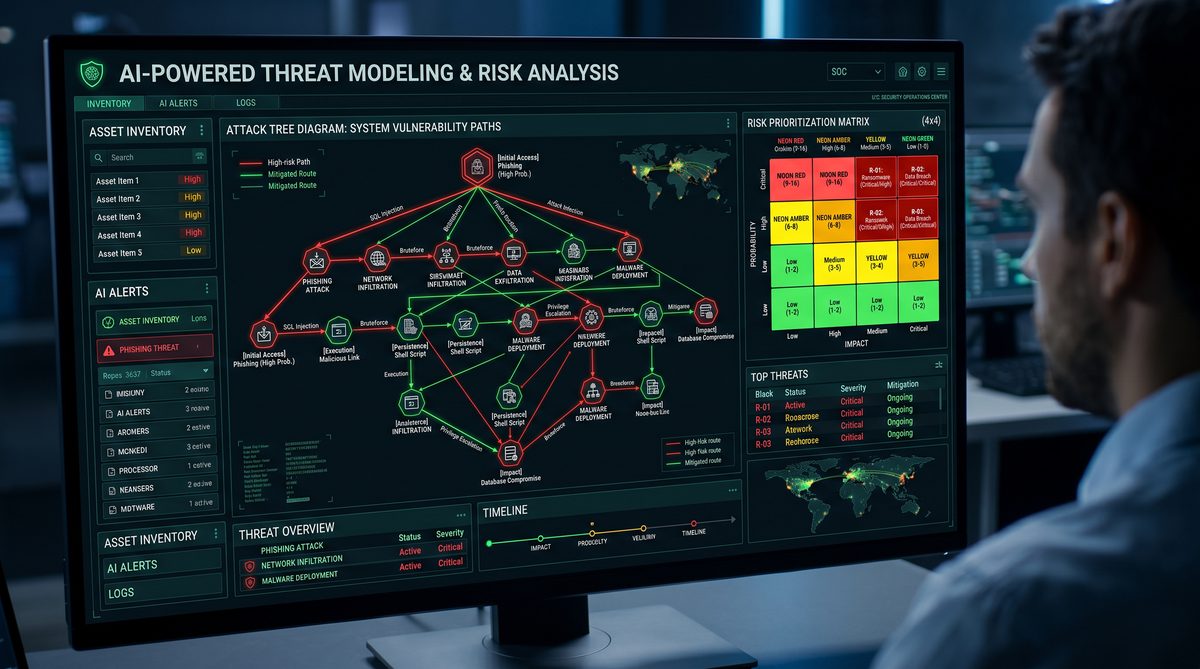
Threat modeling at scale requires synthesizing architecture diagrams, data flow descriptions, and asset criticality. GPT-5.5-Cyber can generate STRIDE matrices, attack trees, and prioritized mitigation plans. Use structured output to integrate with threat tracking systems and issue trackers.
Prompt 13 — Automated STRIDE analysis from architecture description
Objective: Create a STRIDE threat model from a given architectural diagram or textual DFD (Data Flow Diagram) description.
Input: DFD components, data flows, trust boundaries, and asset classifications.
Output: For each element, list STRIDE categories affected, potential attack scenarios, likelihood (Low/Medium/High), impact, and recommended mitigations mapped to controls.
System: You are a threat modeling expert. Return a JSON object mapping components to STRIDE findings.
User: DFD: WebApp -> AuthService -> DB. Trust boundaries: Internet, Internal. Data: PII, session tokens.
Implementation notes: When available, provide a diagram image ID or mermaid DFD text. The model will convert it into a prioritized threat list. Integrate outputs into change control reviews.
Prompt 14 — Attack tree generation with exploit paths
Objective: Generate a hierarchical attack tree for a high-value asset with explicit exploit steps and required preconditions.
Input: Asset description, exposures (ports, services), typical user roles, and environment constraints.
Output: Attack tree nodes with preconditions, attacker skill required, estimated time-to-compromise, and detection opportunities.
System: You are an adversary emulation expert. Construct an attack tree for the following asset.
User: Asset: Admin panel for cloud control plane. Exposures: management port open to VPN only.
Return a structured attack tree with nodes.
Implementation notes: Link each leaf node to MITRE ATT&CK technique IDs for integration into detection engineering workstreams.
Prompt 15 — Risk scoring incorporating business context
Objective: Compute a contextual risk score integrating technical severity (CVSS), exploitability, and business impact (revenue, data sensitivity).
Input: Vulnerability lists, asset business impact metrics (financial impact, legal/regulatory exposure).
Output: Risk score (0-100), prioritized remediation list, and recommended SLA for fixes.
System: You are a risk analyst. Use a weighted scoring model described below.
User: Use the following weights: CVSS 40%, exploitability 30%, business impact 30%.
Findings: [JSON]
Return prioritized scores and SLA recommendations.
Implementation notes: Provide configurable weighting parameters. Keep the scoring transparent by returning intermediate calculations.
Prompt 16 — Automated mitigations mapping to controls (CIS/NIST)
Objective: Map discovered vulnerabilities to prescriptive controls in frameworks such as CIS Benchmarks, NIST CSF, or vendor-specific hardening guides.
Input: Finding list, selected control framework.
Output: For each finding, mapped control IDs, required actions, and verification steps.
System: You are an expert mapping vulnerabilities to control frameworks.
User: Map these findings to CIS AWS Foundations controls. Findings: [ ... ]
Return a remediation matrix.
Implementation notes: Use this mapping to generate compliance reports. Provide both technical steps and policy-level language for governance teams.
Prompt 17 — Generating attack scenarios for purple-team exercises
Objective: Produce detailed attack scenarios targeted at detection gaps, including pretexting, TTPs, expected telemetry, and detection validation steps.
Input: Detection rules currently in place, telemetry sources, environment constraints (no production impact).
Output: Scenario description, step-by-step actions, telemetry expected, rollback steps, and risk statement.
System: You are an adversary emulation planner adhering to safe testing practices.
User: Build a purple-team scenario to test endpoint detection for lateral movement using legitimate admin tools.
Return steps and telemetry to capture.
Implementation notes: Include kill-chain stages (initial access, execution, persistence, lateral movement). Emphasize safety controls and rollback instructions.
Prompt 18 — Automated mitigation playbook creation
Objective: For a high-priority threat, create a step-by-step mitigation playbook suitable for SOC analysts and runbook automation.
Input: Threat description, affected assets, detection indicators (IOCs), and recovery constraints.
Output: Playbook with detection/fix steps, commands, expected outputs, escalation points, and automation hooks (API endpoints, automation script templates).
System: You are a SOC playbook author. Return a definitive playbook in JSON and human-readable steps.
User: Threat: Data exfiltration via legitimate cloud storage APIs. IOCs: unusual upload patterns.
Return playbook.
Implementation notes: Add automated remediation snippets (Terraform to revoke keys, script to disable accounts) and manual verification steps.
Prompt 19 — Exposure and attack surface inventory synthesis
Objective: Synthesize an exposure inventory from network scans, DNS data, and public repos to enumerate attack surface items with owner mappings.
Input: Nmap/Active scan outputs, domain/subdomain lists, code repo URLs.
Output: Inventory table with host/service, exposure type (public/internal), owner, business criticality, and remediation owner recommendation.
System: You are an attack surface management analyst.
User: Aggregate these scan results and public repo findings into an exposure inventory.
Data: [scan outputs]
Return inventory CSV or JSON.
Implementation notes: Include instructions for continuous monitoring and integration with external attack surface management (ASM) tools or bug-bounty programs.
Prompt 20 — Attack path scoring using graph analysis
Objective: Given a graph of assets and relationships (edges for credentials, network paths), compute the most probable attack paths and score them by required access and time-to-compromise.
Input: Asset graph (nodes and edges), vulnerability presence, existing mitigations.
Output: Ranked list of attack paths with scoring, required lateral moves, and suggested mitigations to break the chain.
System: You are a security graph analyst. Evaluate attack paths and return top N risky paths.
User: Graph JSON: {nodes: [...], edges: [...]}
Return: path list with score and recommended mitigations.
Implementation notes: Use centrality metrics and exploitability heuristics. Integrate outputs with prioritization systems for patching or segmentation work.
Prompt 21 — Business impact narrative for executive reports
Objective: Convert technical risk findings into a concise business-impact narrative suitable for CISO-level briefings, including required investments and timelines.
Input: Prioritized vulnerabilities and suggested remediation SLAs.
Output: Executive summary, cost estimate ranges, recommended roadmap and KPIs for remediation progress.
System: You are a cybersecurity executive advisor.
User: Convert the following remediation plan into a one-page executive summary for the board. Include business impact and investment rationale.
Data: [findings and SLAs]
Implementation notes: Include risk reduction percentages tied to remediation actions and suggest measurable KPIs for follow-up reporting.
Prompt 22 — Threat intelligence enrichment for IOCs
Objective: Enrich indicators of compromise (IPs, domains, hashes) with threat actor context, past campaigns, and likely TTP mappings.
Input: List of IOCs, optionally time ranges and source telemetry.
Output: Enriched IOC table: IOC -> last_seen -> associated_actor -> confidence -> related_campaign_links -> recommended detection rules.
System: You act as a threat intelligence analyst. Enrich these IOCs with known actor attribution and suggested detections.
User: IOCs: 1.2.3.4, baddomain.example, abcdef123456...
Implementation notes: Ensure external TI sources are up to date. Provide confidence levels and cite the sources used in enrichment where possible.
Prompt 23 — Attack simulation scenario generator for risk quantification
Objective: Generate multiple, parameterized attack simulation scenarios to estimate likelihood of compromise under different defensive postures.
Input: Defensive controls enabled/disabled, asset criticality, attacker resources.
Output: Simulation scenarios with probabilities and recommended prioritized control additions to reduce risk below target thresholds.
System: You are a defensive simulation modeler.
User: Simulate risk for Asset X with these defensive controls: WAF=true, EDR=true, MFA=false. Provide 5 scenarios with probabilities.
Implementation notes: Combine model outputs with measured telemetry to create probabilistic risk models. Use them to justify investments in controls.
Prompt 24 — Mapping proposed mitigations to detection engineering tasks
Objective: Translate mitigation recommendations into concrete detection engineering requirements and prioritized tasks for implementation in SIEM/EDR.
Input: Mitigation list, telemetry arrays available, current detection gaps.
Output: For each mitigation, specify detection signals, query examples (Sigma/KQL/Elastic DSL), and test data required.
System: You are a detection engineering lead. Map these mitigations into SIEM rule specifications.
User: Mitigations: disable legacy auth, monitor token refresh patterns.
Telemetry: authentication logs, token service logs.
Return: detection tasks and example queries.
Implementation notes: Provide small, testable queries and expected alert severities to ensure smooth handover to detection engineers.
Prompt 25 — Consolidated mitigation roadmap with resource estimator
Objective: Produce an actionable remediation roadmap, grouping related mitigations into projects, estimating engineering effort, and suggesting sequencing for minimal business disruption.
Input: Prioritized findings and available engineering resources (FTEs, contractors, budget windows).
Output: Multi-week roadmap with work breakdown, owner assignments, cost and effort estimates, and expected risk reduction per milestone.
System: You are a program manager for vulnerability remediation.
User: Create a 12-week roadmap to remediate critical/high findings for these assets. Teams available: 2 backend engineers, 1 infra engineer.
Return: Gantt-style schedule and milestone outcomes.
Implementation notes: Include buffer for unexpected regressions, testing cycles, and deployment windows aligned to change management.
Category 3: Incident Response, Log Analysis, and Forensic Investigation (Prompts 26-38)
Incident response requires speed, accuracy, and structured processes. GPT-5.5 provides capabilities for triage, log parsing and correlation, IOC extraction, and forensic hypotheses generation. Use deterministic instructions and strict output schemas to integrate with ticketing and automation systems.
Prompt 26 — Initial triage and severity classification from alert data
Objective: Given alert payloads, classify severity, recommend immediate containment actions, and generate a triage summary for SOC analysts.
Input: Alert JSON (source, rule, affected host, alert metadata), optional recent telemetry snippets.
Output: Triage JSON with severity, immediate actions (contain/quarantine/isolate), recommended timeline, and initial hypothesis.
System: You are a SOC analyst. Provide triage JSON with recommended actions and rationale.
User: Alert: {rule: 'suspicious-host-comm', host: host123, src_ip: 9.9.9.9, ...}
Implementation notes: Implement immediate action gating—only provide actions that the organization allows via automation. Include confidence levels to help analysts decide.
Prompt 27 — Automated IOC extraction from unstructured incident reports
Objective: Extract IOCs and contextual metadata from free-text incident reports, Slack threads, and emails, normalizing them to canonical formats.
Input: Unstructured incident report text, optional time window to filter IOCs.
Output: Normalized list of IOCs with type (ip/domain/hash/email), first_seen, last_seen, context_snippet, and suggested enrichment sources.
System: You are an extraction engine. Parse the report and return normalized IOCs in JSON.
User: Report:
"At 03:14 UTC host host-09 connected to evil.example.com and uploaded a file with hash abcdef..."
Implementation notes: Normalize date formats, deduplicate IOCs, and ensure that hash types are validated (MD5 vs SHA256). Integrate with TI systems for enrichment.
Prompt 28 — Log correlation and timeline assembly
Objective: Given multiple log sources, correlate events and assemble a timeline of actionable events for forensic analysis.
Input: Log snippets from various sources (firewall, endpoint, application), mapping to hostnames and timestamps.
Output: Ordered timeline entries with correlated event IDs, probable causality, and markers indicating confidence and gaps requiring further logs.
System: You are a forensic timeline assembler. Correlate these logs and return an ordered timeline with event IDs.
User: Logs: [firewall, nginx, auth, endpoint]
Return JSON timeline with event correlation.
Implementation notes: Pay attention to clock drift and timezone normalization. Highlight missing telemetry ranges and possible blind spots (e.g., host not reporting).
Prompt 29 — Binary artifact triage from forensic dump
Objective: Prioritize suspicious binaries found on disk by comparing to known-good baselines and heuristics (persistence mechanisms, unusual packers, network behavior).
Input: Filenames, hashes, execution metadata (process spawn times), and sample execution traces.
Output: Prioritized list with rationale, suggested static/dynamic analyses, and sandbox execution commands with safe settings.
System: You are a malware triage analyst. Prioritize these artifacts and suggest sandbox steps.
User: Artifacts: {file: /tmp/x, hash: ... , executed_by: sshd,...}
Implementation notes: For suspected malware, recommend isolated analysis VPCs, and note legal/IR escalation if customer data may be impacted.
Prompt 30 — Memory analysis guidance based on crash dump snippets
Objective: Interpret memory dump excerpts and suggest root-cause hypotheses (heap corruption, use-after-free, credential dumping) and next steps for deeper memory forensics.
Input: Heap snapshots, process maps, stack traces, relevant offsets.
Output: Hypotheses with supporting evidence, recommended volatility/rekall commands, and extraction commands for secrets if present.
System: You are a memory forensics expert. Analyze the following dump snippets and recommend next steps.
User: PID 1234 stack trace: ...
Implementation notes: Provide commands that operate on sanitized copies and avoid publishing raw memory contents. Ensure chain-of-custody documentation for forensic evidence.
Prompt 31 — Malware behavior summary and detection signatures
Objective: Summarize observed malware behaviors into a compact narrative and produce detection signatures (YARA rules, Sigma rules) to detect variants.
Input: Dynamic analysis logs, network patterns, IOCs, and sample hashes.
Output: Behavior summary, YARA rules, Sigma rules, and recommended mitigations.
System: You are a malware analyst. Produce YARA and Sigma detection rules based on evidence.
User: Observed: unusual DNS queries, persistence via autorun key, process injection into explorer.exe
Return signatures and narrative.
Implementation notes: Keep signatures specific enough to avoid false positives. Provide test vectors for rule validation.
Prompt 32 — Evidence packaging checklist and chain of custody
Objective: Create a step-by-step checklist for packaging digital evidence and documenting chain-of-custody suitable for legal review and incident post-mortem.
Input: Incident summary, evidence types collected, organizational legal contact.
Output: Checklist with timestamps, preservation actions, authorized personnel lists, and storage/transfer instructions.
System: You are a digital forensics lead. Generate an evidence packaging checklist.
User: Incident: data exfiltration suspected. Evidence: logs, disk images, network captures.
Return checklist.
Implementation notes: Ensure compliance with relevant regulations (GDPR, HIPAA) when packaging evidence. Include hashing algorithms and verification steps.
Prompt 33 — Root cause analysis (RCA) report generator
Objective: Generate a formal RCA document from a forensic timeline and remediation actions, suitable for risk committees and engineering teams.
Input: Confirmed timeline, remediation steps taken, logs, and impact summary.
Output: Structured RCA with executive summary, technical analysis, remediation implemented, prevention recommendations, and tracking items.
System: You are an incident response manager. Draft an RCA with technical and executive sections.
User: Timeline: [events] Remediation: [actions taken]
Return full RCA document.
Implementation notes: Separate technical appendices from executive summary. Use precise timestamps and evidence references.
Prompt 34 — Automated artifact-to-detection mapping
Objective: Map forensic artifacts discovered during an incident to corresponding detection rules or telemetry sources that should have detected them.
Input: List of artifacts (files, network connections), current detection rules set.
Output: Mapping: artifact -> missing detection -> proposed detection rule -> priority for implementation.
System: You are a detection retrospective analyst.
User: Artifacts: [ ... ] Current rules: [ ... ]
Return mapping and implementation priority.
Implementation notes: Provide detection queries with sample dataset filtering to validate rule effectiveness.
Prompt 35 — Forensic hypothesis testing and validation plan
Objective: For each plausible root-cause hypothesis, provide a test plan that either validates or disproves the hypothesis with the minimum set of queries and tools.
Input: Hypotheses list, available telemetry, and data retention windows.
Output: Test plan with queries, required artifacts, expected outcomes, and confidence thresholds for acceptance or rejection.
System: You are a forensic scientist. Create experiment plans to test these hypotheses using the least intrusive queries.
User: Hypotheses: 1. Credentials stolen via phishing 2. Misconfigured S3 bucket leaked keys.
Telemetry: email logs, S3 access logs.
Return plans.
Implementation notes: Include preservation steps for evidence before executing potentially destructive tests.
Prompt 36 — Incident debrief template generator for post-mortem
Objective: Produce a standardized incident debrief template that captures lessons learned, process gaps, and prioritized improvements.
Input: Incident timeline, root causes, remediation actions, list of involved teams.
Output: Post-mortem document with sections for timeline, impact, root cause, remediation, metrics, action items, and owners.
System: You are a senior incident commander. Draft a complete post-mortem template filled with the provided incident data.
User: Timeline: ... Impact: ...
Return filled template.
Implementation notes: Ensure the post-mortem includes follow-ups for detection, prevention, and business/communication learnings.
Prompt 37 — Automated attribution synthesis
Objective: Provide a reasoned attribution assessment based on technical indicators, TTP overlaps, and historical campaigns while explicitly stating confidence and uncertainty.
Input: IOCs, observed behaviors, geographical timing, language artifacts.
Output: Attribution assessment with supporting evidence, confidence band, and possible alternate explanations.
System: You are a threat intelligence analyst. Provide an attribution hypothesis with evidentiary support and confidence.
User: Observed campaign: unusual DLL side-loading, C2 domain patterns matching actor X.
Return attribution analysis.
Implementation notes: Use conservative language and avoid definitive attribution without strong evidence. Include references and tie-ins to public reporting if applicable.
Prompt 38 — Automated notification and regulatory reporting draft
Objective: Draft notifications for stakeholders, legal, and regulatory bodies based on incident scope and data sensitivity.
Input: Incident impact summary, affected data types, jurisdiction, timelines for reporting.
Output: Draft emails, regulatory filing templates, and recommended communication plan with suggested legal review pointers.
System: You are a security communications coordinator with legal awareness.
User: Incident impacted PII of EU citizens. Affected: 10,000 records. Timeline: detection date...
Return draft notification language for regulators and customers.
Implementation notes: Ensure legal approval before sending any notification. Provide versioned drafts for different audiences (internal, regulatory, customers).
Access 40,000+ AI Prompts for ChatGPT, Claude & Codex — Free!
Subscribe to get instant access to our complete Notion Prompt Library — the largest curated collection of prompts for ChatGPT, Claude, OpenAI Codex, and other leading AI models. Optimized for real-world workflows across coding, research, content creation, and business.
Category 4: Security Automation, Scripting, and Patch Verification (Prompts 39-50)
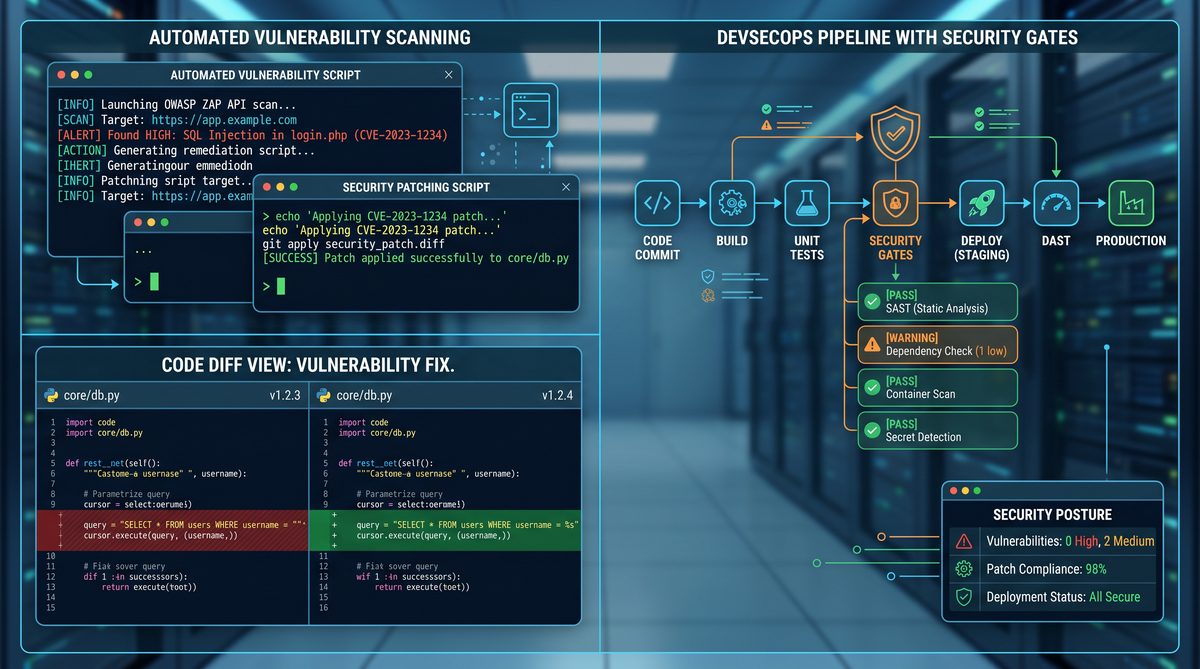
Automating repetitive security tasks reduces human error and improves mean time to remediate. GPT-5.5-Cyber helps generate robust automation scripts, CI pipelines for patch verification, and test harnesses for regression validation. The prompts below aim to accelerate safe automation while providing verification steps.
Prompt 39 — Generate a patch verification pipeline for CI/CD
Objective: Create a CI pipeline that automatically applies patches in a staging environment, runs security tests, and reports results for approval.
Input: Repository layout, test suites, deployment tooling (GitHub Actions, Jenkins, GitLab CI), and rollback strategy.
Output: CI YAML file, test steps, security gates (SCA/DAST/IAST), and rollback commands.
System: You are a CI security engineer. Produce a GitHub Actions workflow that applies patches and runs security tests.
User: Repo: microservice-A. Tests: unit/integration/security-scan. Staging environment: k8s cluster.
Return workflow YAML and explanation.
Implementation notes: Include secrets handling strategies (use of secrets managers), and artifact signing/approval gates before production rollout.
Prompt 40 — Automate remediation script generation for common misconfigurations
Objective: Produce idempotent scripts to remediate common misconfigurations (open security groups, weak password policies, public cloud storage ACLs).
Input: Target environment (AWS CLI, Azure CLI), current config snippet, desired state.
Output: Safe, idempotent script (bash/PowerShell), with dry-run mode and logging.
System: You are a remediation automation engineer. Produce a bash script to remediate public S3 buckets and include a dry-run mode.
User: Buckets: bucket-1, bucket-2
Return script with logging and dry-run.
Implementation notes: Scripts must verify identity, use least-privilege roles, and include explicit confirmation prompts for destructive operations when run interactively.
Prompt 41 — Automated test-case generation for security regressions
Objective: Generate unit and integration tests that assert the presence of security controls (input validation, output encoding, auth checks).
Input: Code module/function signature, desired security behavior, existing test frameworks.
Output: Test cases in the repository’s preferred test framework (pytest, JUnit, Jest), with mocks and expected assertions.
System: You are a secure testing engineer.
User: Function: process_user_input(input). Ensure no script tags are returned. Provide pytest test cases.
Return tests ready for integration.
Implementation notes: Tests should be deterministic and runnable in CI. Add negative and positive cases and boundary inputs.
Prompt 42 — Automated credential rotation orchestration
Objective: Generate a safe orchestration script or workflow that rotates credentials (API keys, service accounts) across systems while minimizing downtime.
Input: Systems involved, credential stores, dependent services, maintenance windows.
Output: Orchestration workflow with steps for issuance, phased rollout, verification checks, and rollback procedures.
System: You are a secrets lifecycle engineer. Provide a rotation orchestration plan for an API key used by multiple services.
User: Services: svc-a, svc-b. Secret store: Vault.
Return workflow steps, API calls, verification checks.
Implementation notes: Use versioned secrets with capability to rollback, and include verification steps such as smoke tests to confirm service continuity after rotation.
Prompt 43 — Automated attack remediation with circuit breakers
Objective: Create scripts or policies that automatically implement temporary mitigations (circuit breakers) for ongoing attacks while preserving business continuity.
Input: Attack indicators, mitigation options (block IPs, throttle, WAF rules), service availability requirements.
Output: Circuit breaker policy with thresholds, actions, and automatic re-evaluation schedules.
System: You are a reliability and security engineer. Design a circuit-breaker policy to throttle traffic based on error rates and suspicious payload patterns.
User: Service: public API. Threshold: 5% error rate sustained for 10 minutes.
Return policy and implementation scripts for cloud load balancer and WAF.
Implementation notes: Include staged mitigations and fail-open/fail-closed considerations. Test in staging before production activation.
Prompt 44 — Automated validation of cryptographic library upgrades
Objective: After a cryptographic library upgrade, generate tests to validate backward-compatibility, correct key handling, and ensure no downgrade vulnerabilities introduced.
Input: Pre-upgrade test descriptions, library change log, key lifecycle policies.
Output: Test suite to validate crypto operations, deprecation warnings, and compatibility checks across clients.
System: You are a crypto upgrade validation engineer.
User: Upgrading OpenSSL from 1.1.1 to 3.0 in service X. Provide tests to validate TLS handshake compatibility and key handling.
Return tests and validation steps.
Implementation notes: Include interoperability checks with legacy clients and automated smoke tests to detect handshake failures.
Prompt 45 — Automated verification of patch applicability and impact analysis
Objective: Determine if a vendor patch applies to the environment and estimate potential functional impacts before deployment.
Input: Patch release notes, affected components, current environment inventory.
Output: Applicability matrix, potential impact areas, suggested pre-deployment tests, and rollback points.
System: You are a patch management analyst. Assess whether the following patch applies and the likely impact.
User: Patch: CVE-XXXX-YYYY affects libfoo <= 1.2.3. Inventory: libfoo 1.2.0 used in svc-a and svc-b.
Return applicability and impact analysis.
Implementation notes: Use binary/package manager metadata to map installed versions. Provide explicit test cases that validate critical functionality post-patch.
Prompt 46 — Script generation for evidence-based remediation verification
Objective: Create scripts that verify remediation status across systems (e.g., that configuration changes propagated to all hosts and that vulnerable packages are updated).
Input: Inventory list, remediation item, desired state definition.
Output: Verification script that checks each host and produces a compliance report.
System: You are an automation verification engineer.
User: Verify that package libssl is at least version 1.2.3 across 500 hosts. Provide parallelized checking script.
Return script and sample output format.
Implementation notes: Use parallel execution frameworks (Ansible, Salt, parallel-ssh) and ensure authentication mechanisms are secure and logged.
Prompt 47 — Automated playbook for zero-day patch window management
Objective: Provide a structured playbook to manage patch windows for emergent zero-days, including prioritization, emergency testing, stakeholder notification, and staged rollouts.
Input: Zero-day advisory, affected asset inventory, SLA requirements.
Output: Emergency playbook with decision trees and communications templates.
System: You are an emergency response coordinator. Create a playbook for a newly announced zero-day in a widely used library.
User: Advisory: CVE-YYYY. Affected assets: web servers and database servers.
Return playbook with decision trees and communication templates.
Implementation notes: Include ephemeral emergency response teams, approval workflows, and post-deployment monitoring plans to detect regressions or exploitation attempts.
Prompt 48 — Automation recipe generator for SOAR playbooks
Objective: Generate modular SOAR playbook steps that automate containment, enrichment, and remediation for common incidents.
Input: Incident type, available SOAR connectors, action constraints (manual approval thresholds).
Output: SOAR playbook YAML or JSON with modular tasks, branching logic, and escalation boundaries.
System: You are a SOAR automation engineer. Produce a playbook for automated phishing remediation using available connectors: EDR, Mail, Ticketing.
User: Incident: phishing email reported by user.
Return playbook JSON.
Implementation notes: Provide idempotent tasks and clear human-in-the-loop steps for critical decisions (e.g., account suspension).
Prompt 49 — Generate infrastructure-as-code (IaC) security policy checks
Objective: Produce policy-as-code snippets (OPA/Rego, Sentinel) that enforce security guardrails in IaC pipelines.
Input: Existing Terraform modules, policy requirements (no public S3, restricted IAM policies).
Output: Policy code with test cases and example violations for CI validation.
System: You are an infrastructure policy engineer. Create OPA/Rego policies enforcing no public S3 buckets and least-privilege IAM roles.
User: Terraform modules: ...
Return policy code and tests.
Implementation notes: Integrate with pre-commit hooks and CI gates. Provide false-positive mitigation and explain policy semantics.
Prompt 50 — Automated report of remediation KPIs and continuous improvement suggestions
Objective: Produce a performance report on remediation KPIs and recommend improvements for the vulnerability management lifecycle.
Input: Remediation ticket data, patch times, backlog metrics, and SLA adherence logs.
Output: KPI report (MTTR, percent closed within SLA, backlog trends) and prioritized process improvements.
System: You are a security operations performance analyst. Generate a 6-week KPI report and improvement suggestions.
User: Ticket data CSV: [ ... ]
Return dashboard-ready JSON and narrative recommendations.
Implementation notes: Use visualizable JSON formats for integration with dashboards. Prioritize process changes that yield measurable reductions in MTTR and backlog.
Best Practices: How to structure security prompts, manage token limits, and handle sensitive code securely
Integrating GPT-5.5 into security workflows requires governance and discipline. Below are comprehensive best practices that cover prompt engineering, token management, deterministic outputs, secure data handling, and validation strategies. These are actionable rules of engagement for SOCs, SecOps, and engineering teams.
1. Prompt structure and system messages
Always start with a clear system instruction. A strong system message defines model persona, output schema constraints, and safety limits. Example system message template:
System: You are a [role]. Return only [format]. Never include raw secrets in responses. If data appears sensitive, return redaction instructions instead of content.
For production automation, enforce strict schema output (JSON or CSV) and validate with a JSON schema validator. Using deterministic settings (temperature 0.0–0.2) minimizes variance in responses crucial for automated pipelines.
2. Token/window management
GPT-5.5 offers expanded context windows but you should still adopt chunking strategies:
- Preprocess and compress inputs: strip comments, reduce whitespace, and provide only relevant context such as function bodies rather than entire repos.
- Chunk large artifacts and provide a manifest to the model that indicates chunk indices and any previous chunk summaries.
- Use hierarchical summarization: ask the model to summarize each chunk, then summarize summaries for global analysis.
Example chunking workflow:
- Split file into 2k-token chunks.
- Run vulnerability scan prompt on each chunk to generate local findings.
- Aggregate local findings with a consolidation prompt that deduplicates and prioritizes.
3. Schema enforcement and structured outputs
Always require machine-parseable outputs for integration with automation systems. Use JSON schema language to validate, and if the model deviates, re-prompt to correct structure or discard response. Example schema fields: id, line_range, severity, description, remediation.
4. Handling sensitive code and data
Security prompts often involve proprietary or sensitive information. Follow these rules:
- Sanitize inputs: remove hardcoded secrets, tokens, and PII before sending; replace with placeholders.
- Use on-prem or VPC-hosted model instances for sensitive workloads. Ensure no outbound connectivity for instances processing regulated data.
- Redaction policy: instruct the model to detect and refuse to output secrets. Use an allowlist approach—only include the minimal required context.
- Audit logging: maintain immutable logs of all prompts and model responses, redacted as needed, for compliance and review.
5. Validating and testing model outputs
Never accept model outputs as final without validation. Implement the following validation pipeline:
- Schema validation (automated)
- Static analysis tests (linting, compile checks for patches)
- Dynamic verification in isolated environments (unit/integration tests)
- Peer review for high-risk changes (manual review by senior engineer)
For detection rules or signatures, run them against representative logs to measure false-positive and false-negative rates before deployment.
6. Operational safety and escalation
Set actionability tiers for model outputs:
| Tier | Allowed Action | Human-in-loop Requirement |
|---|---|---|
| Tier 1 (Informational) | Auto-annotate tickets | None |
| Tier 2 (Remedial) | Suggest script for reviewer approval | Reviewer approval required |
| Tier 3 (Critical) | Containment actions (isolate host) | Manual authorization required |
7. Rate limiting, cost control, and parallelization
Design asynchronous workflows for large-scale scans. Use batching to reduce API calls and cache model responses for repeated queries (e.g., same dependency list). Monitor token usage and set budget alerts. For heavy workloads, use lower-cost model variants for pre-filtering and reserve GPT-5.5-Cyber for high-value or complex analyses.
8. Explainability and auditability
Prompt the model to include an "explainability" field in outputs: summarize reasoning and provide references (CVE IDs, vendor advisories, or rule IDs). This ensures findings are defensible during audits. Example:
"explainability": "This finding maps to CVE-2024-XXXX because the vulnerable function uses unsanitized input in sprintf resulting in buffer overflow. Evidence: line 123 uses sprintf with user_input."
9. Versioning prompts and reproducibility
Keep a prompt library with versioned templates and changelogs. Include the exact system message, model version, and parameters used for every run. This ensures repeatability and helps debug when outcomes change after model updates.
10. Human factors and ergonomics
Train analysts to interpret model outputs and to recognize the model’s failure modes. Make model outputs actionable and reduce cognitive load by providing short summaries plus a link to the full structured output. Invest in analyst training and practice purple-team exercises that validate the end-to-end pipeline.
Prompt templates and examples
Below are reusable templates for three common scenarios to accelerate implementation.
Template: Structured vulnerability scanner prompt
System: You are a secure-code auditor. Return only JSON structured as: {findings:[{id,line_range,severity,cwe,desc,recommendation,confidence}]}.
User: Language: __LANG__. FileName: __FILENAME__. FileContents: __CONTENT__.
Instructions: Identify insecure patterns. Do not output secrets. If a finding requires runtime verification, flag "needs_dynamic_test": true.
Template: Incident triage prompt
System: You are a SOC triage engine. Return JSON: {alert_id,severity,immediate_actions:[...],hypothesis,confidence}.
User: Alert payload: __ALERT_JSON__. Recent telemetry: __TELEMETRY__.
Template: Automation script generator
System: You are an automation engineer. Output only the script between START_SCRIPT and END_SCRIPT markers. The script must be idempotent and support --dry-run.
User: Environment: AWS CLI. Objective: Remediate public S3 ACLs for buckets: __BUCKET_LIST__.
Common failure modes and mitigations
- Hallucinated references: Always require citations or CVE IDs and cross-validate against authoritative data sources.
- Incomplete outputs: Use explicit "if X not found, return {X: null}" clauses in schemas to reduce ambiguity.
- Overfitting to examples: Periodically refresh prompt examples and train analysts to detect stale patterns.
Operational checklist before production rollout
- Security review of model hosting (network policies, egress control)
- Data governance approval for PII or regulated data processing
- Audit logging for all prompts and responses
- Automated schema validation and human review gates
- Rollback and emergency stop mechanisms for automated actions
In summary, GPT-5.5-Cyber provides potent capabilities for security teams when integrated with rigorous controls, schema enforcement, and automated validation. Use the 50 prompts in this guide as production-ready starting points; adapt them to your environment, add approval gates where necessary, and treat the model as an augmentation to human expertise, not a replacement. The prompts and templates here should be versioned in your internal repositories, combined with playbooks such as for consistent operationalization.
Next steps: Choose 5 high-impact prompts from this guide and pilot them in a controlled staging environment. Measure time-savings, error rates, and analyst feedback. Iterate on templates and add them to your CI and SOAR pipelines with appropriate human-in-the-loop gates.
