
25 ChatGPT-5.5 Prompts for Software Engineers: Code Review, Architecture Design, Debugging, and Technical Documentation
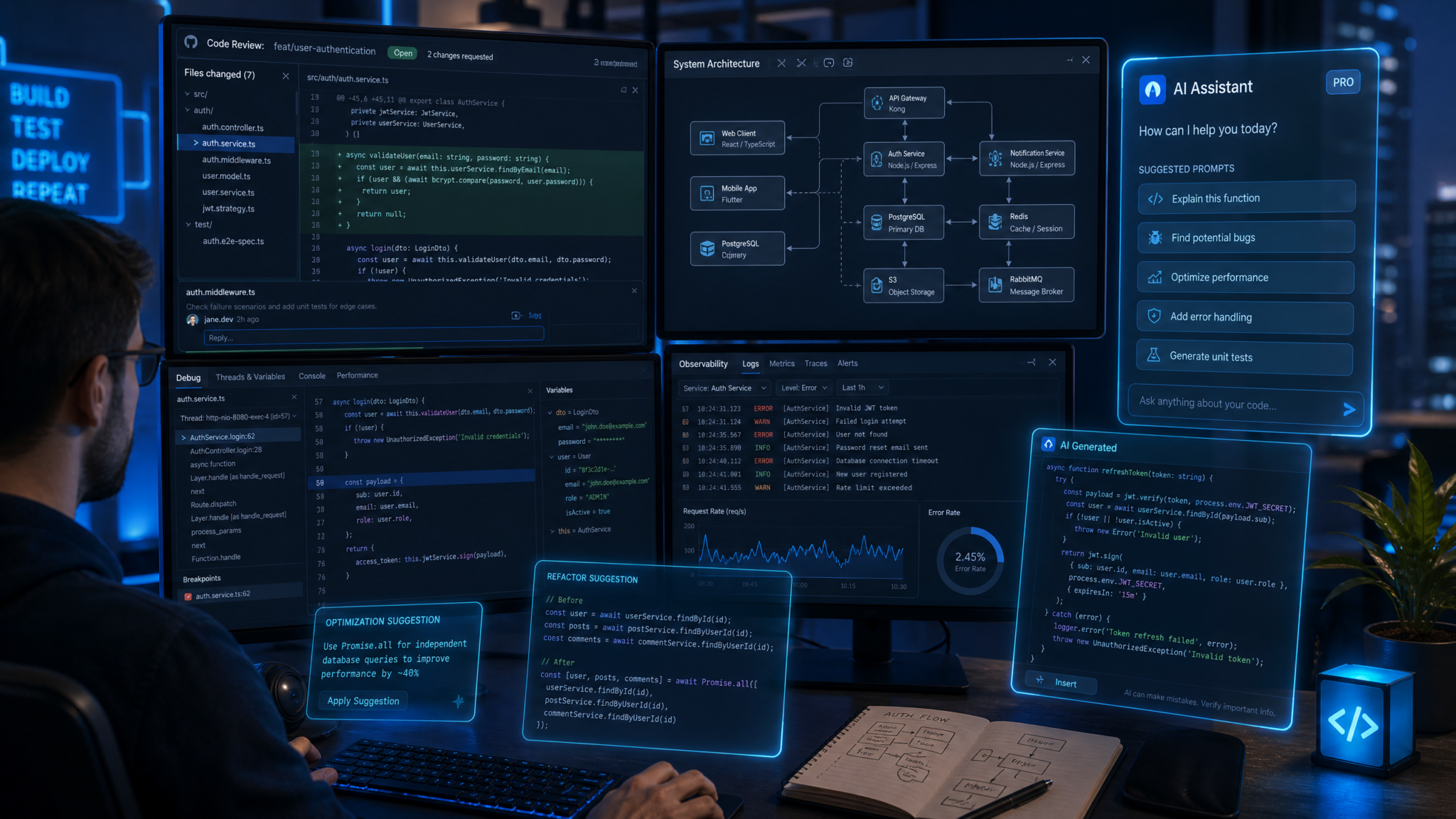
25 Production-Grade ChatGPT-5.5 Prompts for Software Engineers
Senior software engineers are quickly discovering that well-engineered prompts can transform AI from a novelty into a dependable co-pilot for code quality, architecture, debugging, documentation, and DevOps. This guide delivers 25 production-ready prompts tailored for GPT-5.5, each with precise instructions, expected outputs, and customization tips. You’ll find prompts that integrate with realistic engineering workflows: pull request reviews, microservices planning, log triage, CI/CD hardening, Kubernetes manifests, and SRE runbooks—all tuned for high-signal output you can trust.
For teams looking to maximize their AI productivity with ready-to-use templates, our collection of The 2026 Prompt Library: 20 Templates for Prompt Engineering provides battle-tested prompt frameworks that complement the strategies discussed in this article, covering everything from initial setup to advanced optimization workflows.
Choosing the Right GPT-5.5 Tier
Each prompt indicates a recommended GPT-5.5 tier to maximize signal, determinism, and speed. A quick comparison to help you plan usage:
| GPT-5.5 Tier | Ideal Use Cases | Context Window | Determinism Controls | Tool Use | Notes |
|---|---|---|---|---|---|
| GPT-5.5 Turbo | Fast iterations, lightweight summaries, boilerplate generation | Moderate | Basic temperature/seed | Limited | Use when speed matters more than deep analysis |
| GPT-5.5 Code | Static analysis, refactoring plans, code synthesis, test generation | Large | Enhanced sampling & style locks | Code-aware | Best for repositories and PRs; aware of code idioms and linters |
| GPT-5.5 Reasoning | Complex system design, multi-constraint tradeoffs, incident postmortems | Very Large | Advanced (seed, style, structure) | Planning tools | Optimized for multi-step tasks and long-horizon consistency |
| GPT-5.5 Enterprise | Security-aware analysis, PII-safe outputs, policy constraints, audit trails | Very Large | Enterprise policy controls | Enterprise connectors | Use where compliance, logging, and governance are critical |
Tip: For CI and gated workflows, prefer GPT-5.5 Code or Enterprise with fixed seeds and explicit JSON schemas. For exploratory architecture and debugging, use GPT-5.5 Reasoning’s deeper context and tradeoff analysis.
How to Use These Prompts
- Replace placeholders like {{repo_url}}, {{language}}, {{service_name}}, {{log_sample}} with your context.
- Run prompts in tooling that allows structured output validation (JSON schema or regex). Enforce “Output only …” constraints to prevent free-form text.
- Keep review batches small: 200–400 LOC per pass for best signal-to-noise.
- Adopt measurable targets (e.g., branch coverage ≥ 80%, p95 latency ≤ 200 ms, error budget ≤ 1%).
- Add these prompts into PR templates, CI bots, incident chats, and design docs to standardize quality and reduce cycle time.
What follows are 25 prompts across five categories, each designed for senior engineers who need practical, auditable outputs. You can mix-and-match or assemble them into playbooks. Continue reading for exact text you can drop into your workflows—and expect consistently actionable, reviewable results. You may also want to review for integration patterns across GitHub, GitLab, and Bitbucket.
1) Code Review & Quality
Use these prompts to automate high-signal PR reviews, accelerate defect discovery, identify unsafe patterns, propose targeted refactors, and ensure tests cover real risks. Research suggests defects found earlier cost 10–100x less to fix than those found in production; rigorous reviews and static analysis are among the cheapest, highest-ROI interventions.
Prompt 1: Comprehensive Pull Request Gate with Risk Scoring
Role: Senior Code Reviewer Bot
Goal: Provide a concise, high-signal review of a pull request with risk scoring and actionable fixes.

Inputs:
- Repo: {{repo_url}}
- PR: {{pr_number}}
- Language(s): {{languages}}
- Diff Context: limited to changed files + 50 lines of surrounding context
- Policy Baselines:
  - Lint: {{linter_ruleset_link}}
  - Security: OWASP ASVS L1–L2
  - Performance: p95 latency budget {{latency_budget_ms}} ms for affected endpoints
  - Testing: target branch coverage ≥ {{coverage_target}}%

Tasks:
1) Summarize the purpose of the change in 1–2 sentences based on PR title/description.
2) Compute a risk score (0–100) factoring:
   - security-sensitive code paths (authz, crypto, input parsing),
   - concurrency/memory hazards,
   - external dependencies & version bumps,
   - data migrations and backward compatibility,
   - blast radius (number of call sites, services impacted).
3) List concrete issues with severity (Blocker, Major, Minor), each tagged with CWE/ASVS where applicable.
4) For each issue, propose exact code-level diffs or functions to change.
5) Identify missing/weak tests. For each, specify test name, scenario, and expected assertion(s).
6) Confirm lint/build status vs baseline rules; include only failures or deltas.
7) Output ONLY the JSON as follows:

{
  "summary": "...",
  "risk_score": 0-100,
  "issues": [
    {"severity": "Blocker|Major|Minor", "file": "path", "line": n, "rule": "CWE-xxx|ASVS-x.x", "finding": "...", "fix": "..."}
  ],
  "test_gaps": [
    {"name": "TestName", "scope": "unit|integration|e2e", "scenario": "...", "asserts": ["..."]}
  ],
  "perf_budget": {"endpoint": "/path", "p95_target_ms": 200, "risk": "low|medium|high", "note": "..."},
  "lint_deltas": [{"rule": "name", "status": "new-failure|fixed", "file": "path"}],
  "notes": ["..."]
}

Constraints:
- Be strict; prefer false negatives over false positives.
- Do not repeat nits the linter already catches unless they change risk score.
- No free-form commentary beyond the JSON.
Why it works
This prompt enforces scoped context (diff + nearby lines), a risk model, and OWASP/CWE tagging, which guide GPT-5.5 to prioritize high-severity issues. The explicit JSON schema prevents verbose noise and eases CI consumption. Using established baselines (lint, ASVS) reduces ambiguity and aligns the model with standardized rules rather than taste-based review.
Expected output format
Strict JSON per the schema above. Ideal for CI annotations and dashboards.
Pro tip
Seed the run with “changed files list” and a minimal PR description to avoid drifting into unrelated code. Keep LOC per review under 400 for best outcomes.
Best GPT-5.5 tier
GPT-5.5 Code
Prompt 2: Security Static Scan with Evidence and CWE Mapping
Role: Application Security Reviewer
Scope: Analyze diffs and touched files for security weaknesses using OWASP ASVS and map to CWE.

Inputs:
- Changed files: {{file_list}}
- Language/framework: {{language}} / {{framework}}
- Threat model context: {{threat_model_link}} (key assets, trust boundaries)
- Secrets policy: disallow plaintext secrets, require KMS or vault

Tasks:
1) Identify security-relevant changes (authN/Z, crypto, deserialization, file I/O, SSRF, SQL/NoSQL, command exec).
2) For each, assess risk, map to CWE, and provide a minimal PoC if applicable (safe string; no real secrets).
3) Confirm secrets policy adherence; flag hardcoded secrets or weak key handling.
4) Recommend least-privilege checks (IAM scopes, DB roles, K8s PSP/PSA).
5) Output ONLY in Markdown with these sections:
   - Security Findings (table): Severity | File:Line | CWE | Evidence | Fix
   - Secrets & Config Review (bullets)
   - Least-Privilege Gaps (bullets)
   - Safe PoC Snippets (code blocks, sanitized)
Why it works
Constrained scopes and explicit evidence requirements reduce false alarms and improve auditability. Mapping to CWE yields standardized traceability for governance. Markdown tables keep outputs review-friendly in PRs.
Expected output format
Markdown sections and tables exactly as described.
Pro tip
Provide your ASVS level and a minimal threat model to tailor severity rankings to your environment.
Best GPT-5.5 tier
GPT-5.5 Enterprise
Prompt 3: Performance Regressions and Micro-Benchmark Plan
Role: Performance Reviewer
Goal: Detect potential performance regressions introduced by this change and propose targeted micro-benchmarks.

Inputs:
- Changed files & hot paths: {{file_list}}, {{hot_path_functions}}
- Baseline perf: {{baseline_p95_ms}} ms @ {{rps}} rps, {{cpu}}% CPU, {{mem_mb}} MB RSS
- Infra: {{runtime}} {{version}}, {{cpu_arch}}, {{os}}

Tasks:
1) Highlight changes that may increase allocations, synchronization, I/O waits, or N+1 queries.
2) Provide a micro-benchmark plan covering 80% of new/changed hot code, including dataset sizes.
3) Predict likely p95 delta ranges (+/- ms) and utilization impacts under {{rps}} rps.
4) Propose instrumentation points (counters, histograms, traces) and red-line thresholds.
5) Output ONLY JSON:

{
  "risks": [{"file":"...", "func":"...", "type":"alloc|lock|io|query", "reason":"..."}],
  "benchmarks": [{"name":"...", "func":"...", "dataset":"S|M|L", "iterations": 100000, "metrics":["ns/op","allocs/op","B/op"]}],
  "instrumentation": [{"signal":"counter|hist|trace", "name":"...", "labels":["..."], "threshold":"p95<={{budget_ms}}"}],
  "predictions": {"p95_ms_delta": "[-5, +15]", "cpu_delta_pct": "[0, +3]"},
  "notes": ["..."]
}
Why it works
It couples code-level risk heuristics with measurable test plans and explicit instrumentation, creating a direct path to validation. Quantified predictions focus follow-up testing and reduce “it depends” ambiguity.
Expected output format
JSON consumable by performance CI or benchmark runners.
Pro tip
Provide historical flamegraphs or profiling diffs to dramatically improve the model’s suspicion list.
Best GPT-5.5 tier
GPT-5.5 Code
Prompt 4: Targeted Refactoring Proposal with Safety Nets
Role: Refactoring Coach
Goal: Propose a safe, incremental refactor that reduces complexity and risk.

Inputs:
- Module: {{module_path}}
- Current metrics: cyclomatic complexity {{cc}}, function count {{fn_count}}, avg func length {{avg_loc}}
- Constraints: zero API breakage, backward-compatible behavior, <= 2% perf deviation

Tasks:
1) Identify top 3 complexity hotspots and root causes (god functions, mixed concerns, hidden coupling).
2) Propose a stepwise plan (max 5 steps) with diff-sized chunks (<= 200 LOC/step).
3) For each step, list: files changed, function signatures, risk level, rollback plan, tests to adjust/add.
4) Output ONLY Markdown:

## Refactor Plan
- Overview: ...
- Steps:
  1) Title
     - Changes: ...
     - Risk: low|medium|high
     - Rollback: ...
     - Tests: [names]
- Safety Nets
  - Contracts to pin: ...
  - Golden tests: ...
  - Canary strategy: ...
Why it works
It imposes an incremental plan with bounded diff sizes, explicit rollback, and golden tests to protect behavior, mirroring mature refactoring playbooks.
Expected output format
Markdown headers and bullet lists for drop-in PR descriptions or tracking issues.
Pro tip
Attach module-level metrics (complexity, churn, defect density) to prioritize impact-first refactors.
Best GPT-5.5 tier
GPT-5.5 Reasoning
Prompt 5: Test Coverage Gap Analyzer and Minimal Set Generator
Role: Test Strategist
Goal: Identify critical coverage gaps and generate a minimal set of high-value tests to hit target coverage.

Inputs:
- Coverage report (Cobertura/JaCoCo/LCOV): {{coverage_report_path_or_json}}
- Risk map: high-risk files/modules: {{risk_files}}
- Target: branch coverage ≥ {{target_pct}}%

Tasks:
1) List files/functions with lowest branch coverage intersecting high-risk areas.
2) Propose a minimal set of tests that will increase coverage to target with max ROI (Pareto 80/20).
3) For each test: name, type (unit/integration), setup, scenario, assertions, mocks/fakes.
4) Output ONLY JSON:

{
  "gaps": [{"file":"...", "func":"...", "branch_cov_pct": 32}],
  "tests": [{"name":"...", "type":"unit|integration", "file_target":"...", "setup":"...", "scenario":"...", "assertions":["..."], "mocks":["..."], "estimated_cov_gain_pct": 8}],
  "est_target_coverage_pct": 82
}
Why it works
Combining coverage data with a risk list prevents chasing low-value percentages. The minimal-set approach reduces test bloat and build times while moving coverage to meaningful thresholds.
Expected output format
Strict JSON to feed into a test ticket generator or PR checklist.
Pro tip
Feed in flakiness metrics to avoid recommending brittle paths, and set SLOs for build time growth per added test suite.
Best GPT-5.5 tier
GPT-5.5 Code
2) Architecture Design
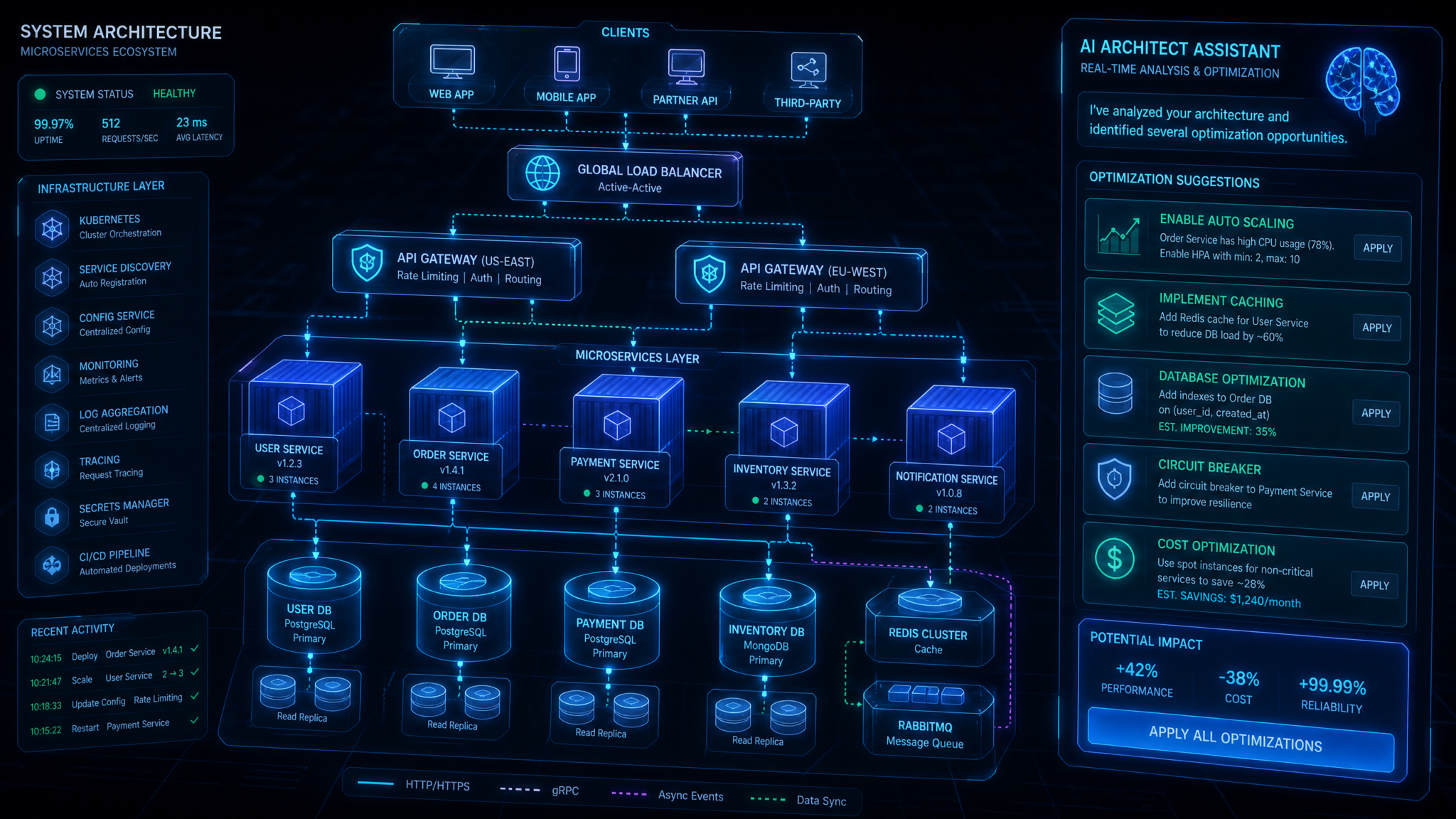
Architecture prompts benefit from larger context and explicit constraints: SLOs, data volumes, scale targets, and compliance considerations. DORA research ties architecture choices to delivery performance; teams with loosely coupled architectures and robust CI/CD see faster lead times and lower change failure rates. Use these prompts to generate first-pass designs that survive critical review and scale predictably.
Prompt 6: System Design Blueprint with SLOs and Tradeoffs
Role: Principal Architect
Goal: Propose a scalable architecture meeting defined SLOs and constraints.

Inputs:
- Use case: {{use_case}}
- Traffic profile: {{peak_rps}} rps peak, {{daily_active_users}} DAU, growth {{growth_pct}}%/qtr
- Latency SLOs: p95 {{p95_ms}} ms for reads, p95 {{write_p95_ms}} ms for writes
- Availability SLO: {{availability_pct}}%
- Data: {{data_size_tb}} TB primary, {{qps}} QPS to store
- Compliance: {{regimes}} (e.g., SOC2, GDPR)
- Constraints: cloud {{cloud}}, regions {{regions}}, budget {{budget_tier}}

Tasks:
1) Provide a high-level diagram (Mermaid) of core services, data stores, and external dependencies.
2) Present 3 options with tradeoffs (CAP, consistency, complexity, cost).
3) Recommend one option with capacity calculations (CPU, memory, storage IOPS), cache hit ratios, and shard/partition strategies.
4) Define SLOs, SLIs, and error budgets with alert thresholds.
5) Output in Markdown with sections: Diagram, Options, Recommendation, SLOs & SLIs, Capacity Plan.
Why it works
Forcing explicit SLOs and capacity planning anchors design in measurable outcomes. Multiple options reveal tradeoffs and reduce anchoring bias. Mermaid allows lightweight diagrams that can live in repos.
Expected output format
Markdown with a Mermaid diagram and clearly labeled sections.
Pro tip
Provide historical traffic spikes and cache hit rates for better sizing; include data retention and TTL policies for cost control.
Best GPT-5.5 tier
GPT-5.5 Reasoning
Prompt 7: Microservices Decomposition with Bounded Contexts
Role: Domain Architect
Goal: Define candidate microservices and boundaries using DDD bounded contexts.

Inputs:
- Domain narrative: {{domain_overview}}
- Entities & workflows: {{entities}}, {{workflows}}
- Non-functionals: latency budget {{latency_ms}}, availability {{availability_pct}}%, team size {{team_count}}

Tasks:
1) Identify bounded contexts and anti-corruption layers.
2) Propose 5–9 services (if justified) with responsibilities, key APIs/events, and data ownership.
3) Define communication patterns (sync vs async), idempotency requirements, and retry/backoff policies.
4) Outline shared platform concerns (authN/Z, observability, schema registry).
5) Output ONLY a Markdown table + event schemas:

| Service | Context | Responsibilities | Sync APIs | Events | Data Store | Notes |
|---|---|---|---|---|---|---|

Then provide example event schemas in JSON for top 3 events.
Why it works
It steers decomposition around domain boundaries, not arbitrary technical layers. The table creates clarity on responsibilities and avoids accidental orchestration bottlenecks.
Expected output format
A services table plus JSON event schemas.
Pro tip
Include cross-team interaction patterns to reduce accidental coupling (e.g., avoid direct DB sharing).
Best GPT-5.5 tier
GPT-5.5 Reasoning
Prompt 8: Database Schema Review and Migration Safety Plan
Role: Database Reviewer
Goal: Evaluate a proposed schema/migration for correctness, performance, and rollout safety.

Inputs:
- DDL / migration diff: {{ddl_diff}}
- Workload pattern: {{read_pct}}% reads, {{write_pct}}% writes, typical QPS {{qps}}
- Replication: {{replication_strategy}}; indexing strategy: {{indexing}}
- Constraints: zero data loss, zero downtime, backward compatibility for {{bc_days}} days

Tasks:
1) Identify normalization/denormalization tradeoffs, hot partitions, and index coverage gaps.
2) Propose partitioning/sharding keys and expected distribution (skew analysis).
3) Draft a safe migration plan with phases: expand, backfill, dual-write, verify, contract.
4) Provide sample canary queries and SLIs (p95 latency, error rate).
5) Output ONLY Markdown with:
   - Findings (bullets)
   - Index & Partition Recommendations (table)
   - Migration Plan (numbered)
   - Canary Queries (code blocks)
   - SLIs & Alerts (bullets)
Why it works
It combines schema quality with practical rollout sequencing, minimizing customer impact. Canary queries and SLIs make the plan operationally testable.
Expected output format
Markdown with a structured plan and a concise table for indexes/partitions.
Pro tip
Plug in historical slow query logs and a sample dataset cardinality report to refine index choices.
Best GPT-5.5 tier
GPT-5.5 Code
Prompt 9: API Design Review with Backward Compatibility Contracts
Role: API Design Reviewer
Goal: Review REST/GraphQL/gRPC APIs for coherence, versioning, and reliability.

Inputs:
- API spec link or snippet: {{api_spec}}
- Compatibility policy: semver {{semver_policy}}, deprecation window {{deprecation_window_days}} days
- SLO: p95 latency {{p95_ms}} ms; error rate < {{error_rate_pct}}%

Tasks:
1) Check naming consistency, pagination, filtering, and error model.
2) Verify backward compatibility; define explicit “must-not-break” contracts.
3) Propose idempotency strategy (keys/headers), rate limiting, and retry semantics.
4) Provide example requests/responses and negative tests.
5) Output ONLY Markdown:
   - Findings (table): Category | Issue | Impact | Fix
   - Compatibility Contracts (bullets)
   - Idempotency & Retries (bullets)
   - Examples (code blocks)
   - Negative Tests (list)
Why it works
By codifying contracts and negative tests, this prompt prevents subtle client breakages and operational flakiness that often surface post-release.
Expected output format
Markdown with a findings table and concrete examples.
Pro tip
Attach real production errors (top 5) to validate error models and status codes.
Best GPT-5.5 tier
GPT-5.5 Enterprise
Prompt 10: Scalability Pattern Selector (Caching, CQRS, Sharding)
Role: Scalability Advisor
Goal: Recommend suitable scale patterns with measurable impact and costs.

Inputs:
- Current bottleneck: {{bottleneck_desc}}
- Metrics: cache hit {{hit_rate_pct}}%, DB connections {{db_conn}}, p95 {{p95_ms}} ms
- Traffic: {{rps}} rps steady, {{burst_rps}} rps burst
- Constraints: read-your-writes? {{ryw_boolean}}, cost ceiling {{monthly_budget}}

Tasks:
1) Evaluate suitability of caching (local/distributed), read replicas, sharding, CQRS, or event sourcing.
2) Provide expected impact on p95 and cost deltas.
3) Draft a rollout plan with feature flags and incremental verification.
4) Output ONLY a Markdown table:

| Pattern | Fit | Expected p95 Impact | Consistency Impact | Complexity | Cost Delta | Rollout Steps | Notes |
|---|---|---|---|---|---|---|---|
Why it works
The prompt frames scale patterns around data consistency, latency, complexity, and cost—forcing a holistic recommendation rather than a single silver bullet.
Expected output format
A single, clear Markdown table for quick decision-making.
Pro tip
Attach a cost baseline and known cacheability ratios per endpoint for precise impact estimates.
Best GPT-5.5 tier
GPT-5.5 Reasoning
3) Debugging & Troubleshooting
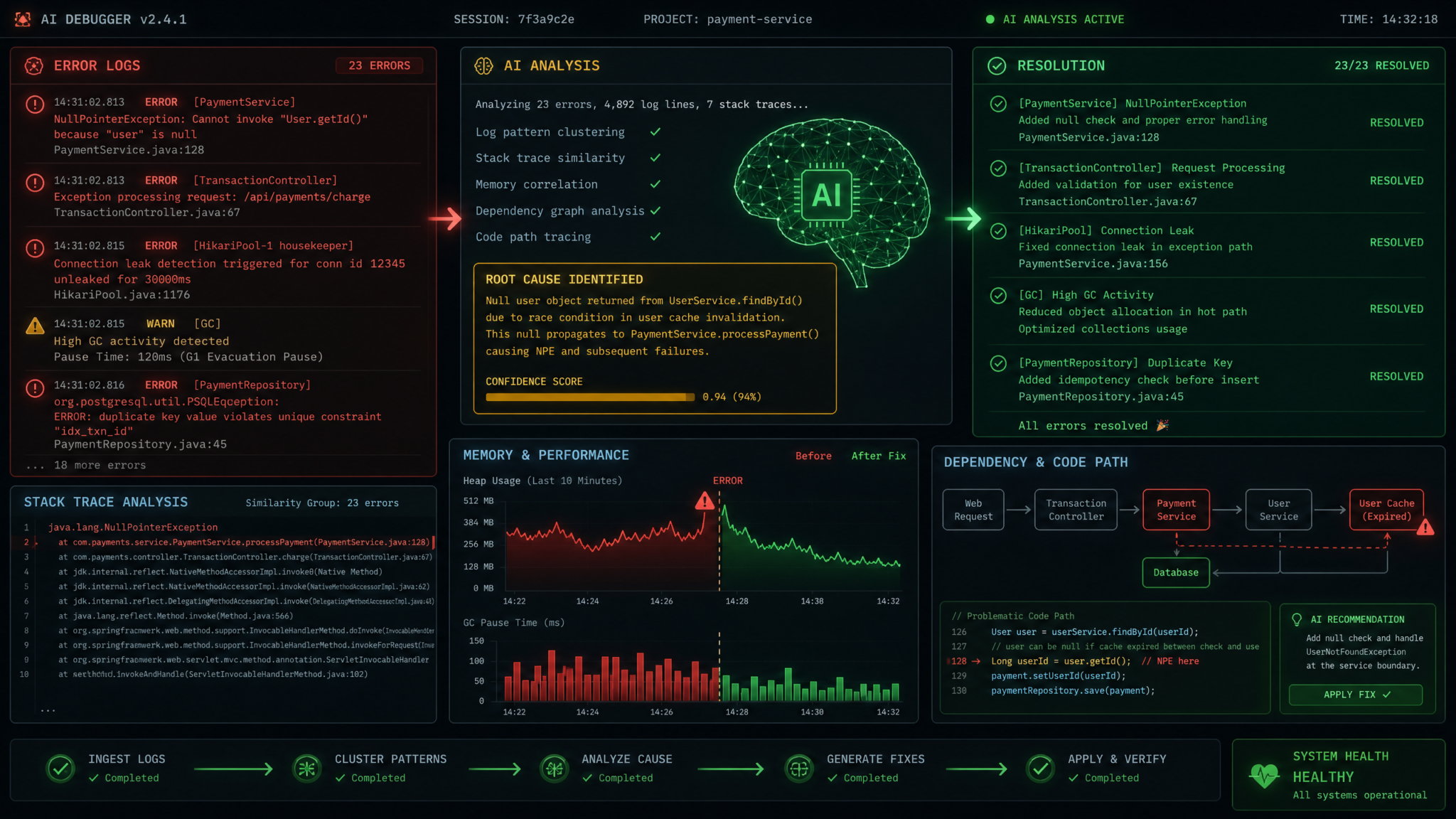
Mean time to recovery (MTTR) is a defining metric for operational excellence. High-performing teams (per DORA) restore service in under an hour and keep change failure rates between 0–15%. These prompts accelerate root-cause isolation with structured log analysis, targeted hypotheses, and testable next steps—minimizing guesswork and chat noise.
Prompt 11: Error Diagnosis from Logs with Hypothesis Ranking
Role: Incident Triage Assistant
Goal: Analyze logs and propose ranked root cause hypotheses with validation steps.

Inputs:
- Log sample (sanitized): {{log_sample}}
- Time window: {{time_window}}
- Recent changes: {{recent_deploys_or_prs}}
- Known issues/runbooks: {{links}}

Tasks:
1) Cluster errors by signature; extract correlated fields (service, pod, traceId, user-agent).
2) Propose 3–5 root cause hypotheses ranked by likelihood (with evidence).
3) For each hypothesis, list quick validation steps and one-roll-forward + one-roll-back option.
4) Output ONLY JSON:

{
  "clusters": [{"signature":"...", "count":123, "fields":{"service":"...","pod":"...","traceId":"..."}}],
  "hypotheses": [{"rank":1,"cause":"...","evidence":["..."],"validate_steps":["..."],"roll_forward":"...","roll_back":"..."}],
  "next_actions": ["..."],
  "observability_gaps": ["..."]
}
Why it works
Structured clustering and ranked hypotheses keep the focus on testable next steps. Having both roll-forward and rollback options guards against bias toward only one path.
Expected output format
Strict JSON for incident channels or ticket systems.
Pro tip
Include correlation IDs and recent deploy metadata to boost signal; the model can connect spikes to specific changes rapidly.
Best GPT-5.5 tier
GPT-5.5 Enterprise
Prompt 12: Performance Profiling Report and Hot Path Remediation
Role: Performance Analyst
Goal: Convert profiling data into a ranked remediation plan.

Inputs:
- Profiler output: {{profiler_type}} (pprof/flamegraph) for {{duration}} mins, CPU {{cpu_pct}}%, RSS {{rss_mb}} MB
- Hot path functions: {{hot_paths}}
- SLA/SLO: p95 {{p95_ms}} ms

Tasks:
1) Extract top 10 hot paths from profiler; quantify inclusive vs exclusive time and allocations.
2) Map each hot path to a fix strategy (algorithmic change, memoization, batching, async I/O).
3) Estimate latency gains and verify no starvation or priority inversion.
4) Output ONLY Markdown:

## Profiling Summary
- Stats: ...

## Hot Paths (table)
| Rank | Function | Incl | Excl | Allocations | Fix Strategy | Est p95 Gain |

## Remediation Plan
1) ...
2) ...

## Safety Checks
- Starvation risks: ...
- Priority inversion: ...
- Validation metrics: ...
Why it works
It translates profiler noise into a prioritized, testable action plan, coupling fixes with expected gains and safety checks to avoid tradeoff blindness.
Expected output format
Markdown sections and a table for hot paths.
Pro tip
Feed representative, not synthetic, workloads. Include GC logs for managed languages to spot allocation-related regressions.
Best GPT-5.5 tier
GPT-5.5 Code
Prompt 13: Memory Leak Detector from Heap Snapshots
Role: Memory Diagnostics Specialist
Goal: Identify likely memory leaks and propose fixes.

Inputs:
- Heap snapshots: before {{snapshot_t0}}, after {{snapshot_t1}}
- Runtime: {{runtime}} {{version}}
- Symptom: RSS grows from {{rss_start_mb}} MB to {{rss_end_mb}} MB over {{duration_hours}} hours

Tasks:
1) Compare object graphs; identify types with abnormal retention growth.
2) Trace GC roots; identify caching/pool misconfig, event listeners, goroutine/thread leaks, file descriptors.
3) Propose code-level fixes and monitoring (e.g., cardinality limits, LRU bounds, finalizers where safe).
4) Output ONLY JSON:

{
  "leak_candidates": [{"type":"...", "growth_mb":123, "retainers":["..."], "suspected_cause":"..."}],
  "fixes": [{"file":"...", "change":"...", "safety_notes":"..."}],
  "monitoring": [{"metric":"...", "threshold":"...", "action":"..."}],
  "validation_plan": ["heap-diff after X hours", "RSS plateau check", "allocs/op benchmark"]
}
Why it works
The prompt directs attention to retainers and root paths, which are primary signals in leak investigations. It also ties remediation to measurable monitoring and validation.
Expected output format
JSON suitable for creating follow-up tickets and monitors.
Pro tip
Include object histograms and allocation profiles to differentiate leaks from temporary spikes or cache warmth.
Best GPT-5.5 tier
GPT-5.5 Reasoning
Prompt 14: Race Condition and Concurrency Hazard Audit
Role: Concurrency Auditor
Goal: Identify race risks in code changes and propose synchronization strategies.

Inputs:
- Changed concurrent code: {{files}}
- Model: threads/goroutines/actors with primitives: {{primitives}}
- Invariants: {{invariants}} (e.g., "map access must be locked")

Tasks:
1) Locate shared state mutations and unsynchronized reads.
2) Identify non-atomic check-then-act sequences, ABA risks, and lock ordering issues.
3) Propose fixes: lock scoping, atomic ops, channels/queues, lock hierarchy.
4) Provide minimal reproducible test or stress harness design.
5) Output ONLY Markdown:
- Findings (table): File | Line | Pattern | Risk | Fix
- Test Harness (code or description)
- Lock Order/Hierarchy Guidelines (bullets)
Why it works
Concurrency bugs are often pattern-based. The prompt asks for concrete patterns and fixes, plus a harness, making the results directly actionable.
Expected output format
Markdown table and bullets.
Pro tip
Include platform details (preemptive scheduling, memory model) and stress conditions to better tailor the harness.
Best GPT-5.5 tier
GPT-5.5 Code
Prompt 15: Distributed Trace Triager for Latency Spikes
Role: SRE Trace Analyst
Goal: Investigate p95/p99 latency spikes using distributed trace data.

Inputs:
- Trace sample IDs: {{trace_ids}}
- Services involved: {{services}}
- Baselines: p95 {{p95_ms}} ms (normal), spike {{spike_p95_ms}} ms
- Environment: {{env}} (prod/stage)

Tasks:
1) Identify the critical path segments adding the most latency during spikes.
2) Distinguish server vs client wait, queue delays, and retry storms.
3) Recommend specific backpressure, timeout, and retry policy settings per hop.
4) Output ONLY JSON:

{
  "critical_path": [{"service":"...", "span":"...", "latency_ms":123, "delta_ms":45}],
  "root_causes": ["queue saturation", "retry storm", "cold cache"],
  "policy_fixes": [{"service":"...", "timeout_ms":..., "retry":"max=2, jitter=full, backoff=exp", "circuit_breaker":"..."}],
  "validation": ["canary with reduced retries", "load test @ {{rps}} rps"]
}
Why it works
Trace-based critical path analysis pinpoints where to adjust timeouts and backpressure. Policy prescriptions reduce trial-and-error during incidents.
Expected output format
JSON mapping spans to fixes and validation steps.
Pro tip
Attach queue depth metrics and retry counters to disentangle resource limits from client behavior.
Best GPT-5.5 tier
GPT-5.5 Enterprise
4) Technical Documentation
Documentation that mirrors production reality saves onboarding time and reduces operational risk. Effective docs are versioned, testable, and map to real interfaces and runbooks. These prompts produce consistent, auditable artifacts—API references with runnable examples, ADRs with tradeoffs, runbooks with decision trees, and changelogs aligned to semantic versioning.
Prompt 16: API Reference Generator with Runnable Examples
Role: API Doc Writer
Goal: Create a precise API reference with runnable examples and error models.

Inputs:
- Spec: {{openapi_or_proto}}
- SDKs: {{languages}}
- Auth: {{auth_method}} (OAuth2, JWT, mTLS)
- Rate limits: {{limits}}
- Versioning: {{versioning_policy}}

Tasks:
1) For each endpoint/method, document parameters, types, defaults, and constraints.
2) Provide runnable code examples in {{languages}} with auth patterns.
3) Document error responses and retry/idempotency guidance.
4) Output ONLY Markdown with:
- Overview
- Authentication
- Endpoints (one section per)
- Examples (code blocks)
- Errors & Retries
- SDK Notes
Why it works
Aligns docs to the real spec and focuses on runnable examples—a key to developer adoption and lower support load.
Expected output format
Markdown with sections and code blocks for examples.
Pro tip
Feed known “top support tickets” to ensure examples cover the most common pitfalls.
Best GPT-5.5 tier
GPT-5.5 Enterprise
Prompt 17: Architecture Decision Record (ADR) Composer
Role: ADR Author
Goal: Generate a balanced ADR with objective tradeoffs and clear decision scope.

Inputs:
- Decision: {{decision_title}}
- Context: {{context_summary}}
- Options considered: {{options_list}}
- Constraints: {{constraints}}
- SLOs/SLIs: {{slos}}

Tasks:
1) Summarize the problem and decision drivers.
2) Compare options with pros/cons, risks, and alignment to constraints/SLOs.
3) State the decision, consequences, and a review date.
4) Output ONLY Markdown in ADR-000X format:

# ADR-XXXX: {{decision_title}}
Date: {{date}}

## Status
Proposed|Accepted|Deprecated|Superseded

## Context
...

## Decision
...

## Consequences
...

## Alternatives Considered
- Option A: pros/cons, risks
- Option B: ...
- Option C: ...

## Review Date
{{date_plus_6_months}}
Why it works
ADR templates encourage traceable, reviewable decisions. Explicit review dates prevent decisions from fossilizing as context changes.
Expected output format
Markdown in a standard ADR template. Easy to commit to a repo.
Pro tip
Include references to incidents or performance data to strengthen the rationale and reduce subjective arguments. See also for team-wide standards.
Best GPT-5.5 tier
GPT-5.5 Reasoning
Prompt 18: Runbook with Decision Trees and SLO Guardrails
Role: SRE Runbook Author
Goal: Create a runbook that accelerates mitigation and protects SLOs.

Inputs:
- Service: {{service_name}}
- SLOs: availability {{availability_pct}}%, p95 {{p95_ms}} ms, error budget {{err_budget_pct}}%
- Common incidents: {{incident_list}}
- On-call constraints: {{oncall_constraints}} (access limits, paging rules)

Tasks:
1) Provide a quick start checklist for initial triage (5–7 steps).
2) Present decision trees (Mermaid flowcharts) for top 3 incidents.
3) Specify safe roll-forward and rollback paths with gates aligned to SLOs and error budgets.
4) Output ONLY Markdown:
- Quick Start Checklist
- Playbooks (flowcharts)
- Mitigation Steps with Gates
- Post-incident Notes (metrics, follow-ups)
Why it works
Clear decision trees reduce cognitive overload under pressure. SLO-aligned gates enforce discipline, preventing risky fixes that blow error budgets.
Expected output format
Markdown sections and Mermaid flowcharts for visual clarity.
Pro tip
Add copy-pastable CLI/API commands and required privileges for each step to avoid permission dead-ends during incidents.
Best GPT-5.5 tier
GPT-5.5 Enterprise
Prompt 19: Onboarding Guide Tailored to Role and Stack
Role: Onboarding Guide Author
Goal: Create a 30–60–90 day onboarding plan tailored to role and stack.

Inputs:
- Role: {{role}} (Backend, Frontend, DevOps, SRE)
- Stack: {{stack}} (languages, frameworks, infra)
- Repos: {{repos}}
- Key systems: {{systems}}
- Expectations: {{goals}}

Tasks:
1) Define week-by-week milestones with deliverables and mentors.
2) Provide environment setup steps, common pitfalls, and testable checkpoints.
3) Include a curated reading list and shadowing plan.
4) Output ONLY Markdown with:
- Overview
- Environment Setup
- 30–60–90 Plan (weekly milestones)
- Checkpoints & Demos
- Resources & Mentors
Why it works
Role-specific milestones and checkpoints create momentum and prevent common blockers. It anchors learning to real deliverables.
Expected output format
Markdown with structured sections for easy sharing.
Pro tip
Attach an access checklist (repos, dashboards, secrets management) to avoid first-week friction.
Best GPT-5.5 tier
GPT-5.5 Turbo
Prompt 20: Automated Changelog Generation from Commits and PRs
Role: Release Notes Generator
Goal: Produce a semver-aligned changelog from merge commits and PR labels.

Inputs:
- Release version: {{version}}
- Commits/PR list: {{commit_list}}
- Labels: {{label_map}} (feat, fix, perf, docs, breaking)
- Deprecation policy: {{deprecation_window_days}} days

Tasks:
1) Group changes by type; flag breaking changes and deprecations.
2) Produce user-facing notes and upgrade instructions.
3) Include contributor credits and links.
4) Output ONLY Markdown:

# Changelog {{version}}
## Features
- ...
## Fixes
- ...
## Performance
- ...
## Docs
- ...
## Breaking Changes
- ...
## Deprecations (remove after {{deprecation_window_days}} days)
- ...
## Upgrade Notes
- ...
## Contributors
- @handle (PR #)
Why it works
Clear structure and semver alignment produce consistent release notes. Labels guide grouping and ensure important changes surface prominently.
Expected output format
Markdown changelog with categories and upgrade notes.
Pro tip
Use conventional commit messages or PR labels for deterministic grouping and fewer manual edits.
Best GPT-5.5 tier
GPT-5.5 Turbo
5) DevOps & Infrastructure
Sustained delivery performance depends on automated pipelines, reproducible infrastructure, and robust observability. According to DORA, elite performers ship multiple times per day with low MTTR and change failure rates. Kubernetes has become ubiquitous in modern deployment stacks (CNCF reports near-universal usage or evaluation), and AI can standardize safe configs and monitoring that aligns with SLOs. The prompts in this section help you move faster without sacrificing safety.
Prompt 21: CI/CD Pipeline Blueprint with Quality Gates
Role: CI/CD Architect
Goal: Design a pipeline with fast feedback, high signal, and enforced quality gates.

Inputs:
- Repo: {{repo_url}}
- Language/Framework: {{language}} / {{framework}}
- Test suite profile: unit {{unit_minutes}} min, integration {{integration_minutes}} min, e2e {{e2e_minutes}} min
- Target lead time: {{lead_time_hours}} hours; desired deploy frequency: {{deploys_per_day}}/day

Tasks:
1) Propose pipeline stages and parallelization strategy; cap CI time to {{ci_budget_minutes}} minutes.
2) Define gates: lint, type-check, unit ≥ {{unit_cov}}% coverage, integration smoke, SAST/DAST, SBOM, secret scan.
3) Include deployment strategies (blue/green, canary) and automated rollback criteria.
4) Output ONLY Markdown:
- Pipeline Diagram (Mermaid)
- Stages & Parallelism
- Quality Gates
- Deployment Strategy
- Rollback & Observability Hooks
Why it works
It ties pipeline design to measurable delivery goals and enforces quality via concrete gates. Parallelization and budgets keep feedback loops fast.
Expected output format
Markdown with a Mermaid diagram and bullet sections.
Pro tip
Include flake quarantine and retry-once logic to reduce spurious failures without masking real regressions.
Best GPT-5.5 tier
GPT-5.5 Enterprise
Prompt 22: Kubernetes Deployment and Security Baseline Generator
Role: Kubernetes Platform Engineer
Goal: Produce secure, production-ready Kubernetes manifests with policy alignment.

Inputs:
- Service: {{service_name}}
- Container image: {{image_ref}}
- Resources: CPU {{cpu_req}}/{{cpu_limit}}, Memory {{mem_req}}/{{mem_limit}}
- Networking: ports {{ports}}, ingress {{ingress_cfg}}
- Secrets/config: {{secret_keys}}
- Policy baselines: {{psa_level}}, PodSecurityContext, NetworkPolicy defaults

Tasks:
1) Generate Deployment, Service, HPA, PodDisruptionBudget, NetworkPolicy, ConfigMap/Secret manifests.
2) Enforce security: runAsNonRoot, readOnlyRootFilesystem, drop NET_RAW, seccompProfile RuntimeDefault, fsGroup.
3) Add probes (liveness/readiness/startup) and resource requests/limits as provided.
4) Output ONLY YAML separated by --- with comments explaining security stances.
Why it works
It standardizes secure-by-default configs and explains choices inline, which accelerates reviews and enforces platform policies.
Expected output format
Multi-document YAML, ready to kubectl apply or feed into GitOps.
Pro tip
Feed cluster defaults (PSA, allowed capabilities) and team SRE policies for alignment; specify minReadySeconds and surge settings for safer rollouts.
Best GPT-5.5 tier
GPT-5.5 Code
Prompt 23: Monitoring and Alerting Pack with SLO Error Budgets
Role: Observability Engineer
Goal: Generate dashboards, alerts, and SLOs that balance signal and noise.

Inputs:
- Service: {{service_name}}
- SLIs: latency (p95 target {{p95_ms}} ms), availability ({{avail_pct}}%), error rate ({{error_pct}}%)
- Stack: Prometheus|OpenTelemetry|Datadog: {{stack}}
- Traffic: {{rps}} rps

Tasks:
1) Define SLOs and error budgets; map to SLIs and alert thresholds (multiwindow, burn rates).
2) Produce dashboard layout (latency, errors, traffic, saturation, upstream/downstream).
3) Write alert rules (YAML or JSON) with grouping and suppression.
4) Output ONLY Markdown + code blocks for alert rules and SLOs.
Why it works
It encodes SRE best practices (multi-window burn rates, aggregated alerts) into actionable configs, limiting alert fatigue while protecting uptime.
Expected output format
Markdown narrative and alert/SLO rule code blocks for your stack.
Pro tip
Include historical baseline metrics to calibrate thresholds and avoid noisy alerts post-deploy.
Best GPT-5.5 tier
GPT-5.5 Enterprise
Prompt 24: Incident Response Playbook with Roles and SLAs
Role: Incident Commander Assistant
Goal: Create an incident response playbook with roles, timelines, and communication templates.

Inputs:
- Severity levels: {{sev_levels}}
- Stakeholders: {{stakeholders}}
- Communication channels: {{channels}}
- SLA/SLOs: {{sla_slo}}

Tasks:
1) Define roles (IC, Ops, Comms, Scribe) and responsibilities.
2) Provide timelines and checklists for SEV1–SEV3.
3) Include status update templates and escalation criteria.
4) Output ONLY Markdown:
- Roles & Responsibilities
- SEV Playbooks (timelines & checklists)
- Communication Templates
- Escalation Matrix
Why it works
Pre-defined roles and templates reduce confusion and time-to-first-meaningful-action during incidents.
Expected output format
Markdown with clearly labeled sections for quick use.
Pro tip
Embed calendar links and paging commands for one-click escalations and scheduled updates.
Best GPT-5.5 tier
GPT-5.5 Reasoning
Prompt 25: Capacity Planning and Cost Guardrail Report
Role: Capacity Planner
Goal: Forecast capacity needs and cost under realistic growth and failure scenarios.

Inputs:
- Current load: {{rps}} rps, avg payload {{avg_kb}} KB
- Growth: {{growth_pct}}% MoM
- Failure scenarios: {{failures}} (zone loss, cache miss spike)
- Infra pricing: {{pricing_link}}
- SLOs: p95 {{p95_ms}} ms, availability {{avail_pct}}%

Tasks:
1) Project resource needs (CPU, memory, storage, IOPS) for 3–6–12 months with confidence intervals.
2) Simulate scenario impacts (cache cold start, zone outage) and required headroom.
3) Provide cost projections by SKU and cost-saving levers (rightsizing, autoscaling, reserved).
4) Output ONLY Markdown:
- Forecast Table (3/6/12 mo)
- Scenario Analysis
- Cost Breakdown & Levers
- Recommendations & Risks
Why it works
Capacity is not linear; the prompt pushes for confidence intervals and scenario analysis, which reflect production realities and reduce surprise spend or outages.
Expected output format
Markdown sections with tables and bulleted recommendations.
Pro tip
Attach recent peak-week data and cost by SKU to calibrate forecasts. Use error budgets to justify planned headroom.
Best GPT-5.5 tier
GPT-5.5 Reasoning
Putting It All Together: Integration Patterns and Governance
Adopting these prompts is more effective when they’re integrated into existing workflows and backed by policy. Below are proven patterns for adoption and guardrails that prevent drift and maintain trust in AI-generated outputs.
Integration Patterns
- PR Templates and CI Bots: Embed Code Review, Security Scan, Performance Regression, and Test Gap prompts into PR templates. Trigger GPT-5.5 Code automatically for changed files. Fail the job only on Blocker issues or policy violations.
- Design Review Gate: Require System Design, Microservices Decomposition, and API Review outputs for architecture proposals. Store ADRs in a versioned folder and link them from PRs.
- Incident Channels: Pre-wire Log Diagnosis, Trace Triager, and Runbook prompts into your incident Slack/Teams channels with slash commands. Persist JSON outputs to your incident management system.
- Release Process: Automate Changelog generation during release cut. Enforce that breaking changes and deprecations are documented with upgrade notes.
- GitOps & IaC: Use K8s Baseline and Monitoring Pack prompts to generate manifests and alerts, then submit as PRs to your GitOps repo. Review via standardized security policies.
Governance and Quality Controls
- Schema Enforcement: Validate AI outputs against JSON schemas or Markdown section checkers. Reject outputs that don’t conform.
- Determinism: Fix temperatures/seeds and pin GPT-5.5 versions/tier for CI. Log inputs and outputs for audits.
- Security & Privacy: Use GPT-5.5 Enterprise for sensitive data. Redact PII and secrets before sending prompts; include a “no secrets in outputs” constraint.
- Human-in-the-Loop: Require approvals for high-impact changes (security fixes, infra configs). Attach evidence (CWE mapping, benchmarks) to speed reviews without sacrificing rigor.
- Metrics: Track AI-driven review acceptance rate, defect detection rate pre-merge vs post-merge, and MTTR deltas. Aim for >30% reduction in post-merge defects within 2–3 release cycles.
Quick Comparison of Prompt Categories and Suggested Tiers
| Category | Primary Outcome | Best Tier | Output Type | Integration Target |
|---|---|---|---|---|
| Code Review & Quality | Defect discovery, refactor plans, test targeting | GPT-5.5 Code | JSON/Markdown | PRs, CI gates |
| Architecture Design | System blueprints, tradeoff analysis, API contracts | GPT-5.5 Reasoning | Markdown + Mermaid | Design docs, ADRs |
| Debugging & Troubleshooting | Root-cause hypotheses, profiler insights, trace policies | GPT-5.5 Enterprise | JSON/Markdown | Incident chats, tickets |
| Technical Documentation | API docs, ADRs, runbooks, onboarding guides | GPT-5.5 Enterprise | Markdown | Docs repos, portals |
| DevOps & Infrastructure | CI/CD, K8s, monitoring, incident playbooks, capacity | GPT-5.5 Enterprise/Code | YAML/Markdown | GitOps repos, observability |
Data and Benchmarks That Support These Prompts
- Code Review Efficiency: Research and industry surveys (e.g., SmartBear) recommend limiting reviews to 200–400 LOC and 60–90 minutes per session to maximize defect find-rate and reviewer accuracy. These prompts encourage small, high-signal diffs.
- DORA Metrics: Elite performers achieve frequent deployments, lead times under a day, low change failure rates, and fast recovery. CI/CD and SRE-aligned prompts here map directly to these outcomes.
- Security Standards: Mapping to OWASP ASVS and CWE gives reviewers and auditors a common vocabulary and traceability path from finding to fix.
- Observability: SRE guidance on multi-window, multi-burn-rate alerts help maintain SLOs without paging fatigue. The monitoring prompt encodes those patterns directly.
- Scaling Patterns: Caching, read replicas, sharding, and CQRS are classic responses. The prompts require explicit consistency and cost tradeoffs, preventing overengineering.
Operational Tips for Senior Engineers
- Don’t chase 100% coverage—target meaningful branch coverage around risk clusters and critical paths. Use the Test Gap prompt to achieve ROI-aligned test growth.
- Refactor incrementally and deploy with canaries and golden tests. The Refactoring Plan prompt encodes these controls.
- Back your architecture choices with SLOs and capacity math. The System Design Blueprint prompt compels this discipline.
- Secure by default: Apply K8s PSP/PSA-aligned settings. The K8s Baseline prompt outputs opinionated, reviewable YAML.
- Automate changelogs and ADRs so history is always fresh and discoverable. This reduces onboarding times and audit friction.
Frequently Asked Questions
How do I prevent verbose or off-format outputs?
Use “Output ONLY …” constraints and schema-validate. Consider wrapping prompts with a thin validator that rejects non-conforming responses and retries with the same seed. Many teams also preface prompts with a short system instruction prohibiting extraneous commentary.
Which tier should we standardize on?
For CI/PR flows, standardize on GPT-5.5 Code or Enterprise for consistency, larger context windows, and policy controls. Use GPT-5.5 Reasoning for complex design or postmortem analysis. GPT-5.5 Turbo is adequate for docs and changelogs where speed trumps depth.
What about privacy and source code exposure?
Use GPT-5.5 Enterprise with data controls and audit logs. Redact secrets and sensitive identifiers. Add a “no secrets in outputs” clause to prompts. Avoid sending entire repos; limit to diffs or relevant snippets.
How do we measure impact?
Track pre-merge defect detections, post-merge defects, review time per PR, lead time for changes, and MTTR post-incident. Set a baseline for 2–3 sprints, then target a 20–30% reduction in post-merge defects and a 15–25% improvement in review cycle time after adopting these prompts.
Access 40,000+ AI Prompts for ChatGPT, Claude & Codex — Free!
Subscribe to get instant access to our complete Notion Prompt Library — the largest curated collection of prompts for ChatGPT, Claude, OpenAI Codex, and other leading AI models. Optimized for real-world workflows across coding, research, content creation, and business.
Conclusion
AI accelerates engineering only when guided by precise, production-grade instructions. The 25 prompts in this guide encode hard-won operational wisdom—standard security mappings, measurable SLOs, bounded refactors, structured incident hygiene, and guardrailed infrastructure. They’re built to integrate cleanly with your existing processes: PR reviews, CI/CD, design reviews, and incident management. Adopt them with schema validation, deterministic settings, and human approvals where it counts. Within a few release cycles, you should see earlier defect detection, faster recovery, and more predictable scaling—hallmarks of an engineering organization that ships with confidence.
If you found these useful, explore related playbooks on and deepen your practice with team-wide templates, policy baselines, and dashboards that keep AI outputs accountable and high-signal. Senior engineers who invest in prompt quality and governance find that AI becomes not just a tool, but a force multiplier embedded across the software lifecycle.
