
The Codex Guardian Auto-Review Playbook — 10 Prompts for Automated Code Review, PR Feedback, and Quality Gates
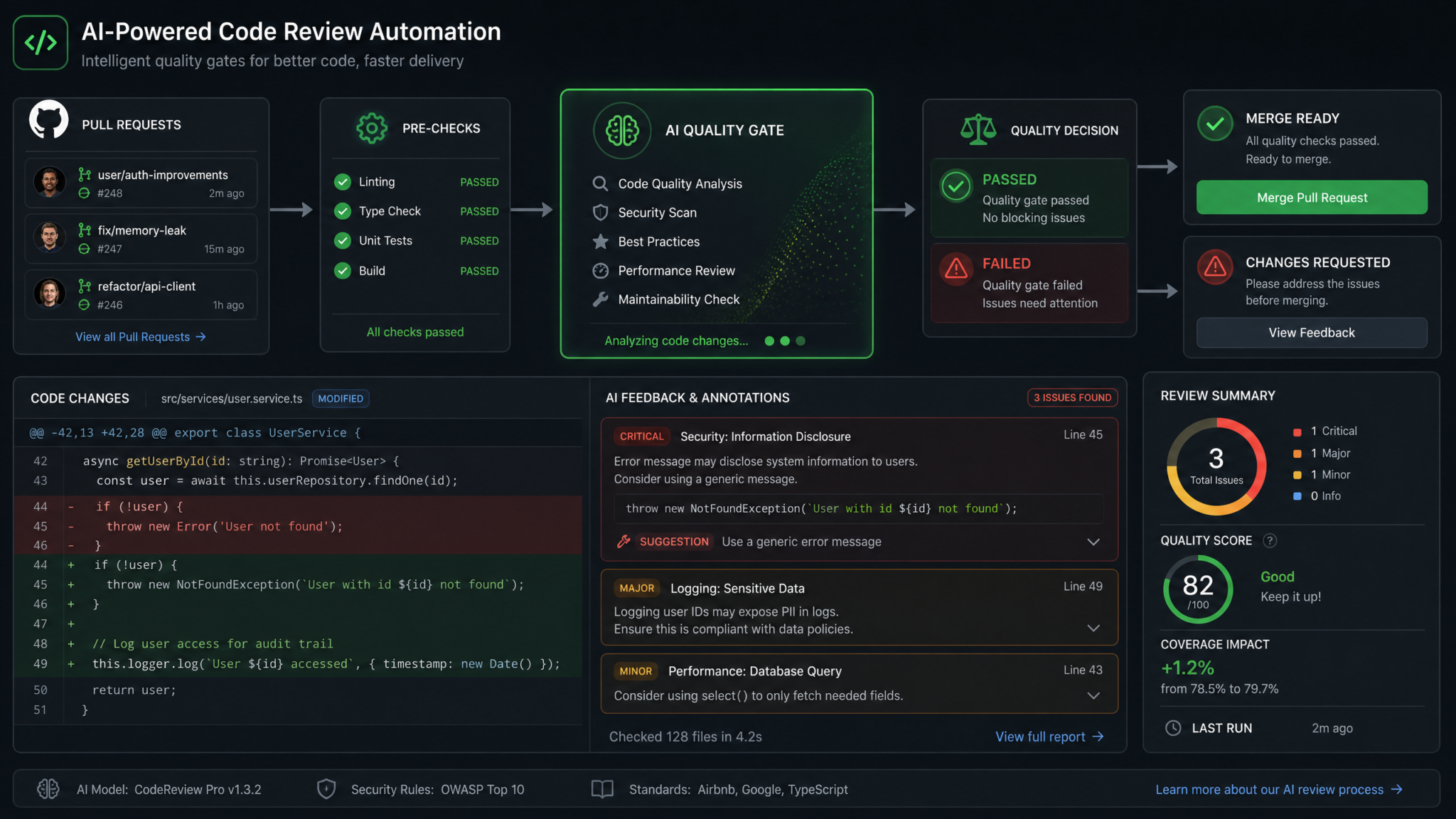
The Codex Guardian Automated Code Review Playbook
This playbook is a comprehensive, end-to-end guide to deploying, configuring, and scaling Codex Guardian for automated pull request (PR) reviews across repositories and teams. It is written for engineering leaders, DevOps professionals, and senior developers who expect automation to be rigorous, configurable, and reliable. You will learn how Codex Guardian evaluates code changes, how to set it up for immediate value, and how to tune it so that it enforces your organization’s standards without blocking productive development.
Codex Guardian is the automated PR review system built into Codex. It analyzes code changes as they are proposed, surfaces risks and opportunities for improvement, and posts precise, actionable feedback directly on your PRs. It can be configured to embody different review styles and quality standards, from strict, pre-merge quality gates to advisory-only suggestions. Its latest updates include improved automatic review behavior with clearer instructions and a focused tool set, delivering fewer false positives and more consistent review outcomes.
Guardian is fast. In large repositories, it can leverage the /review branch picker, which is specifically optimized to be faster and more reliable than default branch discovery. With the /review approach, Guardian accesses just the slices of history and file diffs it needs, minimizing network overhead and avoiding pathological performance cases that can plague monorepos and high-churn projects.
This playbook also documents a notable operational event in Guardian’s evolution: a prompting regression introduced in version 0.144.1 was quickly identified and rolled back in 0.144.2. If you noticed erratic review behavior around that window, upgrading to 0.144.2 or later restores stable, high-quality performance.
What follows is a pragmatic blueprint you can pick up today: how to set up Guardian in a repo, ten production-ready prompts to address the most common and impactful review categories, guidance for integrating with CI/CD, and a defensible approach for reducing false positives while earning trust from developers and stakeholders.
For a deeper exploration of this topic, our comprehensive article on The Real Cost of AI Coding Agents in 2026 — Codex, Claude Code, Cursor, and GitHub Copilot Compared provides detailed analysis, practical examples, and implementation strategies that complement the concepts discussed in this section.
What Is Codex Guardian
Codex Guardian is the built-in automated PR review engine in Codex that evaluates proposed changes at the level of their diff, surrounding context, and repository metadata. It posts comments, creates summaries, and (optionally) sets status checks according to configurable policies. It specializes in focused, incremental analysis: rather than combing your entire codebase indiscriminately, Guardian concentrates on what changed and what those changes imply for security, performance, maintainability, correctness, and compliance.
Guardian’s architecture balances deterministic rules with intelligent reasoning. Rules codify the non-negotiable requirements (e.g., “No secrets in code,” “No unpinned production dependencies,” “No new public endpoints without schema updates”). Intelligent reasoning handles the non-linear and ambiguous cases (e.g., “Could this retry logic cause request storms?” “Is this migration safe under partial deployment?”) by using review prompts that embed clear evaluation criteria and tool instructions. The result is fast, consistent, context-sensitive feedback that scales with your team.
A major evolution in Guardian’s behavior arrived with improved automatic review instructions and a more focused tool set. Instead of attempting broad, unfocused assessments that increase noise, Guardian now operates with targeted tools (diff scanner, repository file fetch, dependency manifest reader, and optional artifact ingestion such as coverage summaries). Clearer instructions reduce the risk of hallucinations or irrelevant advice, leading to tighter signal-to-noise and developer trust.
Version Note: Prompting Regression in 0.144.1 and Rollback in 0.144.2
Between versions 0.144.1 and 0.144.2, Guardian experienced a prompting regression that affected review specificity and comment placement. This regression was promptly rolled back in version 0.144.2, restoring consistent behavior. If you run managed or self-hosted Codex instances, ensure your Guardian service or runners are updated to 0.144.2 or later to benefit from the corrected prompts and improved instruction clarity.
Performance on Large Repositories
Large repositories pose unique challenges: deep history, wide diffs, and heavy CI compute. Guardian’s /review branch picker is designed to be faster and more reliable in large repositories. Rather than enumerating all references or scanning the entire history to determine merge bases, the /review picker uses an optimized reference that maps cleanly to the proposed changes and their target branch. This reduces fetch operations, avoids edge cases in forked workflows, and improves caching effectiveness.
| Branch Discovery Method | How It Works | Pros | Cons | Recommended Use |
|---|---|---|---|---|
| Default Branch Discovery | Enumerates refs and infers merge base from remote HEADs. | Simple; works for small repos. | Slower and error-prone in large repos and forks; more network traffic. | Smaller repos, low concurrency projects. |
| /review Branch Picker | Uses an optimized, purpose-built reference path for PR diffs and target mapping. | Faster, more reliable; reduces fetch scope; better caching. | Requires Codex Guardian support (built-in); may need minor CI config changes. | Monorepos, high-churn projects, forks, and large CI matrices. |
Regardless of size, Guardian focuses on what changed and who will be impacted, which makes it a natural fit for incrementally enforced quality gates. You can ratchet standards upward as teams adapt, turning advisory guidance into hard gates only when you see stable compliance.
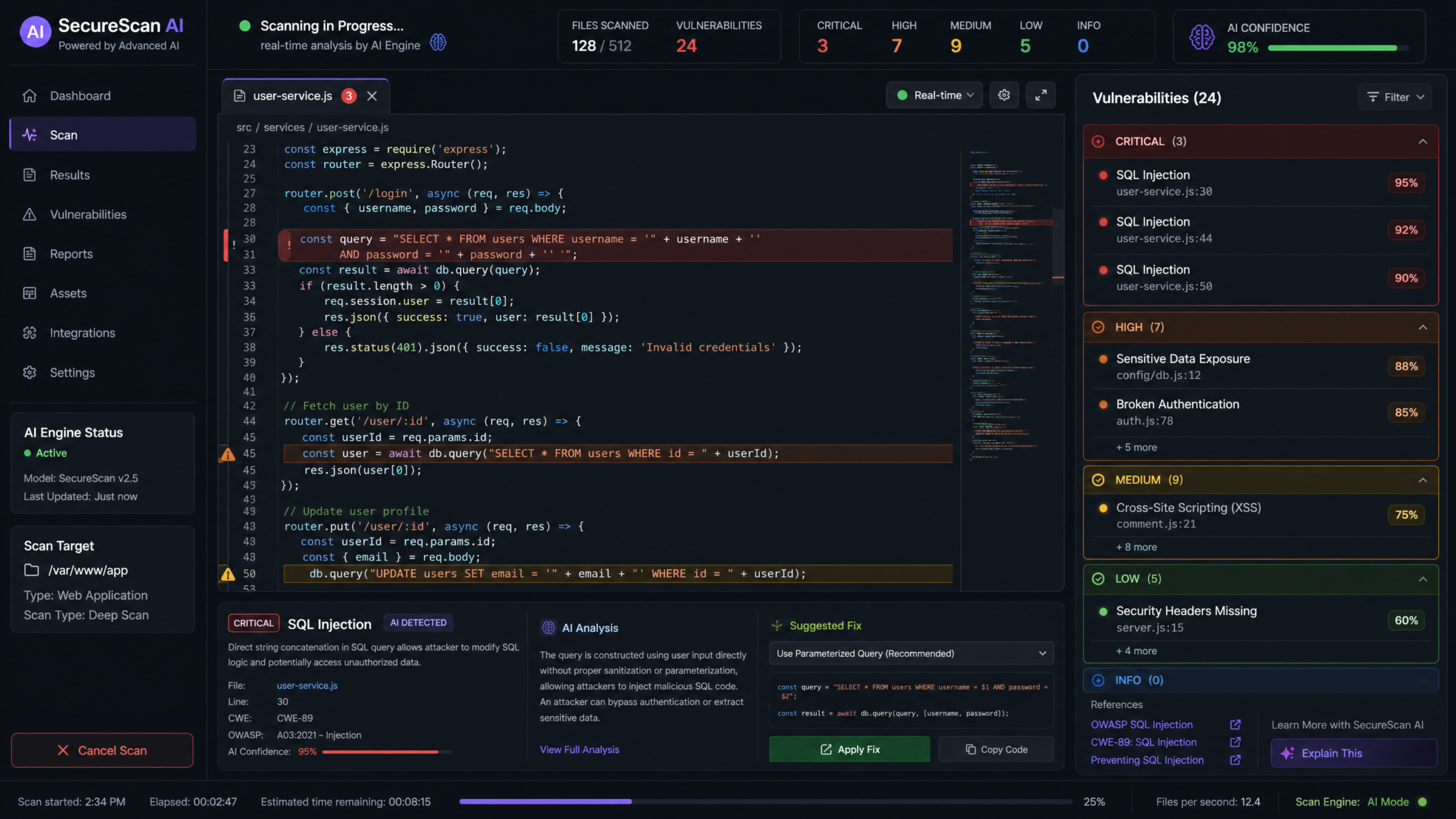
Setting Up Guardian for Your Repo
This section walks through a production-grade setup that works across GitHub, GitLab, and Bitbucket. Even if you start small, aim to configure Guardian consistently so that you can scale and audit behavior later.
Prerequisites
- Repository access for Codex (app installation or OAuth bot user with read PRs, read repo metadata, comment on PRs, set statuses if desired).
- CI/CD access for your preferred platform if you plan to integrate checks as gates (optional but recommended).
- Admin rights to configure repository or organization settings and branch protection rules.
Enable Guardian on Pull Requests
- Install or enable Codex for your organization or repository.
- In Codex settings, enable Codex Guardian for automated PR reviews.
- Grant minimal necessary permissions for PR read, write comments, and set status checks if using quality gates.
- Select the default review trigger: on PR open, synchronize (push to PR), and ready-for-review transitions. Ensure re-run is permitted via a PR comment command or CI rerun.
Optimized Branch Selection
For large repositories or forks, switch to the /review branch picker. This reduces the fetch and diff computation overhead that slows or occasionally destabilizes review runs.
# codex-guardian.yml (repository-level configuration)
review:
  branch_picker: "/review"   # Faster and more reliable for large repos
  trigger_events:
    - pull_request:opened
    - pull_request:synchronize
    - pull_request:ready_for_review
  comment_mode: "inline+summary"  # Inline comments for file-specific feedback, plus a summary report
  status_check: "guardian/checks" # Optional: status name to publish as a check
Use the /review picker if you experience slow review starts, inconsistent merge base detection, or if your organization relies heavily on forks and frequent rebases.
Repository-Level Configuration
Guardian can be tuned per repository with a config file (e.g., codex-guardian.yml) at the root of the repository. This file describes review styles, prompts to enable, severity thresholds, and CI integration behavior. Start with a minimal config, then add prompts and quality gates over time.
# codex-guardian.yml
review:
  branch_picker: "/review"
  style: "constructive-strict"   # Options: "advisory", "constructive", "constructive-strict", "audit"
  languages:
    include: ["js", "ts", "py", "go", "rb", "java", "cs"]
    exclude: ["md", "txt"]       # Guardian still reviews documentation if doc prompts enabled
  scopes:
    - security
    - performance
    - style
    - docs
    - tests
    - dependencies
    - breaking_changes
    - api_contracts
    - error_handling
    - accessibility
  severity_threshold: "moderate" # "low", "moderate", "high", "critical"
  comment_mode: "inline+summary"
  post_summary_as: "pr_comment"  # or "check_run"
  stop_on_first_critical: false

prompts:
  security_vulnerabilities:
    enabled: true
    severity: "high"
  performance_regressions:
    enabled: true
    severity: "moderate"
  code_style:
    enabled: true
    severity: "low"
  documentation_completeness:
    enabled: true
    severity: "low"
  test_coverage:
    enabled: true
    severity: "moderate"
  dependency_audit:
    enabled: true
    severity: "high"
  breaking_change_detection:
    enabled: true
    severity: "high"
  api_contract_validation:
    enabled: true
    severity: "high"
  error_handling_review:
    enabled: true
    severity: "moderate"
  accessibility_compliance:
    enabled: true
    severity: "moderate"

quality_gates:
  require_status_check: true
  fail_on:
    - severity_at_or_above: "high"
    - missing_tests_for_changed_public_functions: true
    - new_dependency_with_known_cve: true
  allow_overrides:
    approvers: ["security-leads", "platform-leads"]
    via: "pull_request_label:guardian-override"
The style field configures the tone and strictness of Guardian’s comments and the aggressiveness of its findings consolidation. For example, “constructive-strict” emphasizes exact repro steps and references to changed lines, while “advisory” may pool lower-risk findings into the summary only.
Permissions and Secrets
- Allow Guardian to read repository files beyond the diff when needed (e.g., to parse package manifests, test coverage reports).
- If you use private package registries or SBOM data, provide read tokens via CI secrets with least privilege, surfaced to Guardian only during review runs.
- Guard against secret leakage: use masked logs and ensure Guardian never posts secrets by enabling secret redaction in comment output.
Triggering Reviews Automatically
Guardian runs automatically when PRs open or update if enabled in the repository or organization settings. As a fallback or manual trigger, team members can issue a /review comment on the PR, which prompts Guardian to re-run using the configured branch picker and prompts. This is helpful after amending commits, rebasing, or applying quick fixes in response to review feedback.
For a deeper exploration of this topic, our comprehensive article on The Codex Desktop Integration Playbook — 10 Prompts for Multi-Repo Projects, PR Review, and Inline Code Editing provides detailed analysis, practical examples, and implementation strategies that complement the concepts discussed in this section.
Prompt 1: Security Vulnerability Scanning
Security is the highest-leverage review category to automate. This prompt asks Guardian to detect newly introduced vulnerabilities, insecure coding patterns, secrets, and misconfigurations, using the diff and relevant context. It is intentionally conservative about false negatives and provides actionable remediation steps.
Full Prompt
Task: Security vulnerability scanning for this pull request.
Context:
- Analyze only what changed and the minimal surrounding code needed for accurate assessment.
- Use repository files as needed to verify dependency versions, configuration, and build scripts.
- Prioritize issues introduced or worsened by this PR. Do not restate pre-existing issues unless the change magnifies their risk.
- Avoid speculative findings; each issue must cite specific lines and explain exploitability or risk.
Checks:
1) Insecure data handling:
   - SQL/NoSQL injection vectors, command execution, path traversal, XSS, CSRF.
   - Unsafe deserialization, SSRF, open redirects, directory listing.
2) Authentication/authorization:
   - Bypasses, missing checks on new endpoints or handlers.
   - Token/session handling, insecure cookie or header changes.
3) Cryptography:
   - Weak algorithms, hardcoded keys/secrets, improper random number generation.
4) Secrets and configs:
   - Credentials, tokens, API keys, certificates in code or config (including tests).
   - Leaky logs and error messages exposing sensitive data.
5) Dependency risks:
   - New dependencies or version bumps with known CVEs.
   - Unpinned or overly broad version ranges in production paths.
6) Infrastructure and container:
   - Dockerfile/security context regressions, insecure default ports, world-writable dirs.
Output:
- Inline findings with:
  - Title, severity (Low/Moderate/High/Critical), file:line references, and minimal PoC or reasoning.
  - Clear remediation guidance and safer alternatives.
- A summary at the end listing issues by severity and a short “What to fix before merge” checklist.
Tone/style:
- Precise and constructive; avoid alarmism; prefer least-privilege solutions.
Tools:
- Diff reader, file fetcher, manifest/lockfile parser.
Explanation
This prompt directs Guardian to focus on concrete security risks introduced by the PR. It emphasizes precise citations, exploitability reasoning, and remediation guidance, not broad theoretical advice. The instruction to avoid restating pre-existing issues reduces noise for legacy codebases, while still surfacing when a change increases previously known risk. It includes dependency intelligence by parsing manifests and lockfiles, and it covers both application-level and infrastructure-level concerns (e.g., Dockerfiles).
Expected Output
- Inline comments that flag specific lines where vulnerabilities may be introduced, each with a severity and a brief proof of concept or justification.
- A concise summary comment at the end of the review that lists issues grouped by severity and calls out immediate blockers if quality gates require them.
- If enabled, a failing Guardian status check when any High or Critical issue is found, per your quality gate configuration.
Customization Tips
- Scope: If your repo contains only frontend code, disable certain server-side checks to reduce noise.
- Dependencies: Provide a private advisory feed or SBOM if you have it; Guardian can consult it for richer CVE context.
- Severity: Ratchet initial enforcement to Moderate+ only after your team demonstrates consistent compliance, then increase to High if false positives are low.
Prompt 2: Performance Regression Detection
Performance regressions are subtle and expensive. This prompt asks Guardian to detect code and configuration changes that plausibly increase latency, memory usage, CPU consumption, I/O waits, or hot path allocations, with concrete reasoning.
Full Prompt
Task: Performance regression detection for this pull request.
Context:
- Focus on changes in hot paths (request handlers, core loops, DB access, serialization).
- Consider algorithmic complexity, new allocations, synchronization, I/O patterns, and caching.
- Examine configuration changes that affect runtime (timeouts, pool sizes, logging verbosity).
Checks:
1) Algorithmic complexity increases (e.g., O(n) → O(n^2)).
2) Additional synchronous I/O in latency-sensitive paths (DB, network, disk).
3) Regressions in caching (removed cache, reduced TTL, cache stampede risks).
4) Data structure changes that increase memory or GC churn.
5) Logging changes that increase volume in production paths.
6) Concurrency changes introducing contention or deadlocks.
7) Frontend performance: heavy bundles, layout thrashing, unthrottled events.
Artifacts:
- If a benchmark or profile report is present in the diff or artifacts, compare before/after metrics.
Output:
- Inline comments with: metric or complexity reasoning, file:line, expected impact, and suggested mitigation.
- Summary with a short list of recommended tests/benchmarks to run.
Tone/style:
- Evidence-driven; if uncertainty is high, mark as “advisory” and suggest a quick measurement.
Tools:
- Diff reader, file fetcher, optional artifact reader (benchmarks, profiles).
Explanation
The prompt prioritizes objective criteria first (algorithmic complexity, additional I/O, heavier bundles) and only then explores more speculative risks, which it should mark as advisory. It encourages Guardian to reference benchmarks or profiling data if available and to recommend lightweight experiments when appropriate, such as adding a micro-benchmark for a hot function or enabling a sampling profiler.
Expected Output
- Inline comments highlighting specific code lines or configuration parameters with predicted performance impact, each tied to an explanation.
- Advisory notices for risk areas lacking immediate data but worth measuring, clearly labeled as such to avoid confusion with hard blockers.
- A summary comment that groups findings and proposes specific measurements (e.g., run an existing benchmark suite, capture p95 latency in staging).
Customization Tips
- Define hot path files or directories in config so Guardian prioritizes them.
- Provide a small set of known performance SLOs (e.g., “p95 checkout latency < 300ms”) to focus comments on what matters for your domain.
- Ignore logging behavior in non-production builds by whitelisting dev/test paths.
Prompt 3: Code Style Enforcement
Consistent style makes code easier to review and maintain. This prompt ensures Guardian enforces your style rules while avoiding duplicate work with linters—Guardian should focus on style issues not already covered by automated linters or formatter tools.
Full Prompt
Task: Code style enforcement without duplicating linter output.
Context:
- Respect existing formatters/linters (e.g., Prettier, ESLint, Black, gofmt). Do not restate issues they will already surface.
- Enforce higher-level style conventions: naming, module boundaries, comments, public API docstrings, test naming, file organization.
Checks:
1) Public functions/classes must include docstrings/comments per repo convention.
2) Names: avoid abbreviations in public APIs; consistent casing per language norms.
3) Module boundaries: no cross-layer imports (e.g., UI importing infra) unless explicitly allowed.
4) Test naming and structure: test file colocations, deterministic tests.
5) Avoid anti-patterns: large functions > X lines, excessive parameters > Y, cyclomatic complexity beyond policy.
6) Consistent error messages and logging formats.
Output:
- Inline comments for style deviations with references to the exact convention (link or citation).
- Summary with a checklist and sample diffs for refactoring when helpful.
Tone/style:
- Educational and constructive; prefer a single consolidated comment for repeated patterns.
Tools:
- Diff reader, file fetcher (style guide, CONTRIBUTING.md).
Explanation
Rather than duplicating linter warnings, this prompt directs Guardian to higher-order style conventions that linters typically miss. Referencing CONTRIBUTING.md or a style guide in the repo lets Guardian cite the precise rule and avoids subjective debates. Consolidation reduces comment fatigue: if the same issue appears many times, Guardian summarizes and offers a code snippet that demonstrates the proper pattern.
Expected Output
- Inline comments on public API docstring omissions and cross-layer import violations, each with a reference to a style rule.
- A short refactor proposal when functions exceed threshold complexity or size, with examples.
- Summary notes that consolidate repetitive issues and point to the style guide section.
Customization Tips
- Set complexity and size thresholds (X, Y) in the repo config to match your codebase.
- Define allowed cross-layer import exceptions in a whitelist.
- If your linter already handles a convention, list it so Guardian omits that category.
Prompt 4: Documentation Completeness
Documentation accelerates onboarding and reduces maintenance cost. This prompt ensures code changes are accompanied by updates to docs where needed and that public-facing behaviors are documented.
Full Prompt
Task: Documentation completeness check for this pull request.
Context:
- Focus on changed public interfaces, configuration flags, CLI commands, endpoints, data models, and migrations.
- Verify docs are updated: README, docs/, inline docstrings, changelogs, migration guides.
- For UI changes, ensure user-visible behavior is documented in release notes or UI guide.
Checks:
1) New/changed public APIs must have docstrings and reference documentation.
2) Configuration changes require docs and defaults explanation.
3) Migrations must include rollback and operational notes.
4) CLI commands: help text and examples updated.
5) Changelog entries for user-visible changes.
6) Ensure code samples compile/run if trivial to verify.
Output:
- Inline comments citing missing or outdated docs with precise pointers.
- Summary with a “docs delta” checklist (what changed vs. what documentation changed).
Tone/style:
- Supportive and pragmatic: if docs are intentionally deferred, suggest a follow-up task with scope.
Tools:
- Diff reader, file fetcher (docs/, README, CHANGELOG, MIGRATIONS).
Explanation
This prompt triangulates between code-level changes and their doc obligations. The “docs delta” checklist encourages consistent habits without derailing urgent bug fixes. If the team defers docs intentionally, Guardian recommends a scoped follow-up ticket so that deferred documentation remains traceable.
Expected Output
- Inline comments on missing docstrings for newly exported functions or classes, or missing updates to docs files.
- Summary with a concise mapping from changed interfaces to required documentation updates.
- Optional reminder to update release notes for UI-visible changes or endpoints.
Customization Tips
- Specify directories or files where canonical docs live so Guardian can verify updates.
- Provide your changelog format (e.g., Keep a Changelog) so Guardian checks headings and versions.
- Set deferral policy: allow merge with a “docs-followup” label if the PR is urgent, while creating a task.
Prompt 5: Test Coverage Analysis
Automated review of test coverage ensures changes are validated and that risky paths aren’t merged untested. This prompt focuses on validating that new or modified logic has corresponding test updates and that coverage trends do not regress.
Full Prompt
Task: Test coverage analysis for this pull request.
Context:
- Identify changed public functions, critical paths, and bug fixes.
- Look for associated unit/integration tests modifying or adding assertions relevant to the change.
- If coverage reports are available (e.g., lcov, Cobertura, JaCoCo), check before/after coverage for affected files.
Checks:
1) New/changed public functions have test cases.
2) Bug fixes include a regression test.
3) High-risk changes (security-critical, concurrency, migrations) have integration/contract tests.
4) Coverage on touched files should not regress beyond policy threshold.
5) Flaky tests introduced (heuristic: nondeterministic dependencies or timers without controls).
Output:
- Inline comments citing missing or insufficient tests, with suggested test cases or example snippets.
- Summary coverage delta and risk assessment with a “must add tests before merge” list if policy requires.
Tone/style:
- Specific and helpful; propose concrete test names and assertions.
Tools:
- Diff reader, file fetcher (tests/, coverage reports).
Explanation
Guardian should only focus on tests relevant to the changes and gauge risk using heuristics (e.g., a public function that handles authentication deserves high scrutiny). If coverage artifacts are present, Guardian consults them; otherwise, it infers risk from the code and test layout. Suggestions should be practical, providing exact test names and minimal assertion examples to speed developer action.
Expected Output
- Inline comments where a changed public function lacks a companion test or a bug fix lacks a regression test.
- A coverage delta in the summary and a callout if thresholds are violated.
- Examples of test stubs or assertions developers can copy-paste with minimal editing.
Customization Tips
- Define “public” in your repo (e.g., anything exported, or anything under api/).
- Set per-language coverage thresholds, allowing tighter thresholds in core libraries and looser in experimental modules.
- Whitelist known-flaky directories so Guardian doesn’t block merges during stabilization windows.
Prompt 6: Dependency Audit
Dependencies are both leverage and risk. This prompt ensures Guardian audits dependency changes, flags known vulnerabilities, and enforces pinning and license policies.
Full Prompt
Task: Dependency audit for this pull request.
Context:
- Parse dependency manifests and lockfiles (e.g., package.json/yarn.lock, requirements*.txt/pipfile.lock, go.mod/sum, pom.xml, Gemfile.lock).
- Focus on new dependencies or version changes introduced by this PR.
- Apply organization policy: pin production dependencies, disallow certain licenses, avoid end-of-life libraries.
Checks:
1) New dependency with known CVE or advisories.
2) Unpinned or overly broad version specifiers in production paths.
3) License policy violations or unapproved licenses.
4) Replacing a well-supported library with a less maintained alternative.
5) Introduced transitive dependencies with critical vulnerabilities (if lockfiles available).
6) Mismatch between manifest and lockfile.
Output:
- Inline comments on manifest lines, citing CVEs, license conflicts, and pinning recommendations.
- Summary with risk matrix (new deps, bumped deps, transitive risks) and suggested alternatives where possible.
Tone/style:
- Evidence-based; reference advisories and maintenance signals (stars, last release).
Tools:
- Diff reader, manifest/lockfile parser, advisory feed (if configured).
Explanation
This prompt aligns with standard security and compliance practices: pinning versions, avoiding risky or unmaintained packages, and spotting transitive vulnerabilities. When Guardian has access to advisory feeds, it calls out CVEs with links or identifiers; otherwise, it flags risks and recommends pinning and a follow-up audit.
Expected Output
- Inline comments on the exact lines where dependencies are added or changed, including clear references to CVEs and license issues.
- A summary report that classifies dependency changes by impact and proposes safer alternatives if needed.
- Failing status checks if the quality gate forbids merging dependencies with known critical issues.
Customization Tips
- Integrate a private advisory service or SBOM to enrich Guardian’s dependency knowledge.
- Define your allowed license list and policy exceptions in the repo config.
- Set different pinning policies for devDependencies vs. production dependencies.
Prompt 7: Breaking Change Detection
Breaking changes destabilize consumers and downstream services. Guardian should detect API surface changes that can break builds or behavior and require explicit callouts, migration guides, or major version bumps when warranted.
Full Prompt
Task: Breaking change detection for this pull request.
Context:
- Identify changes to public APIs, schemas, database migrations, CLIs, and config flags.
- Compare signatures, field names/types/requiredness, default values, and error behavior.
- Consider semver and deprecation policies in this repository.
Checks:
1) Renamed/removed public symbols or parameters without deprecation.
2) Changed data types or required fields in JSON/GraphQL/OpenAPI schemas.
3) Behavior changes in return values or error codes.
4) DB migrations that are not backward compatible under rolling deploys.
5) CLI/config flags with changed defaults or semantics without migration notes.
6) Protobuf/thrift/Avro schemas with non-backward compatible evolution.
Output:
- Inline comments that explain the breaking surface area, who is impacted, and the required mitigation (deprecation, adapter, major version bump).
- Summary with a compatibility table and action items (docs, migration guide, release notes).
Tone/style:
- Conservative: treat uncertainty as potential breakage and ask for confirmation or explicit non-breaking reasoning.
Tools:
- Diff reader, file fetcher (API schemas, migration files, CHANGELOG).
Explanation
Guardian applies a compatibility-first mindset. Even small changes—like making a previously optional field required—can break consumers. Inline comments should point precisely to signatures or schema diffs and propose remedies, such as deprecating old names or adding backward-compatible adapters. The summary encourages writing or updating migration notes before merging.
Expected Output
- Inline comments on function signatures, schema files, and migrations that introduce incompatibilities, with suggestions for deprecation windows or adapters.
- A summary compatibility table that briefly lists changed symbols and their impact level.
- Gate failures if your quality policy disallows unannounced breaking changes in minor or patch releases.
Customization Tips
- Provide a deprecation policy file so Guardian can cite precise timeframes and versioning rules.
- List the directories or files that define your public API surface to reduce noise.
- Teach Guardian about your release channels (e.g., experimental vs. stable modules).
Prompt 8: API Contract Validation
API contracts are promises to consumers. This prompt validates that endpoint changes align with declared contracts (OpenAPI/Swagger, GraphQL SDL, gRPC/protobuf) and that tests and examples reflect the updated contracts.
Full Prompt
Task: API contract validation for this pull request.
Context:
- Detect changes to REST endpoints, GraphQL operations, RPC services, and associated schemas.
- Cross-check code changes against OpenAPI/Swagger files, GraphQL SDL, or protobuf/IDL files.
- Verify examples, client SDKs, and contract tests are updated.
Checks:
1) New/changed endpoints must update schemas and examples.
2) Parameter, status code, or error object changes reflected in contracts and docs.
3) GraphQL: type and field additions/removals align with schema evolution rules.
4) Protobuf: field numbers stable; reserved numbers respected; backward compatibility preserved if required.
5) Contract tests updated or added to cover new/changed behavior.
Output:
- Inline comments highlighting mismatches between code and contract schemas with exact diffs.
- Summary with a checklist: schemas updated, examples validated, tests aligned, SDKs regenerated if applicable.
Tone/style:
- Contract-first: if code diverges from schema, suggest aligning code or schema before merge.
Tools:
- Diff reader, file fetcher (OpenAPI files, SDL, proto files), optional artifact reader (contract tests).
Explanation
The prompt encourages a contract-first discipline and precise alignment between implementation and declaration. Guardian should check examples and client SDK regeneration triggers when necessary. It focuses on concrete mismatches and avoids generalized advice.
Expected Output
- Inline comments on endpoints or schema blocks where mismatches exist, with clear directives (e.g., “Update OpenAPI: response 201 now includes field X”).
- A summary checklist that ensures developers align implementation and contracts, including test updates.
- Optional failure of the status check when contract mismatches exceed severity thresholds.
Customization Tips
- Point Guardian to the canonical contract files and client SDK generation scripts.
- Define your contract evolution rules (e.g., GraphQL field removals require deprecation first).
- Integrate contract tests into CI so Guardian can reference their outcomes.
Prompt 9: Error Handling Review
Proper error handling prevents outages and improves debuggability. This prompt reviews how code handles failures, resources, retries, and logging, with attention to user impact and operational visibility.
Full Prompt
Task: Error handling and resilience review for this pull request.
Context:
- Inspect try/catch or equivalent constructs, error returns, retries, timeouts, and resource management.
- Consider user and operator experience: helpful error messages, structured logs, correlation IDs.
- Watch for partial failure handling in distributed systems.
Checks:
1) Missing or overly broad catch/except; swallowed errors without logging or propagation.
2) Retries without backoff/jitter or without idempotency checks.
3) Timeouts absent or too high in external calls.
4) Resource leaks (files, sockets, transactions) on error paths.
5) Misleading or sensitive error messages; lack of structured logging fields.
6) Inconsistent error types or status codes.
7) Frontend: user-visible errors without accessible messaging or retry guidance.
Output:
- Inline comments proposing specific changes (add timeout, wrap error with context, structured logging fields).
- Summary with a resilience checklist (timeouts set, retries safe, errors contextualized, resources closed).
Tone/style:
- Operationally grounded: recommend minimal, high-impact fixes first.
Tools:
- Diff reader, file fetcher (logging/error utils).
Explanation
Guardian evaluates error handling from both developer and operator perspectives. The goal is to ensure failures are visible, actionable, and controlled, and that they do not leak sensitive data. For client code, Guardian ensures user-visible errors are informative without overwhelming users or breaking accessibility expectations.
Expected Output
- Inline comments replacing blanket catches with precise handling, adding structured context, and ensuring resources close correctly under failure.
- A summary resilience checklist that teams can standardize across services.
- Optional gating on severe omissions like missing timeouts on critical calls.
Customization Tips
- Declare logging fields required by your observability platform (e.g., trace_id, user_id where appropriate).
- Set default timeouts by service type and environment (dev, staging, prod) to guide comments.
- Whitelist benign exceptions common in tests to avoid noisy advice.
Prompt 10: Accessibility Compliance
Accessibility (a11y) ensures inclusive user experiences and often intersects with regulatory requirements. This prompt focuses on web and mobile UI changes, checking for essential a11y standards.
Full Prompt
Task: Accessibility compliance review for this pull request.
Context:
- Focus on changed UI components, pages, and styles.
- Apply WCAG 2.1 AA principles where applicable; prefer practical checks over exhaustive audits.
Checks:
1) Semantic HTML: correct landmarks, headings, lists; ARIA only when necessary.
2) Labels and roles: form controls have visible labels linked to inputs; alt text for images.
3) Keyboard navigation: focus order and visible focus states; no keyboard traps.
4) Color and contrast: text and interactive elements meet contrast ratios.
5) Error messages: announced to screen readers; accessible validation summaries.
6) Dynamic content: ARIA live regions or announcements where needed.
7) Mobile gestures: alternatives for essential interactions.
Artifacts:
- If a11y tests or snapshots included, compare expected roles and labels.
Output:
- Inline comments on specific elements and styles, with minimal fixes or code examples.
- Summary with a prioritized a11y checklist and any blockers that must be fixed pre-merge.
Tone/style:
- Inclusive and practical; default to suggesting small, high-impact improvements first.
Tools:
- Diff reader, file fetcher (component library docs).
Explanation
This prompt balances practicality with compliance. Guardian flags critical issues like missing labels, broken focus management, and low-contrast text, offering small fixes that achieve outsized benefits. It references the component library when appropriate so that improvements align with existing patterns.
Expected Output
- Inline comments mapping exactly which UI elements need improvements, including role and label recommendations.
- A prioritized summary checklist, highlighting any blockers to merge if your policy enforces accessibility pre-merge.
- Optional advisory-only mode in early adoption phases.
Customization Tips
- Teach Guardian your component library’s a11y primitives (e.g., accessible Modal, Button) to reduce duplicate guidance.
- Integrate automated a11y tests in CI and allow Guardian to reference their results.
- Specify target WCAG level and exceptions relevant to your product domain.
Configuring Quality Gates
Quality gates translate review findings into merge decisions. They create predictable, enforceable standards that still allow pragmatic exceptions. The key is to start with advisory gates, gradually ratchet strictness, and create transparent override pathways.
Defining Severity and Policies
| Severity | Definition | Default Gate Behavior | Example Triggers |
|---|---|---|---|
| Low | Minor style or documentation nits with minimal risk. | Advisory only; never blocks. | Docstring missing; variable naming suggestion. |
| Moderate | Meaningful improvements but not immediate risk. | Warn by default; can block in “audit” style. | Missing timeout on a non-critical call; small performance regression suggestion. |
| High | Significant risk or policy violations likely to impact users or stability. | Blocks merge unless explicitly overridden by approvers. | New dependency with known CVE; breaking API change without deprecation. |
| Critical | Immediate, severe risk to security, data integrity, or production stability. | Always blocks; override requires explicit leadership approval and incident rationale. | Leaked secrets; removal of auth checks; destructive migration under rolling deploy. |
Configuring Gates in codex-guardian.yml
quality_gates:
  require_status_check: true
  severity_gate: "high"  # block on High and Critical
  additional_rules:
    - name: "Coverage on touched files"
      condition: "coverage_delta < -2%"    # allow small regressions, block large ones
      severity: "moderate"
    - name: "Contract mismatch"
      condition: "api_contract_mismatch == true"
      severity: "high"
  allow_overrides:
    approvers:
      - "backend-leads"
      - "security-leads"
    via: "pull_request_label:guardian-override"
    audit_log: true
Keep overrides auditable. Overrides should require a PR label or a comment command that Guardian logs to an audit trail, citing the approver’s team and reason. Periodically review override trends to identify friction points and refine prompts or policies.
Mapping to Branch Protection Rules
- Enable “Require status checks to pass before merging” in your repository settings and add Guardian’s status name to the required list.
- In multi-branch workflows, use looser gates on feature branches and stricter gates on release branches where stability is paramount.
- Align code owner reviews with Guardian’s high-severity areas (e.g., SECURITY.md owners must review when Guardian finds High security issues).
Progressive Hardening Strategy
- Phase 1: Advisory. Enable Guardian with inline comments and a non-blocking check. Gather metrics on false positives.
- Phase 2: Moderate Gates. Start blocking on Critical and High issues only, with clear override paths.
- Phase 3: Strict Gates. Introduce coverage delta thresholds, contract enforcement, and performance budgets as blockers on release branches.
- Phase 4: Continuous Improvement. Periodically revisit gates and prompts to address noise and blind spots.
Integrating with CI/CD Pipelines
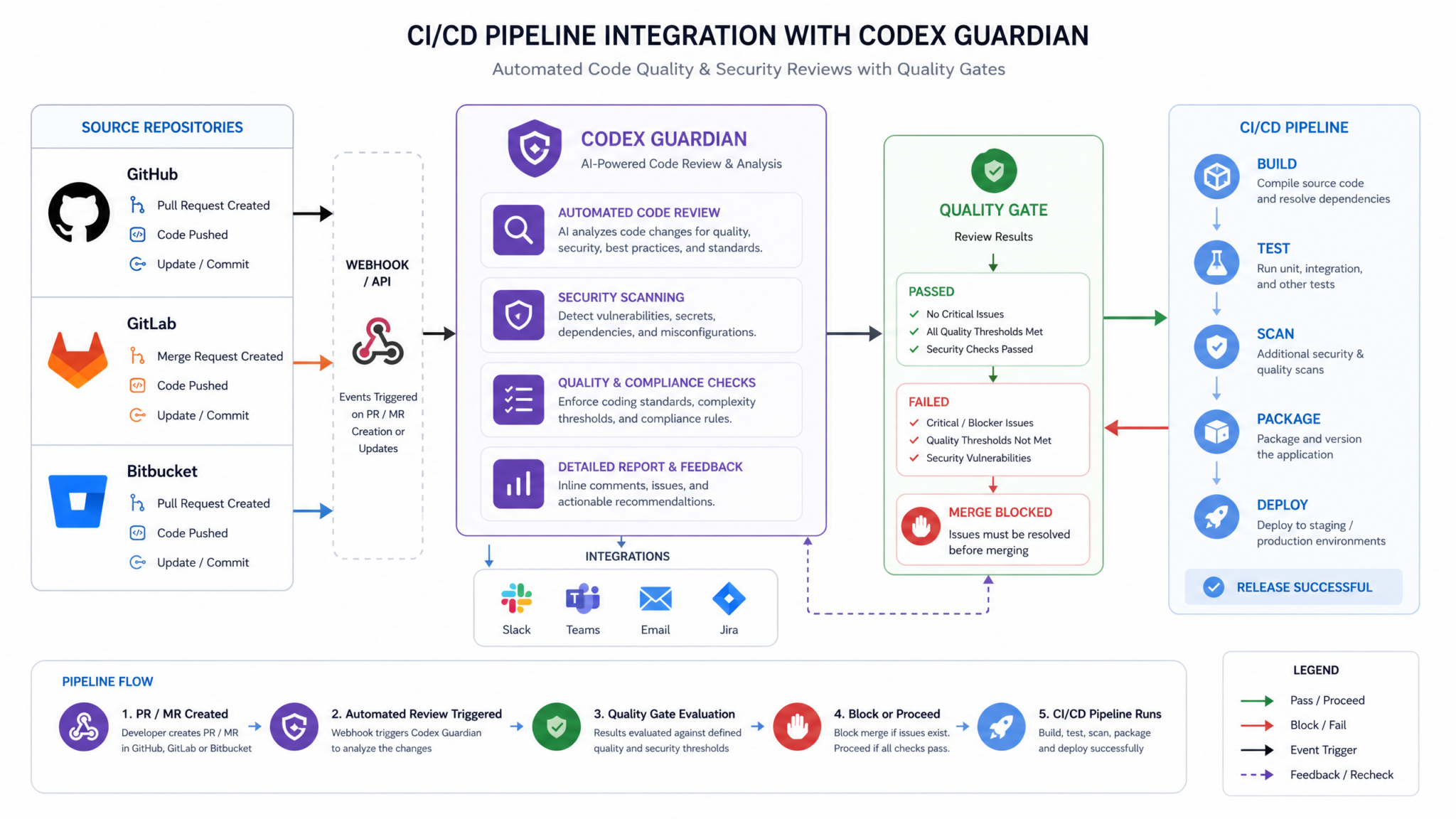
Guardian is designed to run directly in response to PR events, but coupling it with CI/CD yields stronger enforcement, richer context, and consistent status reporting. Below are integration patterns for popular platforms. Adjust naming and paths to align with your environment.
GitHub Actions
name: Codex Guardian Review
on:
  pull_request:
    types: [opened, synchronize, ready_for_review]
jobs:
  guardian:
    permissions:
      contents: read
      pull-requests: write
      checks: write
    runs-on: ubuntu-latest
    steps:
      - name: Checkout (shallow)
        uses: actions/checkout@v4
        with:
          fetch-depth: 2
      - name: Setup Codex Guardian
        uses: codex/guardian-setup@v1
      - name: Run Guardian with /review picker
        run: |
          codex-guardian review \
            --branch-picker "/review" \
            --config ./codex-guardian.yml \
            --pr ${{ github.event.pull_request.number }}
      - name: Publish status check
        if: always()
        run: |
          codex-guardian publish-status \
            --pr ${{ github.event.pull_request.number }} \
            --name "guardian/checks"
Use shallow checkouts to reduce time-to-first-review. The /review branch picker avoids expensive ref resolution in large repos and forked PRs, improving reliability.
GitLab CI/CD
guardian_review:
  stage: test
  image: codex/guardian:latest
  rules:
    - if: '$CI_PIPELINE_SOURCE == "merge_request_event"'
  script:
    - codex-guardian review
        --branch-picker "/review"
        --config ./codex-guardian.yml
        --mr $CI_MERGE_REQUEST_IID
  artifacts:
    reports:
      junit: guardian-report.xml
Guardians’s output can be converted to JUnit-like reports if you want to consume findings in GitLab’s merge request UI in addition to inline comments.
Bitbucket Pipelines
pipelines:
  pull-requests:
    '**':
      - step:
          name: Codex Guardian Review
          image: codex/guardian:latest
          script:
            - codex-guardian review --branch-picker "/review" --config ./codex-guardian.yml --pr $BITBUCKET_PR_ID
Artifacts and Context Enrichment
- Coverage Reports: Upload coverage artifacts and configure Guardian to read them for precise coverage deltas.
- Contract Tests: Run contract tests and allow Guardian to read their summaries when evaluating API contract prompts.
- SBOM/Advisory Feeds: Make these available to Guardian during review to enhance dependency audits.
Caching and Performance
- Enable caching for dependency advisories and schema parsing to reduce repeated computation across close-in-time PRs.
- Use the /review branch picker to minimize ref and diff calculations, critical in monorepos with frequent rebases.
- Limit log verbosity in CI; Guardian’s comments should provide the primary feedback channel.
Handling False Positives
False positives erode trust. With Guardian’s improved automatic review behavior, clearer prompts, and focused tool set, noise is significantly reduced. Still, every codebase has idiosyncrasies. This section provides mechanisms to suppress, retrain, and continuously improve Guardian’s signal.
Common Sources of False Positives
- Ambiguous patterns where the safe and unsafe versions look similar in diffs (e.g., parameterized queries vs. string concatenation in SQL).
- Generated code or vendored dependencies that Guardian misinterprets as changes to your code.
- Legacy areas where best-practice adoption is intentionally delayed.
Suppression Techniques
# codex-guardian.yml
suppressions:
  paths:
    - "vendor/**"
    - "generated/**"
  rules:
    - id: "style.docstring.missing"
      when: "file_matches('**/internal/**')"
    - id: "perf.sync-io"
      when: "commit_message_contains('[perf-allowlist]')"
Use targeted suppressions sparingly and prefer path-based exclusions for generated or third-party code. For contextual suppressions, encode objective conditions (e.g., only when the file is under internal/ or when a special tag is present in the commit message).
Feedback Through Reactions
Encourage developers to react to Guardian comments: thumbs up for helpful, eyes for needs more context, or question mark for unclear advice. Periodically audit these reactions to update prompts—expand detection where reactions are positive, and refine or relax where confusion persists.
Prompt Refinement
Iterate on prompts by narrowing scopes and clarifying acceptance criteria. For example, in the performance prompt, emphasize “production paths only” to avoid comments on debug code. In the security prompt, clarify “do not restate pre-existing issues unless the change increases risk” to reduce noise in legacy systems.
Version Stability and Regression Note
If you experienced unexpectedly noisy or inconsistent behavior in Guardian around version 0.144.1, the root cause was a temporary prompting regression. Upgrading to 0.144.2 or later restores stable performance and reduces false positives through clearer instructions and a focused tool set. Maintain a simple upgrade checklist for Guardian runners or managed instances to ensure you benefit from ongoing improvements.
Access 40,000+ AI Prompts for ChatGPT, Claude & Codex — Free!
Subscribe to get instant access to our complete Notion Prompt Library — the largest curated collection of prompts for ChatGPT, Claude, OpenAI Codex, and other leading AI models. Optimized for real-world workflows across coding, research, content creation, and business.
Team Adoption Strategy
Automation succeeds when people trust it. Rolling out Guardian is not only a technical project but also a change management effort. The practices below help teams embrace Guardian’s feedback and integrate it naturally into their development flow.
Adoption Phases with Clear Milestones
- Pilot: Select 1–2 representative repositories with a range of changes. Run Guardian in advisory mode for 2–4 weeks. Measure comment helpfulness through developer surveys and reaction metrics.
- Expansion: Onboard adjacent repositories. Start enabling moderate quality gates for High and Critical issues. Provide quick reference guides and lunch-and-learns.
- Normalization: Integrate Guardian checks into branch protection. Align CODEOWNERS with Guardian’s high-severity categories to ensure rapid, informed responses.
- Optimization: Analyze false positive patterns, refine prompts, and tune suppressions. Add targeted gates (e.g., contract validation on API repos, a11y on frontend repos).
Developer Experience and Tone
Guardian’s “constructive-strict” style is often a sweet spot: precise, respectful, and actionable. Avoid overwhelming PRs with dozens of nits; consolidate repetitive issues and summarize with examples. Reinforce cultural norms: Guardian comments are suggestions unless they breach a quality gate. Humans own the decision but should explain overrides to keep standards consistent.
Measuring Impact
- Time-to-merge: Should decrease as Guardian catches issues early and reduces back-and-forth.
- Defect escape rate: Track production incidents tied to categories that Guardian reviews (e.g., missing timeouts, dependency CVEs).
- Coverage and documentation deltas: Expect gradual improvement as teams adapt.
Governance and Exceptions
Clearly define who approves overrides for blocked merges and under what conditions. Use labels like guardian-override and require a comment explaining the rationale and risk acceptance. Audit overrides monthly and feed insights back into prompt customization or policy tuning.
Change Enablement Assets
- PR Template Additions: Include a section “Guardian Considerations” prompting authors to note test coverage updates, contract changes, and doc updates.
- Quick Guides: One-page cheatsheets for each prompt area (security, performance, etc.) with the top 5 actionable patterns Guardian flags.
- Office Hours: A rotating schedule where platform or security leads help teams interpret Guardian findings and tune suppressions.
For a deeper exploration of this topic, our comprehensive article on The Codex Desktop Integration Playbook — 10 Prompts for Multi-Repo Projects, PR Review, and Inline Code Editing provides detailed analysis, practical examples, and implementation strategies that complement the concepts discussed in this section.
Operational Best Practices
Beyond prompts, quality gates, and adoption, reliable operation matters. Follow these practices to keep Guardian healthy and predictable.
Version Management
- Pin Guardian to a known-good minor version and plan periodic upgrades with a rollback path. Track release notes for changes to prompts, tools, and performance.
- If you maintain runners, use canary repos to test new versions before broad rollout.
Observability
- Log run durations, diff sizes, finding counts by severity, and status outcomes.
- Alert on unusual spikes in findings or timeouts, often a sign of repository changes or external advisory feeds failing.
- Collect developer reaction metrics on comments to quantify helpfulness and noise.
Security and Privacy
- Redact secrets in logs and in Guardian comments. Ensure Guardian never echoes secret values even when discovered.
- Scope tokens minimally; avoid long-lived tokens. Rotate periodically and monitor access.
Scale Considerations
- For monorepos, shard reviews by path or service ownership. Guardian can post scoped summaries per service directory.
- Use the /review branch picker universally for large, fork-heavy workflows to minimize ref resolution overhead.
- Cache contract schemas and dependency advisories across concurrent PRs.
Putting It All Together: An End-to-End Example
This example demonstrates a practical configuration for a service-oriented repository with backend APIs, a React frontend, and infrastructure as code (IaC). It uses the /review branch picker, several prompts with tuned severities, and CI integration for enforceable gates.
# codex-guardian.yml
review:
  branch_picker: "/review"
  style: "constructive-strict"
  comment_mode: "inline+summary"
  post_summary_as: "check_run"
  severity_threshold: "moderate"

prompts:
  security_vulnerabilities: { enabled: true, severity: "high" }
  performance_regressions:  { enabled: true, severity: "moderate" }
  code_style:               { enabled: true, severity: "low" }
  documentation_completeness: { enabled: true, severity: "low" }
  test_coverage:            { enabled: true, severity: "moderate" }
  dependency_audit:         { enabled: true, severity: "high" }
  breaking_change_detection:{ enabled: true, severity: "high" }
  api_contract_validation:  { enabled: true, severity: "high" }
  error_handling_review:    { enabled: true, severity: "moderate" }
  accessibility_compliance: { enabled: true, severity: "moderate" }

quality_gates:
  require_status_check: true
  severity_gate: "high"
  additional_rules:
    - name: "Coverage regression on changed files"
      condition: "coverage_delta < -1%"
      severity: "moderate"
    - name: "API contract mismatch"
      condition: "api_contract_mismatch == true"
      severity: "high"
  allow_overrides:
    approvers: ["backend-leads", "frontend-leads", "security-leads"]
    via: "pull_request_label:guardian-override"
    audit_log: true

suppressions:
  paths:
    - "frontend/src/__generated__/**"
    - "backend/vendor/**"
And a GitHub Actions workflow integrating Guardian and exposing key artifacts:
name: CI with Guardian
on:
  pull_request:
    types: [opened, synchronize, ready_for_review]
jobs:
  build-and-test:
    runs-on: ubuntu-latest
    steps:
      - uses: actions/checkout@v4
        with: { fetch-depth: 2 }
      - name: Install deps
        run: make install
      - name: Run tests with coverage
        run: make test-coverage
      - name: Upload coverage artifact
        uses: actions/upload-artifact@v4
        with:
          name: coverage
          path: coverage/**
  guardian:
    needs: build-and-test
    runs-on: ubuntu-latest
    permissions:
      contents: read
      pull-requests: write
      checks: write
    steps:
      - uses: actions/checkout@v4
        with: { fetch-depth: 2 }
      - name: Download coverage
        uses: actions/download-artifact@v4
        with:
          name: coverage
          path: coverage
      - name: Setup Codex Guardian
        uses: codex/guardian-setup@v1
      - name: Run Codex Guardian
        run: |
          codex-guardian review \
            --branch-picker "/review" \
            --config ./codex-guardian.yml \
            --artifacts ./coverage \
            --pr ${{ github.event.pull_request.number }}
With this setup, Guardian has everything it needs: diffs, contracts, dependency manifests, and coverage data. Inline comments focus on changed files, the summary consolidates cross-cutting advice, and status checks enforce your gates.
Frequently Asked Questions
How does Guardian differ from static analysis tools?
Guardian is change-aware and context-focused. It examines just the PR’s diff and relevant repository context, providing targeted feedback. It can incorporate static analysis results, but its prompts guide a more holistic, scenario-based review across security, performance, contracts, and more.
What if Guardian disagrees with a human reviewer?
That’s expected and healthy. Guardian’s role is to surface risks and omissions, not to replace human judgment. Use reaction-based feedback loops and overrides to resolve disagreements and refine prompts or gates where patterns emerge.
Does Guardian support different review styles?
Yes. You can set styles like advisory, constructive, constructive-strict, and audit. These influence tone, consolidation, and enforcement behavior, enabling teams to calibrate strictness to their maturity and risk appetite.
What about the 0.144.1 regression?
Guardian’s prompting regression in 0.144.1 temporarily reduced specificity and consistency. The issue was rolled back in 0.144.2. If you run an affected version, upgrade to 0.144.2 or later to restore stable, improved behavior.
Maintenance and Continuous Improvement
Guardian’s value compounds over time. Keep refining it as your codebase and organization evolve.
Review Prompt Library
- Maintain a centralized prompt library in a separate repository or a shared directory. Version prompts alongside policies so that changes are reviewed and auditable.
- Annotate prompts with examples of past findings and how they were resolved. This acts as institutional memory and training material.
Policy Drift Checks
- Quarterly, compare current suppressions and overrides with original intent. Tighten or relax policies based on evidence, not anecdotes.
- Assess whether more checks can become automated quality gates once compliance stabilizes.
Developer Feedback Channels
- Conduct periodic developer surveys asking: How often are Guardian comments helpful? Which categories are most valuable? Where is Guardian noisy?
- Track comment reaction metrics and correlate with specific prompts to identify candidates for refinement.
Scaling to Multiple Teams
- Establish team-specific configurations derived from a base policy: inherit common gates and prompts, allow per-team overrides or strictness tweaks.
- Encourage teams to contribute back to the base policy, keeping guardrails consistent while allowing local innovations.
Troubleshooting
Guardian Didn’t Run
- Verify triggers in your codex-guardian.yml and repository settings.
- Ensure the bot or app has permissions to read PRs and post comments.
- Try a manual run by posting a /review comment on the PR.
Guardian Ran but Posted No Comments
- Check that prompts are enabled and relevant to the changes.
- Verify Guardian can read needed files (contracts, manifests, coverage reports).
- Confirm the version is 0.144.2 or later if you suspect prompt-related issues.
Status Check Stuck in Pending
- Look for CI job timeouts or permission errors when publishing checks.
- Use the /review branch picker to avoid ref resolution delays in large repos.
- Retry the job; if persistent, enable debug logs temporarily.
False Positives in Dependency Audit
- Provide advisory feeds or SBOMs so Guardian can verify CVEs accurately.
- Pin dev dependencies differently from prod to reduce policy conflicts.
- Add narrow suppressions for generated lockfile noise.
Governance: Aligning with Quality Standards
Codex Guardian can be configured for different review styles and quality standards that map to your governance frameworks. Whether you adhere to internal engineering handbooks, ISO/SOC controls, or industry-specific standards, encode expectations into prompts and quality gates.
- Security: Map prompts to your secure coding checklist. Gate on High and Critical.
- Privacy: Include checks for PII handling and data minimization in security prompts.
- Reliability: Add SLIs/SLOs context into performance prompts to prioritize impactful regressions.
- Compliance: Define license policies, audit trails for overrides, and retention for reports.
Reference: Summary of the Ten Prompts
| # | Prompt | Primary Goal | Common Gate | Key Artifacts |
|---|---|---|---|---|
| 1 | Security Vulnerability Scanning | Block newly introduced vulnerabilities and secrets. | Block on High/Critical. | Manifests, lockfiles, Dockerfiles. |
| 2 | Performance Regression Detection | Prevent significant latency/memory/CPU regressions. | Advisory to Moderate. | Benchmark/profiling artifacts (optional). |
| 3 | Code Style Enforcement | Maintain consistent, readable code beyond linter scope. | Advisory. | Style guide, CONTRIBUTING.md. |
| 4 | Documentation Completeness | Ensure public changes are documented. | Advisory, sometimes Moderate gate. | README, docs/, CHANGELOG. |
| 5 | Test Coverage Analysis | Require tests for changed public logic. | Moderate gate on coverage delta. | Coverage reports, tests/. |
| 6 | Dependency Audit | Block risky dependencies and policy violations. | Block on High/Critical CVEs or license violations. | Manifests, lockfiles, SBOM/advisories. |
| 7 | Breaking Change Detection | Prevent unannounced breaking changes. | Block unless deprecation/migration present. | Schemas, migrations, CHANGELOG. |
| 8 | API Contract Validation | Align implementation with declared contracts. | Block on mismatches in stable APIs. | OpenAPI/SDL/proto files, contract tests. |
| 9 | Error Handling Review | Improve resilience and observability on failures. | Moderate: timeouts and retries required. | Logging/error utilities. |
| 10 | Accessibility Compliance | Ensure inclusive UI changes. | Moderate gate for critical a11y issues. | Component library docs, a11y tests. |
Conclusion
Codex Guardian brings repeatable, intelligent automation to the most consequential dimensions of code review. By anchoring reviews to the PR diff, focusing on concrete risks with clear instructions, and offering a configurable set of prompts and gates, Guardian elevates quality without burdening developers. With the /review branch picker, it remains fast and reliable even in large repositories. The temporary prompting regression in 0.144.1 was rolled back in 0.144.2, and Guardian’s improved behavior today reflects clear, focused instructions and a tighter tool set.
Adopt Guardian thoughtfully: start advisory, measure impact, tune prompts to your standards, and progressively enforce gates that protect your users and systems. Integrate with your CI/CD, leverage artifacts to enrich context, and use suppressions sparingly with audits. As teams internalize Guardian’s guidance, you can raise the bar confidently—shipping faster and safer, with fewer surprises.
If you take only three steps today: enable Guardian on your key repos, switch to the /review branch picker for speed and reliability, and configure the ten prompts in this playbook with severity thresholds that match your risk. You will see immediate, compounding returns in review quality, developer time, and production stability.
For a deeper exploration of this topic, our comprehensive article on The Codex Desktop Integration Playbook — 10 Prompts for Multi-Repo Projects, PR Review, and Inline Code Editing provides detailed analysis, practical examples, and implementation strategies that complement the concepts discussed in this section.
