
30 ChatGPT Prompt Chains for Complex Multi-Step Workflows: Research, Content, Coding, and Business Analysis
30 Prompt Chains for ChatGPT-5.5: Master Workflows for Complex, Multi-Step Tasks
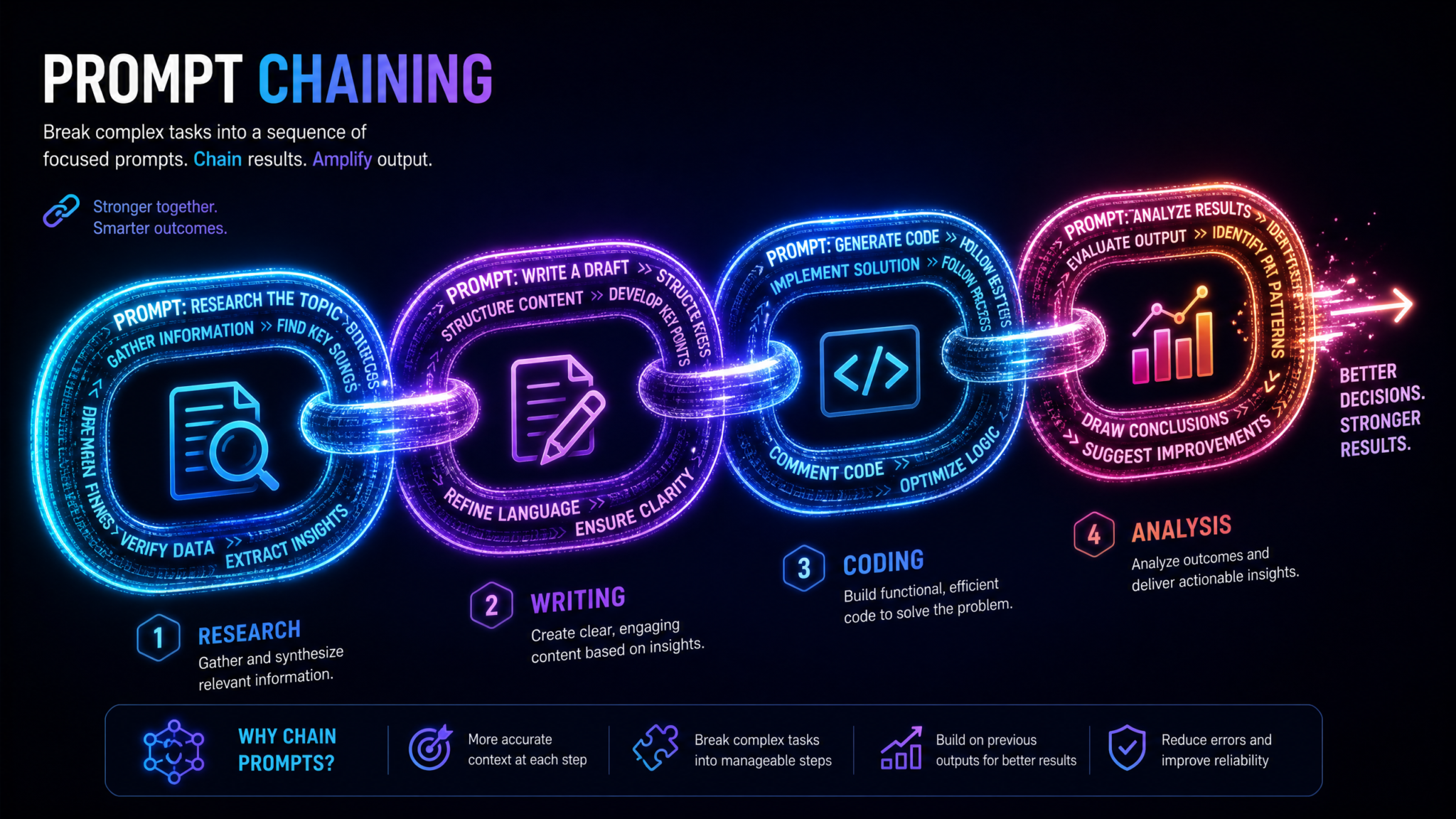
Prompt chaining is the single most underutilized technique in professional ChatGPT workflows. While most users treat each conversation as an isolated transaction — one question, one answer — power users understand that the real leverage comes from orchestrating sequences of prompts where each output becomes the precise input for the next step. With ChatGPT-5.5’s expanded context window, improved instruction-following, and enhanced reasoning consistency, chained workflows now produce outputs that rival dedicated professional software. This guide presents 30 battle-tested prompt chains across five domains, each designed to take you from raw input to publication-ready, decision-ready, or deployment-ready output through structured, sequential prompting. Whether you’re running a literature review, shipping a feature, or building a go-to-market plan, these chains eliminate the blank-page problem and replace it with a repeatable, scalable process.
Before diving into the chains themselves, understand the architecture that makes them work. Each chain in this guide follows a state-passing protocol: the output of Prompt N contains explicit labeled sections (marked with brackets like [DELIVERABLE_A]) that are referenced by name in Prompt N+1. This eliminates ambiguity, prevents context drift, and allows you to audit the chain at any stage. For chains spanning more than 4 prompts, use ChatGPT-5.5’s custom instructions or a System Prompt to maintain a persistent “project state” document that gets updated after each step. All chains below are rated by estimated time savings (hours), complexity (1–5), and output quality relative to single-prompt approaches.
Research Prompt Chains
Research workflows are where prompt chaining delivers its most dramatic ROI. A single unstructured research prompt produces a generic summary. A chained research workflow produces a structured, cited, gap-analyzed, and synthesized body of knowledge that would normally require a trained research assistant working for days. The six chains below cover the full spectrum of research tasks from academic literature to competitive intelligence.
Chain 1: Literature Review Pipeline
Use Case: Academic or professional literature review | Time Savings: 8–12 hours | Complexity: 4/5
This pipeline transforms a research topic into a structured literature review with thematic clustering, methodological critique, and identified research gaps. It mirrors the process a PhD student follows over several weeks, compressed into four sequential prompts.
PROMPT 1 — SCOPE & SOURCE MAPPING
You are a systematic review specialist. For the topic: [INSERT TOPIC],
generate:
1. A precise research question in PICO or SPIDER format
2. 5 Boolean search strings optimized for Google Scholar, PubMed, and Scopus
3. Inclusion and exclusion criteria (minimum 6 each)
4. A PRISMA-style screening decision tree
5. 8–12 seminal papers you'd expect to find (author, year, estimated focus)
Label this output [SCOPE_DOCUMENT]. Be specific — avoid generic terms.
PROMPT 2 — THEMATIC CLUSTERING (uses [SCOPE_DOCUMENT])
Using the scope document [SCOPE_DOCUMENT] as your framework, I have now
collected [N] papers. Here are their titles and abstracts:
[PASTE ABSTRACTS]
Perform the following analysis:
1. Cluster these papers into 4–6 thematic groups with descriptive names
2. For each cluster: identify the dominant theoretical framework, key findings,
and methodological approach (quantitative/qualitative/mixed)
3. Map the chronological evolution of each theme (cite specific papers by author/year)
4. Identify 3 papers that are outliers or challenge mainstream views
Label this output [THEMATIC_MAP].PROMPT 3 — SYNTHESIS & CRITIQUE (uses [THEMATIC_MAP])
Using [THEMATIC_MAP], produce a structured literature synthesis:
1. Write a 600-word narrative synthesis that weaves the themes together
using transitional logic (not a list of summaries)
2. Conduct a methodological quality assessment: for each cluster, rate
average sample sizes, measurement validity, replication rates
3. Identify the 3 most significant contradictions between clusters
4. Produce a "state of knowledge" table: rows = themes, columns =
(consensus finding | contested finding | measurement gap)
Label this output [SYNTHESIS_DRAFT].PROMPT 4 — GAP ANALYSIS & FUTURE DIRECTIONS (uses [SYNTHESIS_DRAFT])
Using [SYNTHESIS_DRAFT], generate:
1. A gap analysis identifying: (a) population gaps, (b) methodological gaps,
(c) theoretical gaps, (d) geographic/cultural gaps
2. For each gap: rate it HIGH/MEDIUM/LOW priority with a one-sentence justification
3. Write 5 specific future research questions that would fill the highest-priority gaps
4. Draft a 200-word "implications for practice" section for a non-academic audience
5. Suggest 3 review article journals appropriate for submitting this review
Label this as [FINAL_LITERATURE_REVIEW].ChatGPT Research Workflows Guide
Chain 2: Competitive Analysis Chain
Use Case: Market entry or product strategy | Time Savings: 6–10 hours | Complexity: 3/5
This chain builds a full competitive landscape from a company name and target market, producing a structured analysis that feeds directly into strategic planning documents.
PROMPT 1 — COMPETITOR IDENTIFICATION & PROFILING
You are a strategic intelligence analyst. For [YOUR COMPANY/PRODUCT] targeting
[TARGET MARKET], identify:
1. 5 direct competitors (same product category, same customer segment)
2. 5 indirect competitors (different product, same job-to-be-done)
3. 3 potential future competitors (adjacent markets, funded startups)
For each competitor provide: HQ, founded year, funding stage, estimated ARR
if available, primary value proposition in one sentence, and primary customer segment.
Label output [COMPETITOR_UNIVERSE].
PROMPT 2 — FEATURE & POSITIONING MATRIX (uses [COMPETITOR_UNIVERSE])
Using [COMPETITOR_UNIVERSE], build:
1. A feature comparison matrix (rows = competitors, columns = 15 product features
you define based on the category)
2. A positioning map description: place each competitor on two axes
(you choose the most strategically relevant axes) and describe where
the white space is
3. For each competitor, identify their single biggest customer complaint
based on your training data (cite review platforms if possible)
Label output [COMPETITIVE_MATRIX].PROMPT 3 — STRATEGIC IMPLICATIONS (uses [COMPETITIVE_MATRIX])
Using [COMPETITIVE_MATRIX], produce:
1. A SWOT analysis specifically for [YOUR COMPANY] relative to this competitive set
2. 3 "attack vectors" — specific positions or segments where [YOUR COMPANY]
could win against competitors given current gaps
3. 3 "defensive priorities" — areas where competitors are likely to move
toward [YOUR COMPANY]'s current position within 18 months
4. A one-page competitive brief formatted for a board presentation
Label output [COMPETITIVE_INTELLIGENCE_REPORT].Chain 3: Market Research Workflow
Use Case: New product or market validation | Time Savings: 5–8 hours | Complexity: 3/5
PROMPT 1 — MARKET SIZING & SEGMENTATION
For [PRODUCT/SERVICE] in [GEOGRAPHY], calculate:
1. TAM using both top-down (industry reports) and bottom-up (unit economics) methods
2. SAM based on [YOUR SPECIFIC CONSTRAINTS — e.g., B2B SaaS, SMBs, 10-500 employees]
3. SOM for Year 1, Year 3, Year 5 with assumption tables
4. Segment the market into 4–6 buyer personas with demographics, psychographics,
   trigger events, and willingness-to-pay ranges
Label output [MARKET_SIZE_DOCUMENT].
PROMPT 2 — DEMAND SIGNALS & VALIDATION (uses [MARKET_SIZE_DOCUMENT])
Using [MARKET_SIZE_DOCUMENT] personas, design a validation research plan:
1. Write 12 customer discovery interview questions (open-ended, Jobs-to-be-Done format)
2. Design a 10-question survey with Likert scales and ranking questions
targeting the highest-priority persona
3. Identify 5 online communities, 3 conferences, and 3 industry publications
where these personas are active
4. List 8 behavioral signals that would confirm strong market demand
(e.g., search volume trends, waitlist signups, competitor funding events)
Label output [VALIDATION_PLAN].PROMPT 3 — MARKET ENTRY RECOMMENDATION (uses [MARKET_SIZE_DOCUMENT] + [VALIDATION_PLAN])
Synthesize [MARKET_SIZE_DOCUMENT] and [VALIDATION_PLAN] into:
1. A beachhead market recommendation — the single most winnable segment
with a 3-point justification
2. A market entry sequencing roadmap (Year 1 segment → Year 2 expansion → Year 3 scale)
3. The 5 most critical market risks and mitigation strategies
4. A one-paragraph executive summary suitable for an investor deck
Label output [MARKET_ENTRY_STRATEGY].Chain 4: Patent Analysis Chain
Use Case: IP strategy, freedom-to-operate analysis | Time Savings: 10–15 hours | Complexity: 5/5
PROMPT 1 — PATENT LANDSCAPE MAPPING
You are an IP strategy consultant. For the technology domain [TECHNOLOGY AREA]:
1. Identify the 5 primary patent classification codes (CPC/IPC) relevant to this domain
2. Name the top 10 patent holders by portfolio size in this space
3. Describe the 5 most foundational patent clusters (each cluster = a core innovation)
4. Identify the temporal pattern: when were the major filing waves?
5. Flag any patents that expired in the last 5 years that open up freedom-to-operate
Label output [PATENT_LANDSCAPE].
PROMPT 2 — CLAIM ANALYSIS (uses [PATENT_LANDSCAPE])
Based on [PATENT_LANDSCAPE], for [YOUR SPECIFIC INNOVATION]:
1. Identify the 3 patent clusters most likely to pose infringement risk
2. For each cluster, describe the independent claims that would be most
relevant to analyze (without providing legal advice)
3. Suggest 5 design-around strategies that maintain the core functionality
4. List 10 prior art search queries to challenge the novelty of problematic claims
Label output [RISK_CLUSTERS].PROMPT 3 — IP STRATEGY RECOMMENDATION (uses [PATENT_LANDSCAPE] + [RISK_CLUSTERS])
Using both documents, produce:
1. A patent prosecution strategy: what should [COMPANY] file to protect
its core innovation?
2. A claim drafting framework: the 3 independent claim structures that
would provide broadest coverage
3. A licensing opportunity analysis: which patent holders might be
motivated to license rather than litigate?
4. A 12-month IP action plan with quarterly milestones
Label output [IP_STRATEGY_DOCUMENT].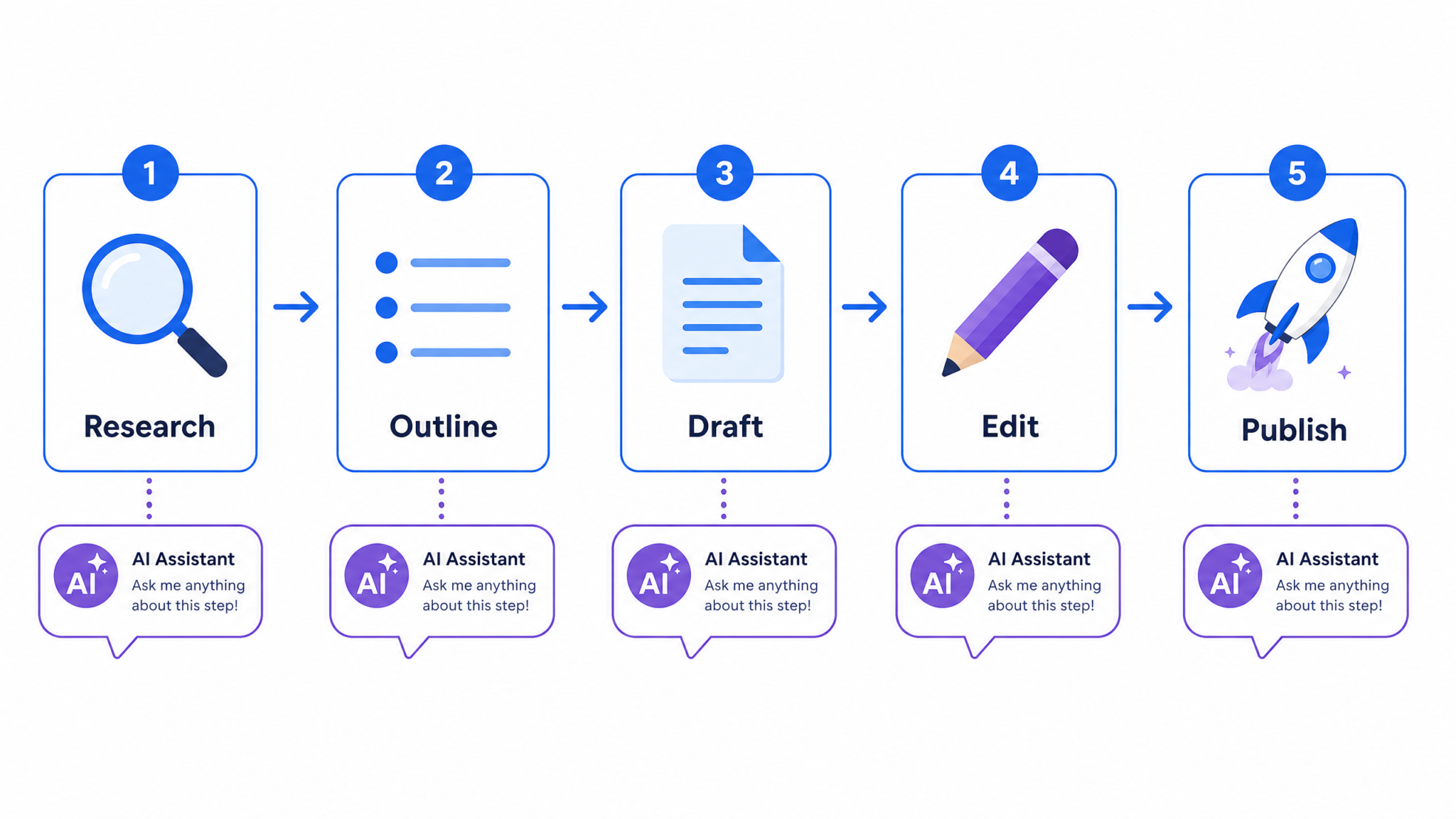
Chain 5: Trend Forecasting Pipeline
Use Case: Strategic foresight, innovation planning | Time Savings: 6–9 hours | Complexity: 4/5
PROMPT 1 — SIGNAL SCANNING
You are a strategic foresight analyst using the STEEP framework. For the industry
[INDUSTRY], identify:
1. 20 weak signals (early indicators of change) across Social, Technological,
   Economic, Environmental, and Political dimensions
2. For each signal: rate it by (a) current strength 1–10, (b) growth trajectory
   (accelerating/stable/decelerating), (c) time horizon (1-3yr, 3-7yr, 7-15yr)
3. Identify 5 "wild cards" — low-probability, high-impact events
Label output [SIGNAL_INVENTORY].
PROMPT 2 — TREND SYNTHESIS (uses [SIGNAL_INVENTORY])
Using [SIGNAL_INVENTORY], perform:
1. Cluster the 20 signals into 5–7 macro-trends. Name each trend.
2. For each macro-trend: write a 150-word trend narrative with supporting signals
3. Build a 2x2 impact/certainty matrix placing each macro-trend
4. Identify the 3 trend intersections most likely to create discontinuous change
Label output [TREND_CLUSTERS].PROMPT 3 — SCENARIO DEVELOPMENT (uses [TREND_CLUSTERS])
Using the top 4 trends from [TREND_CLUSTERS], develop:
1. 4 plausible future scenarios (2030 horizon) using the 2x2 scenario matrix method
— choose the 2 highest-uncertainty, highest-impact trends as axes
2. For each scenario: write a 200-word narrative "headline from the future"
3. For each scenario: identify 5 strategic implications for [COMPANY TYPE]
4. Produce a "strategic robustness test": which of [COMPANY]'s current
strategic bets perform well across all 4 scenarios?
Label output [SCENARIO_REPORT].Chain 6: Data Synthesis Chain
Use Case: Synthesizing multiple data sources into executive insight | Time Savings: 4–6 hours | Complexity: 3/5
PROMPT 1 — DATA INVENTORY & QUALITY ASSESSMENT
I have the following datasets related to [BUSINESS QUESTION]:
[LIST DATASET NAMES, SOURCES, DATE RANGES, AND KEY VARIABLES]

Produce:
1. A data quality scorecard for each dataset (completeness, recency, reliability)
2. Identify overlapping variables across datasets that enable joining
3. Flag 5 potential data quality issues that could bias analysis
4. Recommend the analytical approach (regression, clustering, cohort analysis, etc.)
   with a one-paragraph justification
Label output [DATA_INVENTORY].
PROMPT 2 — ANALYTICAL FRAMEWORK (uses [DATA_INVENTORY])
Based on [DATA_INVENTORY], design the analysis:
1. Write the specific analytical questions this dataset can and cannot answer
2. Design a 5-step analytical workflow with the method, input data,
expected output, and success metric for each step
3. Write the Python/R pseudocode structure for the primary analysis
4. Identify 3 sensitivity analyses to test the robustness of findings
Label output [ANALYSIS_PLAN].PROMPT 3 — INSIGHT SYNTHESIS (uses [ANALYSIS_PLAN] + DATA RESULTS)
I've run the analysis per [ANALYSIS_PLAN]. Here are the results:
[PASTE RESULTS/STATISTICS]
Now produce:
1. The 3 primary insights — each stated as a specific, directional finding
with supporting evidence from the data
2. Confidence ratings (High/Medium/Low) for each insight with reasoning
3. Business implications of each insight
4. A data visualization specification: describe the 3 charts that would
best communicate these insights to an executive audience
Label output [INSIGHT_DOCUMENT].Content Creation Prompt Chains
Content creation chains solve the single biggest problem with AI-generated content: inconsistency. A single-prompt blog post lacks strategic alignment, SEO architecture, and editorial consistency. The chains below build content systematically, ensuring every piece is strategically sound before a single word of prose is written. Each chain includes a stage-gate review built into the workflow.
ChatGPT Content Writing Prompts
Chain 7: Blog Post Pipeline (Outline → Draft → Edit → SEO)
Use Case: Long-form content marketing | Time Savings: 3–5 hours | Complexity: 2/5
PROMPT 1 — STRATEGIC OUTLINE
You are a content strategist. For the topic [TOPIC] targeting [AUDIENCE] at
[AWARENESS STAGE: top/middle/bottom of funnel]:
1. Write a headline using the [BENEFIT + SPECIFICITY + URGENCY] formula
2. Create a 10-section outline with: section title, key argument (1 sentence),
   supporting evidence type needed (statistic/case study/example/quote),
   and estimated word count per section
3. Identify the primary keyword, 5 secondary keywords, and 3 semantic terms
4. Define the content's unique angle: what does this say that existing top-10
   SERP results do NOT say?
Label output [CONTENT_BLUEPRINT].
PROMPT 2 — FIRST DRAFT (uses [CONTENT_BLUEPRINT])
Using [CONTENT_BLUEPRINT], write the full draft:
- Follow the section structure exactly
- Hit the word count targets per section
- Write in [BRAND VOICE: authoritative/conversational/technical]
- Open each section with a hook, not a definition
- Include [STATISTIC_PLACEHOLDER] where you need real data I'll verify
- End with a CTA directing readers to [SPECIFIC ACTION]
Do not editorialize about your process. Just produce the draft.
Label output [FIRST_DRAFT].PROMPT 3 — EDITORIAL REVISION (uses [FIRST_DRAFT])
Act as a senior editor. Revise [FIRST_DRAFT] for:
1. Clarity: flag and rewrite any sentence over 25 words
2. Specificity: replace all vague claims ("many companies," "often," "significant")
with specific alternatives or [SPECIFICITY_NEEDED] placeholders
3. Flow: rewrite 3 weak transitions between sections
4. Engagement: strengthen the opening paragraph and conclusion
5. Produce a revision summary: list every change made and why
Label output [EDITED_DRAFT].PROMPT 4 — SEO OPTIMIZATION (uses [EDITED_DRAFT] + [CONTENT_BLUEPRINT])
Apply SEO optimization to [EDITED_DRAFT]:
1. Insert the primary keyword naturally in: title, first 100 words, one H2,
meta description, and URL slug suggestion
2. Add secondary keywords to appropriate H2/H3 headings (do not force)
3. Write: title tag (60 chars), meta description (155 chars), and
5 internal link anchor text suggestions
4. Add an FAQ section with 5 questions using long-tail keyword variations
5. Rate the final content's topical authority on a 1–10 scale with a gap analysis
Label output [PUBLISH_READY_ARTICLE].Chain 8: Video Script Chain
Use Case: YouTube, LinkedIn, or training video production | Time Savings: 3–4 hours | Complexity: 2/5
PROMPT 1 — CONCEPT & STRUCTURE
You are a video producer. For a [DURATION]-minute video on [TOPIC] for [PLATFORM]:
1. Write a concept statement: core message in one sentence
2. Design a 5-segment structure: Hook (0-30s), Problem (30s-90s),
   Solution (90s-4min), Proof (4min-5:30min), CTA (5:30-6min)
   — adjust timing for your duration
3. Write the hook 3 ways: curiosity gap, bold claim, and direct question
4. List 5 visual cues or B-roll suggestions for each segment
Label output [VIDEO_BLUEPRINT].
PROMPT 2 — FULL SCRIPT (uses [VIDEO_BLUEPRINT])
Using [VIDEO_BLUEPRINT], write the full script:
- Format as two columns: LEFT = visual direction, RIGHT = spoken word
- Write exactly as it would be spoken — no academic language
- Include [PAUSE], [EMPHASIS], and [CUT TO] directions
- Aim for a reading pace of 130 words per minute
- Insert 3 pattern interrupts to maintain retention
Label output [VIDEO_SCRIPT].PROMPT 3 — REPURPOSING PACKAGE (uses [VIDEO_SCRIPT])
From [VIDEO_SCRIPT], create:
1. A 3-tweet thread (first tweet = hook, second = core insight, third = CTA)
2. A 300-word LinkedIn post adaptation
3. 5 short-form video clip timestamps with suggested captions (vertical format)
4. Chapter markers for YouTube with timestamps and titles
5. A 150-word email to send to subscribers announcing the video
Label output [REPURPOSING_PACKAGE].Chain 9: Newsletter Workflow
Use Case: Weekly email newsletter production | Time Savings: 2–3 hours per issue | Complexity: 2/5
PROMPT 1 — EDITORIAL CURATION
You are an email newsletter editor. For [NEWSLETTER NAME] targeting [AUDIENCE],
this week's theme is [THEME]. From the following source material I'll provide:
[PASTE 5-10 ARTICLE TITLES/LINKS/SUMMARIES]

1. Select the 5 most relevant pieces and rank them by audience relevance
2. Write a 2-sentence "why this matters" for each selected piece
3. Identify the connective thread between items for the editorial intro
4. Suggest a compelling subject line and 2 A/B test variants
Label output [EDITORIAL_SELECTION].
PROMPT 2 — NEWSLETTER DRAFT (uses [EDITORIAL_SELECTION])
Using [EDITORIAL_SELECTION], write the full newsletter:
1. Opening personal note (150 words, conversational, connects to the week's theme)
2. 5 curated items formatted as: [EMOJI] Bold Headline | 2-sentence summary |
"Read more →" CTA
3. One "deep dive" section: a 300-word original analysis of the most important item
4. Closing note with a question to drive reply-engagement
5. P.S. line promoting [PRODUCT/SERVICE/COMMUNITY]
Label output [NEWSLETTER_DRAFT].PROMPT 3 — OPTIMIZATION & SCHEDULING (uses [NEWSLETTER_DRAFT])
Review [NEWSLETTER_DRAFT] and produce:
1. Spam score assessment: flag any words commonly filtered by email providers
2. Mobile preview simulation: identify any formatting that won't render on mobile
3. A/B test plan for subject line, send time recommendation, and preview text
4. 3 segments of your subscriber list and personalization suggestions for each
5. Post-send analysis template: which metrics to track and what benchmarks to aim for
Label output [SEND_READY_NEWSLETTER].Chain 10: Social Media Content Calendar Chain
Use Case: Monthly social media planning | Time Savings: 4–6 hours per month | Complexity: 2/5
PROMPT 1 — CONTENT PILLAR STRATEGY
For [BRAND] targeting [AUDIENCE] on [PLATFORMS], create:
1. 5 content pillars with: pillar name, purpose (awareness/engagement/conversion),
   post frequency per week, and example post formats
2. A brand voice guide: 5 "do" phrases and 5 "don't" phrases
3. A competitor content audit: what content types are the top 3 competitors
   posting and what's missing from their strategies?
Label output [CONTENT_STRATEGY].
PROMPT 2 — MONTHLY CALENDAR (uses [CONTENT_STRATEGY])
Using [CONTENT_STRATEGY], build a 30-day content calendar:
- Distribute content across [PLATFORMS] using the pillar percentages
- For each post: date, platform, pillar, content type, hook, body text,
hashtags (platform-appropriate), and CTA
- Include 4 "trending/reactive" slots left intentionally blank for timely content
- Flag the 4 highest-priority posts as "hero content" for paid amplification
Label output [CONTENT_CALENDAR].PROMPT 3 — COPY BATCH (uses [CONTENT_CALENDAR])
From [CONTENT_CALENDAR], write the full copy for all [PLATFORM] posts:
- Platform: [e.g., LinkedIn]
- Write each post in full — no placeholders
- Vary the opening format across posts (question, statistic, bold claim, story)
- Include character counts to confirm platform limits
- Format for easy copy-paste into scheduling tools
Label output [COPY_BATCH_LINKEDIN].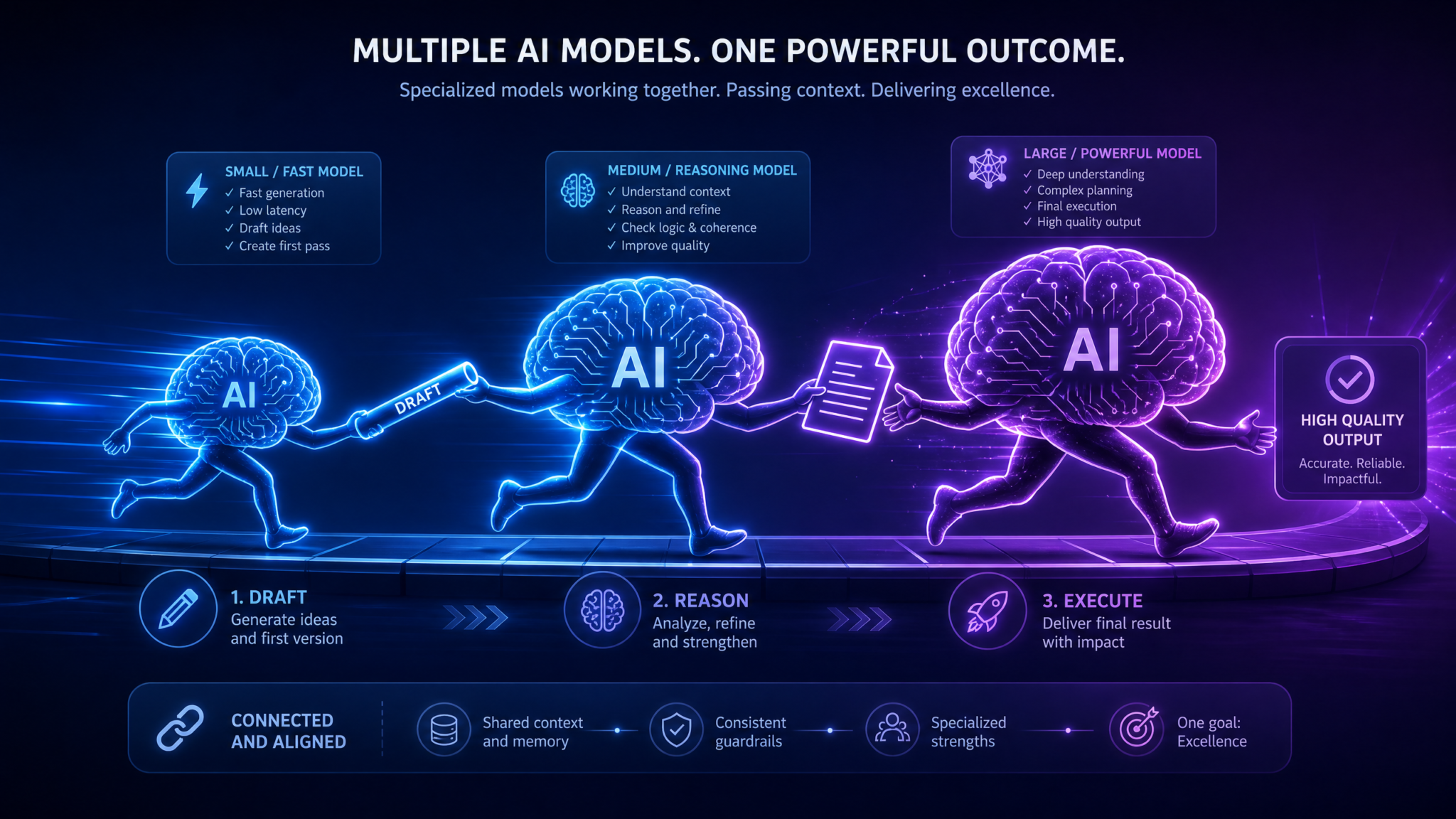
Chain 11: Case Study Pipeline
Use Case: Customer success stories for sales enablement | Time Savings: 3–5 hours | Complexity: 3/5
PROMPT 1 — CASE STUDY ARCHITECTURE
You are a B2B content strategist. For a case study about [CUSTOMER/PROJECT]:
Input: [PASTE CUSTOMER INTERVIEW TRANSCRIPT OR NOTES]

1. Extract: customer profile, business challenge, decision criteria,
   solution implemented, measurable results, and timeline
2. Identify the 3 most compelling data points
3. Write 5 potential case study angles (lead with ROI / lead with challenge /
   lead with innovation / lead with speed / lead with scale)
4. Recommend the best angle with justification
Label output [CASE_STUDY_BRIEF].
PROMPT 2 — FULL CASE STUDY DRAFT (uses [CASE_STUDY_BRIEF])
Using [CASE_STUDY_BRIEF] and the recommended angle, write the case study:
1. Headline: Result-first, specific, company-named
2. Executive summary (100 words): challenge + solution + key result
3. Background (150 words): customer context
4. Challenge (200 words): pain, stakes, failed alternatives
5. Solution (250 words): implementation narrative
6. Results (200 words): quantified outcomes with before/after
7. Quote: draft 3 customer quote options at different tone levels
8. CTA section: 3 different CTAs for different buyer stages
Label output [CASE_STUDY_DRAFT].PROMPT 3 — SALES ENABLEMENT PACKAGE (uses [CASE_STUDY_DRAFT])
From [CASE_STUDY_DRAFT], create:
1. A 1-slide summary for sales decks (bullet format, key stats only)
2. A 3-email nurture sequence referencing the case study
3. Social proof snippets: 5 pull-quotes under 280 characters
4. A battle card: how to use this case study against the top 3 competitor objections
Label output [SALES_ENABLEMENT_PACKAGE].Chain 12: Whitepaper Research-to-Draft Chain
Use Case: Thought leadership and demand generation | Time Savings: 12–20 hours | Complexity: 5/5
PROMPT 1 — THESIS & ARCHITECTURE
For a whitepaper on [TOPIC] targeting [AUDIENCE] with the goal of [OBJECTIVE]:
1. Develop 3 potential thesis statements — each must be arguable (not obvious)
2. For the strongest thesis: build a 10-section logical argument structure
   using the Toulmin model (claim → grounds → warrant → qualifier)
3. Identify 20 data points, studies, or expert sources needed
4. Define the "aha moment" the reader should have by page 8
Label output [WHITEPAPER_ARCHITECTURE].
PROMPT 2 — SECTION DRAFTING (uses [WHITEPAPER_ARCHITECTURE])
Using [WHITEPAPER_ARCHITECTURE], draft Sections 1–5:
- Write at academic/professional level appropriate for [AUDIENCE]
- Each section: 400–600 words
- Embed [DATA_NEEDED] placeholders where real statistics are required
- Use subheadings within each section
- Maintain thesis momentum: end each section with a bridge to the next
Label output [WHITEPAPER_DRAFT_PART1].PROMPT 3 — COMPLETION & POLISH (uses [WHITEPAPER_DRAFT_PART1])
Continue the whitepaper with Sections 6–10 following the same standards.
Then:
1. Write an executive summary (350 words) that stands alone
2. Generate a pull-quote list: 8 quotable sentences for design callouts
3. Write a 200-word author bio section for [AUTHOR NAME/COMPANY]
4. Produce a "key takeaways" boxout for each section (3 bullets each)
Label output [COMPLETE_WHITEPAPER_DRAFT].Coding Prompt Chains
Engineering workflows benefit enormously from prompt chaining because software development is inherently sequential: you can’t write tests before you write code, and you can’t write code before you have a specification. These chains enforce that discipline while compressing the time between ideation and working software. Each chain is designed to produce artifacts that integrate directly into existing engineering workflows — Jira tickets, PR descriptions, architecture decision records, and test suites.
ChatGPT Coding Prompts for Developers
Chain 13: Feature Development Pipeline (Spec → Architecture → Code → Tests)
Use Case: Full feature development lifecycle | Time Savings: 4–8 hours | Complexity: 4/5
PROMPT 1 — TECHNICAL SPECIFICATION
You are a senior software engineer. Convert this feature request into a spec:
Feature: [FEATURE DESCRIPTION]
Stack: [TECH STACK]
Codebase context: [BRIEF DESCRIPTION OF EXISTING ARCHITECTURE]

Produce:
1. Functional requirements (numbered, testable, using "shall" language)
2. Non-functional requirements (performance, security, scalability targets)
3. API contract draft (endpoints, request/response schemas in JSON)
4. Data model changes required
5. Out-of-scope boundaries (what this feature explicitly does NOT do)
6. Acceptance criteria in Gherkin format (Given/When/Then)
Label output [FEATURE_SPEC].
PROMPT 2 — ARCHITECTURE DESIGN (uses [FEATURE_SPEC])
Using [FEATURE_SPEC], design the architecture:
1. Component diagram description (which services/modules are affected)
2. Sequence diagram for the primary user flow
3. Database schema changes with migration strategy
4. 3 architectural decision records (ADR) for the key design choices
5. Identify the 3 highest technical risks and mitigation approaches
6. Estimate complexity: story points and breakdown by component
Label output [ARCHITECTURE_DESIGN].PROMPT 3 — IMPLEMENTATION CODE (uses [FEATURE_SPEC] + [ARCHITECTURE_DESIGN])
Implement the feature per [FEATURE_SPEC] and [ARCHITECTURE_DESIGN]:
Language/Framework: [SPECIFY]
Generate:
1. Core business logic with inline documentation
2. API handler/controller layer
3. Data access layer with appropriate ORM patterns
4. Error handling following existing patterns in [CODEBASE DESCRIPTION]
5. Configuration and environment variable structure
Write production-quality code, not prototypes. Include TODO comments for
anything requiring human review.
Label output [IMPLEMENTATION_CODE].PROMPT 4 — TEST SUITE (uses [FEATURE_SPEC] + [IMPLEMENTATION_CODE])
Generate a complete test suite for [IMPLEMENTATION_CODE]:
1. Unit tests: 100% coverage of business logic functions
2. Integration tests: test each API endpoint with happy path and 5 error scenarios
3. Edge cases: derive from acceptance criteria in [FEATURE_SPEC]
4. Performance test script to validate NFRs
5. Test data factory functions
Use [TESTING_FRAMEWORK]. Format ready to run with [npm test / pytest / go test].
Label output [TEST_SUITE].Chain 14: Bug Investigation Chain
Use Case: Systematic debugging of complex issues | Time Savings: 2–4 hours | Complexity: 3/5
PROMPT 1 — BUG TRIAGE & HYPOTHESIS
You are debugging a production issue. Here's the context:
Error: [ERROR MESSAGE/STACK TRACE]
System: [ENVIRONMENT DETAILS]
Reproduction steps: [STEPS]
Frequency: [ALWAYS/INTERMITTENT/RARE]
Recent changes: [DEPLOYMENTS IN LAST 72 HOURS]

1. Classify the bug: logic error / race condition / resource leak / config issue /
   external dependency / data corruption
2. Generate 5 ranked hypotheses (most likely → least likely) with evidence
3. For each hypothesis: write the specific diagnostic test to confirm or rule it out
4. Identify what logs/metrics would definitively pinpoint the root cause
Label output [BUG_TRIAGE].
PROMPT 2 — ROOT CAUSE ANALYSIS (uses [BUG_TRIAGE] + DIAGNOSTIC RESULTS)
Based on [BUG_TRIAGE] and these diagnostic results: [PASTE RESULTS]
1. Confirm the root cause with a technical explanation
2. Trace the exact code path that produces the bug
3. Identify whether this is a symptom of a deeper architectural issue
4. Assess blast radius: what else could be affected?
Label output [ROOT_CAUSE_ANALYSIS].PROMPT 3 — FIX & PREVENTION (uses [ROOT_CAUSE_ANALYSIS])
Using [ROOT_CAUSE_ANALYSIS]:
1. Write the minimal code fix with explanation
2. Write the comprehensive fix if the minimal fix is a band-aid
3. Write regression tests that would have caught this bug
4. Suggest 3 monitoring/alerting improvements to detect this class of bug earlier
5. Write the post-mortem document: timeline, root cause, fix, prevention
Label output [BUG_RESOLUTION_PACKAGE].Chain 15: Code Review Workflow
Use Case: AI-assisted code review for PRs | Time Savings: 1–2 hours per PR | Complexity: 2/5
PROMPT 1 — SECURITY & CORRECTNESS REVIEW
Act as a senior security-conscious engineer reviewing this PR:
[PASTE CODE DIFF]

PR Description: [DESCRIPTION]
Ticket context: [TICKET LINK/DESCRIPTION]

Review for:
1. Security vulnerabilities: injection, authentication, authorization, data exposure
2. Logic errors: edge cases not handled, off-by-one errors, null pointer risks
3. Performance: N+1 queries, missing indexes, inefficient algorithms
Rate each finding: BLOCKER / MAJOR / MINOR / SUGGESTION
Label output [TECHNICAL_REVIEW].
PROMPT 2 — QUALITY & STANDARDS REVIEW (uses [TECHNICAL_REVIEW])
Beyond [TECHNICAL_REVIEW]'s findings, review for:
1. Code style and naming conventions
2. Test coverage gaps
3. Documentation completeness
4. SOLID principles adherence
5. Suggest specific refactors with before/after code examples
Produce a consolidated review comment ready to paste into GitHub
Label output [REVIEW_COMMENT].Chain 16: API Design Chain
Use Case: Designing robust, developer-friendly APIs | Time Savings: 3–5 hours | Complexity: 4/5
Access 40,000+ AI Prompts for ChatGPT, Claude & Codex — Free!
Subscribe to get instant access to our complete Notion Prompt Library — the largest curated collection of prompts for ChatGPT, Claude, OpenAI Codex, and other leading AI models. Optimized for real-world workflows across coding, research, content creation, and business.
PROMPT 1 — API SPECIFICATION
Design a REST API for [SERVICE/DOMAIN]:
Requirements: [LIST CORE CAPABILITIES]
Consumers: [INTERNAL/EXTERNAL/BOTH] | [MOBILE/WEB/THIRD-PARTY]
Auth mechanism: [JWT/OAUTH/API KEY]

Produce:
1. Resource model: entities, relationships, naming conventions
2. Endpoint inventory: method, path, description, auth requirement
3. Request/response schemas in OpenAPI 3.0 YAML for the 5 primary endpoints
4. Error response standard with error codes and messages
5. Pagination, filtering, and sorting strategy
Label output [API_SPECIFICATION].
PROMPT 2 — DEVELOPER EXPERIENCE PACKAGE (uses [API_SPECIFICATION])
Using [API_SPECIFICATION], produce:
1. Quick-start guide (curl examples for the 5 primary endpoints)
2. SDK wrapper in [LANGUAGE] for the most common operations
3. Webhook design for the 3 most important events
4. Rate limiting policy and 429 handling examples
5. A Postman collection JSON structure
Label output [API_DX_PACKAGE].Chain 17: Refactoring Pipeline
Use Case: Systematic legacy code improvement | Time Savings: 4–6 hours | Complexity: 4/5
PROMPT 1 — REFACTORING ASSESSMENT
You are a software architect. Analyze this legacy code for refactoring:
[PASTE CODE - up to 500 lines]
Language: [LANGUAGE] | Age estimate: [YEARS] | Test coverage: [PERCENTAGE]

Produce:
1. Code smell inventory: list every smell with line numbers and severity
2. Complexity metrics: cyclomatic complexity estimates for key functions
3. Dependency map: what does this code depend on? What depends on it?
4. Refactoring risk assessment: which parts are safest vs. riskiest to change?
Label output [REFACTORING_ASSESSMENT].
PROMPT 2 — REFACTORING PLAN (uses [REFACTORING_ASSESSMENT])
Using [REFACTORING_ASSESSMENT], create:
1. A phased refactoring plan: Phase 1 (safe, high-value), Phase 2 (moderate risk),
Phase 3 (structural changes)
2. For Phase 1: write the refactored code for the top 3 improvements
3. Strangler fig pattern application: how to incrementally replace this module
4. Test-writing strategy to enable safe refactoring
Label output [REFACTORING_PLAN].Chain 18: Documentation Generation Chain
Use Case: Comprehensive codebase documentation | Time Savings: 3–5 hours | Complexity: 2/5
PROMPT 1 — CODE DOCUMENTATION
Document this code module:
[PASTE CODE]

Generate:
1. Module-level docstring explaining purpose, usage context, and dependencies
2. Function/method docstrings in [JSDoc/NumPy/Google] format for every function
3. Inline comments for non-obvious logic (do not comment obvious lines)
4. Type annotations if missing
5. A README section for this module
Label output [CODE_DOCUMENTATION].
PROMPT 2 — ARCHITECTURE DOCUMENTATION (uses [CODE_DOCUMENTATION])
Using [CODE_DOCUMENTATION] as input, produce:
1. A C4 model description (Context, Container, Component, Code levels)
2. A decision log: what design choices are embedded in this code?
3. Runbook: how to deploy, configure, monitor, and troubleshoot this module
4. Onboarding guide: what does a new engineer need to know in their first week?
Label output [ARCHITECTURE_DOCUMENTATION].Business Analysis Prompt Chains
Business analysis chains are the domain where prompt chaining most directly replaces expensive consultant time. A McKinsey engagement that produces a strategic recommendation in 6 weeks follows almost the same logical structure as these chains — hypothesis formulation, data analysis, synthesis, and recommendation. These six chains cover the core strategic and financial analyses that drive business decisions.
Chain 19: Financial Modeling Pipeline
Use Case: Building a 3-year financial model from assumptions | Time Savings: 6–10 hours | Complexity: 4/5
PROMPT 1 — ASSUMPTION FRAMEWORK
You are a financial modeling expert. For [BUSINESS TYPE] at [STAGE]:
Revenue model: [SUBSCRIPTION/TRANSACTIONAL/MARKETPLACE/etc.]

Build the assumption framework:
1. Revenue drivers: list every variable that determines revenue with a
   suggested range (low/base/high case) for each
2. Cost structure: COGS, S&M, R&D, G&A as % of revenue benchmarks
   for this industry and stage (cite comparable companies)
3. Unit economics: CAC, LTV, payback period, gross margin targets
4. Growth rate assumptions by year for 3 scenarios
Label output [MODEL_ASSUMPTIONS].
PROMPT 2 — FINANCIAL MODEL BUILD (uses [MODEL_ASSUMPTIONS])
Using [MODEL_ASSUMPTIONS] base case, build the 3-year model:
1. Monthly P&L for Year 1, quarterly for Years 2–3
2. Cash flow statement highlighting burn rate and runway
3. Balance sheet highlights
4. Key metrics dashboard: MRR, ARR, Net Revenue Retention,
Gross Margin, EBITDA margin by quarter
5. Break-even analysis: when does the business reach cash flow positive?
Format as structured tables.
Label output [FINANCIAL_MODEL].PROMPT 3 — SENSITIVITY & INVESTOR NARRATIVE (uses [FINANCIAL_MODEL])
Using [FINANCIAL_MODEL]:
1. Scenario comparison table: base vs. bull vs. bear case for key metrics
2. Sensitivity table: how does runway change if CAC increases 20%?
If gross margin drops 5%? If growth is 30% slower?
3. Key financial risks and the levers to manage them
4. Write the "financial highlights" slide for an investor deck
(5–7 bullet points, all with specific numbers)
Label output [INVESTOR_FINANCIAL_NARRATIVE].Chain 20: Strategic Planning Chain
Use Case: Annual strategic planning process | Time Savings: 8–15 hours | Complexity: 5/5
PROMPT 1 — STRATEGIC SITUATION ASSESSMENT
You are a strategy consultant facilitating annual planning for [COMPANY]:
Context: [PASTE COMPANY BRIEF: industry, size, current position, recent performance]

Produce:
1. External analysis: 5 forces (Porter's) with ratings and implications
2. Internal analysis: capability assessment using VRIO framework
   (Valuable, Rare, Inimitable, Organized) for 8 key capabilities
3. SWOT matrix populated with specific, evidence-based items (not generic)
4. Strategic questions: the 5 most important decisions the company faces
Label output [SITUATION_ASSESSMENT].
PROMPT 2 — STRATEGIC OPTIONS (uses [SITUATION_ASSESSMENT])
Using [SITUATION_ASSESSMENT], generate strategic options:
1. Three strategic directions (aggressive growth / optimization / pivot)
— each described with a 150-word narrative
2. For each direction: key initiatives, required investment, expected outcomes,
critical risks, and the strategic question it answers
3. Evaluate each option against 5 criteria: fit with capabilities, market opportunity,
financial viability, risk level, time to impact
4. Recommend one direction with a structured argument
Label output [STRATEGIC_OPTIONS].PROMPT 3 — STRATEGIC PLAN (uses [STRATEGIC_OPTIONS])
Convert the recommended option from [STRATEGIC_OPTIONS] into an execution plan:
1. Mission, vision, and strategic priorities for the planning period
2. 3–5 strategic objectives with SMART success metrics
3. Initiative roadmap: top 10 initiatives, owner, timeline, budget, KPI
4. Cascade plan: how do corporate objectives flow to team OKRs?
5. Governance structure: review cadence, escalation process, course-correction triggers
Label output [STRATEGIC_PLAN_DOCUMENT].Chain 21: Customer Feedback Analysis Workflow
Use Case: Product and CX improvement from voice-of-customer data | Time Savings: 4–8 hours | Complexity: 3/5
PROMPT 1 — FEEDBACK CLASSIFICATION
You are a customer insights analyst. I have [N] customer feedback items:
[PASTE FEEDBACK — reviews, support tickets, survey responses, interviews]

1. Code each item with: sentiment (positive/negative/mixed/neutral),
   topic (categorize into no more than 8 themes you define),
   urgency (high/medium/low based on language intensity),
   and customer segment if identifiable
2. Produce a frequency table: which themes appear most often?
3. Identify the top 5 "pain clusters" — groups of related complaints
Label output [FEEDBACK_CLASSIFICATION].
PROMPT 2 — INSIGHT EXTRACTION (uses [FEEDBACK_CLASSIFICATION])
Using [FEEDBACK_CLASSIFICATION]:
1. For each pain cluster: write a 3-sentence insight statement
(what customers say → what they mean → what they need)
2. Identify the feedback that represents your most valuable customers
(power users, high-value segments) vs. edge cases
3. Extract the top 5 verbatim quotes that most powerfully represent
key themes — these should be suitable for executive presentations
4. Identify any surprising or counterintuitive findings
Label output [CUSTOMER_INSIGHTS].PROMPT 3 — PRODUCT RECOMMENDATIONS (uses [CUSTOMER_INSIGHTS])
Using [CUSTOMER_INSIGHTS], generate:
1. Top 10 product/service improvements ranked by: (frequency x sentiment x strategic fit)
2. For each recommendation: feature brief, effort estimate (S/M/L/XL),
and expected impact on retention/NPS/revenue
3. A "quick wins" list: 5 improvements achievable in 30 days
4. A "voice of customer" report executive summary (one page)
Label output [VOC_RECOMMENDATIONS].Chain 22: Pricing Strategy Chain
Use Case: Pricing model design or repricing analysis | Time Savings: 5–8 hours | Complexity: 4/5
PROMPT 1 — PRICING FOUNDATION
You are a pricing strategist. For [PRODUCT/SERVICE]:
Context: [COST STRUCTURE, CURRENT PRICING IF ANY, COMPETITOR PRICES, TARGET MARGIN]

1. Identify which pricing model(s) fit this product:
   (cost-plus / value-based / competitive / freemium / usage-based / tiered)
2. Map the value metric: what unit of value do customers pay for?
3. Willingness-to-pay analysis: what range would you estimate for each segment?
4. Price sensitivity factors: what makes customers more or less price-sensitive?
Label output [PRICING_FOUNDATION].
PROMPT 2 — PRICING ARCHITECTURE (uses [PRICING_FOUNDATION])
Using [PRICING_FOUNDATION], design the pricing architecture:
1. Recommended pricing model with full rationale
2. Tier structure (if applicable): 3 tiers with feature sets and price points
3. Psychological pricing tactics: where to apply charm pricing, anchoring,
decoy pricing
4. Discounting policy: rules for annual discounts, volume discounts, promotional pricing
5. Competitive positioning: where does your price sit vs. competitors? Is this intentional?
Label output [PRICING_ARCHITECTURE].PROMPT 3 — PRICING ROLLOUT PLAN (uses [PRICING_ARCHITECTURE])
Using [PRICING_ARCHITECTURE]:
1. Rollout strategy for new pricing (especially for existing customers)
2. Communication templates: email to existing customers, sales talking points,
FAQ document
3. Revenue impact model: how does new pricing affect ARR/revenue over 12 months?
4. Success metrics: what KPIs indicate the pricing change is working?
5. Rollback criteria: at what point would you revert and why?
Label output [PRICING_ROLLOUT_PLAN].Chain 23: Go-to-Market Planning Pipeline
Use Case: Product launch or market expansion planning | Time Savings: 8–12 hours | Complexity: 5/5
PROMPT 1 — GTM FOUNDATION
For launching [PRODUCT/FEATURE/MARKET] with [BUDGET] and [TIMELINE]:
1. Define the ICP (Ideal Customer Profile): firmographics, technographics,
   trigger events, decision-making unit
2. Write the value proposition using the XYZ formula:
   "We help [X] achieve [Y] by [Z]" — produce 3 variants for different personas
3. Select the primary GTM motion: product-led / sales-led / marketing-led / partner-led
   with justification
4. Map the competitive context: how is the market currently solving this problem?
Label output [GTM_FOUNDATION].
PROMPT 2 — CHANNEL & CAMPAIGN STRATEGY (uses [GTM_FOUNDATION])
Using [GTM_FOUNDATION], design the GTM execution:
1. Channel mix: rank the top 5 acquisition channels with rationale
2. For the top 3 channels: campaign concept, target audience, budget allocation,
success metric, and 90-day execution plan
3. Content strategy: 10 content assets needed for launch
4. Launch sequence: week-by-week plan for the 8-week launch window
Label output [GTM_STRATEGY].PROMPT 3 — METRICS & ACCOUNTABILITY (uses [GTM_STRATEGY])
Using [GTM_STRATEGY], build the measurement framework:
1. GTM scorecard: metrics for each funnel stage (awareness → acquisition →
activation → retention → referral) with targets and owners
2. Launch success criteria: what does a successful launch look like at 30/60/90 days?
3. Budget allocation table by channel and month
4. Risk register: top 5 GTM risks and contingency actions
5. Post-launch retrospective template
Label output [GTM_EXECUTION_PLAN].Chain 24: Risk Assessment Chain
Use Case: Enterprise risk management and project risk analysis | Time Savings: 4–6 hours | Complexity: 3/5
PROMPT 1 — RISK IDENTIFICATION
You are an enterprise risk management consultant. For [PROJECT/INITIATIVE/COMPANY]:
Context: [BRIEF DESCRIPTION]

Conduct a comprehensive risk identification:
1. Identify 25 risks across: strategic, operational, financial, compliance,
   reputational, and technological categories
2. For each risk: write a specific risk statement in "Risk Event → Impact" format
3. Identify trigger indicators for each risk (early warning signs)
Label output [RISK_INVENTORY].
PROMPT 2 — RISK QUANTIFICATION (uses [RISK_INVENTORY])
Using [RISK_INVENTORY]:
1. Rate each risk on: probability (1–5) × impact (1–5) = risk score
2. Produce a risk heat map description (high/medium/low zones)
3. Identify the top 10 risks by score
4. For the top 10: assess velocity (how quickly would this risk materialize?)
and detectability (how early would we know?)
Label output [RISK_MATRIX].PROMPT 3 — RISK MITIGATION PLAN (uses [RISK_MATRIX])
For the top 10 risks from [RISK_MATRIX]:
1. For each risk: select the strategy (avoid/transfer/mitigate/accept)
2. Write a specific mitigation action with owner, deadline, and cost estimate
3. Define residual risk (remaining risk after mitigation)
4. Create a risk monitoring dashboard: which KRIs (Key Risk Indicators) to track
5. Build a risk review governance calendar
Label output [RISK_MANAGEMENT_PLAN].Advanced Multi-Model Chains
The most sophisticated prompt chains in 2025 don’t rely on a single model — they route specific tasks to the model best suited for that cognitive task. ChatGPT-5.5 excels at language generation, creative synthesis, and nuanced instruction-following. The o3 model (OpenAI’s reasoning model) outperforms on formal logic, mathematical proofs, multi-step planning, and systematic evaluation. Codex-class models excel at code execution and transformation. The chains below are explicitly designed to leverage this specialization, with clear hand-off points between models marked in the prompts.
Chain 25: Intelligent Research Synthesis Chain (5.5 + o3)
Use Case: Complex research questions requiring both synthesis and logical validation | Primary Models: ChatGPT-5.5 for synthesis, o3 for argument validation
PROMPT 1 — RUN ON ChatGPT-5.5: RESEARCH SYNTHESIS
Synthesize the following research findings into a coherent narrative:
[PASTE RESEARCH SUMMARIES]

1. Identify the central argument supported by the preponderance of evidence
2. Write a 500-word synthesis with explicit evidence attribution
3. List 5 specific claims made in this synthesis that require logical validation
4. Flag any inference leaps (conclusions not directly supported by evidence)
Label output [SYNTHESIS_FOR_VALIDATION].
PROMPT 2 — RUN ON o3: LOGICAL VALIDATION
Evaluate the logical structure of [SYNTHESIS_FOR_VALIDATION]:
1. For each of the 5 flagged claims: assess whether the evidence supports
the conclusion (valid/invalid/uncertain) with step-by-step reasoning
2. Identify any fallacies: hasty generalization, cherry-picking, post hoc, etc.
3. Rate the overall logical soundness of the synthesis (1–10) with justification
4. Suggest the minimum evidence required to make each uncertain claim valid
Label output [VALIDATION_REPORT].PROMPT 3 — RUN ON ChatGPT-5.5: REVISED SYNTHESIS
Using [SYNTHESIS_FOR_VALIDATION] and [VALIDATION_REPORT]:
1. Revise the synthesis to correct all logical issues identified
2. Appropriately hedge uncertain claims with epistemic language
3. Remove or qualify any claims rated invalid
4. Write the final synthesis suitable for publication
Label output [VALIDATED_SYNTHESIS].Chain 26: Automated Code Architecture Chain (5.5 + o3 + Codex)
Use Case: Architecting and implementing complex systems with multi-model verification | Primary Models: o3 for architecture decisions, 5.5 for documentation, Codex for implementation
PROMPT 1 — RUN ON o3: ARCHITECTURE REASONING
Reason through the optimal architecture for:
System: [SYSTEM DESCRIPTION]
Scale requirements: [CONCURRENT USERS, DATA VOLUME, LATENCY REQUIREMENTS]
Constraints: [TEAM SIZE, EXISTING STACK, BUDGET]

Using first-principles reasoning:
1. Evaluate 3 architectural patterns for this use case with formal trade-off analysis
2. Select the optimal pattern with a decision tree showing your reasoning
3. Identify the 5 most critical design decisions with non-obvious implications
4. Produce formal architecture constraints the implementation must satisfy
Label output [ARCHITECTURE_DECISION].
PROMPT 2 — RUN ON Codex/ChatGPT-5.5 (Code Mode): IMPLEMENTATION
Implement the architecture from [ARCHITECTURE_DECISION]:
1. Scaffold the project structure
2. Implement the core infrastructure layer
3. Build the primary service with all interfaces defined in [ARCHITECTURE_DECISION]
4. Add configuration management
Ensure all implementation decisions conform to the formal constraints in [ARCHITECTURE_DECISION].
Label output [IMPLEMENTATION].PROMPT 3 — RUN ON ChatGPT-5.5: TECHNICAL DOCUMENTATION
Using [ARCHITECTURE_DECISION] and [IMPLEMENTATION]:
1. Write the architecture decision record (ADR) for the primary design choice
2. Create the developer onboarding guide
3. Write the operational runbook
4. Produce the API documentation from the code
Label output [TECHNICAL_DOCS].Chain 27: Strategic Decision Analysis Chain (5.5 + o3)
Use Case: High-stakes business decisions requiring both strategic framing and rigorous analysis | Time Savings: 6–10 hours
PROMPT 1 — RUN ON ChatGPT-5.5: DECISION FRAMING
Frame this strategic decision: [DECISION TO BE MADE]
Context: [RELEVANT BUSINESS CONTEXT]

1. Reframe the decision using the "reframing framework": is this the right question?
2. Identify all decision stakeholders and their interests
3. Map the decision criteria: what factors matter in making this choice?
4. Generate 5 distinct options (avoid anchoring on the obvious 2)
5. Identify the 10 key unknowns that most affect this decision
Label output [DECISION_FRAME].
PROMPT 2 — RUN ON o3: OPTION ANALYSIS
Rigorously analyze the 5 options from [DECISION_FRAME]:
1. For each option: systematic consequence analysis (first, second, third-order effects)
2. Decision matrix: score each option against the criteria in [DECISION_FRAME] (show math)
3. Identify which unknowns would change the decision ranking if resolved
4. Apply pre-mortem analysis: for each option, what would cause it to fail?
5. Bayesian reasoning: given prior base rates for similar decisions, what's the
probability each option achieves its stated objective?
Label output [OPTION_ANALYSIS].PROMPT 3 — RUN ON ChatGPT-5.5: RECOMMENDATION DOCUMENT
Using [DECISION_FRAME] and [OPTION_ANALYSIS]:
1. Write the executive recommendation: chosen option, primary rationale, 3 supporting arguments
2. Address the strongest objection to the recommendation
3. Describe the decision implementation roadmap
4. Define the decision review trigger: under what conditions should this be revisited?
5. Write a 1-page decision memo suitable for board review
Label output [DECISION_RECOMMENDATION].Chain 28: Data Analysis Pipeline (5.5 + o3 + Code Interpreter)
Use Case: Full data analysis from raw data to executive insight | Primary Models: Code Interpreter for computation, o3 for statistical reasoning, 5.5 for narrative
PROMPT 1 — RUN ON Code Interpreter/ChatGPT-5.5: EXPLORATORY ANALYSIS
[UPLOAD DATA FILE]
Conduct exploratory data analysis:
1. Data quality report: missing values, outliers, distribution summaries
2. Correlation matrix for all numeric variables (visualize as heatmap)
3. Distribution plots for the 5 most important variables
4. Statistical summary: mean, median, std dev, skewness, kurtosis per variable
5. Identify the top 3 most analytically interesting patterns in the data
Label output [EDA_REPORT].
PROMPT 2 — RUN ON o3: ANALYTICAL STRATEGY
Using [EDA_REPORT] findings and the business question [BUSINESS_QUESTION]:
1. Select the optimal statistical or ML approach with formal justification
2. Specify the exact model parameters and their theoretical basis
3. Define the test/validation strategy to avoid overfitting or spurious correlations
4. List the statistical assumptions that must be satisfied and how to test them
5. Specify what result would constitute a meaningful vs. statistically significant finding
Label output [ANALYSIS_STRATEGY].PROMPT 3 — RUN ON Code Interpreter: ANALYSIS EXECUTION
Execute the analysis per [ANALYSIS_STRATEGY]:
1. Run the specified model
2. Test all statistical assumptions
3. Generate the output metrics and visualizations
4. Run the validation strategy
Label output [ANALYSIS_RESULTS].PROMPT 4 — RUN ON ChatGPT-5.5: INSIGHT NARRATIVE
Using [ANALYSIS_RESULTS]:
1. Translate statistical findings into plain business language
2. Write the 3 primary insights as directional business conclusions
3. Create an executive summary slide deck outline (5 slides)
4. Write recommendations with confidence levels
Label output [EXECUTIVE_INSIGHTS].Chain 29: Content Personalization at Scale Chain (5.5 + Codex)
Use Case: Generating personalized content variations at scale for marketing automation
PROMPT 1 — RUN ON ChatGPT-5.5: PERSONALIZATION FRAMEWORK
For [CONTENT TYPE] targeting [NUMBER] different segments:
Segment data: [PASTE SEGMENT DESCRIPTIONS]

1. Identify the 5 most impactful personalization dimensions
   (pain point / industry / company size / role / buying stage)
2. Write the base content template with [VARIABLE_SLOTS] marked
3. For each variable slot: define 3–5 variant options per segment
4. Write the personalization logic rules (if segment = X, then use variant Y)
Label output [PERSONALIZATION_FRAMEWORK].
PROMPT 2 — RUN ON Codex/ChatGPT-5.5 (Code Mode): AUTOMATION SCRIPT
Using [PERSONALIZATION_FRAMEWORK]:
1. Write a Python script that reads a CSV of contacts with segment attributes
2. Applies the personalization logic to generate individualized content
3. Outputs personalized content to individual files or a structured JSON
4. Includes a quality check that validates no variable slots were left unfilled
Label output [PERSONALIZATION_SCRIPT].PROMPT 3 — RUN ON ChatGPT-5.5: QUALITY ASSURANCE
Review [PERSONALIZATION_FRAMEWORK] for:
1. Brand voice consistency across all variants
2. Logical coherence (do the personalized versions make sense?)
3. Identify 3
