
GPT-5.6 Price Cuts Explained: How Luna and Terra’s New July 2026 Pricing Changes Your AI Development Budget
GPT-5.6 Price Reductions: Complete Guide to the July 30, 2026 Announcement
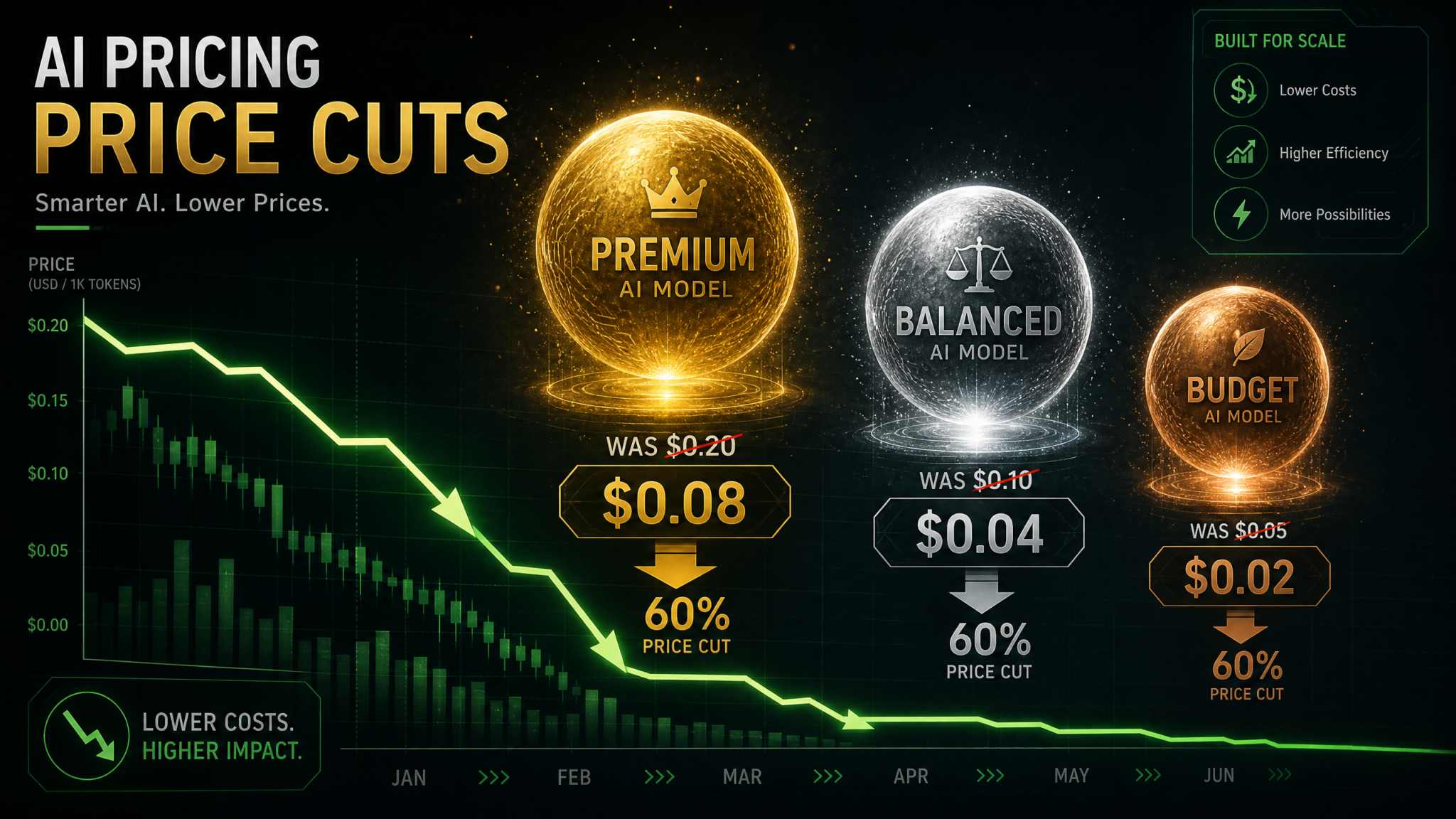
On July 30, 2026, OpenAI dropped one of the most consequential pricing announcements in the company’s commercial history. The GPT-5.6 model family — comprising three distinct tiers named Sol, Terra, and Luna — received sweeping price cuts that fundamentally reposition OpenAI’s API economics for developers, enterprises, and individual builders alike. Luna prices fell by 40%, Terra by 25%, while Sol held steady as the premium flagship. These aren’t marginal adjustments. They represent a deliberate strategic move to capture mid-market and budget-tier AI workloads from competitors including Anthropic’s Claude Haiku, Google’s Gemini Flash, and Mistral’s budget offerings. This guide breaks down every number, every implication, and every optimization strategy you need to make the most of the new pricing structure.
The Announcement: What Changed
Luna and Terra Price Cuts: The Core Changes
OpenAI’s July 30, 2026 pricing update targeted the two lower tiers of the GPT-5.6 family with surgical precision. Luna — the budget-efficiency tier — saw its input token price drop from $0.25 per million tokens to $0.15 per million, a 40% reduction. Output tokens for Luna fell from $1.00 per million to $0.60 per million, maintaining the traditional 4:1 output-to-input ratio that OpenAI has standardized across its model family. Terra, the balanced middle tier, saw its input cost drop from $1.20 per million tokens to $0.90 per million (a 25% cut), with output tokens moving from $4.80 to $3.60 per million.
Sol, the flagship tier, remained untouched at $5.00 per million input tokens and $20.00 per million output tokens. OpenAI’s decision to hold Sol’s price steady signals confidence that premium-tier demand remains price-inelastic — enterprise customers using Sol for complex reasoning, agentic workflows, and mission-critical tasks are not primarily driven by per-token cost. The cuts were deliberately aimed lower in the stack where competitive pressure from alternative providers has been most intense.
New Pricing Tiers and Structural Changes
Beyond the headline price cuts, OpenAI introduced two additional structural changes. First, they launched a new “Committed Use Discount” program that offers an additional 15% reduction on Luna and Terra pricing for developers who commit to a minimum monthly spend of $2,000. This mirrors the reserved instance pricing models common in cloud computing and represents OpenAI’s acknowledgment that predictable revenue is worth discounting for. Second, they expanded the free-tier daily token limits for Luna from 100,000 tokens per day to 500,000 tokens per day — a fivefold increase that dramatically lowers the barrier to experimentation and prototype development.
A third change, less publicized but equally important, involved context window pricing. The July 30 announcement confirmed that extended context (beyond 32,000 tokens) for Terra and Luna now carries no surcharge — a reversal of the previous policy that added a 50% premium for long-context API calls. This makes both tiers dramatically more cost-effective for document analysis, long-form generation, and retrieval-augmented generation (RAG) workflows that frequently require large context windows.
Effective Date and Transition Period
All new prices became effective immediately for new API keys provisioned after July 30, 2026. Existing customers on pre-July billing cycles were automatically migrated to new pricing on August 1, 2026, with a two-week grace period during which any pre-purchased token credits were honored at the old ratios. Developers with active credit balances as of July 30 received a pro-rated credit adjustment — effectively converting their old token credits to the new pricing equivalent, resulting in larger effective token balances for most users.
GPT-5.6 Model Family Complete Overview
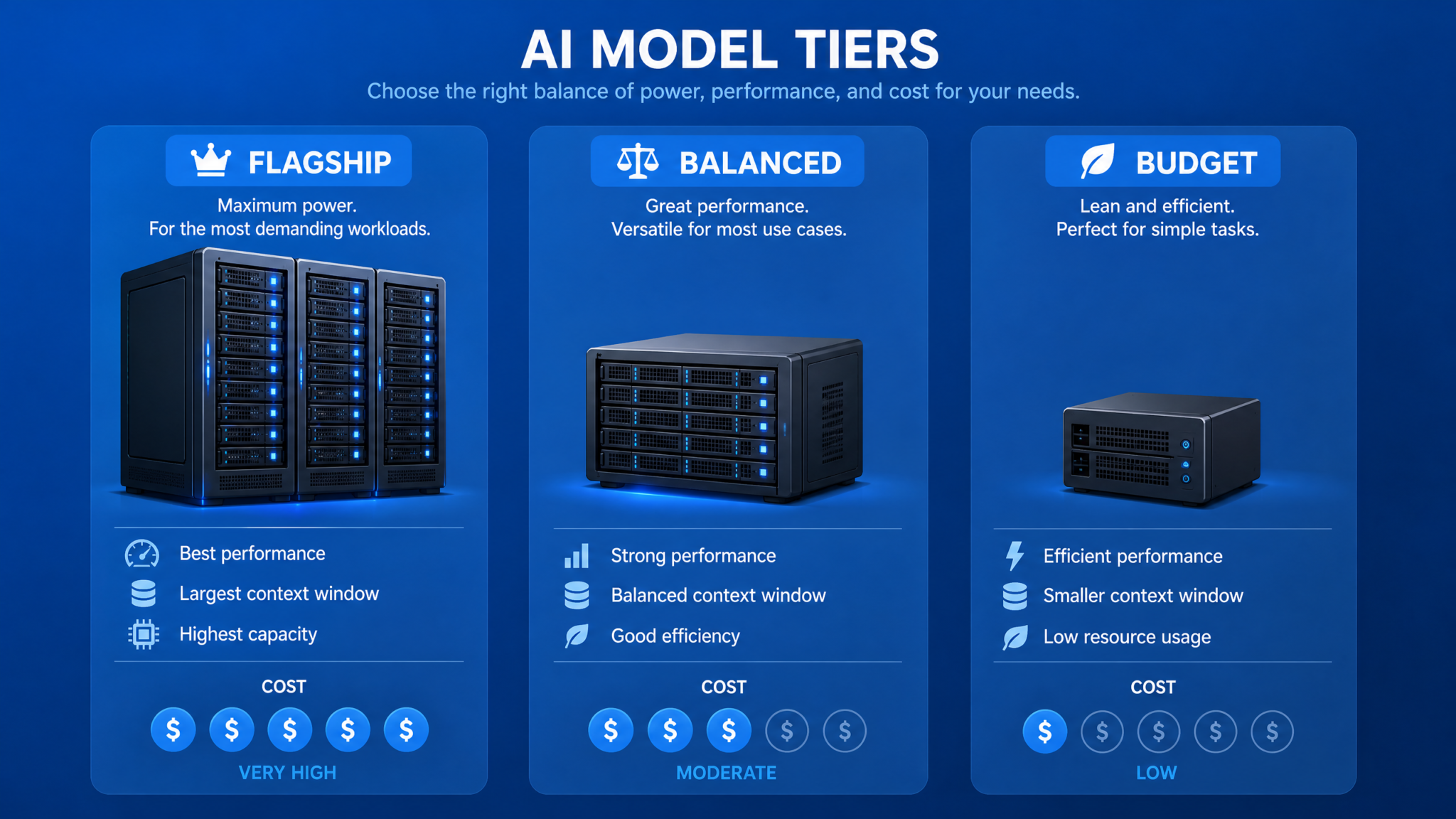
GPT-5.6 Model Family Overview
Sol: The Flagship Tier
GPT-5.6 Sol is OpenAI’s most capable commercially available model as of mid-2026. It delivers state-of-the-art performance on complex reasoning benchmarks, scoring 89.4 on the MMLU-Pro evaluation suite and 72.1 on the newly standardized AIRA-2 (Agentic Intelligence and Reasoning Assessment) benchmark that has become the industry standard for evaluating multi-step planning capabilities. Sol supports a native context window of 256,000 tokens and features enhanced tool-use capabilities, including parallel function calling with up to 32 simultaneous tool invocations.
Sol is the appropriate choice for tasks where accuracy, reasoning depth, and reliability directly translate to business outcomes. These include: complex legal document analysis, multi-step financial modeling, advanced code generation requiring architectural judgment, research synthesis across large document sets, and autonomous agent workflows where errors compound across steps. At $5.00/$20.00 per million input/output tokens, Sol is expensive, but for workloads where a 5% improvement in accuracy prevents costly downstream errors, the premium is easily justified.
Terra: The Balanced Tier
GPT-5.6 Terra occupies the middle ground that OpenAI has historically struggled to define clearly. With the July 30 price cuts, Terra now sits at $0.90/$3.60 per million input/output tokens, making it approximately one-fifth the cost of Sol. Terra scores 81.7 on MMLU-Pro and 61.3 on AIRA-2 — meaningful drops from Sol but still well above the budget tier. Its context window matches Sol at 256,000 tokens, and it supports the full function-calling API with parallel execution of up to 16 simultaneous tool calls.
Terra’s sweet spot is production workloads that require solid reasoning capability but don’t justify Sol-tier pricing. Customer support automation with complex routing logic, content generation at scale with quality requirements, code review and basic code generation, data extraction from semi-structured documents, and multi-turn conversational applications all fall naturally into Terra’s capability-cost profile. The post-July 30 pricing makes Terra the default recommendation for most new production deployments.
Luna: The Budget-Efficiency Tier
GPT-5.6 Luna is the price-competitive workhorse of the family, now available at $0.15/$0.60 per million input/output tokens — making it more than 33 times cheaper than Sol on input tokens. Luna scores 74.2 on MMLU-Pro and 49.8 on AIRA-2, reflecting its streamlined architecture optimized for throughput over depth of reasoning. Its context window is 128,000 tokens, and it supports standard function calling but not the parallel multi-tool execution available in Terra and Sol.
Luna’s practical applications are broader than many developers initially assume. Classification tasks, sentiment analysis, simple Q&A against retrieved context, template-based content generation, translation, summarization of well-structured content, and first-pass triage in multi-stage pipelines are all tasks where Luna performs at or near Terra quality for a fraction of the cost. The July 30 pricing cuts make Luna competitive not just with OpenAI’s own previous budget offerings but with the best budget models available from any provider.
New Pricing Breakdown
Complete Token Pricing Table
| Model | Input ($/1M tokens) | Output ($/1M tokens) | Extended Context Surcharge | Batch API Discount | Committed Use Price (Input) |
|---|---|---|---|---|---|
| GPT-5.6 Sol | $5.00 | $20.00 | None | 50% off | N/A (no committed discount) |
| GPT-5.6 Terra | $0.90 | $3.60 | None (new) | 50% off | $0.765 |
| GPT-5.6 Luna | $0.15 | $0.60 | None (new) | 50% off | $0.1275 |
Price Change Summary (Before vs. After July 30)
| Model | Old Input Price | New Input Price | Change | Old Output Price | New Output Price | Change |
|---|---|---|---|---|---|---|
| Sol | $5.00 | $5.00 | 0% | $20.00 | $20.00 | 0% |
| Terra | $1.20 | $0.90 | -25% | $4.80 | $3.60 | -25% |
| Luna | $0.25 | $0.15 | -40% | $1.00 | $0.60 | -40% |
Batch API and Asynchronous Processing Pricing
OpenAI’s Batch API, which allows asynchronous processing of large request volumes with a 24-hour completion window, continues to offer a 50% discount across all tiers. This means Luna via Batch API now costs just $0.075 per million input tokens and $0.30 per million output tokens — numbers that make large-scale data processing pipelines genuinely economical even for bootstrapped projects. At these rates, processing one billion tokens of input costs $75.00, enabling document processing operations at scales previously reserved for enterprise budgets.
OpenAI Batch API Complete Tutorial
How This Affects ChatGPT Subscription Token Credits
The Translation from API Economics to Subscription Value
ChatGPT subscription tiers — currently priced at $20/month (Plus), $30/month (Advanced), and custom Enterprise pricing — don’t directly expose per-token costs to users. Instead, OpenAI uses a rate-limiting system based on message counts and usage caps that are internally calibrated to underlying API costs. As API costs fall, OpenAI has historically increased the effective usage limits for subscribers without changing subscription prices, effectively passing savings downstream in the form of higher-quality and higher-quantity access.
Following the July 30 announcement, OpenAI updated the ChatGPT Plus usage caps to reflect the new Luna economics. Specifically, the number of daily messages users can send via the Luna-equivalent model (which powers the default ChatGPT experience for non-premium requests) increased by approximately 60%, consistent with the 40% cost reduction. For Plus subscribers, this means the soft daily limit on standard interactions — which had been sitting at approximately 150 messages per day — effectively increased to approximately 240 messages per day.
Tier Allocation Within Subscriptions
OpenAI’s subscription architecture allocates different model tiers to different use cases within the ChatGPT interface. Advanced users with the $30/month plan receive a monthly “Sol credit” allocation equivalent to approximately 2 million output tokens — used for complex reasoning tasks, deep research mode, and extended multi-step workflows. Once that Sol allocation is consumed, the system automatically routes to Terra, and eventually to Luna for baseline interactions. The July 30 price cuts effectively stretched the real-world value of each subscription tier:
- ChatGPT Plus ($20/month): Luna interactions increased from ~150 to ~240 per day; Terra interactions increased from 40 to approximately 53 per day
- ChatGPT Advanced ($30/month): Sol allocation held steady at ~2M output tokens; Terra daily cap increased from 80 to approximately 107 interactions; Luna effectively uncapped for standard use
- ChatGPT Enterprise: Custom allocations renegotiated on a per-contract basis with most contracts receiving automatic pro-rated credit increases
What This Means for Heavy Users
For professionals who use ChatGPT as a daily productivity tool, the practical impact of the July 30 changes is significant. A developer using Advanced who previously hit Terra rate limits by mid-afternoon now has enough headroom to work through a full working day without throttling. Writers generating long-form content see fewer “slow mode” interruptions. Data analysts running iterative query refinement sessions can complete work that previously required spreading across multiple days.
ChatGPT Advanced Plan vs Plus: Which Should You Choose
Migration Strategy: Moving from Sol to Terra or Luna
When to Stay on Sol
Despite the attractive pricing of Terra and Luna post-July 30, there are specific workload categories where migrating away from Sol would be a mistake. Sol’s advantage isn’t just benchmark scores — it’s the qualitative difference in handling ambiguous, multi-constraint problems where a weaker model would either fail silently or require expensive human review to catch errors.
- Legal and compliance document analysis where misclassification carries regulatory risk
- Autonomous multi-step agents with more than 5 sequential decision points — compounding errors from a weaker model can derail the entire pipeline
- Complex code generation involving system architecture decisions, security-sensitive code, or low-level performance optimization
- Medical and scientific literature synthesis where hallucination risk has direct safety implications
- High-stakes customer-facing applications where response quality directly correlates to conversion or retention metrics
Workloads Ready for Terra Migration
Many organizations have been running workloads on Sol that Terra can handle with negligible quality degradation. A structured evaluation process — running parallel outputs from Sol and Terra on 200-500 representative examples and scoring against your specific quality criteria — typically reveals that 40-60% of Sol workloads are over-specified for the task at hand. Terra-suitable migrations include:
- Content generation with clear style guidelines and defined output formats
- Customer service automation with well-defined intent categories (under 50 distinct intents)
- Code completion and debugging for standard application code (not security-critical or performance-critical paths)
- Structured data extraction from semi-structured sources (receipts, forms, emails)
- Multi-turn conversational applications with guardrails and fallback handling
- RAG-based Q&A where the retrieved context does most of the reasoning work
Workloads Ready for Luna Migration
Luna, at $0.15/$0.60 per million tokens, is a dramatically more capable model than its price point suggests — largely because it benefits from the same base training infrastructure as Terra and Sol, with architectural optimizations that trade some reasoning depth for throughput. Luna migration is appropriate for:
- Classification and routing tasks (is this email spam/not spam, which department should handle this ticket)
- Sentiment analysis at high volume
- Template-based content generation where the model fills structured slots
- Translation for common language pairs
- Summarization of well-structured content (news articles, product descriptions)
- First-pass triage in a multi-stage pipeline (Luna routes, Terra or Sol processes complex cases)
- Embedding generation tasks (though a dedicated embedding model is usually more efficient)
A Practical Migration Framework
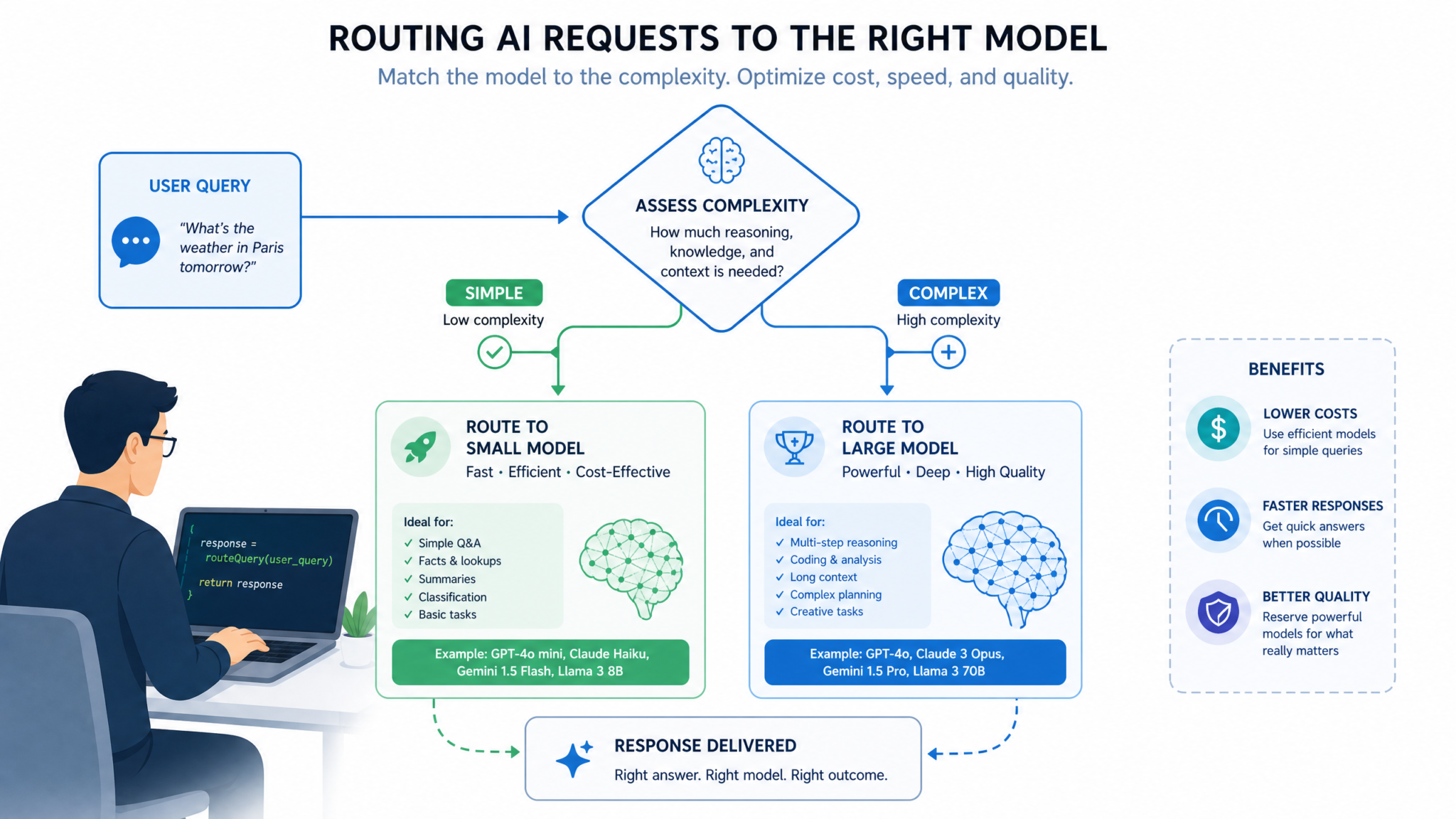
The most effective migration approach follows a three-phase process. In Phase 1, audit your current API usage by endpoint and prompt category — most organizations discover 3-5 distinct workload types when they analyze their API logs. In Phase 2, run blind A/B quality evaluations where human reviewers or automated scoring systems compare Sol, Terra, and Luna outputs on representative samples from each workload type without knowing which model produced which output. In Phase 3, migrate workloads in order of cost impact, starting with the highest-volume, lowest-complexity tasks and working upward.
# Example: Simple routing logic for tier selection
def select_model_tier(task_type, context_length, complexity_score):
    """
    complexity_score: 1-10, based on task analysis
    context_length: total tokens in prompt
    task_type: 'classification', 'generation', 'reasoning', 'agent'
    """
    if task_type == 'agent' or complexity_score >= 8:
        return 'gpt-5.6-sol'
    elif task_type == 'classification' and complexity_score < 5:
        return 'gpt-5.6-luna'
    elif context_length > 100000 or complexity_score >= 5:
        return 'gpt-5.6-terra'
    else:
        return 'gpt-5.6-luna'
Cost Comparison: GPT-5.6 Luna vs Claude Haiku vs Gemini Flash
The Budget Model Competitive Landscape
The July 30 price cuts directly target the budget model segment where Anthropic’s Claude Haiku 3.5 and Google’s Gemini 2.5 Flash have established strong footholds. As of late July 2026, Claude Haiku 3.5 is priced at $0.25/$1.25 per million input/output tokens, while Gemini 2.5 Flash sits at $0.10/$0.40 per million tokens for standard context (with a premium tier for extended context that brings it closer to $0.20/$0.80). GPT-5.6 Luna at $0.15/$0.60 lands between these two competitors on raw price.
| Model | Provider | Input ($/1M) | Output ($/1M) | Context Window | MMLU-Pro Score | Batch Discount |
|---|---|---|---|---|---|---|
| GPT-5.6 Luna | OpenAI | $0.15 | $0.60 | 128K | 74.2 | 50% |
| Claude Haiku 3.5 | Anthropic | $0.25 | $1.25 | 200K | 71.8 | 50% |
| Gemini 2.5 Flash | $0.10 | $0.40 | 1M | 72.4 | None | |
| Mistral Small 3 | Mistral | $0.10 | $0.30 | 32K | 68.9 | None |
| Llama 3.3 70B (hosted) | Various | $0.08 | $0.28 | 128K | 67.3 | None |
Performance Per Dollar Analysis
Raw price comparisons are misleading without normalizing for capability. When you calculate MMLU-Pro score per dollar of output cost, GPT-5.6 Luna delivers 123.7 score points per dollar of output cost (74.2 ÷ $0.60). Gemini 2.5 Flash delivers 181 score points per dollar ($72.4 ÷ $0.40), while Claude Haiku 3.5 delivers 57.4 ($71.8 ÷ $1.25). On this metric, Gemini Flash and Mistral remain more price-efficient for pure benchmark performance, but MMLU-Pro doesn’t capture practical enterprise differentiators where OpenAI’s ecosystem advantages come into play.
Those ecosystem advantages include: native integration with the OpenAI Assistants API and its built-in retrieval and code interpreter tools, superior function-calling reliability (OpenAI’s structured output mode remains the most consistent in the industry for JSON schema adherence), access to OpenAI’s fine-tuning infrastructure for Luna-tier models (announced alongside the price cuts), and the universal familiarity developers have with OpenAI’s API design, which reduces integration time and debugging overhead.
The Practical Workload Comparison
For the three highest-volume practical use cases — customer service triage, content classification, and RAG-based Q&A — Luna performs comparably to Claude Haiku 3.5 and Gemini Flash on accuracy metrics, but OpenAI’s response consistency (lower variance in output format when using structured outputs) gives it an operational advantage in production systems where parsing failures cause downstream errors. The quality gap narrows further when fine-tuning is applied, where Luna’s now-available fine-tuning API allows task-specific optimization that can close the benchmark gap to Terra and beyond for narrow task domains.
Real-World Budget Scenarios
Individual Developer / Indie Hacker
Consider a solo developer building a SaaS product with an AI-powered writing assistant. Their typical workload involves: 500 daily active users, each generating approximately 3 requests per day with an average of 800 input tokens and 600 output tokens per request. Total daily token consumption: 1.2 million input tokens, 900,000 output tokens.
Under the old pricing using Terra (the typical choice for a quality-conscious indie product), this cost: (1.2M × $1.20/M) + (0.9M × $4.80/M) = $1.44 + $4.32 = $5.76/day, or roughly $173/month.
Under new Terra pricing: (1.2M × $0.90/M) + (0.9M × $3.60/M) = $1.08 + $3.24 = $4.32/day, or roughly $130/month. That’s a $43/month saving — meaningful but not transformative for a solo operation.
However, if this developer migrates the first-pass generation (which handles simple template-based content) to Luna and only routes complex custom briefs to Terra, and achieves a 60/40 Luna/Terra split, the math becomes: Luna portion: (0.72M × $0.15/M) + (0.54M × $0.60/M) = $0.108 + $0.324 = $0.432/day. Terra portion: (0.48M × $0.90/M) + (0.36M × $3.60/M) = $0.432 + $1.296 = $1.728/day. Total: $2.16/day, or approximately $65/month — a 62% reduction from the original Terra-only bill.
Startup (Series A, ~10 Engineers)
A Series A startup running a legal tech platform processes approximately 50,000 API calls per day, with a mix of document classification (high volume, lower complexity) and contract analysis (lower volume, high complexity). Their usage breakdown: 35,000 daily classification calls averaging 2,000 input/200 output tokens each; 15,000 daily analysis calls averaging 8,000 input/1,500 output tokens each.
Pre-July 30, running everything on Terra: Classification: (70M × $1.20/M) + (7M × $4.80/M) = $84 + $33.60 = $117.60/day. Analysis: (120M × $1.20/M) + (22.5M × $4.80/M) = $144 + $108 = $252/day. Total: $369.60/day or ~$11,088/month.
Access 40,000+ AI Prompts for ChatGPT, Claude & Codex — Free!
Subscribe to get instant access to our complete Notion Prompt Library — the largest curated collection of prompts for ChatGPT, Claude, OpenAI Codex, and other leading AI models. Optimized for real-world workflows across coding, research, content creation, and business.
Post-July 30 optimized strategy — classification to Luna, analysis stays on Terra: Classification Luna: (70M × $0.15/M) + (7M × $0.60/M) = $10.50 + $4.20 = $14.70/day. Analysis Terra: (120M × $0.90/M) + (22.5M × $3.60/M) = $108 + $81 = $189/day. Total: $203.70/day or ~$6,111/month. The saving: nearly $5,000/month, or $60,000 annually — enough to fund a junior engineer’s salary.
Enterprise (Fortune 500 Deployment)
A Fortune 500 retailer uses the GPT-5.6 family for product description generation (Luna), customer service automation (Terra), and supply chain decision support (Sol). Their monthly token consumption runs to approximately 10 billion input tokens and 3 billion output tokens across all tiers, distributed roughly 70% Luna, 25% Terra, 5% Sol.
Post-July 30 with Committed Use Discounts on Luna and Terra: Luna (7B input, 2.1B output): (7,000 × $0.1275) + (2,100 × $0.60) = $892.50 + $1,260 = $2,152.50/month. Terra (2.5B input, 0.75B output): (2,500 × $0.765) + (750 × $3.60) = $1,912.50 + $2,700 = $4,612.50/month. Sol (500M input, 150M output): (500 × $5.00) + (150 × $20.00) = $2,500 + $3,000 = $5,500/month. Total: ~$12,265/month, down from approximately $19,400/month under old pricing — a savings of over $7,100/month or $85,200 annually.
Enterprise AI Cost Management: Complete Guide
Impact on the AI Industry
The Accelerating Price War Dynamics
OpenAI’s July 30 cuts don’t exist in a vacuum. They’re the latest move in an escalating cycle of price compression that has seen frontier AI token costs fall by approximately 95% since 2023. GPT-4 Turbo at launch cost $10/M input tokens. Two and a half years later, Luna delivers competitive quality at $0.15/M — a 66x cost reduction. This trajectory is steeper than Moore’s Law applied to compute and reflects a combination of hardware efficiency gains (custom silicon, improved inference optimization), software-level improvements (speculative decoding, quantization), and deliberate strategic pricing decisions designed to establish market position.
The response from competitors will likely accelerate within 60-90 days. Anthropic has been observed historically matching OpenAI price cuts within 6-8 weeks for equivalent-tier models. Google, with its cost advantage from custom TPU infrastructure and tight vertical integration of training and inference, has more room to undercut on budget tiers and may respond with Gemini Flash pricing adjustments that push sub-$0.10/M input costs. This creates a genuine race-to-the-bottom dynamic in the budget segment.
The Squeeze on Mid-Tier Providers
The entities most threatened by OpenAI’s July 30 cuts are not Anthropic or Google — they have the resources to respond. The real pressure falls on mid-tier API providers: Together AI, Fireworks AI, Anyscale, and similar inference-as-a-service platforms that have built businesses around offering open-source model inference at competitive prices. When GPT-5.6 Luna reaches $0.15/M input with full OpenAI ecosystem integration and Batch API access, the value proposition of paying $0.10/M for a Llama 70B derivative without those integrations narrows dramatically.
The calculus shifts: is saving $0.05/M input tokens worth the development overhead of maintaining integrations with multiple providers, handling the reliability differences between providers, and missing out on OpenAI’s structured output guarantees? For many developers, especially those already embedded in the OpenAI ecosystem, the answer is increasingly no. This consolidation dynamic benefits OpenAI’s market share even if it doesn’t benefit margins in the short term.
What Price Compression Means for AI Application Development
The broader industry implication of sustained price compression is that the economic barriers to building AI-native applications are approaching zero for individual developers. At Luna pricing via Batch API ($0.075/M input), processing a 100,000-word document costs approximately $0.005 — half a cent. Building an application that processes 10,000 such documents per month costs $50/month in AI inference. This level of cost accessibility will accelerate the wave of AI-augmented niche applications — specialized tools for specific professional domains — that has been building throughout 2025 and 2026.
How to Optimize Your Spending Across Tiers
Intelligent Routing Architectures
The most impactful optimization for organizations using the GPT-5.6 family is implementing intelligent routing — a layer that classifies each incoming request and directs it to the appropriate model tier before it ever reaches the API. Effective routing systems use a lightweight model (or even a rule-based classifier) to estimate request complexity and route accordingly. A well-tuned routing system can reduce overall API costs by 40-70% with minimal impact on end-user experience.
# Production routing example with complexity estimation
import re
from openai import OpenAI

client = OpenAI()

def estimate_complexity(prompt: str, task_type: str) -> float:
    """
    Returns complexity score 0.0-1.0
    Uses fast heuristics to avoid adding latency
    """
    score = 0.0

    # Length heuristic
    word_count = len(prompt.split())
    if word_count > 500: score += 0.3
    elif word_count > 200: score += 0.15

    # Task type baseline
    task_scores = {
        'classification': 0.0,
        'summarization': 0.1,
        'generation': 0.2,
        'analysis': 0.4,
        'reasoning': 0.6,
        'agent': 0.8
    }
    score += task_scores.get(task_type, 0.2)

    # Keywords indicating high complexity
    complex_indicators = [
        'compare', 'evaluate', 'critically', 'argue',
        'multi-step', 'analyze implications', 'trade-offs'
    ]
    for indicator in complex_indicators:
        if indicator.lower() in prompt.lower():
            score += 0.1

    return min(score, 1.0)

def route_request(prompt: str, task_type: str,
                  quality_threshold: float = 0.7) -> str:
    complexity = estimate_complexity(prompt, task_type)

    if complexity >= 0.7:
        return 'gpt-5.6-sol'
    elif complexity >= 0.35:
        return 'gpt-5.6-terra'
    else:
        return 'gpt-5.6-luna'
Prompt Engineering for Cost Reduction
Beyond model selection, prompt engineering remains one of the highest-leverage cost reduction tools available. Key techniques that reduce token consumption without degrading output quality include:
- Structured output with tight JSON schemas: Defining exact output formats eliminates verbose preamble and post-processing text, typically reducing output tokens by 20-35%
- System prompt caching: For applications with consistent system prompts, OpenAI’s prompt caching feature (which applies a 50% discount on cached input tokens) can reduce effective input costs by 30-40% on typical conversational applications
- Context window management: Implementing sliding window or summarization-based context compression for long conversations reduces input token counts while preserving conversational coherence
- Batch similar requests: Combining related requests into single API calls with multi-output instructions reduces per-request overhead
- Use the Batch API for non-time-sensitive work: Any workload that can tolerate a 24-hour completion window achieves an automatic 50% cost reduction with no code changes beyond the API call structure
Monitoring and Cost Attribution
Effective cost optimization requires granular visibility into where tokens are being consumed. Implement token counting before sending requests (using tiktoken or equivalent libraries) and log actual usage data against your pre-call estimates to identify systematic overruns. Common cost explosion patterns include: context windows growing unbounded in multi-turn applications, verbose system prompts being duplicated across every request without caching, over-specification of output formats that generates unnecessary structural tokens, and fallback logic that doubles API calls when primary requests fail.
What This Means for OpenAI’s Path to Profitability
The Volume Bet
OpenAI’s pricing strategy with the July 30 cuts is a classic volume play: accept lower per-unit margins in exchange for dramatically larger total volume. The economics work if — and only if — the volume multiplier exceeds the margin compression. Given that Luna’s 40% price cut was not accompanied by any meaningful reduction in inference costs (the hardware and operational costs per token haven’t fallen 40% since the previous price), the short-term margin impact is real. OpenAI is betting that the volume response from developers, from competitive displacement of other providers, and from unlocking entirely new use cases will more than compensate.
Historical precedent from OpenAI’s own pricing history supports this bet. The 2023 GPT-3.5 Turbo price cuts from $0.002/1K tokens to $0.0005/1K tokens — an 75% reduction — were followed by a 4x+ increase in API request volume within 90 days. The Luna cut is less dramatic but follows the same structural logic: price elasticity in the AI API market is high, particularly for developers who are currently self-limiting usage to control costs.
The ChatGPT Subscription Anchor
API pricing cuts also serve a strategic function beyond API revenue: they reinforce the value perception of ChatGPT subscriptions. When developers understand that the underlying model costs have fallen dramatically but their subscription price remains constant, the implicit message is that OpenAI is absorbing those savings on their behalf and delivering them as increased usage limits, improved model quality, and expanded features. This framing helps justify subscription retention and reduces churn among power users who might otherwise consider switching to open-source alternatives or competitor consumer products.
Long-Term Profitability Trajectory
OpenAI’s publicly discussed path to profitability involves three revenue streams beyond API and subscription: enterprise license deals (direct contracts that decouple usage from per-token pricing), the OpenAI App Store ecosystem (revenue sharing from third-party applications built on the platform), and hardware partnerships (deals with silicon manufacturers and cloud providers that monetize OpenAI’s role as the de facto inference standard). Price cuts on API tokens support all three: enterprises negotiate fixed-price contracts when they have good visibility into underlying costs; app developers build on cheaper infrastructure; hardware partners benefit from the volume increase.
The risk to profitability is that competitive responses from Google and Anthropic accelerate the race to the bottom faster than OpenAI can expand the addressable market. If Gemini Flash drops to $0.05/M in response and Luna must follow, the volume required to maintain revenue at that level becomes staggering. OpenAI’s answer to this risk is product differentiation — Sol’s performance premium, the Assistants API ecosystem, fine-tuning availability on Luna and Terra, structured output reliability — all designed to create switching costs that make price the secondary rather than primary decision variable for production deployments.
OpenAI Revenue Model and Business Strategy Deep Dive
Frequently Asked Questions
Are the July 30 GPT-5.6 price cuts permanent, or are these promotional rates?
Based on OpenAI’s statements accompanying the July 30 announcement and historical patterns, these are permanent list price changes, not time-limited promotional rates. OpenAI has never reversed a published price cut; every previous reduction (GPT-4 Turbo, GPT-3.5 Turbo, GPT-4o) became the new permanent baseline. The pricing is also reflected in updated terms on the OpenAI billing page and in the official API documentation — all indicators of a permanent change rather than a promotional event. That said, OpenAI reserves the right to change pricing with 30 days’ notice, and future architectural changes to the GPT-5.6 family could result in further adjustments in either direction.
If I’m currently on a pre-purchased token credit plan, how are my existing credits affected?
OpenAI automatically converted all pre-purchased token credits to the new pricing equivalent as of August 1, 2026. If you had $500 in credits that would have bought approximately 333 million Luna input tokens at the old $1.50/M rate (adjusted for credit pack pricing), those same credits now purchase approximately 555 million input tokens at the new effective credit pack rate. OpenAI communicated these adjustments via email to all affected accounts and provided a dashboard view showing the before/after comparison. If you haven’t reviewed your credit balance since July 30, log into the OpenAI platform billing section to see your updated token purchasing power.
Does GPT-5.6 Luna support fine-tuning, and how does fine-tuned pricing work?
Yes — the July 30 announcement included confirmation that GPT-5.6 Luna now supports fine-tuning through OpenAI’s standard fine-tuning API. Fine-tuning training costs $3.00 per million tokens processed during training. Fine-tuned Luna inference is priced at a 50% premium over standard Luna: $0.225/M input and $0.90/M output. Despite this premium, fine-tuned Luna for narrow-domain tasks often outperforms standard Terra on those specific tasks while remaining approximately 60% cheaper than Terra. For applications with well-defined, repetitive task structures and sufficient training data (minimum 100-500 examples recommended), fine-tuned Luna represents the optimal point on the cost-performance curve.
How does the removal of the extended context surcharge affect RAG applications specifically?
The removal of the extended context surcharge (previously 50% premium for prompts exceeding 32,000 tokens) for Terra and Luna is particularly impactful for Retrieval-Augmented Generation applications. RAG systems frequently inject 10,000-40,000 tokens of retrieved context per query, which under the old pricing pushed most requests into surcharge territory. For a typical RAG application processing 1 million queries per month with an average 15,000 input tokens per query (including retrieved context), the old surcharge added approximately $675/month at Terra prices. That cost is now eliminated entirely. Additionally, the ability to use Luna’s full 128,000-token context window without surcharge enables RAG implementations that retrieve larger document chunks — often improving answer quality by providing more complete context — without cost penalties.
Should I wait to see if prices fall further before committing to a major application build?
This is the AI developer’s version of the consumer electronics “wait for the next version” dilemma — and the answer is the same: waiting has an opportunity cost. While AI API prices will almost certainly continue to fall over the next 12-24 months, the applications built today on current pricing will have established user bases, refined models, and competitive advantages by the time prices fall further. More practically, OpenAI’s Committed Use Discount program allows you to lock in a 15% additional discount with a $2,000/month minimum commitment, providing some price certainty for planning purposes. Build with cost-efficient architecture from day one (intelligent routing, Batch API for async workloads, prompt caching) and your application will automatically benefit from future price cuts without requiring architectural changes. The time cost of waiting — in competitive positioning, learning, and iteration — almost always exceeds the savings from timing a price drop.
