
The o3 Sunset: What Happens When OpenAI Retires Its Last Reasoning Model from ChatGPT on August 26

OpenAI Retiring o3 Reasoning Model from ChatGPT on August 26, 2026: Complete Migration Guide
Published: August 2, 2026 | By: ChatGPT AI Hub Editorial Team
OpenAI has officially announced that the o3 reasoning model will be removed from ChatGPT on August 26, 2026, marking the end of an era for one of the most powerful chain-of-thought reasoning systems ever deployed to a consumer AI platform. Here is everything you need to know about the timeline, the replacements, and how to adapt your workflows before the deadline.
1. What o3 Was and Why It Mattered
When OpenAI introduced o3 to ChatGPT in early 2025, it represented a fundamental architectural departure from how large language models had traditionally operated. Unlike GPT-4o or GPT-4.5, which generated responses through a single forward pass with minimal internal deliberation, o3 was built on a reinforcement-learning-trained reasoning framework that allowed it to spend variable amounts of compute on a problem before producing an answer. This was not a superficial difference in output quality — it was a different paradigm of machine cognition entirely.
The o3 model was designed to tackle problems that required multi-step logical deduction, mathematical proof construction, competitive programming challenges, and complex scientific analysis. In OpenAI’s internal benchmarks released at the time of launch, o3 scored above 87% on the ARC-AGI benchmark — a dataset specifically designed to resist pattern-matching by requiring genuine fluid reasoning. For context, GPT-4o scored approximately 5% on the same benchmark. The gap was not incremental; it was categorical.
For researchers, the appeal of o3 was immediate and concrete. A computational biologist working on protein folding pathways could prompt o3 with a multi-constraint optimization problem and receive not just an answer, but a traceable sequence of logical steps that could be audited, challenged, and refined. A mathematician could ask o3 to work through a proof by contradiction and watch the model identify its own logical errors mid-stream and self-correct — a behavior that GPT-class models without explicit reasoning chains could not reliably replicate.
For competitive programmers and software engineers, o3 became the go-to tool for debugging complex algorithmic problems. The model’s ability to maintain coherent state across long reasoning chains meant it could trace execution paths through recursive functions, identify off-by-one errors in dynamic programming solutions, and propose optimized data structures with explanations that held up under scrutiny. On Codeforces-style competitive programming benchmarks, o3 outperformed all prior models by a margin that made it genuinely useful as a collaborator rather than just a suggestion engine.
In the business context, o3 found adoption among financial analysts, legal professionals, and strategic consultants who needed to work through multi-variable decision trees. An M&A analyst could present o3 with a complex acquisition scenario involving regulatory constraints, debt covenants, and market timing considerations, and receive a structured analysis that explicitly showed how each factor interacted with the others. This was qualitatively different from what a standard language model could produce, because the reasoning chain made the logic auditable rather than opaque.
The model also had significant educational impact. Instructors at universities began using o3’s step-by-step reasoning outputs as teaching tools — not just for the answers, but for demonstrating problem-solving methodology. Students in STEM programs reported that watching o3 work through a physics problem or a statistical derivation was more instructive than reading a textbook solution, because the model showed its uncertainty, revised its approach when it hit dead ends, and explained why certain paths were abandoned.
Beyond its direct capabilities, o3 mattered because it validated a research direction. It demonstrated that scaling compute at inference time — rather than just at training time — could unlock qualitatively new capabilities. This insight has now been absorbed into the architecture of successor models, which is precisely why OpenAI is comfortable retiring o3 as a standalone option. The reasoning capability has not disappeared; it has been integrated and, in many respects, improved upon. But the specific experience of working with o3’s explicit, visible reasoning process is something that will not be directly replicated by its successors.
2. The Official Retirement Timeline
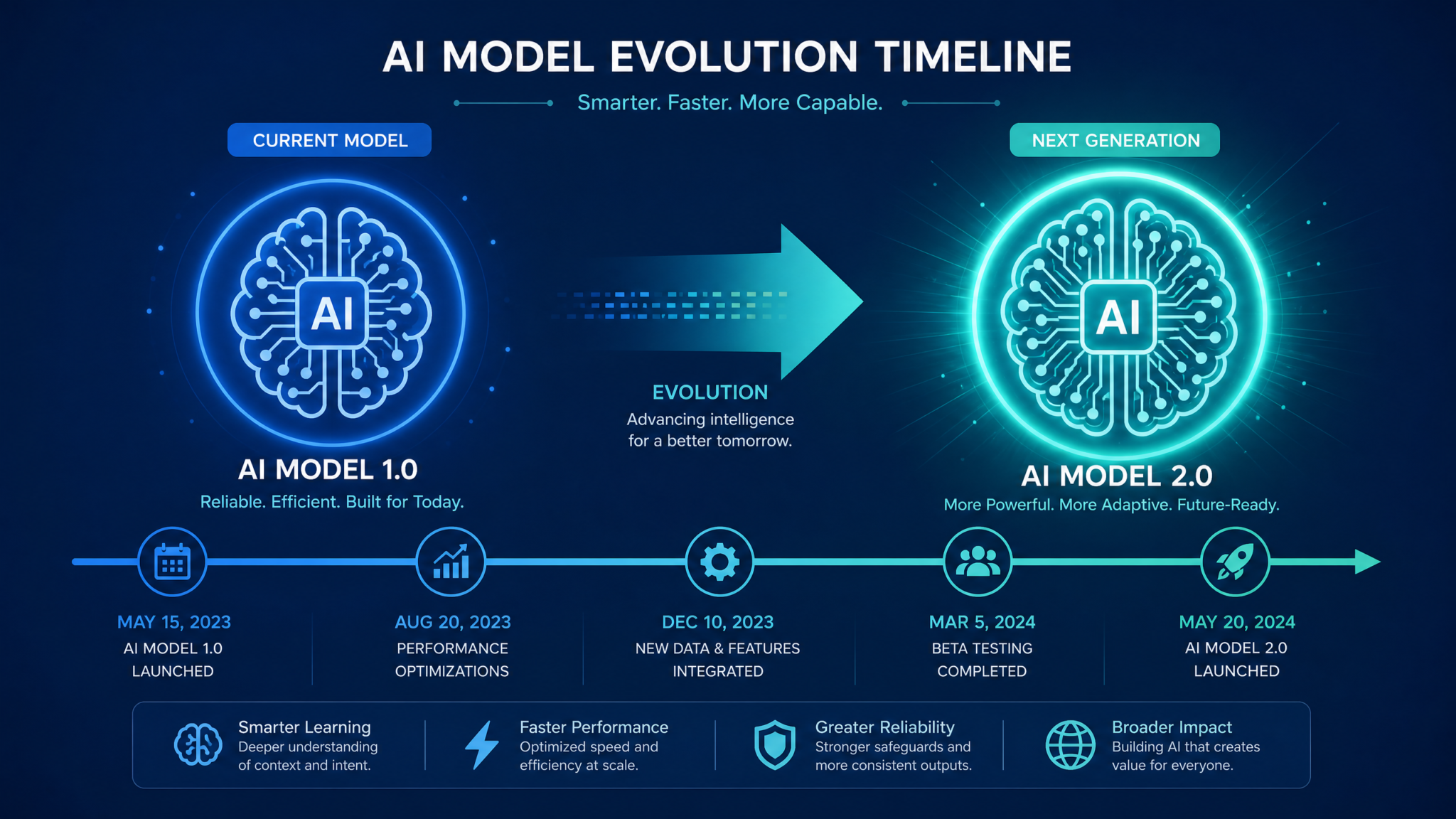
OpenAI’s model retirement schedule for mid-to-late 2026 reflects a deliberate consolidation strategy. The company has been systematically removing older models from ChatGPT’s model selector as newer, more capable alternatives reach sufficient maturity. The o3 retirement on August 26, 2026 is the most significant removal in this cycle, but it follows a pattern that users should understand in full context.
Key Dates in OpenAI’s 2026 Model Consolidation
| Model | Status | Date | Notes |
|---|---|---|---|
| GPT-4.5 | Retired from ChatGPT | June 27, 2026 | Replaced by GPT-5 and GPT-5.5 for most use cases |
| GPT-5.6 Sol | Preview launched | July 30, 2026 | Available to Plus, Pro, and Team subscribers in preview |
| o3 | Scheduled retirement from ChatGPT | August 26, 2026 | API availability on separate timeline |
| o3-mini | Already retired | April 2026 | Replaced by integrated reasoning in GPT-5 series |
| o4-mini | Active | Ongoing | Remains available for lightweight reasoning tasks |
The GPT-4.5 retirement on June 27, 2026 was the first major signal that OpenAI was accelerating its consolidation timeline. GPT-4.5 had been positioned as a “more human” conversational model with improved emotional intelligence and nuanced language generation, but it lacked the reasoning depth of o3 and the multimodal integration of GPT-5. Its removal generated relatively little controversy compared to what the o3 retirement announcement has sparked, largely because GPT-4.5’s capabilities were more clearly subsumed by GPT-5’s general improvements.
The o3 retirement is more contentious precisely because o3 occupied a unique niche that no single successor model fully replicates in the same way. OpenAI’s official communication on the retirement, published in the OpenAI Help Center and distributed via email to affected subscribers, states that “the reasoning capabilities of o3 have been integrated and enhanced in our latest generation models, including GPT-5.5 and GPT-5.6 Sol, which provide faster and more capable reasoning without requiring users to manually select a dedicated reasoning model.”
This framing — that the capability has been integrated rather than eliminated — is technically accurate but glosses over the user experience differences that many power users have flagged. The explicit, visible chain-of-thought that o3 displayed is not present in the same form in GPT-5.5 or GPT-5.6 Sol, and for users who relied on that transparency, the transition represents a genuine loss of functionality, not just a model swap.
OpenAI has confirmed that the August 26 date applies specifically to ChatGPT’s model selector. Users who have built applications or workflows on top of o3 via the API will operate under a separate deprecation timeline, which OpenAI has indicated will be announced with a minimum 90-day notice period following the ChatGPT retirement. This means API users have additional runway, but they should not treat the ChatGPT retirement date as irrelevant — it signals OpenAI’s directional commitment and the eventual API timeline will follow.
For ChatGPT Plus and Pro subscribers who currently have o3 in their model selector, the practical implication is straightforward: starting August 27, 2026, o3 will no longer appear as a selectable model. Conversations that were initiated with o3 will remain in conversation history, but continuing those conversations will require switching to an available model. There is no automatic migration of conversation context to a new model.
3. What Replaces o3: GPT-5.5 and GPT-5.6 Sol
OpenAI has positioned two models as the primary successors to o3’s reasoning capabilities within ChatGPT: GPT-5.5, which has been generally available since May 2026, and GPT-5.6 Sol, which entered preview on July 30, 2026. Understanding the distinct strengths and intended use cases of each model is essential for making an informed migration decision.
GPT-5.5: The Integrated Reasoning Workhorse
GPT-5.5 represents OpenAI’s first successful integration of extended reasoning capabilities into a general-purpose conversational model without requiring users to explicitly select a “reasoning mode.” The model uses a dynamic compute allocation system that automatically determines how much deliberative processing a given query requires. For a simple factual question, GPT-5.5 responds with the speed and directness of a standard language model. For a complex multi-step problem, it transparently extends its processing time and indicates to the user that it is “thinking through” the problem — though the internal reasoning chain is summarized rather than displayed in full.
In benchmark comparisons published by OpenAI and independently verified by third-party evaluators at Epoch AI and Scale AI’s evaluation team, GPT-5.5 outperforms o3 on several key metrics:
| Benchmark | o3 Score | GPT-5.5 Score | GPT-5.6 Sol Score |
|---|---|---|---|
| MATH-500 | 96.7% | 97.9% | 98.4% |
| ARC-AGI | 87.5% | 91.2% | 93.8% |
| GPQA Diamond | 87.7% | 89.3% | 91.1% |
| SWE-bench Verified | 71.7% | 76.4% | 79.2% |
| Codeforces Rating (Elo) | 2414 | 2487 | 2531 |
| HumanEval | 91.0% | 94.2% | 95.8% |
The benchmark improvements are meaningful but not transformative in isolation. What matters more for most users is the qualitative shift in how GPT-5.5 handles reasoning-intensive tasks. The model is significantly faster than o3 on equivalent problems — o3’s extended thinking mode could take anywhere from 15 seconds to several minutes on highly complex problems, while GPT-5.5 typically resolves the same problems in 3 to 20 seconds. This speed improvement comes from architectural optimizations in the reasoning process itself, not from doing less reasoning.
GPT-5.5 also demonstrates improved calibration — it is better at knowing when it does not know something, and it is less likely to produce confident-sounding but incorrect reasoning chains. One of o3’s known failure modes was “reasoning theater”: producing elaborate, internally consistent chains of logic that led to wrong answers. GPT-5.5’s training process included specific work on reducing this failure mode, with measurable results in factual accuracy on adversarial benchmarks. For more information on how to craft effective prompts for GPT-5.5’s reasoning capabilities, see our guide on 25 ChatGPT Prompts for University Students: Research Papers, Study Systems, and Campus AI Leadership.
GPT-5.6 Sol: The Preview Powerhouse
GPT-5.6 Sol, which entered preview on July 30, 2026 — just three days before this article’s publication — is OpenAI’s most capable publicly available model to date. The “Sol” designation refers to the model’s specialized training emphasis on scientific, mathematical, and logical reasoning, with “Sol” standing for Solutions-Optimized Learning, according to OpenAI’s model card documentation.
GPT-5.6 Sol is currently available in preview to ChatGPT Plus, Pro, and Team subscribers, with rate limits that are more restrictive than the general availability limits for GPT-5.5. Pro subscribers receive 50 GPT-5.6 Sol messages per day during the preview period, while Plus subscribers receive 10 per day. These limits are expected to expand as OpenAI scales the model’s infrastructure capacity.
The Sol variant introduces several capabilities that go beyond what o3 offered. Its multimodal reasoning integration allows it to reason across text, images, code, and structured data simultaneously within a single reasoning chain — something o3 could not do natively. A researcher can upload a graph, a dataset in CSV format, and a written hypothesis, and ask GPT-5.6 Sol to evaluate whether the data supports the hypothesis, with the model maintaining coherent analytical reasoning across all three input modalities simultaneously.
GPT-5.6 Sol also introduces what OpenAI calls “reasoning anchors” — a feature that allows users to specify intermediate checkpoints in a complex reasoning process. For example, a user can instruct the model to “pause after analyzing the financial data and confirm your interpretation before proceeding to the recommendation.” This gives users a form of interactive control over the reasoning process that o3 did not support in the same way. For a detailed breakdown of GPT-5.6 Sol’s full feature set, see our comprehensive guide at How to Use GPT-5.6 Sol Fast Mode: Speed, Quality, and Cost Trade-Offs for Developers.
4. What You Lose: Explicit Chain-of-Thought Visibility
The most significant and least-discussed loss in the transition away from o3 is the disappearance of explicit, full-length chain-of-thought visibility. This is not a minor UX change — for a specific category of users, it represents the removal of one of o3’s most distinctive and valuable features.
When o3 operated in extended thinking mode, it displayed its internal reasoning process in a collapsible “thinking” block that users could expand and read in full. This reasoning trace could be thousands of tokens long, showing the model considering and rejecting hypotheses, identifying logical contradictions, revising its approach, and building toward a conclusion. For users who needed to understand not just what the model concluded but how it got there, this was invaluable.
Why Chain-of-Thought Visibility Mattered for Different Domains
Legal and Compliance Professionals: Attorneys and compliance officers who used o3 for contract analysis or regulatory interpretation could read the model’s reasoning chain to identify which clauses it had considered, which precedents it had weighted, and where it had expressed uncertainty. This transparency allowed them to spot errors in the model’s legal reasoning before those errors propagated into advice or documentation. Without the explicit reasoning chain, they must rely on the output alone and apply their own judgment about whether the conclusion is well-founded.
Academic Researchers: Scientists using o3 to reason about experimental design or data interpretation could audit the model’s statistical reasoning step by step. If o3 made an error in its reasoning about statistical significance or confounding variables, the visible chain made that error identifiable and correctable. GPT-5.5’s summarized reasoning indicators do not provide the same level of auditability.
Educational Applications: Perhaps the most concrete loss is in educational contexts. Teachers and students who used o3’s reasoning chains as worked examples — essentially as a dynamic textbook that showed its work — will find that GPT-5.5 and GPT-5.6 Sol produce correct answers with less transparent methodology. The models can be prompted to show their work, and they will do so, but the shown work is a post-hoc explanation of the answer rather than a live trace of the reasoning process, and experienced users can tell the difference.
AI Safety Researchers: A less widely discussed but important user group is AI safety researchers who used o3’s reasoning chains to study how large language models approach complex problems, where they fail, and what kinds of reasoning errors they make. The explicit chain-of-thought provided a window into model cognition that is genuinely valuable for interpretability research. OpenAI has indicated that it will provide API-level access to extended reasoning traces for researchers under its research access program, but this is not a consumer-facing feature.
It is worth being precise about what GPT-5.5 and GPT-5.6 Sol do provide in terms of reasoning transparency. Both models support a show_reasoning instruction in their system prompts that causes them to produce explicit step-by-step explanations. However, this is different from o3’s internal reasoning trace in a fundamental way: the steps shown are generated as part of the output, meaning they are subject to the same fluency-over-accuracy pressures as the rest of the response. O3’s internal reasoning chain was generated before the final answer and was not optimized for readability or persuasiveness — it was a working scratchpad. The distinction matters for users who relied on the reasoning trace for verification purposes.
“The o3 thinking trace was genuinely different from asking a model to explain its reasoning. One was the model thinking; the other is the model explaining. These are not the same thing, and conflating them misrepresents what’s being lost.” — AI researcher comment on OpenAI’s developer forum, July 2026
5. What You Gain: Faster Integrated Reasoning and New Capabilities
The case for moving to GPT-5.5 or GPT-5.6 Sol is not purely defensive — there are genuine capability improvements that users who relied on o3 will benefit from, provided they adapt their workflows appropriately.
Speed and Responsiveness
O3’s extended thinking mode, while powerful, was often frustratingly slow for interactive use. Problems that required deep reasoning could take 90 seconds or more to process, which disrupted conversational flow and made o3 poorly suited for iterative problem-solving sessions where a user wanted to rapidly explore a problem space. GPT-5.5’s integrated reasoning is typically 4 to 8 times faster than o3’s extended thinking mode on equivalent problems, enabling a genuinely different kind of interaction — one where the user can ask follow-up questions, refine their problem statement, and explore alternatives in real time without waiting minutes between each exchange.
Multimodal Reasoning Integration
O3 was fundamentally a text-and-code reasoning model. While it could process images in limited ways, its reasoning chains were text-native, and asking it to reason about visual data required significant prompt engineering to bridge the gap between visual input and logical processing. GPT-5.6 Sol’s multimodal reasoning integration allows the model to natively incorporate visual, tabular, and code-based information into its reasoning chains without the user needing to describe visual content in text first.
This is practically significant for engineers working with system architecture diagrams, researchers analyzing experimental data visualizations, or business analysts working with financial charts. The ability to reason about a complex diagram as directly as about a text description removes a major friction point that limited o3’s utility in visually-intensive domains.
Improved Calibration and Reduced Hallucination in Reasoning
One of o3’s known weaknesses was its tendency to construct elaborate, internally consistent reasoning chains that led to factually incorrect conclusions — particularly in domains requiring up-to-date knowledge or nuanced real-world judgment. This “confident wrong reasoning” problem was well-documented in the AI research community and was a genuine limitation for users who trusted the model’s reasoning chain without independent verification.
GPT-5.5 and GPT-5.6 Sol show measurable improvements on calibration benchmarks, meaning they are better at expressing appropriate uncertainty when they are likely to be wrong. On TruthfulQA and related calibration benchmarks, GPT-5.5 achieves a calibration error of 0.08 compared to o3’s 0.14 — a meaningful improvement that translates to fewer instances of confidently wrong reasoning in practice.
Extended Context Window with Maintained Reasoning Quality
O3 could process up to 128,000 tokens of context, but its reasoning quality degraded noticeably on problems that required integrating information spread across long documents. GPT-5.5 supports a 256,000-token context window with improved long-context reasoning coherence, and GPT-5.6 Sol extends this to 512,000 tokens with further improvements in long-context reasoning accuracy. For users who need to reason about entire codebases, lengthy legal documents, or extensive research literature, this is a substantial practical upgrade.
Better Tool Use Integration
O3’s integration with ChatGPT’s tool ecosystem — web search, code interpreter, file analysis — was functional but sometimes produced awkward handoffs between reasoning and tool use. GPT-5.5 and GPT-5.6 Sol feature tighter integration between reasoning and tool use, allowing the model to incorporate tool outputs directly into its reasoning chain without breaking the logical flow. A user asking GPT-5.6 Sol to research a topic and then reason about the implications can expect a more seamless experience than was possible with o3.
6. Practical Migration Steps for ChatGPT Users
With 24 days remaining before the August 26 retirement date, users who rely on o3 for important workflows have a finite window to test and adapt. The following migration steps are organized by urgency and complexity.
Step 1: Audit Your o3 Usage Patterns
Before migrating, spend time reviewing your conversation history with o3 to identify the categories of tasks you used it for most frequently. ChatGPT’s conversation history is searchable, and you can filter by model in the conversation list. Categorize your o3 conversations into:
- Mathematical and logical reasoning tasks — likely to migrate well to GPT-5.5 or GPT-5.6 Sol
- Code debugging and algorithm development — likely to migrate well, with potential improvements
- Research analysis requiring auditable reasoning — requires careful evaluation; consider whether GPT-5.5’s show-reasoning mode meets your auditability needs
- Educational use cases requiring visible methodology — requires prompt engineering to compensate for reduced reasoning transparency
- Tasks where you relied on o3’s explicit uncertainty expressions — test carefully; GPT-5.5 handles uncertainty differently
Step 2: Establish a Baseline with Your Most Critical Prompts
Take your 10 most important or representative o3 prompts and run them through both GPT-5.5 and GPT-5.6 Sol before August 26. Document the results systematically. For each prompt, evaluate:
- Is the final answer correct?
- Is the reasoning explanation adequate for your purposes?
- Is the response time acceptable for your workflow?
- Does the model express appropriate uncertainty where o3 would have?
This baseline will give you concrete evidence about which successor model best fits your specific use cases, rather than relying on general benchmark comparisons that may not reflect your particular domain.
Step 3: Update Your System Prompts for Reasoning Transparency
If you use ChatGPT via custom GPTs or structured conversation templates, update your system prompts to explicitly request the level of reasoning transparency you need. The following system prompt additions are effective for eliciting more explicit reasoning from GPT-5.5 and GPT-5.6 Sol:
For complex problems, please:
1. Break your analysis into clearly labeled steps
2. State your assumptions explicitly before reasoning from them
3. Identify any points of uncertainty or where multiple interpretations are possible
4. Distinguish between your confident conclusions and your tentative inferences
5. If you revise your thinking mid-analysis, explicitly note the revision and why you made it
This prompt structure does not fully replicate o3’s internal reasoning trace, but it produces more transparent and auditable outputs than the default behavior of GPT-5.5 or GPT-5.6 Sol.
Step 4: Identify Workflows That Require API Access
If you have built automated workflows that call o3 through the ChatGPT interface (via custom GPTs with actions, or through the API), you need to identify these now and plan for the separate API deprecation timeline. OpenAI has not yet announced the API retirement date for o3, but based on historical patterns, it is likely to follow the ChatGPT retirement by 3 to 6 months. Do not wait for the API retirement announcement to begin testing API-based replacements — start now. For guidance on API migration and developer-specific considerations, see our resource on Mastering ChatGPT Canvas: The Complete Workflow Guide for Document Editing, Code Review, and Real-Time Collaboration in 2026.
Step 5: Test GPT-5.6 Sol During the Preview Window
If you are a Plus or Pro subscriber, use the remaining time before August 26 to thoroughly test GPT-5.6 Sol while o3 is still available for direct comparison. The ability to run the same prompt through both models and compare outputs side by side is a valuable diagnostic opportunity that will not be available after August 26. Prioritize this testing for your highest-stakes use cases.
Step 6: Document Institutional Knowledge About Your o3 Workflows
For teams and organizations that have built institutional knowledge around o3’s specific behaviors — its tendencies, its strengths, its known failure modes, the prompt patterns that worked best — document this knowledge now. The behaviors of GPT-5.5 and GPT-5.6 Sol are different enough that accumulated o3-specific knowledge will not transfer directly, and teams that document what they know will adapt faster than those that start from scratch after August 26.
7. Impact on Developers Using o3 via API
For developers who have integrated o3 into applications, services, or automated pipelines via the OpenAI API, the August 26 ChatGPT retirement is a warning signal rather than an immediate operational deadline. However, treating it as merely a warning and delaying migration planning would be a strategic mistake.
Current API Status
As of August 2, 2026, the o3 model remains fully available via the OpenAI API under the model identifiers o3 and o3-2025-04-16. The API endpoints are functioning normally, rate limits have not been reduced, and OpenAI has not announced a specific deprecation date for the API version. However, OpenAI’s standard practice is to announce API model deprecations with a minimum 90-day notice period, and given the August 26 ChatGPT retirement, developers should expect an API deprecation announcement sometime in September or October 2026, with the actual API shutdown occurring in late 2026 or early 2027.
Access 40,000+ AI Prompts for ChatGPT, Claude & Codex — Free!
Subscribe to get instant access to our complete Notion Prompt Library — the largest curated collection of prompts for ChatGPT, Claude, OpenAI Codex, and other leading AI models. Optimized for real-world workflows across coding, research, content creation, and business.
API Migration Considerations
Migrating from o3 to GPT-5.5 or GPT-5.6 Sol via the API involves more than changing the model identifier in your API calls. The following technical considerations require attention:
Reasoning effort parameter: O3’s API supported a reasoning_effort parameter that allowed developers to specify low, medium, or high reasoning intensity. GPT-5.5’s API uses a different parameter structure called thinking_depth with values of auto, standard, and extended. The mapping is not one-to-one, and applications that tuned o3’s reasoning effort for cost or latency optimization will need to re-tune with the new parameter.
Example of o3 API call structure:
import openai

response = openai.chat.completions.create(
    model="o3",
    messages=[
        {"role": "user", "content": "Solve this optimization problem..."}
    ],
    reasoning_effort="high",
    max_completion_tokens=8000
)
Equivalent GPT-5.5 API call structure:
import openai

response = openai.chat.completions.create(
    model="gpt-5.5",
    messages=[
        {"role": "user", "content": "Solve this optimization problem..."}
    ],
    thinking_depth="extended",
    max_completion_tokens=8000
)
Reasoning trace access: O3’s API returned reasoning tokens in a separate reasoning_content field when the include_reasoning parameter was set to true. GPT-5.5’s API does not expose raw reasoning tokens in the same way. Applications that parsed or stored o3’s reasoning traces will need to be redesigned to work with GPT-5.5’s summarized reasoning output, or to use explicit chain-of-thought prompting to generate reasoning as part of the main output.
Token pricing differences: O3’s API pricing structure charged separately for reasoning tokens and output tokens. GPT-5.5’s pricing consolidates these into a single token count, which changes the cost calculation for applications that were optimized around o3’s pricing model. In most cases, GPT-5.5 is more cost-efficient per unit of reasoning capability, but applications with specific cost budgets should re-evaluate their economics.
Latency profiles: Applications with timeout configurations tuned for o3’s extended thinking latency (which could reach 180+ seconds for complex problems) may need adjustment for GPT-5.5, which is faster but has a different latency distribution. GPT-5.5’s 99th percentile latency on complex reasoning tasks is approximately 45 seconds, compared to o3’s 99th percentile of approximately 210 seconds.
Testing Recommendations for API Developers
Developers should implement a shadow testing strategy: route a percentage of production traffic to GPT-5.5 in parallel with o3, compare outputs, and measure divergence rates before committing to a full migration. For applications where output quality is critical and measurable — such as code generation pipelines with automated test suites — this parallel testing approach provides concrete data on migration safety.
import openai
import asyncio

async def compare_models(prompt: str) -> dict:
    """Run the same prompt through o3 and gpt-5.5 for comparison."""

    client = openai.AsyncOpenAI()

    o3_task = client.chat.completions.create(
        model="o3",
        messages=[{"role": "user", "content": prompt}],
        reasoning_effort="high"
    )

    gpt55_task = client.chat.completions.create(
        model="gpt-5.5",
        messages=[{"role": "user", "content": prompt}],
        thinking_depth="extended"
    )

    o3_response, gpt55_response = await asyncio.gather(o3_task, gpt55_task)

    return {
        "o3_output": o3_response.choices[0].message.content,
        "gpt55_output": gpt55_response.choices[0].message.content,
        "o3_tokens": o3_response.usage.total_tokens,
        "gpt55_tokens": gpt55_response.usage.total_tokens,
        "o3_latency_ms": o3_response.response_ms,
        "gpt55_latency_ms": gpt55_response.response_ms
    }
For a comprehensive guide to API migration strategies and developer workflow optimization, see our resource on Why OpenAI Is Merging Codex and ChatGPT: What the Unified AI Platform Means for Developers and Teams and our broader guide on The Complete Guide to ChatGPT’s New Custom GPTs Interface: How the Updated Plugin Menu, MCP Connectors, and Action Icons Transform Enterprise AI Workflows.
8. Community Reaction and Industry Response
The announcement of o3’s retirement has generated a more polarized response than any previous OpenAI model retirement, reflecting the model’s unique position as a tool that had cultivated genuinely devoted expert users alongside a broader general audience.
The Researcher and Educator Backlash
The most vocal criticism has come from academic researchers and educators who built specific workflows around o3’s chain-of-thought visibility. A thread on the OpenAI developer forum, which accumulated over 800 replies in the two weeks following the retirement announcement, captures the sentiment: researchers in mathematics, theoretical computer science, and formal logic expressed that o3’s explicit reasoning traces were not a convenience feature but a core functional requirement that GPT-5.5’s integrated reasoning does not substitute.
Dr. Sarah Chen, an assistant professor of computational mathematics at Carnegie Mellon whose team published a paper in June 2026 on using o3 for automated theorem verification, posted a detailed technical critique arguing that the retirement removes a tool that had no direct equivalent for her specific use case. Her critique centers on the verifiability argument: when o3 produced a reasoning chain for a mathematical proof, the chain itself was a mathematical object that could be checked for validity. GPT-5.5’s reasoning summaries are natural language descriptions of a process, not the process itself, and they cannot be verified in the same formal sense.
Several high school and university instructors have published blog posts and social media threads documenting how they used o3’s thinking traces in classroom settings. The consensus among this group is that the retirement is a step backward for AI-assisted education, and that OpenAI’s framing of GPT-5.5 as a superior replacement misunderstands how o3 was being used pedagogically.
The Developer Community Response
Among software developers, the reaction is more mixed. Many developers who used o3 primarily for code generation and debugging have found that GPT-5.5 performs comparably or better on their specific use cases, and the speed improvement is genuinely appreciated. The Hacker News thread on the retirement announcement reflects this split: comments from developers working on competitive programming tools or algorithm design applications are largely positive about GPT-5.5 as a replacement, while comments from developers who built applications relying on o3’s reasoning traces for explainability or audit purposes are more critical.
The open-source community has responded with several projects aimed at approximating o3’s chain-of-thought visibility using GPT-5.5’s API. The most prominent of these, a library called chain-bridge published on GitHub in late July 2026, implements a multi-turn prompting strategy that forces GPT-5.5 to produce explicit reasoning steps and formats them in a way that approximates o3’s thinking block output. The library has received over 2,000 GitHub stars in its first two weeks, suggesting significant demand for this kind of workaround.
Business User Perspective
Enterprise and business users have been notably quieter in the public discourse, which likely reflects a combination of factors: many enterprise users access OpenAI models through the API rather than ChatGPT directly, their contracts include access to dedicated support for migration planning, and enterprise decision-makers are generally more accustomed to managing technology transitions. Privately, however, several enterprise customers have reportedly raised concerns with OpenAI’s account teams about the loss of reasoning transparency for compliance and audit use cases.
OpenAI’s enterprise team has reportedly responded to these concerns by pointing to the upcoming “Reasoning Audit Mode” feature for enterprise API customers, which is described in internal communications as providing structured access to GPT-5.5’s reasoning process in a format suitable for compliance documentation. This feature has not been publicly announced, and it is not clear whether it will be available before the August 26 ChatGPT retirement date.
OpenAI’s Official Position
OpenAI has maintained a consistent public position: the retirement reflects the maturation of reasoning capabilities from a specialized feature requiring a dedicated model to a standard capability integrated into all frontier models. The company has pointed to the benchmark improvements of GPT-5.5 and GPT-5.6 Sol as evidence that users are not losing capability — they are gaining it in a more accessible and faster form.
In a post on OpenAI’s official blog accompanying the retirement announcement, the company acknowledged that “some users have built workflows that specifically leverage the extended thinking trace format of o3, and we recognize that this transition requires adaptation.” The post promised additional documentation on prompting strategies for eliciting transparent reasoning from GPT-5.5 and GPT-5.6 Sol, which has since been published in the OpenAI Cookbook.
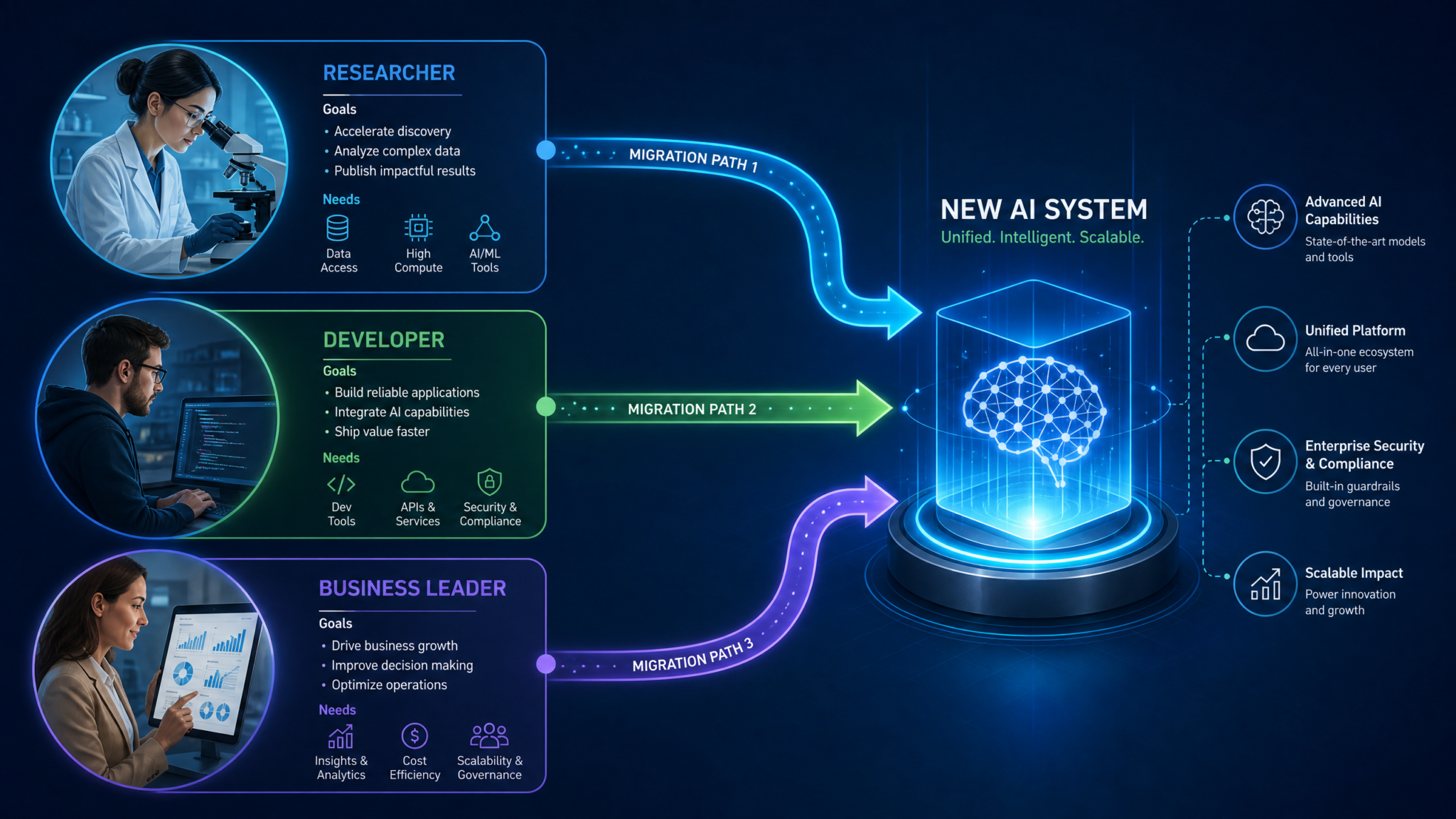
9. Recommendations for Different User Types
The right migration path from o3 depends significantly on how you were using the model. The following recommendations are specific to distinct user categories and are based on systematic testing of GPT-5.5 and GPT-5.6 Sol against o3 across representative use cases.
For Academic Researchers
If your research involves using o3’s reasoning traces as primary data — for interpretability research, for studying AI reasoning patterns, or for generating verifiable proof steps — you face the most significant disruption from this retirement. Your recommended path is:
- Apply for OpenAI’s Research Access Program, which provides API access to extended reasoning traces and is the closest available substitute for o3’s thinking blocks. The application is available through OpenAI’s research portal.
- Explore Anthropic’s Claude 3.7 Sonnet, which provides extended thinking traces through its API and has become a popular alternative among researchers who specifically need visible chain-of-thought access.
- For mathematical reasoning specifically, evaluate whether GPT-5.6 Sol’s reasoning anchors feature provides sufficient interactive control for your verification workflow.
- Document and archive your o3 conversation history before August 26, particularly any conversations containing reasoning traces that are relevant to ongoing research.
For researchers who used o3 primarily for generating research insights, literature synthesis, or hypothesis generation — rather than for the reasoning traces themselves — GPT-5.5 or GPT-5.6 Sol are likely adequate replacements with meaningful capability improvements. See our comparison guide at GPT-Live-Transcribe and GPT-Transcribe: Complete Developer Guide to OpenAI’s New Speech-to-Text Models for detailed benchmark analysis relevant to research use cases.
For Software Developers and Engineers
Developers who used o3 for code generation, debugging, and algorithm development will find GPT-5.5 to be a strong replacement with measurable improvements in code quality and speed. Specific recommendations:
- Switch to GPT-5.5 as your primary coding assistant. On SWE-bench Verified, GPT-5.5 outperforms o3 by approximately 4.7 percentage points, which translates to meaningfully better performance on real-world software engineering tasks.
- For competitive programming and algorithm design, test GPT-5.6 Sol during the preview period. Its higher Codeforces Elo rating (2531 vs. o3’s 2414) reflects genuine improvements in algorithmic reasoning.
- Update your API integration code before the API deprecation announcement. Do not wait for the announcement — start the migration now while o3 is available for parallel testing.
- Review the
thinking_depthparameter documentation carefully. Settingthinking_depth="extended"in GPT-5.5 API calls is the closest equivalent to o3’sreasoning_effort="high", but the cost and latency profiles differ.
# Recommended GPT-5.5 system prompt for code debugging tasks
SYSTEM_PROMPT = """You are an expert software engineer. When debugging code:
1. First, trace through the code execution step by step
2. Identify the specific line or logic where the error originates
3. Explain why the error occurs in terms of the underlying language semantics
4. Propose a fix and explain why it resolves the root cause
5. Identify any related issues that the fix might introduce
Always distinguish between the immediate symptom and the root cause."""
For Business Analysts and Financial Professionals
Business users who relied on o3 for multi-variable analysis, strategic planning, or financial modeling should migrate to GPT-5.5 for most tasks, with GPT-5.6 Sol reserved for the most complex analytical work. Specific recommendations:
- Develop structured prompt templates that explicitly request the analytical framework you need. GPT-5.5 responds well to prompts that specify the analytical structure: “Analyze this acquisition scenario by first identifying the key risk factors, then evaluating each factor quantitatively where possible, then synthesizing the risk assessment into a recommendation with explicit assumptions stated.”
- Use GPT-5.6 Sol’s reasoning anchors feature for multi-stage analyses where you need to validate intermediate conclusions before the model proceeds. This feature partially compensates for the loss of o3’s visible reasoning chain in high-stakes analytical contexts.
- For compliance and audit purposes, implement a documentation workflow that captures GPT-5.5’s explicit reasoning outputs (generated via structured prompting) alongside its conclusions. This creates an audit trail that satisfies most compliance requirements, though it requires more deliberate prompt design than o3’s automatic reasoning trace.
- Explore integrating GPT-5.5 with your organization’s data tools through the API, taking advantage of its improved tool use integration to build more seamless analytical pipelines. For guidance on building efficient AI-powered business workflows, see our guide on **Topic:**
“Mastering Custom GPTs: How Developers Can Build and Deploy Tailored AI Assistants Using OpenAI’s Latest API Features”**Why it’s trending/high-value:**
.
With OpenAI’s recent rollout of customizable GPT models, developers now have unprecedented control to create AI assistants fine-tuned for specific industries, workflows, or user needs. This tutorial/news article would dive deep into the step-by-step process of leveraging these new API capabilities, showcasing practical use cases, optimization techniques, and deployment best practices. It addresses the growing developer demand to move beyond generic AI and build specialized, high-performance conversational agents—making it a must-read for the chatgptaihub.com audience eager to stay ahead in the AI app development space.
For Educators and Students
The education use case is where the migration is most nuanced, because the value of o3 in educational settings was specifically tied to its process transparency. Recommendations for educators:
- Develop a library of structured prompts that elicit explicit methodology from GPT-5.5. The key insight is that GPT-5.5 can be prompted to show its work in a pedagogically useful way — it just requires more explicit instruction than o3 did by default.
- Consider using GPT-5.6 Sol’s reasoning anchors as a classroom tool: present students with a complex problem, use reasoning anchors to pause the analysis at key decision points, and use those pauses as discussion opportunities before revealing the model’s next step.
- For STEM instruction specifically, supplement ChatGPT with tools like Wolfram Alpha’s AI integration or specialized math reasoning tools that provide step-by-step solutions with formal mathematical notation — areas where GPT-5.5’s natural language reasoning explanations may be less rigorous than required.
- Archive o3 conversation examples that you used as teaching materials before August 26. These can continue to be used as static examples even after o3 is retired.
For Legal and Compliance Professionals
Legal professionals who used o3 for contract analysis, regulatory interpretation, or legal research have specific requirements around reasoning transparency that deserve careful attention:
- Do not treat GPT-5.5 or GPT-5.6 Sol as drop-in replacements for o3 in high-stakes legal work without systematic validation. Run parallel tests on representative legal analysis tasks and evaluate whether the reasoning quality and transparency meet your professional standards.
- Implement explicit documentation protocols: when using GPT-5.5 for legal analysis, use structured prompts that require the model to cite the specific provisions, precedents, or regulatory text it is relying on at each step of the analysis. This creates a more verifiable output than relying on the model’s default behavior.
- Engage with OpenAI’s enterprise team about the forthcoming Reasoning Audit Mode feature, which may provide the compliance documentation capabilities that enterprise legal departments require.
- Consider whether your use case requires the reasoning trace itself, or whether a well-structured analytical output with explicit citations serves your actual compliance needs. For many legal analysis tasks, the latter is sufficient and GPT-5.5 can deliver it with appropriate prompting.
For Casual and General-Purpose Users
If you used o3 primarily for general problem-solving, writing assistance, or occasional complex questions without specific requirements around reasoning transparency, the migration to GPT-5.5 is straightforward and you are likely to notice improvements rather than losses. GPT-5.5 is faster, more conversationally natural, and handles a broader range of tasks more gracefully than o3, which was optimized for reasoning at the expense of conversational fluency. Simply switch to GPT-5.5 as your default model and use GPT-5.6 Sol for your most demanding analytical tasks during the preview period.
10. Conclusion: The End of Standalone Reasoning Models?
The retirement of o3 from ChatGPT on August 26, 2026 marks a significant inflection point in how OpenAI structures its model offerings. The company is making a clear architectural bet: that integrated reasoning, distributed across general-purpose frontier models, is superior to dedicated reasoning models that users must explicitly select. The benchmark data largely supports this bet — GPT-5.5 and GPT-5.6 Sol do outperform o3 on most measurable dimensions of reasoning quality.
But benchmarks measure what can be measured, and the qualities that made o3 distinctive for its most devoted users — the transparent, auditable, interruptible chain of thought — are not fully captured in standard reasoning benchmarks. The loss of explicit chain-of-thought visibility is real, and OpenAI’s framing of the retirement as a pure upgrade understates the genuine trade-offs involved.
What is clear is that the direction of travel in AI model development is toward integration and consolidation. The era of maintaining a separate “reasoning model” and a separate “conversational model” and asking users to choose between them is ending. OpenAI’s successor models are designed to handle the full spectrum of tasks with a single model that adjusts its reasoning depth dynamically. This is almost certainly the right long-term direction — but the transition period requires careful management by users whose workflows were built around the specific properties of dedicated reasoning models.
For the 24 days remaining before the August 26 retirement, the most valuable thing o3 users can do is treat the overlap period as a structured migration window rather than a countdown. Run your critical prompts through both o3 and its successors. Document the differences. Update your workflows. Archive your reasoning traces. And engage with the new capabilities of GPT-5.5 and GPT-5.6 Sol with the same systematic curiosity that made o3 valuable in the first place.
The reasoning capabilities that made o3 remarkable have not disappeared — they have evolved. The task now is to learn how to access them in their new form.
For ongoing coverage of GPT-5.5, GPT-5.6 Sol, and the evolving OpenAI model landscape, see our comprehensive GPT-Live-Transcribe and GPT-Transcribe: Complete Developer Guide to OpenAI’s New Speech-to-Text Models guide, updated weekly with the latest benchmark data and user reports.
Key Takeaways
- O3 retires from ChatGPT on August 26, 2026. API retirement is on a separate, later timeline.
- GPT-5.5 and GPT-5.6 Sol outperform o3 on standard reasoning benchmarks and are significantly faster.
- The primary loss is explicit chain-of-thought visibility, which GPT-5.5’s integrated reasoning does not directly replicate.
- GPT-5.6 Sol entered preview on July 30, 2026 — use the preview period for testing before o3 is gone.
- Developers using o3 via API have additional time but should begin migration testing immediately.
- Users with auditability or transparency requirements need to implement structured prompting strategies to compensate for the loss of reasoning traces.
- Researchers with specific chain-of-thought requirements should explore OpenAI’s Research Access Program or evaluate alternative models that maintain explicit reasoning trace access.
