
Understanding ChatGPT Health: How to Connect Apple Health and Medical Records for AI-Powered Wellness Insights
What Is ChatGPT Health and Why It Changes the Wellness Conversation
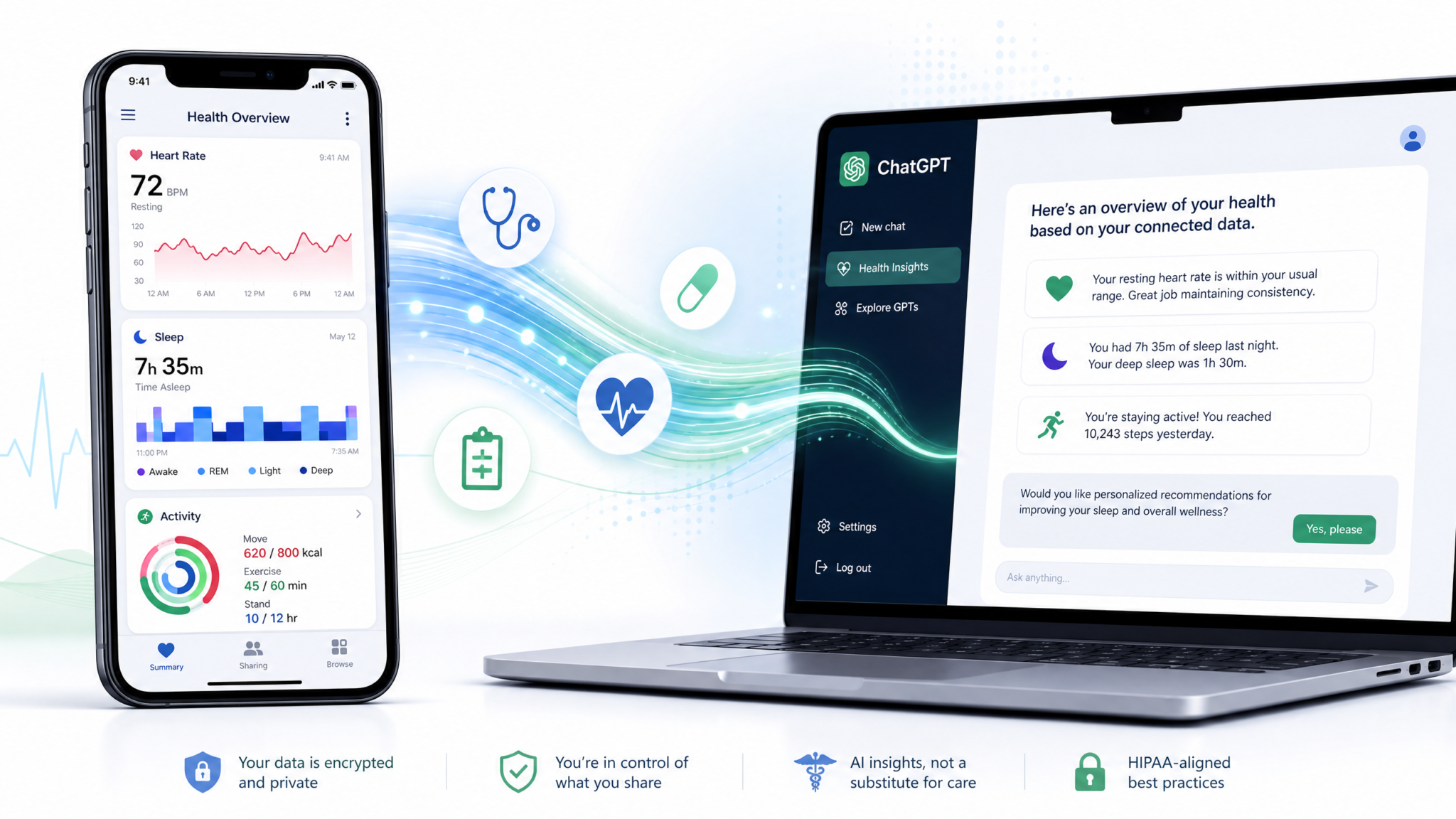
OpenAI’s launch of ChatGPT Health in late July 2026 marked one of the most significant expansions of the platform since the introduction of GPT-4. For the first time, users gained the ability to connect live biometric data from Apple Health, import structured medical records, and receive personalized, context-aware health insights — all within the familiar ChatGPT interface. This is not a chatbot telling you to “consult your doctor.” It is a system capable of reading your actual VO2 max trends, cross-referencing your HbA1c lab result against your recent resting heart rate data, and surfacing patterns that most annual checkups never catch.
The feature arrived at a moment when consumer health wearables had reached genuine clinical sophistication. Apple Watch Series 10 and Ultra 2 devices were already capturing atrial fibrillation events, blood oxygen saturation, skin temperature variation, and sleep architecture with accuracy that rivaled dedicated polysomnography equipment in many use cases. The missing piece was always interpretation — a layer of intelligence that could translate raw sensor data into actionable language. ChatGPT Health attempts to fill exactly that gap.
This guide covers every aspect of the feature: the technical setup process for connecting Apple Health and medical records, the privacy architecture OpenAI built to handle sensitive health data, the most practical use cases that deliver real value, and the honest limitations every user should understand before making any health decisions based on the system’s outputs. Whether you are a fitness enthusiast trying to optimize training recovery, a patient managing a chronic condition, or a caregiver tracking a family member’s health indicators, this walkthrough gives you the full picture.
System Requirements and Eligibility: What You Need Before You Start
ChatGPT Health launched as a feature exclusive to ChatGPT Plus, Team, and Enterprise subscribers. Free tier users are not able to access the health data integrations as of the initial rollout, though OpenAI has indicated broader availability is under review. The feature is available on iOS 17.4 and later, meaning iPhone 12 and newer devices running the current software are supported. Android integration with Google Health Connect was confirmed as “in active development” during OpenAI’s July 2026 announcement, but was not part of the initial release.
For Apple Health connectivity, you need the ChatGPT iOS app version 1.2026.7 or later. You can verify your version by navigating to the App Store, searching for ChatGPT, and checking the version number on the app’s page. The Apple Watch pairing requirement is optional — ChatGPT Health can read historical Apple Health data from any source (third-party apps, manually entered data, iPhone sensors), but real-time biometric streaming requires an Apple Watch Series 6 or later, or an Apple Watch Ultra.
For medical records connectivity, the feature supports the HL7 FHIR (Fast Healthcare Interoperability Resources) standard, which means any U.S.-based healthcare provider participating in the 21st Century Cures Act information-blocking rules can potentially share records. In practice, the initial integration works through Apple Health’s existing medical records feature, which connects to Epic, Cerner, Meditech, and several hundred other hospital systems directly. International medical record integration varies significantly by country and is covered separately in a later section.
| Requirement | Minimum Specification | Recommended |
|---|---|---|
| ChatGPT Subscription | Plus ($20/month) | Plus or Team |
| iPhone Model | iPhone 12 (iOS 17.4+) | iPhone 15 Pro or later |
| ChatGPT App Version | 1.2026.7 | Latest available |
| Apple Watch (optional) | Series 6 | Series 10 or Ultra 2 |
| Medical Records | FHIR-compatible provider | Epic or Cerner network |
| Operating System | iOS 17.4 | iOS 18 or later |
Step-by-Step: Enabling ChatGPT Health in the iOS App
The initial setup process is designed to be completed in under five minutes, though first-time users typically spend longer reviewing the consent screens — which is time well spent. Open the ChatGPT iOS app and navigate to your profile icon in the upper-left corner. Scroll down to the section labeled Integrations and tap it. You will see a new card titled Health & Wellness with a heart icon and a blue “Connect” button. This card only appears on eligible subscriptions; if you do not see it, verify your subscription tier first.
Granting Apple Health Permissions
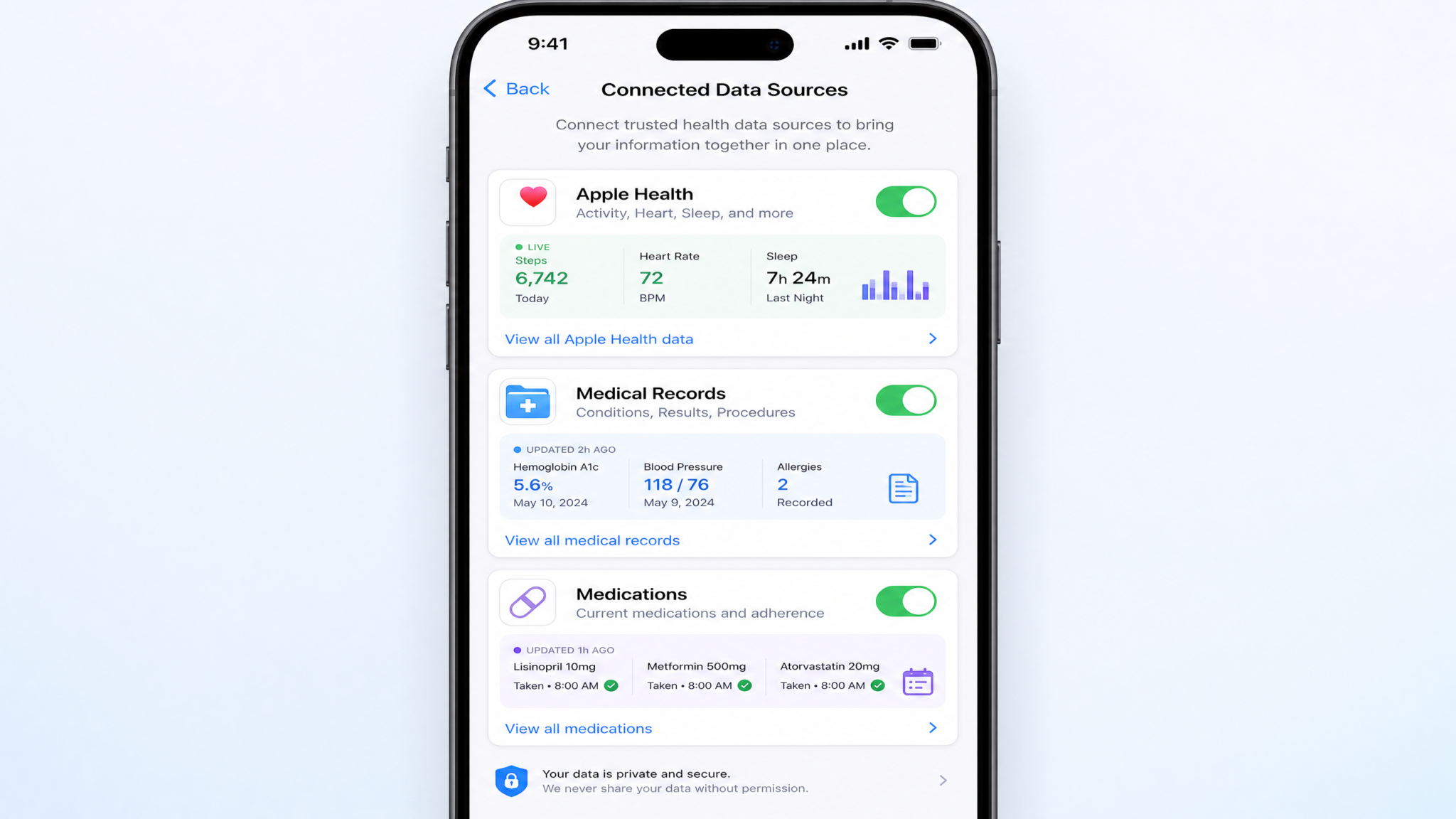
Tapping “Connect” initiates a standard Apple HealthKit permission flow. This is the same privacy-respecting mechanism that every app on iOS must use when requesting health data access — Apple controls this dialog entirely, and ChatGPT cannot access any data types you do not explicitly authorize. The permission screen presents categories organized into logical groups. You will be asked to grant read access (and optionally write access for features like logging mood or activity) for the following data categories:
- Activity: Steps, active energy burned, exercise minutes, stand hours, flights climbed, VO2 max estimates
- Heart: Resting heart rate, heart rate variability (HRV), walking heart rate average, high/low heart rate notifications, ECG data (if available)
- Sleep: Time in bed, time asleep, sleep stages (REM, Core, Deep), sleep schedule consistency
- Body Measurements: Weight, body mass index, body fat percentage, height
- Nutrition: Dietary energy, macronutrients, water intake, micronutrients (if logged)
- Mindfulness: Mindful minutes, mental wellbeing scores (from compatible apps)
- Reproductive Health: Cycle tracking data, ovulation test results (optional, clearly labeled)
- Lab Results: Clinical measurements synced from connected health systems
You do not need to grant all permissions for the feature to function. Users who only want sleep and recovery insights can grant just those categories. Users managing cardiovascular health might prioritize heart rate variability, resting heart rate, and activity data. OpenAI’s approach here is deliberately modular — the AI adapts its insights to whatever data you make available, without requiring a minimum dataset to function.
Configuring Data Lookback Period
After granting permissions, you are asked to configure how much historical data ChatGPT should access. The options are 30 days, 90 days, 6 months, 1 year, and “All available history.” For most users, 6 months to 1 year provides sufficient context for trend analysis without creating unnecessarily large data transfers. Users who have been tracking with Apple Health for several years and want longitudinal analysis (such as tracking how a medication change affected their sleep architecture over a 24-month window) should select “All available history.” The initial data sync can take a few minutes for large historical datasets, and ChatGPT will display a progress indicator during this process.
Connecting Medical Records: The FHIR Integration Explained
The medical records integration is where ChatGPT Health moves from fitness tracker analysis into genuinely clinical territory. Most Apple users are unaware that the Health app has supported medical record downloads from hospital systems since iOS 11.3 — this existing infrastructure is what ChatGPT Health leverages. If you have never connected medical records to Apple Health, you will need to do this first before ChatGPT can access them.
Adding Medical Records to Apple Health
Open the Apple Health app, tap your profile photo in the top right, and select Health Records. Tap Get Started if this is your first time, then Add Account. Search for your healthcare provider by name or zip code. The database includes thousands of U.S. health systems — if your provider participates in the program, you will see their name in the search results. After selecting your provider, you will authenticate using your patient portal credentials (the same login you use for MyChart, Epic’s patient portal, or your provider’s web portal). After authentication, Apple Health downloads your available records, which typically include:
- Laboratory results (complete blood count, metabolic panels, lipid panels, thyroid function, HbA1c, urinalysis, and more)
- Medications (current prescriptions, dosages, start and end dates)
- Allergies and adverse reactions
- Immunization history
- Clinical visit summaries and discharge notes
- Vital signs recorded during office visits
- Diagnoses and active problem lists
- Procedure history
The completeness of these records depends on your provider’s implementation of FHIR R4, the current standard. Large academic medical centers and health systems on Epic or Oracle Health (formerly Cerner) generally provide comprehensive records. Smaller practices, especially those on older EMR systems, may offer only partial data. Once your records are in Apple Health, ChatGPT’s permission-based access to Apple Health automatically extends to these clinical records when you grant the “Lab Results” and related permissions during ChatGPT Health setup.
Direct Medical Record Upload
For providers not connected to Apple Health, ChatGPT Health also accepts direct document uploads. You can photograph or upload PDF versions of lab reports, discharge summaries, and radiology reports directly into a health-focused conversation. ChatGPT uses its document processing capabilities to extract structured data from these files, though the accuracy varies with document quality and formatting. OpenAI recommends using the Apple Health FHIR connection whenever possible, as structured FHIR data is more reliably parsed than OCR-extracted PDF content.
International users face a more fragmented landscape. The UK’s NHS App provides FHIR-based records export for GP records and hospital summaries in some regions. German users with access to the ePA (elektronische Patientenakte) can export records in compatible formats. Australian users on the My Health Record system have a PDF export option. OpenAI’s documentation acknowledges that international record connectivity “varies significantly” and commits to expanding native integrations throughout 2026 and 2027. ChatGPT Features Guide
Privacy Architecture and Data Handling: What Actually Happens to Your Health Data
Health data is the most sensitive personal information most people will ever share with a technology platform. Before connecting anything to ChatGPT Health, understanding exactly how OpenAI handles this data is not optional — it is essential. The architecture OpenAI deployed for ChatGPT Health represents a meaningful departure from how the platform handles general conversational data, with several important distinctions that affect your privacy calculus.
The Ephemeral Processing Model
OpenAI’s stated approach for ChatGPT Health uses what the company calls “session-bound processing.” When you initiate a health query, the relevant Apple Health data and medical records are fetched in real time, processed within the current session, and used to generate your response. The raw biometric and clinical data — the actual numbers, lab values, and timestamps — is not persistently stored on OpenAI’s servers in a form that can be accessed outside of your active session. This is a fundamentally different model from how your conversational history is stored.
This distinction matters practically. If you ask ChatGPT about your HbA1c trend over the past year, it pulls that data from Apple Health for that conversation. The conversation summary (what you asked, the general context of the response) may be stored as part of your conversation history, but the raw lab values as a structured dataset do not persist on OpenAI’s infrastructure between sessions. Each new session re-fetches current data directly from Apple Health. This architectural choice limits OpenAI’s ability to build longitudinal models from your personal health data, but also substantially reduces the data breach risk that would come with centralized storage of clinical records.
HIPAA Considerations and the BAA Question
One of the most technically important aspects of ChatGPT Health’s launch is the Business Associate Agreement (BAA) framework. HIPAA’s Privacy Rule applies to “covered entities” (healthcare providers, health plans, healthcare clearinghouses) and their “business associates” — entities that handle Protected Health Information (PHI) on their behalf. If a healthcare provider recommends that a patient use ChatGPT Health to manage their records, does that make OpenAI a business associate subject to HIPAA? The answer is nuanced.
OpenAI launched ChatGPT Health’s Enterprise tier with a BAA offering for healthcare organizations, enabling formal HIPAA compliance for institutional deployments. For individual consumer users connecting their personal Apple Health data, the situation is governed by OpenAI’s health data privacy policy rather than HIPAA directly — because the user is not a covered entity, and the connection is voluntary and consumer-initiated. This is the same legal framework that applies to Apple Health itself (Apple is explicit that HealthKit data is governed by Apple’s privacy policy, not HIPAA, for consumer use).
The practical implication: for personal use, your health data protection comes from OpenAI’s contractual privacy commitments, not HIPAA enforcement mechanisms. For institutional use (a hospital system deploying ChatGPT Health for patients), the Enterprise BAA provides HIPAA-covered protections. Users who require HIPAA-compliant processing for professional or legal reasons should use the Enterprise tier or verify with their compliance team before connecting sensitive clinical data.
What OpenAI Does and Does Not Train On
OpenAI’s updated data policy for ChatGPT Health explicitly states that health data connected through Apple Health or medical record integrations is excluded from model training. This opt-out is automatic and does not require any user action — unlike general conversational data, which requires users to opt out of training in their settings. The health data carve-out from training is a strong privacy commitment, though it should be noted that this is a policy commitment rather than a technical impossibility. Users who want maximum assurance should review OpenAI’s current privacy policy directly, as policies can change and the technology landscape evolves rapidly. OpenAI Privacy and Data Policy
| Data Type | Stored on OpenAI Servers? | Used for Training? | Retention Period |
|---|---|---|---|
| Raw biometric data (heart rate, sleep, etc.) | Session-only (ephemeral) | No | Duration of session |
| Lab results and clinical values | Session-only (ephemeral) | No | Duration of session |
| Medication list | Session-only (ephemeral) | No | Duration of session |
| Conversation text (health queries) | Yes (conversation history) | No (health data carve-out) | Per user retention settings |
| User preferences and health profile | Yes (with user consent) | No | Until user deletes |
| General conversation data (non-health) | Yes | Yes (unless opted out) | Per user retention settings |
Practical Use Case 1: Understanding Your Lab Results
The single most immediately valuable application of ChatGPT Health for most users is lab result interpretation. The experience of receiving a 40-line PDF of blood work results, each line accompanied by a reference range and a “H” or “L” flag, and then waiting weeks for a five-minute phone call with a nurse to ask what it means — this is one of healthcare’s most persistent frustrations. ChatGPT Health directly addresses it.
Reading a Complete Metabolic Panel
With medical records connected, you can simply start a conversation with: “Explain my most recent metabolic panel.” ChatGPT Health will retrieve the results from Apple Health, identify each biomarker, and provide a layered explanation. For a complete metabolic panel (CMP), this means explaining what the liver enzymes (AST, ALT, ALP) actually measure, why your ALT being at 42 U/L (just above the standard reference range upper limit of 40) might be within normal biological variation for someone with your activity level, or might warrant a follow-up depending on context. Critically, it provides this explanation in plain language without stripping out the nuance that makes the information actionable.
The system is specifically designed to contextualize results against your own historical data when available. A single elevated CRP (C-reactive protein) reading means something very different when it appears in isolation versus when it follows three consecutive normal readings and coincides with a period where your Apple Health data shows two weeks of significantly elevated resting heart rate and poor sleep. ChatGPT Health surfaces these connections because it can see both data streams simultaneously. This cross-referencing capability is something no traditional lab report can offer.
HbA1c Trend Analysis
For users managing prediabetes or Type 2 diabetes, HbA1c trend analysis is one of the most compelling use cases. If you have had quarterly HbA1c tests over the past two years and those results are in your Apple Health medical records, ChatGPT Health can generate a trend narrative: “Your HbA1c has moved from 6.1% in Q3 2024 to 5.8% in Q2 2026, with the most significant improvement occurring between Q1 and Q3 2025, which corresponds with the period your Apple Health activity data shows a consistent increase in daily step count from approximately 4,200 to 7,800 steps.” This is the kind of longitudinal synthesis that typically requires a dedicated care coordinator or endocrinologist with time to review years of records in a single appointment.
The system appropriately flags when trends cross clinical thresholds — it will note that a shift from 5.6% to 5.8% moves from normal to the prediabetes range (5.7%-6.4% per ADA criteria) and suggest discussing this trajectory with your provider. It does not diagnose or prescribe. The value is in surfacing patterns and providing educational context that helps users have more informed conversations with their clinical teams. Best ChatGPT Prompts for Health and Medical Questions
Thyroid Function and Symptom Correlation
Thyroid disorders are frequently underdiagnosed in part because their symptoms — fatigue, weight fluctuation, temperature sensitivity, sleep disruption — are nonspecific and easily attributed to lifestyle factors. A user with TSH readings across multiple labs over several years, combined with Apple Health data showing changes in resting heart rate, sleep quality, and activity levels over the same period, can ask ChatGPT Health to look for correlations. The AI will note, for instance, that the period when TSH was at its highest also shows the lowest HRV readings and the most fragmented sleep architecture — and suggest discussing whether thyroid optimization might be worth revisiting with an endocrinologist given the convergent biomarker signals.
Practical Use Case 2: Sleep Architecture Analysis
Apple Watch’s sleep tracking has reached a level of sophistication where it reliably captures the four sleep stages: Awake, REM, Core (light NREM), and Deep (slow-wave NREM). For users who have accumulated weeks or months of this data, ChatGPT Health can provide analysis that goes far beyond the summary charts Apple’s native Health app displays.
Identifying Chronic Sleep Debt Patterns
Ask ChatGPT Health: “Analyze my sleep data from the last 90 days and identify any patterns related to sleep debt or recovery.” The response will typically include an analysis of total sleep time consistency, the ratio of deep sleep to total sleep time (a healthy target is roughly 15-20% deep sleep), REM sleep percentage (typically 20-25% of total sleep in healthy adults), and sleep efficiency (time asleep divided by time in bed). Crucially, it will identify weekly patterns — many users are surprised to discover their data shows consistent deep sleep suppression on Thursday and Friday nights, correlating with late-week stress patterns visible in their HRV trends.
The system can also identify sleep staging irregularities that are clinically relevant. A consistent pattern of fragmented sleep with frequent “Awake” episodes and low deep sleep percentage, particularly when accompanied by elevated resting heart rate during sleep, is a pattern worth discussing with a provider as it can be associated with sleep-disordered breathing. ChatGPT Health will flag this pattern, explain the clinical relevance, and suggest appropriate next steps without diagnosing sleep apnea.
Exercise Recovery and Sleep Quality Feedback Loops
Athletes and serious fitness enthusiasts often want to understand the bidirectional relationship between training load and sleep quality. With both activity data and sleep data connected, ChatGPT Health can analyze whether high-intensity training days correlate with increased deep sleep (a recovery signal) or disrupted sleep (an overtraining signal). This kind of analysis — examining whether the correlation between HRV, training intensity, and sleep quality suggests adequate recovery capacity — is exactly the type of personalized insight that previously required working with a sports performance specialist.
Practical Use Case 3: Medication Management and Interaction Checking
The medication management capabilities of ChatGPT Health are genuinely useful for the substantial portion of the population managing multiple prescriptions. According to the CDC, 48.6% of Americans took at least one prescription medication in the past 30 days, and nearly 24% took three or more. Polypharmacy management is a real clinical challenge, and AI-assisted review adds a meaningful layer of safety and comprehension.
Understanding Your Current Medications
With your medication list connected from Apple Health medical records, you can ask foundational questions that many patients are embarrassed to ask their pharmacists repeatedly: “Explain why I’m taking metformin and how it works,” or “What are the most important side effects to monitor with my current statin prescription?” ChatGPT Health provides accurate, appropriately detailed pharmacological explanations calibrated to a lay audience. It draws on your specific drug, dose, and the clinical context visible in your records when available.
Drug Interaction Screening
This is one of the most safety-critical features of ChatGPT Health, and OpenAI has been careful about how it is presented. The system can review your current medication list and flag known interactions, but it consistently frames these findings as “information to review with your pharmacist or prescribing physician” rather than as safety alerts requiring immediate action. The distinction matters because many drug interactions are theoretical, clinically minor, or already being managed by your medical team. A blanket “WARNING: DRUG INTERACTION” alert for an interaction that your cardiologist is already monitoring would be unhelpful noise.
The practical approach: users who are prescribed a new medication (perhaps just added via an urgent care visit or specialist appointment) can ask, “I’ve just been prescribed azithromycin for a respiratory infection. Does this interact with any of my current medications?” For a user on a QT-prolonging antidepressant, this is a clinically important question that might not have been thoroughly addressed in a rushed appointment. ChatGPT Health will explain the QT prolongation mechanism, identify the relevant interaction, and recommend confirming the safety of the combination with the prescribing physician or a pharmacist before starting the antibiotic. This prompt is well within the system’s capabilities and represents exactly the kind of safety net it was designed to provide.
Medication Adherence and Timing Optimization
For medications with specific timing requirements (certain blood pressure medications are more effective taken at bedtime, statins are generally dosed in the evening due to hepatic cholesterol synthesis patterns, some thyroid medications require morning dosing on an empty stomach), ChatGPT Health can review your current prescription list and provide evidence-based timing guidance. Cross-referencing this with your sleep schedule data from Apple Health allows for personalized recommendations — for example, identifying that your consistent wake time of 6:15 AM makes a pre-breakfast levothyroxine dose practical, and suggesting that your evening statin aligns well with your typical sleep onset time of 11:30 PM.
Practical Use Case 4: Cardiovascular Health Monitoring
Heart disease remains the leading cause of death in the United States, and Apple Watch’s suite of cardiovascular sensors makes it one of the most data-rich sources of continuous cardiac monitoring available to consumers. ChatGPT Health’s ability to synthesize these data streams with clinical context creates genuinely novel wellness management possibilities.
Heart Rate Variability as a Health Proxy
HRV has emerged as one of the most useful non-invasive biomarkers of autonomic nervous system health, cardiovascular fitness, stress load, and recovery status. Apple Watch measures HRV using the standard deviation of beat-to-beat intervals (SDNN) during the overnight rest period. Interpreting your HRV requires understanding your personal baseline — a 45ms HRV that represents a 20% decline from your personal 60-day average is more concerning than the same 45ms value for someone whose baseline is 42ms.
ChatGPT Health understands this principle and applies it automatically. When you ask about your HRV trends, it anchors the analysis to your personal rolling average rather than population reference ranges. It will identify periods of sustained HRV suppression (often associated with illness onset, overtraining, or significant life stress), explain the physiological mechanisms, and suggest interpretive frameworks while noting that persistent HRV suppression alongside other cardiac symptoms warrants clinical evaluation.
ECG and Irregular Rhythm Detection
Apple Watch Series 4 and later devices can generate an electrocardiogram via the ECG app, and the watch passively monitors for irregular heart rhythms (specifically atrial fibrillation) during wear. These ECG readings, when classified and stored in Apple Health, are accessible to ChatGPT Health. While the AI cannot interpret raw ECG waveforms with the precision of a cardiologist, it can explain what a “Sinus Rhythm” versus an “Atrial Fibrillation” classification means, explain why the watch generated a Low Heart Rate or Irregular Rhythm notification, and provide clear guidance on the clinical significance and urgency of various classifications.
For users who have received an AFib notification from their watch, the immediate question is almost always “Is this serious?” ChatGPT Health can explain that a single AFib detection on a consumer device warrants prompt physician notification (typically within 24-48 hours, not necessarily an ER visit), what the diagnostic workup typically involves, and what questions to ask when calling the cardiologist. This is exactly the kind of contextual guidance that reduces both under-reaction (ignoring a significant finding) and over-reaction (unnecessary emergency room visits for a finding that is common and manageable with prompt outpatient care).
Practical Use Case 5: Fitness and Training Optimization
The fitness coaching applications of ChatGPT Health build on the activity and workout data that Apple Health has aggregated for millions of users over years of Apple Watch ownership. The depth of analysis available with both historical fitness data and medical context connected simultaneously is qualitatively different from anything fitness apps have previously offered.
VO2 Max Trends and Cardiovascular Fitness Benchmarking
Apple Watch estimates VO2 max (maximal oxygen uptake) using a combination of heart rate data and GPS pace information during outdoor runs and walks. This metric, expressed in mL/kg/min, is one of the strongest predictors of all-cause mortality in population studies. ChatGPT Health can track your VO2 max trend over time, contextualize it against age and sex-matched population percentiles (Apple provides these via the Cardio Fitness feature), and help you understand what training approaches have historically driven improvement in your personal data.
The contextualization becomes particularly valuable when medical data is included. A user who had a six-month period of declining VO2 max that corresponded with elevated CRP levels in their lab work and poor sleep quality is seeing a convergent signal worth clinical attention. Conversely, a user whose VO2 max improved following a period of dietary changes visible in their nutrition logs has a data-supported reason to continue those changes.
Recovery Readiness and Training Load Management
Combining HRV, resting heart rate, sleep quality, and training history data, ChatGPT Health can provide a meaningful assessment of current recovery status. While it doesn’t use proprietary “readiness scores” like Whoop or Garmin’s Body Battery, it can synthesize the same underlying data and explain the rationale behind a recovery recommendation in plain language. “Your resting heart rate has been elevated 8-12% above your 60-day average for the past three days, your HRV is suppressed by approximately 18%, and your deep sleep percentage dropped below 10% on two of the last three nights. These converging signals suggest your body is under elevated physiological stress, and a light active recovery session or full rest day would likely serve your long-term training adaptation better than a scheduled high-intensity workout today.”
Access 40,000+ AI Prompts for ChatGPT, Claude & Codex — Free!
Subscribe to get instant access to our complete Notion Prompt Library — the largest curated collection of prompts for ChatGPT, Claude, OpenAI Codex, and other leading AI models. Optimized for real-world workflows across coding, research, content creation, and business.
Understanding the Limitations: What ChatGPT Health Cannot Do
The capabilities described throughout this guide are genuinely impressive, but they exist within important constraints that every user must understand clearly. Misunderstanding the system’s limitations is not just academically unfortunate — it carries real clinical risk if users substitute AI-generated health insights for professional medical care in contexts where that substitution is dangerous.
It Cannot Diagnose, Prescribe, or Replace Clinical Judgment
ChatGPT Health is explicit and consistent about this limitation. The system does not diagnose medical conditions, prescribe treatments, or provide clinical recommendations that should replace physician judgment. This is not merely a legal disclaimer — it reflects genuine epistemic limitations. Diagnosis requires physical examination, clinical context that extends beyond what data can capture, differential diagnosis expertise, and the kind of situational judgment that experienced clinicians develop over years of practice. An AI system analyzing biomarker data, however sophisticated, is not performing the same cognitive work as a physician evaluating a patient.
The appropriate mental model: ChatGPT Health is a highly informed health librarian who can find, contextualize, and explain your health data in ways that help you ask better questions and make more informed decisions — not a physician who can tell you what is wrong and what to do about it. The distinction is real and consequential.
Sensor Accuracy Has Real Limits
Apple Watch’s biometric measurements carry accuracy limitations that affect the reliability of any analysis built on them. VO2 max estimates are correlational approximations derived from pace and heart rate, not laboratory-grade measurements. Sleep staging accuracy, while much improved with the Apple Watch Series 9 and 10, still diverges from polysomnography on specific metrics, particularly in distinguishing light NREM from brief awakenings. Blood oxygen readings can be affected by skin tone, tattoos, and wrist position. HRV measurements taken during active use are less reliable than overnight resting measurements.
ChatGPT Health is generally transparent about these limitations within relevant responses — noting, for instance, when an interpretation is based on an estimated metric rather than a direct measurement. Users should hold AI-generated health insights proportional to the accuracy of the underlying data, which for wearable sensors is “directionally useful” rather than “clinically precise” in most cases.
Data Coverage Gaps Affect Insight Quality
The system’s analytical quality is only as good as the data you provide. Users who do not wear their Apple Watch during sleep will have no sleep stage data. Users who only connected records from one health system may have incomplete medication or lab history if they have seen multiple providers. Users who entered their dietary data inconsistently will have nutritional analysis of limited value. ChatGPT Health will work with whatever data is available, but it cannot fabricate context it does not have access to, and in some cases will explicitly note when it lacks sufficient data to draw meaningful conclusions.
Mental Health Data Requires Special Care
Several Apple Health data categories touch on mental health — mood logging from compatible apps, mindfulness minutes, sleep disruption patterns that correlate with anxiety. ChatGPT Health’s approach to mental health data is noticeably more conservative than its physical health analysis. The system provides information, educational context, and resources (including crisis resources when appropriate) but avoids generating detailed psychological assessments from behavioral data. This restraint reflects both the genuine limitations of inferring mental health states from behavioral sensors and the heightened duty of care that mental health data demands. ChatGPT Mental Health Use Cases and Limitations
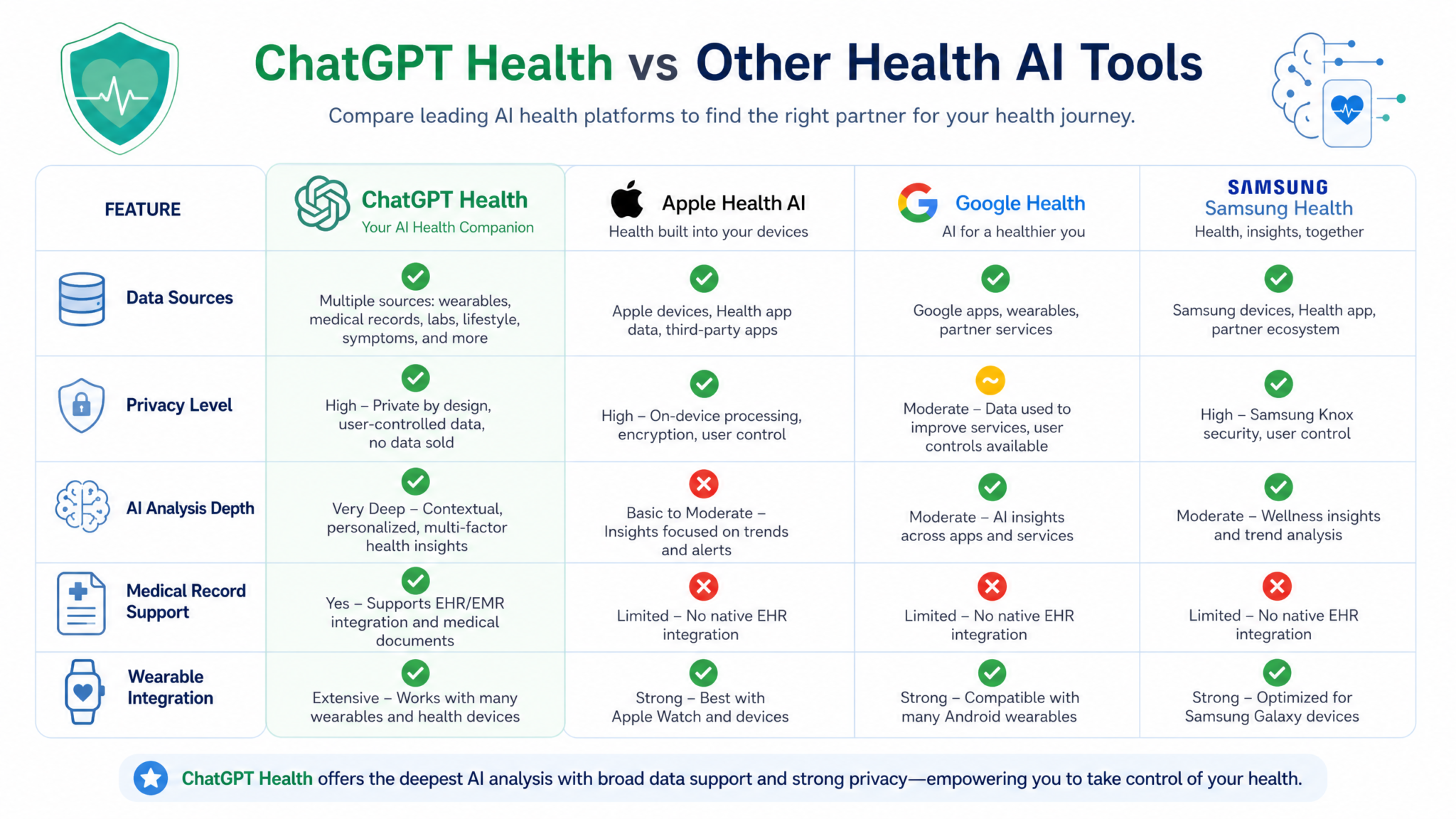
ChatGPT Health vs. Competing Health AI Tools: A Comparative Analysis
The health AI landscape accelerated dramatically in the 2024-2026 period, with several distinct products targeting overlapping but meaningfully different use cases. Understanding how ChatGPT Health compares with its primary competitors helps users choose the right tool for their specific needs.
| Feature | ChatGPT Health | Google Health AI (Gemini) | Amazon Halo Rise Pro | Whoop AI Coach | Noom Med AI |
|---|---|---|---|---|---|
| Medical Records Integration | ✓ (FHIR via Apple Health) | ✓ (Google Health Connect) | Limited | ✗ | Partial |
| Lab Result Interpretation | ✓ Detailed | ✓ Detailed | ✗ | ✗ | Limited |
| Natural Language Conversation | ✓ Superior | ✓ Strong | Limited | Limited | ✓ Moderate |
| Medication Interaction Check | ✓ | ✓ | ✗ | ✗ | ✓ (licensed drugs) |
| Sleep Stage Analysis | ✓ (via Apple Health) | ✓ (Pixel Watch/Fitbit) | ✓ Specialized | ✓ Specialized | ✗ |
| Android Support | In development | ✓ Native | ✓ | ✓ | ✓ |
| HIPAA BAA Available | ✓ Enterprise only | ✓ Google Workspace | ✗ | ✗ | ✓ |
| Monthly Cost | $20 (Plus) | $20 (Gemini Advanced) | $99 device + $18/month | $30/month + device | $70/month |
ChatGPT Health vs. Google Gemini Health
Google launched Gemini Health features with tight integration into Google Health Connect and native support for Fitbit, Pixel Watch, and Android wearables. For Android users, Gemini Health is currently the stronger choice simply because of native platform integration — the data pipeline is more reliable, and the Android ecosystem has better breadth for health data sources. For iOS users, the equation reverses: ChatGPT Health’s Apple Health integration is deeper and more reliable than Gemini’s iOS data access. In terms of raw language understanding and conversational medical knowledge, ChatGPT and Gemini are closely matched, with different strengths in specific domains.
ChatGPT Health vs. Dedicated Wellness Platforms
Platforms like Whoop AI Coach and Oura’s AI features offer deeper sport-specific recovery analysis because their hardware is specifically optimized for those metrics — Whoop’s strap, for instance, has continuous HRV monitoring throughout the day, not just overnight, giving it a more granular recovery dataset than Apple Watch. However, these platforms lack the medical records integration, lab result interpretation, and medication management capabilities that make ChatGPT Health distinctive. They are excellent training optimization tools; ChatGPT Health is a broader health intelligence platform that encompasses but is not limited to fitness.
The honest assessment: for users who are primarily serious athletes wanting detailed recovery optimization, a dedicated platform like Whoop combined with ChatGPT Health for clinical data interpretation is currently the most capable combination. For users whose primary interest is understanding and managing their overall health — including chronic condition management, medication review, and clinical record comprehension — ChatGPT Health as a standalone tool provides more value than any competitor at the same price point.
Advanced Configuration: Health Profile and Persistent Context
Beyond the core data integration features, ChatGPT Health supports a persistent health profile that adds context without requiring you to re-explain your situation in every conversation. Access this through Settings > Health & Wellness > Health Profile. Here you can enter information that does not come from your wearable or medical records but is clinically important: pregnancy status, current fitness goals, dietary restrictions, primary health concerns you want to monitor, and specific conditions you have been diagnosed with that you want the system to be aware of.
This profile information is stored as part of your ChatGPT account preferences and is used to contextualize all health-related responses. A user who notes in their profile that they are training for a marathon will receive activity data interpretation that considers their elevated training load as intentional rather than flagging it as potentially problematic. A user who notes a family history of cardiovascular disease will receive slightly more conservative guidance and more proactive suggestions to discuss borderline biomarkers with their cardiologist.
Setting Up Health Goals and Tracking Milestones
ChatGPT Health supports goal tracking through natural language interaction rather than rigid metric targets. Rather than setting a specific step count goal (which Apple Health’s native apps handle well), the health profile allows you to express goals contextually: “I am working with my GP to reduce my blood pressure through lifestyle changes, targeting a systolic below 130 mmHg” or “I am recovering from ACL surgery and following a progressive return-to-running protocol.” These stated goals allow ChatGPT Health to frame data interpretation in terms of your actual objectives rather than generic population benchmarks.
Regulatory Status and the Future of Health AI Features
ChatGPT Health launched as a consumer wellness tool, not an FDA-regulated medical device. This distinction is significant and deliberate. The FDA’s Software as a Medical Device (SaMD) regulatory framework applies to software that meets the definition of a medical device — which includes software intended for diagnosis, prevention, treatment, or cure of a disease or condition. OpenAI’s careful positioning of ChatGPT Health as an “educational and informational wellness tool” rather than a diagnostic or treatment-support system is partly a product design choice and partly a regulatory strategy that allows faster deployment without Pre-Market Approval or 510(k) clearance.
This regulatory status means that ChatGPT Health has not been through the kind of clinical validation studies that FDA-cleared software medical devices undergo. Users should calibrate their reliance on the system’s outputs accordingly. The system’s medical knowledge base is extensive and generally accurate, but it has not been specifically validated against clinical outcomes data in the way that, say, an FDA-cleared atrial fibrillation detection algorithm has been.
The regulatory environment for health AI is evolving rapidly. The FDA’s Digital Health Center of Excellence is actively developing new frameworks for AI-based health software, and there is reasonable expectation that some features of platforms like ChatGPT Health will eventually seek FDA clearance — particularly features that move closer to the diagnostic or treatment recommendation boundary. Users who want to understand the regulatory landscape for AI health tools should follow the FDA’s IMDRF guidance updates alongside OpenAI’s product announcements.
Troubleshooting Common Setup Issues
Despite a generally smooth setup experience, a number of technical issues can prevent ChatGPT Health from correctly accessing Apple Health data or medical records. The following covers the most frequently reported issues and their resolutions.
Apple Health Permissions Not Syncing
If ChatGPT appears to have no health data despite granting permissions, the most common cause is a failed HealthKit authorization that iOS did not properly communicate to the app. Solution: Open Settings > Privacy & Security > Health > ChatGPT, and verify that all desired data types show “Read” access. If they do not, toggle each off and back on. If the category is greyed out, it may mean that category is empty in your Apple Health database — the permission was granted but there is no data of that type to read.
Medical Records Not Appearing
If your medical records from Apple Health are not accessible in ChatGPT Health conversations, first verify that the records actually appear in the Apple Health app itself (Health > Browse > Health Records). If they appear in Apple Health but not in ChatGPT, check that you granted “Clinical Records” permission during ChatGPT Health setup. This permission category is separate from general lab results and contains the structured FHIR data. Return to the ChatGPT app > Settings > Health & Wellness > Manage Permissions > and ensure Clinical Records shows as enabled.
Out of Date Records
Medical records downloaded from your healthcare provider’s system sync to Apple Health periodically, not in real time. If you had lab work done yesterday, it may take 24-72 hours for the results to appear in your health provider’s patient portal, and then another sync cycle to appear in Apple Health. For the most current data, open the Apple Health app, go to Health Records, tap your connected provider, and select “Refresh” to trigger an immediate sync attempt.
Getting the Most from ChatGPT Health: Prompting Strategies
The quality of insights you receive from ChatGPT Health depends significantly on how you frame your questions. The system is capable of sophisticated multi-variable analysis, but it needs context about what you are trying to understand to direct that analysis productively.
Instead of asking “Is my heart rate normal?”, ask “Compare my resting heart rate trend over the past six months to the period six months before that, and identify any notable changes and what might explain them.” Instead of “What are my lab results?”, ask “Review my most recent lipid panel and tell me how it compares to my previous results, which aspects are outside the optimal range rather than just the reference range, and what dietary or lifestyle factors in my health data might be contributing to any concerning values.”
Specificity in your questions dramatically improves the depth of analysis. Providing temporal context (asking about a specific time window), requesting comparisons (asking how a current value compares to historical data), and stating the clinical context you care about (noting that you are monitoring a specific condition) all produce qualitatively better responses than open-ended general questions. The health AI responds like a knowledgeable consultant — the more context you give it, the more targeted and useful its analysis becomes.
For users who want deeper guidance on formulating effective health queries, resources on effective AI prompting strategies for medical topics provide a framework that translates directly to ChatGPT Health interactions. Understanding how to specify clinical context, request multi-variable analysis, and interpret uncertainty in AI-generated health responses are skills that significantly increase the value you can extract from the platform. Advanced ChatGPT Prompting Techniques
Conclusion: A New Layer in Personal Health Management
ChatGPT Health represents a genuinely meaningful advance in how individuals can interact with their own health data. The convergence of sophisticated consumer biometric sensors, standardized medical record infrastructure, and large language model capabilities has created something that did not exist before: a system that can hold the full complexity of an individual’s health data in context and help them make sense of it in plain language.
The appropriate framing is augmentation, not replacement. The most productive users of ChatGPT Health are those who treat it as a layer of intelligence that helps them engage more effectively with the healthcare system — arriving at appointments with better questions, noticing patterns that warrant clinical attention before they become urgent, and developing a more literate relationship with their own biomarkers and medical records. It does not replace the physician, the pharmacist, or the clinical judgment that professional training produces over years of practice.
The privacy architecture is solid for consumer use, with meaningful commitments around data training exclusions and session-bound processing of sensitive data. The HIPAA considerations require attention from users with professional compliance requirements. The integration with Apple’s ecosystem is seamless for iOS users, while Android users face a gap that OpenAI has committed to closing.
As the feature matures through the remainder of 2026 and into 2027, expanded provider connections, Android support via Google Health Connect, and increasingly sophisticated longitudinal analysis capabilities will likely increase the feature’s value substantially. For the current moment, for iOS users on eligible ChatGPT subscriptions who want to develop a genuinely informed relationship with their own health data, ChatGPT Health is the most capable consumer health AI platform available — used correctly, within its documented limitations, it adds a meaningful and previously unavailable layer of personalized health intelligence to everyday wellness management.
